Celebrating Survivorship: Heart Attack Survivors are Not Alone

2018-12-07T08:01:00

(BPT) – You’ll never forget that moment. Whether it impacted you or a loved one. It stopped you in your tracks and changed everything.

Life after a heart attack can feel overwhelming. Survivors can feel vulnerable, afraid, or sometimes weak. And while every survivor’s journey is unique, the initial focus following a heart attack is often related to physical recovery. What we often forget is the impact of the emotional journey, and the importance of instilling strength and resilience in survivors, celebrating their stories and offering support as they navigate life after a heart attack.

Health and fitness expert and best-selling author, Bob Harper, knows the significant impact of a heart attack all too well. He suffered his heart attack in the middle of a workout back in February of 2017. “I woke up in the hospital two days later, dumbfounded by what had happened,” Harper said. “I spent an emotional and upsetting eight days in the hospital coming to terms with my new reality.” Today, Bob is passionate about another kind of training: emotional recovery. While changes to his diet and exercise routine are an important part of his physical recuperation, Bob credits further education with helping him evolve his mindset and believes this plays an equally important role.

This story holds true for so many others. The fact is, nearly 8 million people are part of the heart attack survivor community in the United States. And while a heart attack can be one of the most traumatic moments of a person’s life, there is hope. Eighty percent of heart attack survivors 45 years of age or older avoid having a second heart attack within five years. The risk of a recurrent heart attack can be reduced by working with a health care team to develop a plan that includes exercising, maintaining a healthy diet, and quitting smoking.

Life after a heart attack begins an ongoing journey toward heart health and well-being, but survivors need support on their road to recovery. By listening to their bodies, working closely with their healthcare teams, and connecting with other survivors and caregivers to share experiences, survivors can build a community that will support them in their journey toward wellness.

Today, survivors and caregivers don’t have to look far. The Survivors Have Heart movement fosters such a community. Created by AstraZeneca, the program is dedicated to celebrating survivorship and offers personal stories from fellow heart attack survivors, tips from Bob Harper on navigating life after a heart attack, and helpful resources from leading advocacy organizations.

Visit SurvivorsHaveHeart.com to learn more.

US-24046 Last Updated 11/18


5 Must-Share Facts About Metastatic Breast Cancer

2018-12-07T14:29:00

(BPT) –

Breast cancer is the most commonly diagnosed cancer among women.[1] And, despite strides in treatment, some types of breast cancer remain incurable.[2]

One such type is metastatic breast cancer, an advanced stage of the disease. It is estimated to affect more than 154,000 women in the U.S.[2] Read on for five facts about metastatic breast cancer that you can share:

1. Metastatic breast cancer is found in parts of the body beyond the breast.

Metastatic breast cancer refers to the most advanced stage of breast cancer (stage IV). This is when breast cancer has spread beyond the breast to other organs such as the bones, lungs or liver.[2]

2. Metastatic breast cancer typically occurs when there is a disease recurrence, or when it returns after previous treatment.

Nearly 30 percent of women diagnosed with early-stage breast cancer will develop metastatic disease, which typically appears after a person completes treatment for early or locally advanced breast cancer.[2],[3] Only 6 percent of women in the U.S have metastatic breast cancer when first diagnosed, meaning the cancer was found after it spread to another part of the body.[2]

3. There is currently no cure for metastatic breast cancer.

Unfortunately, there is no cure available for metastatic breast cancer.[2] Unlike less advanced breast cancer, you can’t kill all the cancer cells that spread to other organs.[2] As a result, most breast cancer-related deaths are caused by metastasis.[4]

4. Metastatic breast cancer is not a “hopeless” diagnosis.

Though there is no cure, metastatic breast cancer can be treated, and advancements in therapies continue to improve survival for many.[2],[4] Types of treatment include hormone therapy, chemotherapy, and targeted therapies.[2] Treatment plans often focus on length and quality of life, and it is now estimated that about 34 percent of women with metastatic breast cancer in the U.S. live at least five years after being diagnosed.[2],[5]

5. Progress is being made in the treatment and understanding of metastatic breast cancer.

Less than 50 years ago, only 10 percent of women diagnosed with metastatic breast cancer survived five years after diagnosis.[4] Now, due to recent advances in treatment, some women may live 10 or more years after diagnosis; however, survival varies greatly from person to person.[2]

Researchers are continuing work to identify what causes breast cancer cells to metastasize so they can develop new therapies to prevent and treat metastatic breast cancer.[4] Help raise further awareness of these important messages by sharing this article.

[1] National Breast Cancer Foundation. Breast Cancer Facts. https://www.nationalbreastcancer.org/breast-cancer-facts. Accessed October 2018.

[2] Susan G. Komen. Treatments for Metastatic Breast Cancer. https://ww5.komen.org/BreastCancer/RecommendedTreatmentsforMetastaticBreastCancer.html. Accessed October 2018.

[3] Breastcancer.org. Metastatic Breast Cancer. https://www.breastcancer.org/symptoms/types/recur_metast. Accessed October 2018.

[4] Susan G. Komen. 2018 Research Fast Facts. Metastatic Breast Cancer. https://ww5.komen.org/uploadedFiles/_Komen/Pages/What_We_Do/We_Fund_Research/Your_Research_Dollars_at_Work/2018_Metastasis_FF.pdf. Accessed October 2018.

[5] Susan G. Komen. Facts for Life. Metastatic Breast Cancer. 2017. https://ww5.komen.org/uploadedFiles/_Komen/Content/About_Breast_Cancer/Tools_and_Resources/Fact_Sheets_and_Breast_Self_Awareness_Cards/Metastatic%20Breast%20Cancer.pdf. Accessed October 2018.


Most adults with chronic health conditions unaware of dangers of influenza

2018-12-07T08:01:00

(BPT) – During the 2017-2018 influenza (flu) season, nearly 80,000 people died and more than 950,000 people were hospitalized due to flu and flu-related illnesses, and less than four in 10 U.S. adults (37.1 percent) were vaccinated against flu, fewer than in previous years, according to the Centers for Disease Control and Prevention (CDC). While those who are vaccinated may still get the flu, the vaccine helps prevent serious complications that may result in hospitalization, loss of independence or even death. 

It is particularly important for people with certain chronic health conditions like heart disease, diabetes and lung disease to receive an annual flu vaccine, as they are at higher risk for flu-related complications. In fact, 92 percent of those hospitalized for flu during the 2017-2018 season had an underlying medical condition that put them at risk for serious flu-related complications.  

In July 2018, the National Foundation for Infectious Diseases (NFID) convened leading medical experts from nearly 20 national healthcare organizations to raise awareness of the dangers of flu among U.S. adults with certain chronic health conditions including heart disease, lung disease and diabetes, and the need for increased flu vaccination rates among at-risk adults. 

“It is essential for everyone age 6 months and older to receive an annual flu vaccine,” said NFID Medical Director William Schaffner, M.D. “For people with conditions like heart disease, diabetes or lung disease, it is an important part of managing their condition, like taking a statin, checking their glucose or using an inhaler.” 

Surprisingly, there is low awareness of the connection between chronic health conditions and serious flu-related complications. A new survey from NFID revealed that:

* Less than a quarter of U.S. adults recognize that people with heart disease (24 percent) and diabetes (22 percent) are at greater risk for flu-related complications, and awareness is significantly less for people of color than white respondents.

* Less than 20 percent of U.S. adults are aware that heart attack (16 percent), worsening of diabetes (16 percent), stroke (13 percent) and disability (10 percent) can occur as potential complications of flu. 

The dangers are real. Research shows that individuals with heart disease are up to 10 times more likely to have a heart attack within three days of flu infection and people with diabetes are at six times increased risk of flu-related hospitalization. 

“Flu causes inflammation in the body that can result in serious complications,” said Albert Rizzo, M.D., Chief Medical Officer, American Lung Association. “For the more than 31 million people living with lung disease such as asthma or chronic obstructive pulmonary disease, flu can worsen their condition and lead to a loss of lung function.” 

More information on the connection between flu and serious complications for those with certain chronic health conditions can be found at www.nfid.org/flu-chronic-health-conditions.  


Budget checkup for homeowners and future homeowners

2018-12-06T14:59:00

(BPT) – Sponsored Ad Content from Vanderbilt Mortgage and Finance, Inc.

A budget is an important tool for first-time homebuyers and current homeowners. Throw out any negative feeling you may have toward budgeting. We’re here to tell you that budgeting is a great exercise, and can free your financial mind! A budget is meant to be a guide to where you should spend your monthly income.

Budgeting can mean guilt-free fun. By making and sticking to your budget, you can spend money knowing exactly how much you need to set aside for necessities, and how much you can spend on other activities! Budgets are an important tool for the first-time homebuyer because it can help you make your move into a home with a payment that fits your lifestyle and circumstances. For existing homeowners, budgets can help you achieve or maintain financial freedom.

Budgeting can be done by anyone — it just takes time initially to set it up correctly. Gather paychecks, bills and bank statements to get started. You can write down all this information or use a budget tool. Start by calculating your monthly income, which includes not only the amount you may get from a regular paycheck, but also any money you get in government aid, child support or pensions. The next step is to look at your bills and bank statements to find out truly what you spend in each category. This accurate information will empower you to take control of your finances.

Do you see a surplus? That is great! You can take that surplus and contribute to your financial goals, whether that be saving for a down payment, taking a family vacation or building a nest egg.

Do you see a deficit? If so, you can make the changes needed to balance your budget. You can cut back on nonessential items, like eating dinners out, to get financially fit. Having this knowledge is powerful and can help you take the right steps toward financial stability.

A budget is crucial for home ownership, whether you’re a first-time homebuyer or you currently own a home. A sound budget can relieve stress and help you feel confident in the way you spend your hard-earned income.

About Vanderbilt Mortgage and Finance, Inc.

Vanderbilt Mortgage and Finance, Inc. is a national housing lender that specializes in financing manufactured homes. In business for more than 40 years, the company currently services more than 200,000 home loans and works hard to tailor loans to each family’s needs. Vanderbilt has an A+ grade from the Better Business Bureau and is a Berkshire Hathaway company. For more information, visit VMFHomeLoan.com.

NMLS Disclosure

Vanderbilt Mortgage and Finance, Inc., 500 Alcoa Trail, Maryville, TN 37804, 865-380-3000, NMLS #1561, (http://www.nmlsconsumeraccess.org/), AZ Lic. #BK-0902616, Loans made or arranged pursuant to a California Finance Lenders Law license, GA Residential Mortgage (Lic. #6911),  MT Lic. #1561, Licensed by PA Dept. of Banking.


5 questions to answer when considering a new deck

2018-12-06T16:27:00

(BPT) – When planning a deck project, choosing the right material is key to the enjoyment and value you’ll get from your outdoor living space. Today, there are more choices in decking materials than ever before, including high-performance composites, which are increasingly replacing wood in backyards across the country.

As you weigh your options, here are answers to some of the most commonly asked questions about composite decking:

What are the key benefits of composite decking?

Unlike wood, high-performance composite decking resists fading, scratching and mold — and won’t rot, warp, crack or splinter. Wood decking does not age gracefully, even with regular maintenance — including washing, staining and sealing that can take several days and a considerable number of materials and tools. Composites require minimal upkeep. You never need to worry about painful splinters or the laborious sanding, staining or painting — just an occasional soap-and-water cleaning will do the trick.

Does composite decking look natural?

The aesthetics of composite decking have evolved considerably over the years. Today’s offerings feature high-definition wood-grain patterns that are nearly indistinguishable from real wood textures. Additionally, composite decking comes in a wider variety of color options to complement the exterior of any home. Ranging from rich browns and warm umbers to spicy reds and pristine grays, composites are more natural than ever before and boast a vibrancy that remains unchanged without having to stain and re-stain year after year.

How do composite costs compare with wood?

Initially, composite decking costs more, board for board, than pressure-treated lumber. But rather than deteriorating over time, composite decking delivers more long-term value due to its minimal maintenance requirements. When you consider the cumulative costs of power washing, sanding, staining and painting a wood deck every season, composite decking proves a much better value over time. According to HomeAdvisor.com, maintenance for a wood deck costs an average of $540 to $1,050 per year compared with just $15 to $20 for a composite deck.

“Today’s homeowners want to spend their time enjoying their outdoor living spaces — rather than maintaining them,” says Leslie Adkins, vice president of marketing for residential products at Trex Company, manufacturer of composite decking. “High-performance composite decking stands up to decades of weather and day-to-day usage without the burdensome sanding and staining required to maintain wood decks.”

Are composite materials environmentally friendly?

Wood might be a natural material, but the chemical coatings used to protect the wood from rot and mold are not. Composite decking, on the other hand, uses few chemicals in its manufacturing and the upkeep is simple — just soap and water. Additionally, Trex decking is made from 95 percent recycled materials, including plastic film recycled from a variety of items, such as grocery bags and newspaper sleeves. The company repurposes more than 400 million pounds of plastic and wood particles annually that would otherwise end up in landfills.

What’s the difference between “capped” and “uncapped” composites?

Early generations of composite decking were “uncapped,” leaving them vulnerable to staining, fading, mold and mildew. The leading composite products available today are “capped” with a protective outer layer that is bonded to the core during the manufacturing process. This “shell” contains UV inhibitors and other ingredients to ensure the deck boards retain their aesthetics and durability. In addition to resisting fading, staining and mold, they won’t rot crack or splinter like wood and require minimal maintenance.


Road salt reduces crashes by up to 88 percent

2018-12-06T15:56:00

(BPT) – Each winter, drivers from Maine to Texas are reminded just how dependent they are on their cars, and what happens when snow and ice get in the way. More than 116,000 Americans are injured and over 1,300 are killed on snowy, slushy or icy pavement every winter.

Studies show that road salt is the most effective way to treat road surfaces. A Marquette University study examined highway accidents in snow and found that road salt reduced crashes by up to 88 percent, and injuries and accident costs were reduced by as much as 85 percent.

Another study from the University of Waterloo on the safety impacts of using deicing salt before and after a snow event on four-lane highways found that it reduced accidents by up to 93 percent.

Untreated roads also carry a significant economic cost. According to a Global Insight study, a one-day major snowstorm can cause a state $300 million to $700 million in direct and indirect costs. According to James Gillula, the principal researcher of the study, “Lost wages of hourly workers account for about two-thirds of the direct economic impact of a major snowstorm. Among all workers, hourly wage workers can suffer the most painful economic losses.”

A few winters ago, residents of Atlanta were hit with an ice storm and experienced what happens without road salt to keep streets clear. Children had to spend the night at school sleeping on gym mats when buses could not safely get them home. Workers became stranded in their cars for hours as traffic became gridlocked due to accidents and many vehicles were left abandoned. News reports were filled with images of people sleeping on the floors of area grocery stores.

The Salt Institute promotes the latest environmentally friendly application technologies and management practices with its “Safe and Sustainable Snowfighting” program and award. The Institute partners with other organizations like the Ontario Good Roads Association and the American Public Works Association to provide training and information to snowfighters across the U.S. and Canada. To learn more, visit www.saltinstitute.org.


One industry’s efforts to employ veterans

2018-12-06T16:11:00

(BPT) – Following military service, many veterans feel overwhelmed by the transition to civilian life and the decision about what’s next. While veterans may feel that it’s challenging to identify civilian jobs that match their skills, there are job opportunities across the country and in their own backyard — they just need help finding them. 

One industry that is especially relevant for the veteran workforce is manufacturing. According to the U.S. Bureau of Labor Statistics, there are more than 12,000 U.S. manufacturing jobs, and that number continues to grow. Manufacturing industry jobs require the strategy, logistics and leadership skillsets developed in the military. And these are companies that recognize the value, talent, education and work ethic that veterans add to the workforce. It’s up to employers to properly target veteran skillsets, and it’s up to veterans to use the resources available to them to find mutually beneficial job opportunities. 

Hankook Tire, for example, opened its first U.S. manufacturing plant in Clarksville, Tennessee, last year, less than 15 miles from Fort Campbell, a U.S. Army installation in Kentucky, and continues to hire local veterans to fill key positions as the company grows. Hankook has become an active employer of veterans in the Clarksville area, and as a result, more than 20 percent of the plant’s current employees are former U.S. military members. For many veteran employees, this job has provided them with a winning solution — a great job with growth opportunities in their local area. 

For many veterans, their biggest concern about transitioning out of the military is uprooting their families to find a good civilian job. This provides companies, in particular those with manufacturing facilities near military bases, with a huge opportunity to tailor their job descriptions, recruitment and training to veterans, to help them build successful careers and stay in their communities. 

Organizations like DAV (Disabled American Veterans) are dedicated to ensuring that the men and women who stood up for America have the tools, resources and opportunities they need to competitively enter the job market and secure meaningful employment. Those making the switch to civilian life, as well as those looking for new jobs, can take advantage of networking and employment resources at career fairs co-hosted with RecruitMilitary and Veteran Recruiting. 


Arkansas offers year-round access to mountain biking trails for riders of all skill levels

2018-12-06T08:01:00

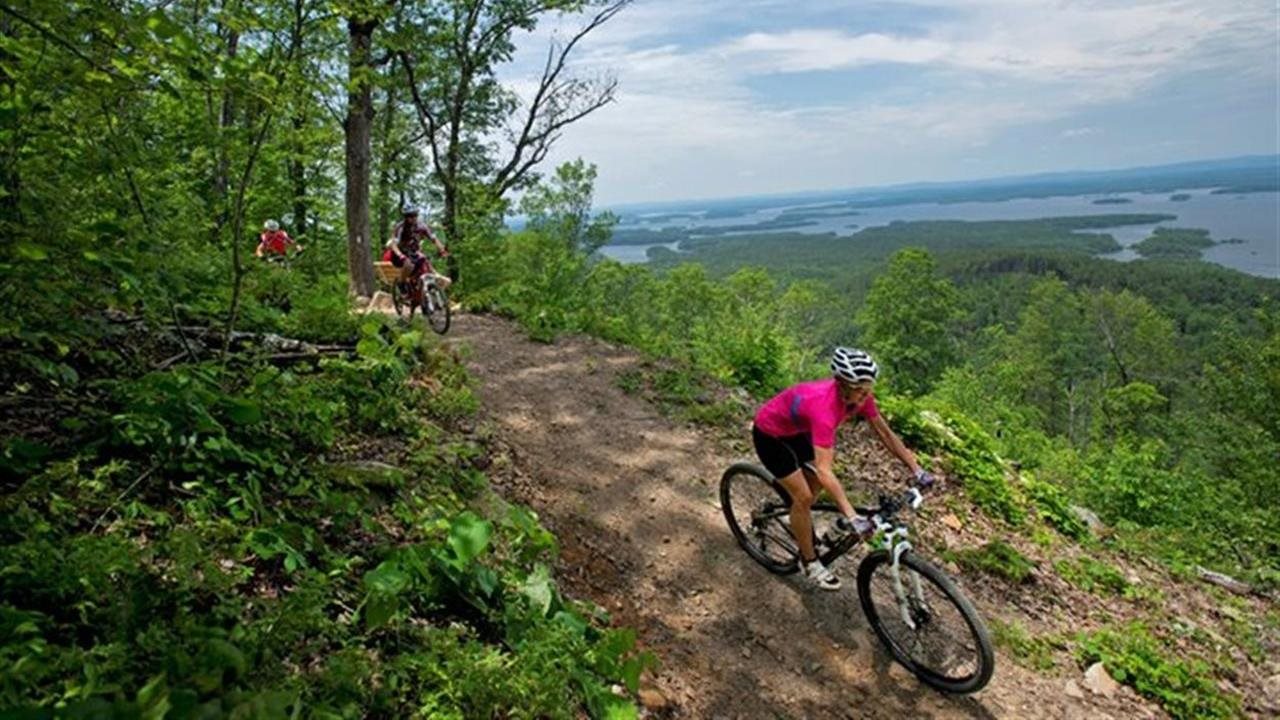
(BPT) – Arkansas boasts a mild four-season climate, diverse terrain and unparalleled beauty, making it the ideal destination for year-round mountain biking for riders of all skill levels.

Recently, mountain biking enthusiasts have been traveling to Arkansas in large numbers because of the state’s public offerings of EPIC-certified mountain biking trails as designated by the International Mountain Bicycling Association (IMBA). In fact, Arkansas offers five EPIC mountain biking experiences:

The Womble — Less than an hour’s drive from Hot Springs, this 39-mile singletrack trail rolls east-west along an Arkansas mountain ridge, following the course of the Ouachita River. The trail provides remarkable scenery, winding through the thick hardwoods and dark pines of the Ouachita National Forest, opening occasionally to spectacular bluffs above the river.

Lake Ouachita Vista Trail — The Lake Ouachita Vista Trail, also known as the LOViT, is a well-designed trail on 90 percent singletrack through an old-growth, mixed-species forest. It offers riders multiple challenges and rewards as it explores deep valleys, five different mountains and multiple streams and creeks. Two of these streams utilize innovative, large-boulder crossings that offer a technical challenge for riders.

Upper Buffalo Headwaters — The Upper Buffalo Headwaters mountain bike trail offers about 40 miles of singletrack surrounding the highest point in the Ozark Mountains. This gem of riding laces around the headwaters of the Buffalo National River on a mixture of narrow, hand-built singletrack and machine-cut flow trails. The ride is extremely remote and offers stunning scenery past steep cliffs, turquoise waterfalls, abundant wildlife and old-growth hardwood forests.

Syllamo Trail — Nestled in the Sylamore District of the Ozark National Forest, the Syllamo Trail is one the finest purpose-built mountain bike trail systems in the country. Arranged in four intertwined loops, the 50 miles of trail provide options for an all-day EPIC or for shorter tours.

Ouachita National Recreation Trail — Located on the western border of the state, this long-distance route explores remote sections of the Ouachita Mountains. The recreational trail offers more than 108 miles, making it the longest mountain biking trail in the state. Riders can expect rugged trail surfaces and some hike-a-bike, but also rideable climbs and rowdy downhill sections. The trail connects with the Womble Trail, another IMBA EPIC in Montgomery County — stringing them together for a mega-epic ride!

In addition to these five EPIC rides, Arkansas has numerous mountain biking trails across the state for all skill levels, offering something for everyone to explore — from leisurely rides with stunning scenery to exhilarating workouts.

One great example is the Northwoods Trail System, a new trail located a few minutes from downtown Hot Springs. Opened recently to the public, the 14.5-mile trail is already receiving praise from riders on its challenging, well-designed course. Carved through a dense forest of towering pine trees, the trail features hand-cut singletrack as well as machine-built flow and jump trails, which allows for a variety of experiences for riders of all skillsets. Check out this video to learn more about how the Northwoods Trails were built.

To learn more about mountain biking and other outdoor adventures in The Natural State, visit Arkansas.com.


Standardized protocols needed to improve health outcomes related to pregnancy complications

2018-12-06T08:01:00

(BPT) – The rates of maternal mortality and preterm birth continue to rise dramatically in the United States. According to the CDC and March of Dimes, more than 700 women die of pregnancy-related causes in the U.S. every year, and more than 1,000 babies are born prematurely every day. It’s impossible to point to one specific cause for these serious issues, particularly because of how segmented our healthcare system is. But by standardizing protocols across the U.S. healthcare system, advocates say we could decrease harm and improve care for women and their unborn babies.

While “healthcare” is often discussed as a monolith, a single system in need of repair, it’s actually a fractured industry composed of thousands of healthcare providers, insurance companies and individual healthcare professionals. When it comes to actual patient care, these divisions result in wide variations across state lines, between healthcare provider networks, and even between individual hospitals and clinics. Experts note that this lack of standardized care, particularly for pregnant women and their unborn babies, often leads to missed opportunities for improved outcomes.

Take, for example, the case of fetal fibronectin (fFN) testing, which is highly effective in helping doctors rule out whether a woman with symptoms of preterm labor is really at risk for giving birth prematurely. A negative fFN test means there is a less than 1 percent chance of a premature birth happening in the next 14 days. But despite its 20 years of proven effectiveness, it remains underutilized. A recent study found that only 12 percent of women who went to the hospital with symptoms of preterm labor received an fFN test as part of their triage assessment.

The result? Women were admitted to the hospital unnecessarily, using critical resources and incurring large medical expenses. Others were sent home when they should have been hospitalized. In fact, a full 20 percent of women in the study who were discharged home gave birth within 72 hours. Failure to utilize proven triage tools that reliably help rule out the risk of imminent preterm delivery, such as fFN testing, resulted in inappropriate hospital discharge, likely leading to missed critical care opportunities.

Where standardized protocols have been implemented, outcomes have been largely positive. According to the American College of Obstetricians and Gynecologists (ACOG), “Protocols and checklists have been shown to reduce patient harm through improved standardization and communication.” Notably, both Mayo Clinic and Brigham & Women’s Hospital implemented standardized triage protocols that included fFN testing, resulting in both cost savings and improved outcomes for both mothers and their babies.

As if improved patient outcomes weren’t enough reason for enacting standardized care, there are other benefits as well. Studies show that Medicaid covers nearly 50 percent of premature births, and overall preterm births cost the U.S. economy more than $26 billion every year. Improved maternal care could reduce those costs and alleviate some of the strain on the entire healthcare system.

While experts acknowledge that every patient case is different and ultimately requires individualized care, it is critical to have a standardized approach to ensure proper evaluation and treatment is considered. Evidence-based protocols for pregnancy-related complications have been shown to improve health outcomes, ensure the appropriate allocation of resources and reduce healthcare costs.