DIY projects to upgrade outdoor living spaces

2020-09-23T10:53:00

(BPT) – The ever-growing popularity of outdoor living combined with more time spent at home is causing many of us to tackle exterior home improvement projects. If you don’t mind getting your hands a bit dirty, here are some DIY ideas for all skill levels to help inspire home spruce-ups that will enhance the beauty and enjoyment of your outdoor spaces.

For more outdoor DIY inspiration, visit https://www.trex.com/deck-ideas.

Customize Comfort

Keep your outdoor furniture on-trend by reupholstering cushions and pillows with weatherproof fabrics. Changing up the material is an easy way to inject more color and pattern into your outdoor space.

Resurface Your Deck

If you are comfortable using a hammer, power saw and drill, you can replace rotting, splintering wooden deck boards with high-performance composite boards like Trex®. Unlike wood, low-maintenance composite decking is incredibly durable and requires no sanding, staining or painting — ever.

Put up a Pergola

Providing versatility and limitless design possibilities, pergolas remain popular backyard additions. Offering a variety of styles, sizes and colors to suit your tastes, pergolas can come in customizable kits that are easy to assemble.

Get Your Game On

Kids are not the only ones who enjoy playing outside! Outdoor play spaces for all ages are on the rise, including everything from swimming pools to sandboxes. Boost outdoor fun this fall by building your own yard games like lawn checkers, horseshoes or cornhole.

Integrate Lattice

For a clever design trick that adds style and functionality, integrate lattice panels to conceal under-deck storage, add a decorative touch to a gazebo, or serve as wainscoting or deck skirting.

Enhance Curb Appeal

A dramatic way to freshen up your entryway is to paint the front door. Grays are a trendy neutral hue, or go bold with red or turquoise. Switch out light fixtures or window shutters for sophisticated yet eye-catching upgrades.

Go Green

Planters are wonderful for decorating, breaking up an expansive patio and adding color. For a thrifty, yet attractive, DIY planter that will last, use composite deck boards. Plus, composite is made from recycled materials, making it an eco-friendly choice.

Light It Up

Extend your time outside long after sundown by installing lighting to illuminate your outdoor space. Easily added to a new or existing deck, Trex® Deck Lighting is energy efficient, durable and dimmable for enhanced safety and ambiance.


6 can’t-miss Florida beach vacations for year-round travel

2020-09-23T12:03:00

(BPT) – If you’re gearing up for a fall getaway or looking to use some of your remaining vacation days this year, Florida has plenty of family-friendly, affordable options for you to consider. These six Florida destinations should be at the top of your list, since they’re known for their amazing scenery, exhilarating atmosphere and excellent accommodations all year long.

Pensacola Beach

The westernmost city in the Florida Panhandle, Pensacola offers mild temperatures year-round. The sugar-white beaches and turquoise waters that greet visitors in “the City of Five Flags” are fabulously pristine, and the local restaurant scene will tantalize your taste buds. History buffs will love exploring downtown Pensacola — historic sites like Fort Pickens or the Naval Air Station Pensacola are well worth checking out.

Consider staying at the Holiday Inn Resort Pensacola Beach, a kid-friendly beachfront hotel with multiple pools, a lazy river and stunning views of the Gulf of Mexico. Say “cheers” at the beachfront tiki bar, book a local excursion or get your seafood fix at the hotel’s restaurant.

Panama City Beach

Florida’s Emerald Coast starts at Pensacola and stretches east along the Gulf to Panama City Beach, a destination that’s a treasure trove of family fun. Spend the day splashing in the water and building sandcastles along the shore. Or rent a Jet Ski for a shot of adrenaline. Or head out on a boat for some serious fishing. Then relax on one of the piers as you soak in the sunset. Don’t leave the area without checking out Shell Island, a 7-mile-long, undeveloped barrier island perfect for shell collecting and spotting coastal creatures in their natural habitat.

For travelers seeking a beachfront hotel in a prime location, the recently opened SpringHill Suites Panama City Beach Beachfront is a great choice. Set right alongside the beach, this property features an outdoor pool with a lazy river and picturesque views of the Gulf.

Amelia Island

On Florida’s Atlantic coast, head to Amelia Island, part of the Southeast’s Sea Islands chain of barrier islands. With postcard-worthy beaches and impressively tall sand dunes, Amelia Island is a dream escape for people of all ages. Besides basking along the beach, visitors can hit the links for some golf, visit the Palace Station Bar and have a chat with the bartender — or even the mayor, enjoy the fine dining options in town, and explore some American history at the Civil War-era Fort Clinch State Park.

The Seaside Amelia Inn is a hidden gem just steps away from a secluded beach. This delightful boutique hotel comes at an affordable rate during any season and offers complimentary beach chair and bike rentals.

Sarasota

An hour’s drive south of Tampa is Sarasota, with its own bounty of cultural offerings and lovely, sandy beaches that have earned their own renown. While here, you’ll want to make time to absorb the natural beauty of the Marie Selby Botanical Gardens.

For an upgraded experience, stay at the Embassy Suites by Hilton Sarasota, an all-suite hotel within walking distance of downtown’s lively Main Street corridor. Embassy Suites is also home to Bridges Restaurant, which has floor-to-ceiling windows that provide spectacular views of the Sarasota Bay and skyline in a comfortable and elegant dining room. In addition to taking in the views, you can enjoy a thoughtfully crafted meal with local ingredients prepared by a 5-star chef.

Cocoa Beach

On the other side of the state is Florida’s Space Coast, which includes scenic Cocoa Beach, also known as the East Coast surfing capital of the U.S. Cocoa Beach has no shortage of activities, from Ron Jon Surf Shop to the Brevard Zoo. Adventure lovers can jam-pack their days with endeavors or beach bums can sit back and relax in the sand.

Beachside Hotel & Suites — a newly renovated boutique hotel — is the place to stay on Cocoa Beach. Its relaxed, retro vibe instantly puts you into vacation mode. Amenities include free beach toys, a lazy river and a poolside bar.

Fort Walton Beach

Back on the Florida Panhandle, Fort Walton Beach is a small town with big charm. The glittering waters and soft sand make this area idyllic, and there’s plenty more in store beyond the shore. When you visit, drop by the Gulfarium Marine Adventure Park, where you can see dolphins, penguins and alligators.

When considering where to stay, check out the Hilton Garden Inn Fort Walton Beach. Nestled oceanside, this hotel features a pool, lazy river, tropical tiki bar and direct access to the beach. The enclosed courtyard and fire pits are perfect for getting cozy during cooler months.


5 Things Women Should Know About PCOS

2020-09-22T10:01:01

(BPT) – Do you struggle with irregular periods? If so, you might be one of the 5 to 10% of women impacted by polycystic ovarian syndrome (PCOS). PCOS is a hormonal disorder caused by elevated levels of male hormones, which can lead to irregular periods and a lack of ovulation. If ignored, PCOS can have a lasting impact on a woman’s health and fertility.

Unfortunately, many women struggle with PCOS for years (and in some cases, decades), before they seek treatment. CCRM Fertility, a global pioneer in fertility science, research and treatment, has compiled a list of the top five things every woman and young girl should know about PCOS to ensure she gets the support and care needed to keep her PCOS in check:

1. PCOS is commonly misdiagnosed or goes undiagnosed.

The most common sign of PCOS is irregular periods. It’s also one of the earliest signs, making it difficult to recognize in teenage girls who are still experiencing unpredictable menstrual cycles. Other signs include acne and weight gain, neither of which are uncommon in young women. One study found nearly 70% of women with PCOS hadn’t been diagnosed.

“Oftentimes I hear from women who tell me they asked their doctor about irregular periods and their doctor was not concerned,” said Dr. Stephanie Dahl, a board certified reproductive endocrinologist at CCRM Fertility. “The truth is, if you’re having irregular periods and there is not another underlying hormonal issue, like pregnancy, breastfeeding or being on birth control, there is cause for concern.”

Unfortunately, there is no single test to diagnose PCOS. Rather, doctors use The Rotterdam Criteria to determine if a woman has PCOS. Two of the three symptoms must be present to meet the criteria: irregular menstrual cycles or the complete absence of cycles, hyperandrogenism, which is characterized by acne or excessive hair growth on the face, chest and back or high androgen levels in the blood, and finally, the ultrasound appearance of the ovaries, specifically multiple small cysts on the ovaries.

2. Women with PCOS can get pregnant naturally.

Because women with PCOS frequently have difficulty ovulating, PCOS is often associated with infertility. However, not everyone who has PCOS has fertility issues. For women with PCOS who are struggling to get pregnant, oftentimes weight loss is enough to help regulate menstrual cycles.

“Women with PCOS who lose 5 to 7% of their body weight can develop regular menstrual cycles, and their chance of getting pregnant on their own, without the assistance of fertility treatment, doubles,” comments Dahl.

3. PCOS is not curable, but its symptoms can be managed.

Normally, the brain sends hormones to the ovary each month, which signals the egg to grow. When the egg has matured, it is released into the fallopian tube — a process known as ovulation. “In women with PCOS, the brain is sending these messages, but the ovaries are not listening so well because high insulin and testosterone levels are making too much background noise,” explained Dahl. For many women, weight loss through improved diet and exercise can help to improve insulin levels, alleviating the symptoms associated with PCOS.

For women with insulin resistance as a result of PCOS, doctors may prescribe a medication like Metformin, which is more commonly used to treat type 2 diabetes, to bring insulin levels down. Birth control may also be prescribed to decrease testosterone levels and regulate the menstrual cycle. For women who are trying to get pregnant, fertility experts find alternative medications, such as Clomid or Femara, work to help women ovulate.

4. Not all women with PCOS are overweight.

While it is more common for women with PCOS to be overweight or obese (a body mass index greater than 30), women who are lean or of healthy weight can also have PCOS. This is referred to as “lean PCOS.” These women are still faced with high androgen levels and the resulting symptoms, such as irregular periods, acne, unwanted hair growth and fertility issues. Maintaining the right diet and exercise can reduce the symptoms of women with lean PCOS.

5. Ignoring PCOS can lead to long-term health issues.

Younger women may tend to disregard gynecological issues. However, PCOS can have long-term health and fertility implications, so it’s important to seek medical help if you notice something is wrong. Anytime the uterine lining is not shedding normally through menstruation, it becomes abnormal and can cause problems like endometria hyperplasia, which can lead to uterine cancer. Women with PCOS have a higher risk of developing diabetes and high blood pressure. PCOS is associated with sleep apnea, which can lead to additional health problems. It’s also worth noting women with PCOS often experience higher levels of depression and anxiety.

The bottom line: If you’re having an irregular period, make sure you see someone who takes it seriously. “Beyond PCOS, you’ll want to rule out other hormonal problems as a cause of the symptoms,” adds Dahl. “Anyone worried about this should be evaluated by a doctor. The sooner you can get a correct diagnosis, the better.”

If you think you might have PCOS or if you’ve been diagnosed with PCOS and are struggling to conceive, it’s important to speak with a fertility specialist.


Your Future Protected: Considerations for Long-Term and Short-Term Care for Americans 50 and Older

2020-09-22T07:01:00

(BPT) – When planning for the future, security and peace of mind are likely top of mind, particularly for Americans age 50 and older. There are many considerations — from income planning for retirement, to considering potential healthcare needs, to getting one’s personal affairs in place. As you and your loved ones prepare for both expected and unforeseen events, you may want to add a long-term and short-term care strategy to your list to ensure your bases are covered for future care you may need as a result of the aging process.

Here are some key considerations for long-term and short-term care coverage to help you determine how to best protect your and your family’s future.

Understanding long-term and short-term care

Long-term care – 70 percent of individuals over the age of 65 will need some type of long-term care services in their lifetime.

Long-term care insurance provides you with coverage for services that can help you meet non-medical care needs (such as bathing, dressing, and transferring) if age, injury, illness, disability or a severe cognitive impairment affect your ability to take care of those needs yourself. Long-term care coverage includes a variety of care options, ranging from home care, assisted living, adult daycare, and nursing home care, depending on the type of assistance needed. Some policies also cover informal care, which is care provided by a friend or family member. Coverage can be tailored to each individual and even a smaller policy provides access to valuable benefits to help address a long-term care need. Long-term care insurance generally covers care for longer periods of time, with common benefit periods ranging between two and seven years.

When thinking about how to receive long-term care, individuals may plan to rely on family, Medicare or Medicaid, self-insuring or purchasing a long-term care insurance policy.

In 2018, nursing home costs averaged more than $91,000 a year nationally, according to a 2018 Cost of Care study from New York Life. Most Americans would quickly deplete their retirement savings if they needed care for an extended period. Even if you can afford to pay for long-term care services out-of-pocket, consider the benefits of sharing the risk and costs by having a strategy in place.

Long-term care coverage options have evolved to meet most any need and cost range. Plans can be personalized to suit your budget and discounts may be available to partners and spouses. You don’t need to cover the entire cost of a long-term care event to reap the benefits of having a policy. Even a small policy can help reduce the financial and emotional burden of a long-term care event and provide access to valuable features and benefits.

Short-term care – Short-term care options provide coverage for up to a maximum of 360 days for five types of care, including home health, adult daycare, assisted living facility care, nursing home care, and hospice care. It does not cover informal care.

Short-term care coverage can be used to help with recovery costs from an illness or injury, or to transition from living independently to receiving assisted care at home or in a facility. It also provides benefits for individuals who suffer from a cognitive impairment, including confusion, poor motor coordination, loss of short-term or long-term memory, identity confusion, or impaired judgment.

This type of coverage:

  • allows you to switch among facilities if your circumstances change and you require more or less care;
  • can help cover the cost of different types of care for up to 360 days; and
  • requires a board-certified physician statement to receive benefits.

Short-term care plans can be customized by benefit duration, benefit amount, and elimination period to meet your specific needs. You can set the number of days covered in your plan and the daily amount of coverage you think you will need to find a premium that works for your budget.

Review the differences between coverage periods for short-term and long-term care

The main differences between short-term and long-term care are coverage duration, waiting period, and benefit amount. Short-term care usually has a shorter benefit period and a smaller benefit amount. Waiting periods for both long-term care and short-term care plans can vary. Most short-term care plans have no waiting period. When it comes to long-term plans, there may be a longer waiting period or none at all depending on the plan.

Short-term care options can complement long-term care options particularly for individuals age 50 and over. Short-term care coverage can also be used as a fallback option if someone is uninsurable for long-term care, as short-term care is generally easier to qualify for based on your health. Long-term and short-term care options can also help cover expenses not paid by Medicare or supplemental insurance coverage.

Assess potential gaps in long-term and short-term care coverage provided by Medicare

Long-term care – Surprising to many, long-term care is not generally covered by health insurance or government programs, but many people do not discover this until they, or a loved one, needs care. The benefits of long-term care options go beyond what your health insurance may cover by reimbursing you for services needed to help you maintain your lifestyle if age, injury, illness, or a severe cognitive impairment makes it challenging for you to take care of yourself. Medicare is designed to assist people during short-term recovery and may cover a maximum of 100 days of services after a hospital stay.

Short-term care Medicare provides benefits for 100 days of skilled nursing care, but you must be hospitalized to be eligible for them. Medicare pays 100 percent for up to 20 days, but you will be responsible for an out-of-pocket copay for days 21 to 100.

Consider timing for making decisions on long-term and short-term care coverage

Because you never know when your need for care will arise, it is recommended that you consider long-term care insurance options when you are younger and healthier and more likely to be insurable, as insurability can change at any time and premiums tend to be lower at younger ages (underwriting is required). It can also help provide you with financial resilience and peace of mind in retirement, knowing you have coverage in place that can help fund long-term care, if needed, without sacrificing other retirement assets. It is important to talk to your loved ones about how you would like to address both short-term and long-term care events.

Getting information from trusted sources is important as you make decisions, and AARP Member Benefits is an online resource for Americans 50 and older with information on benefits for AARP members. It provides information about long-term care options and short-term care options that can be a helpful resource and part of discussions about planning for retirement and your future. AARP members can access information at: https://www.aarp.org/benefits-discounts/healthcare/.



Free TV and other low-cost activities to cure boredom at home

2020-09-22T11:01:01

(BPT) – Social distance, remote work and shelter in place orders continue. As seasons change, the dropping temperatures drive more people indoors as well. Now that you’re spending more time at home, what can you do to make the most of it? Many people want to find fun at-home activities that are budget-friendly to help them enjoy the extra time being spent indoors. You can maximize your home time, strengthen your relationships and make memories together with these low-cost ideas.

Free TV: Shorter days mean longer nights for great movies, shows and so much more. Grab a blanket and cozy up with a new or favorite TV show together with the TiVo Stream 4K streaming player. Not only does the TiVo Stream 4K integrate all your favorite streaming services, but it also provides thousands of hours of movies, TV shows, sports, news and music via its free TiVo+ network. This fall, TiVo is celebrating an incredible breadth of free content including new and classic movies and TV shows, sports, news, Spanish-language and music channels. All you have to do is plug in your TiVo Stream 4K and select any of the more than 140 channels with thousands of hours of incredible entertainment. Sit back, relax and watch great TV for free. Learn more at www.tivo.com.

Board games: Whether it’s a classic board game from your childhood or a new release, family game night is tons of fun when you gather everyone around the table for some friendly competition. Remember Parcheesi? Aggravation? Mystery Date? You may have a collection of games you haven’t played in some time, but if not, shop online marketplaces for cheap used or nostalgic games to share with the next generation. Another option is to ask neighbors if they want to do a (sanitized!) game swap and trade for a few days or weeks so everyone can enjoy something new.

Movies: Plan a themed movie night with your family. With the TiVo Stream 4K, select from tens of thousands of free streaming and on-demand movies. Plus, you don’t have to waste time learning to navigate a new screen with every app. TiVo Stream 4K offers one centralized place for searching, browsing and creating watch lists across all your apps. Say you want to watch the latest action movie, but don’t know what platform it’s offered on; instead of searching within one app unsuccessfully then switching to another, TiVo Stream 4K searches all your favorite streaming platforms simultaneously.

Puzzles: Exercise your brain by tackling a puzzle together with your crew. Whether it’s a smaller 50-piece option with characters your kids love or a massive 1,000-piece elaborate lifestyle scene, it’s fun to converse and work on one as a team. If you’re ambitious and want something different, consider a 3D puzzle — you could build your own mini Taj Mahal or Eiffel Tower, transporting your imagination across the world from the comfort of your living room. Shop sales and used puzzles to save money, and support small-business owners by browsing the websites of your local bookstore, toy store and novelty shop for delivery or curbside pickup.

Free classes: Many organizations are offering free educational videos to engage people during the pandemic and beyond. Simply do a web search for “free” and the type of class you desire and you’ll find a plethora of options. The Museum of Modern Art (MoMA) is just one organization offering online classes you can access 24/7, ranging from photography to fashion. Want to expand your kitchen skills? The Institute of Culinary Education is hosting free online cooking and baking classes via Zoom — all you have to do is sign up and get your ingredients! You’ll find many options that inspire your family to learn something new and enjoy their time at home.

Just because you’re at home this fall doesn’t mean you can’t make the most of it. Find some low- or no-cost activities using these ideas and you’ll discover just how fun being at home can be.


How to prioritize breast health in the era of COVID-19

2020-09-21T12:31:00

(BPT) – With Breast Cancer Awareness Month approaching in October, breast health may be top of mind among many women this time of year. But as COVID-19 continues to spread in some areas of the country, some women may feel hesitant to get a mammogram or cancer treatment this fall. With one in eight women at risk of developing breast cancer, it is still important to prioritize your breast health. The latest advances in breast cancer detection and treatment can help you get the care you need and minimize your risk of virus exposure. Here’s what you need to know about going to — and staying out of — the doctor’s office this year.

Artificial intelligence enhances mammography and protects patients

Earlier this year, several medical organizations recommended women postpone breast cancer screening until the threat of COVID-19 passed, which resulted in a decrease in mammograms of up to 92% in some areas, according to a study in the Journal of the American College of Radiology. Now that screening has resumed in many areas, it’s important for women to schedule their mammograms, as cancers found earlier may be more easily treated.

“In my practice we’ve taken many precautions to keep our patients safe, including social distancing, remote check-ins and extensive cleaning of our equipment between patients,” according to Randy Hicks, M.D., Co-owner and CEO of Regional Medical Center in Michigan. “We also use the latest in artificial intelligence (AI) technology, ProFound AI, with all of our mammography screenings. According to a recent study in Radiology: Artificial Intelligence, this technology is clinically proven to enhance breast cancer screening, as it improves sensitivity by 8% and decreases the rate of false positives and unnecessary callbacks for patients by 7%. This may reduce the number of times women need to come to our facility, which may also reduce their risk of virus exposure.”

In 2018, ProFound AI for DBT became the first AI software for 3D mammography to be FDA-cleared, and it is currently being used in a growing number of leading-edge facilities worldwide. Ask your doctor if he or she offers mammograms with this cutting-edge AI technology.

One-day breast cancer treatment offers convenience for patients and minimizes virus exposure

Women who are diagnosed with breast cancer this year may feel apprehensive about getting treatment, as it could potentially involve multiple trips to the hospital or clinic, where one might be exposed to COVID-19. But long-term studies recently published in the Annals of Surgical Oncology and British Medical Journal support a one-day treatment option for certain patients with early-stage breast cancer called intraoperative radiation therapy (IORT).

Xoft breast IORT allows women who are candidates to replace weeks of daily radiation fractions with just one dose of radiation, performed at the time of lumpectomy — in as little as 10 minutes. A growing body of evidence shows IORT to be an effective radiation treatment for select low-risk patients with fewer side effects,” according to Sadia Khan, D.O., FACS, Assistant Clinical Professor of Surgery at Keck School of Medicine, USC, Director of Integrative Breast Oncology at Hoag Breast Program in California. “Many patients find IORT to be more convenient — especially women in rural areas who might be required to travel great distances to the hospital or imaging facility. It also minimizes patients’ potential exposure to COVID-19 as it greatly reduces the number of times they need to come in for treatment.”

The Xoft System is FDA-cleared, CE marked and licensed in a growing number of countries for the treatment of cancer anywhere in the body. If you or someone you know has been diagnosed with breast cancer, ask your doctor if this targeted therapy might be an option. To find a facility that offers this treatment near you, visit this link: https://www.icadmed.com/find-a-facility.html.


Survey Finds Breaks Help Prevent Work-From-Home Burnout [Infographic]

2020-09-21T14:31:00

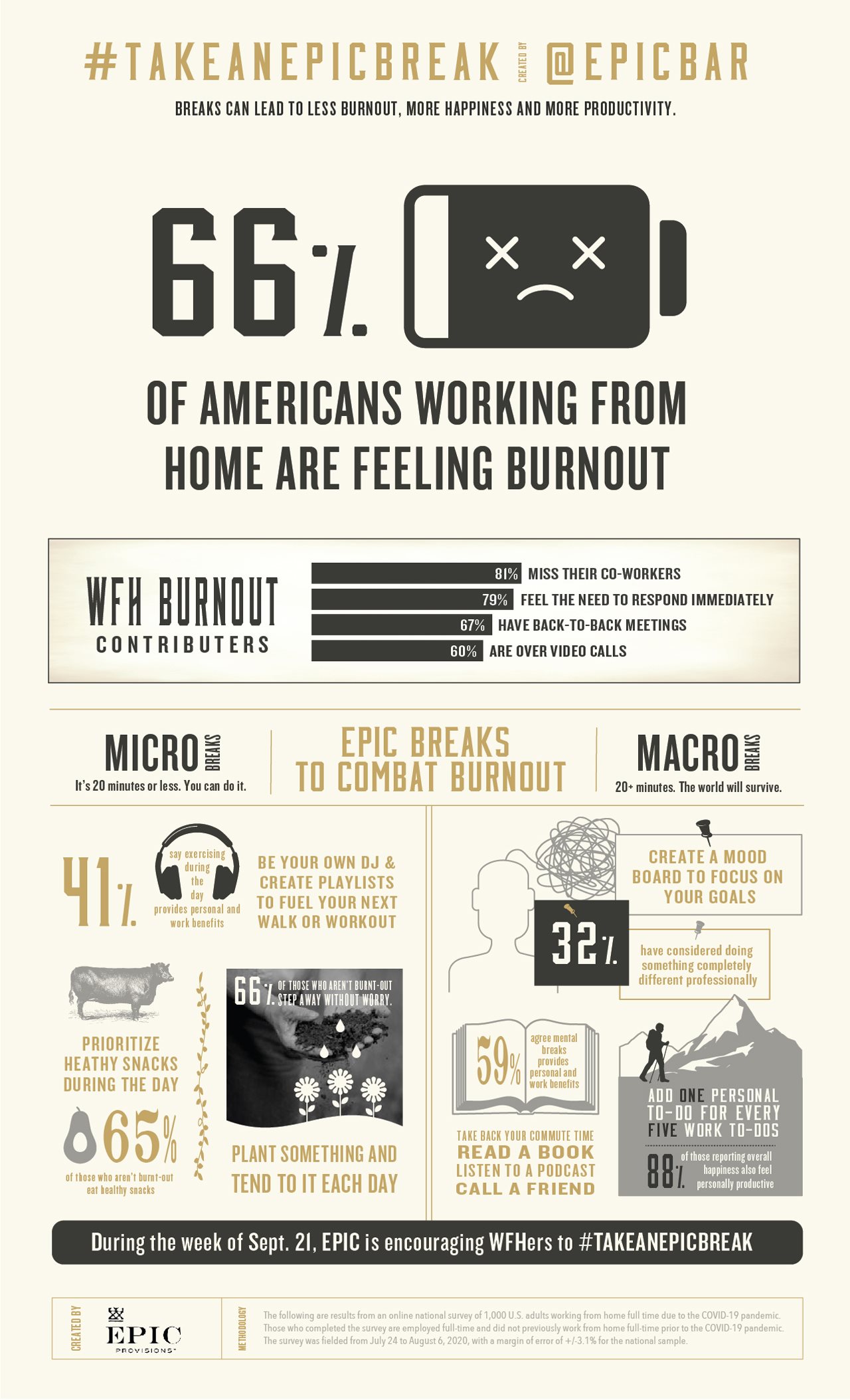
(BPT) – Today, EPIC Provisions unveiled the results of a national survey it conducted to understand how Americans are faring in the new work-from-home environment that is dominating 2020 due to the COVID-19 pandemic. While it’s no surprise that two-thirds (66%) of work from homers (WFHers) are feeling some degree of burnout, the findings also show that nearly one-third (32%) have thought about doing something completely different professionally.


What to expect at your next dental visit

2020-09-21T10:01:02

(BPT) – Going to the dentist has always been an important part of the overall health care routine. Even now, regular dental appointments are critical to good overall health and it is safe to see your dentist.

You have questions. Will I be safe? Is my dental office following precautions? What should I do if I’m still nervous? These are realistic considerations in the COVID-19 world we now live in.

Dentists are taking all possible measures to ensure the safety of their patients, staff and themselves. It’s important patients keep up with their preventive and routine dental care to support their overall health. The Academy of General Dentistry (AGD) says it is normal to have anxiety and want to delay your routine dental appointment out of concern for coronavirus exposure. Before you decide to do so, contact your dentist and ask about their current operating procedures designed to ensure your safety.

“Dentists have been applying extensive infection control standards in their practices for decades,” says Sheila Samaddar, DDS, a general dentist in Washington, D.C., and member of the AGD. “Infection control tools such as masks, gloves and gowns have long been required in all practices. We followed strict procedures before COVID-19 and since have expanded those measures to ensure all spaces in dental offices are disinfected too.”

Here’s what to know when planning and visiting your dentist during this time.

First, your dentist’s office has taken the recommended measures to make sure your visit is safe and they are ready to treat you.

“We care about our patients and want to ensure their safety,” Lorna Flamer-Caldera, DDS, FAGD, a general dentist in Greenwich Village, New York, and a member of AGD, says. “Your dentist and their practice have put thoughtful procedures in place to make sure you and your family are protected, adhering to guidelines from the U.S. Centers for Disease Control and Prevention and other state and local agencies. They’re altering check-in procedures, increasing the pieces of personal protective equipment worn by staff, minimizing person-to person contact, and have enhanced cleaning and sterilization.”

New check-in procedures, including screening procedures and social distancing strategies, are designed to protect patients and staff during a dental appointment.

“Your oral and overall health is our priority, and we are asking patients a few screening questions in advance of appointments,” adds Flamer-Caldera. “We are also asking patients to wait outside or in their vehicle prior to the appointment, wear a mask within the office when not being seen or treated by the dentist, or stay home and reschedule if you are feeling unwell the day of your appointment.”

Second, delaying your dental care may result in additional and more costly problems in the future.

“Scheduling that overdue dental appointment is more important than ever now, as dental offices are working to manage patients who put off treatment during COVID-19,” says Dr. Samaddar. “Patients should visit the dentist regularly to ensure that dental problems are caught early. In addition to teeth cleaning, we screen patients for oral cancer and other conditions. This is an important part of taking care of your overall health.

“You may end up having to undergo and pay more for procedures that professional intervention could have prevented early on,” says Dr. Samaddar. “Early detection and routine professional care typically improve overall oral wellness outcomes.”

Third, feelings of anxiety caused by the pandemic may be difficult for patients, compounding fears and making it difficult for some to schedule an appointment. Talk to your dentist about your concerns.

“We are familiar with dental anxiety and helping patients work through their fears,” says Flamer-Caldera. “Give your dentist a call to address your concerns, as many of your needs can be resolved simply by talking about them. Your dental team will inform you of what to expect and answer your questions to ensure your comfort during an appointment.”

Of course, it’s important to keep up with at-home oral hygiene as well, such as brushing for two minutes twice daily, flossing, and avoiding sugary foods and liquids.

For more information on where to find guidance around visiting the dentist right now, visit www.agd.org/seeyourdentist.


New study on heart health: Get more omega-3s

2020-09-21T11:01:01

(BPT) – If you’re trying to improve your heart health, chances are you’re doing things like moving more and eating better. Making sure your diet delivers heart-healthy nutrients, including healthy fats, is a smart strategy. A new study from Mayo Clinic Proceedings provides more evidence on why certain fats — namely EPA and DHA omega-3s — are so important, and why you probably need to be getting even more than you think.

What are EPA and DHA omega-3s?

Eicosapentaenoic acid (EPA) and docosahexaenoic acid (DHA) are the two most beneficial omega-3 fats. EPA and DHA are found in marine foods like fish (primarily fatty fish such as salmon, mussels, anchovies and sardines) and are important for overall health, including heart, brain and eye health throughout life; during pregnancy for both mom and her growing baby; and for brain and eye development in infants.

While most Americans know what omega-3s are, 95% are not getting enough EPA and DHA omega-3s in their diets. The body doesn’t make enough EPA and DHA on its own, so they must be obtained from the foods you eat and supplements you take.

New study shows the impact of EPA and DHA on heart health

The omega-3 research published in Mayo Clinic Proceedings is the most comprehensive analysis to date on EPA and DHA dosage and its role in cardiovascular prevention, with a review of 40 clinical trials. The authors conclude that EPA and DHA omega-3s are associated with reduced risk of coronary heart disease, the number one cause of death for Americans, and reduced risk of heart attack, including fatal heart attack.

“The evidence continues to support the notion that EPA and DHA intake contribute to cardioprotection, and that whatever you may be getting through the diet, you likely need even more,” said Dr. Carl “Chip” Lavie, a cardiologist and one of the authors of the study.

One of the more striking findings in the study is that benefits appear to increase with dosage. For example, an extra 1,000 milligrams per day of EPA and DHA decreases the risk of cardiovascular disease and heart attack even more. (Note: Study results included dosages up to 5,500 milligrams.)

“People should consider the benefits of omega-3 supplements, at doses of 1,000 to 2,000 mg per day — far higher than what is typical, even among people who regularly eat fish,” added Lavie.

“Taking omega-3 supplements is a relatively low-cost, high-impact way to improve heart health with few associated risks.”

How to boost your EPA and DHA intake

The average intake of EPA and DHA omega-3s in the U.S. is about 100 mg per day, far below the recommended amount of 1,000 mg per day supported by the Mayo Clinic Proceedings paper.

To get more EPA and DHA omega-3s:

  • Increase the amount of fatty fish in your diet. Most Americans eat only half the recommended eight ounces per week.
  • Consider an omega-3 supplement. In addition to eating healthy fish, a daily omega-3 supplement helps you maintain your EPA and DHA levels.
  • Add some omega-3 fortified foods to the mix. While most foods fortified with EPA and/or DHA usually offer a small amount per serving, every little bit helps.

Look for a quality supplement

Omega-3 supplements are like an insurance policy for your heart, brain and eyes, especially if you’re not eating enough fatty fish each week. When choosing a supplement, read the “Supplement Facts” panel on the packaging for the amount of EPA and DHA per serving, and how much you need to take to get a full serving. Also visit AlwaysOmega3s.com/GOEDQuality, which includes a list of companies that are members of the Global Organization for EPA and DHA Omega-3s (GOED) and adhere to strict quality standards for their products.

Talk to your healthcare provider for specific advice and recommendations for your diet and about getting more EPA and DHA omega-3s. You can even get your omega-3 levels measured by your clinician, or by doing a simple finger-prick test at home.

For more information about EPA and DHA omega-3s, visit AlwaysOmega3s.com.


How to beat “Blursday”

2020-09-21T08:05:01

(BPT) – Wondering how to beat Blursday and keep your days straight?

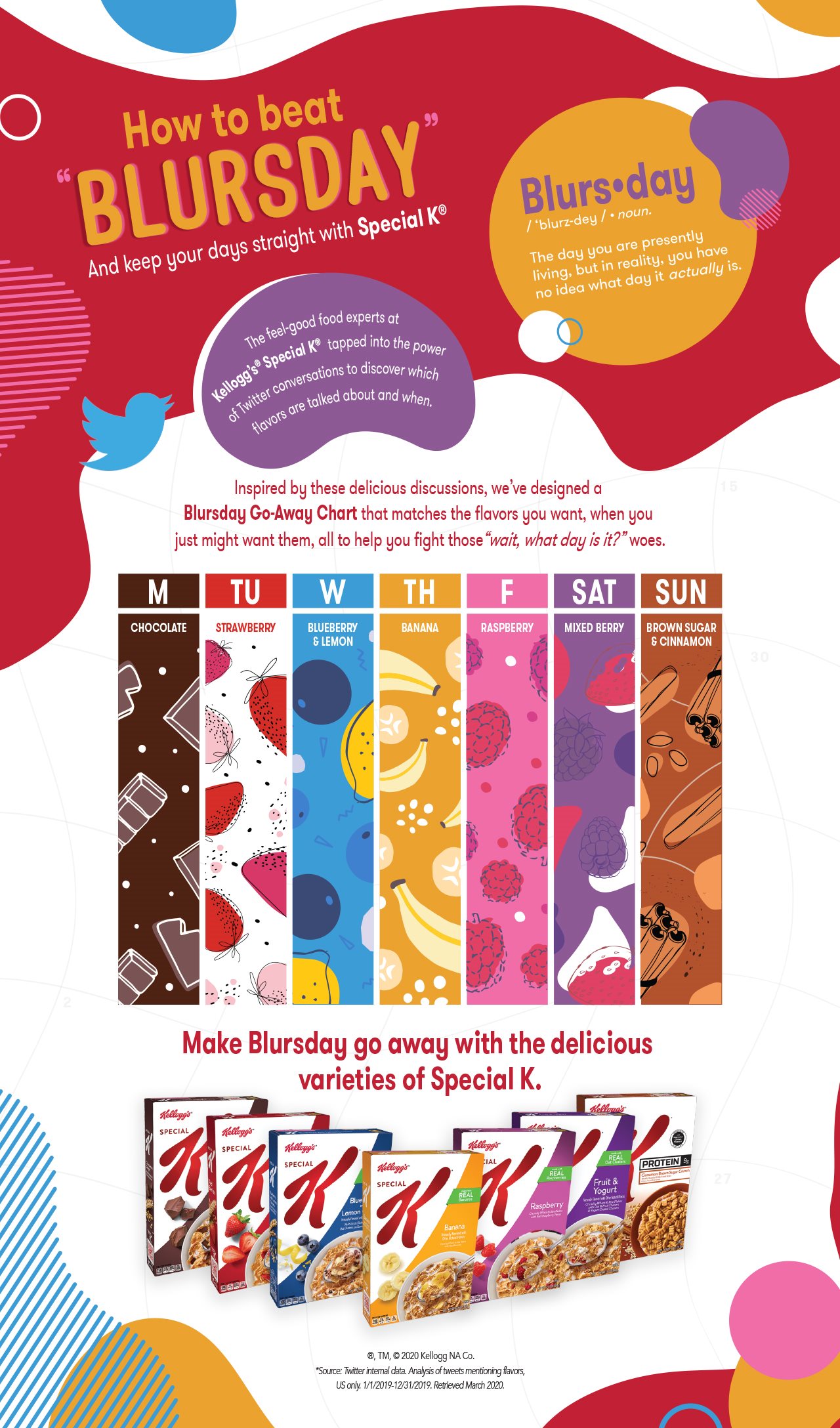
The feel-good food experts at Kellogg’s® Special K® tapped into the power of Twitter conversations to discover which flavors are talked about and when.

Inspired by these delicious discussions, we’ve designed a Blursday Go-Away Chart that matches the flavors you want, when you just might want them, all to help you fight those “wait, what day is it?” woes.