5 positive ways older adults can enjoy a balanced lifestyle

2022-05-24T23:01:00

(BPT) – As you age, it may be challenging to keep your life feeling both balanced and positive. For example, keeping up with your own health and nutrition, changes to your professional career, and spending time with friends and family can all lead to stress, which may have a negative impact on your overall feeling of well-being. Fortunately, you can help support a well-balanced lifestyle by making more positive choices around nutrition and daily activity.

Here are five things you can try to improve the balance in your daily life.

1. Sneak in more protein throughout your day

Protein is considered to be one of the most important nutrients as you get older, yet up to 44% of adults over 60 do not meet minimum protein requirements, according to The Journal of Nutrition, Health and Aging. You can increase your daily protein intake with snacks like nuts, seeds and Greek yogurt, but it can still be challenging to get enough protein through normal diet.

One easy and delicious way to add more protein to your day is the new BOOST High Protein Cinnabon Bakery Inspired Flavored Nutritional Drink, which contains 20 grams of high-quality protein to help maintain muscle, plus 27 vitamins and minerals to help meet your daily nutritional needs — with no artificial sweeteners, flavors or colors. Protein plays an important role in muscle health, bone health and immune function, so stock up on these drinks and enjoy daily.

2. Try new recipes

Visit your local grocery store or farmers market regularly to stock up on fresh fruits and vegetables, which provide vitamins, fiber and other nutrients that your body needs. Have fun experimenting with new recipes using these fresh ingredients, and you may discover all kinds of interesting new textures and flavors.

For example, try this easy and tasty recipe using fresh fruit, Greek yogurt and BOOST High Protein Cinnabon Bakery Inspired Flavored Nutritional Drink:

Mango Lassi Inspired Cinnabon BOOST Parfait

Ingredients:
1 whole mango
1/3 cup plain Greek yogurt
1 bottle of chilled BOOST High Protein Cinnabon Bakery Inspired Flavored Nutritional Drink

Directions:
Peel and dice mangos.
Add mango, yogurt and BOOST High Protein Cinnabon Bakery Inspired Flavored Nutritional Drink to blender.
Blend on high for 30-40 seconds or until a thick texture is achieved.

3. Explore the outdoors

Fresh air can feel invigorating, and getting exposure to even a small amount of sunshine every day gives you vitamin D, which is known to help boost your mood and energy. A simple way to enjoy the outdoors is to take a daily walk, but if you want more variety, consider new hobbies that bring you out into Mother Nature.

Taking part in outdoor activities can make a real difference when it comes to finding balance and enjoyment each day. Swimming, biking, hiking, yoga, gardening and more — whatever pastimes that get you moving outdoors, bring you joy, and put a smile on your face are worth spending time doing.

4. Plan social times

Having strong social ties and meaningful relationships increases quality of life and adds balance and meaning to your days. It’s not about quantity of connections, it’s about quality. Make time to socialize with friends, families and people in your community.

Some ideas include joining a book club or game group, planning weekly phone chats with friends, meeting for monthly lunches with family, and signing up for continuing education classes in subjects of interest or groups at your local community center or church.

5. Prioritize rest

A balanced day isn’t just about eating well and moving your body. You need to make rest a top priority, especially as you age, so your mind and body can properly recover. This means getting at least seven hours of sleep a night, as well as taking breaks during the day if needed. There’s nothing wrong with a quick nap, so listen to your body.

Using these tips, you can start finding better balance in your life and supporting your wellness journey by taking positive steps that help you feel your best, every day.

4 skills veterans bring as team members in civilian careers

2022-05-24T16:35:00

(BPT) – Each year, the U.S. military generates thousands of professionals with highly specialized, transferable skills. Beyond technical and operational expertise, every service member gains skills that help keep teams afloat and foster cohesion and productivity, serving them well in their civilian careers.

During Military Appreciation Month, it’s important to recognize the value of these skills that veterans bring to businesses and organizations that employ them. Microsoft Military Affairs — which helps veterans and transitioning service members get their footing in tech — recognizes veterans’ unquantifiable value and experience in their civilian work.

To help you understand the value-add veterans are to the businesses and organizations that hire them, MMA has highlighted four skills former service members bring to the table.

1. Adaptability

If you ask a veteran what they ‘did’ on active duty, the answer will be impressive. During their time in the military, service members experience continuous on-the-job learning, constantly gaining new skillsets and specialties within new teams and environments. As agile, resourceful learners, veterans can pivot on a dime, bringing tenacity and personal initiative to every challenge.

Cybersecurity, cloud administration and cloud application development are quickly evolving fields that require adaptability, which former service members have in spades. This adaptability allows veterans to thrive in an environment of constant flux and can bridge critical knowledge gaps that drive new solutions to business challenges.

2. Resilience

Resilience is part of any service member’s training. Military service members know how to complete the mission set before them, whether it’s deployment to crisis areas, moving families to a new base or country, sacrificing holidays and time with loved ones, or enormous physical and mental challenges.

A veteran’s experience in overcoming obstacles and “staying on target” served them well during their military service and will continue to serve them as civilian and private sector professionals, particularly as the work environment and customer needs continue to evolve.

3. Teamwork

Teamwork is a critical skill in the military because members must operate in unison for the mission to succeed. This “stronger together” mindset cultivates a deep understanding of the value each member brings to a team and how to facilitate trust to develop cohesion.

Veterans know how to join, develop and empower a team to operate as a unit. These interpersonal skills allow former service members to work productively and establish trust with different groups and personalities, fostering collaboration and teamwork.

4. Leadership

Adaptability, resilience and teamwork are all skills that ultimately make veterans agile, thoughtful leaders on any team. While the pressures they face on active duty are very different from those they’ll face in civilian life, veterans can be relied on to bring decisiveness and poise to even the most stressful environments.

Former service members are steady, focused and equipped to make tough decisions in some of the most stressful situations. As crisis managers, they know how to manage stress, deescalate and provide balance in a challenging environment. This advanced degree of “grace under pressure” allows former service members to push through when a project doesn’t go according to plan, find a solution and lead a team to success.

These are just a few of the core skills veterans bring to their jobs outside of military service. To learn more about how Microsoft is helping former service members leverage their skills in the technology industry, visit Military.Microsoft.com and the Microsoft Software and Systems Academy page or follow Microsoft Military Affairs on LinkedIn.

The rewards of family caregiving and how to make the most of it

2022-05-24T08:01:00

(BPT) – If you’re one of the 53 million Americans who are caregivers for a relative or friend, you already know it’s a challenging job that often goes unrecognized. But you also know something others may not: Caring for a friend or family member can be one of the most rewarding things you’ve ever done in your life. You’re spending every day giving them the personalized care and attention they deserve. You’re doing for them what you hope someone will do for you one day when you need it — showing love and compassion through your everyday actions.

To make the most of your time caring for your loved one, it’s important to care for yourself as well, so you’ll be at your best and able to enjoy the time you have with them as much as possible. Fortunately, there are many positive steps you can take to not only get rest and respite when you need it, but also to embrace your role as the most important person in their life right now.

Here are tips and resources to support your own self-care, and to reaffirm the important work you do every day.

Find a community of caregivers

Whether it’s an online group or in-person support, being able to communicate and share with other caregivers who understand your daily experiences can help you keep your spirits up when things are difficult and celebrate when things are going well. Ask your hospital’s social work office for referrals, or check out the Administration for Community Living at ACL.gov and the Family Caregiver Alliance at Caregiver.org to find support groups. PowerfulToolsForCaregivers.org is another great resource.

Reframe your time with your loved one

When was the last time you and the person you care for just sat outside and enjoyed the sunshine, played a favorite game, or watched a movie together? Make time to do things that you both enjoy. Look for solutions if previous activities are difficult. If reading a favorite book is hard for your loved one, read aloud to them — or try an audiobook so you can both take a break and just listen.

Take care of yourself

You know you have more energy and enthusiasm when you take good care of yourself, but it’s all too easy to deprioritize your own needs when you’re a caregiver. Make sure you’re getting a full night’s sleep, eating well and moving your body at least a few days a week.

Caregiving can be physically taxing, which is especially difficult if you already experience pain, such as osteoarthritis (OA), the most common type of arthritis. If you experience stiffness and pain in your joints, you may find it hard to get moving some days. To relieve OA pain, try Voltaren Arthritis Pain Gel, the first prescription-strength, over-the-counter nonsteroidal anti-inflammatory gel that targets arthritis pain at the source. The active ingredient in Voltaren Gel, diclofenac sodium, is an effective medicine clinically proven to relieve joint pain due to arthritis. You apply it directly at the site of arthritis pain to deliver pain relief in the hand, wrist, elbow, foot, ankle or knee.

Share the care

Find ways to share caregiving tasks with friends, family members or community groups such as your house of worship or an organization dedicated to the condition of your loved one. Be specific when asking for help. For example: “I need help filling out some forms,” “Can you pick up these five things at the grocery store tomorrow?” or “Could you visit with her for two hours while I go run some errands?” Try to include friends, family and support group members in celebrations like birthdays and holidays, as the more social interactions you and your loved one have, the more you both will benefit.

Don’t do it alone

If you need more assistance than friends or family can provide, seek help from trained home health care aides or other professionals. Your loved one’s insurance may cover these and other services, so it’s worth contacting Medicare.gov and any supplemental insurance they may have. You can also visit the Eldercare Locator for help with transportation, meals, adult day care and more.

Celebrate the important and valuable work you do every day, and know you are appreciated.

How to safely dispose of old medications and other household drugs

2022-05-24T15:41:54

(BPT) – Did you know that in 2019 up to 200 pharmaceuticals were detected in the surface water, ground water and drinking water in the U.S., according to the Organisation for Economic Co-operation and Development? Conventional wastewater treatment plants are neither designed nor equipped to fully remove pharmaceuticals, which is how these substances end up in ground and surface water.

What can you do to dispose of medications properly and help prevent these potent chemicals from polluting the environment?

While 61% of Americans are concerned about flushed painkillers polluting drinking water and public waterways, 1 out of 4 admit to flushing leftover prescriptions down the drain, and another 25% reported throwing unused medications in the trash, according to a study by Stericycle. If you are concerned about the environment, you can be part of the solution by taking advantage of new ways to safely dispose of unused medications.

Here are practical do’s and don’ts to follow when discarding old medications or other household drugs:

DO: Regularly clean out your medicine cabinet. Are there unused medications you no longer need? Expired over-the-counter medications or prescriptions? Make it a habit to regularly inventory your medications and remove expired, unwanted and unneeded ones for disposal.

DON’T: Hold on to prescriptions you are no longer advised to take by your doctor. The Stericycle study found that Americans keep unused prescriptions either for future use (30%), because they fear their illness reoccurring (32%) or because they don’t know how to dispose of them (nearly 15%). However, keeping unused medications in your home can be unsafe and increases risks for accidental ingestion or potential substance misuse.

DO: Use one of these safe disposal methods for discarding unused medications in your home:

  • Use the Deterra Drug Deactivation and Disposal System, a safe medication disposal pouch that can be used at home. It is the safest, most effective choice used to destroy and properly dispose of unused, unwanted and expired over-the-counter and prescription medications. It permanently deactivates drugs in many forms including pills, patches, liquids, films and creams — with the simple addition of tap water. Easily available on Amazon, and in their online store, Deterra’s proprietary activated carbon renders drugs inert and harmless, and its plant-based packaging and non-toxic ingredients prevent harmful chemicals from entering landfills and water supplies.
  • Find a drug take-back program in your community. These collection sites or drop boxes may be located at a nearby hospital, clinic pharmacy or law enforcement agency. Sometimes you may also find pop-up drug collection events being held throughout the year. Be sure to ask what types of medications the program will accept, as some will not take liquids.

DON’T: Flush medications down the toilet, put them down the drain or throw them in the trash. While some sources may advise flushing pills or mixing meds with coffee grounds or kitty litter to make them unappealing to potential poachers, these methods do not render active chemicals inert and allow harmful ingredients to make their way into the water and soil after being discarded.

“It’s up to all of us — hospitals, clinics, families and individuals to ensure that we’re preventing medications from polluting our environment,” said Nancy Devine, chief operating officer at Verde Environmental Technologies Inc. “The good news is, it’s not hard to do the right thing to keep hazardous substances from harming the planet.”

For more information about how to dispose of household medications and prescription drugs safely, visit DeterraSystem.com.

CRNAs provide patients with continuous, compassionate care

2022-05-24T00:01:00

(BPT) – When patients hear that they’ll need anesthesia to undergo surgery or a procedure, they’ll likely start to worry. According to a study by the National Institutes of Health, 88% percent of patients experience preanesthetic fear and in some cases that fear even causes anxious patients to cancel surgeries.

A recent American Association of Nurse Anesthesiology (AANA) Foundation study on public perceptions of anesthesia found that adults worry more about their children receiving anesthesia than themselves.

“AANA study respondents reported, however that an in-person discussion of the anesthesia delivery plan could reduce those concerns,” said AANA President Dina F. Velocci, DNP, CRNA, APRN. “Certified Registered Nurse Anesthetists provide this with holistic, patient-centered care before, during and after anesthesia delivery.”

Certified Registered Nurse Anesthetists (CRNAs) are anesthesia professionals who safely administer more than 50 million anesthetics to patients each year in the United States. They make up more than 50% of the U.S. anesthesia workforce and specialize in airway management, intubation, advanced patient assessment and patient safety. Beyond administering safe anesthesia, they enhance the patient experience.

Nurse anesthetists spend time with patients before, during and after surgeries, providing continuous, holistic care with compassion. They are committed to patient safety and are members of one of the most trusted professions, according to Gallup. This trust and dedication to patient care has been a hallmark of CRNA anesthesia delivery since the profession started when nurses provided anesthesia to wounded soldiers on the Civil War battlefields.

“CRNAs are highly educated and skilled anesthesia experts who deliver specialized care to all patients – from infants to seniors – for every type of procedure in all types of facilities,” said Velocci. “Every day, CRNAs show up as health care leaders who are able to provide in-the-moment personalized care in mindful ways that address the patient’s needs physically and emotionally.”

This is true in the operating room as well as in health care systems. With years of critical care practice before entering nurse anesthesiology training, CRNAs have a hands-on understanding of how health care is delivered from start to finish, allowing them to calm patients’ fears of anesthesia and surgery, leading to better post-procedure outcomes.

“CRNAs are always at a patient’s side—from the moment we meet the patient in pre-op, through their surgery and in post-op,” said Velocci. “Patients can rest assured that a CRNA is serving as their advocate during surgical procedures.”

Experienced anesthesia providers

As advanced practice registered nurses with specialized education and clinical experience in anesthesia delivery, CRNAs are trained to handle all aspects of anesthesia care. CRNAs have a minimum of 7 to 8½ years of clinical experience and training before they are licensed to deliver anesthesia. They are qualified to make independent judgments regarding all aspects of anesthesia care based on their education, licensure and certification. CRNAs are the only anesthesia professionals with critical care experience before beginning formal anesthesia education.

Because of the rigorous academic and clinical requirements for their recertification, CRNAs are well versed in the latest advancements so that patients receive the best, safest care possible.

Where do they practice?

Nurse anesthetists collaborate with surgeons, dentists, podiatrists, physician anesthesiologists, and other qualified health care professionals to provide anesthesia.

You’ll find nurse anesthetists at hospitals, ambulatory surgical centers, clinics, dentists’ offices, the military, public health service and veteran health care facilities.

In rural areas, CRNAs are crucial to providing medical care, providing more than 80% of the anesthesia in rural counties. Half of U.S. rural hospitals use a CRNA-only model for obstetric care. Because of the presence of a CRNA to provide safe pain management, patients are saved long drives of 75 miles or more to access the care they need.

The value of CRNAs

CRNAs know what works, what does not and what needs to be done to improve the U.S. health care system. They see firsthand the results of racism and inequality, poverty, violence, substance abuse, unequal education, and inadequate mental health care. Nurse anesthetists are critical thinkers who approach these health care issues with the patient care continuum in mind.

CRNAs are also efficient and cost-effective. CRNAs deliver anesthesia, avoid duplication of services, promote efficient anesthesia providers’ utilization and reduce cost. As the U.S. continues to experience limited health care resources, CRNAs are vital to continuing anesthesia in all settings.

“CRNAs provide courageous, compassionate care wherever they are needed,” said Velocci. “Without nurse anesthetists, patients would lose their primary advocate, and our country would lose part of its largest health profession.”

To learn more about the role and duties of CRNAs, visit AANA.com.

Ready to walk down the aisle? Beauty tips for everyone in the wedding party

2022-05-23T08:01:00

(BPT) – There are many moving pieces and details involved with planning a wedding, and while the happy couple runs the show, the wedding party also has responsibilities and is in the spotlight.

That’s why it’s so important to start planning beauty routines and treatments ahead of time to ensure that everyone is looking and feeling their best for the wedding celebration. One trend that is climbing the ranks in wedding parties more and more is the use of medical aesthetic treatments.

“Medical aesthetic treatments, including energy-based devices and injectable neurotoxins and fillers, have become a common part of a woman’s beauty and wellness regimen — and, in turn, their big day,” said Heidi A. Waldorf, MD, president of Waldorf Dermatology Aesthetics in Nanuet, NY. “Patients are increasingly researching medical aesthetic treatments — and the science behind them — so they feel more confident in the options that are right for them.”

With official wedding season approaching, here are some beauty tips that will have you ready to walk down the aisle.

Bride and bridesmaids

Establishing and following a beauty routine months in advance can help reduce stress and create a good base for your stylists. However, there are some things you can’t address with self-care and at-home beauty routines alone. For example, for those in the wedding party who have frown lines or wrinkles between their eyebrows often caused by repetitive facial expressions (e.g., from squinting at the computer screen all day), one option to look your best is an anti-wrinkle treatment or, in medical terminology, a neurotoxin.

One neurotoxin particularly popular among brides-to-be is the injectable neurotoxin Xeomin® (incobotulinumtoxinA). With more than 10 years in the U.S. market, Xeomin is the first FDA approved anti-wrinkle injection for frown lines that is uniquely purified to remove unnecessary proteins.* The treatment is administered by doctors, dermatologists, plastic surgeons and medspa clinicians, and has consistently delivered a well-established safety and efficacy profile. Even Hollywood A-Lister Gwyneth Paltrow uses it.

“For patients who are looking for a neuromodulator without unnecessary proteins, I let them know that as a wrinkle-smoothing injection, Xeomin is double filtered, so its active ingredient contains only what’s needed,” said Dr. Doris Day, a board-certified dermatologist in NYC. “Xeomin is suitable for adults of all ages. Individual results may vary, so be sure to schedule your consultation with your medical professional ahead of time to see if it is right for you, as it usually takes about 7 days to see results.”

Brides and bridesmaids should not have any problems squeezing a Xeomin treatment in between bridal appointments; you need just about 15 minutes for your appointment after an initial consultation, and the typical duration of effect is three to four months.

Groom and groomsmen

Attention will also be on the face of the groom and groomsmen on the wedding day. Consider getting a haircut or trim a week or so out and booking a professional shave for the day before or on the wedding day. A hot towel shave by a barber will leave your skin looking soft, smooth and moisturized, which reduces the risk of irritation and red skin. You can pair a professional shave with a facial treatment to buff away dry, dull skin so you can look your best, in-person and for those important wedding photos.

“Women aren’t the only ones coming into my office for aesthetic treatments like Xeomin,” said Dr. Shino Bay Aguilera, board-certified dermatologist in Fort Lauderdale, FL. “I’m treating more and more men who understand the benefits of investing in their appearance — whether it’s for their career or an important life moment like getting married.”

Mother of the bride or groom

It may be your child’s big day, but as the mother of the bride or groom, you’ll be a visible, important member of the wedding party. If the bride has hired a professional makeup artist for the wedding, book an appointment with them ahead of time to discuss options and preferences.

Regardless of your age, makeup should be fun. Research makeup ideas and find reference photos, so your makeup artist has an idea of which trends you prefer and how they can customize them to suit your face. According to The Knot, you can coordinate your makeup with the bridesmaids or match the wedding colors, creating a cohesive look that underscores your connection to the happy couple.

A beautiful day for all

A wedding is a time of celebration. Whether it’s bride and groom, bride and bride, or groom and groom, it’s meant to be one of the happiest days of a couple’s life together. With these beauty tips, everyone in the wedding will look their best so they can focus on what really matters: the love shared between the newlyweds.

*Uniquely purified means all the unnecessary proteins are removed, leaving the active part of the molecule, which then smooths your frown lines. Head-to-head studies evaluating the relative risk of immunogenicity due to the presence or absence of complexing/unnecessary proteins have not been performed.

About XEOMIN® (incobotulinumtoxinA)

XEOMIN® (incobotulinumtoxinA) is a botulinum toxin type A approved by the U.S. Food and Drug Administration (FDA) to temporarily improve the look of moderate to severe frown lines between the eyebrows (glabellar lines) in adults. For more information, including Full Prescribing Information and Medication Guide, please visit www.xeominaesthetic.com. See below for Important Consumer Safety Information.

XEOMIN® (incobotulinumtoxinA) IMPORTANT CONSUMER SAFETY INFORMATION Read the Medication Guide before you start receiving XEOMIN (Zeo-min) and each time XEOMIN is given to you as there may be new information. The risk information provided here is not comprehensive. To learn more:

  • Talk to your health care provider or pharmacist
  • Visit www.xeominaesthetic.com to obtain the FDA-approved product labeling
  • Call 1-866-862-1211

Uses

XEOMIN is a prescription medicine that is injected into muscles and used to improve the look of moderate to severe frown lines between the eyebrows (glabellar lines) in adults for a short period of time (temporary).

It is not known if XEOMIN is safe and effective in children under 18 years of age.

Warnings

XEOMIN may cause serious side effects that can be life threatening. Call your doctor or get medical help right away if you have any of these problems anytime (hours to weeks) after treatment with XEOMIN:

    • Problems with swallowing, speaking, or breathing can happen within hours to weeks after an injection of XEOMIN if the muscles that you use to breathe and swallow become weak. Death can happen as a complication if you have severe problems with swallowing or breathing after treatment with XEOMIN.
      • People with certain breathing problems may need to use muscles in their neck to help them breathe and may be at greater risk for serious breathing problems with XEOMIN.
      • Swallowing problems may last for several months, and during that time you may need a feeding tube to receive food and water. If swallowing problems are severe, food or liquids may go into your lungs. People who already have swallowing or breathing problems before receiving XEOMIN have the highest risk of getting these problems.
    • Spread of toxin effects. In some cases, the effect of botulinum toxin may affect areas of the body away from the injection site and cause symptoms of a serious condition called botulism. The symptoms of botulism include: loss of strength and muscle weakness all over the body, double vision, blurred vision and drooping eyelids, hoarseness or change or loss of voice, trouble saying words clearly, loss of bladder control, trouble breathing, trouble swallowing.

These symptoms can happen hours to weeks after you receive an injection of XEOMIN. These problems could make it unsafe for you to drive a car or do other dangerous activities.

Do not use XEOMIN if you are allergic to XEOMIN or any of the ingredients in XEOMIN (see the end of this Guide for a list of ingredients in XEOMIN), had an allergic reaction to any other botulinum toxin products such as rimabotulinumtoxinB (MYOBLOC®), onabotulinumtoxinA (BOTOX®, BOTOX® COSMETIC), or abobotulinumtoxinA (DYSPORT®) or have a skin infection at the planned injection site.

Before receiving XEOMIN, tell your doctor about all of your medical conditions, including if you:

  • have a disease that affects your muscles and nerves (such as amyotrophic lateral sclerosis [ALS or Lou Gehrig’s disease], myasthenia gravis or Lambert-Eaton syndrome)
  • have had any side effect from any other botulinum toxin in the past
  • have a breathing problem such as asthma oremphysema
  • have a history of swallowing problems or inhaling food or fluid into your lungs (aspiration)
  • have bleeding problems
  • have drooping eyelids
  • have plans to have surgery
  • have had surgery on your face
  • are pregnant or plan to become pregnant. It is not known if XEOMIN can harm your unborn baby.
  • are breastfeeding or plan to breastfeed. It is not known if XEOMIN passes into breast milk.

Tell your doctor about all of the medicines you take, including prescription and over-the-counter medicines, vitamins and herbal supplements. Talk to your doctor before you take any new medicines after you receive XEOMIN.

Using XEOMIN with certain other medicines may cause serious side effects. Do not start any new medicines until you have told your doctor that you have received XEOMIN in the past. Especially tell your doctor if you

  • have received any other botulinum toxin product in the last four months
  • have received injections of botulinum toxin such as rimabotulinumtoxinB (MYOBLOC®), onabotulinumtoxinA (BOTOX®, BOTOX® COSMETIC) and abobotulinumtoxinA (DYSPORT®) in the past. Be sure your doctor knows exactly which product you received. The dose of XEOMIN may be different from other botulinum toxin products that you have received.
  • have recently received an antibiotic by injection
  • take muscle relaxants
  • take an allergy or cold medicine
  • take a sleep medicine

Ask your doctor if you are not sure if your medicine is one that is listed above.

Know the medicines you take. Keep a list of your medicines with you to show your doctor and pharmacist each time you get a new medicine.

Possible Side Effects

XEOMIN can cause serious side effects that can be life threatening including allergic reactions. Symptoms of an allergic reaction to XEOMIN may include: itching, rash, redness, swelling, wheezing, asthma symptoms, or dizziness or feeling faint. Tell your doctor or get medical help right away if you get wheezing or asthma symptoms, or if you get dizzy or faint. See “Warnings.”

The most common side effect of XEOMIN in people with glabellar lines include:

  • headache

These are not all the possible side effects of XEOMIN. Call your doctor for medical advice about side effects. You may report side effects to FDA at 1-800-FDA-1088.

General information about the safe and effective use of XEOMIN

Medicines are sometimes prescribed for purposes other than those listed in a Medication Guide. You can ask your pharmacist or doctor for information about XEOMIN that is written for health professionals.

Active Ingredient: botulinum toxin type A

Inactive Ingredients: human albumin and sucrose

Please see XEOMIN® Full Prescribing Information and Medication Guide.

Intended for U.S. audiences only.

US-XEA-2200041

Help your pup live their healthiest life by learning how to prevent Lyme disease

2022-05-23T07:01:00

(BPT) – Your dog is a part of your family and that means their health and wellbeing, including preventing parasitic diseases like Lyme and heartworm, is a priority. Lyme disease is one of the most common tick-borne illnesses transmitted to dogs, and data shows that it is a growing threat to dogs in the United States.1 In 2021, one in 20 dogs tested across the United States was positive for Lyme infection.2

This staggering statistic can give any dog owner pause. It’s important to learn more about the dangers of Lyme disease to ensure you’re doing all that you can to take the best care of your pup.

How do dogs get Lyme disease?

Lyme disease is passed to both humans and animals by a small black-legged deer tick infected with the bacteria, Borrelia burgdorferi. Deer ticks are found in forests or wooded areas, grassy fields and marshy areas near rivers, lakes or oceans. People or animals may be bitten by deer ticks anytime they are outside in these environments, including in their own backyards.3 Ticks can also be carried into your home on clothing or pets and then attach to others so it’s important to carefully examine outerwear like coats or backpacks and your dog or cat.4

When are deer ticks active?

In many parts of the United States, ticks are a concern year-round. Most people don’t realize adult deer ticks can be active in the fall, winter and early spring when ambient air temperatures exceed 40 degrees Fahrenheit.5 It’s important to take precautions to protect your dog all year long.

How can you protect your dog from Lyme disease?

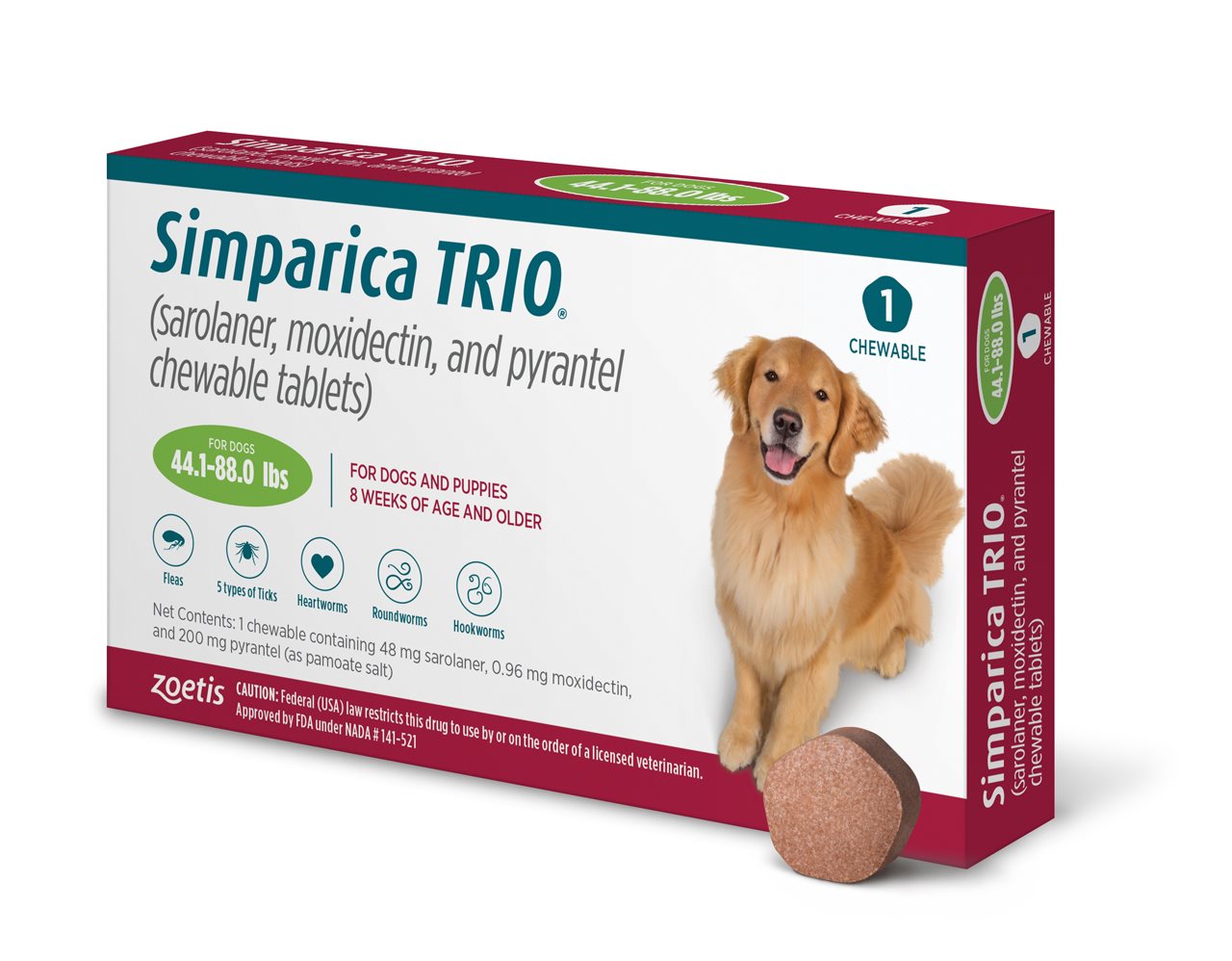
One of the best strategies for pet owners to protect their dogs against Lyme disease is to prioritize year-round prevention through the use of tick control products like Simparica Trio® (sarolaner, moxidectin, and pyrantel chewable tablets) and by vaccination.

Simparica Trio is the first and only combination product demonstrated to prevent infections that may cause Lyme disease by killing deer (black-legged) ticks. It is the only chewable proven to kill five kinds of ticks*, fleas, roundworms** and hookworms***, and also protect against heartworm disease.

Combination treatments like Simparica Trio make it easy for busy pet owners to stay on top of their dog’s health — one chew once a month will protect pups against these major health threats. Learn more about Simparica Trio at SimparicaTrio.com or talk to your veterinarian, who should always be your first call when it comes to decisions for your pet’s health care.

What are the symptoms of Lyme disease in dogs?

The challenge for dog owners is that the disease can be difficult to detect because the symptoms of Lyme disease can fluctuate or be non-specific. An additional complicating factor is that ticks can be very small and easily missed. Pet owners are often shocked when their dog tests positive for Lyme disease, because they don’t remember seeing a tick or signs of their dog being sick. Some symptoms of Lyme disease that dog owners should be on the lookout for include:5

  • Visible symptoms of lameness (an inability to properly use one or more limbs)
  • Swollen lymph nodes
  • Joint swelling
  • Fatigue
  • Loss of appetite

If you notice any of these symptoms, see your veterinarian so your dog can be tested for Lyme disease. Left untreated, Lyme disease can be deadly or lead to damage to the kidneys, nervous system and heart.5

When should you check your dog for ticks?

Even if your dog has been vaccinated and is on a tick control product, it’s important to have an annual screening for Lyme disease, and do a tick check after spending time outdoors, especially in grassy or wooded areas. If you find a tick, remove it as soon as possible before the tick has a chance to potentially transmit the bacteria that causes Lyme disease, which typically takes 24-48 hours after the tick attaches itself to your dog.5,6

How do you remove a tick if you find one on your dog?

Use fine-tipped tweezers to grab the tick as close to the skin as possible. Using steady and even pressure, pull the tick straight up, being careful not to twist or jerk. Once the tick is removed, clean the bite area and your hands with soap and water, or rubbing alcohol.7 For more detailed tick removal instructions, visit ZoetisPetCare.com.

Are there treatments if your dog tests positive?

If your dog tests positive for Lyme disease, your veterinarian can advise you on treatment options, including antibiotics.6 However, treatment can be costly and Lyme disease can have lasting effects on your pup for the rest of his life. Preventative measures, such as getting a Lyme disease vaccine and giving Simparica Trio monthly to control ticks, can help prevent infection in the first place.

IMPORTANT SAFETY INFORMATION FOR SIMPARICA TRIO:

Use with caution in dogs with a history of seizures. Simparica Trio contains sarolaner, a member of the isoxazoline class, which has been associated with neurologic adverse reactions including tremors, ataxia, and seizures in dogs with or without a history of neurologic disorders. The safe use of Simparica Trio has not been evaluated in breeding, pregnant, or lactating dogs. The most frequently reported adverse reactions in clinical trials were vomiting and diarrhea. See full Prescribing Information at SimparicaTrioPI.com.

*Lone Star tick (Amblyomma americanum), Gulf Coast tick (Amblyomma maculatum), American dog tick (Dermacentor variabilis), black-legged or deer tick (Ixodes scapularis), and brown dog tick (Rhipicephalus sanguineus)
**Roundworms (Toxocara canis and Toxascaris leonina)
***Hookworms (Ancylostoma caninum and Uncinaria stenocephala)

References

  1. Veterinary Practice News. Study shows increase of Lyme disease in dogs. Published December 18, 2018. https://www.veterinarypracticenews.com/study-shows-increase-of-lyme-disease-in-dogs/. Accessed April 26, 2022.
  2. Companion Animal Parasite Council. Parasite Prevalence Maps Canine Lyme Disease USA 2021. https://capcvet.org/maps/#/2021/all-year/lyme-disease/dog/united-states. Accessed April 26, 2022.
  3. American Veterinary Medical Association. Lyme disease: A pet owner’s guide. https://www.avma.org/public/PetCare/Pages/lyme-disease.aspx. Accessed April 26, 2022.
  4. Centers for Disease Control and Prevention. Preventing tick bites. https://www.cdc.gov/ticks/avoid/on_people.html. Accessed April 26, 2022.
  5. Littman, M.P. (2018) ACVIM consensus updated on Lyme borreliosis in dogs and cats. JVIM; 1-17.
  6. Straubinger RK, et al. Clinical manifestations, pathogenesis and effect of antibiotics treatment on Lyme borreliosis in dogs. Wiener Klinische Wochenschrift 110(24):874-81.
  7. Centers for Disease Control and Prevention. Tick Removal. https://www.cdc.gov/ticks/removing_a_tick.html. Accessed April 26, 2022.

All trademarks are the property of Zoetis Services LLC or a related company or a licensor unless otherwise noted.
© 2022 Zoetis Services LLC. All rights reserved. STR-00421

The truth about retinol confirmed by a dermatologist

2022-05-23T13:01:00

(BPT) – Retinol is often praised as a holy grail of a skincare ingredient, but there’s a lot of confusion about the best ways to use retinol for maximum effectiveness without irritation. Understanding retinol better and having common questions answered can help you use this ingredient so your skin can look its best.

“Retinol is a prized skincare ingredient because it is well studied to treat several skin conditions,” said dermatologist Dr. Chris Tomassian. “Because it works by increasing cell turnover, it has the ability to improve skin texture and hyperpigmentation as well as help treat and prevent acne. Due to its ability to increase collagen and elastin production, it also helps with fine lines and wrinkles and can improve scarring.

“Luckily, you don’t need a prescription for retinol that actually works, nor do you have to break the bank. Retinol is available in a variety of drugstore products, but it can be confusing to decide the most effective options and best practices for use,” he said.

Tomassian wants to help by sharing his expertise and answering the top questions he hears from patients so everyone has the facts.

If skin goes dry, should you say goodbye?

Some people may experience minor drying at first, but this is typically nothing to worry about. This indicates the product is working and the skin cells are turning over faster. Dryness should subside as your skin adjusts. Keep in mind when selecting a retinol that some products are created to have little to no irritation, so you might consider trying those first.

Should retinol be the first or last layer?

It can depend on your skin’s unique needs, but it’s typical to apply retinol first and then layer a moisturizer on afterward. If your skin is dryer, consider applying the moisturizer first and then the retinol product. You can also sandwich your retinol product between two layers of moisturizer.

A little or a lot — what’s the right amount?

Too much can be irritating and too little won’t be effective. Try perfectly pre-measured doses like RoC RETINOL CORREXION Night Serum Capsules available at Target. Made with a high concentration of pure RoC Retinol and Antioxidants, this clinically-proven serum is sealed tight in a 100% biodegradable capsule for optimal freshness and potency.

Are one-day results a reality?

Results can vary by product and usage. For RoC’s Retinol Night Serum Capsules, in one night, 97% of users had visibly reduced lines and wrinkles. In four weeks, 100% continued to show significant reduction in the appearance of lines and wrinkles, 100% had visibly firmer skin, and 100% had more supple, hydrated skin.

Morning, noon or night — when’s the best time to use retinol?

This is dependent on the retinol you’re using. Some forms of retinol, like tretinoin, are not UV stable which means they are inactivated by the sun.

To be safe, dermatologists recommend using them at night before bed. This allows the product to work on the delicate skin on your face while you are sleeping and be most effective when you’re out of the daylight.

Should your retinol routine take a summer break?

Retinol may make your skin more susceptible to sunburn, but that doesn’t mean you need to stop it during summer months or other periods you’ll be spending more time outdoors. Just be sure to apply SPF 30 or higher, and you may want to keep sunglasses and a hat handy for extra protection if needed. “The hype is real about retinol, but to get the maximum benefits you need to use the right amount in the right way,” Tomassian said.

4 books to surprise and delight your dad – or your grad! – this season

2022-05-23T09:01:00

(BPT) – It’s likely the men in your life have made it difficult to shop for them. Whether they aren’t properly communicating the things that they want or need, or they’ve already purchased it for themselves, it’s not typically an easy feat.

With so many celebrations just around the corner this season, namely Father’s Day and graduations, finding the perfect gift can be tough to track down.

Luckily, there’s a solution for people of all ages, with all interests; a gift that’s customizable and special. A gift that you can continue to purchase over and over again, without fear of duplication. Books.

From informative resource guides and biographies to eye-catching graphic novels and coffee table staples, National Geographic has something for every dad — or every grad — on your list. Here are just a few of many to pick and choose from as you think about the men in your life this year:

1. Cosmic Queries

Does your dad or soon-to-be graduate enjoy learning about the universe? In this book, astrophysicist Neil Degrasse Tyson breaks down the complicated concepts so your dad or grad can glimpse inside the mysteries and curiosities of the cosmos.

Populated with paradigm-shifting discoveries that help explain the building blocks of astrophysics, this relatable and entertaining work will engage and inspire readers of all ages, bring sophisticated concepts within reach, and offer a window into the complexities of the cosmos.

2. Atlas of Beer

In this comprehensive reference guide, the beer lovers in your family can enjoy learning about beer history, trends and tasting across six continents.

This guide is filled with stunning photography, unique drinking destinations, little-known histories and insider knowledge from brewers and bar owners around the globe. Your dad or grad can even learn how to order beer in 14 languages! This innovative and practical guide is a great gift to help your loved one find the best breweries, beer festivals and pubs worldwide.

3. The Generals

For your resident history-buff father or U.S. History major, this book by historian Winston Groom (author of Forrest Gump) follows the lives of George Patton, Douglas MacArthur and George Marshall from World War I to World War II. This telling explores how these generals redefined America’s ideas of military leadership during some of the most dramatic moments of the 20th century.

The Generals is powerful and action-packed and makes a great gift for biography and history lovers.

4. Field Guide to the Birds of North America

Does your dad or grad enjoy the outdoors? Do they like to birdwatch?

With more than 2.75 million copies in print, the Field Guide to the Birds of North America, seventh edition is a perennial bestseller and is the most frequently updated of all North American bird field guides. Filled with hand-painted illustrations from top nature artists (including the ever-popular hummingbird), this latest edition is a must-have and is the perfect gift for beginning and advanced birders.

Show your dads and grads how much you care — and how well you know them — with any (or all!) of these four titles. All are available wherever books are sold.