Three Ways to Have a Stress-Free Road Trip This Summer

2022-05-23T07:01:00

(BPT) – Vacationing with your family can be stressful when factoring in the logistics of keeping everyone happy. If you are one of the 60% of Americans currently planning summer getaways, here are a few hacks from Hampton by Hilton that will pave the way for a stress-free summer road trip.

1. Choose a hotel that includes breakfast

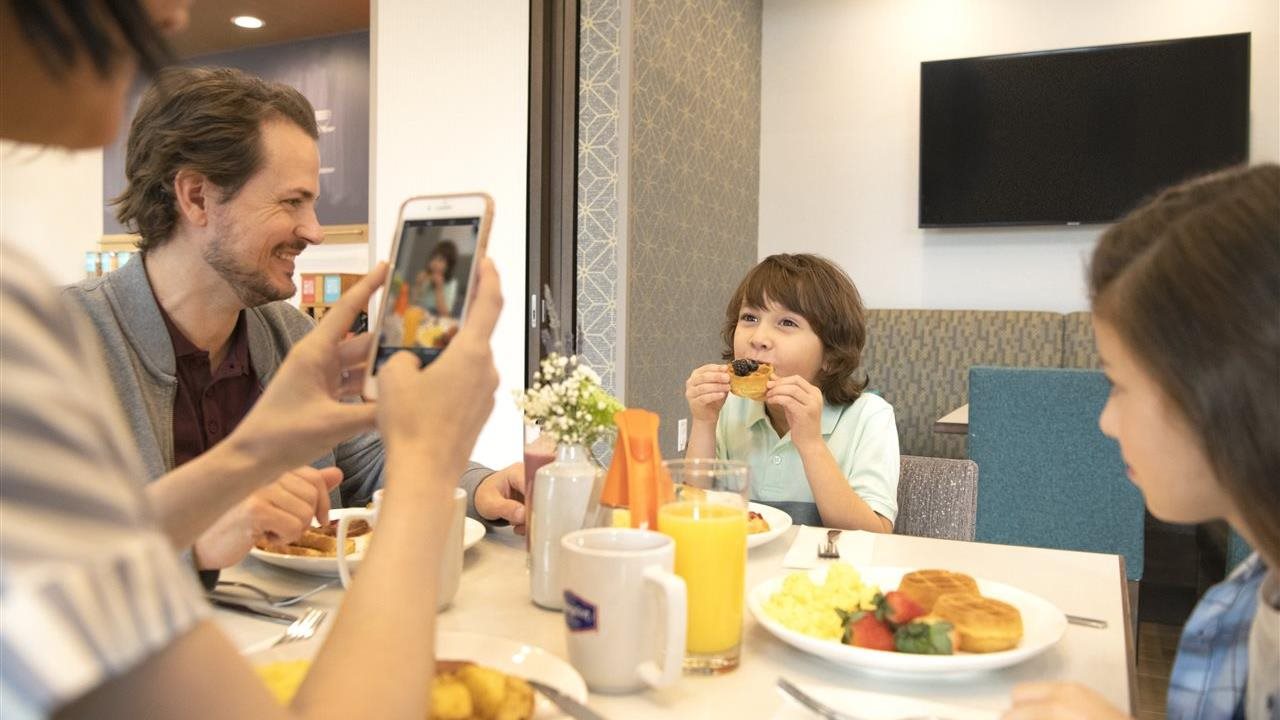
The most important meal of the day kick-starts your mood and energy, especially for the 79% of Americans who say they feel more productive after having breakfast. Yet, with only 19% reporting having breakfast every day, booking a getaway at a hotel with breakfast included jumpstarts your day, makes mornings simpler and puts an end to the hectic morning scramble.

Travelers can head to the lobby to enjoy breakfast favorites while waiting their turn to shower or grab a plate to bring back to their room. Hotel breakfast buffets also eliminate travel and wait times of eating at a restaurant, getting you on the road faster to vacation fun.

2. Enjoy your stay close to where you want to be

More than three in four travelers (77%) make relaxing and recharging a priority while on vacation and 41% say reconnecting with family and friends on trips boosts their overall wellness. With over 2,300 hotels in the U.S., road trippers are on average never more than 30 minutes away from a Hampton by Hilton. You won’t have to go out of your way to find high quality, friendly and reliable accommodations, backed by the Hampton 100% Guarantee, everywhere you want to be and close to those you love.

Families can also enjoy some space to spread out by selecting suite guest rooms, when available, for separate living and sleeping areas. These rooms particularly come in handy for family members with varying bedtimes and provide extra space for active pets and kids to sprawl. Plus, having refrigerators and microwaves allow you to make your own quick meals, reheat leftovers and have snacks at the ready at all hours of the day.

3. Bring furry family members with you

A recent survey revealed that more than half (55%) of people with pets are likely to travel with their furry family member this summer, and with good reason: Not only do we want to spend time with Fido and Fifi, but we want to avoid the stress of boarding or leaving pets behind — for both our pets and us.

Pet-friendly accommodations, such as Hampton by Hilton, ease the burden. Not only do these properties provide safe havens for our dogs and cats, but deliver a seamless experience, leaving you able to confidently focus on the moments that matter most. They also offer additional support through a partnership with Mars Petcare, which provides guests expert advice and tips, via online chat or phone, tailored to reduce stress and make the travel experience more seamless from planning through hotel stay.

Remember, it’s all about having fun and spending time together when it comes to family travel. As you begin to make your plans to hit the road this summer, happy pets, hot breakfast and finding your space can help keep travel-related stress at bay so you can truly enjoy a much-need getaway together.

Feeling stressed? 3 ways to support mental health at home

2022-05-23T08:01:00

(BPT) – It’s easy to get overwhelmed as you go about your day. Between work, school, errands and extracurricular activities, there are plenty of things that can cause physical and mental stress. That’s why it’s so important that your home is a haven for your family.

One strategy you can use to start transforming your home into a calming retreat is changing your home’s lighting. According to Healthline, research suggests that color and colored lights can subtly affect your mood. Combining different colored lighting with self-care practices can create the right environment for you and your children to recharge from the day, relax and prepare for the next.

Check out these three easy ways to support your family’s mental health at home by pairing lighting with soothing practices.

1. Revamp the ambiance and your mood

If you’ve ever walked into a room with blue walls and soft natural lighting, you’ve probably noticed how you feel calmer. Or perhaps you’ve walked into a room with warm red tones and soft amber lighting and felt cozy and relaxed. These are just a couple of subtle ways color and lighting can impact mood.

You can incorporate bright colors and lighting into your home office space or common areas to boost your and your teen’s energy and creativity. Soft pastels and warm lighting in your living room and bedrooms can help soothe you after a long day of work and play. Whatever you do, be intentional about the ambiance you create to uplift or unwind, depending on your mood.

You don’t need to repaint your living room or change out all the lightbulbs in your home to create the ideal ambiance. BlissLights ambient lights and galaxy projector lights are an easy way to change the atmosphere of any room and your mood at the touch of a button. Sky Lite projectors were designed to transform your space into a place of peace and calm. They’re easy to set up and control and have numerous options to suit your family’s needs.

2. Practice yoga or meditation at home

It seems like there are thousands of apps and programs now promoting the mental health benefits of yoga and meditation, and there’s a good reason for it. A growing number of research studies support yoga and meditation’s effect on mental, emotional and physical health, including easing stress and depression.

Starting your day with a short yoga or meditation session can help you transition from sleep into wakefulness and start your day off on the right foot. You can also practice yoga and meditation in the afternoons or evenings to help you unwind and settle in after a busy day. You can take this as time for yourself or invite your children to join you and help them build intentional practices and tune into their bodies and feelings.

To support these mental health practices, you can use the Sky Lite 2.0 to create an atmospheric experience that uplifts your mood, spurs your creativity, or helps you let go of a long day. Let your worries drift away under the floating, gentle movement of nebulas and twinkling stars in red, blue and green.

3. Settle in for the night and wake up refreshed

The lighting in your room can help or hinder your circadian rhythm, the natural internal process that regulates your sleep-wake cycle. According to the Centers for Disease Control and Prevention, your circadian clock is most sensitive to light two hours before bedtime and one hour after waking, meaning that lighting during these times can have a powerful impact on your mood and energy.

The BlissLights Radia smart ambient mood light diffuses gentle, colorful lighting for stimulation or relaxation. Using your smartphone, you can set timers and alarms to seamlessly change the lighting in your room throughout the day and night. Wake up with a gentle light alarm, complement your day with brilliant task light, and unwind with soft ambient lighting in the evening.

You can also set the mood light to switch to nightlight mode automatically at bedtime, a helpful feature if you have young children who aren’t comfortable sleeping in a dark room. By selecting the dusk to dawn option, you’ll help your little ones and your teens to wake up easy with natural ambient lighting as if they’re waking up to the sun.

Investing in your and your children’s mental wellness doesn’t have to be complicated. Using these three tips, you can make small changes that have a big impact on your family’s mood and energy.

The National Paralysis Resource Center celebrates 20 years of providing life-changing resources

2022-05-20T23:01:00

(BPT) – Dealing with a spinal cord injury is devastating. Facing isolation and lack of information makes an already difficult situation even more challenging. Fortunately, one organization is striving to make a difference by providing free resources to help individuals and their families navigate living with paralysis.

The Christopher & Dana Reeve Foundation’s National Paralysis Resource Center (NPRC) was conceived by the late Dana Reeve after she faced a black hole of information when her husband, actor Christopher Reeve, sustained a spinal cord injury after an equestrian accident.

“When Chris was first injured, there was very little out there that we could turn to,” Dana said in 2005. “It didn’t seem like there was one place where we could call and ask five different questions that seemingly had nothing to do with one another.”

The NPRC is the only national program that directly serves the 5.4 million Americans living with multiple sclerosis (MS), amyotrophic lateral sclerosis (ALS), stroke, spina bifida, spinal cord injury, cerebral palsy and other forms of paralysis. The Reeve Foundation has operated the NPRC for 20 years, relying on federally-funded grants to provide many services at no cost.

The NPRC is the support side of the Reeve Foundation’s twin missions to provide “Today’s Care” and to strive for “Tomorrow’s Cure.” The goal is to provide a free, comprehensive, national source of informational support for people living with paralysis and their caregivers.

If you or a loved one is living with paralysis, here are some of the free services and programs that could help:

Information Specialists

To assist people as they navigate through the various stages of their recovery after the diagnosis of paralysis, the Reeve Foundation’s Information Specialists are a team of trained staff members who help anyone — from newly paralyzed individuals and their family members to persons who have lived with disabilities for quite some time. Email your inquiry or set up a time to speak on the phone to get the help you need, conveyed with care and empathy.

Virtual support groups

Feeling supported and finding connections is an essential part of the human experience. Virtual support groups led by professional facilitators and peer mentors living with paralysis or who are the family members/caregivers of individuals living with paralysis were created to combat the feelings of isolation that often come with a disability. The hope is to foster greater connection among peers who understand the day-to-day challenges of living with paralysis.

Military & Veterans Program

Serving the country in the military is admirable. For people that were injured during their time in the military, transitioning to civilian life may feel particularly overwhelming. The Military & Veterans Program is designed to support the unique needs of current service members and veterans, regardless of when they served or how their injury was obtained. The goal is to provide personalized information and resources needed to live a fulfilling life.

Peer & Family Support Program

Often the best support comes from people who have first-hand experience of what you’re going through. The Peer & Family Support Program is for people living with paralysis, as well as those who care for them, providing the opportunity to connect for hope, support and a way forward. Available across the country, the peer-to-peer network helps everyone, from newly paralyzed individuals and their family members to people who have lived with paralysis for some time.

College transition

Living with a disability does not need to limit the pursuit of higher education. In addition to a variety of resources aimed at helping people with a disability navigate college successfully, the Reeve Foundation is also offering free consultations with Accessible College LLC to families and students interested in transitioning to college with paralysis.

Reaching New Heights in Relief from Painful Diabetic Neuropathy with High-Frequency Spinal Cord Stimulation

2022-05-20T12:01:00

(BPT) – By David Caraway, M.D., Ph.D., Chief Medical Officer of Nevro Corp.

A diabetes diagnosis can feel like taking on a round-the-clock job – from which you receive no benefits, vacations, or breaks. Managing diabetes can take an enormous physical, mental, social, and financial toll. For people who develop complications of the condition, such as painful diabetic neuropathy (PDN), finding effective relief can feel like another endless task.

About 1 in 10 Americans have diabetes, and millions will struggle with PDN during their lifetime. People with PDN experience a wide range of symptoms that typically affect the legs and feet. Pain can be described as burning, freezing, shooting, stabbing, deep aches, hypersensitivity, and “electric shock” sensations. In my work, I’ve heard from my patients time and again that the pain from diabetic neuropathy impacted so many aspects of their lives. Routine activities like spending time with family, gardening, walking the dog, and even getting a full night’s sleep could not be accomplished without experiencing intense pain.

Those with PDN have trouble achieving effective relief for a variety of reasons, according to a patient panel by the U.S. Food and Drug Administration (FDA). Between the trial and error of therapy regimens, weighing the benefits and poor side effects of medications, and trying treatments that simply don’t provide the needed relief, it’s easy to understand how someone battling chronic pain caused by PDN over an extended period may be feeling hopeless after pursuing traditional treatments.

The good news for people with PDN is that additional treatment options are available. In July 2021, the first spinal cord stimulation (SCS) system was approved by the FDA with a specific indication to treat PDN, Nevro HFX*. Nevro HFX is a non-drug alternative to treat pain related to diabetic neuropathy. HFX includes a small device that works inside your body using very mild, imperceptible electrical pulses to disrupt pain signals before they can reach the brain.

And, unlike other available therapies, HFX uses a proprietary, high-frequency (10kHz) waveform to help people with PDN experience long-term relief. Other systems rely on distracting patients from their pain using a tingling sensation known as paresthesia – a common symptom of PDN on its own – whereas HFX relieves pain and eliminates the pins and needles sensation.

HFX is also backed by unrivaled clinical research. Data published in Diabetes Care from the largest-ever randomized controlled trial to evaluate SCS as a treatment for PDN found that:

  • HFX provides incredible pain relief. 86% of participants reported pain relief greater than 50% after 12 months with the therapy, and participants’ average pain relief reached just over 77%.
  • HFX can improve neurological function. 68% of participants experienced neurological improvements – meaning there was improved sensation, reflexes, and motor strength in patients’ legs. No other SCS has shown these improvements.
  • HFX is a safe alternative to conventional treatments. The study’s authors concluded that people with PDN who have experienced resistance to traditional treatment options could safely and effectively be treated with high-frequency SCS.

Furthermore, Nevro matches each HFX patient with a dedicated HFX Coach who provides remote, individualized support every step of the way to ensure long-term success. HFX also enables real-time, data-informed care that can share your progress with your care team.

While managing diabetes can feel like a full-time job, living with complications like PDN doesn’t have to feel so burdensome. New technologies like HFX for the treatment of PDN can provide the end-to-end support you need to help you get back to doing what you love.

*HFX is a comprehensive solution that includes a Nevro Spinal Cord Stimulation (SCS) system and support services for the treatment of chronic pain, including painful diabetic neuropathy, programmed with a frequency of 10 kHz.

Communication on the playground: How to make your play space more inclusive

2022-05-20T11:37:39

(BPT) – Playground design has been evolving to become more inclusive and inviting for all children — as well as caregivers — of differing abilities. But developing innovative playgrounds that benefit everyone requires more than an understanding of the necessary equipment and environmental considerations to allow for the appropriate space and accessibility. It also takes knowledge and experience of what children need on all levels: physically, emotionally and cognitively.

The importance of play

Play is so crucial for the development of children that the National Association for the Education of Young Children (NAEYC) considers it to be an important component of developmentally appropriate teaching practice. In addition, the American Academy of Pediatrics issues guidelines to help pediatricians encourage play, and the United Nations High Commission on Human Rights has even declared play to be a fundamental right of all children.

Parents agree. A nationwide parent survey on inclusive play conducted by Landscape Structures Inc. revealed how much perceptions have changed. Nearly three-fourths (74%) of parents believe it is important that children have the opportunity to play with a variety of children, including those with disabilities.

With this goal in mind, Landscape Structures has drawn on the expertise of child development professionals to explore new avenues that allow for all children to fully participate in play together. The work of the company has included not just play structures and activities that are accessible to children with physical disabilities, but also those who may have sight or hearing impairment, intellectual disabilities such as Down syndrome and developmental disabilities like autism.

“We draw from the experience of inclusive play experts as well as partners like the STAR Institute for Sensory Processing, passionate parents, therapists and kids,” said Jill Moore, inclusive play specialist at Landscape Structures. “As a wheelchair user myself, I understand how vital it is for playgrounds to be truly inclusive for all children, as well as for family members and caregivers who also use these crucial spaces for developing children.”

Inclusive playgrounds require features such as:

  • Physical play structures where children of differing abilities can challenge themselves, creating a sense of mastery and achievement
  • Unitary surfacing amenable to wheelchairs and other mobility devices
  • Extra-wide pathways and ramps
  • Stimulating activities to engage children on many levels
  • Imaginary play areas
  • Tactile, visual and auditory stimulation plus calming sensory activities using sand or water, artwork and/or music
  • Social activities for several children, plus smaller spaces for just a few
  • Quiet spaces for children needing quiet time and limited social interaction

A new frontier in playground innovation: Communication

For children who are unable to communicate verbally, such as early language learners, children with developmental delays, and those who are speech-challenged — or who may speak other languages — their inability to share ideas, feelings and needs can be frustrating and may keep them from socializing with other children.

With this need in mind, Landscape Structures has created a new Symbol Communication Sign to be placed at the entrance to play areas, so every child, family member and caregiver can use them to help further their expression, interaction and communication.

The Symbol Communication Sign is a large board with pictures to represent nouns and pronouns, verbs, feelings, activities, playground events, letters and numbers. The graphics are clear, universally understandable and easy to use, with industry-standard colors representing different types of words. These pictures and symbols help non-verbal, speech-challenged and early-learning individuals communicate with others. Creation of the board’s design was a team effort involving Landscape Structures staff as well as outside experts like speech-language pathologist Karen B. Haines and occupational therapist Ingrid M. Kanics.

“With guidance from experts in Augmentative and Alternative Communication (AAC) and Inclusive Design, we use pictures and symbols as an effective way for non-verbal, speech-challenged and early-learning individuals to communicate with friends and caregivers alike,” said Moore. “This new element helps create a more fully inclusive playground that allows everyone to be able to better communicate with one another, interact with each other and play together.”

Learn more about the Symbol Communication Sign and other inclusive play possibilities for your community, school or neighborhood at PlayLSI.com.

DIY Gifts Dad Will Love for Father’s Day

2022-05-19T09:31:00

(BPT) – Father’s Day is right around the corner, and what better way to celebrate Dad or the father figure in your life than with a homemade gift that will last for years to come? Whether it be for the backyard, garage, or toolshed, we’ve got a few project ideas to remind Dad just how much you care.

Using reliable tools from top tool brand Arrow Fastener, like the T50ACD compact electric staple gun, you’ll be able to whip up this year’s Father’s Day gift in no time and with ease. Keep reading to find out how to make this holiday the most memorable one yet for that special guy in your life.

T-shirt stool upholstery by Bob Clagett

Turn one of Dad’s old T-shirts (aka dust collectors) into the best seat in the house with this easy upholstery project from maker extraordinaire Bob Clagett. Using the Arrow Fastener PT50 pneumatic staple gun or T50ACD compact electric staple gun, all it takes is four simple steps to make a one-of-a-kind stool that is sure to surprise Dad and bring a smile to his face.

Beverage carrier

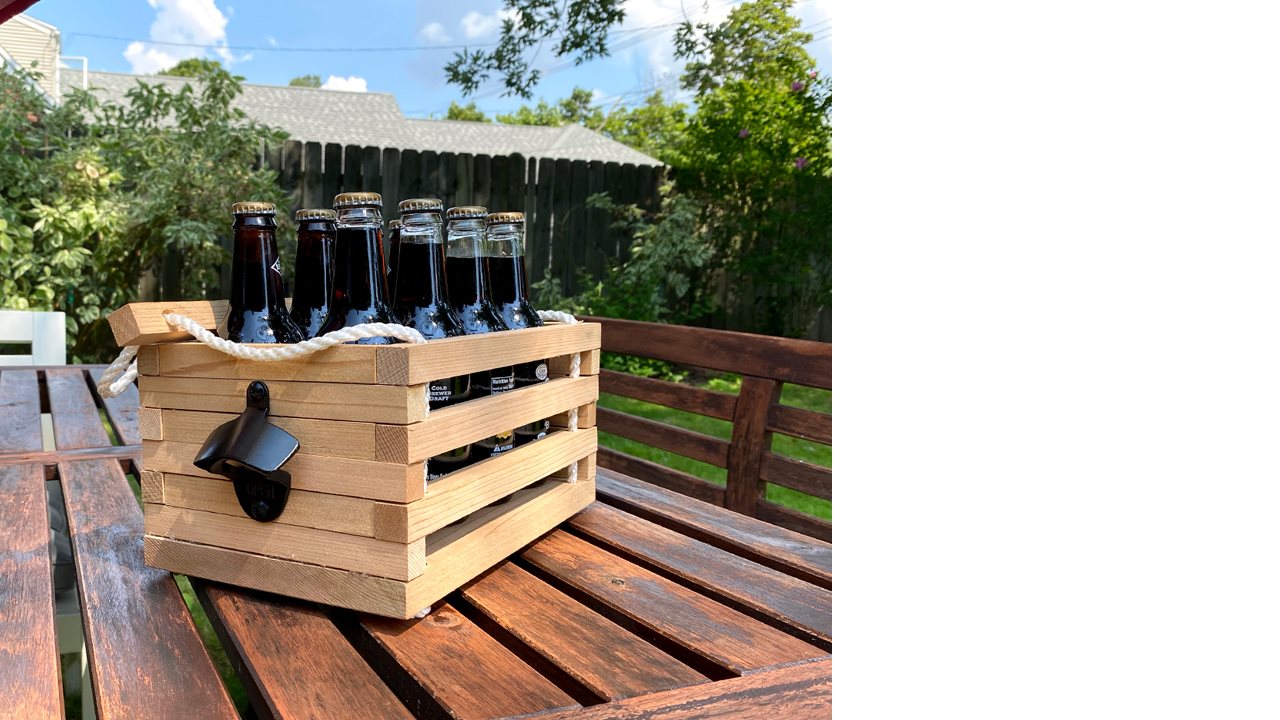
To get Dad cookout ready this year or to encourage some relaxing in the backyard, you can create the perfect beverage carrier for those summer days that call for a six-pack with the help of Arrow Fastener’s GT300 professional high-temp glue gun.

Tic-tac-toe board with storage by Serena Appiah

For dads that can’t get enough of family game nights, this DIY tic-tac-toe board will surely do the trick. Plus, the wooden board game also serves as a convenient storage box for any tools that need a home. Using Arrow Fastener’s T50 ELITE™ staple gun and brad nailer and GT300 professional high-temp glue gun, you can give Dad a creative gift that doubles as useful (and sometimes necessary) household storage.

Psoriasis Patient’s Story Offers Hope for Those Struggling with Symptoms

2022-05-19T10:01:00

(BPT) – Six years ago, 65-year-old grandmother and storyteller Nancy reached her breaking point. A full-time caregiver to her mother who was in hospice care, she began noticing an uncomfortable rash on her chest. After her mother passed away, her symptoms became severe and painful. Rashes and flakes covered the majority of her body – everywhere except her face.

An active and outgoing member of her community, Nancy noticed these symptoms were negatively impacting her lifestyle. She felt she looked contagious, was self-conscious about her skin and was in pain. Eventually, her sister took her to a clinic, where she was incorrectly diagnosed with a yeast infection and given ointment. She then visited a PA at the doctor’s office. By this time, all she could wear comfortably on her feet were men’s slippers. Once again, more ointment and no improvement.

“The symptoms had grown unbearable over the months, and I felt exhausted. I stopped doing my volunteer storytelling, swimming and going for walks,” said Nancy. “There was one week where I was entirely bedridden because of how inflamed my skin was. I was miserable and starting to lose hope.”

In tears, she drove herself to the emergency room and was immediately diagnosed with moderate-to-severe plaque psoriasis. The doctor prescribed a steroid to help with the unbearable symptoms and told her to see a dermatologist as soon as possible.

“When my sister and brother-in-law arrived at the hospital, they saw my chair covered in white flakes and that’s when it clicked for everyone just how serious this was,” said Nancy. “I knew I had to start advocating for myself.”

After meeting with a dermatologist, who started her on an oral medication and ointments, Nancy experienced an improvement in symptoms and was able to participate in some of the activities that she missed. However, Nancy continued to experience difficult flare-ups when she felt stressed; so she began researching biologic options for treating moderate-to-severe plaque psoriasis and found ILUMYA® (tildrakizumab-asmn). ILUMYA® is a prescription medicine used to treat adults with moderate-to-severe plaque psoriasis who may benefit from taking injections, pills (systemic therapy), or phototherapy (treatment using ultraviolet or UV light). She researched the most common side effects, which include upper respiratory infections, injection site redness and diarrhea.

She consulted with her dermatologist, who felt ILUMYA® was a promising treatment for her. Nancy was excited to learn that ILUMYA® would be covered for her under Medicare Part B. Soon after, she began treatment. While some patients might experience side effects such as upper respiratory infections, injection site reactions and diarrhea, she did not.

When Nancy’s skin started to clear, she returned to her favorite activities and became the Nancy that everyone around her remembered. She stopped missing important events and spent time with her family again.

“The first test was making it through the stressful holiday season without a flare-up,” said Nancy. “I couldn’t believe it. I didn’t have to worry as much about having flare-ups anymore.”

Nancy said she especially likes no longer having a constant reminder of her psoriasis by taking pills and using lotions daily. After the first two doses of ILUMYA®, she only receives an injection four times a year.

“If you are living with flare-ups, advocate for yourself. Find a dermatologist and speak to them about biologic treatments for moderate-to-severe plaque psoriasis. It could be moderate-to-severe plaque psoriasis, or it could be something else, but you will get an answer either way,” said Nancy.

For patients who are 65 years or older and covered under Medicare Part B, there are treatment options for you. To learn more about Nancy’s story and other ILUMYA® patients, visit www.ilumya.com/patient-stories.

What is ILUMYA?

ILUMYA® (tildrakizumab-asmn) is a prescription medicine used to treat adults with moderate to severe plaque psoriasis who may benefit from taking injections, pills (systemic therapy), or phototherapy (treatment using ultraviolet or UV light).

IMPORTANT SAFETY INFORMATION

What is the most important information I should know about ILUMYA?

Do not use ILUMYA if you have had a severe allergic reaction to ILUMYA or any of its ingredients.

Get emergency medical help right away if you get any of the following symptoms of a serious allergic reaction:

  • feel faint
  • trouble breathing or throat tightness
  • swelling of your face, eyelids, lips, mouth, tongue or throat
  • chest tightness
  • skin rash

ILUMYA is a medicine that may lower the ability of your immune system to fight infections and may increase your risk of infections. Your healthcare provider should check you for infections and tuberculosis (TB) before starting treatment with ILUMYA and may treat you for TB before you begin treatment with ILUMYA if you have a history of TB or have active TB. Your healthcare provider should watch you closely for signs and symptoms of TB during and after treatment with ILUMYA.

Tell your healthcare provider right away if you have an infection or have symptoms of an infection, including:

  • fever, sweats, or chills
  • muscle aches
  • weight loss
  • cough
  • warm, red, or painful skin or sores on your body different from your psoriasis
  • diarrhea or stomach pain
  • shortness of breath
  • burning when you urinate or urinating more often than normal
  • blood in your phlegm (mucus)

Before receiving ILUMYA, tell your healthcare provider about all of your medical conditions, including if you:

  • have any of the conditions or symptoms listed in the section “What is the most important information I should know about ILUMYA?”
  • have an infection that does not go away or that keeps coming back
  • have TB or have been in close contact with someone with TB
  • recently received or are scheduled to receive a vaccine (immunization). You should avoid receiving live vaccines during treatment with ILUMYA.
  • are pregnant or plan to become pregnant. It is not known if ILUMYA can harm your unborn baby.
  • are breastfeeding or plan to breastfeed. It is not known if ILUMYA passes into your breast milk.

Tell your healthcare provider about all the medicines you take, including prescription and over-the-counter medicines, vitamins, and herbal supplements.

It is not known if ILUMYA is safe and effective in children under 18 years of age.

What are the possible side effects of ILUMYA?

ILUMYA may cause serious side effects. See “What is the most important information I should know about ILUMYA?”

The most common side effects of ILUMYA include upper respiratory infections, injection site reactions and diarrhea. These are not all of the possible side effects of ILUMYA. Call your doctor for medical advice about side effects.

You are encouraged to report any negative side effects of ILUMYA to FDA. Visit www.fda.gov/medwatch or call 1-800-FDA-1088. You are also encouraged to report side effects or ADEs (adverse drug events) to our Drug Safety Department at 1-800-406-7984 or drug.safetyUSA@sunpharma.com (preferred) with as much information as available.

Please read the full Prescribing Information and Medication Guide for ILUMYA and discuss any questions with your doctor.

Trading skepticism for support: How parents can support kids with thinking and learning differences

2022-05-19T08:01:00

(BPT) – One in five kids — nearly 70 million Americans — have learning or thinking differences (LTDs), like ADHD or dyslexia. While LTDs are common among families, friends, neighbors and peers, new research from Understood.org, a guide and resource for people with LTDs, finds that there are still harmful stigmas associated with them — stigmas that often negatively impact children’s mental health and prevent parents from taking steps to get their child proper support.

According to Understood.org’s “Neurodiversity and Stigma Study,” 90% of parents believe there are children with LTDs, yet more than half (55%) of those with neurodivergent children say they are afraid to tell others about their child’s LTD because of associated biases. Additionally, 69% of parents of kids with LTDs say that these stigmas negatively impact their child’s mental well-being.

This is why Understood launched the “Be the Reason” campaign — to increase awareness and engagement of parents around neurodiversity. Parents can get involved by participating in the #YouCanBeTheReason social media challenge, led by social media influencers the Holderness Family, and share how they’ve been the reason their child thrives. The campaign also includes a short film and stories from the perspectives of children with LTDs, as well as an activity kit to help parents initiate conversations with their children.

“When parents engage with their kids around their emotional and academic challenges, particularly if they believe the challenges may be related to a learning difference, it can be incredibly powerful,” said Dr. Andy Kahn, a licensed psychologist and Understood expert specializing in LTDs. “Parent support has an enormous impact on a child’s ability to thrive, and the ‘Be the Reason’ campaign is a step to provide parents with tools to help them and their kids get there.”

If your child has or may have a learning or thinking difference, here are some important steps you can take, according to Kahn and Understood:

1) Talk with your child

The most important step is engaging with your child and making sure they know you’re ready to help.

To get a better sense of the challenges they’re experiencing, try asking open-ended questions like: “What made you laugh today? What was the peak and pit of your day?” These questions will give you a better sense of what your child is feeling and why.

You can also use a feelings wheel, which helps kids make connections between feelings, body sensations and words, and helps kids express their emotions.

2) Engage teachers and caregivers

Proactively engaging with your child’s teachers and other caregivers, such as pediatricians, coaches and tutors, will help you get a 360-degree view of what your child may be experiencing at home, school and in other activities.

These conversations also allow for collaboration with other caregivers to ensure your child gets appropriate support. There are many accommodations that can be made at school — like additional time for tasks or sensory tools — to support your child’s emotional and academic development.

3) Practice self-calming strategies

LTDs affect your child academically, emotionally and socially. Things like deep breathing, stretching and yoga can help kids calm their bodies, become more aware of how they feel and manage their emotions.

In moments of high stress, help your child pause and “scan” their body from head to toe, checking for signs of tension, pain or discomfort. Being able to identify and acknowledge the physical effects of stress and sadness is a first step to releasing them.

If you’re a parent looking for more tips and resources, visit the “Be the Reason” campaign website, and be sure to participate in the #YouCanBeTheReason social media challenge across TikTok, Instagram and Facebook. To learn more about symptoms of LTDs, visit understood.org/take-note.

A New In Silico Study Finds Nitric Oxide Supplement May Increase Vitamin D Production and Bioavailability

2022-05-18T08:01:00

(BPT) – A recent in silico analysis has found that supplement-induced bioproduction of endothelial nitric oxide may also increase the endogenous production, bioavailability, and efficacy of vitamin D3. These findings are the work product of a Connecticut-based biotechnology company, Emergent Systems Analytics (ESA), co-founded by Drs. Shama Kajiji and Anton Fliri. ESA uses its patented AI-technology based on Emergent Intelligence to analyze complex datasets, systems biology, and translational sciences.

Previous studies have conclusively demonstrated the human body’s ability to produce nitric oxide (NO) declines with aging, and this generally results in declining health due to an increase in cardiovascular and other metabolic diseases. A few months ago, ESA used its powerful systems pharmacology platform and spectral clustering methodology to project the body-wide effects resulting from Cardio Miracle, a nutraceutical supplement, with a unique ability to increase the biological production of NO in human endothelial cells.

Dr. Fliri, a medicinal chemist, conducted these cutting-edge in silico (computer simulations) studies. These studies involved processing trillions of data points from over 17 million peer-reviewed scientific journals and the evaluation of cause-effect relationships on all tissues and organ systems of the human body for analyses of over 700 natural products isolated from the 50+ ingredients in Cardio Miracle’s proprietary blend.

“We discovered that Cardio Miracle’s unique blend of ingredients has the propensity to not only increase NO production, but also enhance Vitamin D3 bioavailability and its efficacy,” said Dr. Fliri. “Thus, Cardio Miracle could be efficacious for intercepting progression of atherosclerosis, which is the thickening or hardening of the arteries caused by buildup of plaque in the inner lining of an artery – the precursor to many heart-related issues.”*

According to Dr. Kajiji, ESA findings highlight the multiple health benefits of Cardio Miracle: boosting NO production, improved vitamin D3 efficacy, and dampening of inflammatory conditions that are responsible for many chronic diseases. “We have found that Cardio Miracle is not only an effective NO-producing nutraceutical but also a powerful Vitamin D supplement.”

Backed by Science

In the early1980s, medical research breakthroughs discovered that a molecule, thought to be solely toxic, performed many critical communication functions in the human body. That molecule was NO. In fact, in 1992, Science Magazine called it the body’s “queen of communication”. In 1998, the Nobel Prize in Medicine and Physiology was awarded to three U.S. scientists who discovered that NO was a vasodilator produced by blood vessels that was responsible for keeping the cardiovascular system healthy. The Nobel Prize research noted that NO, among other things, helped maintain blood vessel flexibility, increased blood flow and blood oxygenation. Soon after these scientific discoveries, men and women of all ages started to tap into the health benefits of NO.

Food for Thought

There are several super-foods that boost NO naturally, including spinach, broccoli, carrots, kale, and beets, to name a few. Cardio Miracle includes over 40 fruits and vegetables, botanicals, and herbs containing potent anti-inflammatory and antioxidants in a great-tasting powder that can be mixed with your favorite drinks and smoothies. For less than the cost of a cup of coffee, Cardio Miracle provides the super-food fuel your body needs to boost NO production and, apparently, vitamin D3.

Fueling Bear

Bear Grylls is one of the world’s most recognizable faces of survival and outdoor adventure. Grylls, host of the Emmy Award-nominated series Man vs. Wild television, takes Cardio Miracle daily.

“Surviving in the wild, and the physicality needed for adventure, means looking after my body and fueling it properly,” Grylls said. “I find good nutrition and regular use of Cardio Miracle, which is backed by robust research, play a key part in staying strong and active.”

Intermittent fasting. High intensity training. Cardio training. Healthy eating. All of these are key to obtaining and maintaining healthy body weight, getting in shape, and improving one’s health. But, just those alone pale in comparison when combined with a NO booster, like Cardio Miracle, to level-up the most important muscle in the human body – the heart.

“Whether you are a world-class athlete, a weekend warrior, or just looking to improve your overall fitness and life vitality, increasing NO has proven to help performance,” Dr. Fliri said. “Cardio Miracle is made from the highest quality ingredients, driven and backed by science, and committed to your health and well-being.”

*These statements have not been evaluated by the Food and Drug Administration. This product is not intended to diagnose, treat, cure or prevent any disease. Information on this site is provided for informational purposes only. It is not meant to substitute for medical advice from your physician or other medical professional. You should not use the information contained herein for diagnosing or treating a health problem or disease or prescribing any medication. Carefully read all product documentation. If you have or suspect that you have a medical problem, promptly contact your regular health care provider.

The unexpected emotional burden of vision loss from geographic atrophy

2022-05-18T07:01:00

(BPT) – Liz Tully loved to read. In addition to reading for her own pleasure, she enjoyed helping others and would regularly meet up with a friend to read the newspaper out loud because he could no longer read it himself. Then, in her early 60s, something changed.

As she read the newspaper to her friend, her eyes would sometimes feel strained, and she would lose her place. She dismissed this thinking it was simply eye fatigue or old age. After visiting a new ophthalmologist a few years later, she was told she had macular atrophy, an early form of age-related macular degeneration (AMD). Five years later, in the Spring of 2020, she had a sudden and dramatic loss of vision in one eye and was told she had geographic atrophy (GA), an advanced form of dry AMD. She now has GA in her other eye as well. GA is a leading cause of blindness that impairs visual function, and therefore, independence and quality of life for the more than 5 million people who are diagnosed with the disease worldwide.

Liz had heard of AMD decades earlier through a chance remark from a cousin of her mother’s who said both she and Liz’s mother had this progressive disease.

Often, patients first recognize signs of AMD in daily life, as was the case with Liz, when she realized she was unable to read some words and letters on a page and had trouble recognizing friends at a distance.

The onset and progression of GA can take an emotional toll in addition to the physical one. A recent global survey conducted by The Harris Poll and sponsored by biopharmaceutical company Apellis found that, of the 203 patients surveyed, nearly seven in ten (68%) believe the impact on independence and quality of life due to their visual decline is worse than they had expected.

Furthermore, the study demonstrated that more than two in three patients (70%) rely on a caregiver for support, and a majority feel the disease negatively affects aspects of everyday life like the ability to read (96%), drive (95%), and travel (88%).

Liz has experienced many of the challenges those living with GA identified in the survey. However, she’s learned to make changes to help navigate her new normal, such as finding strategies to cross busy intersections safely and coordinating with friends to bring her to doctor appointments. Although she loves to read, even large-print books take significant effort now. Not being able to read — whether it’s a book or label on a product — is what she says is her biggest loss due to her GA.

Even on the most difficult days, Liz tries to stay positive and make adjustments so she can stay active and connected. She understands the importance of patience and allowing herself the time and grace to handle situations that might at first feel impossible.

Liz wants to share her story to empower other people with GA to do all they can to live fully despite their changing health.

“Find workarounds,” she said. “You may not be able to do what you did before, but that doesn’t mean you have to give it up altogether. Find a different way to volunteer or do a hobby you enjoy.”

Liz also says it’s essential to stay connected to your doctor.

“See your doctor regularly. Listen to your doctor and follow their advice. This is a very hopeful time and so much research is happening.”

Liz also speaks openly to her friends and family about her condition, in hopes it encourages them to be advocates for their own eye health.

“So many patients overlook their declining vision, chalking it up to old age,” said Dr. Nancy Holekamp, director of retina services at the Pepose Vision Institute, St. Louis, Missouri. “I am hopeful that this survey is one way to encourage early and ongoing dialogue between patients and their optometrist or ophthalmologist, so patients can receive a diagnosis and understand any eye disease they may have as early as possible.”

Sponsored by Apellis