Want free internet? It’s more accessible than ever.

2022-09-06T09:01:00

(BPT) – In the past few years, the United States has made significant progress in expanding access to high-speed internet. During the COVID-19 crisis, emergency relief rolled out for Americans who needed to stay connected from home. In the last two years, through the Bipartisan Infrastructure Investment and Jobs Act (IIJA) and the American Rescue Plan Act (ARPA), the federal government has invested an unprecedented amount of money towards connectivity, including the launch of the Affordable Connectivity Program (ACP), which provides a $30 monthly subsidy for home internet to qualifying households.

And while the resources are there, getting families online remains part of the challenge — millions of Americans still remain unconnected at home, according to the Federal Communications Commission (FCC).

“As a society, it is imperative that we work together to help people connect to the transformative power of the internet at home,” says Broderick Johnson, executive vice president of public policy and digital equity for Comcast Corporation.

“The Affordable Connectivity Program (ACP) is a once-in-a-lifetime opportunity for millions of Americans to get online for little to no cost, but connectivity is just the beginning. It’s critical for service providers like Comcast to continue to partner with nonprofit organizations across the country to deliver digital literacy skills training so more people can learn how to take full advantage of everything the internet has to offer.”

What is the ACP?

The ACP is a benefit program that helps ensure every household can afford broadband connection. For eligible households, the program provides a credit of $30 per month toward internet service, or $75 per month for those on Tribal lands.

Who qualifies for the ACP?

You are eligible to use ACP benefits if your income is 200 percent or less than the Federal Poverty Guidelines. When you apply, you may have to show proof of income. You are also eligible if you or someone in your household participates in any of these programs:

  • Supplemental Nutrition Assistance Program
  • Medicaid
  • Special Supplemental Nutrition Program for Women, Infants, and Children (WIC)
  • Supplemental Security Income (SSI)
  • Federal Public Housing Assistance (FPHA)
  • Veterans Pension and Survivors Benefit
  • Free and Reduced-Price School Lunch Program or School Breakfast Program, including at U.S. Department of Agriculture (USDA) Community Eligibility Provision schools
  • Received a Federal Pell Grant in the current award year

You can learn more about the qualifications at AffordableConnectivity.gov.

Two easy ways to use your benefits

Internet service providers like Comcast make it easy to use your ACP credit and can essentially make high-speed internet free for qualified households. Here are two smart ways to use your $30 benefit through Comcast’s Xfinity services:

High-speed internet: At a cost of $29.95 a month — which is completely covered by ACP — the Internet Essentials Plus package offers fast speeds to support the performance of video and music streaming, video calls and gaming, and comes with a free cable modem and WiFi router.

Internet plus one line of unlimited mobile: Qualified individuals can also stretch their credit to cover the cost of high-speed internet ($9.95) plus one line of unlimited data on Xfinity Mobile ($45) for less than $25 per month. This ensures you’ll stay connected at home and everywhere you go.

Comcast also allows customers to choose any tier of internet service, so if you are already a customer, then you can enroll in the program and start getting the $30 off your bill soon after.

“Connection to high-speed Internet is no longer a luxury,” says Johnson. “It is a daily necessity, and we are doing our part to make it accessible to everyone across the country.”

To learn more about the ACP and find out if you are eligible, visit Xfinity.com/ACP.

5 foolproof tips for cooking delicious rice, every time

2022-09-06T10:01:00

(BPT) – You’ve probably experienced this — you’re making rice for dinner, but when you cook it on the stovetop it comes out hard and undercooked, dry and burnt or overcooked and mushy — or just tastes blah. But when you’ve enjoyed rice served in Asian restaurants or homes, the rice is always the right texture and tastes amazing. What is their secret? You might think it’s the type of rice, but the key to successful rice is how it’s cooked: in a rice cooker.

Rice cookers are as common in Asian kitchens as toasters in American households, for one crucial reason: They ensure that rice is cooked perfectly every time, with delicious taste, fragrant aroma and perfect texture — and even better, they’re very easy to use.

Here are tips to help you cook perfect rice from the experts at Zojirushi, the number one selling high-end rice cooker brand in the U.S.

1. Store it right

You may think of rice as a pantry staple that lasts forever, but rice can get stale, affecting its taste. For optimal freshness, store in an airtight container or bag in your refrigerator. It’s also best not to purchase more than you can use in a month.

2. Measure precisely

Follow your rice cooker’s instructions and use the provided measuring cup to ensure the correct ratio of water to rice. Fill the provided measuring cup to overflowing, then use a wide spatula or knife to level it off. Don’t shake the cup or pack rice tightly, which can add more rice than intended. When adding water to your rice cooker after rinsing the rice, set the inner cooking pan on a flat surface and watch the water level lines as you adjust the amount of water. Rotate the pan so the rice collects in the center. Shake gently until the rice levels out and set it in the rice cooker.

Note: There are different water level lines for different types of rice, so be sure to use the correct one.

3. Rinse rice gently

You’ll also see better results if you rinse the rice gently a number of times before cooking, draining the cloudy water each time. This reduces excess starch, which helps keep grains separate and prevents clumping. Rinse the rice quickly with clean water to avoid having the rice absorb the water, and handle the rice gently to avoid breaking grains. Here’s a video showing the process of rinsing rice before cooking.

4. Choose the best rice cooker for your needs

High heat and even cooking are essential to perfectly cooked, delicious rice. Zojirushi rice cookers use advanced technologies to cook the best-tasting rice, and make cooking great rice as easy as pressing a button.

Here are the four different types of Zojirushi rice cookers to choose from:

  • Conventional: These rice cookers provide basic rice steaming, using a bottom plate heating element that warms the inner pan. Some models also heat from above. Soaking and steaming are required.
  • Micom: This stands for “microcomputer” — which is built into technologically advanced rice cookers to better control and automate the cooking process. Controlled computer cooking judges the amount of rice in the pan and surrounds the pan with controlled heat.
  • IH and Micom: Rice cookers with this combination of induction heating (IH) and micom provide energy-efficient heating, using the cooking pan as a conductor to generate higher and more precise temperatures, resulting in fluffier rice.
  • Pressure + IH + Micom: This level of optimum cooking technology combines pressure cooking and high heat to further enhance the flavor and texture of the rice. In the three types using micom, soaking and steaming are pre-programmed.

5. Fluff your rice

To improve texture, fluff rice gently with a rice spatula immediately after cooking. Bring rice up from the side of a quarter section of the inner pan at a time and stir gently. Use the spatula’s edge to break clumps into smaller pieces. This will release excess moisture, making your rice uniformly fluffy.

Rice is a staple in cuisines around the world. Once you’ve mastered perfect rice, you can create a vast array of recipes, from Temaki Sushi or Bibimbap to Jambalaya and much more.

Find tasty recipes and learn more about rice cooking at Zojirushi.com.

4 tips for committing to family mealtime

2022-09-06T06:01:00

(BPT) – With the school year in full swing, it can be challenging for families to find time away from their busy schedules and spend quality time together. One easy way to make sure there is quality time to connect between classes, sports and work is by prioritizing family meals at home.

Studies have shown time and time again the lifelong benefits of family meals, including higher self-esteem in kids, better grades and even an increased consumption of healthier foods such as fruits and veggies. Family meals also give everyone an opportunity to share about their day and plans for the week and become closer to those who matter most.

Check out the below tips from Registered Dietitian and Nutritionist Dalina Soto on how to maximize mealtime with your family:

1. Ease into it

Start by taking baby steps. If you set a goal to start eating one or two more meals together a week, even if it’s just for 30 minutes, you will be more inclined to stick to it, and incorporate even more mealtime from there.

2. Get the family involved in meal prep

Make mealtime fun by getting the whole family to plan what recipe to make, go grocery shopping together and gather in the kitchen to prepare the food. Kids will not only enjoy being involved in the process, but it will also help to increase the frequency of eating meals together and foster healthier eating habits.

3. Don’t limit family time to dinner

While families tend to gather more often for dinnertime, it doesn’t mean parents and kids can’t join for breakfast, lunch or even a snack. Start the morning off right with a nutritious meal using Eggland’s Best eggs, which have six times more Vitamin D and 10 times more Vitamin B-12 compared to ordinary eggs to support kids’ cognitive wellness and motor function and keep them energized throughout the school day.

4. Switch up your meals

If you’re tired of the same boring lunches or snacks, get the family excited by testing out new dishes every week. Get creative with your meals and switch them up by having breakfast for dinner. Or try whipping up a snack board dinner like this Lightyear Grazing Board from Eggland’s Best. Inspired by Disney and Pixar’s Lightyear, available now on Digital and on Blu-Ray™ Sept. 13, this recipe is delicious and nutritious, and can be enjoyed during a family movie night!

Lightyear Grazing Board

Prep Time: 15 minutes; Serves 6

Ingredients

2 cups unsalted popcorn, popped in oil

1 cup assorted berries, such as strawberries, blueberries and blackberries

6 hard-boiled Eggland’s Best eggs, halved

1 English cucumber

1 bell pepper, red or yellow

4 slices low-fat sharp cheddar

1/2 melon, such as cantaloupe and honeydew

2 apples, cored and sliced

20 whole-wheat crackers

Special Tools Needed

Large wooden board or tray for serving

Star cookie cutter, various small sizes

Moon-shaped cookie cutters, 1-2 inch sized

3 small ramekins or serving bowls

Directions

1. On large serving platter, place two small serving bowls. Add popcorn in one, berries in another, and whole wheat crackers in remaining bowl.

2. Place hard-boiled Eggland’s Best eggs around bowls as desired.

3. Slice cucumber into rounds. Using moon cookie cutter, cut about 10 slices into moon shapes, and place on board with rounds. Alternatively, you can create moon shapes by slicing cucumber in half lengthwise, deseeding. Then slice down width of cucumber to create moon shape.

4. Deseed bell pepper and cut into four pieces. Using star-shaped cookie cutter, cut into star shapes. Repeat with cheese slices.

5. Cube melon, leaving 1 thin slice to cut shapes. Cut additional melon stars and place all on board as desired.

6. Core and slice two apples and arrange around snacks.

Want to make mealtime even more exciting? Enter the Eggland’s Best Family Sweepstakes! Eggland’s Best has teamed up once again with Disney and Pixar’s Lightyear to give families the chance to win Disney and Pixar’s Lightyear Blu-ray™ and more, Eggland’s Best swag, and the grand prize of $5,000. Through Sept. 24, fans can enter daily for a chance to win at www.EBFamilySweeps.com.

NO PURCHASE NECESSARY TO ENTER OR WIN IN THE EGGLAND’S BEST “SUPERIOR HERO” SWEEPSTAKES. Open to legal residents of the 50 US & DC, 18 or older. Void where prohibited. Sweepstakes starts 8/3/22 at 9:00 AM ET and ends 9/24/22 at 4:59 PM ET. For Official Rules, which govern, click here. Sponsor: Eggland’s Best, LLC.

Tips to add a bathroom where you didn’t think one was possible

2022-09-01T11:55:48

(BPT) – Home renovation can be tricky, especially if you want to add a bathroom or kitchen to a part of a home where plumbing doesn’t exist. Adding on to basements, attics, garages and unfinished spaces usually requires breaking through concrete or doing a major structural renovation that can compromise a home’s structural integrity. However, above-floor plumbing like macerating toilets and drain pumps can simplify home-improvement projects.

There are many above-floor toilets and other macerating-technology products on the market today. But not all macerating systems are created equal. If you’re planning to add an above-floor plumbing system to your home, here are six things to look for when purchasing a macerating pump system for a new addition or to replace an existing one.

1. Quality

Home renovations can be expensive. It may be tempting to opt for cheaper options, but they might cost you more if they break or cause damage to your home. This same principle applies when buying above-floor plumbing systems. While there are cheaper options out there, you’ll want to do your research and pick a product that is known for quality.

2. Manufacturing

Where a product is made can significantly impact its quality. In-house manufacturing means that a company can ensure the highest quality control possible, which isn’t guaranteed or easy to verify when manufacturing is outsourced.

Why does this matter? Knowing where your macerating pump comes from can tell you about the quality and reliability of the product. For example, a recognized brand of macerators such as Saniflo is made and assembled entirely in-house in France. These products are shipped to be distributed to the company’s headquarters in North America and then sold to professional installers through the company’s nationwide distribution partners.

3. In-country customer service

Opting for cheaper above-floor plumbing solutions could lead to dealing with a defective product down the line. Your next step would likely be to call the manufacturer’s toll-free number to try to sort it out. But what if you’re met with customer service based in another country, one that is unhelpful, unreliable or just plain hard to communicate with? In contrast, communicating with U.S.- or Canada-based customer service agents should ensure quicker responses, more reliable problem-solving and more effective communication. Purchasing from a manufacturer with a North America-based salesforce will also ensure faster, more efficient customer care.

4. Compliance

It’s essential to find out if any plumbing product is made according to U.S. codes and standards, especially when it comes to above-floor plumbing.

A reputable company invests in testing its products to be in compliance with major plumbing codes. This way, the product will be approved to be installed anywhere in the country while safeguarding the customer from any potential issues.

Macerating technology uses a pump powered by electricity, and any electrical product that contacts water is potentially hazardous. You’ll want to ensure the product is compliant with safety standards. Otherwise, you could be waiting for an accident to happen.

5. Warranty

Many above-floor plumbing systems have a product warranty of up to one year only. This can be a problem if the product breaks down or fails down the line, resulting in costly repairs or replacement.

A major brand such as Saniflo offers customers a standard three-year warranty for their macerating pump products. Also, they have offices and multiple warehouses throughout the United States and Canada, ensuring optimal availability and distribution, especially during global supply shortage challenges.

6. Insurance

As mentioned above, issues can occur with electrical products that contact water. It’s crucial that you can insure these products should something occur. Not all brands of macerating pump products can obtain or offer insurance.

To be specific, products should carry some type of third-party certification to vouch for their reliability in protecting property as well as the health and safety of those who use them. Examples of independent laboratories that test for compliance would be “CSA” and “IAPMO.”

These nationally recognized laboratories test products to conform with ASME (American Society of Mechanical Engineers) standards for code compliance in the United States and Canada. Without such certifications, products could be deemed unreliable or even unsafe by insurance carriers.

Using these six tips, you can choose the right above-floor macerating pump system that will last for years to come. To learn more about macerating technology and how it can help you with your home renovation dreams, visit Go.Saniflo.com.

Artery Awareness – A Matter of Life and Limb

2022-09-01T08:01:00

(BPT) – Heart disease is often referred to as a “Silent Killer,” and for good reason. According to the CDC, approximately 650,000 lives are lost from heart disease each year, more than chronic lower respiratory disease and all forms of cancer combined.1,2 Many people are aware of the risks of heart disease and the importance of eating healthy, exercising, and keeping an eye on their cholesterol, but did you know that “heart disease” is actually an umbrella term for several related conditions, including artery disease?1,3

What You Need to Know About Artery Disease

While CAD and PAD can lead to serious health outcomes, early detection and treatment can help to improve your outlook. But the first step is becoming more aware of the common risk factors and red flags.

Pam P., a physical education instructor from the Washington, DC metro area, got a surprising diagnosis on a typical afternoon in 2009. Her daughter insisted Pam see her doctor after noticing her toes and feet were discolored. Thanks to her daughter’s keen eye, Pam was able to receive surgery just in time to clear a dangerous blockage that had formed in the arteries of her leg.

“We went to a general practitioner who said, this is a vascular thing, so I ended up having emergency surgery that day. I had no idea what PAD was. I’m a Type 1 diabetic. I’m on an insulin pump. But I had never heard of peripheral arterial disease. So, I was unaware,” said Pam.

Despite many early warning signs, those with PAD may not always experience symptoms.5 Studies have found that 4 in 10 people with PAD do not complain of leg pain, a common symptom, which is why it’s even more important to talk to your doctor and get screened if you may be at risk.12

Similar to CAD, some common risk factors include a history of smoking, diabetes, high blood pressure, and high cholesterol.4,5 And, while they are different conditions, patients with PAD are at increased risk of more severe CAD.5

See here for a brief overview of serious outcomes that can result from PAD.

“As a family medicine practitioner who has been in the field for more than 40 years, I believe it is crucial for both patients and healthcare professionals to recognize the potential red flags when it comes to CAD and PAD, and ensure we’re having open conversations with our patients about their risk and potential symptoms,” said Dr. Veita Bland, a family medicine physician in Greensboro, NC. “In many cases, this means talking about what patients are actually experiencing in their day to day – like having difficulty walking to the mailbox or upstairs – which can be equally as telling as their diet, exercise, and family history.”

If you think you or a loved one may be at risk for CAD or PAD, it’s important that you talk to your doctor. In many cases, treatment – which may include lifestyle changes, such as increasing physical activity, quitting smoking, or taking medication – can help prevent further progression of artery disease.4,5

Unfortunately, many people are not getting screened or seeking treatment until the damage has already been done. Education, awareness, and early detection are important first steps.

To learn more about CAD and PAD, including if you may be at risk, visit ArteryAware.com.

References:

  1. Tsao CW, Aday A, Almarzooq Z, Alonso A, Beaton A, et al. Heart Disease and Stroke Statistics—2022 Update: A Report From the American Heart Association. Circulation. 2022;143:e254–e743.
  2. Benjamin EJ, Muntner P, Alonso A, Bittencourt MS, Callaway CW, et al.; on behalf of the American Heart Association Council on Epidemiology and Prevention Statistics Committee and Stroke Statistics Subcommittee. Heart disease and stroke statistics – 2019 update: a report from the American Heart Association [published online ahead of print January 31, 2019]. Circulation. doi: 10.1161/CIR.0000000000000659.
  3. CDC. About Heart Disease. Cdc.gov. Published September, 2020. Accessed April 1, 2022.
  4. CDC. Coronary artery disease. Cdc.gov. Published July 19, 2021. Accessed April 1, 2022. https://www.cdc.gov/heartdisease/coronary_ad.htm
  5. Peripheral artery disease. Nih.gov. Accessed April 1, 2022. https://www.nhlbi.nih.gov/health-topics/peripheral-artery-disease
  6. Coronary Artery Disease. Mayo Clinic. Accessed April 1, 2022. https://www.mayoclinic.org/diseases-conditions/coronary-artery-disease/symptoms-causes/syc-20350613
  7. Symptoms and Diagnosis of PAD. American Heart Association. Accessed April 1, 2022. https://www.heart.org/en/health-topics/peripheral-artery-disease/symptoms-and-diagnosis-of-pad
  8. Heart Disease in the United States. Centers for Disease Control and Prevention. Accessed April 1, 2022. https://www.cdc.gov/heartdisease/facts.htm
  9. Creager MA, Matsushita K, Arya S, et al. Reducing nontraumatic lower-extremity amputations by 20% by 2030: Time to get to our feet: A policy statement from the American heart association: A policy statement from the American heart association. Circulation. 2021;143(17):e875-e891.
  10. Peripheral Artery Disease (PAD) Symptoms & Causes. Mayo Clinic. Accessed April 1, 2022. https://www.mayoclinic.org/diseases-conditions/peripheral-artery-disease/symptoms-causes/syc-20350557
  11. Peripheral Artery Disease (PAD) Resources. American Heart Association. Accessed April 1, 2022. https://www.heart.org/en/health-topics/peripheral-artery-disease/pad-resources
  12. Virani SS, Alonso A, Benjamin EJ, et al. Heart disease and stroke statistics-2020 update: A report from the American Heart Association: A report from the American Heart Association. Circulation. 2020;141(9):e139-e596.

5 tasty bento box lunch ideas for back-to-school

2022-09-01T12:05:00

(BPT) – It’s that time again — kids are heading back to school, and you’ve got a million things to do. Near the top of the list is shopping and planning for healthy, easy-to-fix lunches that your children might actually eat. Thankfully, there are convenient, tasty lunchbox ideas to help make back-to-school a breeze, thanks to Laura Fuentes, five-time cookbook author and founder of MOMables.com. Fuentes helps families eat better and healthier through meal plans, recipes, cooking videos and more.

Check out these bento box recipe ideas from MOMables to help you get started on a new school year full of lunchtime goodness. They’re so easy to put together that your kids can even help you make them!

1. Mediterranean Bento Box

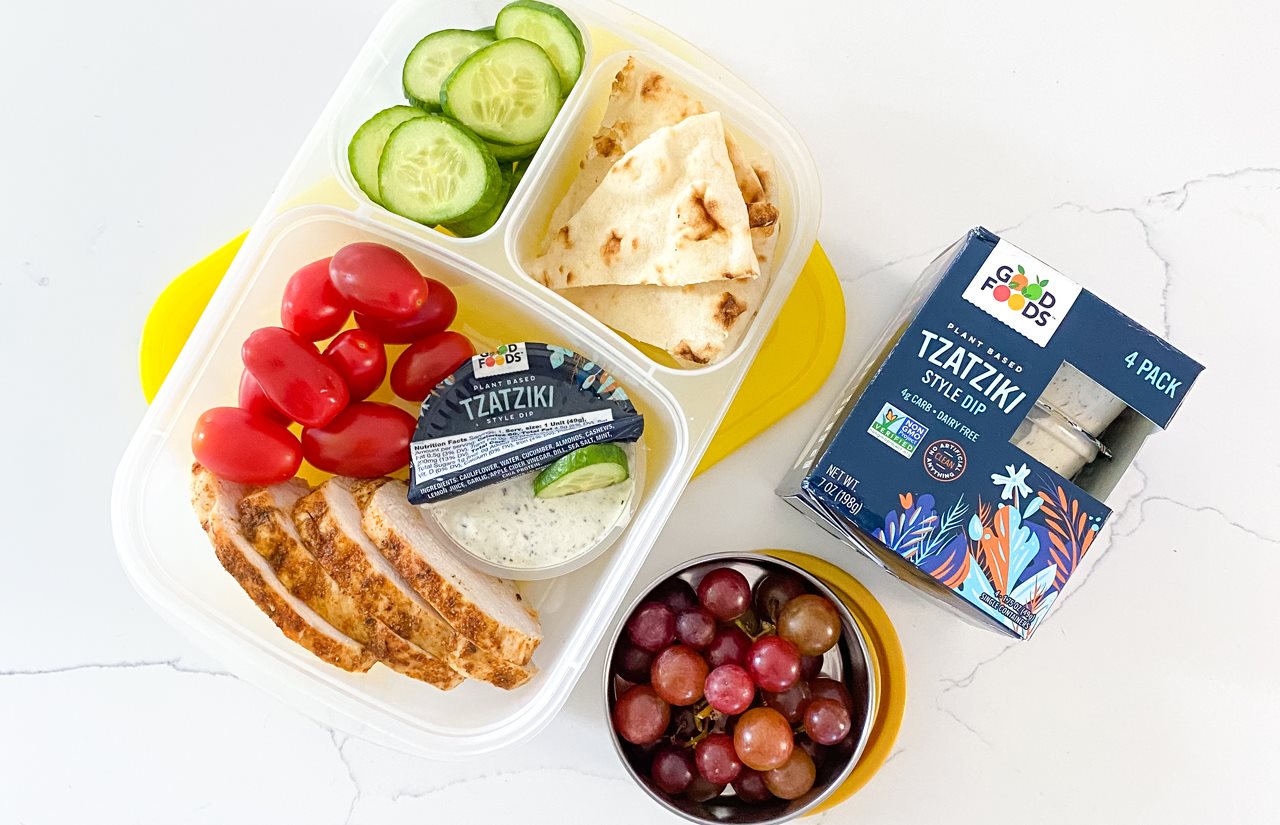
You can make this yummy Mediterranean-inspired combo of finger foods your own by swapping out one of the fruits or veggies with your child’s favorites or a good quality seasonal pick. Using single-serve Good Foods Plant Based Tzatziki Style Dip makes it easy for your kids to enjoy flavorful and convenient dipping for veggies, whole-grain crackers and more (available at Target or another store near you).

Ingredients:

  • Good Foods Plant Based Tzatziki Dip
  • Sliced grilled chicken
  • Grape tomatoes
  • Sliced cucumber
  • Pita wedges
  • Grapes

Directions:

Slice grilled chicken breasts into 1/2-inch strips and place inside the bento lunch box. Place the other ingredients inside the bento lunch box or inside another portable lunch container.

2. Ham & Cheese Apple Wrap Bento Box

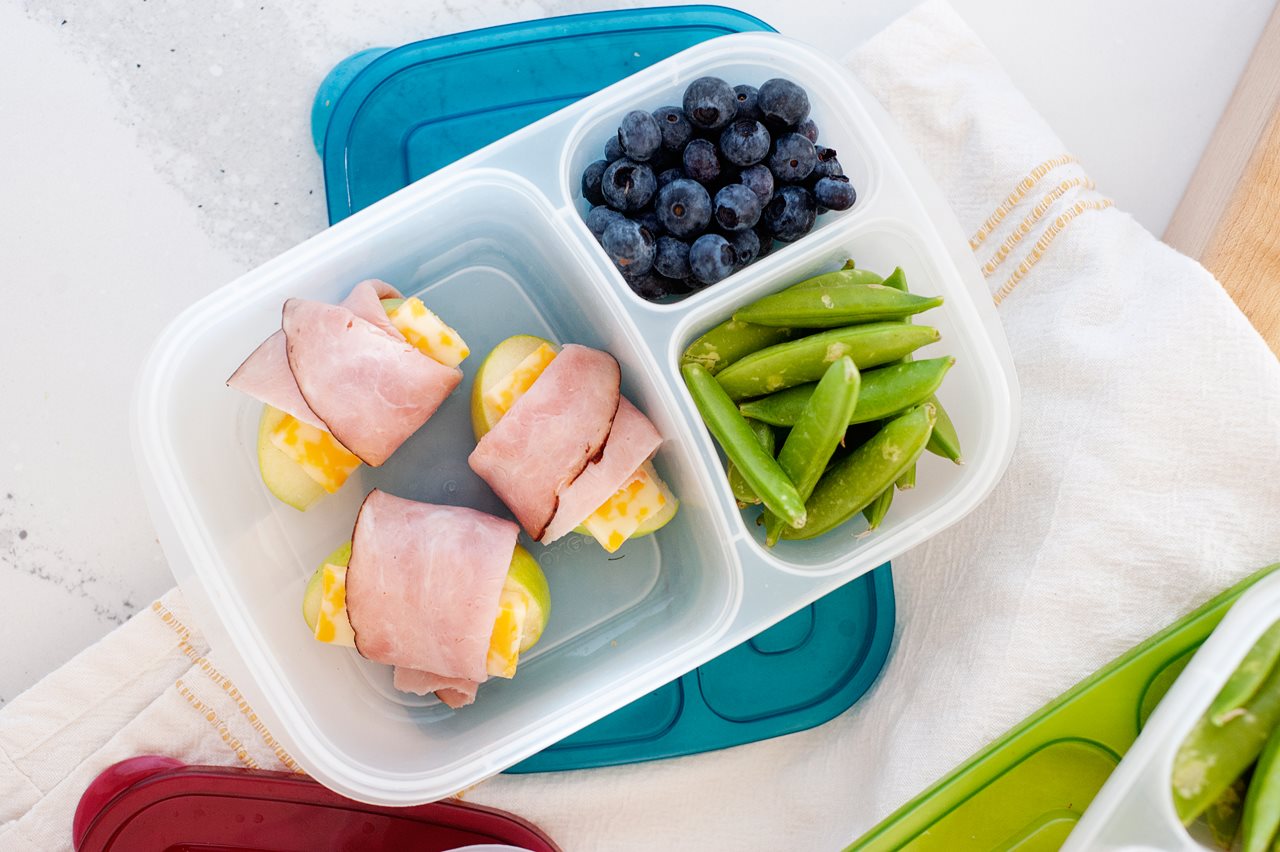
This kid-friendly favorite is a fun way for kids to enjoy crunchy, sweet sugar snap peas while also getting good servings of fruit, plus additional protein from ham and cheese.

Ingredients:

  • Sliced ham
  • Sliced Colby Jack cheese
  • Green apple slices
  • Blueberries
  • Sugar snap peas

Directions:

Fold a slice of ham in half lengthwise and wrap it around an apple slice and a cheese slice. Repeat the process with as many wraps as desired. Pack the wraps inside a bento lunch box paired with your child’s favorite fruits and veggies.

3. Chips & Queso Bento Box

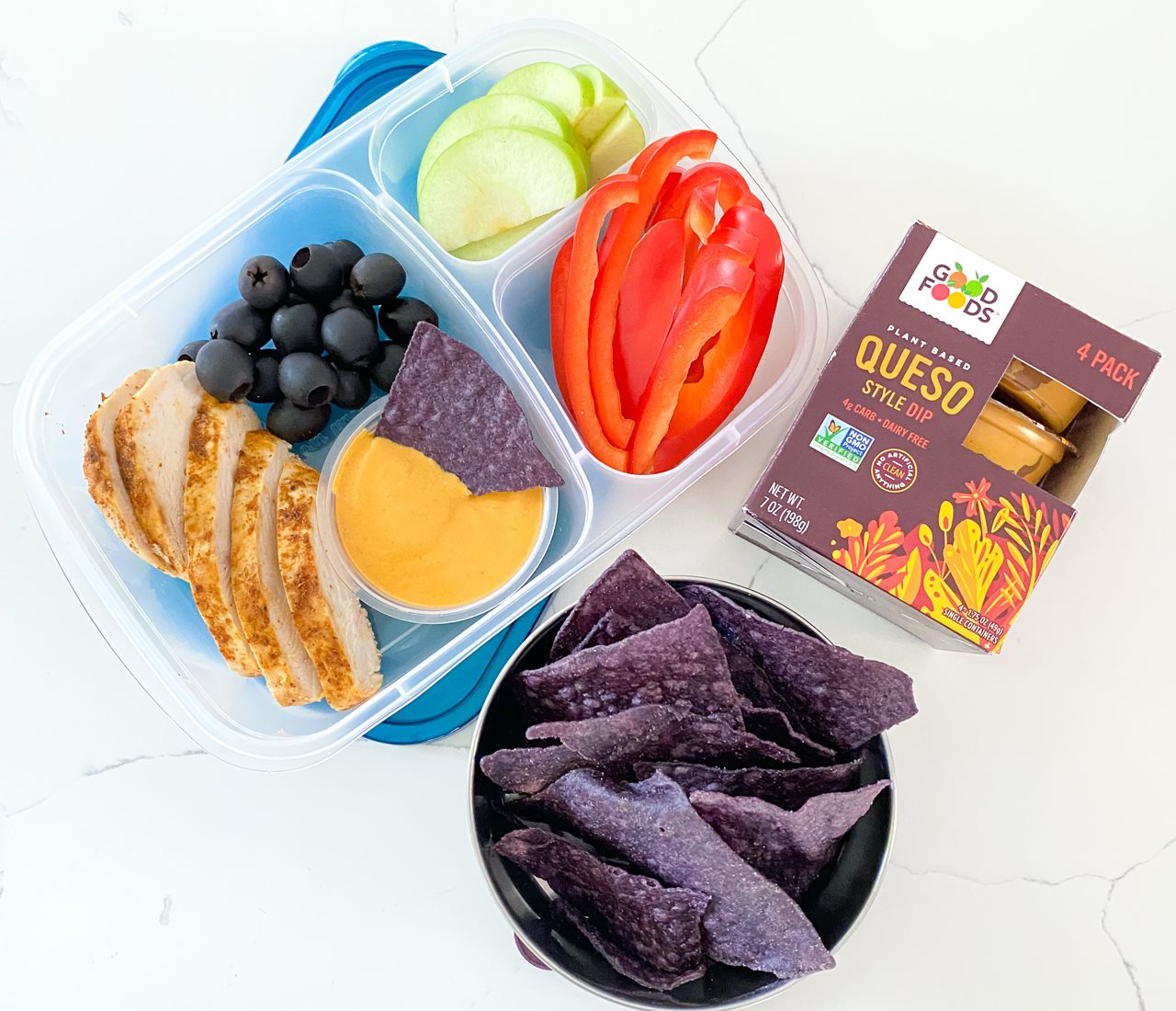
A little flare makes this assortment both colorful and appealing to a variety of taste buds. Good Foods Plant Based Queso Dip single-serves have an incredible, cheesy flavor profile and are made using fresh, high-quality ingredients (find a retailer near you).

Ingredients:

  • Good Foods Plant Based Queso Dip
  • Blue corn tortilla chips
  • Sliced red bell peppers
  • Pitted black olives
  • Sliced grilled chicken
  • Apple slices

Directions:

Slice grilled chicken breasts into 1/2-inch strips and place inside the bento lunch box. Place the other ingredients inside the bento lunch box or inside another portable lunch container. Make sure to pack the tortillas inside a separate container to prevent them from breaking or getting soggy.

4. Spinach Turkey Wrap Bento Box

This is a fun and easy wrap to eat with just one hand and also works well for weekend snacks, before or during after-school activities or even on-the-go.

Ingredients:

Directions:

Place a large tortilla on a flat surface. Spread tzatziki dip over the tortilla, top with fresh spinach, thin tomato slices and turkey. Fold the sides in, about an inch, and wrap the spinach and turkey wrap like a burrito. Slice in half and pack inside a lunch box with your favorite sides.

5. Rainbow Bento Box

For kids who love the taste of avocado, this is a sure winner. And you’ll love the healthy combo of whole grains, veggies, fruits and high-quality protein. Good Foods Avocado Mash is made with only four simple ingredients, including fresh Hass avocados, and is available at a store near you, including many Target locations.

Ingredients:

  • Good Foods Avocado Mash
  • Sliced turkey
  • Red bell pepper
  • Hard-boiled egg
  • Cheddar cheese
  • Whole grain crackers
  • Grapes

Directions:

Roll up sliced deli turkey and place it inside the bento lunch box, along with remaining ingredients. Make sure to pack the whole-grain crackers inside their own compartment or a separate container to prevent them from breaking or getting soggy.

Find more great recipes, healthy meal ideas, products and offers at GoodFoods.com.

Surprising finds: Delicious and unexpected cocktail ideas courtesy of Brazil

2022-09-01T08:01:00

(BPT) – Are you on the lookout for fresh new drinks to enjoy while taking advantage of some of the last long evenings of summer and early fall? As part of this year’s search for the next trending drink of choice, many have turned to an unlikely source for its refreshing and fruity beverages that pair perfectly with your favorite meals: Brazil.

Brazil’s mastery in the beverage market is nothing new. Brazil has cultivated a long history in wine and spirits, which has allowed Brazilian drink makers to create a diverse menu of flavorful cocktails that are unlike anything else found around the world. Just consider that today, the country is home to more than 1,100 wineries that produce more than 750,000 tons of grapes annually — which are exported to 50 global markets. What’s more, Cachaça, the favorite spirit of the country, is the third most consumed distilled spirit in the world.

“Whether you’re looking for an exciting new wine or spirit to add to your collection, or searching for fresh, delicious juice with bright flavors, Brazil is a great place from which anyone can draw inspiration,” said Alberto Carlos Bicca, Agribusiness Coordinator for ApexBrasil, the Brazilian trade and investment promotion agency.

Interested in making your own Brazilian-style drink? Here are a few recipes and pairings you can try:

Recipe: Caipirinha

When it comes to cocktails, Brazil’s rich cultural traditions have contributed to the creation of unique beverages. In fact, Caipirinha, the country’s national cocktail, has become popular in recent years for its refreshing and citrus-forward flavors that pair well with American appetizer favorites like chips, salsa and guacamole.

  • Ingredients:
    • Cachaça (white or aged)
    • Lime
    • Sugar
    • Ice
  • Steps:
    • Put the slices of 1 lime in a small glass and add 1-2 teaspoons of sugar.
    • With a pestle, press firmly on the lime and twist, releasing the juice.
    • Fill the glass with ice and pour in 70-75 ML of Cachaça.

Pairing: Brazilian red wines and steak

Brazil is best known for a diverse range of sparkling white and rose wines, but the country’s red offerings are not to be overlooked. In fact, Brazilian red wine is sturdy enough to support the richest steak course without drowning out the complex flavors of modern Brazilian fare.

Accordingly, the next time you put steak on the grill, consider pairing it with a Brazilian red.

  • Pairing:
    • Wine: Miolo Wine Group – Lote 43. This blend of merlot and cabernet sauvignon is bold and complex, filled with black fruits, tobacco and earthy aromas.
    • Pair the steak with creamy rice and beans, and a biquinho pepper and red onion puree.

Recipe: Brazilian Spritz

The “Aperol Spritz” may take its origins from Italy, but Brazil has its own twist on this classic — using the stellar selection of sparkling white and rosé wines from the country’s lush vineyards. The resulting cocktail is a light and refreshing drink that truly captures the cheerful spirit of Brazil, all while featuring Brazilian sparkling wine that has been quality tested by critics in international competitions.

  • Ingredients:
    • Aperol liquor
    • Brazilian sparkling wine (suggestion: Garibaldi Cooperativa Vinícola’s Amaze – Brut Chardonnay Sparkling Wine)
    • Sparkling water
    • 1 orange
  • Steps:
    • In a large glass, add ice, equal parts Aperol and sparkling wine.
    • Top with a splash of sparkling water.
    • Add 1 slice of orange to rim.

To learn more about Brazilian cocktails and wines, visit: Taste Brasil and Wines of Brazil.

Rethinking Drinking When Alcohol Is Everywhere

2022-09-01T08:01:00

(BPT) – Sponsored by Alkermes, Inc.

By Michelle Smith, alcohol-free since 2016 and founder of Recovery is the New Black

“This cocktail’s on me,” the flight attendant whispered with a sly smile. On a recent business trip, the crew accidentally missed me during drink service. It was early, and I was so in the mood for coffee that I rang the little overhead bell. I requested black coffee. The apologetic attendant offered my row a complimentary alcoholic beverage to make good for skipping us. Two out of three made their selections: red wine and a martini. It was my turn, so I repeated: “Just a black coffee, thanks!” I had confused the attendant who responded, again with a smile: “What would you like in that – coffee liqueur?” I responded again: “Just the black coffee!” She raised an eyebrow before finally filling my cup.

Imagine if I had to refuse a cigarette three times – or even a donut – before someone accepted my choice. Crazy, right? But alcohol is such an ingrained part of our society, it’s common to feel pressure to drink.

We often mark occasions, happy or sad, with a drink in hand. For women, it’s often part of “self-care” or “me-time.” Manicures and mimosas, anyone? Baby showers … and Bloody Marys? Yoga and wine tasting? Now think about moms. Sayings like “when kids whine, we wine” reinforce drinking as a coping method, right up there with yoga pants, social media jokes, and minivans.

As my responsibilities as a wife, mother, and career woman grew, my drinking escalated slowly over the years from social and “fun” to private and scary. My husband would recount details from the night before that I couldn’t remember. I tried and failed to cut back – “only drinking on the weekends” or “only wine.” Anything to prove that my drinking was “normal.” Then came the morning I’ll never forget: I woke up in a hospital room. I had almost died from alcohol poisoning. At the foot of my bed was a concerned child protective services officer. I still remember the terror I felt about the possibility of losing my kids.

This was a turning point. I knew I needed help. But if I’m honest, there were other moments along the way when I could have listened to the concerned voice in my head. Things didn’t need to get so bad before I decided it was time to make a change.

I was diagnosed with alcohol dependence by a health care provider, and I’ve been alcohol-free since 2016. There are many different treatment options, but for me, my recovery journey has included in-patient treatment, participating in counseling and peer support meetings, and leaning on the support of family and friends. Today, I’m a speaker, counselor, and author with a mission to end stigma surrounding alcohol dependence. That’s why I tell my story. I “recover out loud” because recovery to me means being real and honest, connecting with people in long-term recovery, and being there for others starting their journeys.

During my recovery, I have learned that no one is immune to this disease. If you or someone you know is struggling with alcohol, know that help is available. One resource I recommend is MyRelationshipWithAlcohol.com, where anyone can learn more about alcohol dependence, watch personal stories, or fill out a questionnaire to take stock of drinking patterns. There are also resources to learn more about how to talk to a health care provider.

September is National Recovery Month, and it’s a perfect moment to reflect on ways we can support people in recovery and stop the stigma which can prevent people from asking for help. Here are a few things to keep in mind:

  • “No,” is a full sentence. A person may not drink for many reasons – health, religious or otherwise – and none of these reasons are anyone else’s business.
  • Consider ways you may unconsciously “drink shame” people. Here are just a few responses I’ve heard: “Are you pregnant?” “Are you an alcoholic?” “You’re a wet blanket!” “You can have just one …” This language may seem innocent, but it’s potentially harmful to someone who is struggling.
  • Fortunately, instead of prying, we can be inclusive. Start by making a habit to serve alcohol-free drinks at your home, parties or workplaces.

I’m grateful to share my story of healing and hope, and encourage others to think about how we can help friends and family who choose not to drink. You likely know someone in recovery, even if they don’t talk about it. That’s why I do. Today my life’s work is to unite and uplift people choosing to live alcohol-free. I invite anyone who wants to rethink their relationship with alcohol to visit MyRelationshipWithAlcohol.com.

This article is sponsored by Alkermes®, and Michelle Smith has been compensated. Her story is personal and does not represent all people living with alcohol dependence. This is not a substitute for professional medical advice. Always talk to your health care provider.

ALKERMES® is a registered trademark of Alkermes, Inc. ©2022 Alkermes, Inc.

5 steps to reduce your risk of falling

2022-09-01T06:01:00

(BPT) – When you’re active and young at heart, it’s easy to forget that you may be losing some strength, flexibility and balance as you age.

Because these changes happen gradually, you may be unaware of the added risks of falling. That risk can sneak up on you as you’re busy enjoying life.

But the facts don’t lie: Falls are the leading cause of both fatal and non-fatal injuries for older Americans, and over one-fourth of older adults falls each year.

Fall injuries can include hip fractures, broken bones and head injuries. Every year, medical costs spent on fall injuries are about $50 billion, according to the Centers for Disease Control and Prevention (CDC).

But falling is not an inevitable part of aging. Many falls can be prevented by taking simple, proven steps. Here are five ways you can reduce your risk.

Start with a checkup. The first step is to understand your risk for falling. The National Council on Aging offers the Falls Free CheckUp, a simple online questionnaire that is based on research and guidance from the CDC. In a few short minutes, you can answer 13 yes or no questions, receive your falls risk score, and get easy steps you can take today to reduce your risk. You can even download your results to discuss with your doctor and sign up for a reminder to retake the Falls Free CheckUp six months later to see if your risk level has changed.

Remove hazards. A whopping 60% of all falls happen at home. That’s why it’s a good idea to walk through your home with a fresh, critical eye to determine whether any areas should be addressed. Floors should be clutter-free, with throw rugs either removed or held down with double-sided tape. All stairs should be well-lit and equipped with strong rails. In bathrooms, tubs, showers and toilets should be equipped with grab bars. Another great option is an in-shower chair used in combination with a hand-held shower head.

Keep on top of your health. Having regular checkups with your doctor will keep you aware of any changes that may have occurred, such as muscle weakness or issues with your vision, balance or gait. People with mild hearing loss are nearly three times as likely to fall as others. The symptoms of chronic conditions such as diabetes, heart disease and arthritis can also increase your risk of falling.

Stay active. Ask your doctor which kinds of exercises may help you reduce the risk of falling. Senior centers, YMCAs, Area Agencies on Aging and gyms often offer classes geared toward falls prevention, with many focusing on mobility, balance, strength, flexibility and/or behavioral changes that may help you.

Monitor your medications. Certain prescription and over-the-counter medications can cause dizziness, sleepiness or dehydration. Interactions with other medicines can also increase your risk of falling.

Learn more about how to stay independent and injury-free at NCOA.org.

Wish you ate more fruits and veggies? These 5 clever hacks will help

2022-09-01T06:01:00

(BPT) – You know eating fruits and vegetables is good for you, but you don’t always eat as many as you should. And you’re not alone.

September is National Fruits & Veggies Month – a month-long celebration of America’s favorite and flavorful plants – and the plants that no one is eating enough of. In fact, the vast majority of Americans do not eat the daily recommended amounts of fruits and vegetables, with most consuming vegetables just once per day and fruit even less, according to a recent State Of The Plate research report from the Produce For Better Health Foundation (PBH), the Foundation behind the Have A Plant® Movement.

You might be reading this and thinking – that’s me! Don’t worry, you don’t need a hefty budget or fancy cooking skills to eat more fruits and veggies. Another recent PBH study indicates that once people learn new fruit or veggie hacks, they are more likely to Have A Plant® more often.

Trying different fruit and veggie hacks can be a lot of fun, and before you know it, those hacks can turn into healthy habits that last a lifetime. National Fruits & Veggies Month is the perfect time to get inspired and refresh your routine with some fun and flavorful fruit and veggie hacks for better health and well-being.

1. Make it easy with fresh, frozen, canned, dried and 100% juice

You can easily eat a rainbow and make it a daily habit over time. Fresh, frozen, canned and dried fruits and vegetables as well as 100% juice all count toward meeting health recommendations. This means you have lots of ways to create your meals and snacks plant-packed! Start your day with a cup of 100% juice; make a sweet and savory trail mix with dried fruit; blend some frozen fruit for a delicious and affordable at-home smoothie; or save time by serving canned or packaged veggies with dinner. You can feel good because all these options are equally nutritious.

2. Elevate the flavor of soups and sauces

A quick soup or pasta is an easy go-to meal. Pack in some additional flavor and a nutrient boost with a variety of fruits and vegetables. From basic tomato to classic chicken noodle, try tossing in a handful of mixed frozen vegetables while the soup is heating – with minimal effort, the soup will taste more like homemade. You can do the same with pasta sauce. Stir in some frozen veggies for a hearty texture and added nutrition. Prefer a smooth sauce? Open a can of pureed pumpkin and add a dollop or two in. Toss a bagged salad to add as a crunchy side with your soup or pasta – and voila! You have a plant-packed powerhouse combination.

3. Enjoy fruit as dessert

The natural sugars in fruit satisfy a sweet tooth while also adding fiber and nutrients. Get creative with fruit and enjoy its sweetness in new ways with little to no effort. For example, freeze a ripe banana without the peel, add a drizzle or sprinkle of your favorite chocolate and blend for a delicious and creamy banana swirl dessert. You can also freeze peaches right in the can and then open to enjoy a cool and refreshing sorbet. Slice your favorite melon and grill it to bring out its natural sweetness. Chop fresh fruit (or just rinse some berries) and add as a topping to pudding or ice cream.

4. Maximize leftover avocado

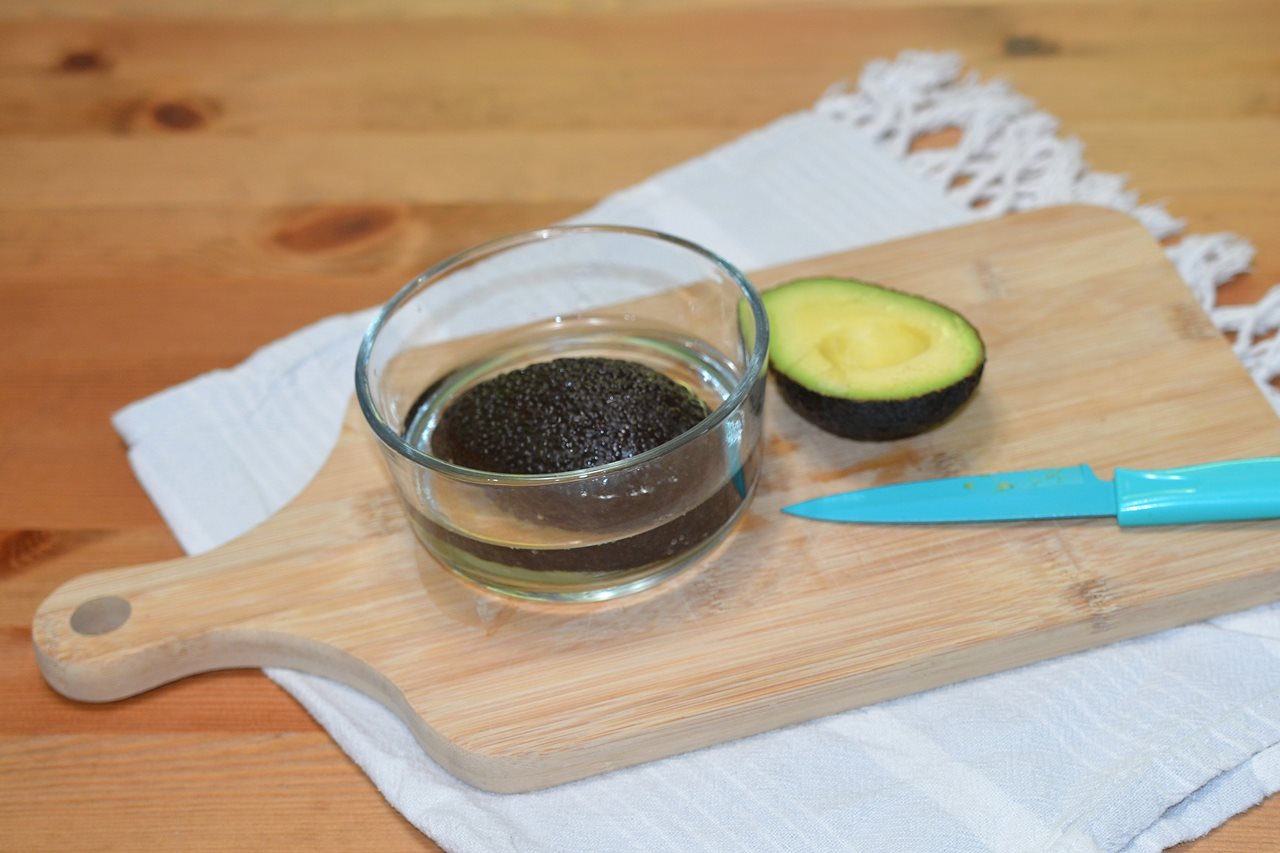
Avocado’s popularity has soared recently, yet many times, you use half the fruit and may be unsure what to do with the other half. To enjoy the other half and reduce waste, try this trick: place the avocado cut-side down in an air-tight container. Then, fill the container with water, cover and store in the fridge to extend its original quality. This prevents the fruit from browning so you can enjoy your avocado for another day or two.

5. Keep greens fresh and lively

Two of the most affordable greens are lettuce and celery. Eating more greens is great, yet they can wilt quickly. Consider these simple solutions. The secret to keeping salad greens from wilting is paper towels. They can be placed on top of a serving bowl, put inside a plastic storage bag, or used to wrap large leaf lettuce before storing to absorb excess moisture. For celery, consider wrapping celery in aluminum foil and store it in the crisper drawer in the fridge.

For more fruit and veggie hacks as well as recipes and plant-passionate inspiration, visit fruitsandveggies.org. #haveaplant