
Why Contracts Should Be a Company’s #1 Focus in 2026

2026-01-16T08:07:01

(BPT) – Personal New Year’s resolutions usually come with gym membership and ambitious habits. For companies, they show up in spreadsheets, a mix of optimism, logic and recalculated risk. As 2026 approaches, one critical business workflow deserves more attention than annual forecasts usually give it.

Contracts.

Contracts are a medium of trust between a company and its key stakeholders, representing the business’ risk, revenue and reputation. This means managing them is as important as it is complex. In technical terms, contract lifecycle management (CLM) governs how every commercial agreement is created, negotiated, signed, tracked and fulfilled.

However, managing contracts from start to finish is a time-consuming and complex process, if not managed properly.

According to the report, “The Race is On: Navigating Uncertainty Through CCM Resilience” by World Commerce & Contracting (WorldCC) in collaboration with Sirion, a leader in the CLM space, and produced by the Commerce & Contract Management Institute (CCM Institute), 70%-80% of organizations lack clear accountability for the quality and integrity of the contracting process. Without clear accountability or ownership of the contracting process, enterprises leave themselves vulnerable to risk, compromising transparency and ultimately trust.

Future-focused enterprises that are seeking to upgrade their existing CLM platforms and keep pace with a changing industry in 2026 would do well to embrace intelligent contracting run by next-generation technology: Agentic AI.

The Gap in Enterprise Contracting

CLM was meant to bring structure to commercial agreements. Instead, it became a process where teams endured long approval cycles, scattered ownership, repetitive redlining and more routing than reasoning.

While many companies know that contract management is a critical aspect of business success, there is a significant gap between knowing and doing. The Sirion-WCC research also highlights that even though 88% of executives understand that Contract and Commercial Management (CCM) excellence matters, it’s often deferred because of its complexity. These aren’t edge cases. This is the baseline experience of global contracting.

AI automation has helped contracts move along, but it has not always helped the documents get sharper. That’s because the real bottleneck in contracting isn’t motion — it’s in output quality.

Output is where intelligent contracting powered by governed, agentic AI really shines. This isn’t simply AI that drafts. It’s an agent that, through the clauses, maps them to policy, and explains the risk like a reviewer would, minus the swivel-chair chaos.

Sirion’s founder and CEO Ajay Agrawal brings home the point. “Most of what is sold today as ‘AI for contracts’ still starts and ends with a text generator.” He adds, “It can draft, summarize or spot keywords, but it doesn’t reason. It can’t tell you why a clause is risky, or how that risk maps to a company’s playbook.”

Knowing how to spot risks is critical when contracts and clauses are at play, especially when external factors, like mergers and acquisitions or political forces such as tariffs, create an impact on agreements across the globe.

To truly lead a business into the future, the need of the hour is AI that is trained by lawyers and engineers to understand an enterprise’s needs; helping with better reasoning and working with higher efficiency and accuracy, where every clause, negotiation and decision can be traced, explained and trusted.

The Future of Contracting Is Not Just Autonomous. It’s Accountable.
null

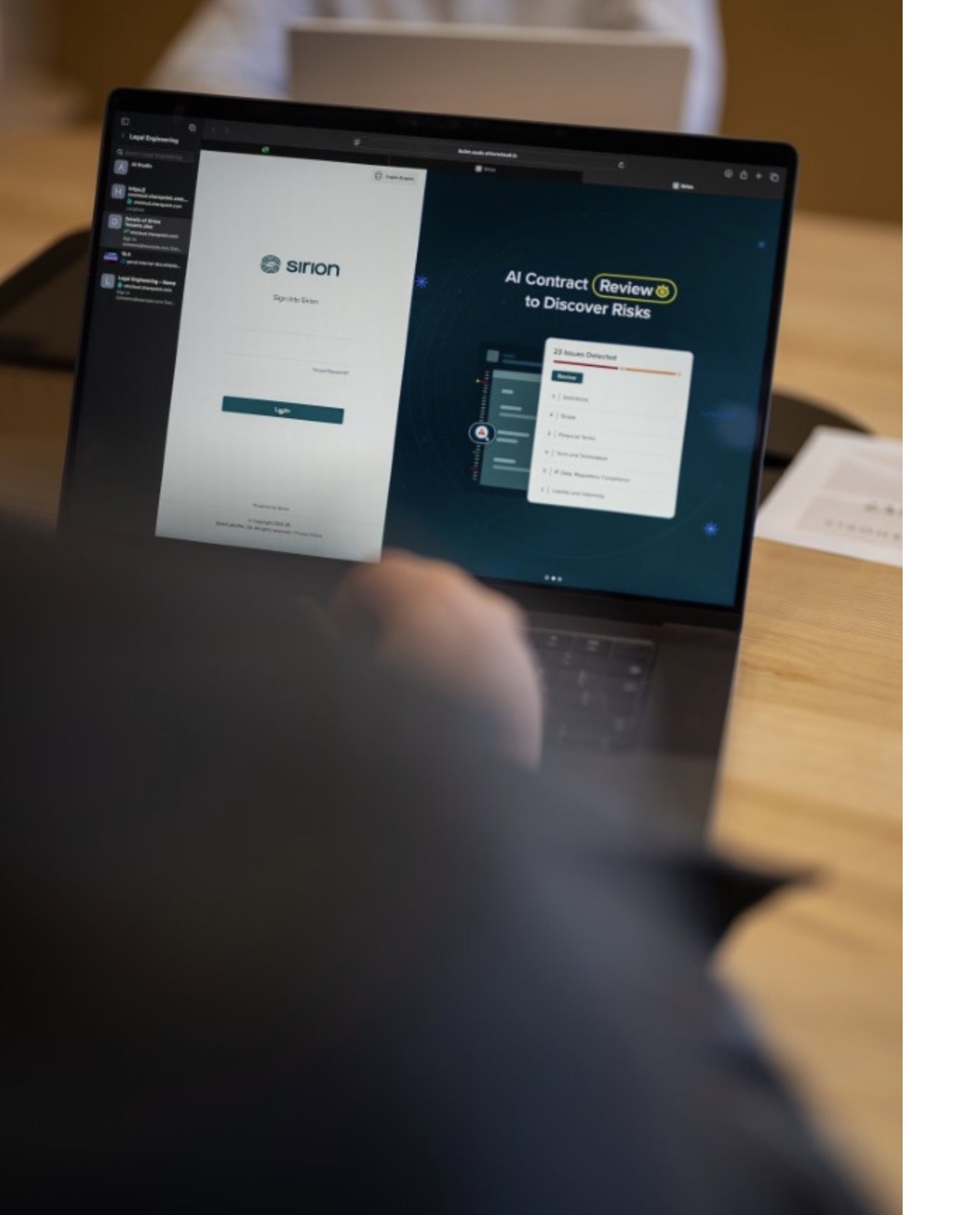
Accountability is the name of the game for contract management in 2026. CLM platforms must deliver more than just contracting efficiency solely based on saving time through automation. Governable AI for CLM must offer risk management and ownership over the contracting process.

For enterprises seeking to improve their contracting, their CLM resolutions list would look similar to these goals below:

1. Set a real target to shorten contract timelines without increasing rework.

2. Evaluate AI by the quality of its logic, not just speed.

3. Lock core risk positions into governed playbooks.

4. Surface revenue, compliance and clause collisions before negotiation begins.

5. Shift to issue-based review, not serial document edits.

6. Create one place for commitments across legal, procurement, sales and finance.

7. Ensure that every change has a reasoning and playbook reference.

8. Prioritize CLM platforms that pause when confidence is low.

9. Make contracts a common, enterprise-wide language for risk and revenue.

10. Track defensibility and insight, not just completion.

“2026 will be the year enterprises start asking harder questions, primary among them, ‘Can I trust this AI to act on my behalf?’ The answer will not come from bigger models or faster demos, but from systems that know their limits,” said Agrawal. “Governed agents will become the standard layer between human judgment and machine action: They’ll understand policy, explain every recommendation and decline to operate when the data isn’t defensible.”

To learn more about agentic AI’s potential for CLM in 2026, visit Sirion.AI.

[Executive Corner] When Displays Become Interfaces: Pioneering Human-Centered Experiences in the SDV Era

2026-01-15T18:01:00

(BPT) – By Emerson Kim, VP & Division Leader of Display Development, LG Vehicle Solution Company

Software-defined vehicles (SDVs) are transforming mobility. As more of a vehicle’s capabilities move from fixed hardware to continuously evolving software, the driving experience itself becomes something that can grow, adapt and improve over time.

That shift raises an important question: how do we ensure this intelligence feels natural and trustworthy for the people behind the wheel?

At LG Electronics (LG), we believe the answer starts with the display. In an SDV, the display is no longer just a screen. It is the primary interface where software, hardware and human behavior come together.

Recently, I was honored to receive the 2026 MotorTrend SDV Innovator Award in the Pioneer category. For me, this recognition is not about ideas alone. It reflects our team’s ability to turn complex concepts into practical, production-ready solutions that can be deployed at scale.

Shy Tech: Rethinking How Drivers Interact With Technology

Our approach to human-centered displays is guided by a philosophy we call Shy Tech. The idea is simple: technology should not demand attention by default. Instead, it should maintain a physically and visually reserved presence, making itself known only when it adds clear and meaningful value.

SDVs make it possible to deliver virtually unlimited digital functionality inside the vehicle. But more information does not always mean a better experience. Constant visible screens can increase distraction and fatigue rather than clarity. Shy Tech addresses this by making displays appear only when needed. This context-aware approach minimizes visual noise, creating a calmer interior and reducing the driver’s cognitive load to reinforce focus and safety.

Shy Tech is not just about styling. It is a system-level approach that brings together display hardware, mechanical design and intelligent software. We are defining how technology behaves — when it shows up, how it moves and when it steps back — not just how it looks.

Redefining the Display in the SDV Cockpit

One of the clearest expressions of this philosophy is our Dual Mode 24.6-inch Glass OLED Pop-Up Display, a groundbreaking Glass OLED automotive display with software-controlled dual UX/UI.

The display transitions between the two modes, changing both its physical presence and functional role. When expanded, the display functions as an immersive content platform for streaming services and media experiences. When retracted, it becomes a driver-centric cluster, presenting a clear and focused view of essential information such as speed, navigation and Advanced Driver Assistance Systems (ADAS) data.

Crucially, the solution is entirely software-driven, enabling the display to shift seamlessly between immersive infotainment and driver-focused information. This approach proves that engagement and safety do not have to compete — when intelligently orchestrated, they can coexist without compromising the driver’s attention.

Engineering Displays That Know When to Step Back

We apply the same thinking to our Bendable Moving Display technology. Instead of a simple on-off state, the display continuously adapts to the driving situation.

When information or entertainment is appropriate, the display emerges. When the driver needs focus, it retreats. These movements are orchestrated through intelligent software, enabling personalization, fluid motion and over-the-air updates as the system evolves.

Within this framework, software is not just a control layer. It becomes the architect of interaction, shaping what is displayed and when technology engages or steps back. This aligns with SDV principles of inherent flexibility and continuous improvement.

A Platform Mindset Shaped by Experience

These innovations are grounded on a platform-based mindset that LG has developed across mobile devices, consumer electronics and automotive systems. We design with scalability, software readiness and intuitive interaction in mind.

In the SDV era, this allows our display solutions to grow with the vehicle. Rather than being locked into fixed functions, they become part of a larger interaction framework that can be refined over time as software, services and user needs change.

Looking Ahead: Experience as the Measure of Innovation

The future of software-defined mobility will not be measured by how much technology a vehicle contains, but by how intelligently it delivers experiences.

Displays will play a central role in translating software into clarity, confidence and emotional connection. At LG, our goal is to build display technologies that empower without overwhelming, adapt without distracting and evolve without losing sight of human needs.

As SDVs continue to reshape mobility, we will keep pushing to ensure that technology serves people — quietly, seamlessly and intuitively.

How to build a full day of protein-packed meals with one simple swap

2026-01-15T12:15:01

(BPT) – With the latest dietary guidelines emphasizing protein at every meal for sustained energy and overall health, boosting your intake doesn’t have to mean overhauling your entire diet. In fact, one of the easiest ways to sneak protein in your day is by upgrading something you already eat: bread.

Protein-rich bread options like Nature’s Own Life Wheat + Protein Bread pack 22g of protein per two slices while tasting just like classic wheat bread, making it the perfect swap for sandwiches, toast and even snacks. That means you can focus on protein-first eating without changing your favorite meals — just the bread they’re built on!

Here’s how to build a full day of protein-packed meals and snacks using protein-rich bread — just sub it in for whatever bread you’re already using. No big pantry overhaul needed.

Breakfast: Hot honey egg-in-a-hole or French toast roll-ups

Start your day with a spicy-sweet breakfast that feels restaurant worthy but takes mere minutes to make. Cut a hole in the center of a slice of protein-rich bread, place it in a lightly greased skillet, and crack an egg right into the middle. Cook until the whites are set and the yolk is as you like it; then finish with a drizzle of hot honey for a subtle kick. You’ll get protein from both the egg and the bread, helping keep you full through the morning without sacrificing comfort-food vibes.

Or, if you’re craving something sweet, try these Blueberry Cream Cheese French Toast Roll-Ups. Just flatten slices of protein-rich bread, filling them with lightly sweetened cream cheese and blueberries. Then roll them up, dip in egg and pan-fry ’til golden brown.

Lunch: Salad with protein croutons

If you love a big salad for lunch but find yourself hungry an hour later, croutons made from protein-rich bread can make a surprising difference. Cube your bread, toss with a little olive oil and garlic powder, then bake or air-fry until crispy. Sprinkle over your favorite salad — whether it’s greens with grilled chicken, chopped veggies or even a Caesar-style bowl. You’ll get crunch, flavor and an extra protein boost without adding heaviness, making this a smart upgrade for lighter lunches that still need staying power.

Afternoon snack: Melty protein toast bites

When the three o’clock munchies hit, turn protein-rich bread into a warm, savory snack. Cut slices into quarters, top with cheese (and chicken or deli meat if you want the bonus protein), then pop into the toaster oven, air fryer or microwave until melty. It’s quick, comforting and much more satisfying than a bag of chips.

Dinner: Garlic smash burgers on a protein-rich bun

Nothing beats a juicy burger after a long day. Just use two Nature’s Own Life Wheat + Protein slices as your buns. Toast them, mash patties with garlic and onion, add sliced cheese and serve with your favorite toppings. You’ll still get that indulgent dinner feel, just with more protein built right into the base of the meal.

Dessert: Bread pudding

Yes, even sweets can get a protein upgrade! Have leftover slices from earlier in the day? Cube your extra protein-rich bread and soak in a custard mix (eggs, milk, vanilla) then bake until golden and lightly crisp on the top. Make it your own by adding chocolate chips, or a seasonal berry, for a cozy dessert that feels indulgent but still fits into a balanced day of eating.

These simple swaps prove that adding protein doesn’t have to mean giving up the foods you love. Start with one meal or build a full day around it — either way, protein-rich bread makes it easier to support energy and fullness from morning to night.

Signs to watch for when your child has a tummy-ache

2026-01-15T07:01:00

(BPT) – Gut health is a frequent topic in the news, for good reason. Having a healthy gut contributes to your overall well-being, impacting your immune system, metabolism and more. This is one reason parents should take notice when their child has stomach pain or other digestive issues. Stomachaches are a frequent complaint in childhood, and they can have many causes. While some are easily resolved, stomachaches can indicate a larger health issue.

“Because stomach pain can sometimes signal a more serious condition, it’s a good idea for parents to familiarize themselves with signs they shouldn’t ignore, and to ask the family’s pediatrician whenever they have questions about their child’s health,” said Dr. Reinaldo Garcia-Naveiro, director, Pediatric Gastroenterology, Akron Children’s.

null
Reinaldo Garcia-Naveiro, MD, director of pediatric gastroenterology at Akron Children’s in Ohio, works alongside families to find answers for children with digestive concerns. Dr. Garcia-Naveiro cares for children with a wide range of gastrointestinal and liver conditions, including irritable bowel syndrome and celiac disease.

The experts at Akron Children’s offer tips to help parents recognize when a simple stomachache may not be so simple.

What to know when your child has a stomachache

“If your child complains about stomach pain, it’s important to check for other symptoms,” said Garcia-Naveiro. “Stomachaches can have many causes, from gas or constipation to stress, overeating, a contagious “stomach bug” like Norovirus, or chronic underlying conditions like irritable bowel syndrome (IBS) or Crohn’s Disease, reflux or celiac disease.”

Stomach pain can also be caused by food allergies or food poisoning. Given these many potential causes, it’s vital to note any additional symptoms that can help your child’s doctor understand why your child isn’t feeling well.

Signs your child needs medical attention

“While many stomachaches quickly get better, it’s important to consult your doctor when pain is severe, occurs frequently or doesn’t go away,” added Garcia-Naveiro.

You should also call the doctor if your child has a stomachache and:

  • the pain seems very strong or worsens over time
  • the pain wakes them up from sleep
  • the pain is in the right lower side of the belly
  • is vomiting
  • is very fussy
  • is lethargic (very sleepy)
  • has another health condition

Tell the doctor about other symptoms your child has, such as:

  • a fever
  • pain when going to the bathroom
  • blood in urine or stool
  • a bad cough
  • weight loss over time

Symptoms that may accompany stomach pain

You should note any other symptoms your child may also experience while they have a stomachache, which can help clarify why their stomach hurts.

Vomiting: This is most often caused by gastroenteritis, an infection of the stomach and intestines that usually lasts less than 24 hours. Rarely, vomiting can signify a serious problem, including a blocked intestine, gallstones, pancreatitis or appendicitis. Frequent vomiting can lead to dehydration (not having enough water in the body). Children who continue vomiting or have severe dehydration need treatment in the emergency room or hospital.

Diarrhea: Soft/loose bowel movements are not uncommon in children. This usually doesn’t last long and often gets better on its own. Diarrhea can be caused by a number of different viruses, bacteria or parasites. Children can also get diarrhea from drinking too much juice and other sugar-sweetened beverages, or due to food allergies, lactose intolerance, taking antibiotics or resulting from medical problems like celiac disease, inflammatory bowel disease (Crohn’s disease and ulcerative colitis) and irritable bowel syndrome. If your child has frequent diarrhea, or it doesn’t resolve in a few days, see their pediatrician to determine the cause and appropriate treatment.

Constipation is a common problem in children, and usually not cause for concern. You may notice your child having fewer than two bowel movements in a week, or dry, difficult-to-pass bowel movements. Constipation can be due to a diet without enough water and fiber, as found in foods like fresh fruits, vegetables and beans, which help bowels move as they should. Toilet training toddlers sometimes become constipated, and some children may avoid going to the bathroom if they don’t want to use a restroom away from home. Stress can also lead to constipation, and some kids may get constipated if they have irritable bowel syndrome (IBS).

Other symptoms that can accompany children’s stomachaches include sore throat, heartburn, fever, bloating and painful urination. The combination of symptoms your child is having can help determine the cause of their stomach pain. Write down what you’re noticing, so you can share that information with their pediatrician.

null
Dr. Garcia-Naveiro shares a light-hearted moment with a young patient, highlighting his thoughtful, patient-focused approach to care.


Expert medical care near you

When your child isn’t feeling well, it’s crucial to find a doctor you trust. Look for clinics and hospitals in your area that specialize in pediatric care. For example, in addition to primary care, Akron Children’s offers a comprehensive range of specialty care including Cardiology, ENT, Neurology and Orthopedics. Akron Children’s pediatricians and pediatric providers help kids find more childhood in every day, even when they’re sick.

Akron Children’s offers two hospital campuses, six regional health centers, over 45 primary care locations and nearly 250 providers, making it easier for today’s busy families to find high-quality care. Akron Children’s was recognized as one of America’s Best Children’s Hospitals, and named a top pediatric hospital in the U.S., according to Newsweek’s Best Children’s Hospitals of 2025 list.

The pediatric gastroenterology department at Akron Children’s combines its expertise in pediatric gastrointestinal diseases with advanced diagnostics and therapies to provide the highest-quality medical care to infants, children and teens with digestive problems, focusing on concerns unique to pediatric patients including growth, physical and emotional development and age-related social issues.

The team at Akron Children’s is experienced in diagnosing and treating all types of serious gastrointestinal, liver and pancreas disorders including celiac disease, gastroesophageal reflux, inflammatory bowel disease, hepatitis, pancreatitis and Crohn’s disease. The department also collaborates with Cincinnati Children’s Hospital for liver transplants.

null
Stomachaches in children can have many causes, which is why expert, family-centered pediatric care is essential to help them feel better and thrive.

Find more health tips for parents, and learn more about Akron Children’s and their pediatric gastroenterology department, at AkronChildrens.org.

Score big on game day with these easy entertaining tips

2026-01-14T16:27:00

(BPT) – Nothing beats gathering with friends to cheer on your favorite team — the energy, the camaraderie, those hard-won victories — and of course, share all that great food. With a little prep work, a solid game plan and simple crowd-pleasing dishes that are easy to serve and share, you can be the MVP of the game-day get-together.

Here are several tips to make the game-day celebration easier, more fun and tastier, too.

Make room for more guests

Ahead of game day, gather extra seating as needed and arrange it so all your guests will have a good view of the game. Clear out clutter and move any extra furniture that might get in the way, like side tables or other items so there’s space to move around. Too many decorative pillows crowding your sofa? Store the extras in a closet to give everyone room to huddle together at kickoff.

Show your true colors

Get everyone in the spirit by decking out the buffet table and viewing room in your team’s colors with themed banners, tablecloths and napkins. Encourage guests to wear their favorite team jerseys, even if they’re rooting for the opposition. You can also add small touches like themed coasters or drink stirrers to give the space a festive, game-day feel.

Keep the drinks flowing

Make sure guests can grab a drink without missing the action by setting up a self-serve station. Offer a mix of options — from beer or cocktails to sparkling water, soda and mocktails — and add fun touches like citrus slices and colorful garnishes. Keep cups and ice nearby so refills are effortless and everyone can enjoy their favorite beverages throughout the day.

Please crowds with easy sides and appetizers

Keep game day stress-free by choosing appetizers and sides that are quick to prepare. Opt for easy favorites that guests can grab and enjoy — think sliders, wings or a variety of chips and dips. Simple dishes like these let you focus on hosting while keeping the energy high and guests satisfied.

Did you know bacon is the fifth most added item to macaroni and cheese? For a ready-made crowd-pleaser, try Bob Evans Bacon Macaroni & Cheese. Microwave ready in five minutes, this creamy dish offers an indulgent blend of real cheese and bacon with a rich, savory hickory-smoked flavor and just the right touch of black pepper seasoning.

Take your appetizers up a notch with these Barbecue Pork Macaroni & Cheese Bites. These handheld bites combine cheesy and smokey Bacon Macaroni & Cheese with spicy barbecue pork for a flavorful twist that’s easy to prepare and ideal for sharing.

Barbecue Pork Macaroni & Cheese Bites

Prep time: 15 minutes; Cook time: 20 minutes; Servings: 12

Ingredients

  • 20 ounces Bob Evans Bacon Macaroni & Cheese
  • 8 ounces cream cheese, softened
  • 1/3 cup spicy barbecue sauce
  • 3/4 cup panko breadcrumbs
  • 2 large eggs, lightly beaten
  • 1 1/2 cups shredded barbecue pork
  • 1 cup hamburger dill pickle chips

Instructions

1. Preheat oven to 400°F. Combine macaroni & cheese, cream cheese and barbecue sauce, stirring until blended.
2. Add breadcrumbs and beaten eggs, stirring until blended. Spoon mixture into wells of a lightly greased (24-cup) miniature muffin pan.
3. Bake 15-20 minutes or until golden brown.
4. Meanwhile, heat pork in microwave if desired.
5. Top macaroni & cheese bites with shredded pork and pickles. Drizzle with additional barbecue sauce if desired.

Find this new flavor of macaroni and cheese to elevate your homegate spread, plus more game-day recipe inspiration at BobEvansGrocery.com.

Support your business through expert IT and cybersecurity management

2026-01-14T11:01:00

(BPT) – Today’s businesses face unprecedented challenges, from the increasing complexity of digital transformations and hybrid cloud environments to constantly evolving cybersecurity threats and regulatory pressures. Cybercrime alone has been projected to reach $12 trillion globally this year, with the average U.S. data breach now costing over $9.36 million, and cyberattacks more than doubling between 2021 and 2025.

How can a business successfully navigate this rapidly changing technological landscape?

Choose an experienced, trusted partner that brings Managed IT Services and cybersecurity protection together under one roof. Canon U.S.A., in collaboration with its Managed IT Services Partner, Supra ITS, simplifies operations while reducing delays, confusion, and potential risk for organizations of all sizes.

A history of supporting businesses with vital technology

Since the 1990s, Canon U.S.A. has supported organizations through rapid change with Managed Workplace Services, including facilities management. During that time, Canon also provided digital, networked devices to help businesses successfully transition to the digital age.

In the 2000s, Canon launched its Managed Print Software Integration Services to meet growing customer requirements. In the 2010s, Canon continued to evolve — introducing cloud-based solutions to address changing business needs.

Today’s businesses are increasingly asking for Managed IT and Cybersecurity services, and Canon responded to this demand. They rose to meet these challenges by partnering with Supra ITS, which has over 25 years of proven expertise in this sector. This collaboration helps offer services and solutions designed to protect organizations and keep operations running smoothly.

Services to help your business thrive and improve security posture

With Canon’s Managed IT Services and their new approach to IT and Security offerings, businesses in the U.S. now have access to a comprehensive suite of solutions for managing office technology, IT infrastructure and cybersecurity — streamlining operations through a single provider. Existing Canon customers can also consolidate vendor management by leasing and billing both office equipment and Managed IT Services through Canon Financial Services, Inc., helping to simplify invoicing, improve billing transparency and strengthen vendor relationships.

Key Managed IT Services include:

24/7 IT Helpdesk and End-User Support for around-the-clock support with experienced technicians for rapid issue resolution, system monitoring, patching and updates designed to prevent problems before they escalate.

IT security support individuals at their computers similar to the professionals from Canon U.S.A., in collaboration with its Managed IT Services Partner, Supra ITS.

24x7x365 Network Security Operations Center (NSOC) which provides a centralized platform offering real-time visibility and management of IT and cybersecurity operations. Combining cybersecurity and IT solutions within the same offering provides a unified experience, enabling fast threat detection and remediation, as well as smooth operations.

Managed Detection and Response (MDR) / Extended Detection and Response (XDR) is designed to deliver real-time threat containment, remediation and actionable insights — offering response capabilities that go beyond traditional cybersecurity solutions.

Cloud Services that include:

  • Private Cloud for dedicated resources, daily backups and 24/7 monitoring.
  • Public Cloud with expert oversight and support for platforms like Microsoft Azure, AWS and Google Cloud.*

IT Infrastructure Support provides end-to-end support including proactive system monitoring, performance tuning and hardware lifecycle management.

Data Backup and Disaster Recovery which offers protection for critical business data with secure, redundant backups across locations, regular testing and recovery planning to minimize downtime.

Compliance Support through Supra ITS’s ISO 27001 and SOC 2 Type II certifications, which allows business owners to inherit applicable controls and simplify the path to compliance — reducing the time, effort and cost of meeting regulatory demands for their organizations with confidence.**

Learn more about how to successfully protect and support your business now and into the future with Canon U.S.A., Inc. Managed IT Services.

* Subscription to a third-party cloud service required. Subject to third-party cloud service provider’s terms and conditions.

**Canon and SUPRA ITS products offer certain security features, yet many variables can impact the security of your devices and data. We do not warrant that use of its features will prevent security issues. Nothing herein should be construed as legal or regulatory advice concerning applicable laws; customers must have their own qualified counsel determine the feasibility of a solution as it relates to regulatory and statutory compliance. Some security features may impact functionality/performance; you may want to test these settings in your environment.

How a printer can help with your security and environmental sustainability efforts

2026-01-14T12:01:00

(BPT) – Even in the digital world, offices of every size use printers. Whether you’re making copies of documents, printing reports, scanning important information to deliver to your computer or faxing documents to vendors, having a reliable printer matters to everyday operations that keep your business running.

When choosing a printer, you likely prioritize visuals like print quality, speed, connectivity, efficiency and multifunctionality. However, these are just the basics. As you review your options, look for key security and environmental sustainability features that meet the demands of the modern work environment.

With these features in mind, Canon has expanded its imageFORCE printer lineup. The imageFORCE platform is engineered for versatility and performance, delivering Canon’s renowned image quality and robust high-volume systems which are great for busy departments, to space-saving models suited for smaller workgroups.

More importantly, this range of printers features various security and environmental sustainability features that can help your office step into the new year with smart and fast printing.**

Security features that can be integrated as part of your business efforts

Cyberattacks are on the rise, which can have the potential to put businesses of all sizes at risk of financial loss and data breaches and can also lead to a loss of client trust and reputation.

You may already have cybersecurity measures like antivirus software and firewalls in place, but what types of security features does your printer offer?

To help you in your efforts to protect your digital assets, you’ll need a printer with security features made to help you.

Luckily, Canon’s imageFORCE printer lineup is equipped with various security features designed to help you as part of your efforts to safeguard your infrastructure. For example, the Security Environment Estimation* feature is designed to help take the guesswork out of security settings by using an estimation algorithm developed by Canon to analyze the printer’s operating environment and make security setting recommendations suited to your specific office.**

imageFORCE printers also have the Trellix Embedded Control* option. Once turned on, it uses whitelisting to help protect against malware and prevent tampering of existing firmware and applications.**

Finally, Canon’s Unified Firmware Platform (UFP)* does the work of keeping your printer updated. With the UFP, your imageFORCE printer receives ongoing updates that may include additional security features as well as new features like synchronized user settings and expanded print and scan capabilities.

With imageFORCE devices you can print, scan, fax and store important documents while implementing these helpful features.**

Environmentally sustainable features that can support your business efforts

Environmental sustainability isn’t just a buzzword. In fact, it’s become an important area for businesses to consider. Not only can environmentally sustainable practices provide the potential to help your business cut down on costs, but they can also provide the ability to boost your reputation with eco-conscious consumers now and in the future.

Making positive changes doesn’t mean you have to overhaul your business practices overnight. Small steps can make a huge difference in the long run, like switching to a printer with a number of built-in environmental sustainability features.

As part of the company’s commitment to Kyosei — the idea of living and working together for the common good — Canon has created the imageFORCE printer line with a number of features that are designed to help reduce power consumption.

imageFORCE printers use a combination of highly efficient fusing technologies and low-melting-point toner that are designed to help minimize power requirements. Several products across this printer line are also backed by well-known certifications for energy efficiency and environmental responsibility including ENERGY STAR®, EPEAT 1.0 Gold, and EPEAT 1.0 Silver. EPEAT-registered imaging products meet an extensive list of environmental lifecycle-based criteria, and undergo verification by an independent third party to ensure they meet the ecolabel standards.

In addition, Canon has also reduced its use of plastic materials used for packaging select printer models in the imageFORCE lineup by switching from conventional foam packaging to interior cardboard packaging materials for the main unit, a widely recyclable material.

Print better, do more and stay ahead in 2026

Your office may be small, but your dreams are big. Start the year with technology that can support your business’s security and environmental sustainability efforts. To learn more and find the printer that’s right for your company in 2026 and beyond, visit www.usa.canon.com/imageforce.

*Not available on all models. This feature is off by default and must be turned on by the user. Warm up times are affected once turned on.

**Canon products offer certain security features, yet many variables can impact the security of your devices and data. Canon does not warrant that use of its security features or recommendations will prevent security issues. Customers should perform their own due diligence and consult with their security expert to determine what security features to implement for their organization.

Learning with AI: How embracing AI opens professional opportunities

2026-01-13T08:01:00

(BPT) – When it comes to workforce readiness and long-term job security, lifelong learning is nonnegotiable. In fact, according to DeVry University’s report, “Bridging the Gap: Overcoming a Silent Standoff in America’s Talent Economy”, employers shared that — on average — 55% of their workforce needs to upskill significantly to remain employable in five years. Additionally, 63% of employers said they skipped workers for promotions because their skills were outdated.

The good news is that workers are seeking opportunities to hone existing skills or learn new ones to keep adapting with their organization’s shifting needs, especially when it comes to AI skills. The report revealed that 57% of workers say the skilled use of AI will be the most valuable skill to have in tomorrow’s economy, ranking it the second most valuable out of 13 skills. Learning the basics of AI and building on that knowledge will prepare them for the use of generative AI (gen AI) and build the foundation needed to explore how agentic AI is likely to transform their work.

What is agentic AI?

You’re likely already familiar with gen AI, which focuses on creating content based on learned patterns. Agentic AI takes it a step further blending automation capability and gen AI to complete complex tasks. So, for example, an AI “agent” not only tells you the best time to visit Amsterdam based on travel patterns and your schedule, but it also can book your flights, hotels and tourist experiences.

Just because agentic AI can now operate in the background autonomously doesn’t mean that workers should panic about job security. According to the EY Agentic AI Workplace Survey, workers overwhelmingly expect positive impacts on productivity, efficiency and their work experience.

That said, the survey also found that many are left to experiment with the technology on their own. Given these findings, it’s clear that courses on AI skills are critical to employee job security now and in the future.

Equipping employees today to succeed tomorrow

To address the need for upskilling for long-term career success, the university launched DeVryPro, an innovative learning platform built in collaboration with industry leaders and DeVry faculty members that covers essential disciplines, including AI.

“AI has matured well beyond theoretical applications,” said Richard Korczyk, chief experience officer at DeVry University. “Many industries are mainstreaming this technology, and workers need to know how to learn, work and lead with AI as a partner, not a rival.”

To support lifelong learning and work readiness, DeVry now offers courses that equip workers with the skills they need to thrive in an AI-driven job market. The courses listed below on gen and agentic AI are guided by real-time AI learning coaches in a flexible format so students can learn on their own terms.

AI for All: Build Practical Real-World AI Skills: Designed for professionals who are curious about AI, this course introduces the fundamentals so learners can use AI tools in their daily tasks like emails, reports and workflows.

Applied AI: Generative AI for Professionals: This intermediate course is tailored for professionals already experimenting with AI. Learners will discover how to automate daily tasks, develop applications and use tools like GPT to enhance productivity and creativity.

Data to Decisions: AI Essentials for Analysts: Business analysts will learn how to use custom solutions to improve data accessibility, automate processing, streamline workflows and enhance visual reports.

AI for Leaders: Innovate and Elevate: Equips leaders to guide their organizations and teams through AI-driven change and its impact on business, and effective implementation of AI solutions to develop integration strategies for organizational success.

Building on its initial success, DeVry has added four new courses to the learning platform:

AI for Entrepreneurs: Aspiring and early-stage founders will learn how to use integrated AI tools for ideation, validation, prototyping and business scaling. At the end of the course, participants will build an AI-enhanced startup plan they can share with mentors, investors or collaborators.

Foundations of Self-Leadership: This course is the first step in the DeVryPro’s leadership pathway, equipping emerging leaders to build the essential mindset and skills required to lead with confidence, adaptability and purpose.

Leading Teams and Driving Impact: As the next step in DeVryPro’s leadership pathway, this course bridges personal effectiveness with organizational performance and strategic alignment to build high-performing teams.

Product Management Fundamentals: The course introduces learners to the principles, tools and strategies that guide the full product lifecycle so they can make data-informed decisions, collaborate across functions and translate business objectives into customer-centered products.

Together, these courses form a cohesive learning ecosystem that supports employee growth at every stage — from entry-level roles to leadership — to help them thrive in an AI-driven workforce. Once they complete a course, learners can earn a verifiable Certificate of Completion or Badge that recognizes their competencies and showcases their AI skills, opening doors to career growth opportunities in credential-driven markets.

“Our courses aren’t just about building knowledge,” added Korczyk. “We’ve carefully developed learning experiences that prepare learners to apply leadership and AI skills in the context of their careers so they can feel confident in keeping pace in an ever-evolving professional landscape.”

Artificial intelligence is transforming every industry, and those who understand it are leading the way. To explore what is possible, visit DeVryPro.com.

Pending proposal to cap student loans could affect growth of healthcare workforce

2026-01-13T08:01:00

(BPT) – With national healthcare workforce shortages continuing to impact patient access to care across the country, groups like the American Academy of Physicians Associates (AAPA) — the national organization that represents physician associates/assistants (PAs) — are actively working to raise awareness of a proposed rule from the Department of Education (ED).

In early November, ED announced its decision to set a definition of a “professional program” that excludes PAs, nurse practitioners, certified registered nurse anesthetists, physical and occupational therapists, audiologists, speech-language pathologists, and others from eligibility for higher federal student loan limits.

If the proposal is finalized, the new loan limit of $25,000 annually would take effect in July 2026.

“Federal student loans are not a luxury for students who are called to caring professions; they are a lifeline,” said AAPA President and Chair of the Board of Directors, Todd Pickard, DMSc, PA-C, DFAAPA, FASCO.

“Twenty-seven years ago, I took out $87,000 in federal loans to become a PA. Without those loans, I would not have become a clinician. I would not have cared for thousands of patients, including those with cancer whose lives depended on timely access to our team.”

Pickard said that since the proposal was announced, AAPA has received nearly 2,000 stories from PAs attesting to how federal loans were essential to their education, as well as aspiring PAs who are expressing fear that even if they are accepted into a PA program — which are highly competitive — they will not be able to pay for it.

“Neither my family nor I have the financial ability to overcome such a burden without the support of federal Grad PLUS loans,” said Jasmine Vasquez, an aspiring PA from Loganville, Georgia. “I have pushed myself, persevered, and overcome adversity to get to this point. Being so close to my goal, it is heartbreaking to imagine my journey ending — not because of lack of determination or ability, but simply because I could not afford to continue.”

In a November 6 ED press release, Under Secretary of Education Nicholas Kent stated the consensus language reached by the negotiators will “help drive a sea change in higher education by holding universities accountable for outcomes and putting significant downward pressure on the cost of tuition.”

However, some leaders in Congress, including Republican U.S. Rep. Mike Lawler (NY-17), have spoken out against this proposal, underscoring that it does not align with Congress’s intention when it passed updates to federal student loans through The One Big Beautiful Bill Act (H.R. 1).

H.R. 1 eliminated the Grad PLUS loan program and established tiered loan limits for graduate programs. A team of negotiators at ED was then charged with defining which programs would be assigned to each tier.

It was during this process that several advanced care clinicians, including PAs, who are educated at the master’s degree level and require a license to practice, were assigned to a loan tier that does not cover the cost of their education.

On December 1, Lawler sent a letter to Education Secretary Linda McMahon encouraging the ED to maintain a broader definition of “professional degrees” consistent with federal law and workforce needs.

“At a time when our healthcare system is strained, and communities desperately need qualified professionals, the Department must make this critical change before finalizing the rule,” Lawler stated in a press release.

Lawler’s next step was introducing the Professional Student Degree Act on December 17, which would amend the Higher Education Act to define “professional degree” and lists the graduate programs which meet the criteria.

“Any degree that fits the specified criteria in the ‘professional degree’ definition should qualify for higher loan limits,” Lawler stated in his release. “For so many essential workers that need advanced degrees and licenses to simply do their job, it will make all the difference.”

Like Lawler and others in Congress who have raised concern, Pickard said AAPA is committed to pursuing every available option to ensure PA programs are recognized as professional degrees and that future PAs can access the education they need to serve their communities.

A Physicians Associate, a member of an organzation like the American Academy of Physicians Associates (AAPA), intaking information about a patient's condition in an exam room.

“If federal student loans are not appropriately available for aspiring PAs, the pipeline of healthcare providers will suffer,” Pickard said.

“People who are going into healthcare should be able to get the financial assistance they need so they can come out the other end and take care of patients. That is the standard we should be working toward.”

5 ways to succeed with your fitness and financial New Year’s resolutions

2026-01-09T10:31:00

(BPT) – If you’ve made resolutions focused on your well-being and your finances this year, you’re not alone. A recent survey reveals that the most common resolutions for Americans include putting more money into savings (45%), getting more exercise (45%) and improving their overall physical health (41%). Does that sound like you? The good news is, you can find ways to boost your financial and wellness resolutions at the same time. In other words, you can break a sweat without breaking the bank.

At Planet Fitness, for example, you can discover ways to get in better shape that won’t jeopardize your financial goals for the year. With the help of a welcoming, Judgement Free fitness community, you can make the most of your dollars while also getting stronger.

“When you set achievable goals, leverage fitness resources wisely and consistently show up for yourself, you’re not just working out and making gains for the short term,” said Alissa Mosca, certified fitness trainer and regional operations manager at Planet Fitness. “You’re making a powerful, long-term investment that helps minimize future health challenges and maximize your daily vitality and productivity.”

The experts at Planet Fitness offer these tips to help you save both time and money while you work out in 2026.

1. Start small, start smart

You can achieve and sustain your New Year’s resolutions by setting specific, measurable financial and fitness goals. Begin by breaking your goals into smaller action steps, so they’re achievable rather than overwhelming. By integrating consistent gym workouts into your exercise routine you’ll successfully kick off the year strong.

Make impactful savings this year and set a standard by switching to a high-value, affordable gym like Planet Fitness. This frees up your budget, proving that big health goals don’t have to require big spending. You’ll access the same best-in-class equipment you’d see in more expensive gyms, along with the backing of a supportive environment no matter where you are in your fitness journey.

2. Save time to save money

The saying goes that “time is money,” and it’s true — you’ll cut down on commuting time (and gas) and maximize your fitness time by choosing a conveniently located gym. With Planet Fitness gyms located across the country, you’re often just minutes from a workout, making consistency easier and more affordable.

Thanks to over 2,800 locations across all 50 states, you can find a Planet Fitness club near you to begin saving both time and money. Planet Fitness offers affordable memberships, starting at just $15 a month, and a high-value experience with its best-in-class, name-brand cardio and strength training equipment for all fitness levels. With recently added strength training options, including plate-loaded equipment, Planet Fitness meets the evolving needs of today’s wellness-minded consumers, helping all members achieve their fitness goals.

3. Make the most of free, expert guidance

There’s no need to shell out big bucks for a pricey trainer to get stronger. Instead, seek free fitness training and in-app workouts. Even better, some gyms, like Planet Fitness, offer free access to certified fitness trainers in-club for all members, in addition to app workouts to help you get and stay in shape.

4. Buddy up for accountability

Find an exercise buddy to help you stay motivated and accountable, and have fun while you’re at it. Look for an affordable gym membership that allows you to bring a guest for free at every visit, like the PF Black Card® Membership at Planet Fitness. Sharing your fitness journey with a friend will make it all the more enjoyable.

The Black Card Spa® for PF Black Card® Members also rewards you with a recovery area, where you can use HydroMassage beds, massage chairs, CryoLounge+ loungers and more to pamper yourself before or after your workout.

5. Unlock long-term rewards by investing in your health

Consistently investing in your health through exercise pays long-term dividends that also impact your financial bottom line, including reduced healthcare expenses, fewer sick days and enhanced productivity due to your improved mental and physical well-being. Regularly engaging with your chosen fitness resources and using all the available amenities helps you maximize your wellness investment, giving you exceptional value from every dollar you dedicate to your health commitment.

These tips will help you prioritize your financial wellness and your health in the new year. Everyone can get strong at Planet Fitness, with thousands of convenient locations and many open 24 hours — all offering a welcoming, inspiring and Judgement Free fitness community.

Learn more about how you can Start 2026 Strong With Planet Fitness or visit PlanetFitness.com today.