The 2025 State of the Graduate: What New Grads Want and Won’t Settle For

2025-04-21T08:31:00

(BPT) – Graduation season is here, and if you’re a soon-to-be or recent grad, job hunting is likely at the top of your to-do list. Will you land a role quickly? Will it pay enough to cover rent and student loans? Will you actually like it, or will you end up just taking whatever comes your way?

Monster’s 2025 State of the Graduate Report surveyed 1,000 graduates to see how they’re feeling about entering the workforce. Here’s what they’re thinking, what they’re looking for, and what they’re saying “no thanks” to.

Confidence in the job search, but with realistic expectations

Even with a shaky economy and fast-changing technology, most (83%) college grads are optimistic about landing a job after graduation. But they’re also realistic about the timeline. Over a third expect their job search to take four to six months.

To improve their chances at landing a job, many grads are getting more flexible than in previous years with what they’re willing to accept. Monster Economist Giacomo Santangelo explains how stress around the current state of the economy is impacting graduates’ approach to job searching: “This anxiety is prompting 42% of graduates who do not already have a full-time job to broaden their company and industry options — up 8 percentage points from last year — while maintaining firm boundaries against employers with salary freezes or recent layoffs,” he says. “Companies must demonstrate financial stability and workplace flexibility to attract these cautious yet determined candidates who are strategically navigating uncertain market conditions.”

A graphic called


What matters most: Pay, flexibility, and career growth

Today’s grads know what they want in a job, and what they won’t settle for. Salary is still the biggest deal-breaker, but it’s not just about the paycheck. Despite worries about the economy, more than a third of graduates still expect higher starting salaries, likely due to inflation and student debt concerns.

Graduates are flipping what was once considered typical in workplaces, with more than half seeing the traditional 9-to-5 schedule and 5-day work week as outdated. Furthermore, 42% say they wouldn’t even consider a job without remote or hybrid work options. Monster Career Expert Vicki Salemi explains: “This perspective is understandable, as these grads began college in the fall of 2021, a time when remote and hybrid internships and work experiences were the norm, and in-person jobs were no longer the default.”

Employers who don’t adapt to these new expectations, or offer some flexibility, may have a tough time attracting top talent.
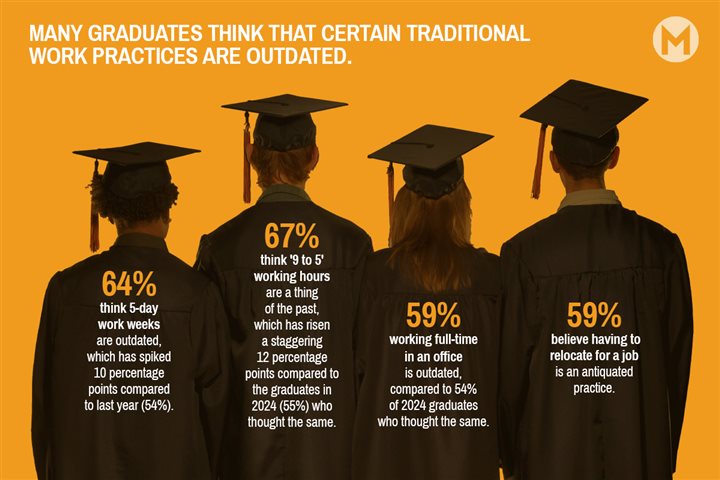
Four graduates in cap and gown and type that talks about how


The impact of AI on jobs

For the newest generation entering the workforce, AI is quickly becoming a go-to tool for job-hunting. Most (82%) new grads report using AI to craft resumes, write emails, or prepare for interviews. But while AI is making the job search easier, many are also nervous about its long-term impact: 64% worry that it could replace human jobs, a growing concern compared to previous years.

According to Santangelo, companies that can show how human skills work alongside AI — not in competition with it — will be more successful in attracting talent.
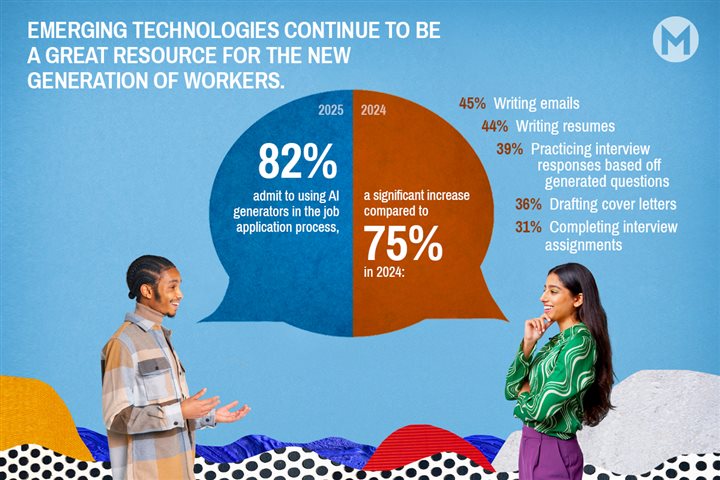
A graphic that is called


Values and workplace culture: A dealbreaker for many

In this shifting job market, employers aren’t the only ones evaluating candidates. Graduates are carefully vetting companies, too. Beyond a salary that meets their expectations, they’re looking for workplaces that reflect their values, prioritize well-being, and create an environment where they can thrive.

Political beliefs are playing a big role in job decisions, with 71% of graduates saying they would not work for a company that openly supports a political topic, issue or candidate they oppose. Diversity is also important, with more than a third saying they would turn down a job if the company lacks diverse leadership.

Additionally, work-life balance and mental health support are just as crucial, with more than half of graduates reporting they wouldn’t accept a job that doesn’t support a healthy balance between work and personal life. For companies hoping to attract young talent, fostering an inclusive and supportive workplace isn’t just a nice-to-have, it’s a must.

Looking ahead

The class of 2025 is redefining the workplace, advocating for fair pay, flexibility, and meaningful career growth. For employers looking to appeal to young professionals, understanding these shifting priorities will be essential in attracting and retaining the next generation of professionals.

For graduates looking to navigate the job market effectively, having a polished resume can make all the difference. Monster.com, in partnership with TopResume, offers a free resume assessment and professional resume services to help job seekers stand out in a competitive market. Whether you need a detailed review or a complete rewrite, these expert services can highlight your skills and experience in a way that catches employers’ attention.

Beyond perfecting your resume, figuring out your next career move can feel overwhelming — but Monster has you covered there, too. The Graduation Center is a go-to resource for recent grads, offering everything from job search tips and interview advice to salary insights and career path guidance. Whether you’re exploring different industries, prepping for your first big interview, or learning how to negotiate a job offer, this hub is designed to help you start strong. Ready to put your best foot forward as you enter the workforce? Check out Monster.com to get started.


Head and neck cancer survivor gets new Jaw in a Day

2025-04-18T11:39:00

(BPT) – Looks matter. And for cancer survivors who’ve undergone major facial surgeries, changes to their appearance and function can be emotionally and physically devastating. For many, reclaiming a sense of normalcy after facial reconstruction is an uphill battle.

Now, a multidisciplinary team at the Hollings Cancer Center at the Medical University of South Carolina (MUSC), the state’s only National Cancer Institute-designated cancer center, is offering new hope through an advanced procedure called Jaw in a Day. This groundbreaking surgery restores both function and appearance in a single operation, allowing patients to leave the hospital able to eat, speak and smile with confidence.

Previously offered at MUSC only for benign cases, the procedure is now available for patients with head and neck cancer, many of whom require jawbone removal as part of treatment or as a result of radiation-related side effects.

“That we can fix a devastating side effect of cancer treatment and give them back the shape of their face and their teeth — and do it in a way that’s timely so they leave the OR that day with a set of smiling teeth instead of waiting maybe nine months between surgeries, which is a long time to go with missing teeth, is important for cancer survivors,” said Evan Graboyes, M.D., a head and neck cancer surgeon.

Graboyes is part of a highly trained surgical team alongside Greer Albergotti, M.D., and Byung Joo Lee, D.D.S., a maxillofacial prosthodontist. The team was already highly proficient in ensuring that almost 100% of patients with head and neck cancer undergoing surgery to remove part of their jawbone left the operating room with endosteal implants, which later hold the artificial teeth, in their jawbone transplant. But they wanted to do more for people with head and neck cancer who’ve already been through so much, so the trio traveled to Dallas for specialized training in the Jaw in a Day procedure and waited for the right candidate to benefit from the procedure.

That patient was Tammy Duncan, a cancer survivor from Greenville, South Carolina, who developed osteoradionecrosis — dead bone caused by radiation — more than a decade after successful treatment for adenoid cystic carcinoma.

After two unsuccessful surgeries to remove dead bone, Duncan was referred to MUSC. The damage was too extensive, and her condition had progressed. Fortunately, she was a fit for the Jaw in a Day procedure.

Reconstructing a jaw — and a smile

In the 10-hour operation, the team removed the dead jawbone and replaced it with a piece of Duncan’s fibula — the smaller bone in the lower leg. Before transplanting it, they inserted titanium implants into the fibula, attached custom-made teeth and shaped the new jawbone using precise 3D modeling and cutting guides.

The procedure required exceptional precision; virtual surgical planning was a critical aspect of the procedure, and every step was meticulously planned and executed. “Every millimeter mattered,” Lee said.

While the fibula was still connected to its blood supply, the implants and teeth were secured. The bone was then transplanted into her jaw and connected to a new blood supply. A titanium plate was added to stabilize everything until the bone could fuse and heal.

After the surgery, Duncan woke up with a full set of “smiling” teeth — though she’ll need time before using them to chew. “Being cancer-free is always the top priority,” said Albergotti, “but helping patients come out of surgery as close to the best version of themselves as possible is also incredibly important.”

Patient facing camera smiling

A team effort

The Jaw in a Day procedure demands a high level of coordination. “You have to work together as a team,” Lee said. “One or two surgeons alone can’t pull this off.” He explained that advanced imaging, cutting-edge modeling and in-house fabrication of implants and teeth make this level of precision possible.

Duncan’s case also illustrates a growing focus on cancer survivorship and the long-term impact of treatment. “We’re thinking beyond the cure,” said Graboyes, who leads Hollings’ Survivorship and Cancer Outcomes Research (SCOR) program. “Jaw in a Day is a prime example of how a comprehensive interdisciplinary team approach can restore a patient’s dignity, confidence and quality of life.”

To learn more about the Jaw in a Day procedure for neck and cancer patients, visit HollingsCancerCenter.MUSC.edu.

How Middle-Income Families Can Gain Financial Ground as Purchasing Power for Basic Household Necessities Fluctuates

2025-04-18T08:13:00

(BPT) – Managing household finances can be challenging, especially for middle-income families juggling daily expenses, savings goals and unexpected costs. The latest data from the Household Budget Index™ (HBI™) report, which is a monthly economic snapshot measuring the impact of inflation on middle-income households alongside their earned income, reflects these challenges. The most recent index shows that purchasing power for middle-income families fell in February, ending a trend upwards. Rising costs for necessities like gasoline, auto insurance and utilities are behind this slide.

Overall, average purchasing power remains higher than it was a year ago and still shows significant improvement from 2022 lows. However, the latest Financial Security Monitor™ survey reveals that 62% of middle-income Americans say they are stressed about money and finances. Though their dollars are stretching further than they were a year ago, economic uncertainty continues to weigh on their minds.

More financial flexibility

Rising purchasing power means families have more breathing room in their budgets than they did a year ago. But with fluctuations in the cost of necessities like gas, auto insurance, groceries and utilities, a financial cushion is needed to build long-term stability and security. For example, when purchasing power is up, families can use this flexibility to contribute more to emergency funds, ensuring they are better prepared for unexpected medical expenses or home repairs.

Looking ahead

Looking ahead this year, prioritizing financial well-being is more important than ever. By staying informed and making smart money moves, middle-income families can turn future purchasing power gains into lasting financial security. To keep track of these trends, the Household Budget Index™ data remains a valuable tool for understanding where purchasing power stands and how families could continue to make the most of their money.

Ultimately, the latest dip in purchasing power serves as a reminder that having a financial game plan remains crucial. Families who take proactive steps today — whether through budgeting, saving or seeking expert advice — will be in a stronger position to weather economic changes and could work to build a more secure financial future. With careful planning, middle-income households can take advantage of upcoming developments to achieve greater financial stability and long-term success.

The information contained herein is for information purposes only. The Household Budget Index™ (HBI™) report is derived from data believed to be reliable, but we cannot warrant its accuracy or completeness. Such information is subject to change and is not intended to influence investment decisions nor constitute investment advice. PRIMERICA and the Primerica Logo are trademarks of Primerica, Inc., registered in the U.S. and Canada. Household Budget Index™, HBI™ and the HBI Logo are trademarks of Primerica, Inc. All rights are reserved.

Building a dock? 5 factors to consider

2025-04-17T12:01:00

(BPT) – If you own a home by the water, you understand that a dock is much more than a place to park a boat. It’s a sundeck, a diving platform, a fishing perch and a year-round spot for stargazing and enjoying sunsets. Choosing the right materials to use when building a dock can make all the difference in its appearance, comfort and longevity. Here are five things to consider:

Submersible: Docks are constantly exposed to water and fluctuating weather conditions. Choosing a material that resists rotting and warping is crucial. Performance-Engineered™ Trex® composite decking is marine-grade and 100% submerged, making it an ideal choice for salt and freshwater environments.

null

Heat mitigation: On sunny days, a dock’s surface can become hot underfoot — no matter what material is used. For optimal comfort, look for decking made with SunComfortable™ heat-mitigating technology. Engineered into the shell of Trex deck boards, this advanced formulation absorbs less heat than composites without heat-mitigating properties, keeping the surface cooler* in peak heat seasons.

null

Color: Whether you want your dock to stand out or blend in seamlessly with the natural surroundings, there’s a decking shade for every preference and setting. Compared to wood and PVC, composite decking offers a greater range of color options for incredible design flexibility.

null

Railing: Adding railing to a dock enhances stability and style. Layer on convenience by installing a multi-functional drink railing. This clever design uses a deck board attached to the top rail to create a flat surface for holding snacks and beverages while you’re taking in the sunset or welcoming the crew back from a day on the water.

null

Easy maintenance: To maximize leisure time, opt for durable products that withstand the harsh elements with minimal upkeep. Metal and composite railings are well-suited for use near water. Hassle-free composite decking won’t splinter or rot and never needs to be sanded, stained or refinished. With these durable products, you can spend more time on the water and less time dockside.

null

For more tips on how to build a decked-out dock, visit www.Trex.com.

*Trex SunComfortable™ products with heat-mitigating technology are designed to be cooler than most other composite decking products of a similar color. Although engineered to be more comfortable, they can still get hot to the touch when direct sunlight and high temperatures converge for extended periods of time. On such days, care should be taken.

Comedian Kenan Thompson Doesn’t Think GERD is So Funny

2025-04-17T13:31:00

(BPT) – Actor, author and comedian Kenan Thompson can find humor in just about anything. However, one thing he cannot find the humor in is the heartburn due to Non-Erosive gastroesophageal reflux disease (Non-Erosive GERD) — and he is sharing that GERD is no joke. “Even though GERD is a funny word, it’s definitely not a funny thing to have,” said Thompson. When Thompson first started experiencing heartburn about two years ago, it started to affect him more and more frequently, but he didn’t know exactly what was causing it or how to treat it. He tried taking other medications, but they just weren’t doing the trick.

“I would get this horrible burning pain in the middle of my chest. Heartburn was affecting my sleep because it would happen over and over again throughout the night — then having an early call time the next morning for work was not my idea of a good time,” said Thompson. “In my line of work, I sing a lot and yell a lot, because being loud is funny. Heartburn was also impacting my voice and sometimes making it hoarse, and I need to maintain the strength of my vocal tone. It’s hard to do comedy when you don’t feel your best.”

After seeing his doctor, Thompson was diagnosed with Non-Erosive GERD. He learned that many acidic foods he loved, like pizza and pasta with marinara sauce, could trigger his symptoms. He also learned about a treatment that could help to relieve his heartburn, VOQUEZNA® (vonoprazan), a prescription medication available in the United States. VOQUEZNA is approved for heartburn relief in adults with Non-Erosive GERD (gastroesophageal reflux disease) and healing and related heartburn relief in adults with Erosive Esophagitis, also known as Erosive GERD.

Thompson’s experience with Non-Erosive GERD and his treatment, VOQUEZNA, has led him to partner with Phathom Pharmaceuticals, the makers of VOQUEZNA, on the GERD IS NO JOKE campaign, where he is taking part in a new TV commercial portraying the comedic role of a chef in a “Kick Some Acid Cooking Show,” which is a humorous nod to how VOQUEZNA has helped him better control his heartburn. Thompson is encouraging people suffering from the condition to speak to their doctor about this treatment option. Keep reading to learn more.

IMPORTANT SAFETY INFORMATION

Do not take VOQUEZNA if you:

  • are allergic to vonoprazan or any of the other ingredients in VOQUEZNA. Allergic reaction symptoms may include trouble breathing, rash, itching, and swelling of your face, lips, tongue or throat.
  • are taking a medicine that contains rilpivirine (EDURANT, COMPLERA, JULUCA, ODEFSEY) used to treat HIV-1 (Human Immunodeficiency Virus).

Please see Indication and full Important Safety Information below.

What is GERD?

GERD occurs when stomach acid flows into the esophagus and causes irritation. It’s one of the most common gastrointestinal (GI) diseases with over 65 million people in the U.S. living with the condition. Heartburn is one the most frequent symptoms of GERD. However, depending on its severity, GERD can cause heartburn, regurgitation, difficulty eating and drinking plus damage to the esophageal lining. It can also impact physical and social activities and your daily life.

There are two main types of GERD. About 30% (~20 million Americans) have Erosive GERD, also called Erosive Esophagitis, which occurs when stomach acid damages the lining of the esophagus. The other main type of GERD — and the largest subset of this common GI disease — is Non-Erosive GERD, which affects about 45 million U.S. adults. People with Non-Erosive GERD may experience reflux-related symptoms such as heartburn and regurgitation, but no acid-related damage to the esophagus. Without effective management, however, GERD can lead to serious complications.

Finding relief from heartburn

The first step is to talk to your doctor about what you’re experiencing.

“I get it, it can be intimidating, but go talk to your doctor,” advised Thompson. “They’re the only one who can actually diagnose GERD and get you feeling better and back to doing the things you love. For me, that’s making people laugh!”

Thompson’s doctor prescribed VOQUEZNA which has helped relieve his heartburn.

VOQUEZNA, the first and only FDA-approved treatment of its kind, a potassium-competitive acid blocker (PCAB). It is approved for the relief of heartburn related to Non-Erosive GERD and Erosive GERD, as well as for the healing and maintenance of Erosive GERD.

If you have questions about your symptoms, check out Thompson’s tips for talking to a doctor about GERD — including VOQUEZNA as a treatment option — and learn more about Thompson’s personal story at GERDIsNoJoke.com.

INDICATION AND IMPORTANT SAFETY INFORMATION

What is VOQUEZNA?

  • VOQUEZNA® (vonoprazan) is a prescription medicine used in adults:
    • for 8 weeks to heal acid-related damage to the lining of the esophagus (called Erosive Esophagitis) and for relief of heartburn related to Erosive Esophagitis.
    • for up to 6 months to maintain healing of Erosive Esophagitis and for relief of heartburn related to Erosive Esophagitis.
    • for 4 weeks for relief of heartburn related to gastroesophageal reflux disease (GERD).

It is not known if VOQUEZNA is safe and effective in children.

Do not take VOQUEZNA if you:

  • are allergic to vonoprazan or any of the other ingredients in VOQUEZNA. Allergic reaction symptoms may include trouble breathing, rash, itching, and swelling of your face, lips, tongue or throat.
  • are taking a medicine that contains rilpivirine (EDURANT, COMPLERA, JULUCA, ODEFSEY) used to treat HIV-1 (Human Immunodeficiency Virus).

Before taking VOQUEZNA, tell your healthcare provider about all your medical conditions, including if you:

  • have low magnesium, calcium, or potassium in your blood, or you are taking a medicine to increase urine (diuretic).
  • have kidney or liver problems.
  • are pregnant, think you may be pregnant, or plan to become pregnant. It is not known if VOQUEZNA will harm your unborn baby.
  • are breastfeeding or plan to breastfeed. It is not known if VOQUEZNA passes into your breast milk. You and your healthcare provider should decide if you will take VOQUEZNA or breastfeed. You should not do both.

Tell your healthcare provider about all the medicines you take, including prescription and over-the-counter medicines, vitamins, and herbal supplements. Keep a list of them to show your healthcare provider and pharmacist when you get a new medicine.

VOQUEZNA may affect how other medicines work, and other medicines may affect how VOQUEZNA works. Especially tell your healthcare provider if you take medicine that contains rilpivirine (EDURANT, COMPLERA, JULUCA, ODEFSEY).

What are the possible side effects of VOQUEZNA?

VOQUEZNA may cause serious side effects including:

  • A type of kidney problem (acute tubulointerstitial nephritis): Some people who take VOQUEZNA may develop a kidney problem called acute tubulointerstitial nephritis. Call your healthcare provider right away if you have a decrease in the amount that you urinate or if you notice blood in your urine.
  • Diarrhea caused by an infection (Clostridioides difficile) in your intestines: Call your healthcare provider right away if you have watery stools, stomach pain, and fever that does not go away.
  • Bone fractures (hip, wrist, or spine): Bone fractures in the hip, wrist, or spine may happen in people who take multiple daily doses of another type of medicine that reduces acid in your stomach known as proton pump inhibitors (PPI medicines) for a long period of time (a year or longer). Tell your healthcare provider if you have a bone fracture, especially in the hip, wrist, or spine.
  • Severe skin reactions: VOQUEZNA can cause rare, but severe skin reactions that may affect any part of your body. These serious skin reactions may need to be treated in a hospital and may be life threatening:
    • Skin rash which may have blistering, peeling, or bleeding on any part of your skin.
    • You may also have fever, chills, body aches, shortness of breath, or enlarged lymph nodes.

    If you experience any of these symptoms, stop taking VOQUEZNA and call your healthcare provider right away. These symptoms may be the first sign of a severe skin reaction.

  • Low vitamin B-12 levels: VOQUEZNA lowers the amount of acid in your stomach. Stomach acid is needed to absorb Vitamin B12 properly. Tell your healthcare provider if you have symptoms of low vitamin B12 levels, including irregular heartbeat, shortness of breath, lightheadedness, tingling or numbness in the arms or legs, muscle weakness, pale skin, feeling tired, or mood changes. Talk with your healthcare provider about the risk of low vitamin B12 levels if you have been on VOQUEZNA for a long time.
  • Low magnesium levels in the body can happen in people who take VOQUEZNA. Tell your healthcare provider right away if you have symptoms of low magnesium levels, including seizures, dizziness, irregular heartbeat, jitteriness, muscle aches or weakness, or spasms of the hands, feet, or voice.
  • Stomach growths (fundic gland polyps): A certain type of stomach growth called fundic gland polyps may happen in people who take another type of medicine that reduces acid in your stomach known as proton pump inhibitors (PPI medicines) for a long time. Talk with your healthcare provider about the possibility of fundic gland polyps if you have been on VOQUEZNA for a long time.

The most common side effects of VOQUEZNA for treatment of Erosive Esophagitis and/or relief of heartburn related to gastroesophageal reflux disease include:

  • stomach inflammation
  • diarrhea
  • stomach bloating
  • stomach pain
  • nausea
  • indigestion
  • constipation
  • high blood pressure
  • urinary tract infection

These are not all the possible side effects of VOQUEZNA. For more information, ask your healthcare provider or pharmacist. Call your healthcare provider for medical advice about side effects.

You are encouraged to report suspected adverse reactions by contacting Phathom Pharmaceuticals at 1-888-775-PHAT (7428) or FDA at 1-800-FDA-1088 or www.fda.gov/medwatch.

Please see Patient Information and full Prescribing Information for VOQUEZNA.

© 2025 Phathom Pharmaceuticals. All rights reserved.

VOQUEZNA, Phathom Pharmaceuticals, and their respective logos are registered trademarks of Phathom Pharmaceuticals, Inc.

04/25 US-VPZ-24-0763

Medicare Part B Now Covers Virtual Care — Here’s Why That Matters for You

2025-04-17T10:01:00

(BPT) – For millions of Americans with Medicare Part B coverage, virtual healthcare offers a convenient alternative to traditional in-person visits.

While Medicare provides essential coverage for those over 65 or living with chronic conditions or disabilities, many patients aren’t aware that virtual healthcare is often fully covered by Medicare. Whether you’re managing a busy schedule, prefer to avoid waiting rooms, or are among the approximately 5.8 million Americans facing access barriers — including the nearly 21% of adults 65 and older with mobility challenges — virtual healthcare makes getting treatment significantly easier.

Virtual healthcare brings medical expertise directly into patients’ homes. This approach eliminates travel time and transportation concerns while making it simpler to stay on top of prescriptions, follow-ups, and routine care. For many Medicare beneficiaries, connecting with a doctor online is more efficient than in-person visits — and because Medicare Part B now covers many telehealth services, virtual care has become a convenient, accessible option from the comfort of home.

For example, PlushCare, a comprehensive virtual health platform available in all 50 states, connects Medicare Part B members with board-certified primary care physicians and therapists.

Older man sitting on the couch at home and talking with a doctor in a video chat.

Here are some advantages of using a virtual care platform to help you manage your health care needs.

  • Eliminate transportation challenges — For those who live far from medical facilities or have mobility limitations, virtual care removes the need to arrange transportation for routine appointments or urgent needs that can be handled remotely.
  • Access same-day appointments — Virtual platforms significantly reduce wait times typically associated with in-person visits. PlushCare offers same-day appointments, often connecting patients with physicians in as little as 15 minutes. Patients can also request or refill prescriptions during these visits, with medications sent directly to their local pharmacy for quick and convenient pickup.
  • Build relationships with consistent providers — Telehealth platforms provide care in a variety of ways. Some platforms offer visits connecting the patient with the first available physician, and other models, such as PlushCare, allow patients to select the physician they would like to see and schedule follow-ups with the same physician if desired.

“Virtual care accelerates access to quality healthcare, empowering patients to take a more proactive approach to their health,” explains Dr. Leo Vieira, medical director at PlushCare. “For Medicare beneficiaries facing mobility challenges, virtual care provides consistent, timely access — particularly valuable for patients in remote or underserved areas.”

For Medicare Part B members seeking preventive care, chronic condition management, prescription services or urgent care consultations, virtual platforms offer a convenient alternative to traditional office visits — with applicable services covered by Medicare.

Learn more about virtual healthcare options for Medicare beneficiaries at PlushCare.com/medicare.

Food for Thought: Results from a Food Allergy Survey of Caregivers

2025-04-17T08:01:00

(BPT) – What is it like for millions of American families managing food allergies? To better understand these experiences, Genentech, a member of the Roche Group, and the Novartis Pharmaceuticals Corporation partnered with The Harris Poll to survey U.S. parents and guardians of children with food allergies. Explore the findings in this infographic to uncover the impact of food allergies and how increased awareness, education, and support can help affected families. If you or your child have food allergies, schedule an appointment with an allergist to discuss your options.

Infographic

Spruce up your space: Remodel with the right mini-split

2025-04-17T06:01:00

(BPT) – The COVID-19 pandemic spurred a surge in home renovations as people spent more time at home. Many tackled DIY projects, like converting garages or building tiny homes, to meet new needs and create ideal living spaces. Post-pandemic, the focus has shifted to smaller, more affordable projects. However, some homeowners find their new spaces uncomfortable due to significant temperature differences from the rest of the home.

Elevate your remodel with a smart HVAC system

If you recently completed a renovation project, or are making future plans to do so, one key consideration you may not have thought of yet is the ability to maintain temperature control within the home, while remaining energy efficient. A mini-split is the perfect answer for spaces that require flexible heating and cooling solutions, like older homes, spaces with room and structure upgrades, tiny homes or converted garages. In addition, they are an affordable and efficient option, making them an excellent choice for those looking to improve their space on a budget.

Mix it up with a mini-split

A mini-split, also known as a ductless system, is a compact HVAC system that can efficiently heat and cool small spaces, apartments, and other areas where ductwork isn’t practical or feasible. Like a standard central HVAC system, a mini-split consists of two primary components: an outdoor compressor/condenser unit and one or more indoor air handlers.

Because of their size and relative simplicity, mini-splits are ideal for use in new additions to a home and as a solution for smaller spaces like offices. They are also commonly used in apartment complexes and hotels where multiple small spaces require individual temperature controls.

You might be wondering what the benefits of a mini-split system may be compared to a standard heat pump or air conditioner. Here are just a few ways a mini-split may be the way to go:

  • Increased energy efficiency: Mini-split systems are known for their high energy efficiency. They use less energy compared to traditional HVAC systems, which can lead to significant savings on your utility bills. If you own a tiny home, for example, a ductless mini-split provides a strong combination of efficiency and simplicity for the space allotted.
  • Flexibility and zoning: One of the standout features of mini-split systems is their flexibility. They allow for zoning, meaning you can control the temperature in different rooms independently. This is particularly beneficial for homes with varying heating and cooling needs across different areas — like a colder basement, or warmer top floor.
  • Quiet: Mini-split systems typically operate more quietly than traditional HVAC systems. While Lennox manufactures some of the quietest central HVAC systems, mini-splits are great for spaces where maintaining quiet is important.

Don’t DIY it

When incorporating a mini-split system into your home remodel, it’s essential to professionally install the unit. While DIY projects can be tempting, an improper installation can lead to inefficiencies and potential damage to the system. A professional installer, or dealer, will ensure that your mini-split system is set up correctly and operates at its best. To locate your nearest dealer, visit Lennox.com.

Transform your space with cool solutions

If you’re looking for a top-of-the-line mini-split system, consider the new Lennox Powered by Samsung Mini-Split. Its variable-capacity technology and efficiencies of up to 25.00 SEER2 and 11.00 HSPF2 (measurements that indicate better energy efficiency and lower electricity costs) make the system incredibly efficient. In addition, it integrates with Samsung’s SmartThings app to easily regulate temperature, adjust settings and receive real-time updates about system performance.

By choosing a mini-split system like the Lennox Powered by Samsung, you can enhance your home’s comfort, efficiency and overall value — making that once unusable space the perfect hangout. For more information on the Lennox Powered by Samsung Mini-Split, visit Lennox.com.

How to effortlessly elevate outdoor entertaining

2025-04-16T16:01:01

(BPT) – Whether it’s a backyard gathering, a park picnic or a casual evening on the patio, spring and summer offer countless opportunities to entertain in the fresh air.

Bezel, the newest addition to the Cakebread Cellars family, brings over 50 years of hospitality and winemaking expertise to California’s Central Coast. Rooted in Cakebread’s legacy of warmth, community and connection, Bezel offers fruit-forward wines crafted to elevate everyday gatherings with ease.

To help you bring that spirit to life every day, winemaker Jane Dunkley shares her favorite entertaining tips to make every gathering feel extra special.

1. Set the scene at any location

When people think about outdoor hosting, many turn to their backyard. However, don’t feel limited to your personal space. There are plenty of other underestimated, public options that can help to elevate your event.

For example, you can also look for green spaces. A nearby residential park acts as a central and accessible setting for your get-together, and state and national parks where you like to hike or a nearby beach can serve as great options for hosting.

Leaning into the natural beauty of these settings adds an effortless sense of celebration. Whether it’s the sound of waves, a view of the sunset or trees in bloom, the surroundings help set the tone.

2. Elevate the ambiance with easy add-ons

Once you’ve picked your location, it’s time to think about how to create a charming setting. The good news is you don’t have to break the bank to accomplish this. All you need are some intentional decorations, many of which you can bring to life yourself.

DIY decor can go a long way in making an outdoor area feel festive. Think of including seasonal touches on the table, like citrus fruits in a bowl, linen tablecloths or napkins and spring herbs on the serving plate.

Outside of these elements, you can also consider locations that offer some form of ambient lighting. For example, hosting around a fire is a great way to add warmth, and some beaches and parks even provide fire pits or rings for public use. If this isn’t available, lanterns are a great portable option that provide a similar effect, and can be lit with candles, batteries or string lights that are easy to pack.

3. Make beverage service effortless

Create a simple beverage setup where your guests can help themselves. This will encourage mingling and give you more time to enjoy the moment.

Dunkley recommends including a range of food-friendly wines that complement a variety of dishes and preferences. Bezel’s lineup of well-balanced wines is a great option for this, offering a simple yet thoughtful enhancement to any occasion at an approachable price, whether it’s a weeknight dinner, a casual get-together or a moment to unwind at the end of the day.

To round out the station, consider adding jugs of plain and fruit-infused water alongside the selection of wines.

4. Let the pairings lead the way

When curating a menu, consider finger foods and main dishes that can be enjoyed al fresco. Dunkley also encourages embracing unexpected pairings to enhance the experience and give yourself and your guests the freedom to experiment and find pairings that best fit their palate. So, while you may have heard that summer is for white wines, you don’t have to strictly follow this.

For example, chilled red wines like Bezel’s Pinot Noir excellently complement summer barbecue staples like steak and ribs. However, you can also go against the grain by serving this red with grilled salmon.

Three bottles of wine on the beach

Of course, it’s always great to offer traditional warm-weather white wines like Chardonnay and Sauvignon Blanc and experiment with other unconventional pairings with chips and French dip or sweet and sour pork, which are a few of Dunkley’s favorite options.

Bottle of wine with glass on a table near the ocean

No matter what you choose, remember that the best wine pairing is the wine that tastes best to you. There’s no pressure, and to find these and other suggested wine pairings, visit BezelWines.com.

Whether you’re a veteran or novice host, these tips can help you take your outdoor entertaining to the next level.

Please drink responsibly. To learn more, please visit Responsibility.org.

How to put your penny to good use: Maximizing the value of spare change

2025-04-16T07:01:00

(BPT) – Across American households, spare change often sits idle — coins tucked away in jars, drawers or even old wallets. As the conversation around halting penny production in the United States proliferates, many consumers are left wondering if the humble penny has lost its value. The truth is, even if new pennies are no longer minted, every cent already in circulation continues to hold its worth. In fact, there are several smart and simple ways to put your pennies to good use that not only benefit your wallet but also support the community and the environment.

Understanding the value of the penny

For years, pennies have sparked debates over their cost-effectiveness and practicality. Yet, while the U.S. Mint could stop producing new pennies, the billions already in circulation remain an important part of everyday transactions. It’s estimated that American households are sitting on $7.7 billion in spare change, proving that every coin counts in our economy. This existing inventory supports not just individual spending but also vital systems of financial inclusion, especially for those who prefer and depend on cash.

Here are a few tips on how to unlock the hidden potential of your spare change:

Recycle to conserve natural resources. One of the simplest and most impactful ways to use your pennies is to recycle them. Recycling coins minimizes the need for additional raw materials, thereby reducing the environmental footprint associated with minting new coins. This eco-friendly approach not only helps the environment but also cuts down on the energy and material costs associated with mining and manufacturing.

Green plant growing out of a glass jar of pennies.

Donate to charity. Donating pennies to charity is another excellent way to put your spare change to good use. Many charitable organizations appreciate coin donations, which can support a variety of causes, including food banks and community projects. For instance, Coinstar collected 14.2 billion pennies in 2024, many of which were donated to charities. Last year alone, consumers donated over $1.4 million to charities by recycling their coins through Coinstar. This means that even the smallest coins can combine to make a meaningful impact on those in need.

Support currency recirculation. Keeping coins in circulation is essential to reducing the demand for new minting, which in turn conserves resources and supports financial efficiency. Services like Coinstar are vital in this process. Its network not only helps recycle coins but also transforms them into spendable cash or digital funds. Coinstar’s existing infrastructure can support many times over the current U.S. Mint production, with over 18,000 kiosks across all 50 states, making cash and coins readily available for everyday transactions. With 50 million annual transactions, Coinstar is ensuring that coins can remain a dynamic part of our economy.

Support small businesses. Many local and cash-only businesses still depend on physical currency for everyday transactions. By spending your cash wisely — be it for a coffee or a small treat — you not only enjoy a little indulgence but also support local commerce. More than 90% of consumers intend to continue using cash as a means of payment or store of value in the future, highlighting the ongoing relevance of even the smallest denominations.

null

Digitize your coins. As our economy embraces digital solutions, Coinstar, through various partner relationships, provides access to services that can digitize physical cash and coin, such as loading to a prepaid account, transferring cash to a bank account, and purchasing cryptocurrency and stablecoins. Digitizing your spare change can help streamline finances and integrate seamlessly into modern banking and payment systems, ensuring that your pennies remain as versatile as ever.

Although new penny production may stop, this does not mean that you must stop using your pennies. The billions of pennies in existence today continue to have value that can still be used. Re-circulating coin puts spendable cash in all Americans’ hands, in support of the consumer and our economy. So next time you find a jar full of spare change, remember that those pennies still have the power to support sustainability, empower your community, and contribute to your financial well-being.