Smart ways to budget your tax refund

2025-02-14T12:01:00

(BPT) – Tax season is here, and many Americans are eagerly awaiting their tax refunds. While it might be tempting to splurge on something fun, there are other clever ways to use this extra cash to improve your financial budget this tax season. Here are three savvy tips to help you budget your tax refund:

1. Opt for a budget-friendly phone plan

Consider using your tax refund to switch to a more affordable and flexible phone plan. There are various no-contract plans available that can help you save money every month. For instance, you can find deals offering 50% off your Total Wireless 5G Unlimited plan when you bring your own phone and sign up for Auto Pay*. This means you could get one line for just $25 per month, with taxes and fees included, guaranteed for five years.

By cutting your monthly phone bill in half while still enjoying unlimited wireless data, talk and text, you can redirect those savings toward other financial goals.

2. Strengthen your emergency fund

Think of your emergency fund as a financial safety net. Life happens — whether it’s an unexpected car repair or a medical bill, having some extra savings can keep you from going into debt. Savings can start small, and for first-time savers, it can be daunting to put away money. What’s important is to start somewhere and sooner rather than later. Aim to save at least three to six months’ worth of living expenses.

By doing so, you’ll thank yourself for being prepared for those unexpected moments and avoid the stress of crunching numbers.

3. Make home improvements

Your home is one of your biggest investments, so why not put some of your tax refund into making it better? Consider using your tax refund for necessary repairs or upgrades, such as fixing a leaky roof, updating your kitchen, or adding energy-efficient appliances. These improvements can save you money in the long run and prevent small issues from becoming bigger problems.

It will also improve your living space, making your home more comfortable. Additionally, these enhancements can increase your home’s value if you decide to sell or rent it in the future, allowing you to reap the financial benefits of your improvements.

4. Invest in your future

Your tax refund could be the perfect opportunity to set yourself up for long-term success. Whether it’s contributing to a retirement account, such as an IRA or 401(k), it will help you prepare for the future without the worry of not having a fund to rely on.

In addition to retirement accounts, investing in your future can also mean investing in your education and professional development. Enrolling in classes and courses can help you advance your personal learning as well as career aspirations. Many universities and colleges offer in-person or online courses that can fit best into your schedule.

These investments can yield long-term benefits, helping you achieve financial stability and career growth.

By wisely using your tax refund and exploring cost-effective options, you can enhance your financial budget. Plus, you’ll have more peace of mind knowing you’re making the most of your hard-earned money!

*Disclaimer: Offer applies to new customers who activate on a BYO device. Single-line customers on the Total 5G Unlimited plan or higher must enroll in Auto Pay to receive the full promotional discount, which applies the month after enrollment. Available exclusively online and in Total Wireless retail stores. Bring Your Own Phone requires a compatible, unlocked device and SIM. Additional terms may apply. Check compatibility at https://totalwireless.com/activate.byop.landing.serviceprovider.

Make Your Car Your Valentine: Mercury Insurance Advises How to Save on Auto Repairs

2025-02-14T11:35:00

(BPT) – Regularly Showing Your Car Some Love Can Save on Auto Repairs

Valentine’s Day is the perfect time to show your trusty vehicle some love, and maintaining it is the best and most cost-effective way to do so. With rising costs associated with operating and repairing a vehicle, Mercury Insurance is offering some tips to reduce running costs while keeping your vehicle in optimal condition. These simple steps can show your second most costly investment how much you care.

The Bureau of Labor Statistics estimates that the average cost of car maintenance and repairs is $975 per year, or approximately $80 per month. Several factors are driving up these costs, including complex vehicle technology; specialized tools needed for repairs; a shortage of skilled technicians; and rising labor costs.

“While we recognize that the cost of vehicle ownership is rising, being proactive can dramatically lower the burden of vehicle repairs down the road,” said Kevin Quinn, Vice President of Auto Claims for Mercury Insurance. “We demand a lot out of our vehicles day in and day out, so keeping up with maintenance is critical and there are ways to do so without spending an arm and a leg.”

Here are some points to consider:

  • Routine maintenance: Follow your car’s recommended maintenance schedule, including oil changes and filter replacements, to prevent major repairs and save you money in the long run.
  • Shop around for quotes: Get estimates from multiple repair shops before committing to a repair.
  • Buy your own parts: Consider purchasing parts online and bringing them to your mechanic to install, which can often be cheaper than buying parts directly from the shop.
  • Check tire pressure: Regularly monitor tire pressure and inflate them to the recommended level to improve fuel efficiency and tire lifespan.
  • DIY simple repairs: For basic tasks like changing your oil, air filter, or battery, consider doing them yourself to save on labor costs when possible.
  • Choose a trusted mechanic: Find a reputable repair shop with a good reputation for quality work and fair pricing.
  • Address issues promptly: Don’t ignore warning lights or small problems, as they can escalate into more expensive repairs if left unattended.
  • Consider aftermarket parts: Depending on the repair, using aftermarket parts can sometimes be a cost-effective option.

By following these recommendations and giving your car some tender loving care this Valentine’s Day, you can reduce the frequency of costly repairs in the future and extend the life of your vehicle and your relationship as well. For more tips on all things related to car maintenance and ownership, visit Mercury’s blog.

The Hidden Heart Threat You Can Fight Today: Why Inflammation Could Be Your Biggest Risk Factor

2025-02-13T06:01:00

(BPT) – Imagine taking a simple daily step that might protect your heart from another life-threatening attack. This American Heart Month, fight inflammation to help prevent future heart attacks.

February is American Heart Month — a time to focus on preventing heart disease, the leading cause of death for both men and women in the U.S. If you or someone you love has experienced chest pain (angina) or a heart attack in the past, it’s critical to understand that you face a higher risk of another attack. According to the U.S. Centers for Disease Control and Prevention, out of the 805,000 heart attacks that occur every year, 200,000 happen to people who already had one.

This can feel overwhelming and frightening, but there’s hope. If you’re already making strides to keep your cholesterol in check, you can take additional steps to reduce your heart attack risk even further. One of the most powerful yet lesser-known ways to protect your heart is by checking and treating inflammation, often measured through a simple blood test called high-sensitivity C-reactive protein (hs-CRP).

A prior study showed that adding low-dose colchicine, 0.5 mg on top of a statin, affords an additional 31% risk reduction of a cardiovascular event or heart attack.

How Inflammation Fuels Heart Attacks

Inflammation is the body’s natural response to injury or illness. You’ve seen it in action when a small cut turns red and swollen. However, when inflammation becomes chronic — such as in your blood vessels — it can damage healthy tissue.

According to Johns Hopkins Medicine, cholesterol buildup (atherosclerosis) in the arteries can trigger inflammation, creating a dangerous cycle of more plaque and an increased risk of heart attacks or strokes. If left untreated, chronic inflammation can damage healthy tissue like your arteries and heart.

Why You Should Measure hs-CRP

Having your doctor measure hs-CRP levels offers a clearer picture of your cardiovascular health. A recent study published in The New England Journal of Medicine found that measuring three (3) levels in a patient’s blood helps predict your risk of future heart attacks and strokes — even 5 or 10 years down the road. The levels to test are: LDL cholesterol (commonly known as “bad” cholesterol), a fat-carrier called lipoprotein(a) (or Lp(a)) and hs-CRP.

Another study suggests that hs-CRP might be an even stronger predictor of cardiovascular events than LDL cholesterol alone. If your hs-CRP levels are high, your doctor may recommend adding an anti-inflammatory medication to your treatment plan.

Adding Low-Dose Colchicine, 0.5 mg to Fight Inflammation

If you are already using statins, the addition of low-dose colchicine, 0.5 mg can further reduce the risk of cardiac events, including the possible prevention of a second heart attack or a stroke.

“The importance of treating inflammation as a key contributing factor to heart disease and the risk of cardiovascular events is clear,” said Andrew M. Freeman, M.D., F.A.C.C., F.A.C.P., director of clinical cardiology, director of cardiovascular prevention and wellness, and a professor of medicine at National Jewish Health in Denver. “By adding low-dose colchicine, 0.5 mg to a patient’s treatment regimen alongside a healthy diet and exercise, we can now better treat our patients and further reduce the risk of life-threatening events — even in those who have already suffered from a heart attack or stroke.”

Low-dose colchicine, 0.5 mg, is a once-daily, single oral tablet indicated to reduce the risk of myocardial infarction (MI), commonly known as a heart attack, stroke, coronary revascularization, and cardiovascular death in adult patients with established atherosclerotic disease or with multiple risk factors for cardiovascular disease. It is the first and only therapy the Food and Drug Administration has approved as an anti-inflammatory medication to reduce the risk of a cardiovascular event, including heart attack or stroke.

Don’t Wait — Take Action

Whether you’ve already experienced a heart attack or you’re at risk of having a cardiovascular event, it’s time to take action. This February, talk to your doctor about testing your hs-CRP levels and if adding an anti-inflammatory treatment may be right for you.

Learn more about your risk and the steps you can take to support heart health at CVDInflammation.com.

Remember: treating inflammation could be the difference between another heart scare and a healthier tomorrow. Your heart — or your loved one’s — is worth the conversation.

LD-PM-DP-021125-01-01

Oaklawn Hot Springs Extends Lead as Arkansas’ premier resort destination

2025-02-13T15:17:00

(BPT) – Long heralded as one of America’s top destinations for thoroughbred racing, Oaklawn Hot Springs has solidified its reputation as a premier destination for luxury travel by securing four distinguished recognitions in the 2025 Forbes Travel Guide (FTG) and Star Awards.

This year Astral Spa remains Arkansas’ only Forbes 4-Star-rated spa. Two Oaklawn restaurants, The OAK room & bar and The Bugler, join the Oaklawn Hotel as recommended destinations in the 2025 FTG. The Oaklawn Hotel was previously recommended in the 2024 FTG.

The Forbes Travel Guide is the only global rating system for luxury hotels, restaurants, spas and ocean cruises. Its rigorous evaluation process assesses properties based on service excellence and guest experience. Oaklawn Hot Springs’ inclusion in the esteemed list highlights its commitment to providing outstanding hospitality.

“It is a great honor to have The OAK room & bar and The Bugler join the Oaklawn Hotel as recommendations in the 2025 Forbes Travel Guide,” said Louis Cella, President of Oaklawn Hot Springs. “To have The Astral Spa again rise to the top as one of the few spas in the country to receive a 4-Star Rating is astounding. We designed Oaklawn to be a world-class resort that Arkansas can be proud of. These recognitions from one of the world’s preeminent hospitality rating systems confirm that our vision has become a reality.”

Located within the Oaklawn Casino, The OAK room & bar is an elegant dining establishment offering refined dishes, an extensive wine selection and craft cocktails. The Bugler provides a more relaxed yet equally refined atmosphere, serving expertly prepared seafood and steak selections with a stunning view of Oaklawn’s historic racetrack from its spacious outdoor patio.

In addition to being recommended by Forbes’ hospitality experts, The OAK room & bar and The Bugler each received 2024 OpenTable Diners’ Choice Awards, which recognize the restaurants based on feedback from confirmed diners.

Astral Spa is a world-class facility that provides visitors with a customized experience. In addition to standard spa services, Astral Spa offers premium amenities, including a state-of-the-art fitness center, dedicated men’s and women’s wet lounges, and locker rooms equipped with heated loungers, needle showers, steam rooms, infrared saunas, whirlpool tubs, cold rooms and a dedicated co-ed parlor.

Woman in a spa enjoying the hot tub.
Astral Spa at Oaklawn Hot Springs

Oaklawn Hotel is located adjacent to one of the country’s premiere Thoroughbred racetracks. Fans from across the globe travel to Hot Springs to experience thoroughbred racing at its highest level — the road to the Kentucky Derby begins at Oaklawn. A stay at Oaklawn provides guests with valet services, friendly bellmen, lavish room amenities, outstanding room service, and expert assistance from experienced concierges.

Grand pillars and massive chandeliar in the Oaklawn Hotel lobby.
Oaklawn Hotel at Oaklawn Hot Springs

Located in scenic Hot Springs, Arkansas, only minutes from Hot Springs National Park and endless outdoor recreation opportunities, Oaklawn Hot Springs originally emerged as one of the world’s premier thoroughbred racetracks. Today Oaklawn Hot Springs offers guests a variety of leisure and entertainment options including racing, gaming, sports betting, fine dining and live performances. Whether you are seeking horseracing at its highest level, a world-class spa experience or the unique flavors of an award-winning restaurant, Oaklawn is your destination in the beautiful Ouachita Mountains.

Visit oaklawn.com to plan your experience.

Must be 18 for race gambling and 21 for casino gaming. Always bet responsibly. If you or someone you know has a gambling problem, please call 1-800-GAMBLER or visit www.ncpgambling.org.

Please drink responsibly. Learn more at responsibility.org.

AI chatbots are becoming romance scammers — and 1 in 3 people admit they could fall for one

2025-02-13T15:05:00

(BPT) – By McAfee

It started with a DM.

For five months, 25-year-old computer programmer Maggie K. exchanged daily messages with the man she met on Instagram, convinced she had found something real.

When it was finally time to meet in person, he never showed. Instead, he claimed he missed his flight and needed money to rebook. Desperate to finally see him, she sent the cash.

Then, silence. His accounts vanished. He hadn’t just ghosted her — he had never existed at all. But Maggie isn’t alone: McAfee’s latest research reveals more than half (52%) of people have been scammed out of money or pressured to send money or gifts by someone they met online.

“I ignored my gut feeling … I sent him $1,200. Then he disappeared,” Maggie told McAfee, hoping that her story would educate others. “When I reported the scam, the police told me his images were AI-generated. He wasn’t even a real person. That was the scariest part — I had trusted someone who never even existed.”

How AI is making romance scams more sophisticated

These scams work because they prey on trust and emotions. And they aren’t just targeting the naïve; anyone, even tech professionals, as Maggie’s case shows, can be fooled.

And romance scams aren’t just happening in dating apps anymore. Social media, messaging platforms and AI chatbots are fueling an explosion of online romance fraud.

McAfee’s findings highlight a staggering rise in:

  • AI-powered scams: More than 1 in 4 people (26%) say they — or someone they know — have been approached by an AI chatbot posing as a real person on a dating app or social media.
  • Celebrity impostor scams: 1 in 5 (21%) have been contacted by someone pretending to be a well-known public figure. Of those who fell for it, 33% lost money, with an average reported loss of $1,985.
  • Fake romance scam websites: In the seven weeks leading up to Valentine’s Day, McAfee blocked a staggering 321,509 fraudulent URLs designed to lure in victims.

The costs: Your time, money, trust and personal data

With 62% of people saying they’ve used dating apps, social media or messaging platforms to connect with potential partners, scammers have a bigger pool of victims than ever before.

Younger users are the most active online daters, with 31% of 18-24-year-olds currently using online dating platforms. Tinder is the most popular dating app overall (46%), with its highest engagement among 18-24-year-olds (73%). Just over 40% of respondents said they use Instagram, 29% use Snapchat and 25% use TikTok to meet potential partners. But these platforms also present new risks, as fake apps designed to steal personal information lurk in app stores.

McAfee researchers found nearly 11,000 attempts to download fraudulent dating apps in recent months. The most impersonated?

  • Tinder (55%)
  • OKCupid (29%)
  • Badoo (7%)
  • Hinge (7%)
  • Bumble (2%)

Downloading a fake app could expose your login credentials, financial information or even install malware onto your device.

And once money is lost, it’s rarely recovered, as scammers use cryptocurrency, untraceable gift cards and offshore accounts to move stolen funds.

Recognizing romance scam red flags

McAfee researchers urge anyone looking for love online to stay vigilant by following these critical safety measures:

1) Watch for “love bombing.” Scammers overwhelm victims with affection early on to gain trust.

2) Verify their identity. Use reverse image searches and insist on live video calls, which AI-generated scammers avoid.

3) Never send money. No real partner will pressure you for financial help — especially when you’ve never met.

4) Be wary of celebrity DMs. If a famous figure suddenly messages you, it’s likely a scam.

5) Avoid suspicious links. McAfee blocked over 321,000 fraudulent dating sites — avoid clicking on unknown links or apps.

6) Use online protection tools. Tools like McAfee+ can detect and block suspicious messages, phishing attempts and AI-generated fraud in real time. McAfee+ offers maximum identity, privacy and device protection to detect and prevent fraudulent activity before it causes harm.

Coronary Artery Disease: Get ready for American Heart Month and get screened with the latest technology

2025-02-13T02:01:00

(BPT) – Your heart beats about 100,000 times daily, bringing oxygen and nutrients to every cell to keep your body working its best. Just as an engine keeps a car moving, your heart is the driving force that keeps your body healthy and active. And, much like you’d maintain your car’s engine, healthy habits are vital to keeping your heart functioning properly and preventing heart disease — the leading cause of death in the United States.

What is Coronary Artery Disease?

Couple holding hands and relaxing on the beach while sitting in foldable chairs.

The most common type of heart disease is coronary artery disease (CAD), a condition where plaque builds up in the heart’s arteries and decreases blood flow. According to the U.S. Centers for Disease Control and Prevention (CDC), roughly 21 million American adults have CAD. CAD is known as the “silent killer,” meaning it can progress slowly in patients with no symptoms until it causes a heart attack or other complications.

Ginger Bierdeman, 58 years old, a nurse, avid football fan, and doting aunt, knew she was at greater risk of CAD because of her family history after losing her father to a heart attack. She enrolled in a heart health program through her local hospital and received a standard coronary CT scan of her heart (also known as CCTA). The technology — which studies multiple variables that the human eye can easily miss — uses AI to analyze X-rays to build a 3D model of the heart highlighting areas where CAD is present. The analysis identified areas of concern, specifically a build-up of plaque, which helped her doctor develop her personalized treatment plan. Using what she learned from this analysis, Ginger has started choosing healthier meals, exercising regularly, and taking prescribed medications from her doctor. Now she encourages all her family and friends to get screened so they can also see the full picture of their heart health.

“I think it’s important for everyone to take control of their health,” said Ginger. “If you do have a history of family heart disease, it is especially important that you get all the information you need to make good decisions for your life and lifestyle.”

How do I get screened?

Younger woman hugging older woman while sitting on the couch.

February is American Heart Month, making it the perfect time to take the first step toward improving your heart health. Talk to your doctor about your screening options. In the past, tests to diagnose CAD were often limited to ones that were invasive or not precise enough, which meant extra testing could be required to confirm disease severity and treatment options. One of these, called stress tests, are not always accurate and cannot assess plaque buildup.

Fortunately, newer technologies have become available that allow doctors to detect issues earlier, diagnose CAD more accurately, and develop customized treatment plans that help slow the progression of the disease. CCTA is the #1 test recommended in guidelines by the American Heart Association and the American College of Cardiology. HeartFlow Analysis is an AI-powered technology applied after a CCTA test that creates a color-coded 3D model of the heart’s arteries showing the impact of plaque, narrowings and blockages. This enables your doctor to better understand the potential effect on blood flow to your heart — information that otherwise would only be available with a riskier, more invasive procedure.

“Advancements in diagnostic technology are making it easier for us to uncover heart issues before they become life-threatening,” said Malissa Wood, MD, Vice President and Chief Physician Executive at Lee Health Heart Institute. “If you have a family history of heart disease, are experiencing symptoms, or want to have a better understanding of your heart health, talk to your doctor about your options.”

To learn more about HeartFlow Analysis, go to: https://www.heartflow.com/learn.

Take back your spotlight: Don’t let seborrheic dermatitis keep you from shining

2025-02-12T07:11:00

(BPT) – Up to 10 million Americans live with seborrheic dermatitis (seb derm), a chronic inflammatory skin condition with a range of possible symptoms. Whether it’s persistent itch, redness, scaly skin, or flakes on the scalp, face, back, or chest — the physical symptoms may be unpleasant and bothersome. But it’s the mental and psychological impact from those symptoms that can really impact people’s lives.

Grace knows this all too well. She has been living with seb derm since she was 8 years old, and was formally diagnosed at age 12. Grace has regularly experienced redness and peeling around her nose and eyebrows, flakiness on her scalp, and even hypopigmentation around her hairline. Symptoms can come and go, with people with seb derm like Grace experiencing flare-ups which can be triggered by emotional or physical stress, or lack of sleep. Climate can play a role too, with heat and sun exposure also triggering a flare-up. Sometimes, those with seb derm don’t know what triggers their symptoms. They just know that the symptoms come back, sometimes at the most inconvenient moments.

It’s the visibility of seb derm that can be especially challenging for those affected. Like other skin conditions, seborrheic dermatitis is out there in the open for others to see. There’s a stigma wrapped up in those affected areas — with people sometimes believing the disease is caused by poor hygiene or that it is contagious. Neither of these are true. The exact causes are not completely understood, but evidence suggests that seb derm is an inflammatory condition where genetics, individual risk factors, and an overproduction of oil may contribute to the condition. Seb derm is the third most common skin condition for African Americans seen in the dermatology clinic.

Shrinking from the spotlight: How seb derm can impact your life

Seb derm is a common condition, but as far as Grace was concerned, that didn’t matter. She only knew people could see her symptoms and she felt self-conscious about it.

“For years, I have been hyperconscious of my skin,” Grace said. “I was frightened that someone would pick up on what was happening on my face or scalp.”

The condition affected her day-to-day life in a variety of negative ways, including evolving to her feeling smaller, less seen, more isolated. Seb derm caused Grace to avoid drawing attention to herself, and even on days without flare-ups, she remained constantly aware that one could develop at any moment. This awareness influenced everything — from how close Grace allowed people to get to her, to her clothing choices, and even her willingness to be photographed.

“Seborrheic dermatitis made me shrink from the spotlight,” she said.

One of the most problematic aspects of the condition for Grace was how it affected her hair and scalp.

“Like many Black women, my relationship with my hair defined much of my journey to adulthood. I played sports in my school years and as an adult I travel a lot. While many of my peers relied on braided styles to protect their hair from these stressors, I avoided them. Years of managing this condition shaped my daily routines. I developed daily habits from avoiding certain hairstyles that exposed my scalp, steering clear of black clothing, and never leaving the house without moisturizer.”

Like the disease itself, the treatment landscape for seborrheic dermatitis was complicated. Dermatologists and other healthcare professionals often had to prescribe multiple products for use on different parts of their bodies, or for different lengths of time. Hair-bearing areas like the scalp made it difficult to apply topicals like creams, ointments, and gels.

Grace has been through all of that. She tried everything, but nothing worked for long. It was, frankly, exhausting. And then, her dermatology specialist decided it was time for something else.

Grace finally finds relief

Grace’s specialist suggested she try ZORYVE (roflumilast) topical foam, 0.3%, a once-daily, steroid-free, leave-in topical foam that treats seborrheic dermatitis and symptoms like flaking, redness, and itching.

It’s the first foam of its kind, and was studied in clinical trials of 683 people with seborrheic dermatitis, including 458 people who used ZORYVE foam and 225 people who used a vehicle (a foam without the active drug). Results were promising. With ZORYVE, 77% had Clear or Almost Clear skin at 8 weeks compared to 53% who used vehicle. In one of the trials, 63% of 206 people had significant itch relief with ZORYVE at Week 8 versus 41% of 98 people using vehicle.

The most common side effects of ZORYVE include common cold, nausea, and headache.

After speaking with her specialist, Grace decided to give ZORYVE a try. Applying it was easy, and the foam formulation allowed her to target specific spots on her scalp where she is prone to flare-ups.

“ZORYVE doesn’t dampen my hair, which is great because dampness leads to frizz which disrupts my styling products,” Grace said. “Having a product that does not interfere with my hair styling routine is a really big deal.”

Overall, Grace reported her redness and flakiness have decreased. And that spotlight she has shrunk from since she was a child? It’s shining more brightly on her now. And she’s just fine with that.

“I now feel much more in control of my seb derm. Experiencing consistent relief frees up some head space from worrying about how I appear to focusing on how I want to show up in the world. I’m so grateful to finally have something that works for me.”

For more information about seborrheic dermatitis and to find out if ZORYVE is right for you, talk to your doctor and visit https://www.zoryve.com/seb-derm.

Approved Use
ZORYVE foam is a prescription medicine used on the skin (topical) to treat seborrheic dermatitis in adults and children 9 years of age and older.

It is not known if ZORYVE foam is safe and effective in children under 9 years of age.

IMPORTANT SAFETY INFORMATION

ZORYVE is for use on the skin (topical only). Do not use ZORYVE in or on your eyes, mouth, or vagina. Do not use ZORYVE if you have certain liver problems.

Before using ZORYVE, tell your healthcare provider about all of your medical conditions, including if you:

  • have liver problems.
  • are pregnant or plan to become pregnant. It is not known if ZORYVE will harm your unborn baby.
  • are breastfeeding or plan to breastfeed. It is not known if ZORYVE passes into your breast milk. Talk to your healthcare provider about the best way to feed your baby during treatment with ZORYVE. Breastfeeding women using ZORYVE should use it on the smallest area of the skin and for the shortest time needed. Do not apply it directly to the nipple or areola to avoid contact with your baby. Avoid direct skin contact of treated areas with your baby if ZORYVE is applied to your chest.

Tell your healthcare provider about the medicines you take, including prescription and over-the-counter medicines, vitamins, and herbal supplements.

What should I avoid while using ZORYVE?
ZORYVE is flammable. Avoid fire, flame, and smoking when applying and right after you apply it.

The most common side effects of ZORYVE include:

  • common cold
  • nausea
  • headache

These are not all of the possible side effects of ZORYVE. Call your healthcare provider for medical advice about side effects. You are encouraged to report side effects to FDA at 1-800-FDA-1088.

Please see Patient Information for ZORYVE.

© 2025 Arcutis Biotherapeutics, Inc. All rights reserved.

US­-CRP-­154-­00010 02/2025

Photo of Grace, an actual patient who has taken ZORYVE and is being compensated for her time contributing to this article, courtesy of Arcutis Biotherapeutics.


The Hidden Dangers: Firefighters and Bladder Cancer Risk

2025-02-12T08:01:00

(BPT) – Everyone recognizes the everyday heroism of firefighters, men and women who run toward danger to save lives and protect our communities. While their bravery carries obvious risks, firefighters also face hidden health dangers.

“Firefighters do not just face physical danger from firefighting, such as burns and injuries from falling structures,” said urologist Dr. Christopher Pieczonka, Chief Executive Officer, Associated Medical Professionals of NY. “We know from research that their professional exposure to diesel exhaust, building materials, asbestos, chemicals and other things puts them at higher risk of developing bladder cancer.”

Why do firefighters have an increased risk of developing bladder cancer?

The smoke and soot firefighters are exposed to contain a toxic mixture of chemicals called carcinogens, which are substances known to cause cancer.

These carcinogens are absorbed into the bloodstream, filtered by the kidneys and excreted through urine. Over time, this can lead to a buildup of carcinogens in the bladder, which can damage the bladder lining and potentially lead to cancer.

“Studies have shown that firefighters have a 9% higher risk of developing cancer and a 14% higher risk of dying from cancer compared to the general public, underscoring the need for increased awareness and preventive measures,” Dr. Pieczonka said.

What can firefighters do to prevent bladder cancer?

While fighting fires is inherently risky, there are preventive measures firefighters can take to help protect themselves from bladder cancer while they safeguard our communities:

  • Make sure your health care team knows you have a history of firefighting.
  • Immediately report any symptoms of bladder cancer — like blood in the urine, frequent need to pass urine or pain when passing urine — to your health care team right away.
  • Lower your risk of cancer (and other diseases) by not smoking, eating healthy, getting regular exercise, limiting alcohol consumption, reducing stress and getting enough sleep.

What treatment options are available for bladder cancer?

If diagnosed with bladder cancer, the good news is that there are treatment options available that can help avoid a cystectomy, or surgical removal of the bladder. This is especially true when it is diagnosed early as non-muscle invasive bladder cancer (NMIBC). NMIBC is bladder cancer that has grown on the lining of the bladder but has not spread past the innermost surface of the bladder to the muscle underneath. It is the most common type of bladder cancer.

A standard first treatment for NMIBC is a medicine called Bacillus Calmette-Guerin, or BCG, which is infused directly into the bladder by a catheter. BCG is a benign bacteria that creates an immune response in the bladder, leading to clearance of the cancer in many patients.

“BCG is an important treatment option in early-stage bladder cancer like NMIBC,” Dr. Pieczonka explained. “However, approximately 30 to 40% of patients do not respond to BCG, and about 50% who initially respond to BCG eventually experience a recurrence of their cancer. These patients are categorized as having BCG-unresponsive NMIBC.”

However, thanks to recent treatment innovations, there are reasons for people with BCG-unresponsive NMIBC to feel hopeful. In 2024, the U.S. Food and Drug Administration (FDA) approved an immunotherapy called ANKTIVA® (nogapendekin alfa inbakicept-pmln) that when combined with BCG, restores the immune system’s cancer-fighting activity in patients with BCG-unresponsive NMIBC with carcinoma in situ (CIS), with or without papillary tumors.

In a clinical trial about three out of five patients (62%) had a complete response to ANKTIVA plus BCG, meaning all signs of the cancer disappeared. A similar percentage of patients (58%) had a complete response that lasted for one year or longer, and two out of five patients (40%) continued to remain cancer free after two years of treatment. Side effects patients experienced were mild and temporary, the most common side effects were fatigue, nausea, bladder irritation and diarrhea.

“Firefighters put their lives on the line every day, not just from the immediate dangers of fires, but also from long-term health risks like NMIBC,” Dr. Pieczonka added. “Since many of these patients will be diagnosed with BCG-unresponsive NMIBC, I’m excited that ANKTIVA provides the possibility of years of cancer-free living while avoiding the life-altering impact of surgical bladder removal.”

ANKTIVA was researched and developed by ImmunityBio. The company is dedicated to supporting the health and safety of firefighters through research, advocacy and education. For more information about ANKTIVA, visit https://anktiva.com.

This article is sponsored by ImmunityBio, Inc.

ANKTIVA Indication and Important Safety Information

Patients treated with ANKTIVA plus BCG may still be at risk for more serious muscle-invasive or metastatic bladder cancer, which can be life threatening if bladder removal is delayed. If you don’t respond to a second round of ANKTIVA with BCG, bladder removal surgery should be considered. Before starting ANKTIVA, tell your doctor if you’re pregnant or planning to become pregnant as ANKTIVA may cause fetal harm. Common side effects include abnormal laboratory results, increased creatinine, painful urination, blood in urine, frequent urination, urgent need to urinate, urinary tract infections, high potassium, muscle pain, chills, and fever.

For more information, visit Anktiva dot com or call 1-877-ANKTIVA. (1-877-265-8482).

ANK-00173-US January 2025

A health checklist for your home’s HVAC system

2025-02-12T04:59:00

(BPT) – If you’re like most people, you spend up to 90% of your life indoors. That means you are constantly affected by indoor air quality — including the air in your home. While you may not give much thought to the various parts that make up a home’s HVAC system, each component plays a critical role in enhancing your comfort. Some components are not immediately obvious. For example, an insufficient amount of attic insulation or holes and leaks in attic ductwork can adversely affect your home’s air quality and energy efficiency.

When a home isn’t being optimally heated or cooled, homeowners often blame the heating and cooling equipment. But other parts of the HVAC system may be the root cause of reduced comfort or higher utility bills. It is important to go “beyond the box” and assess the condition and operation of various components that can contribute to an issue.

Assessing your home’s heating and cooling system

Beyond the obvious signs — a home that is persistently too hot or too cold — what are some signs that your home’s HVAC system may not be delivering its full value? Here are seven questions to consider:

  • Have you noticed a musty smell or an increase in allergy symptoms?
  • Have you noticed mold or mildew around the vents?
  • Is there more dust in your home?
  • Does your HVAC system seem to be cycling frequently?
  • Are there hot or cold spots throughout your home?
  • Can you see any damage to visible ductwork?
  • Have you experienced an unusual spike in your home’s energy bills?

If you answered yes to any of these questions, your ductwork may need attention. One way to help protect your indoor environment is to schedule an HVAC System Health Check. A check performed by an Owens Corning Air Care® professional will evaluate 11 key factors. The checklist will provide information to help you properly maintain your home’s air system and alert the technician to trouble spots that need attention.

A ductwork checklist

The HVAC System Health Check brings a “whole home” approach to caring for your home’s indoor air. It includes 11 checkpoints that allow the technician to evaluate your HVAC system — including the ductwork — to determine how well it is functioning and whether attention is needed to any of its components.

These are the 11 measures in the HVAC System Health Check and what the contractor will look for:

  1. System Design — Properly sized ducts and adequate number of returns
  2. Exterior Duct Condition — No holes, sagging or other damage
  3. Interior Duct Condition — Free from excess dust, mold and other particulates
  4. Duct Insulation — Not torn or damaged. Properly installed and sealed.
  5. Sealing Around Joints — Properly sealed to help prevent leakage
  6. Indoor Air Quality — Ducts properly sealed to avoid pulling in contaminants from unconditioned spaces
  7. Attic Insulation — Helps avoid overworking the HVAC system
  8. AC and Furnace Units — Installed and maintained properly, operating efficiently
  9. Air Filter — Properly sized and replaced on a schedule
  10. Output Efficiency — Actual airflow matches capacity of unit
  11. Thermostat — Suits household living patterns

Having an Owens Corning AirCare® professional conduct an HVAC System Health Check may uncover issues that could be affecting your home’s air quality and energy costs. Owens Corning AirCare® contractors take a whole home approach to understanding how your home’s HVAC system components — like ductwork and attic insulation — work as part of the air distribution system, helping them to care for your home environment. To find an AirCare® professional, visit the online locator at https://www.owenscorning.com/en-us/insulation/find-hvac-contractor.

© 2025 Owens Corning.

Need a new vacuum? These 3 will transform how you clean

2025-02-10T21:07:00

(BPT) – Cleaning your home is a necessary but often tedious part of life. However, it doesn’t have to be. Using the right products and technology can make household cleaning easier and more efficient.

Take robot vacuums, for example. These small but powerful units can keep up with the daily dust, dirt and debris that accumulate on your floors. There are even models that mop as well as vacuum, so you can spend less time cleaning and more time living.

If you’re considering purchasing a robot vacuum, make sure you choose one that reliably meets your needs. As you consider your options, check out three standout robot vacuums available from Feb. 10 that can transform the way you clean.

1. Roborock Saros 10

The Soros 10 vacuum parked in its charging station.

If you have a large home that needs a thorough deep clean, choose the Roborock Saros 10 vacuum, the flagship deep-cleaning expert. If you’re familiar with the company’s S8MaxV Ultra, you can think of the Saros 10 as its upgraded cousin, every detail optimized to provide users an unparalleled cleaning experience.

At just 7.98 centimeters, it’s the thinnest vacuum the company has designed to date, allowing it to glide under furniture. The vacuum also features Roborock’s first RetractSense Navigation System. This reliable feature can detect low spaces to prevent unwanted scratches while navigating complex environments with ease and precision.

Stains won’t stand a chance against the robot’s VibraRise 4.0 Mopping System, which features a denser, more absorbent mop that locks in moisture for effective stain removal. Paired with its next-level suction power (22,000 Pa), you can rest easy knowing you’re getting exceptional levels of cleanliness.

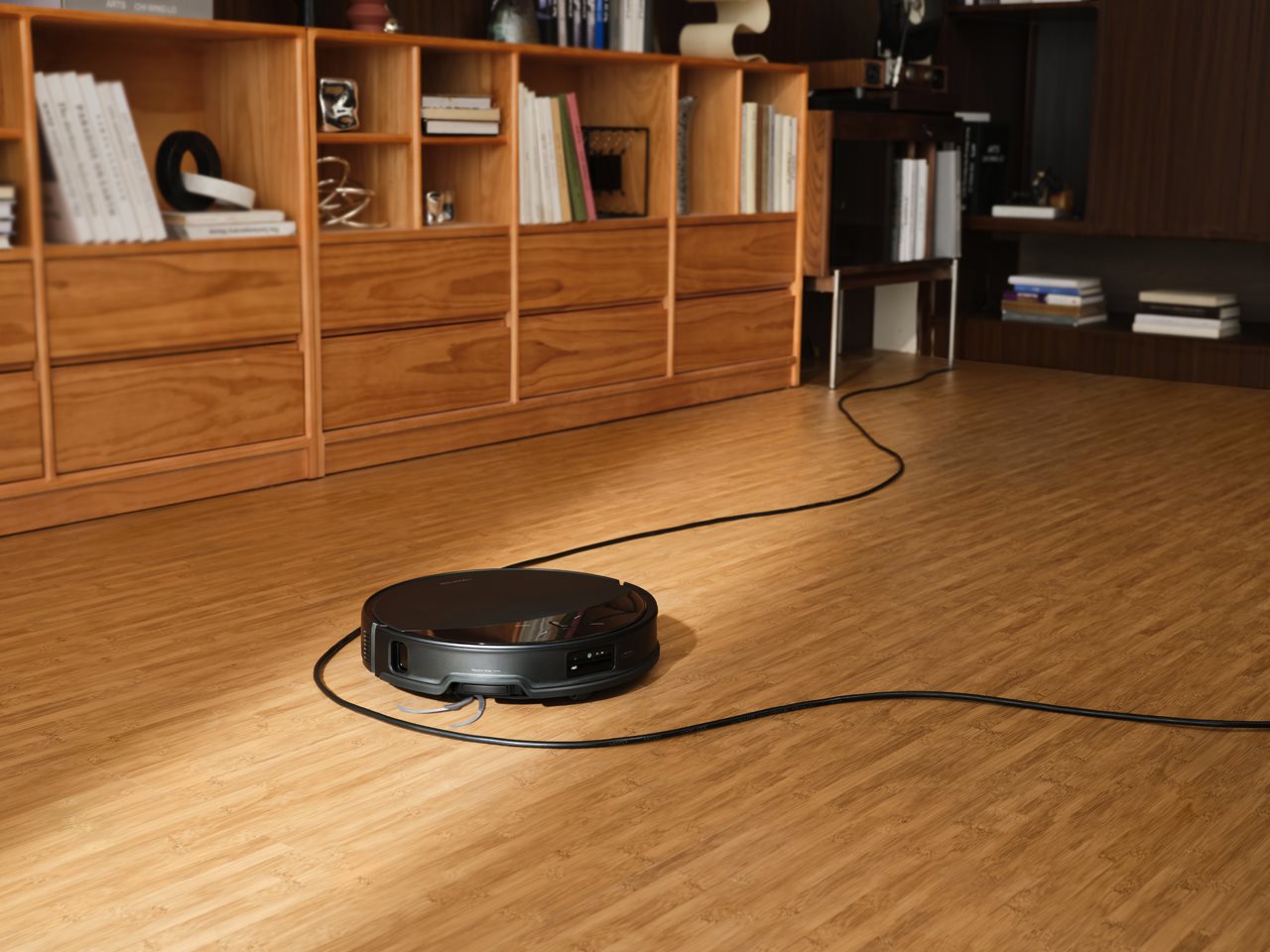
Are you tired of rescuing your robot vacuum from cords? The vacuum’s brand-new VertiBeam Lateral Obstacle Avoidance technology solves this frustrating scenario. The avoidance technology allows the vacuum to clean around unfolded cables and irregular walls or furniture.

Dealing with a tangled vacuum brush will be a thing of the past, thanks to Saros 10’s Zero Tangle Technology. The system uses the DuoDivide Main Brush and a liftable FlexiArm Riser Side Brush to prevent hair from tangling around the vacuum, efficiently channeling debris into the dustbin.

The Roborock SmartPlan 2.0 takes the guesswork out of household cleaning. This mode uses AI to automatically adjust and customize cleaning route settings, suction power and water volume based on environmental data and usage history.

Best of all? Saros 10 is incredibly easy to use even without the mobile app, thanks to its built-in, voice-activated assistant. All you have to say is “Hello, Rocky!” to direct the vacuum with simple preset instructions like starting and stopping cleaning.

February 10-16, you can save $200 on this vacuum.

2. Roborock Saros 10R

Close up of the Soros 10R cleaning a hardwood floor with an electrical cord laying across it.

The Roborock Saros 10R is just as thin as its predecessor and features VertiBeam Lateral Obstacle Avoidance technology, AI-powered Smartplan 2.0 and the Rocky voice-activated assistant. However, this model is the leader in technological innovation, making it ideal for homes with complex layouts and numerous floor obstacles.

The Saros 10R takes performance to the next level with its next-gen StarSight Autonomous System 2.0, equipped with pioneering navigation and obstacle avoidance technology. Using dual-light 3D Time-Of-Flight (ToF) technology and AI-powered RGB cameras, StarSight can detect up to 108 different obstacles — including easily overlooked items such as socks, small toys and loose cables. Paired with its 22-millimeter mop lifting feature, you’ll have a much easier time maintaining a pristine home.

Also, you’ll never have to worry about running out of power while cleaning. The Multifunctional Dock 4.0 estimates the required power for the remaining areas and tasks, charging only the necessary amount instead of fully recharging, allowing the device to resume work promptly. The dock also supports a 2.5-hour fast charge to reduce downtime and increase cleaning efficiency.

Purchase February 10-16 and receive $200 off the Saros 10R.

Soros 10R parked in its charging station.

3. Roborock F25 Series

For a smart, smooth and spotless cleaning experience, check out the Roborock F25 Series. Made by Roborock — a global leader in ultra-intelligent home robotics engineered to simplify daily life.

The line includes four wet-dry vacuum cleaner models — the F25, F25 ALT, F25 ACE and F25 LT — each packed with powerful features that ensure one-stroke wet and dry cleaning and 99% bacteria removal.

The F25 series vacuums provide a lot of power in an incredibly thin form. The flat 12.5 cm design can reach every corner of your home, effortlessly cleaning under low furniture and along edges. Also, the series’ vacuums feature JawScrapers technology. The shark-tooth blades capture hairs for a smooth, clean finish every time, while the tangle-free brush prevents streaks.

You can buy the F25 for 25% off February 10-16.

A Roborock vacuum with type that says

Are you ready for a cleaner home?

You don’t have to clean your home alone. Any of these wet-dry vacuums can simplify your life and relieve the housecleaning burden. The right robot vacuum can be your trusty companion to tackle daily cleaning so you can focus on what truly matters.