How to level up your cleaning routine in 2025

2025-02-10T10:01:00

(BPT) – If you have struggled with fingerprints all over your stainless steel or stubborn stains on your cooktop, now is the time to take your cleaning routine to the next level and upgrade to products that are right for the job. The products you use matter, and Weiman makes products specifically designed for the unique surfaces you need to clean in your home. And their products don’t just clean they are specially formulated to also protect your surfaces and always leave them looking spectacular.

Here are top products and expert tips to help you upgrade your cleaning habits so all your home’s surfaces aren’t just clean for the moment but will be protected and preserved to look beautiful and be easily maintained year-round.

Keep your stainless steel appliances cleaner for longer

Stainless steel appliances bring a sleek, modern look to any home, but they can quickly collect grease, fingerprints, smudges, watermarks and dust. If your stainless steel never seems to stay spotless for long, using the right cleaner can make all the difference.

For a lasting clean and protection against future messes, the Weiman Stainless Steel Cleaner Kit provides everything you need to deliver a streak-free shine while actively repelling fingerprints and smudges. It’s safe to use on kitchen appliances, sinks, range hoods, backsplashes and grills. This three-in-one product ensures easy, long-lasting results:

  • Clean: Easily removes fingerprints, smudges, residue and grease.
  • Shine: Leaves a brilliant streak-free finish with no residue, unlike all-purpose cleaners.
  • Protect: Creates an invisible barrier that resists dust, dirt and fingerprints to keep stainless steel looking beautiful longer.

Make your glass cooktop look like new – without scratches

Glass and ceramic cooktops are sleek and practical for today’s kitchens, but they’re difficult to maintain, especially when dealing with burned-on food, grease and grime. Many all-purpose cleaners and abrasive formulas can scratch these delicate surfaces, making it harder to keep your cooktop looking its best.

For a deep clean without damage, the Weiman Cooktop and Stove Top Cleaner Kit includes everything you need to restore shine and remove tough messes—without scratching:

  • Non-abrasive Cooktop 3-in-1 Cream: Apply directly to the cooktop and use the scrubbing pad to break down grease and grime.
  • Use the scraper tool to remove any remaining stuck on food, water stains or burn rings.
  • Finish by buffing with a paper towel for a polished, streak-free look.

Unlike other cleaners that may be too harsh for glass and ceramic cooktops causing scratches, Weiman’s formula is designed for safe use on major brands, including GE, Whirlpool, Frigidaire and Thermador, helping to maintain the cooktop’s finish.

Pro tip: Always let your cooktop cool completely before cleaning to ensure the best results.

Revive floors for a fresh start

Floors are the foundation of any room’s look and feel, so keeping them clean and well-maintained is essential. Whether you have hardwood, tile, or stone, the right cleaning products help preserve their beauty and longevity.

Hardwood floors add warmth and elegance to a home, but daily foot traffic, kids and pets can cause wear overtime. Weiman Hardwood Floor Cleaner is specially formulated to clean without streaking, dulling or leaving sticky residue. Its pH-neutral formula is gentle yet effective, making it safe for finished hardwood, engineered hardwood, vinyl and laminate flooring. Plus, it’s EPA Safer Choice Certified, meaning it’s safer to use around kids and pets.

Pro tip: For best results, sweep or dry mop first to remove loose dust and debris before applying cleaner.

Tile and stone floors are durable and easy to maintain, but the right cleaner helps preserve their natural shine. Weiman Stone and Tile Cleaner is specially formulated to clean without leaving streaks or residue and is safe for sealed marble, granite, ceramic and porcelain tile, grout, vinyl and any other non-porous hard surfaces.

Pro tip: Avoid excess water or overly wet mops on stone and tile to prevent staining or discoloration.

Protect Sensitive Stone Countertops

Kitchen and bathroom countertops endure daily messes, from spills to watermarks, making regular maintenance essential. Weiman Granite & Stone 3-In-1 Clean, Polish & Protect not only cleans but also helps resist stains while enhancing the natural luster of sealed stone surfaces. Its pH-neutral, non-acidic formula safely removes watermarks without leaving streaks or residue.

Pro tip: To maintain shine and prevent buildup, wipe countertops daily with a soft cloth and use Weiman Granite & Stone 3-In-1 regularly to keep surfaces looking polished and pristine.

Upgrade from an average all-purpose cleaner to products designed for each surface in your home; because the right cleaning solution doesn’t just clean, it protects and preserves for years to come.

Anchor Your Home for the Big Game

2025-02-06T02:01:00

(BPT) – The Big Game is almost here and families all across America are getting their homes ready to watch and cheer along. The U.S. Consumer Product Safety Commission (CPSC) wants to remind everyone to anchor their televisions and furniture as they prepare their homes for a watch party.

CPSC’s Anchor It! campaign helps educate parents and caregivers about the dangers of falling TVs and furniture. These incidents can be deadly hidden home hazards. With more injuries and fatalities than most people imagine, CPSC and the Anchor It! campaign are providing simple and inexpensive steps to prevent furniture, TVs and appliances from tipping over.

As you prepare your home for the Big Game, here’s what you need to know about the importance of anchoring your furniture and televisions.

1. Tip-over Incidents by The Numbers

Every year, tip-over incidents land thousands of children in emergency rooms. According to a 2024 report from CPSC, children under the age of 18 suffered 44% of injuries from furniture, TV and appliance tip-over incidents — that’s a child going to the emergency department every 53 minutes.

little girl looking for something in the top drawer of dresser with restraint that keeps the dresser from falling over on her.

In addition, the number of tip-over injuries impacting older adults (those aged 60+) has been on the rise, with emergency-room-treated injuries growing steadily over the past decade from 1,800 in 2013 to 4,300 in 2022.

CPSC works every day to reduce the number of tip-over injuries and fatalities — including enforcing the STURDY Act which strengthens safety standards for all clothing storage furniture like dressers. The measure took effect September 1, 2023, but consumers should still install an anchoring kit — especially if the dresser in your home was manufactured before the new standard went into effect.

2. Incident Disparities Among Certain Communities

Little girl climbing up the open drawers of a dresser that has a large TV on top which is secured straps to the wall so it will not tumble over on her.

Certain groups are impacted more heavily than others — particularly Black, non-Hispanic Americans. Among the tragic 137 reported child deaths from January 2013 through July 2023, Black non-Hispanic children accounted for 32% of those deaths while only accounting for about 14% of the U.S. population of children. And from 2020 to 2022, among the emergency room treated injuries to adults ages 18 years to 59 years, Black non-Hispanic adults accounted for 32% of those injuries despite making up only 13% of the U.S. population.

3. How to Anchor It!

Furniture, television and appliance tip-over incidents can happen to anyone but there are quick and easy steps that you can take to help avoid these situations. Anchoring kits usually cost less than $20 and take less than 20 minutes to install and it is easy to get started.

Mother holding a package to anchors used to secure a dresser to the a wall and her little baby in a car seat in the background.

Begin by purchasing an anchoring kit at your local retailer or online. Make sure to buy enough anchoring kits to put on the furniture, televisions and appliances around your house. You will need a drill, screwdriver and stud finder to ensure that you’re installing the anchors on a sturdy surface.

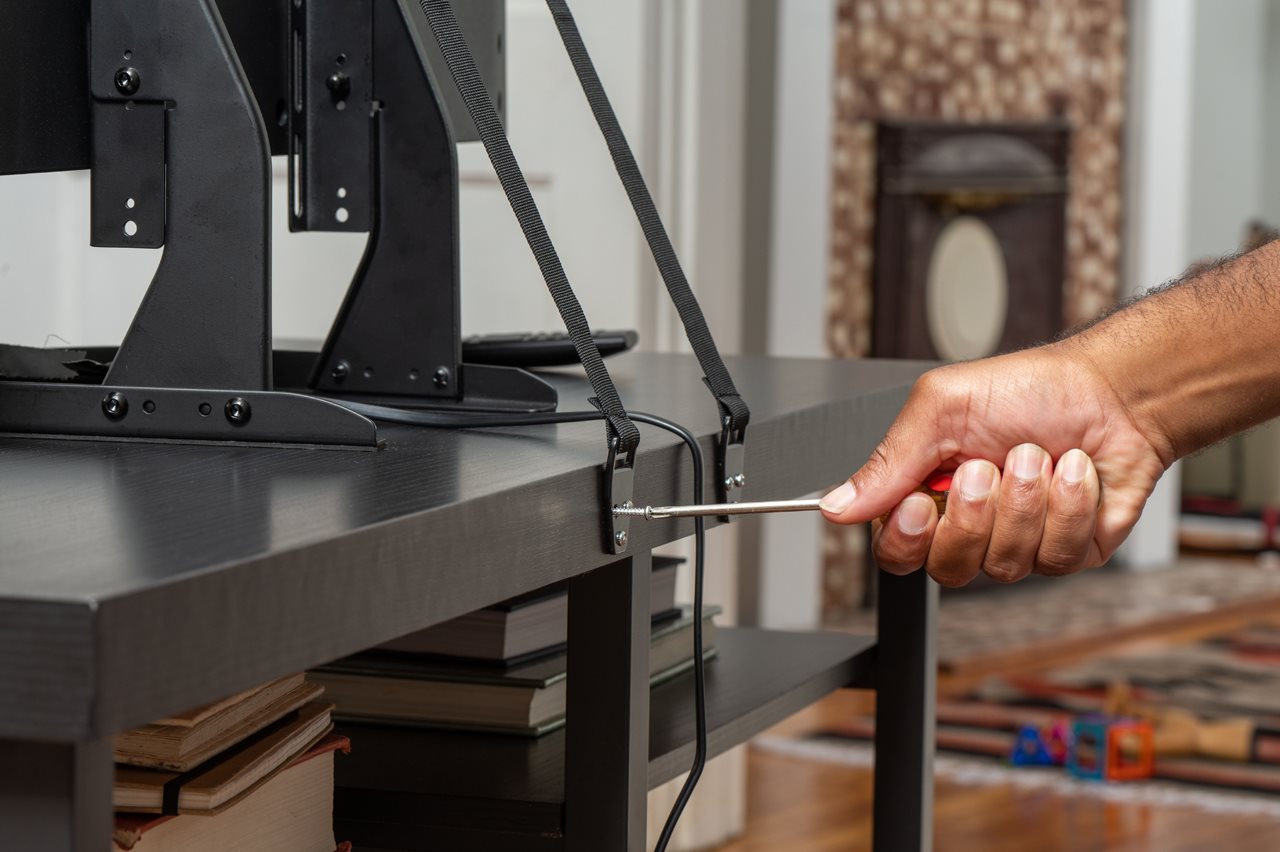
A man securing a flat screen tv to the back of a desk with straps.

Follow these simple steps to correctly and safely install your anchoring kit:

  • Attach a bracket to the wall
  • Move your furniture close to the wall
  • Attach the other bracket/plate to your furniture or TV
  • Connect the strap to both brackets
  • Tighten the strap and make sure it’s secure
A dresser with open drawers tilted away from the wall and held in place by a device mounted to the wall that does not allow the dresser to fall.

Finally, once your anchoring kit is installed, give it a check and tug on the straps to be confident everything is secure. You can find more detailed instructions on how to safely anchor your appliances at www.anchorit.gov/how-to-anchor/how-to-install-a-kit/.

4. 10 Years of Anchor It!

This year marks 10 years since the start of CPSC’s Anchor It! campaign and since then, the annual rate of tip-over injuries has been cut in half; however, there is still work to do. This summer, CPSC will be launching 10-year-anniversary-oriented activities to remind families of the importance of anchoring furniture in their homes. During your preparation for this year’s Big Game, make the right call and add Anchor It! to your watch party playbook.

About the U.S. CPSC
The U.S. Consumer Product Safety Commission (CPSC) is charged with protecting the public from unreasonable risk of injury or death associated with the use of thousands of types of consumer products. Deaths, injuries and property damage from consumer product-related incidents cost the nation more than $1 trillion annually. CPSC’s work to ensure the safety of consumer products has contributed to a decline in the rate of injuries associated with consumer products over the past 50 years.

Federal law prohibits any person from selling products subject to a Commission-ordered recall or a voluntary recall undertaken in consultation with the CPSC.

For lifesaving information:

How to boost your savings: Smart strategies to save with intention

2025-02-06T12:21:00

(BPT) – Savings can help meet unexpected expenses, fund short-term spending goals and protect against unanticipated life events. At the same time, leaving too much of your money uninvested can jeopardize long-term financial goals like retirement. Set a goal to be more intentional with your savings by getting clear on your savings goals, ensuring your savings earn a competitive return and putting excess cash to work for your long-term financial goals.

Set savings goals

To determine your personal savings goals, consider your ability to withstand savings shocks and potential income loss, as well as any short-term spending goals such as buying a car or taking a vacation.

  • Step 1: Start by ensuring you have a buffer for unexpected expenses. Aim to have at least $2,000 or about half a month’s household expenses, whichever is greater, set aside in a cash savings account. If you’ve navigated any changes in the last year that impact your income or spending, it’s also worthwhile to revisit that emergency savings goal.
  • Step 2: You might also have additional short-term financial goals. Perhaps you’re planning a home renovation or saving up for a wedding. Money to fund these goals that are a year or two away probably shouldn’t be exposed to much risk of loss and may be best kept in a cash savings account.
  • Step 3: Think about building a more substantial financial safety net that can cover three-to-six months of living expenses. This fund will help you manage financial disruptions, such as job loss or other longer-term income interruptions. This fund might also be used to help with longer-term goals like retirement savings, but such money, however it is invested, should be easily accessible if needed to bridge periods of income loss. Certain accounts like a 401(k) or traditional IRA with limited ability for early withdrawals likely won’t be the best homes for these funds.

Get specific about why you’re saving and create an action plan. Start small and build. Saving something is better than not saving at all, especially when saving in an account with a competitive yield. Yield, or annual competitive yield (APY), indicates how much interest or return you can expect to earn on your savings in a given account over a year. Put simply, the higher the APY, the more your savings can grow.

Smiling mom, dad and little girl sitting on white sectional couch in the living room using a laptop.

Earn what you deserve

Many Americans aren’t getting the return they deserve on their savings. Whether you’re just starting to set aside funds for an emergency or you already have substantial cash saved, make sure you know how much that cash is “earning.” Saving with intention means selecting the best savings vehicle for your personal savings goals. Consider whether you value FDIC insurance, ease of money movement or if you’re simply looking for the highest return on your savings.

Letting your money sit in an average bank savings account might mean your money doesn’t have much chance to grow. The average bank savings account yield as of Dec. 16, 2024, was 0.42% according to the FDIC National Rate and Rate Caps. That means for each $100 you save you’ll earn 42 cents annually. Compare this to a higher yielding account like Vanguard’s Cash Plus Account, which offers a sweep program currently yielding 3.65% APY effective Jan. 6, 2025.*

The cash you keep easily accessible does not need to sit idly on the sidelines. It can work for you in a high-yielding account. Keeping your hard-earned money in a low-yielding account could mean leaving money for short- and long-term goals on the table.

Build on your savings foundation

A well-funded emergency savings account can prevent you from taking on high-interest debt, tapping into a retirement account or turning to other sources that could slow your long-term financial progress.

While crucial for funding short-term financial goals, an intentional savings plan can also create the foundation for a longer-term financial plan. Once you have a solid savings plan in place, consider whether you can move excess cash — beyond the amount needed to meet your identified savings goals — into higher-earning-potential asset classes like stocks and bonds for long-term goals like retirement.

When you’re intentional about your savings goal and seeking out the best home for your savings, even the cash you choose to keep more readily accessible, outside of stock and bond investments, has the opportunity to grow.

Whether your savings goal is to start your first rainy-day fund or shop around for higher returns on your well-funded piggybank, ensure you have clear goals and a plan for reaching them.

All investing is subject to risk, including the possible loss of the money you invest.

Investments in bonds are subject to interest rate, credit, and inflation risk.

*The APY will vary and may change at any time. APY is current as of date of publication. Current APY is available at vanguard.com.

The Vanguard Cash Plus Account is a brokerage account offered by Vanguard Brokerage Services, a division of Vanguard Marketing Corporation, member FINRA and SIPC. Under the Sweep Program, Eligible Balances swept to Program Banks are not securities: They are not covered by SIPC but are eligible for FDIC insurance, subject to applicable limits. Money market funds held in the account are not guaranteed or insured by the FDIC but are securities eligible for SIPC coverage. See the Vanguard Bank Sweep Products Terms of Use and Program Bank list on vanguard.com for more information.

There may be other differences between these products that must be considered prior to investing.

© 2025 The Vanguard Group, Inc. All rights reserved.

Color your kitchen: Butter makes everything better

2025-02-06T08:01:00

(BPT) – The psychology of color reveals what most people already know: Color can evoke strong emotions. Members of the design team at Whirlpool Corporation are well versed in how color impacts mood, which is one of the reasons they spent years researching color trends to identify the best possible choice for the KitchenAid® 2025 Color of the Year: Butter.

“The Color of the Year program is specifically led by the Whirlpool Color, Finish, and Material team. We spend years analyzing interior design, social, cultural and aesthetic trends to help determine the new Color of the Year — a decision that is often many years in the process,” said Brittni Pertijs, Design Manager: Color, Material and Finish at Whirlpool Corporation. “Color of the Year focuses on a specific colorway to express the emotions people want to feel that year.”

This year’s choice for Color of the Year: Butter

It’s not just for baking anymore! This modern yellow with a creamy, satin finish imparts a uniquely comforting vibe, with a nostalgic aura all its own.

“As a result of our trend tracking, our team saw yellow continually pop up,” said Pertijs. “Knowing we wanted to tap into comfort and nostalgia, this soft, energizing butter yellow felt like the perfect marriage of all those elements.”

According to a 2024 online Ipsos Survey*, nearly 3 in 4 consumers (72%) agree that a buttery yellow color radiates warmth and comfort, and 67% associate the color with a sense of richness and creaminess — making it a top choice for creating a welcoming atmosphere in the kitchen. More than half (52%) connect the hue with comforting homemade meals, and the same percentage agree that a buttery yellow color transports them back to nostalgic childhood memories. A majority of consumers (64%) also connect this color to the simple pleasures in life.

“The color yellow has the ability to transport you back in time, evoking some of your warmest memories,” added Pertijs. “The color might remind people of kitchens from the 1950s or 1960s that were decorated with a similar soft yellow color. While it echoes past kitchens, Butter feels fresh and modern, leaning into present-day design trends. It’s a classic neutral that will last over the years.”

Design tips: How to make the most of this year’s color

To maximize the warm, comfy vibes of this year’s Color of the Year, you can choose to upgrade to the new KitchenAid® Stand Mixer in Butter. The Butter Stand Mixer works well as a design feature in any style of home, from eclectic and traditional styles to clean and contemporary spaces. It’s also created to fit in perfectly with the latest kitchen designs and finishes.

While some may recall the Majestic Yellow color, “that was developed in 1995, which was reflective of interior trends such as red cherry woods and glossy countertop finishes. The new Butter model represents today’s design trends, in which woods are more natural and countertops are matte and satin,” explained Pertijs.

For anyone looking to accessorize or update their kitchen this year, the Butter Stand Mixer complements various shades of blue well, including periwinkle blue. If you’re looking to mix and match it with other appliances, Butter looks great with the KitchenAid Blue Velvet colorway, or more muted tones like sage green.

Pertijs also recommends pairing the Butter Stand Mixer with the KitchenAid® Bread Bowl attachment: “They go together like bread and butter (pun intended)!”

Make your kitchen more cozy, comforting and welcoming this year with the rich color of Butter. You can learn more about this year’s KitchenAid® Stand Mixer Color of the Year at KitchenAid.com.

*Source: An online Ipsos survey in the US, UK, MX, DE, CA, AUS (n=1,000 per country), general population, 18 years of age and older. Data is nationally representative by age, gender, race/ethnicity and region. The survey was fielded between September 27-October 1, 2024.

Make mental health a priority in 2025: 5 ways to stay focused beyond resolutions

2025-02-06T00:01:00

(BPT) – As we settle into the new year, many of us are reflecting on our goals we made in January when declaring our New Year’s resolutions.

For many, mental health was likely a key focus, continuing the trend from last year when about 40% of resolutions were aimed at improving mental well-being. However, as the novelty of January fades, it’s easy for even the best intentions to slip. Studies have shown that by February, many people have already abandoned their resolutions.

Rather than letting your commitment to mental health dim, now is the perfect time to renew your focus and keep your mental health a priority.

Whether you’re following through on your resolution to improve your mental well-being or simply seeking to continue your efforts, staying intentional about mental wellness can have lasting benefits for both your emotional and physical health.

Dr. Donald Tavakoli, UnitedHealthcare’s National Medical Director for Behavioral Health, provides the following tips to help you keep your mental health on track throughout the year:

1. Build a supportive network

Surrounding yourself with understanding friends, family and mentors can provide essential emotional support. A strong social network can help prevent feelings of isolation and promote resilience. Research shows that social support plays a crucial role in mental health. Don’t be afraid to reach out and be open with your loved ones.

2. Emphasize sleep

Adequate sleep is fundamental to mental well-being as insufficient sleep may negatively affect emotional regulation and cognitive function. Prioritize restful sleep by establishing a consistent sleep schedule, creating a calming bedtime routine and optimizing your sleep environment. Proper sleep also benefits your overall well-being.

3. Limit social media:

Studies have linked excessive social media use to a higher risk of depression and anxiety, particularly among young people. It’s important to keep in mind that a person’s social feed often doesn’t reflect their entire life story. Instead, try to embrace the ups and downs of life as normal, focus on the here and now, and invest in your offline relationships.

4. Reach out for professional support

Don’t hesitate to reach out to your primary care physician (PCP). If you don’t have a PCP, now is a great time to establish a relationship with one. Seeking help is a sign of strength, not weakness. Your PCP can provide valuable insights and care, and referrals if needed.

5. Utilize your insurance benefits

You might be surprised to learn that your health insurance plan includes mental health benefits which may cover employee assistance programs, virtual therapy sessions, coaching or digital self-help tools such as Calm Health. These options make it easy to access the support you need in different ways. If you have mild behavioral health concerns, digital self-help tools and virtual coaching can be a great place to begin. If you have any questions or need more details, simply call the number on your insurance card for assistance.

Prioritizing mental health enables you to work toward a more balanced and fulfilling life. By improving your mental well-being, you set the stage for achieving broader goals, including nurturing relationships and fostering personal growth. Make mental health a central focus as you navigate 2025.

For more information about mental health resources, visit UHC.com.

Safety first: Important tips to keep your kitchen safer for everyone

2025-02-05T13:31:00

(BPT) – Do you consider your kitchen safe? According to the National Fire Protection Association (NFPA), cooking is the leading cause of reported home fires and home fire injuries, so it’s a good idea to take a good look at your kitchen and review the best practices for keeping everyone in your home protected from these common hazards.

Here are important kitchen safety tips to keep in mind for any household, but especially for those with children, the elderly or other vulnerable adults.

Use the kitchen safety features of your electric range

The NFPA advises that households with electric ranges have a higher risk of cooking fires, so it’s important to read and understand any safety features that your range may provide and to use them consistently.

For example, since 2015, LG electric ranges have a proprietary feature on slide-in and freestanding electric ranges with front-mounted knobs called “Lock Out” or “Control Lock.” This allows users to disable the heating elements when the range is not in use, reducing the risk of accidental activation.

Many electric ranges are also equipped with additional safety features, including a “Burner On” indicator light, an audible alert when a burner is activated, and a hot surface indicator light. These kinds of measures provide multiple layers of protection to promote safe range operation, according to LG, which encourages consumers to review the written instructions and watch this helpful how-to video to make the most of range safety features.

Woman turning a knob on a range in the kitchen while cooking.

Keep stovetops clean and clear

For any kind of range, it’s crucial to keep any potentially flammable items away from the stovetop, including potholders, kitchen towels, paper or plastic products, etc. You can also help prevent grease fires by ensuring that your oven and stovetop are clean and free of any grease, dirt and debris.

Stay in the kitchen when cooking

Cooking, when done properly, is a safe activity. However, unattended cooking remains the leading cause of kitchen fires in the U.S according to the NFPA, so it’s recommended to stay nearby and keep a close watch on your range while you’re cooking. Wear short or close-fitting sleeves. Turn pan handles inward to prevent spills and put them out of reach of children.

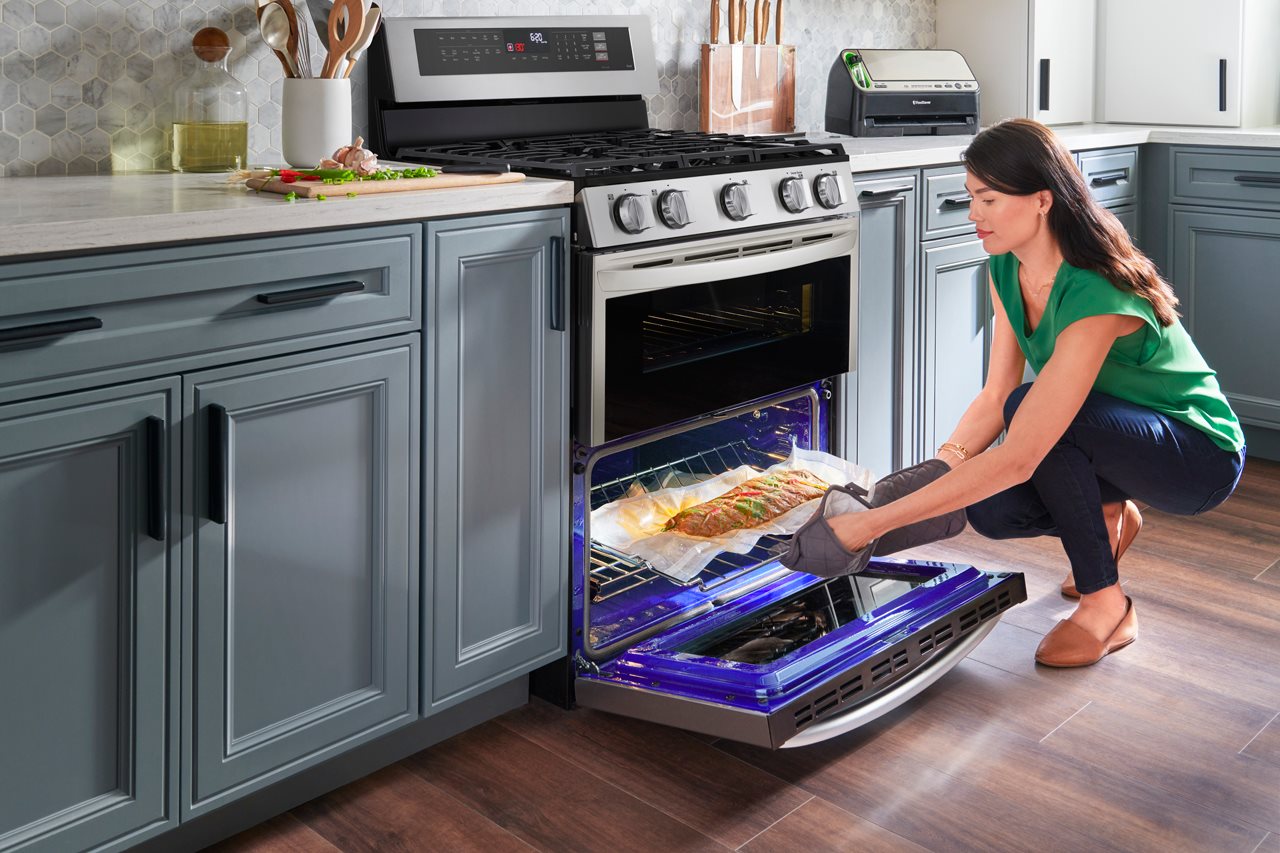
Woman using the lower oven on an LG range to bake a rack of ribs.

Keep children and pets away from range knobs

It’s also important to help ensure that pets and children have as little access to range knobs as possible. Baby gates can help to keep very small children and some pets out of the kitchen, but close supervision is always the best safety measure.

Ensure all knobs are in the “off” position after cooking

When you’re done cooking, and especially before leaving the house or going to bed at night, doublecheck that all of the range knobs are turned off.

Avoid placing objects on the range when not in use

Limited counter space can be frustrating, but placing objects — especially those that could be flammable — on your range top when you’re not using it can be a safety hazard, especially if a knob accidentally gets turned on. Try to look for other storage solutions so you’re not tempted to use your cooktop as counter space.

Use kitchen ventilation when cooking

Before things heat up in the kitchen, be sure to turn on your kitchen ventilation hood, fan, or even open a window to circulate the air in your kitchen. When things heat up, using proper ventilation will enhance your indoor air quality and the overall cooking experience by reducing odors, heat and other byproducts of the cooking process.

According to the Association of Home Appliance Manufacturers, when safety tips, advisories or service upgrades are offered, consumers can trust that the manufacturer is presenting the most current information to help you stay safe and have a positive experience while using their product.

Celery green shaker style cabinetry in a kitchen with an LG range and mircowave.

Learn more about LG electric ranges and their safety features at LG.com/us/electric-ranges. LG is ranked the #1 Appliance Brand in the United States, according to the OpenBrand Quarterly Consumer Survey (Units & Dollars, Major Appliances, AHAM Core 6, Q2-Q4 2024).

Retiring well: 68% of Americans say it’s living a little by affording experiences that bring joy

2025-02-05T09:31:00

(BPT) – What makes for retiring well? For most Americans, it’s living a little by affording experiences that bring joy (68%) and enjoying a high quality of life (49%), balanced by the security of reaching savings milestones (68%), according to new Empower research.

Big and little joys

Most agree satisfaction in retirement includes the ability to pay bills on time and in full (68%) and living debt-free (63%) — including owning a home outright (55%). Some 42% of people say it comes down to experiences, like the ability to travel the world, and to give back by volunteering (25%).

Everything in its time

Having a clear timeline brings peace of mind for many — 66% say they have a goal retirement age in mind, including 73% of men and 61% of women.

Over two-thirds of Americans (67%) have savings milestones to reach before retirement — goals that they’re striving for — including setting aside funds for emergencies (57%), travel (33%) and leisure activities like starting a new hobby (32%). About the same number (68%) say their happiness in retirement depends most on reaching their retirement savings goal. Many Gen Xers emphasize leaving behind an inheritance for their children (42%).

Travel and leisure

When choosing a place to retire, most people (86%) prefer to live where they can maintain their lifestyle without stressing about money, and low cost of living (38%) factors high on the list. For many that means relocating, with 42% saying they plan to move to a different city or state to retire.

Some 37% prioritize proximity to family and friends, although 43% say they prefer to retire where it’s more affordable, even if it means being far from their loved ones. For others, home is where happiness already exists — 23% describe their current location as their happy place.

Many see retirement as an opportunity for a fresh start; 16% of people imagine retiring in a different country altogether, seeking adventure and change in their golden years. Nearly 2 in 5 Gen Zers have set a goal for a travel fund (44%) in retirement.

Methodology

Empower surveyed 1,013 Americans on December 5, 2024.

RO4157537-0125

Fact or fiction: Discover the truth about root canals

2025-02-04T08:01:00

(BPT) – Does the phrase “root canal” make you feel uneasy and anxious? Root canal treatments have an unfairly earned bad reputation. Misinformation and misconceptions give a false impression that root canals are painful, dangerous and unnecessary. Root canal myths may cause patients to question the safety of this endodontic procedure and put off necessary treatment.

The truth is that root canal treatments are effective and safe. The longer you postpone treatment, the more you risk the chance to save your teeth. If you’re unsure about undergoing a root canal procedure, check out these debunked myths about this necessary endodontic treatment.

Myth: Root canal procedures are painful — FALSE

Fact: Thanks to technological advances and anesthetics, root canals are not painful. In fact, the pain from severe toothaches — stemming from damaged tissues in the tooth — is the real culprit behind the affliction that warrants the need for this treatment. During a root canal treatment, an endodontist can remove the damaged tissues quickly and comfortably.

Myth: If my tooth doesn’t hurt, I don’t need a root canal — FALSE

Fact: A common sign that you may need a root canal treatment is a persistent, throbbing toothache. However, you may have infected or damaged tooth pulp and experience no pain. An endodontist is trained to test a tooth for damage whether or not you feel pain.

Myth: It’s better to extract a tooth — FALSE

Fact: A prevalent misconception about dental work is that removing an affected tooth is the best course of treatment. However, your natural teeth are worth saving. Your teeth are a gateway to nutrition and a signifier of your overall good health.

Endodontists are experts in saving teeth. They receive additional specialized training to diagnose and perform root canal treatments. As a result, endodontic treatment has a high success rate and many root canal-treated teeth last a lifetime.

Increasingly, dentistry is trending conservative, which means it is favoring treatment approaches that aim to preserve as much of the natural tooth structure as possible while addressing the patient’s needs. The focus is on minimal intervention, using techniques that prioritize tooth preservation and long-term function over more invasive procedures.

Myth: Root canals are dangerous and cause systemic diseases — FALSE

Fact: You may have read that root canal treatments are dangerous and increase your risk of becoming ill or contracting a systemic disease in the future. This false claim is based on outdated, poorly designed research. There is no valid scientific evidence linking root canal treatments with disease in other parts of the body.

According to the American Association of Endodontists (AAE), about 25 million new endodontic treatments, including root canals, are performed each year safely and effectively. Several peer-reviewed research studies over the last century support the safety and efficacy of root canal treatments.

Don’t take a wait-and-see approach to your dental health. Now that you know the truth about root canal treatments, you can make informed decisions about your dental health. Visit findmyendodontist.com to find a specialist near you so you can preserve your teeth.

What information can you learn about your pregnancy — and when?

2025-02-04T08:01:00

(BPT) – If you are pregnant, or are considering becoming pregnant, you may want to know everything you can about your baby. Often, this process will include prenatal screening.

To help in the learning process, and better understand the options for expecting parents, a resource is now available to help understand how genetic testing — another name for screening — can help you learn more and better prepare for your baby.

The “Know More Sooner” website, provided by Myriad Genetics, delivers information about available screenings tests including non-invasive prenatal testing (NIPT), which can identify pregnancies at an increased risk for a wide variety of chromosomal conditions as early as eight weeks. The site reveals common myths about genetic testing and shares the stories of patients who have used and benefited from prenatal screens.

Kristin E., a recent patient, found out she was pregnant. Her doctor ordered NIPT, also known as prenatal cell-free DNA (cfDNA) screening early in her pregnancy and learned that her baby might have birth defects.

Since some birth defects may cause a miscarriage, Kristin spent eight days thinking her pregnancy would not be viable. Kristin later found out that the test she had taken became less accurate as the person’s weight increased. Instead of providing accurate results, the test simply flagged her as high-risk, without clearly acknowledging that her body mass index (BMI), not the cfDNA, was the primary factor in her test outcome.

Following concerning prenatal cfDNA results that are often impacted by high BMI, Kristin screened with Myriad’s Prequel® Prenatal Screen, which showed her pregnancy was at reduced risk for specific chromosomal conditions. The results gave her a sigh of relief — she started to enjoy her pregnancy instead of being filled with dread.

Kristin has given birth to a healthy baby who is “immensely happy!” As an older mom, Kristin tells everyone to “go to Prequel right out of the gate.”

“Many patients don’t initially understand the importance of prenatal genetic screening, but with Myriad’s genetic tests you can learn a lot more about risks to your pregnancy and your baby sooner than at typical milestones,” said Dr. Dallas Reed, MD, FACMG, FACOG, obstetrician-gynecologist and medical geneticist who serves as the Principal Medical Advisor of Women’s Health for Myriad Genetics.

“Having this information may allow you to pursue diagnostic testing sooner, meet with specialists, choose a birthing location that specializes in high-risk pregnancies, and/or talk with others who have faced similar conditions.”

Know More Sooner was created after survey results found that most patients want prenatal screening — once they learned how genetic testing can help them be more informed and prepared for their baby.

Four in 10 survey respondents said that they had not been offered any kind of noninvasive prenatal screening tests.1 Yet, the American College of Obstetricians and Gynecologists (ACOG) recommends that this kind of screening be offered to all pregnant patients regardless of ancestry, maternal age or risk of chromosomal abnormality.

Myriad offers three tests to those who are pregnant or are considering becoming pregnant:

Visit the Know More Sooner website at PrenatalScreening.com to learn more about prenatal screening.

1. Large-scale Pollfish survey of 1,000 U.S.-based population who self-identified as ‘pregnant’ or ‘recently pregnant.’ Survey was conducted by the S50 Agency on behalf of Myriad Genetics, December 2023.

2. In a large-scale published study run in 2020, SneakPeek accurately determined fetal sex in 99.9% of 1,029 pregnant women between 7-37 weeks gestational age. In a 2021 laboratory test, SneakPeek accurately determined fetal sex in 99.02% of 102 pregnant women using the Snap device at 8-15 weeks gestational age. In a separate published study run in 2021, fetal sex was accurately determined in 100% of 134 pregnant women at 7 weeks gestational age. In a 2022 scientific study, SneakPeek accurately determined fetal sex for 100% of 103 women at 6 weeks gestational age.

Love being active, but have moderate-to-severe eczema? A professional basketball player can relate.

2025-02-03T07:01:00

(BPT) – Whether you’re an aspiring athlete, weekend warrior or just love activities that get your heart racing, you may discover exercise can affect your skin.

But for those living with moderate-to-severe eczema, there are extra considerations. This disease is characterized by recurring symptoms including intense itching and dry, irritated rashes that can crack or ooze. For many people living with uncontrolled moderate-to-severe eczema, much of their lives can be spent coping with nearly constant signs and symptoms that can persist through everyday life and can be especially bothersome as they stay active.

How can exercise be tough on your skin?

There are a few reasons. Namely, when you exercise, you typically sweat. When exercising outdoors, you may also be exposed to allergens, dry air, weather elements and pollution. And, certain fabrics may rub against your skin as you work out. These factors can all potentially worsen eczema signs and symptoms, and being mindful of them is key.

“Changes in weather, including going in and out of frigid outdoor air and heated indoor air, plus stress can all affect your moderate-to-severe eczema,” said board-certified dermatologist Dr. Anabelle Garcia. “Tracking instances when you have a flare-up can help identify what irritates your skin, so you can better manage your disease.”

Tips for staying active with her moderate-to-severe eczema

Beyond knowing what worsens your signs and symptoms (such as not wearing certain fabrics or using scent-free products), here are some tips to help manage your moderate-to-severe eczema while exercising:

  • Stay hydrated
  • Exercise in cool environments
  • Bathe or shower after exercising
  • Keep skin moisturized
  • Try lower impact workouts

How a pro athlete copes with her moderate-to-severe eczema

All-star basketball player Diana Taurasi has been living with moderate-to-severe eczema since her college days, when she first noticed symptoms like rashes on her arms and hands. In partnership with Sanofi and Regeneron for the Eczactly Like Me program, Taurasi is speaking up about the challenges this disease can bring — on and off the court.

“Throughout the years, I’d often be thinking about my moderate-to-severe eczema,” said Taurasi. “As an athlete, my skin is often exposed, and I’m in this cycle of sweating, showering and drying off — all things that could irritate my skin. It was a struggle to find things that would help relieve the intense itch and rashes.”

She continues: “After the team warmup before games, all the starters take their jackets off and my eczema could be seen; I couldn’t hide it,” she recalled. “It was something I was almost constantly dealing with.”

Other activities outside of basketball were tough on Taurasi’s skin too.

“Even when relaxing with my wife and kids on vacation, I’d still be dealing with my eczema,” remembered Taurasi. “I’d sometimes avoid certain things that could irritate my skin like going to the pool or beach or wearing short sleeves in the heat, as that would be tough on my skin.”

Finding treatment that works for her

Taurasi tried her best to identify what factors aggravated her skin the most and worked with her dermatologist to try different prescription topical treatments, but her eczema still wasn’t well controlled.

Eventually, her doctor recommended she try Dupixent (dupilumab), a biologic treatment option for people ages 6 months and older with uncontrolled moderate-to-severe eczema.

Dupixent works by helping to block a key source of inflammation inside the body, to help reduce itch and rashes. It is the only biologic medicine approved to treat uncontrolled moderate-to-severe eczema from infancy to adulthood.

Since starting Dupixent, Taurasi reported experiencing clearer skin and less itch.

“Now that I’ve found Dupixent, it has helped me get my signs and symptoms under control,” said Taurasi. “I spent so much time and energy dealing with my eczema, looking for something out there that could work for me. I am happy to be enjoying spending time and doing activities with my wife and kids, without being as worried about my eczema. While everyone’s experience is different, I am grateful to have found something that works for me.”

Dupixent can help adult patients with moderate-to-severe eczema achieve clearer skin and less itch. In two clinical trials at 16 weeks, adults on Dupixent saw clear or almost clear skin (37% versus 9% not on Dupixent) and had significant itch reduction (38% versus 11% not on Dupixent). Individual results may vary.

The most common side effects include injection site reactions, eye and eyelid inflammation, including redness, swelling, and itching, sometimes with blurred vision, dry eye, cold sores in your mouth or on your lips, and high count of a certain white blood cell (eosinophilia).

Diane wearing green workout suit sitting on a bench in a locker room.

Advice for others “eczactly” like Taurasi

Taurasi wants others experiencing symptoms and who are feeling “eczactly” like her to know they’re not alone and not to lose hope.

“If you have uncontrolled moderate-to-severe eczema, don’t give up — there are others out there that can relate to what you’re going through. Do your research, talk to a dermatologist about treatment options, and be an advocate for yourself.”

If you or a loved one are experiencing symptoms of moderate-to-severe eczema and topical prescription treatments aren’t controlling your eczema well, talk to your doctor about exploring other options that may be right for you.

Visit ShowUpAD.com to read more stories like Taurasi’s and about Dupixent (dupilumab).

IMPORTANT SAFETY INFORMATION & INDICATION

Do not use if you are allergic to dupilumab or to any of the ingredients in DUPIXENT®.

Before using DUPIXENT, tell your healthcare provider about all your medical conditions, including if you:

  • have eye problems.
  • have a parasitic (helminth) infection.
  • are scheduled to receive any vaccinations. You should not receive a “live vaccine” right before and during treatment with DUPIXENT.
  • are pregnant or plan to become pregnant. It is not known whether DUPIXENT will harm your unborn baby.
    • A pregnancy registry for women who take DUPIXENT during pregnancy collects information about the health of you and your baby. To enroll or get more information call 1-877-311-8972 or go to https://mothertobaby.org/ongoing-study/dupixent/.
  • are breastfeeding or plan to breastfeed. It is not known whether DUPIXENT passes into your breast milk.

Tell your healthcare provider about all the medicines you take, including prescription and over-the- counter medicines, vitamins, and herbal supplements.

Especially tell your healthcare provider if you are taking oral, topical, or inhaled corticosteroid medicines or if you have atopic dermatitis and asthma and use an asthma medicine. Do not change or stop your other medicines, including corticosteroid medicine or other asthma medicine, without talking to your healthcare provider. This may cause other symptoms that were controlled by those medicines to come back.

DUPIXENT can cause serious side effects, including:

  • Allergic reactions. DUPIXENT can cause allergic reactions that can sometimes be severe. Stop using DUPIXENT and tell your healthcare provider or get emergency help right away if you get any of the following signs or symptoms: breathing problems or wheezing, swelling of the face, lips, mouth, tongue, or throat, fainting, dizziness, feeling lightheaded, fast pulse, fever, hives, joint pain, general ill feeling, itching, skin rash, swollen lymph nodes, nausea or vomiting, or cramps in your stomach-area.
  • Eye problems. Tell your healthcare provider if you have any new or worsening eye problems, including eye pain or changes in vision, such as blurred vision. Your healthcare provider may send you to an ophthalmologist for an eye exam if needed.
  • Joint aches and pain. Some people who use DUPIXENT have had trouble walking or moving due to their joint symptoms, and in some cases needed to be hospitalized. Tell your healthcare provider about any new or worsening joint symptoms. Your healthcare provider may stop DUPIXENT if you develop joint symptoms.

The most common side effects in patients with eczema include injection site reactions, eye and eyelid inflammation, including redness, swelling, and itching, sometimes with blurred vision, dry eye, cold sores in your mouth or on your lips, and high count of a certain white blood cell (eosinophilia).

Tell your healthcare provider if you have any side effect that bothers you or that does not go away. These are not all the possible side effects of DUPIXENT. Call your doctor for medical advice about side effects. You are encouraged to report negative side effects of prescription drugs to the FDA. Visit www.fda.gov/medwatch, or call 1-800-FDA-1088.

Use DUPIXENT exactly as prescribed by your healthcare provider. It’s an injection given under the skin (subcutaneous injection). Your healthcare provider will decide if you or your caregiver can inject DUPIXENT. Do not try to prepare and inject DUPIXENT until you or your caregiver have been trained by your healthcare provider. In children 12 years of age and older, it’s recommended DUPIXENT be administered by or under supervision of an adult. In children 6 months to less than 12 years of age, DUPIXENT should be given by a caregiver.

Please see accompanying full Prescribing Information including Patient Information.

INDICATION

DUPIXENT is a prescription medicine used to treat adults and children 6 months of age and older with moderate-to-severe eczema (atopic dermatitis or AD) that is not well controlled with prescription therapies used on the skin (topical), or who cannot use topical therapies. DUPIXENT can be used with or without topical corticosteroids. It is not known if DUPIXENT is safe and effective in children with atopic dermatitis under 6 months of age.

Dupixent logo


US.DUP.24.08.0259