How well do you understand auto insurance coverage? New survey reveals knowledge gaps among younger drivers

2023-11-15T05:01:00

(BPT) – Do you know what your auto insurance covers, and what it doesn’t? What does “comprehensive coverage” mean? If you answered no to the first two questions, you’re not alone. A recent survey by State Farm found many millennials and members of Gen Z have knowledge gaps about auto insurance. In fact, when asked how well they know their auto insurance policy, nearly half (46%) admit they don’t know their policy that well, finding coverage the most confusing topic.

Each year, a new generation of drivers hits the road, making it vital for them to understand auto insurance policies. While the survey found the majority of Gen Z and millennial drivers understood the concepts of collision and liability insurance coverage, two-thirds did not understand what comprehensive auto insurance covers — including losses related to natural disasters like damaging winds, hail, tornados, hurricane, flooding and earthquakes — plus theft and vandalism, animal collisions or your car being hit while parked.

With severe weather events on the rise, according to the Insurance Information Institute, this additional coverage offers protection from unexpected events that can happen even when you’re not behind the wheel.

Although survey respondents had a solid understanding of ride-share and under/un-insured motorist coverage, less than half (43%) of Gen Z and millennials correctly identified benefits associated with add-on coverages like rental car and travel expenses; and just 61% correctly identified the benefits associated with emergency road service.

Understanding and choosing auto insurance coverage

Auto insurance is required in almost every state to operate a vehicle, but the cost can vary widely. Cost is partially determined by your vehicle type, your age as well as your car’s age, plus the coverage level you select — and can also be affected by other factors like where you live and how much you drive.

Because a car is one of the biggest purchases you make, it’s important to protect this asset in case of emergency. Understanding the different types of coverage, benefits and policy options can help you make informed choices when selecting auto insurance. Each type of coverage is priced separately, so there is variability in policy limits and pricing.

Here’s a summary of the most common auto insurance coverage types every car owner should know:

Bodily Injury Liability Coverage extends to relatives in your household and those driving your car with your permission. It’s important to have enough liability coverage, because if you are at fault in a serious accident, you may be sued for a large sum of money. It’s important to purchase enough to help protect assets such as your home and savings, which may be more than minimum liability amounts required by the state you live in.

Property Damage Liability coverage pays for damage you may cause to someone else’s property. Usually, this means damage to someone’s car, but also includes damage to lamp posts, telephone poles, fences, buildings or other structures your car hits.

Medical Payments or Personal Injury Protection (PIP) Coverage pays for the treatment of injuries to the driver and passengers of the policyholder’s car. At its broadest, PIP can cover medical payments, lost wages and the cost of replacing services normally performed by someone injured in an auto accident. It may also cover funeral costs.

Collision Coverage pays for damage to your car resulting from a covered collision with another car, an object such as a tree or telephone pole, or as a result of flipping over. Collision coverage is generally sold with a separate deductible. Even if you are at fault for the accident, your collision coverage will cover the cost of repairing your car minus the deductible. If you’re not at fault, your insurance company may try to recover the amount they paid from the other driver’s insurance company, and if successful, you’ll also be reimbursed for the deductible.

Comprehensive Coverage provides coverage for loss due to theft or damage caused by something other than a collision with another car or object. Comprehensive covers events such as fire, falling objects, missiles, explosion, earthquake, windstorm, hail, flood, vandalism, riot or contact with animals such as birds or deer. It will also pay to repair your windshield if it is cracked or shattered. Comprehensive insurance is usually sold with a separate deductible, although some insurers may offer the glass portion of the coverage without a deductible.

Uninsured and Underinsured Motorist Coverage provides coverage if you are hit by an uninsured driver or a driver who doesn’t have sufficient insurance to pay for your loss. This coverage also offers protection in the event a covered driver is the victim of a hit-and-run or if as a pedestrian, you are struck by an uninsured or underinsured motorist.

Learn more at StateFarm.com.

4 questions to ask before going electric

2023-11-13T12:01:01

(BPT) – The “electric vehicle (EV) boom” is upon us. Americans purchased nearly 300,000 EVs in the second quarter of this year, over 48% more than in 2022. To drive the trend even further, new data from Hankook Tire’s Gauge Index survey suggests that more than 1 in 3 drivers (34%) plan to own or lease a hybrid or EV in the future.

But purchasing an EV is an entirely different ballgame compared to purchasing a traditional gas-powered or internal combustion engine (ICE) vehicle. The unique characteristics of EV ownership mean that first-time buyers should ask specific questions of their car dealers and of themselves before making the switch.

If you are thinking about purchasing an EV for the first time, here are some questions to consider to make a smart purchasing decision:

1. What is the long-term cost?

The initial price on the sticker doesn’t cover everything for any vehicle, and the same is true for EVs. Drivers must consider the cost of maintenance, insurance and, of course, fueling up. However, the cost difference to charge an EV is an incentive for many car shoppers. Hankook found that 24% of drivers are most likely to switch to an EV for a lower cost to charge rather than pumping gas.

2. What type of maintenance will my EV need?

The general consensus among drivers is that EVs require less maintenance than their ICE counterparts, but understanding what is needed to keep the vehicle running at peak performance is still key. While there’s no oil to change in your EV, brakes, fluids and various air filters will still need to be maintained over the course of your vehicle’s life. As a new EV owner, it is important to be aware of the maintenance needs.

3. What tires come on my EV?

Did you know that there are tires specifically made for EVs? EV tires are created with the change in road noise and increased weight of the vehicle in mind. If the tires on your vehicle are not EV-specific, consider purchasing new ones through rebates and other tire sale opportunities. And don’t forget to consider tire qualities that are important to both yourself and your driving habits. The Gauge identified performance (14%), safety (14%) and longevity (14%) as the top considerations for EV drivers when purchasing a new set of tires.

4. What does my local charging infrastructure look like?

Charging stations continue to pop up across the U.S., but is there a charging station convenient to your daily life? Hankook found that 30% of drivers are more likely to consider driving an EV if there were more charging stations near where they work or live. Knowing where the most convenient stations are will make the transition to charging even easier.

There are many questions that new EV buyers should ask before making the shift, but thinking strategically and asking questions about factors that may impact you in the long run will set you up well for an electrified future.

7 tips for navigating the college application journey

2023-11-13T05:01:00

(BPT) – With many moving parts and high stakes involved, it’s essential to approach college applications with a well-thought-out plan. From planning to budgeting to submitting your application, here are seven tips for navigating the typical college application process.

  1. Create a timeline for your college application. The college application journey requires meticulous planning and ample time for execution. When you begin applying, create a timeline with clear deadlines. This way, you’ll know when you need to finish each step and won’t get overwhelmed by the number of tasks ahead.
  2. Identify key milestones related to your applications. Some schools offer Early Decision or Early Action options, with different deadlines from the standard decision deadline. Set personal deadlines too for gathering recommendations, crafting your essays and submitting your transcripts. Leave room for hiccups too.
  3. Research your schools. Not all colleges are a perfect fit. That’s why it’s important to find a school that aligns with your academic, personal and career goals. Dive into what makes each institution unique and how it may line up with your values and interests. Explore their academic programs, extracurricular offerings, campus culture and location.
  4. Figure out your financial aid options. Note the cost of tuition as well as things like room and board, books and program fees. Look into whether the school offers scholarships, grants, financial aid or work-study opportunities. If you need additional funds to cover costs that federal student loans, scholarships and grants don’t cover, consider a private student loan from your trusted bank or credit union. Lenders like Navy Federal Credit Union, offer private student loans for a semester or the entire academic year up to the school-certified cost of attendance.
  5. Build a budget for your college applications. In most cases, there are costs involved, including school application fees, fees to send test scores and fees to send high school transcripts. Students and parents should identify a savings goal and set money aside just for the college application process. If you’re a low-income student, you may get waivers for both SAT/ACT testing and college applications. Military members and Veterans may also be eligible for application fee waivers. Ask your high school guidance counselor or college’s financial aid department if these waivers apply to you.
  6. Prepare your application to help you stand out. Colleges will look at your test scores and GPA, but they also want to know more about who you are as a student and professional. Extra application requirements, such as resumes and essays, showcase your skills and what makes you unique. Make sure you prepare for these important components of your college applications. This can also include passion projects, academic achievements and honors.
  7. Submit your application to the school. As your deadlines approach, double-check your applications for accuracy and ensure you have all the materials you need. For example, create a checklist that covers all your bases, such as proofreading your application, submitting test scores and paying any application fees. Once completed, submit your applications with confidence. Take pride in knowing you’ve put your best foot forward.

The college application process is an adventure, but with careful planning, you’ll find the perfect school that fits your goals for the future.

Navy Federal Credit Union is federally insured by NCUA.

Cultivating community bonds: How farmers markets benefit growers and consumers

2023-11-10T12:01:00

(BPT) – Farmers markets are strong contenders for the future of local food. Each season, more than 8,000 markets sell directly to consumers across the U.S. Direct-to-consumer food sales totaled $2.9 billion in 2020, and on-farm stores and farmers markets accounted for $1.7 billion, according to the United States Department of Agriculture.

Farmers markets are a boon to local communities because they provide fresh produce at affordable prices. More importantly, they empower community members to understand where their food comes from and who grows it, creating strong interpersonal connections between growers and consumers.

The idea of selling produce at a farmers market can seem daunting to many food producers. However, Chip Ross, well-being program manager at Syngenta, encourages growers to be open to selling at farmers markets. “It’s certainly something to put yourself out there and build a positive reputation about your produce,” said Ross.

Investing money and labor to reap rewards

On average, across the country, farmers market booth fees vary based on the market’s location, size and popularity. According to Medium, daily booth fees can range from $20 to $50, in addition to permit and insurance fees. While these costs may discourage growers from participating, the connections they make at farmers markets can turn strangers into lifelong customers.

For 30 years, Donna and Ed Welchert of Ed Welchert Produce in Ft. Calhoun, Nebraska, have attended the Omaha Farmers Market every Sunday from May to October to sell their fresh vegetables. Each Sunday, the Welcherts spend three hours removing their produce from the truck and setting up their booth.

While the weekly setup requires more labor and costs, joining has brought them more business. “We pay an annual fee for our booth, around $1,100, and we’re in the same exact spot every week, every year, so everybody knows how to find us,” said Donna. “We’ve gained tons of customers who have been with us for years.”

Interacting with customers in person at the farmers market and through social media has helped the Welcherts build community connections. These connections allow consumers to get to know their growers on a personal level and reach out directly with any questions or requests.

Weather the weather, whatever the weather

Weather has a major effect on crop yields and food traffic at the farmers market, impacting growers’ sales. One common disadvantage is a lack of overhead booth coverings, which means harsh weather may damage booths, displays and products.

Zoua Lo, owner of Lu’s Flowers and Vegetables, knows all too well that sales are largely dependent on the weather. “If it’s a rainy day, we don’t have any customers. If it’s a nice day, we have lots of customers,” Lo said.

Despite being at the mercy of the weather, Lo and other growers persist. While selling at a farmers market can be a gamble depending on the weather, maintaining a consistent presence at the market long-term can offset the poor sales days.

The human element

Donna Welchert says when attending a farmers market, bringing ample produce is always a good idea. “A long time ago, we were told to ‘stack it high and watch it fly,'” she says. “We live by this motto, and we found that people want to pick out their own stuff. They want to look through the peppers and say, ‘This is the one I want.'”

By shopping at a farmers market, consumers can find the perfect produce with the guiding hand of those who nurtured the vegetable or fruit from seed to stall. It’s this human element that makes the farmers market experience unique for sellers and buyers and leads to better profits for growers.

Lo agrees. She believes the key to success at a farmers market is simply talking to customers and fellow vendors. Being friendly and connecting with the community builds long-lasting relationships that can buoy growers through good and bad days.

These are just a few examples from growers of how farmers markets are more than just a platform for commerce. These spaces are hubs for connection, education and community building that ultimately contribute to the longevity of farming communities.

To learn more about farm production and the wider agricultural community, visit SyngentaThrive.com.

Millennial and Gen Z Adults Still See The American Dream Within Reach Despite Challenges

2023-11-08T15:01:00

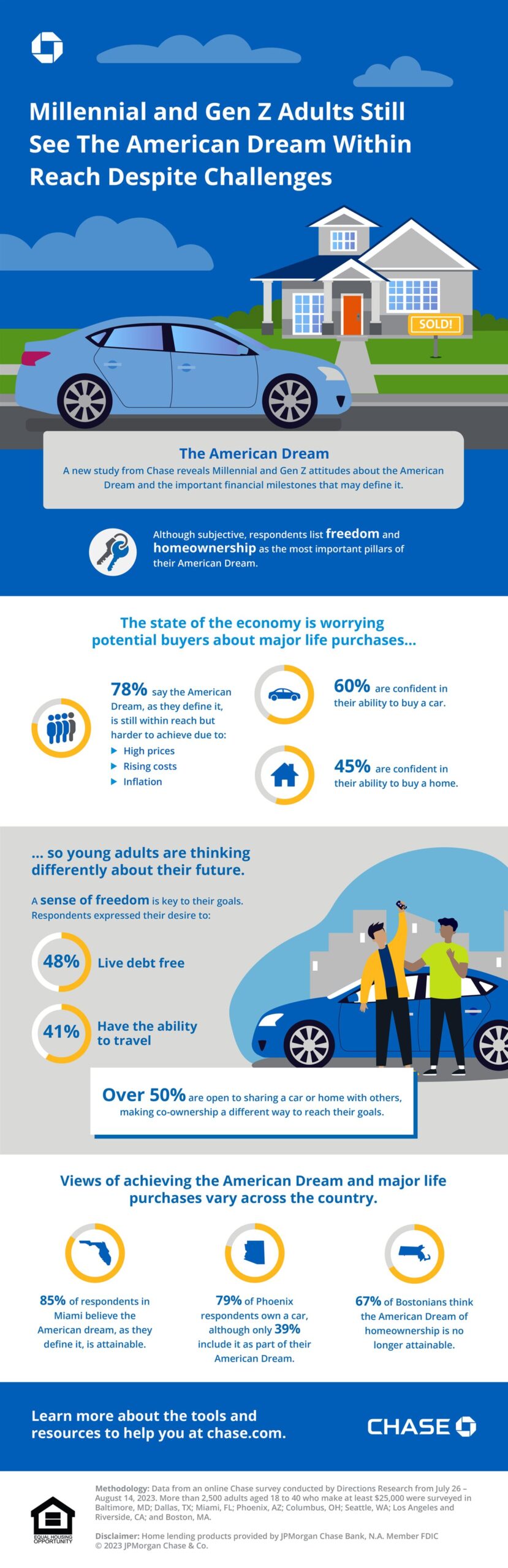
(BPT) – While the definition of the “American Dream” is subjective, a new Chase survey of more than 2,500 Millennial and Gen Z adults shows that they believe freedom and homeownership are its most important pillars. The vast majority of respondents (78%) say that their goals are within reach, even as they recognize several factors making it more difficult today, such as housing affordability, inflation and the rising cost of living. The study’s findings also underscore the need for accessible financial education, particularly as young adults prepare for major life purchases.

3 ways to find more meaning at work

2023-11-03T11:01:00

(BPT) – Employees make career decisions for a variety of reasons, but an increasingly popular factor that many consider is whether their work will be meaningful — especially among younger generations.

According to Fidelity Investments, 86% of all workers say it’s important to them to work for an employer with values that align with their own and half of all employees are considering changing employers in the next year — with many searching for more meaningful work.[1]

As such, employers are realizing it’s more important than ever to connect with their employees on the things that matter most to them and to put their company’s values at the front and center.

With so many workers considering a career shift, employers are turning to workplace giving programs to demonstrate their authentic company values and attract and retain their workforce. In fact, Fidelity data shows nearly 8 in 10 employees at companies offering a workplace giving program say their company’s values align with their personal values — compared to only 56% of employees at companies without one. Workplace giving programs include any employee benefit that supports and encourages employees to volunteer or make donations to charities. Here are three ways employees use workplace giving benefits to find more meaning at work.

  • Setting up or attending organized group volunteer opportunities in their communities.
  • Receiving a matching donation from their employer when they donate to charity.
  • Working with local organizations in need and holding corporate giving drives around the holidays.

These programs not only boost engagement at work, but they also help employees find a deeper sense of connection to their company, and their jobs. Additionally, employees also feel more connected to their coworkers — many of whom are returning to in-office work for the first time in years.

For more information about workplace giving opportunities, visit Fidelity.com/giving.


[1] Fidelity Charitable Giving in the Workplace 2023

How much life insurance do you need? Each generation has a different answer

2023-11-01T07:01:01

(BPT) – Did you know your age may affect your perception of how much life insurance you need? The annual Insurance Barometer Study conducted by LIMRA and Life Happens reveals insights about how life milestones impact people’s attitudes about life insurance. This year’s study included members of Generation Z for the first time, offering an interesting window into how four different generations approach life insurance.

These are the ages each generation featured in the study represent:

  • Gen Z: Born 1997-2012
  • Millennials: Born 1981-1996
  • Generation X: Born 1965-1980
  • Baby Boomers: Born 1946-1964

At each life stage, people have different priorities and concerns — plus assets they want to protect. However, at times all four generations shared the same results, regardless of age.

While 58% of Baby Boomers and 54% of Gen X own life insurance, less than half of millennials and Gen Z do (48% and 40%, respectively). Interestingly, there were common responses for the top 3 reasons all ages reported for not having coverage:

  • think it is too expensive
  • saying they have other financial priorities
  • being unsure how much they need/what type to buy

Therefore, the study found that across generations, from Gen Z to Baby Boomers, consumers greatly overestimate the cost of life insurance and cited perceived expense as the biggest barrier to making the purchase.

Gen Z: Growing up and starting out

For the youngest generation in the study, life insurance might be far from their minds. However, experiences during the pandemic may have increased awareness about the need for life insurance. While policy ownership remains lower than other generations, nearly half (49%) reported needing life insurance.

The study also found many in this generation didn’t think they could afford life insurance, and nearly one-fourth (24%) said they wouldn’t qualify for coverage. Combined with millennials and Gen X, over one in four of these younger generations stated they weren’t sure how much or what type of coverage to get.

Millennials: Taking on responsibilities

As millennials develop careers and form families, it makes sense that they show the highest level of financial concern (39%) compared to others. This is an age when many feel the most financial pressure.

For this reason, it’s not surprising that of the 80 million millennials in the U.S. today, nearly half (45%) own life insurance, and more than one-third said they’re likely or very likely to buy some in the next year, according to the LIMRA study. Millennials purchased more than half of the individual life insurance policies sold in the prior 24 months (52%).

Gen X: The “sandwich” generation

The age of Gen X is a challenging time of life when they may be raising children while simultaneously caring for aging parents. Just over one-third expressed high financial concern. But for all three of the younger generations combined, one-fourth of them cite “lack of knowledge about life insurance products” as a main barrier to owning a policy.

Especially for the older segment of Gen X, retirement and health considerations loom large. They have concerns over issues like disability-related expenses, long-term care and emergency savings.

Baby Boomers: Working and retiring

Baby Boomers have the lowest level of financial concern by a significant margin (17%), and lead the other generations in terms of overall life insurance ownership rates. Many Boomers have already retired, with most approaching that milestone soon, making them less likely to perceive a need for additional or new coverage.

Barriers to coverage remain

While younger Americans stated a need for life insurance, the purchase process can seem intimidating. With assistance and education, however, people of all ages should be able to find coverage to suit their stage in life and financial needs. Understanding how your needs and budget changes as you move from one life milestone to another is a vital step toward ensuring you have the best life insurance coverage for your current situation — and your family.

To learn more about how life insurance coverage can protect your family at any stage, visit BostonMutual.com or contact your company’s benefits coordinator or HR department. For information on benefits available outside workplace offerings, or if life insurance workplace benefits currently aren’t an option, visit BostonMutual.com/Learn More.

Policy Series: END-95(ESO)(20/21)

335-5104 10/23

Maximize Your Grocery Budget with Salmon

2023-10-31T11:51:01

(BPT) – During a time when grocery prices are at all-time highs, savvy shoppers are doing their best to get the highest quality and most nutritious food for their dollar. According to a 2022 Deloitte survey, 92% of consumers say that price is a top consideration when purchasing fresh food and 78% of consumers believe the right foods can preserve health and prevent disease. We asked registered dietitian Bianca Tamburello which foods are the best choices to maximize your grocery budget and health.

“Prioritize nutrient-dense foods, like salmon,” she says. “Most Americans do not eat the recommended two servings of seafood per week and may be missing out on key nutrients. Plus, seafood is not as costly as you think. On average, two 4-oz salmon filets are about $6.”

Tamburello shares three reasons salmon should be at the top of your budget-friendly grocery list.

1. Research shows that people who eat more salmon are healthier

Studies show that seafood’s superb nutrition profile helps protect health and ward off disease. Research suggests that people who eat more seafood, including salmon, have lower risk of heart disease, heart attacks, stroke, depression, and liver cancer. Moreover, several studies found seafood consumption to help slow age-related cognitive decline and prevent Alzheimer’s disease.

2. Salmon is a great source of hard-to-find omega-3 fats

Tamburello says, “Salmon ranks high on the list of most nutritious seafood and is a top choice to enjoy weekly because it’s packed with EPA and DHA, two of the most important types of powerful omega-3 fats.” Eating more omega-3 fats is linked to decreased inflammation, better heart health, and lower risk of certain cancers. It’s important to eat foods high in omega-3s, like salmon, because they’re essential, meaning our body cannot make omega-3s when stores are low.

She adds, “As a registered dietitian, I recommend Chilean salmon because it’s particularly high in omega-3 fats, low-mercury, and responsibly raised. Plus, omega-3 fats found in salmon support health throughout the lifespan including childhood, pregnancy, and healthy aging.”

3. Salmon offers up high-quality protein and vitamin B12

High-quality protein and important vitamin B12 give more reasons to eat salmon weekly. For example, a 3.5-oz (100 grams) cooked salmon filet packs a whopping 22 grams of protein, 117% daily value of vitamin B12 and 66% daily value of vitamin D. Other animal foods also offer up protein and B12 but lack the vitamin D found in salmon and some other seafood. Vitamin D plays an important role in absorbing phosphorus and calcium to support bone health and promotes a healthy immune system.

Seafood is easy to prepare for weeknight meals

Chilean salmon is easy to prepare and available both fresh and frozen year-round. To help balance your grocery budget, buy fresh on sale and freeze for future meals. Buying frozen is another delicious and convenient way to enjoy salmon. Individually wrapped filets take just 15 minutes to thaw and cook quickly for nutrition-packed meals in a pinch. Pair salmon with your favorite fresh or frozen vegetable and a complex carbohydrate like brown rice or sweet potatoes for a well-rounded meal.

For more information about salmon, nutrition, and delicious recipes visit chileansalmon.org.

How one Hispanic- & Latino-owned company is creating impact one reusable bottle at a time

2023-10-31T08:01:00

(BPT) – More and more people are changing their everyday habits to be more mindful of the environment and take care of the planet. One major concern that’s top of mind for consumers and businesses alike is plastic waste.

A major culprit of plastic waste is one that you likely see every day: Disposable plastic water bottles. According to the Container Recycling Institute, 86% of disposable water bottles used in the U.S. become litter or garbage, adding 38 billion disposable water bottles to landfills.

Consumers concerned with their plastic consumption are changing their behaviors and making more eco­ conscious choices in their day-to-day lives, including purchasing reusable water bottles. CivicScience, a consumer analytic platform, found that 60% of U.S. adults own a reusable water bottle.

Of course, having a water bottle is only useful if people have a place to fill them. You can fill your stainless steel, glass or aluminum water bottle at home, but it likely won’t last you all day. There might be times when you have to buy a plastic water bottle because there’s no other option for drinkable water. Consumers can only make more conscious, sustainable decisions if clean water infrastructure is available to support these lifestyle changes — and that’s where Hispanic- and Latino-owned company HOPE Hydration is stepping up.

A smart way to hydrate

HOPE Hydration aims to increase sustainable, quality water access by giving people more opportunities to refill their reusable water bottles via HOPE’s ad-powered, smart-city water refill station — the HydroStation. Brought together by a desire for a more sustainable future, HOPE’s team of co­founders — Dave Tigue, Cristina Gnecco and Ryan Barretta — have used their expertise to create a technology solution to motivate new behaviors around water consumption, conservation and reducing the environmental impact of plastics pollution.

The HydroStation, connected to T-Mobile’s powerful 5G network, has the potential to divert single­-use plastic bottles from landfills and oceans while increasing sustainability and access to quality, free, clean and filtered water. “We’re all about leveraging our network, scale and resources to be a force for good in the world we live in,” said Callie Field, President, T-Mobile Business Group. “And it’s clear that HOPE shares that passion.”

Just this summer, the Times Square Alliance partnered with HOPE to introduce a HydroStation to the heart of New York City, providing filtered water to over 300,000 visitors per day. Sustainably accessing clean water is incredibly important for any place, but it’s of special concern for folks living in or visiting urban areas like Times Square.

HOPE’s partnership with the Times Square Alliance isn’t the only partnership the startup has forged. This year, the Cannes Lions International Festival of Creativity collaborated with HOPE to install HydroStations throughout the festival. HOPE also partnered with Wellington International’s Winter Equestrian Festival, marking the startup’s first installation at a worldwide equestrian venue and Ultra Music Festival, refilling 40,000 bottles in just three days.

Powering sustainability

The smart HydroStations wouldn’t be possible without internet connectivity and IoT solutions. The IoT technology, in particular, allows the company to keep near real­-time tabs on their filling stations. Thanks to T-Mobile’s partnership, the startup can ensure proper water temperature and filter quality, monitor usage, calculate the amount of plastic diverted and much more.

“HOPE Hydration is thrilled to work with T-Mobile as our connectivity and IoT provider,” said Jorge Richardson, Founder and CEO of HOPE Hydration. “We believe access to free, clean water is a human right. This collaboration allows us to bring HOPE, and our stations to the next level while building smart-­city solutions for a more sustainable future.”

“We’re incredibly proud to work with Hispanic and Latino business owners,” said Field. “By equipping them with cutting-edge technology solutions, we hope to see them succeed, grow and change the world for the better.”

To learn more about HOPE Hydration, visit hopehydration.com.

The Cost of Cash

2023-10-17T14:13:00

(BPT) – Today, in 2023, there are more credit cards than Americans — with over 441 million credit cards issued across the country. Paying with credit is an extremely popular payment option for several obvious reasons. With just the swipe of a card, consumers can use their credit cards to make safe, secure, and efficient transactions.

But that’s not all! Thanks to the innovation of electronic payments, there are more credit card payment forms than ever that are constantly being developed such as tap-to-pay options, QR codes, and virtual cards. With credit cards, paying has never been easier.

The alternative to electronic payments is to pay with physical cash, which, unfortunately, comes with some risks.

The reality is that cash creates major security concerns. Perhaps the most major concern is that cash is vulnerable to theft. Physical currency is much riskier to deal with and harder to track down. Unlike electronic payments, it is extremely difficult to trace or recover cash once it is stolen, making it an attractive target for thieves.

To help prevent the risks associated with cash transactions, businesses are forced to spend money to bring in costly security measures. These security measures can include anything from on-location guards to armored cars for cash transport. If it weren’t for the risks that come along with cash payments, the money used toward these security measures could be better utilized for resources like business innovation or employee benefits.

Not only do consumers bear the cost of cash, but retailers also suffer the consequences. Data reveals that U.S. retailers lose an estimated $40 billion each year to cash theft. On the other hand, credit cards are equipped with advanced fraud protection. Financial services companies spend billions of dollars each year to bolster cybersecurity and ensure secure transactions for consumers.

It’s safe to say that credit cards are the most effective payment method because they provide both protection and convenience at the checkout counter. For consumers and merchants alike, security is of the utmost importance when it comes to making or receiving a payment.

Credit cards provide advanced security features such as EMV chips, PIN numbers, and transaction alerts. The good news is these layers of protection ensure that your transactions are safe from fraud attempts and allow consumers to shop with ease. The bad news? This crucial card security may not be around forever.

Proponents of proposed credit card legislation want to implement routing mandates that could jeopardize fraud protection. If passed, this legislation could redirect billions in consumer spending to less secure, higher risk payment networks. Ultimately, this bill could affect the security and innovation that credit cards provide to us every day.