Is that covered? Review your Medicare plan during annual enrollment

2022-10-14T06:01:00

(BPT) – Have your health needs changed over the last year? Medicare plans can change every year, and your health situation can also change. That means your current plan might not meet your current needs.

Medicare Annual Enrollment, which runs Oct. 15 – Dec. 7, is the perfect time to review your plan to make sure you have the right plan for your health needs at an affordable cost for the upcoming year. With inflation hitting people’s pocketbooks, reviewing your plan this year is more important than ever.

Choosing a Medicare plan can be confusing, but the National Council on Aging (NCOA) and Aetna Medicare have teamed up to help beneficiaries cut through the clutter. They have answered some of the most common questions about Medicare.

How much does Medicare cost?

How much you pay for Medicare depends on the choices you make about coverage. A common misconception about Medicare is that it pays for everything. But in reality, i does not. You can choose Original Medicare — with or without a prescription drug plan — or a Medicare Advantage plan that combines hospital, medical and sometimes prescription drug coverage in one plan.

Original Medicare includes:

  • Part A: Hospital Insurance – This pays for hospital, skilled nursing facilities and hospice care.
  • Part B: Medical Insurance – This pays for doctor visits, outpatient hospital care and home health care.

In addition, people with Medicare can choose coverage through:

  • Part C: Medicare Advantage Plans – These are sponsored by private companies, and they include coverage for everything that Medicare Parts A and B cover, as well as other benefits and services. Medicare Advantage plans cap your annual out-of-pocket expenses for covered medical care. And they can give you some extra benefits, like vision, dental, hearing and even a gym membership. Most Medicare Advantage plans also cover prescription drugs.
  • Part D: Prescription Drug Coverage – These are plans sponsored by private companies that pay for prescription drugs.

When researching Medicare plans, it’s important to ask yourself some basic questions. These can help you understand your unique health needs and goals and choose a plan that will best help achieve them. It’s important to consider:

  • Does the plan fit your budget? Review all the plan’s out-of-pocket costs. Your out-of-pocket costs will vary depending on which coverage you pick and your medical needs. Be sure to note the plan premium, but also check out the deductibles, copays and coinsurance you’d have to pay (this is what the plan requires you to pay when you use a particular service).
  • Next, think about your current providers. Are your preferred doctors and hospitals in the plan’s network? That’s very important if you want to continue using them. This is a common area of confusion and dissatisfaction for beneficiaries – there are a lot of different Medicare Advantage plans and each have their own network. Does the plan allow you to access a non-network provider, for example?
  • And don’t forget your prescription drugs. Find out if the prescription drugs you take are included under the plan and what you will have to pay for them. For example, some Medicare Advantage prescription drug plans offer certain medications with $0 copays (depending on their drug list and drug-tier levels). Drug lists can change every year, so you’ll want to check annually whether your prescription medications are still covered under your plan and what you will have to pay for them.

What are out-of-pocket costs?

Out-of-pocket costs are what you pay for your medical expenses that aren’t reimbursed by your insurance. Each part of Medicare has different out-of-pocket costs that can include premiums, deductibles and copayments or coinsurance. Medicare Advantage plans cap your annual out-of-pocket spending, but Original Medicare does not.

Some plans have deductibles. A deductible is the amount you must spend before your Medicare plan pays for your insurance benefit. If you have a hospital stay, for example, Medicare Part A will kick in after you pay your deductible. Copays are a fixed amount, and coinsurance is a percentage you pay for covered services and medications after you’ve paid your deductible.

For Medicare Part B, you generally pay 20% of the cost for each Medicare-covered service. So, if a medical service costs $100, Medicare pays $80 and you pay $20. Each Medicare Advantage plan has an out-of-pocket maximum, which is the most you will pay annually for medical services that are covered by the plan during a plan year.

How does prescription drug coverage work?

If you choose Original Medicare, you can purchase a stand-alone Medicare Part D plan to cover the cost of prescriptions. If you choose a Medicare Advantage plan, prescription drug coverage may be included. What drugs are covered, which pharmacies are in-network and how much you pay will depend on which plan you choose.

To use your prescription drug plan for the first time at the pharmacy, all you need to do is bring your Medicare card, photo ID and plan membership card to an in-network pharmacy. You can fill your prescriptions as you need them, or you can enroll in an automatic refill program.

The choice is yours

Medicare Annual Enrollment is your chance to make sure your plan fits your needs and budget. Take the time to review your options and enroll during Oct. 15 – Dec. 7. Visit NCOA or Aetna Medicare for more tips and guidance.


How continuous methane monitoring can safeguard workers and the environment

2022-10-13T13:15:00

(BPT) – Climate change is top of mind for many global industries, especially those with oil and gas, chemical and power generation facilities. By nature of their work, these businesses are hydrocarbon-intensive operations that are a significant source of methane emissions, a dangerous greenhouse gas.

While methane poses a serious risk to humans and nature, it is an addressable concern. According to the International Energy Agency, reducing methane emissions from oil and gas operations is a cost-effective way for governments to meet global climate goals. To achieve this goal, oil and gas businesses must be diligent about identifying and fixing methane leaks at their facilities.

The dangers of methane

Methane is a colorless, odorless gas that is highly flammable. Any accidental methane leaks at an oil and gas facility could spell disaster for the workers and the surrounding environment. Beyond that, this greenhouse gas is 80 times more powerful at warming the atmosphere than carbon dioxide over 20 years, according to the U.N. Environment Programme.

Because of the dangers it poses to workers and the environment, oil and gas operations are already at work to prevent methane leaks. However, when unburned methane gas escapes from the natural gas supply chain, it can be challenging to determine how much gas has escaped and how long the leak has existed before repair.

The current standard method of detecting emissions of unburned methane gas relies on manual equipment inspection. During periodic inspections, personnel use handheld thermal cameras to inspect the oil and gas equipment for methane leaks.

While this method detects existing leaks, problems arise if a leak happens after a completed check and may not be caught until the next scheduled inspections. This leaves a continuous release of this harmful greenhouse gas into the atmosphere, causing a safety hazard for the plant workers and the surrounding area.

In order to ensure the safety of workers and the environment, businesses should invest in a more effective method, namely continuous methane monitoring.

The benefits of continuous monitoring

The best method for detecting methane leaks is an on-site continuous monitoring system. Technology like the Honeywell Rebellion Gas Cloud Imaging system uses optical gas imaging to monitor and measure fugitive methane emissions as soon as they are detectable.

This compact device is ideal for congested areas and small sites and can be placed throughout a facility for continuous monitoring. The proprietary hyperspectral gas analytic technology provides easy-to-interpret, colorful visualizations of a gas leak’s type, location, direction, size and concentration. Using this information, facility operators can detect and repair methane leaks in their early stages before they can grow into a larger safety issue.

So far, Honeywell’s Rebellion technology has been deployed by more than 25 major energy and chemicals customers worldwide. The gas cloud imaging system saves time, removes human error and provides a safe and fast way to detect methane emissions.

For companies committed to creating a safer working environment and reducing their carbon footprint, investing in a continuous monitoring system is a proactive method to achieve both goals. To learn more about methane emissions, the environment and the importance of continuous monitoring, visit Honeywell.com.

5 Ways to Simplify and Maximize Your Work-From-Home or Hybrid Work Life

2022-10-12T08:01:00

(BPT) – With a projected 25% of all professional jobs in the U.S. expected to be remote by the end of 2022 as well as 62% of employees saying they work remotely at least some of the time, it’s safe to say that the work landscape has evolved. In order to adapt and ensure workplace productivity whether in the office, at home or on-the-go, it’s crucial to have a simple, intuitive workplace setup that allows for maximum flexibility and ultimate convenience, no matter if you’re in the office or working remotely.

Instead of being a nice-to-have, video conferencing has become the new normal, infiltrating nearly everyone’s work lives and becoming increasingly important. Here are five simple tips for how to ensure your work setup is equipped to handle today’s evolved working environments with ease and efficiency:

Ensure Crisp Sound Quality with a Dedicated External Speaker/Mic:

Many folks are utilizing laptops for work these days, which certainly do allow for extra flexibility both in and out of the office. However, most laptops were not designed to be powerhouse video conferencing machines. Therefore, their audio isn’t designed to be as crisp or clear as is ideal for consistent video conferencing meetings. Utilizing a dedicated personal speaker/microphone helps to drown out potentially distracting background noise, and can help cultivate the feeling of actually being in the same room with the folks on the other side of the screen. It also ensures that your voice is clear to the others in the meeting.

Streamline Your Calendar & Video Conferencing Software:

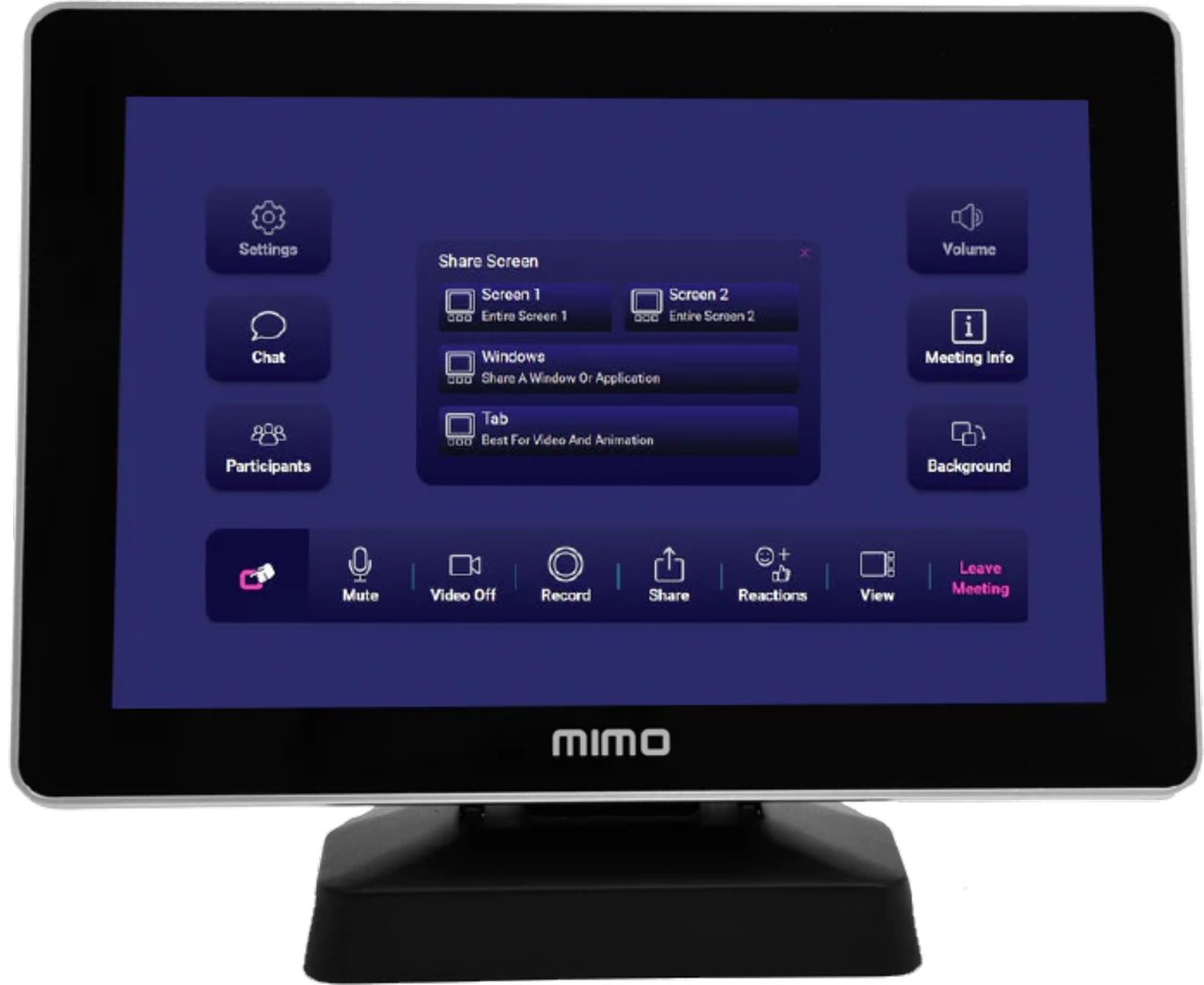
One common pain point of consistent video conferencing meetings is needing to switch back and forth between the three largest video conferencing platforms, Google Meet, Microsoft Teams and Zoom, which have all the most commonly needed buttons and controls in different places on the screen. Rather than search for common controls like the mute button or the chat box, utilize Unify Meeting Software, an intuitive application specifically designed to combine all three video conferencing platforms into one, standardized user interface. Intended to be utilized on a second or third display, Unify’s reliable interface takes the guesswork and hassle out of using multiple video conferencing systems. It also displays the user’s calendar at all times for easy schedule viewing. When it’s time for a meeting, the user can simply tap the calendar to open the meeting in the correct video conferencing software.

Enhance Visuals with Lighting, Camera and Environment:

Laptop cameras aren’t generally up to the task of ensuring that folks look their best on camera. It is an unfortunate fact that a years’ old $200 cell phone has a better camera than a $2,000 modern laptop. It can be handy to invest in a separate webcam but positioning around natural light can be a great way to start. Ideally, facing a window (not having the light source behind the screen) provides soft light that can be flattering on video conferencing calls. However, not everyone has access to an office with an optimally placed window. With that in mind, many are turning to ring lights, which can ensure maximum visual appeal on camera. In addition, keep the camera background clear of clutter for minimal distractions to keep the focus of the meeting.

Utilize a Second or Third Display:

Utilizing multiple screens has been shown to greatly enhance productivity. According to a study conducted by Wichita State University and commissioned by Dell, users were able to complete jobs faster largely due to needing to switch windows 15% less frequently. While that may not sound like much, it has big payoffs in relation to getting things done, saving up to 10 to 15 minutes per task. Always on the desk but never in the way, utilizing a second or third display allows users to leverage Unify Meeting, which will simplify the video conferencing pipeline, while also allowing for the user to consistently view their calendar, know what’s on the docket and effectively better plan for the day. Sleek, small and sophisticated, Mimo Monitors 7” tablet allows users to utilize Unify Meeting (free with the purchase of a display) on their second or third display, see their calendar at all times, and doesn’t take up much desk real estate.

Take Breaks to Alleviate Video Conferencing Fatigue:

With video conferencing calls now monopolizing a large part of the work day, it’s easy to get burned out. Video conferencing reduces regular mobility, requires a higher cognitive load than in-person meetings, and the excessive amount of eye contact required can be exhausting. To combat this, it’s important to build in breaks. Experts recommend taking a break at least once every hour or two for ten to fifteen minutes, or to consider making meetings twenty or twenty-five minutes long, to allow for a few extra minutes before the next meeting. While best practice is to have the camera on at all times, it can also be okay to occasionally do a meeting without it, since that’s one of the things most flagged for causing the fatigue and burnout.

New survey: What does it take to become a successful entrepreneur?

2022-10-06T13:01:00

(BPT) – If you’re asked for names of well-known entrepreneurs, a few obvious contenders might come to mind, like Bill Gates or Steve Jobs. A recent survey asked questions about who are the most successful entrepreneurs — revealing insights into what people think it takes to make it big.

In the new survey, commissioned by Herbalife Nutrition, respondents were first asked to identify entrepreneurs they felt were the “greatest of all time.” Historical luminaries like Henry Ford, Alexander Graham Bell and Thomas Edison featured multiple times in their answers. Interestingly, the survey found that nearly half of the respondents (48%) believed modern entrepreneurs are more influential than their historical counterparts were, while only one-fifth (20%) believed that modern entrepreneurs are actually less influential.

How can you identify people who are top entrepreneurs? One result is clear: from their innovations that make a difference in the lives of others.

“Entrepreneurs change our world for the better with their out-of-the-box thinking,” said Ibi Montesino, executive vice president of distributor and customer experience at Herbalife Nutrition. “And their inventions have a great impact on our lives and society.”

Regarding today’s best known entrepreneurs, here are the top 10 names that came up in answer to the question: “Which modern entrepreneurs have made the most positive impact on society?”

  • Bill Gates (founder of Microsoft, co-founder of the Bill and Melinda Gates Foundation) — 21%
  • Jeff Bezos (Amazon founder) — 18%
  • Steve Jobs (co-founder of Apple) — 18%
  • Elon Musk (founder of SpaceX, CEO of Tesla) — 17%
  • Mark Zuckerberg (Facebook founder) — 17%
  • Oprah Winfrey (co-founder of Oxygen, founder of O, The Oprah Magazine) — 15%
  • Melinda Gates (co-founder of the Bill & Melinda Gates Foundation) — 14%
  • Sam Walton (Walmart and Sam’s Club founder) — 13%
  • Larry Page (Google co-founder) — 12%
  • Ted Turner (CNN founder) — 11%

While many of these are household names, there are countless other Americans who make a real-life impact through their entrepreneurial efforts every day, whether they are groundbreakers in terms of building their own small businesses, helping their communities, creating something new or simply using their energy and talents to provide for themselves and their families.

What does it take to become a top entrepreneur?

The survey also asked what is most important when it comes to entrepreneurial success. The top two results showed that each entrepreneur’s personal accomplishments (24%) and their contributions to society (22%) mattered most. And when asked what it takes to become a successful entrepreneur, the most popular responses were that it required specific character traits (19%), having one “great idea” (15%) — and a commitment to hard work (14%).

Character traits that matter

When asked to clarify what specific character traits were considered vital for being a successful entrepreneur, these were the four top contenders:

  • Creativity
  • Intelligence
  • Confidence
  • Motivation

Perhaps the most surprising result of the survey was that nearly half (45%) reported having their own aims to become an entrepreneur — and 42% of them said they believed they had what it takes to be successful in that endeavor, claiming to have a “big” idea that they could turn into a successful business. Perhaps the secret for entrepreneurial success is combining their ideas, creativity and their passion, with hard work, in addition to gaining strength from the support of family, friends and colleagues.

“While there are numerous character traits that go into making a successful entrepreneur, the ones we work with, day in and day out, all have a common theme: they demonstrate a commitment to hard work and surround themselves with a supportive community,” added Montesino.

Free online resource helps small businesses achieve success and prepare for the digital world

2022-10-03T07:01:00

(BPT) – With the fall and holiday seasons fast approaching, small business owners might consider leveraging the power of digital tools to ensure that sales, marketing, operations and other key function areas are ready to help drive business outcomes.

One free online digital resource that thousands of small business owners across the U.S. are using is Verizon Small Business Digital Ready.

As a technology company, Verizon has a longstanding commitment to supporting small businesses, especially those owned by women and people of color in under-resourced areas. It’s part of Verizon’s overall goal to provide digital support for 1 million small businesses by 2030.

Verizon partnered with a diverse set of experts and small business owners to design, develop and produce Small Business Digital Ready. Overall, the in-depth digital resource provides an integrated and customized learning plan, including:

  • Courses: Curated and self-paced courses are presented by small business owners and feature brief, information-packed lessons that can be used right away and provide essential resources necessary to help you build and grow.
  • Expert Coaching: Mentorship, 1:1 coaching and advice from experts are available to help small businesses leverage their knowledge and learnings to create a plan of action.
  • Incentives: A marketplace of tools, solutions, products and services to help propel a small business forward. Small Business Digital Ready users also have exclusive access to apply for grant funding.
  • Peer Networking: Opportunities to make connections, share and receive information, and participate in business development activities.

Verizon is currently supporting a series of $10,000 grants to small businesses. To be eligible to apply, users of Small Business Digital Ready must complete any combination of two courses, coaching events and community events now through November 14, 2022 and applications must be received by November 14, 2022.

To register for Small Business Digital Ready, please click on this link or visit verizon.com/digitalready.

Whatever your small business needs, please take a moment to consider how Small Business Digital Ready can help your business be more successful.

Maintaining a viable tool box: The benefits of atrazine for weed control

2022-10-05T07:01:00

(BPT) – A valuable weed control product could come under tighter use restrictions if the Environmental Protection Agency (EPA) moves forward with a new aquatic ecosystem concentration regulation for atrazine, decreasing the equivalent level of concern (LOC) from 15 parts per billion (ppb) to 3.4 ppb.

The agency is accepting comments for the proposed rule for atrazine until Oct. 7. This proposed restriction could mean reducing rates of an important and often irreplaceable option in farmers’ weed-control toolbox.

The importance of atrazine

Farmers need multiple tools to tackle pests and environmental conditions, especially if they come up against herbicide-resistant weeds. For over 60 years, atrazine has been hailed as a safe and effective herbicide that has helped farmers stay in business and may be a key to maintaining a strong domestic food supply.

In Arkansas, where at least one population of Palmer amaranth has resistance to six different herbicide modes of action, keeping atrazine is critical, said Tom Barber, Ph.D., a University of Arkansas Extension weed scientist.

“We’ve got a lot of five-way resistant populations in the state that are pretty widespread, and atrazine is still one of the only herbicides that is highly effective on those populations,” said Barber.

However, over the years, EPA has made several label changes to the herbicide, including designating it as a restricted use material, which has left farmers with fewer weed-control options.

The proposed rule further restricts those options and doesn’t align with previously submitted material regarding atrazine. Chris Tutino, senior communications manager for Syngenta, says scientific data and regulatory records completely and categorically refute the proposed LOC.

A potentially costly loss

According to Bill Johnson, Ph.D., a Purdue University Extension weed specialist, further restricting access to atrazine would make weed control more costly and difficult for Indiana corn and sorghum producers without guaranteeing environmental benefits.

“I think we would really struggle with control of some weeds, like morning glory, waterhemp, giant ragweed and newly germinated annual grasses that are common in cornfields,” said Johnson. “We’d have to pick up those weeds with other herbicides that aren’t as effective and are more expensive. And we would be replacing one product with another product that may not put us at a better place environmentally.”

Johnson says that fewer weed-control options could also increase resistance selection pressure on the remaining herbicides. Already, Indiana has waterhemp populations resistant to five different modes of action, and testing is underway on suspected resistance to a sixth mode. Other weeds, including Palmer amaranth, marestail and giant ragweed, have confirmed resistance to multiple modes of action.

Benefits for sustainable farming

Sustainability is more than just a buzzword, but it’s also not as complicated a concept as it may seem. According to Genevieve O’Sullivan, vice president of communications and marketing for Crop Life America, sustainability is “simply using technology to produce more using less.” Restricting the use of atrazine could make it more difficult for growers to use sustainable practices and negatively impact the planet.

Atrazine is critical to no-till farming, a sustainable practice where growers keep plant residue on the surface to minimize soil disturbance and erosion. In recent years, no-till production has been praised for helping store carbon in the soil — benefiting soil health and global warming.

In Indiana, about half the acres that receive atrazine are farmed conventionally, and half are in some form of no-till or conservation tillage. However, according to Mark White, Syngenta’s senior stewardship and regulatory portfolio manager, further restricting use of atrazine could prompt some growers to return to tillage, potentially increasing soil carbon releases.

Industry support

Despite government regulations of atrazine, the herbicide has strong industry support. Barber and Johnson were among eight Weed Science Society of America (WSSA) members who submitted letters to the EPA in 2021 supporting the current uses and rates of atrazine. Their comments were in response to EPA’s draft Endangered Species Act biological evaluations for triazine herbicides, which include atrazine, simazine and propazine.

Companies are also taking a stand. Syngenta, for example, continues to support pesticides like atrazine because they are highly effective and because it’s a sound business decision for both the farmer and the registrant.

“We know that the public is interested in the safety of their food,” says Chris Tutino, Syngenta’s senior communications manager. “So, we redesigned the atrazine site to help people understand and share the science behind atrazine’s safety that ultimately leads to higher crop production in an increasingly food-insecure world.”

To learn more about the importance of growers having access to a safe, effective weed-control toolbox, visit Atrazine.com or www.SyngentaThrive.com.

© 2022 Syngenta. Important: Always read and follow label instructions. Some products may not be registered for sale or use in all states or counties. Please check with your local extension service to ensure registration status. The trademarks or service marks displayed or otherwise used herein are the property of a Syngenta Group Company.

5 tips to get your finances in order this fall

2022-09-28T09:07:00

(BPT) – By Mary Hines Droesch, Head of Consumer and Small Business Products at Bank of America

With summer coming to a close — and a busy holiday season not too far off — fall can be a good time to take a step back and look at your finances. For instance, do you need to recalibrate after splurging on a vacation? Have you started to plan a realistic holiday spending budget? How are you tracking on your financial goals, and can you make any changes to end the year on a high note?

If you are planning to set (or reset) your financial strategy for the rest of the year, here are five things to consider:

  1. Evaluate your goals. Many people make financial resolutions in January and then quickly forget about them. The good news is, it’s never too late to stop and revisit your short-, medium- and long-term goals. Are each still relevant? How much do they cost? Are you on track to meet them? Some long-term goals, such as planning for retirement, may not change substantially year to year. Short-term goals, such as paying off a credit card bill, and medium-term goals, including saving for a house, may change more frequently. By pausing to take stock of your progress and your priorities, you might decide to reevaluate your goals based on where you are currently and what’s realistic to achieve.
  2. Review your budget. Check in on your spending to make sure you are staying on track. Do you need to reel in expenditures before the holiday season? Have you updated your budget to account for increased costs on things like gas and groceries? Did you save more than you anticipated or receive a raise that is giving you more flexibility than expected? In that case, you may feel better about some bigger purchases — or even treating yourself — in the next few months. Or, you might realize that you can start setting aside more money to save on a regular basis.
  3. Check your credit report. Your credit report contains important information about the status of your loans, credit cards and payment history. All of this information determines your credit score, which can affect many areas of your financial life — whether it’s getting approved for a credit card, determining the interest rate on a mortgage or buying a car. Get in the habit of checking your report at least once a year to make sure it is up to date and error free. You’re entitled to a free copy of your credit report once a year from each of the three major credit bureaus. You can access these reports by visiting annualcreditreport.com.
  4. Assess your wallet. Do you have credit cards floating around in your wallet or desk drawer that haven’t been used for years? It might be a good time to find a card that fits in with your current spending habits. If you don’t want to juggle multiple cards, one option is the Bank of America Customized Cash Rewards credit card, which allows you to earn cash back on every purchase. This includes 3% cash back in a category of your choice — gas, online shopping, dining, drug stores or home improvement/furnishings and 2% cash back at grocery stores and wholesale clubs (up to $2,500 in combined choice category/grocery store/wholesale club purchases each quarter). And, 1% cash back on all other purchases. You also have the ability to change your 3% category each month to align with your future spending needs, which means you can maximize your cash back by choosing how you earn.
  5. Take advantage of opportunities to earn cash back to offset everyday spending. When used responsibly, credit cards can be a great way to earn cash back and offset increased costs on routine purchases you are likely to be making anyway. You can also try layering your rewards to stretch your dollar even further. For example, enroll in rewards programs at your favorite retailers — everything from gas stations to grocery stores. And if your bank offers a no-fee banking loyalty program, such as Bank of America’s Preferred Rewards, that is another great way to reap extra rewards.

It can be hard to find time to really dig into your finances amidst all of life’s other responsibilities. But if you can do it now, you’re more likely to end the year in better financial shape than you started it.

4 ways to lower homeowners insurance premiums

2022-09-27T11:57:00

(BPT) – Getting the best price on home insurance, without sacrificing the quality of coverage, may be easier with a basic understanding of how insurance companies calculate your premium.

“Many different variables factor in when calculating premiums,” says Bob Hertel, product development director with Acuity Insurance. “Some pricing variables are within the policyholder’s control, and some are not — such as your age, age of your home and its location.”

But there are at least four factors that customers can influence that contribute to home insurance premium calculations. Here’s what they are and how to make sure they add up to the lowest possible price:

1) Roof quality. Both the age and type of roofing material affect your premium. Customers should notify their agent when making upgrades to their roof. When a home gets a new roof, some insurance companies will reduce the premium, and some companies will pay more for roof replacement in the event of a future claim.

“Homeowners’ premiums are typically discounted when a roof is built with tile, slate, metal or hail-resistant roofing materials,” Hertel says. “These roof surfaces are more durable than asphalt/fiberglass/composition materials, making them less susceptible to wind, hail and fire damage.”

Asphalt/fiberglass/composition shingles are very popular in most parts of the country. This type of shingle typically has an expected life of 12 to 30 years, depending on quality of materials and installation. Hertel adds that it’s important to frequently check your roof for shingles that appear to be cracked, curled or loose.

“As shingles weaken, water can seep into the home, potentially causing major structural damage,” Hertel says. “A professional roofing company is most qualified to determine if repair or replacement is recommended.”

2) Credit. Most insurers in most states reward favorable credit scores with lower premiums. The insurance industry has found a strong correlation between responsible use of credit and claims activity. A poor credit score need not result in a permanent pricing penalty. Insurance companies typically order score updates at renewal and will discount premiums when credit scores improve.

3) Deductible. You might choose to increase your policy deductible to reduce your annual premium payment. Hertel only recommends increasing your deductible if you’re comfortable paying that amount out of pocket when a home claim occurs.

4) Bundle. Most insurance companies discount home and auto insurance premiums when they’re bundled.

“Beyond the bundle discount, some insurers also provide a single deductible feature,” Hertel says. “If one’s home and auto are damaged in the same storm, the customer is responsible for paying only one deductible.”

There are other cost-saving measures that could further reduce premiums, but Hertel recommends avoiding these actions:

1) Dwelling limit reductions. Policyholders can reduce their dwelling limit — the maximum amount that an insurance company will pay to rebuild a home to cut costs — but Hertel warns against this approach.

“High dwelling limits help protect your financial well-being in the event you need to rebuild your home,” Hertel says. “Given the high costs of building materials and skilled labor, rebuilding your home today can be very costly. If you reduce your dwelling limit, you could be on the hook for any reconstruction costs that exceed your policy limit.”

2) Liability coverage. Included with each homeowners policy, liability coverage can be written at high limits for a low price. High limits are recommended to protect your finances in case you are sued for injury to another.

3) Eliminating optional coverages. This may be another enticing approach to lower insurance costs, but doing so can have a significant impact on what the insurance company will pay following a claim.

For example, in the event of a total loss, guaranteed replacement cost coverage ensures the insurer will pay to rebuild the same home at the same location, no matter the cost. In cases of widespread disaster — when labor and materials are in peak demand — this coverage protects you from potentially large out-of-pocket reconstruction costs.

“Insurance shopping advice often focuses on finding the cheapest price,” Hertel says. “But finding the cheapest insurance can often leave you with unintended coverage gaps. Independent insurance agents are available to help customers find the right coverages, limits and discounts to meet their needs, and can also provide important support in the event of a claim.”

How Your Favorite Tech Firms Are Helping Create a Better Life for All

2022-09-27T11:57:00

(BPT) – The global drive to achieve greater sustainability and create a more inclusive society continues to bring dynamic change to the business sphere, including the consumer tech industry.

Today we examine various ways that tech firms are harnessing the power of innovation to make a real difference for people, the planet and the future.

Broadening the Customer Approach

In a recent UK survey of adults living with physical or sensory disabilities, only 1 percent of all respondents said that smart home devices are always designed with accessibility in mind, showing that, despite the continuous improvement, “inclusive technology” still has a long way to go.

While tech products have the potential to improve everyday life, the companies that make them must recognize that not all users can interact with technology in the same way. Acutely aware of this fact, many companies now incorporate accessibility features in a variety of products, such as voice recognition and voice guides on various LG home appliances and consumer electronics products. Accessibility features range from those that increase usability for visually impaired and hard-of-hearing people to those that benefit users coping with physical limitations. Efforts in this area are ongoing and constantly evolving. For example, LG Electronics plans to introduce accessibility features and universal design taking all users in mind to all of its product lines by 2025.

Listening to What They’re Saying

In order to design tech that’s suitable for a wider spectrum of consumers, it’s essential that real people – representing diverse ages, abilities and lifestyles – be actively involved in the conversation.

Leading manufacturers today are working closely with all kinds of consumers, listening to their opinions and concerns to make products and services more inclusive and accessible. Some like LG have formed accessibility advisory groups composed of people with disabilities, as well as experts in the field of accessibility, to identify the pain points that can arise for differently-abled users when operating home appliances. Braille stickers and voice manuals for LG washing machines exemplify how tech companies carry out various activities to improve the accessibility-related functions and design of products while continuously communicating with these consumers.

Spreading and Strengthening Sustainability

Bigger tech companies are leveraging their reach and resources to spread the important message of inclusion and sustainability, while supporting up-and-coming innovators pursuing tech for the greater good.

A new platform called the “Life’s Good Award” does both of these things. This $1 million innovation challenge calls on innovators worldwide to step forward with their ideas for innovative solutions that can help the environment (Innovation for the Planet) or will enrich everyday life through optimizing safety, usability and accessibility (Innovation for People). LG supports the first, second and third-place winners with USD $700,000, $200,000, and $100,000 in prize money respectively. The company has also joined hands with renowned scholars and institutions to ensure all submissions are judged with the expertise and attention they deserve. Those who share the passion for innovation and desire to create a better life for all are invited to enter the award (nominations are due by Oct. 10).

Endorsing Solutions for the Future

Innovators in North America and around the world who are creating accessible, socially impactful solutions that push the envelope of the technologically advanced lifestyle.

To accelerate and amplify these activities, tech companies are establishing incubation programs. Such innovation centers are focused on catalyzing solutions that improve accessibility, mobility, usability and connectivity – for home, work, school and life, as well as ideas and approaches for a more sustainable lifestyle with carbon reduction and renewable energy. These programs will help startups and entrepreneurs fuel new ideas to build a better future and ultimately, better quality of life for all.

Family-Building Benefits: A Must for Today’s Workforce

2022-09-21T12:01:00

(BPT) – The pandemic has forever changed how, where and why we work. As a result, employers and employees alike are re-evaluating workplace benefits, including family-building benefits like parental leave and fertility treatments. Yet, recent data from the Society for Human Resource Management reveals that the number of employers offering benefits like paid maternity, paternity and adoption leave has actually decreased from 2020 to 2022, indicating a shift backward — despite leave benefits remaining among the top-ranked benefits employers felt organizations should offer.

If companies are serious about centering their workplace around employee needs to help attract and retain the best talent, they should focus on supporting employees by offering benefits they need — and deeply appreciate.

Employers should set a higher standard for family support

Providing employees with expanded paid family leave packages is one way companies can offer meaningful support and encourage employees to stay with a company.

For example, Ferring Pharmaceuticals, which develops treatments in areas that include reproductive medicine and maternal health, has launched an initiative called “Building Families at Ferring,” which puts family-building at the forefront of their employee benefits package. All of the company’s global and U.S. employees are now eligible for 26 weeks of paid parental leave — for both birthing and non-birthing parents. The company is also providing unlimited financial support for employees on the fertility journey.

“It’s so important that companies look at what kind of support they are providing for employees on their family-building journey and ask themselves, ‘is this enough, could we do more?’,” said Purvi Tailor, Vice President of Human Resources at Ferring Pharmaceuticals, U.S. “Companies can get started by first listening to what their people need, and finding a trusted benefits management partner who can help ask the right questions and put a program in place.”

Employees should look for these benefits

If you are an employee or looking for a job, pay attention to the variety of family building benefits offered by companies. As there is currently no minimum standard for paid leave in the U.S., it’s important to understand what employers are offering.

For example, does the company have policies regarding fertility treatments or adoption? Infertility impacts 1 in 8 couples in the U.S. and unfortunately, this has repercussions beyond the physical. In fact, 60% of people being treated for infertility believe the diagnosis and treatment of infertility has negatively impacted their mental health, causing their relationships to suffer and/or emotional strain.

“I know these challenges all too well, as I struggled with infertility. Thankfully, I have a beautiful daughter that my husband and I welcomed via gestational surrogacy after four years of fertility treatments and trying to carry the baby on my own,” Tailor continued.

And because there are many ways to build a family, look for policies that apply to all employees regardless of gender, sexual orientation, relationship status or how they choose to parent. Look for policies that support the variety of time, financial and emotional strains that often accompany the family building journey. So, it’s important to consider benefits like:

  • Financial support for fertility, adoption and surrogacy processes
  • Extra time off for fertility treatments, appointments and adoption proceedings as part of their benefits package
  • Support for pregnancy loss, including miscarriage or stillbirth

Employee responses

Tailor found that Ferring employees responded to their new family-friendly policies at first with surprise, then joy.

“Some people said they didn’t think they could build their families before, but now with this support, they feel like they can move forward,” added Tailor. “I had a very long journey from the fertility perspective. While I’m so grateful for how it ended, this amazing set of benefits would have been a game changer as my partner and I went through our journey.”

Benefits packages that go beyond to support family-building, along with an employee’s emotional needs, demonstrate how much a company values each employee as an individual – giving them the tools and support they need to be great employees and feel good about themselves and their lives.

“Moving forward, more progressive family-building benefits must be the norm,” Tailor continued. “I’m thrilled that we’re able to provide these benefits to our people, and I hope we will be an example for other companies to follow as they develop and build on their own policies.”

Learn more about the Building Families initiative at FerringUSA.com.