5 top items your small business needs on its cybersecurity to-do list

2022-05-05T06:01:00

(BPT) – If you run a small to medium-sized business, you may think your risk of cyberattacks is slim to none. But just because your business is smaller and you have your data stored on-premises does not exempt you from risk. According to the Ninth Annual Cost of Cybercrime Study by Accenture, 43% of cyberattacks are now aimed at small businesses — but only 14% of those businesses are prepared to defend themselves. Since the pandemic, cybercrime has increased by 600%, according to Embroker.com. And the cost of cyberattacks — from business disruption and lost data to system downtime, damage to your company’s reputation and even legal liability — is higher than ever. Cyber defense needs to be a major component of your business strategy.

What can your business do to help prevent these attacks in the first place?

Types of cyberattacks

It helps to understand where cybercriminals are most likely to strike, which is at most companies’ biggest point of vulnerability — the human factor. The Ponemon Institute’s State of Cybersecurity Report has identified the most common types of cyberattacks on small businesses:

  • Social Engineering/Phishing (57%): This can take the form of an email that appears to be from a trusted source, like a co-worker or supervisor, asking for help and requesting you click a link or download something.
  • Compromised/Stolen Devices (33%): Devices without sufficient security safeguards in place can be vulnerable.
  • Credential Theft (30%): Hackers obtain usernames and passwords to access accounts. Having strong, unique passwords and multi-factor authentication to access accounts can help prevent unauthorized access.

Strategies to safeguard your business

No matter the size of your business, you can take practical steps to help defend against cyberattacks, which will save your company time, effort and money in the long term.

Here are 5 tactics that should be on your cyber defense checklist:

1. Educate your employees about security best practices

Make sure everyone in your business understands common cyberthreats, and is well trained on how to identify typical phishing and social engineering scams. In addition, help remote employees secure their home networks by offering training on setting up secure Wi-Fi.

2. Keep business and personal devices separate

Especially as many employees continue working remotely all or part of the time, reduce security risks by emphasizing the importance of everyone in your organization using only company devices for work purposes.

3. Beef up security measures for employee accounts and network access

Require only strong, unique passwords for employee access, as well as implementing multi-factor authentication practices for an extra layer of protection.

4. Get a unified software platform for security and patch management

Make sure your entire system is more secure by using a single, effective software platform that can manage identity, access and devices in the cloud — as well as managing security upgrades and patching. For example, JumpCloud offers IT admins at any business the ability to control and manage a wide variety of configurations with Zero Trust security to secure your organization.

JumpCloud provides an easy, frictionless solution for small to medium-sized business requirements to hedge against increasing cyberthreats, with several security features to help your business improve its security posture, including:

  • Multi-Factor Authentication
  • Single Sign-On
  • Device Management
  • Zero-Trust
  • Patch Management

Even better, JumpCloud lets customers use all premium features for free, for up to 10 users and 10 devices.

“Any business owner today needs to be aware of and take active measures to protect against cyberattacks,” said Benjamin Garrison, technical evangelist at JumpCloud. “For any size business, JumpCloud provides an effective solution, all in one place.”

5. Monitor for security breaches

In case of a cyberattack, your business will recover and overcome the loss much more quickly the earlier you can detect the problem. Set up a system for frequent monitoring of your network for any potential breaches, and keep working to defend against them with regular updates and trainings for all staff.

Don’t wait until a security breach happens to get serious about cyber defense. Being proactive about the security of your business will be well worth it to defend everything you’ve created.

JumpCloud gives IT admins a single cloud directory platform to secure all their users in any device environment, wherever work happens. Visit JumpCloud.com to learn more.

New survey finds 4 key areas that are driving small business resilience

2022-05-03T13:01:00

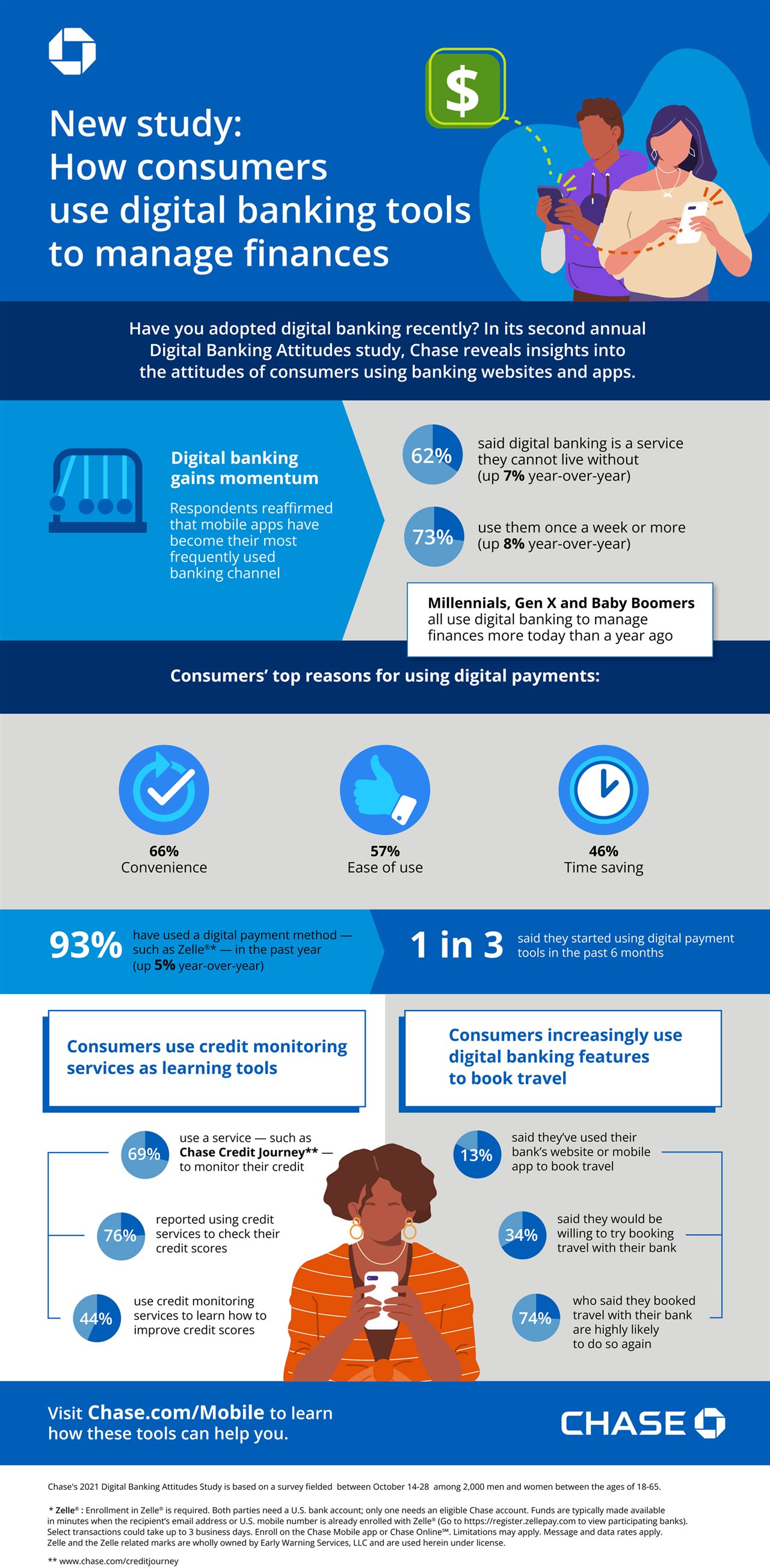
(BPT) – In the past two years, small business owners have been forced to reimagine their entire business model and pivot their operations to survive pandemic social distancing and shutdowns. Recovery and growth are now top of mind, according to a new Chase Small Business survey, as nearly half of U.S. small business owners (48%) feel more upbeat about their business since the beginning of this year, and 73% feel optimistic about their long-term future.

Ahead of Small Business Week, Chase surveyed 1,000 small business owners to understand their financial and business priorities after two years of uncertainty, and how they planned to manage current economic volatility, like inflation and a tightening labor market.

The new survey focused on four key areas that small business owners identified as critical to driving their business forward through the pandemic.

1. Financial

Access to capital — particularly during times of global and macroeconomic uncertainty — is essential for new and legacy small business owners to keep their business afloat. Rising wages, for example, continue to be a growing challenge for businesses who say their business is struggling to pay employees.

According to the survey, the majority of small business owners today (55%) strongly believe they have adequate access to new funding or credit should they need it. Aside from a traditional loan, business owners often use business credit cards to support their business. 53% of small business owners with a business credit card say it allows them to more closely monitor business expenses, and 45% look for good cash-back rewards. Nearly two-thirds of small business owners (64%) who have business credit cards rank cash-back rewards in their top three most important credit card benefits, more than 20 points higher than the next reward category.

Chase recently extended its popular Pay Yourself Back redemption categories to allow eligible Chase Ink cardmembers to redeem points worth as much as 25% more on business expenses related to internet, cable and phone services — categories small business owners are spending the most in right now.

2. Purpose and vision

Small business owners, new and experienced, find expert advice and mentorship increasingly important as they navigate ongoing inflation, workforce and supply chain challenges. Nearly three-quarters of small business owners (71%) are interested in mentorship to help run their business, and 65% say they are likely to work with a financial or business advisor in the next year.

Chase for Business recently reintroduced its Business Insights Series with expert speakers in 30 U.S. markets to help entrepreneurs outthink the competition, embrace uncertainty, improve customer loyalty and win sales. The bank also offers accessible education, coaching and technical assistance for minority entrepreneurs through one-on-one coaching in nearly 20 U.S. cities.

3. Workforce

Voluntary and involuntary turnover created by a tightening labor market and changing workforce dynamics are challenging the stability of small business owners’ workforces. Nearly seven in 10 small business owners cite a shortage of employees overall (67%) and shortage of employees with necessary skills (69%) as challenges.

To combat these challenges, approximately two-thirds of small business owners say they are likely to hire additional staff in the next year (65%), 64% are likely to expand benefits to their workforce, and 66% are likely to increase employee pay. About two-thirds say they are likely to hire additional staff (65%) and invest in training and development for their workforce (66%).

4. Operations

The key to the resilience of small business owners over the last 24 months has been their ability to be agile and nimble in an ever-changing marketplace. Many small business owners credit technology to help them adapt, with 60% strongly believing they have the right technology in place today to help their business run efficiently.

The pandemic fueled consumer demand for contactless, digital and speedier payments that continue to drive innovation in the payments industry. Whether it’s payment processing, a new digital feature or customer insights, three in four small business owners (73%) plan to continue their investments in technology by implementing new tech in the year ahead.

To reduce the complexity of digital and contactless payments at point of sale. Chase Payments Solutions recently launched its Smart Terminal, which offers small business owners the flexibility to accept debit and credit card payments at the counter or when moving around their business.

“Small businesses are at the heart of every community. They create jobs and support their neighborhoods in good times and bad,” said Ben Walter, CEO of Chase Business Banking. “We are inspired by their resilience, ingenuity and service to others, and are here to offer the support, solutions and service they need to thrive.”

During the month of May, to celebrate Small Business Week and beyond, Chase for Business plans to introduce new tools, offers and events for small business owners across its suite of products including Chase Business Checking, Chase Ink credit cards and Chase Payments Solutions.

To learn more about how Chase for Business is supporting the resiliency of small business owners, visit www.chase.com/smallbusinessweek.

Savvy tips for setting up – and protecting – your small business

2022-05-02T11:01:00

(BPT) – Baker Miriam Vilchez always dreamed of creating a business, spending hours perfecting her baking skills even while working full time. To get feedback on her business idea, she brought a freshly baked cake to her local State Farm agent, Cristel Noel. Noel was impressed by the cake’s flavor and presentation, and discussed the plans Vilchez had for her business — and how her insurance needs as a small business owner would change.

Unfortunately, just as her plans were coming together, Vilchez was laid off from her full-time position due to the pandemic. She had to take several part-time jobs, putting her dream on hold. But she didn’t want to wait much longer. Determined to turn her passion into a business, Vilchez contacted Noel about what she would need to do to start her bakery from home.

“Cristel and her team have always taken the time to understand my needs and my situation so they can present insurance options for my specific plans,” said Vilchez. “I appreciate and value that kind of commitment.”

From opening day, Vilchez has baked cakes for birthdays, holidays and other events. She gained referrals from loyal customers, and her business has blossomed. In 2021, she was able to buy more equipment, allowing her to bake at a higher capacity. Today she works full-time creating her beautiful cakes.

If you dream of starting a business, you are not alone. According to the Census Bureau, over 4.4 million new businesses were created in the U.S. in 2020 — the highest on record, with half a million new businesses begun in January 2021 alone. As a result, State Farm has experienced a 30% increase in home-based business insurance policies in the past two years.

Whether you’re still planning, or you already own a small or medium-sized business, here are tips to help ensure that your business will grow and thrive.

Develop a plan.

No business can get off the ground, get financing, or grow without a solid business plan. Creating a good business plan — and adapting it as needed — takes research, and assistance from others. One great resource for all things small business, including writing business plans, is the Small Business Administration.

Make it official.

Every state has different regulations regarding starting and operating businesses. Because such regulations involve legal and tax issues, you’ll need expert advisors to address your specific situation. You may find qualified consultants by contacting professional associations in your industry for recommendations.

Find connections.

Start building a network of people who can offer advice and assistance — even if they’re in a different field. Learning from others who have been in your shoes is very helpful, especially when you’re starting out. If you’re a woman, veteran, minority or live in an area undergoing renewal, you may also be eligible for programs to assist you with funding and more through the Small Business Administration and other organizations.

Protect your investment.

Whether you have a separate location or home-based business, you need to protect your investment by insuring it.

If you’re starting a business from home, you may need to add an endorsement to your homeowner’s policy, which covers business property while it’s used or stored inside your home. Alternatively, you may want to consider a business insurance policy that provides broader coverage, including liability insurance in addition to covering your business property. This could be used to insure a business operated out of your home or a separate location such as an office or storefront.

Consider a business insurance policy if you:

  • Provide services directly to customers while in your home or at another location. Businesses such as tax preparation or hair services, etc., may require additional specialized liability coverage.
  • Plan to have $5,000 or more worth of business property kept at your home-based business location.
  • Rely on the income from your business to support your household.

Your investment is not just a building or inventory — it includes yourself, your employees and your customers. For many small businesses, unexpected events can disrupt the normal flow of business. What if you’re injured or sick? What if a client is injured in your home? In addition to health and life insurance, disability and liability insurance may be needed to protect your income, and with the help of a State Farm agent, you can make a plan for all of these when getting your small business off the ground.

To get a conversation started about your business insurance needs, visit: https://bit.ly/sfsmallbusiness.

5 steps to improve work processes for your small or medium-sized business

2022-05-02T08:01:00

(BPT) – If you run a small to medium-sized business, you know the challenges: Your to-do list is a mile long, and there’s never enough time in the day. Whether you have a staff of two or two hundred, it seems like there aren’t enough people to get everything done that needs doing. But the problem may not in fact be how many employees you have or how many hours are in a day — your processes may just need a reboot.

Here are steps you can take to improve your business processes — and a software solution to make many tasks easier.

1. Take stock

Step back to assess where your systems bog down. Are there specific areas that always cause problems? Do certain tasks take much longer than others? Talk to your staff to learn where these pinch points are located. Be sure to let them know you’re not looking at team members to blame, but systemic slowdowns.

Another important way to assess trouble spots is from customer/client input. Several companies make tools to create customer satisfaction surveys, which give you useful insights into areas needing improvement from the perspective of your customer or client.

2. Review trouble spots

Once you’ve identified the most troublesome processes, it can help to go through them, step by step. If possible, enlist someone outside the company to review them with you, as they may spot issues you’re unaware of. Ask questions like:

  • What is the goal of this process? Is it being met?
  • Does everyone do this the same way? Is the process written down?
  • Are there too many steps/are any steps redundant?
  • Can you identify spots in the workflow that cause the most difficulty?

Many workflow problems stem from different systems not communicating with one another. Creating an efficient, standardized document management system is often key to solving these kinds of difficulties.

3. Brainstorm solutions

After nailing down process details and clarifying difficulties, involve your team in brainstorming and exploring solutions. There could be tools already out there to help streamline your processes.

For example, many tasks can be simplified using PandaDoc, a flexible software solution that helps your team work smarter, not harder.

  • Create digital documents with PandaDoc. You can manage, sign and send documents with ease, eliminating headaches at every stage of the process using just one software solution instead of several different programs. From pre-approved content and templates to proposals and approval workflows, you can digitize every process to save time and headaches for every team in your business. Even better, you’ll also save money and help the planet by reducing paper waste.
  • Collaborate and consolidate document-related processes using PandaDoc, which makes it easier for team members to work together on a wide variety of documents. Any team — from sales and marketing to HR and finance — can use the software to create custom themes, use embedded media and integrations. Your teams will impress your customers by sending personalized, on-brand documents securely in minutes.
  • Track your docs and workflows with real-time reporting and engagement metrics, giving you needed insights to take every document to the finish line. Whether you’re processing medical forms, offer letters or multi-year six-figure contracts, you can keep tabs on all your secure business documents to maintain momentum and better predict business goals.
  • Keep everything moving by getting your documents out the door in minutes. PandaDoc helps you create stunning, error-free documents with pre-built templates, a drag-and-drop content library and auto-fill data from your CRM — and then finalize every transaction with an integrated eSignature solution.

4. Educate your team

Once you’ve chosen a solution to a problem area, write down the new procedure your team will be following using clear step-by-step instructions. Have your team learn the new process or get trained on the new software or other tool. Make sure everyone logs how it’s going, so you can assess whether they’re saving time and effort getting things done with the new approach or tool.

5. Revisit your solutions down the road

After you’ve implemented a solution, track how well it’s working for your business. Take stock again one month, three months and six months out to ask — is the new process performing better than your previous approach? Does it need tweaking to see further improvements? Check in with your team regularly to see how any new processes are working for them.

Learn more about how PandaDoc can help streamline the creation and management of your business critical documents at PandaDoc.com.

Ready to jumpstart your STEM career? A biological sciences or biochemistry degree can help

2022-05-02T06:01:00

(BPT) – If you haven’t considered a STEM career, now may be the time to explore your options. Advancements in recent years have highlighted the need for positions in science and medicine, resulting in an industry boom and a growing job market for potential STEM program graduates.

Two burgeoning career paths in STEM are biological sciences and biochemistry.

What is biological science? biochemistry?

Biological sciences comprise several branches of biology, including environmental studies, genetics, botany and microbiology. Biological scientists study living organisms and the environment.

Biochemistry, on the other hand, focuses on a wide array of subjects, such as basic chemistry, the properties and function of biomolecules, and the mechanisms of cellular function and living organisms. This knowledge has several applications, from developing medicines to creating new, disease-resistant variants of common crops.

According to the U.S. Bureau of Labor Statistics (BLS), employment for both of these industries is promising. Employment for biological technicians is forecast to grow 7% through 2030. This translates to an average of about 11,800 job openings each year over the next decade. As a biological scientist, you can expect to earn a median annual wage of $85,290 (BLS).

For those entering the field of biochemistry, the job market is forecast to grow at an annual rate of 5%. In 2020, there were 34,800 biochemistry jobs, and you can expect to earn an average salary of $94,270 per year.

How can I enter these STEM fields?

If you want to get in on the ground floor of these growing career fields, consider a bachelor’s degree in either biological sciences or biochemistry.

A Bachelor of Science in biological sciences helps you develop a valuable and broad understanding of many disciplines in biology. Because of the flexibility of this degree, you can enter several industries through an entry-level biological services position.

Industries that offer the highest level of employment for biological scientists, according to BLS, include the federal executive branch, scientific research and development services, academia, pharmaceutical and medicine manufacturing and management, scientific and technical consulting services.

Specific career paths could include:

  • Dentist
  • Environmental protection technician
  • Forensic science technician
  • Nursing
  • Physical therapist
  • Pharmacologist
  • Zoologist
  • Veterinarian
  • High School teacher

A Bachelor of Science in biochemistry can prepare you for a career in science or medicine. According to U.S. News, a degree in this field can prepare you for several professions, including:

  • Agricultural scientist
  • Biochemist
  • Biological or biomedical engineer
  • Chemical engineer
  • Federal regulator of biochemical products
  • Food researcher and developer
  • Laboratory technician
  • Pharmaceutical researcher
  • Process engineer
  • Science writer

After receiving a bachelor’s in biochemistry, you’ll also be prepared for several full-time entry-level positions in STEM, research or education. You can also begin a postgraduate health program to expand your job prospects.

Ready to get to work?

If advancing your career in science or medicine is your goal, consider a career in either biological sciences or biochemistry. Arizona State University offers online degree programs in these areas to take your career to the next level. Recognized as the nation’s most innovative university, ASU Online brings coursework to life through immersive science labs and digital experiences.

To learn more about ASU Online biological sciences and biochemistry programs, visit ASUOnline.asu.edu.

5 ways to identify quality financial information online

2022-05-02T07:37:00

(BPT) – When it comes to your finances, where are you getting financial information? Older generations received most of their financial advice from financial planners, family friends and print media, but more and more Americans are turning to social media as a trusted source for money matters.

According to the National Association of Personal Financial Advisors’ (NAPFA) 2021 Consumer Survey, 39% of Americans under 65 found financial information online or on social media and 60% of those respondents acted on that advice. Social media as a source of financial advice is especially popular with the younger generations. One-fourth of Generation Z Americans receive advice from social media like YouTube, TikTok and Instagram.

For millennials, 38% said they feel unprepared for their futures, and many cite a lack of financial guidance as a challenge to preparing for retirement. With all these economic anxieties, it’s no wonder that social media has become a popular place for millennials and Gen Z to learn and discuss finances.

While it’s heartening to see people of all ages seeking financial advice, not all information found on social media and the internet is reliable. Not sure if you know how to spot quality financial advice online? Check out these five tips that can help you determine if your online source of financial information is trustworthy.

1. Do they have credentials?

Anyone can upload a video online on financial advice, but not everyone is qualified or legally able to give that advice. Investigate if the blog or social media profile you frequent for financial information is run by a certified financial planner™ professional.

While certification alone doesn’t guarantee sound advice, it’s a sign that the information you receive is likely from a reliable source. When searching for financial advice on social media, you can find plenty of current and former CFP® practitioners who likely have the most current and trustworthy information on financial matters.

2. Is their advice in your best interest?

Is your source of financial advice committed to the best interest of their followers? This can be tough to figure out because the information on social media is often unregulated and meant to be broad and not personalized to attract as many people as possible. However, depending on your financial situation, the advice may not suit your needs.

Unlike fee-only financial planners and CFP® professionals, most social media users are not held to a fiduciary standard of care. This means that they are not responsible for providing advice aligned with your specific situation or that’s in your best interest. That doesn’t mean that your favorite financial blog is trying to trick you, but that you should consider if the information applies to you or if it could harm you in the long run.

3. Are they compensated?

It’s crucial to find out if the source of your financial information is receiving payment for what they’re sharing online. Does the blog you visit have advertisements for specific money-saving or investment products or apps? Is your favorite social media influencer sponsored by a fintech app? Compensation itself isn’t a red flag, but it does present a conflict of interest.

4. Take it with a grain of salt

No matter where you get your financial advice, you should do your own research to verify the information you’ve received online. If a social media user claims to be a NAPFA member or CFP®, you can verify their credentials using each organization’s search portal. Does a financial product sound too good to be true? Government groups like the Consumer Finance Protection Bureau and the Securities and Exchange Commission have resources that can help you fact-check financial advice.

5. Ask a financial advisor

At the end of the day, the best resource for financial planning is a fee-only, fiduciary financial planner. Online financial advice isn’t tailored to your goals and needs, especially long-term. You don’t have to make millions of dollars to work with a financial planner. NAPFA-affiliated fee-only financial planners can help you understand your current financial situation and help you prepare for the future.

To find a fee-only financial planner, visit NAPFA.org.

Small businesses are thriving amid COVID by embracing this one simple tool

2022-04-28T08:37:00

(BPT) – When it comes to running a business, it’s safe to say that COVID-19 changed just about everything. Where people shop, how they make purchases and even what they use to pay — the pandemic overhauled consumer preferences nationwide. And while this certainly presents a challenge, some small businesses have thrived despite it. What’s their secret to success?

The answer is simple: These savvy small businesses owners have embraced the use of electronic payments. But just how do these payment methods make such a difference? Let’s find out.

Electronic payments facilitate e-commerce.

Electronic payments have empowered small businesses across the country, allowing them to better meet the needs of their communities — particularly amid COVID-19. When the pandemic first struck, many local companies were forced to cease in-person operations and close their physical locations. But by accepting digital payment options, local businesses had a solution: online orders.

Online deliveries and e-commerce skyrocketed amid COVID, increasing consumers’ digital adoption rate in eight weeks what otherwise would’ve taken a decade. By adopting electronic payments, though, local shops could pivot with this purchasing trend and stay ahead of the curve. Proactive small businesses were able to move their operations online, allowing them to compete with retail giants like Amazon and Walmart. And now, with the shift toward e-commerce likely here to stay, electronic payments have positioned these small businesses for continued success.

Electronic payments make transactions safer.

Not all transactions take place online, however. And for those that do occur in-person, customers increasingly want to feel like their health is being protected. Luckily, small business owners who embrace electronic payments have a variety of tools at their disposal to make that happen.

Contactless payments — whether through a credit card, debit card or mobile wallet — are quickly becoming a staple of in-person checkouts. It’s no wonder why: They allow users to pay without the hassle or risks associated with touching germy surfaces. In this way, small businesses accepting contactless payments have a major advantage over those relying on often-unsanitary cash transactions.

That’s not the only advantage of contactless payments, either. In fact, an infographic from the Electronic Payments Coalition (electronicpaymentscoalition.org) breaks down the precise benefits electronic payments provide consumers and merchants alike, illustrating they have a keen advantage over cash.

Electronic payments allow for social distancing.

Electronic payments also enable business owners to implement curbside pickup and contact-free delivery — safe and convenient purchasing options that fit individuals’ needs. These transactions allow consumers to pay without ever stepping foot inside a store. As such, they reduce unnecessary physical interactions and limit the spread of illnesses like COVID-19.

In the post-COVID world, businesses that offer socially distanced pickup options have a leg-up over their competition. Not only do these methods help protect shoppers and their employees, but they also improve their customers’ overall experience. Simply put, contactless pickup is what people want­ — and electronic payments allow small businesses to capitalize on that trend.

Now more than ever, electronic payments are vital to running a thriving company. They provide the flexibility and capabilities necessary to navigate the business landscape amid COVID-19.

How to strengthen your business venture with electronic payments

2022-04-28T08:35:00

(BPT) – Since the onset of the COVID-19 pandemic, digital payments have become an essential tool for many entrepreneurs. New data from the Small Business and Entrepreneurship Council’s latest business survey highlights the value that new entrepreneurs place on the importance of electronic payments. Among new business owners who started a business during the pandemic, 87% said that access to electronic payment options was important. Additionally, access to electronic payments tied for first (68%) as the most important tool or technology in starting a new business.

Combine SBEC’s data with the fact that over the past two years the U.S. saw the fastest growth in entrepreneurship in our nation’s history and it’s easy to understand why so many businesses have made the switch to accepting digital payments: it’s what their customers demand.

Many of these new small businesses had to come up with a completely new playbook for delivering their products or services and managing payments amid a global pandemic. The good news for these new entrepreneurs is that the payment technologies they adopted to get through the pandemic will prove to be beneficial long after COVID-19 has subsided.

Here are the top five ways that small businesses are improving their bottom line by switching to digital payments:

1. Improves customer experience

In addition to convenience, digital payments offer contactless transactions — a safety feature many consumers demanded during the pandemic. The use of contactless payments has surged in recent years with approximately 84% of consumers owning contactless cards leveraging those enhanced safety features in the first half of 2021 — an increase of 24 percentage points in six months. This technology speeds up the checkout process considerably because a simple tap is needed to complete a transaction. These convenient payment mechanisms provide an opportunity for small businesses to address the needs of consumers by removing the need to carry a wallet or remember numerous passwords required to make a payment.

2. Enhances fraud protections

As consumer shopping habits continue to shift to mobile and online platforms, advancements in tokenization provide seamless and secure transactions without exposing customers’ sensitive account information. These features also protect small businesses by making tokenized payment data useless if compromised.

3. Saves time and money

While cash payments may not require extra processing fees, accepting cash payments comes with a lot of unexpected costs. Research shows that the average cost of cash for a business is about 9.1% of the average transaction value. These costs include the time spent manually counting cash, the cost of theft protection and the cost of longer lines at checkout, which scares away repeat customers. Even the National Park Service is jumping on the digital payments bandwagon. Beginning April 1, 2022, Devils Tower National Monument will only be accepting entrance fee payments via digital payments. According to NPS, this action will reduce their administrative burden managing cash and allow them to reinvest the savings into visitor services.

4. Increases customer sales

Consumer spending, which has long been the most important factor in U.S. economic growth, continues to be fueled by the innovation of digital payments. Even during the COVID-19 outbreak, digital payments have allowed small businesses to pivot to online sales, curbside pick-up, and in-store self-checkout. Additionally, studies have shown that card users account for 61% of total transactions and spending, on average, $42 more per purchase than cash users.

5. Allows for instant payments

Digital payments are much faster than traditional payment methods such as cash and checks. With online payment options, customers are not tied to a limited time or place to make a transaction. Customers can easily pay anytime, anywhere in the world. The electronic payment system eliminates the need to go to the bank to make payments. Now your customers don’t have to waste time waiting in long lines at the bank. They can easily pay with their mobile device.

How to save on your internet or smartphone bill

2022-04-27T09:01:00

(BPT) – The pandemic proved the importance of connectivity — to your family, friends, work, school and doctor. Wireless service, in particular, has been a lifeline for many: In fact, 15% of Americans use it as their only broadband connection. And now we have 5G for home broadband, which is another great option for home connectivity.

To keep Americans connected and close the digital divide, we must all work together — which is where a new government program, the Affordable Connectivity Program, comes in. The Affordable Connectivity Program, or ACP, can help you get connected whether it’s for your smartphone, wireless home broadband or wired connection.

Enrolling in the ACP through a broadband provider triggers a discount of up to $30 per month on an eligible household’s broadband service bill. Eligible households on Tribal lands can receive up to $75 per month. A household is eligible for the ACP if the household’s income is at or below 200% of the Federal Poverty Guidelines. That comes to about $55,500 for a family of four.

The ACP benefits are also available if someone in the household meets the following criteria:

  • Participates in assistance programs, such as SNAP, Medicaid, Federal Public Housing Assistance, SSI, WIC or Lifeline;
  • Participates in Tribal programs, such as Bureau of Indian Affairs General Assistance, Tribal TANF or Food Distribution Program on Indian Reservations;
  • Participates in the National School Lunch Program or the School Breakfast Program, including through the USDA Community Eligibility Provision;
  • Received a Federal Pell Grant during the current award year;
  • Meets the eligibility criteria for a participating provider’s existing low-income internet program.

The ACP can also help with the hardware necessary to connect to the internet as ACP households can receive a one-time discount of up to $100 to purchase a laptop, desktop computer or tablet from participating providers if they contribute more than $10 and less than $50 toward the purchase price. The ACP program is limited to one monthly service discount and one device discount per household.

There’s a two-step process to sign up:

  • First, log onto ACPBenefit.org to apply or print out a mail-in application;
  • Then, contact a participating provider to select a plan and have the discount applied to your bill.

Eligible households must apply through the ACP benefit portal and contact a participating provider to select a service plan. Some providers may have an alternative application that they will ask you to complete.

All three national wireless providers and many regional providers support ACP — representing approximately 95% of existing wireless subscriptions and covering more than 99% of all Americans. If you’re interested in a 5G for home broadband connection, which offers the fast speeds and capacity most families need to take full advantage of the internet, wireless providers have already made it available to tens of millions of American households.

As the COVID-19 pandemic has demonstrated, access to the internet provides a crucial connection for all Americans. Even as the pandemic subsides, the need for connectivity isn’t going to change, and Congress designed the ACP to help make sure all Americans can connect.

The ACP builds on the Emergency Broadband Benefit, a program created to keep Americans connected during COVID-19. Launched in January 2022, nearly two-thirds of the more than 11 million ACP participants are using the benefit to subscribe to wireless broadband — underscoring how wireless continues to play a vital role in ensuring that low-income consumers can affordably access the internet.