4 tips to help keep small businesses strong

2021-05-24T11:01:01

(BPT) – Over the past year, small businesses have had to adapt, often learning that their bonds with their surrounding communities are crucial to their survival. As your business continues to weather today’s challenges, here are tips to help your business stay strong while you stay connected to your customers — and your neighbors.

Know your customers

Ask your customers, employees and community members for their opinions on your products and services and discover what they want. Free and low-cost tools like SurveyMonkey can help you create a professional-looking online survey. A low-cost customer relationship management (CRM) tool can also help you stay connected to your customers.

Leverage digital marketing

Did you know 81% of Americans use YouTube1, 69% use Facebook and 40% use Instagram? In addition, 60% of consumers say they will continue shopping online, with 26% saying they will shop online even more in the future.2

Meet customers where they are by posting and advertising on these powerful digital platforms. Create email campaigns to contact customers. If you don’t have a website, make one. Inexpensive tools like Wix or GoDaddy can help you build a basic site quickly.

Support your community

Stay engaged with your community by sponsoring youth teams or holding food drives at your location. Be visible and be a good neighbor.

Find funding to fuel growth

Money is available for small businesses, if you know where to look. Grants, loans and awards can help your business grow. Start with the Small Business Administration and U.S. Chamber of Commerce. You can also try a simple online search for “small business grants.”

Many corporations offer awards programs. For example, since 2016 the Synchrony Pillars Project has honored small business leaders who support their communities. In 2020, the program recognized 20 winners for supporting their communities in innovative, powerful ways. Each of the winners received a $10,000 prize. Here are a few highlights from a sampling of the winners:

  • All About Automotive, an automotive repair facility servicing foreign and domestic vehicles in Gresham, Oregon. During the pandemic, the husband-and-wife-owned company created a Pay It Forward Campaign for those suffering financially. Customers, friends and family donated to help pay for parts, and All About Automotive matched the donations with free labor. All About Automotive is investing their award into equipment for their shop and the Pay it Forward Campaign.
  • American Mattress, a local premium mattress and bedding retailer in Colorado Springs, Colo. Since opening its first store in 2017, the family-run and veteran-operated business has been passionate about giving back to the community. They first donated beds to an organization housing homeless mothers with children. Despite needing to close two months during the pandemic, the business continued supporting the community by donating beds to foster parents and shelters. The award money has helped American Mattress invest in inventory, which it continues to allocate to the community.
  • Backstage Music in Starkville, Miss., has been North Mississippi’s premier music store since 1978. However, it does much more than sell guitars and basses. The owners created the go-to audio/video business for local governments, churches, restaurants and schools. When the pandemic forced it to close, Backstage Music developed solutions for local organizations suddenly needing live streaming. In addition to seeking ways to support music and music education, the business collects food for local food pantries (bring five food items, get a free guitar restring job), and hopes to match donations using the award money.
  • Valdosta Properties, a property management business in Houston, Texas. Being led by an African-American woman in an industry men dominate makes this business unique and challenging. The pandemic forced them to adapt, because of their direct contact with customers. The team has gone above and beyond to assure customers they can complete remodeling projects safely, with care and respect for their health. A community-oriented business, Valdosta Properties chose to use half the award money for a marketing campaign called “Are You Ready?” which aims to provide generators for senior citizens’ homes.

Learn more about the Pillars awards and last year’s winners at Synchrony.com/smallbusiness.

With an approach fostering stronger relationships within the community, small businesses can continue to survive — and even thrive — during difficult times, whatever the future holds.

1 PEW Research Center, April 2021 (https://www.pewresearch.org/internet/2021/04/07/social-media-use-in-2021/).

2 Synchrony Consumer Sentiment Monthly Tracking Survey N=1000 U.S. Consumers – Feb 2021.

All company, product and service names are the product of their respective owners and are for identification purposes only. Use of these names does not imply endorsement.

4 tips to help keep small businesses strong

2021-05-24T11:01:01

(BPT) – Over the past year, small businesses have had to adapt, often learning that their bonds with their surrounding communities are crucial to their survival. As your business continues to weather today’s challenges, here are tips to help your business stay strong while you stay connected to your customers — and your neighbors.

Know your customers

Ask your customers, employees and community members for their opinions on your products and services and discover what they want. Free and low-cost tools like SurveyMonkey can help you create a professional-looking online survey. A low-cost customer relationship management (CRM) tool can also help you stay connected to your customers.

Leverage digital marketing

Did you know 81% of Americans use YouTube1, 69% use Facebook and 40% use Instagram? In addition, 60% of consumers say they will continue shopping online, with 26% saying they will shop online even more in the future.2

Meet customers where they are by posting and advertising on these powerful digital platforms. Create email campaigns to contact customers. If you don’t have a website, make one. Inexpensive tools like Wix or GoDaddy can help you build a basic site quickly.

Support your community

Stay engaged with your community by sponsoring youth teams or holding food drives at your location. Be visible and be a good neighbor.

Find funding to fuel growth

Money is available for small businesses, if you know where to look. Grants, loans and awards can help your business grow. Start with the Small Business Administration and U.S. Chamber of Commerce. You can also try a simple online search for “small business grants.”

Many corporations offer awards programs. For example, since 2016 the Synchrony Pillars Project has honored small business leaders who support their communities. In 2020, the program recognized 20 winners for supporting their communities in innovative, powerful ways. Each of the winners received a $10,000 prize. Here are a few highlights from a sampling of the winners:

  • All About Automotive, an automotive repair facility servicing foreign and domestic vehicles in Gresham, Oregon. During the pandemic, the husband-and-wife-owned company created a Pay It Forward Campaign for those suffering financially. Customers, friends and family donated to help pay for parts, and All About Automotive matched the donations with free labor. All About Automotive is investing their award into equipment for their shop and the Pay it Forward Campaign.
  • American Mattress, a local premium mattress and bedding retailer in Colorado Springs, Colo. Since opening its first store in 2017, the family-run and veteran-operated business has been passionate about giving back to the community. They first donated beds to an organization housing homeless mothers with children. Despite needing to close two months during the pandemic, the business continued supporting the community by donating beds to foster parents and shelters. The award money has helped American Mattress invest in inventory, which it continues to allocate to the community.
  • Backstage Music in Starkville, Miss., has been North Mississippi’s premier music store since 1978. However, it does much more than sell guitars and basses. The owners created the go-to audio/video business for local governments, churches, restaurants and schools. When the pandemic forced it to close, Backstage Music developed solutions for local organizations suddenly needing live streaming. In addition to seeking ways to support music and music education, the business collects food for local food pantries (bring five food items, get a free guitar restring job), and hopes to match donations using the award money.
  • Valdosta Properties, a property management business in Houston, Texas. Being led by an African-American woman in an industry men dominate makes this business unique and challenging. The pandemic forced them to adapt, because of their direct contact with customers. The team has gone above and beyond to assure customers they can complete remodeling projects safely, with care and respect for their health. A community-oriented business, Valdosta Properties chose to use half the award money for a marketing campaign called “Are You Ready?” which aims to provide generators for senior citizens’ homes.

Learn more about the Pillars awards and last year’s winners at Synchrony.com/smallbusiness.

With an approach fostering stronger relationships within the community, small businesses can continue to survive — and even thrive — during difficult times, whatever the future holds.

1 PEW Research Center, April 2021 (https://www.pewresearch.org/internet/2021/04/07/social-media-use-in-2021/).

2 Synchrony Consumer Sentiment Monthly Tracking Survey N=1000 U.S. Consumers – Feb 2021.

All company, product and service names are the product of their respective owners and are for identification purposes only. Use of these names does not imply endorsement.
4 ways to make the most of college visits

2021-05-21T07:01:01

(BPT) – If you’re a high school junior or heading into your senior year, college is likely at the top of your mind — and probably your parents’ mind too. A campus visit, virtually or in-person, is a key way to narrow down your college choice. The same is true for students who are considering transferring to a new school to complete their degree.

“Choosing a college is exciting but can be overwhelming, especially while you’re trying to keep your financial goals top of mind,” Brian Creagh, Senior Vice President of Credit Cards and Education Lending at Navy Federal Credit Union. “Luckily, there are many resources available to help students and parents navigate the college decision process.”

So, where do you begin?

1. Research schools

It’s important to give yourself time to explore different colleges. Make a wish list of schools — from the size of the school and location to area of study and post-graduation career opportunities. It’s also a good idea to attend college fairs, so you can talk with college representatives and current students.

From your list of schools, check out their options for touring the campus — either in-person or online. There may be limited capacity for in-person tours, so schedule early. By attending campus tours, you’ll get a feel for the campus environment, and ultimately, if a particular college is a good fit for you.

2. Budget for campus visits

Expenses for traveling to and from college tours can add up quickly. Whether nearby or out-of-state, know the maximum amount that you or your parents are able to spend on these visits. This includes the cost of gas, airfare, food, accommodations and other activities. Consider even setting up a separate bank account for money to use toward college visits. That way, you’ll be prepared to stick to your budget.

3. Get your questions about classes and campus life answered

Most in-person college visits are led by student tour guides — giving you a great opportunity to hear their perspective about academic programs, admissions and student life. Additionally, make use of a college’s offer to talk with current professors and students. If you’re unable to attend in-person, this is a way to still experience the school and people.

Other questions to cover can include housing options, sports and extracurricular activities that interest you personally or are unique to a school.

4. Find out what financial aid options are available

The College Board reported that tuition and fees reached over $10,560 for in-state students at four-year public colleges and more than $37,650 for students at four-year private colleges in the 2020-21 academic year.

Look into financial aid options, such as scholarships, grants and work-study programs. When federal student loans, grants or scholarships don’t cover your total costs, private student loans are a great way to bridge the gap in funding. Many lenders offer private student loans up to the school-certified cost of attendance, including tuition fees, books, computers, meals and housing.

“A good repayment strategy while you’re in school can also help reduce your overall loan balance before you graduate,” said Creagh. “This allows you to chip away at your student debt faster and build your credit history.”

Navy Federal Credit Union is federally insured by NCUA.

Despite financial stress, consumers still look ahead [Infographic]

2021-05-12T08:01:00

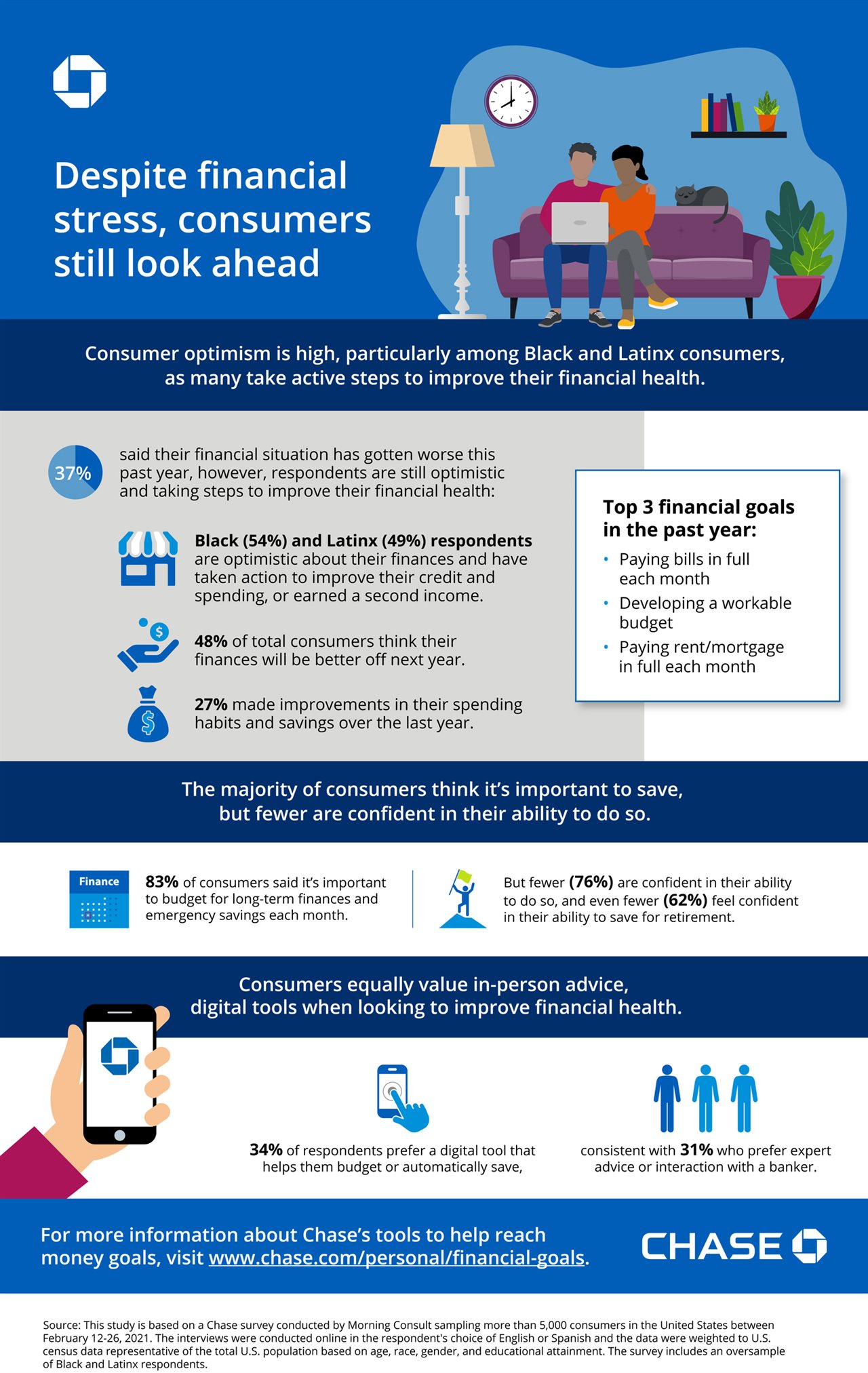
(BPT) – The new Chase Financial Health Consumer Study — conducted in partnership with Morning Consult — surveyed more than 5,000 U.S. consumers on the state of their finances, attitudes towards saving and budgeting, and actions they’ve taken to improve their financial health. Nearly half of U.S. consumers think that their finances will be better off in the next year, as nearly a third saw improvements in their spending habits and savings, according to a new survey from Chase. Optimism is slightly higher among Black (54%) and Latinx (49%) respondents as many have taken action to improve their credit, spending or earn a second income.

4 Creative Ways to Stay Connected with Customers and Employees

2021-05-11T12:01:00

(BPT) – As the country continues to navigate challenges brought on by the pandemic, 2021 has also shown to be a year of optimism. People are looking ahead with hope, parts of the world are starting to open back up and businesses of all types are reimagining the way they will operate in a post-COVID era.

Finding ways to stay connected and maintain relationships with customers and employees has never been more important. Here are four creative ways to help your business stay connected with team members and engaged with clientele.

1. A Healthy Mindset

With health and wellness top of mind for so many people, water bottles serve as a great, and convenient, gift to keep your customers and employees hydrated and healthy.

2. A Token of Appreciation

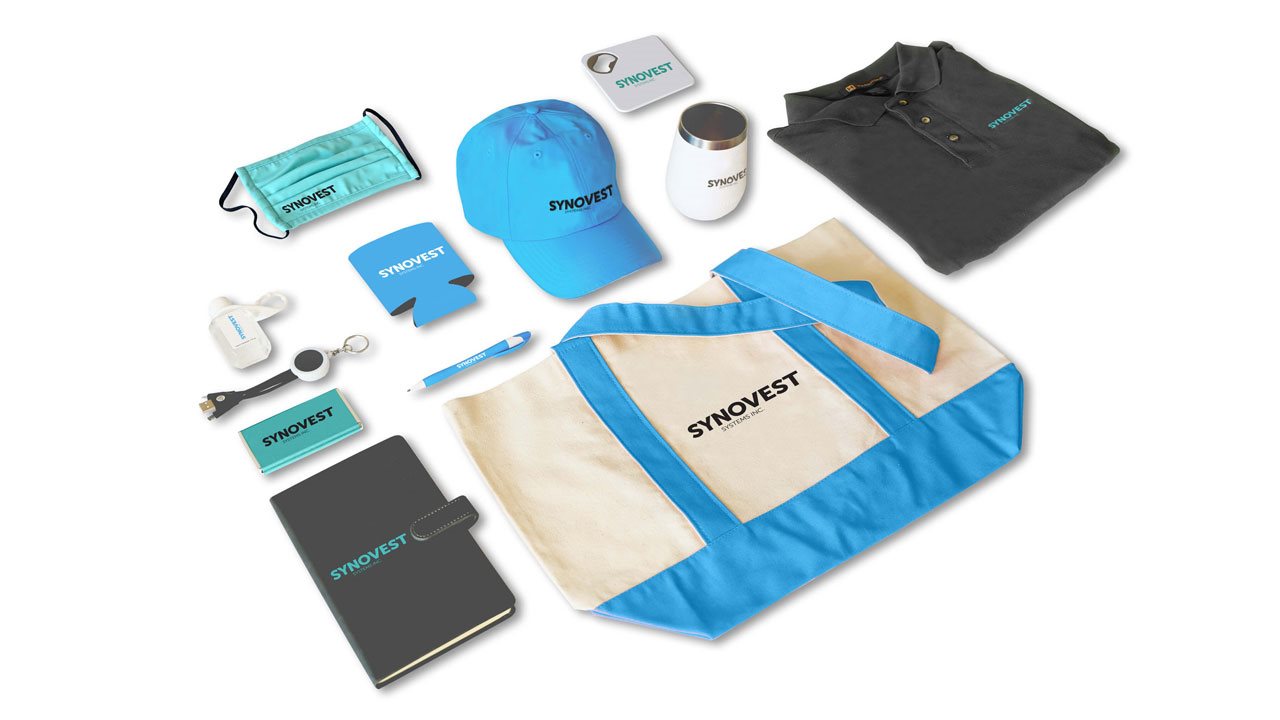
Awarded an RFP? Closed on a house for a client? Small tokens of appreciation, such as a branded tote, backpack or cooler pack, are sure to delight and can go a long way in cementing a meaningful and long-term partnership.

3. Support Your Team

In addition to working full-time jobs, many employees have also had to juggle facilitating remote learning for their kids, caring for elderly or sick family members, or even being isolated from their loved ones for more than a year. Whether back in the office or working from home, office essentials — notepads, desk accessories, stationery — are very much needed, and a great way to show your employees you care and support them.

4. A Gift that Keeps on Giving

It happens all the time — we grab our phone to make a call or send an email only to find it’s dead. We need earbuds to listen to a podcast or dial into a conference call because there are distracting sounds like barking dogs or yardwork occurring all around you. What better way to keep your business top of mind for your customers and prospects than branded portable phone chargers or earbuds? These items will definitely save the day.

As we adapt to this new world of work, FedEx Office is dedicated to supporting business owners as they pivot operations and overcome challenges driven by COVID. The new online branded marketplace from FedEx Office is powered by Harland Clarke’s leading promotional products offering, one of Vericast’s many solutions designed to help businesses engage with their customers. Businesses can customize high-quality promotional products and use them to reconnect with their most important audiences in a unique and relevant way, whether in person or remote.

With new challenges and continued uncertainty, driving thoughtful connections with customers and employees is critical to a company’s bottom line. Remember — a branded item is seen not just by the person using it but also by every individual who encounters that person that day. So, start designing your promotional products and building brand recognition today!

Essential services for growing your business in a post-pandemic world

2021-05-10T05:01:00

(BPT) – After a year unlike any other, it is time for businesses across the country to start thinking about building back. Despite the chaos and change small businesses have faced, new business filings in 2020 were 25% higher than in 2019. Strength, innovation and resilience are out there, and small businesses are finding new ways to remain profitable and serve their customers.

Investing in resources that drive successful outcomes

Growing any business, especially after this past year, will take research, planning and investment. But when you invest in the right resources and talent, you can focus on what’s important to you and let other experts take care of the rest. According to Fiverr’s Small Business Needs Index, based on millions of searches, these are some of the services you should consider investing in to help your business grow in a post-pandemic world:

1) Optimizing your digital storefront

Your website should clearly show who you are, why you’re unique and what you have to offer. According to joint research from Fiverr and CensusWide, 33% of businesses are investing in website development due to the pandemic.

Because of this, your website needs to be clear and reliable, containing linear information that prioritizes your brand’s image and value adds. It should also encourage customers to take some kind of action. For example, Rooted, a plant company, created a quiz for their customers.

Finding the right design, mapping and branding can be challenging. However, a freelancer who specializes in Shopify or WordPress Design can help you make a lasting impression on customers, increase traffic to your site and boost sales.

2) Developing an app that connects with customers

It’s also important to make sure your small business is mobile-friendly. Having a mobile app allows your customers to engage with your business on the go, provide feedback in real time and promote your business in new ways. For example, restaurant owners are increasingly searching for freelance developers to build them “food delivery apps” as a way to avoid high fees from other delivery apps and increase profitability.

That said, many small business owners put off app development because they are not programmers and often don’t want to learn how to make them.

3) Generating income through crowdfunding

Crowdfunding can be a helpful tool for new and existing small businesses. Crowdfunding allows entrepreneurs to generate cash for new business initiatives by delivering a compelling case for new products and services.

When deciding to crowdfund, it is important to create a strategy, choose a campaign platform and establish your funding goals. Tile, the Bluetooth finding tool, was started as a crowdfunding campaign.

Luckily, there are numerous freelance professionals who specialize in crowdfunding that can help with these tasks. From targeting the right donors to setting up a functional pay portal and helping you craft a strong funding proposal, they can worry about the details to help your business raise the funds it needs.

There’s no better time to take the leap

Whether you’re looking to grow your business after a tough year or looking to start something new, there is no time like the present to take the leap.

With the help of freelance services to promote the growth of your business, you can let someone else handle the details so you can focus on what you do best.

As Americans venture out post-pandemic, they’re stepping into a digital savvy world

2021-05-07T17:01:00

(BPT) – More than a year after the pandemic began, Americans are realizing that almost every facet of life has changed. Suddenly their linear, analog world with a digital dabble has become a full-blown digital whirlwind. And that’s especially true when it comes to how they handle money.

The pandemic has fundamentally changed the way consumers shop — from the products they’re buying to the ways they’re paying for them. It’s made everyone revise their shopping habits and many of these trends appear here to stay. One obvious change is the explosion of online shopping, but there’s also been a focus on shopping local.

When it comes to consumer spending, the National Retail Association’s recent 2021 forecast anticipates retail sales to grow between 6.5 and 8.2 percent as more people get vaccinated and the economy reopens. And, as people venture back into brick-and-mortar stores in their communities, finance journalist Vera Gibbons says consumers can feel confident as they return.

“Americans are excited to return to brick-and-mortar stores but many are already looking for touch-free payment options to avoid handling cash, touching keypads and signing receipts at checkout,” Gibbons said. “We saw this trend really take off during the pandemic and this is now the preferred payment method for many businesses and their customers. So the idea of paying with touch-free options like QR codes has moved to the forefront as a safe, secure solution when shopping in-store.”

In fact, research from PayPal shows that 57 percent of consumers surveyed said merchants’ digital payment offerings impact their willingness to shop in their stores. And more than a third said they would not buy from merchants at all if QR code-enabled payments were unavailable.

“PayPal and Venmo QR Codes are convenient, easy, touch-free payment options that allow for a sense of security, and enable consumers to shop safely and with ease,” Gibbons said. “They incorporate the safety, security and convenience of using PayPal and Venmo in-person and enables ongoing social distancing requirements and safety preferences for in-person commerce.”

Purchasing with QR codes from companies like PayPal and Venmo allow customers flexibility when it comes to their preferred method of payment at checkout.

“You can choose to pay how you want, using stored debit or credit cards, bank accounts or funds from your PayPal Cash Plus Account. Similarly for Venmo QR codes, customers can pay using their stored debit or credit cards, bank account or funds from their balance with Venmo,” Gibbons said. “Plus there’s no tech to touch — just aim your own smartphone camera at the QR code when presented at checkout or show your code to the cashier at participating retailers. The process is very easy and exceptionally convenient.”

After a year of doing without vacation travel, concerts, dining out, etc., many may be itching to splurge, but the experts say this is the time to be savvy, not emotional, while shopping.

“There’s a lot of optimism going forward in terms of economic growth, but don’t go too crazy and go on a spending binge. It might make you feel good to buy yourself a little something or two or three, but you’ll likely regret it when the credit card bill arrives,” Gibbons said. “And more than ever, comparison shopping is key. Prices have probably shifted on all of your favorites as a result of rising demand, diminishing supplies, or both! So it’s never been more important that you check prices and comparison shop so you can find the best deals.”

For more information on making purchases safely using QR codes, visit www.paypal.com.

3 surprising ways dairy farmers are implementing sustainability on their farms

2021-05-05T18:35:00

(BPT) – Fun fact: When put to good use, cow manure is quite the environmental boon. It can be recycled into fertilizer and crop irrigation water or repurposed as Earth-friendly seed pots that naturally nourish plants. And the methane produced by cow manure can even be converted into electricity and renewable natural gas.

“These types of creative and efficient applications of cow manure are in use because U.S. dairy farmers have an enterprising spirit and a long legacy of being responsible stewards of the land and animals under their care,” said Karen Scanlon, senior vice president of environmental stewardship for the Innovation Center for U.S. Dairy. “That environmental legacy is alive and well today as dairy farmers across the country continue to explore innovative practices that improve their impact and aid the dairy industry in its quest to become carbon neutral or better by 2050.”

For example, Reinford Farms, Freunds Farms and Royal Dairy have each won an Innovation Center for U.S. Dairy Sustainability Award for being at the forefront of impactful technologies and practices that enable the dairy industry to give more than it takes.

#1 Reinford Farms: Turning food waste into energy

In 2008, a grocery store offered to pay this family-owned Pennsylvania dairy farm to take its spoiled produce and turn it into renewable energy via the anaerobic digester Reinford Farms uses to generate power from the manure of its 800 dairy cows. When more companies started asking for the same service, owner Brett Reinford invested in a depackager, a machine that manually removes packaging from food waste before it goes into the digester. This has enabled Reinford Farms to work with local businesses, 30 grocery stores and food manufacturing companies to recycle up to 12,000 gallons of food waste along with its cow manure each day. As a result, they have kept more than 100,000 tons of waste out of landfills since 2008, preventing the equivalent of 133 million pounds of carbon dioxide from entering the atmosphere. The food waste and cow manure also generate enough renewable electricity each year to power the entire farm and 400 nearby homes.

#2 Freunds Farm: Making manure marketable for this family farm

During a 1997 dinner to brainstorm ideas for repurposing cow manure, someone made an offhand remark about turning it into flowerpots, and it resonated with Connecticut dairy farmer Matthew Freund. He headed home and began tinkering with various concepts using Elmer’s Glue, a pail, and even his wife Theresa’s toaster oven. Eight years of trial and error and one $72,000 federal grant later, Matthew and Theresa Freund officially started making and selling CowPots, manure-based, biodegradable, seed-starting containers that are used by commercial and backyard growers across the country. CowPots are made with fibers from composted cow manure, and they break down naturally in one growing season because the nitrogen in the manure kickstarts the composting process.

#3 Royal Dairy: Leveraging cows (and worms) to make dairy a more sustainable solution

In 2016, Austin Allred was on the hunt for solutions to help reduce runoff waste and greenhouse gas emissions from Royal Dairy, his farm in central Washington. He discovered a biofiltration process that uses screens, granite and hungry worms to turn cow manure into clean crop irrigation water. It starts at a low spot on his farm, where all the water that runs off from cows, cleaning and cooling machinery collects. Solid waste is held back by mechanical screens while the wastewater moves forward. A series of sprinklers takes this water and spreads it across a series of long concrete troughs filled with granite, which pulls out the methane and ammonia and converts greenhouse gases into nitrogen. Then, the water is absorbed by wood chips where millions of worms and microbes feast on the nutrients and bacteria. The water that remains is clean enough to be used to irrigate crops, and the worm’s poop gets used as a fertilizer product.

These are just a few examples of many. Dairy farmers in every corner of the U.S. are thinking outside the box and actively experimenting with different solutions so they can contribute to a sustainable food future for all. Caring for the planet and its precious natural resources is what dairy farmers have always done — to help feed families, build strong communities and leave the planet a better place for future generations.

Reduce your credit carb intake with these tips

2021-05-03T07:01:00

(BPT) – Healthy eating and credit score maintenance have a lot in common. They both require focus, discipline and consistency. You can take steps to boost your credit to a score you’re satisfied with, but, much like eating healthy, it doesn’t take much to fall back into old habits. It’s hard to know what makes or breaks a well-balanced score because you don’t always feel the effects directly.

Luckily, following these tips can help keep your credit score, and financial waistline, where you want it.

What makes up a healthy credit score?

Most people think their score is based entirely on credit card accounts, but those are only one type of credit considered. Typically, your credit score is made up of several components, such as the amount you owe, the length of your credit history, the timeliness of your payments, and your credit mix.

How to maintain a healthy score

In the digital age, keeping track of your credit score is easier than ever. This makes setting your goals nearly effortless, giving you a better understanding of where you’re at and how to maintain healthy financial habits. A number of free score providers use the VantageScore model, allowing you to know where your credit is at so you can start your financial fitness journey.

Looking to start maintaining a healthy credit score? Here are a few ways to get started:

Keep credit card balances low

If you have high credit card balances, even if they aren’t at your card’s limit, that can put a dent in your score. To avoid this, keep your card balances within 30% of your credit limit. Charging more than 30% of your credit limit can be risky, even if you plan to pay it off in full once the billing statement arrives.

Keep your debt under control

For some, this is easier said than done. But if you have the capacity, reducing your debt balances can be beneficial. Together with paying more than the monthly amount you owe, you can also do things like taking advantage of balance transfers, limiting the amount you spend via credit cards, selling items from around the house and sticking to a monthly budget.

Getting rid of debt can take a lot of patience, persistence and discipline, so make sure you reward yourself every once in a while on your debt-reduction journey.

Pay your bills on time

Credit card bills aren’t the only things that impact your score; cable bills, electricity bills and even library fines can affect your credit as well when reported to a national credit bureau. It is important to promptly pay all such accounts. If you worry about forgetting to pay your bills on time, there’s an easy solution for this. Most service providers allow you to sign up for autopay, so your payment will get taken out automatically each month.

Keep a healthy credit mix

It seems counterintuitive but paying off an installment loan or closing an unused credit card can hurt your score. Paying debt down will help you in the long run financially, so the temporary dip isn’t a huge worry. But when it comes to credit cards, make sure you think about why you’re opening a second or third one and whether you’ll use it.

Having a clear picture always helps

There’s never a bad time to begin your credit diet. And the best way to start that process is to get a clear picture of where your score is. VantageScore’s credit scoring model is favored by a variety of lenders and provides consumers with a clear and accurate view of their financial health. That way, you have the proper feedback to begin your financial wellness journey.

Another Lesson Learned during COVID: Expertise Accessed Differently

2021-04-29T12:51:00

(BPT) – The COVID-19 pandemic has forced people to embrace flexibility in navigating daily life. Over the last year, consumers have adjusted their habits to follow safety precautions. People adopted or established a new reliance on apps and digital services for restaurant and grocery deliveries, fitness tracking, and connecting with friends and family. And they learned to lean on professionals with online mental health and healthcare appointments.

That same approach for connecting to expertise digitally, instead of the traditional in-person experience, now applies to filing your taxes. Now you can work with an H&R Block tax professional but skip the office visit. Consumers have access to expert tax help from anywhere, in the same way they might now access telehealth, virtual workout classes, or any other virtual expert service — live or on their own schedule.

Taxes can be confusing, especially this year. An H&R Block survey found that 56% of Americans have more tax questions than last year due to the pandemic. Between COVID changing our lives and the tax law changes from the past year, you need to get it right when you file your taxes.

“Many things have changed in the past year, but H&R Block is still here to help,” said Karen Orosco, senior vice president of U.S. retail for H&R Block. “You can work with our tax experts through new technology and tools, tap into our expertise from anywhere and get every credit and deduction you deserve.”

Expertise delivered through a digital experience

H&R Block offers the myBlock app as a solution to get tax expertise at your fingertips. You can upload documents, set appointments, message, and even video chat with a tax pro. You can also get updates on your tax return, connect with a tax pro year-round, explore mobile banking and plan for next year.

Even with H&R Block’s do-it-yourself online filing, you get access to all the tax expertise you might need. In addition to being guided through the process with the online software, you can access H&R Block Online Assist to get unlimited, on-demand chat sessions with tax experts. You can get direct assistance from a tax pro via screen share and on-demand chat. This is especially important in a year when a new source of income, like a 1099-G for unemployment, or a withdrawal from a 401(k), could create questions for even the most confident DIY filer.

“We have so many ways to help, and we put tools in place to make working with a tax pro easy and convenient,” Orosco said. “At the same time, clients have more access than ever to our tax pros so they can get their questions answered, taxes filed and feel confident.”

Don’t leave money, or stimulus payments, on the table

H&R Block tax pros always help people claim every credit and deduction they deserve, and this year that includes any possible unclaimed stimulus payments when filing a 2020 tax return. For those who did not receive a stimulus payment, believe they did not receive their full stimulus payment amount, or had life changes, such as the birth of a baby, a Recovery Rebate Credit can be claimed when their 2020 taxes are filed this year.

For the record number of people who received unemployment income last year, a recent tax law change makes up to $10,200 of unemployment benefits nontaxable income in 2020, if your household income is less than $150,000. If you already filed your 2020 taxes and it included unemployment income, there is no need to file an amended return, in most cases. In May, the IRS will begin calculating and issuing refunds for overpayments. However, because everyone’s situation will be unique, this benefit may make some people eligible for additional credits or deductions, including the Earned Income Credit. Working with a tax professional will help you know what actions you might need to take, in order to evaluate if you are newly eligible for a credit or to understand if your state tax return(s) will be impacted.

To get started on your taxes today, visit hrblock.com.