4 ways to protect your finances and investments in 2021

2020-11-25T08:01:01

(BPT) – Finances are consistently a top concern for many Americans, with “saving money” a top-10 most common New Year’s resolution. This year, Americans are more concerned than ever before due to the uncertainty created by the COVID-19 pandemic. USE Credit Union reported that more than 75% of non-transactional calls received since the start of the pandemic were from members concerned about their financial future, citing economic hardship as the primary reason for concern. The economy and job market remain in a state of constant flux, which is causing many families to worry about their ability to pay an unexpected bill, continue to pay off student loans, mortgages or credit card debt, or save money for the future.

“Saving money is more than just putting spare change into a coffee can, or simply ordering takeout less often,” said Jeff Schroeder, vice president and chief product officer at Mercury Insurance. “Sure, those things can add up over time, but people may find that their greatest savings can come from taking a look at the necessary expenses they pay for every month, such as insurance.”

Schroeder recommends these four tips to help protect your finances in the coming year:

1) Check your auto insurance coverages. There’s no reason to pay for more coverage than you need, but being underinsured can leave you exposed. “The cost of repairs after a collision has grown in recent years, both as a result of more crossovers and SUVs on the road, and more technologically advanced vehicles,” said Schroeder. “Beyond paying for more expensive repairs if your insurance doesn’t cover it, if you’re underinsured, you may also be responsible for paying out of pocket for medical bills, which could potentially devastate savings for a down payment on a house, your child’s college tuition or a future vacation. It’s vitally important to make sure you have the right amount of auto insurance coverage to protect against unforeseen events.”

2) Know what your homeowners insurance covers. First and foremost, be sure to read your homeowners insurance policy so you’re clear about what it does and doesn’t cover. It’s a good idea to check in with your insurance agent each year to ensure you have adequate coverage, especially if you’ve made renovations, own collectible or valuable items, or live in an area that’s prone to flooding or earthquakes, as standard homeowners insurance policies typically don’t cover these situations. Also, maintain a home inventory to make sure to have an accurate record of your belongings and property.

3) Be aware of potential gaps in coverage. A standard homeowners insurance policy often doesn’t cover mechanical failures to your home’s appliances, HVAC or other essential systems, nor does it cover a break to service lines on your property that supply your home with electricity, gas or sewer functions. In either of these scenarios, this means you would be responsible for writing a big check to a repair company or having to purchase a pricy replacement. However, adding home systems protection and service line protection endorsements can help provide coverage for costly repairs and replacements, saving money and your peace of mind. Pennies spent now can save you thousands of dollars later.

4) Regularly shop for the best coverage and price. Insurance prices can vary significantly from company to company, so it’s a good idea to take a few minutes to see if you’re getting a good deal. Shop around at least once a year — making sure to look for the exact same coverage limits — to see if you can find a more affordable rate.

“Often, regional insurers like Mercury Insurance are more attuned to their policyholders’ needs and can offer better rates,” Schroeder added. “For example, the California Department of Insurance found that Mercury auto insurance policyholders save an average of $670, which can go a long way in feeling more secure in your savings.”

The most effective way to make sure your finances are minimally impacted by insurance costs in 2021 is to speak to an independent insurance agent. They can help make sure you have the proper amount and type of coverage to keep yourself, your family and property protected.


4 money moves to kick off 2021

2020-11-19T05:01:00

(BPT) – Just imagine: Holiday shopping is behind you, the eggnog has officially worn off and the seasonal coffee drinks have lost their allure. A new year is beginning and it’s time to prepare.

“As you gear up for a new year, it’s important to take a hard look at your finances, and decide what financial habits you should carry into 2021 and which ones you need to kick to the curb,” stated Navy Federal Credit Union’s Senior Vice President of Savings Products Jaspreet Chawla.

1. Don’t ignore your debt.

Tackling debt can be intimidating, but also can’t be ignored. Make a game plan to strengthen your financial situation and get yourself back on track. For example, set a deadline for yourself and figure out exactly how much money you can put toward your debt on a regular basis to meet that deadline.

If you have more than one credit card or other loans, you may be able to consolidate those debts into one payment at a lower interest rate. This helps simplify everything by giving you one payment each month instead of multiple payments and due dates. Talk to your trusted financial institution to see what options are available to you.

2. Keep your emergency fund top-of-mind.

You don’t want to be left scrambling if your car breaks down or basement floods, or worse, if you lose your job. And COVID-19 has taught us how important it is to be prepared for the unexpected. It can be daunting to know where to begin, especially if you don’t have a fund to cover emergencies yet.

First, start small. Try putting a set amount each month into a savings account specifically for emergencies and make transfers into this account automatic. If you already have an emergency fund, consider increasing your contributions or exploring other tools to diversify your savings portfolio. In the event you need to tap into your emergency fund, it’s important to focus on rebuilding it as soon as you can.

3. Differentiate “needs” from “wants” in your budget.

It’s a good idea to identify “needs” versus “wants” to eliminate unnecessary expenses. Do you have to have the extra streaming service or bi-weekly manicure? Or what about frequent take-out meals or the daily trip to your favorite coffee shop? A few simple, mindful lifestyle changes now can make your dollar go a lot farther in the long run. You might be surprised how much of a difference it’ll make.

4. Take advantage of a mix of savings tools.

Your future self will thank you! From basic savings accounts to certificates to money market accounts and beyond, you have many options to make your money really work for you. Also explore digital savings tools like mobile apps to help support your short-term and long-term financial wellness.

“We work to provide our members with the tools to improve their financial circumstances every day and we’re always here to help,” continued Chawla. “Changing just a few habits can really make a positive impact on your financial future.”

Overall, these tips can help pave the way for a more financially fit year ahead.


How to get the most out of open enrollment

2020-11-18T09:38:13

(BPT) – The COVID-19 pandemic means as a parent, you may be juggling your new roles of part-time remote teacher, IT technician and cafeteria chef along with your normal work responsibilities. The physical, mental, and for some, financial toll of this arrangement has left many feeling exhausted and stressed.

In fact, MetLife’s recent study on mental health found that having kids at home or no access to childcare or in-person schooling is the biggest single source of stress for parents of kids under 12 (52%) after fear of contracting the virus or a friend/family member contracting the virus (66%). Compounded by rising financial anxieties from possible financial setbacks, many parents are looking to benefits provided by their employer during open enrollment — the period of time wherein U.S. employees can make changes to their health insurance coverage and enroll in other insurance benefits — to build financial strength and help prepare for the unexpected.

This may be why, according to MetLife’s 2020 open enrollment survey, two-thirds (66%) of parents with kids under age 12 feel that open enrollment is more important this year than last year, and almost 60% plan to spend a greater amount of time selecting their benefits.

Setting aside time to prepare for open enrollment may seem overwhelming with all that’s going on now — particularly for parents with kids at home — but since changes to benefits are not available throughout the year outside of major life events, such as getting married, divorced or having a baby, it’s important to make it a priority. Fortunately, you can get started with three simple steps:

1. Pick benefits best suited to your family.

Even if you’re happy with the coverage you have, don’t assume you can set it and forget it. Employers often introduce new benefit offerings, and plan benefits can shift (like changes to dentists participating in the network or prescription medication coverage).

Start by evaluating what you’ve spent for healthcare over the last few years and think about any significant expenses you expect to incur in the coming year, such as the birth of a baby or braces for your teenager.

Next, read the information provided by your company to see what’s new for 2021. Some companies are now offering additional access to telemedicine or other mental health benefits. Perhaps your family has adopted a pet during the pandemic? Many employers offer pet insurance, which can help pet parents offset costs for vet visits. By taking the time to properly evaluate the plans your company offers, you can save hundreds — or even more — every year.

2. Explore new ways to protect against unexpected, out-of-pocket medical expenses.

Many employers offer a wide array of benefits — beyond medical, dental and vision coverage — that can close potential financial gaps and help parents safeguard their incomes from the unexpected. Critical illness or hospital indemnity plans help protect against unforeseen out-of-pocket costs by providing a lump sum payout if you are diagnosed with certain illnesses or hospitalized. Parents may also look at incorporating health savings or flexible spending accounts that allow you to use pre-tax dollars to cover expenses related to childcare and healthcare, as well as commuting costs, which reduce taxable income and earn interest.

Finally, legal plans provide access to a wide network of attorneys, for a limited additional charge, if any. These professionals can help prepare critical documents, such as wills and estate plans, which are important for new parents, as well as powers of attorney or advance health care directives, which are important when a child turns 18 and heads off to college.

3. Maximize your savings.

The pandemic and its many financial aftershocks have exposed a vulnerability we already knew existed: Americans simply don’t save enough. Therefore, while retirement savings can usually be adjusted throughout the year, open enrollment is a good time to reevaluate and make sure that, if your company matches employee contributions to retirement accounts, you are saving at least the minimum percentage to earn the match. If not, you’re leaving money on the table.

As enrolling in new benefits plays a direct role in your monthly expenses, it’s an opportune time to begin building your savings. Automate your savings by either having a portion of your paycheck directly deposited into your savings account or by setting up regular transfers from your checking to your savings. Automatically moving money to your savings means it will be there when you need it — which can help quell parents’ financial anxieties steadily throughout the year.

Employee benefits, at the most basic level, are provided to help improve your physical and financial well-being. Spending time reviewing benefit options and choices now can, in turn, help to alleviate stress later, giving parents — and all employees — more time to focus on their families. Get started now and help make sure your family is in the best possible position to have a healthy, financially secure new year.

To learn more about making open enrollment decisions and how to maximize your benefits, visit: metlife.com/openenrollment.


How digital engagement can offer more control over personal finances in unpredictable times

2020-11-18T13:31:00

(BPT) – Since the coronavirus pandemic began taking hold in early 2020, global stock markets have taken investors on a rollercoaster ride, with aggressive climbs in value, precipitous drops and an overall queasy feeling in the pits of our stomachs about what’s next.

COVID-19’s impact on personal investments

Millions globally have been affected financially during the pandemic, and in very different ways. While savings may have resulted from changes in lifestyle and working from home, online spending has increased dramatically. Millions of people lost their jobs and dipped into their retirement accounts. Under the CARES Act, which went into effect during the pandemic, investors were permitted to withdraw money from their retirement funds in 2020 only without paying the 10% early withdrawal penalty — and they did so in record numbers.

A third group of investors and retirees chose to avoid making any investment decisions, believing that the safe move was to not focus on the stock market’s wild ride. This “bunker mentality,” however, may have put them at greater long-term risk by not taking advantage of opportunistic financial management solutions.

What is driving these different behaviors — particularly investors unwilling to make financial moves in such times of stress and volatility? According to a recent Forrester study*, underlying investor inertia is a lack of understanding regarding different types of investment accounts: Consumer involvement in wealth management options offered through insurers and other financial institutions depends in large part on their comfort with financial concepts. Many are unfamiliar with how different wealth management options work and which are best for them. Moreover, due to the pandemic, call centers have longer wait times, leaving many without the resources to make smart decisions on their own.

Digital engagement and education: Key to meeting financial goals

According to Meera Krishnamurthy, Cognizant’s Global Head of Insurance, addressing a lack of financial education is being solved with digital solutions. “Utilizing predictive data analytics, insurers and financial institutions can offer personalized content that is streamed directly to their customers’ dashboards and emails, advising them on opportunities that will help them reach their financial goals,” Krishnamurthy said.

Technology companies like Cognizant are helping insurers and financial institutions directly engage their customers during the pandemic. Using Cognizant’s Personalized Interactive Video solution, one global group insurance provider saw a 45% increase in portal registration for new members, and, at the same time, a significant drop in call center activity, indicating that the online self-service tools and information was meeting customers’ expectations.

“There’s no benefit to social distancing from financial markets,” Krishnamurthy continued. “Insurers are helping plan participants, members and policyholders take control of their financial future through direct virtual client engagement — including easy-to-understand videos that guide them through the details of their coverage and educate them on how to best use 24×7 online app self-service features.”

Smart investing driven by smarter fintech

As the opportunity and demand for personalized, digitized services grow, insurers and financial institutions are rapidly adopting new tools, such as account aggregation, personalized content delivery and accountability triggers. By partnering with technology solutions companies like Cognizant, insurers and financial institutions are delivering personalized wealth management coaching to their clients that is backstopped by powerful data analytics tools, predictive analytics and machine learning.

Financial goals for various age groups naturally differ, and those goals may have changed during the pandemic. Millennials tend to be concerned with paying down debt or saving for a down payment on a home, while Gen X and Baby Boomers generally focus on saving for retirement and investing in education planning via 529 accounts. Yet with the help of digital technology, businesses offering wealth management solutions can better understand their individual investors’ needs and create targeted messaging that accounts for what is in the best interest of plan participants.

Now, the opportunity to merge the benefit of interpersonal wealth management, the ease of making investment changes online, and the knowledge on how to best benefit from both is arriving. With a modern form of personalized digital engagement, investors are becoming more empowered through their knowledge and ability to act on that information.

“As we look toward 2021, we expect the digital acceleration that was brought on by the pandemic to continue,” says Cognizant’s Krishnamurthy. “Insurers and retirement services companies will provide the personalized tools and the ease with which to access those tools to empower plan participants and members to take charge of their financial wellness.”

*Forrester study*: https://www.forrester.com/report/Use+Digital+Technologies+To+Boost+Customers+Financial+Capability/-/E-RES160519?objectid=RES160519


5 tips to set your business up for success this holiday season and beyond

2020-11-17T08:01:00

(BPT) – Sponsored by Office Depot

The holiday shopping season is officially underway, and while curveballs will inevitably be thrown during this rapidly changing time, there are things you can still do to help set your business up for success — both in-store and online. With businesses continuing to reopen and people turning to online shopping and curbside pickup at even greater rates, here are some strategies to keep in mind — for this holiday season and beyond:

1. Build your brand

Developing a strong brand identity for your business is an important factor in its success. Effective branding can help build your reputation, make you stand out from your competition and help your customers understand how your business can meet their needs.

With so many resources available you can make the creation of your brand a simple, quick and creative exercise. Office Depot and Canva, the world’s fastest growing design platform, have recently come together to offer business owners high-impact design templates and high-quality printing in one convenient place. Choose from thousands of Canva’s professional and visually appealing design templates to create customized holiday marketing materials within a few clicks. From flyers announcing special deals and new products to new business cards and seasonal menus, it’s simple to create professionally designed materials that stand out and help you connect with your customers. Best of all, you can design as many options as you’d like, and you only pay for what you print. Visit officedepot.com/print to get started.

2. Keep your customers informed and engaged

Bright, attractive signage can help to keep customers informed about your health and safety protocols, operating hours, contact information and other important information — and help make shoppers feel more welcome. Many businesses have introduced curbside pickup as a convenient delivery option for their customers — if your business has done this — the right signage can help your customers know about it and communicate where the customer should go to retrieve their order(s). For customized signs, posters, banners and more, Office Depot’s print services team can help — and best of all — select print services are eligible for same-day curbside or in-store pickup if ordered by 2 p.m. local time. Visit officedepot.com/sameday for details.

In addition to outfitting your business with clear printed materials, find ways to communicate and engage with your customers online as well. Consider optimizing your website for a seamless user experience for customers on any platform — from desktops to mobile phones and everything in between. It could help to hire a user experience consultant to assess your website and recommend improvements. And consider providing multiple avenues for shoppers to connect with your business — including live chat capabilities, links to social media accounts, and the best email address and phone number options to reach a member of your team for customer service inquiries. This information should be easy to find on both your home page and other web pages.

3. Create a clean, comfortable space for employees and customers

As you welcome more customers into your business, you may want to consider the additional supplies needed to help create a cleaner and more comfortable environment for employees and customers. Consider planning ahead and stocking up on cleaning and disinfecting supplies, masks, gloves, thermometers, hand sanitizers and more. To encourage appropriate social distancing and keep germs at arm’s-length, consider outfitting your business with safety signage, floor decals and partitions.

Office Depot offers a wide assortment of personal protective equipment (PPE) — and if you spend $60 or more on qualifying items, you can get free next-business-day delivery.

4. Protect your tech

Don’t let slow technology limit your productivity and slow down your business’s ability to grow. With online shopping on the rise, your systems should be running smoothly and be prepared to handle an increased influx of online traffic.

Look for pre-packaged tech solutions from trusted IT providers that can be easily implemented and can help to anticipate your business’s needs and challenges to minimize unexpected downtime. Also, consider bolstering your cyber security to help address security threats and safeguard your organization against data corruption, compromise, loss and data breaches. Office Depot offers technology services and solutions powered by CompuCom to help small and medium businesses and large enterprises stay productive anywhere and at any time.

5. Find ways to save time to get more done

The saying goes that you should “work smarter, not harder.” Productivity apps and project management software are just two tools your business could use to help increase productivity. Watch for inefficiencies in your current processes and streamline where you can, consolidating tasks and errands when possible.

Find partners that can help your business with convenient delivery and shopping options. For example, Office Depot offers fast and easy fulfillment choices on qualifying orders including free one-hour store pickup. Customers who prefer a contactless experience can opt for national same-day delivery, delivered by Shipt, or curbside pickup at their local Office Depot or OfficeMax store. Visit officedepot.com/storelocator for current store hours and curbside availability.

Or save time and stay supplied and successful with Office Depot Automatic to have your most-used products automatically shipped to you, right when you need them. As an added bonus, you can receive special discounts on thousands of subscription-eligible items.

For more services and solutions to help your business grow and navigate this unique time, visit officedepot.com.


People everywhere are being priced out of housing. But together, we can make it more affordable.

2020-11-16T05:01:00

(BPT) – Over the years, the inventory of affordable homes has been in sharp decline, while home prices have risen dramatically. With housing becoming increasingly unaffordable, the shortage of safe and affordable homes is affecting more and more prospective homebuyers every day. However, potential impacts go beyond individual would-be homeowners, with growing implications for society at large. This problem has no one solution, but with collaboration across the entire housing industry, together we can create more opportunity for more people to achieve sustainable, long-term homeownership.

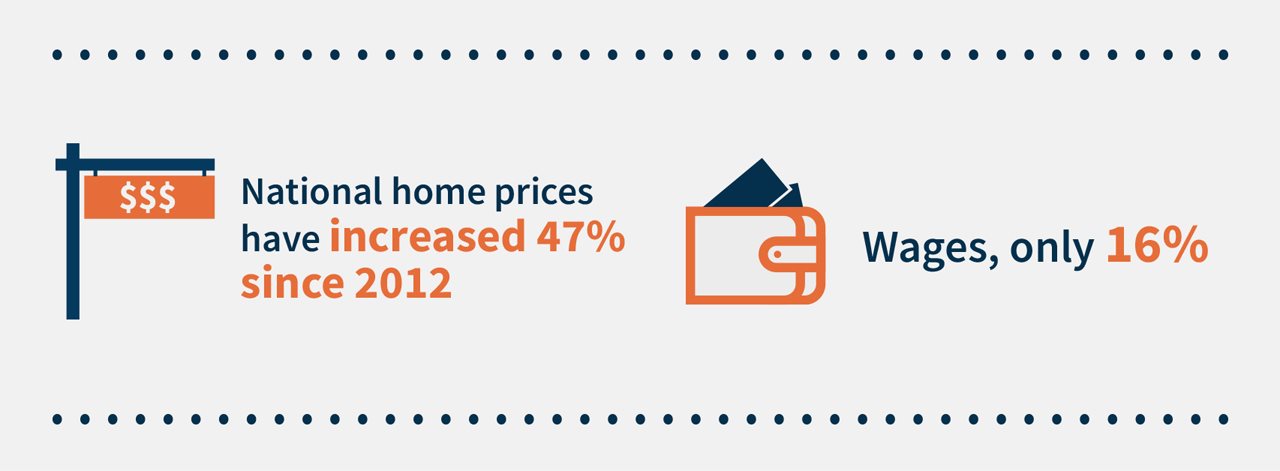
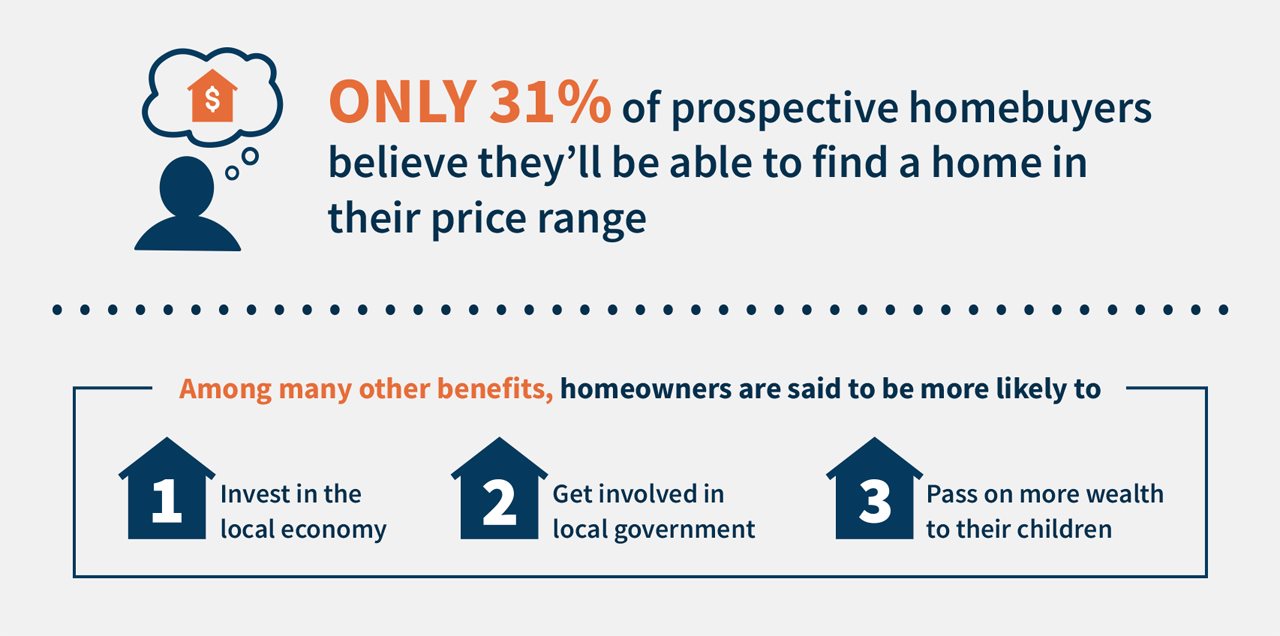
Research shows that successful homeownership has many benefits for the economy. For example, we have seen that homeowners are more likely to invest in their area’s economy, get involved in local government, and pass on more wealth to their children. With average wages increasing by only 16% since 2012, and national home prices increasing by 47%, the impact on long-term, intergenerational economic well-being could be substantial.

Only 31% of prospective homebuyers, aged 25-34, are confident they will be able to find a home in their price range. Compared with previous generations, millennials and Gen Z are entering the market with larger amounts of debilitating debt. That, combined with the fact that jobs are often concentrated in high-cost areas, is delaying homebuying significantly. Plus, the rise of COVID-19 also presents significant challenges. In a recent Fannie Mae survey, 40% of current renters report having experienced a strong impact on their overall financial health due to the pandemic.

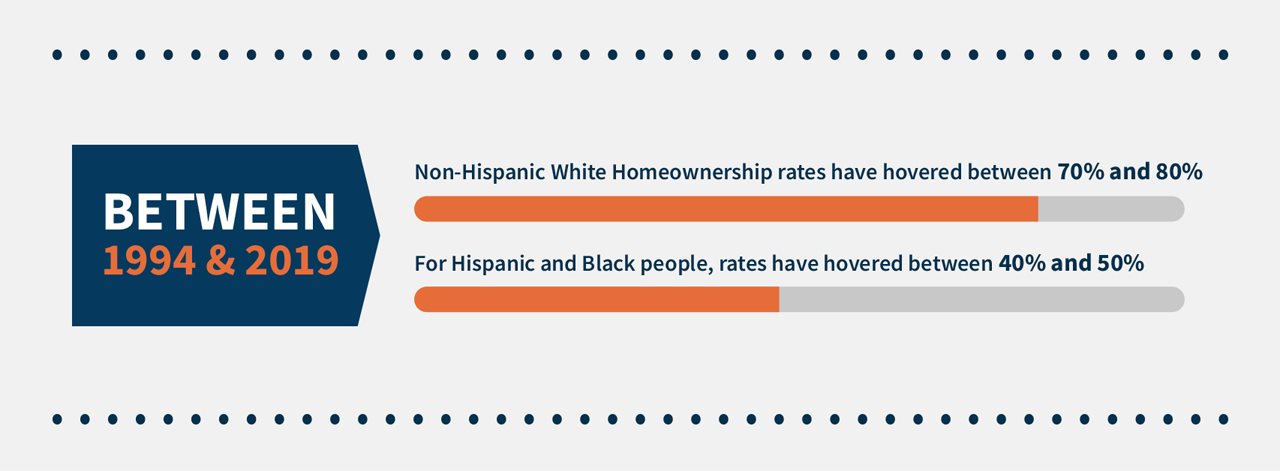
At the same time, census reports clearly illustrate the very real effects of racial inequality in housing. According to the Census Bureau, between 1994 and 2019, Non-Hispanic White homeownership rates have hovered between 70% and 80%, while rates for Hispanic and Black people remained between 40% and 50%. As Fannie Mae CEO Hugh Frater states, “Fannie Mae understands the story of housing in America includes a history of systemic racism, and we know our role in housing finance brings important responsibilities.”

So, what can we do to help solve these problems? Let’s share ideas, start conversations, and work together to make housing more affordable.

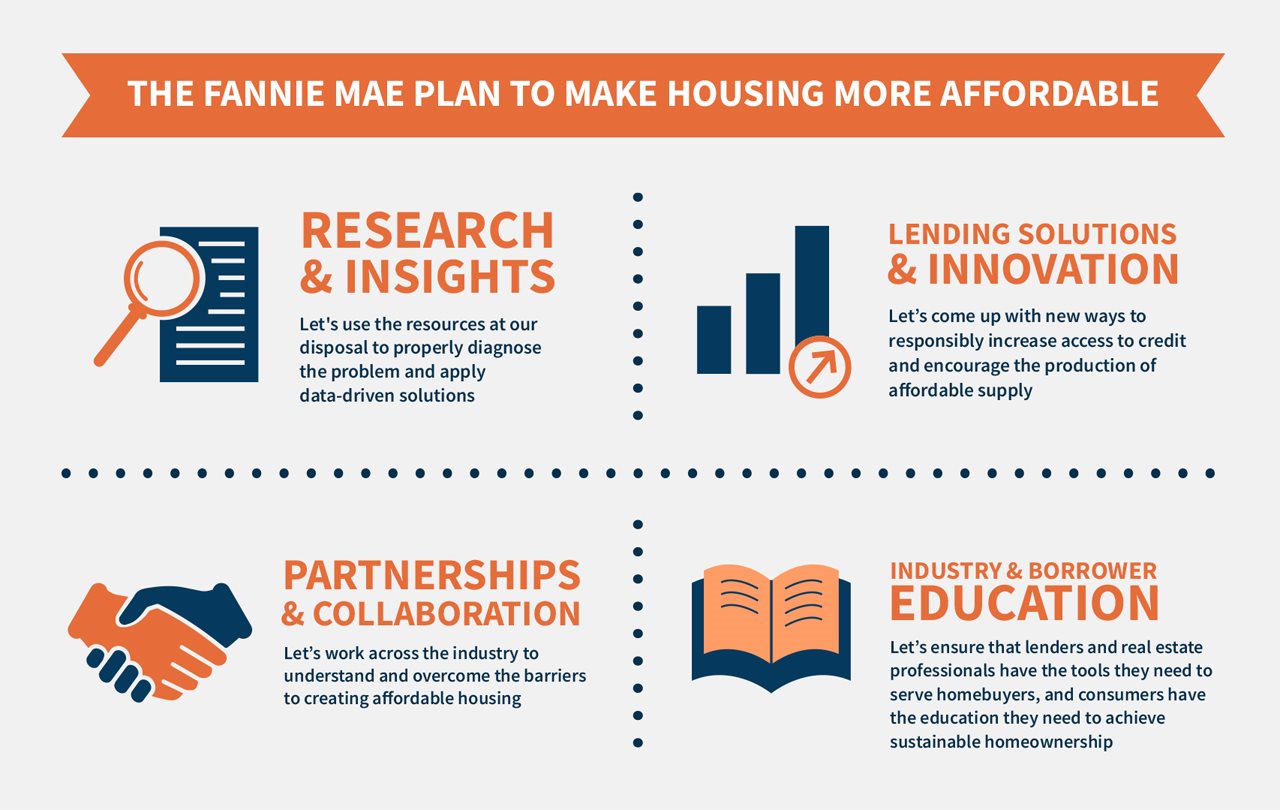
Fannie Mae believes that housing should be attainable and sustainable for all. That’s why we’re dedicated to working with our industry partners and community organizations behind this common goal. Here is how we’re putting that plan into action:

Visit FannieMae.com/Affordable and read more about our plan to make housing more affordable.

See our infographic to learn more about why housing affordability matters.

Sources:

Fannie Mae, “Future Homebuyers,” Single-Family Strategy & Insights unpublished research (November 2019). | Fannie Mae, “Builders,” Single-Family Strategy & Insights unpublished research (December 2019). | “The Decennial Census & American Community Survey,” U.S. Census Bureau. | Hayward, “How Zoning Laws Exclude Black Families from Areas of Economic Opportunity,” Fortune (July 2020). | DiPasquale & Glaeser, “Incentives and Social Capital: Are Homeowners Better Citizens,” Journal of Urban Economics, (1999). | Evangelou, “Wage Versus Home Price Growth,” National Association of Realtors (March 2019).


5 ways to become a better remote citizen

2020-10-30T04:01:00

(BPT) – Whether working from home for the first time, helping kids navigate the new madness of Zoom classes, or simply trying to connect online with relatives, our newfound pandemic-driven remote lifestyles are creating a completely new relationship between ourselves, our homes and our technology. Regardless of your current work/home situation, we can all be better virtual remote citizens to ensure a less stressful, more fruitful experience. Here are five ways to ensure you are creating a virtual space that works for everyone.

#1: Practice proper Zoom etiquette

Regardless of our mood behind the scenes, it’s still important for all of us to follow best practices to convey responsibility and professionalism to coworkers, customers or classmates during virtual get-togethers. A great start is to be sure to mute your microphone when you’re not speaking to avoid adding background noise to a group meeting. This may sound obvious, but it’s something we often forget, and it’s a great basic skill to teach your kids as well.

Another step to consider is investing in a ring light to brighten your appearance and present the best possible you on camera. These lights are low-cost strips of LEDs that provide flattering light that brings you out of the shadows. They can even give you a healthy glow.

Eating meals while in Zoom meetings is also not recommended, even if a meeting is scheduled over lunch. Let’s face it, nobody wants to see that. Even in something casual like a virtual parents meetup, understand that it’s not the time to eat a full meal. This, along with other multitasking, makes for poor attentiveness in potentially critical meetings or classes. When you focus on one activity at a time, you’ll be more engaged in the conversation and retain information better.

#2: Set up your home for success

With our homes now doubling as our office, school or business headquarters, making personal investments in technology can make our home and work lives more productive. This can start with something as simple as purchasing a dedicated, low-cost Chromebook for your kids, or taking a look at your overall home network. For instance, many people struggle with serious bandwidth issues throughout the day with kids and parents dropping from online classes and meetings due to less-than-ideal Zoom connections. One way to solve this is to look into alternative internet providers, specifically those based on fiber infrastructure. This can boost internet speed to several hundred megabits per second and put an end to connection problems.

Additionally, for those of you dealing with spotty Wi-Fi, now is the time to take advantage of Wi-Fi monitoring products that typically come with your internet service. These apps let you manage your bandwidth more effectively, check your connection speed and analyze the overall state of your Wi-Fi network. A spotty internet connection can lead to challenges not just within your daily life, but also for the IT professionals at your job, school or data center. Drops in connection to certain systems could lead to outages, which, according to a recent LogicMonitor survey, can be costly to an organization and are avoidable over half of the time.

#3: Take security into your hands

As computers become even more of a central hub for both our professional and personal lives, everyone must be vigilant and take care of that home like they would any other. Be vigilant about what you’re downloading and the tools you’re using and monitor what is happening on your system, because an IT team or teacher won’t be there to fix it for you if it breaks. For example, think twice before downloading that cool Zoom background or filter; it could end up crashing your system, damaging your camera or worse. Without immediate assistance from an IT team or other professional, you could miss an important meeting, that final exam or the big pitch your small business has been waiting for.

Also keep in mind that when you’re working from home, it’s a lot easier for your kids to innocently jump on your computer and possibly delete an important file. Make sure your computer defaults to a lock screen when idle, so no one else can access your work.

#4: Set boundaries and show respect

As 2020 shatters the boundaries between the office and home, many of us find ourselves working constantly and answering emails into the wee hours of the night. Many students’ usually regimented schedules have been thrown out the window. In this new era, it is crucial to evaluate your work-life balance. Take a hard look at your daily routine. Every time your work-life balance skews too far towards the work side, compensate by doing something for yourself during office or school hours. It could be something small like participating in a call or meeting while simultaneously taking a walk around your neighborhood, or letting your child play their favorite video game for 20 minutes. This can help everyone feel less overworked, leading to a more positive mindset throughout the rest of the day.

It’s also critical to show respect for others. If you need something from a coworker or educator, think twice before blithely making an unannounced video call or making a surprise request after hours. We have no idea what situations people are handling at home. Maybe they are dealing with an unruly child of their own who refuses to attend online classes; maybe they have contractors arriving at the door at the precise moment you call unannounced. We all need to be a bit more flexible and empathetic this year. Understand that sometimes you’ll have to wait a bit to get an answer, and think about using asynchronous communication channels such as email that give people more time to offer a response.

#5: Cut others some slack

No matter the position at your company, or the role in your household, it’s very important to understand how the pandemic is affecting your peers, family and their emotions. For instance, some people love working and learning from home and are feeling positive and motivated during this time. Others, however, are struggling on all fronts and can’t wait to get back to the office or school. As stress levels rise, it’s vital for everyone to be more responsive and understanding.

Now is the time to push a little less hard. Maybe, if you are a leader at your company, that means giving everybody a Friday afternoon off, or a Zoom-free day each week. Maybe if you’re a stay-at-home parent, that just means a dessert break.

In the end, all of us are trying to do our best. So if you hear a dog barking or kid screaming in the background of your call, or if someone’s connection is bad and they keep cutting out, instead of getting frustrated, act first with empathy. A simple act of kindness can go a long way to helping you become a better remote citizen, while ensuring a positive and productive experience for everyone you engage with.


Restart Growth Now and Become Crisis-Proof for the Future

2020-10-28T07:31:00

(BPT) – Many U.S. businesses have been idling since the first quarter of this year — they’re still running, but due to closings, reduced demand and an atmosphere of uncertainty, they haven’t gained the traction they had originally planned or projected to experience this year.

In fact, organizations across a broad mix of industries have confirmed that due to the economic disruption caused by COVID-19, they’ve adjusted their forecasts and budgets, and are rethinking their approach to nearly everything from marketing and business development, to new products and services, pricing and supply chain management. A recent survey by the National Association of Manufacturers (NAM) demonstrates why such adjustments may be necessary, reporting that more than 53% of members were anticipating changes to their operations and 36% expected disruption to their supply chain.

While scores of B2B companies put their hypothetical cars in neutral, some sensed potential and seized the opportunity to “thread the needle” and accelerate. At present, countless other business leaders are asking themselves, their teams and consultants two crucial questions, “Is it possible to restart growth now?” and “What can we do to protect our business from the risk of future hardship?”

Keith Pigues, CEO and Founder of Luminas and co-author of Winning with Customers, advises, “The only way to answer these questions and be prepared for unexpected — yet inevitable — challenges is to know with certainty the answer to this all-important question: ’Do your customers make more money doing business with you?’”

It’s an interesting question. One that stops most business leaders in their tracks. However, Pigues and Luminas assert that you can know with certainty whether your customer relationships are healthy and mutually beneficial, or at risk. The first step is an internal appraisal — identifying an inhouse perspective on what’s truly driving customer value today and creating the most opportunity for future growth. Is it …

  • the right mix of product and services (at the right price),
  • good marketing and communications,
  • a sales team full of rock stars and exceptional customer service, or
  • skillful strategic planning to serve the right markets and customers?

Once you’ve pinpointed your “secret sauce,” it’s time to look outside the company and ask your customers for their point of view — invest in gathering their specific insights on what your company does that enables them to accelerate growth and profitability. Then, compare notes — how does your internal perspective match up to the customer feedback? By going through the rigor of this process, you’ll discover your company’s differential value and become better equipped to set priorities and make more confident business and investment decisions. Ultimately, by helping your customers realize success and achieve their desired outcomes (“make more money”), your company will reap the bottom-line benefits and establish long-term partnerships that will enable you to pivot more easily in the future when industry shifts or competitive challenges, economic downturns or global crises threaten to strike.

Disruptions like what we’ve seen in 2020 are unavoidable and the ongoing pandemic is undoubtedly causing changes and shifts in your B2B relationships. Therefore, it’s prudent for every supplier to take a fresh look at customer priorities; seek to understand their needs and learn the facts about what really adds value to their business. Doing so will help you to ReStart Growth and win with your customers now, and in a post-COVID economy.


5 Strategies for Managing Finances in Uncertain Times [Infographic]

2020-10-27T09:01:00

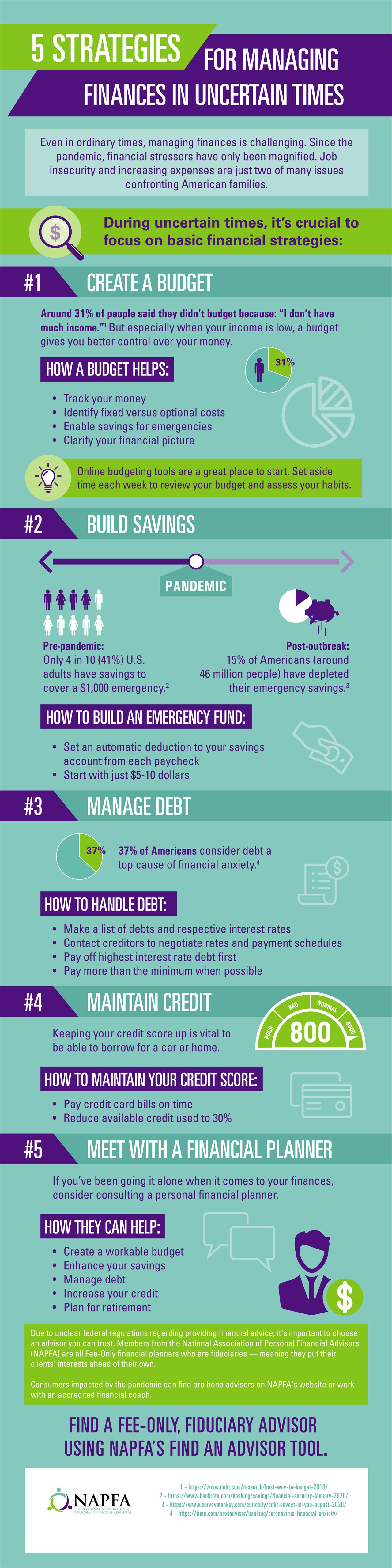
(BPT) – Even in ordinary times, managing finances is challenging. Since the pandemic, financial stressors have only been magnified. Job insecurity and increasing expenses are just two of many issues confronting American families. In honor of Financial Planning Month, read on for five strategies for managing your finances in uncertain times.


2020 Reveals the High Cost of Not Investing in Corporate Social Responsibility

2020-10-26T09:01:00

(BPT) – When the novel coronavirus outbreak impacted nearly every business across the globe, companies turned straight to their values to steer their response. A company’s mission and promise replaced the next product launch. Involvement in the community mattered more than the next earnings call. And how companies treated their employees superseded any other action.

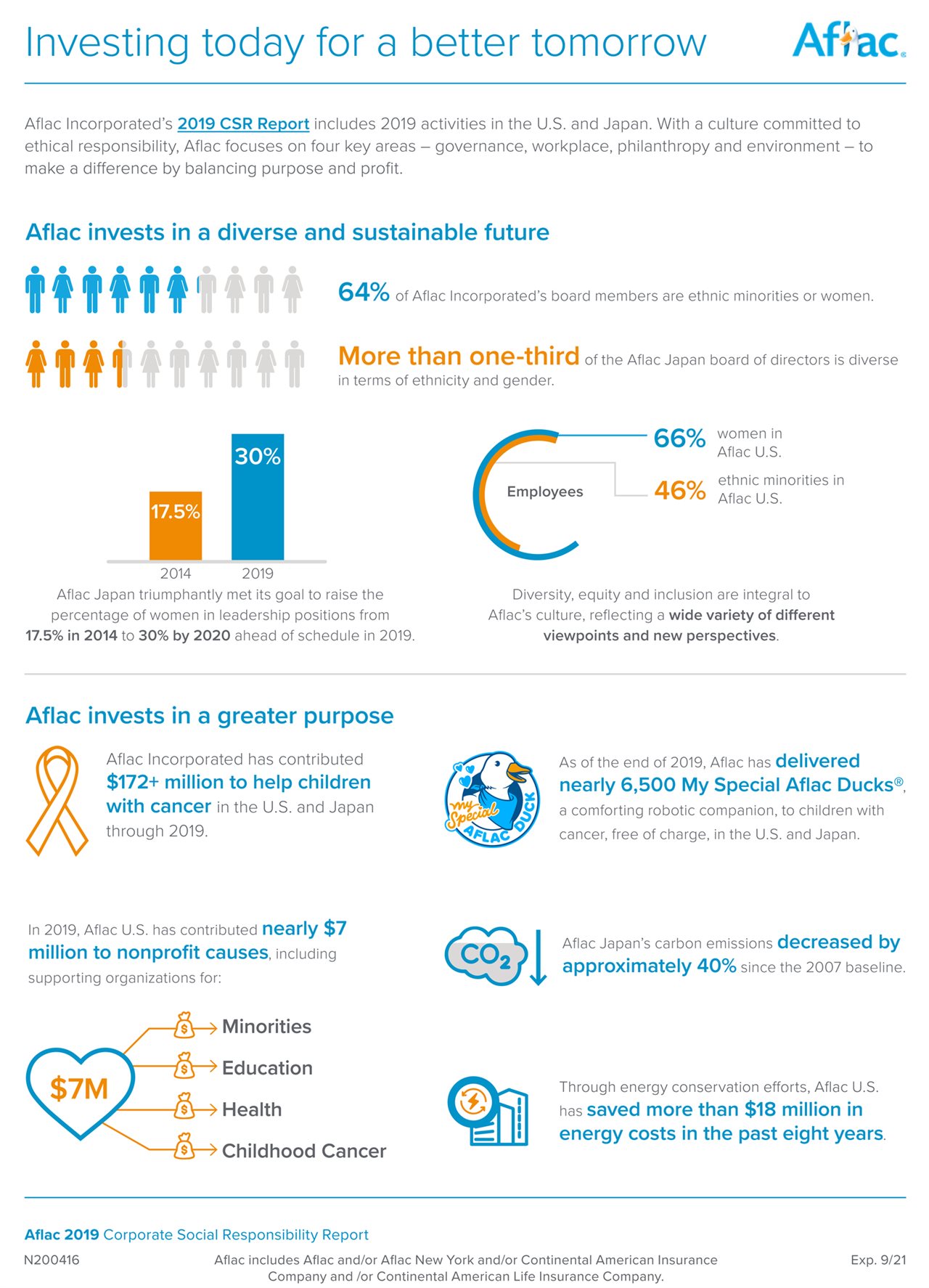
Aflac recently released its 2019 Corporate Social Responsibility (CSR) Report amid the pandemic to highlight how the company is creating a brighter future for its employees, customers, communities and stakeholders. The magnitude of the events of 2020 cast an even greater spotlight on a company’s purpose — the core values guiding its impact on the world. This is something Aflac Senior Vice President and Chief Environmental, Social, and Governance (ESG) and Communications Officer Catherine Hernandez-Blades says represents a trend in corporate prioritization that focuses on the needs of stakeholders, particularly employees and those throughout communities at large, which continues to accelerate at a rapid pace.

“At Aflac, being an ethical company has always been the way we do business, but the spotlight has been magnified and proving it with action is more critical than ever,” Hernandez-Blades said. “Communicating with employees, consumers, investors and others about what you are doing as a company to address issues of concern is paramount. Our newly released CSR Report, along with our new, award-winning ESG Hub, does just that, featuring key areas in ethical responsibility, including governance, workplace, philanthropy and sustainability.”

In addition to the COVID-19 pandemic, the quest for greater social justice in 2020 has fueled companies to reexamine their diversity, equity and inclusion strategies, and they might take a page from Aflac’s commitment to a diverse workforce. In 2019, Aflac U.S. hired 729 new employees who were 58% ethnic minorities and 65% women — an increase of 20% and 16%, respectively, in comparison to 2018. Sixty-four percent of Aflac’s board members are ethnic minorities or women. Aflac also spent $24.5 million with diverse suppliers in 2019 and achieved a 386% increase in working with veteran-owned businesses, a 9.4% increase with minority-owned businesses and a 5.2% increase in women-owned businesses in comparison to 2018.

Aflac’s CSR Report reveals the insurer’s long history of giving. To date, Aflac has contributed more than $150 million to support the Aflac Cancer and Blood Disorders Center of Children’s Healthcare of Atlanta. Additionally, Aflac has contributed nearly $22 million to organizations supporting minority causes and education such as the United Negro College Fund, Boys and Girls Clubs of America, Girls Inc., Jack and Jill of America Inc., and United Way of the Chattahoochee Valley through 2019.

Most companies are likely reevaluating their CSR playbooks in 2020 amid the COVID-19 pandemic, but there are tried-and-true approaches found in a tested CSR strategy that can inform next steps.

Visit Aflac.com/CSRReport to see the full 2019 Aflac Corporate Social Responsibility Report titled “Investing Today for a Better Tomorrow.”