Fighting Food Insecurity to Build a Brighter, Healthier Future

2020-09-10T10:29:00

(BPT) – Access to nutritious foods is a key ingredient in overall health and well-being. Yet food security is the most commonly reported unmet social need in the United States.1 This need has grown into a crisis as the COVID-19 pandemic exacerbates the struggle in communities everywhere, raising the number of those experiencing food insecurity by an estimated 45 percent in 2020 since 2018.2

Each September, in recognition of Hunger Action Month, people across the country come together to shine a light on this issue to support those who face hunger and food insecurity. It is a time for individuals and corporations to stand together to fight hunger in the United States. This is especially critical today, as many families are experiencing food insecurity for the first time due to COVID-19. In fact, food banks estimate that 40 percent of their current visitors need assistance as a direct result of the pandemic.3 Due to the strong link between food security and physical health, these staggering statistics also mean an increase in chronic conditions and healthcare costs.4

Of the 54 million estimated to face food insecurity in 2020 – which includes 18 million children – the greatest impact is being felt by some of the most vulnerable populations.5,6 Black and Latino households have higher rates of food insecurity compared to the national average.7 Meanwhile, food-insecure young adults are more likely to have mental health conditions like anxiety and depression, and children in food-insecure households are more likely to skip preventive medical care and rely on emergency rooms instead.8,9 Together, these facts clearly underline that food insecurity has broad downstream impacts on the healthcare system and our society as a whole.

This Hunger Action Month, and indeed throughout the year, Anthem, Inc., one of the nation’s largest health benefits companies, is reaffirming its company-wide commitment to reduce food insecurity across our nation.

The power of change

“We know that reducing food insecurity can positively impact mental, physical, and emotional health,” said Felicia Norwood, EVP and President, Government Business Division, Anthem. “This is why we’ve galvanized our organization to tackle the complex issue of food insecurity from multiple directions at once – in our communities, through our benefits, in partnership with our care providers, and with the support of our associates. We see the impact that consistent access to food has on health, and it’s clear that we must all work together to ensure no family has to worry about putting food on the table.”

Building on its 75-year legacy of improving lives and communities, Anthem is taking a multifaceted approach to combat food insecurity. This approach includes:

  • Mobilizing the community of 70,000+ Anthem associates to help drive meaningful change
  • Working alongside nonprofit organizations to take direct community action
  • Rewarding care providers for taking a whole-health approach that recognizes food insecurity
  • Structuring benefits to ensure food security is central to consumers’ whole health needs

Anthem’s national reach, deep relationships in local communities, and breadth of resources uniquely position the company to address issues like food security on a national scale – because the company focuses on health, not just healthcare. This is a long-term commitment, and currently, the Anthem Foundation has more than $16 million in grant programs at work to address food insecurity. In 2020 alone, Anthem associates have generated an additional $1 million to food insecurity partners through the company’s matching gifts program.

Every organization that touches health and healthcare has an important role to play to reduce chronic health issues, lower healthcare costs, and improve health access. A lack of nutritious food shouldn’t prevent anyone from living their best life. That’s why Anthem is working every day to promote better food access for better health.

To learn more about Anthem’s efforts to combat food insecurity, visit https://www.thinkanthem.com/FoodInsecurity.

References:

[1] McKinsey & Company: Insights from McKinsey’s Consumer Social Determinants of Health Survey (accessed July 2020):https://www.mckinsey.com/industries/healthcare-systems-and-services/our-insights/insights-from-the-mckinsey-2019-consumer-social-determinants-of-health-survey

[2,5] Feeding America: The Impact of the Coronavirus on Local Food Insecurity (accessed September 2020): https://www.feedingamerica.org/sites/default/files/2020-05/Brief_Local%20Impact_5.19.2020.pdf

[3] Feeding America: Facts about hunger in America
https://www.feedingamerica.org/take-action/hunger-action-month

[4] United States Department of Agriculture: Food Insecurity, Chronic Disease, and Health Among Working-Age Adults (accessed July 2020): https://www.ers.usda.gov/webdocs/publications/84467/err-235.pdf

[6] United States Department of Agriculture: Food Insecurity in the U.S. (accessed July 2020): https://www.ers.usda.gov/topics/food-nutrition-assistance/food-security-in-the-us/key-statistics-graphics/

[7] Northwestern Institute for Policy Research: How Much Has Food Insecurity Risen? Evidence from the Census Household Pulse Survey (accessed July 2020): https://www.ipr.northwestern.edu/documents/reports/ipr-rapid-research-reports-pulse-hh-data-10-june-2020.pdf

[8] Journal of Adolescent Health: Food Insecurity is Associated with Poorer Mental Health and Sleep Outcomes in Young Adults (accessed July 2020): https://www.jahonline.org/article/S1054-139X(19)30419-7/fulltext

[9] Official Journal of the American Academy of Pediatrics: Food Insecurity and Child Health (accessed July 2020): https://pediatrics.aappublications.org/content/144/4/e20190397



Creating working environments for families to thrive

2020-09-08T23:01:00

(BPT) – No one has escaped the effects of the pandemic, but working parents are struggling. Staring down a lack of childcare, new work-from-home situations, and insufficient support from employers or public resources, these individuals are nearing the end of their rope emotionally, and for many, financially. The start of the school year further complicates matters as parents grapple with difficult decisions and limited options due to school policies or their own financial and employment constraints. While parents navigate this fraught period for their families and bank accounts, the country must understand three things: Where parents stand now, what they need from their employers in the future, and what can be done in the meantime to find relative peace and security.

Where Parents Stand

According to Prudential’s Financial Wellness Census, over half of Americans said their financial health was negatively impacted following the outbreak of the pandemic. For Millennials and Gen X, many of whom are parents of school-aged children, more than one in five households saw their income fall by half or more. It is no surprise, then, that 58 percent of caregivers, a group which includes parents, are currently concerned for their financial futures. Working parents today are scared and depleted. Doing their jobs at home while simultaneously managing their children’s health, entertainment and education all day, parents have been juggling at least two full-time jobs since March. On top of that stress, their changed financial situations have led to higher stakes and fewer solutions when it comes to education and care as the school year begins.

What Parents Want

In the midst of a financial crisis, the Financial Wellness Census found that Americans turn first to the federal government for help, followed closely by family and friends. Only 14 percent sought financial assistance from employers during this time, but results concerning employees’ feelings about benefits reveal how workplaces can evolve to provide parents with greater support. The statistics are particularly telling for women, who typically carry a disproportionate amount of household childcare responsibilities. In fact, 43 percent of women want more flexible work options compared to only 29 percent of men. “Flexible work options” means the freedom to work remotely or at nontraditional hours of the day, but for parents it means being present for their children at bedtime and making their kids’ lunch without anxiously checking work emails. Less constraining expectations around working hours can even open up the possibility of homeschooling for high-risk families who cannot afford private tutors.

What They Can Do Now

Times are hard and deep systemic problems can slow needed changes. In the meantime, Amanda Clayman, financial therapist and Prudential’s Financial Wellness Advocate, is guiding parents. “As parents in a state of fear and exhaustion, processing reality is difficult, which puts us at risk of reacting (often financially) instead of thoughtfully responding to our situation,” says Clayman. “I recommend slowing down and asking yourself: What are the facts? What aspects of this situation do I control? And what is outside my control?” From there, Clayman encourages parents to find a best-fit solution for their family within their financial means. “Be open to giving up the idea of a feel-good decision and remember your family solution will look different from your peers,” she says. Try looking to community resources for support and solace. No path forward is perfect in a pandemic, but by regularly tuning in to personal priorities, leaning on their communities, and reminding themselves of their emotional and financial adaptability, families can find avenues for support.

Working parents have responded to financial and situational setbacks with creativity and courage this year. Their efforts have kept them afloat, but they are tired. As these parents look to the future, workplaces can help by offering environments, benefits and scheduling options that allow their employees — and their employees’ children — to thrive. Until then, keeping a firm grasp on their emotional and financial reality, being gentle with themselves, and taking pride in their flexibility will keep working parents going.


Use these 5 annual insurance benefits before the end of 2020

2020-09-08T08:31:00

(BPT) – Are you one of the 48% of adults who says they or someone in their household has postponed or skipped medical care due to the COVID-19 pandemic?1 If so, you may not have yet taken full advantage of your insurance benefits this year.

Taking care of yourself is a critical component of maintaining health and balance in your life. And with safety at the forefront of their practices, many medical professionals are operating their offices with added precautions, meaning the time is right to schedule that overdue appointment.

While we’re all eager to bid adieu to 2020, don’t forget to take advantage of your workplace benefits before they reset in 2021. These are five typical ways you can make the most of your available benefits during this unique time:

1. Schedule annual checkups with all doctors.

This year has been anything but routine, but don’t let that be an excuse to skip your annual health screenings. These include your primary care doctor, optometrist, dentist, dermatologist, gynecologist, etc. Health insurance typically covers in-network preventative care services like cancer screenings, immunizations, blood pressure monitoring and cholesterol checks. Not comfortable going in person? Telehealth services may be right for you to still receive care from your home.

With flu season approaching, there are concerns regarding the overlap of COVID-19 and influenza, and most health insurance plans cover getting a flu shot. The Centers for Disease Control and Prevention recommends getting a flu vaccination in September or October,2 so check with your doctor to learn more.

2. File a claim for your wellness benefit.

Supplemental insurance policies like accident and cancer insurance may include a wellness benefit that pays cash for things like a COVID-19 screening, annual physical, dental or eye exam, mammogram, prostate screening, immunization and more. You can even file a claim for this type of benefit if your health insurance already covers it.

3. Get help with emotional health.

According to the 2020-2021 Aflac WorkForces Report, 59% of employees have experienced burnout due to work. Employee assistance programs, or EAPs, provide support services for a full range of personal, family and work/life issues such as financial counseling or emotional health challenges — like feeling anxious or lonely working from home due to the pandemic. Referrals for family care, elder care and child care, as well as support for financial and legal issues, may be included in an EAP, too.

4. Take advantage of HSA tax benefits.

A health savings account, or HSA, allows employees with a high-deductible health plan to set aside money to pay for qualified medical expenses. Because they’re tax-deductible, HSA contributions help save money, and there are no time limits for when you have to spend it. The 2020 maximum contribution amounts are $3,550 for individuals and $7,100 for families,4 and individual account holders age 55 or older also have an opportunity to make an additional annual contribution of $1,000 in 2020.5

5. Closely monitor your FSA.

If you have a flexible spending account, or FSA, your plan may allow you to roll over up to $500 of remaining funds into 2021, but you’ll lose any amount exceeding that — even though you paid for it. In some cases, an FSA account may also provide a grace period of 2.5 months at the start of the new year for account holders to use the remaining money in their FSA.6 Either way, be sure to submit receipts to get reimbursement for eligible purchases.

Despite its challenges, 2020 has reinforced the truth behind the expression “health is wealth.” So, whether you don a mask and go to the doctor in person or use a smartphone for telehealth, prioritize self-care and make full use of the benefits you’re already paying for.

1 KFF Health Tracking Poll – May 2020 – Health and Economic Impacts. Accessed Sept. 3, 2020.

2 Centers for Disease Control and Prevention, National Center for Immunization and Respiratory Diseases (NCIRD). Accessed Sept. 3, 2020, https://www.cdc.gov/flu/season/index.html.

3 The 2020-2021 Aflac WorkForces Report is the 10th annual study examining benefits trends and attitudes. The surveys, conducted by Kantar, captured responses from 1,200 employers and 2,000 employees across the United States in various industries. Learn more at Aflac.com/AWR.

4 HealthCare.gov, Health Savings Account (HSA). Accessed Sept. 3, 2020, https://www.healthcare.gov/glossary/health-savings-account-hsa/.

5 Forbes, IRS Announces 2021 Health Savings Account Contribution Limits, Still Time To Make 2019 And 2020 HSA Contributions. Accessed Sept. 3, 2020, https://www.forbes.com/sites/ashleaebeling/2020/05/20/irs-announces-2021-health-savings-account-contribution-limits/#234f35686875.

6 HealthCare.gov, Using a Flexible Spending Account (FSA). Accessed Sept. 3, 2020, https://www.healthcare.gov/have-job-based-coverage/flexible-spending-accounts/#:~:text=You%20generally%20must%20use%20the,use%20in%20the%20following%20year.

This article is for informational purposes only and is not a solicitation for insurance. Aflac includes Aflac and/or Aflac New York.

WWHQ | 1932 Wynnton Road | Columbus, GA 31999

Z200582 EXP 9/21


Be prepared: 5 steps to build your emergency fund

2020-09-08T06:01:00

(BPT) – Many of life’s interruptions can’t be predicted. Not having funds set aside for unexpected problems can leave you racking up high credit card debt or putting yourself in other difficult financial straits.

“When it comes to savings best practices, it is especially clear after the pandemic how valuable an emergency savings fund can become at a moment’s notice,” said Jaspreet Chawla, Senior Vice President of Savings Products at Navy Federal Credit Union. “Here are some tips that might help you kick start your emergency savings.”

Here’s how to create an emergency fund to protect your finances.

1. Do the math; set a goal.

If your first instinct is to save an enormous sum that will cover all expenses for many months, think again. While financial experts recommend having between three and six months of living expenses in an emergency fund, this number might not be realistic if you’re just beginning to save. It’s often a good idea to start with a smaller goal — $500 or $1,000. Then, as you get into the habit of saving, you can slowly start to raise your future goals until you reach the three-to six-month threshold.

2. Decide where to put the funds.

The money in your emergency fund should be kept separate from accounts you use for paying bills or making purchases and be easily accessible when an emergency arises. Using just one account may make it far too easy to “borrow” from your emergency fund for non-essential items. Instead, place your emergency funds into an interest-bearing account that’s specifically designated for this purpose. Good options include a savings account or money market account. Either can be easily accessed without penalties and allow your money to grow.

3. Get creative and save.

Building an emergency fund means you’ll need to trim spending elsewhere. Quick fixes like evaluating your cell phone plan, cutting the cord on cable or bringing your lunch to work can help free up money for savings. Or think bigger, like refinancing your home or car. Use a refinance calculator to see whether a new loan will save you money.

4. Save unexpected windfalls.

You can boost the balance of your emergency fund when you least expect it with “found” money. Invest birthday or holiday cash gifts, work bonuses and tax refunds directly into your account and see how quickly you can reach your emergency fund goal. Since this money isn’t part of your typical spending, it’s easy to use it for saving without missing it.

5. Make saving automatic.

We all know that saving money for the unexpected is a good idea, but it’s easy to delay in favor of more pressing concerns. Treat your emergency fund like any other monthly recurring bill and have funds directly deposited into your savings account each month. You’ll be less likely to miss the money and can sleep easy knowing you have a safety net when life interruptions occur.

“We always try to emphasize the importance of savings and financial security, and we want to be a resource for our members when it comes to prepping for financial emergencies,” Chawla continued. “An emergency fund isn’t a luxury; it’s an important way to protect the things that matter most to you. I encourage you to talk to a financial institution you can trust, and get started saving as soon as you can.”


Five ways to help protect yourself from unemployment insurance fraud

2020-09-04T18:55:00

(BPT) – Many people around the U.S. are relying on unemployment insurance assistance as the country battles the pandemic and associated economic effects. As unemployment has risen, fraudsters have been targeting consumers to steal unemployment insurance benefits. They do this by taking personally identifiable information (PII) that cybercriminals have posted on the dark web, stolen from unsuspecting consumers or gained from past data breaches.

Once fraudsters have this information, which can include a victim’s name, address, Social Security number and driver license number, they falsely apply to a state’s unemployment insurance program to register for unemployment insurance benefits. These benefits are typically distributed via direct deposit or prepaid debit cards for those without bank accounts. Once a fraudster has access to the stolen funds, they can use a prepaid payment account service and its mobile app to cash out or make purchases — in-store or online — for items like gift cards, electronics, cryptocurrency, money orders, and money transfers.

“We’ve seen a significant increase in fraudulent purchases in July, related to unemployment insurance fraud schemes,” said Michael Lemberger, senior vice president and regional risk officer for North America at Visa. “Fraudsters are actively targeting state unemployment insurance programs hoping to find gaps. This problem requires a collective effort with everyone doing their part, including the state workforce agencies, law enforcement, financial institutions, payment processors and payment networks. Consumers must be on-guard for suspicious activities so fraudsters cannot exploit their identity for financial gain.”

The warning signs for these crimes can be tough to spot, but here are common red flags to look out for:

1) Offers from people or organizations you don’t recognize promising early and faster unemployment insurance benefit payments.

2) Solicitations from people you don’t know offering money in exchange for your personal information.

3) Letters or email correspondence indicating new accounts or unemployment insurance benefits have been initiated in your name.

To avoid your personal information from being used for fraud, Visa recommends the following to protect yourself:

  • Proactively register for an unemployment insurance account directly through your state’s website. This way, if anyone tries to steal your information, state authorities will notify you as soon as possible and prevent your money from getting stolen.
  • Secure your personal information — online and offline. Use online tools to encrypt and lock down sensitive digital information, such as your financial and health documents. For physical documents with your personal and financial information, make sure they’re locked in a secure spot and safely shred any documents you don’t need.
  • Be mindful of social media and email scams. If it seems too good to be true, it probably is. Fraudsters will try to convince you that you can get your benefits sooner, you may be eligible for more benefits, or a person you don’t know needs help with their unemployment insurance payments.
  • Just like our physical hygiene is crucial right now, so is our cyber hygiene. Don’t click on links or attachments from email addresses and people you don’t recognize or offers you didn’t ask for.
  • And, last but not least, your information is valuable so keep your personal information to yourself. Never share your personal information unless there is a legitimate reason to do so.

If the worst-case scenario happens and a fraudster gets hold of your personally identifiable information to commit unemployment insurance fraud, there are steps Visa recommends you take, including:

  • Contact the three primary credit bureaus, Equifax, Experian and TransUnion.
  • Contact your respective financial institution.
  • Contact your state unemployment office.
  • Visit IdentityTheft.gov to report the fraud to the FTC and get help with important next steps for recovery.
  • Review your credit reports often.

Cybercriminals are continuing to up their game, but if people take the necessary precautions and remain on the lookout for anything suspicious, these fraud attempts will become much less successful and frequent.


6 questions to ask when taking your business online

2020-09-02T07:01:00

(BPT) – Whether you run a solo small business, or your business is moving from brick-and-mortar to e-commerce, you’ve likely got a long to-do list — and you may not know where to start. Or if your business is already online, you may be trying to improve your website and stand out from the competition. Do you have the skills and know-how to make that happen?

Not everyone does. Chances are, you know a lot about your products or services, but not necessarily how to promote your business and run it successfully using today’s digital tools. And due to the pandemic, increasing your online presence and running your business virtually has become even more crucial.

According to survey data released by Fiverr, 49% of U.S. small and medium-sized businesses are optimistic about their future prospects after the lockdown has passed, but not surprisingly, nearly a quarter (22%) of them do plan to increase their digital marketing spend as a result of COVID-19.

If you’re one of the many entrepreneurs trying to figure out your next steps for taking — or optimizing — your business online, here are some questions to ask:

1. What are you selling?

Are you selling a product or a service? This makes a difference in how you run your business. Can your business happen virtually (if it’s a service), or do you have to manage manufacturing, inventory and shipping on top of marketing and advertising, online ordering and finances?

2. Do you need your own website or online store?

Many small businesses can succeed — or at least start out — by selling products on an existing platform like Etsy or Amazon, rather than creating their entire online store from scratch. But it may not be as hard to build your own site as you think.

3. What do you need on your website?

What will best serve your business? “About” and “Contact Us” pages? Do you want to include a blog? Customer testimonials and special promotions for new clients? Do you need a catalog of products and services? Does your business need to include a list of services, rates and shipping costs? Making a list of what your business needs is a useful starting point for whoever you hire to help build your website.

4. What web templates do you see working best for your business?

Are you familiar with WordPress, Wix and Squarespace? Which would be the best to suit your particular business?

5. What type of content do you want to see on your site?

Would you like to see custom-made illustrations or animation? Stock or custom photography? How about videos?

6. How do you make sure customers can find your website?

There’s a lot of competition out there. Unless you’re well-versed in SEO and how Google algorithms work, you may not know how to build an online presence others can find using a web search.

Some entrepreneurs find the thought of putting their business online daunting, but with an expert in your corner, it can be simple and hassle-free. Fortunately, there’s a service that can help you find the right talent to create a web presence that really reflects your unique brand: Fiverr is a platform connecting businesses of all sizes with skilled freelancers offering digital services in over 400 categories including graphic design, digital marketing, programming, video and animation. You can view professionals according to their skills, along with ratings, reviews and cost of the service you need.

And now there’s a new tool to make it even easier to get started building a website for your business — Fiverr’s The Shift. This new resource hub includes a website developer matching experience that will match you with a verified, highly-rated professional specializing in web design and development. For those new to creating a website, the matched talent will act as a guiding force throughout the website creation process.

On The Shift hub, you can also browse inspiring case studies, read stories about how businesses have transformed their digital presence and get tips from helpful blogs, podcasts and many other useful resources for small and medium-sized business owners across all industries.


How desk booking software can help colleges go back to school and businesses return to work

2020-08-27T09:01:00

(BPT) – Since the COVID-19 pandemic, university administrators and employers alike are searching for ways to welcome people back safely. Their needs are complex: Higher education institutions must schedule for multiple buildings and even multi-campus environments while trying to maintain social distancing, and businesses need to find ways for employees to safely return to the workplace, along with visitors, vendors, and clients.

Recent technological advances have provided solutions, offering office and university administrators useful tools to help maintain social distancing, schedule extra cleaning — and even initiate contact tracing when someone becomes infected.

Here are ways this new desk booking software can help colleges and companies get going again.

Campuses

Leading cloud-based business software company Epazz, Inc. (Ticker: EPAZ) has developed desk & room booking software called DeskFlex, which is becoming instrumental in helping higher education institutions with their unique scheduling needs.

This software system allows schools to seamlessly schedule multiple classrooms, meeting spaces, and even reserve equipment for faculty and staff. The system ensures that rooms have occupants within the safe capacity, helping the staff and students maintain social distancing. Faculty and students can quickly check classroom reservations, preventing confusion, double-booking or lost reservations. Students can even use the room scheduling software to reserve study spaces, lab spaces or club events.

Universities can also use advanced Bluetooth beacons installed in hallways and other areas to detect how many students are present, helping to prevent overcrowding.

All of these innovations work together to establish and enforce health and safety guidelines across a college campus.

Offices

Similarly, companies can use DeskFlex to schedule desk or office space, ensuring that employees are maintaining social distancing. Vacancy sensors monitor which workstations are available, allowing employees to book a vacant desk before arriving to avoid unnecessary contact. Software tools like this are essential to managing office space, improving productivity and allowing staff to return to work in a safe environment.

The system even allows for automatic notification of cleaning staff after a desk or office reservation ends, allowing time to sanitize the space before the next employee arrives.

Just as with universities, employers can use Bluetooth beacons throughout offices to automatically count who is there, to limit capacity in any given area.

DeskFlex hardware reduces the need to touch shared surfaces. For example, users can check-in and out from room reservations using the QR code scanner of contactless room displays and FlexCube devices. Lobby kiosks make it easy for users to find available workstations with just a few taps on the screen.

Contact tracing feature

Advanced Bluetooth technology also allows businesses or universities to conduct contact tracing. When a student or employee checks into a building, the Bluetooth beacons regularly update their signal to a central server. It keeps a record of users’ login activities, reservations and location in an office or on campus. When users move around the office or school, other Bluetooth beacons pick up their mobile signals and register their position.

DeskFlex’s Contact Tracing software screens students, faculty, employees and registered users for symptoms of coronavirus upon logging into the system. If a student or employee tests positive for COVID-19, the Contact Tracing tool can run a report on that user’s geographical data. Administrators can analyze the user’s data and create a report listing other users who were present in the same location at the same time as the infected individual. The employer or school can then immediately locate and recommend quarantine for those users.

Proactive virus defense

Thanks to machine learning, recent software innovations provide facial biometric information upon someone’s entry into the building. Then the system automatically alerts management when it detects elevated temperatures or people not wearing protective masks. When someone is not wearing a mask or has an elevated temperature, the system will deny them entry to the building, helping to protect the health and safety of everyone at that facility.

Compared to other room booking providers, only DeskFlex can effectively address the coronavirus threat in the workplace with its latest software and hardware innovations. Built-in customization features also let each business or institution modify it according to that organization’s needs.

Visit DeskFlex.com to learn how to help your school or business get back to work.


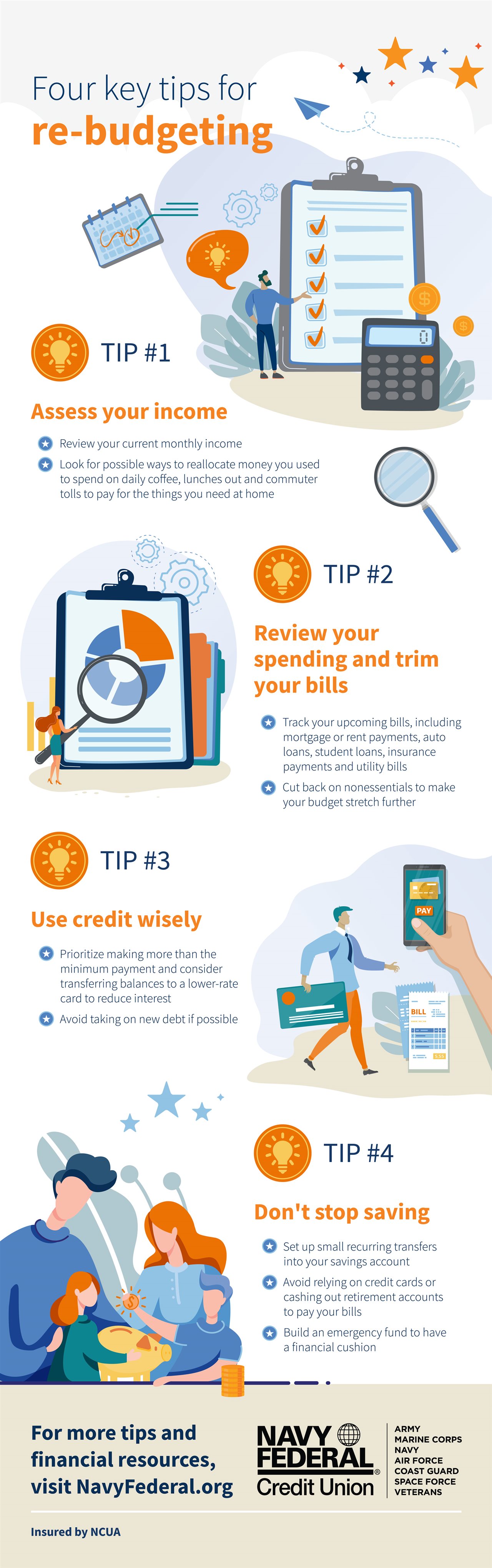
Financial wellness: Four key tips for re-budgeting

2020-08-19T06:01:00

(BPT) – For millions of Americans, life has been turned upside down by social distancing, quarantines and business closures from the COVID-19 pandemic. If your finances are stretched thin, Navy Federal Credit Union has tips to help you reset your budget and get back on track.


4 Ways to Energize Your Workspace with Art

2020-08-18T14:15:00

(BPT) – A stylish and inviting atmosphere plays an important role in the overall mood and productivity of a company’s employees. It also gives you a chance to tell your brand’s story and connect with your customers while in your store. Meaning a well-designed space can actually impact your business’ bottom line.

Here are four ways to help you energize your workspace and create a connection for employees and customers:

1. Have photos of key business moments professionally printed

Take a trip down memory lane and choose some of the key moments in the life of your business. Think about your grand opening, or your first sale. Consider the milestones along the way that made you proud to be a small business owner and share them with your team and customers by printing and displaying them.

2. Drive home your brand values with art and images that inspire your business

When you think about what your business stands for, consider what kind of art reflects the same persona. Does your business cater to children? Then you might hang artwork by some of your loyal young customers. Do you focus on travel? Consider displaying postcards from your favorite destinations as inspiration for customers. Art is a great way to help customers immediately visualize your brand and all it stands for.

3. Use custom frames to create a polished and professional look

The easiest way to add a professional touch to your photos or artwork is by adding a custom frame. For an industrial feel, use a metal frame. For a vintage feel, use a wooden one. Consider which frame will catch the eye of your target audience. Fortunately, finding the perfect fit for your piece of art might be easier than you think, even if what you’re trying to frame isn’t a standard size. FedEx Office now gives you an easy and affordable solution for any size picture frame.

4. Mix and match mediums for an eye-catching experience

Add a little dimension to your walls with a combination of framed artwork and canvas prints. Event posters can be framed to show off larger prints and styles. A mixture of mediums can create an interesting focal point in any space and draw some much-wanted attention to your space.


Save money and streamline your makeup routine with the help of these beauty hacks!

2020-08-09T22:01:00

(BPT) – Let’s face it, makeup can be expensive. We are living in a time like no other, with the pandemic and social distancing affecting every aspect of our lives — from our daily lifestyles, budgets, diets — to our beauty regimens. We are all guilty of wanting the most luxe and notable cosmetics to put on our faces. But in this economy, splurging on makeup isn’t a practical option.

Yet these affordable luxuries can be an excellent way to practice self-care when we need a little extra positivity in our lives. In fact, studies show that in challenging times women tend to treat themselves to personal care items as a way to feel better. As we look ahead to what the summer season has in store for us, there’s no question that it’s going to look different than years past — but “different” doesn’t mean you can’t buy the makeup that you love.

We connected with dermatologist Michelle Henry to talk about affordable and accessible ways to fuel up your beauty look in this new normal.

Seek premium products that offer multiple benefits

“We are living in the age of low-effort beauty, now more than ever. Layering on multiple makeup products at once is not a great idea in the summer, especially if you’re going to wear a mask. It can result in breakouts and clogged pores,” says dermatologist Dr. Henry. “It’s important to look for multi-benefit beauty products that help keep skin healthy and simplify your regimen; products with sunscreen and additional vitamins and antioxidants are great options.”

One high-quality drugstore foundation that offers multiple benefits for skin is Neutrogena Healthy Skin Liquid Makeup Broad Spectrum SPF 20. It offers a triple punch of natural-looking, silky coverage, effective sun protection and an exclusive blend of antioxidants to help your skin counter stress and improve luminosity, tone and texture over time. It’s makeup backed by the science of skincare — that keeps your skin healthy — at an affordable price.

For example, here are some ways you might pamper yourself with drugstore products — without overwhelming your budget.

Look for makeup dupes for value

Save money by finding specially formulated products that help you look good and feel better. Look for makeup dupes for value; dupes are a great way to feel out colors and formulas without having to let go of hard-earned dollars, while still getting effective, high-end products and benefits. Turns out most luxury brand makeup has the same ingredients in it and provides the same multi-benefits as the drugstore ones!

Use quality makeup brushes

Often, a perfect makeup job is more dependent on the usefulness of the tools than the amount spent on the products. Invest in well-made brushes, sponges and applicators that can be washed and used over and over. When you buy good quality tools, they help you achieve a more natural-looking makeup application and can even help you use less makeup.

But remember, failure to keep your tools clean leads to broken bristles that will show up on your skin. Cleaning makeup brushes has always been important, but during the pandemic, worries about avoiding exposure to germs and preventing cross-contamination are at an all-time high, so always clean your brushes.

Take advantage of frequent-shopper discounts

Once you find the drug chains that carry your favorite makeup brands, sign up for their rewards cards so you can accrue points toward future purchases and learn about special promotions. You can often rack up points picking up groceries, pharmaceuticals, and other items on offer, then use the discounts on your choice of cosmetics.

As the economy slowly recovers from the effects of COVID-19, savvy consumers continue to seek ways to care for their own well-being while also watching their money.

Neutrogena’s portfolio of makeup fueled by skincare can make you feel pampered, help you look radiant and empower you to present your best possible self, no matter the challenges you’re facing from day to day. Try Neutrogena today, available nationwide at any mass drugstore.