5 tips to help keep kids healthy during cold and flu season

2019-11-06T08:01:00

(BPT) – It’s here again — that time of year when everyone seems to unwittingly pass colds and other illnesses around. As every parent knows, kids can bring germs home from school and share them with the entire family, spreading illness at warp speed. In fact, 60 million school days are missed every year by children nationwide due to preventable illnesses like cold and flu.

What can you do to fight the spread of illness and help keep your kids — and you — healthier during cold and flu season this year? It’s all about practicing healthy habits and making sure you have the right tools. Lysol’s Here for Healthy Schools campaign is working with schools, educators and parents to help reinforce healthy practices and curb the spread of illnesses in the classroom.

As part of the program, Here for Healthy Schools spokesperson, actress and parent Sarah Michelle Gellar shared five tips for keeping your kids healthy during cold and flu season, and beyond:

1. Model healthy habits

“Your children pay closer attention to smaller things than you’d expect,” says Gellar. She advises modeling the habits you want your children to follow. Demonstrate how you use a tissue to cover your mouth and nose when you sneeze. And be sure that they see you washing your hands often, especially before eating a meal. Actions do speak louder than words, so practicing what you preach can go a long way to instilling these healthy habits in your kids.

2. Reinforce healthy habits with caregivers

Gellar explains how important it is that caregivers and others who spend time with her children follow the same healthy habits she wants to teach her children.

“I truly rely on my village to help me,” says Gellar. “This means my children interact with many different people within their day-to-day activities, and inevitably come in contact with even more germs.”

She makes sure everyone who spends time with her children understands the vital role these healthy habits play in helping to avoid preventable illnesses.

3. Involve kids in preparing healthy meals

“Food is so important in our family,” says Gellar. “Most of our fondest memories take place in the kitchen.” By making her children part of the process of planning, preparing and serving meals, she stresses, they are constantly learning not only how to eat healthy, balanced meals, but also how to create one for themselves.

4. Get a flu shot

Gellar insists that everyone in her household get a flu shot each year, at the beginning of flu season, to help her family stay flu-free throughout the year. This also helps prevent spreading the flu to anyone else who might be vulnerable.

5. Keep kids home when they’re sick

“While we want to limit the number of days out of school for children to ensure they’re thriving and growing,” Gellar explains, “it’s important as parents to understand when to keep them home.” Because colds, flu and other illnesses are easily spread, sending children to school when they’re clearly under the weather will likely lead to more children in the classroom getting sick and missing school.

Following these healthy habits will help keep everyone’s sick days to a minimum this year, so children can learn, grow and thrive at school.


Navigating Cancer Costs? Consider These 3 Steps

2019-11-04T23:01:00

(BPT) – The rising cost of cancer care affects virtually every patient undergoing treatment for cancer, including patients who have health insurance. The Leukemia & Lymphoma Society (LLS), a global leader in the fight against cancer, has found that patients experience the financial burden of cancer care for many years following diagnosis, as survivorship typically involves continuous treatment and follow-up care.

Marialanna Lee, VP Public Policy for LLS, oversees the organization’s Cost of Cancer Care Initiative, which urges all of the stakeholders in the healthcare system to work together to bring down the unsustainably high cost of cancer care. LLS’s Office of Public Policy advocates for cancer patients at the federal and state level, to ensure that patients have access to meaningful health insurance coverage so that they can afford the costly treatments necessary to survive a cancer diagnosis. Lee hears firsthand stories from patients about their struggles with the high cost of cancer care.

“Too many cancer patients are forced to make life-or-death treatment decisions based purely on the cost of their care,” says Lee. “When cancer patients are fighting for their life, the last thing they need is financial distress.”

According to Lee, for anyone dealing with cancer, it’s important to consider the following factors when navigating the complexity of accessing treatment and managing the many costs encountered along the way.

Getting a second opinion can have a positive impact on not only your treatment plan, but on your wallet too.

Even if you have health insurance, it can be helpful to gain a second opinion not only to inform the best course of care, but to avoid the potential for side effects and added costs that may arise from treatments not well suited to your needs. To help you investigate the options that may be available to patients and their families, LLS offers emotional, educational and financial support, including co-pay assistance and help finding and enrolling in clinical trials. To learn more, visit www.lls.org/support/financial-support.

To learn more about the challenges patients face and what LLS is doing to drive change, please visit www.lls.org/cancercost.

The financial impact will likely extend to your caregiver and maybe even other family members.

For many patients, caregivers play a crucial role in helping to navigate a life-altering diagnosis like cancer. Along the way, caregivers will likely encounter a range of physical and emotional demands, and the financial cost of caregiving can take a toll as well. Caregivers may be hesitant to seek help for themselves and may be unaware of the many resources available to them. LLS provides free resources and support services for caregivers, including financial assistance.

You can be an advocate for change.

Callan Kreidel, Cancer Survivor & LLS Advocate (Photo courtesy of Kendall Parsons Photography)

Your voice as a patient or caregiver is invaluable, as it can help shape discussions about the cost of care and the importance of access to meaningful health insurance coverage. Whether you act as an individual or part of an effort organized by a patient advocacy organization, you can make an impact by sharing your story about the financial hardships you’ve experienced. These firsthand accounts are vital for spurring action.

To learn more about LLS Advocacy and how you can raise awareness about the cost of cancer care and its impact on patients and families, visit www.lls.org/policy-advocacy.


Did you know that all-season tires don’t always work in all seasons?

2019-10-30T09:01:00

(BPT) – Here’s something you may not know: All-season tires are only meant for year-round driving if you live in the extreme southern United States.

For everyone else, it’s vital to install a set of tires that protect them in snow, ice and frigid temperatures. In some places in North America, doing so is even a legal requirement. All-season tires are not built to provide traction on winter roads.

If you live in a place that gets consistent snow and ice each winter, there’s nothing safer than a set of premium dedicated winter tires. But what about areas where winter weather is mild or unpredictable? In that case, winter tires might be overkill, especially since they aren’t built for summer roads and thus require drivers to own two sets of tires.

However, one solution saves drivers hassle and money while keeping them protected when temperatures plummet and roads become slick. All-weather tires are made for year-round driving but rated to provide safe driving on winter snow and ice.

What’s the difference between all-weather tires and their winter and all-season alternatives? All-weather tires combine all-season and winter driving technology to give drivers year-round peace of mind on the road. They’re the most convenient winter driving option, since drivers can keep them on all year long.

All-weather tires handle well in rain and heat, but they’re also marked with the three-peak mountain snowflake symbol (also known as the severe service emblem) that certifies they’re suitable for winter use. Notably, this certification makes them legal for use in areas that require winter-rated tires.

Nokian Tyres invented the all-weather tire and is already on its fifth generation of the product. The Scandinavian company encourages their use in areas with unpredictable or milder winter weather.

“We designed all-weather tires to provide safe driving in all conditions, even the worst weather winter has to offer,” said the company’s director of products and pricing, Steve Bourassa. “While dedicated winter tires remain an ideal option for drivers who experience consistently severe winter weather, our all-weather products offer a great combination of safety and convenience for drivers in many North American locales.”

Based in Finland, Nokian Tyres tests its all-weather products north of the Arctic Circle at the same facility where it puts its winter tires to the test. The key to their year-round performance is an asymmetrical tread design: One side of the tire’s tread pattern looks like a winter tire, while the other side has grooves that are more typical of an all-season product.

Its all-weather products also have a dual performance compound that delivers responsive grip on winter roads without sacrificing spring and summer performance.

It all adds up to a convenient, versatile driving experience that protects winter drivers much more effectively than all-season tires.

To learn more about what makes all-weather tires thrive in year-round driving conditions, visit NokianTires.com/Weather.


Vital careers in today’s transportation industry

2019-10-30T09:01:00

(BPT) – If you want to buy anything at all today, you can probably find it online, purchase it, then have it shipped to your home in a matter of days — or even hours. You can track the package as it heads toward you, and you’ll probably receive a text or email, and even a picture of the item, just as it’s being delivered to your home.

What does it take for that item to get all the way to you?

Several steps — and a whole host of people who work in transportation careers.

The most visible of those jobs are the truck drivers who deliver the goods you ordered to your door. The need for those drivers has become greater than ever, thanks to the booming e-commerce marketplace. The number of current truck drivers is actually at an all-time high, totaling 3.5 million. Shipping all these goods relies on fleets of trucks with qualified drivers nationwide to get things where they need to go.

Less visible are the thousands of technicians that keep the trucks up and running, maintaining them so that they’re available to run routes around the country to keep those items on the move, day and night. Without the skill and expertise of these technicians, the fleets wouldn’t be able to function.

And even before the items make it to the trucks, warehouse workers are a vital part of this journey — they organize and keep track of all the goods, select the correct items, package them properly and then make sure that they’re all headed out to their correct destinations.

Because of this constant demand for home delivery of consumer goods, the need is greater than ever for qualified employees to fill all of these roles. Shipping goods faster than ever means that the need for larger, more efficient trucking fleets, and their supporting employees, is also greater than ever.

Penske, for example, runs a fleet of up to 328,000 trucks, employing over 36,000 associates in over 1,100 total locations.

The three most crucial positions that transportation relies are in increasing demand — and these jobs do not require a college degree.

Truck drivers

The job of truck driver has transformed over the years, becoming more reliant on advanced technologies. And newer trucks today are cleaner and more comfortable. Driving large tractor-trailers or delivery trucks is one of the largest occupations in the U.S. To work at a fleet such as Penske’s, it is required that you have a commercial driver’s license (CDL), and a safe driving record. There are dedicated truck driving schools available, and a number of qualified drivers gain valuable experience on the road while serving in the military. According to the most recent U.S. Census, at least 1 in 10 truck drivers are veterans, which is twice the rate of workers who are veterans overall.

Technicians

No positions are more important in helping to keep entire fleets up and running than diesel technicians. Diesel and body shop technicians use leading-edge diagnostic and troubleshooting technologies to problem-solve, repair and maintain today’s vehicles, which are the backbone of the transportation industry. Vocational schools nationwide offer training programs for those interested in pursuing this essential skilled position in transportation.

Warehouse

To help run warehousing and distribution systems smoothly, a large number of employees are needed around the country. Warehouse workers may be involved in multiple roles, such as order picking, using a forklift or lift-truck, packaging, taking inventory and expediting shipping and receiving of goods.

A third of today’s truck drivers work in the transportation industry, an industry that supports over 2 million jobs — occupations that include not just truck drivers, but also technicians, managers and dispatchers. All of these careers are essential to the growing needs of the transportation field, to meet the constantly increasing consumer and business demands of today. To learn more about careers in transportation, visit penske.jobs.


4 tips for choosing a checking account [Infographic]

2019-10-28T07:01:00

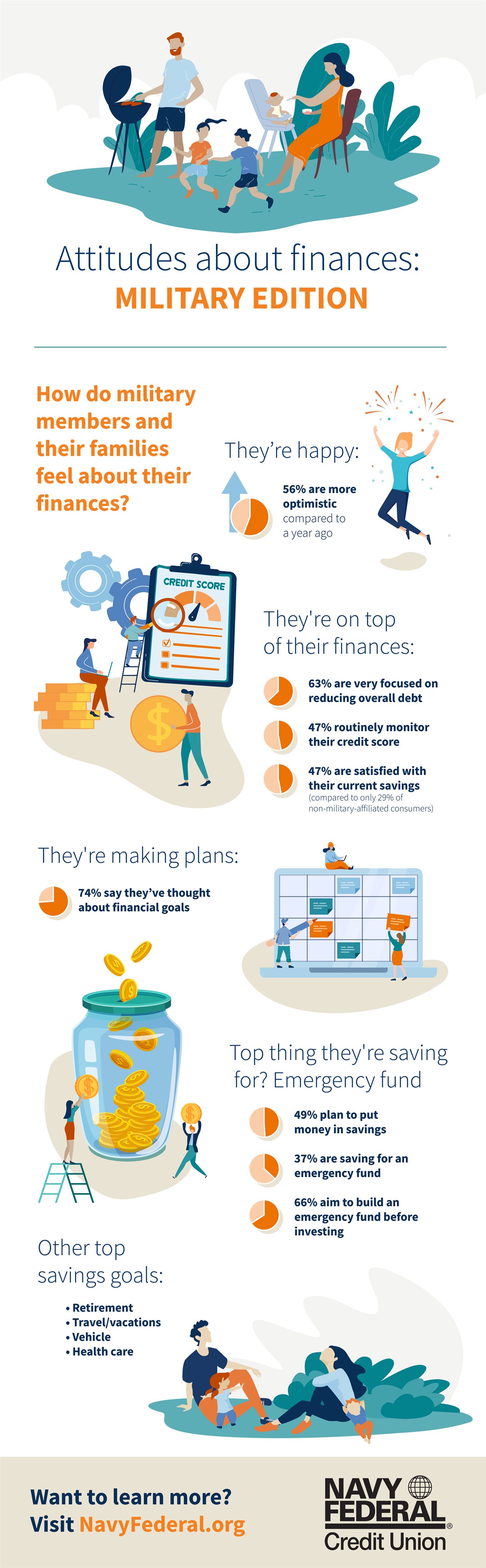
(BPT) – Whether you’re just starting out in a new town or newly married, or if you’re tired of paying high fees at your current financial institution, looking for a new checking account can be overwhelming. But it doesn’t have to be. With certain key elements in mind, you can be sure that your new checking account meets all of your needs, without the fees — and can even earn you money with monthly dividends.


Diabetes health: Top tips to find affordable medication

2019-10-28T08:01:00

(BPT) – In the United States, approximately 30 million people are living with diabetes, according to the Centers for Disease Control and Prevention. Many require insulin to manage their condition, but due to rising costs, more and more people are struggling to get the medication they need.

According to a recent survey among diabetes educators who help people living with diabetes manage their condition, people struggling to afford their medications are rationing and avoiding filling prescriptions due to cost. This is particularly true for those who are uninsured. Previously, the greatest challenge diabetes educators faced in helping patients in their practices was related to exercise and healthy lifestyle, as well as frequent glucose testing. Today, those challenges have been eclipsed by affordability concerns.

Nearly two-thirds of educators report that their patients admit they ration their medications through actions like cutting their tablets or decreasing their insulin dosage on their own, according to the survey conducted at the American Association of Diabetes Educators Annual Conference by Inside Rx. Perhaps worse, 57% of educators reported their patients don’t take their medications at all.

Taking diabetes medication as prescribed is important for managing the condition and staying healthy. Complications from not using medication appropriately may lead to kidney damage and the need for expensive dialysis treatments, eye damage and potential blindness, as well as an increased risk for heart disease or stroke.

If you or a loved one is living with diabetes, you are likely familiar with the expense associated with the medications needed to manage the condition. Consider the following tips to reduce your prescription costs:

Ask your health care team: Ask your doctor about your options. There may be samples you can have to fill a short-term need, or your doctor may be able to switch you to a different medication that is more affordable.

Ask the pharmacist: See what suggestions your pharmacist might have. They may offer insight as well as information about generic alternatives. You can also do some comparison shopping for the best price in your area as some pharmacies may charge less than others for the same medication.

Use a free Rx discount card: Inside Rx, for example, offers a card that gives you average savings of 40% off on brand-name medications, such as insulins, and 80% off generic products. This can help curb costs when purchasing the medications at over 50,000 participating pharmacies or via home delivery through Express Scripts. There’s no registration, and you can download the card at insiderx.com.

Explore financial aid opportunities: Some pharmaceutical companies offer patient assistance programs for people who qualify to receive discounted or free diabetes medication and supplies. According to the American Diabetes Association, there are three insulin manufacturers that offer assistance programs:

  • Lilly Diabetes Solution Center: 833-808-1234
  • Novo Nordisk Diabetes Care: 800-727-6500
  • Sanofi Patient Assistance Program: 888-847-4877

Remember, to best manage your diabetes and stay as healthy as possible, you need to take all medications on time as prescribed. If you struggle with the cost of insulin and other diabetes supplies, these tips can help you curb expenses so you can live healthier and stay on budget.


The power of positivity: Simple tips to change your life

2019-10-27T20:01:00

(BPT) – Work demands paired with family demands make modern life extremely busy. Meetings, deadlines, housework, kids’ homework, practice and much more all vie for your time. What’s the secret to keeping on top of it all? Research shows the power of positivity can work wonders in managing stress, staying productive and boosting happiness.

Four out of five people agree positive thinking can help improve their lives and start the morning off on a positive note, according to a recent survey of American workers to gain insight into the impact of positivity in the workplace conducted by The Original Donut Shop Coffee. The good news is that a resounding 88% of Americans consider themselves positive people, but they think there is room for improvement. In fact, 69% wish they could be even more positive!

“Positive individuals are three times more creative, 31% more productive, and 23% less fatigued,” says Amy Blankson, CEO of Fearless Positivity and author of “The Future of Happiness.” “No matter where your baseline for happiness is today, you can always increase your overall happiness level.”

Blankson offers some insight into simple ways you can inject positivity into your day:

Set intentions early

Take a moment to shift your focus in the morning. What do you want to get out of your day? It’s so easy to fall prey to the tyranny of urgency. Hold the emails, texts, calls and messages and spend just 2 minutes grounding yourself in a positive practice like meditating or journaling. You’ll set yourself up for greater happiness in the long run.

Get creative

If you feel like you don’t have the time or discipline to keep a gratitude journal, try looking for a “gratitude trigger.” For instance, every time you stop at a red light, say one thing you are grateful for. This habit is great to pass time on commutes and is also a good practice to share with your children when they are in the car with you.

Think to the future

Try saying “future-forward gratitudes” in the morning. These are the things you are excited about for the day ahead, such as a meeting, lunch or special project. This practice helps prime you for positivity during the day and gives you an anchor point for reflection at the end of the day.

Connect remotely

While more people are working from home, 45% of them consider themselves a positive person versus 75% of people who work in the office, according to the survey. One way to stay connected and spread positivity with coworkers when you’re not in the office is by taking a few minutes each day to text, email or call a coworker to thank them for something they did.

Move beyond off days

Don’t get hung up when you have a negative day. The most important part of creating a new habit is having the courage to restart when you have an off day. Happiness is not a state of mind; it’s a mindset that develops over time. The best way to elevate your mindset is by training your brain to look for positive information in the world around you that you might have missed.

Pay it forward

Individuals who pay it forward through praise and recognition express that they have greater feelings of happiness, satisfaction and relatedness. However, even more importantly, both givers and receivers inspire others to want to give, which creates a powerful network effect.

Positivity sweepstakes

Nearly seven in 10 people agree they have a co-worker that is very positive and helps them get through the workday, and almost 75% said they often receive appreciation from their coworkers, according to the survey. If you have someone who is always brightening your day, you can show gratitude by nominating them for a chance to win some great prizes.

Here’s what you need to do: Fans can visit brewpositivity.com between Oct. 28 and Nov. 22 to nominate a colleague for a chance to have their positivity rewarded. Twenty-five individuals will have a chance to win $200 and a one-year supply of The Original Donut Shop Coffee. For the kind nomination, the nominator will also have a chance to receive a one-year supply of The Original Donut Shop Coffee!


AI in agriculture: Helping farmers and creating jobs

2019-10-23T08:01:00

(BPT) – Artificial intelligence is transforming industries, and agriculture is certainly entering a new era thanks to these advancing technologies. AI has the power to help farmers do their jobs more effectively while also creating job opportunities.

A prime example is King Nelson, a formulations chemist for Syngenta, who recently helped develop a new herbicide. This required an in-depth series of tests that requires him to put together a list of all the products a grower might use with it in a tank mix.

“It’s not just other formulations,” Nelson says. “You have to consider surfactants, fertilizers and additives like crop oil, hard water and soft water. When you start thinking about all the possible combinations, you’re looking at more than 1,000 of them. It’s daunting.”

Even if Nelson and his team worked 24 hours a day, it would take months to determine whether their new herbicide formulation is field ready.

The solution? Greensboro, North Carolina-based Nelson depends on Syngenta’s research facility in Jealott’s Hill, England, to make these tests possible. ARTEMIS (Automated Robot to Evaluate Millions of Interesting Solutions) is a robot that can run 1,500 experiments in a week. Those experiments arm Nelson with the information he needs to answer growers’ questions on tank-mix compatibility.

The team behind AI

This type of AI employs a team of people, proving that technology can supplement human-based jobs rather than replace them.

From the Jealott’s Hill lab, Ian Tovey manages all of the experiments conducted on ARTEMIS. Tovey says that his job is to take the active ingredients that chemists have discovered and use them to create products farmers find useful. “ARTEMIS allows us to generate liquid-based formulations,” he says. “Anything that comes from a can, we can reproduce.”

In 2018, the facility acquired a second robot, ARES (Automated Robot Evaluating Solubility) that tests the solubility of active ingredients and products, giving valuable insights that speed new-product development timelines. A third robot to help test tank-mix compatibility is on the way.

Before ARTEMIS, Nelson says a lot of manpower was devoted to finding detailed information about new surfactant technologies.

“We can now devote that time and those resources elsewhere,” he says. “The great thing about the robot is that it doesn’t care; it can do the same thing over and over again and is fine with the repetition.”

That’s not to say robots will replace the need for humans in labs, Tovey insists. “It’s just another tool in our toolbox to give us extra data,” he says. “Ultimately, the process of developing a formulation is very much a human-driven project. People take the lead when it comes to using what comes out of an ARTEMIS experiment and turning it into a viable product.”

The future is bright for AI in agriculture

As Syngenta continues to build its automation capability, questions about the future are natural. Researchers have learned that it doesn’t pay to fixate too much on planning ahead. Instead, you should plan for the needs of today by utilizing tools like AI that rapidly decrease the time it takes to get new products to market so farmers can be more efficient and get their job done with less effort. Learn more at www.syngentathrive.com.


Small businesses need to adapt to overcome cash flow problems

2019-10-22T08:01:00

(BPT) – If there’s one thing that keeps small business owners up at night, it’s cash flow problems. Without solid cash flow, businesses can lose employees and suppliers, and watch as their normal business operations fall apart. When small businesses run into these issues, they often struggle to find a way out, making cash flow problems feel like quicksand. Thankfully, it is possible to pull yourself to safety. Here are just some of the ways small business owners can adapt their business practices and overcome the nightmare of poor cash flow.

Rethink your invoices

If you’re not sending invoices out as soon as possible, start right now. It’s simply the only way to get paid. But beyond that, you may consider changing your invoice policies to encourage timely payments from your customers. You can offer a small discount if they pay before the agreed-upon term, charge a late penalty or consider invoice factoring or financing. Whatever you do, keep on top of your invoices because they’re ultimately the key to solving any cash flow problem.

Take stock of your tech

Your technology investments were supposed to improve operations and drive efficiencies to save you money. But did they? Consider taking stock of your existing technology infrastructure. You may find hidden, costly issues that hinder your ability to maintain solid cash flow. For example, if you invested in an ecommerce site but it has poor UX design and doesn’t accept popular payment options like PayPal and Apple Pay, you’re leaving money on the table.

If you’re not a tech expert, it’s critical you have a technology partner that you can count on to give sound advice. Dell Small Business advisors can provide insight into the latest advancements and help guide your decisions to improve both your operations and your cash flow.

Upgrade your accounting software

If you’re using outdated accounting software, you may be turning a blind eye to potential cash flow problems. Newer accounting systems come with advanced monitoring capabilities, can automate invoices and generate cash flow reports. These reports provide insights into your cash inflow and outflow, so you can quickly identify and resolve cash flow problems. The best method to take charge of your company’s financial health is to have the best information available, and the simplest way to do that is with powerful accounting software.

Invest wisely

Making long-term investments may be reckless for small businesses tight on cash. But there are other ways to make your money work for you while maintaining liquidity. For example, you can direct your accounts receivable payments to a high-interest savings account so you start earning interest immediately after your invoices are paid. You can then move money to an interest-earning checking account to pay for your regular expenses. You can also use money market accounts or certificates of deposit (CDs) to improve your cash position. The important thing is to change your investment mindset and find ways to maximize every dollar coming in and going out.

Be realistic

Optimism is an essential characteristic of any entrepreneur. But if you’re letting that optimism get in the way of sound business practices, you’re only setting yourself up for failure. For example, buying more inventory on the simple belief that you’ll hit your sales targets during the back-to-school season is a fool’s errand. Stop playing the “hope” game and go back to your data. Set realistic targets and expectations and build your cash flow strategy around that.

While cash flow issues can certainly be alarming, they can also be temporary. By taking these steps and developing a thoughtful approach to your inflow and outflow, you can resolve cash flow problems and strengthen the financial health of your business.


10 steps to a DIY financial plan

2019-10-22T08:01:00

(BPT) – By Carrie Schwab-Pomerantz

Did you know that 78 percent of people with a financial plan pay their bills on time vs. only 38 percent of people who don’t have a plan? Or that 68 percent of planners have an emergency fund while only 26 percent of non-planners are prepared to cover an unexpected cost? Stats like these from the 2019 Schwab Modern Wealth survey reinforce my belief that everyone — no matter their financial situation — can benefit from a financial plan.

So why aren’t more people planners? Often it’s because either they don’t think they have enough money or they think a financial plan costs too much. But neither is the case. In fact, you can map out your own financial plan, and it won’t cost you a penny. Here’s how to get started with a DIY plan.

  1. Write down your goals — Start by asking yourself what you want your money to accomplish. What are your short-term needs? What do you want to accomplish in the next 5 to 10 years? What are you saving for long term? Get specific and write everything down.
  2. Create a net worth statement — Achieving your goals requires understanding where you stand today. So start by listing your assets — bank and investment accounts, real estate and valuable personal property. Now list all your debts: mortgage, credit cards, student loans — everything. Subtract your liabilities from your assets and you have your net worth. If you’re in the plus, great. If you’re in the minus, that’s not uncommon, but it points out that you have some work to do. Use this number as a benchmark to measure your progress.
  3. Review your cash flow — Cash flow simply means money in (your income) and money out (your expenses). How much money do you earn each month? Be sure to include all sources of income. Now look at your expenses, including any that may only come up once or twice a year.
  4. Zero in on your budget — Your cash-flow analysis will let you know how much you’re spending. Focusing on your budget will let you know where that money is going. Write down your essential expenses such as mortgage, insurance, food, transportation, utilities and loan payments. Don’t forget periodic payments and be sure to include savings. Then write down nonessentials — restaurants, entertainment, even clothes.
  5. Focus on debt management — Debt can derail you, but not all debt is bad. It’s high-interest consumer debt like credit cards that you want to avoid. Try to follow the 28/36 guideline that no more than 28 percent of pre-tax income goes toward home debt, no more than 36 percent toward all debt. Look at each item to decide when and how you’ll pay it down.
  6. Get your retirement savings on track — Whatever your age, retirement saving needs to be part of your financial plan. Calculate how much you will need to comfortably retire and contribute to a 401(k) or other employer-sponsored plan or an IRA. The earlier you start, the less you’ll have to save each year.
  7. Check in with your portfolio — If you’re an investor, understand that market ups and downs can impact the relative percentage of stocks and bonds you own — even when you do nothing. So review and rebalance on at least an annual basis. (And if you’re not an investor, think carefully about becoming one — the sooner the better.)
  8. Review your insurance — Insurance is an important part of protecting your finances. Health insurance is a given, and most of us also need car and homeowner’s or renter’s insurance. While you’re working, disability insurance is a smart move. Finally, you should consider life insurance, especially if you have dependents.
  9. Know your income tax situation — The Tax Cuts and Jobs Act of 2017 changed several deductions, credits and tax rates beginning in 2018. To make sure you’re prepared, review your withholding and estimated taxes, and explore potential tax credits.
  10. Create or update your estate plan — At a minimum, have a will to name a guardian for minor children. Check that beneficiaries are up to date on all retirement accounts and insurance policies. Complete an advance healthcare directive and assign powers of attorney for both finances and healthcare.

To me, a financial plan can be especially important if you don’t have a lot of money because it can help you get on the path to greater financial strength. Think of it like a roadmap. Whether you need to reduce spending and debt, up your savings, or just refine the details, once you have a plan you’ll be on the road to success.

Have a personal finance question? Email askcarrie@schwab.com. Carrie cannot respond to questions directly, but your topic may be considered for a future article. For Schwab account questions and general inquiries, contact Schwab. For more information visit SchwabMoneyWise.com.

Compliance #: 1019-96JZ