Simple ways to earn extra money without owning a car

2018-06-18T07:01:00

(BPT) – Whether you’re new to a city and are getting on your feet, or you don’t want the commitment of a longtime lease or loan, there are countless ways to put some dough in your pocket without the need to purchase a car. Working with a flexible schedule doesn’t necessarily mean that you need to be tied to traditional car ownership. Here are five simple ways to make money on your own time.

Pet sitter

If you love animals, consider offering your services to people in your area. Depending on your schedule, you could become a dog walker or pet sitter, where you visit the animal during the day while the owner is at work. Another option is pet boarding out of your home. This can be particularly great for dogs. Kennels are expensive, and many dog owners will consider qualified and trustworthy home boarding options as an alternative to kennels when they are out of town. Advertise and build up your own clientele or use a site like Rover.com to network.

Driver

Want to try out ridesharing but don’t own a car? Or maybe you don’t want the commitment of a longtime lease or loan? Car ownership and contracts can be expensive, but you can curb or even eliminate the cost and earn money by participating in the Lyft Express Drive. The program provides affordable access to rental cars through partners like Hertz and Flexdrive. Drivers have access to a Lyft-exclusive starting weekly rental rate of $209 per week (plus taxes and fees). However, this cost can drop with Express Drive Rental Rewards, a program designed to make each rental more affordable. If a renter gives a certain number of Lyft rides each week, some or all of the rental costs can be covered by Lyft’s Rental Rewards bonus. Learn more at www.lyft.com/expressdrive.

Tutor/coach

What skills do you have that others could benefit from? Do you speak another language? Have a degree in mathematics? Play an instrument? Did you go to college on a gymnastics scholarship? Whatever your specialty, your skills could be in high demand. Many parents pay top dollar for their kids to get private tutoring or coaching lessons. Create a resume that stresses your specialty and begin advertising on neighborhood websites and other local places. Once you start successfully tutoring one or two students, create a referral program to encourage word-of-mouth recommendations and grow your business.

Freelance

The gig economy refers to the labor market of short-term or freelance workers, and it’s growing quickly in the United States. Some people find so much success with freelancing that they quit their full-time work and do contracts as their schedule allows. You may not be ready to do that, but you can make extra money using your professional skills for short-term telecommuting gigs. Upwork and Indeed.com are just two websites where you can find short-term employment that fits into your spare time. You could also consider advertising your skills on your own by creating a professional portfolio online and reaching out to potential clients.

House cleaner/handyman

Everyone loves a clean house, but not everyone loves to clean. If you enjoy getting down and dirty in order to make rooms shine, consider housecleaning as your side gig. Whether you’re sprucing up a kitchen or tackling a pile of laundry, this can be incredibly lucrative and easy to flex around your schedule. If your skills are more with a hammer or screwdriver, you might consider becoming a part-time handyman. As America’s baby boomer generation ages, the need for help around the house like this will grow. Start building your clientele list now.


5 important tips to recruit and retain millennials

2018-06-12T08:01:01

(BPT) – As millennials continue to expand their share of the workforce in this country, they’re using their influence to change the workplace to their advantage.

The generation of workers ages 22 to 37 is an important segment for employers as baby boomers retire in huge numbers to create what’s slated to become a 15-year labor shortage. To stay competitive, employers are increasingly stepping up to appeal to young, tech-savvy workers by digitizing their most important employee communications and interactions — including their benefits administration.

“Being an innovative company where millennials want to work means employers need to digitize not only for their customers, but for their employees,” says Wendy Carberg, customer experience and digital lead at Guardian. “Companies seeking to engage and enhance the employee experience are using pulse survey and feedback tools, check-ins, employee-curated learning platforms and many other tools that help us get a total understanding of what makes employees happy and productive.”

If you’re an employer wishing to recruit and retain younger workers moving forward, you may wish to move forward with the following millennial-friendly digital tactics.

1. Teleworking opportunities. As employers and employees increasingly recognize the advantages of at-home work, about half of all U.S. workers now hold jobs that offer at least part-time telework. Proponents say such opportunities decrease employee stress levels while boosting productivity and reducing employer overhead.

2. Integrate digital benefits. A recent study by Guardian Life Insurance Company of America found millennials prefer a more intuitive, personalized and engaging benefits experience from their companies. The study finds employers are beginning to improve the end-to-end user experience, with 75 percent now focused on improving effectiveness of self-service platforms compared to 61 percent in 2014. Eighty-one percent of employers surveyed are satisfied with the highly digital benefits administration platforms they’ve used; 67 percent say such platforms work well for enrolling workers and 58 percent particularly praise their record-keeping ability.

3. Social media for recruiting and screening. If you’re not using tools such as Facebook and Twitter as supplementary tools for finding and vetting candidates, you’re missing out on the ability to spread and/or gather information that transcends the limitations of resumes and cover letters. Ninety percent of Americans 19 to 30 are now on social media, and many expect their employers to be equally on board.

4. Professional development. Millennials place great importance on being given opportunities to learn and grow on the job, and employers can make that happen through company-funded webinars, podcasts, online college classes and other curricula. Many such courses are tax-deductible, and such investments also pay off for employers as their workers gain news skills and abilities.

5. Multiple communication and storage tools. Savvy employers set up their communications systems to allow for interactions and collaboration anywhere, any time via a choice of channels. That kind of flexibility often calls for cloud-based storage platforms and content management systems.

Keeping up with the latest digital tools is important for any company wishing to find quality millennial workers in today’s competitive environment. To learn more about how integrating digital employee benefits can help create a more satisfied workforce, contact Guardian.


Consumers need to be on guard against common rental scams

2018-06-11T13:15:00

(BPT) – You know the old saying, that if it’s too good to be true, it probably is?

Whether you’re searching for your first rental or are a seasoned renter seeking a new place in a new city, be aware that rental scams are more common than you think.

Here’s how the scam plays out

A scam artist finds a vacant real estate property which is often bank-owned, a vacant vacation home or maybe even a property rented by the scammer, who plans to pull off the scheme several times over. The scam artist advertises the rental property — an apartment, house or room — online, often on a free classified website.

What really stands out about the property is that it is often offered at a lower price point. It’s substantially cheaper than comparable properties in the area, which may not seem entirely unreasonable if you’re in a competitive market. The pictures look great and the listing might even include an image of the floor plan to give you a better sense of what the home is like.

Everything appears legitimate — no misspellings, grammatical errors or anything else that would make you pause or second-guess the ad.

Naturally, you’re interested in the property, so you reach out to the person or “company” posting the ad and say you’d like to see the home. You might get a friendly response that says something along the lines of “I’d love to show you the space; however, I’m a businessman working out of the country and can’t show it to you in person.” That is a red flag, as a legitimate landlord or property manager will be willing to arrange for someone to meet you and show you the inside of the property.

Another red flag is that before they can show you the property, they say that they need to verify whether you have the funds available for the rent. If the landlord wants a higher security deposit than what’s normal, or if upfront fees seem excessive, it could be a sign they want to take your money and run.

Most often, legitimate landlords want to know your credit score or do a criminal background check and employment verification. If a landlord doesn’t seem interested in any form of tenant screening or appears too eager to negotiate the rent and other lease terms with you, think twice.

Scam artists also target travelers researching vacation rentals, students looking for off-campus housing or a roommate and even service members who frequently relocate.

What you can do

Do your research. Investigate the company that has the property listed for rent. If dealing with an individual, make sure he is truly the property owner and you’re not dealing with someone who has no legitimate ties to the property. Scammers often take information from real estate listings to produce phony rental listings. There is never a reason to send money without viewing the rental or meeting in person, especially if the request is for a money transfer.

Whatever situation you’re in, keep these tips in mind:

  • Never pay for a property you found online using a money transfer.
  • Avoid any listing that pressures you or requires you to act immediately.
  • Watch for poorly written correspondence or advertisements that contain misspellings, improper use of language or unusual formatting.
  • Never provide personal identifying information to an unknown individual or entity, especially to persons who respond solely through email.
  • Never send a money transfer to someone you haven’t met in person.

If you send a Western Union Money Transfer and believe you may be a victim of fraud, call our Fraud Hotline at 1-800-448-1492.

More information on scams and how to protect yourself is available at the Western Union Consumer Protection Center: www.wu.com/fraudawareness.

You know the old saying, that if it’s too good to be true, it probably is?

Whether you’re searching for your first rental or are a seasoned renter seeking a new place in a new city, be aware that rental scams are more common than you think.

Here’s how the scam plays out

A scam artist finds a vacant real estate property which is often bank-owned, a vacant vacation home, or maybe even rented by the scammer who plans to pull off this scheme several times over. The scam artist advertises the rental property — an apartment, house or room — online, often on a free classified website.

What really stands out about the property is that it is often offered at a lower price point. It’s substantially cheaper than comparable properties in the area and which may not seem entirely unreasonable if you’re in a competitive market. The pictures look great and the listing might even include an image of the floor plan to give you a better sense of what the home is like.

Everything appears legitimate – no misspellings, grammatical errors, or anything else that would make you pause or second-guess the ad.

Naturally, you’re interested in the property, so you reach out to the person or “company” who posted the ad saying you’d like to see the home. You might get a friendly response that says something along the lines of “I’d love to show you the space; however, I’m a business man working out of the country and can’t show it to you in person.” This is a red flag as a legitimate landlord or property manager will be willing to arrange for someone to meet you and show you the inside of the property.

Another red flag is that before they can show you the property, they need to verify you have the funds available for the rent. If the landlord wants a higher security deposit than what’s normal, or if upfront fees seem excessive, it could be a sign that the they want to take your money and run.

Most often, legitimate landlords want to know your credit score, or do a criminal background check and employment verification. If a landlord doesn’t seem interested in any form of tenant screening or appears too eager to negotiate the rent and other lease terms with you, think twice.

Scam artists also target travelers researching vacation rentals, students looking for off-campus housing or a roommate, and even service members who frequently relocate.

What you can do

Do your research. Investigate the company that has the property listed for rent. If dealing with an individual, make sure they are truly the property owner and you’re not dealing with someone that has no legitimate ties to the property. Scammers often take information from real estate listings to produce phony rental listings. There is never a reason to send money without viewing the rental or meeting in person especially if the request is for a money transfer.

Whatever situation you’re in, keep these tips in mind:

  • Never pay for a property you found online using a money transfer
  • Avoid any listing that pressures you or requires you to act immediately
  • Watch for poorly written correspondence or advertisements that contain misspellings, improper use of language, or unusual formatting
  • Never provide personal identifying information to an unknown individual or entity, especially to persons which respond solely through email
  • Never send a money transfer to someone you haven’t met in person

If you sent a Western Union Money Transfer and believe you may be a victim of fraud, call our Fraud Hotline number at 1-800-448-1492.

More information on scams and how to protect yourself is available at the Western Union Consumer Protection Center: www.wu.com/fraudawareness.



Ready to switch wireless carriers? Answer these 6 important questions first

2018-06-08T07:01:00

(BPT) – Changing your wireless carrier is an important (and potentially expensive) decision. Before you make the switch, answer these simple questions to make sure you make the move that’s right for you.

1. Are you free to go?

While carrier contracts in the U.S. are quickly becoming things of the past, you still have to make sure you’re free and clear of obligations to start up somewhere new without getting hit with penalty fees. If you’ve bought a phone from another carrier, double-check to make sure you’ve paid it off in full, or else you may need to pay the rest of what you owe before you can cancel your service.

2. Will you need to buy a new phone, or do you have one already?

Unless you’re bringing your own existing cellphone to your new network, you’ll need to buy one, which means you’ll be paying for the whole thing up front, or via monthly installments. These are payments you’ll need to factor in as you calculate how much you want to pay your new carrier each month.

If you plan to bring your own phone, make sure it’s unlocked and works on your new carrier’s network (GSM, such as AT&T and T-Mobile versus CDMA, like Sprint and Verizon). When in doubt, give their customer service departments a call.

3. Individual or family plan?

Are you looking for yourself or for a group? A shared plan or family plan, which splits a monthly allotment of data among multiple phone lines, usually winds up being cheaper per month than going solo. The downsides? You get a smaller amount of data for yourself, and you can’t predict how much everyone else on your plan will use. Carriers can also vary widely on how much they charge for adding extra lines to your account, so be sure to compare to find the best price.

4. Is low price something or everything?

How important is price to you? If you simply need the lowest rate, look for seasonal sales or promotional offers. Some carriers will cut you a better deal if you bring your number over from a previous carrier or trade in your old phone. Occasionally, you’ll find a deal that pairs a specific phone model with a particular rate plan. And sometimes you’ll flat out find a great overall deal: Consumer Cellular, for instance, regularly receives top recognition in independent consumer surveys for its low-priced, no-contract service, as well as its outstanding customer support.

5. How flexible do you need to be?

Carriers have largely done away with two-year contract pricing, but you can still get it if you want, which often comes with a free or reduced-price device. You can also buy your phone outright in a lump sum, or through monthly installment pricing. As a benefit of this, the dreaded early termination fees of yesterday are gone, though you’re still on the hook for paying off the hardware before you switch (see number one above).

It’s also a good idea to find out if the new carrier offers a grace period, just in case things don’t work out. Many provide a 14- to 30-day trial, so if it turns out the service doesn’t meet your needs, you can cancel without penalties.

6. How good is carrier coverage in your area?

The fanciest phone on the market won’t get you anywhere if you can’t get data or voice service. Ask your friends, colleagues and neighbors how good their reception and signal strength are where you work and live.

There’s no shortage of competition for your cellphone dollars these days. By finding the right answer to these questions, you’re sure to find a carrier that fits your needs, and at a price you’re satisfied with.


Take control of your social media experience in 3 easy steps

2018-06-05T08:01:00

(BPT) – Does all this talk about data and sharing on social media have you confused? Is your feed too noisy and you’re not seeing posts from the people and brands you care about? Social media should be a fun place for you to have meaningful interactions with friends and family. Here are three simple steps to block the distractions and have more control over your social media experience.

See what you want, hide what you don’t

On Facebook, take a peek at Pages, Groups and friends that you follow. Do you still need to follow the TV show that was cancelled in 2011, or your freshmen-year college roommate who is in a punk rock band now? If the answer is no, you can:

* Unfollow: When you unfollow a person, Page or Group, you won’t see their posts in your News Feed, but in the case of your friends, you’ll still be friends with them.

* Hide Post: Hiding a single post gives you the option to see fewer posts from a specific person, Page or Group.

* Snooze: When you temporarily snooze a person, Page, or Group, you won’t see their posts in your News Feed for the amount of time you select.

* See First: When you select a person or Page to see first, their posts appear at the top of your News Feed. The entity won’t know you selected them.

* Unfriend: If you unfriend someone, you’ll be removed from that person’s friends list as well. If you want to be friends with this person again, you’ll need to add them as a friend again. The person you unfriended won’t be notified.

Make your settings do the work

Want more information on the ads you see? Want to make your profile more private? Here are a few security and privacy control tips for Facebook:

Security settings:

* Click the menu button on the bottom right-hand corner and scroll down to Privacy Shortcut.

* From there make all the decisions yourself! See who is able to send you friend requests and view photos you’re tagged in, and adjust any of those settings.

* Do a Privacy Checkup and review all the third-party apps you’ve used Facebook to log into, and choose to disconnect if you like.

* Privacy Checkup also has tutorials on how to use all major privacy controls.

Ad preferences:

* Click the menu button on the bottom right-hand corner and scroll down to Settings. Click Account Settings and then scroll down to Ads. This helps you manage ads you see to make them more relevant to you.

* You’re able to see what advertisers you’ve interacted with, view your interests and discover new ones that you’d like to receive ads around such as “beauty” or “arts and music,” and hide any topics you do not wish to interact with.

* On Instagram, click the top right-hand button on an ad to hide it, which will help determine which ads you see in the future.

Final touch-up

Make sure your social media is the best representation of you.

Make yourself recognizable and say goodbye to outdated pics. Click on Edit Profile under your Profile picture — did you recently go through a major life change? Move to a new city? Relationship status switch to “taken?” Make sure the information you want to share is up-to-date.


How universities are revitalizing urban areas

2018-06-01T07:01:00

(BPT) – In the middle of the country, between two coasts and the two metropolises of New York and Los Angeles, is the friendlier, more mild-mannered version of the two: Chicago.

One hundred years ago, the poet Carl Sandburg famously called Chicago the “hog butcher of the world,” and the “nation’s freight handler.” The character of the city has changed with each decade, and throughout the years.

Chicago has established itself as an educational hub, with world-class research universities, robust community colleges and ample opportunity for people to earn degrees and get ahead in life.

A force of change

During uncertain times, Chicago’s colleges and universities have stood as a guiding light for the city, signaling hope, change and opportunity.

In a city that has long had neighborhoods underserved and marked by economic hardship — one university has had a particularly strong impact on the community and the city as a whole: Saint Xavier University.

For more than 170 years, a mission to serve the community and inspire future generations to succeed and make a difference has guided the university.

As the city has changed, this core mission has adapted to serve students in the 21st century. Through the dedication of students, faculty and staff, the university has been acknowledged as a source of growth in the community in the following ways:

* Ranked No. 4 in Illinois for helping underserved students overcome barriers to complete their bachelor’s degrees, according to the Illinois Education Research Council’s 2017 report.

* Saint Xavier University has a stable and optimal student-to-faculty ratio of 14-to-1.

* Two-thirds of Saint Xavier’s student body are the first in their family to attend college.

* As part of the university’s mission, Saint Xavier directs academic programs and units to partner with local, national or international nonprofit, public, private or faith-based organizations to provide opportunities for engagement, scholarship or service/service learning for students, faculty and staff.

Degrees that open doors

While Chicago’s universities and colleges are the pride of the city, the question on almost every parent’s and incoming student’s mind is: What will I get out of the financial investment?

The School of Nursing and Health Sciences at Saint Xavier University offers top-ranked programs in the high-demand fields of nursing, speech pathology, exercise science and more. The job market for certified nurses is expected to grow by 16 percent during this decade.

This combination of high-ranking programs in growing career fields has led U.S. News and World Report to call Saint Xavier one of the best-value schools for students.

Saint Xavier University is a strong example of how universities are reviving the city of Chicago and opening doors for those who may have thought those doors were closed.


The best ways to pay for your child’s college [Infographic]

2018-05-31T07:01:00

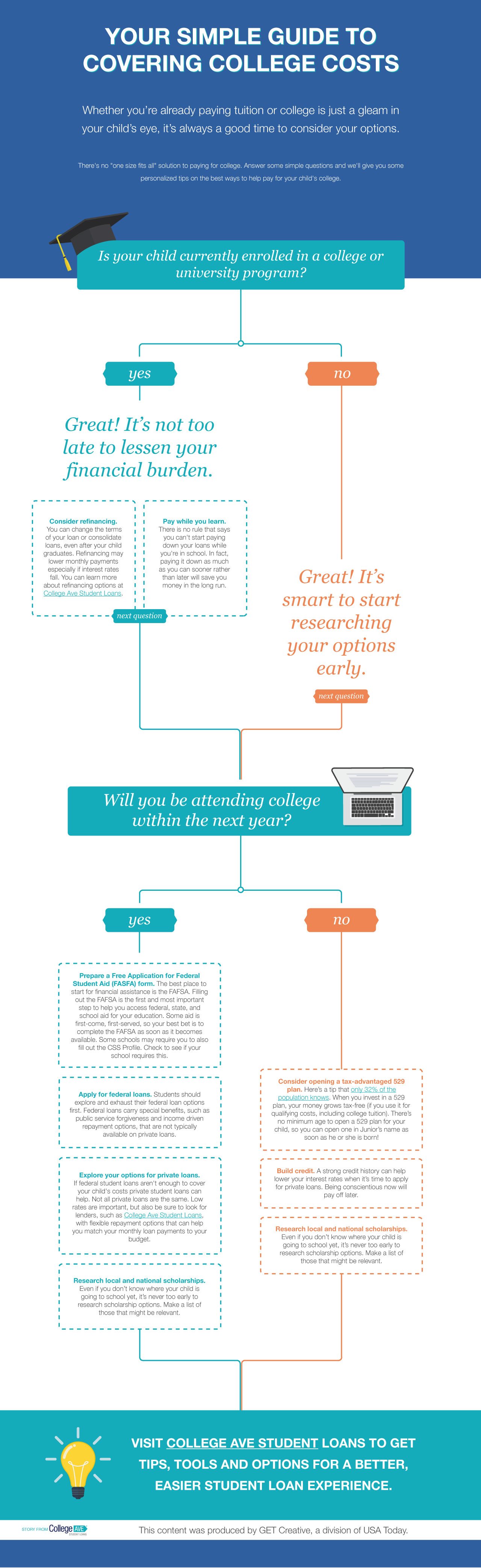
(BPT) – According to a recent College Ave Student Loans survey of 3,510 parents of college students conducted by Barnes & Noble College InsightsSM, more than 1 out of 3 parents (39%) say paying for college is a more stressful financial obligation than their mortgage. To help make the financial road to college less complicated, here is an illustrated guide brought to you by College Ave Student Loans that breaks down what to expect in terms of covering college costs. This content was produced by GET Creative, a division of USA Today.


New technology will define the future of farming

2018-05-21T08:01:00

(BPT) – When you think of automated vehicles, you probably think of driverless cars. While that particular movement is certainly in the news, it’s not the only place where driverless technology is gaining momentum. Did you know that driverless technology innovations are occurring every day in agriculture as well? While most of us won’t see this technology since it’s confined to the farm, driverless tractors are poised to change the way our food is grown.

The race to autonomy

Today’s driverless tractors still need an operator to keep the tractor on task. But for 20 years, farm equipment manufacturers have been working on building a precision platform with GPS navigation to provide tractors with pure self-driving automation. The ultimate goal is to offer farmers driverless equipment that is smart — or autonomous — so it can perform tasks completely independent of human intervention.

The farm equipment industry has spent a couple of decades moving toward developing autonomous equipment, and the race to commercially market that equipment has recently moved into high gear.

In 2016, both New Holland and Case IH introduced autonomous tractor prototypes, which the companies are still testing in the field. At the same time, John Deere signaled its commitment to autonomous machinery when it acquired Blue River Technology — a company that specializes in computer vision and machine learning, key technologies for developing smart farm equipment.

The digital component

In addition to performing the desired tasks, smart farm equipment also has the ability to capture vital data about the operation and how the land is being used. This data will be invaluable to farmers, according to Dan Burdett, global head of digital agriculture at Syngenta.

“The driverless tractor and automated farm equipment will be able to record any field event, which is important for developing insights, such as calculating return on investment,” he says. “Capturing timely and accurate data to document field applications for reports and stewardship requirements will also be possible.”

Because various sensors, tools and artificial intelligence will automate data collection, Burdett says the data will “enable a whole new level of decision-making capabilities. Growers will benefit from all of it,” he says, adding that the adoption of digital technologies in the ag industry is inevitable and moving fast.

“It’s escalating, and that’s driven partly by farm economics,” says Burdett. “It’s very important for farmers to know their numbers. Digital tools and information technology can help farmers be better business people.”

The future of autonomy

For many years, the components needed to bring autonomous vehicles to market were cost-prohibitive for ag manufacturers. But that is changing.

Uber, Google and Tesla have made big investments in technology for their self-driving cars, which has substantially lowered the cost of some components that are also used in automated farm equipment.

As more industries use these components, prices will drop further, placing autonomous technology within reach of farmers. The field of automated farm equipment is fertile, and it’s growing rapidly.

To learn more about automated farm equipment and other agricultural trends, go to www.syngentathrive.com.


5 reasons to use a financial professional

2018-05-17T09:01:00

(BPT) – True or false: You need to be wealthy to use a financial professional. It’s a common misconception, but in fact there are financial professionals that can help at various stages in life, whether you’re just starting out or nearing retirement. It can be a huge benefit to sit down with one to discuss options, investments, savings and retirement.

No matter where you are in your life — new to the workforce, starting a family, in your big earning years or nearing retirement — some guidance from a financial professional can give you the road map toward a financial future.

Here are some of the top reasons for seeing a financial professional.

You don’t have much saved for retirement …

More than half of Americans have less than $10,000 saved for retirement, according to the American Payroll Association. But even if you’re flirting with 50 and don’t have much saved, it’s not too late to start building wealth for your future. A financial professional will assess your situation and help develop a financial strategy with the goal of a comfortable retirement in mind.

… or you do, and you’re nearly ready to retire

Saving for retirement and knowing how to use that money wisely in retirement are two different animals. A financial professional can help you build a strategy that aims to use your retirement savings, help it grow and help it last.

Your parents are aging or ill

Caring for an aging or ill parent is tough emotionally, and ambiguity or strife around finances only makes it worse. Elder care is an expensive business, and how best to use Mom and Dad’s money to make sure they get the best care possible can be a complicated quagmire, especially if siblings are at odds about what to do. Sitting down with a financial professional is a great way to sort this all out with a neutral third party whose focus is most appropriately using the funds that are available.

You’re going through a life transition

Getting married, divorced, starting a family or dealing with a death in the family can affect your finances as well as your emotions. When you’re about to walk down the aisle, for example, nobody wants to think about budgets and bills, but financial disagreements can be one of the top causes of marital problems. A session with a financial professional can be a preemptive strike against future money troubles.

You want to start investing

Finding a financial professional who understands your situation, and can help design solutions for your day-to-day financial concerns, can go a long way toward building financial peace of mind, according to Salene Hitchcock-Gear, president of Prudential Advisors. You might be tempted to DIY, but a financial professional can work with you to create a strategy based on your timeline, risk tolerance and goals.

Bottom line? You don’t need to be a millionaire to benefit from the services of a financial professional, but working with one just might put you on the road to setting and achieving your financial goals. If you want more information about building a financial future for yourself and your family, visit Prudential at www.prudentialadvisors.com.

“Prudential Advisors” is a brand name of The Prudential Insurance Company of America and its subsidiaries located in Newark, New Jersey.


5 tips when buying a car for a teen

2018-05-16T08:01:00

(BPT) – With graduation season and summer break upon us, many parents may be on the hunt for a new car for their graduate. Memorial Day deals offer some of the best incentives of the year, so it’s crucial to know how to navigate what can be an overwhelming and exhausting process.

“USAA helps members find, finance and insure vehicles that are right for their personal needs and financial goals,” says Heather Pollard, vice president of Auto Experience at USAA. “We want to avoid you ever having to regret your purchase decision, or worse, lead to financial hardships where you can no longer afford to keep your vehicle.”

If you are one of the millions of Americans looking to buy a car, here are the five things you need to know before you step foot on a dealer’s lot.

Know what you can afford.

The first and most important question to answer before launching into the car-buying process is “how much can I afford?” Figuring this out will help you determine whether you are in the market for a new or used vehicle. A good starting point is to use 15-18 percent of your take-home pay as a gauge for your total vehicle budget including the loan, insurance, gas and maintenance.

Next decision, how will you pay for it? There are numerous ways to manage the financial burden for purchasing a new car, including taking out a loan. If you have decided to go the loan route, determine how much you can afford in monthly payments. Banks or another financial institution might offer lower interest rates than a car dealer. Aim to pay off the loan within three to five years.

“Get pre-approved for an auto loan amount and interest rate so you know where you stand before you begin shopping,” says Renée Horne, vice president of Consumer Lending at USAA Bank. “Look for low loan rates and flexible terms to fit your budget needs versus being steered by dealers into a decision solely based on monthly payment, which often results in paying more in interest for the overall loan term.”

Another idea is to sell or trade in your new graduate’s current vehicle. If you plan to do this, factor in the cash value of that car and then add your planned down payment, typically 15-20 percent. You can use online tools such as USAA’s Auto Loan Calculator to get an estimate of what the end price tag will be.

Determine the total cost of ownership.

It is important to understand the total cost of ownership before surprising your graduate with the car of their dreams. Everything from gas to auto insurance will be an extra expense added on to the monthly cost for a new or used car and something everyone in the family needs to consider.

When receiving an auto insurance quote, note that collision and comprehensive coverage generally cost less for used cars. If purchasing an older car, consider getting pricing for Extended Vehicle Protection coverage before you go to the dealer.

Keep an open mind.

Once you have established what you can afford and the total cost of ownership, it is time to discover what features and styles you or your teen want in a car. Prioritize a list of the features you would like to see. For the teen in your life, safety is usually at the top. Next, assess how much they will be using this car and what for. Are they commuting to school or a job? Remember to keep an open mind and be flexible — stay open to two or three models that would meet your teen driver’s needs and your or their budget.

Do your research.

Everyone can agree that dealerships can be overwhelming and intimidating. Research your market first. Try the USAA Car Buying Service to see what’s out there and find vehicles that come with exclusive member discounts.

If you are looking into the used car market, always run a background check. You can get a vehicle history report from Carfax, which can help verify ownership history, mileage and accident history. Also, make sure the used vehicle has never been salvaged by entering the vehicle identification number into the National Insurance Crime Bureau’s system.

Go for a test drive.

After picking out a few of your top favorites, it is time to see how the car operates on the real road. Hit the highway to properly gauge a car’s performance, and inspect the car for mileage, tread, etc. If possible, run the car by a trusted mechanic for an under-the-hood inspection to forecast longevity and maintenance needs. Remember, factory warranties usually transfer depending on the mileage.