Over 40? 3 things to know about your vision

2018-09-13T11:01:01

(BPT) – Dinner menus, smartphones and computer screens are all things you encounter daily. But have you noticed that since turning 40, you’re having issues seeing them clearly? If you’ve found yourself holding the menu at arm’s distance, increasing your phone’s font size to read text messages, or taking more frequent breaks from the computer screen during the work day, you might be among millions of Americans with presbyopia.1

Now, you may say presby-what? It’s a complicated name for a common eye condition that means you have trouble focusing on things up-close. This condition is a natural part of aging and is much more common than you think – if you look around, you’ll likely notice it’s also happening to lots of your friends and family members.2

Like many people, you may not completely understand what’s happening with your vision at this age, but rest assured there’s help. Dr. Susan Resnick*, a New York-based optometrist, shares some information that can help you bring your eyesight back into focus after 40.

“For many, your vision might be the first thing to change once you reach 40,” said Resnick. “I often see patients who come into my practice in a panic because they notice they suddenly can’t read their phone or a book. Even if a patient has never had a vision issue before or if your vision has worsened in a short amount of time, presbyopia is a normal part of aging. There are options that can correct your vision and help you see clearly near and far.”

If you have presbyopia, you are not alone

More than 111 million Americans struggle to read or see up close after the age of 40, which is when presbyopia typically strikes.1 The bad news is that you can’t prevent presbyopia.1 The good news – you don’t have to accept blurry up-close vision or reading glasses as a fact of life. Advancements in eye care can provide solutions that fit your lifestyle, including Alcon DAILIES TOTAL1® Multifocal contact lenses, which can help you see seamlessly and clearly, up close and far away.3,4

You should read up on readers

Like most people, you might think the only option to address presbyopia is purchasing cheap reading glasses from the drugstore. However, while readers can be great in a pinch, they can also be cumbersome as a long-term solution to presbyopia. They often get lost, can break and are inconvenient to constantly put on and take off as you switch from seeing up close and looking further away. What’s more annoying than having to wear your readers on a chain around your neck, or getting them stuck in your hair as you flip them on top of your head?

Also, many people believe wearing readers can even make you feel older. In fact, an Alcon survey of people in their 40s and early 50s found that one-in-four adults think reading glasses can make someone look 10 years older. And, nearly 50 percent of those surveyed would avoid wearing readers if they knew it made them look older.5

Find freedom with contact lenses

Whether taking selfies, going to a restaurant or whipping up a recipe in the kitchen, multifocal contact lenses can free you from putting on and taking off your reading glasses, and give you the flexibility to see clearly at any distance.

“I usually recommend multifocal contact lenses, including Alcon DAILIES TOTAL1® Multifocal contact lenses, to my patients with presbyopia because they are designed to help you comfortably and seamlessly see near, far and everywhere in between. Most importantly, these contact lenses give you the freedom to lose your reading glasses,” explains Resnick.

The takeaway here? When it comes to seeing clearly up close, don’t be tethered to readers or let presbyopia make you give up on your fun and the activities you love.

To learn more about multifocal contact lenses, visit SeeNearAndFar.com.

Talk to an Eye Care Professional about your options, care and safety information. Rx only.

*Dr. Resnick is a paid consultant for Alcon.


[1] Market Scope, Global Presbyopia-Correcting Surgery Market Report, April 2012.

[3] All About Vision. Presbyopia. https://www.allaboutvision.com/conditions/presbyopia.htm. Accessed August 2018.

[4] Alcon Data on File, 2016.

[5] Alcon Age Perception Impact Survey. 2015.


4 things you should do to boost your fat IQ

2018-09-13T07:01:01

(BPT) – If you’ve struggled with your weight, you know that fat can be a bad three-letter word. You’ve warded against it, tried to reduce it and agonized over what fat can do to your self-esteem and your waist line. But how much do you really know about fat? And how much could you improve your life if you knew just a little bit more?

According to the MDVIP Fat IQ Survey, most adults fail a basic quiz on fat facts. And a staggering 82 percent of adults are over their ideal weight. Whether you are one of them or you want to avoid weight problems in the future, it’s time to put fat in your crosshairs. Here are four things you need to do to boost your own fat IQ and live a healthier life.

* Recognize your hang-ups. Everyone has them. Whether you’re busy caring for children or elderly parents and fast food is your go-to, you travel and can’t find healthy options on the road, or you’re a late-night snacker, your lifestyle is adding fat to your diet. Recognize where your weak spots are and take steps to correct them. Consider a meal delivery service that’s both healthy and convenient, pack nutritious snacks in your carry-on, or go for a walk when the urge to eat a cookie strikes. Just changing up your routine once or twice a week can make a difference.

* Be open and honest with your doctor. Eighty-three percent of adults said hearing from a doctor that they need to lose weight would motivate them to take action. Yet, most doctors aren’t able to spend enough time to really delve into your eating and other lifestyle habits. If you’re serious about managing your weight, you want a primary care doctor who will help uncover your personal obstacles and work with you on a plan to reach your goals. Physicians like those in the MDVIP network have more time to consult patients on diet and exercise and provide the coaching and follow-up they need to be successful. Talk to your doctor and find your motivation today.

* Learn the difference between fats. Not all fats are created equal. In fact, did you know some fats are actually good for you? Unsaturated fats found in plants, for example, can improve your cholesterol level and lower your risk for heart disease. Saturated fats and especially trans fats, on the other hand, found in fried and processed foods, should be rarely eaten or avoided all together because they have the potential to promote heart disease.

* Find the hidden “bad fat” in your food. Restaurant menus that include calorie counts have certainly been eye-opening for many people, but the food’s fat content is often missing or overlooked. The same applies when you’re at the grocery store. In addition to looking at the amount of fat on food labels, make sure you scrutinize the list of ingredients. You want to stay away from foods that have the words “hydrogenated” or “partially hydrogenated,” which are unhealthy trans fats.

Start applying your higher fat IQ today

Having a strong understanding of fats is critical to achieving a healthy lifestyle, so don’t delay in giving yourself a boost. Apply these tips to raise your fat IQ. To take the MDVIP Fat IQ survey, visit www.mdvip.com/fat-iq-quiz.


Why One Patient Didn’t Wait for Her Ovarian Cancer to Return

2018-09-12T09:19:00

(BPT) – At the age of 56, Debi was living her life working full time, staying active with her friends and family, including riding her motorcycle. She was happy, but so much changed when she was diagnosed with ovarian cancer.

September is Ovarian Cancer Awareness Month. Today, approximately 225,000 women are living with ovarian cancer in the US, and often times are diagnosed in advanced stages. In fact, only 20 percent of ovarian cancers are found at an early stage, and approximately 85 percent of women with advanced ovarian cancer will experience recurrent disease. As a result, this outlook can produce additional anxiety, worry and uncertainty for the thousands of women diagnosed each year.

Following surgery and chemotherapy, Debi, like the thousands of women living with ovarian cancer, experienced a recurrence. “When my cancer returned, the hardest part was telling my family and friends that I had cancer again,” said Debi. “I remember thinking, I did this once, I can do it again, but I don’t want to go back to how I felt when I had cancer the first time.”

When Debi finished her chemotherapy, she discussed her options with her doctor. Oftentimes, when cancer responds to chemotherapy, women are told to “watch and wait,” or observe their disease without active maintenance therapy until the cancer returns and then resume treatment, but based on her previous experience, Debi didn’t want to sit on the sidelines. Her doctor informed her about new options, called maintenance treatments for women who have recurred and whose disease has either fully or partially responded to platinum-based chemotherapy to help extend the time before cancer returns.

ZEJULA® (niraparib) is a prescription medicine used for the maintenance treatment of adults with ovarian cancer, fallopian tube cancer, or primary peritoneal cancer, when the cancer comes back. ZEJULA is used after the cancer has responded (complete or partial response) to treatment with platinum-based chemotherapy. ZEJULA is a treatment for women regardless of if they have the mutation within the BRCA gene or do not have the BRCA mutation.

By working with her doctor, Debi was able to develop a treatment plan that was right for her. Debi (now 60 years old) believes that taking an active role in the decision-making process with your healthcare team is key. “Open communication with your doctor is important when you experience ovarian cancer. As a result, I was able to work with my doctor who provided me with options and things to do rather than watch and wait for cancer to return.”

To learn more about ZEJULA, visit www.ZEJULA.com.

ZEJULA® (niraparib) Important Safety Information

ZEJULA may cause serious side effects, including:

Bone marrow problems called Myelodysplastic Syndrome (MDS) or a type of blood cancer called Acute Myeloid Leukemia (AML). Some people who have ovarian cancer and who have received previous treatment with chemotherapy or certain other medicines for their cancer have developed MDS or AML during treatment with ZEJULA. MDS or AML may lead to death.

Symptoms of low blood cell counts (low red blood cells, low white blood cells, and low platelets) are common during treatment with ZEJULA, but they can be a sign of serious bone marrow problems, including MDS or AML. These symptoms may include the following:

  • Weakness
  • Fever
  • Feeling tired
  • Shortness of breath
  • Weight loss
  • Blood in urine or stool
  • Frequent infections
  • Bruising or bleeding more easily

Your doctor will do blood tests to check your blood cell counts before treatment with ZEJULA. You will be tested weekly for the first month of treatment with ZEJULA, monthly for the next 11 months of treatment, and from time to time afterward.

High blood pressure is common during treatment with ZEJULA, and it can become serious. Your doctor will check your blood pressure and heart rate monthly for the first year during your treatment with ZEJULA and as needed afterward. Your doctor may lower the dose of ZEJULA to treat high blood pressure.

Before starting to take ZEJULA, tell your doctor about all of your medical conditions, including if you:

  • Have heart problems
  • Have high blood pressure
  • Are pregnant or plan to become pregnant. ZEJULA may harm an unborn baby and may cause loss of pregnancy (miscarriage)
    • If you are able to become pregnant, you should use effective birth control (contraception) during treatment with ZEJULA and for 6 months after taking the last dose of ZEJULA
    • If you are able to become pregnant, your doctor may perform a pregnancy test before you start treatment with ZEJULA
    • You should tell your doctor right away if you become pregnant
  • Are breastfeeding or plan to breastfeed
    • ZEJULA may harm your baby. You should not breastfeed your baby during treatment with ZEJULA and for 1 month after taking the last dose of ZEJULA

Tell your doctor about all the medicines you take, including prescription and over-the-counter medicines, vitamins, and herbal supplements.

The most common side effects of ZEJULA include:

  • Heart not beating regularly
  • Dry mouth
  • Pain in your joints, muscles, and back
  • Nausea
  • Tiredness
  • Headache
  • Constipation
  • Loss of appetite
  • Dizziness
  • Vomiting
  • Urinary tract infection
  • Change in the way food tastes
  • Pain in the stomach area
  • Shortness of breath
  • Trouble sleeping
  • Mouth sores
  • Cough
  • Anxiety
  • Diarrhea
  • Rash
  • Sore throat
  • Indigestion or heartburn
  • Changes in liver function blood tests

If you have certain side effects, then your doctor may change your dose of ZEJULA, temporarily stop your treatment with ZEJULA, or permanently stop treatment with ZEJULA.

These are not all the possible side effects of ZEJULA. For more information, ask your doctor or pharmacist. Call your doctor for medical advice about side effects. You may report side effects to FDA at 1-800-FDA-1088 or www.fda.gov/medwatch.

Please see Prescribing Information

PP-ZEJ-US-0556


3 Hot Topics For Men With Prostate Cancer

2018-09-11T13:33:00

(BPT) – We’ve all heard of prostate cancer. Prostate cancer is the most common form of cancer in American men after skin cancer and one of the leading causes of cancer deaths. About 1 man in 9 will be diagnosed with prostate cancer during his lifetime. If you or a loved one is diagnosed, there are a few important things to know.

Risk factors for prostate cancer include: increasing age, African ancestry, family history of the disease, certain inherited genetic conditions, as well as other factors with less clear effects (ie, diet, chemical exposure, smoking).

Starting at age 50, the American Cancer Society recommends men begin screening after a risk and benefit discussion with their doctor. A PSA (prostate-specific antigen) test is a simple and important blood test, and is a critical tool used to screen and monitor patients. It’s important to talk to your doctor about your risks of prostate cancer and both the risk and potential benefits of prostate cancer screening. If you have a family history of prostate cancer, you are at greater risk of developing prostate cancer and should have informed discussions about prostate cancer screening with your healthcare provider starting at age 45.

Here are 3 things to know about this prevalent disease:

  1. Delaying the spread of prostate cancer is critical. When prostate cancer is confined to the prostate gland, it is called localized prostate cancer. Treatment options depend on your individual condition and other factors, and include active surveillance, watchful waiting, surgery, and radiation therapy. Many men respond to treatment at this stage and do not need further treatment. In fact, the 5-year relative survival rate approaches 100% for patients whose prostate cancer is diagnosed at a local or regional stage, compared to 30% for prostate cancer diagnosed at a distant stage.
  2. It is important to monitor the progression of your prostate cancer. For some, treatment of early stages of the disease is not enough, and the cancer may progress. These men may receive hormone treatment called androgen deprivation therapy, or ADT. This type of treatment is given to reduce or block the production and action of male hormones (androgens) in the body, such as testosterone, which can help fuel prostate cancer cells. ADT is often an effective treatment; however, after time, some prostate cancer can continue to adapt and progress, as indicated by rising PSA levels. Prostate cancer that has not spread to other parts of the body and no longer responds to a medical or surgical treatment that lowers testosterone is called non-metastatic castration-resistant prostate cancer, or nmCRPC. Men with nmCRPC are at risk of developing metastasis, which happens when the cancer spreads to other parts of the body. The most common sites where prostate cancer can spread are to the bones, lymph nodes, liver, lungs, and brain.
  3. There are options for treatment for nmCRPC. Until recently, men with nmCRPC had limited treatment options. Today, however, there are new treatments available that may help delay the spread of cancer in certain men with nmCRPC.

ERLEADA® (apalutamide) is the first approved treatment for prostate cancer that has not spread to other parts of the body and no longer responds to a medical or surgical treatment that lowers testosterone.

A clinical trial showed ERLEADA® and ADT helped delay the spread of cancer to other parts of the body or delay death by 24.3 months for certain patients compared to placebo plus ADT. For the group who received ERLEADA® plus ADT, the median number of months living without metastasis was 40.5 months compared to 16.2 months in the group who received placebo plus ADT. ERLEADA® and ADT work together to lower androgens that help fuel the prostate cancer. If prescribed ERLEADA®, you should know about some of the serious side effects associated with the therapy and talk with your doctor if you have concerns. Serious side effects can include falls, fractures, and seizures. In clinical trials, the most common side effects were: fatigue, high blood pressure (hypertension), hypothyroidism, rash, diarrhea, nausea, weight loss, joint pain (arthralgia), falls, hot flush, decreased appetite, fractures, and swelling in the limbs (peripheral edema). Please see additional Important Safety Information below.

It is critical to get informed and act, especially if you are at a greater risk or are experiencing new symptoms, so you can fully understand your options. Now you may have an option to help you keep fighting.

“I tell all my patients that it’s important for them to learn about their disease and know if it’s progressing. Don’t just research — ask, learn, and get more involved. I want patients becoming knowledgeable and part of the decision team regarding their disease with their practitioner. Additionally, it is critical for them to have a sense of urgency if the disease progresses,” says Dr. Kenneth Kernen, urologist and Director of Research at the Michigan Institute of Urology.

This content is provided by Janssen Biotech, Inc. Visit www.ERLEADA.com for more information.

# # #

IMPORTANT SAFETY INFORMATION

Do not take ERLEADA® (apalutamide) if you:

  • are pregnant or may become pregnant. ERLEADA® may harm your unborn baby.
  • are female. ERLEADA® is not for use in women.

Before taking ERLEADA®, tell your healthcare provider about all your medical conditions, including if you:

  • have a history of seizures, brain injury, stroke, or brain tumors.
  • have a partner who is pregnant or may become pregnant. Men who are sexually active with a pregnant woman must use a condom during and for 3 months after treatment with ERLEADA®. If your sexual partner may become pregnant, effective birth control (contraception) must be used during and for 3 months after treatment. Talk with your healthcare provider if you have questions about birth control.

Tell your healthcare provider about all the medicines you take, including prescription and over-the-counter medicines, vitamins, and herbal supplements. ERLEADA® can interact with many other medicines.

You should not start or stop any medicine before you talk with the healthcare provider that prescribed ERLEADA®.

Know the medicines you take. Keep a list of them with you to show to your healthcare provider and pharmacist when you get a new medicine.

How should I take ERLEADA®?

  • Take ERLEADA® exactly as your healthcare provider tells you.
  • Take your prescribed dose of ERLEADA® 1 time a day, at the same time each day.
  • Take ERLEADA® with or without food.
  • Swallow ERLEADA® tablets whole.
  • Your healthcare provider may change your dose if needed.
  • Do not stop taking your prescribed dose of ERLEADA® without talking with your healthcare provider first.
  • If you miss a dose of ERLEADA®, take your normal dose as soon as possible on the same day. Return to your normal schedule on the following day. You should not take extra tablets to make up the missed dose.
  • You should start or continue a gonadotropin-releasing hormone (GnRH) analog therapy during your treatment with ERLEADA® unless you had a surgery to lower the amount of testosterone in your body (surgical castration).
  • If you take too much ERLEADA®, call your healthcare provider or go to the nearest hospital emergency room.
  • Your healthcare provider may do blood tests to check for side effects

What are the possible side effects of ERLEADA®?

ERLEADA® may cause serious side effects including:

  • Falls and fractures. ERLEADA® treatment can cause bones and muscles to weaken and may increase your risk for falls and fractures. Falls and fractures have happened in people during treatment with ERLEADA®. Falls were not caused by loss of consciousness (fainting) or seizures. Your healthcare provider will monitor your risks for falls and fractures during treatment with ERLEADA®.
  • Seizure. If you take ERLEADA®, you may be at risk of having a seizure. You should avoid activities where a sudden loss of consciousness could cause serious harm to yourself or others. Tell your healthcare provider right away if you have a loss of consciousness or seizure. Your healthcare provider will stop ERLEADA® if you have a seizure during treatment.

The most common side effects of ERLEADA® include:

  • feeling very tired
  • high blood pressure
  • rash
  • diarrhea
  • nausea
  • decreased appetite
  • weight loss
  • joint pain
  • fall
  • hot flash
  • bone injury (fracture)
  • swollen hands, ankles, or feet

ERLEADA® may cause fertility problems in males, which may affect the ability to father children. Talk to your healthcare provider if you have concerns about fertility. Do not donate sperm during treatment with ERLEADA® and for 3 months after the last dose of ERLEADA®.

Tell your healthcare provider if you have any side effect that bothers you or that does not go away.

These are not all the possible side effects of ERLEADA®.

Call your doctor for medical advice about side effects. You may report side effects to FDA at 1-800-FDA-1088.

Please see the full Prescribing Information for ERLEADA®.

INDICATION

What is ERLEADA®?

ERLEADA® (apalutamide) is a prescription medicine used to treat prostate cancer that has not spread to other parts of the body and no longer responds to a medical or surgical treatment that lowers testosterone.

It is not known if ERLEADA® is safe or effective in children.


Regular eye checkups key to cognitive health

2018-09-10T07:01:01

(BPT) – Regular eye exams have always been an important part of maintaining healthy vision, but it turns out they can help keep your brain healthy, too. New research is revealing just how connected eye health and brain health are, and how receiving regular eye treatment might mean the difference between a healthy brain and cognitive decline.

That’s according to the authors of a study published in the Journal of the American Medical Association Ophthalmology this summer. Researchers examined 2,520 adults age 65 and older over the course a decade and found a link between failing vision and mental decline. The exact nature of the relationship still needs to be better understood, but one thing is clear: Research shows that taking care of your vision is extremely important for maintaining good cognitive function.

The reasons behind the connection might be that declining vision discourages people from activities like reading and crossword puzzles that challenge the brain and keep it active. But whatever the root cause, the key takeaway stands out: older adults should get regular eye checkups and undergo treatment right away for any issues.

The good news is that maintaining eye health is well within most people’s grasp.

Two of the most common age-related vision problems — cataracts and age-related macular degeneration (AMD) — have common treatments available that can help keep vision crisp, and potentially help reduce the risk of associated mental decline. Even the relatively simple act of keeping eyeglass prescriptions current can help, the research suggests.

The Mayo Clinic recommends that people 55 to 64 see their eye doctor every one to three years, and those 65 and older go once every year to two years. People who wear glasses or contacts, or have either a family history of eye disease or a chronic disease that puts them at greater risk, meanwhile, should schedule more frequent exams.

For some older and visually impaired people, however, it can be hard to get to appointments for exams or treatment. Transportation can be a major hurdle. A recent study by the Angiogenesis Foundation, for example, found that for 41 percent of people living with wet AMD, getting to and from appointments is their biggest challenge with making regular eye doctor appointments.

Thankfully, there is help for those who no longer drive: Rides in Sight, a senior transportation information and referral service operated by ITNAmerica and sponsored by Regeneron, has the nation’s largest database of every possible kind of senior transportation option available. Accessible via a toll-free telephone hotline (1-855-607-4337) or their website (ridesinsight.org), Rides in Sight helps seniors and visually impaired adults get the rides they need to ensure healthy eyes every day. Rides in Sight customer service representatives are ready to take your call at 1-855-607-4337 from 8 a.m. to 8 p.m. EST Monday through Friday.

Don’t put off treatment for age-related macular degeneration, cataracts or other eye conditions. Your vision — and your brain health — matter.


Professional Football City “Home Team Heartburn Ranking” [Infographic]

2018-09-07T07:01:23

(BPT) – Believe it or not, tailgate food isn’t the only factor that can contribute to a sports fan’s heartburn. For football fans, the heartache and agitation brought on by their favorite team can have them reaching for relief faster than you can say touchdown! With that in mind, Perrigo Company plc, makers of store brand Omeprazole Delayed Release Orally Disintegrating Tablets 20 mg (Omeprazole ODT), in conjunction with STATS Insights, looked at football statistics from the last 20 years, coupled with top tailgating foods, and commissioned the Home Team Heartburn Ranking, an index of where each of the 30 professional football cities stands when it comes to inducing heartburn, anxiety and aggravation for its fans.


How a healthy gut can be good for your well-being

2018-09-05T07:01:00

(BPT) – Whether it’s eating too many slices of pizza or constantly getting takeout, most of us have slipped on our good eating habits at one time or another. But is avoiding unhealthy foods enough to keep our bodies in top shape?

While gut health is not something many people consider, Mayo Clinic experts agree that it is important to pay attention to as it can affect your overall well-being. Here’s what you need to know about your gut and how it concerns your health.

Hundreds of different bacteria species live in your gut

The lining of your gut is covered in bacteria, and these organisms create a micro-ecosystem called the microbiome. Before you stare at your stomach in horror, know that many of these bacteria species are good for you and should be nurtured with specialized plant fibers called prebiotics.

Prebiotics encourage healthy bacteria growth and can be easily incorporated into your diet, as they are found in many fruits and vegetables. Look for foods containing complex carbohydrates, which can’t be digested by the body and instead become food for the healthy bacteria living in your gut.

Probiotics offer another way to help maintain a healthy balance of good bacteria living in the gut. The difference with probiotics is that they actually contain live organisms. Instead of nurturing healthy bacteria, probiotics add specific strains of healthy bacteria to your microbiome. Probiotics can be found in foods like yogurt, kimchi and sauerkraut. Kombucha is also a good source of probiotics.

You can also find prebiotic and probiotic supplements designed to help with specific conditions. Consult your doctor before adding supplements to your diet.

A healthy gut may be connected to weight loss

The benefits of a healthy gut are still being studied, and more research is needed to confirm how a healthy gut contributes to weight loss. In a preliminary study, Mayo Clinic collected and analyzed gut bacteria samples from a group of 26 participants enrolled in the Mayo Clinic Obesity Treatment Research Program. The research team found that those who did not lose weight had different gut bacteria than those who did. Dr. Purna Kashyap, a Mayo Clinic gastroenterologist and co-author of the study, says that these findings “suggested to us that gut bacteria may possibly be an important determinant of weight loss in response to diet and lifestyle changes.”

Poor gut health can exacerbate certain autoimmune disorders

While there are species of healthy bacteria living in your gut, some species in the microbiome are not helpful. Having an imbalance of the two can lead to poor gut health, which can then exacerbate certain autoimmune disorders such as irritable bowel syndrome, celiac disease and rheumatoid arthritis.

Improving your diet is the best way to foster healthy gut bacteria. Along with eating more fruits and vegetables, eliminate as much processed foods and added sugar as possible. It’s also a good idea to reduce meat consumption and to incorporate alternative proteins such as legumes, tofu and nuts into your diet.

By improving your gut health, you have the potential to boost your overall well-being. Learn more about the benefits of healthy gut bacteria by visiting us at mayoclinic.org.


5 recovery tips to keep you active all year long

2018-09-04T10:09:00

(BPT) – We’ve all been there. You push yourself a little too hard during your high-intensity workout, spend too many hours hunched over a computer at your desk, or simply don’t allow for much break time between work, pilates, weekend events and running errands. The next morning, you wake up achy and sore, wondering how you’re going to make that spin class you already signed up for. Luckily, there are several ways to properly rejuvenate your body so that you can maintain the active lifestyle you love. After all, exercise, self-care and having some fun are essential to living your best life.

Erin Stokes, ND, Medical Director at MegaFood, identifies five top tips for optimal recovery and keeping yourself active all year long:

1. Reach for magnesium.

Photo courtesy of Sarah Rotavera, Making Thyme for Health

Magnesium is important for overall muscle function and adequate amounts are needed for your muscles to relax*. Needless to say, magnesium is a key mineral for sports recovery. And no matter how well we eat, many Americans are falling short of their magnesium requirements.[1] Taking a magnesium supplement daily, and incorporating magnesium-rich foods like beets and almonds into your diet, is an effective way for many weekend warriors and athletes alike to boost their recovery*.

2. Soak in some self-care.

Now that you’re taking a magnesium supplement, it may be time to soak in a different type of magnesium! A beloved solution for sore and tired muscles is an Epsom salt bath. Epsom salts are composed of magnesium sulfate, which can help relieve stiff and tense muscles*. In a standard size tub, add 1-2 cups to warm bath water.

3. Blend up a smoothie.

Photo courtesy of Sarah Rotavera, Making Thyme for Health

A green smoothie is a great way to consume a punch of phytonutrients in pre-digested forms. It’s best to alternate your greens such as spinach, kale and chard. Some favorite pairings include coconut milk, mango and avocado. Take your smoothie up a notch by incorporating a booster powder like MegaFood® Daily Energy Nutrient Booster Powder™ for mental and physical stamina*.

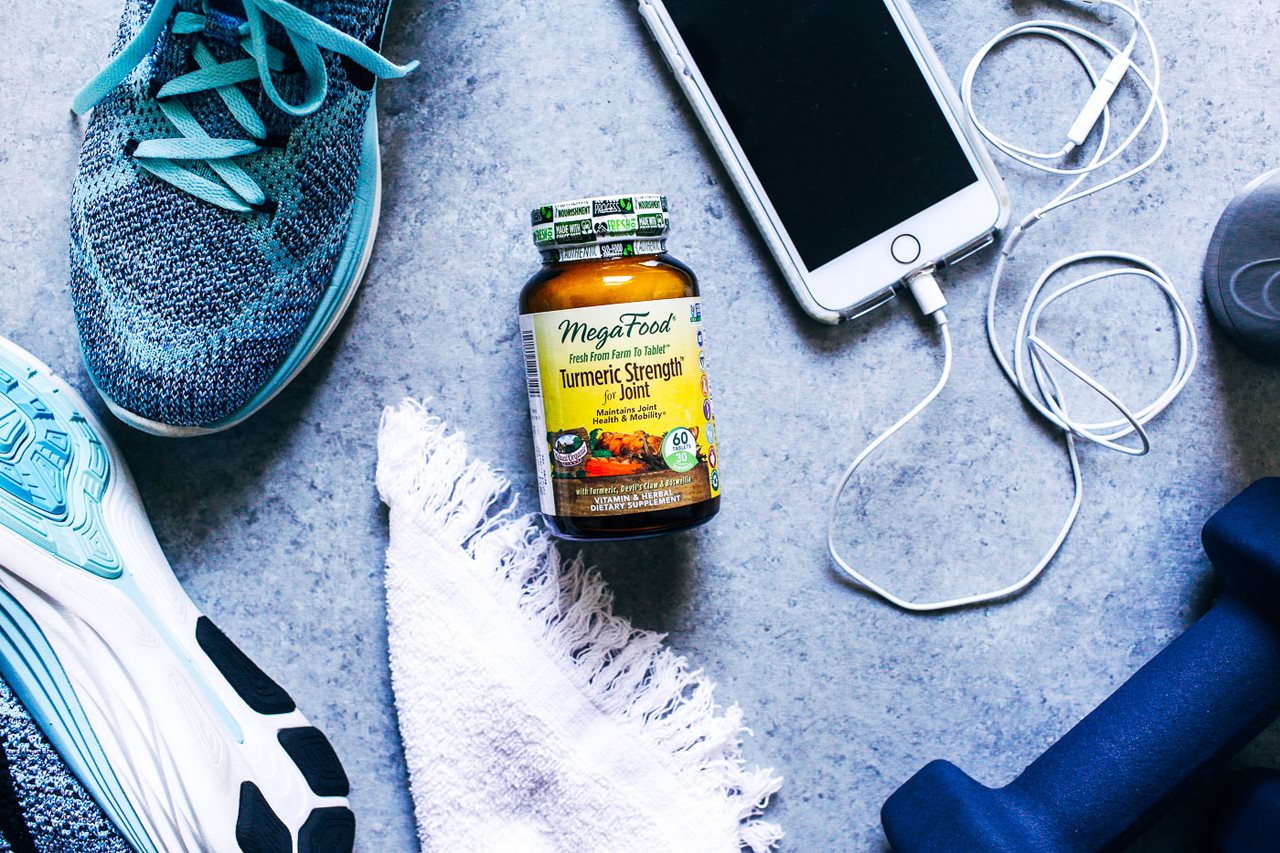
4. Take turmeric.

A brilliantly pigmented orange root, Turmeric has been ingested by people in India for thousands of years. It’s a primary ingredient for Indian curry, golden lattes and other trendy recipe options, as well as a popular supplement today. Turmeric maintains a healthy inflammatory response and is a personal favorite for recovering from a workout*. Traditionally black pepper has been found along with turmeric in curry recipes, and is often incorporated in turmeric supplements, as it has been shown to synergistically facilitate absorption*.

5. Pair with ginger.

Turmeric and ginger are cousins, and make a dynamic duo for athletic recovery*. Add ground ginger and turmeric to your morning smoothie for a delicious and highly functional beverage to start your day off feeling fresh.

1 National Institutes of Health. Office of Dietary Supplements. Magnesium Fact Sheet for Health Professionals. https://ods.od.nih.gov/factsheets/Magnesium-HealthProfessional/#h4

*These statements have not been evaluated by the Food and Drug Administration. This product is not intended to diagnose, treat, cure or prevent any disease.


National Cholesterol Education Month: The lowdown on your levels

2018-09-04T08:31:00

(BPT) – With National Cholesterol Education Month upon us this September, it’s a good time to take control of your health inside and out, particularly your cholesterol levels. High cholesterol is sneaky – you can’t see it or feel it – but when armed with a little bit of knowledge, you can work with your doctor to make smart decisions about the best way to manage your cholesterol.

What causes high cholesterol? For some, it’s consuming foods that are high in saturated fats (primarily derived from animals) and trans fats (found in some tropical oils). For others, a genetic predisposition may render their bodies unable to remove low-density lipoprotein (LDL) cholesterol (also known as “bad” cholesterol) from the blood, leading to unhealthy cholesterol levels.

Regardless of your diet and family history, the American Heart Association (AHA) recommends that all adults age 20 and older should have their cholesterol checked every four to six years with a simple blood test. In the case of cholesterol levels, knowledge is power – when left untreated, elevated cholesterol levels can lead to the buildup of a hard, thick substance called plaque, which can narrow your arteries, slowing down and even blocking the flow of blood to your heart. If the blood supply to your heart becomes blocked, it can cause a heart attack; similarly, if blood flow to the brain is blocked, it can lead to a stroke.

Fortunately, there are ways to help manage your high cholesterol. Dr. Shawn Dhillon, Medical Director at Calvert Medical Group in Baltimore, first recommends lifestyle adjustments, such as eating a heart-healthy diet and consistent exercise, for patients diagnosed with high cholesterol. If those aren’t enough, Dhillon notes that a prescription medication called a statin may help lower cholesterol levels.

“For my patients with high cholesterol who aren’t able to achieve their cholesterol goals with diet and exercise alone, I typically prescribe a statin medication, which is extremely effective in helping to lower cholesterol in the blood,” says Dhillon.

There are several statins available, but not all statins are the same. LIVALO® (pitavastatin) is one such nistatin medication that has been proven to reduce bad (LDL) cholesterol by up to 45 percent and in clinical trials has low rates of certain side effects. Compared to most other statins, LIVALO also has a reduced potential to interact with other medications you may be taking.

“My goal is not only to help patients manage their high cholesterol, but to make sure they adhere to their treatment plan, as discontinuing medication without speaking to their doctor may have dangerous consequences,” says Dhillon. “Remember, high cholesterol has no signs or symptoms – a patient can quit his or her statin and feel fine, but what’s going on inside the body is another story. That’s why it’s important to take a statin if your doctor recommends one and – here’s the key – stick with it. If you’re having challenges, your doctor has the tools to help you switch to another statin that may work better for you.”

Debbie D. – one of approximately 38.6 million Americans taking a statin for high cholesterol, according to the Centers for Disease Control and Prevention (CDC) – knows the importance of finding the right statin to fit her personal needs. Following her high cholesterol diagnosis nearly two decades ago, Debbie suffered side effects as a result of the other statins she tried before LIVALO. “I was prescribed a variety of statins for cholesterol to see if my leg cramps would cease, but nothing worked,” explained Debbie. “I couldn’t do the things I liked to do because of the leg cramps. But then one day, my cardiologist suggested I try LIVALO.”

Today, Debbie has achieved her cholesterol goals and is back to enjoying all the things that she loves to do without side effects from other statins slowing her down. “I’m enjoying my life. I jump out of bed like it is nothing. I run, I exercise, I take long walks, I have family time and vacations,” Debbie says. “It took finding the right medication, and for me, it was LIVALO. Now I can live the way I want and I don’t have to settle for anything less.”

Visit livalorx.com to learn more.

Important Safety Information for LIVALO® (pitavastatin) tablets

Who should NOT take LIVALO?

LIVALO is not right for everyone. Do not take LIVALO if:

  • You have a known allergy to LIVALO or any of its ingredients.
  • You have active liver problems, including some abnormal liver test results.
  • You are nursing, pregnant or may become pregnant, as it may harm the baby.
  • You are currently taking cyclosporine or gemfibrozil.

What is the most important information I should know and talk to my doctor about?

  • Call your healthcare provider or get help right away if you experience any symptoms of an allergic reaction, such as rash, itching, or hives.
  • Muscle problems may be an early sign of rare, serious conditions. Tell your doctor right away if you have any unexplained muscle pain, weakness, or tenderness, particularly if accompanied by malaise or fever, or if these muscle signs or symptoms persist after discontinuing LIVALO.
  • Serious liver problems have been reported rarely in patients taking statins, including LIVALO. Your doctor should do liver tests before you start, and if you have symptoms of liver problems while you are taking LIVALO. Tell your healthcare provider right away if you feel more tired than usual, have a loss of appetite, upper belly pain, dark-colored urine, or yellowing of the skin or eyes.
  • Tell your doctor about all your medical conditions and medications you take including nonprescription medicines, vitamins, or herbal supplements.
  • Increases in blood sugar levels have been reported with statins, including LIVALO.
  • Tell your doctor about your alcohol use.
  • Tell your healthcare provider of a known or suspected pregnancy.

What are the most common side effects of LIVALO?

The most common side effects of LIVALO in clinical studies were:

  • Back pain
  • Constipation
  • Diarrhea
  • Muscle pain
  • Pain in the legs or arms

This is not a complete list of side effects. Talk to your healthcare provider for more information.

You are encouraged to report negative side effects of prescription drugs to the FDA.

Visit www.fda.gov/medwatch or call 1-800-FDA-1088.

How should I store and take LIVALO?

  • Store LIVALO tablets at room temperature, in a dry place, and out of the reach of children.
  • LIVALO can be taken at any time of day, with or without food.
  • Swallow the tablet whole. Do not split, crush, dissolve, or chew.
  • Do not exceed 4 mg once daily dosing of LIVALO.

Other important information I should know about LIVALO.

  • LIVALO has not been studied to evaluate its effect on reducing heart-related disease or death.
  • LIVALO is available by prescription only.

For additional information, please see the full Prescribing Information or visit www.LivaloRx.com

© Kowa Pharmaceuticals America, Inc. (3/2018) – LIV-RA-0111 PI of 11/2016