8 dietitian-recommended snacks for on-the-go summer fun

2023-07-07T08:01:00

(BPT) – Warmer weather means more time spent outdoors, especially if you have children. Your kids want to soak up the summer fun, so you need quick snacks to fuel your on-the-go adventures.

“Proper nutrition is critical to keeping kids healthy and happy as they enjoy the sunshine and outdoors,” said registered dietitian Chelsey Amer. “It can be challenging to balance convenience and a healthy diet, but there are plenty of snacks you can pack for your summertime adventures.”

Be ready for your kids’ snack attacks this summer by packing any (or all!) of Amer’s eight go-to favorite on-the-go snacks.

1. Popcorn trail mix

Did you know popcorn is considered a whole grain? It packs a whopping 3 grams of filling fiber per serving. Mix it with your favorite additions — such as raisins, chocolate chips, pumpkin seeds, nuts, etc. — for a fun assortment of energy boosters. Just make sure your kids are old enough to safely eat popcorn and nuts, as they can be a choking hazard for little ones under four years old.

2. Fruit and vegetable pouches

Fruit and vegetable pouches are super portable and easy for kids to take with them as they explore, play and just be kids. Pick up a variety pack of GoGo squeeZ® Fruit & VeggieZ DinosaurZ fruit pouches for a wholesome mix of fruits and veggies in three fun flavors: Roarrr Berry, Prehistoric Peach and Jurassic Pear. These are gluten-free, dairy-free, nut-free and BPA-free, making them an accessible, affordable, no-mess, no-spoon and squeezable snack perfect on the go. Plus, the colorful prints and the dinosaur figures are sure to bring the ‘give me!’ factor for the little ones in their dino phase.

3. Crispy roasted chickpeas

If you enjoy hummus, then you’ll love crispy roasted chickpeas. They provide a double punch of protein and fiber to help you stay full for hours. Plus, they’re fun to munch on and come in tons of flavors. The same thing goes for these as the popcorn — you might want to save it for kids 4 and up!

4. Dry whole-grain cereal

Whole-grain cereals are rich in fiber, so they help you stay full as you head from one activity to another. Before you pour a bowl for breakfast, check the added sugar content to keep it to a minimum. Best of all, most whole-grain cereals are fortified with vitamins and minerals, making them a great choice to help meet your kids’ needs.

5. Yogurt pouches

Yogurt is a delicious snack option, but it can get messy and require refrigeration. Not with GoGo squeeZ, though! GoGo squeeZ® YogurtZ Mango & Peach pouches, now available in a variety pack, are easy to take with your family on the go for a creamy and delicious snack with no spoon or mess — and best of all, no refrigeration required. Each pouch contains a creamy blend of lowfat yogurt and fruits in a pouch, providing kids with 4 grams of protein, calcium and vitamin D31 — two vital nutrients that many kids are missing out on.2

6. Veggies with a nut butter pack

Make veggies fun and filling by packing a nut butter pack to dip them in. Nut or seed butter contains filling fats, so your little one won’t be looking for another snack right away while they play. Plus, delicious nut/seed butter can encourage them to eat more vegetables.

7. Tortilla roll-ups

Tortilla roll-ups provide a tasty and balanced snack for the whole family. A whole-grain tortilla, turkey deli meat and cheese contain a powerful mix of carbs, proteins and fats that provide lasting energy for your all-day activities.

8. Snack-sized cheese

Cheese is a great snack to have on hand for summer activities. It’s easy to grab and go and is full of protein that can help your family stay full as you play outdoors. Just make sure that you eat it within about two hours after taking it out of the fridge. For even more energy, pair it with a piece of sturdy fruit like an apple, orange or banana.

1 – 10% vitamin D per 6 oz

2 – Bailey, A. D. L., Fulgoni III V. L., Shah, N., Patterson, A. C., Gutierrez-Orozco, F., Mathews, R. S., Walsh, K. R. (2021). Nutrient Intake Adequacy from Food and Beverage Intake of US Children Aged 1–6 Years from NHANES 2001–2016. Nutrients, 13(3), 827. Retrieved from https://www.mdpi.com/2072-6643/13/3/827

It is your health…own it

2023-06-30T17:01:00

(BPT) – Having recently recognized National Cancer Survivor Month, when we celebrate the stories of the brave men and women who have fought and survived this unexpected and life-altering news of cancer diagnosis, it seems an appropriate time to discuss a key component of what might make more individuals diagnosed with cancer fall into the category of a survivor. First and foremost is early detection. Finding cancer in its early stages is one of the best and most cost-effective ways to improve one’s treatment options and overall survival rate. Wellness check-ups and health screenings aren’t just for older people. Everyone, including young people, can benefit from regularly seeing their doctor to discuss their health and have any recommended screenings or tests.

Unfortunately, many people delayed or avoided health care throughout the COVID-19 pandemic. However, data is showing a rebound in outpatient visits.1 That is the good news.

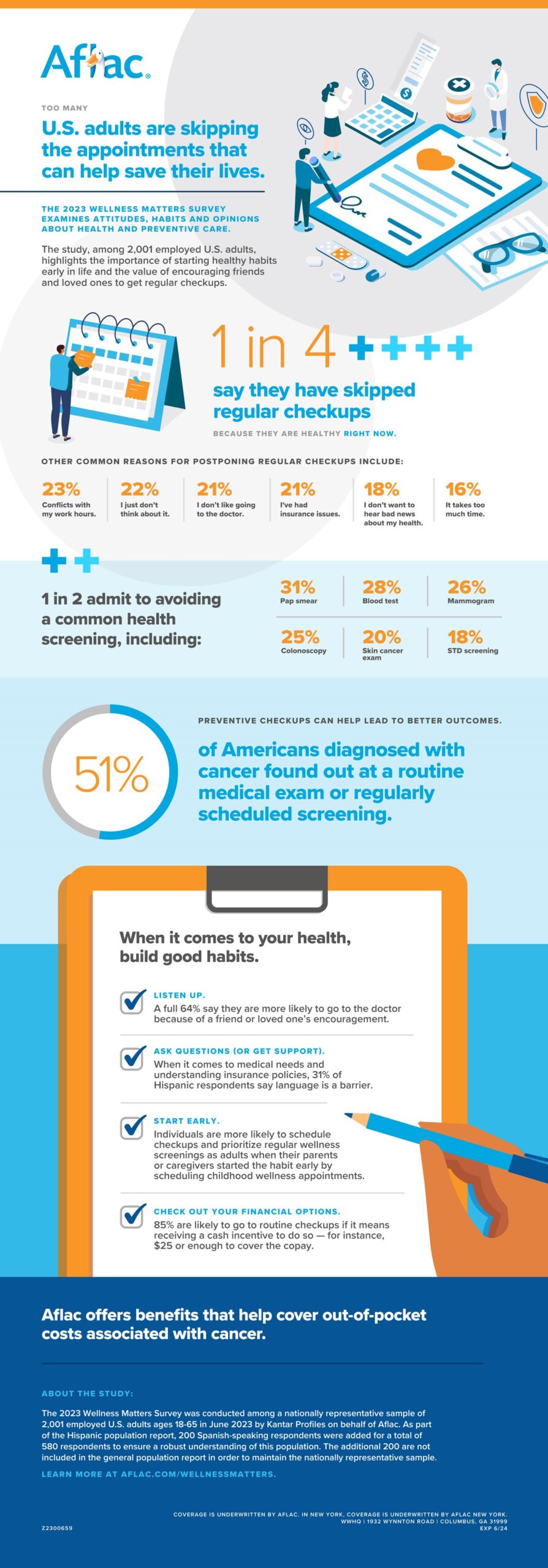
So why is this important? Because regular wellness check-ups and screenings help to improve early detection of serious illness. Not only does early detection increase the patient’s odds for more treatment options, but it also can help reduce overall costs and lead to a better overall outcome. And this is something that we can all benefit from, regardless of age, demographic or background. According to a new Wellness Matters Study of 2,201 Americans conducted by Aflac:

  • 1 in 4 respondents say they have skipped a regular checkup because they feel healthy.
  • 1 in 2 admit to having skipped a common health screening.

Yet at the same time, 51% of respondents diagnosed with cancer say they discovered it at a routine medical exam or a regularly scheduled screening, showcasing the value of having a policy that helps cover this type of medical visit.

So what can we do? Well, first of all, we can take care of our own health and, second, we can encourage our friends and families to develop good habits. That same survey indicates that 35% of Americans are likely to go to a routine checkup if a friend or loved one encourages … or, in some cases, nags … them to go. Secondly, 85% said they are more likely to go if it meant receiving a cash incentive to do so. National Cancer Survivor Month put the focus on this issue. Now, let’s keep it going and make a difference. Let’s take control of our healthcare.

For more information about the wellness matters survey visit aflac.com/WellnessMatters.

1 Impact COVID-19 Outpatient Visits 2020: Visits Remained Stable | Commonwealth Fund

2 Aflac (2023). Wellness Matters Survey. The 2023 Wellness Matters Survey was conducted among a nationally representative sample of 2,001 employed U.S. adults ages 18-65 in June 2023 by Kantar Profiles on behalf of Aflac. As part of the Hispanic population report, 200 Spanish-speaking respondents were added for a total of 580 respondents to ensure a robust understanding of this population. The additional 200 are not included in the general population report in order to maintain the nationally representative sample.

Aflac’s family of insurers include American Family Life Assurance Company of Columbus, American Family Life Assurance Company of New York, Continental American Insurance Company, and Tier One Insurance Company.

Aflac | WWHQ | 1932 Wynnton Road | Columbus, GA 31999

Z2300669 EXP 6/24

It is time to review low blood sugar emergency plans: Make sure your child with diabetes is safe at school

2023-06-30T08:01:00

(BPT) – As the back-to-school season approaches, parents and caregivers of children with diabetes should review emergency plans for treating low blood sugar emergencies. With children spending a lot of time at school, it’s important to have a good plan in place — so your child and those around them have the tools they need to treat low blood sugar quickly and safely. It is important to review and update your child’s diabetes medical management plan at the start of every school year. This includes making sure you have a plan in place for low blood sugar emergencies.

Once you have reviewed and updated your child’s low blood sugar emergency treatment plan, it’s important to work with the school health team to create a supportive environment that is at the ready. Hypoglycemia treatment plans should educate school staff on recognizing signs and symptoms, as well as how to respond to them. It should clearly outline the proper use of each tool in the emergency kit, such as glucose tabs, juice, soda and glucagon, and when to use them.

When it comes to glucagon, the type in your child’s kit matters. Ready-to-use glucagon treatment options enable simpler administration during very low blood sugar emergencies. Your child may need help from an untrained bystander, making it critical to have a tool anyone can administer.

Gvoke HypoPen® is designed for such situations, with 99% of trained and untrained users successfully administering it in a study with simulated emergency conditions.[1] In just two simple steps, it brings very low blood sugar levels back to normal quickly and safely.[2]* Make sure your child’s treatment plan includes Gvoke HypoPen®, the ready-to-use rescue pen that anyone can administer.[1],[2]

“I want my son’s school to be able to take good care of him while he’s in their hands. That’s why I’ve trained them on how to use Gvoke® for severe lows.” — Nicole, mother to a son who lives with type 1 diabetes.

*People are considered to be out of a low blood sugar event when their blood sugar rises to 70 mg/dL or higher.[3]

INDICATION AND SAFETY SUMMARY

GVOKE is a prescription medicine used to treat very low blood sugar (severe hypoglycemia) in adults and kids with diabetes ages 2 years and above. It is not known if GVOKE is safe and effective in children under 2 years of age.

WARNINGS

Do not use GVOKE if:

  • you have a tumor in the gland on top of your kidneys (adrenal gland), called a pheochromocytoma.
  • you have a tumor in your pancreas called an insulinoma.
  • you are allergic to glucagon or any other inactive ingredient in GVOKE.

GVOKE MAY CAUSE SERIOUS SIDE EFFECTS, INCLUDING:

High blood pressure. GVOKE can cause high blood pressure in certain people with tumors in their adrenal glands.

Low blood sugar. GVOKE can cause low blood sugar in certain people with tumors in their pancreas called insulinomas by making too much insulin in their bodies.

Serious allergic reaction. Call your doctor or get medical help right away if you have a serious allergic reaction including:

  • rash
  • difficulty breathing
  • low blood pressure

COMMON SIDE EFFECTS

The most common side effects of GVOKE in adults include:

  • nausea
  • vomiting
  • swelling at the injection site
  • headache

The most common side effects of GVOKE in children include:

  • nausea
  • low blood sugar
  • high blood sugar
  • vomiting
  • abdominal pain
  • headache
  • pain or redness at the injection site
  • itching

These are not all the possible side effects of GVOKE. For more information, ask your doctor. Call your doctor for medical advice about side effects. You are encouraged to report side effects of prescription drugs to the FDA. Visit www.fda.gov/medwatch, or call 1-800-FDA-1088.

BEFORE USING

Before using GVOKE, tell your doctor about all your medical conditions, including if you:

  • have adrenal gland problems
  • have a tumor in your pancreas
  • have not had food or water for a long time (prolonged fasting or starvation)
  • have low blood sugar that does not go away (chronic hypoglycemia)
  • are pregnant or plan to become pregnant
  • are breastfeeding or plan to breastfeed

Tell your doctor about all the medicines you take, including prescription and over-the-counter medicines, vitamins, and herbal supplements.

HOW TO USE

  • Read the detailed Instructions for Use that come with GVOKE.
  • Use GVOKE exactly how your healthcare provider tells you to use it
  • Make sure your relatives, close friends, and caregivers know where you store GVOKE and how to use it the right way before you need their help.
  • Act quickly. Having very low blood sugar for a period may be harmful.
  • Your healthcare provider will tell you how and when to use GVOKE.
  • After giving GVOKE, your caregiver should call for emergency medical help right away.
  • If you do not respond after 15 minutes, your caregiver may give you another dose, if available. Tell your healthcare provider each time you use GVOKE. Low blood sugar may happen again after receiving an injection of GVOKE. Your diabetes medicine may need to be changed.

HOW TO STORE

  • Keep GVOKE in the foil pouch until you are ready to use it.
  • Store GVOKE at temperatures between 68°F and 77°F.
  • Do not keep it in the refrigerator or let it freeze.

Keep GVOKE and all medicines out of the reach of children.

For more information, call 1-877-937-4737 or go to www.GvokeGlucagon.com.

Please see patient information here.


[1] Valentine V, Newswanger B, Prestrelski S, Andre AD, Garibaldi M. Human factors usability and validation studies of a glucagon autoinjector in a simulated severe hypoglycemia rescue situation. Diabetes Technol Ther. 2019;21(9):522-530.

[2] Gvoke [prescribing information]. Chicago, IL: Xeris Pharmaceuticals, Inc; 2023.

[3] American Diabetes Association. 6. Glycemic targets: standards of care in diabetes-2023. Diabetes Care. 2023;46(Suppl 1): S97-S110.

5 Lifestyle and Nutrition Tips for Managing Occasional Stress

2023-06-29T11:03:00

(BPT) – Occasional stress can send your mind and body into overdrive and can create significant challenges to maintaining general wellness. It often interferes with restful sleep, healthy normal digestion or simply being able to quiet the mind; all of which can take a toll on your wellbeing.

“When it comes to supporting occasional stress management, as well as health and general wellness, safe and effective strategies should be priority number one. I recommend first trying these lifestyle and nutrition methods,” explains Dr. Chris Lee, who is a Doctor of Chiropractic (D.C.) and specializes in the neuropsychology of wellness. “In fact, there are a number of options that work — and come with bonus benefits.” According to Dr. Chris Lee, the following options are safe, easy to do, and have additional advantages:

1. Be Mindful

Racing thoughts are a common symptom for those suffering with occasional stress, but there are techniques that can help focus these thoughts. For example, try setting a goal-oriented daily routine that you can achieve. Establishing reasonable expectations for yourself, as well as for the people in your support network, can help you gain traction in your mental health goals. On that same note, list building is another tip that can help keep you from feeling overwhelmed. When you take time to prioritize actionable items with start and finish dates, the bigger picture seems a lot more manageable.

Bonus Benefit – Once you get your routine fine-tuned, you’re likely to have more free time to try other cognitive coping mechanisms, like meditation. The power to dial down the chaos of life and simply be present is a learned skill. In fact, the regular practice of meditation not only calms your mind, but it can have a positive effect on your physical health including lower blood pressure and improved sleep.

2. Get Supplemental Support

Supplements are an easy way to ensure you’re getting essential nutrients and to help maintain or support your health. Standard Process®, a leading whole food-based nutritional supplement company has a number of product offerings formulated to help balance your mood, including Ashwagandha Forte and Drenamin®.

Ashwagandha Forte is an herbal supplement that contains Ashwagandha root which is used traditionally as a rejuvenating tonic for stress*. As a nervous system relaxant, it calms the mind and soothes the nerves*. Drenamin® is a supplement for adrenal support that promotes healthy adrenal gland function, maintains energy production and helps maintain emotional balance*.

Bonus Benefit – Besides aiding in supporting a balanced mood, Drenamin® encourages a healthy response to everyday environmental stresses and supports the body’s natural immune system response function*.

3. Get Moving

Exercise can be an extremely helpful tool in managing occasional stress. Why? One theory is because the mind is distracted during exercise. Additionally, physical activity releases endorphins which help us to feel happier and more content. And while sticking with an exercise regimen can seem daunting, starting slow and building up your fitness level gradually helps with sustainability. Small changes, like taking the stairs at work or walking the dog for another lap around the block, are great ways to start. In fact, walking is one of the best forms of exercise out there. It’s free, low impact, can be done indoors or outdoors and can be done with friends.

Bonus Benefit – Not surprisingly, daily exercise has a wide range of added benefits, according to the National Institutes of Health. This includes improved mobility, weight management and lowering the risk of heart disease, to name just a few.

4. Sleep Clean

Healthy sleep aids in healthy stress management; however, occasional stress can hinder restorative sleep. Thankfully, there are ways to support restful sleep. Clean sleep, or sleep hygiene, is a practice that prepares your mind and body for bedtime. Clean sleep tips include only using your bed for sleep, going technology-free for at least an hour before bedtime and sticking to a consistent sleep schedule. Creating a sleep routine programs your brain and internal body clock for rest. This helps your mind and body create a rhythm that can sustain energy and focus throughout the day.

Bonus Benefit – A regular sleep pattern also helps support healthy normal blood sugar levels. When we are low on sleep, we often reach for refined carbohydrates — or sugar, but sleeping enough at night can curb these cravings.

5. Pinpoint the Problem

Acupuncture is a centuries-old technique used to treat many conditions, including alleviating stress. This Chinese-based medicine involves the insertion of fine needles at strategic points on the body. Stimulating different points provides various therapeutic benefits; for example, some points encourage the release of serotonin. When serotonin is at a normal level, you feel focused and calm.

Bonus Benefit – Pain and occasional stress often go hand in hand, but acupuncture is one way to manage both at the same time. There are several ways in which acupuncture potentially helps to decrease pain. For example, it can increase blood flow to the tissue, bringing nutrients and oxygen to stimulate healing.

“Prioritizing your health is crucial,” continued Dr. Chris Lee. “The above tips are just some of the ways you can improve your overall well-being and find the strength to better navigate your daily health goals.”

*These statements have not been evaluated by the Food and Drug Administration. These products are not intended to diagnose, treat, cure, or prevent disease.

3 ways your antiperspirant can help improve your well-being

2023-06-29T16:07:00

(BPT) – Constantly worrying whether you’re sweaty or smelly is as much an emotional challenge as it is a physical one, but sweaty pits don’t have to put a damper on your mood this summer. While it may seem (and feel) gross at times, everyone sweats, and body odor often follows. So, what can we do about it?

Many women go to great lengths to hide sweat and odor like wearing dark colors, putting panty liners or pads in their armpits, using men’s deodorant and even keeping their arms down by their sides. “For many people, excessive sweating and the fear of visible sweat stains and body odor can lead to social anxiety,” said Dr. Evan Rieder, one of three American physicians to be dual board-certified in psychiatry and dermatology. “If left unaddressed it can take an emotional toll.”

Psychodermatology studies the intersection between skin health and mental health and can be useful in understanding how pit problems can affect well-being. Luckily, with a little mindfulness and a reliable antiperspirant like Secret Clinical, stressing over sweat and odor will be a thing of the past.

Not all sweat is created equal

Your body makes three different types of sweat — stress, heat and activity sweat. When you’re hot or active, your body releases sweat made of salt and water to cool you down. But when you’re stressed, your body releases sweat that feeds odor-causing bacteria on the skin, creating that distinctive BO smell that can make you feel self-conscious. “For many people stress sweat smells the worst,” said Rieder, “so I recommend using a clinically proven antiperspirant that fights all three types of sweat and provides long-lasting odor protection.”

The mind-body-sweat connection

Ever been nervous before an important presentation, started sweating and couldn’t seem to stop? That’s an example of the mind-body-sweat connection. “Sweating is your body’s natural response to stress, heat and activity,” said Rieder, “but excessive sweating can substantially affect your quality of life and negatively impact emotional well-being.” Secret Clinical fights all three types of sweat and provides 72 hours of clinically proven sweat and odor protection so you’ll be covered no matter what the day brings.

Take control and keep your stress a secret

While it might be hard to eliminate all of life’s stressors, knowing your personal triggers can help you mitigate stress-related sweat and odor. Remember that managing your emotional well-being can impact your physical health and help you enjoy the warmer months to the fullest.

Be proud: How you can save a life by signing up for blood stem cell donation

2023-06-27T11:01:00

(BPT) – Cole Strain’s passion for helping people extends far beyond his job as a travel nurse. When he got the call that he’d been matched with a patient in need of blood stem cells, he didn’t hesitate to say yes.

Cole joined the Be The Match Registry in 2014 while attending nursing school. Despite having a busy schedule as a traveling nurse, he didn’t let that stop him from donating. In fact, Be The Match made it easy for him to donate. So, in the spring of 2022, Cole selflessly donated his blood stem cells that would be used to cure someone with blood cancer or other life-threatening disease.

Cole hopes that he can continue to inspire others to sign up and make a difference in the lives of patients with blood cancers and diseases. In fact, he already has. After witnessing Cole’s donation experience, his fiancé Hunter was also inspired to join the registry.

While it’s noble for anyone to sign up and donate blood stem cells, it’s particularly important for members of the LGBTQIA+ community, like Cole and Hunter, to do so, given the community’s history with blood donations.

Yes, you can!

It is a common misconception that gay men and other members of the LGBTQIA+ community cannot join the donor registry. It’s true that for more than 30 years, gay men and other members of the LGBTQIA+ community were banned from donating blood. However, the Food and Drug Administration (FDA) has since relaxed its blood donation requirements.

According to UCLA’s Williams Institute, an estimated 615,000 pints of blood were not collected each year because of the prior ban. Not only did this ban reinforce harmful stigmas about donors’ sexual orientation, but it also prevented these uncollected donations from saving an estimated 1 million lives per year.

Be The Match proudly supports the LGBTQIA+ community and recognizes that members of this community want to help save lives through blood stem cell donations. That’s why the organization encourages everyone in good health aged 18-40 to join the registry and potentially match with a patient in need.

A simple process that saves lives

Signing up for the Be The Match Registry is simple. After registering online, you’ll receive a swab kit that you will return by mail. Should you be matched, pronouns and gender identity are respected throughout the process.

When signing up for the registry, members are not asked about their sexual orientation. If you are identified as a match for a patient, you’ll be asked to fill out a health history questionnaire as required by the FDA, which does include questions about sexual behavior.

This year, celebrate Pride by visiting BeTheMatch.com/Pride. There, you can find out more about signing up and the blood stem cell donation process. Your healthy blood stem cells have the potential to cure someone with blood cancer or other deadly diseases.

What the office should look like today

2023-06-26T09:37:00

(BPT) – Remote work is on the decline. Today, more large companies are pushing for their employees to come back to the office. Job postings for remote positions have decreased, and now new research shows the pandemic-driven work-from-home era may be over.

The most recent Labor Department study shows nearly 75% of businesses reported their employees rarely or did not engage in teleworking last year, equating to 21 million more people working from work fulltime in 2022 compared with 2021. Interestingly, the number of employers reporting teleworking is now similar to pre-Covid levels.

After working remote or hybrid for the last few years, office workers’ expectations for their workplace are changing. What the office looks like and how it functions will be different in this new post-pandemic era of office work.

Here are five trends that will reshape the way we think about the workplace.

Ergonomics edge

There’s nothing quite like hours of back-to-back virtual meetings to call attention to the importance of making workplaces fit the people who use them. While comfort is one benefit, the impact of ergonomics extends to health, productivity and performance. In fact, a large university study showed that ergonomic workstations reduced lost workdays by 75%. For office workers, chairs, desks, monitors and lighting are key targets for ergonomic upgrades.

Hoteling

With this desking approach, team members forgo a permanent workspace and claim a workstation as they need it. Perfect for teams with employees who frequently work from home or in the field, hoteling also helps employers reduce their office footprint. Another benefit: When department doesn’t dictate desk location, collaboration across the company can grow. Plus, employees may enjoy a feeling of greater autonomy with this setup.

Casual meeting spaces

Including a variety of informal, non-bookable collab spaces can help foster relationship-building and idea sharing (without the formality of scheduling a meeting and reserving a conference room). Repurposing an employee lounge or outdoor break area into a huddle zone to use during off hours can be a solid start. Finding open space to add a small grouping of chairs and a coffee table in each department is another common approach.

Thoughtful concentration areas

While fostering collaboration in the office is extremely important, it should not overshadow the need for thoughtful concentration areas where team members can perform independent tasks with more privacy and enhanced ability to focus. Balancing collaboration space with concentration space gives employees the opportunity to choose how they work so they can be most effective.

In fact, some of the latest research shows that people are looking to the office as a place to focus. A recent survey of 2,000 U.S. workers found 48% listed focusing on their work as the top reason for coming into the office. This beats out accessing technology, holding in-person meetings (either with team members or clients) and socializing with other employees.

Focus on the future

Successfully designing and equipping office spaces increasingly includes using options reflective of a desire to preserve our world for future generations. Sustainably sourced office furniture products, like the Parker Chair Collection from NBF, are becoming more prevalent. When purchasing for an office, be sure to look for furniture that has passed ANSI-BIFMA testing to meet commercial use and safety standards.

When offices are designed with employees’ needs in mind — as these five trends suggest — businesses are better set up for success. The office should be a place that supports workers’ ability to be productive and collaborate effectively.

How a Veteran with Generalized Myasthenia Gravis is Living with the Rare Autoimmune Disease

2023-06-26T09:25:00

(BPT) –

This content was sponsored by argenx. Tom is a real patient who was on treatment when he shared his personal experiences. Individual results may vary.

Tom Hopkins served with the Marine Corps in Vietnam as a young man. However, he faced the toughest battle of his life in the summer of 2020 shortly after he turned 80. Fatigue and weakness caused by a rare autoimmune disorder called anti-acetylcholine receptor (anti-AChR) antibody positive generalized myasthenia gravis (gMG) left him with debilitating symptoms.

But in June of 2022, Tom experienced a positive transformation. He took back some control of his life, and he’s now able to keep up with his grandkids. “I am able to enjoy my life once again, enjoy the little things,” said Tom, and his family is pleased to see his symptom improvement which allows him to be more present in their daily lives.

Living with Generalized Myasthenia Gravis

After Tom served in Vietnam and retired from the Marine Corps, he lived his version of the American dream, building a successful career in the insurance industry. In his early sixties, Tom was getting ready for a well-deserved retirement. But his outlook changed in 2003, when he was diagnosed with anti-AChR gMG.

gMG is unpredictable, and everyone’s experience is unique. Tom and his family were able to manage his symptoms for almost 20 years. Then, suddenly, in the summer of 2020, Tom’s life took a sudden turn for the worse. In a matter of months, Tom went from spending time with his grandkids to feeling depressed and very sick.

“I had a hard time eating,” said Tom. “It was difficult to swallow and breathe. I had double vision and felt extremely fatigued. I couldn’t make it through a shower without needing rest, and I had to take breaks on the way back from going to the bathroom. On top of that, I lost over 30 pounds over an 18-month period.”

“My life became extremely small,” Tom recalls of that period when his gMG symptoms put him on the sidelines. Tom had to give up his usual routine and activities, like volunteering, going to veteran meet ups, even joining in family meals or calling his daughter. “We couldn’t have a conversation,” said his daughter due to impairment of his speech as a result of worsening symptoms.

What is Generalized Myasthenia Gravis?

According to the Myasthenia Gravis Foundation of America, generalized myasthenia gravis is a rare and often debilitating autoimmune disorder that leads to severe muscle weakness, including difficulty speaking, swallowing, and eventually even breathing.1 Roughly 50,000 Americans live with gMG, and the most common gMG serotype is anti-AChR antibody positive gMG which accounts for about ~85% of all diagnoses.1

Adding VYVGART®

After declining over 18 months, Tom and his family saw a brochure about a medicine called VYVGART® (efgartigimod alfa-fcab). VYVGART is approved in the U.S. for the treatment of generalized myasthenia gravis (gMG) in adult patients who are anti-AChR antibody positive. Before receiving treatment, Tom’s condition was severely limiting his daily life, and he was unable to do the things he loves. In June of 2022, Tom started feeling some improvements after his first cycle with VYVGART paired with his other gMG treatment.

Tom’s decision to take VYVGART came after consulting with his doctor. They advised that the most common side effects of VYVGART are respiratory tract infection, headache, and urinary tract infection. While Tom did not experience any side effects, individual results vary.

“Now that my gMG symptoms are being treated, I am able to get back to doing more of my daily activities — seeing my grandchildren’s volleyball matches and playing with them again means the world to me,” said Tom.

With VYVGART treatment, Tom has happily returned to some of his independent activities, like taking daily walks and drives. He also started to enjoy food again, and rejoined his wife at the dinner table for family meals. Over the holidays, Tom was able to celebrate with extended family members.

Now that Tom is able to better manage his symptoms, he’s gained enough strength to be more like himself again. Tom loves spending time with his grandchildren and watching them play sports. Around Veteran’s Day, he speaks to local schools about his experiences in the Vietnam War.

Tom and his wife recently celebrated their 60th wedding anniversary, still very much in love. Thanks to his improved symptoms, Tom is making the most of his golden years despite the effects of gMG.

Talk to your doctor about treatment options and any questions you have about anti-AChR antibody positive gMG. You can learn more about VYVGART here.


Important Safety Information2

What is the most important information I should know about VYVGART® (efgartigimod alfa-fcab)? VYVGART may cause serious side effects, including:

  • Infection. VYVGART may increase the risk of infection. In a clinical study, the most common infections were urinary tract and respiratory tract infections. More patients on VYVGART vs placebo had below normal levels for white blood cell counts, lymphocyte counts, and neutrophil counts. The majority of infections and blood side effects were mild to moderate in severity. Your health care provider should check you for infections before starting treatment, during treatment, and after treatment with VYVGART. Tell your health care provider if you have any history of infections. Tell your health care provider right away if you have signs or symptoms of an infection during treatment with VYVGART such as fever, chills, frequent and/or painful urination, cough, pain and blockage of nasal passages/sinus, wheezing, shortness of breath, fatigue, sore throat, excess phlegm, nasal discharge, back pain, and/or chest pain.
  • Undesirable immune reactions (hypersensitivity reactions). VYVGART can cause the immune system to have undesirable reactions such as rashes, swelling under the skin, and shortness of breath. In clinical studies, the reactions were mild or moderate and occurred within 1 hour to 3 weeks of administration, and the reactions did not lead to VYVGART discontinuation. Your health care provider should monitor you during and after treatment and discontinue VYVGART if needed. Tell your health care provider immediately about any undesirable reactions.

Before taking VYVGART, tell your health care provider about all of your medical conditions, including if you:

  • Have a history of infection or you think you have an infection
  • Have received or are scheduled to receive a vaccine (immunization). Discuss with your health care provider whether you need to receive age-appropriate immunizations before initiation of a new treatment cycle with VYVGART. The use of vaccines during VYVGART treatment has not been studied, and the safety with live or live-attenuated vaccines is unknown. Administration of live or live-attenuated vaccines is not recommended during treatment with VYVGART.
  • Are pregnant or plan to become pregnant and are breastfeeding or plan to breastfeed.

Tell your health care provider about all the medicines you take, including prescription and over-the-counter medicines, vitamins, and herbal supplements.

What are the common side effects of VYVGART?

The most common side effects of VYVGART are respiratory tract infection, headache, and urinary tract infection.

These are not all the possible side effects of VYVGART. Call your doctor for medical advice about side effects. You may report side effects to the US Food and Drug Administration at 1-800-FDA-1088.

What is VYVGART?

VYVGART is a prescription medicine used to treat a condition called generalized myasthenia gravis, which causes muscles to tire and weaken easily throughout the body, in adults who are positive for antibodies directed toward a protein called acetylcholine receptor (anti-AChR antibody positive).

Please see the full Prescribing Information for VYVGART and talk to your doctor.


References

  1. MG Quick Facts. Myasthenia Gravis Foundation of America. (n.d.). Retrieved April 21, 2023, from https://myasthenia.org/MG-Education/MG-Quick-Facts.
  2. About Vyvgart: VYVGART (efgartigimod alfa-fcab) VYVGART.com (n.d.). Retrieved April 21, 2023, from https://www.argenx.com/product/vyvgart-prescribing-information.pdf.

8 Ways to Boost Male Fertility and Improve Sperm Health

2023-06-23T15:53:00

(BPT) – Written by: Dr. Sina Abhari, Medical Director and board-certified reproductive endocrinology and infertility specialist at CCRM Fertility of Newport Beach

With studies reporting a significant decline in sperm counts across the globe, fertility health has been a top-of-mind concern for many men in recent years. In fact, a recent survey of 1,000 men, ages 25-54, found that nearly 40% of men are currently concerned with their fertility health.

While some causes of male fertility are genetic or structural and require help from a fertility doctor, there are lifestyle considerations and changes you can factor into your everyday routine to improve your wellness and optimize reproductive health.

Here are some tips to help improve male fertility:

1. Maintain a healthy weight

Having a higher body mass index (BMI) may have a negative impact on sperm production. Research suggests that if your BMI is on the higher side, you might be at a greater risk of experiencing fertility issues and sometimes pregnancy outcomes are negatively impacted. So, it’s worth keeping an eye on your BMI and taking steps to maintain a healthy weight if you’re planning to start a family. Focus on eating well-balanced meals, exercise three to four days a week, and aim for a BMI between 21 to 26.

2. Eat a nutritious diet

Consume a diet rich in fruits, vegetables, whole grains, lean proteins, and healthy fat and include foods high in antioxidants, such as berries, leafy greens, nuts and seeds, which can help protect sperm from damage. Certain vitamins and supplements can also affect sperm health. Taking a multivitamin can provide additional antioxidants such as zinc, selenium and vitamin C — all of which are used by the testes to support sperm production.

3. Avoid tobacco

Smoking tobacco can take a serious toll on your overall health and wellness, and this includes negatively impacting your fertility. A meta-analysis of 20 studies with 5,865 participants found that smoking tobacco reduces sperm count and motility (how the sperm move/swim). If you smoke and are trying to conceive, it is time to kick the habit. Here are some tips from the CDC on how to quit smoking.

4. Consume alcohol in moderation

Excessive alcohol consumption can lower sperm counts, lower testosterone, and can disrupt reproductive hormone balance. So, what amount of alcohol is considered okay? The results from studies are inconsistent and there is no one study that gives direction on how much alcohol you should drink before your fertility is negatively impacted. But generally, fertility specialists recommend consuming less than four to six glasses of wine (or the equivalent) a week.

5. Exercise regularly

Some studies show that getting regular physical activity can increase testosterone levels and better sperm quality. However, excessive exercise may have a negative impact, so strike a balance.

6. Limit heat exposure

Avoid prolonged exposure to high temperatures, such as hot tubs, saunas, or tight-fitting underwear, as they can raise scrotal temperature and affect sperm production.

7. Minimize exposure to toxins

Reduce exposure to environmental toxins and chemicals that can harm sperm, such as pesticides, heavy metals, and certain workplace chemicals. Use protective clothing and follow safety guidelines if you work in a potentially hazardous environment.

8. Get enough sleep

Sleep deprivation has been correlated with a number of health concerns, including male fertility problems. Sufficient rest (aim for seven to eight hours each night) promotes hormonal balance and overall well-being.

If you’re concerned about your fertility, it is best to consult a fertility specialist. They can provide a thorough evaluation and recommend appropriate treatments or interventions based on your specific situation.

How One Psoriasis Patient Finally Landed on a Dosing Schedule That Worked for Him

2023-06-21T23:01:00

(BPT) – Models used for illustrative purposes only

Psoriasis can appear at any age, but most people actually experience their first flare between the ages of 13 and 35.[1] Todd was only 16 when he first noticed red and flaky patches on parts of his body like his scalp. Shortly thereafter, his dermatologist diagnosed him with moderate-to-severe plaque psoriasis. This wasn’t the first time Todd heard of the condition, however. His mom, who also has moderate-to-severe plaque psoriasis, assured him that it wasn’t contagious and that he could find a way to manage his symptoms and carry on as a “normal” teen.

By age 18, Todd was balancing college applications, soccer, a social life and his symptoms. During this time, Todd struggled with feelings of hopelessness and frustration. This frustration would sometimes progress into anger, but he didn’t know where to direct this anger. “You can’t be angry at your skin, right?” Todd said.

Plaques on his knees and elbows were the most bothersome, and at that point Todd’s dermatologist recommended he try topical treatments. He started to see improvement on his skin clearance, but soon after noticed the same flakes and itchy patches return. “I was feeling frustrated seeing my symptoms worsen and spread across my body,” he reflected. Todd knew this type of treatment would not be suitable long term.

Todd’s journey to find an effective treatment for his moderate-to-severe plaque psoriasis would take him and his dermatologist nearly two decades before Todd learned of a treatment called ILUMYA® (tildrakizumab-asmn). After doing some research and consulting his dermatologist, Todd was scheduled to receive his first two starter doses of ILUMYA®. After that, he only receives an injection four times a year.

ILUMYA® is a prescription medicine used to treat adults with moderate-to-severe plaque psoriasis who may benefit from taking injections, pills (systemic therapy), or phototherapy (treatment using ultraviolet or UV light). ILUMYA® helps most adult patients achieve clear or almost clear skin in as little as 12 weeks and is proven to be effective for psoriasis of the scalp. The most common side effects include upper respiratory infections, injection site reactions and diarrhea.

After a few months of treatment, Todd began to see improvement in his skin. While some patients might experience side effects such as upper respiratory infections, injection site reactions and diarrhea, he did not. Todd, who is now a high school teacher and soccer coach, can easily manage the quarterly dosing around his personal schedule and is relieved to have finally found the right treatment for him. “I am grateful to have found a treatment that allows me to keep teaching and coaching without worrying about missing a dose.”

Do you have an inspiring story to share about your experience with ILUMYA®? Join Todd and other ILUMYA® patients by sharing your story. Visit https://www.ilumya.com/your-story for more information.

What is ILUMYA®?

ILUMYA® (tildrakizumab-asmn) is a prescription medicine used to treat adults with moderate to severe plaque psoriasis who may benefit from taking injections, pills (systemic therapy), or phototherapy (treatment using ultraviolet or UV light).

IMPORTANT SAFETY INFORMATION

What is the most important information I should know about ILUMYA®?

Do not use ILUMYA® if you have had a severe allergic reaction to ILUMYA® or any of its ingredients.

Get emergency medical help right away if you get any of the following symptoms of a serious allergic reaction:

  • feel faint
  • trouble breathing or throat tightness
  • swelling of your face, eyelids, lips, mouth, tongue or throat
  • chest tightness
  • skin rash

ILUMYA® is a medicine that may lower the ability of your immune system to fight infections and may increase your risk of infections. Your healthcare provider should check you for infections and tuberculosis (TB) before starting treatment with ILUMYA® and may treat you for TB before you begin treatment with ILUMYA® if you have a history of TB or have active TB. Your healthcare provider should watch you closely for signs and symptoms of TB during and after treatment with ILUMYA®.

Tell your healthcare provider right away if you have an infection or have symptoms of an infection, including:

  • fever, sweats, or chills
  • muscle aches
  • weight loss
  • cough
  • warm, red, or painful skin or sores on your body different from your psoriasis
  • diarrhea or stomach pain
  • shortness of breath
  • burning when you urinate or urinating more often than normal
  • blood in your phlegm (mucus)

Before receiving ILUMYA®, tell your healthcare provider about all of your medical conditions, including if you:

  • have any of the conditions or symptoms listed in the section “What is the most important information I should know about ILUMYA®?”
  • have an infection that does not go away or that keeps coming back
  • have TB or have been in close contact with someone with TB
  • recently received or are scheduled to receive a vaccine (immunization). You should avoid receiving live vaccines during treatment with ILUMYA®.
  • are pregnant or plan to become pregnant. It is not known if ILUMYA® can harm your unborn baby.
  • are breastfeeding or plan to breastfeed. It is not known if ILUMYA® passes into your breast milk.

Tell your healthcare provider about all the medicines you take, including prescription and over-the-counter medicines, vitamins, and herbal supplements.

It is not known if ILUMYA® is safe and effective in children under 18 years of age.

What are the possible side effects of ILUMYA®?

ILUMYA® may cause serious side effects. See “What is the most important information I should know about ILUMYA®?”

The most common side effects of ILUMYA® include upper respiratory infections, injection site reactions and diarrhea. These are not all of the possible side effects of ILUMYA®. Call your doctor for medical advice about side effects.

You are encouraged to report any negative side effects of ILUMYA® to FDA. Visit www.fda.gov/medwatch or call 1-800-FDA-1088. You are also encouraged to report side effects or ADEs (adverse drug events) to our Drug Safety Department at 1-800-406-7984 or drug.safetyUSA@sunpharma.com (preferred) with as much information as available.

Please read the full Prescribing Information and Medication Guide for ILUMYA® and discuss any questions with your doctor.

ILUMYA® is a registered trademark of Sun Pharmaceutical Industries Limited. All other trademarks are property of their respective owners. © 2023 Sun Pharmaceutical Industries, Inc. All Rights Reserved.