Winter Tips for Adults with Plaque Psoriasis and Psoriatic Arthritis

2023-01-03T07:01:00

(BPT) – Though winter can be a time of fun and festivities, it can be challenging for people living with plaque psoriasis or psoriatic arthritis. The symptoms of these diseases can be exacerbated by the cold — and the anticipation of the season can quickly be replaced by stress. Check out three personal tips from Kayla and Cindy, who each live with moderate plaque psoriasis and psoriatic arthritis, and see how proper symptom management can help you enjoy wintery activities.

Question: When the weather outside is cold, what strategies help you feel more comfortable?

Cindy: “I have both moderate plaque psoriasis and psoriatic arthritis. With plaque psoriasis, fabric is important to me. You might think a woolly sweater is the way to go in winter, but especially when my plaque psoriasis was uncontrolled, cotton fabrics were much more comfortable. For psoriatic arthritis, my doctor recommends regular activity. But the changing weather where I live in New York can make that challenging. That’s why I started bowling! Because we play indoors, I can play all year ‘round. I would suggest talking to your doctor about activities that might work for you.”

Question: Beyond the weather, wintertime is also often filled with events, gatherings, year-end shopping and new-year planning. Stress can also be a trigger for psoriatic flares. How do you avoid getting stressed?

Kayla: “This time of year is busy for me at work. I always tell my husband when my plaque psoriasis is acting up or when I’m feeling down, and he lets me know I’m not alone. We like to plan fun outings together like driving around to look at all the festive lights.”

Question: Both plaque psoriasis and psoriatic arthritis are autoimmune conditions, meaning the immune system attacks and damages healthy tissue by mistake. In addition to thinking about external wintertime factors, what other steps are you taking to address your disease from within?

Kayla: “I had tried some treatments in the past, but my plaque psoriasis was still flaring. When it got bad, my husband inspired me to go back to the doctor. My doctor recommended Otezla (apremilast), a prescription medicine used to treat adult patients with plaque psoriasis and active psoriatic arthritis. I liked that it was an effective oral option, and I didn’t need to go in for routine blood tests. My doctor even told me it helps some people with plaque psoriasis achieve up to 75% clearer skin after four months of treatment.”

Cindy: “My biggest advice is don’t hesitate! Ask questions and don’t be afraid to do your own research. That’s how I learned about Otezla, the only oral prescription medicine for all severities of adult plaque psoriasis and active psoriatic arthritis. I asked my doctor about it, and we decided to give it a try. I liked that it was an oral option that fit with my regular routines. I’m so glad I asked about it! I encourage others to have open conversations to help find the right options for them.”

Patients should not use if they are allergic to Otezla, and the following risks have been associated with Otezla: severe diarrhea, nausea and vomiting; depression; weight loss. You should not take certain medicines when you are taking Otezla as they may decrease its effectiveness. The most common side effects of Otezla in clinical studies were diarrhea, nausea, upper respiratory tract infection, tension headache, and headache.

For more information, and to discover how Otezla can help, visit InsideLookPsO.com.

APPROVED USES

Otezla® (apremilast) is a prescription medicine used to treat adult patients with:

  • Plaque psoriasis for whom phototherapy or systemic therapy is appropriate.
  • Active psoriatic arthritis.

IMPORTANT SAFETY INFORMATION

You must not take Otezla if you are allergic to apremilast or to any of the ingredients in Otezla.

Otezla can cause allergic reactions, sometimes severe. Stop using Otezla and call your healthcare provider or seek emergency help right away if you develop any of the following symptoms of a serious allergic reaction: trouble breathing or swallowing, raised bumps (hives), rash or itching, swelling of the face, lips, tongue, throat or arms.

Otezla can cause severe diarrhea, nausea, and vomiting, especially within the first few weeks of treatment. Use in elderly patients and the use of certain medications with Otezla appears to increase the risk of complications from having severe diarrhea, nausea, or vomiting. Tell your doctor if any of these conditions occur.

Otezla is associated with an increase in depression. In clinical studies, some patients reported depression, or suicidal behavior while taking Otezla. Some patients stopped taking Otezla due to depression. Before starting Otezla, tell your doctor if you have had feelings of depression, or suicidal thoughts or behavior. Be sure to tell your doctor if any of these symptoms or other mood changes develop or worsen during treatment with Otezla.

Some patients taking Otezla lost body weight. Your doctor should monitor your weight regularly. If unexplained or significant weight loss occurs, your doctor will decide if you should continue taking Otezla.

Some medicines may make Otezla less effective and should not be taken with Otezla. Tell your doctor about all the medicines you take, including prescription and nonprescription medicines.

The most common side effects of Otezla include diarrhea, nausea, upper respiratory tract infection, tension headache, and headache. These are not all the possible side effects with Otezla. Ask your doctor about other potential side effects. Tell your doctor about any side effect that bothers you or does not go away.

Tell your doctor if you are pregnant, planning to become pregnant or planning to breastfeed.

You are encouraged to report negative side effects of prescription drugs to the FDA. Visit www.fda.gov/medwatch, or call 1-800-332-1088.

Please click here for the Full Prescribing Information for Otezla.

4 ways to make your home come to life with colorful and patterned tile

2023-01-03T09:15:00

(BPT) – Whether you are looking at making a dramatic statement or adding a pop of color to a more neutral space, tile is an excellent and expressive choice for any home renovation project. Because of the range of glazes, surface patterns and materials, there are virtually limitless options to elevate and personalize your home.

Tile’s expressive nature allows you to define your spaces with pattern, color and personality. You can use tile to update your flooring, create a focal point within a room — like a coffee nook, bar area or fireplace — or as decorative borders.

If you’re considering updating your home’s design, check out these four ways you can create welcoming and unique spaces using tile.

1. Ideal for kitchens

Because of tile’s versatility and vast range, it’s a natural choice for adding color and pattern to your kitchen. For example, if you have a white kitchen, choose a colorful tile with interesting patterns or textures to draw the eye. A benefit of using tile in the kitchen is that depending upon the tile selected, it can also provide the strength and durability to address any cooking misadventures with its easy maintenance.

For a stunning kitchen backsplash that presents an artful, visually compelling pattern within a room, opt for a textured tile like the bespoke Senso by Kelly Wearstler collection. Designed by award-winning American designer Kelly Wearstler in a collaborative partnership with ANN SACKS and handcrafted in its Portland, Oregon, factory, this stoneware tile collection imparts the beauty of plaster without the upkeep and expense.

“Plaster has such a beautiful hand quality,” said Wearstler. “It is a favorite application for subtle, yet standout features in an interior … translating this subtle surface into versatile stoneware opens the potential for truly striking design moments throughout the home.”

2. Bold patterns for bathrooms

Tile is also an excellent choice for bathrooms for many of the same reasons it’s become so popular for kitchen surfaces. Its water-resistant quality makes it the perfect material to add color and pattern to showers, walls and flooring.

The ANN SACKS Liaison by Kelly Wearstler Tuxedo Check tile pattern offers the natural colorations and veining of marble. The stone tile’s durability and bold design make it a practical and visually striking choice for a bathroom renovation.

“There is an earthiness to these tiles and a rich tactile quality natural to these designs that I love,” said Wearstler. The collections of geometric patterns and symmetry of these marble tiles provide contrast, soft shading and textural nuance to any bathroom project.

3. Outdoor spaces

Tile isn’t limited to indoor design. It’s tough enough to withstand the natural elements as well as daily use. It’s a versatile option for pool surrounds, fountains, pavers, and outdoor kitchens and patios.

The Liaison Linqs collection is a great choice for outdoor projects, depending on climate and method of installation. Like the Tuxedo Check pattern, the geometric designs are imaginative and playful, with visual textures and natural colors that add depth and composition to any space.

4. Adding decorative touches

While tile is a great material for big projects, it also excels as a decorative element. Ceramic tile is a superb choice to create decorative accents throughout your home.

It can range from traditional to contemporary in approach with various colors, shapes and patterns to help you express yourself. Whether in an imaginative fireplace surround, intriguing trim, elegant border or sophisticated backdrop, there is virtually no limit to the creativity and level of customization you can achieve.

Wearstler’s Scout tile collection by ANN SACKS pushes boundaries with ornamental linear, geometric and curvaceous shapes that draw focus to accentuate spaces — large and small — from dramatic feature walls to intricate borders, and can be mixed and matched to create one-of-a-kind installations. Also handcrafted in Portland, the collection’s range of custom glazes, colors and distinct designs was designed to make a space come to life.

Are you ready to add intrigue and variety to your home? Using these four tips, you can creatively incorporate tile into your interior and exterior spaces for a simple yet striking renovation. To view ANN SACKS Kelly Wearstler Collection designs and other ANN SACKS tile and stone options, visit ANNSACKS.com.

How to stay proactive about your health with multi-cancer early detection screening

2022-12-30T05:01:00

(BPT) – There are many ways to be proactive about staying healthy—from having a balanced diet and getting enough sleep to exercising.

Having recommended cancer screenings like mammograms and colonoscopies is another way to take control of your health. These single-cancer screenings can find specific cancers at earlier stages, before someone experiences symptoms.

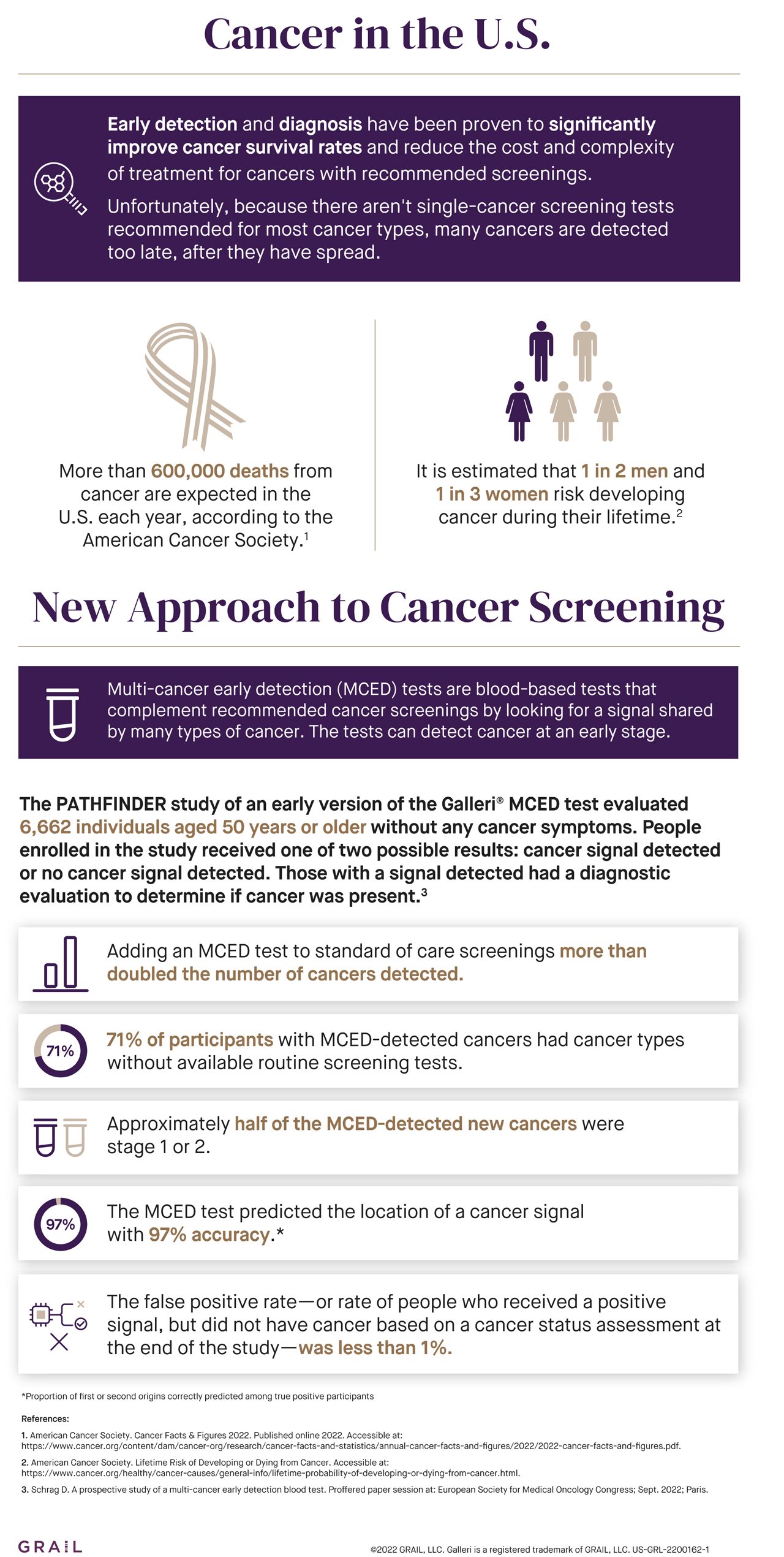
Today, there are only five recommended cancer screenings available in the U.S.—for breast, cervical, colorectal, lung (smokers or former smokers at risk) and prostate cancers. Unfortunately, no widespread screening tests are recommended for most other types of cancer. As a result, cancer is often detected too late, after it’s progressed to a more advanced stage.

Finding cancer early can improve cancer outcomes. In fact, the 5-year cancer-specific survival rate is just 21% for cancers that are detected after they have metastasized (spread). For cancers that are detected while they are still localized (haven’t yet spread), the 5-year survival rate is more than four times higher, at 89%.

Additional tools are needed, as cancers without recommended screenings represent approximately 70% of cancer deaths.

Screening More Broadly for Cancer

Multi-cancer early detection (MCED) tests are a new way to screen people for cancer that are used in addition to recommended cancer screenings. One MCED test, Galleri®, detects a shared cancer signal across more than 50 types of cancer through a simple blood draw. The test analyzes DNA in the blood to detect a signal associated with cancer and predicts the location of the signal, helping to inform next steps in confirming if the person has cancer.

“MCED tests are going to be a game changer for cancer screening. As an adjunct to standard of care screening tests, MCED tests broaden our ability to detect cancers in asymptomatic people that are not covered by current screening guidelines. They give healthcare providers a powerful new tool for patient care,” said Dr. Eric M. Klein, Emeritus Chair of the Glickman Urology & Kidney Institute and professor of surgery at the Cleveland Clinic Lerner College of Medicine. “These tests are leading the way to the future for cancer screening—screening individuals for cancer instead of screening for individual cancers.”

Proven Benefits of MCED

A recent study of an early version of the Galleri MCED test evaluated more than 6,500 people aged 50 years or older with no symptoms of cancer. People enrolled in the study received one of two possible results: cancer signal detected or no cancer signal detected. Those with a signal detected had a diagnostic evaluation to determine if cancer was present.

The study found that adding MCED testing more than doubled the number of cancers detected by recommended screenings. Approximately half of the new cancers found by the MCED test were stage 1 or stage 2. Cancers in these stages are generally smaller and haven’t spread to surrounding tissue, lymph nodes or other organs. Cancers detected in earlier stages may have more treatment options and a higher chance of successful outcomes.

Additionally, 71% of the people with cancers detected by the MCED test had cancer types without recommended screenings.

“We learned from this study that the addition of our MCED test to regular screenings can dramatically increase the numbers of cancers found among people who have an elevated risk,” said Dr. Josh Ofman, president at GRAIL, which makes the Galleri test. “This gives us an opportunity to find more cancers at earlier stages, when they can be more effectively treated and are potentially curable.”

Talk to Your Doctor

The Galleri test is intended for people with an elevated risk for cancer, including those aged 50 or older or with risk factors that increase the chance of cancer. Individuals concerned about increased risk of cancer are encouraged to talk with their doctor about the Galleri MCED test, which can be incorporated into an annual health check or routine blood work. If the screening detects the presence of a cancer signal, a healthcare provider will help determine next steps. The Galleri test is available by prescription only.

Alongside other ways you can work to stay healthy, take control of your health by speaking to your doctor about MCED tests.

To learn more, visit galleri.com.

Important Safety Information

The Galleri test is recommended for use in adults with an elevated risk for cancer, such as those aged 50 or older. The Galleri test does not detect all cancers and should be used in addition to routine cancer screening tests recommended by a healthcare provider. Galleri is intended to detect cancer signals and predict where in the body the cancer signal is located. Use of Galleri is not recommended in individuals who are pregnant, 21 years old or younger, or undergoing active cancer treatment.

Results should be interpreted by a healthcare provider in the context of medical history, clinical signs and symptoms. A test result of “No Cancer Signal Detected” does not rule out cancer. A test result of “Cancer Signal Detected” requires confirmatory diagnostic evaluation by medically established procedures (e.g., imaging) to confirm cancer.

If cancer is not confirmed with further testing, it could mean that cancer is not present or testing was insufficient to detect cancer, including due to the cancer being located in a different part of the body. False-positive (a cancer signal detected when cancer is not present) and false-negative (a cancer signal not detected when cancer is present) test results do occur. Rx only.

Laboratory/Test Information

GRAIL’s clinical laboratory is certified under the Clinical Laboratory Improvement Amendments of 1988 (CLIA) and accredited by the College of American Pathologists. The Galleri test was developed, and its performance characteristics were determined by GRAIL. The Galleri test has not been cleared or approved by the U.S. Food and Drug Administration. GRAIL’s clinical laboratory is regulated under CLIA to perform high-complexity testing. The Galleri test is intended for clinical purposes.

Stay proactive about your health with multi-cancer early detection screening

2022-12-29T04:01:00

(BPT) – There are many ways to be proactive about staying healthy—from having a balanced diet and getting enough sleep to exercising.

Having recommended cancer screenings like mammograms and colonoscopies is another way to take control of your health. These single-cancer screenings can find specific cancers at earlier stages, before someone experiences symptoms.

Today, there are only five recommended cancer screenings available in the U.S.—for breast, cervical, colorectal, lung (smokers or former smokers at risk) and prostate cancers. Unfortunately, no widespread screening tests are recommended for most other types of cancer. As a result, cancer is often detected too late, after it’s progressed to a more advanced stage.

Finding cancer early can improve cancer outcomes. In fact, the 5-year cancer-specific survival rate is just 21% for cancers that are detected after they have metastasized (spread). For cancers that are detected while they are still localized (haven’t yet spread), the 5-year survival rate is more than four times higher, at 89%.

Additional tools are needed, as cancers without recommended screenings represent approximately 70% of cancer deaths.

Screening More Broadly for Cancer

Multi-cancer early detection (MCED) tests are a new way to screen people for cancer that are used in addition to recommended cancer screenings. One MCED test, Galleri®, detects a shared cancer signal across more than 50 types of cancer through a simple blood draw. The test analyzes DNA in the blood to detect a signal associated with cancer and predicts the location of the signal, helping to inform next steps in confirming if the person has cancer.

“MCED tests are going to be a game changer for cancer screening. As an adjunct to standard of care screening tests, MCED tests broaden our ability to detect cancers in asymptomatic people that are not covered by current screening guidelines. They give healthcare providers a powerful new tool for patient care,” said Dr. Eric M. Klein, Emeritus Chair of the Glickman Urology & Kidney Institute and professor of surgery at the Cleveland Clinic Lerner College of Medicine. “These tests are leading the way to the future for cancer screening—screening individuals for cancer instead of screening for individual cancers.”

Proven Benefits of MCED

A recent study of an early version of the Galleri MCED test evaluated more than 6,500 people aged 50 years or older with no symptoms of cancer. People enrolled in the study received one of two possible results: cancer signal detected or no cancer signal detected. Those with a signal detected had a diagnostic evaluation to determine if cancer was present.

The study found that adding MCED testing more than doubled the number of cancers detected by recommended screenings. Approximately half of the new cancers found by the MCED test were stage 1 or stage 2. Cancers in these stages are generally smaller and haven’t spread to surrounding tissue, lymph nodes or other organs. Cancers detected in earlier stages may have more treatment options and a higher chance of successful outcomes.

Additionally, 71% of the people with cancers detected by the MCED test had cancer types without recommended screenings.

“We learned from this study that the addition of our MCED test to regular screenings can dramatically increase the numbers of cancers found among people who have an elevated risk,” said Dr. Josh Ofman, president at GRAIL, which makes the Galleri test. “This gives us an opportunity to find more cancers at earlier stages, when they can be more effectively treated and are potentially curable.”

Talk to Your Doctor

The Galleri test is intended for people with an elevated risk for cancer, including those aged 50 or older or with risk factors that increase the chance of cancer. Individuals concerned about increased risk of cancer are encouraged to talk with their doctor about the Galleri MCED test, which can be incorporated into an annual health check or routine blood work. If the screening detects the presence of a cancer signal, a healthcare provider will help determine next steps. The Galleri test is available by prescription only.

Alongside other ways you can work to stay healthy, take control of your health by speaking to your doctor about MCED tests.

To learn more, visit galleri.com.

Important Safety Information

The Galleri test is recommended for use in adults with an elevated risk for cancer, such as those aged 50 or older. The Galleri test does not detect all cancers and should be used in addition to routine cancer screening tests recommended by a healthcare provider. Galleri is intended to detect cancer signals and predict where in the body the cancer signal is located. Use of Galleri is not recommended in individuals who are pregnant, 21 years old or younger, or undergoing active cancer treatment.

Results should be interpreted by a healthcare provider in the context of medical history, clinical signs and symptoms. A test result of “No Cancer Signal Detected” does not rule out cancer. A test result of “Cancer Signal Detected” requires confirmatory diagnostic evaluation by medically established procedures (e.g., imaging) to confirm cancer.

If cancer is not confirmed with further testing, it could mean that cancer is not present or testing was insufficient to detect cancer, including due to the cancer being located in a different part of the body. False-positive (a cancer signal detected when cancer is not present) and false-negative (a cancer signal not detected when cancer is present) test results do occur. Rx only.

Laboratory/Test Information

GRAIL’s clinical laboratory is certified under the Clinical Laboratory Improvement Amendments of 1988 (CLIA) and accredited by the College of American Pathologists. The Galleri test was developed, and its performance characteristics were determined by GRAIL. The Galleri test has not been cleared or approved by the U.S. Food and Drug Administration. GRAIL’s clinical laboratory is regulated under CLIA to perform high-complexity testing. The Galleri test is intended for clinical purposes.

My Journey with Schizophrenia: Finding Support and Treatment

2022-12-21T08:01:00

(BPT) – Sponsored by Alkermes, Inc.

The story you are about to read may not be representative of all people living with schizophrenia. The opinions expressed here are those of Keira, a person living with schizophrenia, and are not a substitute for medical advice or judgement. Always talk to your doctor.

For most of my young adult life, I lived in a perpetual state of noise.

I often heard voices others couldn’t, avoided eye contact, experienced unstable moods, and saw increasingly vivid hallucinations. Sometimes I would talk and nothing I said would make sense. Looking back, I can see that those were my signs that I might be living with a mental health condition.

I remember I had a bad breakdown my senior year of high school and was hospitalized for the first time. During this experience, I wasn’t completely open and honest with the nurses and doctors about my symptoms because the voices in my head told me not to talk about them and I was scared.

For the next several years I experienced a repeated pattern of worsening symptoms, followed by hospitalization and treatment, and then a recovery period. When I was deep in my illness, I did not want to be seen or come in close contact with others, preferring to avoid people all together. After numerous hospitalizations, I finally decided to be more open and honest about what I was experiencing in order to get the help I needed.

I was formally diagnosed with schizophrenia, a serious mental health condition that affects about 1.1% of the U.S. population, by a healthcare provider.1 I learned from my doctor that symptoms typically begin in early adulthood and can include hallucinations, delusions, difficulty functioning normally, trouble focusing and behavior associated with psychosis.2,3 Most people living with schizophrenia require long-term treatment with medication, along with therapy, to manage their condition.4

The diagnosis — and the mixture of fear and relief that accompanied it — gave me the clarity I needed to share my experiences with my care team, evaluate treatment options and, with my doctor, make a decision that set me down a new path. I talked it over with my mom, my main support system and best friend, and together with my doctor decided that the 2-month (1064 mg) dose of ARISTADA® (aripiprazole lauroxil) was a good choice for my schizophrenia treatment journey. ARISTADA is a prescription medicine given by injection by a healthcare professional and used to treat schizophrenia in adults.5

Here is some important safety information about ARISTADA: It is not known if ARISTADA is safe and effective in patients under 18. It’s also important to know that elderly people with dementia-related psychosis are at increased risk of death when treated with antipsychotic medicines including ARISTADA. ARISTADA is not for the treatment of people who have lost touch with reality (psychosis) due to confusion and memory loss (dementia). The most common side effects of ARISTADA include restlessness or feeling like you need to move (akathisia). These are not all of the side effects associated with ARISTADA. For additional Important Safety Information, please see below.

Since starting on ARISTADA, I’ve noticed an improvement in my symptoms. This has just been my experience and your experience may be different. Talk to your healthcare team about what may be best for you. I do still have bad days every once in a while, but I have learned coping skills and how to better handle these difficult times.

I take my journey one day at a time. I focus on things that are important to me, like being a daughter, friend, teammate, and volunteer, having a social life and attending events, such as a recent pride festival.

I like that with my current schizophrenia treatment I don’t have to remember to take a pill every day. A nurse gives me my injection at home. I’m engaged in my treatment, attend therapy sessions, and interact with and support others living with schizophrenia. My choices and my support system make this life possible. No medication is right for everyone, this is only my personal experience, and treatment results may vary. It’s exciting to know that there are treatment options for people living with serious mental illnesses like schizophrenia. I encourage others to be open about their experiences, especially with their care team, so that they can discuss treatment goals and the pros and cons of available treatment options, and find the right support at the right time along their treatment journey.

This is intended as informational only and not a substitute for professional medical advice, diagnosis, or treatment. Always seek the advice of your physician or other qualified health provider with any questions you may have regarding a medical and/or mental health condition.

Please read the Important Safety Information for ARISTADA below. Discuss all benefits and risks with a healthcare provider. See Prescribing Information and Medication Guide.

INDICATION and IMPORTANT SAFETY INFORMATION for ARISTADA INITIO® (aripiprazole lauroxil) and ARISTADA® (aripiprazole lauroxil) extended-release injectable suspension, for intramuscular use

INDICATION

ARISTADA INITIO® (aripiprazole lauroxil) is a prescription medicine given as a one-time injection and is used in combination with oral aripiprazole to start ARISTADA® (aripiprazole lauroxil) treatment, or re-start ARISTADA treatment after a missed dose, when ARISTADA is used for the treatment of schizophrenia in adults.

ARISTADA is a prescription medicine given by injection by a healthcare professional and used to treat schizophrenia in adults.

It is not known if ARISTADA INITIO and/or ARISTADA are safe and effective in children under 18 years of age.

IMPORTANT SAFETY INFORMATION

Elderly people with dementia-related psychosis are at increased risk of death when treated with antipsychotic medicines including ARISTADA INITIO and ARISTADA. ARISTADA INITIO and ARISTADA are not for the treatment of people who have lost touch with reality (psychosis) due to confusion and memory loss (dementia).

Contraindication: Do not receive ARISTADA INITIO or ARISTADA if you are allergic to aripiprazole or any of the ingredients in ARISTADA. Allergic reactions to aripiprazole have ranged from rash, hives and itching to anaphylaxis, which may include difficulty breathing, tightness in the chest, and swelling of the mouth, face, lips, or tongue.

ARISTADA INITIO and/or ARISTADA may cause serious side effects including:

  • Cerebrovascular problems (including stroke) in elderly people with dementia-related psychosis that can lead to death.
  • Neuroleptic malignant syndrome (NMS), a serious condition that can lead to death. Call your healthcare provider or go to the nearest hospital emergency room right away if you have some or all of the following signs and symptoms of NMS
    • high fever
    • stiff muscles
    • confusion
    • sweating
    • changes in pulse, heart rate, and blood pressure
  • Uncontrolled body movements (tardive dyskinesia). ARISTADA INITIO and ARISTADA may cause movements that you cannot control in your face, tongue, or other body parts. Tardive dyskinesia may not go away, even if you stop receiving ARISTADA. Tardive dyskinesia may also start after you stop receiving ARISTADA.
  • Problems with your metabolism such as:
    • High blood sugar (hyperglycemia). Increases in blood sugar can happen in some people who receive ARISTADA INITIO and/or ARISTADA. Extremely high blood sugar can lead to coma or death. If you have diabetes or risk factors for diabetes (such as being overweight or a family history of diabetes), your healthcare provider should check your blood sugar before you receive ARISTADA INITIO and/or ARISTADA and during your treatment with ARISTADA.
      • Call your healthcare provider if you have any of these symptoms of high blood sugar:
        • feel very thirsty
        • need to urinate more than usual
        • feel very hungry
        • feel weak or tired
        • feel sick to your stomach
        • feel confused, or your breath smells fruity
    • Increased fat levels (cholesterol and triglycerides) in your blood
    • Weight gain. You and your healthcare provider should check your weight regularly.
  • Unusual and uncontrollable (compulsive) urges. Some people taking aripiprazole have had strong unusual urges such as gambling that cannot be controlled (compulsive gambling). Other compulsive urges include sexual urges, shopping, and eating or binge eating. If you or your family members notice that you are having unusual strong urges, talk to your healthcare provider.
  • Decreased blood pressure (orthostatic hypotension). You may feel lightheaded or faint when you rise too quickly from a sitting or lying position.
  • Falls. ARISTADA INITIO and ARISTADA may make you sleepy or dizzy when standing which may make you at risk for falls and related injuries.
  • Low white blood cell count
  • Seizures (convulsions)
  • Problems controlling your body temperature. Avoid becoming too hot or dehydrated. Do not exercise too much. In hot weather, stay inside in a cool place if possible. Stay out of the sun. Do not wear too much clothing or heavy clothing. Drink plenty of water.
  • Difficulty swallowing

The most common side effects of ARISTADA INITIO and ARISTADA include restlessness or feeling like you need to move (akathisia). These are not all the possible side effects of ARISTADA INITIO and ARISTADA. You should tell your healthcare provider about any side-effects you have.

Do not drive, operate hazardous machinery, or do other dangerous activities until you know how ARISTADA INITIO and ARISTADA affect you. ARISTADA INITIO and ARISTADA may affect your judgment, thinking or motor skills.

Before receiving ARISTADA INITIO and ARISTADA tell your healthcare provider about all of your medical conditions, including if you:

  • have not taken Abilify®, Abilify Maintena®, or any aripiprazole product before
  • have or had heart problems or a stroke
  • have diabetes or high blood sugar or a family history of diabetes or high blood sugar. Your healthcare provider should check your blood sugar before you receive ARISTADA INITIO and/or ARISTADA or during your treatment with ARISTADA
  • have or had low or high blood pressure
  • have or had seizures (convulsions)
  • have or had a low white blood cell count
  • have problems that may affect you receiving an injection in your buttocks or your arm
  • are pregnant or plan to become pregnant. It is not known if ARISTADA INITIO and/or ARISTADA will harm your unborn baby. If you become pregnant while taking ARISTADA INITIO and/or ARISTADA, talk to your healthcare provider about registering with the National Pregnancy Registry for Atypical Antipsychotics. You can register by calling 1-866-961-2388, or visit http://womensmentalhealth.org/clinical-and-research-programs/pregnancyregistry/
  • are breastfeeding or plan to breastfeed. ARISTADA INITIO and/or ARISTADA can pass into your breast milk. It is not known if it may harm your baby. Talk to your healthcare provider about the best way to feed your baby if you receive ARISTADA INITIO and/or ARISTADA.

Tell your healthcare provider about all the medicines you take, including prescription and over-the-counter medicines, vitamins, and herbal supplements. ARISTADA INITIO and ARISTADA and other medicines may affect each other causing possible serious side effects. Do not start or stop any medicines after you receive ARISTADA INITIO and ARISTADA without talking to your healthcare provider first.

If you have any questions about your health or medicines, talk to your healthcare provider. You are encouraged to report all side effects of prescription drugs to the FDA. Visit www.fda.gov/medwatch, or call 1-800-FDA-1088.

Please see full Prescribing Information for ARISTADA INITIO and ARISTADA, including Boxed Warning, and Medication Guides for ARISTADA INITIO and ARISTADA.

References:

1 Cloutier M, Aigbogun MS, Guerin A, et al. The Economic Burden of Schizophrenia in the United States in 2013. J Clin Psychiatry. 2016;77(6):764-771. doi:10.4088/JCP.15m10278

2 Schizophrenia. National Institute of Mental Health. https://www.nimh.nih.gov/sites/default/files/documents/health/publications/schizophrenia/schizophrenia.pdf. Revised 2021. Accessed November 15, 2022.

3 American Psychiatric Association. Schizophrenia Spectrum and Other Psychiatric Disorders. Diagnostic and Statistical Manual of Mental Disorders. 5th ed. Washington, DC: American Psychiatric Publishing; 2013.

4 Living well with schizophrenia. Substance Abuse and Mental Health Services Administration (SAMHSA). https://www.samhsa.gov/seriousmental-illness/schizophrenia#tips. Updated September 27, 2022. Accessed October 11, 2022.

5 ARISTADA [prescribing information]. Waltham, MA: Alkermes, Inc.; 2021.

Alkermes® is a registered trademark Alkermes, Inc. ARISTADA® and ARISTADA INITIO® are registered trademarks of Alkermes Pharma IrelandLimited, used by Alkermes, Inc. under license. ©2022. Alkermes, Inc. All rights reserved. ARI-004823.

Top 5 kitchen trends to try in the new year on any budget

2022-12-20T14:01:00

(BPT) – When designing your dream kitchen, it’s important to balance timeless features with modern colors, patterns and textures that reflect your personality and style — especially since, now more than ever, it provides a place to cook, eat, work and entertain. A beautifully designed kitchen can also boost the home’s resale value in the future.

“Kitchen design trends for 2023 nod to the past and focus on increasing convenience, comfort and personal style,” said Kaley Galinksy, a merchant at The Home Depot. “Whether you’re planning on renovating, remodeling, or simply updating your existing space, there’s endless inspiration and affordable ways to achieve the most sought-after trends for kitchens in the coming year.”

To make sure your kitchen renovations are stylish and up to date, here are five kitchen design trends that will be big in 2023, according to The Home Depot.

1. Return to traditionalist

In 2023, you’ll see a return to classic, timeless and sophisticated black that offers a sense of comfort and familiarity of traditional designs. To update your home so that it’s always in style, choose classic, timeless palettes of black, white, creams and neutrals.

If you want to add interest to your home, use patterns and classic materials like marble, especially when it comes to your kitchen. High-contrast kitchens with classic lines and black finished cabinets and countertops are making a comeback and result in a striking kitchen makeover.

Cabinetry has a heavy influence on your kitchen’s overall design style and can help you achieve a new look in less time. With a cabinet makeover, you keep your existing kitchen layout and get all-new doors, drawer fronts and hardware, plus optional upgrades such as pull-out shelves, cabinet lighting and more.

2. Art deco revival

In the coming year, interior designers predict a renewed interest in the art deco styles of the roaring ’20s. To achieve this trend in your home, incorporate brighter colors, geometric patterns, luxurious fabrics and shiny surfaces.

Add or replace the backsplash in your kitchen using geometric-shaped tiles in greens and golds for a sleek and elegant look.

3. Modern organic

A renewed focus on natural and organic materials will continue to make their way into kitchens in the form of warmer finishes, soft and organic shapes, as well as mixing finishes and materials like concrete, wood, rattan and metals.

For homeowners looking to embrace this modern organic trend, interior designers recommend introducing textured white oaks paired with honed black or dark gray countertops for your next kitchen remodel. For cabinets, slab doors are still popular, but the newer thin shaker is gaining popularity. You can even use the free Kitchen Estimator tool to select your design options and get a fast estimate.

4. Home retreat

Your home should be a sanctuary from the stressors of day-to-day life. This year, many homeowners will transform their homes into personal havens that help minimize stresses and prioritize a sense of calm.

For those that retreat to the kitchen for self-care, an easy way to remove stressors is to reduce clutter with a well-organized pantry. Custom organization systems help add functionality and streamline your kitchen with stylish storage solutions, while still allowing you to enjoy your favorite appliances whenever you need them.

5. Modern cozy

For renovators who want their home’s interior to be warm and inviting, they should opt for a modern cozy style. This trend is inspired by the shabby chic style of the ’80s but updated with fewer over-the-top embellishments, paired with darker paints and a focus on coziness and nostalgic familiarity.

New flooring can serve as an anchor design for the rest of the kitchen. Consider installing luxury vinyl plank flooring in your kitchen — a durable, affordable and water- and stain-resistant option that’s also easy to clean. Pair it with a cabinet renovation to achieve this style in your home.

If you’re ready to update your kitchen in 2023, The Home Depot’s Home Services can help you create your dream kitchen! Whether you’re planning a full kitchen remodel or just a few updates, they have solutions to fit any space and every budget. Their service providers can give your cabinets a facelift or install new ones, replace sinks, install flooring and update your countertops. Take advantage of free in-store and virtual design services and financing options to help make your project affordable.

All certified service providers are local, licensed, insured and background checked. To learn more, visit HomeDepot.com/Services.

5 eye health mistakes you may not know you’re making

2022-12-15T07:01:00

(BPT) – As digital device use has increased significantly in recent years, so has the risk that our daily habits may have an impact on our vision. According to the American Optometric Association (AOA), more than 16 million Americans struggle with undiagnosed or untreated vision impairments, many of which could have been detected during a comprehensive eye exam.

Every day, doctors of optometry examine patients with no symptoms and find serious eye and other health issues. While some vision impairments are related to diseases like diabetes and sexually transmitted infections, some are caused by habits that make your eyes work harder, causing eyestrain, headaches, dry eyes and blurred vision.

Check out these five common eye health mistakes and how to implement better vision habits into your daily routine.

1. Improper desk setup and lighting

Your workspace can have a big impact on your eye health. Whether you work from home or go into the office, you’ll want to evaluate your desk setup and lighting.

Your desk and chair should be set up so the top of your computer screen is no higher than eye level, with the screen angled away about 15 to 20 degrees. If you have a standing desk, make sure to appropriately adjust it similarly to how you would look at your screen when seated.

Also, differences in lighting can cause undue stress on your eyes. Keep room lighting to about the same as the brightness of your computer screen, not significantly brighter or dimmer.

2. Not blinking enough during the day

Chances are you probably don’t think about how often you blink. However, people tend to blink less frequently when viewing a computer screen or handheld digital device. In fact, blink rate slows by up to 40% when you’re looking at a screen.

Blinking is the eye’s way of getting the moisture it needs on its surface. Keeping a note on your desk is a good way of reminding you to blink as a natural way to help prevent dryness and irritation. Practicing the 20-20-20 rule can help prevent vision issues such as digital eye strain as well: every 20 minutes, look at something 20 feet away for 20 seconds.

3. Holding your phone too close to your face

While you might be tempted to hold your phone close to your face to read small text or view images and videos, bringing the device closer to your eyes taxes the visual system. Keep in mind that small screens should be held at least 13 inches away from your face. If you need to read small print or see details, use the zoom feature or increase the text size in your device’s settings.

4. Wearing improper eyeglasses

If you find yourself squinting when driving, reading or watching TV, it may be time to get glasses or change your eyewear. Speak to your doctor of optometry to ensure you’re wearing the correct prescription and type of glasses for your intended viewing distance. They may also ask about your habits and recommend different pairs of glasses for certain activities, such as driving glasses or a pair with anti-glare coating for screen time.

5. Skipping your annual comprehensive eye exam

Annual comprehensive eye exams by a doctor of optometry are essential to ensure not only healthy eyes, but that your whole-body health is in check.

These exams can help identify the signs and symptoms associated with 270+ diseases that span the whole body. The earlier a vision or health problem is detected and treated, the more likely treatment will be successful.

“For many people, vision is their most important sense,” said Dr. Robert C. Layman, AOA President. “It connects us to our surroundings and the people in our lives. However, people are often unaware of habits that can strain their vision. The best way to assess and protect your vision and eye health is to receive a comprehensive eye exam annually, because the in-person care that AOA doctors of optometry deliver is irreplaceable.”

By avoiding these five common eye health mistakes, you can take better care of your vision and overall health. To learn more about eye health in this digital world and find an AOA doctor near you, visit AOA.org.

Diabetes technology helps former Disney Channel actress manage her type 1 diabetes

2022-12-15T10:01:00

(BPT) – Jennifer Stone Shares How the Medtronic InPen™ System Helps Her Balance Demands of Dual Career

Jennifer Stone, best known for her role as Selena Gomez’s best friend Harper Finkle on the Disney Channel’s “Wizards of Waverly Place,” grew up in the limelight. She explains her high school experience taking place on set and having to grow up at a very young age. Just months after the show ended, Jennifer’s life changed, and she was forced to grow up even faster by focusing on her health.

At the age of 19, Jennifer was diagnosed with type 1 diabetes — a 24/7 condition that requires constant self-management. Her diagnosis was not straightforward or easy. There was a lot of trial and error before she found a solution that worked for her. Through that experience Jennifer made the decision to start a career in nursing and now she works as an emergency room nurse in Los Angeles. Jennifer shares that while not every day is perfect, she has found balance in her life between nursing, acting, and managing her diabetes.

“It can be daunting to be diagnosed with type 1 diabetes because it’s something you have to live with for the rest of your life and manage every single day,” Jennifer said. “I remember feeling like no one truly understood what I was going through.”

Approximately 1.6 million Americans are living with type 1 diabetes, an autoimmune disease in which the body can’t make insulin, the hormone needed for glucose (sugar) to enter cells and produce energy. When it can’t enter the cells, sugar stays in the bloodstream and builds up which can cause serious illness if not treated.[1]

To manage type 1 diabetes, insulin is taken throughout the day manually from an insulin pen, or through an insulin pump, and glucose levels need to be monitored on a constant basis to see how the body is reacting to the balance of carbohydrates and insulin.1 This can involve a lot of ‘work’ and many individuals turn to advanced medical technologies to help reduce some of the burden of the disease.

Jennifer has been using the Medtronic InPen smart insulin pen for a few years to help simplify her diabetes management routine and decrease many of the daily decisions and calculations that were previously required before using this technology.

“I struggled for a while to learn what solutions worked best for my diabetes management. I didn’t want to give up the things I loved or dramatically change my routine. I’m thrilled I found the Medtronic InPen system — it fits seamlessly into my life and makes living with diabetes easier.”

The InPen is the only smart insulin pen cleared by the U.S. Food and Drug Administration (FDA) that pairs with Bluetooth® technology* through an easy-to-use smartphone app. The InPen makes the lives of people with diabetes easier by helping individuals calculate and administer meal-time and correction insulin doses. The InPen also provides reports to help users visualize how insulin and meals affect glucose so that they can make informed adjustments when discussing their insulin therapy with healthcare providers.

“There is a lot of math required with diabetes. For example, every time I would sit down for a meal, I needed to try to think through how many carbs I was eating, and then how many units of insulin that translated into. It was exhausting, and I hated doing all that math,” Jennifer shares. “The InPen helps remove the guesswork of dosing insulin, so I can focus on the things I truly enjoy.”

If you use manual daily injections to manage your diabetes, talk to your doctor to learn more about the InPen™ smart insulin pen. Product details are available at www.TheInPen.com.

Jennifer has been compensated by Medtronic for her time. Thoughts and opinions are her own. Individual results may vary.

Important Safety Information: InPen™

The InPen™ is a home-use reusable pen injector for single-patient use by people with diabetes under the supervision of an adult caregiver, or by a patient age 7 and older for the self-injection of a desired dose of insulin and for calculating an insulin dose or carbohydrate intake based on user-entered data. A healthcare professional must assist in dosage programming of the device prior to use, based on various patient-specific criteria and targets. The InPen™ requires a prescription. For additional product and safety information, please consult the Instructions for Use and bit.ly/InPenRisks.


[1] Type 1 diabetes. Mayo Clinic. Available at https://www.mayoclinic.org/diseases-conditions/type-1-diabetes/symptoms-causes/syc-20353011. Accessed August 1, 2021.

* The Bluetooth® word mark and logos are registered trademarks owned by Bluetooth SIG, Inc. and any use of such marks by Medtronic is under license.

Former news anchor becomes an advocate for the epilepsy community

2022-12-15T08:01:00

(BPT) – By Sarah Carlson

Imagine working, doing your job as usual, and suddenly losing control of your voice and body and eventually falling unconscious. That’s what happened to me. I can barely remember the ride in the ambulance, and it was only once I was at the ER that I realized I had a seizure.

In 2008, I was working as a news anchor in Madison, WI, when I started to feel something wasn’t right. I felt off both on air and throughout my day and desperately searched for answers from my doctors. I was finally diagnosed with simple partial seizures. My initial seizures were mild, making me feel confused or dizzy when reading the teleprompter, but I assumed we’d find an answer or adequate medication treatment. I was already fighting hard to find answers and the right treatment option for my seizures when I experienced a more severe seizure causing me to speak nonsense on air during a live news segment. This public seizure, and the online reactions it received, coupled with my multiple seizures a day, led me to double down on my efforts to find the right treatment option to control my epilepsy.

Because my seizure symptoms were not severe, it took a long time for doctors to find the medicine that would work with my epilepsy. I quickly learned that people who don’t find medicine that works for their epilepsy are categorized as the one-third or more of patients who never find one. My doctors eventually discovered that I had been living with a brain tumor and I was told that it was one factor causing my seizures. They were luckily able to remove it, but my journey with epilepsy didn’t end there. Just like many other people living with epilepsy, my seizures continued and changed the course of my career and the rest of my life.

Living with epilepsy

I’ve learned that not all seizures are the same. With some, I experienced minor symptoms, like confusion. However, others were more severe, causing me to seize on-air during a live broadcast where I spoke “gibberish”. Afterward, I found out a clip of my seizure had gone viral, a constant reminder of a shocking and horrible experience in which I had no control over my body. It was shortly after this that my doctors recognized my seizures had worsened and I had to give up my career in TV news.

For those living with epilepsy like I do, symptoms can vary from person to person and seizure to seizure. When I used to think of someone having a seizure, I pictured someone on the floor convulsing wildly and eventually losing consciousness. I’ve learned since my diagnosis, and from others with epilepsy, that some people may experience a seizure and sometimes the only signs are confusion, staring and stiff muscles.

To me, the scariest part of living with epilepsy is the lack of control I have on my health and the unknown moment when my invisible disease will strike. When will I have another seizure? What’s causing them? How can I live my life in this condition? It’s the uncertainty of this disease and unknowns of treatment that can put a pause on living your life.

Even after diagnosis, my journey to getting my seizures under control was long and frustrating. While doctors prescribed several medications, they weren’t working well enough to control my symptoms. My condition, and the seizures I experienced, were so unmanageable that I was forced to cut my career short and retire as a news anchor – something I had worked my entire life to pursue. My diagnosis with epilepsy and my seizures stole my career and prevented me from doing everyday activities like driving and running alone, one of my favorite things to do.

A path to treatment

In the U.S. alone, there are 3.4 million people, just like me, living with epilepsy and 60-70% have no known cause. Despite the number of people living with this neurological condition and more than 30 available epilepsy treatments, many epilepsy patients have issues managing their seizures.

It wasn’t until I met Dr. Michael Smith that I regained hope. He was determined to help me manage my seizures. He recommended that I begin taking Xcopri (cenobamate tablets) CV in 2020, a newer medication at the time, that he hoped would help to better manage the frequency of my seizures with the ultimate goal of stopping my seizures.

As of today, I am seizure-free. Fortunately, as a result of being seizure-free, I’m now able to drive again, and I’m back to running. While I could go back to TV journalism, that part of my life is over. Instead, I’ve started using my talents for writing and telling others’ stories to advocate for those with epilepsy, in addition to working full-time again in a new career and industry. By sharing the hope and inspiration that I have learned from my journey, I’ve discovered that having epilepsy does not mean you cannot live your life. My doctor helped me regain my independence and he listened to the things I love to do and helped me find the right treatments to get there. It is my hope that those with epilepsy will work with their doctors to have the same experience.

If you are an adult with partial-onset seizures, know you are not alone in your fight for zero seizures. Speak with your healthcare provider to learn if XCOPRI® is the right treatment for you.

Sarah is a real patient and is acting on behalf of SK Life Science, Inc.

For more information about XCOPRI®, please visit https://www.xcopri.com/.

IMPORTANT SAFETY INFORMATION AND INDICATION FOR XCOPRI (cenobamate tablets) CV

DO NOT TAKE XCOPRI IF YOU:

  • Are allergic to cenobamate or any of the other ingredients in XCOPRI.
  • Have a genetic problem (called Familial Short QT syndrome) that affects the electrical system of the heart.

XCOPRI CAN CAUSE SERIOUS SIDE EFFECTS, INCLUDING:

Allergic reactions: XCOPRI can cause serious skin rash or other serious allergic reactions which may affect organs and other parts of your body like the liver or blood cells. You may or may not have a rash with these types of reactions. Call your healthcare provider right away and go to the nearest emergency room if you have any of the following: swelling of your face, eyes, lips, or tongue, trouble swallowing or breathing, a skin rash, hives, fever, swollen glands, or sore throat that does not go away or comes and goes, painful sores in the mouth or around your eyes, yellowing of your skin or eyes, unusual bruising or bleeding, severe fatigue or weakness, severe muscle pain, frequent infections, or infections that do not go away. Take XCOPRI exactly as your healthcare provider tells you to take it. It is very important to increase your dose of XCOPRI slowly, as instructed by your healthcare provider.

QT shortening: XCOPRI may cause problems with the electrical system of the heart (QT shortening). Call your healthcare provider if you have symptoms of QT shortening including fast heartbeat (heart palpitations) that last a long time or fainting.

Suicidal behavior and ideation: Antiepileptic drugs, including XCOPRI, may cause suicidal thoughts or actions in a very small number of people, about 1 in 500. Call your health care provider right away if you have any of the following symptoms, especially if they are new, worse, or worry you: thoughts about suicide or dying; attempting to commit suicide; new or worse depression, anxiety, or irritability; feeling agitated or restless; panic attacks; trouble sleeping (insomnia); acting aggressive; being angry or violent; acting on dangerous impulses; an extreme increase in activity and talking (mania); or other unusual changes in behavior or mood.

Nervous system problems: XCOPRI may cause problems that affect your nervous system. Symptoms of nervous system problems include: dizziness, trouble walking or with coordination, feeling sleepy and tired, trouble concentrating, remembering, and thinking clearly, and vision problems. Do not drive, operate heavy machinery, or do other dangerous activities until you know how XCOPRI affects you.

Do not drink alcohol or take other medicines that can make you sleepy or dizzy while taking XCOPRI without first talking to your healthcare provider.

DISCONTINUATION:

Do not stop taking XCOPRI without first talking to your healthcare provider. Stopping XCOPRI suddenly can cause serious problems. Stopping seizure medicine suddenly in a patient who has epilepsy can cause seizures that will not stop (status epilepticus).

DRUG INTERACTIONS:

XCOPRI may affect the way other medicines work, and other medicines may affect how XCOPRI works. Do not start or stop other medicines without talking to your healthcare provider. Tell healthcare providers about all the medicines you take, including prescription and over-the-counter medicines, vitamins and herbal supplements.

PREGNANCY AND LACTATION:

XCOPRI may cause your birth control medicine to be less effective. Talk to your health care provider about the best birth control method to use.

Talk to your health care provider if you are pregnant or plan to become pregnant. It is not known if XCOPRI will harm your unborn baby. Tell your healthcare provider right away if you become pregnant while taking XCOPRI. You and your healthcare provider will decide if you should take XCOPRI while you are pregnant. If you become pregnant while taking XCOPRI, talk to your healthcare provider about registering with the North American Antiepileptic Drug (NAAED) Pregnancy Registry. The purpose of this registry is to collect information about the safety of antiepileptic medicine during pregnancy. You can enroll in this registry by calling 1-888-233-2334 or go to www.aedpregnancyregistry.org.

Talk to your health care provider if you are breastfeeding or plan to breastfeed. It is not known if XCOPRI passes into breastmilk. Talk to your healthcare provider about the best way to feed your baby while taking XCOPRI.

COMMON SIDE EFFECTS:

The most common side effects in patients taking XCOPRI include dizziness, sleepiness, headache, double vision, and feeling tired.

These are not all the possible side effects of XCOPRI. Tell your healthcare provider if you have any side effect that bothers you or that does not go away. For more information, ask your healthcare provider or pharmacist. Call your doctor for medical advice about side effects. You may report side effects to FDA at 1-800-FDA-1088 or at www.fda.gov/medwatch.

DRUG ABUSE:

XCOPRI is a federally controlled substance (CV) because it can be abused or lead to dependence. Keep XCOPRI in a safe place to prevent misuse and abuse. Selling or giving away XCOPRI may harm others and is against the law.

INDICATION:

XCOPRI is a prescription medicine used to treat partial-onset seizures in adults 18 years of age and older.

It is not known if XCOPRI is safe and effective in children under 18 years of age.

Please see additional patient information in the Medication Guide. This information does not take the place of talking with your healthcare provider about your condition or your treatment.

Please see full Prescribing Information and Medication Guide.

Are you ready to prioritize your health goals? Help protect yourself against pneumococcal pneumonia.

2022-12-14T07:01:00

(BPT) – As 2022 comes to a close and the new year approaches, it’s the perfect time to reflect on your health goals from the past year. It’s also a great time to set up new ones to reach for. This is especially important for people aged 19-64 with certain underlying medical conditions like asthma, diabetes, COPD or chronic heart disease, who are at an increased risk for pneumococcal pneumonia — a potentially serious bacterial lung disease. Those aged 65 or older are also at increased risk for pneumococcal pneumonia, so it’s important to stay up to date on pneumococcal vaccination.

The importance of vaccination in your health journey

Actress, comedian, author and television personality Sherri Shepherd is working with Pfizer to help educate adults aged 19-64 with certain underlying medical conditions about their increased risk for pneumococcal pneumonia and the importance of getting vaccinated to help prevent it.

“I’ve been on a public journey with my health for several years now, and I try to prioritize the things that help keep my health goals in line, like long walks. Because I have diabetes, I am at increased risk for pneumococcal pneumonia,” said Shepherd, who has taken her shot at many things this year, including moving across the country and starting exciting new projects.

How to start your health journey

Shepherd credits the success of her health journey to focusing on mindfulness and prioritizing peace. She says the biggest things she can recommend to others starting their health journey include:

  • Getting consistent sleep
  • Drinking more water
  • Finding a way to move your body that works for you
  • Expressing gratitude
  • Trying meditation
  • Making sure you talk to a doctor or pharmacist about pneumococcal pneumonia vaccination

Shepherd continued, “I know that vaccination is one of the best ways to help prevent pneumococcal pneumonia from getting in the way of taking my shot at living my best life.”

Talk to your doctor or pharmacist

To learn more about the disease, risks, symptoms and more, visit KnowPneumonia.com. So, don’t wait for the clock to strike midnight this New Year’s Eve — ask a healthcare provider today about pneumococcal vaccination.