5 recipes to ease into the back-to-school season

2024-09-11T07:01:00

(BPT) – Fall is here and so is the back-to-school season. This is a busy time of year for families, and breakfast can often be forgotten in the hustle and bustle of weekday mornings.

To help you make your mornings brighter and your taste buds happier, KitchenAid, the #1 mixer brand in the world¹, offers five delightful recipes to keep your family fueled all morning long. These flavorful breakfast creations are perfect for busy mornings as well as cozy weekends.

1. 4-Ingredient Banana Pancakes

When you need a quick, no-fuss breakfast, try this four-ingredient banana pancake recipe. All you need is bananas, eggs, almond flour and sour cream.

Use the KitchenAid Go™ Cordless Hand Mixer to quickly combine the ingredients. With up to 60 minutes of continuous runtime² and no cord getting in the way, you can mix your ingredients at the counter, table or anywhere in the kitchen.

You can easily make this simple yet tasty breakfast recipe during a busy school and workweek in about 25 minutes!

Pro-tip: Use ripe bananas with lots of brown spots. They’re easier to mash and create much more flavorful pancakes.

2. Cherry Cream Cheese Breakfast Pastries

Cherry cream cheese breakfast pastries are a great breakfast item you can enjoy hot or cold. The pastries take about 40 minutes to make, so you can bake them in the morning or prep the night before and warm them in the oven before school and work.

Use the KitchenAid® Stand Mixer, a must-have for cooking and baking, especially for busy families. This 5.5-quart bowl-lift stand mixer offers professional-style performance, 11 speeds (including 1/2 speed) and is compatible with over 10 attachments (sold separately), so you can fold, knead, mix, shred or beat whatever ingredients you need.

Serve the pastries for breakfast or Sunday brunch, or pack them for lunch as a sweet treat for your kids (or yourself!).

3. Banana Bread

Banana bread is a classic breakfast item that can be enjoyed as part of a complete breakfast, on its own or as an accompaniment to your coffee. Like banana pancakes, you’ll want to use ripe bananas for a more flavorful bread.

Combining the ingredients takes little time when using your Stand Mixer flat beater attachment. Because the banana bread takes over an hour to bake, it’s best to make them during the weekends. The recipe makes 24 servings, so you can easily make, bake and freeze the banana bread so your family can enjoy it all week long.

4. Waffles

Waffles are a timeless breakfast, and it’s easy to see why. They’re quick to make (about 20 minutes) and are infinitely customizable. Gather your family’s favorite toppings like chocolate syrup, maple syrup and whipped cream. Don’t forget to offer fresh fruit like blueberries, sliced strawberries or bananas!

Using your Stand Mixer or KitchenAid Go™ Cordless Hand Mixer, you can quickly and completely combine the ingredients before pouring the resulting batter into the waffle maker. You can save even more time by making the batter ahead of time and refrigerating it so all you have to do on a busy morning is to cook the batter in the waffle maker.

5. Pumpkin Muffins

Make the back-to-school season easier and celebrate the arrival of fall with pumpkin muffins! This is also a great recipe to try using your KitchenAid Go™ Cordless Hand Mixer and Stand Mixer to complete different tasks.

In your Stand Mixer, beat wet ingredients and sugar together. While the ingredients combine, use your KitchenAid Go™ Cordless Hand Mixer to combine dry ingredients in a separate bowl. After combining the wet and dry ingredients, toss in cranberries for a sweet and sour taste before pouring the batter into muffin tins lined with cups.

Once baked, you’ll have about 16 servings to enjoy right away or warm up the next morning.

Pro tip: Try adding cinnamon, cardamom or nutmeg to spice up muffins. Pumpkin has a sweet yet demure flavor that combines well with spices.

Let these five delicious breakfast recipes inspire you to add a creative and tasty twist to your morning routine this back-to-school season, throughout the fall and year-round. For more recipes, visit the KitchenAid page on Yummly.com.

Footnotes:

¹ Source Euromonitor International Limited; based on custom research conducted Oct. 2023 for value sales (in USD) in 2023 through all retail channels

² Maximum initial battery voltage (measured without a workload) is 12 volts. Nominal voltage is 10.8. Actual run time will vary based on recipe and/or attachments used. Battery life impacted by factors such as battery age and use.


Low down payment mortgages help first-time buyers access the American dream

2024-09-10T16:45:00

(BPT) – Traditionally, saving up for a 20% down payment has been the largest obstacle for aspiring homeowners and this challenge is even more acute when interest rates drive monthly mortgage payments higher. Despite higher rates cooling home sales last year, hundreds of thousands of first-time homebuyers leveraged private mortgage insurance (MI) to put as little as 3% down to access homeownership.

According to a report released by U.S. Mortgage Insurers (USMI), 64% of homebuyers who used private MI last year did so to purchase their first homes and to begin building equity, a 6% increase in first-time buyers’ share of the market from 2020. Considering a 20% down payment on the national median home price of approximately $425,000 is $85,000, many aspiring homeowners without the resources to make large cash down payments understandably choose private MI. After all, putting 5% down on that same home requires saving only $21,000 in comparison. USMI reports that 35% of homebuyers using private MI in 2023 had annual incomes lower than $75,000.

“Private MI remains one of the most helpful tools available to first-time and low- to moderate-income buyers in the market. Private MI helps borrowers overcome the large down payment barrier to affordably and sustainably qualify for financing and start reaping the benefits of homeownership years earlier,” said USMI Board Chairman and Enact President and CEO Rohit Gupta.

In 2023, private MI helped 800,000 buyers purchase homes using low down payment mortgages, and 39 million homebuyers have achieved this cornerstone of the American dream with private MI since it was first introduced. If a 20% down payment were required, it would take the average homebuyer 27 years to save for the down payment and closing costs, three times longer than the time it would take to save for the 5% down payment that is often used with private MI. Fortunately, you don’t need a 20% down payment to become a homeowner.

USMI President Seth Appleton described the role that private MI plays for housing affordability and access as “opening the homebuying experience up to working families, including first-time buyers. People do not need to save for 20, 30 and even 40 years to meet the mythical — but not required — 20% down payment threshold to be able to afford their first house; instead, millions of homebuyers have achieved the American dream of homeownership and started building their wealth and equity by using private MI.”

Another advantage for homebuyers, according to USMI, is that private MI is a temporary cost; monthly borrower-paid MI can cancel after the homeowner establishes sufficient equity either through regular payments or home price appreciation. When mortgage insurance is canceled, the borrower’s monthly overall payment goes down.

There are many financing options for homebuyers to consider. Learn how you might be able to use private MI to start your homebuying process at lowdownpaymentfacts.com, a resource launched by USMI to offer homebuyers low down payment mortgage information and dispel the myth that a 20% down payment is required to become a homeowner.

How to spot a moving scam

2024-09-10T12:01:00

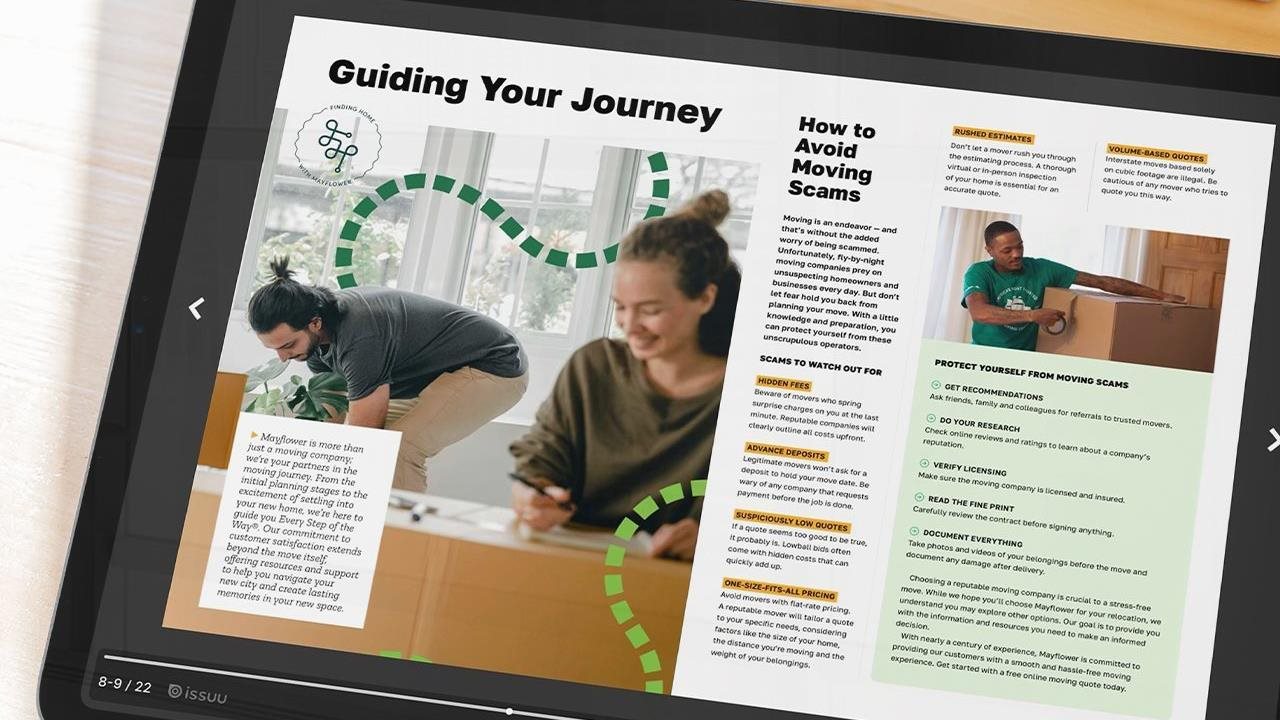
(BPT) – Moving is a big life change — that’s enough to focus on without the worry you’ll fall victim to a moving scam. Unfortunately, perpetrators target movers during this vulnerable time. In fact, the number of moving complaints continues to rise in the U.S. with the most common grievances involving inaccurate estimates and allegations of deceptive business practices, according to a 2024 study by USA TODAY Homefront.

As a trusted moving industry leader, Mayflower offers movers recommended tips to help stop scams before it’s too late. Here are some of the most common red flags to look out for:

Unusually low estimates

A moving quote that seems too good to be true likely is. Reputable movers base their estimates on factors like the distance of the move, the size of your household and the services required. Be cautious of companies offering significantly lower prices than competitors without a clear explanation. Lowball estimates often lead to hidden fees or additional charges once your belongings are in the moving truck.

Upfront payment demands

Legitimate moving companies may require a credit card to secure your move date, but they won’t ask for full payment before the move begins. Be wary of companies demanding upfront payment in cash or wire transfer in addition to requesting sensitive personal information such as your Social Security number. Some scammers will also refuse to deliver your belongings until you pay additional fees. This is illegal and should be reported to the authorities.

High-pressure sales tactics

A trustworthy moving company will work with you to create a moving plan that meets your needs and budget. If a company uses aggressive sales tactics or pressures you to make a quick decision, it’s a red flag. Take your time, get multiple quotes and read reviews before committing to a mover.

Lack of licensing and insurance

All professional movers must be licensed and insured to operate legally. Before signing a contract, ask to see proof of both. A reputable company will readily provide this information. Moving without proper insurance can leave you vulnerable to financial loss if your belongings are damaged or lost during the move.

Missing details in the contract

A comprehensive moving contract should clearly outline the services provided, including packing, loading, transportation and delivery. Be cautious of contracts with vague or missing information. Reputable movers will provide a detailed inventory of your belongings and specify the terms of the move.

No physical address

Legitimate moving companies have a physical address where you can visit their offices, if needed. Be wary of companies that only provide a P.O. box or email address. A physical location is essential for establishing trust and ensuring accountability.

Negative online reviews

Researching a moving company online is crucial before hiring them. Look for customer reviews and complaints on platforms like the Better Business Bureau and social media. Negative reviews can indicate a history of poor service or fraudulent practices.

Moving to a new home is an exciting milestone. With a little preparation, it can be a smooth process. By being aware of common scams and choosing a reliable moving company like Mayflower, you can embark on your next chapter with confidence.

For additional guidance and inspiration, explore Mayflower’s blog and digital magazine, Welcome HOME, providing practical tips, helpful checklists and inspiring ideas to help you settle into your new neighborhood.

Four Ways to Celebrate Hispanic Heritage Month

2024-09-10T09:01:00

(BPT) – Hispanic Heritage Month, which begins on September 15 and ends on October 15, is the perfect opportunity to celebrate the vibrant culture and significant contributions of Hispanic and Latino Americans nationwide. If you’re eager to celebrate Hispanic Heritage Month but aren’t sure where to begin, cookbook author, chef and TV personality Pati Jinich has you covered. She offers the following tips to help you explore and immerse yourself in the richness of Latino traditions.

1. Support Hispanic-owned businesses in your community

You can make a meaningful impact this Hispanic Heritage Month by supporting local Latino-owned businesses. Whether it’s a cozy café, a vibrant art gallery showcasing the works of Latino artists, or clothing shops brimming with unique, culturally inspired designs, your support plays a vital role. By choosing these authentic, family-owned businesses, you not only enjoy a personal and enriching experience but also contribute to the economic growth and visibility of the Latino community.

2. Expand your knowledge of Hispanic culture and history

The more you know, the better you can understand and appreciate the depth of a culture and its people. This month, embrace your curiosity and expand your knowledge by diving into Latino culture and history. Start with works from Latino authors that provide unique perspectives on their communities. You can further enrich your experience by diving into traditional Latin American art and music, like Mariachis and Talavera Pottery, which have been key pillars of Mexican history and cultural expressions.

3. Participate in Hispanic Heritage Festivals

To bring your learning to life this month, make it a point to attend Latin American heritage festivals and cultural events in your area. These gatherings offer an authentic and immersive experience, allowing you to witness traditional dances, savor regional cuisines and engage with the artisans and performers who keep these traditions alive. From vibrant parades filled with music and dance to booths showcasing handcrafted goods, these festivals provide a unique opportunity to experience the culture firsthand.

4. Cook flavorful Hispanic dishes

Indulging in Latino cuisine is one of the best ways to connect with the culture. While visiting local Hispanic restaurants is a wonderful way to explore authentic flavors and support the community, Chef Pati Jinich encourages you to go further by bringing those flavors into your own kitchen. Many Latin American dishes use eggs, and Pati recommends choosing the best-tasting, more nutritious egg in any dish. Eggland’s Best eggs, which contain more than double the Vitamin B12 compared to ordinary eggs, and 25 percent less saturated fat, help to support a balanced diet. If you need inspiration, try this Enchiladas de Chile Verde con Huevos Montados recipe from Eggland’s Best.

Enchiladas de Chile Verde con Huevos Montados

Prep time: 10 minutes; Cook time: 25 minutes; Makes: 4

Ingredients

8 Eggland’s Best eggs, large

2 tablespoons vegetable oil, plus more for frying tortillas

1 tablespoon unsalted butter

3/4 white onion (about 2 cups), halved and slivered

2 garlic cloves, thinly sliced

2 pounds fresh green chiles, such as chilaca, California, Anaheim, New Mexico or Hatch, roasted, sweated, peeled, seeded and cut into 2 and 1/2-inch pieces

1 tablespoon all-purpose flour

1 teaspoon kosher salt

1 and 1/2 teaspoons dried marjoram

2 cups chicken or vegetable broth

12 corn tortillas

6 ounces (about 1 and 1/2 cups) Chihuahua, Monterey Jack, Asadero or Quesadilla Cheese, shredded

2 tablespoons chopped fresh chives for garnish

Directions

1) Heat the oil and butter in a large saucepan over medium heat. Add the onion and cook, stirring occasionally for 3 to 4 minutes until softened. Add the garlic and cook for another couple minutes until the onion is completely wilted and the garlic has changed color. Stir in the flour, mix well, and cook for another minute, until it smells toasty. Stir in the chile strips, salt, and marjoram and cook for 3 to 4 minutes, until moist but not wet. Add the broth, stir, and when the mixture starts bubbling, cook for 5 to 6 minutes more. Remove from the heat. Transfer to a blender and puree until completely smooth. Return to a saucepan and keep warm.

2) Heat about 1/4 inch oil for frying tortillas in a large skillet set over medium heat. Once hot, quick fry the tortillas for 20-30 seconds per side until lightly browned. The oil should be bubbling all around the tortillas as you fry them. Place on a paper towel covered plate to drain. Alternatively, you can heat the corn tortillas in a preheated comal or skillet set over medium heat.

3) Separately, cook two sunny side up eggs per person to desired doneness.

4) To assemble, one by one, dip a prepared tortilla in the chile verde sauce and place on dinner plate. Top with about 2 tablespoons cheese and 1 tablespoon onion. Follow with the next tortilla. Repeat with the cheese and onion. Repeat with a third tortilla and top with the eggs. Add a tablespoon or two of the sauce, and garnish with a tablespoon of cheese and a tablespoon of onions and chives.

Let these tips inspire you to explore and celebrate the contributions of your Hispanic and Latino neighbors. Buena suerte!

Celebrate and win!

In honor of Hispanic Heritage Month, Eggland’s Best has teamed up with acclaimed Chef and TV Personality Pati Jinich to launch the “Latin Heritage Celebración de Huevos” Sweepstakes.

Now through October 22, fans can enter daily at EBFamilySweeps.com for a chance to win the Grand Prize of $5,000 to elevate their Latin cooking experience, in addition to Weekly Prize packs featuring a signed cookbook from Chef Pati, her favorite salsas from La Costeña, EB branded cookware and a three-month supply of Eggland’s Best eggs!

The invisible burden of type 1 diabetes through the eyes of a caregiver

2024-09-10T07:01:00

(BPT) – Sponsored by Sanofi

Caregiving for those with type 1 diabetes is more than a responsibility, it’s a full-time job, requiring around-the-clock care and attention. From monitoring your loved one’s blood sugar, to managing food intake, and so much more, being a type 1 diabetes caregiver requires being comfortable and confident in the face of a million uncomfortable decisions that must be made every day. These ongoing, significant – and the seemingly mundane – actions and decisions can take both a tangible and intangible toll on the health and well-being of caregivers, who often put their own needs on hold to support someone else.

Cassie Bailey, a mother to son Josiah, who was diagnosed with type 1 diabetes at age 5, knows firsthand the toll caregiving can take. “When Josiah was first diagnosed, our family’s whole world got flipped upside down,” Bailey explains. “As a mom and a caregiver to a young person living with type 1 diabetes, there’s no textbook that tells you how your day is going to go – and that can be both mentally and emotionally taxing.”

To better identify and ultimately understand the impacts of a type 1 diabetes diagnosis on caregivers like Bailey, Beyond Type 1 – a leading organization dedicated to changing what it means to live with diabetes – conducted “The Cost of Not Knowing” survey, which was commissioned by Sanofi. The findings highlighted the emotional, social, and financial impacts of diagnosis on caregivers of children under 18 with type 1 diabetes, and also adults over 18 with the condition.

Let’s take a look at key takeaways from “The Cost of Not Knowing” as it relates to caregivers of type 1 diabetes children, told through Bailey’s experience:

Navigating the emotional toll

For many, a type 1 diabetes diagnosis can come unexpectedly and can happen when someone is already seriously ill, leaving caregivers shocked and uncertain about the future. Unfortunately, that was the case for the Baileys. When Josiah was first diagnosed, he ended up in the hospital in diabetic ketoacidosis (DKA), a serious complication of type 1 diabetes that can be life-threatening. “Josiah’s diagnosis was heartbreaking; as a mom, you never want to see your child sick,” Bailey shares. “We were completely blindsided and unprepared. In hindsight, I know now that he was experiencing symptoms but, at the time, it was easy to explain them away, until one day he collapsed. We rushed him to the hospital, where he was diagnosed that same day. I felt like I had no time to do research or educate myself. I remember feeling incredibly worried about how this would impact not only his childhood but also his long-term health.”

Survey findings show more than half (51%) of caregivers who have been caring for their loved one since diagnosis described their emotional health as poor when they learned of their loved one’s type 1 diabetes diagnosis. Caregivers noted feeling sad (41%), afraid (40%), and uncertain for the future (30%), among other emotions. Knowing about the risk of type 1 diabetes in advance of a diagnosis may help alleviate these negative emotions – in fact, 97% of caregivers say knowing sooner about their loved one’s risk of developing type 1 diabetes would have diminished these feelings.

Transforming daily routines

Common parental worries are forever transformed into serious concerns about a child’s physical well-being in the wake of a type 1 diabetes diagnosis. Imagine the magnitude of this adjustment and how it leads to caregivers completely changing their daily lives – they literally have no choice.

Additional survey findings paint a picture of this – consider that a staggering 83% of caregivers reported having changed how they lived their life when they first learned of their loved one’s type 1 diabetes diagnosis because they felt overwhelmed and unprepared. Moreover, nearly nine in 10 caregivers (87%) gave up some of their interests or future plans when they first learned of their loved one’s diagnosis.

As Bailey explains: “There are no ‘breaks’ when it comes to managing type 1 diabetes. Had my husband and I known about our son’s diagnosis sooner, I believe we would have been better prepared for the realities of this condition, giving us more time to adjust our routines to our son’s – and entire family’s – new normal.”

Taking the next step to get screened

Despite the benefits of early detection, type 1 diabetes screening is not commonly performed prior to diagnosis. Like many families, the Baileys didn’t know that early screening for type 1 diabetes was available. “Everything in me wishes we were aware of screening and had taken the step to get it done. It would have given us time and space to get educated, and most importantly, potentially reduced the risk of Josiah going through DKA. Knowing what I know now, I am a big advocate of early screening,” Bailey notes.

Many caregivers echo this sentiment, with 96% of caregivers in the survey recommending friends and family members get an early autoantibody test for type 1 diabetes to understand their risk of developing the disease. As published literature indicates that up to nearly 90% of people diagnosed with type 1 diabetes have no family history of the condition, it’s easy to understand why nearly all caregivers recommend screening. Don’t wait to get screened; talk to your doctor about getting your family screened.

This research was conducted by Wakefield Research via two survey instruments – one among 1,000 US adults with type 1 diabetes and a second among 1,000 US caregivers to those under the age of 18 years with type 1 diabetes. Learn about “The Cost of Not Knowing” and methodology at https://beyondtype1.org/unexpected-type-1-diabetes-diagnoses/ – and visit The1Pledge.com to get answers to your screening questions, discover more information about type 1 diabetes, find resources, access live chat, and more. You can also explore even more resources, including information on the signs of diabetes, on the Beyond Type 1 website.

Sanofi does not provide medical advice, diagnosis, or treatment – information is provided for educational purposes only. Your doctor is the best source of health information. Talk to your doctor if you have any questions about your health or treatment.

Cassie Bailey is a paid spokesperson for Sanofi.

5 Ways to Conquer ‘Adulting’ with Smarter Financial Habits

2024-09-09T10:33:00

(BPT) – By Mary Hines Droesch, Head of Consumer, Small Business & Wealth Management Banking and Lending Products at Bank of America

Pack your bags and sharpen your pencils because it’s time to kick off another school year. Whether you’re heading to college with new responsibilities or figuring out what to do with the first paycheck from your full-time job, there’s no better time than the back-to-school season to prioritize financial education and refine your money management skills.

This season is all about setting the habits that will lay the foundation of your adult life, from learning to do laundry and cook on your own to managing your finances. Whether you’re just starting out or already maintain a budget, here are a few tips to help you develop smart financial habits on your path to financial independence:

1. Organize your finances with a budget

Transitioning into adulthood means managing monthly expenses and bills, possibly for the first time. That’s where budgeting comes in. According to recent research from Bank of America’s Better Money Habits financial education team, 52% of Gen Z say they both don’t make enough money to live the life they want and share that the high cost of living is one of the primary barriers to financial success. With so much unease about their financial futures, it’s important for current students and recent grads to start budgeting and saving early on.

The appropriate monthly savings amount varies by situation, but an easy strategy to get you started is the 50/30/20 method: 50% of your after-tax income should cover needs (rent, groceries, student loan payments, etc.), 30% should go to wants, and 20% should go into savings. These percentages can be adjusted as needed, but this framework can help first-time budgeters.

2. Open a savings account and add to it regularly

A dedicated savings account helps safeguard your deposits and ensures you’re intentional about saving. Unlike a checking account, which provides you with access to your money for everyday needs, savings accounts enable you to set aside money for bigger purchases or special occasions. This is crucial for growing your money and ensuring you can achieve long-term goals.

Take it a step further and make saving money a no-brainer by automating it. Consider digital solutions like the Bank of America Keep the Change® program — it rounds up the price of every debit card purchase to the next dollar and automatically adds that to your savings account. Watching your savings grow can be motivating and will help you save up for things like new textbooks, a laptop, or even a fun spring break trip.

3. Build an emergency fund

Did you know 57% of Gen Z lack enough emergency savings to cover three months of expenses? Emergency funds are financial safety nets that are meant to be used, as the name implies, in case of an emergency — whether you need to replace your brakes, your apartment floods, you have a medical emergency, etc. Life is unpredictable and often throws us curveballs, so doing what you can to prepare, like building an emergency fund, is one way to get ahead of those surprises. Start small and build your fund over time — your future self will thank you.

4. Build strong credit and maintain a high credit score

Credit scores might be a vague concept to understand when you’re just starting out. Think of your credit score as a financial report card, similar to the ones you get at school. To build strong credit and maintain a high credit score, it’s important to pay your bills on time and in full. You can ensure that you stay on top of this by setting up reminders for upcoming expenses or using digital automatic payment tools available through your bank. Your credit score is especially important as you begin thinking about making larger purchases down the road.

Group of college students with backpacks, books, headphones and a laptop talking in the library.

5. Get a better deal for your buck with student discounts

Between textbooks, rent, groceries and having some fun, being a student requires a fairly stringent budget, but your “student” status also comes with its perks. From tech to dining out to entertainment and online streaming services, there are a plethora of deals that you can access through your student email or your school’s offerings. Take some time to scout these out and take advantage while you can.

Embracing these habits as you step into this exciting new chapter will empower you to be proactive about your finances. With time, you’ll set yourself up for a smoother, more independent financial future.

Are heat pumps worth it? Debunking 6 common heat pump misconceptions

2024-09-09T14:01:00

(BPT) – Heating and cooling often make up the bulk of utility bills — and the right HVAC system can make a world of difference in both energy bills and home comfort. Recently, heat pumps have become a trending topic in the news for their ability to address both of these needs by providing sustainable home comfort while simultaneously lowering utility bills. But can they really do both?

To answer that question, it’s important to first understand how a heat pump works. When the thermostat temperature is raised and heat is needed, the system pulls heat energy from the ambient air outside the home to heat the home. When air conditioning is desired, it does the opposite, removing heat from inside the home and expelling it to make the home cooler.

Because heat energy is moved around rather than being produced directly, heat pumps can provide more sustainable — and more efficient fuel source alternatives. In addition, recent advancements have made heat pumps far more efficient and more reliable than ever before — even in colder climates. As a result, both federal and local agencies are offering money-saving incentives to help more homeowners switch to heat pumps making it an ideal time to invest in a new heat pump.

But even with these benefits, there are still a lot of myths about how heat pumps work. We’re debunking some of the top heat pump misconceptions.

Myth 1: Heat pumps won’t work in cold climates

Fact: Today’s heat pumps can provide efficient heating in colder climates than ever before

In the past, some older heat pumps could struggle to heat a space efficiently when outdoor temperatures were especially cold. However, today’s heat pumps are engineered to function as the primary heating source in almost all geographic regions, even when temperatures drop below freezing.

The key to providing sufficient heat capacity in especially cold climates is the compressor — the part of a heat pump that moves heat through the system. In the past, heat pumps typically relied on single-speed compressors that functioned like an on/off switch, making it harder for the system to cope with extreme swings in temperature. Today’s more advanced heat pumps leverage variable-speed compressor technology to make incremental adjustments that keep pace with changing temperature more efficiently and more accurately. In addition, many heat pumps rated for cold-climate use now feature vapor injection technology, which further boosts cold-weather heating performance.

Myth 2: Heat pumps don’t really save money

Fact: 90% of homeowners can reduce their utility bills with a heat pump

The Environmental Protection Agency (EPA) estimates that almost all homeowners can expect to see cost savings by switching to an energy-efficient electric heat pump. Today’s heat pump offerings are wide-ranging and can meet the unique needs of almost any home, comfort level, or budget. Innovations in energy efficiency mean less electricity is used to cut costs in most homes. For example, the newly launched YORK® HH8 Side-Discharge Heat Pump can precisely match a home’s changing comfort needs while reducing homeowners’ energy bills by up to 50% compared to less efficient HVAC systems.

Myth 3: Heat pumps are noisy

Fact: Many heat pumps are as quiet as a dishwasher

No one wants to hear excessive noise coming from their HVAC system. Premium heat pumps combine insulated cabinets and low-sound fan designs to deliver whisper-quiet performance when operating in both heating and AC modes.

Myth 4: Temperatures will be inconsistent

Fact: Heat pumps seamlessly move between heating and cooling for consistent comfort

We all want to feel comfortable in our homes. Variable-speed heat pumps automatically move between heating and cooling modes throughout operation to maintain precise temperature and humidity levels. These seamless adjustments provide unmatched home comfort while helping to maximize energy efficiency, especially when compared to single-phase heat pumps that simply turn on and off and provide inconsistent inside temperatures.

Myth 5: Heat pumps require a lot of space

Fact: New compact designs are 30% smaller than traditional equipment

Innovative, new heat pump designs like the YORK® HH8 Side-Discharge Heat Pump offer top-tier efficiency and variable-speed performance in a compact size. The side-discharge design allows the heat pump to be stacked, placed under raised decks, or installed in zero-lot-line neighborhoods.

Myth 6: Installing a new heat pump is expensive

Fact: A wide range of rebates and incentives are available now

A historic number of savings programs are available to help offset the cost of installing a high-efficiency home heat pump. Through a combination of immediate discounts, tax rebates, and utility and manufacturers’ offers, some qualifying homeowners can offset 100% of the cost of installing a heat pump. Additionally, some manufacturers offer simplified financing options with fixed monthly payments to make the investment more manageable.

Learn more about today’s heat pump innovations and cost-saving programs from YORK®: https://www.york.com/residential-equipment/heating-and-cooling/split-system-heat-pumps.

How to repair 4 common types of wall damage

2024-09-09T10:01:00

(BPT) – Maintaining the walls of your home is essential for both aesthetic appeal and structural integrity. Over time, walls can suffer from various types of damage, whether it’s from everyday wear and tear, accidents or environmental factors. From the more common drywall holes to texture damage, concrete wall cracks and water damage, understanding how to effectively address these issues is crucial for any homeowner. Proper repairs not only restore the appearance of your walls but also prevent further deterioration and potentially costly repairs down the line. Here are practical solutions for repairing different types of wall damage, ensuring your home remains in top condition.

Drywall hole repairs

Drywall hole repairs are among the most common wall repairs homeowners encounter. Many drywall holes can be easily patched with spackling or a drywall patch kit. For the ultimate spackling option, DAP Fast Dry Premium Spackling is a professional-grade spackling compound with a smooth, one-strike application that leaves a rock-solid coat that won’t sink, shrink or crack, offering superior impact resistance and is paint ready in as little as just 15 minutes. Another great solution for repairing drywall holes is the Eclipse Rapid Wall Repair Patch. Whether the damage is small from a picture frame nail or anchor or as large as doorknob damage, simply apply the patch and it’s paint ready immediately. With Eclipse, projects can be completed faster with a permanent, mess-free solution that offers superior impact resistance.

Texture damage repairs

Texture damage repairs are necessary when the wall’s surface texture is compromised, often after fixing cracks or holes. The challenge lies in matching the existing wall texture to create a professional look. For a seamless repair, try DAP’s 2in1 Wall & Ceiling Spray Texture for orange peel, knockdown and popcorn textures. Unlike competitive products on the market, DAP’s aerosol cans feature Aim Tech technology that offers a 60-degree adjustable nozzle angle to easily repair vertical, overhead and hard-to-reach areas with one can, providing users much flexibility when completing projects. Once dry, the wall can be painted to match the rest of the room. A useful tip is to practice on a piece of cardboard before applying the texture to the wall to ensure you achieve the desired consistency and pattern.

Concrete wall repairs

Concrete wall repairs are typically needed when cracks or spalling occur, often due to settling or exposure to the elements. For small cracks, applying concrete repair caulk or epoxy filler can restore the wall’s integrity. Larger cracks may require chiseling out the damaged area and filling it with a concrete patching compound. Spalling, where the surface of the concrete flakes or chips away, involves removing the damaged material and applying a new layer of concrete. To ensure a durable repair, it’s essential to clean the area thoroughly before applying any patching materials and to use a bonding agent to help the new concrete adhere to the old.

Water damage repairs

Water damage repairs are critical not only for aesthetic reasons but also for preventing mold and structural issues. The first step in repairing water-damaged walls is to identify and eliminate the source of the moisture to prevent future problems. Once the area is dry, remove any damaged drywall or plaster and replace it with new material. It’s essential to treat the area for mold or mildew, using appropriate cleaning solutions, before proceeding with repairs. After replacing the damaged sections, apply a stain-blocking primer to prevent water stains from bleeding through the paint. For lasting results, ensure the area is completely dry before painting and consider using moisture-resistant materials in areas prone to dampness.

For more wall repair tips, visit DAP.com.

Breaking down the facts of Ozempic (semaglutide), a type 2 diabetes treatment

2024-09-09T10:01:00

(BPT) – Novo Nordisk is a healthcare company with a 100­-year history of driving change to improve the lives of people living with serious, chronic diseases. As broader conversations about diabetes medicines are ongoing in both mainstream and social media, we believe it is important to continue to raise awareness and to reinforce our commitment to responsible use of Novo Nordisk medicines. These efforts are intended to support the safety of all people for one of our medicines that is well known in the diabetes community, Ozempic®.

See Medication Guide: bit.ly/OzempicPI & Safety Info: bit.ly/OzempicISI for Ozempic (semaglutide) injection 0.5 mg, 1 mg, or 2 mg.

Infographic addressing misinformation regarding Ozempic

Worth the wake up: 5 expert tips to kick-start your day

2024-09-09T08:05:01

(BPT) – Starting your morning off right can make all the difference in how your day unfolds, setting the tone for a successful and energized day ahead. Don’t have a solid morning routine? Fear not. Bob Evans®, a leader in providing high-quality farm-fresh, quick-to-table food including its flagship Bob Evans sausage, knows the importance of starting your day off on the right foot. Check out its five expert tips to kick-start your morning and tackle whatever challenges life throws your way.

1. Wake up at the same time every day

A great morning starts with consistency. Make it a habit to wake up every morning at the same time. Doing so can increase your alertness and mood so you can start the day on an energetic and positive note. It may be tough at first, but once you’ve established a solid morning wake-up time, you’ll be able to feel the difference throughout your whole day.

2. Embrace the power of breakfast

Never skip breakfast! When you eat a hearty breakfast, you’re providing your body with the essential fuel to kick-start your metabolism and help you power through even the busiest days.

Choose a delicious and easy-to-make breakfast food like Bob Evans® Sausage. Made with premium cuts of pork and available in a range of flavors from Original to Brown Sugar and Honey and Zesty Hot, you’ll start your day with a full belly and a smile.

3. Double down on protein

Not just any breakfast will do. You’ll want to start the day off with protein to keep you satisfied and improve your focus. Make sure to include foods rich in protein — like eggs — to sustain your energy levels so you can easily manage all your daily tasks.

To make quick and delicious egg-based breakfasts, use a product like Bob Evans® Liquid Egg Whites. This high-protein breakfast staple is made from real eggs and provides 5 grams of protein per serving. You can find a variety of breakfast recipes on eMeals’ Worth the Wake Up landing page.

4. Get some sun

Exposure to morning light helps regulate your circadian rhythm and makes you feel more alert. Whether it’s opening the blinds, a stroll around the block or enjoying breakfast on your patio, soaking up the morning sun can improve your mood.

5. Move your body

Revitalize your body and mind with some light physical activity in the morning. Consider starting the day with gentle stretching, a brisk walk or a short yoga session to get your blood flowing and stimulate your senses. You’ll feel more focused, productive and lively.

Get ready for a great morning and an even better day. Using these five tips, you can transform your morning and feel ready to seize the day.

Make your morning worth the wake-up

Bob Evans® and Thomas’® are partnering to celebrate National Breakfast Month this September with a promotion that is worth the wake-up. Now through Oct. 31, consumers who buy one Bob Evans® Sausage, Bob Evans® Liquid Egg Whites, Simply Potatoes® or Owens® Sausage product and one Thomas’® Bagels or English Muffins product will be eligible to get $2 cash back via Venmo or PayPal.

Visit BobEvansGrocery.com/wake-up for the full promotion details and to upload your receipt to receive the cashback.