Back to School Got You Down? Try These Army-Tested Tips to Make It Your Best Year Yet

2024-08-13T10:01:00

(BPT) – As summer comes to a close, the back-to-school rush begins. While exciting for some, returning to class is often paired with feelings of uncertainty and anxiety — but what if it could be different? Your best new back-to-school tips may come from an unlikely source: the U.S. Army.

In 2021, the Army introduced the Future Soldier Preparatory Course (FSPC) — a program designed to help young adults meet the academic and physical fitness requirements needed to serve in the Army. With a course graduation rate of 95%, the FSPC has equipped thousands of trainees with the skills needed to achieve their goals and rise the ranks as a Soldier.

So whether you’re trying to make the team, make the grade or make new friends (or if you have your eyes set on service) read on for tips from the leaders of the FSPC on how you can make this year your best yet.

Fuel Your Body to Better Your Mind.

It’s no secret that health and nutrition are tied directly to performance in school; students who are eating the right foods, getting good sleep and staying active have more mental and physical energy to take on the school day. The FSPC’s fitness track is rooted in the Army’s Holistic Health and Fitness (H2F) system, which aims to provide the resources needed to foster the physical, mental, nutritional, sleep and spiritual health of Soldiers. Capt. Steven Fusco, Company Commander of the fitness track, recommends creating a colorful plate at each meal, finding a regular form of exercise you enjoy and getting eight hours of shut-eye a night. You can incorporate the Army’s holistic approach to health and wellness into your routine to keep you sharp for test day and every day.

Group of individules involved with the Soldier Preparatory Course getting physical training to be an Army Soldier.
The Future Soldier Preparatory Course helps young adults meet the physical and academic requirements needed to be an Army Soldier.

Beat Burnout Before It Starts.

Another critical piece of your fitness — and academics — is mental health. Class, extracurriculars and everyday stressors can all take their toll and lead to burnout. Carve out intentional time for breaks and fun amid studying and responsibilities to alleviate stress and return to tasks with a good mindset. Students in FSPC rely on their drill sergeants and fellow trainees for support, free time and encouragement. In the same way, look to friends, family and others in your support system to help keep you going.

Freinds from the The Future Soldier Preparatory Course handing out together.
Relying on others for support is key to navigating stress, and the friendships formed in the Army are for life.

Set and Go for Goals.

Every successful mission starts with a plan. Former FSPC drill sergeant Sgt. 1st Class Cameron Tucker is now the acting first sergeant of the program, and says that FSPC students set attainable but ambitious academic and fitness goals for themselves at the start of the four-week program. At the start of the school year, reflect on what you want to accomplish by the end and work backward with short-term goals to get there. And make sure they’re specific; rather than say you want to study more, plan to put a set number of hours toward studying per week. Having a goal in mind makes you more likely to stick to it and get to that feeling of accomplishment.

Classroom of student taking a test during The Future Soldier Preparatory Course.
Algebra, geometry, reading comprehension, and test taking skills are just a few of the subjects covered in the FSPC to properly prepare trainees for Army life.

Find Mentorship, Then Pay It Forward.

After successfully completing the FSPC, trainees officially embark on their Army journey — but many still have questions about the wide variety of jobs and opportunities available in the Army. As a former Army medic, and now a leader in the FSPC’s academic track, 1st Sgt. Eric Immel stresses the importance of being a mentor to those in the early stages of their careers, and serving as an example for what is possible as an Army Soldier. No matter where you are in your academic journey, it is never too early to find a mentor to help identify areas for growth and reflect on how far you’ve come. And when the time comes, pay it forward by providing guidance and a listening ear for others.

These tips have a track record of success: In just the first year and a half of the program, the Future Soldier Preparatory Course helped 15,000 hopeful Soldiers achieve the rigorous standards for enlisting in the Army, with marked improvements in academic and fitness benchmarks.

1st Sgt. Eric Immel training students in the classroom.
1st Sgt. Eric Immel began his Army career as a medic and is now a leader within the FSPC, using his experience to help trainees find their path.

Back to school doesn’t have to mean back to the same old. Making these small changes can help you go through the school day like a Soldier and end the year ready for the next.


7 expert meal hacks to ease the back-to-school bustle

2024-08-13T09:01:00

(BPT) – The back-to-school season can be a hectic time for parents juggling school runs, work responsibilities and day-to-day home tasks. With so much on your plate, planning and cooking meals may slip down your priority list. To help manage this busy period, culinary expert and Bob Evans® spokesperson Kristina Vänni has seven clever cooking hacks for making mealtime easier and more efficient.

1. Make a sweet breakfast topping in minutes

Have a spoonful or two of honey left in a glass jar? Add a tablespoon or so of butter and a pinch of cinnamon and nutmeg. Place in the microwave on high power for about 30 seconds and voilà! You’ve just made a delicious topping for pancakes, waffles, French toast or biscuits perfect for breakfast and weekend brunch.

2. Cook breakfast sandwiches with minimal cleanup

Breakfast sandwiches are a delicious and simple meal packed with protein to fuel your family throughout the morning. However, making them can leave your stovetop greasy. Vänni recommends cooking Bob Evans® Pork Sausage Patties with a mesh screen over the pan to contain splatter.

Bonus tip: As the sausage cooks, split precooked biscuits in half and lay them cut side down on the shield. When the sausage patties are done, the biscuits will be warm, soft and ready to use for the best-ever breakfast sandwiches.

3. Test your baked goods with spaghetti

Baking a cake for a kid’s birthday party or muffins for an after school snack? It’s always important to test your baked goods for doneness before removing them from the oven. Don’t have a skewer or toothpick on hand? No problem! In a pinch, grab a piece of uncooked spaghetti to test your cakes.

4. Avoid watered-down punch with large cubes

When making a bowl of punch for a sporting event or school celebration, the last thing you want is a watered-down beverage. Instead of using regular-sized ice cubes, which melt quickly, opt for larger ice cubes. You can easily make your own giant ice cubes by freezing water in a jumbo muffin tin.

5. Spice up dinner sides with leftover chips

Don’t throw away the leftover tortilla chips and crumbs at the bottom of the bag! Instead, use them to enhance your Bob Evans® Single-Serve Macaroni & Cheese.

After microwaving the mac and cheese, stir in a quarter teaspoon of taco seasoning or chipotle powder and let it stand for two minutes. Once the dish is ready to serve, crush the chips in the bag and sprinkle the tasty crumbs on top. This adds a unique boost of texture and flavor to your favorite quick and easy mac and cheese meal!

6. Grate cheese with ease

Before grating cheese, wipe the grater with a little cooking oil. This will keep the shreds from sticking to the grater and make it much easier to clean when you’re done!

7. Keep your rolls warm with hidden aluminum foil

When serving dinner rolls, hide a piece of aluminum foil under a decorative napkin in your roll basket. This will help the rolls stay hot longer while still maintaining the aesthetic of your dinner table setting.

Embrace the back-to-school season with confidence by using these easy, stress-free hacks to spend less time cooking and cleaning while creating meals that will have your family asking for seconds! For more mealtime tips and tricks and to find fresh, quick-to-table breakfast and dinner products, visit www.BobEvansGrocery.com.

Get to Know Dry Eye

2024-08-14T06:45:01

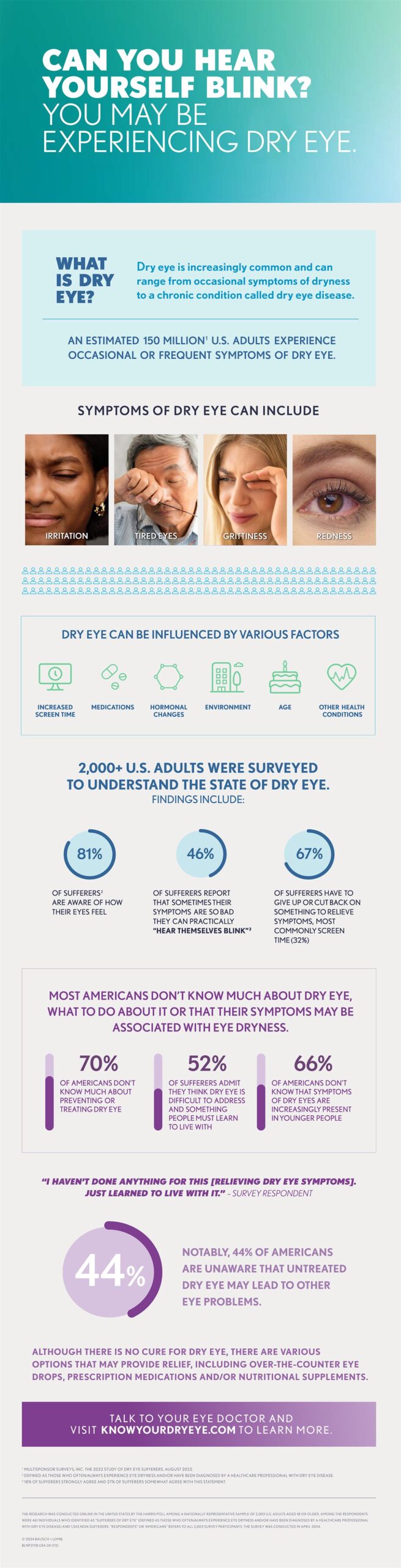
(BPT) – Dry eye is increasingly common and can range from occasional symptoms of dryness to a chronic condition called dry eye disease. The majority of people may not know that their symptoms may be associated with eye dryness.

There are multiple reasons why people may experience occasional dry eye. If not addressed, symptoms may become more frequent and severe and eye surface damage may occur, resulting in a diagnosis of dry eye disease.

If you think you may have dry eye, talk to your eye doctor. There are various options available that can provide relief. Learn more at www.KnowYourDryEye.com.

Infographic

Living with Bladder Leakage or Close Calls? Ask Your Doctor About Treatment Options for Male Incontinence

2024-08-13T23:01:00

(BPT) – Sponsored by Boston Scientific

Male incontinence, also known as bladder leakage, may stop men from doing activities they once enjoyed for fear of embarrassment. While this can feel isolating, the truth is that incontinence is a common condition and impacts about 1 in 10 men in the U.S.1

Stress urinary incontinence (SUI) occurs when physical movement or activity — such as coughing, laughing, sneezing or heavy lifting — puts pressure or stress on the bladder, causing urine to leak.2,3

Want to learn more? Here are some frequently asked questions about SUI:

Is stress urinary incontinence a problem for men?

Rates of urinary incontinence continue to rise, particularly in men 60 years or older.1 A common cause of SUI in men is the surgical removal of the prostate gland to treat prostate cancer, or a prostatectomy.3 When the urinary sphincter muscle is damaged or weakened, it cannot squeeze and stop urine from flowing out of the body when you laugh, lift, walk or move.2,3

While incontinence becomes more common as men age, it shouldn’t be ignored.1 Bladder leakage could be a sign of brain or nerve issues, dementia or other health problems that make it hard to feel and respond to the urge to urinate. Sometimes it’s due to problems with the urinary system itself.4

Can urinary incontinence be prevented?

Though it might not be completely preventable, you can lessen your chances of developing SUI. Managing your weight through a healthy diet and exercising regularly — including doing kegels — is a good way to help address SUI.4

Will drinking less water decrease leakage?

Drinking normal amounts of water does not exacerbate the problem of incontinence. On the contrary, it improves overall bladder health and helps your body work as optimally as possible.5

If I have surgery for prostate cancer, is incontinence an unavoidable side effect?

Bladder leakage is a common side effect for men who undergo a prostatectomy, however, SUI is sometimes resolved within one year following the procedure. If you find bladder control to still be an issue six months after your procedure, don’t be afraid to see a specialist to discuss your options.6

Are adult diapers my only option for managing incontinence? Are there longer-lasting treatments?

Many men start managing their bladder leakage with products they can buy at pharmacies or grocery stores, such as pads and diapers.

However, if this approach doesn’t produce wanted results, there are other treatment options that your doctor can recommend, such as catheters, penile clamps, male slings or an artificial urinary sphincter (AUS).

One example of an AUS is the AMS 800™. This three-part system allows users, when they need to urinate, to squeeze and release the pump in the scrotum several times, removing fluid from the cuff and pushing it into a balloon. When the cuff is empty, urine can flow out of the bladder. After a few minutes, the cuff automatically refills with the fluid stored in the balloon, which squeezes the urethra shut again.

Talk to your doctor about your symptoms and ask about available treatment options. To learn more, visit fixincontinence.com.

Important Risk Information: As with any medical procedure, complications may occur. The AMS 800 requires manual dexterity. Some risks with AMS 800 include but are not limited to: device malfunction or failure which may require revision surgery, erosion of the urethra in the cuff area, urinary retention, post-operative pain and infection. Find a link to additional patient safety information at fixincontinence.com.

Caution: U.S. federal law restricts this device to sale by or on the order of a physician. This material is for informational purposes only and not meant for medical diagnosis. This information does not constitute medical or legal advice, and Boston Scientific makes no representation regarding the medical benefits included in this information. Boston Scientific strongly recommends that you consult with your physician on all matters pertaining to your health.

References

1. Markland AD, Goode PS, Redden DT, et al. Prevalence of urinary incontinence in men: results from the national health and nutrition examination survey. J Urol. 2010 Sep;184(3):1022-7.

2. Abrams P, Andersson KE, Birder L, et al. Fourth International Consultation on Incontinence Recommendations of the International Scientific Committee: Evaluation and treatment of urinary incontinence, pelvic organ prolapse, and fecal incontinence. Neurology and Urodynamics. 2010;29:213-240.

3. Stress Incontinence. Mayo Clinic Website. http://www.mayoclinic.org/diseases-conditions/stress-incontinence/basics/definition/con-20027722. Accessed July 2024.

4. “Urinary Incontinence – What to Ask Your Doctor.” Mount Sinai Health System, www.mountsinai.org/health-library/questions-to-ask-your-doctor/urinary-incontinence-what-to-ask-your-doctor.

5. “Does Drinking More Water Help Incontinence?” UC Irvine Health, Department of Urology. www.urology.uci.edu/does_drinking_more_water_help_incontinence_can_drinking_too_much_water_irritate_your_bladder_does_drinking_water_help_with_overactive_bladder.shtml.

6. Sandhu JS, Breyer B, Comiter C, Eastham JA, Gomez C, Kirages DJ, et al. Incontinence after Prostate Treatment: AUA/SUFU Guideline. Journal of Urology [Internet]. 2019 Aug 1; 202(2):369–78. Available from: https://doi.org/10.1097/JU.0000000000000314

The Sweet Path to a Sugar-Free Future

2024-08-13T10:01:00

(BPT) – Every day, people across the country are making proactive choices to maintain good health, which absolutely includes eating a well-balanced, nutrient-dense diet. And it has been well established that nutrition plays a pivotal role in supporting one’s overall health, their well-being and in preventing or managing chronic conditions. Among the easiest ways for people to enhance the quality of their diet and to stay in good health is to manage their intake of added sugar.

Consuming excess added sugar has been linked to various health issues including obesity, diabetes and heart disease.1-3 Low- and no-calorie sweeteners, like Splenda, give individuals the ability to enjoy the same great sweet taste of sugar without the excess calories or blood sugar impact.4

Interested in managing your sugar intake? One important step is to become familiar with nutrition labels and to recognize alternative names for sugar. Common names for sugar include Cane Sugar, Glucose, Corn Syrup, Invert Sugar, Agave Nectar, Molasses, Barley Malt Syrup, Evaporated Cane Juice, Honey, Powdered Sugar, and Fructose. Once you understand where your sugar intake is coming from, you can make intentional sweet swaps using low- and no-calorie sweeteners!

Hand pouring Splenda packet into coffee on a wooden kitchen counter

Here are five easy ways to immediately begin reducing your sugar intake, today:

  1. Eliminate sugar-sweetened beverages: Add fruit, herbs, and a low- and no-calorie sweetener like Splenda to your sparkling water for a refreshing beverage
  2. Coffee and tea: Sweeten with a low- and no-calorie sweetener instead of sugar or honey
  3. Keep an eye on condiments: Use the nutrition facts label to identify sauces, jams, and dressings that are high in added sugar and swap for a sugar-free option
  4. Oatmeal & yogurt: Sweeten with a low- and no-calorie sweetener and add protein with natural peanut butter, almonds, or seeds
  5. DIY homemade desserts: Discover your new favorite recipe for cookies, pies, cakes, and more that use low- and no-calorie sweeteners

Reducing added sugar intake is not just a trendy health fad; it is a proactive approach to your overall well-being. Today, Splenda continues to underscore its commitment to its mission of helping people live happier, healthier, longer lives by making it easy to reduce sugar, through initiatives like its 25th anniversary campaign, “25 Families for 25 Years,” which honors families impacted by diabetes by awarding $2,500 to 25 deserving households.

Among the inspiring honorees is Jaime Burchuck, who nominated her daughter, Jules, a remarkable young girl diagnosed with Type 1 diabetes at 3 years old. Now 7 years old, Jules has spent the last 4 years bravely navigating the challenges of diabetes. From wearing an insulin pump at school to missing out on classroom birthday treats, these daily obstacles make her feel “different” from her friends. However, with sugar-free alternatives, Jules can enjoy the treats she loves without added health risks, allowing her to live the life every child deserves and shine brightly despite her condition. To further recognize Jules’ inspiring bravery, Splenda threw her an out-of-this-world party at Dave & Buster’s for her 8th birthday.

Additional honorees include Christina Dominguez from Los Angeles, CA, Cindy Gladden from Denver, CO, Jessica Phelps from Chicago, IL, Eeron Mobley from Indianapolis, IN, Kalen Da Sylveira from Los Angeles, CA, and Stefanie Cardino from Denver, CO, Susan Depner from Chicago, IL., Stacey Grantham from Tampa, FL, Susan Blackwell from Chicago, IL, Lesley Hammer from Tampa, FL and Juliette McCarey from Tampa, FL.

These stories reflect the resilience found within communities striving for better health. By promoting awareness for sugar alternatives and supporting those affected by diabetes, organizations are empowering individuals to make informed dietary choices that positively impact overall well-being.

References:

  1. Warshaw H, Edelman SV. Practical Strategies to Help Reduce Added Sugars Consumption to Support Glycemic and Weight Management Goals. Clin Diabetes. 2021;39(1):45-56. doi:10.2337/cd20-0034
  2. Malik VS, Hu FB. The role of sugar-sweetened beverages in the global epidemics of obesity and chronic diseases. Nat Rev Endocrinol. 2022;18(4):205-218. doi:10.1038/s41574-021-00627-6
  3. Huang Y, Chen Z, Chen B, et al. Dietary sugar consumption and health: umbrella review. BMJ. 2023;381:e071609. Published 2023 Apr 5. doi:10.1136/bmj-2022-071609
  4. Greyling A, Appleton KM, Raben A, Mela DJ. Acute glycemic and insulinemic effects of low-energy sweeteners: a systematic review and meta-analysis of randomized controlled trials. Am J Clin Nutr. 2020 Oct 1;112(4):1002-1014. doi: 10.1093/ajcn/nqaa167. PMID: 32672338.

Tips for easy, nutritious lunches and snacks for back-to-school

2024-08-13T08:01:00

(BPT) – As parents start getting kids back to school, one important topic looms large: What should you prep for lunches and snacks to make sure kids get the nutrition they need? This can be a source of anxiety for parents, as planning and packing better-for-you lunches can be time-consuming — and you want your kids to like the food you’re sending to help fuel their day.

Fortunately, there are choices available that can ensure your kids’ lunchboxes are filled with foods that are nutritious, easy to pack — and fun and tasty to eat.

“As we gear up to get kids ready for school, it’s so important to pack nutrient-dense snacks for school lunches, and have options to satisfy after-school munchies,” said Frances Largeman-Roth, RDN, best-selling author of Everyday Snack Tray, and nationally recognized health expert.

Here are tips to help you plan and pack school lunches for your kids this year.

Opt for nutrient-dense almond butter

With just one serving of JUSTIN’S® Classic Almond Butter (two tablespoons), you’ll get 6 grams of plant-based protein and 3 grams of fiber, as well as calcium and iron.

JUSTIN’S® Almond Butter is great for meals on-the-go, and it’s ready when you need it — breakfast crunch time, lunch fueling and after-school snacking. You can pack convenient, no-refrigeration-needed JUSTIN’S® Nut Butter Squeeze Packs in lunchboxes as is, or spread along with banana slices on bread for a tasty, nutritious alternative to traditional PB&Js.

“For an after-school snack, I love slicing up a medium banana and schmearing the top of each slice with a little JUSTIN’S® Classic Almond Butter, about two tablespoons. Then sprinkle a little unsweetened shredded coconut on top if you like,” Largeman-Roth said.

JUSTIN’S® offers a variety of almond butter flavors, including JUSTIN’S® Honey Almond Butter, with the slight sweetness of organic honey plus a one-of-a kind grind that gives it a naturally delicious taste — perfect for pairing with fruits, veggies and crackers; for lunch or snacks; with oatmeal and toast in the morning; or simply enjoying straight out of the squeeze pack or jar.

Best yet, all of JUSTIN’S® delicious nut butter varieties including almond, peanut and other specialty nuts, pack 4-7 grams of protein per serving, providing high-quality products made with mindfully sourced ingredients. You can find their products at Justins.com/where-to-buy.

Pro tip: Let kids choose their favorite nut butters and add-ons — banana slices, jam, etc. — and have them help pack lunches ahead, so you’ll know they’re getting something they like.

Maximize your sandwiches by choosing natural, organic meats

Sandwiches are classic lunch fare for a reason: They’re easy to pack and easy to eat. So why not make the most of them? These sandwich ingredients will help you level up this lunch staple.

If you’re looking for great protein sources to include in kids’ lunches, check out deli meat options from APPLEGATE®, which raises animals with their Applegate Humanely Raised standard, in which the animals are provided with space to engage in natural behaviors and promote natural growth, and with no antibiotics, added hormones or growth promotants. You can also feel good knowing that the meat you’re buying is free of added chemical nitrates, nitrites, phosphates, artificial ingredients and preservatives.

Even better, their products taste great, and are easy to enjoy in lunches and for after-school snacking. Try these selections:

You can mix and match any of these tasty deli meats with your kids’ favorite cheeses or toppings so they’ll get the most nutrition possible packed into one great sandwich. Find other APPLEGATE® products and recipe inspo at Applegate.com/recipes.

Pro tip: Pack moisture-rich toppings and dressings separately to avoid soggy-bread syndrome! For example, sliced tomatoes or cucumbers, lettuce leaves, pickles or mayo can be stored in separate containers to help keep everything fresh and crisp.

Amp up the fun factor

Your kids may enjoy lunches more — and be more likely to eat them — if they have a part in their creation. For example, pack a pita or soft flour tortilla in their lunchbox along with sandwich fillings they like so they can create their own wrap or pocket sandwich at lunchtime. Ask for their input on what types of meats, nut butters, cheese, veggies and fruits they want included — but don’t be afraid to think outside the lunch box.

“You know best what types of foods your child likes, and how adventurous they are (or not), so take your time introducing new ideas,” said Largeman-Roth. “Try new foods at home first, over the course of a week or longer, to see how they respond before adding to their lunchbox — unless your kid enjoys surprises! Many children are more likely to eat foods they’re already familiar with, so keep that in mind as you explore new options.”

Learn how vaccines can help ensure a healthier start to school

2024-08-12T08:01:00

(BPT) – Pop quiz: Do you know which childhood diseases the DTaP vaccine helps prevent?

(Answer: Diphtheria, tetanus, and pertussis — also called whooping cough).

If you didn’t know the answer, you’re not alone! Recommended childhood vaccines like DTaP have been so successful in preventing serious illness and even death from once common diseases that many of us are unfamiliar with their names or symptoms.

Ensuring your child is up to date with their recommended vaccinations helps keep it that way. Data from the Centers for Disease Control and Prevention (CDC) show the latest vaccination coverage, or the percentage of people who are vaccinated with specific vaccines, among kindergarten children is 93%. This is lower than pre-pandemic coverage, which hovered around 95% for nearly a decade. This is significant because it means that there are nearly 250,000 kindergartners who may not be completely protected against serious diseases like measles.

Help make sure that your child is protected from serious diseases like measles and chickenpox, which can spread easily in school settings. Talk to your child’s healthcare provider about keeping your child up to date with recommended vaccines.

Want to learn more? Consult CDC’s easy-to-read vaccination schedule to see if your child is protected. And check out the handy “cheat sheet” below to learn more about some once-common childhood diseases that recommended vaccinations now help protect your child from:

Diphtheria

  • About: Diphtheria is a contagious bacterial infection of the nose and throat and sometimes skin. The disease spreads when people with diphtheria cough or sneeze, or if others come into contact with their infected wounds.
  • Symptoms and complications: Diphtheria can cause difficulty breathing. In more serious cases, diphtheria can cause heart muscle damage, heart failure, and nerve damage. About 1 in 5 kids under the age of 5 who get diphtheria die from it.
  • How to protect your child: Make sure your child is up to date on their DTaP or Tdap vaccinations.

Pertussis (Whooping Cough)

  • About: Pertussis (also known as whooping cough) is a very contagious bacterial infection of the lungs. The disease spreads when an infected person coughs or sneezes around others.
  • Symptoms and complications: Pertussis usually starts with cold-like symptoms, and maybe a mild cough, but can become very serious. Someone with whooping cough can cough violently and rapidly, over and over. This extreme coughing can result in vomiting and exhaustion. Babies and young children may not cough at all but may have difficulty breathing instead.
  • How to protect your child: The best way to stay protected from pertussis is with DTaP or Tdap vaccination.

Polio

  • About: Polio is caused by poliovirus, a viral infection of the nerves and brain. It is spread through person-to-person contact from infected stool.
  • Symptoms and complications: Poliovirus can cause life-long paralysis and be life-threatening.
  • How to protect your child: There is no cure for polio, but it can be prevented with vaccination.

Varicella (Chickenpox)

  • About: Varicella (also known as chickenpox) is a contagious viral infection that causes fever, headache, and an itchy, blistering rash. It is spread through the air and direct contact. Up to 9 in 10 people that are not immune and come into contact with someone with chickenpox will also get infected.
  • Symptoms and complications: Varicella can cause infected sores, brain swelling, infection of the lungs (pneumonia), and can be life-threatening.
  • How to protect your child: The varicella vaccine protects children against chickenpox.

Measles

  • About: Measles is very contagious and can be serious. Anyone who is not protected against measles is at risk. About 9 in 10 people who are exposed to measles and not protected against measles get infected.
  • Symptoms: Measles can cause high fever, cough, runny nose, red, watery eyes (conjunctivitis), and rash. Measles can cause serious health complications, especially in children younger than 5 years old.
  • How to protect your child: The measles, mumps, and rubella (MMR) vaccine protects children against measles.

Thanks to the protection given by recommended vaccines, it makes sense that there is less awareness about these once common childhood diseases. Let’s keep it that way. Before your child goes back to school, make sure they are up to date with recommend vaccines. Talk to your child’s healthcare provider about recommended childhood vaccines. Visit CDC’s webpage to learn more.

The Benefits of Genetic Testing for Patients with CDKL5 Deficiency Disorder and Other Rare Genetic Epilepsies

2024-08-14T08:01:00

(BPT) – CDKL5 deficiency disorder, one of the most common genetic epilepsies, is estimated to occur in approximately 100 newborns in the U.S. per year.

CDKL5 deficiency disorder, or CDD, is a rare, X-linked developmental and epileptic encephalopathy characterized by refractory seizures and severe global developmental impairment. The frequency of seizures related to CDD can vary, with some patients experiencing up to 20 seizures a day.

Those diagnosed with CDD face many challenges living with a rare disease and can experience a wide range of chronically debilitating symptoms, including early-onset seizures, global developmental impairment, and intellectual disability, as well as disorders related to sleep, speech, physical development, and cortical vision.

Although there is currently no cure for CDD, research into better understanding the disease and the development of treatment options continues to advance. In fact, in 2022 the FDA approved the first treatment specifically for seizures associated with CDD in appropriate patients.

As CDD is caused by a mutation in the CDKL5 gene, genetic testing is required for a diagnosis. With 70-80% of unexplained epilepsy cases now estimated to have a genetic cause, the use of improved genetic testing technologies has assisted in identifying the genes associated with epilepsy in patients and expanding diagnostic utility.

For patients with unexplained epilepsy, genetic testing results may influence their treatment plan, diet, and options to participate in suitable clinical trials for gene-specific studies that further enhance research in the space.

Furthermore, genetic testing is not restricted to pediatric patients. The National Society of Genetic Counselors (NSGC) recommends that all patients with unexplained epilepsy be offered genetic testing regardless of age and periodic reanalysis of prior test results, if needed.

“Finding the best care and resources for the CDD community is crucial to supporting the mental and physical wellbeing of patients and their families,” said John Flatt, M.D., Pediatric Neurologist and Medical Director at Marinus Pharmaceuticals. “I encourage those affected by refractory seizures to discuss the resources available to them with their healthcare team, including genetic testing, treatment options, and counseling, to better understand their or their loved one’s condition and explore tailored approaches to managing their symptoms.”

Confirming a diagnosis of a rare genetic epilepsy disorder such as CDD through genetic testing can help clinicians and families personalize treatment plans and best prepare for the challenges and treatment pathways ahead.

To learn more about CDD, access educational resources from trusted advocacy organizations, and read patient stories, visit the Marinus website, here: https://marinuspharma.com/focus-areas/cdkl5-deficiency-disorder-cdd/.

Survey finds nearly 70% of Americans are confident in their investment strategy

2024-08-14T07:01:00

(BPT) – More than 60% of Americans feel they are in a better place to achieve their goals than generations that came before them, according to Schwab’s eighth annual Modern Wealth Survey, an examination of how Americans think about saving, spending, investing and wealth. Boomers lead the charge, with 66% believing they are more or as likely as older generations to reach their goals, followed by Gen X (63%), Millennials (62%) and Gen Z (60%).

One factor likely driving the positivity across generations is the rise in the number of Americans investing in the stock market. Schwab’s survey data shows that almost three in five Americans (58%) are investing today. This is in line with recent Federal Reserve data, which is up from 53% in 2019 and is the highest on record.

When asked specifically why they are in better financial shape than previous generations, Schwab’s survey reveals that Americans believe they now have more ways to build wealth (50%), increased accessibility to investing (46%) and additional investment options available to them (46%). Gen Z, which starts with those born in the late 1990s, notes that a top reason for their financial confidence is improved access to investing. Gen Z began investing when they turned 19 years old on average, nearly half the age of when Boomers started investing (35), according to Schwab survey findings.

“There has never been a better time to be an investor, and it’s encouraging to see that a majority of Americans are engaged with their personal finances and building long-term wealth, particularly younger generations who are beginning to save and invest earlier in their lives,” said Jonathan Craig, Head of Investor Services at Charles Schwab. “During the pandemic, we saw an increase in the number of Americans investing, but there are a lot of factors driving this trend that were in place before that and continue to drive investment activity now. Industry changes such as lower costs and minimums to invest and get advice, broader access to sophisticated platforms and tools, and a proliferation of investing information have all contributed to making investing more accessible than ever before. Increasing access to investing has been Schwab’s core mission from day one, and it’s still at the heart of everything we do today.”

Schwab’s survey shows nearly 70% of Americans are confident in their investment strategy and point to the availability of financial advice and knowledge (51%) and the ability to easily research companies and investments (37%) as top reasons. Gen Z, the most confident of the generations, says that learning about investing at an early age is the biggest factor for their confidence. Additionally, more than a quarter of Gen Z respondents report that they were taught about investing in school, significantly more than older generations.

Despite increased levels of investing, survey respondents admit there’s more they can do, with only 18% saying they are currently on top of their finances. Nearly one-third (32%) feel they are on track to being on top of their finances and another one-third (34%) note that they need to make changes to feel more in control. One key area for improvement among Americans is financial planning. Schwab’s survey finds that only 36% of Americans have a written financial plan. Among those who do, 76% say it makes them feel more in control of their finances and nearly all (96%) say they feel confident that they will reach their financial goals.

“Investing and financial planning are more accessible and more affordable today than ever before, and while Americans are increasingly engaged with their finances overall, there is still room for improvement when it comes to more formalized financial planning,” said Rob Williams, CFP®, Managing Director of Financial Planning at Charles Schwab. “When clients begin the financial planning journey, they discover that there is much more to a financial plan than a document. Today’s financial plans feature interactive digital tools designed to track progress and assess how changes in your life goals or circumstances may influence your financial strategy.”

To learn more about financial planning and access an array of goals-based calculators, tools, and educational planning content, visit Schwab’s Financial Planning Hub.

About the Modern Wealth Survey

The online survey was conducted by Logica Research from March 4, 2024, to March 18, 2024, among a national sample of 1,000 Americans aged 21 to 75. An additional 200 Generation Z Americans completed the study. Quotas were set to balance the national sample on key demographic variables. Detailed results can be found at https://www.aboutschwab.com/schwab-modern-wealth-survey-2024.

(0824-H6SP)