America’s 10 Most Amazing Shelter Dog Makeovers Unleashed

2024-05-08T10:01:00

(BPT) – May marks National Pet Month, and it’s a time to celebrate the love and companionship our furry friends bring into our lives; however, let’s not forget about the dogs still awaiting their forever homes. With over three million dogs entering shelters every year, adoption remains a critical solution for giving these pets the families they deserve. Sadly, due to a lack of resources, a significant number of rescue dogs are deprived of vital grooming which significantly improves their health, happiness and chance of adoption. That’s why pet industry leader Wahl and Greater Good Charities, a global nonprofit, have partnered again for the 13th annual Dirty Dogs Contest. Wahl donated grooming supplies to rescues and shelters nationwide, and they in turn shared amazing Before and After grooming photos — including the Top 10 Shelter Dog Makeovers of 2024. Vote for your favorite pup and help the organization affiliated with the dog win $10,000.

1. Pete is a resilient pup who endured neglect after his owner’s tragic passing. Rescued from a backyard, Pete was covered in filth and matting when he was brought to a shelter in Justin, TX, but with grooming and care, his true spirit emerged. Now, Pete is seeking a loving forever home where he can thrive and be cherished.

2. Winky found his way to a shelter in Palo Alto, CA, from a challenging home situation. Despite his history, he showed immense affection during his extensive grooming. It was during his grooming that staff realized he was missing one eye, and in turn affectionately named him “Winky.” Winky’s transformation was remarkable, and he soon found a loving forever home where he is thriving and living his best life.

3. Maddie, a stray with an unknown past, arrived in poor condition to a shelter in Franklin, TN, likely having endured neglect for some time. Fortunately, a compassionate local groomer stepped in to provide much-needed grooming, improving Maddie’s appearance and well-being.

4. Bella, a 12-year-old miniature poodle, arrived at a shelter in Phoenix, AZ, as a surrender due to her owner’s illness. As soon as she arrived, she was promptly pampered with a luxurious grooming and bath. A happy pup was revealed under all that matted and dirty fur, and it didn’t take long for her to find a forever home.

5. Bailey, an 8-year-old pooch from Philadelphia, PA, experienced a remarkable transformation after his previous owner’s illness left him in desperate need of grooming. Despite severe matting, Bailey’s playful energy shone through, and a spa day helped reveal his true personality. Now with a loving family, Bailey enjoys a happy life filled with affection and companionship.

6. Pancake is a one-year-old pup from Clearwater, FL, whose journey from neglect to love is truly heartwarming. Under a coat of severe matting, he was silently pleading for help. Pancake’s condition was so bad, in fact, his grooming had to be done under anesthesia. What emerged was a dog with a newfound joy for life, and within days, he captured the hearts of all who met him — including his new forever family.

7. Moe’s journey began with a heartbreaking discovery at his home where he was subjected to years of severe neglect and hoarding. Covered in filth and matted fur, he arrived at a shelter in San Francisco, CA, with wary eyes but a hopeful heart. After being washed and groomed, he slowly learned to trust, blossoming into a cuddly companion eager for affection. Now, Moe is ready for a brighter future, eager to embrace each new day with joy and security.

8. Dolly, a standard poodle, arrived at a rescue in Thompson Falls, MT, in dire need of grooming. Her filth and odor made it nearly unbearable for her rescuers to handle her. However, after a visit to the groomer and a much-needed bath, Dolly emerged as a stunning, red-furred beauty, quickly capturing the heart of a loving family.

9. Giuseppe’s arrival to a shelter in Espanola, NM, is a heartbreaking testament to neglect. Five pounds of matted fur covered up a host of health issues and rendered him unable to walk. Once groomed, Giuseppe could finally get the dedicated medical care and foster support he needed. Now this senior pup is living out his golden years in the comfort of a loving home.

10. Fred was rescued from a serious hoarding situation and brought to a shelter in Breinigsville, PA. Covered in matted fur and plagued by discomfort, he found relief after receiving a much-needed grooming and bath. The added attention of proper medical care transformed him into a brand-new dog. Fred was soon fostered by a compassionate couple mourning the loss of their previous dogs, and it was in this foster home that he found his forever family.

For more information on Wahl’s complete line of grooming products, including tips on how to pamper your own pooch, visit WahlUSA.com, or follow @WahlPets on Facebook, Instagram and X.

Promoting innovation, sustainability and inclusion on the high seas

2024-05-08T07:01:01

(BPT) – Defying the oceans on a 12 meter sailboat — while reaching speeds of 17 knots — to cross the finish line first, showing resilience, courage and great strategic skills: this is Sailing into the Future. Together, the challenge launched by IBSA, the Swiss multinational pharmaceutical company, which chose sailing to tell a great story of sport and sustainability.

In March 2022, IBSA launched an ambitious project: providing talented Italian sailor Alberto Bona with all the tools to promote sharing and inclusion through the thrilling sport of sailing.

After over two years and seven regattas, the Class40 IBSA arrives in the United States to finish the Transat CIC — one of the most difficult crossings of the Atlantic Ocean. Starting on April 28 from Lorient, one of the most famous French ports in ocean sailing, the regatta includes 48 solo sailors navigating to New York, along a challenging and dangerous route, due to the presence of icebergs, fog, currents and very strong winds.

This year marks Alberto’s third season aboard the Class40 IBSA. Bona was the winner of the Class40 International Championship, ranking as the first-place skipper based on his finishes in 2023. He is one of the two favorites among the 13 participants in the Class40 category and is ready to take on the challenge.

Earlier this year, the Class40 IBSA was completely overhauled in a French shipyard. The hull underwent several adjustments to prepare the boat to face the grueling North Atlantic crossing, a completely different experience from previous regattas which ended in the Caribbean, a destination much easier to reach and safer to navigate than the northwestern coast of the United States.

“It’s as if we had been preparing for this regatta for two whole years,” said Bona. “Each challenge has its own unique ingredients, but the Transat CIC contains them all: when sailing solo, I will face complex weather conditions; the boat will often have to navigate at risky and difficult speeds. I will have to manage my opponents, the icebergs, the fog and the currents; in short, the perfect regatta in terms of difficulty and exciting like no other. A regatta in which, as in all my endeavors, I will feel all the IBSA people at my side: indeed, they will follow me through the tracking system and encourage me with their messages.”

With this multi-year project, sailing becomes an effective means of reaching a wide audience with important messages about sustainability and inclusion. As part of Sailing into the Future. Together IBSA has undertaken an international project to support inclusive sailing — through the donation of several Hansa 303 boats suitable for people with disabilities — and established partnerships with Swiss, French, Italian and Spanish nautical clubs to support inclusive sailing initiatives, in order to involve people with physical and cognitive disabilities in experiences in close contact with the sea.

“We are proud that, after two years of success in Europe, the Sailing into the Future. Together is coming to the United States,” stated Nick Hart, CEO IBSA USA. “This project is a significant undertaking, which sees us competing in some of the world’s most prestigious and challenging regattas. It also provides an opportunity to highlight IBSA’s values and increase our global visibility as a company with an eye to the future and a commitment to sustainability.”

Educating people on respect for others and promoting a real inclusion of diversity by fighting prejudice and discrimination are the objectives that IBSA aims to achieve through the project Sailing into the Future. Together.

To learn more about the program and follow the Class40 IBSA’s journey, visit the project website.

Photo: Courtesy IBSA | Beppe Raso

In good hands: The quality of nurse anesthesiology experience and education

2024-05-08T05:01:00

(BPT) – Did you know that Certified Registered Nurse Anesthetists (CRNAs), also known as nurse anesthesiologists or nurse anesthetists, safely administer more than 50 million anesthetics to patients each year in the U.S.? These anesthesia professionals practice in every setting where anesthesia is delivered, including hospital surgical suites, offices of dentists, podiatrists, ophthalmologists, plastic surgeons and pain management specialists — plus U.S. military, Public Health Services and Department of Veterans Affairs healthcare facilities.

CRNAs safely provide anesthesia every day in collaboration with surgeons, dentists, podiatrists and other qualified anesthesia professionals, using their training and experience to independently manage the anesthesia needs of the patient.

“When anesthesia is administered by a nurse anesthetist, the care is recognized as the practice of nursing; when it is administered by a physician anesthesiologist, it is recognized as the practice of medicine,” said American Association of Nurse Anesthesiology (AANA) President Dru Riddle, PhD, DNAP, CRNA, FAAN, associate professor of Professional Practice and director of Clinical Education at Texas Christian University School of Nurse Anesthesia in Fort Worth. “Whether your anesthesia provider’s educational background is in nursing or in medicine, patients can rest assured knowing that all anesthesia professionals give anesthesia in the same exact way.”

How are CRNAs trained?

The education and experience required to become a CRNA is extensive, totaling a commitment of eight years or more in both clinical and educational experience. The minimum education required to become a CRNA includes a baccalaureate or graduate degree in nursing or other appropriate major, a license as a registered nurse (RN) and/or Advanced Practice Registered Nurse (APRN) in the U.S. (or its territories), plus a one-year minimum of full-time work or part-time equivalent as a registered nurse in a critical care setting in the U.S., its territories or a U.S. military hospital outside the United States.

The average experience of RNs before they enter a nurse anesthesia educational program is 4.5 years, according to the National Board of Certification and Recertification for Nurse Anesthetists.

In addition to that foundation, a CRNA must then enter and graduate from a program that’s accredited by the Council on Accreditation of Nurse Anesthesia Educational Programs. These programs also have admission requirements in addition to the already listed minimums.

Nurse anesthesiology educational programs range from 36-51 months, depending on each university’s requirements, and current residents will graduate with a doctorate in nursing degree. These programs include clinical settings and experiences as part of their training. Graduates have an average of 9,369 hours of clinical experience overall, including 733 hours during their baccalaureate nursing program, 6,032 hours as a critical care registered nurse and 2,604 hours during their program.

Finally, before they can become practicing CRNAs, graduates must pass a National Certification Examination.

Because of this extensive training, CRNAs have a unique advantage as nurse anesthesiology residents because they are the only anesthesia providers required to have real-world patient care experience before they can enter an educational program.

“Nurses who pursue this rigorous career path first have a solid foundation in providing hands-on care for patients,” said Riddle. “They can then use their extensive expertise and compassion for patients, along with their training in administering anesthesia, to provide more holistic care for each patient. They really get to know their patients and help them throughout the entire process — before, during and after surgical procedures.”

For nurses interested in a rewarding career as a CRNA, you can find a complete list of programs at COACRNA.org.

Access to care patients can rely on

For rural America, CRNAs are even more vital. CRNAs represent more than 80% of anesthesia providers in rural counties, and many rural hospitals are critical access hospitals, which often rely on independently practicing CRNAs for anesthesia care. Half of rural hospitals in the United States use a CRNA-only model for obstetric care, and CRNAs are able to safely deliver pain management care to patients when they need it most.

“It’s crucial for many areas of the country where hospitals are few and far between for nurse anesthetists to be available to provide patients with this much-needed healthcare,” said Riddle. “CRNAs can ensure quality patient anesthesia care at facilities throughout the country, often saving patients long drives of 75 miles or more.”

To learn more about CRNAs, their training and what they do, visit AANA.com.

Choosing Supplements That Hit the Mark

2024-05-07T08:19:00

(BPT) – There are over 80,000 vitamins and dietary supplements on the market, but not all are created equal. Seventy-four percent of Americans take dietary supplements to improve their quality of life.[i] However, many are unaware that the quality of these products can vary greatly.

Most consumers are misinformed about how the dietary supplement industry is regulated, which can lead to inaccurate or dangerous assumptions about supplement quality.[ii] Since 1994, dietary supplements have been regulated as a category of foods, meaning that they do not require U.S. Food and Drug Administration (FDA) approval before they are sold to the public. For this reason, what is listed on a supplement label may not be what is actually in the bottle. Looking for products with independent third-party verification, like those verified through U.S. Pharmacopeia’s (USP) Dietary Supplement Verification Program, can offer consumers peace of mind that the supplements they consume are made up of what’s listed on the label.

A growing number of reports and recalls have raised concerns about inconsistent quality in the dietary supplement industry. For example, in 2022, the National Institutes of Health (NIH) conducted a study reviewing 30 dietary supplements with claims related to immune health.[iii] Of these 30 supplements, 17 had inaccurate labels; 13 were misbranded, and nine had additional components detected that were not claimed on the label. Outcomes like this make it clear that without independent third-party verification, it’s hard for consumers to know what exactly is in the supplements they choose.

“Every year, the dietary supplement industry expands, thanks to increased consumer demand,” Michael Rashed, Director of Non-Pharmaceutical Programs at USP, said. “As we continue navigating a growing market of health and wellness products, it’s crucial for consumers to understand how supplements are regulated and to prioritize selecting products that have undergone third-party testing.”

Only products that meet USP’s rigorous testing, review and auditing criteria receive the USP Verified Mark. When consumers see this symbol, they know that USP has independently reviewed and tested the product to confirm it meets USP’s quality standards:

  • Contains the ingredients listed on the label in declared strengths and amounts
  • Does not contain harmful levels of specified contaminants
  • Complies with FDA Good Manufacturing Practices
  • Will break down and dissolve within a specified amount of time so the dietary ingredients can be released and absorbed by the body

In fact, in a USP-led survey of nearly 300 licensed healthcare practitioners, including dietitians, nutritionists, physicians, pharmacists, and nurse practitioners, the top three most important elements when recommending a dietary supplement were product quality, ingredient list, and quality assurance marks or seals.

“It’s of utmost importance that consumers can trust the quality of the supplements they are taking to support their health. The USP Product Finder is a searchable tool for all products that have earned the USP Verified Mark,” Rashed said. “We encourage consumers to use this tool so they can make informed choices when purchasing supplements.”

The product finder features over 150 dietary supplement formulas that have received the USP Verified Mark, including melatonin, multivitamins, prenatals, probiotics, and other popular vitamins and supplements. USP Verified Products are sold at major retailers, grocery stores, pharmacies, and wholesale retailers across the U.S., as well as online through product websites.

When purchasing new supplements or restocking favorites, follow these steps:

  1. Use the USP Verified Product Finder to find trusted, quality supplements
  2. Look for the USP Verified Mark
  3. Consult with a healthcare provider before incorporating a new supplement into your routine

To find USP Verified products, visit: https://www.quality-supplements.org/usp_verified_products.

10 tips to dial in your fishing to catch more and bigger fish this summer

2024-05-07T08:01:00

(BPT) – From South to North, from West to East, anglers are hitting the water in pursuit of their favorite pastime — fishing. As temperatures start to rise, fish are on the move, and so are the anglers.

According to the American Sportfishing Association (ASA), America has an estimated 60 million anglers.

If you’re among those who enjoy time on the water, the angling pros at Rapala lures offer these tips to help you dial in your fishing so you can catch more and bigger fish.

1. Organize your tackle box – Spend more time fishing and less time searching for your fishing gear, by spending some time on those cold, rainy days organizing your fishing gear and tackle. Consider using clear tackle trays to organize your lures by species (bass, walleyes, trout, northern pike, etc.).

2. Step up to newer gear – Take a close look at your rods and reels. Consider replacing old, worn-out rods and reels with new modern gear that gives you the finesse and the muscle to put more fish in the boat.

3. Replace your hooks – The first point of contact with any fish, regardless of size, from brook trout to sailfish, is your hooks. Take the time to sharpen your hooks or replace old hooks with new professional-grade hooks, such as the RedLine Series by VMC. Don’t overlook changing the size and types of hooks you use to increase your ability to hook more fish.

4. WWJWD – What would Jacob Wheeler do? If you’re looking for an edge over the fish in your favorite fishing spot, consider doing what the pros do. Jacob Wheeler, one of the winningest bass fishing pros, has been using a new line of soft baits called CrushCity soft baits to put him consistently in the winning circle of America’s top bass tournaments. If it works for Wheeler, maybe it will work for you, too.

5. Change your fishing line – Contrary to popular beliefs, fishing line — even the best line — wears out over time as it rubs against rocks, weeds, dock posts, and even your rod guides. So, if you have line that’s been on your reel for three or more years, it’s time to replace it with new line, such as lines from Sufix, one of the leading fishing lines used by tournament pros.

6. Get new sunscreen – Do you have a bottle or tube of sunscreen sitting in your tackle box that’s so old you can’t even remember when you got it? All skin exposed to the sun is at risk of becoming burned. Replace that tube or bottle of old sunscreen with newer sunscreen, and stock up on lightweight, breathable fishing clothing with UV protection that lets you go all day long.

7. Invest in eyewear – Wear polarized sunglasses to protect your eyes from the sun, see fish in the water better, and protect your precious eyes from flying hooks.

8. Try something new – You don’t have to own a $50,000 bass boat to tie into a monster bass. A lot of anglers are discovering fishing from a kayak. It not only costs a lot less, it gives them access to some water, both freshwater and saltwater, that big boats simply cannot get to.

9. Leverage digital technology – Digital technology, such as digital scales, allow anglers to keep precise track of their catches and know exactly where they stand in tournament settings. No more guessing.

10. Revisit a classic – Sometimes, we get so focused on the shiny new latest gadget, that we forget about the classics that continue to produce. One such classic, is the Shad Rap, and now the Shad Rap Elite, which offers a new take on the original with premium components. Considered one of the best lures ever introduced, it continues to catch fish of all species.

Smart isn’t just for technology — welcome to the smart communities of tomorrow

2024-05-06T23:01:00

(BPT) – In the ever-changing landscape of urban and suburban living, mixed-use developments have emerged as an example of smart communities. Blending convenience, sustainability, and a vibrant social experience, these communities are poised to evolve with the way people live and are a smarter option when compared to single-use real estate.

“Building in a community involves thinking about how your project can build up that community to be an extraordinary place people want to visit and stay,” explains Jean Paul Wardy, CEO and founder of CenterCal Properties. “It’s about creating a dynamic environment that is not only appealing when the project launches but remains relevant and compelling over time.”

Wardy notes that creating successful mixed-use properties involves paying attention to details around diversity, engagement, experiences and sustainability.

Ensuring diversity of amenities and multiple points of engagement

Shopping centers are no longer just a collection of stores; rather, they are a collection of experiences. For example, at Totem Lake in Kirkland, Washington, visitors can shop, but they also have an array of dining, entertainment, fitness and social opportunities. The center also offers residential and office space. This concentration of diverse uses places residents, workers and visitors in an attractive, active and energetic environment.

To encourage guests to return time and again, managers of these developments are taking a more active role in engaging guests, instead of leaving tenants to do the heavy lifting. From integrating interactive electronic directories to personalized offers from retailers, these added engagement points help guests feel seen and heard, which builds connections and relationships.

Instilling modern retail experiences that complement digital

E-commerce continues to grow and thrive, and yet brick-and-mortar shops remain critical to the customer experience. “Mixed-use developments serve as a conduit to the modern approach to retail,” says Wardy. “Customers may want the convenience of online ordering, but they also want to see, feel and try products and the ease of stepping into a shop to return or exchange items.”

Developers of smart projects are astute in curating their retail assortments to ensure visitors have access to brands that balance their online and in-store experiences. By making smart property technology and apps available, these managers help their tenants enhance customer experiences.

Incorporating sustainability promotes wellness — for properties and people

Beyond using sustainable materials and methods in the construction process, mixed-use developments can incorporate less obvious measures that promote sustainability. These developments may take a compact approach, which can help preserve land, and some projects integrate green spaces — which typically include vegetation, water features or park-like open areas — to retain natural beauty and add interest to designs. Those green spaces, like the Village Green at Bridgeport Village in Tigard, Oregon, can serve double duty for gatherings, attracting families whose children want to burn off energy or fitness enthusiasts interested in meeting up for a morning yoga session.

By incorporating a host of amenities in one place, mixed-use designs help reduce overall car trips and CO2 emissions, as guests can park once and walk to shops, eateries, salons, theaters and more. Plus, properties that are designed with flexibility in mind may introduce elements that promote a healthier environment as they become practical, from solar panels for capturing energy to housing honeybees for promoting ecosystem biodiversity.

Listening to communities

“Developers must be intentional about every project and consider how its location, features, designs and amenities can contribute to a community’s long-term vitality,” Wardy sums up. “The most successful projects build not only what the community wants and needs now, but they remain open to accommodating the possibilities of the future.”

Balancing Act: Blood Sugar Levels and Longevity

2024-05-06T09:01:00

(BPT) – Glucose is fuel for all the cells in your body — when it’s at normal levels; however, when levels are off it can lead to a host of irrevocable health problems. That’s why maintaining a balanced blood glucose level is an important pillar of overall wellness and paves the way for a longer life.

“From endurance athletes to grandparents, blood sugar balance is considered an important wellness marker,” said Karma James-Dulin, Ph.D., Product Development Manager at Standard Process. “And while the path to achieving this balance is different for everyone, it doesn’t have to be complicated.”

James-Dulin recommends incorporating these simple yet impactful steps that can set you on the path to balancing your blood sugar, as well as balancing your health goals.

  1. Pay attention to your plate. The biggest health decision you make every day is what you put in your mouth, so don’t make it lightly. Food is your body’s primary source of energy, but not all foods are created equal. For example, carbs make your blood sugar levels go higher than proteins or fats. The amount of carbs you can eat to stay in your target blood sugar range depends on a number of factors, so make sure to consult with your health care provider about dietary goals.
  2. Prevention is the best medicine. High blood sugar levels usually don’t have early signs or symptoms, so it’s important to work with your health care provider to find out if it’s something you need to be monitoring or if there are specific steps to keep an unbalance at bay. Dietary supplementation can also be part of a well-rounded glucose management strategy. For example, Glucose Assist™ from Standard Process®, a leading whole food-based nutritional supplement company, is formulated to help support normal blood sugar and energy levels already in a healthy range* by providing a slower and more sustained release of glucose^*. In powder form, it’s a convenient, high-quality source of fuel for the body.
  3. Stick with an exercise regimen. Regular exercise can help your cells better use the sugar in your blood, improving blood sugar levels. In fact, a brisk post-meal walk can have an immediate effect on lowering your blood sugar. And what’s more, exercise can help manage your weight which is a big contributor to balancing a healthy glucose level over your lifetime.
  4. Regulate your sleep schedule. While you may have convinced yourself that you don’t need much sleep, your body feels differently. A regular sleep pattern affects your health in many ways, including supporting normal blood sugar levels. When we are low on sleep, we often reach for refined carbohydrates — or sugar, but sleeping enough at night can curb these cravings. Tips for achieving restful sleep include keeping a consistent sleep schedule with the same sleep and wake times and going technology-free for at least an hour before bedtime.

“Healthy blood sugar levels are essential for good health and can support heart, vision, and kidney health as well as improved mood and energy,” continued James-Dulin. “The above tips are just some of the ways you can keep your blood sugar and health goals in balance, but they are a good place to start.”

*These statements have not been evaluated by the Food and Drug Administration. These products are not intended to diagnose, treat, cure, or prevent disease.

^ In healthy individuals with normal blood glucose levels already in a healthy range

Savvy Online Shopping Tips to Save Money and Time

2024-05-06T09:19:00

(BPT) – Sponsored by Citi

The ease of shopping online can offer customers greater flexibility and convenience, as well as access to a wider range of products. However, these expanded choices can sometimes lead to more time spent searching for deals.

If you’re looking to save money without spending too much time, it’s crucial to be strategic before you browse.

Here are tips savvy shoppers use to shop smarter online.

Make the most of free shopping tools

Finding deals quickly can be tough, but savvy shoppers know the latest tools can help. For example, the Citi ShopSM browser extension provides an easy way to find savings by automatically searching over 5,000 online merchants for available offers and coupons.

According to a recent Citi study*, over one-third of Americans (35%) say it takes too long to find coupons or promo codes when shopping online, and 74% have abandoned an online purchase because they couldn’t find a deal. The Citi Shop browser extension helps eligible Citi® credit cardmembers save time and money by finding savings.

To start using Citi Shop, cardmembers just need to add the extension to their mobile iOS device or desktop browser and enroll their eligible Citi credit card. While shopping online, users will receive alerts about available percent or amount back offers.

Visit Citi.com/CitiShopEnroll to add the extension.

Plan ahead

When it comes to online shopping, planning helps you stay on track and gives you more time to compare prices. Before firing up your laptop or phone, make a quick list of what you’re looking for. Your list could also include how much you’re willing to spend.

You could also try keeping a calendar of events like family birthdays, upcoming weddings and other important milestones so you don’t rush to buy something at the last minute.

Sign up for newsletters and alerts

For another smart move, try signing up for newsletters and enabling notifications from your preferred retailers to access exclusive deals and promotions. By doing so, you’ll receive timely alerts about special promotions, early access to sales and personalized recommendations. These exclusive perks may help you save money and update you on the latest deals.

Look for retailer incentives

If you write a product review or fill out a survey requested by a retailer, you could be eligible for perks like gift card drawings or discounts. Other retailers may offer price matching or adjustments if you see an item you just bought go on sale at another store a few days later.

If you want to save more time finding online deals, you can always try using the Citi Shop browser extension, which automatically searches for offers and coupons at checkout.

Set a budget

Track your monthly income and expenses to figure out what you may have left for special occasions, shopping or entertainment. After budgeting for necessities, try setting aside a monthly discretionary spending amount — and then stick to it.

Using these tips and tools, you can save time and tap into savings when you shop online.

*The Citi Shopping Survey was conducted by Wakefield Research among 1,000 nationally representative adults ages 18+ from the U.S., including the U.S. territories, in December 2023.

7 ways to experience a slice of Americana in Rapid City, South Dakota

2024-05-06T09:01:00

(BPT) – There are certain places you come across that seem to be quintessentially Americana, like apple pie and ice cream, fireworks and the Fourth of July and college football. A destination that seamlessly captures the best of America — Rapid City, South Dakota.

Located in western South Dakota and the gateway to the Black Hills, Rapid City is a top destination for all ages with well-known experiences like Mount Rushmore, Crazy Horse Memorial®, Custer State Park, Badlands National Park and more. And while these are all worthy attractions, that’s just scratching the surface of this place.

This summer, plan to discover the unexpected. From diving into history to meeting reptiles, here are seven ways to experience the heart of the country on your vacation to Rapid City.

1. See where presidents live on. One of the most walkable downtowns in the Midwest, Rapid City’s urban core begs to be explored. It’s home to locally owned shops, restaurants, theaters, breweries and more, each contributing to the area’s vibrant energy. A few places to put on a must-visit list: Dakota Drum Company, Prairie Edge Trading Company, Art Alley and Tinder Box. Downtown is also where life-sized versions of 43 past presidents are located. New for 2024, bring the presidents to life with Visit Rapid City’s audio tour. Time it right and catch an event — or cool off in the splash pad — at Main Street Square.

Insider tip: For an overview of Rapid City, hop onboard the 90-minute trolley tour. Tours are available all summer long.

2. Walk through history. 2024 is the 150th anniversary of the Black Hills Gold Rush, which played a key role in establishing modern-day Rapid City. Experience gold rush history at the Journey Museum & Learning Center, Mt. Rushmore Black Hills Gold Factory, Hay Camp Brewing Company, Black Hills Caverns and aboard the 1880 Train, where passengers cruise past the remnants of old mines. Rapid City is located on the traditional lands of the Lakota and Dakota nations (among others), and visitors are encouraged to learn more about the country’s First Nations on guided tours or by visiting Crazy Horse Memorial® and its on-site Indian Museum of North America®.

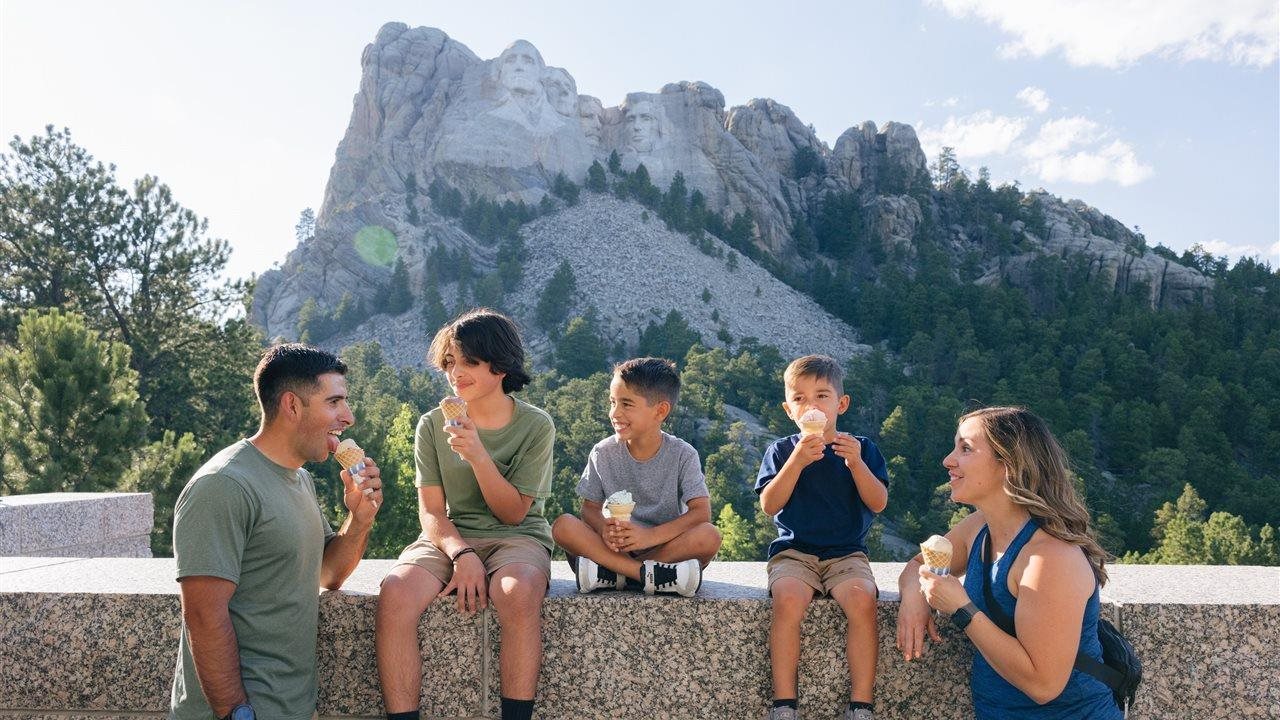
3. Granite icons + the oldest ice cream recipe in America. No visit to Rapid City is complete without visiting Mount Rushmore National Memorial. Located less than 20 minutes away from Rapid, Mount Rushmore has an immersive visitor center, Avenue of Flags and on-site trails. The first ice cream recipe in America — courtesy of Thomas Jefferson’s recipe box — can also be found at Carver’s Café, which is located at the national memorial.

4. Dinosaur Park. Originally built to bring traffic to Rapid City from Mount Rushmore, Dinosaur Park has been welcoming visitors since 1936. With sweeping views of Rapid and the Black Hills, Dinosaur Park recently underwent renovations and is welcoming visitors with new accessible trails and pedestrian routes, site interpretation and more. The attraction is back open to the public on May 1.

5. Family-friendly fun. Rapid City is for the kids, in lots of different ways. From visiting bears to rushing down waterslides at WaTiki® Indoor Waterpark Resort (South Dakota’s largest indoor waterpark), this is a city they will love. Kid-approved fun can be found at Reptile Gardens, Bear Country USA and Storybook Island, a magical park filled with storybook characters. Additional highlights include Chapel in the Hills, Fort Hays and Old MacDonald’s Farm.

6. Dig into bison, beer and ramen. Much like America is a melting pot of many cultures and lineages, Rapid City is a melting pot of food, with made-right-here brews, locally raised beef and bison and more making their way onto a bevy of menus throughout town. Find traditional American breakfast items at Tally’s Silver Spoon in downtown, bite into a bison steak at Dakota Steakhouse, savor fresh-made pasta at Sabatino’s Italian Ristorante, enjoy farm-to-table dishes at Diamond E Collective and relish over ramen and bison buns at Bokujo Ramen.

Insider tip: Spend some time sipping South Dakota’s flavors and craft cocktails at Windsor Block Bar or Firehouse Brewing Company (the oldest brewery in the state).

7. Road trip, South Dakota style. From the Black Hills to the Badlands, this region was made for road tripping. Using Rapid City as home base, it’s easy to explore western South Dakota. Cruise Needles Highway and see bison in Custer State Park. Tour Badlands National Park’s northern and southern units. Take a drive through Spearfish Canyon and stroll the cobblestone streets of Deadwood.