These 5 Simple Meal Prep Hacks Make Weeknight Cooking a Breeze

2024-03-04T07:01:00

(BPT) – Face it — even if you enjoy cooking, weeknight meal prep can be stressful after a long day. If you’re looking to elevate your meals without sacrificing more time and effort, check out these tips and tools to meal prep with ease.

1. Plan for weeknight delight

List favorite dinners to create weekly menus. Identify the most time-consuming part of each dish, then do advance prep on weekends to help save time later.

Consider cooking some protein ahead, as cooked chicken or turkey can last up to five days in the fridge. Chop veggies you’ll need and store in the fridge. Measure ingredients like dried herbs and spices to save on prep later. Label each container by meal and day so you’ll be ready to create your family faves in no time — even on busy weeknights.

2. Store ingredients thoughtfully

Be sure that your prepped ingredients are stored carefully. Wash and dry greens, then store in reusable, airtight containers lined with paper towels. If using resealable plastic bags, push out air to reduce oxidation. Group each meal’s items together in your fridge so they’re easy to find.

3. Use time-saving tools

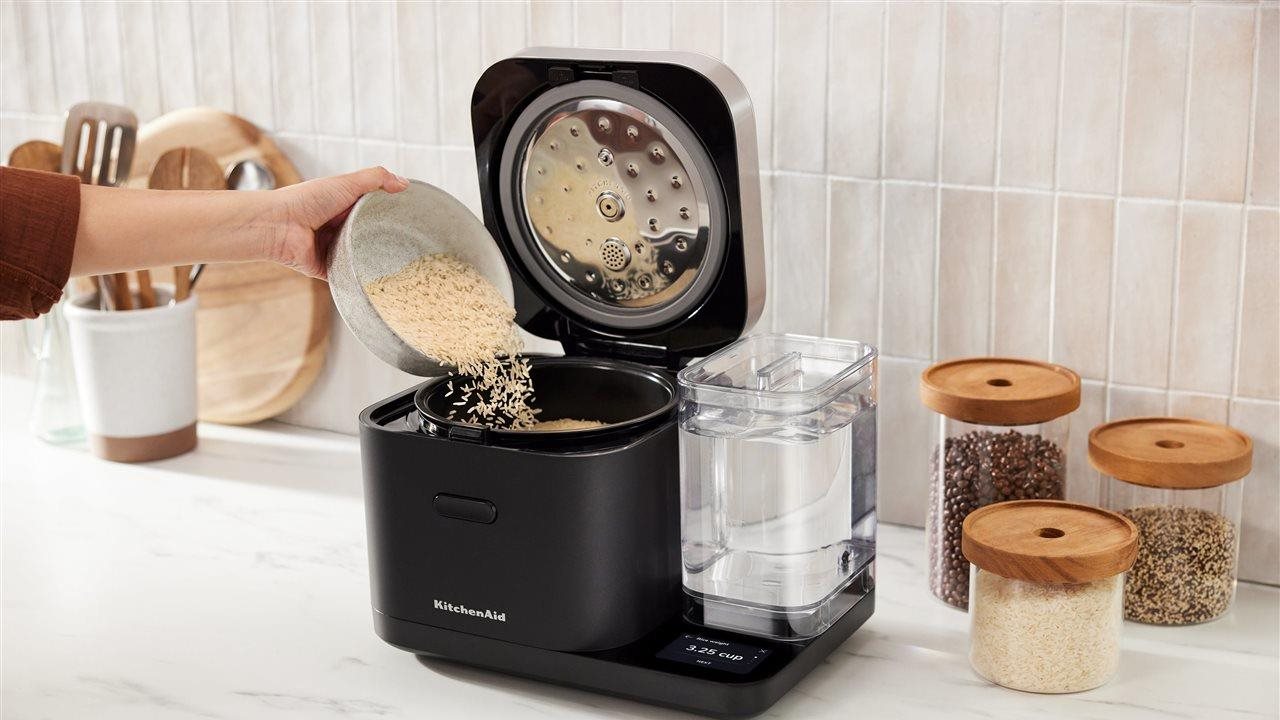
Today’s kitchen gadgets can save time and help you cook consistently high-quality food. For example, the new KitchenAid® Grain and Rice Cooker takes care of measuring and monitoring for you by automatically sensing how much grain has been added, dispensing the right amount of water and simmering it to perfection, every time. You can even use it for a wide variety of grains and beans including rice, beans, oats, couscous, quinoa, barley, farro and more.

Need to plan ahead? With the KitchenAid® Grain and Rice Cooker you can schedule cooking up to 24 hours in advance, and once the cooking is done, it will automatically keep grains at serving temperature for up to six hours. You can use the Steam Cooking Mode for veggies, eggs, fish and more, using an included steamer basket that fits above the cooking pot to steam those other ingredients while the grains cook below. Tools like this can save tons of time, taking the guesswork out of cooking, and you don’t have to babysit a pot.

Learn more about the KitchenAid® Grain and Rice Cooker at KitchenAid.com.

4. Embrace globally-inspired recipes

Add variety and boost flavor with easy-to-prep recipes like this Kimchi Brown Fried Rice. Consider doubling the recipe so you’ll have plenty for later in the week.

Kimchi Brown Fried Rice

95 minutes; 4 servings

Ingredients

1 cup long grain brown rice (uncooked)

3 tablespoons toasted sesame oil (divided)

2 large garlic cloves (crushed)

8 ounces enoki or cremini mushrooms (ends trimmed)

2 teaspoons gochujang (paste)

1 1/2 cups kimchi (cabbage)

2 tablespoons kimchi juice

3 green onions (thinly sliced)

3 tablespoons dried seaweed (gim or nori, crumbled)

Fried eggs (optional topping/add-in)

Spam (sliced, optional topping/add-in)

Directions

1. Using the KitchenAid® Grain and Rice Cooker, select “Long Grain Brown Rice” menu option and set cooking liquid to water. Choose “regular” to confirm texture setting and allow rice to cook. When rice is cooked, remove bowl from cooker and let cool uncovered 10 minutes, fluffing occasionally to release heat and steam.

2. While rice is cooling, heat 5 quart saute pan on medium-high heat. Add 1 tablespoon sesame oil, then add mushrooms and toss to fully coat in oil. Saute 5 minutes, stirring occasionally.

3. Thinly slice garlic, then mash with fork until crushed. Add garlic and gochujang to mushrooms, stir, and continue to saute mixture another minute. Use wooden spatula to scrape pan and move mushroom mixture to the side.

4. Swirl remaining sesame oil in pan, then add cooked rice to the oil. Use spatula to turn rice in oil to coat, then pull mushroom mixture on top of rice and spread rice flat into the full bottom of the pan. Allow rice to fry one minute, undisturbed, then fry another 2-3 minutes, stirring occasionally and scraping pan as you fry.

5. Add chopped kimchi and kimchi juice over rice, stir to fully incorporate, then press rice into flat layer in the pan. Fry, undisturbed, for another minute. Turn off heat, top with sliced green onions and crumbled seaweed, stir, then serve.

5. Create intentional leftovers

Cooking up big batches of rice or beans in your rice cooker for one meal provides plenty of leftovers to use later that week. By doubling up these components, you’ll have a head start on another night’s meal.

Using these tips, you can relax and enjoy creating tasty meals with less hassle, any night of the week.

5 reasons for students to explore new subjects in an online summer course

2024-03-02T02:01:00

(BPT) – Summer means school’s out, but that doesn’t mean your student has to stop learning. High school students can make the most of their summer by applying to an online summer program. Students who participate in a virtual summer program can explore new subjects and expand their skills while still leaving plenty of downtime to enjoy the warmer months.

Stanford Pre-Collegiate Summer Institutes, a summer enrichment program, offers intensive study of a single online course that can feed the passions and intellect of curious students. Not only does a virtual summer program give students unique academic experiences, but such programs also provide memorable experiences they’ll carry with them for years to come.

If your student is on the fence about taking an online summer course, check out the program’s top five reasons to apply.

1. Accessible education

When it comes to accessibility, online summer programs can’t be beat! Instead of traveling to a different country or flying your student to a different state, bring summer education to you. Virtual summer classes allow students to focus on learning from the comfort of home, with no travel required. Online programs also tend to cost less than on-campus day or boarding summer programs, allowing more students access to a quality education.

2. Smaller classes

Summer classes held in large lecture halls make it difficult for students to receive personalized attention. However, online programs often offer smaller classes, so instructors can focus on each student’s needs. Small online classes can also foster a more interactive environment where students can engage with peers and instructors for a more enriching learning experience.

3. College-level academics

High school students should use their summer time meaningfully. Online summer programs offer rigorous academic content that can prepare your student for future higher education. Whether they explore a new, interesting subject or deepen their knowledge of a core subject, such studies can set students up for future academic success.

4. Global community

Online summer programs connect your student to a vibrant global community where they can meet peers from different backgrounds and cultures. By collaborating with students from around the world, they’ll gain new perspectives and broaden horizons that may not be accessible in their hometown. Some peers may even become lifelong friends!

5. Student life

In addition to engaging small class sessions, these programs offer fun outside of class. Student life activities may include virtual social events, community engagement opportunities and workshops on topics like health, wellness and leadership. These extracurricular activities create a well-rounded educational experience that goes beyond the classroom.

Don’t let summer opportunities slip by! Your student should apply to one of Stanford Pre-Collegiate Summer Institutes’ online summer courses. Get a taste of a college classroom experience that challenges students with advanced content not typically found in the high school curriculum.

All classes are taught by knowledgeable instructors who are passionate about their academic disciplines and committed to teaching high school students in an interactive online environment. To learn more about Stanford Pre-Collegiate Summer Institutes classes and more, visit summerinstitutes.spcs.stanford.edu.

Walnuts are a superfood! Easy ways to add them to your heart-healthy diet

2024-03-01T17:51:34

(BPT) – More and more people are keeping heart health in mind when deciding what’s for dinner. With heart disease being one of the leading causes of death in the U.S., it’s no surprise.1 And it couldn’t be more important. However, leading health experts associated with the Dietary Guidelines for Americans note that following a healthy dietary pattern, which includes nuts like walnuts, can help people achieve and maintain well-being and reduce the risk of chronic diseases, including heart disease.2

Three decades of studies have demonstrated that walnuts can support cardiovascular health. Their nutritional profile makes them a delicious and convenient option for supporting heart health. The U.S. Food and Drug Administration approved walnuts as one of the first qualified health claims for a whole food 20 years ago and the world-renowned Mayo Clinic also supports walnuts as a heart health-supporting food, confirming that eating nuts, particularly walnuts, is beneficial for your heart.3 Research suggests that regularly eating a healthy diet that includes nuts may reduce the risk of early death due to heart disease.

Why are walnuts good for your heart, and how should you incorporate them into your diet? Here are some fast walnut facts from California Walnuts, including more reasons to eat a handful of walnuts every day and ways to make it easier to do so.

  • Since 1993, published research has been investigating how eating walnuts affects various heart health markers such as LDL (“bad”) and HDL (“good”) cholesterol, blood pressure, inflammation and plaque formation.
  • The American Heart Association certifies California Walnuts with their Heart-Check mark4 — a distinction that easily identifies foods that meet the nutritional standards set by the American Heart Association.
  • One ounce of walnuts includes important nutrients for optimal health including 4 grams of protein, 2 grams of fiber, 18g of total fat, 2.5g of monounsaturated fat and 13g of polyunsaturated fat including 2.5g of alpha-linolenic acid. Walnuts are the only nut with an excellent source of the plant-based omega-3 ALA, an essential fatty acid that may play a role in heart health.5,6
  • Walnuts are versatile, making a great grab-and-go snack or delicious addition to a meal.
  • Here’s an easy way to estimate how much is the right daily serving of walnuts: Grab a handful (~1 oz.) and you’ve got it right.
  • Keep walnuts in the fridge to keep them fresh. A great home for them is in a sealed container in your deli drawer.

To inspire you to include walnuts in your next meal, here’s a delicious side dish that has earned the American Heart Association’s Heart-Check mark for meeting their criteria for a heart-healthy recipe. It’s a perfect example of how walnuts can elevate the taste and nutritional value of your meals.

Roasted Vegetables with Walnuts, Basil and Balsamic Vinaigrette

Brighten up your dinner table and help your heart with this colorful dish!

Ingredients

  • 1/2 small red bell pepper, cut into 1-inch cubes
  • 1/2 small orange bell pepper, cut into 1-inch cubes
  • 1/4 medium red onion, cut into 1-inch cubes, separated
  • 4 ounces baby Portobello mushrooms, halved
  • 1 tablespoon extra-virgin olive oil
  • 1/4 teaspoon sea salt
  • 3/4 cup sugar snap peas
  • 1 small zucchini, sliced into 1/4-inch thick slices
  • 1 small yellow summer squash, sliced into 1/4-inch thick slices
  • 2 garlic cloves, minced
  • 2 teaspoons balsamic vinegar
  • 2 tablespoons fresh basil, snipped (may substitute 1 teaspoon dried basil, added with olive oil)
  • 1/2 cup California walnuts, coarsely chopped

Preparation

  1. Preheat oven to 400°F. Place peppers, onion and mushrooms in a large bowl and toss with olive oil and salt (and dried basil, if using). Place in a single layer on a large baking sheet, making sure not to crowd the vegetables. Bake for 10 minutes.
  2. Add snap peas, zucchini, yellow squash and garlic, stir slightly. Top with walnuts and cook for 5 to 10 minutes more or until all vegetables are crisp-tender and walnuts are toasted.
  3. Drizzle with balsamic and toss well. Sprinkle with fresh basil and serve!

For more information, or to find more delicious recipes, visit walnuts.org/american-heart-month.

References:

1. Tsao, C. et al. Heart Disease and Stroke Statistics—2023 Update: A Report From the American Heart Association. Circulation. 2023;147:e93–e621. https://doi.org/10.1161/CIR.0000000000001123

2. U.S. Department of Agriculture and U.S. Department of Health and Human Services. Dietary Guidelines for Americans, 2020-2025. 9th Edition. December 2020. Available at DietaryGuidelines.gov.

3. One ounce of walnuts provides 18g of total fat, 2.5g of monounsaturated fat, 13 g of polyunsaturated fat, including 2.5 grams of alpha linolenic acid, the plant based omega-3; 2g of fiber; 4g of protein. Supportive but not conclusive research shows that eating 1.5 ounces per day of walnuts, as part of a low saturated fat and low cholesterol diet and not resulting in increased caloric intake, may reduce the risk of coronary heart disease.

4. California walnuts are certified by the American Heart Association per one ounce serving. Heart-Check Certification does not apply to scientific research by an organization other than the American Heart Association, unless expressly stated.

5. U.S. Department of Agriculture, Agricultural Research Service. FoodData Central, 2019. Fdc.nal.usda.gov.

6. Sala-Vila A, Fleming J, Kris-Etherton P, Ros E. Impact of α-Linolenic Acid, the Vegetable ω-3 Fatty Acid, on Cardiovascular Disease and Cognition. Adv Nutr. 2022 Oct 2;13(5):1584-1602. doi: 10.1093/advances/nmac016. PMID: 35170723; PMCID: PMC9526859.

Keeping our promise to America’s women veterans

2024-03-01T10:31:00

(BPT) – Women veterans are dying by suicide at an alarming rate. Between 2020 and 2021, suicide rates among women veterans jumped 24.1%; that’s nearly four times higher than the increase among male veterans and vastly higher than that among non-veteran women, according to a new report released by DAV (Disabled American Veterans).

While there are many factors that contribute to the rise in suicide rates among women veterans, one consistent cause is military sexual trauma (MST), which includes sexual assault or sexual harassment at any point during military service. Among veterans enrolled in the Department of Veterans Affairs (VA), 1 in 3 women report experiencing MST.

Ginger MacCutcheon, a veteran of the Women’s Army Corps, survived several violent sexual assaults while in service. She kept what happened to herself for decades, through abusive relationships, periods of suicidal ideation, and even two suicide attempts. Then one day during a volunteer event, something triggered post-traumatic stress symptoms for MacCutcheon, and a fellow veteran took notice.

“He actually took me and signed me up for VA health care, and that was the first time I got any help,” she said. “I was grateful how the VA ‘rallied’ around me and got me into counseling, but if I had just gotten treatment earlier in my life it could have saved me from years of self-destruction and misery.”

DAV’s new report, Women Veterans: The Journey to Mental Wellness, takes a deep dive into the unique factors that have contributed to a surge in suicide rates among women veterans and offers informed recommendations to fill mental health care gaps that still exist.

“Women veterans face many unique challenges that when combined with their service, puts them at greater risk for suicide. That’s why it’s imperative that the VA, Congress and advocates turn their focus to creating a tailored, thoughtful approach to filling the gaps in mental health care for this population,” explained DAV National Legislative Director Joy Ilem.

Navy veteran Jennifer Alvarado suffered years of intimate partner violence and repeat military sexual trauma before she sought help. “I felt lost in a lot of ways, and I had to dig myself out of a very dark place while I was trying to be an exceptional sailor and wear my uniform with pride,” she said. “It was almost like I was living a double life.”

According to the VA, nearly 1 in 5 women veterans using VA care reported experiencing intimate partner violence in the past year.

When Alvarado turned to her leadership for help with the violence she was experiencing at home, she said she was met with sexual harassment at work. “I felt shame to begin with, but I felt even more shame when I reached out for help,” she said. By the time she left the Navy, Alvarado said her life was chaotic and unstable. At times, she found solace in drinking and, during one phase in her life, she considered suicide.

For many women veterans, sexual harassment and assault, in combination with stress from military service and other factors, can push them to a breaking point.

Alvarado’s hope is that no veteran experiences what she did. She said the VA must regain the trust of women veterans and make sure they know what resources are available to them. “Women veterans need to feel confident that they are going to get the care that they need and deserve.”

For more information and free assistance with VA healthcare and support services, visit dav.org.

Suffer from motion sickness? How to make travel easier for everybody

2024-03-01T16:01:01

(BPT) – Do you love to get out in the world and visit new places, but often find yourself feeling uncomfortable while you’re en route to your destinations due to nausea? Unfortunately, many conditions — whether internal or external — can lead to unpleasant feelings of nausea, the most common being motion sickness.

Whether you’re flying, driving, on a train, a bus or a cruise ship, any kind of motion can leave you or other members of your family feeling queasy and unhappy. In addition, nausea can also be caused — or made worse — by many kinds of medications you may be taking, or may be due to migraines, morning sickness, hangovers or even stress and anxiety before and during your travels.

But whatever the causes may be, those feelings of nausea can put a real damper on your long-awaited trip, spoiling the journey you were anticipating with such excitement and enthusiasm.

The solution: A non-medication form of nausea relief

Although there are a number of medications available on the market that claim to target nausea, you may find that some of them can also cause other side effects that could make you feel worse.

If you’d prefer to find an effective non-medication solution to help you prevent nausea while you’re traveling, you may want to try specially designed wrist bands from Sea-Band Nausea Relief, which stimulate an exact acupressure point on your wrist by a plastic stud attached to the inside of the band.

This specific acupressure point in the wrist is called the P6 (or Nei Guan in Chinese medicine), and it can help relieve your nausea and upset stomach when pressure is applied. All you have to do is adjust the soft and comfortable wrist band to fit snugly on your wrist to help relieve feelings of nausea within minutes.

New product that’s suitable for any size wrist

If you worry that these bands won’t fit your wrists, or you’ve already tried them and they felt too snug for optimal comfort, Sea-Band has created a new size to help expand their use for everybody: XL Adult Sea-Bands. This new size is suitable for wrists with a circumference of 8 inches or more. Each pack contains one pair of XL acupressure wrist bands, one to be worn on each wrist, that can also stretch more to provide even more comfort.

You can learn more about them and order a couple of pairs online just in time for your next vacation at Sea-Band.com.

To Antarctica — and beyond

The top travel media brand Travel + Leisure has recently named Sea-Band as the “Best Non-medicated Seasickness Prevention” to stash in your luggage for The Ultimate Antarctica Packing List. So if you’re planning a trip to Antarctica — or anywhere else, for that matter — be sure to pack along some Sea-Band wrist bands of whichever size suits you best to help you enjoy every trip you take, nausea-free.

Planning a family or group adventure? You can purchase a couple of bundles that are available from their website only, such as their Family Pack or Large Family Pack, which provides you with both Adult and Kids wrist bands, along with Ginger Capsules and Ginger Gum to further help with relieving symptoms of nausea while you’re on the road, at sea or in the air. Bon voyage!

Snacking for dinner? You’re right on trend

2024-03-01T06:01:00

(BPT) – How do you get your snack on in 2024? Dip for dinner? Are you creating your own perfect bite like a snack savant? In advance of National Snack Day this weekend, find out if your snack and food game aligns with the nation’s palate in Frito-Lay’s fifth annual U.S. Snack Index survey. Some of the results might surprise you.

There’s no doubt about it. Frito-Lay’s beloved foods — Lay’s, Doritos, Tostitos, Cheetos, PopCorners and more — are an integral part of American game days, celebrations and adventures. This privilege does not happen overnight and the company is committed to keeping a pulse on societal shifts, ensuring it is meeting our ever-evolving preferences and needs.

This year’s survey discovered there is a real lack of time in people’s lives to prepare, eat and enjoy their meals, especially among parents and younger generations. One-third of Americans have just 30 minutes for meals, and that includes cooking! When you think about it, that’s less time than most work commutes. Sound familiar?

This is leading to the rise of the “no-prep dinner,” a simple meal that tastes great, doesn’t require a whole lot of effort and often is inspired by their favorite snacks. Snack-focused dinners are so popular today there’s even a trending hashtag, #GirlDinner. But the trend involves everyone, with more than 92% men and women noting they reach for snack foods at dinnertime.

Here are some other snack trends the survey found.

A dash to dine: According to the Index, the average American has only 52 total minutes per day to prepare, eat and enjoy their meals. One-third of consumers note having even less time, scraping together less than 30 minutes a day to prep and enjoy meals.

Snacks moving to center plate: With a 35% increase in consumers integrating their favorite snack products into meals, snacks are taking center stage in a new way. Ninety-two percent of men and 93% of women use snack foods when making meals. Whether it’s yearning for a specific snack (51%) or simply being too busy to cook (44%), Frito-Lay’s 2024 Snack Index predictions suggest that snacks will only continue to be essential ingredients for easy, no-prep meals.

The dip dynasty: Dive into the timeless tradition of chips and dip, where Salsa (27%), French Onion (21%), and Queso (20%) reign supreme as the top three rival dips. While Salsa steals the spotlight among Gen Z, Millennials and Gen X dippers, Baby Boomers crown French Onion as their dip MVP.

Snacking as an art, not an act: Eighty percent agree that combining multiple food products to create the perfect bite is an art form. While 65% of Americans admit to having eccentric snack combos, they are not the slightest bit embarrassed and will proudly “shout their unique combos from the rooftops” anyway.

Defining the “Snack Savant”: Millennials (83%) and Gen Z (82%) are most likely to embrace this title, with the majority of these Snack Savants also being city dwellers (77%). They are resourceful — 55% report their favorite snack combinations are inspired by what is already in the pantry — and lean on social media for additional ideas (32%).

Protein power: When eyeing snacks at the grocery store, Americans cite protein as the most important nutritional attribute (55%). Compared to previous years, an overwhelming 79% of consumers admit it’s more critical than ever for protein to take center stage — especially true for those most crunched on time (80%).

Energy boost: At least once a week, 60% of consumers look to their favorite snack products to provide energy. Millennials (72%) are by far the generation most in need of a pick-me-up, compared to Gen Z (62%), Gen X (61%) and Baby Boomers (46%). Parents have everyone beat, with 72% leveraging snacks for energy.

Taste triumphs: Across generations, nearly three-quarters of consumers (74%) refuse to sacrifice taste when selecting their snacks. Baby Boomers are the most unwilling to compromise on taste (84%), followed by Gen Xers at 75%.

Find out more about what the survey revealed, and how your snacking habits are stacking up to America’s, in the Frito-Lay Snack Index. And go ahead — break out the Fritos and enjoy some Frito Pie tonight!

Often misdiagnosed, it’s time to raise awareness of the rare disease amyloidosis

2024-02-29T09:01:00

(BPT) – What started as a dream trip to Hawaii became a medical turning point for Sally Cox. While snorkeling in the crystal-clear waters, she suddenly found it difficult to breathe and nearly drowned. Shocked, scared and confused, she immediately went to a local doctor to get answers.

The doctor in Hawaii said she had pulmonary edema and should be assessed further. She met with a cardiologist as quickly as possible, and ultimately received a diagnosis she had never heard of before: amyloidosis.

What is amyloidosis?

Amyloidosis is a group of rare diseases caused by abnormal proteins that misfold and clump together to form toxic amyloids that deposit in tissues or organs. When amyloid builds up in certain body parts such as the heart, kidneys, liver, nervous system and digestive tract, it can result in significant organ damage or organ failure that can severely impact quality of life and can be fatal.

The symptoms of amyloidosis

Sally began to learn more about her amyloidosis and, in hindsight, realized there were signs of the disease that had started three years before, including carpal tunnel syndrome in both hands, skin bruising, hair loss, lack of appetite and an abnormal EKG. Many symptoms are frequently overlooked or misdiagnosed.

While Sally was diagnosed with amyloidosis relatively quickly, that is not generally the case. This was the experience for Michael Lane, whose amyloidosis diagnosis journey took 10 years and was riddled with misdiagnoses.*

Michael’s symptoms started as tingling in the legs and numbness in his hands. He would also lose his breath easily. Looking for answers, he went to a neurologist, orthopedic specialist and a cardiologist — just to name a few. It wasn’t until he was in the hospital for a heart procedure that the doctor on rounds stopped and ultimately refused to continue until more was understood about his condition.

Michael switched to this new doctor who gave him a battery of tests and ultimately the correct diagnosis of amyloidosis.

*A transthyretin-mediated amyloidosis diagnosis can be delayed by 3-4 years on average.

Diagnosing amyloidosis

There are different types of amyloidosis with varying severities, including amyloid light chain (AL) amyloidosis and transthyretin-mediated amyloidosis (ATTR), such as ATTR-CM, which can cause heart failure (cardiomyopathy) and ATTR-PN, which affects the function of peripheral nerves (polyneuropathy). Without treatment, these diseases can lead to impairment, disability and even death. Regardless of the type, there is no cure for amyloidosis.

Identifying amyloidosis diseases can be difficult because signs and symptoms may manifest similarly to other diseases. Once suspected, blood and urine tests may be conducted, in addition to a tissue biopsy to confirm the type of amyloidosis. Imaging, such as a CT scan, of the impacted organs may determine the severity of the condition. Genetic testing may also aid in the diagnosis for those with hereditary forms of ATTR amyloidosis.

Treatments and therapies

When Sally was diagnosed with AL amyloidosis in 2019, she was told she had six months to live. She joined a clinical trial hoping to receive the new medicine that was being tested. Although she was disheartened when she was selected to receive the current standard of care instead, she showed a positive response to the treatment and that response continues today.

“When I was diagnosed, there were about three options for treatment. Today there are many more,” said Sally, who is trying to raise awareness about the disease.

Michael, living with transthyretin-mediated amyloid cardiomyopathy

When Michael was diagnosed with ATTR-CM in 2018, he was told he had about two years to live. Desperate for options, he thoroughly searched for clinical trials where he might be able to receive an investigational treatment, but only found one that was taking place overseas, which made him ineligible to participate. After more research, he learned he qualified to receive an investigational therapy, which helped his condition.

Like Sally, Michael recognizes the expansion of treatment options in the US over the last five years and has benefited from some of them. However, most existing amyloidosis treatment options focus on preventing or suppressing the formation of new amyloid deposits rather than addressing the amyloids that have existing deposits that drive organ dysfunction. Given the progressive nature of amyloidosis and the significant impact on quality of life, there is a need for additional treatment options to halt and reduce organ damage across all stages of disease.

AstraZeneca and its Rare Disease Unit, Alexion are committed to raising awareness of the disease and the need for additional treatment options. Learn more at Alexion.com and Astrazeneca-us.com.

Advice to others with amyloidosis

Learning you or a loved one has amyloidosis can be a complex and emotional time. Michael’s advice to others: “Be your own best advocate. Fight for yourself. Make sure you have a doctor that specializes in amyloidosis. If not around you, go to a center that does. A lot of doctors don’t know about this disease. It’s not on their radar.”

Sally agrees that it’s important to ask questions, educate yourself and make the best choices for you. She continues to spread hope for people with amyloidosis. Her advice to others is, “You can get better. Stay positive — it makes a difference.”

This article is sponsored by Alexion, AstraZeneca Rare Disease.

US/NP/0036 V1 11/2023

Closing the cyber gap: How higher education partnerships empower women in security careers

2024-02-29T09:01:00

(BPT) – The cybersecurity field is booming. According to the Cybersecurity Infrastructure and Security Agency’s (CISA) National Initiative for Cybersecurity Careers and Studies, there are over 570,000 open cybersecurity positions in the U.S. alone. With open positions increasing by 35% in the last year, there is a growing need for experts in the field. However, a significant portion of the country’s workforce may be left out.

Despite making up nearly half of the nation’s workforce, women only hold 26% of the cyber workforce. According to CIO Magazine, women of color are at an even greater disadvantage, with only 3% of computing-related jobs filled by African American women, 7% by Asian women and 2% by Hispanic women.

What’s holding women back from entering the cybersecurity field? According to a recent survey sponsored by DeVry University, women in all industries face persistent barriers to upskilling. If women, particularly in technology, lack chances to acquire new skills, they will face challenges in enhancing their performance in their present roles or advancing their careers.

Women face persistent upskilling barriers

Upskilling is crucial to future-proofing careers in an economy shaped by swift, continuous technological change, and many companies have taken note. According to the survey, nearly 80% of employers offer company-paid upskilling benefits.

However, the availability of resources does not necessarily ensure that they are accessible to everyone. The majority, 55% of the women surveyed, said upskilling is essential for their future career development. But only a meager 37% of surveyed women say they have used company-paid upskilling compared to 56% of men.

Gender seems to have a significant impact on access to upskilling resources, with 73% of men having access compared to only 56% of women. In terms of barriers, a lack of time (41%) and family obligations (35%) present the largest obstacles for women in their pursuit of upskilling. Concerningly, this lack of access to upskilling leaves women twice as likely to leave their jobs compared to men.

Who should and how can they address these inequalities and create opportunities for women in the tech industry?

“Our nation’s colleges, universities and nonprofits must create shorter, more agile processes of education and training to solve the critical workforce shortage,” said Lynn Dohm, Executive Director at Women in CyberSecurity (WiCyS). “However, higher education institutions are not alone in this effort. Corporate organizations must develop new work-and-learn models to train people on the job and embrace hiring approaches that rely less on traditional credentials and more on job-specific skills and career experiences.”

Building a brighter, equitable and diverse future

DeVry is leaning in to help address and close the gender gap in the tech industry through its Women+Tech Scholars Program. Designed to combine curriculum, DeVry’s Formula of CARE and partnerships with WiCyS and other industry organizations, the program aims to attract and retain women in tech roles.

The program offers various access to tools and resources to help women take the first step in pursuing a tech career, including mentorship, industry-related internships, job opportunities, basic CompTIA industry association membership and professional certification reimbursement assistance.

“We believe in the value that women can bring to industries that require digital talent, and financial hurdles should be the last thing to stand in their way, said Scarlett Howery, vice president of Public Workforce Solutions at DeVry. “That’s why we’re committed to helping women launch their careers in tech, providing support that’s specially designed for them.”

The Women+Tech Scholars program isn’t the only way the university is providing access and support to women in tech. DeVry also offers the Future Cyber Defenders Scholars Program, which provides DeVry and Keller students with the resources and support to succeed as cybersecurity professionals. These programs not only offer continuous pathways for women in tech today but could serve as an inspiration for other programs around the country to help build a brighter, equitable and diverse future for the tech industry.

The Women+Tech Scholars Program is open to new students who identify as female and enroll in technology programs at DeVry. To learn more about this and other programs, visit DeVry.edu.

New experiences for your next vacation in Myrtle Beach

2024-02-28T11:23:00

(BPT) – Myrtle Beach, South Carolina, is known for its 14 unique communities and over 60 miles of beaches that have delighted travelers of all ages for generations. This year, the Grand Strand is premiering a host of all-new activities, experiences and culinary delights. Whether you’ve never visited The Beach before or it’s your family’s favorite getaway, you’ll find an array of new and exciting experiences in 2024. Check out this curated list of 11 new additions hitting Myrtle Beach this year.

1. Myrtle Beach Classic

Golf fans rejoice! The inaugural Myrtle Beach Classic (May 9-12, 2024) will be the first PGA Tour event in The Beach’s history and the first major professional golf tournament to hit the Grand Strand in the past 24 years. The event will take place at the Dunes Golf & Beach Club, a championship golf course and premier country club with a scenic view of the Atlantic Ocean.

2. Carolina Country Music Festival

Are you ready to put on your cowboy boots and party? The Carolina Country Music Festival returns to Myrtle Beach June 6-9, 2024. The three-day outdoor country music festival will feature over 40 of the hottest country music artists, including Carrie Underwood and Morgan Wallen.

3. PopStroke

If you’re looking for family-friendly golfing, then look no further than PopStroke. In partnership with Tiger Woods, the golf and dining experience will open March 2024 at Broadway at the Beach, a popular shopping and entertainment complex. Whether you’re a novice or expert, the two 18-hole putting course will challenge you with its fairways, bunkers and rough. Don’t forget to check out the full-service restaurant where you can enjoy creative twists on your favorite meals.

4. Myrtle Waves Water Park

Myrtle Waves Water Park — South Carolina’s largest water park — has delighted locals and visitors alike with more than 20 waterslides, a wave pool and lazy river. This year, the park has added a “Wild Water Racer” mat slide. This exhilarating ride will allow up to four people to lie on a mat and slide down headfirst. The water park will also expand its cabana and shaded seating area so you can relax in style.

5. Coffee & Cream Cabana

Coffee & Cream Cabana is the newest addition to Heidi’s Corner, the latest dining experience by award-winning chef Heidi Vukov. The ice cream shop offers 16 hand-crafted seasonal flavors of ice cream, homemade waffle cones, cookie ice cream sandwiches and ice cream cakes, as well as specialty coffees, light fare foods and treats. There’s a sweet treat for everyone in the family to enjoy!

6. Greg Rowles Legacy Theater

Prepare to be captivated by local performer Greg Rowles and family at the Greg Rowles Legacy Theatre, opening this spring. Spend an evening taking in diverse and captivating performances from world-class singers and musicians in a unique setting unlike anything on the Grand Strand.

7. Swig & Swine

Beloved barbecue restaurant Swig & Swine will open its fifth location in Myrtle Beach’s Arts and Innovation District, its first venture outside of Charleston. Offering award-winning barbecue and a diverse selection of craft beer, you’ll be glad to stop in for a bite and brew after an afternoon exploring downtown.

8. The Tasting Room on 9th

This spring, the Arts and Innovation District will welcome its first official wine bar, The Tasting Room on 9th. With a thoughtfully curated wine program, this inclusive, community-centered space offers a wide variety of wines and innovative food pairings. From wine novices to experienced connoisseurs, this welcoming establishment is the perfect place to try something new.

9. DoubleTree Resort by Hilton Myrtle Beach Oceanfront

The DoubleTree Resort by Hilton Myrtle Beach Oceanfront has undergone a $30 million renovation that will welcome visitors to an all-new lodging experience this spring. The hotel covers 27 acres at the southern end of Ocean Boulevard and is right next door to Myrtle Beach State Park. The renovations include the transformation of the former North Tower into a Tapestry Resort by Hilton that will offer luxurious waterfront amenities.

10. Holiday Inn Club Vacations Myrtle Beach Oceanfront Resort

Opening in April 2024, the Holiday Inn Club Vacations Myrtle Beach Oceanfront Resort is a brand-new 11-acre resort along the Grand Strand. The property features 152 one-to-four-bedroom villas, each with ocean-view patios, perfect for groups of all sizes planning a beach getaway.

11. Fly to The Beach fast

With more than 50 nonstop destinations, Myrtle Beach International Airport makes planning a trip to The Beach easy. This year, Breeze Airways will also begin nonstop flights to Myrtle Beach from Providence (RI), Charleston (WV), Tampa (FL) and Hartford (CT).

These are just a few of the many exciting new vacation experiences you can enjoy at The Beach. For more information on what’s new in Myrtle Beach and to plan your next trip, head to www.VisitMyrtleBeach.com.