Stronger together: Helping a loved one diagnosed with pancreatic cancer

2023-11-01T07:01:01

(BPT) – Thirty-nine years ago, Hector and Nora met right after high school, marrying just eight months later — and have been inseparable ever since. Over the decades, the two have grown together with their family, now living in Los Angeles close to their two grown children. The strength of this family bond is now helping Hector face the biggest challenge of his life — being diagnosed with stage IV, metastatic pancreatic cancer.

For Hector, the first sign that something wasn’t right was when he started having stomach problems, which seemed to occur with each meal he ate. After several doctor and hospital visits over the course of months, Hector was diagnosed with pancreatic cancer — the cancer had spread (or metastasized) beyond his pancreas to other parts of the body.

“We both knew what it meant,” says Nora, referring to the seriousness of the diagnosis. But, the pair decided they were going to face the challenge together, “We’re going to fight it. We’re going to do everything we can.”

From that moment, Nora became Hector’s strongest advocate and caregiver.

What is pancreatic cancer?

The most common form of pancreatic cancer is Pancreatic Ductal Adenocarcinoma (PDAC), which is also one of the most deadly forms of cancer as the third leading cause of cancer death in the U.S.[i],[ii] PDAC is one of the hardest to detect cancers because there are often no noticeable symptoms in its initial stages and symptoms can appear similar to other diseases. So, PDAC is difficult to diagnose early.[iii] It is also one of the most difficult to treat of all solid tumor cancers as the cancer can spread quickly and invade surrounding tissues and organs.[iii] Overall, people diagnosed with PDAC face a poor prognosis with a five-year survival rate of just 12.5%.[iv]

As much as the impact on physical health, living with PDAC can negatively impact a person’s psychological and emotional well-being.[v] The condition causes significant stress for patients and their loved ones,[v] making it so important to have a strong support system when coping with this disease.

And people living with PDAC experience sometimes serious symptoms, including significant weight loss.[vi]

Advances in treatment options for PDAC have been limited over the past few decades, but researchers continue to work toward developing new approaches with the potential to increase survival rates.[vii]

How you can help a loved one with pancreatic cancer

For the past two years, Nora has been Hector’s caregiver, learning valuable lessons about how to be supportive throughout this difficult time. “One person alone cannot handle this disease,” Nora observes. “Support is really important.”

Nora offers these tips for others to help care for a loved one:

Become an advocate for your loved one. Be present at all doctor visits, take detailed notes and ask questions. Help your loved one track symptoms and other factors recommended by your health care provider.

Educate yourself. Ask questions and do research to help your family become more informed about the disease, treatment options, and how to cope with symptoms and side effects of medications. For example, Nora learned about the importance of nutrition for people with pancreatic cancer, and spoke up to Hector’s doctor about it.

Take care of yourself. If you don’t care for your own physical and emotional health, it’s harder to be there for your loved one. Nora finds listening to music and going for hikes give her a break and helps clear her head. “It’s important to make time for yourself as a caregiver,” says Nora. “By taking care of yourself, you’ll be able to support your loved one.”

Get organized. From maintaining an appointment calendar and getting a pill organizer to track medications, staying organized can help relieve the stress of caring for someone else.

Stay positive. Although Hector and his family are coping with a very difficult diagnosis of metastatic pancreatic cancer, Nora believes in the power of positivity. She makes it a point to plan family events like concerts to give everyone something to look forward to. “Don’t give up,” Nora advises. “There’s always hope.”

You can learn more about Hector and Nora’s story by watching this video.

Sponsored by Ipsen Biopharmaceuticals, Inc.


[i] What Is Pancreatic Cancer? American Cancer Society. Accessed 5 October 2023. Available at: https://www.cancer.org/cancer/types/pancreatic-cancer/about/what-is-pancreatic-cancer.html.

[ii] Cancer Stat Facts: Common Cancer Sites. Bethesda, MD: National Cancer Institute. Accessed 20 June 2023. Available at: https://seer.cancer.gov/statfacts/html/common.html.

[iii] PDQ® Adult Treatment Editorial Board. PDQ Pancreatic Cancer Treatment. Bethesda, MD: National Cancer Institute. Updated 5 May 2023. Available at: https://www.cancer.gov/types/pancreatic/patient/pancreatic-treatment-pdq. Accessed 20 June 2023. [PMID: 26389396]

[iv] Cancer Stat Facts: Pancreatic Cancer. Bethesda, MD: National Cancer Institute. Accessed 20 June 2023. Available at: https://seer.cancer.gov/statfacts/html/pancreas.html

[v] Mazzella Ebstein AM, Joseph SJ, Hernandez M. Psychological stress and pancreatic cancer patients: a qualitative systematic review protocol. JBI Evid Synth. 2020 Mar;18(3):576-582. doi: 10.11124/JBISRIR-D-18-00006. PMID: 32197017; PMCID: PMC7513383.

[vi] Gärtner S, Krüger J, Aghdassi AA, Steveling A, Simon P, Lerch MM, Mayerle J. Nutrition in Pancreatic Cancer: A Review. Gastrointest Tumors. 2016 May;2(4):195-202. doi: 10.1159/000442873. Epub 2016 Jan 8. PMID: 27403414; PMCID: PMC4924449.

[vii] Principe DR, Underwood PW, Korc M, Trevino JG, Munshi HG and Rana A (2021) The Current Treatment Paradigm for Pancreatic Ductal Adenocarcinoma and Barriers to Therapeutic Efficacy. Front. Oncol. 11:688377. doi: 10.3389/fonc.2021.688377.

Tips for staying active after age 65

2023-11-01T13:51:00

(BPT) – It’s common to hear people say they feel overwhelmed by the idea of being physically active, and that they have no idea where to start. That sense of pressure can be discouraging and cause many people to postpone making positive changes in their behavior.

The unfortunate truth is that physical inactivity takes a significant toll on older adults in America. Rates of inactivity increased 6% to more than 31% nationwide among adults age 65 and older who were in average health between 2018 and 2021. That number has continued to climb in the wake of the COVID-19 pandemic, according to America’s Health Rankings Senior Report.

Physical inactivity contributes to many chronic conditions, including cardiovascular disease, obesity and diabetes — all of which can reduce a person’s mobility, independence and quality of life.

The good news is getting active doesn’t have to be difficult, time-consuming or expensive. In fact, almost everyone can take steps to work more activity into their daily lives, even from the comfort of home. The benefits are clear — even as little as five minutes of activity every day can make a difference. Physical activity can help improve your brain health, manage weight, reduce the risk of disease, strengthen bones and muscles, and improve your ability to do everyday activities.

Regular exercise can also help you feel better and build relationships. In fact, recent research from AARP Services Inc., UnitedHealthcare and OptumLabs showed moderate or high physical activity helps reduce severe loneliness and social isolation by 15% to 30%, and also helps increase feelings of resilience and purpose and improve people’s perception of aging.

Here are five tips to help you become more physically active and put yourself on the road to better health and quality of life:

  1. Start small. Remember the old adage, “Rome wasn’t built in a day”? That goes for starting a new exercise regimen, as well as for building strength and stamina. It’s OK to start with just a few minutes at first, and then build gradually — from five, 10 or 15 minutes of movement to eventually 30 or more.
  2. Make a plan. Most new routines require some level of preparation. Decide what activity you would like to do — whether it’s walking, following an exercise video at home or taking a fitness class — and plan a regular routine, so it’s easier to follow through.
  3. Get comfortable. Choose clothing that’s easy to move in and is appropriate for the environment. If an activity requires lots of extra gear, equipment or skills, consider choosing something you can do with what you have. The important thing is to get moving!
  4. Find a buddy. Exercising with a friend can be fun and rewarding. It’s a great way to socialize and build friendships and can also be a strong motivator or cause for celebration when you meet your shared goals.
  5. Check out resources that may be available to you. Many Medicare Advantage health plans offer benefits like free gym memberships. Talk to your health plan to see what’s available to you.

For more information about UnitedHealthcare Medicare Advantage plans, visit www.UHCMedicareHealthPlans.com.

This information is for educational purposes only and is not a substitute for the advice of a doctor. Consult your doctor prior to beginning an exercise program or making changes to your lifestyle or health care routine.

Help protect yourself from pneumococcal pneumonia and enjoy all this festive season has to offer

2023-11-01T08:01:00

(BPT) – With warm sweaters, hot drinks and the holidays approaching — winter can be a magical season to spend quality time with family and friends. The last thing you want is to become sick with an illness like pneumococcal pneumonia and miss out on precious time with loved ones. Fortunately, there are ways to help protect yourself so you can continue enjoying all this festive season has to offer.

Here are some proactive measures you can take to protect your health this winter:

  • Wash your hands regularly
  • Wear layers in cold weather
  • Exercise regularly
  • Get plenty of sleep
  • Eat a balanced diet
  • And get vaccinated against pneumococcal pneumonia

What is pneumococcal pneumonia?

Pneumococcal pneumonia is a potentially serious bacterial lung disease that can disrupt your life for weeks and can even put you in the hospital or be life-threatening.

Who is at risk?

If you’re 65 or older, or 19 or older with certain underlying medical conditions, like asthma, diabetes or chronic heart disease, you’re at increased risk for pneumococcal pneumonia and vaccination can help protect you.

What else should I know about pneumococcal pneumonia?

Pneumococcal pneumonia can strike at any time of year and vaccination is available all year round, so the winter is a great time to get vaccinated as we slow down to embrace the joys of the holiday season.

Even if you’ve already had a previous pneumonia vaccine, your healthcare provider may recommend another vaccination for additional protection.

Be there for the moments that matter this holiday season and help protect yourself today. Ask your doctor or pharmacist about pneumococcal pneumonia vaccination and visit knowpneumonia.com to learn more.

Brought to you by Pfizer.

Against the backdrop of American Diabetes Month: A time to reframe how we think of type 1 diabetes

2023-11-01T08:01:00

(BPT) – Sponsored by Sanofi

November is American Diabetes Month — a time to come together to bring attention to the different types of diabetes that impact millions of people’s lives. Approximately one in 10 Americans (37.3 million people total) have diabetes. While as many as 95% of these cases are classified as type 2 diabetes, the number of people living with type 1 diabetes is increasing over time. It’s for this reason that moments like American Diabetes Month are critical for raising awareness for the signs and symptoms of type 1 diabetes, with the goal of ensuring that people of all ages understand the importance of early detection.

To do so effectively, however, it’s important that we begin by expanding our collective understanding of type 1 diabetes, which is distinct from type 2 diabetes despite both being forms of “diabetes mellitus.” While type 2 diabetes is a metabolic disorder, with lifestyle factors playing a role in development, as well as genetic factors, type 1 diabetes is an autoimmune disorder that can arise from environmental or genetic factors. Just consider that if anyone in your family has type 1 diabetes, you’re up to 15 times more likely to be diagnosed. Additionally, although type 1 diabetes often develops in children, teens and young adults, it can affect anyone at any age. In fact, recent data show that over 50% of new cases of type 1 diabetes occur in adults. Type 1 diabetes also cannot be prevented or cured.

But what’s perhaps most critical to know about type 1 diabetes isn’t just its prevalence, it’s the fact that it can be detected early through autoantibody screenings.

Because type 1 diabetes develops in stages over time, there are blood tests that can detect type 1 diabetes before any noticeable symptoms arise, before insulin is required and potentially before any life-threatening complications occur. One such example of this is a condition known as diabetic ketoacidosis (DKA), which is a serious complication that develops when you don’t have enough insulin to let blood sugar into your cells. As a result, your liver is forced to break down fat for fuel, producing dangerous levels of acids called ketones in your body that can lead to coma or even death. Unfortunately, for individuals who have undiagnosed type 1 diabetes, DKA is far too often how they find out they have diabetes — with as many as 40% of DKA cases stemming from those who are newly diagnosed.

When it comes to type 1 diabetes, early screening may give you more time to prepare. The more you know, the more you can plan ahead. This American Diabetes Month, take control of the future by talking to your doctor about getting screened and participating in The 1 Pledge movement, which is being led by Sanofi. Take the pledge to get screened for type 1 diabetes at The1Pledge.com, where you can also find more educational information. Follow and use #ScreenForType1 to join the conversation on social media.

It’s time that we change the story around type 1 diabetes. Not knowing is simply no longer an acceptable option. Get screened today.

Sanofi does not provide medical advice, diagnosis, or treatment — information is provided for educational purposes only. Your doctor is the best source of health information. Talk to your doctor if you have any questions about your health or treatment.

Need health insurance? How to find an affordable plan

2023-11-01T07:01:01

(BPT) – For many people looking for health coverage, the Health Insurance Marketplaces, also known as Exchanges, may have the options they’re looking for. But managing health decisions is very personal, and with so many plan and benefit options available at different price points, finding affordable health care coverage that fits your needs can be overwhelming.

The open enrollment period held each year gives those looking for affordable coverage the opportunity to shop for health plan options that can help with unexpected costs due to illness or injury. In most states, open enrollment begins November 1, 2023, and ends on January 16, 2024.

Everyone’s coverage needs are different. That’s why there are options available to help choose a plan that not only safeguards your and your family’s health when you’re sick or injured, but also provides preventive care such as annual wellness visits, vaccinations, or health screenings to keep you and your family as healthy as possible and, if there are issues, address them at an early stage.

Many people may be eligible for subsidies to lower the monthly premiums, including plans as low as $0 per month, depending on their income. In fact, 90% of UnitedHealthcare Individual and Family ACA Marketplace Plan members qualified for subsidized coverage in 2023.[1] Finding out if you qualify is easy — just check as you shop for plans.

Individual and Family ACA Marketplace Plans through UnitedHealthcare

If you’re looking for coverage, UnitedHealthcare is expanding its Individual and Family ACA Marketplace Plans into four new states for 2024. Coverage is now available in these 26 states[2]:

  • Alabama
  • Arizona
  • Colorado
  • Florida
  • Georgia
  • Illinois
  • Kansas
  • Louisiana
  • Maryland
  • Massachusetts
  • Michigan
  • Mississippi
  • Missouri
  • Nevada
  • New Jersey
  • New Mexico
  • New York
  • North Carolina
  • Ohio
  • Oklahoma
  • South Carolina
  • Tennessee
  • Texas
  • Virginia
  • Washington
  • Wisconsin

UnitedHealthcare’s Individual and Family ACA Marketplace Plans feature affordable coverage, convenient access to care and offer a wide range of benefit options, including[3]:

  • $0 unlimited primary and virtual urgent care.
  • Prescriptions as low as $5 at over 40,000 in-network pharmacies.
  • Adult dental and vision offerings.
  • An opportunity to earn a $100 gift card in rewards benefits for completing health- and account-related tasks.
  • Complimentary access to digital fitness classes.
  • Membership to a network of 17,000 gym locations.
  • New Copay Focus plan options with $0 medical deductible and predictable copay for services.

How to get started

To help you find a plan, UnitedHealthcare offers educational resources and 1-on-1 support in English and Spanish at UHC.com/exchange, or seguromedicoaca.com for Spanish support. Shoppers can also call 877-649-9797 to enroll or change plans from Nov. 1, 2023, to Jan. 16, 2024, in most states. Enroll by December 15, 2023 if you want your coverage active on January 1, 2024. If you enroll between December 16, 2023 and January 16, 2024, your coverage will begin on February 1, 2024.[4]


[1] UnitedHealthcare Internal Analysis, September 2023.

[2] Subject to regulatory approval.

[3] The benefits described may not be offered in all plans or in all states. Some plans may require copayments, deductibles and/or coinsurance for these benefits. The policy has exclusions, limitations, reduction of benefits, and terms under which the policy may be continued in force or discontinued. For costs and complete details of the coverage, review the plan coverage documents or contact UnitedHealthcare.

[4] Open enrollment dates may vary by state.

5 Expert Tips to Help Get Your Home Ready for the Holidays

2023-11-01T07:01:01

(BPT) – With the holiday season already underway, your schedule will soon be packed with festive get-togethers, cocktail parties and family gatherings. To help make the upcoming season a little more joyful and a lot less stressful, try taking a more proactive approach by starting your holiday prep and cleaning routines now — with a little help for the home along the way.

Below are some top tips, compliments of the MaidPro PROs to help you get your home holiday-ready so you can relax and enjoy the festivities more than ever this year.

1. Develop a gameplan

Before throwing a party or hosting overnight visitors, identify the main areas in your home that are due for a deep clean — and prioritize the rooms guests are most likely to visit. That may include your living room, dining room and powder room, as well as any guest bedrooms. Focus on decluttering these areas first so you are able to access surfaces in need of a deeper clean.

2. Start with a ground-up deep clean

Typical cleaning routines may include wiping down counters, dusting, mopping and vacuuming, but did you know there is a smart way to vacuum? Vacuuming in a zig-zag pattern is the best way to truly clean carpets. The fibers in carpets are primarily twisted loops that get dirty from all sides, so vacuuming in only one direction isn’t always effective. To fully clean carpets, work the vacuum across a room in one direction in a zig-zag pattern. Repeat the process from a right angle. This pattern provides the best results, saves time and can help reduce symptoms of allergies.

3. Deep clean the kitchen before holiday cooking

Before guests start arriving, be sure to deep clean the kitchen in preparation for holiday baking and entertaining. Deep clean the range, stovetop, surfaces and grates. Clean out the refrigerator to make room for party foods and be sure to dust the top of the refrigerator. Also give a fresh clean to all large and small appliances. Finally, wipe down kitchen cabinets to tackle any forgotten spills.

4. Make your guest room extra hospitable

Is your guest room doing double duty as an office? Has your guest bathroom become a catch-all area for things with nowhere else to go? Now is the perfect time to refresh and refocus. Enter your guest room with a visitor’s eye. Deep clean bathrooms and medicine cabinets (yes, people will look). Wash or spot clean area rugs. Dust all surfaces, including bookshelves, photo frames, and art — don’t forget the ceiling fans! Finally, clean trash receptacles and add fresh liners.

4. Prepare in advance for time-honored holiday stains

Holiday food, beverages and traditions can cause some unexpected spills and spots. To remove red wine, spray water on the stain to keep it wet. Cover it with white vinegar to neutralize purple and red pigments. Follow with liquid detergent and hot water to flush out the stain. For dripped candle wax, rub ice cubes over the wax until it hardens. Scrape up most of the wax and place a paper bag over the patch that has residual wax. Use a warm iron to press over the area to liquefy the wax, allowing it to absorb into the bag. For soot stains from the fireplace, grab a dry brush and scrub off as much of the soot as possible (avoid water). Apply some rubbing alcohol on the edge of a sponge or towel and blot until the last of the stain is gone.

5. Hire a PRO

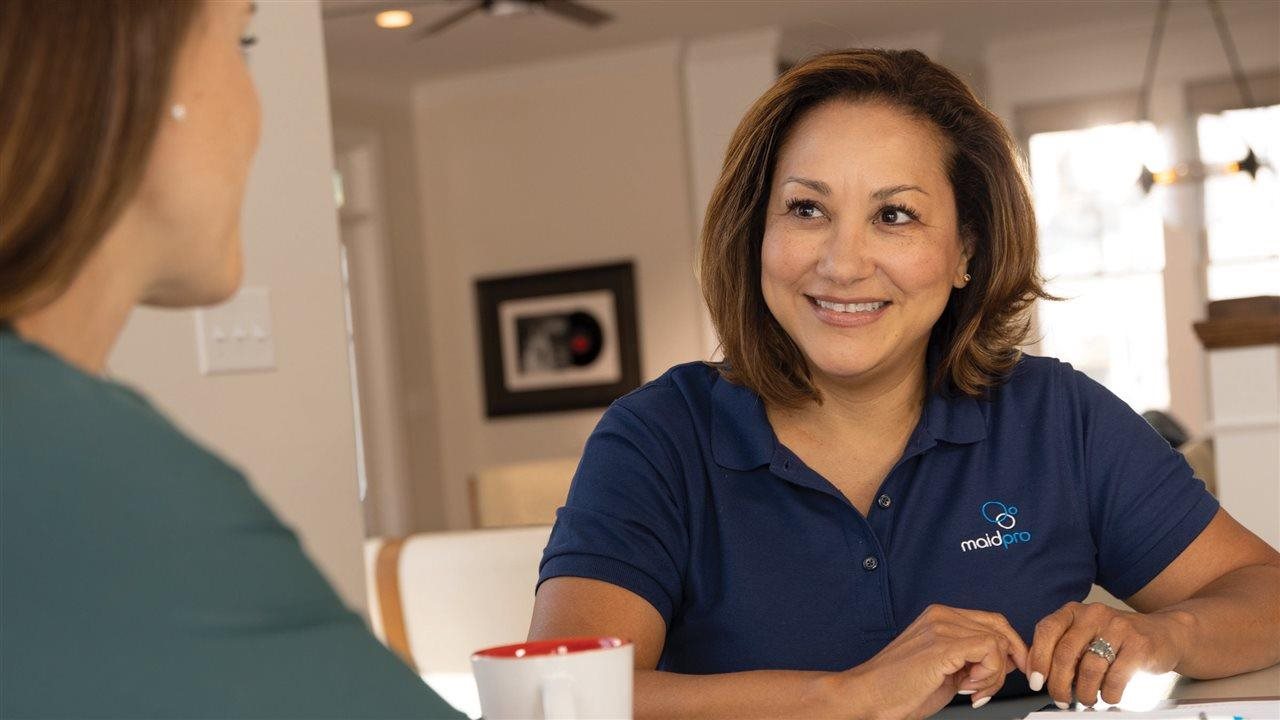
Chances are you could use assistance to make your home clean, tidy and festive before the holidays arrive, so consider hiring a MaidPro home cleaner (a PRO) to make your life easier. MaidPro PROs are known for their attention to detail and commitment to customer service, using a 49-Point Checklist that offers peace of mind and the comfort that comes from a sparkling clean, orderly home.

Beyond deep cleans in time for the season, starting early will also provide the advantage of getting to know your cleaning PRO (and your PRO learning your needs and preferences) in advance of the busiest time of year. You’ll know what to expect from each cleaning session, ensuring quality and consistency throughout your home cleans, so you can dedicate your time to planning the ultimate holiday events and family gatherings.

Give friends and family a beautifully clean, entertaining-ready home this year — just in time to celebrate the holidays — with a MaidPro gift card. The gift of clean is simple with MaidPro’s electronic gift cards, available at www.maidpro.com/giftcards.

Ready to get started? Visit MaidPro.com.

How much life insurance do you need? Each generation has a different answer

2023-11-01T07:01:01

(BPT) – Did you know your age may affect your perception of how much life insurance you need? The annual Insurance Barometer Study conducted by LIMRA and Life Happens reveals insights about how life milestones impact people’s attitudes about life insurance. This year’s study included members of Generation Z for the first time, offering an interesting window into how four different generations approach life insurance.

These are the ages each generation featured in the study represent:

  • Gen Z: Born 1997-2012
  • Millennials: Born 1981-1996
  • Generation X: Born 1965-1980
  • Baby Boomers: Born 1946-1964

At each life stage, people have different priorities and concerns — plus assets they want to protect. However, at times all four generations shared the same results, regardless of age.

While 58% of Baby Boomers and 54% of Gen X own life insurance, less than half of millennials and Gen Z do (48% and 40%, respectively). Interestingly, there were common responses for the top 3 reasons all ages reported for not having coverage:

  • think it is too expensive
  • saying they have other financial priorities
  • being unsure how much they need/what type to buy

Therefore, the study found that across generations, from Gen Z to Baby Boomers, consumers greatly overestimate the cost of life insurance and cited perceived expense as the biggest barrier to making the purchase.

Gen Z: Growing up and starting out

For the youngest generation in the study, life insurance might be far from their minds. However, experiences during the pandemic may have increased awareness about the need for life insurance. While policy ownership remains lower than other generations, nearly half (49%) reported needing life insurance.

The study also found many in this generation didn’t think they could afford life insurance, and nearly one-fourth (24%) said they wouldn’t qualify for coverage. Combined with millennials and Gen X, over one in four of these younger generations stated they weren’t sure how much or what type of coverage to get.

Millennials: Taking on responsibilities

As millennials develop careers and form families, it makes sense that they show the highest level of financial concern (39%) compared to others. This is an age when many feel the most financial pressure.

For this reason, it’s not surprising that of the 80 million millennials in the U.S. today, nearly half (45%) own life insurance, and more than one-third said they’re likely or very likely to buy some in the next year, according to the LIMRA study. Millennials purchased more than half of the individual life insurance policies sold in the prior 24 months (52%).

Gen X: The “sandwich” generation

The age of Gen X is a challenging time of life when they may be raising children while simultaneously caring for aging parents. Just over one-third expressed high financial concern. But for all three of the younger generations combined, one-fourth of them cite “lack of knowledge about life insurance products” as a main barrier to owning a policy.

Especially for the older segment of Gen X, retirement and health considerations loom large. They have concerns over issues like disability-related expenses, long-term care and emergency savings.

Baby Boomers: Working and retiring

Baby Boomers have the lowest level of financial concern by a significant margin (17%), and lead the other generations in terms of overall life insurance ownership rates. Many Boomers have already retired, with most approaching that milestone soon, making them less likely to perceive a need for additional or new coverage.

Barriers to coverage remain

While younger Americans stated a need for life insurance, the purchase process can seem intimidating. With assistance and education, however, people of all ages should be able to find coverage to suit their stage in life and financial needs. Understanding how your needs and budget changes as you move from one life milestone to another is a vital step toward ensuring you have the best life insurance coverage for your current situation — and your family.

To learn more about how life insurance coverage can protect your family at any stage, visit BostonMutual.com or contact your company’s benefits coordinator or HR department. For information on benefits available outside workplace offerings, or if life insurance workplace benefits currently aren’t an option, visit BostonMutual.com/Learn More.

Policy Series: END-95(ESO)(20/21)

335-5104 10/23

Maximize Your Grocery Budget with Salmon

2023-10-31T11:51:01

(BPT) – During a time when grocery prices are at all-time highs, savvy shoppers are doing their best to get the highest quality and most nutritious food for their dollar. According to a 2022 Deloitte survey, 92% of consumers say that price is a top consideration when purchasing fresh food and 78% of consumers believe the right foods can preserve health and prevent disease. We asked registered dietitian Bianca Tamburello which foods are the best choices to maximize your grocery budget and health.

“Prioritize nutrient-dense foods, like salmon,” she says. “Most Americans do not eat the recommended two servings of seafood per week and may be missing out on key nutrients. Plus, seafood is not as costly as you think. On average, two 4-oz salmon filets are about $6.”

Tamburello shares three reasons salmon should be at the top of your budget-friendly grocery list.

1. Research shows that people who eat more salmon are healthier

Studies show that seafood’s superb nutrition profile helps protect health and ward off disease. Research suggests that people who eat more seafood, including salmon, have lower risk of heart disease, heart attacks, stroke, depression, and liver cancer. Moreover, several studies found seafood consumption to help slow age-related cognitive decline and prevent Alzheimer’s disease.

2. Salmon is a great source of hard-to-find omega-3 fats

Tamburello says, “Salmon ranks high on the list of most nutritious seafood and is a top choice to enjoy weekly because it’s packed with EPA and DHA, two of the most important types of powerful omega-3 fats.” Eating more omega-3 fats is linked to decreased inflammation, better heart health, and lower risk of certain cancers. It’s important to eat foods high in omega-3s, like salmon, because they’re essential, meaning our body cannot make omega-3s when stores are low.

She adds, “As a registered dietitian, I recommend Chilean salmon because it’s particularly high in omega-3 fats, low-mercury, and responsibly raised. Plus, omega-3 fats found in salmon support health throughout the lifespan including childhood, pregnancy, and healthy aging.”

3. Salmon offers up high-quality protein and vitamin B12

High-quality protein and important vitamin B12 give more reasons to eat salmon weekly. For example, a 3.5-oz (100 grams) cooked salmon filet packs a whopping 22 grams of protein, 117% daily value of vitamin B12 and 66% daily value of vitamin D. Other animal foods also offer up protein and B12 but lack the vitamin D found in salmon and some other seafood. Vitamin D plays an important role in absorbing phosphorus and calcium to support bone health and promotes a healthy immune system.

Seafood is easy to prepare for weeknight meals

Chilean salmon is easy to prepare and available both fresh and frozen year-round. To help balance your grocery budget, buy fresh on sale and freeze for future meals. Buying frozen is another delicious and convenient way to enjoy salmon. Individually wrapped filets take just 15 minutes to thaw and cook quickly for nutrition-packed meals in a pinch. Pair salmon with your favorite fresh or frozen vegetable and a complex carbohydrate like brown rice or sweet potatoes for a well-rounded meal.

For more information about salmon, nutrition, and delicious recipes visit chileansalmon.org.

Make merry memories! 4 tips for successful homemade holidays

2023-11-01T02:01:00

(BPT) – The holiday season is here, which means it’s time to start planning gifts, dinners and more. If you’re looking for a way to add more personal touches to your celebrations, embrace the spirit of homemade holidays.

Making personal dishes, gifts and mementos offers a unique opportunity to connect with friends and family. Mopria wants to help you win at homemade holidays this season by offering the following four tips.

1. Get organized

Stress less and enjoy the holidays more by planning ahead. Stay organized by making lists so you can see everything you need to do and buy as the holiday celebrations approach. With your phone in hand and your printer nearby, you can easily make lists and print them off to keep a hard copy wherever you go.

For example, if you’re preparing a large meal or hosting many guests, print off the recipes you need — or scan them from books and family recipe cards — and make a master shopping list. This way, you can keep track of all the necessary ingredients, even if you have to go to multiple stores along the way. The same idea applies to keeping track of all the gifts you intend to buy for friends and family!

2. Preserve special memories

Honor and preserve cherished moments by creating scrapbooks. The great thing about scrapbooks is that they’re infinitely customizable. Start by choosing a theme. For example, you can create a scrapbook of someone’s wedding and include photos, handwritten notes and quotes to mark the occasion. Or, if you have a traveler in your family, you can create a scrapbook of maps of the places they’ve visited to add more context to their trip photos.

There are plenty of scrapbook designs online and cutouts that you can print, cut and shape to decorate the borders of these special memories. Whether a beginner or a pro, there’s no better way than a scrapbook to honor your memories and let your creativity flow.

You don’t even have to go to your local print shop to get started. Simply download the Mopria Print Service app in Google Play for your Android Device, and don’t forget Mopria Scan on Google Play so you can upload and print non-digitized photos.

3. Create holiday gift tags

Do you like to make homemade jams, bath salts, body scrubs, candles and cookies for friends and family? Personalize and elevate your homemade gifts by creating holiday gift tags.

Gift tags can take a plain Mason jar and turn it into a specialty jam gift someone may find in a boutique shop. Not only will they make your gifts look more professional, but they also add a touch of personality.

Create tags and labels with seasonal or meaningful designs. You can even include a special note with well wishes and suggestions on how to use your homemade food or beauty care product. Add the recipient’s name, date and even the ingredients, so you can track who the gift is for, when it was made and what it contains so you don’t have to guess when handing out presents.

4. Greeting cards

Whether it’s your first year sending one out or an established holiday tradition, sending out holiday greeting cards is a great way to mark the season. Instead of using a printing service, you can design and print your own holiday greeting cards in the comfort of your own home.

By printing your own cards, you’ll have more options for personalization. You can easily find free or affordable greeting card designs and templates online that you can customize to fit your style and message. Print and send the perfect card to your loved ones near and far to let them know you’re thinking about them this holiday season.

Homemade holidays have never been easier. Using these four tips, your holiday shopping, gift-making and gift-giving will be a breeze, so you can spend more time with your loved ones this season.

The Mopria app allows you to print directly to any Mopria certified printer from your Android device. Check to see if your printer is Mopria certified at Mopria.org/Certified-Products. Happy crafting!

Thousands of lives could be saved if more people would get screened for lung cancer

2023-11-01T00:01:00

(BPT) – By Daniel J. Boffa, MD, MBA, FACS

Lung cancer takes the lives of about 127,000 people in the United States annually — nearly the same number of people who will die from colon, breast and prostate cancer combined. And yet 1 out of 5 people who smoked could have saved their life with a simple test — a low-dose CT scan — catching the cancer before it spreads to lymph nodes and other vital organs.

Tragically, this simple test — one of our best weapons against one of the most dangerous cancers — is not being used frequently enough. As a result, tens of thousands of people are lost each year to a disease they could have beaten.

As a surgeon who cares for lung cancer patients and a leader with the American College of Surgeons Commission on Cancer, I have heard many reasons from people over the years about why they have not participated in lung cancer screening. We need to get past these barriers to save more lives. In the spirit of Lung Cancer Awareness Month this November, I would like to openly respond to some of the concerns I have heard to hopefully convince more people to seek out screening.

I cannot afford it.

Screening for lung cancer with a yearly CT scan is covered by many insurance plans, including Medicare and Medicaid. If you are 50 or older and smoked or still smoke, ask your doctor if you are eligible for lung cancer screening.

I am not ready to quit smoking.

Although there are great benefits to quitting tobacco smoking, quitting is not mandatory to be screened for lung cancer.

I have not smoked in years, so I would have already gotten cancer by now.

Lung cancer can show up many years after you quit.

I feel fine; I don’t have any symptoms.

Screening works by finding cancers early. If you wait until you have symptoms, the cancer is much more likely to have already spread.

The treatment is worse than the cancer.

Newer treatments are less toxic and less invasive with fewer side effects and complications. Importantly, screening works by finding early cancers, which are generally easier to treat for patients.

I am claustrophobic.

The CT scan is completely open and only takes a few minutes.

I don’t have a ride.

Many screening programs can help arrange transportation.

If they find something, there is nothing they can do anyway.

Screening works by finding more curable cancers.

My primary care provider never brought up screening for lung cancer.

In medicine, “no news” is not always “good news.” Just ask.

I smoked, so whatever happens, I did it to myself.

Nobody deserves to die of lung cancer. Nobody. The question is not about blame, but accountability. If you made the choice to smoke, then you need to be accountable to the people who count on you.

I am scared.

Nobody wants to look for something they don’t want to find. I am terrified every time I get a colonoscopy. I don’t want to become a cancer patient, and I don’t want to stop my life to be treated. The reality is, cancer is a common experience, and about 40% of us will get some form of cancer in our lifetime. Why not catch it early, when the treatment is easier, and a cure is most likely?

The author Scott Turow once wrote that “courage is not the absence of fear, but the ability to proceed in spite of it.”

Be brave for your family and friends; for those you help, and for those who could use your help. Be brave for those who already were, and lost, or for those who wished they had another chance to be.

If you are 50 or older and smoked or still smoke, ask your doctor about lung cancer screening.

Daniel Boffa, MD, MBA, FACS, is Chair of the American College of Surgeons Commission on Cancer Quality Assurance and Data Committee. He is also a professor of thoracic surgery, Division Chief of thoracic surgery, and Clinical Director of the Center for Thoracic Cancers at the Yale School of Medicine. Committed to increasing the survival rate of cancer patients, Dr. Boffa’s clinical research focuses on early detection of lung cancer and preventing tumor metastasis.