Learning money matters: 3 things for new grads to learn this summer

2023-05-11T10:47:00

(BPT) – Graduation is an important milestone, whether your child is graduating from elementary school, high school or college. With each milestone comes new advantages, new responsibilities — and learning opportunities. As your child grows and becomes a little more independent, there are important lessons at each stage they can learn about managing money that will help set them up for financial success later in life. Whichever graduation you’re celebrating this year, take advantage of the moment by helping your child learn new financial skills.

Here are tips and tools your child can benefit from as they graduate this stage in their life.

Money basics: How to save and track your money

Elementary school presents a great time to explain the basics of banking, so they can understand ways to save and help protect money they may get from their allowance, birthdays or lemonade stand. This is a great age for them to begin learning to track how much money they have, and how to save toward specific goals, ultimately teaching the value of money and the satisfaction that comes with achieving their goals.

One useful tool for these early lessons is opening a bank account for your child. Chase First BankingSM is a parent owned account designed with 6-12 year olds in mind and is available for those 6-17. It comes with a debit card for kids along with oversight by parents, offering no monthly service fee, tools, tips and safety features to help them learn the money basics. Parents can monitor their spending and set limits on where and how much they can spend in one place. For your child, learning how to use these financial tools now will make it easier when they’re older.

2. Gaining independence: Balancing earning, saving and spending

As your child enters high school, they’ll need more skills and confidence to handle their finances as they become more independent. Whether getting their first jobs or saving up for bigger goals — like college — they could use both autonomy and a little guidance.

Help your high schooler learn smart strategies for managing their money by opening a Chase High School CheckingSM account so they can start off on the right foot. With this account, your teen can set up direct deposit and use Autosave to set aside money automatically toward a savings goal. Your teenager can set up account alerts to help them manage and monitor their account activity, and since the account is co-owned by you, you’ll be able to continue monitoring their activity as well.

3. Finances 101: Tools for managing money in college and beyond

Students moving from high school to college — or venturing into the wider world post college — may have a lot more to keep track of. Between juggling their studies, a job and planning for their future, they need both the guidance of their parents as well as smart tools to handle their increasingly independent lifestyle. While it’s important to treat college students as the adults they are, and to give them the confidence they need to step into financial freedom, it’s also important to continue helping them build good money habits as they begin to navigate the real world.

For college students aged 17-24, Chase College CheckingSM can be a valuable partner. On top of learning to track the money they earn, save and spend, they can also use tools like Zelle® to split the bill or pay back family and friends — whether they’re chipping in for a group trip or divvying up rent for their apartment. The Chase Mobile app® makes it easy to stay on top of their banking needs when they’re on-the-go.

Ready to help your child get started on the road toward financial success? Learn more about tools to help them learn good money habits at Chase.com/StudentBanking.

Bank deposit accounts, such as checking and savings, are subject to approval.
Chase Mobile® app is available for select mobile devices. Message and data rates may apply.
Deposit products provided by JPMorgan Chase Bank, N.A. Member FDIC.

5 tips for encouraging and fostering play for your pets during National Pet Month and beyond

2023-05-11T13:01:00

(BPT) – Being a pet parent involves much more than providing just their basic needs. To keep your pet happy, active and healthy, it’s important to encourage them to play, while providing opportunities for safe exploration and fun bonding time with their family. Whatever kind of pet you have, there are steps you can take that will help them thrive.

This May for National Pet Month and beyond, here are tips to help you have fun with your furry family member.

1. Understand their needs

Every animal has needs beyond shelter, food and water. Most cats need places to feel safe, like high perches or snug sanctuaries — plus opportunities to practice stalking and hunting (toy mice and wand toys). While all dogs need outdoor exercise and opportunities to bond with humans, their behaviors vary by breed. For example, dogs bred to herd sheep (collies, sheep dogs and shepherds) love to chase balls and flying discs, while terriers enjoy digging.

Take this month to research your pet’s breed and ask your veterinarian about their behaviors to understand how they’ll most enjoy playing. Because they’re also individuals who may not conform to expected behaviors, observe your furry friend as you play and notice what they respond to most. Can you tell when they’re engaged and excited? That can help you identify the best ways to play with them.

2. Know their developmental stage

It’s also crucial to understand your pet’s life stage. Puppies and kittens have tons of energy and behaviors, like chewing on things, that they may outgrow as they get older. Mature animals have less energy and stamina, so ask your vet about the level of activity you should encourage.

Continue stimulating your pet through enrichment activities to help keep them active. Switching out toys occasionally can help adult animals stay curious and interested in play, keeping them healthier as they age.

3. Create a dedicated play space

While you may associate playing with your pet as an outside activity, it’s great to have a space set up for playing with your pet indoors, too. This should be an area where you won’t have to worry about knocking things over, so make sure there’s enough room to play and explore.

Try a basement room (ideally with windows for natural light), screened-in porch or sunroom outfitted with pet beds and their favorite toys.

4. Clean and disinfect pet toys and play areas

Pets’ play areas and their toys are often overlooked when employing a cleaning and disinfecting routine. Consider the type of surface and how often that surface is touched when determining when to clean and when to disinfect. If the space is high traffic, you’ll want to clean more frequently or disinfect in addition to cleaning.

To clean and disinfect hard, non-porous surfaces, try FamilyGuard™ Brand Disinfectant Cleaner, which is expertly formulated for use in homes with children and pets. For disinfecting your pets’ hard, non-porous toys and surfaces, choose the FamilyGuard™ Brand Disinfectant Spray which is designed for use on over 100 surfaces1, including where kids and pets play.

FamilyGuard™ Brand Disinfectant Cleaner and FamilyGuard™ Brand Disinfectant Spray are both formulated to kill 99.9% of germs2, when used as directed on hard, non-porous surfaces, by allowing to sit on clean surfaces for at least five minutes. Surfaces like plastic toys and other items your pet may lick or put in their mouth require the additional step of rinsing with drinkable water after disinfecting with FamilyGuard Brand™ products.

5. Pet-proof your home

When getting a new pet, especially if they’re young, pet-proof your home just as you would babyproof before the birth of a child. Look for potential hazards your pet could encounter by starting on the floor to see what they could get into. Are there cords waiting to be chewed? Choking hazards under tables? Work your way up, tucking cords away (or getting cord wraps) and removing anything that could harm a pet.

Then consider what houseplants could be toxic to your pet. Make sure to look up the plants you have in your home and remove or put any out of reach if they’re toxic.

Follow these tips to help you have a happier pet who will love spending time playing with you and your family for many years to come.

1 See www.FamilyGuardUSA.com for full list of approved and prohibited surfaces.
2 Use as directed on hard, non-porous surfaces. See label for details.

Access-Friendly Sliding Doors Create Pathways to Easier Living

2023-05-11T06:23:00

(BPT) – As aging in place and multi-generational households continue trending, integrating universal design into homes has become essential. Improvements, such as wider doorways for accessibility, can enrich life quality for people of all ages and abilities. Those desiring to live at home during their later years can benefit from easy-to-navigate doorways with sliding doors that accommodate mobility aids, including wheelchairs and walkers. Extended families can also enjoy wider doorways for smooth sailing of kids’ strollers, wheelchairs for elderly or disabled family members, and more.

Expertly engineered in the USA since 1958, Johnson Hardware’s sliding door hardware lets you maximize usable space where needed, from bathrooms to high foot-traffic areas. Compared to swinging doors, which present obstacles, sliding doors free up to 14 square feet of floor space for easier travel of mobility aids through doorways, more turnaround space, and extra areas for household items.

Wall-mounted sliding doors make it a breeze for everyone to navigate their home. 200WM Wall Mount Sliding Door Hardware frees up floor space and offers smooth-gliding door operation even with repeated use. The heavy-duty hardware set includes everything you need, including adjustable, detachable door hangers for easy door installation and removal (doors not included). An experienced handyman can complete the installation in about an hour.

Give existing nooks in your home new purpose by upgrading the kitchen with 200BP Bypass Pocket Door Hardware for added privacy. Whether the breakfast nook becomes your kids’ homework space or your home office, functional sliding doors let you easily close off the space when needed.

To ensure unobstructed floor surfaces, the company provides Trackless Door Guides for its sliding bypass and multi-pass pocket door series. Without floor tracks, people using mobility aids can pass through doorways without a hitch.

The 2610FBSC Soft-Close Wall Mount (Barn Door) Sliding Door Hardware (shown above) and 1500SC Series Soft-Close Pocket Door Frame Kit (shown below) make it simple to create handicapped accessible openings throughout home interiors. The universal design-inspired soft-close feature quietly slides doors open and shut with a fingertip touch. Door speed slows gradually, preventing pinching and slamming.

Pocket doors conveniently slide into the wall, while swinging doors require forward and backward movements alongside them, tricky with a wheelchair or walker.

The versatile, commercial-grade 2060SC Series Heavy-Duty Soft-Close Pocket Door Frame Kit (includes 2066 Series Soft-Close feature) is a good choice to install nearly any type of door weighing up to 330 lbs. in homes, condos, barndominiums and commercial applications.

Johnson’s durable pocket door hardware exceeds the Americans with Disabilities Act (ADA) accessibility standard for door width. The ADA requires a minimum clear width of 32” from door face to opposite stop, but Johnson’s hardware accommodates up to 60” for greater accessibility.

For more information, visit www.johnsonhardware.com, or call 574-293-5664. Follow the company on Twitter: @JohnsonHrdware, Instagram: johnsonhardware, Pinterest: https://www.pinterest.com/johnsonhardware/?etslf=11197&eq=johnson%20hardware, and Facebook: www.facebook.com/johnsonhardware1958.

Ready to get back to barbecue? Tips for choosing your next favorite grill

2023-05-11T06:05:00

(BPT) – There’s nothing like sunshine, a warm breeze and the smell of delicious food on the grill. If you’ve been anticipating getting back to grilling, wait no longer! According to the Hearth, Patio & Barbecue Association, May 27 is National Back to Barbecue Day — the perfect opportunity to celebrate everything you love about outdoor cooking. If you already have a grill, this is a great time to upgrade, so you can cook more dishes for bigger get-togethers, or to try a different kind of grill, letting you experiment with new techniques like using a smoker.

What kind of grill is best for you? It depends on your space, what you like to cook and how you like to prepare it. First, ask yourself the following questions:

How much time do you want to spend cooking? If you’ve got a busy schedule, you may prefer the convenience of gas or electric grills. However, if you love spending time perfecting the perfect outdoor meal, you may enjoy a charcoal grill, smoker or kamado grill.

How much space do you have? Do you host frequent large gatherings? Go big on your barbecue size to optimize these special occasions. For a big backyard, a larger grill with a kitchen island can create a focal point for entertaining. But a premium portable or compact grill is your best option if you live in a condo or apartment, or for a cabin or other vacation destination with limited space.

What do you love to cook? Many grills offer extra features for particular foods. Think rotisseries if you love roasted chicken, or side burners for soups and stews. Crave the ‘za? Consider a grill with ample space for pizza stones.

To help you discover your next favorite grill, here are the features of five major grill types to consider when making your choice.

Gas: If you want convenience and faster meal prep, a gas grill may be right for you. As with your kitchen stove, your food can be ready to cook in 10 minutes — and it’s easy to regulate cooking temperatures.

Charcoal: If you love being hands-on with the nuances of outdoor grilling, a charcoal grill may be the choice for you. Some say charcoal provides the best flavor experience. You can use your charcoal grill for classic low and slow cooking — and high heat searing.

Pellet: This a great option for people seeking optimal flavor. With available pellets in hickory, mesquite and oak, you can enjoy a truly flavorful cooking experience.

Electric: If simplicity appeals to you most, an electric grill may be your best bet. Designed to produce constant heat and operate without an open flame — without charcoal or propane — they’re especially suited for apartment or condo dwellers.

Kamado: For people who love cooking all styles and who keep grilling year-round, Kamado Grills’ excellent insulation works perfectly for both grilling and smoking. They’re very versatile, use wood and charcoal, and can also roast or bake.

Few products come in as wide an array of price ranges as grills, so almost anyone who wants a grill can find one that’s within their budget. But remember — a more premium grill offers many more features to enjoy and tends to last longer, providing a stronger return on your investment.

Ready to get out there and cook? Get back to barbecue with this delicious recipe for Grilled Chicken Fajitas from food writer Brad Prose, founder of Chiles and Smoke. All you need is two pounds of chicken wings, Mexican seasonings like chili powder, chipotle powder, ginger and limes for a tasty marinade (4-12 hours), then you can wow your friends and family by grilling or smoking these flavorful wings.

Explore recipes and plenty of grilling inspiration at WhyIGrill.org — or find your new grill by locating a retailer near you at HPBA.org/Resources/Store-Locator.

5 ways men can focus on their bone health this May and beyond

2023-05-10T08:01:00

(BPT) – ADVERTISEMENT Sponsored by Radius Health.

When you hear about osteoporosis, what kind of patient do you picture? Chances are, you imagine a woman. However, you may be surprised to learn that while it’s commonly known as a women’s disease, men are also at risk of developing osteoporosis and experiencing serious injuries related to this condition.

According to the Bone Health & Osteoporosis Foundation (BHOF), osteoporosis in men is a serious risk: two million American men already have osteoporosis and about 12 million more are at risk. While many men may be concerned about developing prostate cancer, they’re actually more likely to break a bone because of osteoporosis. In fact, one in four men over 50 will break a bone due to osteoporosis.

Breaking a bone isn’t just painful. It can have serious health consequences. Each year, about 80,000 men will break a hip and compared to women, they’re more likely to die within a year of breaking a hip.

Whether you are a man or a woman, you can help maintain and improve your bone health through lifestyle choices and early intervention. In honor of Osteoporosis Awareness Month, here are five tips that both men and women can do to invest in their bone health to help prevent the risk of weak bones.

1. Eat foods for bone health

Eating the right foods is one of the easiest ways to strengthen bones. According to BHOF, calcium is especially important, as it’s the building block of your bones. Make sure you eat and drink your calcium daily by incorporating low-fat dairy, leafy greens, fish, fortified juices, milk and grains into your diet.

Of course, getting enough calcium isn’t useful on its own. You should talk to your doctor to ensure you’re getting enough vitamin D, which helps your body absorb calcium. While some foods contain vitamin D, taking a supplement can help raise your levels. Similarly, your doctor may recommend you start on a calcium supplement.

Finally, you’ll need protein to build and repair bones. According to Harvard Health, healthy protein sources include dairy products, fish, legumes, poultry, whole grains, nuts, seeds, corn, broccoli and asparagus.

2. Make exercise a part of your routine

Just like your muscles, your bones become stronger with exercise. Weight-bearing exercises, like hiking, jogging, tennis, dancing and climbing stairs, are excellent for strengthening bones.

Muscle-strengthening exercises are also important because your muscles and bones work in tandem. As your muscles grow stronger from exercise, they pull on your bones, encouraging them to get stronger to support the strain on your muscles. According to BHOF, lifting weights, resistance exercises with elastic bands, yoga and Pilates are great for improving strength, balance and flexibility, which can help prevent falls as you age.

3. Skip the cigarette

Smoking is detrimental to your overall health and specifically increases your risk of weakened bones. According to the National Institutes of Health (NIH), studies suggest tobacco use has been linked to decreased bone density and increased fracture risks.

Smoking also increases common risk factors that contribute to osteoporosis. For example, the NIH notes that smokers tend to be thinner, drink more, are less physically active and have poor diets compared to nonsmokers. All of these factors increase your risk of developing osteoporosis.

4. Decrease drinking

Drinking too much alcohol is associated with many health problems, including osteoporosis. According to NIH, excessive drinking throws off calcium balance and the production of vitamin D.

Alcohol can also affect your balance and gait, which is why people with alcoholism tend to fall more frequently. Heavy drinking has been linked to an increased risk of fractures, especially hip fractures. To maintain healthy bones and prevent falling, BHOF recommends limiting your alcohol consumption to 2-3 drinks per day.

5. Talk to your doctor

In addition to making healthy life choices, you should talk with your doctor about a bone density scan. This is especially important for men: unlike women, who are recommended to get a bone density scan after age 65, the NIH notes that men are often not diagnosed until a fracture occurs or the man complains of back pain.

Additionally, if you have osteoporosis and are at risk of a fracture, your doctor may also recommend medication.

Many patients with osteoporosis receive antiresorptive treatment, which slows down bone loss. It’s also critical to rebuild the bone lost by increasing bone mineral density—a measure of the amount of mineral in your bones.

TYMLOS® (abaloparatide) is a treatment option to increase bone density in men with osteoporosis who are at high risk for bone fracture, or who cannot use another osteoporosis treatment or other osteoporosis treatments did not work well. TYMLOS® is also approved to treat osteoporosis in postmenopausal women who are at high risk for bone fracture, or who cannot use another osteoporosis treatment or other osteoporosis treatments did not work well. To learn more about this treatment, visit Tymlos.com.

Using these five tips for men’s bone health, you can help protect your bones as you age and reduce your risk of life-altering fractures.

IMPORTANT SAFETY INFORMATION

What is the most important information I should know about TYMLOS?

TYMLOS may cause serious side effects including:

Possible bone cancer (osteosarcoma). During animal drug testing, TYMLOS caused some rats to develop a bone cancer called osteosarcoma. It is not known if people who take TYMLOS will have a higher chance of getting osteosarcoma.

  • Tell your healthcare provider right away if you have pain in your bones, pain in any areas of your body that does not go away, or any new or unusual lumps or swelling under your skin that is tender to touch.

Do not take TYMLOS:

  • if you had an allergic reaction to abaloparatide or any of the other ingredients in TYMLOS. The inactive ingredients in TYMLOS are phenol, sodium acetate trihydrate, acetic acid, and water for injection.

Before you take TYMLOS, tell your healthcare provider about all of your medical conditions, including if you:

  • have Paget’s disease of the bone or other bone disease.
  • have or have had any of the following: cancer in your bones; radiation therapy involving your bones; too much calcium in your blood; or an increase in your parathyroid hormone (hyperparathyroidism).
  • will have trouble injecting yourself with the TYMLOS pen and do not have someone who can help you.
  • are pregnant or plan to become pregnant, because TYMLOS is not for pregnant women, or if you are breastfeeding or plan to breastfeed. It is not known if TYMLOS passes into your breast milk; you should not take TYMLOS and breastfeed.

Tell your healthcare provider about all the medicines you take, including prescription and over-the-counter medicines, vitamins, and herbal supplements.

What are the possible side effects of TYMLOS?

TYMLOS can cause serious side effects including:

  • Decrease in blood pressure when you change positions. Some people may feel dizzy, have a faster heartbeat, or feel lightheaded soon after the TYMLOS injection is given. These symptoms generally go away within a few hours. Take your injection of TYMLOS in a place where you can sit or lie down right away if you get these symptoms. If your symptoms get worse or do not go away, stop taking TYMLOS and call your healthcare provider.
  • Increased blood calcium (hypercalcemia). TYMLOS can cause some people to have a higher blood calcium level than normal. Your healthcare provider may check your blood calcium before you start and during your treatment with TYMLOS. Tell your healthcare provider if you have nausea, vomiting, constipation, low energy, or muscle weakness. These may be signs there is too much calcium in your blood.
  • Increased urine calcium (hypercalciuria). TYMLOS can cause some people to have higher levels of calcium in their urine than normal. Increased calcium may also cause you to develop kidney stones (urolithiasis) in your kidneys, bladder, or urinary tract. Tell your healthcare provider right away if you get any symptoms of kidney stones which may include pain in your lower back or lower stomach area, pain when you urinate, or blood in your urine.

The most common side effects of TYMLOS in women with postmenopausal osteoporosis include:

  • dizziness, nausea, headache, fast heartbeat, feeling tired (fatigue), upper stomach pain, and spinning feeling (vertigo).

The most common side effects of TYMLOS in men with osteoporosis include:

  • redness at injection site, dizziness, joint pain, swelling at injection site, pain at injection site, bruising, abdominal bloating, diarrhea, nausea, abdominal pain, and bone pain.

These are not all the possible side effects of TYMLOS. Call your doctor for medical advice about side effects. You may report side effects to the FDA at 1-800-FDA-1088.

How should I use TYMLOS?

  • Read the complete Instructions for Use provided with your medicine.
  • If you take more TYMLOS than prescribed you may experience symptoms such as muscle weakness, low energy, headache, nausea, dizziness (especially when getting up after sitting for a while), and a faster heartbeat. Stop taking TYMLOS and call your healthcare provider right away.
  • You should not use TYMLOS for more than 2 years over your lifetime.

What is TYMLOS?

TYMLOS is a prescription medicine used to:

  • Treat osteoporosis in postmenopausal women who are at high risk for bone fracture, or who cannot use another osteoporosis treatment or other osteoporosis treatments did not work well. TYMLOS can decrease the chance of having a fracture of the spine and other bones in postmenopausal women with thinning and weakening bones (osteoporosis).
  • Increase bone density in men with osteoporosis who are at high risk for bone fracture, or who cannot use another osteoporosis treatment or other osteoporosis treatments did not work well.

It is not known if TYMLOS is safe and effective for children and young adults 18 years and younger. TYMLOS should not be used in children and young adults whose bones are still growing.

Please read the full Prescribing Information, including Medication Guide.

ADVERTISEMENT Sponsored by Radius Health.

©2023 Radius Health, Inc. TYMLOS and Radius are registered trademarks of Radius Health, Inc. TYM-US-05447 05/23


How design has helped the rebirth of a 100-year-old American brand

2023-05-10T11:01:00

(BPT) – When you think of the most important, influential companies in America, the first image that may pop into your head is their logo. This is common for long-lived brands spanning decades — or over a century — and even more so for well-designed, memorable logos that represent the company in a visually meaningful way. For example, when you hear the name “Westinghouse,” you probably imagine the distinctive brand logo designed by renowned graphic designer and art director Paul Rand (1914-1996) back in 1959. Throughout his illustrious career, Rand created numerous well-known logos for companies like IBM, UPS, ABC and NeXT.

Rand’s familiar logo is now undergoing a facelift thanks to acclaimed contemporary designer Paula Scher, who has reimagined the famous logo with a colorful approach that’s appealing to today’s consumers, while still paying homage to its original creator.

Brief history of an iconic American brand

George Westinghouse founded his company in 1886, and through a partnership with Nikola Tesla and the development of the AC power system, Westinghouse defeated Thomas Edison’s DC power in the “war of the currents.” For the next century Westinghouse achieved fascinating firsts in electrical innovation, including the first long-distance transmission of high-voltage AC power, the first commercial radio broadcast and the camera that captured the first steps on the moon during the Apollo 11 mission. Today, the Westinghouse logo can be found on products ranging from nuclear power plants and large industrial motors to televisions, light bulbs, generators and more.

The famous brand logo designed by Paul Rand is made from the letter “w” with three circles atop each peak and a bold line underneath. Not only is the design eye-catching and memorable, but it suggests the idea of electronic circuits connecting, representing the company’s foundation and continuing product line.

“The enduring legacy of this logo design is undeniable,” said Director of Brand Experience at Westinghouse Electric Corporation Kevin Drain. “And the longevity of this clear, clean, evocative image speaks to the power and passion behind Rand’s vision.”

Redesigning an iconic brand for the next generation

As the company planned to revitalize the brand, they sought one of the best designers in the country to help reimagine the logo for a modern audience.

Paula Scher was their top choice, as a highly influential graphic designer well known for her creative work for companies including Citibank, Tiffany’s, Microsoft, Adobe, Coca-Cola and the Walt Disney Company, just to name a few — plus venerable institutions such as the Museum of Modern Art, the Sundance Institute, the Metropolitan Opera and the New York Philharmonic. In 2001, Scher was awarded the profession’s highest honor by the American Institute of Graphic Arts, the AIGA Medal, to recognize her distinguished achievements in the field, and is one of the world’s most highly regarded designers today.

Using Paul Rand’s original Westinghouse brand manual as inspiration, Paula Scher created a visually compelling redesign for the new look of Westinghouse. The design incorporated bright colors, larger typeface and the circle element to appeal to a younger audience while still honoring the company’s legacy of technological innovation. This new design system is a powerful tool in perpetuating the generational legacy of the brand.

“The evolution of this logo is proof that great design will always be great,” added Drain. “If you have a classic design like Rand’s logo, why not keep it — especially when it’s been created to stand the test of time. Scher has taken the original design and modernized it brilliantly, bringing it into the 21st century.”

Check out the new look for the logo design by visiting Westinghouse.com.

Go Natural with Home Decor

2023-05-09T13:53:00

(BPT) – Is it time to add style to your home’s décor? If you’re drawn to natural beauty and products that have a story, what can be better than pieces made by nature and crafted by hand? That’s why choosing items made from a Real American Hardwood® species like cypress is a meaningful way to add a personal touch. Here are five thoughtful ways to bring a slice of nature and history into your home.

The Center of Attention

Why would you not want to consider real wood décor items? That’s a question David O’Brien, owner of the Old Sinker Cypress Shop in Mandeville, Louisiana, asks often.

“People love to touch and hold wood, especially when it’s as gorgeous as cypress,” he explains. “It’s the real deal — it’s what so many manufacturers of wood-look products try to mimic.”

As the name implies, his shop specializes in creating a variety of items out of cypress. “We make display vases, charcuterie boards, curio boxes, incense holders, plate warmers, frames, framed prints, coffee tables, waterfall tables, benches, shelving, desks — anything you can imagine.”

Dine in Style

When it comes to investing in quality furniture, O’Brien says cypress is durable and can last forever when properly maintained.

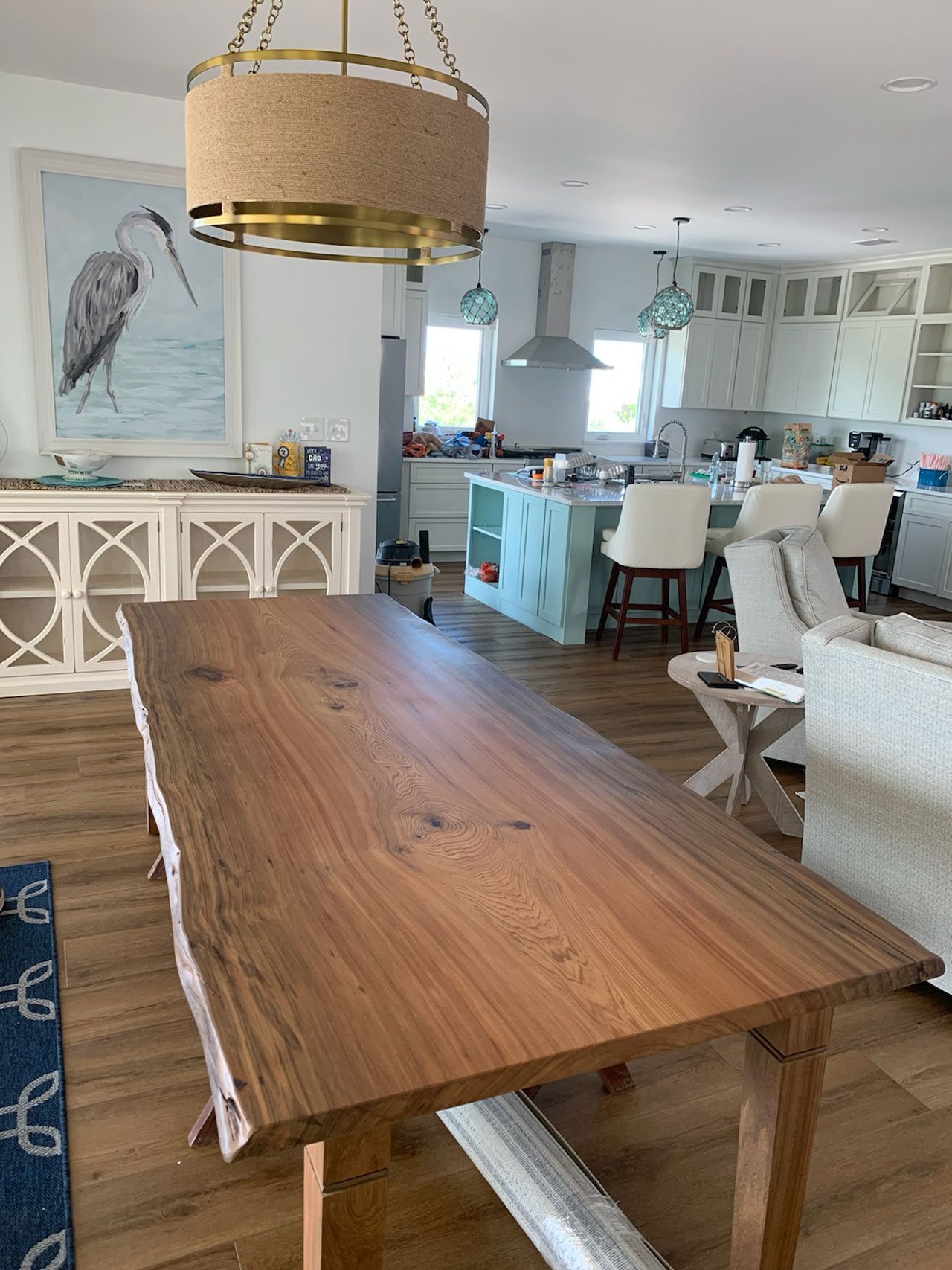
“We produce a lot of live-edge furniture from cypress logs that are 300–400 years old, and that probably spent another century under water. Every board offers unique texture and color. And every finished item combines art and history.”

As for his favorite piece? O’Brien says it’s an 8-foot-by-3.5-foot dining table crafted from a single live-edge cypress slab. “It’s absolutely stunning and would be a showpiece in any home.”

Now Serving

Woodworker Adam Doucet of Nonc’s Shop in Sunset, Louisiana, crafts small novelty items like bowls, utensils and other household items. While he works with a variety of wood, he says working with cypress is a dream.

“I particularly enjoy creating with sinker cypress,” he explains. “Cypress is the dinosaur of the swamps in our area — next to the alligators, I suppose. Many trees were felled by ancient hurricanes and the logs are still sitting there, and that makes creating something out of them extra special. You can see the grain and hundreds of years of growth. The wood’s beauty is unlike anything else, and you never know what you’re going to uncover until you start working. Dark gray, olive and maroon tones — it’s always a surprise and the finished products are breathtaking.

The Host with the Most

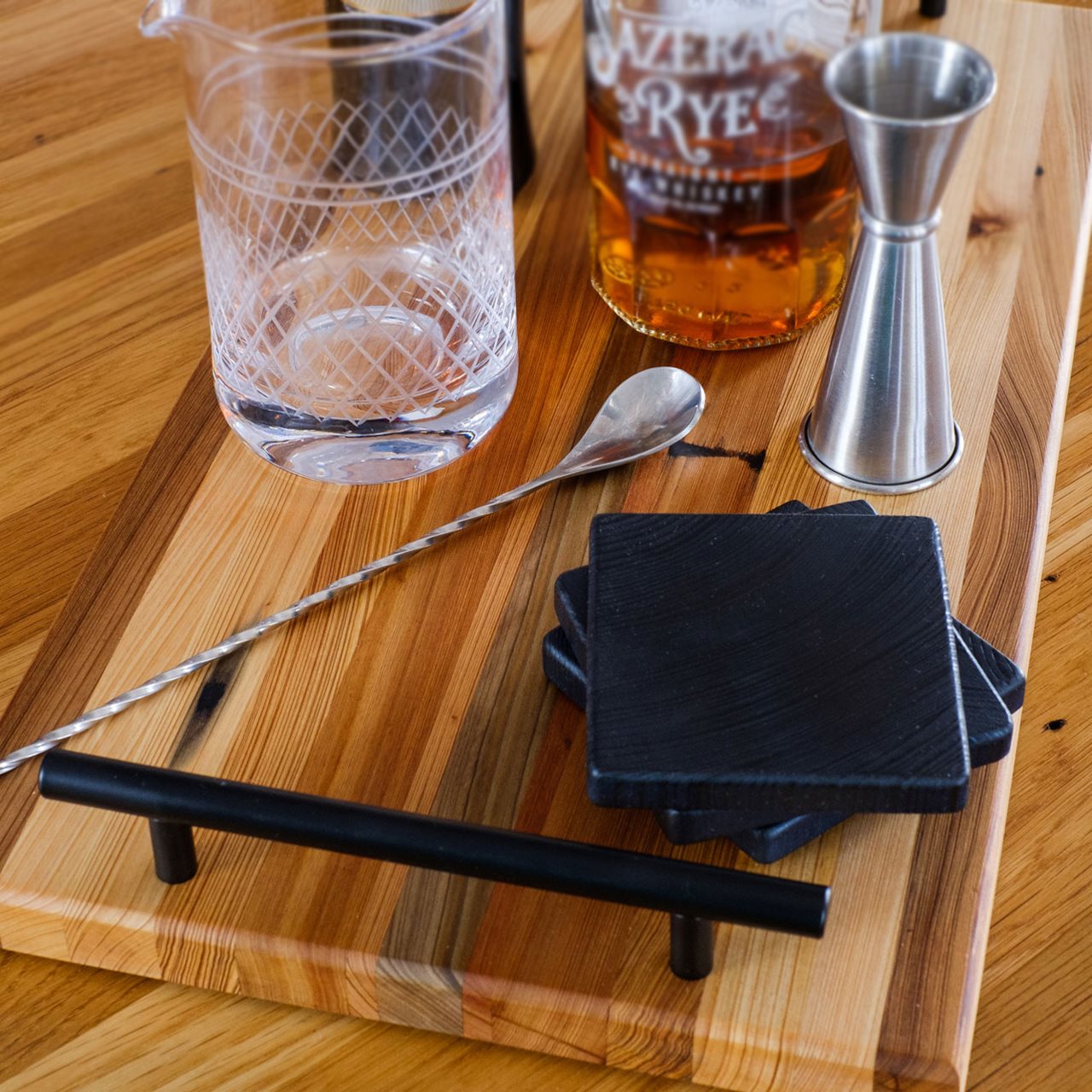
When it’s time to entertain family and friends, a serving tray comes in extra handy for transporting drinks and snacks. And for New Orleans–based creator Scott Myers of Myers and Son Atelier, a cypress tray doubles as a conversation starter.

“Cypress has a lot of variation in color and grain; it’s downright gorgeous. I use a lot of reclaimed wood, typically from old houses. It’d be a shame to let the material go to waste, so I repurpose it for things like serving trays and other functional items. It’s really special to look at old wood that found new life, and to share that history with guests. It makes for great conversation.”

Light it Up

While Myers makes a number of items—including tables, mantles, and display pieces to name a few—cypress lamps are his favorite. And it’s the handmade aspect of creating beautiful wooden lamps and highlighting intricate details that inspired him to get into woodworking.

“For me, connections to actual people are important,” he adds. “I have a table that my grandmother made and I love the fact that it’s a unique item that her hands literally shaped. I think there is satisfaction in knowing that an item was created by someone’s hands and mind, rather than mass produced by the thousands in a factory. It doesn’t get more personal than that.”

For more ways to add a slice of nature and history to your home’s décor, visit www.cypressinfo.org.

New home checklist: 5 things to check out before moving in

2023-05-09T10:11:00

(BPT) – Are you planning to move this summer? You’re not alone. According to Architectural Digest, most Americans move during the summer, between Memorial Day in May and Labor Day weekend in September, when the weather is pleasant, and children are out of school.

Moving in requires more than just packing your belongings and renting a moving truck. Before you arrive, there are several things you can do to make your new home move-in ready. Here are five tasks for your moving checklist before the big day.

1. Make repairs

Moving in is always stressful, but unexpected repairs can make it even more challenging when you’re focused on moving in your possessions. Before moving in, check for cosmetic and structural repairs, such as cracks in the walls, ceilings and floors, and leaks or mold.

You’ll also want to test the electrical outlets to ensure you can plug in and use all your appliances. An easy way to do this is to bring your phone charger and plug in your phone to test whether the outlet works. If you notice any issues, contact the seller so they can make the necessary repairs before you move in.

2. Schedule a deep clean

Cleaning your space is more difficult when working around furniture and unpacked boxes. As your move-in date approaches, schedule a day or two to deep-clean your new home.

Vacuum and mop the floors to pick up any dirt or dust left by the previous owners. Wipe down counters, cabinets and appliances and don’t forget to scrub the bathrooms and toilets.

You should also consider hiring professional cleaners to take this task off your plate. Schedule your deep clean for a day or two before your move-in date so you can enjoy your clean home as soon as you finish unpacking.

3. Check for smart devices

As you prepare to move in, stop by your new home and check for smart devices the previous owners may have installed. For example, your new abode may have a smart thermostat, smart lock, smart lightbulbs or a refrigerator with smart technology. Find and pair your phone with existing smart devices and make a note of any you’d like to keep before moving in.

One smart device that many homes have today that you may not think to look for is a smart garage door opener. Go to your garage and look up to see if your garage door opener has myQ technology. If there is a myQ logo plus a WiFi logo, or it says “powered by myQ” on your garage door opener, download the myQ app and follow the steps to connect your opener(s).

With the myQ app, homeowners are not limited to opening and closing the garage door within line of sight of the garage. You can control, secure and monitor the garage door from anywhere with your smartphone. This smart technology enhances the security of your garage and home with real-time alerts in case you leave the garage door open. Also, the app’s Guest Access feature provides a safer way to share access to your home without having to share keys or codes. And, myQ smart garage door openers work with Amazon Key and Walmart+ InHome for convenient and secure in-garage delivery of packages and groceries. To learn more, visit myQ.com.

4. Turn on the AC

Air conditioning during the summer is a must. To make sure you can cool down after a long day of moving, test the AC beforehand.

Without testing the AC, you risk going without cool air until you can fix it, dampening your enjoyment of your new home. Also, an AC unit with failing parts can result in a high electric bill.

Turn the AC on and be aware of leaks, strange noises or odors. Fix any AC issues before moving day so you can rest comfortably after a long, hard day of moving.

5. Set up utilities

Plan ahead and set up your utilities to make your transition from one home to another as smooth as possible. Your list of utilities should include electricity, water, gas, trash pickup and internet. Start the process three weeks before your move-in date so you don’t have to wait for service.

Depending on where you’re moving to, you may be able to call your current utility companies and inform them of your move. They can then start utility services the day you move in. However, if a utility company doesn’t serve your new area, you’ll need to cancel your plan and sign up with a provider that services your new location.

Don’t wait until the last minute to ensure your home is move-in ready! Using these five tips, moving will be a breeze, and you can quickly settle in and enjoy your new home.

4 ways to keep your family fueled and healthy during busy sports season

2023-05-09T11:01:00

(BPT) – Being involved in sports is a great way to enjoy the warm weather, bond with your kids and create long-lasting memories. It’s also a great way to help keep your family healthy both physically and mentally!

Registered Dietitian and Nutritionist Dawn Jackson Blatner shares four tips that can keep families on top of their game as they’re shuffling back and forth from practices, games and tournaments!

1. Check your timing

When it comes to when to eat to best fuel for practices and games, this is a good rule of thumb:

– three to four hours before a game or practice, eat a “power plate” balanced meal

– one to two hours before a game or practice, have an energizing bite

This timing will help your kids have enough energizing fuel to play their best without feeling too full or weighed down.

2. Get supercharged with sleep

Sleep is the best way to recharge tired muscles and restore energy. One way to get a better night’s sleep is to shut off video games, the TV, computers and phones at least one hour before bed to get your kids more relaxed and ready to fall asleep.

3. Drink up to play your best

Drinking water before, during and after practice and games can help kids’ muscles stay healthy and energized and their mind stay focused. Be sure your kids always carry a water bottle so they can be sipping on the way to the field, while they are playing and on the way home.

4. Fuel with food

Offer nutrient-rich foods throughout the day to give kids plenty of energy to fuel increased activity. When choosing what to give your family before a game, it’s important that meals are packed with nutrition and taste good so kids actually want to eat them!

These delicious Pizza-Style Egg Bites from Eggland’s Best are an easy way to make sure everyone in your family is getting the nutrients they need to score big. Eggland’s Best eggs contain more than double the Omega-3s compared to ordinary eggs, which can help reduce muscle soreness and aid in recovery after strenuous exercise. They also have more than double the Vitamin B-12, which provides a natural energy boost to keep the whole family going on those busy days of sports activities!

Pizza-Style Egg Bites
Prep time: 10 minutes
Cook time: 20 minutes
Yield: 12 egg bites

Ingredients

  • 10 Eggland’s Best Large Eggs
  • 1 tablespoon extra-virgin olive oil
  • 2 cups frozen spinach or kale
  • 2 cloves garlic, minced
  • Sea salt and black pepper
  • 1/2 cup jarred no-added-sugar marinara sauce
  • 1/2 cup shredded mozzarella cheese
  • Optional: 12 pieces uncured turkey pepperoni

Preparation

1. Preheat oven to 350º F and prepare muffin tin with 12 liners.

2. In a skillet over medium heat, add oil, spinach and garlic and cook until heated through, about 5 minutes. Set aside and let cool.

3. In a large bowl, whisk Eggland’s Best Eggs with salt, pepper and cooled spinach.

4. Pour egg mixture evenly into the muffin liners, place in oven and cook for 15 minutes.

5. Remove from oven, top each muffin evenly with marinara, cheese and optional pepperoni.

6. Return to oven for another 5 minutes, until eggs are cooked and cheese is melted.

7. Eat immediately or store leftovers covered in fridge for up to four days or freezer up to three months.

Using these four tips, your family can enjoy your sports day to the max! To find more recipes to keep your little athletes fueled, visit EgglandsBest.com.

For families looking for a chance to win a trip to the Little League Baseball® World Series, look no further than the Eggland’s Best MVP (Most Valuable Plate) Sweepstakes! Fans can enter daily from now through June 30th for a chance to win a trip, plus other eggs-ceptional prizes! Visit EBFamilySweeps.com for Official Rules and how to enter.

Leverage the new Inflation Reduction Act to go green and save big

2023-05-02T11:00:48

(BPT) – In August 2022, the U.S. government passed the Inflation Reduction Act (IRA), a comprehensive energy policy bill that provides a record $370 billion for climate and energy initiatives. The act, focused on clean energy and climate change, has wide-reaching implications for individuals and families across the country.

Specifically for homeowners, the IRA comes with incentives to upgrade and install environmentally friendly equipment and appliances throughout their home. By taking advantage of the tax credit, homeowners can reduce their tax bill by up to $3,200 and offset some of the upfront costs of making energy-efficient home improvements.

The following tips help to break down how homeowners can leverage this new piece of legislation and its home energy incentive programs.

Dive In – Understand the two homeowner incentive programs – Tax Credits and Rebates. The IRA created these two initiatives to empower homeowners to install high-efficiency equipment. Additionally, in some cases, the qualifying equipment may be different.

  • Tax Credits – The IRA extended and enhanced a tax credit, the Energy-Efficient Home Improvement Credit (EEHIC). Previously this type of credit was the Non-Business Energy Property Credit, which was restructured and expanded as part of the new law.

Federal tax credits can be leveraged for the next 10 years, until December 31, 2032, and apply to the purchase and installation of highly efficient products, including HVAC equipment.

Homeowners can earn up to $2,000, or 30% of the cost of the product and installation, for heat pumps; $600 for highly efficient furnaces; and $600 for qualifying air conditioners. There is a yearly cap on the tax credits of up to $3,200, and the credit cap resets every year. So, a homeowner can replace one system, such as a heat pump, one year and other equipment the next.

  • Rebate Program – The High-Efficiency Electric Home Rebate Act (HEEHRA) Program provides point-of-sale consumer discounts to enable low- and moderate-income households across America to electrify their homes. The program covers up to 100% of electrification project costs (up to $14,000) for low-income households and 50% of costs (up to $7,000) for moderate-income households. Eligible homeowners can receive:
    • Up to $8,000 for all-electric heat pumps
    • Up to $4,000 for an electrical load service center upgrade
    • Up to $2,500 for electric wiring
    • Up to $14,000 maximum for all eligible measures

HEEHRA can stack with federal energy efficiency and electrification tax credits.

Now that we’ve covered the basics of the two incentive programs within the IRA, here is a quick checklist on how homeowners can best leverage the IRA:

  • Meet the necessary requirements: In order to qualify for the credit, homeowners must meet certain requirements, such as using products that adhere to specific energy efficiency standards. The amount of savings an individual can expect depends largely on the type of appliance. One must obtain a Manufacturer’s Certification Statement — a signed statement from the manufacturer certifying that the product or component qualifies for the tax credit. Rheem, an innovator in manufacturing HVAC equipment, has a number of heating and cooling devices which qualify for the tax credit.
  • Assess your current situation: Homeowners may benefit from the IRA’s tax credit for energy audits. Hiring a qualifying inspector and conducting a professional energy assessment of the home can help provide a roadmap and determine all the areas where savings can be leveraged.
  • Upgrade heating and cooling appliances: Natural gas prices are continuing to rise, making energy-efficient upgrades to products like heat pumps an efficient and cost-effective choice. For water heating, this tax credit gives homeowners equal to 30% of installation costs for qualified high-efficiency products, up to: $600 for gas-fired tankless and gas-fired tank type storage water heaters; and $2,000 for ultra-high-efficiency heat pump water heaters. Owners can also consider installing a geothermal heat pump in their homes which could entitle homeowners to a federal tax credit of up to 30% of the cost, including installation, with no upper limit.

Once homeowners take the necessary steps and feel empowered to make equipment changes, they can expect to see the following benefits:

  • Save money on federal income taxes: By taking advantage of the tax credit, homeowners can reduce their tax bill, providing big savings for their family.
  • Reduce energy bills: By making energy-efficient improvements to their homes, homeowners can reduce energy usage and lower their monthly utility bills.
  • Increase the value of a home: Energy-efficient upgrades can make homes more attractive to potential buyers, who may be willing to pay more for a home that is eco-friendly and has lower energy bills.

An increasing number of homeowners today are concerned about the impact they are having on the environment. Seeking home solutions that are energy efficient and lower emissions, while utilizing IRA incentives, makes it easier for homeowners to win on all fronts. In addition, when considering making the switch to energy-efficient products, leading manufacturers, such as Rheem, also provide details on a variety of other incentives that can be leveraged. By making energy-efficient home improvements, homeowners can save money while reducing their carbon footprint and contributing to a cleaner, more sustainable future.