From Career to Classroom: Six Strategies for Success

2024-09-27T15:55:00

(BPT) – Late each summer, we see eager students returning to the classroom with new backpacks, sharpened pencils and a renewed focus — ready to take on the school year ahead. Nowadays, “back-to-school” season can be anytime, especially with the rise of students — specifically working adults — taking up opportunities to pursue new skills on their own time.

For working adults, this leap from career back to a classroom — whether online or in-person — can be daunting, especially if they’ve been out of school for a long period of time. Luckily, there are several simple strategies to help reduce anxiety about becoming a student again. Read on for important tips to help you succeed!

1. Find new opportunities for growth.

Have a few extra hours a week? Consider taking some courses to sharpen your skills and stay current with your career. There are numerous online programs designed specifically for adult learners that cater to your unique learning needs and provide electives that can help you potentially expand your career aspirations. If you’re still not sure where to start, try looking into Sophia Learning’s offerings of over 60 online courses to explore new subjects.

2. Choose a flexible program that works for you.

Fortunately, online learning platforms offer a lot of flexibility compared to on-campus programs. You can complete coursework on your own schedule, whether that’s first thing in the morning, during a quiet afternoon or in the late hours when everyone else is sleeping.

3. Seek out affordable learning.

If you’re employed, check to see if your employer has a formal education benefits program or, at a very minimum, offers discounts on select partner schools.

Earning AP Credits or taking general education courses online at an affordable institution like Sophia Learning may also help you save money. You can then transfer these courses to your chosen college or university to bring down the cost of college. Be sure to check with your school’s advisor about the credit transfer policy.

4. Manage your time.

The ability to manage your time wisely can contribute to your overall success, especially if you’re a learner with full-time employment or family care commitments. Safeguard your time for learning by setting specific goals and schedules, creating calendars for deadlines, and asking for help if you’re feeling overwhelmed. For example, consider letting your employer know you are utilizing their education program, and ask if they can allow you greater flexibility to manage both work and school.

5. Develop strong study habits.

It’s important to remember that an all-nighter study session isn’t the most conducive strategy for understanding and retaining your coursework knowledge. Learn about proven study methods and think about utilizing tools like flashcards, practice tests, homework assignments and developing your own study guides to help foster continuous learning — resulting in higher performance!

6. Practice self-care.

Test taking can be stressful for everyone, even if you know the material. Practicing self-care such as getting a good night’s sleep, finding a space with minimal distractions to take the exam, eating a good breakfast, and giving your brain a break with a relaxing hobby can minimize nervousness and garner greater success.

It’s never too late for your own back-to-school season. Practicing these adult learner strategies can help you succeed in opening new doors for your personal and professional growth.

Feeling inspired to continue your education online after reading this? Explore your options with Sophia Learning.


How cattle grazing protects and benefits the land

2024-09-26T13:31:57

(BPT) – With cattle ranching featured front and center in America’s living rooms due to the popularity of shows highlighting the western lifestyle, and with Climate Week piquing interest in sustainability, it’s a good time to raise awareness about how farmers and ranchers — and their cattle — do a lot more for the country and environment than just being the backdrop of a popular western drama series.

According to the National Cattlemen’s Beef Association, a contractor to the Beef Checkoff, it’s about ranchers as stewards of sustainable land management, their cattle playing a crucial role in mitigating climate change and wildfires, and beef’s role in a healthy, sustainable diet.

New research links cattle grazing to wildfire mitigation

New research by the USDA Agricultural Research Service recently reported some surprising findings: Grazing can benefit invasive sagebrush communities and more than that, can combat wildfires. With much of the western U.S. beset by wildfires in recent years, it is crucial for people living in those areas to understand that cattle grazing actively mitigates the effects and spread of fires by consuming plants that would otherwise act as fuel.

Outdated dogma suggests livestock grazing in the sagebrush steppe in western rangelands negatively impacts those ecosystems. This new research, published in the scientific journal Ecosphere, found the opposite is true. According to the report, the ARS discovered that “strategically applying livestock grazing prior to the occurrence of climate-induced wildfires can modify sagebrush steppe characteristics in ways that decrease fire probability in the communities, promote biodiversity while reducing postfire annual grass invasion, fire-induced loss of native bunchgrasses and fire damage to soil biocrusts.”

In plain language, it means that if cattle graze on the sagebrush steppe regularly, it will induce shorter flame lengths if a fire occurs, slow the rate of fire spread and prevent invasive grasses from popping up after the fire moves through. That’s because, when cattle graze, they’re munching away on grass and plants that could otherwise act as fuel during wildfire season, and they’re doing so on land that is most often unsuitable for growing crops.

How cattle grazing can benefit the land

“As we talk about climate change, and the dryness that we see, cows are a great mitigator of wildfires,” said Janey VanWinkle, a fourth-generation cattle rancher in Colorado. “In a lot of areas where there are invasive plant species, for example, cheatgrass, cows will eat that forage down, which slows the burn once a wildfire is started.”

Ranchers like the VanWinkle family are conservationists. While caring for their animals, they’re also caring for the land.

“When talking about land use, you could ask, ‘Could this land be used for producing crops and other types of food?’ and the answer is, most likely not where I live, with one of the limiting factors here being water,” VanWinkle explained.

The ways cattle grazing can benefit the land go even deeper than preventing wildfires. According to 2024 UC Davis research, grazing:

  • Decreases the potential for soil erosion and regulates the return of nutrients to the soil
  • Promotes plant diversity and abundance by regulating weed growth
  • Preserves open space and regenerates soil and plant life to promote carbon sequestration through the biogenic carbon cycle.

Cattle and bison have been grazing on U.S. lands for centuries. With careful stewardship of ranchers like the VanWinkle family, they can be helping the planet for centuries more.

“Cattle grazing truly is the best use of this land as it provides wildlife habitat and a very high-quality source of protein,” VanWinkle said. “What really matters is protecting our landscapes. I assure you that I want my grandchildren to know what it’s like out in nature and on the ranch.”

6 ways AI can help college students study smarter and learn more

2024-09-26T16:55:00

(BPT) – Is information overload making it hard for you to focus on what matters most at school? An essential part of college is reading and deeply understanding the information that will make you an expert in your field. However, today’s college students have exponentially more content to wade through — from textbooks, lecture notes and research papers to the entire internet! It’s easy to spend most of your time searching and not enough time actually learning the most important information. However, you don’t have to tackle this challenge on your own. Let a generative AI assistant help you study smarter and learn more of what matters.

Adobe knows that when used responsibly, AI can be a powerful study partner that can help students succeed. Check out the company’s six suggestions for using AI to maximize your studying and learning.

1. Learning

In your college courses, you’ll run across dense learning materials. Academic articles and readings often have long blocks of dense text, tables and charts that can make remembering the key information really difficult.

Acrobat AI Assistant can summarize documents and create concise outlines that allow you to easily navigate and learn the information in even the most daunting documents. Armed with this new partner, you can spend more time closely reading, analyzing and understanding your course materials. You can also ask AI Assistant to present the information in easier-to-understand language or summarize key themes so you can truly focus on what matters.

2. Studying

When preparing for a quiz or test, it can be hard to know where to start. At times, it can be overwhelming! Don’t panic. Gather your lecture notes, handouts, texts, presentations and other relevant course documents and let AI do the admin for you.

AI Assistant can bring all the relevant documents together and organize the information by key themes, definitions and dates. AI Assistant can then use this information to generate practice quizzes, study guides and questions and answers you can paste into flashcards, so you can review the course materials and study more effectively.

3. Brainstorming

Imagine this: You’re assigned a project, presentation or essay, and you’re struggling to come up with ideas on a specific theme. AI can be a valuable tool for brainstorming that can spark your imagination and help get you started.

Let’s say you’ve read a research report on the Fall of the Roman Empire and the next assignment is to present one of the paper’s major themes. AI Assistant can provide a list of potential themes to get you thinking — like instability, economic decline or overexpansion. From there, you can brainstorm more themes or ask AI Assistant to locate examples of information around your chosen topic. AI Assistant provides the information with citations so you can navigate to that section and read more.

4. Class Presentations

Most people are at least a little uncomfortable presenting in front of their peers. AI Assistant can help you prepare to do your best. Simply upload your presentation and course materials and AI Assistant offers thoughtful questions. So when it’s your turn to present in class, you’ll be prepared for your professor’s and peers’ questions and feel more confident.

5. Citations

Properly citing and attributing your sources is a cornerstone of academic work. When you’re writing or reading, AI Assistant includes citations with clickable links so you can verify where the information came from in the document. Having these citations on hand also makes it easier for you to incorporate the information in your reports, essays and projects.

6. Careers

Preparing and applying for career experiences starts in college. Whether you’re applying for an internship, postgraduate job or even a part-time job while in school, AI can support your career development.

For example, you are applying for an internship at a tech company. To stand out among the other applicants, you can use AI Assistant to analyze the internship role description and identify keywords, phrases and requirements. Then, let AI Assistant review your cover letter and resume to make sure you’ve included the application’s language and that you’ve highlighted all the pertinent skills needed for the role.

Special $1.99 Pricing for College Students

Adobe Acrobat AI Assistant won’t help shortcut your learning. It’s an incredible learning aid that can help you draw connections across your course materials, analyze key information, as well as practice ahead of big exams and presentations.

If you’re interested in trying out AI to help you spend less time searching and more time learning, consider Adobe Acrobat AI Assistant. AI Assistant works with any file type (not just PDFs!) and can be used on desktop, the web and mobile devices.

Adobe is committed to developing and deploying AI responsibly for all of its customers — including students. Acrobat AI Assistant includes key features and practices to help keep student data safe and user guidelines to encourage responsible use.

Adobe is offering students access to an Acrobat AI Assistant subscription for just $1.99 per month. To learn more and try out this AI tool for yourself, visit Acrobat.Adobe.com.

Parents: What you need to know about meningitis

2024-09-26T11:01:00

(BPT) – College student Jamie Schanbaum was studying at the University of Texas at Austin, just 19 years old, when she was rushed to the hospital with severe symptoms that seemed related to asthma or the flu.

Two days later, Jamie and her family were stunned to learn she had contracted meningococcal disease, a serious, life-threatening illness. Meningococcal bacteria can infiltrate the brain and spinal cord, known as meningitis, or the blood, causing septicemia. People can carry the bacteria in their nose or throat without being aware of it and spread it to others. Jamie ‘caught’ the bacteria and developed septicemia.

While Jamie fortunately survived, her life would not be the same. Her legs and fingers needed to be amputated due to the infection. But her strength and determination have caused her to become an effective advocate for meningitis awareness, and after two years of walking on prosthetics, Jamie joined the USA Paralympic Cycling team in 2011.

“Jamie is making a difference for others every day,” said her mother, Patsy Schanbaum, “including inspiring the founding of the J.A.M.I.E. Group, a nonprofit organization that raises meningitis awareness and educates people about the importance of prevention through vaccination. We work with many other meningitis groups, often started by families impacted by this horrible disease, to help save lives.”

The J.A.M.I.E. Group has also worked to pass legislation requiring meningitis vaccination for college students, who are at higher risk for meningitis.

What is meningitis?

Meningitis is a devastating and debilitating infection that can affect anyone, anywhere, at any time. Those at higher risk of meningococcal infection include young children, adolescents, older adults, people living with chronic and immunocompromising conditions (such as HIV) and those living in close quarters — including college students and military recruits.

Bacterial meningitis is the most common type of meningitis. Even with prompt diagnosis and treatment, death and brain damage in survivors are common outcomes. Most cases of bacterial meningitis are caused by three different bacteria: Haemophilus influenzae type b (Hib), Pneumococcus (Pnc) and Meningococcus.

Meningococcal disease is transmitted person-to-person, through droplets of secretions from people who are carriers. Carriers are healthy people who have meningococcus in their nose and throat. Transmission is also through contact with contaminated items such as utensils and living in close quarters with a carrier.

Symptoms of meningococcal disease may begin like influenza (the flu), but can worsen rapidly to include fever, severe headache, stiff neck and a skin rash.

Approximately 10-20 percent of people with bacterial meningitis will die within 24-48 hours after onset of symptoms, and 10-30 percent of people will sustain permanent damage and disability, leading to life-changing events including brain injury, depression, hearing loss and/or limb loss.

The good news: Meningitis is preventable

Vaccination has been shown to be highly effective in reducing the risk of illness and disease transmission, which is especially crucial during the winter months when more people are spending time together indoors and many different viruses are spreading.

Routine use of vaccines in infants and children against Hib, Pnc and the common groups of meningococcus that cause the majority of illness have been very successful in preventing disease. The CDC Advisory Committee on Immunization Practices (ACIP) recommends routine administration of a single dose of quadrivalent meningococcal conjugate vaccine against serogroups A, C, Y and W to children 11 or 12 years of age, with a booster dose at age 16. Meningococcal B vaccination is available to all adolescents and young adults (ages 16-23).

Vaccine protection can decrease within five years following vaccination, so getting vaccinated at the recommended times maintains your protection and reduces the risk of illness and disease transmission.

Prevention is power. Talk to your doctor about vaccination against meningococcal disease for you and your family members, especially those who may be at higher risk. Visit MeningitisAwareness.org to learn more.

Want happier employees? New research says it’s time to get personal

2024-09-26T07:01:00

(BPT) – In an eye-opening look at workplace well-being, researchers have found that only one-third (28%) of knowledge workers globally say they have a healthy relationship with their jobs.

The culprit, according to HP’s 2024 Work Relationship Index (WRI), is an outdated, one-size-fits-all approach to the employee experience. The data shows that offices, company culture, tools and leadership styles have remained nearly the same while the world’s expectations of work have evolved. To keep up, businesses must prioritize what today’s workers really want. (Hint: It’s not just free snacks.)

The future of work? It’s personal

Gone are the days of cookie-cutter career experiences. Modern employees are looking to be treated as individuals, rather than simply part of a collective workforce. According to HP’s 2024 WRI, at least two-thirds of knowledge workers and business leaders want tailored professional experiences, meaning choices across workspaces, tools, schedules and trainings that meet their unique needs and goals. It’s all about options, customization and autonomy.

And if you think this only applies to the younger generation, think again. While more than 70% of Gen Z and Millennials say more personalized work would improve their overall well-being and relationship with work, more than 65% of Gen X and more than 55% of Boomers agreed, too.

“This shift toward personalization reveals crucial insights for employers,” said Anneliese Olson, senior vice president and managing director, North America, HP. “Tailored experiences could be the key to unlocking workforce potential and employee longevity.”

Harnessing AI’s workplace potential

AI usage at work has exploded among knowledge workers and emerged as one tool helping create more personalized work experiences. The study found that nearly 7-in-10 (69%) knowledge workers who use AI agree they can customize their use of AI to be more productive. Many knowledge workers who used AI in 2024 saw other benefits too, including better work-life balance, new opportunities to enjoy their careers, and 73% said AI makes their jobs easier. Notably, the Work Relationship Index score for knowledge workers who use AI is 11 points higher than that of their colleagues who don’t.

Trust at the top

Today’s workers want a company they can believe in. They seek out strong, confident leaders who will make the right decisions for them and their businesses. In fact, trust in senior leadership was one of the most influential factors in determining WRI scores, highlighting the pivotal role executives play in shaping the employee experience. Despite a clear demand for bold leadership, the data found that less than half (44%) of business leaders felt confident in their “human skills,” including mindfulness, self-awareness, communication, creative thinking, resilience, emotional intelligence and empathy; and only 42% were confident in their hard or technical skills.

Women leaders, however, emerged as a bright spot in the research, displaying greater confidence in both human and hard skills compared to their male counterparts. In fact, female business leaders were found to be 10 points more confident in their hard skills, and most notably 13 points more confident in human skills than their male counterparts.

Empathy and the employee experience

Feeling seen and heard by management is another top priority for workers across generations — and one that greatly impacts not only their desire to stay put, but also their overall well-being and their professional growth. It all comes down to empathy. The 2024 HP WRI data shows that while 78% of knowledge workers say it’s important to have senior leadership who demonstrate empathy, only 28% say their executives consistently demonstrate it. This empathy disconnect is further underscored at the leadership level. While many leaders lack confidence in their human skills, at least 90% acknowledge empathy’s positive impact on employee well-being, professional growth and retention.

“Today’s workforce wants so much more than a paycheck,” said Olson. “The 2024 HP Work Relationship Index (WRI) highlights a clear demand for choice, individualization and a human-first approach to leadership. To realize this vision, we need empathic leaders and the right technologies to meet these evolving needs. The moment has arrived for businesses to fundamentally redefine relationships with work.”

Make a Lasting Impact: The Power of Legacy Giving

2024-09-26T10:01:00

(BPT) – Everyone leaves a legacy behind. The question is: What will your legacy be? It’s never too early to start planning. Thinking about your legacy now can help you live with intention and purpose while helping the causes you care about most.

Consider the inspiring story of Richard Dick Henry, a decorated World War II veteran and Pearl Harbor survivor. Affectionately known as “Chief,” Richard wanted to ensure that future generations of veterans received care beyond his lifetime. With thoughtful planning, he fulfilled his intention. Richard contacted Wounded Warrior Project® (WWP) and learned how to leave a gift in his will. Although Richard passed away, his legacy gift is helping provide wounded, ill, and injured veterans with free, life-changing care today.

“Chief’s gift helps Wounded Warrior Project keep the promise to be there for our nation’s heroes, no matter what,” said Chris Needles, WWP™ chief development officer. “Our free programs and services are changing and saving lives thanks to the commitment of generous supporters.”

Like Richard, you can make a major impact by planning a gift for an organization, no matter your financial situation. There are various ways to contribute, big or small, that will stand the test of time and support your charity of choice.

Here are three reasons why legacy giving is one of the most effective ways to make an impact.

  1. Legacy giving provides flexibility to support causes you care about without affecting your current financial situation:
  • Leave a gift in your will: You can choose to give a set amount of money or a portion of your estate. This way, your gift can grow or shrink along with your assets over time.
  • Give through your retirement account: You can select a charity to receive money from your retirement account in the future. Your savings grow tax-free during your lifetime, which means a bigger gift for the charity in the long run.
  • Make a gift that gives twice: Ask your financial advisor about setting up a charitable gift annuity. This allows you to support a cause today while receiving steady payments for life. Your gift grows over time, making an even bigger impact in the future.
  1. Your planned gift, big or small, has the potential to create significant change for a charitable organization:
  • Individual gifts can drive new initiatives, expand existing programs, and empower organizations to invest in innovative solutions to reach more people in need.
  • Legacy gifts provide organizations with financial stability and the potential to plan for long-term projects that can have far-reaching impacts.
  • Your personal story and motivation behind the gift can inspire others, potentially leading to a ripple effect of giving.
  1. Legacy giving allows you to make a lasting impact on organizations supporting complex, long-term issues.

    Most organizations focused on intergenerational challenges require continuous support. For example, WWP relies on donors to address ongoing veterans needs such as chronic health conditions, post-traumatic stress disorder, employment difficulties, and financial instability. These challenges often extend to their families, creating a need for comprehensive support. Each donation improves the quality of life for veterans and empowers them and their families to leave lasting legacies of their own.

Remember that every gift, no matter the size, has the potential to change lives. Consider how planned giving can help you make a meaningful impact that aligns with your values and supports the causes closest to your heart.

By partnering with established organizations through planned giving, you can amplify your impact and help create lasting, positive change for generations to come.

Learn more about Wounded Warrior Project and how to set up a legacy gift today.

How to build strength through smart snacking

2024-09-26T01:13:00

(BPT) – Are you one of the many people working hard to maintain your weight and live a healthy lifestyle? If you’re using GLP-1 medications or transitioning off them and want to maintain your healthy habits and wellness, you may be interested in tips to help you maintain your hard-earned progress.

With renewed focus on high-protein and high-fiber foods that also have low carb and low sugar content, the Atkins Strong line offers a convenient way to support the long-term health and wellness goals of anyone seeking a healthier lifestyle.

“The Atkins Way isn’t just a diet, it’s a lifestyle,” says actor and long-time Atkins spokesperson Rob Lowe. “It has completely changed my approach to eating well. It’s about really enjoying what you eat while feeling your best. I’m thrilled to have the opportunity to continue to spread this message to the world.”

These tips can help you keep your focus strong.

Focus on protein

Whether you’re planning meals or grabbing a quick snack, choosing options that are high in protein will help boost your energy, no matter what your day has in store. While it’s easy to center meals on high-quality proteins you love, high-protein snacks can be harder to find.

For quick, easy and tasty snacking options with plenty of protein, Atkins Strong 30g Protein Shakes come in three great flavors: Chocolate Peanut Butter, Milk Chocolate and Vanilla). You can enjoy them at home or on the go just as they are, or combine them with your favorite coffee beverage for a quick pick-me-up. Each shake provides 30 grams of sustained absorption protein that helps maintain lean muscle and support muscle health, while keeping you feeling energized throughout the day.

Go for more fiber

According to Harvard Health, the best foods for increasing fiber intake include legumes (beans and peas), fresh fruits and vegetables, whole grains (like brown rice, whole wheat and oats), nuts and seeds. High-fiber foods are nutrient dense, helping to aid digestion and keeping you feeling fuller, longer. For an easy, on-the-go high-fiber snack, remember that Atkins Strong 30g Protein Shakes offer 7 grams of prebiotic fiber.

Ease up on carbs

Choosing low-carb food options for meals and snacks will also support you on your wellness journey. What are low-carb foods? For example, lean proteins, non-starchy veggies (think leafy greens, broccoli, carrots and tomatoes), nuts or seeds, plus fruits like apples and berries are all options that can help you keep your carbs to a minimum.

When you need a quick and easy low-carb snack, remember: Atkins Strong 30g Protein Shakes contain minimal carbs, just 9 grams per serving.

What about your sweet tooth?

Choosing lower sugar options is healthier, but many people naturally crave something sweet. The good news is, you can satisfy your sweet tooth and support your well-being at the same time. Atkins Strong products offer protein-packed decadence, so you can enjoy the deliciously smooth flavor you love, without a ton of sugar.

To help you get started, here’s a tasty recipe that can use your favorite shake, along with other ingredients offering nutrients your body needs, like peanut butter and avocado.

Atkins Strong Chocolate Peanut Butter Avocado Pudding

Ingredients

1 serving Atkins Plus Creamy Milk Chocolate Shake
1 fresh avocado
1 scoop chocolate milkshake protein powder, gluten free
3 tablespoons creamy peanut butter, natural
2 tablespoons cocoa powder, unsweetened
1 teaspoon vanilla extract
1 pinch table salt
1 1/2 teaspoons cacao nibs, organic

Directions

1. In blender, combine shake, avocado, protein powder, 2 tablespoons peanut butter, cocoa powder, vanilla and salt on low until uniformly broken up. With blender off, scrape down sides of the jar, then process on high until thick and very well combined, at least 3 minutes.

2. Pour pudding evenly into three servings, about 1 1/2 cups in each, and refrigerate until chilled, at least 4 hours.

3. To serve, drizzle 1 teaspoon warmed peanut butter and 1/2 teaspoon cacao nibs over each serving.

Tip: Avocado provides the textural base for this tasty, nourishing pudding. For best results, the avocado should be nicely ripe, without stringy fibers or dark spots. The recipe uses 136 grams of avocado, about a rounded 1/2 cup mashed for consistency (since whole avocadoes can vary in size considerably). Note that the specific chocolate-flavored protein powder you use will also impact the texture of the final pudding. This recipe used the Quest brand, but if you use another brand, try adding half the amount, then adding more, blending thoroughly between additions, until a thick pudding-like texture develops.

Keep your wellness progress going strong with the Atkins Strong line range of protein-packed, low-carb products designed to support healthy lifestyles. You’ll find tips, recipes, products and more to support your wellness journey at Atkins.com.

Preparing for colder months: What homeowners need to know about home heating

2024-09-25T10:51:00

(BPT) – As the days grow shorter and temperatures begin to dip, it’s time to get homes ready for the colder months ahead. Homeowners might be eager to cozy up with blankets, but it’s just as important to think about the heating systems that quietly ensure warmth and comfort. From heat pumps to furnaces, these units play a pivotal role, and homeowners need to be aware of the increase in demand for these systems in the winter months.

Following are tips to help homeowners prepare their heating systems for the coming season while staying informed about changes in the industry that could impact them.

Understand how your heating works and the best option for your home’s needs.

Before the cold sets in, it’s prudent to take time to understand how a heating system works. Whether it’s a heat pump, furnace or a hybrid system, understanding its features, maintenance requirements and overall efficiency is key. Following the manufacturer’s maintenance schedule and recognizing when it’s time for repairs or upgrades can save both energy and money.

For those considering switching units before winter, a heat pump is a popular option. Heat pumps offer an energy-efficient way to maintain a comfortable home by transferring heat from outside to inside, even in cooler climates. One standout advantage of a heat pump is its ability to run on electricity, often making it a more sustainable and affordable option.

For areas with harsh winters, homeowners might want to explore a dual-fuel system. This type of system combines the benefits of a heat pump with the flexibility of a gas furnace, allowing homeowners to switch between electric heat and natural gas, depending on the weather. It’s an efficient way to ensure optimal comfort no matter the outdoor temperature.

Stay on top of regular maintenance.

Regular maintenance is crucial to ensure heating systems run efficiently and reliably throughout the winter months. A well-maintained system can save homeowners from the headache of unexpected breakdowns and high energy bills.

Heat pumps, for example, are relatively inexpensive to operate; however, because the outdoor unit operates year-round, it’s important to keep it in top shape. Simple tasks, like keeping the outdoor coil clean, can help extend the system’s lifespan and maintain its efficiency. Consulting a reliable contractor, such as a Rheem® Pro Partner, is recommended to ensure the unit receives an inspection and the attention needed for it to perform at its best.

Keep up with changing regulations.

As we head into 2025, homeowners should be aware of regulatory changes that may affect their heating and cooling systems. One of the more notable changes on the horizon is the switch to A2L refrigerants, which will replace the hydrofluorocarbons (HFCs) currently used in most systems. This transition is part of the American Innovation and Manufacturing (AIM) Act of 2020, which mandates a phasedown of HFCs due to their high global warming potential (GWP).

Starting Jan. 1, 2025, the Environmental Protection Agency (EPA) will enforce a 700 global warming potential (GWP) limit on refrigerants used in heating and cooling systems. These refrigerants, which have already been used in smaller appliances, like window units, will now be a key component of larger HVAC systems, becoming the standard in the industry.

Rheem®, a leader in HVAC innovation and a forward-thinking manufacturer, has been proactive in adapting its product lines to meet these new standards and sustainability goals. By staying informed about the A2L shift, homeowners can ensure their systems remain compliant and efficient while helping to reduce their environmental footprint.

Whether homeowners are maintaining their current unit or considering an upgrade, being informed about system options and regulatory changes can help ensure smart decisions resulting in environmental benefits and potential savings on energy bills.

Why prioritizing your health and maximizing wellness matters

2024-09-17T12:00:00

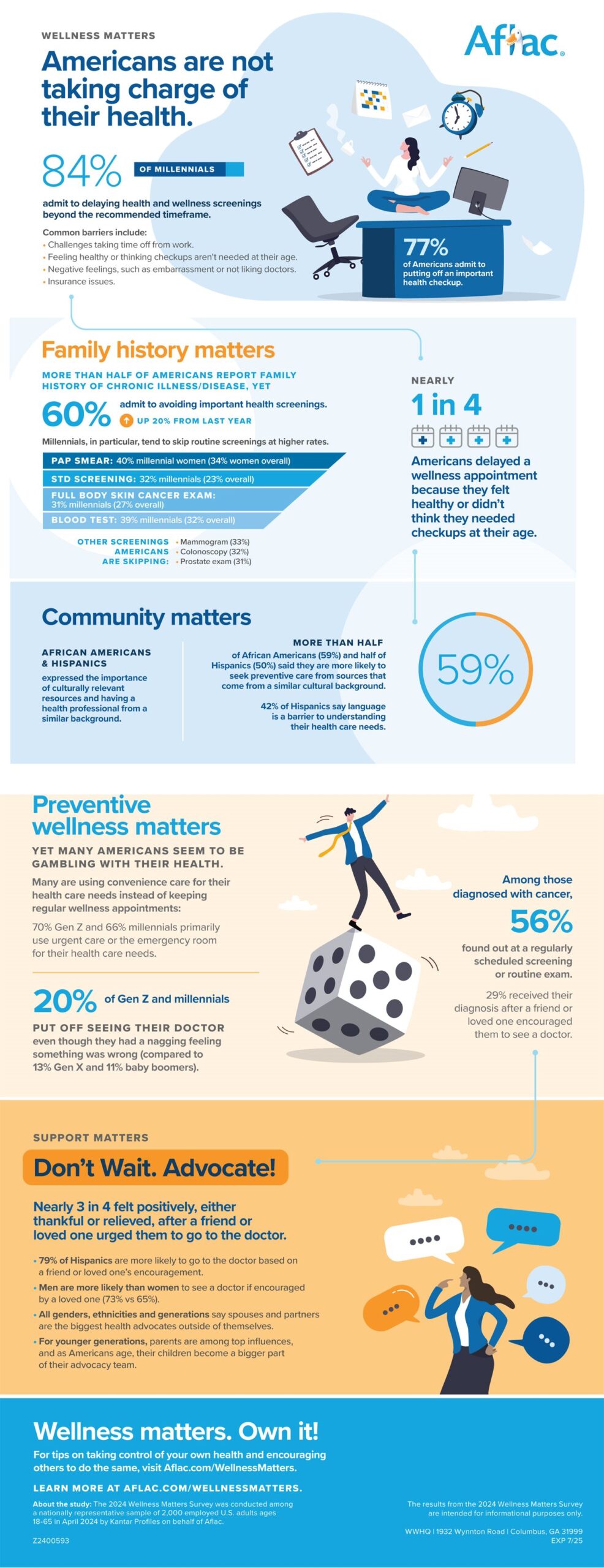
(BPT) – Do you put wellness visits and health screenings at the top of your to-do list? Unfortunately, many Americans don’t. Aflac’s 2024 Wellness Matters Survey revealed 3 in 5 Americans avoid common recommended health screenings, up 20% from last year.

The numbers are even higher for younger Americans. The survey found 84% of millennials and 82% of Gen Z delay health and wellness screenings, despite saying they frequently or always worry about their physical and mental health. And 42% of Hispanic Americans reported that language remains a barrier for understanding their medical needs and health insurance.

How important are wellness visits and screenings?

Seeing your doctor regularly is crucial. It helps establish a baseline — often using vital checks like blood pressure — for how you’re doing when everything is fine. This provides a basis for comparison.

Checkups also provide opportunities to ask questions and get recommendations for screenings. Your health care provider can advise you on preventive measures to help keep illnesses at bay, and they may help catch warning signs for health conditions that are more treatable when caught early.

Many young people are skipping these routine visits, thinking that getting sick is something that becomes more common with age. But as Aflac Senior Vice President and Chief Actuary Tom Morey, who in his twenties had an unexpected illness that compromised his quality of life for two years, says, “That’s when I learned that percentages don’t really mean much when it is happening to you.”

More than half (56%) of Wellness Matters Survey respondents who received a cancer diagnosis said they found out after a regularly scheduled cancer screening or routine exam, yet they were more likely to have avoided common health screenings — underscoring their importance. Forty percent of Hispanic Americans who received a cancer diagnosis reported being diagnosed during a regularly scheduled cancer screening (versus 30% of non-Hispanics and 24% of African Americans), according to the survey.

The Wellness Matters Survey also found many younger Americans use convenience care instead of regular appointments with a primary physician, with 70% of Gen Z and 67% of millennials primarily using urgent care or the emergency room — which is much more expensive.

The truth is, wellness visits and screenings save time — by helping avoid illness — and money you might have spent on treatments for conditions that could have been prevented or addressed earlier.

Overcoming barriers to preventive care

Survey respondents listed several reasons for delaying wellness visits, including “feeling fine.” Others noted that they were concerned about missing work, the costs of a wellness visit and, for Hispanics, an existing language barrier.

You don’t need an appointment because you “feel fine.” While this is a common argument for many younger Americans, many health care plans cover wellness visits because they’re effective in maintaining your health, preventing future issues and catching health concerns before they become serious.

You’re worried about missing work. Check with your employer for policies on health checkups and screenings. You may find many employers want employees to take a proactive approach to their health — rather than waiting until you’re sick and missing more work days. You may also be able to find health clinics or telehealth opportunities with more flexible hours, and can use retail health clinics for services like vaccinations.

You’re not sure you can afford it. Consult your insurance provider to learn about what’s covered in your health insurance plan. Many plans cover wellness visits, health screenings and vaccinations at least in part.

Language barriers keep you from wellness visits. You can bring a trusted friend or family member to appointments. Health care providers receiving federal funds (including those treating Medicare or Medicaid patients) are required by law to provide interpreters for patients who ask ahead of appointments, and others may offer interpreters as a courtesy.

Tips for maximizing checkups

Wellness visits are separate from doctor visits addressing a sickness or an injury. In addition to physical exams, these visits focus on preventive care, such as screenings. Consider the following tips from the Centers for Disease Control and Prevention.

Before your appointment:

  • Gather your family health history.
  • Note past surgeries, health issues, allergies and vaccinations.
  • Bring a list of medications and supplements you take, including dosage.
  • Prepare questions for your doctor.

During your appointment:

  • Ask if there’s an online patient portal to access your information. If not, keep your own detailed health records.
  • Ask about recommended health screenings.

Tip: Schedule your annual exam by making your appointment at the same time each year, such as your birthday month.

Coverage matters

Maximize your health care coverage by getting to know your plan, and consider supplemental insurance to provide an additional layer of financial protection for individuals and families in the event of a serious accident or illness. Learn more about the Aflac Wellness Matters Survey, the importance of preventive care and health care tips at Aflac.com/WellnessMatters.

An infographic called

The results from the 2024 Wellness Matters Survey are intended for informational purposes only. Aflac’s family of insurers American Family Life Assurance Company of Columbus and/or American Family Life Assurance Company of New York, and/or Continental American Insurance Company (CAIC) and/or Continental American Life Insurance Company.

WWHQ | 1932 Wynnton Road | Columbus, GA 31999
Z2400816 EXP 9/25

5 reasons to escape to the Mexican Caribbean this winter

2024-09-25T07:01:00

(BPT) – Escape the chill this winter and discover the signature paradise of the Mexican Caribbean. This stunning region boasts endless experiences to suit every type of traveler in 12 distinct destinations, from popular spots like Cancun, Tulum and the Riviera Maya, to hidden gems like Holbox, Bacalar and Playa Mujeres.

With powder-soft beaches, turquoise seas, verdant jungles and world-class resorts, the Mexican Caribbean is the perfect destination for a wide range of travel experiences, from solo wellness retreats to couples’ getaways, family vacations and more.

Here are the top five reasons to book a getaway in the Mexican Caribbean:

1. Easily accessible tropical weather year-round

Get ready to shake off the cold in the Mexican Caribbean’s balmy tropical climate where average daily winter temperatures hover in the mid-80°s F and nights rarely dip below 60° F. Sunshine is just a short trip away, with direct flights available from more than 40 U.S. cities to international airports in Cancun, Tulum and Cozumel, most of which are five hours or less.

2. Rich cultural experiences

The foundation of the Mexican Caribbean’s culture centers around the ancient Mayan civilization and the magnificent archaeological sites that draw visitors from around the world. For an authentic experience off the beaten path, explore Maya Ka’an, located two and a half hours south of Cancun. This enchanting region showcases the enduring legacy of the Mayan people, with the Sian Ka’an Biosphere Reserve — a UNESCO World Heritage Site — as its centerpiece. Here, visitors can engage with local artisans and discover lesser-known archaeological sites like Muyil, which is situated on the Sian Ka’an lagoon, a name meaning “Where the Sky is Born.” Once a key stop on a Mayan trade route, Muyil’s canals now offer visitors the opportunity to swim and float in natural lazy rivers.

3. Endless activities

Nature enthusiasts will love the variety of outdoor activities available in the Mexican Caribbean. With its diverse geography, visitors can explore jungles, nature reserves and protected marine environments, all while unplugging from daily stress. Swimming, snorkeling and diving in cenotes is one of the most unique experiences in the Mexican Caribbean. These limestone sinkholes dotting the landscape have crystal clear waters, regional fauna and more to explore. Ancient Mayans considered them to be the entrance to the underworld. In Puerto Morelos, the Cenotes Route boasts 60 cenotes over a span of 21 miles, accompanied by other adventure activities including mountain biking, ATVing, ziplining, rappelling, horseback riding, bird watching and more.

4. Unparalleled wellness experiences

The Mexican Caribbean is one of the world’s top wellness destinations, offering luxury spas, holistic mind-body practices, and traditional healing rituals. For a truly restorative winter getaway, Tulum and Holbox offer distinctive experiences. Tulum is celebrated for its spiritual ambiance and laid-back atmosphere, offering a range of personalized wellness activities. Visitors can enjoy beachfront yoga, rejuvenating treatments at seaside spas, and temazcal ceremonies guided by traditional Mayan practices.

Holbox, a charming car-free island, is ideal for those seeking a more untouched experience. This free-spirited destination boasts beachside massages, ample yoga and boutique hotels offering a variety of holistic experiences including sound baths, Ayurvedic rituals, spiritual retreats and more. Holbox’s tranquil environment and natural beauty make it an ideal escape for those looking to connect with nature.

5. Culinary experiences to please the palate

Culinary enthusiasts will be delighted by the variety of options available in the Mexican Caribbean, many featuring traditional Mexican and Mayan ingredients and techniques. For an unforgettable culinary journey, visit Riviera Maya, home to a wide array of dining experiences, from taco stands to fine dining establishments. Notably, Cocina de Autor at Grand Velas Riviera Maya and HA’ at Hotel Xcaret stand out, as each were awarded One Star designation by MICHELIN Guide Mexico in 2024. More casual options abound on the Fifth Avenue pedestrian thoroughfare and surrounding streets.

Are you ready for an unforgettable tropical vacation this winter? To learn more and plan your trip to The Signature Paradise, visit MexicanCaribbean.Travel.