Dread packing lunch? Top 5 benefits of school-provided lunches

2024-09-05T09:05:00

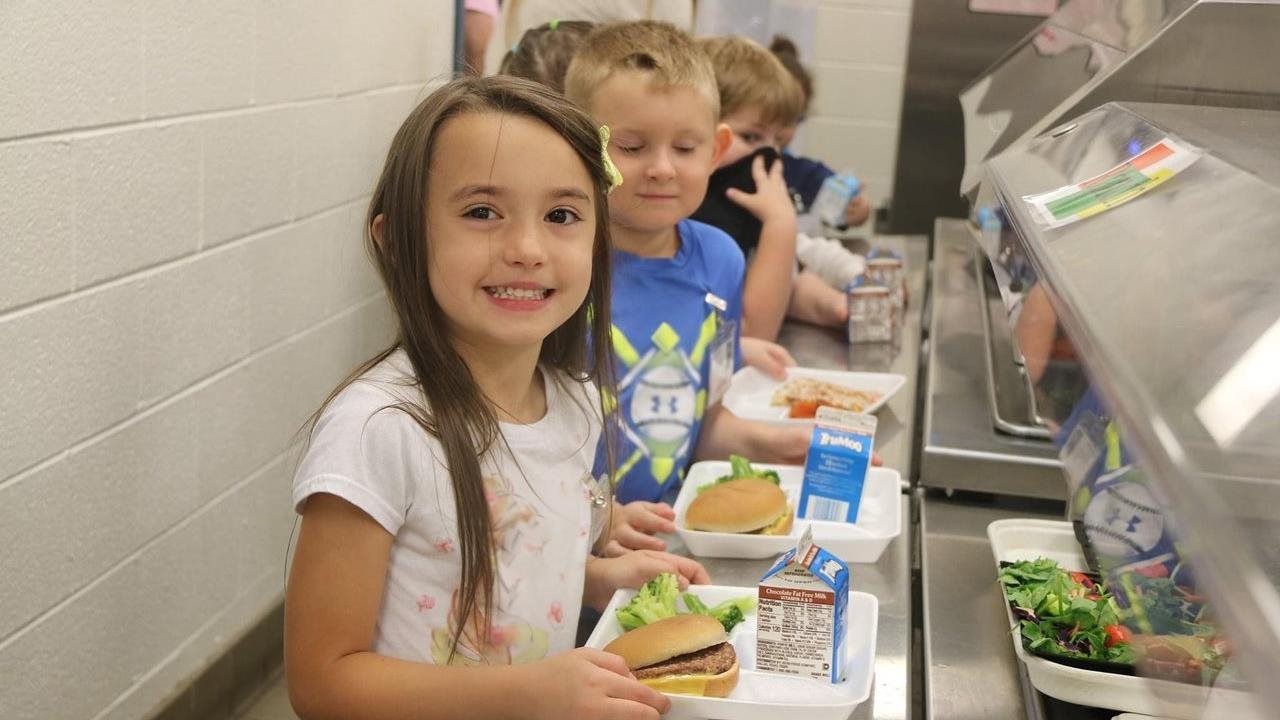
(BPT) – Do you dread the daily routine of packing your child’s lunch box? You’re not alone. According to a 2023 survey, packing school lunches may be the task parents dread most, even more than cleaning the bathroom or going to the dentist.

Remembering to shop for and pack a variety of lunches for your little scholar can be overwhelming when you’re already short on time. Instead of stressing, consider signing your child up for school-provided lunches.

School-provided lunches aren’t just convenient. They also provide a wide range of benefits. Chartwells K12 — a school dining provider dedicated to making the cafeteria the happiest place in school — highlights the top five benefits of opting in for school lunches.

1. A source of healthy foods

When your children eat school-provided lunches, you can rest easy knowing they are receiving a healthy meal that will fuel their learning experience. A study published in The Journal of the American Medical Association found that school food quality has increased significantly since the early 2000s and provides the highest mean diet quality of any major food source. That means that try as you might to pack a healthy meal, the healthiest option for your child is the breakfast or lunch their school provides.

School lunch worker in kitchen.

2. Value in every bite

In light of inflation and rising food costs, value is top of mind for families across the country. Luckily, school lunches offer students healthy, balanced and safe meals at an affordable price while saving families time and stress.

Trail mix in little cups on a tray.

3. A flavorful journey of discovery

Meals are a great opportunity for kids to discover new foods and cultures. At school, students are given the option to try new flavors and international cuisines that go beyond their family’s usual menu. Not only does this broaden their young palates, but exposure to different foods fosters an appreciation for different heritages. In this way, the cafeteria serves as an educational hub for cultural exploration.

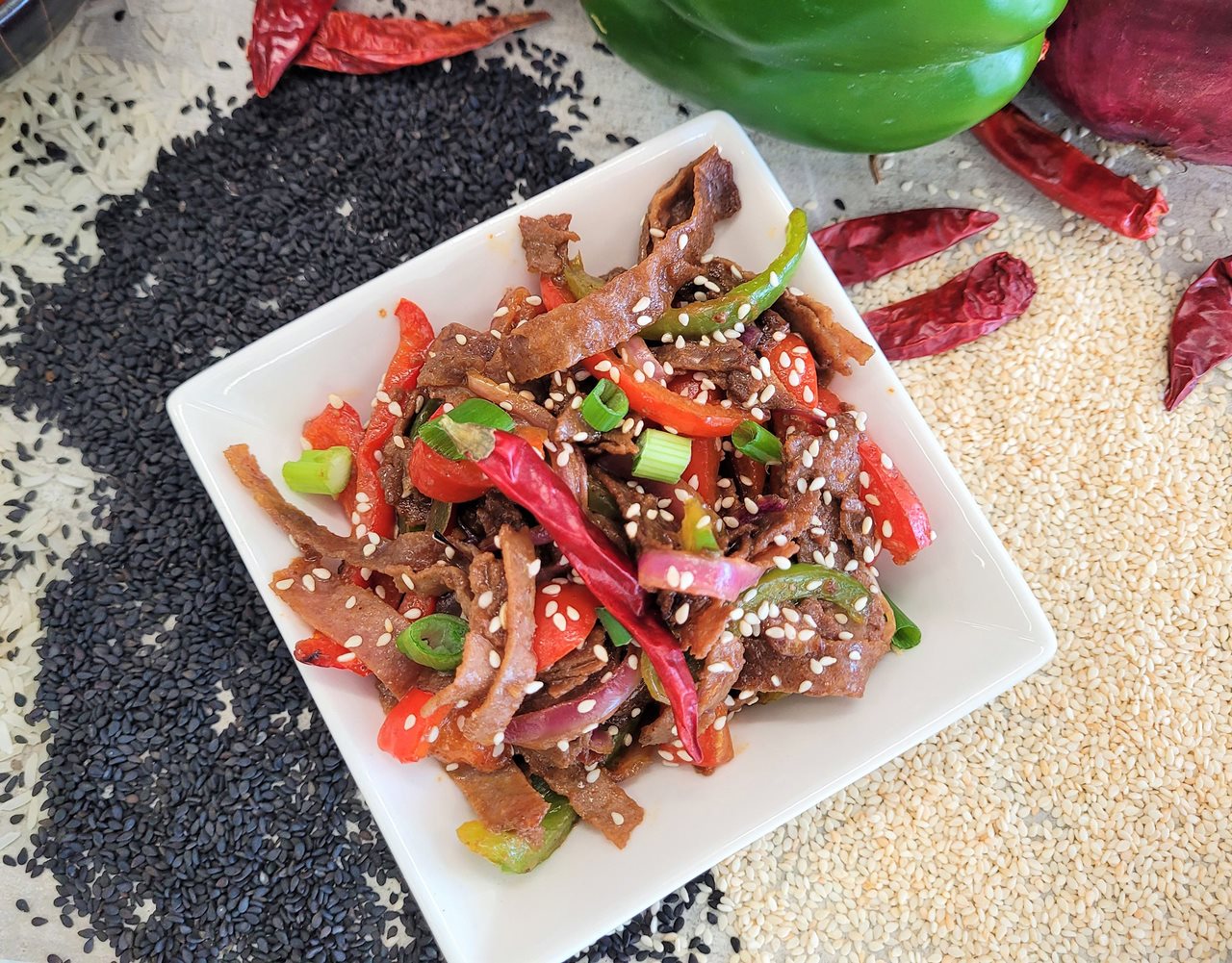
Bowl with meat, peppers and seseame seeds.

4. Fuel for growing minds

School lunches provide the necessary fuel kids need to stay focused and be more alert so they can thrive in class. For example, school lunches offer nutrient-packed foods like:

  • Spinach: a great source of vitamins A, C and K, iron for energy and cognitive function and fiber for gut health.
  • Yogurt: an excellent source of calcium, vitamin D, protein and probiotics for digestive and immune health.
  • Eggs: a protein-packed source of vitamins D and B12, iron and zinc to support bone health, red blood cell production, brain function and immune health.
  • Blueberries: a superfood that offers antioxidants, vitamin C, vitamin K and fiber and supports immune function, cognitive development and digestive health.

These essential vitamins, minerals and antioxidants are vital for your student’s growth and development.

5. A lesson in inclusion and acceptance

The lunchroom plays a large part in a student’s social experience, and changes to the environment can help create a culture of inclusion and acceptance. For example, inclusive menus, educational programs, staff training, cafeteria setup and even renovations can help facilitate positive social interactions and inclusion during the school day.

So, say goodbye to stressing over packing healthy lunches that you (fingers crossed) hope your child eats! Take advantage of the convenient and nutritious options of a school-provided lunch so your children can enjoy new flavors, healthy options, delicious meals and impactful experiences.

To learn more about the school lunch options available to students today, visit ChartwellsK12.com. There, you’ll find information on the company’s custom dining programs offered in 4,500 schools around the country.

Innovation and vision: A trailblazing university president’s first year

2024-09-05T08:01:00

(BPT) – Elise Awwad became president and CEO of DeVry University a year ago, bringing 20 years of experience and a belief in the power of education to transform lives. She answered questions about her first year and her vision for DeVry.

What three words best describe your first year as President and CEO?

I’ll say students, innovation and speed.

“Students” is my first word, because every decision I’ve made is with student success in mind. We have more than 30,000 currently enrolled students, all striving for better lives for themselves and their families. More than 13,000 students have graduated since I became president and CEO. They are my inspiration.

Next is “innovation,” because it’s core to how we think and operate at DeVry. We’re continuously changing our curriculum to match the steady beat of change in technology and workforce needs. We are creating new ways to break down barriers so that every student, regardless of their background, has the opportunity to succeed. We are enhancing our offerings and reimagining how we operate to ensure that we have the agility necessary to respond to the needs of students and the industries they will enter.

And I have to say “speed,” because this year flew by. It was easily the fastest year of my life!

You’ve made active listening a priority, engaging with hundreds in the DeVry community. How has that shaped your perspective?

I’ve made it a point to speak to as many professors, colleagues and students as possible during my first year, and I enjoyed every conversation. I visited classes and sat in on council meetings. Commencement weekend alone was a masterclass in understanding the needs of our stakeholders and impact of our decisions.

Authentic active listening is fundamental to a culture that embraces change and innovates quickly. We’re working to cultivate active listening across the university. When people feel truly heard and understood, they’re more invested in our shared success.

Clear and consistent communication has to be part of that culture, too. It can’t be just about broadcasting successes. We know we have to confront challenges head-on and clearly communicate steps we’re taking to address them. For us to be successful, faculty and staff must understand the vision and strategies as well as their roles in making them happen.

Can you describe your most memorable moment from the past year?

Commencement comes to mind first when I reflect on a year filled with memories. Standing on that stage as president and CEO and looking out at the Class of 2024, I felt an overwhelming sense of pride and responsibility. It wasn’t just another ceremony. This was about the privilege of joining these students and their loved ones in celebrating a monumental milestone, representing my colleagues, and showcasing the strength and potential of the DeVry community.

What accomplishments from the past year contribute to DeVry’s strength and potential?

We’ve accomplished a lot in the past year.

I’ll start with the agility of faculty and administrators, their pace of curriculum changes to meet real-time workforce needs. We launched new market-relevant AI course offerings in a matter of weeks and built a roadmap to continue innovating. Our faculty demonstrated how they can navigate the changing landscape by responding to GPT technologies’ impact on learning, leading the way with innovative strategies that embrace its use.

We maintained our commitment to affordability through our tuition freeze for the 2024-25 academic year, and expanded scholarship programs. Prioritizing return on student investment is central to every decision, from affordability to outcomes. Our robust Career Services offerings for students and graduates grew stronger. We forged strategic partnerships with organizations to advance our commitment to student success.

We advanced the use of AI technology, continuing our long-standing work to integrate AI in the classroom and beyond. We’re reimagining the relationship between people and technology to drive results.

What is the greatest challenge in higher education today?

Prioritizing access and affordability are at the top of the list. Education should be the ultimate equalizer, yet barriers continue to impede progress. It’s our duty as educators to identify the barriers and dismantle them. We must ensure that every individual — regardless of socioeconomic background, race or gender — has equitable access to the opportunities that education provides.

You are the first woman in DeVry’s 93-year history to be president and CEO. What does that mean to you?

Serving as the first woman president and CEO in DeVry’s 93-year history is both an honor and a tremendous responsibility. I hope my journey inspires others — especially women who may doubt their own potential.

I started as a student advisor at the university over 20 years ago. I’ve continually challenged myself to achieve what once seemed impossible. My experiences have shown me that with determination and the right support, even the toughest barriers can be overcome. I deeply believe in the power of perseverance, and I am committed to giving back in every way I can.

That’s why I established DeVry’s first Business Resource Group dedicated to supporting women in the workplace and the broader community. I also sponsored our Women+Tech Scholars program designed to empower women to start or advance careers in the tech industry.

My goal is to ensure that the path forward is a little clearer and a little easier for those who come after me.

What’s your vision for DeVry?

My vision is for DeVry to be a leading institution of higher education, where innovation, inclusivity and deep industry connections create meaningful opportunities for every learner. We strive to be the go-to source for 21st-century talent, equipping our graduates to excel and lead. Our goal is to prepare students not just to keep pace with the future but to shape it, fostering a culture of creativity and critical thinking. We aspire to be a place where every learner has a fair chance to achieve success.

Alopecia areata is an autoimmune disease, not a cosmetic issue

2024-09-04T23:01:00

(BPT) – It started with a tiny patch — the size of a walnut, round and smooth. At 21, Deirdre Nero was puzzled by her sudden hair loss — she was studying abroad in Spain when she noticed her first bald spot. As Deirdre puts it, she was known for her thick, curly, black hair, which was very much a part of her identity.

When Deirdre returned to the United States and showed her mother the bald patch in person, her mother was shocked. “I’ll always remember her face,” she said. As more hair began to disappear, Deirdre visited her dermatologist for some answers. But after her appointment, she felt even more distraught.

Her dermatologist diagnosed her with alopecia areata, an autoimmune disease that causes hair loss. As Deirdre recalls, the doctor offered no comfort or encouraging words — he just told her there was no treatment for her medical condition, which could worsen. Like so many patients, Deirdre was left to navigate a new, confusing, and overwhelming diagnosis on her own.

She got to work learning about alopecia areata; Deirdre’s research brought up image after image of people who were completely bald. Her worry grew, as she tried to tell herself her case would be different. But as years passed, Deirdre’s hair loss accelerated, and she found she couldn’t conceal her condition with strategic hairstyling or makeup.

Fear took over; like many people living with alopecia areata, she kept her suffering and diagnosis very private. Deirdre’s efforts to hide her bald patches drained her time and energy. Now working at a law firm, she found herself overwhelmed when she was in public, worrying about the what ifs of having her condition exposed. She recalled an outdoor work event early in her career where she had to leave because it was too windy — terrified that the wind would lift her hair up and her colleagues would see her alopecia areata, which she said made her head “look like Swiss cheese.” Deirdre was ashamed and consumed by the fear that her autoimmune disease would prevent her professional success as a lawyer.

At that point, Deirdre turned to wigs. She had tried steroid injections to alleviate her symptoms, but they were painful and unsustainable. Deirdre felt like her journey was like a game of whack-a-mole — once an area grew back, another bald patch would appear somewhere else. Eventually, Deirdre became completely bald, matching the photos of alopecia patients she researched when she first started her alopecia journey. She was unable to recognize herself in the mirror, and said the painful experience of losing her hair was “like losing a limb” because she would never look or feel the same way again. She was missing a part of herself. With no treatment options available at that time, Deirdre began wearing a wig as her last resort.

Luckily, Deirdre has a solid support system. Over time, and through the support of family, friends, and the National Alopecia Areata Foundation (NAAF), Deirdre was able to overcome the impact of alopecia areata and reclaim her life. She’s taken control of her alopecia areata and decides each day if she wants to wear a wig or go bald. It is an ongoing struggle, but through her advocacy work with NAAF, Deirdre now feels empowered to be her authentic self.

null
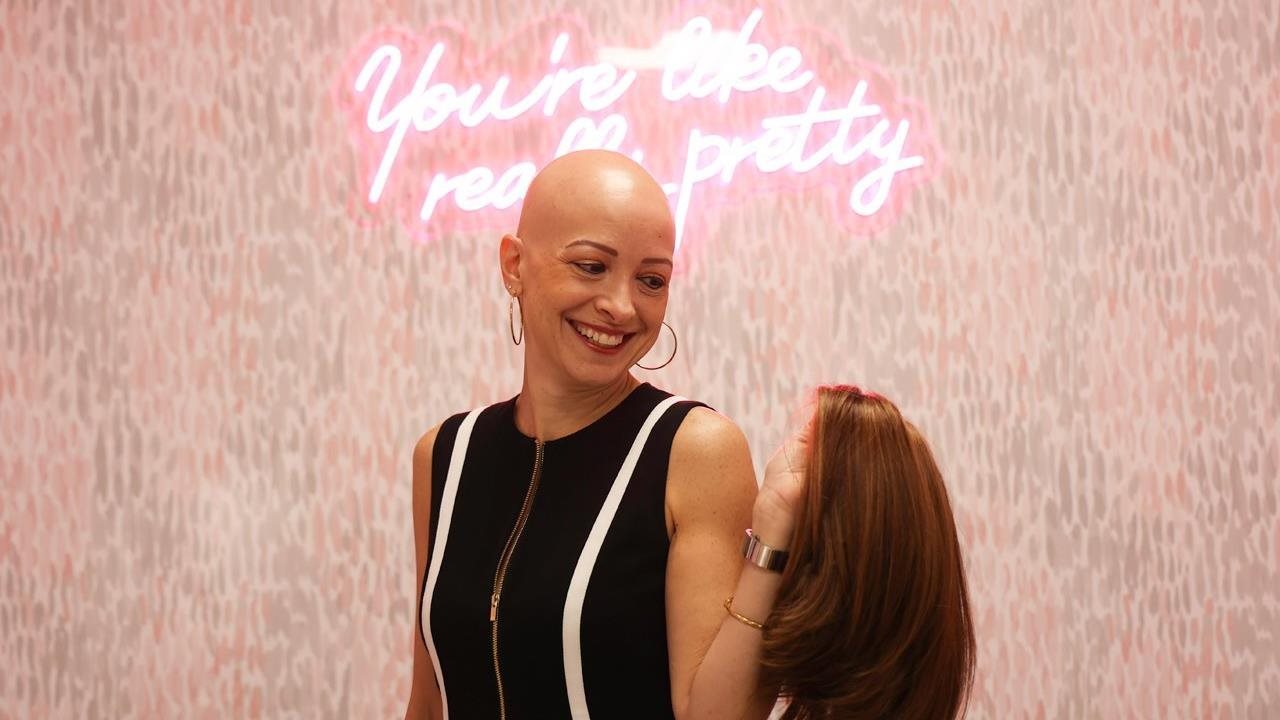
Deirdre Nero has alopecia areata, an autoimmune disease in which the immune system attacks hair follicles (Challenges in Alopecia Areata and Opportunities to Drive Change, 2024).

The power to choose how you show up in the world is critical not only for Deirdre and her holistic health, but for the millions of other people living with alopecia areata. The good news is there are innovations recently available for people living with alopecia areata that can make a difference in how the condition is managed. However, access to these innovations and tools to better manage alopecia areata is key. The reality is, people are being left behind for many reasons including lack of awareness of these tools and innovations by dermatologists and patients, as well as insurance coverage challenges. Part of the challenge is that alopecia areata is often relegated to a cosmetic issue versus an autoimmune disease. Work needs to be done to drive broad awareness through advocacy and education to ensure broad access and equity.

null
For Deirdre, alopecia areata is not a cosmetic condition. It’s not just hair.

September is National Alopecia Areata Awareness Month, a time when the community comes together to shine a light on alopecia areata by elevating awareness, dismantling stigma, and empowering all to stand proudly. Together, we can better support people living with alopecia areata like Deirdre. We can learn about this disease and reframe the narrative through education. To learn more about alopecia areata, and to join Deirdre for the second annual Walk for Alopecia, please visit www.NAAF.org.

Beyond the Court: The Inspiring Journey of the First NBA Player Living with Relapsing Multiple Sclerosis

2024-09-04T09:01:00

(BPT) – When Chris Wright reflects on his professional basketball career, he describes it as “challenging, rewarding, and not without obstacles.” But that’s not only because of the early morning workouts, mental stamina and grit it takes to become a professional basketball player — Chris was the first National Basketball Association (NBA) player to voice publicly they were diagnosed with relapsing multiple sclerosis (RMS).

One day after practice while playing in Turkey in 2012, Chris felt a tingling sensation in his right foot. Chris went back to practice the next day assuming it was from overuse, until he felt the sensation spread from his foot to his right arm. Eventually, Chris couldn’t walk and was taken to a hospital. That’s when he was diagnosed with RMS.

Following his diagnosis, Chris returned to the U.S. After meeting with several doctors who told him his only option was to hang up his basketball career, Chris finally met Dr. Heidi Crayton, MD, his current neurologist, partnered with him to develop a plan that worked best for his goals.

“She said, ‘You want to keep playing? Then you’ll keep playing.’ And that was music to my ears.” Chris went on to play professionally for 12 years — 10 years in Europe and two in the U.S.

Finding the Right Neurologist and Treatment

Chris credits his success, both on the court and in helping navigate his condition, to Dr. Crayton and his family. “MS impacts everyone differently, so it’s super important to find a neurologist that you trust and can work together with on your MS journey. Having a team around you that you can be open and honest with is key to paving your own path, especially when it comes to choosing the right treatment option for you.”

After Chris’ first therapy stopped working for him, he discussed his options with Dr. Crayton, who suggested MAVENCLAD® (cladribine tablets), with a dosing schedule that is no more than 10 treatment days a year for two years. Chris and Dr. Crayton also discussed MAVENCLAD’s dosing and safety information, and the serious side effects of MAVENCLAD, including risk of cancer and risk of birth defects. She explained both women and men being treated with MAVENCLAD should use effective contraception on MAVENCLAD treatment days and for 6 months after the last dose of each treatment course. She also talked about other potential side effects, like low white blood cell counts, serious infections, and liver problems.

MAVENCLAD has worked well for Chris. However, each individual is different, and results may vary. It’s important for patients to talk to their doctor about their symptoms and treatment plan for the best possible outcome.

Thinking Forward: Life off the Court

Now retired from playing professional basketball and a father of three, Chris is putting to practice what he learned on the court, off the court.

As a dad, Chris spends most of his time with his family playing sports, games, making TikTok dances, painting nails and working on his hair styling skills. But importantly, he doesn’t shy away from talking about his condition with his family. “I’m open with my kids about my MS so they often ask questions and how I’m feeling. You don’t always physically ‘see’ MS, so when they see ‘dad,’ they want to play and run around. My main priority is staying as healthy as possible so I can be there as a father.”

Chris also has continued to express his love of basketball by coaching his high school’s varsity team. He’s also a broadcaster for the Washington Wizards. Chris credits his career evolution to his MS journey.

“Living with MS has given me a lane to focus on forever. I was diagnosed at 22 years old — a time when I was trying to figure out my path in life as both a young adult and athlete. Though challenging, my MS diagnosis truly shaped my career in many ways. It’s given me the opportunity to be a voice and advocate for the MS community and I’m forever grateful for that. I’m confident I wouldn’t be where I am today — whether that’s with my family or my career.”

Express4MS and The Importance of “Running Your Own Race”

Since 2022, Chris has teamed up with EMD Serono on their program Express4MS, a program designed to give visibility to the journeys of people living with RMS and encourage them to express themselves, not only within their community but also with their healthcare providers. By sharing his story, Chris hopes to help others impacted by MS feel supported and empowered to speak up about their condition.

To hear stories from a diverse group of people about their experiences living with MS and how they’ve learned to express themselves with their loved ones, the MS community, their healthcare providers, and the world, visit Express4MS.com. If you have MS, you have the opportunity to have your own story reviewed for inclusion on the website.

Despite telling his story and advocating for the MS community for over 11 years, there’s still one thing Chris wants everyone to know: “Run your own race. Don’t be embarrassed or disappointed in who you are or what stage you’re in — either in life or with your MS journey. Keep expressing yourself and be confident. You’re going to be OK.”

What is MAVENCLAD?

MAVENCLAD is a prescription medicine used to treat relapsing forms of multiple sclerosis (MS), to include relapsing-remitting disease and active secondary progressive disease, in adults. Because of its safety profile, MAVENCLAD is generally used in people who have tried another MS medicine that they could not tolerate or that has not worked well enough.

MAVENCLAD is not recommended for use in people with clinically isolated syndrome (CIS).

It is not known if MAVENCLAD is safe and effective in children under 18 years of age and is therefore not recommended.

MAVENCLAD may cause serious side effects, including:

  • Risk of cancer (malignancies). You should follow healthcare provider instructions about screening for cancer.
  • MAVENCLAD may cause birth defects if used during pregnancy. Women must not be pregnant when they start treatment with MAVENCLAD or become pregnant during MAVENCLAD dosing and within 6 months after the last dose of each yearly treatment course. You should stop treatment with MAVENCLAD and contact your healthcare provider right away if you become pregnant during treatment with MAVENCLAD.
  • For women who are able to become pregnant:
    • Your healthcare provider should order a pregnancy test before you begin your first and second yearly treatment course of MAVENCLAD to make sure that you are not pregnant.
    • Ask your healthcare provider which contraceptive method is right for you. Women and men being treated with MAVENCLAD should use effective birth control (contraception) on the days on which they take MAVENCLAD and for at least 6 months after the last dose of each yearly treatment course.

Do not take MAVENCLAD if you:

  • have cancer (malignancy).
  • are pregnant, plan to become pregnant, or are a woman of childbearing age or a man able to father a child and you are not using birth control.
  • are breastfeeding.
  • are human immunodeficiency virus (HIV) positive.
  • have active infections, including tuberculosis (TB), hepatitis B or C.
  • are allergic to cladribine.

Before you take MAVENCLAD, tell your healthcare provider about all of your medical conditions, including if you:

  • think you have an infection.
  • have taken, take, or plan to take medicines that affect your immune system or blood cells, or other treatments for MS. Certain medicines can increase your risk of getting an infection.
  • have had a recent vaccination or are scheduled to receive any vaccinations. You should not receive live or live-attenuated vaccines within the 4 to 6 weeks preceding treatment with MAVENCLAD or receive these types of vaccines during your treatment with MAVENCLAD and unless directed by your healthcare provider.
  • have heart failure.
  • have or have had cancer.
  • have liver or kidney problems.
  • are breastfeeding or plan to breastfeed. It is not known if MAVENCLAD passes into your breast milk. Do not breastfeed on the days on which you take MAVENCLAD, and for 10 days after the last dose.

How should I take MAVENCLAD?

  • MAVENCLAD is given as two yearly treatment courses, consisting of 2 treatment weeks (cycles) about a month apart.
  • Handle MAVENCLAD with dry hands and take immediately after opening the blister pack. Take with water and do not chew the tablet. MAVENCLAD can be taken with or without food and should be taken at least 3 hours apart from other medicines.
  • Wash your hands after handling MAVENCLAD. Limit contact with your skin (especially on your face). Wash skin and surfaces with water if contact occurs.
  • If you miss a dose, take it as soon as you remember on the same day. If the whole day passes before you remember, take your missed dose the next day. Do not take 2 doses at the same time. Instead, you will extend the number of days in that treatment week.

Your healthcare provider will continue to monitor your health during the 2 yearly treatment courses, and for at least another 2 years during which you do not need to take MAVENCLAD. It is not known if MAVENCLAD is safe and effective in people who restart MAVENCLAD treatment more than 2 years after completing 2 yearly treatment courses.

MAVENCLAD can cause serious side effects. If you have any of these symptoms listed below, call your healthcare provider right away:

  • low blood cell counts have happened and can increase your risk of infections during treatment with MAVENCLAD. Blood tests are needed before you start treatment with MAVENCLAD, during your treatment with MAVENCLAD, and afterward, as needed.
  • serious infections such as:
    • life-threatening or fatal infections caused by bacteria, viruses, parasites or fungi.
  • TB, hepatitis B or C, and shingles (herpes zoster). Fatal cases of TB and hepatitis have happened with cladribine during clinical studies. Tell your healthcare provider right away if you get any symptoms of the following infection related problems or if any of the symptoms get worse, including fever, aching painful muscles, headache, feeling of being generally unwell, loss of appetite, burning, tingling, numbness or itchiness of the skin in the affected area, skin blotches, blistered rash, or severe pain.
  • progressive multifocal leukoencephalopathy (PML). PML is a rare brain infection that usually leads to death or severe disability. Although PML has not been seen in MS patients taking MAVENCLAD, it may happen in people with weakened immune systems. Tell your healthcare provider right away if you have any new or worsening neurologic signs or symptoms. These may include: weakness on 1 side of your body, loss of coordination in your arms and legs, decreased strength, problems with balance, changes in your vision, changes in your thinking or memory, confusion, or changes in your personality.
  • liver problems. Symptoms of liver problems may include: nausea, vomiting, stomach pain, tiredness, loss of appetite, dark urine, or your skin or the whites of your eyes turn yellow. Your doctor will perform blood tests to check your liver during treatment.
  • allergic reactions (hypersensitivities). You should stop treatment and seek immediate medical attention if any signs or symptoms of allergic reactions occur. Symptoms of an allergic reaction may include skin rash, swelling or itching of the face, lips, tongue or throat, or trouble breathing.
  • heart failure. MAVENCLAD may cause heart failure, which means your heart may not pump as well as it should. Call your healthcare provider or go to the closest emergency room for medical help right away if you have any signs or symptoms such as shortness of breath, a fast or irregular heartbeat, or unusual swelling in your body.

The most common side effects of MAVENCLAD include: upper respiratory infection, headache, and low white blood cell counts.

These are not all the possible side effects of MAVENCLAD. Call your doctor for medical advice about side effects.

To report SUSPECTED ADVERSE REACTIONS, contact EMD Serono at: 1-800-283-8088 ext. 5563 or

FDA at 1-800-FDA-1088 or www.fda.gov/medwatch.

Please see full Prescribing Information and Medication Guide, including serious side effects.

Chris is sponsored by EMD Serono, Inc.

EMD Serono does not recommend or endorse any specific clinician or provider.

EMD Serono is the Healthcare business of Merck KGaA, Darmstadt, Germany in the U.S. and Canada.

MAVENCLAD is a registered trademark of Merck KGaA, Darmstadt, Germany or its affiliates.

US-MAV-02532 August 2024 Intended for US only

What if your pets’ steps could create renewable energy?

2024-09-04T10:09:00

(BPT) – Does your dog run crazy-eights? Does your cat get midnight madness? Of course, any of your pets can get the zoomies, or, maybe they simply follow you around the house all day in hopes of a pat or a treat.

Pet owners are often in awe of their pets’ energy, with many longing for a way to put that power and agility to good use. Now, a new activation highlighting the power of renewable electricity is transforming steps of pets and their people into a small amount of renewable energy.

The new Pet Power activation from Purina features a renewable electricity-producing walkway with smart flooring technology from the company Pavegen that allows pets and their owners to produce renewable electricity together.

Steps taken by pets and their owners will produce about three joules of electricity. The Pet Power activation will capture the energy of thousands of pets and people, which will be collected in batteries that Purina will donate to the APA Adoption Center, a St. Louis-based animal shelter.

“At Purina, we’ve always looked to pets for inspiration to drive our actions, and now, inspired by their boundless energy, they’re helping us demonstrate the power of renewable electricity,” said Tiffany Gildehaus, senior manager, environmental sustainability at Purina. “The Pet Power activation is a small symbol of the importance of renewable electricity to Purina’s sustainability strategy.”

The Pet Power walkway system is being showcased at various pet-friendly venues in St. Louis through the end of September, including Bar K, Purina Farms, the Great Forest Park Balloon Race and the APA Canine Carnival.

Sustainability is a core value of Purina, which currently gets 95% of its electricity from investments in solar and wind power. Purina is tracking to achieve 100% renewable electricity by 2025 across its factory network and corporate offices. To learn more visit Purina.com.

A Stranger’s Donation Cured 9/11 Firefighter’s Cancer

2024-09-04T15:01:00

(BPT) – On Sept. 11, 2001, as the whole world watched the tragedy unfolding at the World Trade Center, New York firefighter Brian Kevan rushed to the scene to help. Like many others who responded that terrible day, Brian developed cancer because of exposure to noxious chemicals, dust, asbestos and more. He was diagnosed with non-Hodgkin’s lymphoma in 2019.

Brian underwent treatment, but the cancer kept recurring. His last, best hope for a cure was a blood stem cell transplant — if he could find a donor. None of his family members were a suitable match. That’s not as uncommon as it may sound. Approximately 70% of patients who need a transplant don’t have a fully matched donor in their family. Through NMDP (formerly Be The Match), which manages the world’s most diverse blood stem cell registry, Brian found a matching donor and underwent a blood stem cell transplant in November 2021.

Two years later, Brian, now free from cancer, met Ryan Crooker, his life-saving donor. Ryan was a college football player at Springfield College in Massachusetts when he joined the NMDP Registry in 2014 with a simple cheek swab. Seven years later, he got the call asking him to donate his regenerative blood-forming stem cells to help cure cancer and save a life. He selflessly said, “Yes.”

The story of these two men is unique, but it’s not unusual. For nearly four decades, the global nonprofit NMDP has impacted more than 130,000 lives through cell therapy — giving a second chance at life to patients around the world.

This year, on World Marrow Donor Day, Sept. 21, 2024, NMDP will honor the community of recipients, donors and supporters they’ve built over the last 37 years with a free, nationwide event series, NMDP Unite: a celebration to find cures and save lives, for people facing blood cancers and disorders. Fundraising is encouraged, and all proceeds raised will go toward programs critical to NMDP’s life-saving mission, including patient assistance grants, research to help more transplant recipients like Brian thrive, and efforts to continue to grow the registry.

When it comes to transplant, finding a suitable donor match is critical — but it’s not the only challenge patients face. “The financial burden continues to be the number one barrier for patients and families coming to us in need of a transplant,” said Joy King, Chief Advancement Officer for NMDP. “It presents an enormous challenge, and we are committed to helping them overcome this barrier. The funds we raise through NMDP Unite will help thousands of families with loved ones going through treatment each year.”

NMDP Unite will be held in Los Angeles, New York City and at NMDP’s World Headquarters in Minneapolis. Minnesota Timberwolves Center Naz Reid will be greeting fans in the Twin Cities; Olympic gold medalist and professional women’s basketball player Breanna Stewart will join Brian and others in New York and three-time Olympic gold medalist Gabby Douglas will celebrate in LA. Thanks to sponsors GVHD Alliance and Innovative Office Solutions attendees can enjoy music, food and fun while mingling with other families, donors, doctors — and so many other mission supporters from the NMDP community.

“I’m passionate about NMDP because their mission is close to my heart. I lost my mentor, Rudy Roundtree, to blood cancer a few years ago and want to do everything I can to honor his legacy,” Reid said. “I hope people will come out, have some fun and help raise money for a good cause.”

If you’re not in one of the three event cities, you can share in the celebration digitally. Join NMDP and the movement to save lives, find cures and give families the gift of more time with loved ones. For more information and to register for free today, visit www.nmdp.org/Unite.

Athletes of all ages benefit from playing sports on natural turfgrass fields

2024-09-04T08:01:00

(BPT) – Natural green spaces provide a vital space for recreation, relaxation and social interaction, according to the National Association of Landscape Professionals. In urban cities especially, they serve as a critical outlet for kids to get outside and play. Organized youth sports programs ensure that kids are taking advantage of the physiological and psychological benefits provided by natural green spaces.

But, many children from lower-income areas don’t always have easy access to green spaces or the extra household funds to join a sports team or organized outdoor activity.

That’s why Scotts has kicked off a multi-year partnership with Every Kid Sports, a national nonprofit organization, to financially support income-restricted families by funding youth sports registration fees through The Every Kid Sports Pass, with the goal to provide expanded access to natural green spaces. Scotts has already funded registration fees for more than 400 youths this year alone.

“Here at Scotts we understand the immense power of natural green spaces and the role they play in helping kids and their families to play, thrive, learn and grow,” said John Sass, Vice President, Chief Creative Officer of ScottsMiracle-Gro. “This has been a passion of ours for the past decade and something that we think about within our own families, so we’re proud to be partnering with Every Kid Sports to help more kids enjoy youth sports and reap all of the benefits of natural green spaces at the same time.”

To further this mission, Scotts is leveraging scientific research and qualified experts to educate and inform the public about the variety of benefits that natural green spaces, especially natural turfgrass sports fields, offer to kids, families, communities and professional athletes alike.

Is natural turfgrass safer than artificial turf?

There’s ongoing debate over natural turfgrass versus artificial turf, specifically for playgrounds and sports fields. As a leader in lawn care, Scotts is an advocate for healthy and safe green spaces as they offer numerous physical, mental and environmental benefits.

A study from the Journal of Environmental Quality states that natural green spaces can improve mental health, increase productivity and lead to an overall better quality of life, especially in densely populated urban areas. Furthermore, environmental benefits of natural turfgrass include the removal of carbon dioxide, dirt and dust from the atmosphere as well as natural heat dissipation, according to the Department of Local Government, Sports and Cultural Industries.

Despite these benefits, the National Recreation and Park Association states that there are approximately 13,000 synthetic turf sports fields in the U.S. alone with around 1,500 new installations each year. For many, the argument is that artificial turf is easier to upkeep and longer-lasting, but the use of artificial turf presents many risks.

Artificial turf can contain harmful chemical substances perfluoroalkyl and polyfluoroalkyl, known as PFAS, and spread microplastic pollution. Brigham Young University research explains crumb rubber infill amongst synthetic “grass” blades is a microplastic that migrates beyond sports fields, polluting surrounding environments. Artificial turf has also been shown to exacerbate heat problems and many athletes can attest to feeling the intense heat in their cleats when playing on artificial turf.

Artificial turf is also not as physically safe for athletes, no matter their age or skill level. According to the American Journal of Sports Medicine, artificial turf fields can significantly increase the likelihood of non-contact injuries. Play tends to be faster on artificial turf, leading to harder falls due to its less absorbent nature. The NFL Players Association agrees on its preference for natural grass fields, urging the league to swap all fields to grass.

As the debate around natural turfgrass versus artificial turf continues, evidence supporting the benefits of natural turfgrass grows clearer. These spaces are not just areas for play; they are vital components of our communities that offer safe environments for children and adults alike.

Through its partnership with Every Kid Sports, Scotts is making a concerted effort to ensure that more children, especially those from underserved communities, have access to the benefits of natural green spaces. The commitment to green spaces is not just about maintaining lawns — it’s about cultivating healthier, happier and more resilient communities.

New study: 52% of Americans say ‘cash is king’

2024-09-04T08:31:00

(BPT) – As digital wallets and contactless payments become more popular, 52% of Americans say cash is king, and nearly a third carry it every day (27%), according to new Empower research.

Key takeaways

  • 49% of Americans feel safer holding cash versus other investments.
  • 42% of people say market uncertainty and the threat of a recession is the top reason for holding money in cash.
  • Gen Z is the generation most likely to use cryptocurrency instead of cash (34%).
  • 2 in 5 Americans say they never pay with a check.
  • 41% of Gen Zers use digital payment platforms more often than cash, compared to 27% overall.
  • Nearly a third of Americans (29%) are cashing in on using rewards program points every month as a form of payment.

Cash in the balance

According to more than half of Americans (52%), “cash is king” — a significant increase from the 17% who reported the same last year. Another 27% carry cash with them every day. This trend is particularly strong among older generations, with Baby Boomers (42%) and Gen Xers (31%) more likely than Millennials (23%) and Gen Zers (24%) to carry cash daily. Nearly a third of Americans (32%) generally keep at least $100 in cash on hand.

Half of Americans (49%) also feel safer holding cash versus other investments. Gen Xers (57%) are the most likely to feel this way, compared with 41% of Gen Zers. Market uncertainty and the threat of a recession are the top reasons people stash money in cash, as noted by 44% of Gen Xers, 42% of Millennials, and 39% of both Gen Zers and Baby Boomers.

About a third of Americans (31%) say cash will reign supreme indefinitely vs. other forms of payment, though not everyone has the same idea of what “cash” means. People define it in the following ways:

  • Bills and coins (98%)
  • Traditional savings accounts (24%)
  • High-yield cash accounts (18%)
  • Checks (13%)
  • Money market accounts (13%)

Cashing in

In addition to market volatility or fear of a recession, nearly a third cited regional bank failures as a key motivator for keeping more cash on hand, while over a quarter noted cybersecurity concerns (26%).

According to Empower Personal Dashboard™ data as of July 2024, here are the average cash allocations for financial portfolios by decade:

Age

Cash Allocation

Median Cash Balance

20s

30.3%

$43,504

30s

26.9%

$62,357

40s

25.3%

$82,853

50s

25.4%

$104,207

60s

28.6%

$117,084

70s

35.3%

$128,353

The median cash balance for users of the Empower Personal Dashboard™ as of July 2024 is $71,255, making up more than 27% of users’ overall portfolio allocation. That’s an increase of 15% in cash holdings over the same time period last year ($65,563 in 2023). While 48% of respondents prefer to invest in the stock market, 29% say they prefer to keep all their money in cash.

New money moves

Most generations are exploring other payment, savings and investment vehicles. Gen Z, in particular, stands out in its adoption of cryptocurrencies, with 34% using them (the highest among all age groups).

While traditional payment methods like debit and credit cards are the most common, digital payment platforms are gaining traction. Overall, 1 in 4 Americans (26%) say they are using digital payments weekly. The method is particularly popular among younger users: 41% of Gen Zers use digital payment platforms more often than cash, compared to 27% overall.

Nearly a third of Americans (29%) are cashing in on using rewards program points every month and a quarter swipe their credit card daily to pay for something (24%).

High-yield savings accounts, stocks, and bonds are top savings vehicles across all age groups. When selecting a savings account, Americans prioritize the following features:

  • Low or no fees (72%)
  • Interest rate (62%)
  • Ease of online and mobile access (56%)
  • Account security (52%)

Visit The Currency™ to read Empower’s full research report, “Counting on cash.

Methodology: Empower commissioned a survey of 1,009 American adults on July 3, 2024.

RO3758173-0824

How to create the perfect backyard oasis

2024-09-04T01:01:00

(BPT) – There are no two ways about it, this summer has been a hot one for the entire country. Everyone is experiencing record high temperatures. But that doesn’t mean you need to retreat inside and spend the summer cooped up to beat the heat. You can still enjoy the outdoors by making a few changes to your backyard space so you can enjoy it no matter the temperature.

Here are some tips for creating your perfect backyard oasis, from the experts at Belgard.

Cool off with shading. Is your back patio in the direct sun and your table umbrella not quite cutting it? It’s time for a pergola. These beautiful, decorative features come in many styles, from simple wooden frames to more elaborate metal elements. Pergolas don’t typically have roofs so how do they block the sun? The secret is installing linen or muslin curtains. They block the sun and add a breezy, Mediterranean flair.

Privacy pergola provides shade for outdoor living room on patio in backyard.

Create functional outdoor living spaces. Think of your backyard as an outdoor room. Now, imagine how and when you will use it. Designate specific areas for dining, lounging and entertaining. Think about where the sun hits your backyard at certain times of the day. Shady in one part of the yard around dinner time? That’s where to put your grill and patio table. Sunny spot in the afternoons? Arrange your furniture there under your pergola. Get creative and be thoughtful of your space to increase its functionality. Take inspiration from Belgard Rooms to explore pre-designed outdoor spaces or get an expert’s opinion.

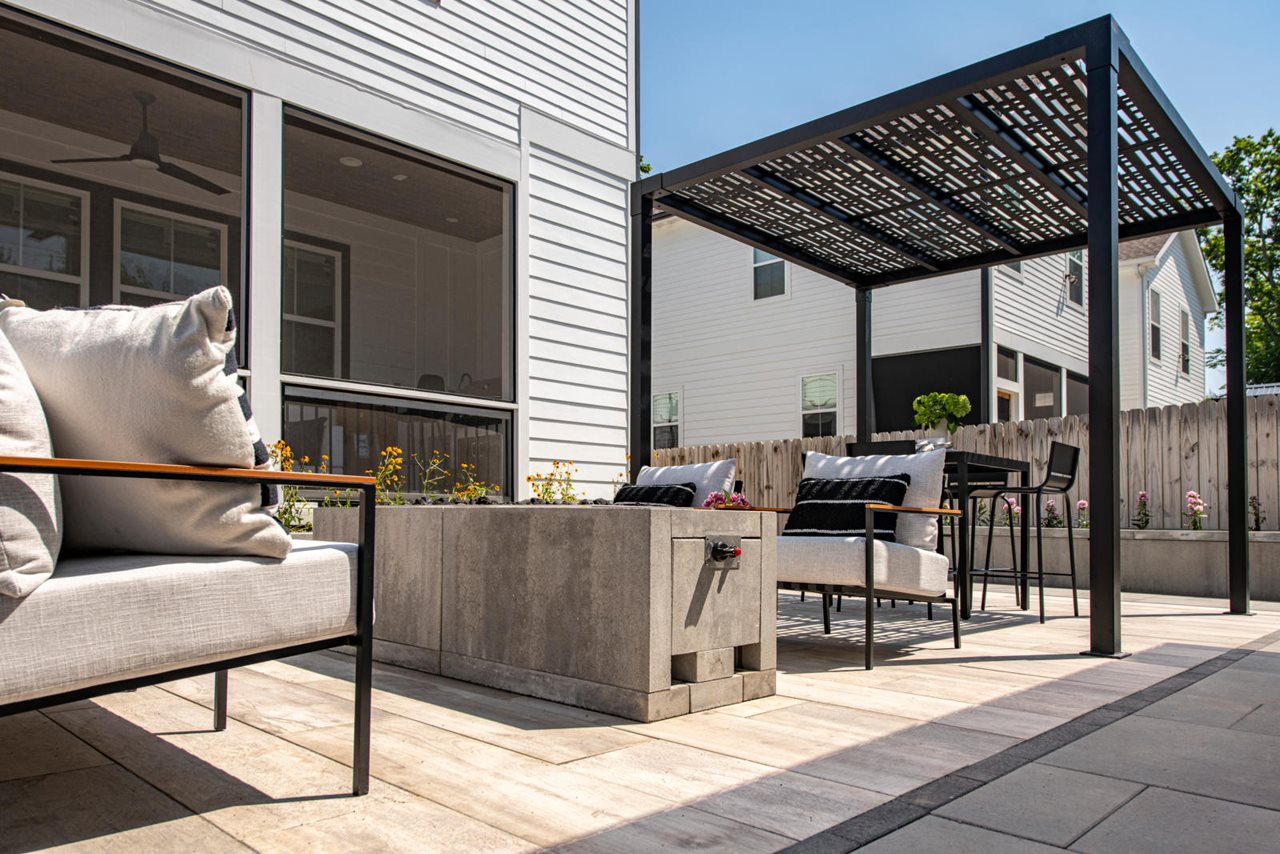
Outdoor livingroom diningroom with pergola and fire feature

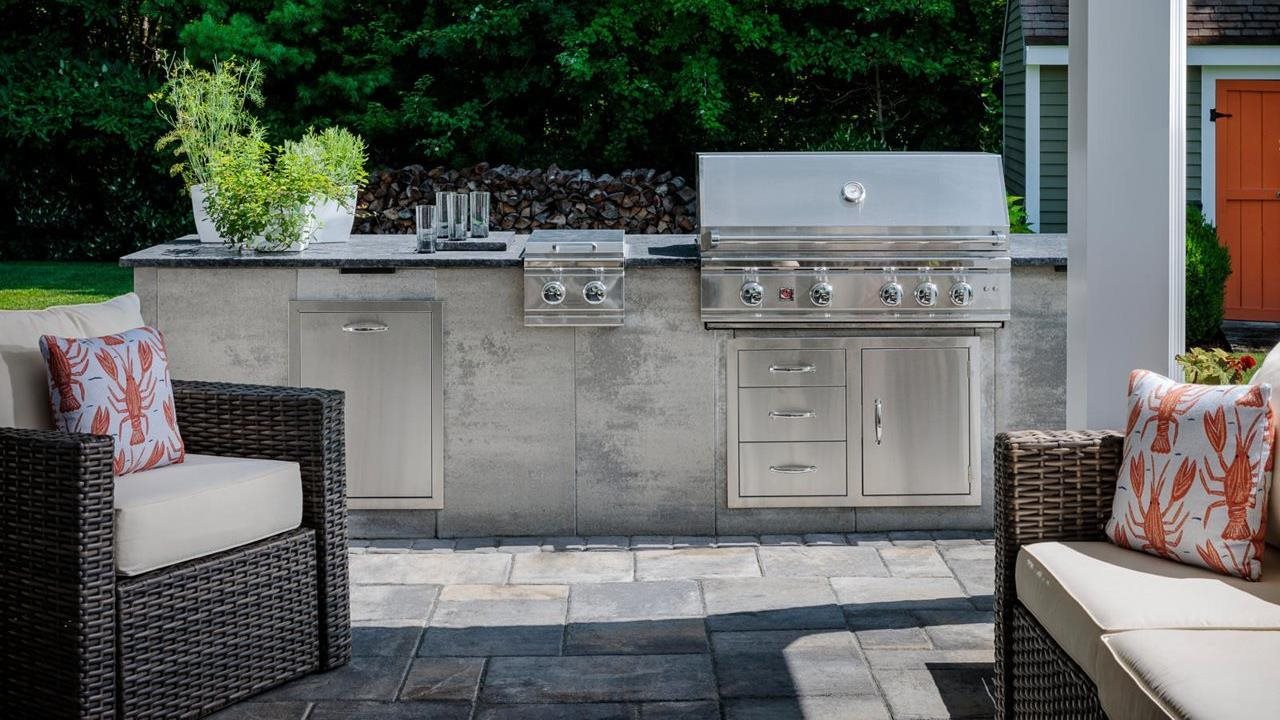
Install an outdoor kitchen. Do you have a grillmaster in your life who loves making meals outdoors? Go beyond the grill and create a complete outdoor kitchen. Belgard’s Elements line of outdoor essentials has everything you need for a truly functional, convenient outdoor cooking space — no more running inside for items you forgot to haul from your indoor kitchen. The line features grills, side burners, ovens, storage, a compact fridge (yes, you can!), bars and sinks, and every grilling accessory you need to whip up your culinary masterpieces al fresco.

Lush backyard with outdoor kitchen and shaded seating area.

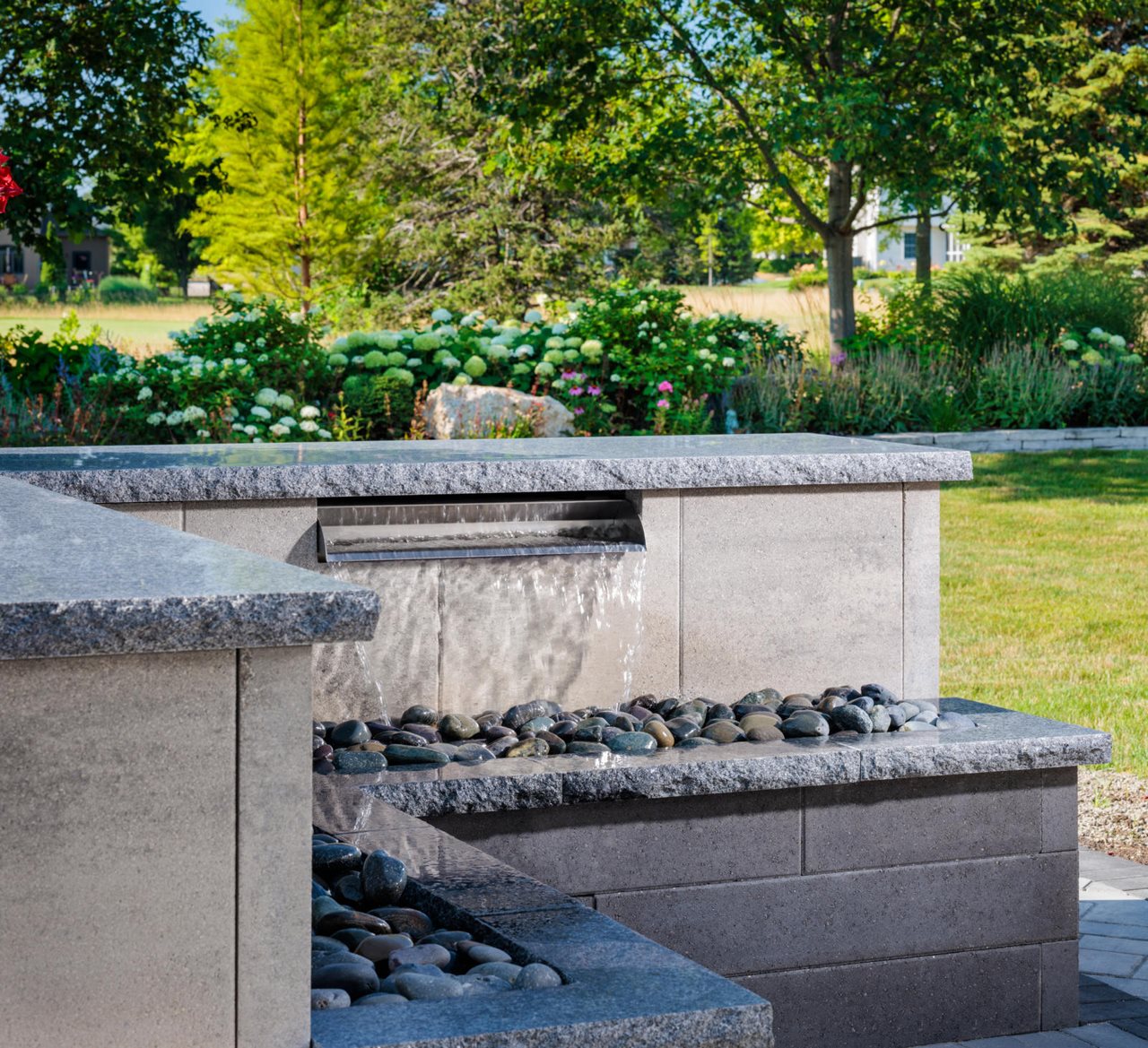
Enhance with water features. Nothing says “oasis” like flowing, bubbling water. It adds an element of peace and tranquility to your outdoor experience. Incorporate a water feature like a fountain, pond or waterfall to soothe, cool and calm. Imagine sitting in a comfy outdoor armchair next to a bubbling fountain with a good book on a lazy summer afternoon. You can just feel the stress of the day melt away.

Beautiful water feature with river rock in backyard

Incorporate greenery and landscaping. Trees, shrubs, flowers and plants add a lush sense of beauty to your backyard oasis, but they also provide natural cooling. A beautiful way to do this is by using a retaining wall like Belgard’s Melville Wall, which is designed to incorporate shrubs and plants. Or try Artforms, a modular panel system that can quickly and efficiently construct raised beds to include native plants and shrubs.

Lush shrubs and other plantings in a Belgard raise garden.

Think about biophilic design. What’s that? Biophilic design is the notion that humans have an inherent need to connect with nature, so permanent design elements like walls and patios should weave in elements of nature. It’s good for your mental and physical health.

By creating a perfect outdoor living space, you can enjoy your backyard all year round.

5 easy ways to create family moments of joy this fall

2024-09-04T08:15:00

(BPT) – There’s something special about fall: The refreshing coolness in the air, changing colors and cozy nights with your family all create wonderful opportunities to share moments of carefree joy together. Whether it’s a beautiful day to get outside or a chilly day you’d rather spend indoors, you can find plenty of ways to enjoy the season with your family.

Here are some tips to get you started on your fall adventures and experiences this year.

1. Warm up the evening

Now’s the perfect time to get your fireplace ready for those chilly nights ahead so you can all sit around the fire enjoying hot cocoa or catching up on the day. A homey fire adds warmth and a special touch to family evenings, turning ordinary nights into memorable moments.

Enhance the warmth of these cozy nights by the fire with delicious treats the whole family will enjoy. Try warming up a few soft and fluffy Hostess® Meltamors cakes that feature a melting center of chocolate or caramel that flows like ‘lava’ after just a few seconds in the microwave. Inspired by warm restaurant desserts, these snacks help create unforgettable special moments with your family.

2. Embrace family game night

Shorter days with more time spent indoors offer the perfect opportunity to start a game night tradition or restore a previous tradition that may have fallen by the wayside over the summer. You can include board games, card games or jigsaw puzzles in the mix. Rotate which family member chooses the activity each week, so everyone gets a say in what you play, and choose a night that doesn’t conflict with kids’ sports or other activities.

3. Find kid-friendly fall experiences near you

Wherever you live, explore local family-friendly events and venues like apple orchards where you can pick your own apples, select fall pumpkins at a pumpkin patch, navigate a corn maze or go on a hayride. The season goes by in a flash, so make sure to put at least one of these fun activities on your calendar right away for a memorable experience together.

Bring along some individually wrapped Hostess Meltamors chocolate cakes to make your autumn adventure even more special. Visit HostessCakes.com/where-to-buy to find out where to buy Meltamors and other Hostess snacks near you.

4. Turn nature walks into crafting opportunities

Go on nature walks with your kids to look for beautiful leaves, bringing along bags to collect them. You can get a flower press to dry and flatten the leaves or place them inside a large book between sheets of wax paper (and pile on more books to help them flatten better).

After a couple of days, get out the art supplies and let your kids get creative, using the leaves to make pictures and decorations. Kids can glue or paste leaves to tissue paper or wax paper in a pattern to hang in the window, trace or create rubbings or prints using paints, chalk or crayons, or glue them on paper and draw a scene around them — let their imaginations go wild!

Tip: To dry out leaves quickly without a flower press, put them between paper towels and microwave for 30 seconds. Check the leaves and heat again if they aren’t as dry as you’d like.

4. Get creative with pumpkin decorating

Trade in the carving knives for paintbrushes and try decorating your pumpkins with paint, glitter or other fun craft supplies. This is a great family activity and is a lot less messy than carving. Display your decorated pumpkins on the porch or around the house to add some seasonal joy to your home.

5. Make the most of outdoor play

Fall isn’t fall until you’ve raked up a giant pile of leaves in the yard. Let your kids help out, and make sure they have a chance to jump in the pile and/or build a “fort” with the leaves.

After the leaves are cleared, you’ll have open space on the lawn so you can all play a game of flag football, tag — or whatever yard games they enjoy most.

With these ideas as inspiration, you can create your own special family memories by doing things you love this fall. Remember, the most important thing is the time you spend together as a family.