Join the ‘Five for Five’ campaign this Gynecologic Awareness Month

2024-09-03T08:31:01

(BPT) – Sponsored by GSK

Every five minutes, someone’s life changes with a gynecologic cancer diagnosis[i],[ii]. This Gynecologic and Ovarian Cancer Awareness month, GSK is encouraging spending five minutes to learn more about the risks, symptoms and importance of spreading awareness of gynecologic cancers.

By reading and having conversations around the below five facts around gynecologic cancers, you can help yourself and others to feel more empowered in making important health decisions.

1. What are the main gynecologic cancer types?

Gynecologic cancers affect female reproductive organs. The five main types of gynecologic cancer are: cervical, ovarian, uterine, vaginal, and vulvar. (A sixth type of gynecologic cancer is the rare fallopian tube cancer.)[iii]

The two most common types of gynecologic cancer are uterine[iv] (endometrial being the most common type of uterine cancer)[v] and ovarian.[vi]

2. What symptoms are associated with endometrial and ovarian cancers?

Because early diagnosis is key, and because there are no standard screenings for ovarian or endometrial cancers, it is important to recognize the signs of gynecologic cancer. This can be difficult because some of these symptoms are similar to other common health conditions. Therefore, it is always important to listen to your body and note any persistent irregularities that may arise.

The most common endometrial cancer symptoms include[vii]:

  • Abnormal bleeding from the vagina (bleeding between periods, bleeding after menopause or abnormal vaginal discharge). While non-cancer problems can also cause abnormal bleeding, about 90% of those with endometrial cancer have abnormal bleeding from the vagina.
  • Non-bloody vaginal discharge
  • Pain in the pelvis
  • Feeling a mass (tumor) in the pelvic area
  • Sudden weight loss

The most common ovarian cancer symptoms include[viii]:

  • Bloating
  • Pelvic/abdominal pain or pressure
  • Trouble eating or feeling full quickly
  • Urinary symptoms (urgency or frequency)

It is important for anyone who experiences these or other unexplained symptoms to talk to their doctor.

3. Who is most at risk for developing endometrial and ovarian cancers?

While anyone with female reproductive organs is at risk of developing gynecologic cancer, endometrial cancer is more prevalent among Black women[ix], while ovarian cancer is more common among White women[x]. There are certain risk factors that increase or decrease the likelihood that a person will develop gynecologic cancer.

Factors that increase risk of endometrial cancer include[xi]:

  • Obesity and lack of physical activity
  • The use of postmenopausal estrogen alone (without progestin)
  • Premature or early start of menstrual cycle/late menopause
  • A history of a disorder called polycystic ovary syndrome (PCOS)
  • A history of a disorder called endometrial hyperplasia (an abnormal thickening of the uterus lining)
  • Use of tamoxifen, a drug used to treat/prevent breast cancer
  • An inherited condition called Lynch Syndrome
  • Type 2 diabetes
  • Family history of endometrial cancer in a first-degree relative (mother, sister, or daughter)

Factors that increase risk of ovarian cancer include[xii]:

  • Family history of ovarian cancer in immediate family members
  • Family or personal history of ovarian cancer or breast cancer with either a BRCA1 or BRCA2 mutation
  • Lynch syndrome
  • Peutz-Jeghers syndrome
  • Use of estrogen and hormone therapy
  • Use of fertility drug(s)
  • Advanced age (entering and post menopause)
  • Obesity (a body mass index ≥30)

4. What are biomarkers and how do they help determine risk/treatment?

Genetic characteristics, also known as biomarkers, can help you understand how your body’s cells, or genes, are programmed and your risk for certain diseases, such as gynecologic cancer.[xiii] Genetic testing and Genomic testing can be used to assess the potential risk of developing cancers, and for those already diagnosed, may help determine eligible treatment options. Talk to your doctor to see if genetic or genomic testing is right for you.

5. Knowing that biomarkers can help doctors be more targeted in their gynecologic treatment plans, what are some related questions one can ask?

  • What are my treatment options?
  • Are there tests that may determine a different treatment course for me (i.e. genetic testing)?
  • How can biomarkers play a role in determining what treatment option might be best for me?
  • What biomarkers should I be aware of?

Looking for more information on gynecologic cancers? Learn more, here: us.gsk.com/5for5.

Trademarks are owned by or licensed to the GSK group of companies.

Intended for US audiences only

©2024 GSK or licensor.

September 2024

Produced in USA


[i] Learn the Facts. Join the Movement. Foundation for Women’s Cancer. https://foundationforwomenscancer.org/get-involved/move-the-message/. Accessed July 2024.

[ii] Weiss C. Women’s Wellness: 3 tips for gynecologic cancer awareness. Mayo Clinic. https://newsnetwork.mayoclinic.org/discussion/womens-wellness-3-tips-for-gynecologic-cancer-awareness/. Published September 3, 2020. Accessed July 2024.

[iii] Gynecologic Cancer Basics. CDC. https://www.cdc.gov/gynecologic-cancer/about/?CDC_AAref_Val=https://www.cdc.gov/cancer/gynecologic/basic_info/index.htm. Last Updated December 6, 2023. Accessed July 2024

[iv] Uterine Cancer Statistics. CDC https://www.cdc.gov/uterine-cancer/statistics/?CDC_AAref_Val=https://www.cdc.gov/cancer/uterine/statistics/index.htm. Last Updated June 13, 2024. Accessed July 2024.

[v] Uterine Cancer and Endometrial Cancer. Penn Medicine Abramson Cancer Center. https://www.pennmedicine.org/cancer/types-of-cancer/uterine-cancer-and-endometrial-cancer. Accessed July 2024

[vi] Ovarian Cancer Statistics. CDC. https://www.cdc.gov/ovarian-cancer/statistics/?CDC_AAref_Val=https://www.cdc.gov/cancer/ovarian/statistics/index.htm. Last Updated June 13, 2024. Accessed July 2024.

[vii] Signs and Symptoms of Endometrial Cancer. American Cancer Society. https://www.cancer.org/cancer/types/endometrial-cancer/detection-diagnosis-staging/signs-and-symptoms.html. Last updated March 17, 2019. Accessed July 2024.

[viii] Referenced with permission from the NCCN Guidelines® For Patients: Ovarian Cancer. V.1.2021. © National Comprehensive Cancer Network, Inc. 2021. All rights reserved. Accessed July 2024. To view the most recent and complete version of the guideline, go online to NCCN.org. NCCN makes no warranties of any kind whatsoever regarding their content, use or application and disclaims any responsibility for their application or use in any way.

[ix] Key Statistics for Endometrial Cancer. American Cancer Society. https://www.cancer.org/cancer/types/endometrial-cancer/about/key-statistics.html. Last Revised January 17, 2024. Accessed July 2024.

[x] Key Statistics for Ovarian Cancer. American Cancer Society. https://www.cancer.org/cancer/types/ovarian-cancer/about/key-statistics.html. Last Revised January 19, 2024. Accessed July 2024.

[xi] Endometrial Cancer Risk Factors. American Cancer Society. https://www.cancer.org/cancer/endometrial-cancer/causes-risks-prevention/risk-factors.html. Last updated March 27, 2019. Accessed July 2024.

[xii] Ovarian Cancer Risk Factors. American Cancer Society. https://www.cancer.org/cancer/ovarian-cancer/causes-risks-prevention/risk-factors.html. Last Updated January 26, 2021. Accessed July 2024.

©2024 GSK or licensor.

September 2024

Produced in USA

Experts offer tips that focus on the joy of caring for a loved one with Alzheimer’s

2024-09-02T23:01:00

(BPT) – When you have a loved one with Alzheimer’s or dementia, it’s normal to worry about their well-being. However, adults with these conditions can continue living positive, fulfilling lives, especially in the familiar environment of their own homes. Research suggests living at home as long as possible is associated with a better quality of life for anyone with dementia or Alzheimer’s.

According to the Alzheimer’s Association, nearly 7 million Americans live with Alzheimer’s, and it’s estimated nearly 13 million will be diagnosed with the condition over the next 25-30 years. For families of those affected, that can mean many years of caring for their loved one. While caregiving can be challenging, there are also silver linings.

“Caring for a person with Alzheimer’s at home often falls to adult children, spouses and other family members,” said Sherri Snelling, gerontologist and spokesperson for Comfort Keepers. “Because Alzheimer’s is a progressive neurodegenerative disease with memory loss, behavioral changes, physical and communication issues, caregiving can be challenging and sometimes exhausting. Family members need resources and professional help to meet their loved one’s changing needs, so they can focus more on quality time and creating joyful moments with their loved one.”

Here are tips from Snelling to help you make the most of time with your loved one — and to bring more joy into your lives.

1. Consider safety first

To help improve safety and reduce your worry, these steps can make their home environment safer.

Keep the home well-lit: Hallways, stairs, bathrooms, kitchens and bedrooms benefit from nightlights for seniors who are more active at night.

Identify tripping hazards: Excess furniture, throw rugs and other tripping hazards should be removed.

Lock outer doors/secure hazardous materials: Areas of the home containing anything hazardous should be kept locked, and locks on exterior doors can help prevent nighttime wandering.

Provide handrails: Bathrooms, showers, hallways and stairs are safer with rails or grab bars at an appropriate height.

2. Offer opportunities for joyful connections

Alzheimer’s adults can continue to live happy, fulfilling lives. Maximize your time together by engaging their senses and exploring memories from their amazing lives.

For example, provide visual reminders of beloved people and places through framed pictures, photo albums, videos and artwork, listen to favorite music, explore comforting textures through hobbies like crafting, and enjoy tastes and smells they love through home-cooked meals and baked goods.

Focusing social interactions around these sensory activities with family members, friends, neighbors and empathetic caregivers also helps boost the joy in your daily lives.

3. Encourage reliable routines

Maintaining a schedule is crucial. It reassures your loved one that days are predictable rather than confusing, helps you know what to expect on a daily basis so you can be there when needed, and also assists others, including professional caregivers, to know when their help is needed or anticipated.

4. Don’t be afraid to ask for help

Many people in your family and social circle may want to help, but may not know how. Ask for specific assistance with well-defined limits. For example, ask a neighbor to pick up certain grocery items, or call a family member to visit for an hour at a given time.

You can also benefit from well-trained, empathetic and experienced assistance from Comfort Keepers caregivers, who understand the struggles you may face caring for a loved one with Alzheimer’s disease or dementia at home. Their caregivers engage seniors in intellectual, physical and emotional interactions complementing their medical treatment and improving their quality of life.

The caregivers at Comfort Keepers believe everyone should experience connection, purpose and uplifting moments, no matter their age or level of care they need. The support families receive from Comfort Keepers includes:

  • Specially trained caregivers
  • Family education to better understand dementia and Alzheimer’s
  • Tasks geared to your loved one’s interests to engage them physically, mentally and emotionally
  • In-home services including personal care, companionship, medication reminders and family respite care
  • In-home safety technologies including medical alert systems and motion detectors

“We know you’d rather spend time as your loved one’s spouse, daughter, son or other family member,” said Chief Happiness Officer at Comfort Keepers Saudia Gajadhar. “We create individualized care plans focusing on your loved one’s physical and mental needs and goals, elevating the human spirit by supporting their happiness, dignity and purpose with positivity.”

In honor of World Alzheimer’s Month this September, visit ComfortKeepers.com to learn how you can be supported in the joyful care of the senior who means so much to you.

5 Ways to Add More Fruits & Veggies to Everyday Meals & Snacks

2024-08-30T12:01:00

(BPT) – Looking to add more fruits and vegetables to your day, but not sure how? The key to success might be simpler than you think. Building on your current eating habits and finding easy ways to incorporate fruits and veggies into your routine can make all the difference.

A recent report, Hacks To Habits: A Behavioral Research Study To Bolster Fruit & Vegetable Consumption, showed that piggybacking off moments in time when people are already eating or enjoying other foods they love can present an opportunity to increase fruit and vegetable consumption. The report found 40% of high-medium vegetable consumers add fruits and vegetables to favorite dishes, meals and snacks. For example, 43% said they add vegetables to sandwiches and burgers — an easy, tasty and healthy addition.

Fruits and vegetables are not only packed with nutrients that contribute to better health, but they also bring a burst of flavor to every eating occasion. In honor of National Fruits & Veggies Month, adopt the “Every Time You Eat, Have A Plant®” mindset and make it easier and more fun to enjoy fruits and veggies throughout the day. Here are five ways you and your family can do so:

Incorporate Into Beloved Meals

A plate of Zuchini tots with a side of ketchup.

One of the easiest ways to up your produce intake is by adding fruits and vegetables to dishes you already love! Top a frozen pizza with your favorite veggies like bell peppers, mushrooms and spinach for a quick, satisfying dinner that’s loaded with nutrients. If your kiddos love tater tots, put a spin on them by making them with zucchini. This simple swap adds more veggies to the plate without sacrificing taste. Check out this zucchini tots recipe from the digital creator behind Charlie & Crew Dad, Danny Scott.

Create Fun Snack-tivities

Celery stick, peanut butter, black olives and strawberries combine to make adorable animal critters.

Turn fruit and veggie prep into a fun activity for the whole family. Encourage independence by letting kids prepare their own snack pairings like apples with walnuts, grapes with string cheese or carrot sticks with hummus. As vlogger and mom to two Caitlyn Neier says, “Make snack time a creative endeavor by cutting fruits and veggies into fun shapes or creating colorful kebabs. It’s a great way to get kids excited about eating more fresh produce.”

Have A Plant® With Family

Plate of baked carrot fries and a side of dip.

Family meals are more than just an opportunity to eat together — they’re a chance to bond, share stories and create lasting memories. Pair fruits and vegetables with family favorites to elevate the meal. For example, add roasted vegetables to go-to pasta dishes or let your kids explore different veggie options prepared like familiar favorites.

Seasoned To Taste food blogger Carita Fambro suggests pairing carrot fries and a zesty dipping sauce with burger night. They might just discover a new love for veggies!

Have A Plant® At School

small containers with nuts, berries, crackers and cheese.

Packing filling and delicious lunchboxes that children enjoy can be challenging. Try the “One Veggie Five Ways” approach. Each day, prepare the same vegetable in a different way for your child’s lunch. For example, serve broccoli raw, roasted, stir-fried, cut into sticks or pureed into a hummus or ranch dip with whole-grain crackers. The repetition and variety in serving is a great way to increase exposure and help build healthy habits at an early age.

Have A Plant® On The Go

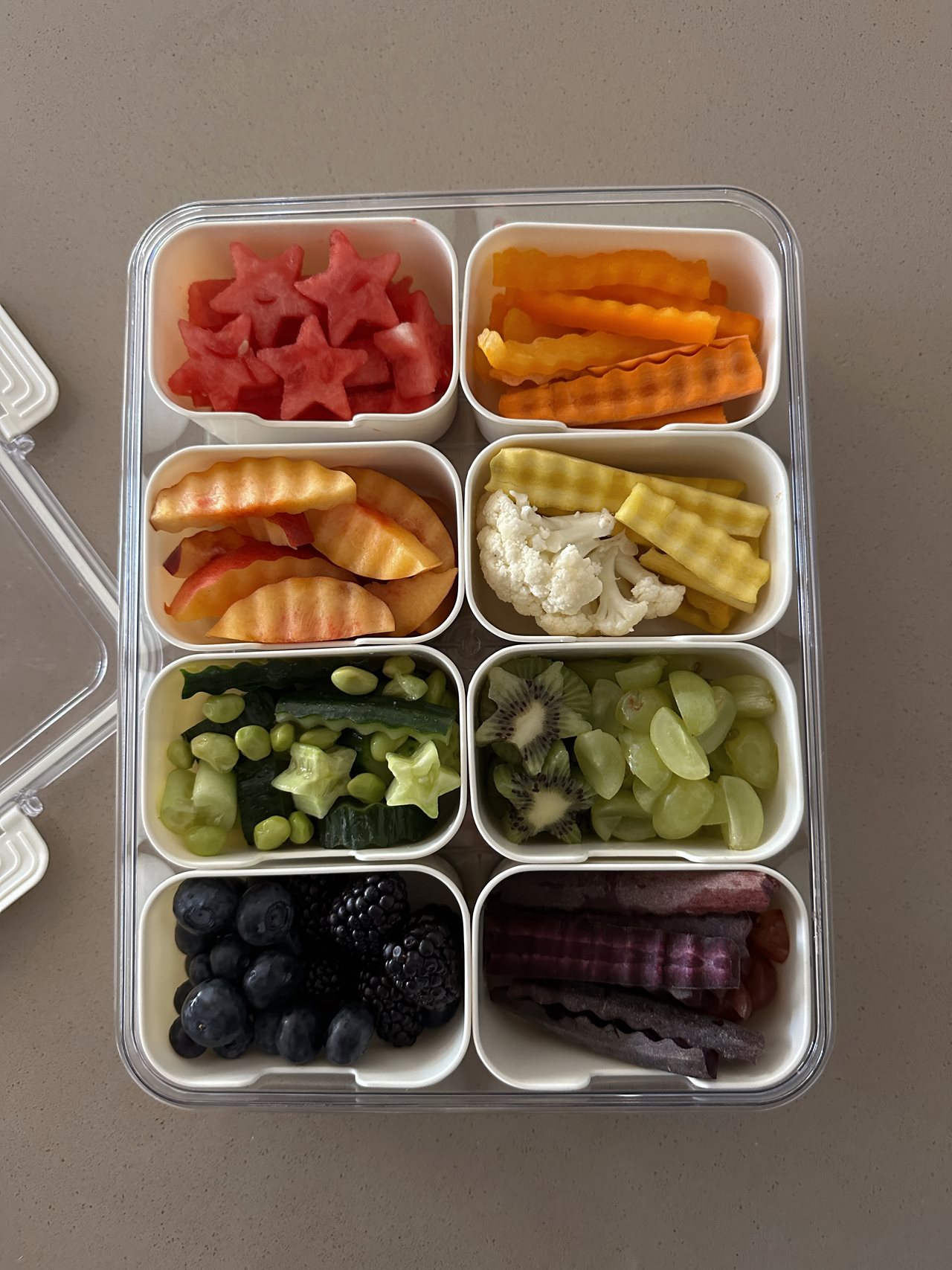
Crinkle cut veggies and star shaped mellons in cute containers.

Faced with a hectic afterschool routine? “Keep a tray of fruits and veggies cut up and ready to go in your fridge for easy grab-and-go opportunities for the whole family. Having healthy options within reach makes it easier for everyone in the family to make better choices,” shares Caitlyn Neier. A tasty way to grab a snack on the go and keep your commitment to eating more fruits and veggies.

Incorporating more fruits and vegetables into your daily routine doesn’t have to be a daunting task. By making these small changes, you can enjoy more flavorful meals while adding a boost of nutrition. We all need to enjoy more produce every time we eat, so whether you’re shopping, dining out, enjoying a meal with family, at school or on-the-go, Have A Plant® for better health and happiness.

Follow along on Instagram and Facebook and let’s build the #haveaplant hype! For recipes, tips, inspo and more, visit fruitsandveggies.org.

Optimizing protein and fiber throughout the day

2024-08-30T12:01:00

(BPT) – By Kristin Kirkpatrick, MS, RD, former lead dietitian and Cleveland Clinic Integrative Medicine and Quest partner

Consumers are becoming more savvy about getting the most bang for their nutritional buck. Protein and fiber remain at the forefront of food and wellness trends. Though the explosion in use of GLP-agonist medications for weight loss has most likely contributed to this, it’s important to note that protein and fiber play a crucial role in improving health span. Understanding the nutritional benefits of adequate protein and fiber can guide you toward making healthier dietary choices. Here are some ways to optimize both throughout the day.

1. Start the day off with protein. A quick review of the standard American breakfast reveals choices that are not always aligned with optimal fueling. Swapping the daily doughnut or sugary breakfast cereal can make a big difference in how you feel and your energy throughout the day. It may also help with weight management and brain power as well. A 2024 study showed that protein at breakfast, for example, increased satiety and concentration. When looking for more protein, consider scrambled eggs with veggies and cheese, yogurt with berries, a protein smoothie, or steel-cut oats with chopped nuts and hemp seeds. If you’re craving something sweet (like a breakfast muffin), consider Quest’s new protein-packed muffins as an alternative. They provide 10g of protein and fiber with only 2g of sugar — a perfect nutritional profile to fuel your best day.

2. When choosing carbohydrate-rich sources, make sure the source has fiber attached. The body recognizes food as either easy to digest (think candy and stripped grains) or hard to digest (think whole grains and vegetables). Easy-to-digest foods may put the body on a roller coaster of blood sugar and insulin, leading to the inevitable sugar crash and zapped energy. However, hard-to-digest foods take the body time and energy to break down. Fiber is the ultimate hard-to-digest food since the body can’t digest it, and studies show that it helps slow the reaction of sugar metabolism in the body. Fiber may also help prevent the onset of type 2 diabetes as well, leading to better metabolic health. Get more fiber in your day by snacking on nuts and seeds, adding beans and lentils as a plant-based source of protein, or focusing on cruciferous vegetables and leafy greens at mealtimes.

3. Optimize protein and fiber in drinks. Consuming fiber- and/or protein-rich drinks can be a great way to “sneak” both into your day. You can obtain this by consuming protein shakes with added fruit, vegetables and nuts to get that added fiber or by consuming milk or bone broth for protein without the fiber. I recommend Quest Iced Coffee to my patients. Their iced coffee is non-perishable (great on the go) and packs a big punch of protein (10 grams) without the sugar that many iced coffee varieties often contain. With 200 mg of caffeine, they are also a great way to energize any time of the day.

4. Don’t forget about plant-based options in your efforts to optimize protein and fiber. Variety is key when it comes to protein options. A 2022 study found that eating a variety of protein sources may help enhance health by reducing cardiovascular risk factors such as high blood pressure. Plant-based proteins fit in well with vegetarian lifestyles and pack fiber in addition to protein. Examples include beans and lentils, quinoa, soy, and nuts and seeds. Some vegetables, such as broccoli and spinach, also contain protein.

5. Consume protein before other macronutrients. Studies show that consuming protein before other macronutrients (alongside nutrients such as fiber) may help improve overall satiety and blood sugar control. To do this, consider having a few bites of protein before diving into the rest of the meal. For breakfast, this may mean having a few bites of yogurt or eggs before consuming whole-grain toast; for lunches and dinners, consider a few bites of chicken or tuna before consuming grains. You can also do this by focusing on protein-rich snacks you may drink a few hours before meals. I always carry Quest protein bars when I am on the go. They are a delicious way to get high-quality protein and fiber throughout the day.

6. Add protein and fiber as a garnish. Don’t limit protein and fiber to meals, snacks and drinks. Consider adding these nutrients as garnishes to food. The best way to do this is to add nutrient-rich nuts and seeds to foods. Add nuts to salads to boost protein and healthy fats, add seeds such as hemp seeds to yogurt, try roasted chickpeas or toasted quinoa on top of veggie bowls, or add nutritional yeast to pasta dishes.

7. Time your protein intake with your exercise regimen. Protein and exercise go hand in hand. Timing of protein intake is essential to maximize benefits based on the type of exercise. For resistance training, studies show that protein after exercise is the ideal way to maximize muscle growth. Whey protein (found in dairy products such as milk and cheese) and supplemental protein sources (such as Quest ready-to-drink protein drinks) may offer a supportive means to better muscle growth. Some studies have suggested that protein before resistance training may assist as well. Therefore, if you’re more likely to consume protein before rather than after a workout, you may still see benefits. Finally, studies show that consuming protein after workouts may also enhance calorie burning in addition to muscle growth.

8. End the day with protein. Studies show that consuming protein throughout the day helps optimize muscle maintenance, especially in older individuals. Why limit protein to just meals and snacks? That dessert you crave at the end of the day can also pack a protein punch! Quest bake shop brownies are a perfect way to end the day, providing 10g of protein with only 1g of sugar! As an added benefit, protein at night before sleep has been found in studies to help enhance muscle mass as well.

Protein and fiber are essential components (alongside healthy fats) of a healthy, longevity-based diet. With so much variety, finding delicious options that work for you and your health goals is easy!

Christopher & Dana Reeve Foundation’s Quality of Life Grants Program: $44 million in grants, and counting

2024-08-30T08:01:00

(BPT) – Over a quarter of a century, $44 million in grants have been awarded to more than 3,800 projects across the U.S. that contribute to the quality of life for people living with paralysis. Grants have funded nonprofits, tribal entities, and municipalities for a wide array of projects, programs, and services. That’s just part of the legacy of Christopher and Dana Reeve.

After Christopher Reeve was paralyzed in a riding accident in 1995, Reeve became the face of spinal cord injury, unwavering in his pursuit of the world’s most advanced research. While he focused on finding cures, Dana wanted to build a support framework for individuals, families, and caregivers impacted by paralysis. They created a culture of hope, and it was contagious.

Quality of Life Grants Program

Pioneered by the late Dana Reeve in 1999, the Christopher & Dana Reeve Foundation established the Quality of Life Grants Program, which awards financial support to nonprofit organizations for programs or projects that foster community engagement and involvement, while promoting health and wellness for individuals living with paralysis.

The goal is to empower individuals living with disabilities and their families by providing grants to nonprofit organizations that improve the quality of life through inclusion, access, independence, opportunities for community engagement and life-enhancing endeavors.

Dana Reeve believed the Quality of Life Grants Program is, at its core, about freedom. While working toward a cure, she said, there are millions of people who deserve an improved quality of life. The Foundation carries on this mission today and every day.

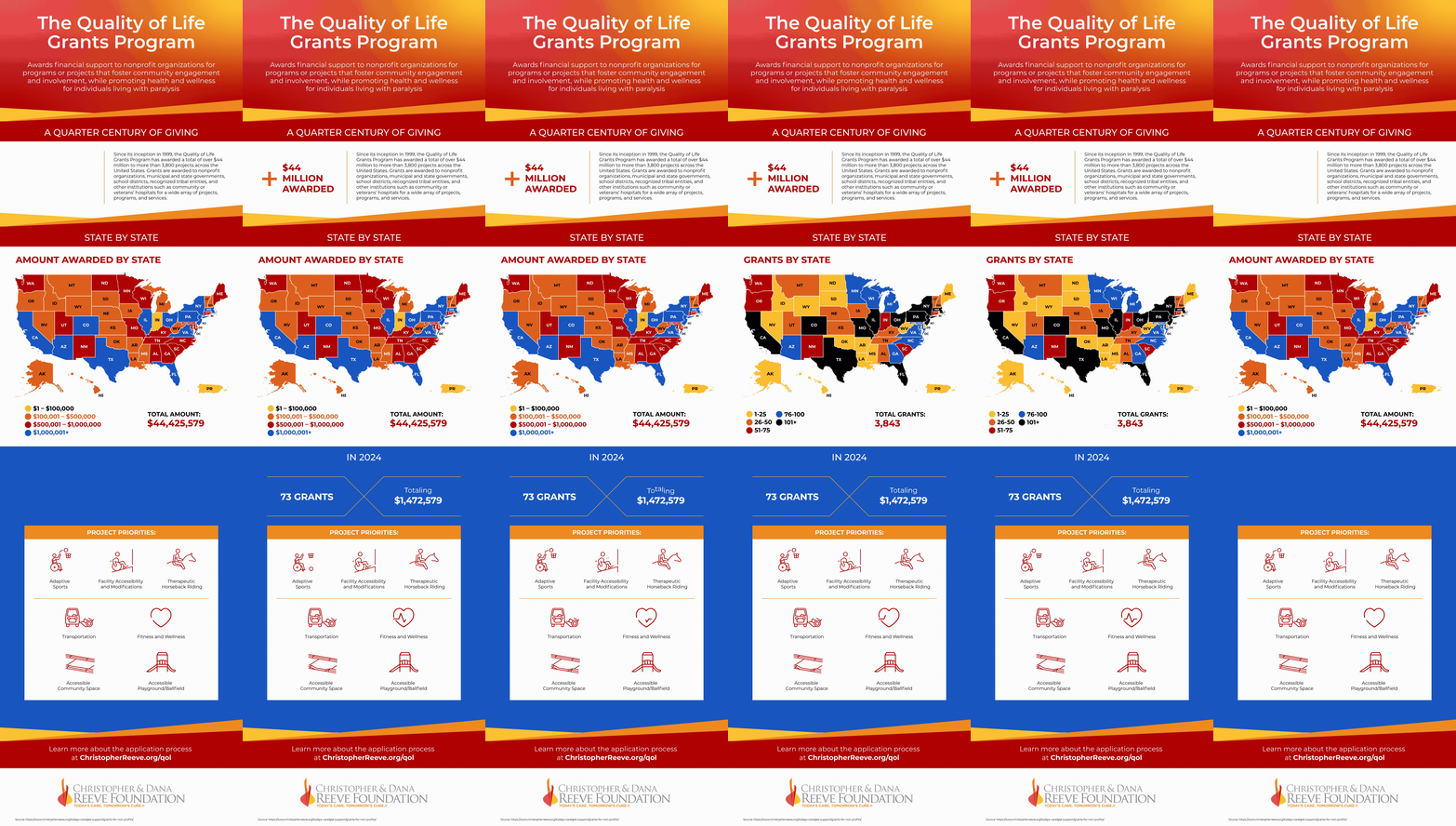
In 2024, the Quality of Life Grants Program awarded 73 grants totaling $1,472,579.

Projects and priorities in 2024 included:

  • Adaptive Sports
  • Facility Accessibility and Modifications
  • Therapeutic Horseback Riding
  • Transportation
  • Fitness and Wellness
  • Accessible Community Space
  • Accessible Playground/Ballfield

Who can apply?

Applications are welcome from nonprofit organizations with IRS 501(c)(3) status, municipal and state governments, school districts, recognized tribal entities, and other institutions such as community or veterans hospitals.

“We want organizations to know that, wherever they are in the U.S., they are welcome to apply,” said Dan McNeal, Director, Quality of Life Grants Program. “There is equal opportunity for everyone here.”

Grants are awarded to organizations that address the needs of people living with paralysis caused by spinal cord and other injuries, diseases or birth conditions, including (but not limited to) stroke, spina bifida, multiple sclerosis, cerebral palsy and amyotrophic lateral sclerosis (ALS).

The Quality of Life Grants Program has an immediate and practical impact on people’s lives. And that’s a legacy to be proud of. For more information about how and when to apply for a grant, visit ChristopherReeve.org/qol.

The infographic called “The Quality of Life Grants Program” explains how the program gives financial support to nonprofit organizations for projects while promoting health for individuals living with paralysis. The grant program has awarded more than $44 million since 1999. The graphic breaks the number of grants down by state and shares some of the project priorities in 2024. There is also a link for more information https://www.christopherreeve.org/oql

The National Paralysis Resource Center website is supported by the Administration for Community Living (ACL), U.S. Department of Health and Human Services (HHS) as part of a financial assistance award totaling $8,700,000 with 100 percent funding by ACL/HHS. The contents are those of the author(s) and do not necessarily represent the official views of, nor an endorsement by, ACL/HHS, or the U.S. Government.

A champion gymnast’s wellness routine … for her dog

2024-08-29T09:31:00

(BPT) – Establishing and maintaining a solid wellness routine is a big part of living your best life. From nutritious meals to regular exercise and self-care practices, every little thing you do can positively affect your overall well-being. Having a dog can enhance your well-being significantly, so it’s crucial to prioritize your pet’s health too. Aly Raisman, a gold medal winning gymnast, understands the importance of prioritizing her dog Mylo’s health, just as she would her own wellbeing.

“Incorporating wellness into my daily routine is a priority — not just for me — but also for my dog, Mylo,” said Raisman. “Mylo loves to mirror everything I do, even down to taking his daily supplements.”

When choosing supplements for Mylo, Raisman opts for EverRoot Dog Supplements powered by Purina. Developed by Ph.D. animal nutritionists, EverRoot’s ingredient-focused supplements come in a variety of tasty, soft and chewy forms that you can use to help your dog live their best life.

“Whether it’s Mylo’s digestion, joint mobility, or immune system, EverRoot soft chews are thoughtfully crafted with specific ingredients to support Mylo’s overall health,” said Raisman. “Mylo loves the taste of his daily EverRoot Digestion soft chews, which are made of pumpkin and probiotics. I love that they help him maintain a healthy intestinal tract.”

All-around winning supplement

EverRoot believes that every dog deserves to feel their best, that’s why they offer a range of supplements that dog owners can use to meet their dog’s unique health needs.

“The EverRoot Multi-Benefit soft chew supplement supports the gut, which is key to good health and the immune system,” said Dr. RuthAnn Lobos, lead veterinarian at Purina. “Made with pumpkin, it’s a fantastic source of prebiotic fiber and supports digestion. It also contains Spirulina, which promotes a healthy immune response and is a natural, nutrient-dense ingredient.”

Additionally, if you have a nervous dog, they may benefit from EverRoot’s Calming soft chew supplement. For instance, you may notice your dog displaying anxious behaviors — especially when you’re about to leave the house. Made with organic chamomile, this supplement can help them stay relaxed and ease your mind when you leave them home.

EverRoot also goes beyond just helping with nervousness. Whether old or young, protecting your dogs’ joints should also be a top priority. “To help ensure that our dogs join us on outdoor adventures for years to come, we have EverRoot Hip & Joint,” shared Lobos. “This soft chew supplement is made with wild-caught Alaskan salmon and cod oil to ease joint stiffness due to normal daily exercise and activity so you can help them approach aging with vibrance!”

One small addition for a happy, healthy life

Combining supplements with your dog’s nutritious diet can help your pup stay happy and healthy throughout their life. And when your dog is happy and healthy, you can enjoy every minute with them.

“I love spending time with Mylo, and it brings me joy to see how much fun he has when we play fetch or play outside together,” said Raisman. “Mylo always gets so excited when he hears the EverRoot Dog Supplements packaging open — it’s great he enjoys them, but even better that they’re good for his health.” You can purchase EverRoot Dog Supplements on Amazon.

Understanding the toll on adults diagnosed with type 1 diabetes; new survey findings

2024-08-29T07:01:00

(BPT) – Sponsored by Sanofi

Every year, tens of thousands of Americans are newly diagnosed with type 1 diabetes, an autoimmune disease characterized by the immune system attacking insulin-producing cells in the pancreas.

For many, that diagnosis comes unexpectedly — and even more so because research has shown approximately 90% of people diagnosed do not have type 1 diabetes in their family history. Suddenly, routines are permanently altered as individuals and families rush to learn how to best manage the condition — all while coping with the underlying impacts a type 1 diabetes diagnosis has on emotional, social, and financial health and well-being.

Survey findings from Beyond Type 1 — a leading organization dedicated to changing what it means to live with diabetes — and commissioned by Sanofi, titled “The Cost of Not Knowing,” highlight the costs of a diagnosis among adults with type 1 diabetes and caregivers of children under the age of 18 with type 1 diabetes. Here’s a look at “The Cost of Not Knowing,” told through the eyes of adults who live with this condition. Their perspectives underscore the importance and urgency of early screening for type 1 diabetes.

Not knowing has “costs”

The impact of a type 1 diabetes diagnosis can extend far beyond just physical health. Indeed, the survey findings illustrate that not knowing your risk for developing type 1 diabetes carries significant emotional, social, and financial burdens. Consider:

  • Emotional: 64% of adults with type 1 diabetes said their emotional health declined when they first learned about their diagnosis, as they struggled with feeling sad (39%), afraid (38%), angry (30%), and uncertain for the future (25%).
  • Social: 71% of adults with type 1 diabetes gave up some of their interests or future plans when they learned of their diagnosis.
  • Financial: Half (50%) of adults with T1D spent at least $5,000 on emergency care for their T1D symptoms before or during their diagnosis, with nearly 1 in 4 (24%) spending at least $10,000.

These findings quantify the very real impacts — some of them intangible — of a type 1 diabetes diagnosis, and how it can carry potentially life-changing implications for adults as they learn how to cope with a disease that has no known cure and ultimately requires lifelong dependence on insulin replacement injections for survival. Now, imagine if you had more time to brace yourself for a potential new reality.

Knowing sooner can have an impact

Early knowledge about a potential type 1 diabetes diagnosis, which is possible through an autoantibody test, can provide people with time to learn about the condition and prepare for constant, 24/7 disease management. Advanced information can be particularly valuable, considering that 79% of adults with type 1 diabetes changed how they lived their life when they first learned of their diagnosis, specifically because they felt overwhelmed and underprepared.

A diagnosis can be a life-altering event, but early detection can help people feel more in control of their health, avoid the stress that comes with not knowing, and, importantly, potentially reduce the risk of serious health complications at the time of diagnosis. With these benefits in mind, it’s not surprising that the majority of adults (85%) with type 1 diabetes who became aware of their diagnosis after symptoms began wished they had known about their risk of developing the disease before their diagnosis. The1Pledge.com has a useful screening guide on how to talk to your doctor about getting screened early for type 1 diabetes and what to do before, during, and after screening.

Adults with type 1 diabetes recommend early screening

Although the benefits of early detection are clear, autoantibody screening is still uncommon today, largely due to a lack of awareness. Just consider that only 14% of adults with type 1 diabetes say they were screened with an autoantibody test prior to their diagnosis to see if they were at risk of developing the disease — and among those who did not screen, 72% of adults with type 1 diabetes said they were not even aware that an autoantibody test was available, demonstrating an awareness gap that must be closed.

What’s more, among those who were not screened, 68% regret not taking an autoantibody test to better understand their risk of developing type 1 diabetes — and nearly all adults with type 1 diabetes (92%) today would recommend friends and family members get an early autoantibody test for type 1 diabetes. There’s no need to wait to get screened and start to prepare for the future. “The Cost of Not Knowing” sends a message that it’s time to take charge of your health and talk to your doctor about your screening options. This research was conducted by Wakefield Research via two survey instruments — one among 1,000 US adults with type 1 diabetes and a second among 1,000 US caregivers to those under the age of 18 years with type 1 diabetes. Learn more about the survey findings and methodology at https://beyondtype1.org/unexpected-type-1-diabetes-diagnoses/.

Sanofi does not provide medical advice, diagnosis, or treatment — information is provided for educational purposes only. Your doctor is the best source of health information. Talk to your doctor if you have any questions about your health or treatment.

Why early detection is so important for type 1 diabetes

2024-08-28T12:01:00

(BPT) – Did you know anyone can be diagnosed with type 1 diabetes (T1D), even adults? Although it was long considered a disease that started in childhood or adolescence, nearly half of new T1D diagnoses are among adults. And misconceptions about the disease can result in people being misdiagnosed with type 2 diabetes or experiencing serious complications at diagnosis.

If you have a family history of T1D, or if you would like to take a more proactive approach to understanding your health, you should know that you have options to detect T1D early through screening.

The leading global T1D research and advocacy organization, Breakthrough T1D (formerly JDRF), is encouraging people, especially those with a family history, to “Detect so you can decide” and learn the potential risk for developing T1D. Early detection of T1D can help reduce the risk of life-threatening complications at diagnosis and allow people time to access care, participate in T1D clinical trials, and prepare for future medical needs.

What is T1D?

Nearly 1.45 million Americans live with T1D, which is an autoimmune disease that causes your pancreas to make very little insulin or none at all, and this number is increasing every year. Insulin is a hormone that everyone needs to get energy from the food they eat. People with T1D must take insulin by shots or an insulin pump to survive.

Who is at risk for T1D?

A family history of T1D increases your chance of a T1D diagnosis by 15 times. However, it’s important to know that over 85% of people with T1D do not have any family history of the disease, which is why early detection through screening is so important.

“A type 1 diabetes diagnosis is life-changing and can be overwhelming, but early detection helps individuals and their families prepare and plan,” said Anastasia Albanese-O’Neill, PhD, APRN, AVP of community screening and clinical trial education at Breakthrough T1D. “The benefits of early detection are significant and could lead to a delay in the onset of the disease through approved therapies or accelerate research through clinical trials.”

How early detection works

A simple blood test can detect the presence of certain islet autoantibodies, as the earliest indication of T1D. Screening for T1D typically tests for four autoantibodies, and research shows that most people who test positive for two or more autoantibodies persistently will eventually develop T1D. This early awareness can help people monitor for disease progression and symptoms and help avoid potentially life-threatening complications at diagnosis.

“Screening and monitoring can help reduce the number of people with T1D who experience diabetic ketoacidosis at diagnosis from between 25-50% to 5%,” added Albanese-O’Neill. “Because early detection is so important, we want people to know their options and the steps they can take to screen for T1D.”

How you can take action for your health

In partnership with local clinics nationwide, Breakthrough T1D is expanding early detection opportunities, especially for family members of people who have been diagnosed with T1D. Online resources will help you talk to your doctor about the potential benefits of screening for your family.

In June 2024, new consensus guidance was developed under the leadership of Breakthrough T1D in partnership with over 60 global experts. This new guidance will help the healthcare team care for those who test positive for autoantibodies, monitor for disease progression and guide patients by providing support and information about appropriate therapies, clinical trials and other resources.

To learn more, talk to your health care provider and visit BreakthroughT1D.org/early-detection.

How State Farm jumped ahead of curve to support disaster response for neighborhoods

2024-08-28T04:01:01

(BPT) – When disasters like hurricanes, tornadoes or wildfires strike a community and leave residents faced with damaged homes and wrecked cars, even an hour can feel like forever before help arrives. The immediate aftermath of a catastrophe can be chaotic and full of anxiety for those who have lost homes and vehicles.

So one company took action this year to get ahead of the curve, and proactively supported nonprofit recovery response efforts by pre-funding grants before disaster strikes.

This year, State Farm pre-funded the American Red Cross with a $2 million grant to support the nonprofit’s disaster relief efforts. Pre-disaster funding (pre-funding) is a proactive approach that helps give immediate support for disaster relief efforts. The goal of pre-funding is to support nonprofits like the American Red Cross to prepare for and respond to disasters more effectively.

Because of this new approach, communities and families impacted by disasters big and small — including hurricanes, tornadoes, fires and countless other crises — can recover more quickly and reduce the impact of natural disasters.

“Mission Leaders like State Farm are vital to our work, helping drive innovation across our organization, providing capacity to respond immediately in times of crisis,” said Cliff Holtz, president and CEO of the American Red Cross. “I am grateful for their support, which safeguards our ability to care for those in need when the unthinkable happens.”

A history of neighborly support

State Farm has a long history of helping disaster relief programs. However, this is the first year the company has employed a proactive pre-funding approach. In addition to its partnership with the American Red Cross, the nation’s home and auto insurance leader has also pre-funded grants of $250,000 to Convoy of Hope and $250,000 to Midwest Food Bank to help support these community nonprofits to respond immediately following a catastrophe.

“State Farm is committed to helping individuals and families manage the risks of everyday life and recover from the unexpected,” said Apsara Sorensen, State Farm corporate responsibility assistant vice president. “We extend this commitment to the neighborhoods we serve by providing resources and collaborating with nonprofit organizations with a history of disaster response, providing immediate relief and vital necessities during times of need.”

The dangers of severe weather seasons

Throughout the year, homeowners are encouraged to be prepared for severe weather like spring storms, hail, wildfire, tornado and hurricane season. And residents in hurricane prone communities currently are in the busiest, deadliest and costliest months for hurricanes in the U.S., with September being the peak. Even one hurricane occurrence can be devastating. Hurricane Idalia — the only major hurricane to impact the U.S. last year — hit in late August 2023 and resulted in about 8,000 State Farm homeowner and auto claims. State Farm paid approximately $76 million to those customers impacted by Idalia, helping them recover and rebuild their lives in the wake of the event.

How to prep for severe weather and storms

You can’t prevent a hurricane or other natural disasters. However, if you live in areas prone to severe weather and storms, you can prepare yourself and your home ahead of time. Follow these top three proactive insurance tips to ensure you can quickly and easily respond to a natural disaster.

1. Review your insurance coverage. Don’t wait until after disaster strikes to realize that inflation and increasing economic pressures may have impacted the cost of rebuilding. Make sure you have the right amount and type of insurance for your property and to help protect your loved ones.

2. Protect important insurance documents. Keep your important insurance documents and policy paperwork in a protected, waterproof place. You can also install your insurance app for immediate electronic access to insurance documents.

3. Create a home inventory. Make a list of your possessions and their estimated value. You can use technology to help create and safely store your digital home inventory.

  • Take pictures with your smartphone. Capture important individual items as well as entire rooms, closets or drawers. Label photos with what’s pictured, where you bought it, the make or model and the serial number.
  • Take video. Walk through your house or apartment, recording and describing the contents.
  • Use an app. Many mobile app options can help you create and store a room-by-room record of your belongings.

Using these three tips can help you place your claims when the worst occurs so your insurer can react quickly and get you the help you need. Find more hurricane prep information with State Farm Simple Insights.

To learn more about State Farm’s efforts to help communities, visit statefarm.com.

This content is sponsored by State Farm.