6 Questions You Might Have if Your Dog Is Peeing Inside

2024-08-26T08:01:00

(BPT) – When you find a puddle of pee on your dog’s favorite snooze spot, it’s easy to jump to worry. You might even be asking yourself if she did it to be spiteful. While it’s not uncommon for dogs to urinate inside because of a behavioral problem, it is unlikely she’s misbehaving.1,2 In fact, she could have a medical condition called canine urinary incontinence (UI) due to urethral sphincter hypotonus. Here are some questions you might have, answers to help you narrow down why your dog is having indoor accidents, and what steps you can take next.

1. “What makes this type of incontinence different from other urinary conditions?”

Yellow lab tilting he's head to the side while sitting on the gray couch in the livingroom.

When a female dog has weak urethral sphincter muscles, this can lead to a lack of bladder control that causes her to involuntarily leak urine. If your dog is suffering from this type of canine UI, finding pee puddles inside would feel out-of-the-blue.

2. “Are some dogs more likely to leak?”

Two smiling yellow labradors sitting next to each other in the livingroom.

Any dog can experience urinary incontinence, but it’s most common in spayed middle-aged female dogs. In fact, up to 20% of spayed female dogs may develop urinary incontinence.3 Midsized and large breeds are also predisposed to it; the most commonly affected are Old English sheepdogs, Doberman pinschers, boxers, German shepherds and Weimeraners.4

3. “How can I be sure this isn’t just my dog acting out?”

Smiling labrador laying on the hardwood floor in the livingroom.

While dogs with behavioral issues may pee when greeting a new person or becoming overexcited, a dog experiencing incontinence is usually well-behaved and housetrained. Often dogs suffering from this type of incontinence don’t even realize they voided their urine and are just as confused as you are.

4. “Are there any signs I should look out for?”

null

Dogs with incontinence drip or leak urine when they sleep, so finding wet spots in their favorite places to relax is a telltale sign. Also, because of the way the urine leaks, you might notice red, irritated skin around the genitals and excessive licking of that area.

5. “This sounds like something I’m dealing with. What should I do?”

Older yellow labrador getting an exam by a vet.

The best rule of thumb is if something seems off with your dog, call and schedule an appointment with your veterinarian right away. They will be able to start the process of accurately diagnosing your dog and help you figure out the next steps.

6. “I don’t want my dog to suffer from this. Can incontinence be treated?”

Adorable older yellow labrador getting pet by his family.

Don’t worry. Your dog’s condition is treatable. If your dog is diagnosed with urinary incontinence due to urethral sphincter hypotonus, your veterinarian may prescribe PROIN ER™ (phenylpropanolamine hydrochloride extended-release tablets). This flavored, once-a-day tablet can help your dog have better weeks without the leaks. For more information, visit proin-er.com.

No matter the reason, your dog unexpectedly peeing inside is cause for concern. If you’re noticing this unusual behavior, consult your veterinarian and ask if PROIN ER™ is right for your dog.

1 Holt PE. Urinary incontinence in the bitch due to sphincter mechanism incompetence: prevalence in referred dogs and retrospective analysis of sixty cases. Journal of Small Animal Practice 1985;26:181–190.

2 Holt PE, Thrusfield MV. Association in bitches between breed, size, neutering and docking, and acquired urinary incontinence due to incompetence of the urethral sphincter mechanism. Vet Rec 1993;133:177–180.

3 Von Goethem B. Schaefers-Okkens A, Kirpensteijn J. Making a rational choice between ovariectomy and ovariohysterectomy in the dog: a discussion of the benefits of either technique. Vet Surg 2006; 35:136-143.

4 Thrusfield MV, Holt PE, Muirhead RH. Acquired urinary incontinence in bitches: its incidence and relationship to neutering practices. J Small Anim Pract. 1998;39:559-566.

IMPORTANT SAFETY INFORMATION: For oral use in dogs only. Not for human use. Keep out of reach of children. If accidentally ingested by humans, contact a physician immediately.

The most commonly reported side effects were vomiting, loss of appetite, diarrhea, excessive salivation, agitation, tiredness, vocalization, confusion, increased water consumption, weight loss, weakness, fever, panting, and reversible changes in skin color (flushing or bright pink). Abnormal gait, seizures or tremors, as well as liver enzyme elevations, kidney failure, blood in urine and urine retention have been reported. In some cases death, including euthanasia has been reported. Sudden death was sometimes preceded by vocalization or collapse.

Instances of dogs chewing through closed vials of PROIN and eating the vial contents have been reported, in some cases resulting in overdose. Keep the product in a secured storage area out of the reach of pets in order to prevent accidental ingestion or overdose, as dogs may willingly consume more than the recommended dosage of PROIN Chewable Tablets or PROIN ER™ tablets. Contact your veterinarian immediately if the dog ingests more tablets than prescribed or if other pets ingest PROIN Chewable Tablets or PROIN ER™ tablets.

PROIN and PROIN ER™ may cause elevated blood pressure and should be used with caution in dogs with pre-existing heart disease, high blood pressure, liver disease, kidney insufficiency, diabetes, glaucoma, and other conditions associated with high blood pressure. Dogs may transition from PROIN Chewable Tablets to PROIN ER™ without a break in administration. However, do not alternate PROIN ER™ with PROIN Chewable Tablets because the effectiveness and safety of interchangeable use have not been evaluated.

The safe use of PROIN and PROIN ER™ in dogs used for breeding purposes, during pregnancy or in lactating bitches, has not been evaluated. Contact your veterinarian if you notice restlessness or irritability, loss of appetite, the incontinence persists or worsens, or any other unusual signs. See prescribing information for complete details regarding adverse events, warning and precautions or visit prnpharmacal.com.

Game day gourmet: How to build the perfect game day table

2024-08-26T11:57:00

(BPT) – It’s tailgating season! Whether you’re relaxing in the parking lot before the game or gathering in front of the television with family and friends, it means football and food. The biggest debate is what to serve all of the sports fans in your life. While chips and dip might be the go-to snack, why not elevate the experience? You don’t have to put on a five-course, fancy meal to get your game day on. Kicking finger foods up a notch will turn your watch party into a culinary event.

A winning play is to pick one main dish you’re sure everyone will love and build sides and dessert around it. Here are some ideas to level up your game day spread with ease.

Wings! Wings are a no-brainer for game day. Everybody loves this easy-to-eat, delicious finger food. But not all wings are created equal. Tyson® Brand has just debuted a new line, Tyson Crispy Wings, that rival your favorite restaurant variety. And here’s the twist: These wings are fully cooked and dry rubbed. They’re not pre-sauced. The rub seasons the wings and creates a crispy exterior that gives way to tender, juicy perfection. They come in three flavors that are sure to please everyone: Rotisserie Seasoned, Garlic Parmesan and Caribbean Style. Pro tip: Serve with a selection of sauces, like blue cheese, buffalo, barbecue, jerk, ranch or teriyaki style.

Boneless wings. Not everyone wants bone-in varieties, right? Tyson Brand’s new, boneless Honey Chicken Bites are crafted from tender, all-white meat chicken and coated with a honey-infused breading. Bake them in the oven or air fryer and they’re ready to eat in under 25 minutes. And they pack a protein punch with 14g per serving.

Veggies and dip. A big plate of fresh veggies, like celery, broccoli, red pepper, baby carrots and mini cucumbers adds color to your table and crunch to your meal. Pair the veggies with easy, homemade onion dip. (Caramelize 2-4 onions, sliced thin. Mix with 16 oz. sour cream, garlic powder and paprika to taste. Chill for 1 hour.) Bonus: This dip is also delicious with the wings and honey bites!

Cowboy coleslaw. Slaw goes perfectly with wings, and here’s a fun twist. Take a bag of pre-cut slaw, add 1 each chopped red and green pepper, chopped scallions, 1 can of black beans (drained), and 1 cup frozen corn (thawed). Mix a dressing of 1/2 cup mayo and 1/2 cup sour cream, taco seasoning, a dash of cumin and the juice of 1 lime. Mix and garnish with cilantro.

Brownie bar. A tried-and-true favorite! Bake a pan of brownies, cut them into small squares and serve with a selection of DIY toppings like whipped cream, caramel sauce, candy bits, sprinkles or whatever else your family loves.

By starting your game day table with Tyson Crispy Wings and Honey Chicken Bites and building delicious, easy sides around it, you’re sure to cook up a winner.

Americans serve together to honor and remember Sept. 11

2024-08-26T09:01:00

(BPT) – More than two decades ago, on Sept. 11, 2001, many lost their lives in the 9/11 terrorist attacks. From across America, people stepped forward — uniting to help the families of those lost, assist the injured, and do whatever they could to help.

AmeriCorps members and AmeriCorps Seniors volunteers were among those who were there to help, offering emergency assistance to the injured, serving as family caseworkers, and helping those displaced from Ground Zero find housing and other services. For many, their service was a life-changing experience, inspiring them to pursue careers in public service.

Cait and Kevin smiling at the camera during a 9/11 pack a meal event.

The 9/11 attacks also inspired AmeriCorps alumni Cait and Kevin to serve. Both lost their fathers that day but found ways to heal through service.

Cait chooses to remember her father by inspiring others to give back and doing what her father loved — helping others in need.

“Looking back, my journey involved not only following in my father’s footsteps to help others but also finding the importance of community in my own healing. The way our communities came together after 9/11 was remarkable. It taught me that despite all our differences, we all have the ability to come together to listen, learn, and accept one another. I don’t think I would be the person I am today if it weren’t for these lessons. I learned how difficult and messy traumatic events can be in our lives, but also learned how resiliency can be beautiful,” said Cait.

Kevin continues to honor his father’s memory by working with nonprofit organizations to lift up fellow New Yorkers and Americans to a better and brighter future.

Kevin shared, “In 2001, I was just 4 years old when I lost my father in the attack on the World Trade Center. That devastating loss changed me and inspired me to help others in need through my service with AmeriCorps and now in my career. Over the years, I’ve seen firsthand how small efforts can affect great changes that impact the lives of those in need.”

Group of volunteers placing flags for a AmeriCorp 9-11 day of service event.

The events of that day and the heroism of the first responders ultimately led to the creation of the Sept. 11 National Day of Service and Remembrance, founded by the nonprofit 9/11 Day with the support of the 9/11 community, AmeriCorps, and bipartisan leaders in Congress.

Since 2009, Americans have united in service and volunteerism on Sept. 11 to honor those lost and recognize the sacrifices that members of the armed forces, emergency responders, and their families continue to make.

AmeriCorps works with 9/11 Day, grantees and partners, as well as faith-based, local, and national organizations, to offer volunteering opportunities in communities across the nation.

People of all ages and backgrounds join and lead community service projects from food drives and home repairs to neighborhood cleanups and disaster preparation activities to honor the lives and service of those lost that day. These civic champions cross divides, differences, and ideologies to make a difference — rekindling the spirit of unity and service that swept our nation after that tragic day.

You can be a part of this movement. Join your neighbors and make plans to serve your community on Wednesday, Sept. 11, 2024.

To find a volunteer opportunity near you or learn more, visit AmeriCorps.gov/911day.

5 Essential Takeaways from 2024’s Top Wellness Trends

2024-08-26T08:01:00

(BPT) – From the explosive growth of GLP-1 drugs for weight loss to the social media hype around gut health, new wellness trends have been central to the cultural conversation over the past year. To help understand the products and innovations shaping these trends — and how they may support everyone’s individual health goals — The Vitamin Shoppe’s new Health & Wellness Trend Report 2024 takes a deep dive into the top five trends of the year.

1. GLP-1 users seek nutritional support

As GLP-1 drugs such as Ozempic and Mounjaro are increasingly used to treat Type 2 diabetes and support weight loss, there is also a heightened focus on ensuring that people taking these medications get proper nutrition. These medications help people feel full longer, according to the Mayo Clinic, which can suppress the appetite, making daily food and nutrition choices even more important.

For that reason, GLP-1 users may want to add nutritional supplements to their daily routines to ensure they’re getting enough nutrients, including proteins, multivitamins, fiber and probiotics. These supplements can help fill key nutrient gaps and support the optimal digestive health of patients on GLP-1 drugs. In fact, The Vitamin Shoppe saw a 10% increase in sales of ready-to-drink protein beverages compared to last year, plus a 13% bump in meal replacement products tailored to weight management in the first four months of this year.

While taking a GLP-1 medication, it’s recommended to consult a health professional about developing a nutrition plan, which may include supplements while managing weight loss.

2. Living better, longer

A family of longevity vitamins

Recent interest in longevity has evolved from not just how long people live, but how long they’ll stay healthy — what some have dubbed “healthspan,” not just lifespan. This trend is being driven by cutting-edge research and new technologies that are adding healthy years to lives, with a heightened focus on nutritional health. Key areas of nutritional focus for healthy aging include cognitive health, cellular health and mobility health.

At The Vitamin Shoppe, cognitive support products are the biggest sales driver by volume this year, including the popular Ginkgo biloba, known for memory and circulatory support, and L-theanine, which helps promote relaxation and stress support.

Meanwhile, cellular health support products have seen the biggest percentage of sales gains, up over 45% from the previous year, such as Vthrive Bioactive B-Complex, which aids in energy production and nervous system support. Other customer favorites include the amino acid Jarrow Formulas’ L-Carnitine and Life Extension’s NAD+ Cell Regenerator, known for supporting healthy cellular metabolism.

“Longevity is one of the most exciting areas of wellness innovation today,” said Muriel Gonzalez, president of The Vitamin Shoppe. “There’s growing demand for this kind of knowledge, empowering consumers to incorporate the latest advances and products into their everyday wellness practices, including longevity-focused nutritional support.”

3. Gut health is everywhere

A family of gut health vitamins

Log on to your favorite social media platform, and there is bound to be content about gut health. This wellness phenomenon has turned topics that were often kept private — like bloating, IBS and digestive issues — and made them almost fashionable.

This increased awareness of the importance of gut health has fueled sales of supplements such as probiotics, prebiotics, and fiber products like psyllium husk and digestive enzymes. Food and beverage makers are adding gut health ingredients to everything from soda and yogurt to even candy. At The Vitamin Shoppe, the best-selling ProBioCare range of probiotics and digestive health products increased sales 24% in 2023, with another 44% jump in the first quarter of 2024.

“Your gut is like the command center of your body; there’s so much more to it than just digestion. It plays a starring role in practically every aspect of your health and well-being,” explained Maya Shetreat, M.D., a member of The Vitamin Shoppe’s Wellness Council.

4. Women 40+ in the spotlight

Once an overlooked category, there’s growing interest in wellness products for women aged 40 and older. This year, The Vitamin Shoppe introduced three new brands for this key demographic to its 700 stores: Health & Her, Wile and Solaray Her Life STAGES. In fact, over 40 new products dedicated to women’s health were added, all addressing the unique needs of women as they reach life milestones such as perimenopause, menopause and post-menopause — including different areas of hormonal health, emotional health and sexual health.

According to industry figures from SPINS, women are increasingly seeking out case-specific supplements for their individual needs. For example, sales of PMS formulas increased 12% over a 12-month period ending in 2023.

“All these hormonal milestones in a woman’s life are natural, beautiful transitions — they aren’t taboo topics. Now, there are better solutions to address the often frustrating and uncomfortable symptoms each woman may experience,” explained Dr. Pamela Peeke, a prominent physician and nutrition expert, who helped develop the Solaray Her Life STAGES products.

5. Beverages are not just for hydrating anymore

Cans of open beverages and glasses with ice and beverages on a table

While hydrating remains crucial for overall health, especially while exercising or enjoying the summer heat, consumers increasingly want beverages to do even more. Beverages can also boost wellness and mood with a range of vitamins, adaptogens, nootropics and botanicals.

Sales of these kind of ready-to-drink “functional beverages” have grown 20% last year, according to SPINS figures. Catering to this increased thirst for good-for-you drinks, The Vitamin Shoppe recently introduced dedicated displays in hundreds of its stores for trendy functional mocktails from brands including Kin Euphorics, De Soi, Hiyo and Parch.

For more information on all the latest wellness trends of 2024, download the complete Health & Wellness Trend Report from The Vitamin Shoppe here. To explore the full range of lifelong wellness solutions in the report, visit your local The Vitamin Shoppe store or VitaminShoppe.com.

6 back-to-school style trends Gen Z will love

2024-08-22T13:23:00

(BPT) – As the school bells ring in a new year, Gen Z — who now make up nearly 70 million of the U.S. population — are ready to showcase their unique style. Here’s a look at what students born between 1997 and 2012 will be wearing to set the stage for a stylish school year.

Social media and influencers are revolutionizing Gen Z fashion by driving trends and shaping new styles through viral content. The revival of aesthetics like Y2K brings back nostalgic styles with a modern twist. This blend of digital influence and retro vibes creates a dynamic fashion landscape that keeps evolving with each trending moment.

Gen Z fashion is bold, comfortable and driven by a celebration of self-expression. Walmart gets it. The retail giant recently relaunched the $2 billion brand, No Boundaries, with a team of dedicated fashion designers specifically with Gen Z in mind. The collection features new styles, high-quality materials and unbelievable pricing, catering to the latest fashion trends and budget-conscious shoppers.

Walmart’s new No Boundaries line embraces new modern shapes like baggy fit jeans, drop shoulders, cropped tees and oversized sweat sets. The new line boasts high-quality fabrics that are on-trend, including seamless stretch, power mesh, lux fleece, authentic denim and even the first-ever plant-based bra pad made from over 75% sugarcane.

So, what trends are Gen Z wearing this fall? Based on a survey of Walmart customers, up to 80% of what they purchase are pieces they can mix and match to fit their personal style and aesthetic.

Going Grunge. Baby tees, tie-dyes and oversized tops give a little rebellious, super effortless 90s-inspired look.

Sporty Streetwear. Cargos, hoodies and fluid, skater styles make a bold statement.

Prep School. A modern aesthetic featuring collegiate-inspired classics like pleated skirts, polos, boucle and plaid.

Denim on Denim. Mixing and matching high-quality denim fabrics from jeans or dresses to purses or hair bows is in.

Utility Uniform. More is more — utility clothing featuring cargos, zippers and cords paired with hardy accessories like combat boots and hobo bags.

Go-to Graphics. Graphics tees offer a vibrant, personalized way to express individual identity and creativity that effortlessly complements any ’fit.

Most items in the No Boundaries line at Walmart retails at $15 or less, with many popular styles coming in at $5 — making No Boundaries one of the most fashionable ways to save money on back-to-school shopping. With options for every body, the No Boundaries line features inclusive sizing, ranging from XXS to 5X in young women’s and XS to 3X in young men’s.

Gen Z are masters at making trends their own. Find what you need to create your own unique style with No Boundaries at Walmart.

3 ways to ensure you’re prepared in an emergency

2024-08-22T10:01:00

(BPT) – Do you have a home emergency plan in place for you and your family? If the answer is no, you’re not alone. According to a recent survey conducted by Wakefield Research for Amazon,* 81% of adults in the U.S. do not have a well-rounded home emergency plan in place. Outside of our own households, a similar number of adults (82%) are worried about not being notified if elderly family or friends have an accident or emergency at home.

In honor of National Preparedness Month in September, now is the perfect time to develop a home safety plan for your family and loved ones who live alone. It can feel daunting to tackle getting a plan together, but here are three easy tips to help you get started.

Identify the risks that are unique to the area you’re in

An important first step is understanding the types of hazards that might be prevalent in your community, whether that’s wildfires, earthquakes, flooding or major storms. Knowing what emergencies you’re most likely to face allows you to better prepare and helps make creating a plan feel more manageable than trying to prepare for everything.

Your state and local government’s emergency management websites are a great starting point to get more information about the common types of disasters and whether plans already exist for your area. You should also sign up for your community’s alert and warning systems which can notify community members of impending disasters or of actions to take following a disaster.

Make a plan that takes into account the specific needs of your household

As you prepare, tailor your emergency plans and supplies to your specific needs and outline key roles and responsibilities, especially since your family may not always be together in case of an emergency.

Some questions to consider as you’re building out a plan:

  • How will we receive emergency alerts and warnings?
  • What is our evacuation route and meeting point?
  • Does everyone know who to call in an emergency?
  • What vital items do we need in an emergency supplies kit beyond the typical items? (e.g. prescription medication, eyeglasses, extra contact lenses, cashier’s check, etc.)
  • Where will we keep important family documents physically and digitally? (e.g. copies of insurance policies, identification bank account records, etc.)

Invest in resources that can get you help fast and provide you peace of mind

Emergencies are by nature unpredictable and while it’s essential to have a well-thought-through and actionable plan, one of the best things that you can do is also invest in a service that offers emergency support at any time, like Alexa Emergency Assist. Available 24/7, 365 days a year, this service allows your entire household to get fast access to help without having to pull out your phone or if it’s not in reach, by simply saying, “Alexa, call for help,” to your Echo device.

Dedicated, professionally trained agents can request dispatch of emergency services and have access to any of your pre-saved critical information at the time of the call, like your home address, medications or allergies, allowing first responders to be thoroughly prepared when they arrive at your home.

Other key Alexa Emergency Assist features:

  • 24/7 Urgent Response: Available around the clock, 365 days a year, even if phone lines are down.
  • Professional assistance: Dedicated, trained agents can quickly request dispatch of police, fire, or ambulance services.
  • No wait times: Call center answer times are faster than industry standards,** so you get help without delays.
  • Pre-saved information: Urgent Response agents will have the information you choose to provide during sign-up, including your address, device details, medical conditions, household information (such as gate or door codes) and a list of emergency contacts.
  • Emergency contacts: Alexa Emergency Assist allows you to save the contact information of up to 25 family members, friends or loved ones you choose to be automatically notified and informed when a call is placed.
  • Smart alerts: These allow Alexa to detect if your smoke or CO alarm is sounding, or there’s a sound of glass breaking — and will notify you so you can take action whether you’re at home or away.

These tips will help offer you peace of mind, knowing that your family is prepared in case of any emergencies. To learn more about Alexa Emergency Assist, visit Amazon.com/gethelpfast.

*According to a survey of 1,000 U.S. Adults Ages 18+ and a survey of 1,000 U.S. parents of children ages 12 and under for Amazon by Wakefield Research between March 15-20, 2024.

**AEA’s calls are answered faster than industry standards according to the National Fire Protection Association and National Emergency Number Association.

Making the Grade with Medicaid and CHIP

2024-08-21T23:01:00

(BPT) – Back-to-school season is in full swing, which means it’s time to make sure your kids have the essentials they need for a successful school year. Health coverage should be at the top of that list — and being insured is important for students all year long. Academic success, long-term health outcomes, and health coverage all go hand-in-hand: Studies show that when children have health coverage, they are better equipped to participate in the classroom and during extracurricular activities, miss fewer days of school, and are more likely to complete high school and graduate college.

Finding free or low-cost health coverage for your family can be as easy as ABC. Medicaid and the Children’s Health Insurance Program (CHIP) provide coverage for a broad range of health services for kids up to age 19. When enrolled, kids have access to preventive care, emergency services, dental visits, behavioral health care, immunizations, vision care, and more. For the millions of families who are currently covered, now is also a good time to ensure kids are caught up on routine vaccines and well-child visits needed to participate in school activities.

Get Insured with Medicaid and CHIP

The Connecting Kids to Coverage National Campaign wants families to experience the peace of mind and security that comes with knowing their child is covered no matter what the school year brings. Medicaid and CHIP cover more than 37 million children in the United States and have helped ensure that more than 94% of the nation’s children have health coverage. Enrollment is open year-round, meaning your family doesn’t have to wait for an open-enrollment period to see if you qualify. Coverage must be renewed each year, and it’s important to make sure your address, email, and phone number stay up to date with your state Medicaid office so your family can receive communications about important renewal information.

Medicaid and CHIP eligibility varies by state and depends on family income and how many people are in your household. In most states, children up to age 19 with family income up to $80,000 per year (for a family of four) may qualify. Families can apply online, over the phone, by mail, or in-person with their state’s Medicaid office or visit the “Find Coverage for Your Family” section on InsureKidsNow.gov. For more information, call 1-877-KIDS-NOW (1-877-543-7669).

With health coverage, children can get the services they need to make the grade this school year by staying healthy and thrive academically.

Provided by the Centers for Medicare & Medicaid Services.

Professional Basketball Player Speaks Up About Living with Moderate-to-Severe Eczema On and Off the Court

2024-08-21T08:01:00

(BPT) – Many people think of eczema as a mild, itchy skin disease, and don’t realize how intense signs and symptoms can become. However, those living with moderate-to-severe forms of the condition know that it’s much more than that. They can experience recurring signs and symptoms such as intense itching and dry, irritating rashes that can crack or ooze. The discomfort is present throughout their daily activities — whether working, practicing, or spending time with loved ones.

Diana Taurasi, all-star basketball player, has been living with moderate-to-severe eczema since her college days, and is aware of the challenges it can bring both on and off the court. In partnership with Sanofi and Regeneron for the Eczactly Like Me program, Diana is ready to share her story to help others living with the disease recognize that they’re not alone in their struggles.

Diana’s Moderate-to-Severe Eczema Journey

Diana first noticed signs and symptoms of moderate-to-severe eczema that manifested as rashes on her arms and hands while playing basketball in college.

“Playing a sport where a lot of your skin is exposed, I’m in this constant cycle of sweating, showering, and drying off, all things that can irritate my skin. There were times when my skin was so itchy, I’d get in the shower and make the water as hot as I could stand it just to get some temporary relief — but in the long run, it would just make my itchy skin feel worse.”

Throughout the years, she was constantly dealing with her itchy skin, and her eczema was often on her mind. “I was one of the first players in the league to wear long sleeves, and it was to hide my skin, which people probably didn’t know.”

Outside of basketball, certain activities could be tough on Diana’s skin, even while spending time with friends and family. While on vacation for example, she’d sometimes avoid going to the pool or being out in the heat because of how it would irritate her skin.

Finding A Treatment That Works for Her

Diana worked with her dermatologist to try different prescription topical treatments but her eczema still wasn’t well controlled.

“I started to feel hopeless about my skin and like I might never find something that would work for me.”

Eventually, her doctor recommended she try Dupixent (dupilumab), a biologic treatment option for people ages 6 months and older with uncontrolled moderate-to-severe eczema.

Dupixent works by helping to block a key source of inflammation inside the body, to help reduce itch and rashes. It is the only biologic medicine approved to treat uncontrolled moderate-to-severe eczema from infancy to adulthood.

Since starting Dupixent, Diana reported experiencing clearer skin and less itch.

“I spent years not knowing there could be a treatment out there that could work for me. Now, I feel like I’ve got the ball in this never-ending match against my moderate-to-severe eczema. I’m enjoying doing things like swimming with my wife and kids, but without being as worried about my eczema. While every person is different, this was my experience.”

Dupixent can help adult patients with moderate-to-severe eczema achieve clearer skin and less itch. In two clinical trials at 16 weeks, adults on Dupixent had clear or almost clear skin (37% vs 9% not on Dupixent) and significant itch reduction (38% vs 11% not on Dupixent). Individual results may vary.

The most common side effects include injection site reactions, eye and eyelid inflammation, including redness, swelling, and itching, sometimes with blurred vision, dry eye, cold sores in your mouth or on your lips, and high count of a certain white blood cell (eosinophilia).

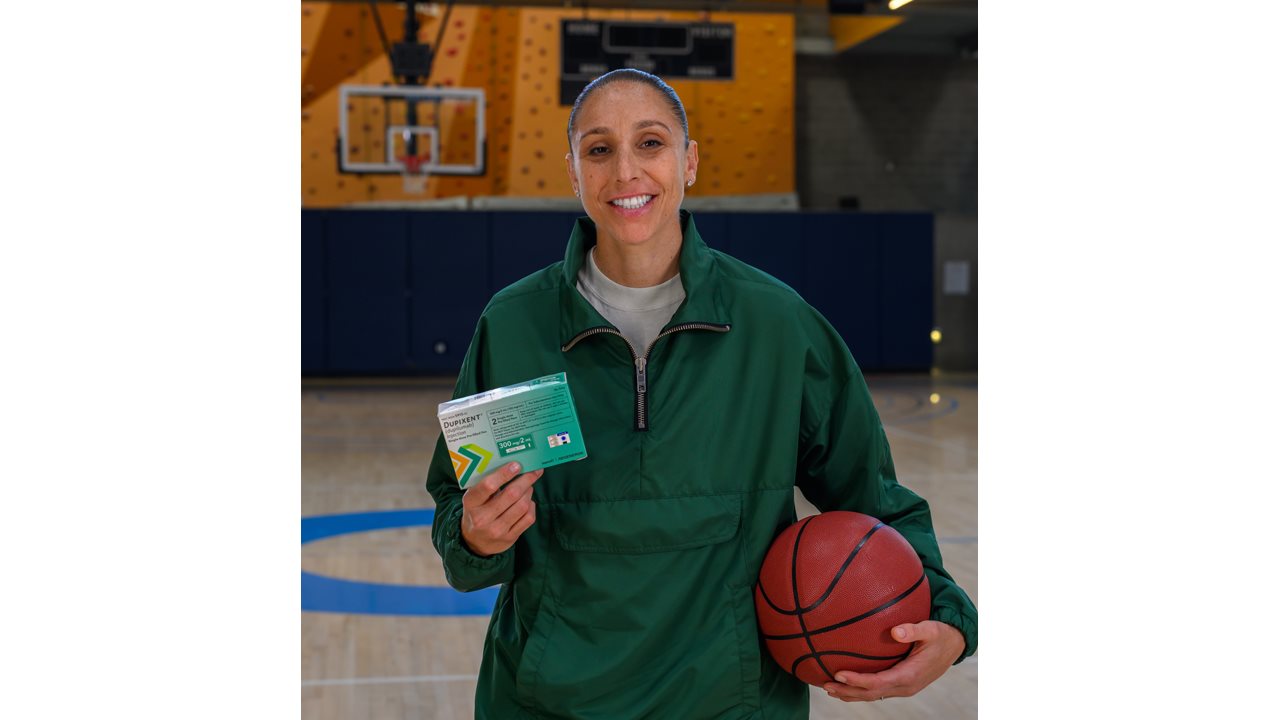
Diane holding a box of medication and a basketball while standing on a basketball court.

Advice For Others “Eczactly” Like Diana Living with Moderate-to-Severe Eczema

Diana wants other people out there who feel “Eczactly” like her and going through similar challenges with moderate-to-severe eczema to not lose hope.

“If you or a loved one has uncontrolled moderate-to-severe eczema, you’re not alone — there’s a lot of people out there dealing with similar struggles because of this disease. Don’t give up — it’s important to advocate for yourself or your loved one and to talk to a dermatologist about treatment options.”

Visit ShowUpAD.com to learn more about stories like Diana’s and learn more about Dupixent(dupilumab).

IMPORTANT SAFETY INFORMATION & INDICATION

Do not use if you are allergic to dupilumab or to any of the ingredients in DUPIXENT®.

Before using DUPIXENT, tell your healthcare provider about all your medical conditions, including if you:

  • have eye problems.
  • have a parasitic (helminth) infection.
  • are scheduled to receive any vaccinations. You should not receive a “live vaccine” right before and during treatment with DUPIXENT.
  • are pregnant or plan to become pregnant. It is not known whether DUPIXENT will harm your unborn baby.
    • A pregnancy registry for women who take DUPIXENT during pregnancy collects information about the health of you and your baby. To enroll or get more information call 1-877-311- 8972 or go to https://mothertobaby.org/ongoing-study/dupixent/.
  • are breastfeeding or plan to breastfeed. It is not known whether DUPIXENT passes into your breast milk.

Tell your healthcare provider about all the medicines you take, including prescription and over-the-counter medicines, vitamins, and herbal supplements.

Especially tell your healthcare provider if you are taking oral, topical or inhaled corticosteroid medicines or if you have atopic dermatitis and asthma and use an asthma medicine. Do not change or stop your corticosteroid medicine or other asthma medicine without talking to your healthcare provider. This may cause other symptoms that were controlled by the corticosteroid medicine or other asthma medicine to come back.

DUPIXENT can cause serious side effects, including:

  • Allergic reactions. DUPIXENT can cause allergic reactions that can sometimes be severe. Stop using DUPIXENT and tell your healthcare provider or get emergency help right away if you get any of the following signs or symptoms: breathing problems or wheezing, swelling of the face, lips, mouth, tongue, or throat, fainting, dizziness, feeling lightheaded, fast pulse, fever, hives, joint pain, general ill feeling, itching, skin rash, swollen lymph nodes, nausea or vomiting, or cramps in your stomach-area.
  • Eye problems. Tell your healthcare provider if you have any new or worsening eye problems, including eye pain or changes in vision, such as blurred vision. Your healthcare provider may send you to an ophthalmologist for an eye exam if needed.
  • Joint aches and pain. Some people who use DUPIXENT have had trouble walking or moving due to their joint symptoms, and in some cases needed to be hospitalized. Tell your healthcare provider about any new or worsening joint symptoms. Your healthcare provider may stop DUPIXENT if you develop joint symptoms.

The most common side effects in patients with eczema include injection site reactions, eye and eyelid inflammation, including redness, swelling, and itching, sometimes with blurred vision, dry eye, cold sores in your mouth or on your lips, and high count of a certain white blood cell (eosinophilia).

Tell your healthcare provider if you have any side effect that bothers you or that does not go away. These are not all the possible side effects of DUPIXENT. Call your doctor for medical advice about side effects. You are encouraged to report negative side effects of prescription drugs to the FDA. Visit www.fda.gov/medwatch, or call 1-800-FDA-1088.

Use DUPIXENT exactly as prescribed by your healthcare provider. It’s an injection given under the skin (subcutaneous injection). Your healthcare provider will decide if you or your caregiver can inject DUPIXENT. Do not try to prepare and inject DUPIXENT until you or your caregiver have been trained by your healthcare provider. In children 12 years of age and older, it’s recommended DUPIXENT be administered by or under supervision of an adult. In children 6 months to less than 12 years of age, DUPIXENT should be given by a caregiver.

Please see accompanying full Prescribing Information including Patient Information.

INDICATION

DUPIXENT is a prescription medicine used to treat adults and children 6 months of age and older with moderate-to-severe eczema (atopic dermatitis or AD) that is not well controlled with prescription therapies used on the skin (topical), or who cannot use topical therapies. DUPIXENT can be used with or without topical corticosteroids. It is not known if DUPIXENT is safe and effective in children with atopic dermatitis under 6 months of age.

dupixent logo

US.DUP.24.06.0421

Turning Imagination into Pet Care Innovation

2024-08-21T11:31:00

(BPT) – Close your eyes and imagine a world where pets are as healthy and happy as possible. Now open them and look at your own pet who gives you so much love and companionship. Big dreams for pets inspire big innovations, and that’s exactly what one company does every day.

“Most people think of Purina as a pet food company. I think of Purina as a pet science company,” said Sheri Smithey, senior vice president of Global Pet Care Research & Development at Nestlé Purina PetCare. “We have nearly 500 pet experts globally, ranging from veterinarians, engineers and animal nutritionists to pet behavior scientists, food scientists and immunologists, all working to understand the science of pets to create products and technology that will make their lives better.”

Smithey’s team is responsible for all aspects of R&D for Purina including nutrition, digital solutions, engineering, product development and packaging. She knows that by asking the big questions, you find the big solutions. The key to innovation is to start with the imagination.

Here are several examples of what Smithey’s team imagined and the resulting innovations that now benefit pets worldwide:

Imagine: The daughter of a Purina scientist begged for a cat that she couldn’t get because of her allergies. So, what if there was a way to reduce the major allergen in cat hair and dander so more people can have a cat in their home?

Innovation: The world’s first allergen-reducing cat food, Pro Plan LiveClear, is an award-winning option that is a gamechanger for people with allergies to cats.

Imagine: What if senior dogs could think and act like younger dogs again, and instead of slowing down, rediscover energy and playtime?

Innovation: Pro Plan Bright Mind makes a difference for dogs ages 7 and older, featuring enhanced botanical oils that provide an additional energy source for senior dogs’ brains, helping them to think and act more like when they were younger.

Imagine: What if we could know more about feline health simply by better understanding their litter box habits?

Innovation: The Petivity smart litter box monitor connects to a smart device to share crucial behavioral data that could show signs of potential health problems like kidney disease.

Imagine: What if there was an easy way to help keep dogs’ and cats’ teeth clean and healthy that doesn’t involve the recommended daily brushing by their human friends?

Innovation: Dentalife is a treat that tastes good and supports the oral health of cats and dogs, giving confidence to pet owners everywhere.

Imagine: What if there were savory options to help entice the appetite that notoriously picky feline friends couldn’t resist?

Innovation: By studying the taste and texture preferences of different cats, a new product form was created as supplemental feeding enhancements for those with selective palates: Fancy Feast broths and Friskies lil’ soups.

“Our imaginations are the springboard to ask big questions and find big solutions, and all our work starts by observing how pets live today, identifying the challenges that lessen the length or quality of their lives, and imagining a future where those challenges no longer exist. Each project we create began with a simple word: Imagine,” said Smithey.

How will AI transform your company and its workforce?

2024-08-20T23:01:00

(BPT) – The promise of AI has raised many questions about how it will impact the workforce. Should the speed of AI development be considered a threat to workers, or a source of opportunity to them in this rapidly changing environment?

Fundamentally, generative AI will help workers, according to Cognizant CEO Ravi Kumar S. His optimism is fueled by a deep understanding of the best ways this technology can be used. How and where AI is adopted is what Cognizant focuses on — advising companies on the best deployment of these tools, tailored to the needs of each enterprise.

“One of the main effects of generative AI is that it will change how we assess expertise in various disciplines,” said Kumar. “It will also transform how different disciplines can communicate and collaborate, such as a software engineer and medical specialist using AI to translate their professional vocabularies into language the other can understand.”

Kumar answers commonly asked questions about AI, drawing on research Cognizant has conducted to better understand how it will impact the workforce today and into the future.

Why won’t AI replace humans in the workforce?

AI can automate many tasks, from generating emails to coding and more, potentially freeing up workers to spend more time creating and innovating. But most jobs at a variety of levels still need a human.

AI will never create a like-for-like replacement for a human position. For example, AI is never going to replace surgeons, but generative AI can perform administrative tasks that help doctors have more time to see and care for patients. Generative AI can also aid diagnostics, since there is too much data for any one doctor to know. AI opens access to more data and can identify patterns in that data most humans wouldn’t have the capacity to see.

Can you assess the potential impact of AI industry-by-industry or job-by-job?

We quantify the impact of AI through what we call an “exposure score” and a “friction score.” The exposure score estimates how likely a task is to be taken over by AI, while the friction score refers to how easily that employee can be retrained.

Consider a developer versus a fisherman. There are 21 million developers worldwide, but programming work can largely be taken over by AI — a high exposure score. However, developers are highly retrainable, giving them a low friction score. On the other hand, fishermen are unlikely to be replaced with AI, but if robots were created that could fish, what transferable skills do they have? That’s an example of a low exposure score and high friction score.

Cognizant and Oxford Economics partnered to develop what we’ve called our “New Work, New World” study, which analyzes how AI will affect the workforce. The study applied these scores to 18,000 tasks in 1,000 jobs, discovering that 90% of jobs could experience some degree of disruption by AI over the next 10 years.

Cognizant currently works with companies to assess exposure and friction scores of all their positions, among other crucial information, to help companies better understand how and when to retrain employees. Understanding what each company and their employees need now and into the future is key to helping them optimize AI for growth and development.

How will AI impact business profitability?

We’re now in an era of hyper-productivity as enterprises fundamentally rewire their businesses for new levels of agility, productivity and innovation. In a recent analysis we did as part of our “New Work, New World” study, we found that more than three-fourths of businesses (76%) are looking to use generative AI to create new revenue streams. Companies also plan to invest an average of $47.5 million in generative AI this year.

With our data showing generative AI tools potentially injecting nearly $1 trillion into the U.S. economy and even more globally over the next 10 years, it’s not surprising the survey identified generative AI as a core source of potential productivity and growth for most companies.

But to fully harness this hyper-productivity, we must expand the pace of training and upskilling around the world so that workers are prepared to participate in the digital economy. This is why we launched our Synapse initiative last year, which is aimed at training one million individuals and creating employment opportunities in the future digital economy.

What do companies need to help them optimize AI?

Rolling out any new technology enterprise-wide is complex and challenging. So far, only 26% of the companies surveyed have been able to implement AI company-wide, and many express concern these delays could give competitors an advantage.

Our data also points to a need for outside expertise to help them with AI adoption, with 43% of companies planning to work with external consultants to strategize using AI.

To provide this much-needed support, we’re finding more and more companies are tapping us to help them traverse the AI productivity-to-growth journey. We’re working with enterprises across industries to modernize their technology, reimagine processes and transform experiences so they can stay ahead, including maximizing AI to their advantage.

I’m optimistic about the future and how companies can use generative AI for critical tasks while developing a future-ready workforce through reskilling. Used thoughtfully, we can ensure generative AI is a positive force not just for economic productivity, but also for workers and society.

Learn what generative AI can do for your business at Cognizant.com.