6 expert tips to financially prepare your college student

2024-08-05T09:01:00

(BPT) – Summer may be in full swing, but the fall semester is right around the corner. Your family will be busy helping your student pick out decorations for their dorm room, plan move-in day travel and other pre-college errands. Why not use these tasks as financial lessons for your college-bound child?

Financial skills are vital and your student may not pick up this knowledge in the classroom. Now is the time to equip them with these skills before they head off to college. Check out these six financial lessons you can teach your college student this summer!

Mom and college-bound teen working on laptop in a four season porch.

1. How to set a budget

Before your student ever sets foot on campus, you and your student will be spending money to get them ready for their fall semester. According to a recent College Ave survey, some summer expenses you should plan for include electronics ($1,028 on average), travel and transportation ($638), dorm room essentials ($560) and new clothes ($380).

This pre-college spend is a great opportunity to teach your student how to make a budget. Have them make a list of items they’d like to purchase and how much these items typically cost. Next, if you’re planning to contribute to their spending fund, tell them how much you can give so they can determine how much they’ll need to contribute.

Once they have all this information, show your child how to make a paper or digital budget that can help guide their shopping. Don’t forget to emphasize the importance of sticking to a budget!

Mom and son pushing a shopping cart through the electronic section of a big box retailer.

2. Ways to save

Cost-saving strategies can help your student stretch their budget. Teach them tips and tricks to save. For example, instead of buying textbooks, encourage them to rent them or find secondhand textbooks from older students at a lower price.

Transportation is another expense that can put a dent in your child’s wallet. Help them research campus transportation options so they can avoid the costs of gas, car insurance and routine maintenance.

Also, remind them that many businesses offer student rates. From movie tickets to streaming services to dining, your child can take advantage of these lower prices and have fun while saving!

Man checking his credit score online.

3. Build credit history for the future

A positive credit history is essential for future financial success. While the majority of college students know having a good credit score is important (77%), only half know how to improve their credit score (54%).

Explain to your child how they build credit history and help them apply for a student-specific card like the Ambition Card from College Ave. With no credit check to qualify, no interest, no late fees and the benefit of cash-back rewards, the Ambition Card makes it simple to start building their credit history. Your child can use the card to pay for everyday purchases, from textbooks to takeout.

Young woman reviewing paper work with cell phone while sitting at her kitchen table.

4. Build an emergency fund or savings

Saving is just as important, if not more so, than savvy spending. As you help your child set a budget, make sure to teach them how to set money aside for an emergency fund. No one can predict the future. That’s why it’s important to underscore the importance of setting aside money for a rainy day.

Mom and dad helping college bound daughter answer question on an online form while on their patio.

5. Search for scholarships

The scholarship search doesn’t end with high school graduation. College students can still qualify for scholarships throughout their four-year program. Their school may even offer major-specific scholarships.

Encourage your child to apply for these scholarships and continue to search for outside scholarships as well. College Ave provides scholarships and sweepstakes for students and parents to help make college more affordable. These promotions are offered throughout the year, so make sure to check back often and apply.

person filling out a student loan application using a pen and paper.

6. Borrow smartly

If you plan on using loans, borrow federal student loans in the student’s name first, as those offer unique benefits — such as low interest rates and income-based repayment plans — not typically offered by private lenders.

If you find you still have a gap to cover, consider College Ave’s private student loans. College Ave offers good rates, flexible repayment terms and great customer service. Use the College Ave student loan calculator to help estimate your monthly payments.

If you can, start paying back student loans now — even as little as $25 a month — as that will help lower the total cost of your loan.

Don’t let college expenses take your student by surprise! By teaching your child these six financial lessons, you can help them stress less about money so they can focus on this exciting stage of life.

College Ave is not a bank. Banking services provided by, and the College Ave Mastercard Charge Card is issued by Evolve Bank & Trust, Member FDIC pursuant to a license from Mastercard International Incorporated. Mastercard and the Mastercard Brand Mark are registered trademarks of Mastercard International Incorporated.

The Ambition Card is designed to help you build your credit history; however, a variety of factors impact your credit including payment history, utilization, derogatory marks, account age, total number of accounts, and inquiries—not all factors are equally weighted.

0% APR. Account is subject to a monthly account fee of $2, account fee is waived for the initial six-monthly billing cycles.

Rewards are not offered by Evolve Bank & Trust and are instead offered and managed by College Ave. Cash back rewards are subject to the Ambition Rewards Terms & Conditions.


Make sure you have a clear bath from the living room to the kitchen, or the bedroom to the bathroom.

Buying a new home? 3 ways to master your mortgage and save

2024-08-02T09:01:00

(BPT) – It’s probably an understatement to say that buying a home can feel overwhelming, especially in the current housing environment. From the different types of loans and lenders to the hidden fees that drive up costs, it’s easy to feel lost, confused and unsure if you’re making the right decisions for you and your household. In fact, a recent study from the JPMorgan Chase Institute shows that a lack of understanding the mortgage process could lead to unfavorable terms in the long run and a higher risk of costs.

But, whether you’re a first-time homebuyer or in the market for a new home, all hope is not lost. Understanding your mortgage options and the process can not only save you money in the long run, but can help you feel more confident in making the best choice for your specific housing needs.

To master your mortgage and buy your dream home, it can be helpful to start with familiarizing yourself with different types of mortgages, comparing rates, and understanding additional ways to save.

1. Get to know the different mortgage types

One of the main, and often most confusing, decisions you’ll have to make is choosing a mortgage loan type. And just like anything that’s personalized, there is something for everyone. The following explanation focuses on debunking fixed-rate versus adjustable-rate mortgages, but if you’re interested in learning more about conventional versus FHA loans, check out this article or connect with a Home Lending Advisor.

  • A fixed-rate mortgage is a loan where the interest remains the same over the life of the loan. So, what this means is your rate will never increase … but it also won’t decrease if the Federal Reserve lowers interest rates. Typically, this loan is recommended if you plan to be in your home for longer than 10+ years. The plus side of a fixed-rate mortgage is that it’s easier to budget if you always know what your interest rates and payments will look like.
  • An adjustable rate mortgage, or ARM, is a loan where the interest rate is fixed for a specific amount of time, then adjusts periodically. Essentially, your monthly payments will fluctuate based on what the market is doing, so some months your payment might be higher or lower depending on market rates. This is usually a great option for those who don’t plan on living in their house for very long, because typically ARM interest rates start lower than the fixed-rate offerings and then adjust higher or lower over time.

2. Compare your rates

Now that you understand the differences between fixed-rate mortgages and ARMs, it’s time to engage in America’s greatest pastime: shopping around. No matter what loan type you choose, it’s important to compare rates from different types of lenders and select one with terms you’re most comfortable with.

You can find current rates, along with a helpful calculator to figure out what exactly you can afford, at Chase.com/MortgageTools. The mortgage calculator is an easy way to determine what your monthly payments would be and if that aligns with your budget. It also provides the most up-to-date rates in the area where you’re house hunting.

Once you find a rate that feels good to you, it’s a good idea to lock it in if your lender provides that option. For instance, the Chase Homebuyer Advantage program gives buyers the option to lock in their mortgage rate for 90 days with no upfront fees. This gives you peace of mind if you’re worried about rates increasing as you shop around in, say, a very turbulent housing market.

3. Uncovering more ways to save

While most people look at mortgage types and rates as ways to save (which you absolutely should do), many leave money on the table by not exploring homebuyer grants and down payment assistance programs that can save them thousands on homes.

For example, Chase offers a homebuyer grant of up to $7,500 when purchasing homes in more than 15,000 eligible areas across the country. You can use it to save in a variety of ways, such as lowering your interest rate, reducing closing costs or putting it toward your down payment. Check your eligibility for a grant with the Chase Homebuyer Assistance Finder.

Chase also offers a Closing Guarantee, which promises an on-time closing for eligible mortgages in as soon as three weeks or the customer may receive up to $20,000. Essentially, the closing guarantee can help you close quickly, which is helpful in a competitive market.

The homebuying process can feel like a lot, but by understanding the mortgage types, comparing your rates and using grants and incentives to save, you can navigate the process with confidence and make the best decision on your road to home.

Step behind the velvet rope into Kevin Hart’s Coramino Live Lounge

2024-08-02T14:59:00

(BPT) – For the first time ever, Kevin is inviting guests to get a front row seat into how he lives. Think inner circle levels of exclusivity. For three nights only, guests will step behind the velvet rope for two of Kevin’s favorite things: good company and great tequila.

Guests will get the Kevin Hart level VIP treatment complete with a tequila tasting with the man of the hour, a live DJ set and a night of all-star performances straight from Kevin’s contact list.

“The Coramino Live Lounge is the pairing of my two greatest passions — comedy and tequila,” Kevin said. “It’s a testament to all my hard work, and now I’m excited for you to get a front row seat to how I live.”

About the experience

Kevin Hart is inviting fans into his inner circle for three separate one-night experiences for up to 30 guests each in Los Angeles. The experiences will occur September 24, 25 and 26 for 15 guests and their plus ones for $76 per person, a nod to Kevin’s birthday on July 6.

Here’s what you can expect:

  • You’ll be greeted by Gran Coramino’s lineup — cristalinos, añejos, and Kevin’s personal favorite, reposados — all paired with the perfect plant-based appetizer.
  • Kevin will personally guide you through a tasting alongside Chai Lee, the 2023 Gran Coramino Bartender of the Year.
  • After the tasting, you can enjoy four signature cocktails — The Boss, The Hart, Summer Melon Spritz, and The Mic Drop.
  • The live DJ is gonna bring the beat, so you gotta bring the heat.
  • To top it all off, we’ve got a killer lineup of all-star performers straight from Kevin’s contact list.

How to request to book

Comedy fans and tequila connoisseurs can request to book1 and learn more about all Icons at airbnb.com/kevinhart.

The booking request period opens on Wednesday, August 21 at 9:00 AM PT and closes on Monday, August 26 at 11:59 PM PT for three separate experiences for 30 people each occurring September 24, 25, and 26 at $76.

Guests must be 21+ and able to provide a government-issued ID.

Residents of jurisdictions where alcohol is prohibited by local law are not eligible to book this experience.

1Brought to you by Airbnb. There is no cost to submit a request. See full rules for terms, including age and geographic eligibility, and how data is used.

Please drink responsibly. Learn more at Responsibility.org.

Vacation hydration: 6 ways to get your 8 glasses each day

2024-08-01T08:01:00

(BPT) – Planning a getaway? Make sure to double-check you’ve packed your phone charger, sunglasses, medication and toiletries — items people typically realize (to their horror) they’ve left behind when they arrive at their destination. It’s common to forget items like these when you’re caught up in the whirlwind of getting out the door for your well-deserved time off. One thing you shouldn’t forget: Staying hydrated while you’re there. But for many, that’s not easy to do.

According to a new survey by Talker Research on behalf of CG Roxane, 40% of travelers find it difficult to stay hydrated during their vacation. They just plain forget to down those eight glasses per day or they’re more focused on the fun and attractions and find the day gets away from them. The survey found only 22% of Americans monitor how much water they’re drinking each day on vacation.

Another possible reason people slip out of their hydration routines on vacation? The majority of travelers (65%) are concerned about the quality of the tap water at their destination, be it their hotel room or the local restaurants.

“Everyone knows that summer brings travel and fun, but it also brings higher temperatures and a greater chance for dehydration,” said CG Roxane VP of Marketing Anne-Charlotte de La Porte. “With Americans concerned about consuming tap water or forgetting to drink water in general, it’s no surprise that staying hydrated when traveling is difficult for so many.”

Especially in this summer of unprecedented heat, it’s important to keep on top of your water intake when you’re seeing the sights or relaxing on the beach. Some ways to do that include:

Keep bottled water in your hotel room. This is an enormous help with hydration, and it also allays people’s concerns about the quality of water coming out of the tap in their hotel rooms. Pop a couple of bottles into your mini-fridge, and stash a gallon-size bottle on the bathroom counter for brushing your teeth — CG Roxane’s survey also revealed that one in three (29%) of Americans brush their teeth with bottled water vs. the tap water at their destination — and filling up the coffee maker in the morning. Crystal Geyser® Alpine Spring Water® is the number one nationally distributed bottled spring water in the United States and is a product of CG Roxane, which bottles water at its natural spring source.

Monitor your intake. Keep track of how much you’re drinking each day.

Plan ahead. Think about the day’s activities, and plan for how much water you’ll need. Going to the beach? Make sure to pack a water bottle for each person into your beach bag. Hiking in a state park? Everyone tucks a bottle into their backpacks. Crystal Geyser® Alpine Spring Water® is the perfect ally for this — it comes in a wide range of bottle shapes and sizes so you can plan to take what you need. For the 47% of Americans that would like to see tethered caps on their bottled beverages, select 8oz bottles are now also available with an EZ cap option, keeping caps in place, allowing consumers both ease and peace of mind while minimizing environmental impact.

Set reminders. Alarms on your phone can keep you on track for good hydration.

Limit dehydrating drinks. Avoiding alcohol, coffee and sugary drinks will ensure you’re not working against your own hydration levels.

Listen to your body. Be aware of the signs of dehydration, including thirst, fatigue, headaches or dizziness.

By following these tips, you’ll stay hydrated on your travels. Now, get out there and enjoy your time off!

For more information about CG Roxane and its Crystal Geyser® Alpine Spring Water® products visit CrystalGeyserPlease.com.

*Data from a survey conducted by Talker Research, Market Research Society (MRS) and the European Society for Opinion and Marketing Research (ESOMAR), on behalf of CG Roxane from July 1 to July 8, 2024, with a panel of 2,000 general population Americans.

Overwhelmed by managing your healthcare? 5 ways technology can help

2024-08-01T08:05:00

(BPT) – Are you feeling overwhelmed by managing healthcare for yourself or loved ones? Most Americans report feeling that way — 65%, according to a new Harris Poll on behalf of the AAPA. The survey found people are spending the equivalent of one full workday each month, eight hours, managing healthcare for themselves and their loved ones.

Just think of how long you wait on the phone to schedule a doctor’s appointment, ask a question, or request a prescription refill. Given that, it’s not surprising that 73% of us feel the healthcare system is not meeting our needs.

It’s especially worrisome because all that hassle can lead people to skip or even delay healthcare. With the rise in cancer rates among young people and the current mental health crisis in this country, keeping up with one’s own healthcare and that of loved ones should be a priority.

Can technology help? After all, technology allows us to order anything online and have it arrive on our doorsteps later that day, apply for (and get) a mortgage with a few clicks on our smartphones, and control everything in our houses from the palms of our hands.

It should be able to help streamline the healthcare process, right?

The answer is yes. The right patient experience tools, like the NextGen® Closed Loop™ Patient & Practice Experience from NextGen Healthcare, can minimize the hassle involved in managing healthcare for you and your loved ones.

Unfortunately, as a patient or caretaker for a loved one, you can’t choose what technology your doctor uses. But don’t be afraid to ask the practice what patient experience options they offer and how you can make the most of them. And, when you’re seeking a new doctor, look for those with robust offerings that cover the entirety of your experience with them and will make managing your care the most convenient. Ask any healthcare practice you’re evaluating about their approach to the following:

  1. Access. It’s essential that tools are in place for effective communication with the practice — after all, this is your health we’re talking about. A messaging function should be in place for you to ask questions at any time and convenient self-scheduling allows you to schedule appointments on your time. Ideally, you’ll also be able to join a virtual waitlist to secure preferred appointment times when they become available.
  2. Intake. The check-in process at doctor visits has long been a burden for everyone involved. A good patient experience platform can streamline this process, allowing you to request and schedule appointments, securely upload necessary information, and complete paperwork before you even step inside the practice.
  3. Visits. Your patient portal should have the functionality to enable virtual visits with your doctor or care team for many types of visits — ensuring that you receive the care you need without any barriers.
  4. Health management. This includes access to electronic bill pay and digital patient education resources. Everything you need to manage your healthcare should be available at your fingertips from anywhere. In some cases, your practice may even be able to offer remote patient monitoring to manage care for a variety of chronic conditions.
  5. Care coordination. You’ll want automated messaging, the ability to fill and refill medications easily, and a way to participate in patient surveys so you can be certain that your feedback is heard.

The right technology can be a powerful tool for streamlining the healthcare experience and making it much more manageable. It gives you, the patient, more control throughout life’s many health journeys — leading to healthier futures for you and your loved ones.

Visit NextGen.com to learn more.

Top tips for worry-free travel any time of year

2024-08-01T08:31:00

(BPT) – Travel is always in season, but don’t let the excitement of planning your next trip cause you to skip necessary safety precautions before you go away. Staying informed about where you’re traveling and being well-prepared for your trip is one of the best ways to help you soak in the destination to the fullest, allowing you to be at ease and on full vacation mode.

Here are some top travel tips and considerations provided by leading travel insurance and assistance company Allianz Partners USA for staying safe and informed wherever you go.

Purchase travel insurance. Some travelers may not think they’re spending enough money on their trip to warrant purchasing travel insurance. Beyond protecting the financial investment of pre-paid flights, hotels and tours, one of the primary reasons to purchase travel insurance is for emergency medical and emergency medical transportation benefits. An emergency hospital visit or medical evacuation, especially when traveling overseas, can be a significant expense. Since many foreign healthcare providers don’t accept U.S. healthcare plans, a hospital bill can be significantly more than the cost of travel insurance coverage with post-departure benefits. Not only can travel insurance protect your wallet from covered medical emergencies, but a reliable travel insurance provider can also provide 24/7 travel assistance with a dedicated team to help with everything from making sure you’re receiving the proper medical care to guaranteeing payment for a covered medical emergency. You’ll never feel alone when you have a travel assistance team behind you.

Have a plan if you get canceled on or need to cancel. While an early morning trip to the airport isn’t everyone’s cup of tea, opting for one of the day’s first departures can guard against missing a day of your vacation. Even if your early morning flight is canceled, it’s possible you can still get to your destination the same day if there is another flight or airline flying that afternoon or evening. If you book a late afternoon or evening flight, chances are that flight was the last option, and you may be stuck with finding a hotel room and starting your vacation a day late. Another scenario is you needing to cancel your vacation yourself. If you purchase a travel insurance policy with cancellation benefits when you book your trip, you may be able to receive a refund of your pre-paid, non-refundable travel deposits if you have to cancel for a reason covered by your policy (for example, your child unexpectedly takes a tumble on the trampoline and ends up with a broken bone, so you can no longer travel).

Allianz collateral paired with boarding passes on a table

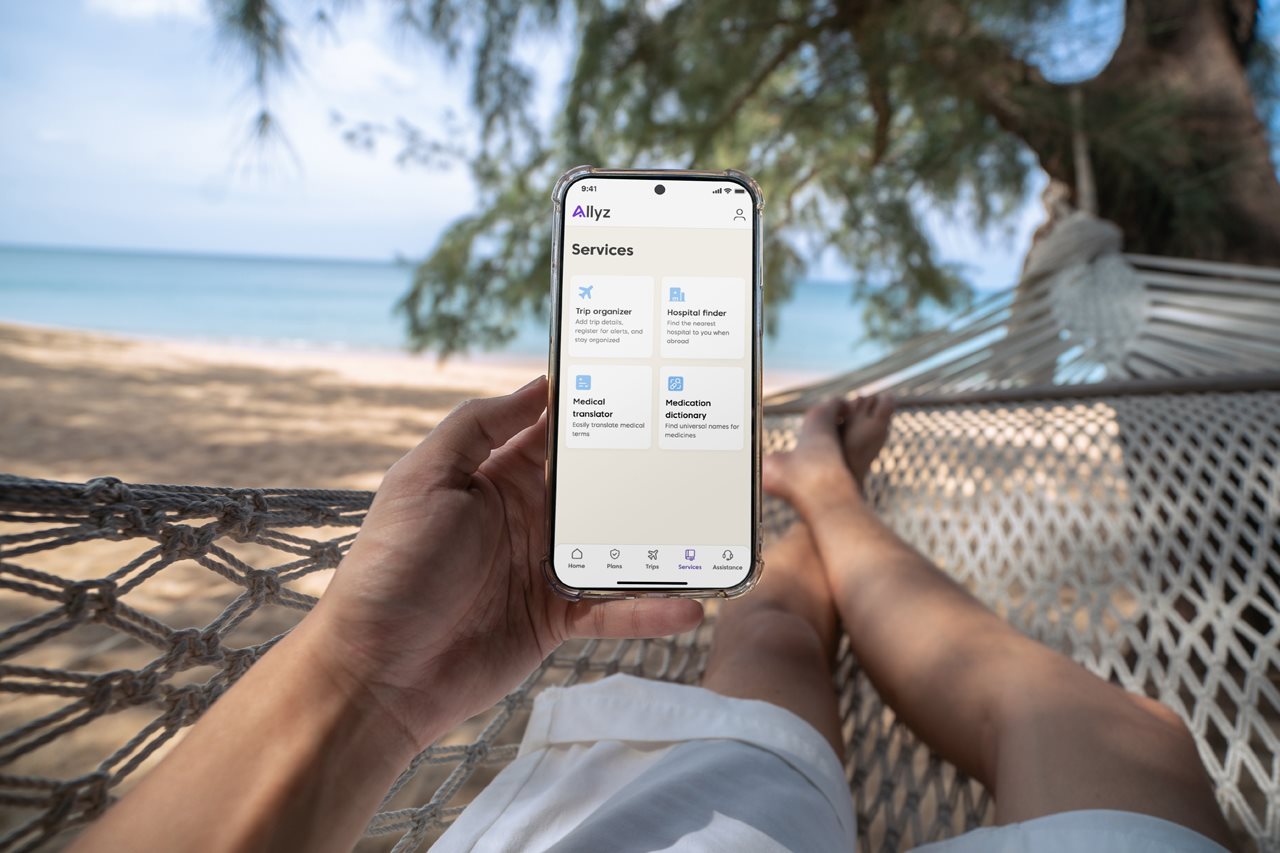
Medications aren’t the same around the world. If you find yourself needing to purchase over-the-counter medication while on an international trip, the local pharmacy might not immediately recognize the product you request. The new Allyz® TravelSmart mobile app from Allianz Partners offers free travel services on download, has a medical dictionary to help you find your desired medication and identify the global pharmaceutical name to share with the pharmacist to secure a local equivalent. If you’re not sure what medication would help best, the app also features a medical translator to source keywords to describe how you’re feeling, from a headache, earache, fever and more, and can translate the word or phrase into the native language.

Know what to do in case of a medical or safety emergency. Thinking about what to do in case of an emergency abroad isn’t fun, but it’s important to consider. Not only does the Allyz® TravelSmart app include a hospital finder to quickly direct you to nearby healthcare facilities, but it also can deliver Geo-located Safety and Security Alerts to warn you of any danger in the area where you’re traveling, major or minor, and an embassy finder that will point you to the closest U.S. embassy. It’s security, in the palm of your hand. The app also has quick access to local emergency numbers. Simply choose the country you’re traveling in, and the local fire department, emergency and police department numbers will appear for you to call if experiencing an emergency. Bonus tip: Parents, you’ll sleep easier if your college kids have these features handy when they’re taking a semester abroad. Whether traveling internationally or domestically, the travel insurance company also provides its customers access to a 24/7 travel assistance team, who can talk you through security and medical dilemmas over the phone.

null

Traveling is a great way to spend your vacation time any time of year, and making sure you’re taking precautions to stay as safe as possible can set you up for a successful and worry-free trip. For more information, visit allianztravelinsurance.com, or download the Allyz® TravelSmart app for travel organization and information in the palm of your hand.

Considering a career shift? 7 reasons to explore substitute teaching

2024-08-01T08:01:00

(BPT) – The landscape of work in America is evolving. As the freelance economy rapidly grows, more people are seeking careers that are both flexible and fulfilling. According to Statista, the freelance sector reached $445.2 billion in the U.S. last year, more than doubling since 2018, and it continues to expand. Currently, 64 million Americans are engaged in freelance work, making up 38% of the workforce, with projections suggesting it will increase to 50% by 2027.

Thinking about leaving your traditional nine-to-five job? You might consider roles such as rideshare driving, delivery services, personal shopping or freelance work in your current field. However, there’s another option that offers significant benefits, flexibility and fulfillment: substitute teaching. Substitute teaching provides a unique opportunity that transcends typical freelance work, elevating it to a highly respected and impactful career choice.

The Hidden Gem of Substitute Teaching

Although demand for substitute teachers has been on the rise since before the pandemic, many people are unaware that working as a substitute teacher can offer the flexibility often associated with freelance work without requiring previous experience in teaching. It’s an opportunity that provides both personal and professional rewards, and Kelly Education — the nation’s most trusted source for educational workforce solutions — can help. Here’s why substitute teaching stands out:

You don’t need a teaching degree. From classroom instruction to special education, tutoring, nursing, and food services, each role in education generally comes with specific requirements; however, you typically don’t need a specialized education degree to become a substitute teacher. This opens the door for many who are passionate about education but may not have the formal qualifications.

Split screen image of a retired man to his right he is measure a piece of wood in his shop at home and to his left he is teaching highschool students in a classroom.

You are not on your own. Kelly Education provides free training to ensure you are well-prepared and confident when you step into your first classroom. Substitute educator training equips you with knowledge, tactics and skills essential for thriving in a classroom environment and enhancing student learning. Plus, you’ll receive compensation for post-hire orientation on district-specific policies and procedures.

You decide your schedule. One of the greatest advantages of substitute teaching is the ability to create a schedule that aligns with your lifestyle and priorities, ensuring you never miss out on what truly matters in your life.

Split screen image of a man to his right he is making cupcakes with his daughter and to his left he is in a chemistry class with elementary students.

You get benefits. Unlike typical freelance work, substitute teachers working with Kelly Education have access to ACA-compliant healthcare coverage, optional medical, dental and vision plans, retirement savings programs, bonuses and more.

You are paid weekly. Financial stability is crucial, and with Kelly, you get paid every Friday, ensuring a consistent income stream.

It’s a growing field. As the educator shortage continues nationwide, substitute teaching is a field with tremendous potential for growth. The need for qualified substitute teachers is increasing, providing ample opportunities for those interested. Additionally, substitute teaching can serve as a pathway to full-time opportunities within the education sector.

It’s an enriching next chapter. Substitute teaching is ideal for recent graduates exploring career options, individuals considering a long-term commitment to education, and retirees looking for a fulfilling way to supplement their income. The diversity of backgrounds among substitute teachers — healthcare professionals, entrepreneurs, college students and more — enriches the classroom environment.

By choosing substitute teaching, you can make a meaningful impact on students’ lives while enjoying the flexibility and autonomy you desire. Each substitute teacher brings unique experiences and skills to the classroom, contributing to a richer educational experience for students.

Interested in learning more? Contact Kelly Education to get started on your journey as a substitute teacher.

6 tips to fuel the back-to-school season

2024-08-01T08:01:00

(BPT) – As summer winds down and the busy back-to-school season approaches, maintaining healthy habits is essential for a smooth transition into the classroom. To help parents feel more prepared to take on the school year ahead, Registered Dietitian and Nutritionist Dawn Jackson Blatner shares a few valuable tips.

1. Take study breaks

Getting the kids to spend time on homework can be tough to enforce, but you can make it easier by planning short breaks to recharge. Encourage the kids to step away from homework for a quick brain rest or an exercise break to get the body moving for 10-15 minutes. Integrating breaks into homework time can also prevent burnout and keep the atmosphere positive and productive, ensuring they come back refreshed and ready to crush that next assignment.

2. Pack in the protein

Ensure lunchboxes and after-school snacks are packed with healthy protein options such as cheese or meat sticks, yogurt, milk, hard-boiled eggs or nuts. These nutritional powerhouses will keep kids feeling satisfied throughout the day, supporting their energy levels and concentration. Incorporating a variety of protein-rich foods also helps promote overall growth and development.

3. Walk for better focus

Whether in the morning before school or right after dinner, a quick walk around the block with the kids can help boost energy levels and improve focus. Simple yet effective, a quick walk allows them to release any pent-up energy and clears their minds, ultimately benefiting both their physical and mental health.

4. Enjoy after-school activities

Enrolling kids in after-school sports, music lessons or arts clubs can help kids stay active and burn off energy, while also providing fantastic opportunities for fun and socializing. These activities not only promote physical, mental and emotional wellness, but also teach important life skills that can transfer into the classroom including teamwork, discipline and time management.

5. Get back into hygiene habits

The return to school and after-school activities raises the potential exposure to viruses, so it’s important to maintain regular hygiene habits. Encourage thorough handwashing when getting home from school, before and after meals and post-outdoor activities. Additionally, reminding kids to cover their mouths when coughing or sneezing can further reduce the spread of germs.

6. Explore new recipes as a family

After a long day of school, homework and other activities, getting together as a family to test out new recipes can be a great way to unwind. This is also the perfect way to incorporate nutritious foods into everyone’s diets, like Eggland’s Best eggs, which contain more than double the Vitamin B12 and 6 times more Vitamin D compared to ordinary eggs, to keep you energized and satisfied throughout the day and boost your body’s immunity to fight off harmful bacteria.

Try these delicious Anytime Trail Mix Cookies from Eggland’s Best. They are packed with nutritious ingredients like Eggland’s Best eggs, rolled oats, nuts and seeds, making them a wholesome snack throughout the day!

Eggland’s Best Anytime Trail Mix Cookies

Prep time: 10 minutes
Cook time: 12 minutes
Yield: 24 cookies

Ingredients:

2 Eggland’s Best Eggs, large
1 cup rolled oats
1 ripe banana
2 tablespoons honey
1 cup mixed nuts/seeds, coarsely chopped
2 tablespoons mini chocolate chips
Cooking spray

Preparation:

1. Preheat oven to 350 degrees F.
2. Pulse oats in blender a few times, until mostly a flour texture. Set aside.
3. In a bowl, mash banana with a fork or potato masher (it’ll be about 1/2 cup).
4. Stir in Eggland’s Best Eggs and honey, until smooth.
5. Stir in oat flour, nuts and chocolate chips.
6. Mist baking pan with cooking spray. With a cookie scoop or spoon, place batter into 24 cookies (about 1 tablespoon each). With clean fingers, lightly pat down each one to look like a cookie shape, because the batter won’t spread when baked.
7. Bake approximately 12 minutes, until bottoms are golden.

Additional Notes:

1. Store covered at room temperature for up to 5 days, or up to 10 days in the fridge.
2. Can be made dairy and gluten free with dairy-free chocolate chips and gluten-free oats.

Americans Support Sustainable Tech, Seek More Training

2024-07-31T08:05:00

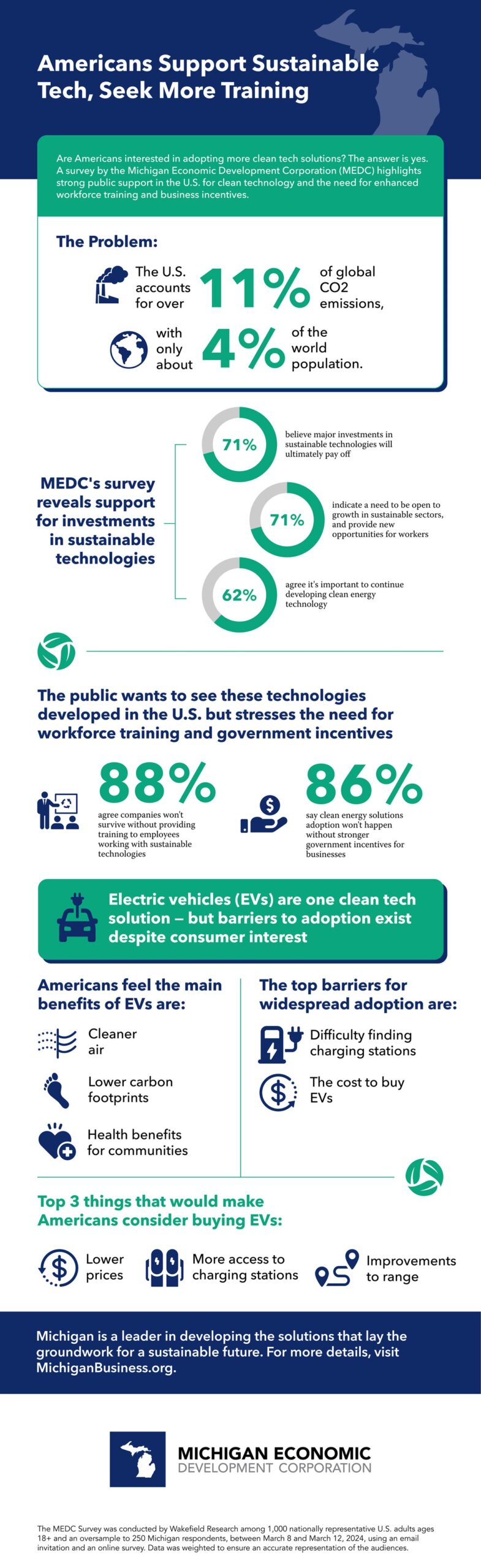
(BPT) – A survey by the Michigan Economic Development Corporation (MEDC) highlights strong public support for clean technology and the need for enhanced workforce training and business incentives. Read on for more information about support for sustainable technologies, including electric vehicles. For a more detailed look at Michigan’s sustainability impact, visit https://www.michiganbusiness.org/industries/clean-energy/.

Infographic

Is your thinking outdated? 4 common carton recycling myths debunked

2024-07-31T08:01:00

(BPT) – No one wants to feel like their thinking is outdated, but some misconceptions persist longer than many people realize. For instance, if you believe food and beverage cartons have a wax layer, you’re holding onto an idea that hasn’t been true since John F. Kennedy was in office.

Food and beverage cartons are used for safely storing a variety of popular foods and drinks. Head to any convenience or grocery store and you’ll find many products are packaged in cartons, including milk, juice, beans, soups, water and wine. These cartons are lightweight, efficient and made primarily from paper, a valuable renewable resource.

Given their widespread use, it’s important to stay informed about the truth of recycling food and beverage cartons. The Carton Council debunks these four carton recycling myths, so you can learn how to properly recycle cartons and share the truth with others.

1. Myth: Cartons can’t be recycled

Fact: According to a 2024 national survey, 71% of consumers believe cartons are definitely or probably recyclable. So, what about the remaining 29% that don’t know cartons are recyclable? It might stem from a common misconception that all cartons are made with wax, which can’t be recycled.

It’s true that at one point some food and beverage cartons were made with wax to make them sturdier for transportation and shelving. However, cartons have not contained any wax since the early 1960s!

Modern cartons contain no wax and are primarily made of paper, with small amounts of plastic and sometimes aluminum, in the case of shelf-stable cartons. These layers protect contents and keep light and oxygen out, allowing them to remain safe without the need for preservatives or refrigeration. Despite no longer containing wax, cartons remain strong enough to store liquids and other foods, whether they are the type found in refrigerators or the shelf-stable kind that store products for long periods at room temperature.

2. Myth: Recycling doesn’t matter

Fact: Every recycled item helps create a more sustainable future! When you recycle a carton, you’re helping keep them out of the landfill, reducing waste, conserving resources and protecting the environment.

Recycled cartons can have a second life as new paper products — such as tissue or toilet paper — or be made into sustainable building materials. As protecting the earth’s natural resources and the climate becomes increasingly important, recycling is one easy way everyone can help.

3. Myth: Recycling cartons is difficult

Fact: Recycling cartons at home can be as easy as 1-2-3! When you finish a food or beverage carton:

1. Empty any remaining liquid.

2. Replace the cap or push the straw back into the carton.

3. Toss the carton into the recycling bin.

In three simple steps, you can help preserve natural resources, reduce climate impact and actively help to reduce litter.

4. Myth: My area doesn’t recycle cartons, so I should toss them

Fact: According to the Carton Council, 62% of U.S. households can recycle food and beverage cartons through local programs. If you are unsure if they are accepted where you live, check the Carton Council’s address locator at RecycleCartons.com.

If your area doesn’t recycle cartons, you still have options. You can mail cartons to facilities in the Carton Council’s network that can recycle them for you. You can also sign a petition to inform your local recycling program that recycling cartons is important. By adding your name to the list, you can help grow the number of facilities that recycle cartons across the nation.

Now that you know the truth about carton recycling, share this information with others! By helping debunk these myths and properly recycle food and beverage cartons, you’re doing your part to promote sustainable practices and contributing to a greener, cleaner planet.