7 tips for electrical safety in and around your home

2024-05-13T12:01:00

(BPT) – May is Electrical Safety Month! It’s a great time to remind yourself of the potential dangers associated with electricity and be proactive about electrical safety in and around your home, workplace and community. People tend to take electricity for granted — our lights, appliances, technology, and everything else we plug into a wall outlet should just work, right? — but it’s important to be mindful of safety to prevent electrical accidents, injuries and even fires.

Here’s an electrical safety checklist from the pros at Mr. Electric, a Neighborly company, one of the leading electrical installation and repair providers to homes and businesses nationwide.

Check cords. When was the last time you checked the cords on your lamps, appliances and electronics? The obvious first step is to look for fraying or other damage. But also be mindful of how they’re placed. Are your cords snaking their way under a carpet or furniture? Make sure they have a clear run from the unit to the outlet. And about those outlets…

Check outlets. Overloading is a no-no. Make sure you’re not plugging too many electrical devices into one outlet. But, just as important, and maybe more so, is checking the outlets themselves. Are any loose? Do any of them have discoloration or burn marks? If you see this, call Mr. Electric immediately. That’s a potential sign of electrical danger.

Be mindful of water. Remember to keep countertop appliances away from water sources like sinks and bathtubs. And check the outlets in your kitchen and bathroom to ensure they are Ground Fault Circuit Interrupter (GFCI) outlets, which cut power if there’s a ground fault.

Monitor extension cord use. If you have extension cords crisscrossing your rooms or using extension cords for appliances like window air conditioners that specifically advise against it, it’s time to rethink that.

Unplug appliances. We’re not talking about fridges and washing machines. But the toaster, the coffee grinder or your hairdryer — unplug those when not in use. Not only will it save money on your electricity bill (they draw electricity when plugged in), but it will add a layer of safety, too.

Consider a whole-home surge protector. With storm season in full swing, it’s time to think about protecting your appliances, technology and other devices with a whole-home surge protector. They work in much the same way as power strips (You have your computer plugged into one, right? If not, do it now.) but they protect the whole house and are built to withstand multiple power surges. To find out more or to get one installed, contact Mr. Electric.

Get an electrical home inspection. Not only is this important for the safety of your home and everyone in it, but getting your home’s electrical system checked by a professional will also offer you peace of mind. When Mr. Electric does an electrical home inspection, they thoroughly examine your entire electrical system to ensure that all electrical wires, systems and components meet legal safety standards, using the National Electrical Code (NEC) as their primary guideline. Upon completion of your electrical home inspection, a Mr. Electric inspector will provide a detailed, prioritized checklist, including areas needing immediate attention, recommendations for improvements, and potential upgrade possibilities.

To learn more or schedule a home electrical safety inspection, contact the pros at Mr. Electric. And then exhale, knowing your family is safe from electrical hazards.

12 ideas for home improvement projects to do now

2024-05-13T15:01:00

(BPT) – May is National Home Improvement Month! As the days get longer and the weather gets warmer, it’s the perfect time to breathe new life into your living space, whether you’re looking to revamp your kitchen, upgrade your landscaping, or tackle that long-overdue bathroom renovation.

To get you started, here are some ideas from the pros at Neighborly’s trusted network of local home service brands, including Mr. Rooter, Mr. Electric, Aire Serv, Mr. Appliance, Mosquito Joe, Precision Garage Door Service and Molly Maid.

Invest in sustainable features. Updating your bathroom? Investing in eco-friendly upgrades like a tankless water heater or water-conserving toilet is good for the environment. It can lead to a higher return on investment when you decide it’s time to move.

Install ceiling fans. Ceiling fans get the air moving in your home, and are a decorative addition to any room. Look for styles that complement your decor, and even add a dramatic flair.

Declutter. Take a look around your bedroom, living room or family room. Too much clutter? Decluttering your home can seem like a daunting task, but Molly Maid says it boils down to this: take note of what the room is supposed to be used for and remove anything that doesn’t pertain to that use. A pro tip to make it even easier: designate bins for items to keep, donate, sell or discard. Just toss the items in the appropriate bin and you’ll be halfway there.

Inspect your dryer for allergens. When you hear the word “allergies,” it’s easy to think of the more common allergens like pollen and dust, but there are several hidden allergens in homes that can cause a host of health issues. Inspect your dryer vents for mold, lint or animal droppings, and call Dryer Vent Wizard to remove dangerous foreign objects. And while you’re at it, organize your laundry room with new shelving or a hanging rod.

Switch to an HVAC zoning system. This allows you to regulate the temperature levels throughout different areas of your home to help keep every nook and cranny comfortable. Aire Serv also helps reduce energy consumption by allowing you to adjust temperatures in your home according to use.

Install kitchen ventilation. Properly ventilating your cooktop can help improve the overall air quality in your home and add a decorative, even dramatic, touch to the space.

Install crown molding. The best way to elevate your living space and make your ceiling appear higher is by installing crown molding. Not only is crown molding classic and timeless, but it also draws the eye upward. This will make the rooms in your home seem bigger than they are.

Replace your garage door. A new garage door can significantly increase your home’s value and curb appeal. Choosing an experienced, highly-rated company like Precision Garage Door Service can save money in the long term and give you peace of mind that your garage door is functioning optimally.

Landscape with retaining walls. Retaining walls help manage a sloping landscape and add character and beauty to your property. Transform your yard and property by using retaining walls to add terraces filled with flowers, herbs, vegetable gardens, or even small fruit trees.

Keep pests at bay. Invest in an outdoor mosquito control service if you’re looking for a powerful solution to handle a mosquito problem for outdoor areas. A company like Mosquito Joe can clear your yard of biting bugs and allow you to enjoy your outdoor spaces again — itch-free!

Paint your front door. This is one of the easiest, least expensive ways to give your home a dramatic pop in curb appeal. A company like Five Star Painting can give your front door and home a new, updated look with a new coat of paint, making it stand out.

Install new windows. Windows can set the tone for your home’s aesthetic and enhance your living space’s comfort. Choosing the right window for your home comes down to thinking about where you live, where the window would go, and your goals. Glass Doctor offers homeowners full-service window repair, replacement and installation.

Need help with any of these projects? Neighborly’s trusted network of local home service brands is dedicated to connecting you with reliable and skilled professionals in your area. When it comes to repairing, maintaining or enhancing your home, Neighborly is here to give your home the makeover it deserves. Visit neighborly.com or download the Neighborly App today to explore their services and connect with a local Neighborly pro.

Healthy Brain Aging: Strategies to Help Your Brain and Body

2024-05-13T08:01:00

(BPT) – Whether you’ve heard about cognitive health recently in the news or have a loved one who may be showing signs of cognitive decline, it’s natural to worry about how your brain health may change with age. In fact, recent findings from a McKnight Brain Research Foundation (MBRF) survey found that 87% of Americans are concerned about age-related memory loss and a decline in brain function with age.

While the concerns are natural, it’s important to understand what cognitive aging is and the changes to expect with age. Many people may not realize that forgetting a colleague or neighbor’s name at the grocery store and not remembering it until you get home isn’t a cause for alarm.

The MBRF recently launched the “Brain Works – Optimize Your Brain Span” campaign to educate the public on what cognitive aging is, as a first step to reducing fear and encouraging everyone to take action to promote healthy brain aging.

From diet to exercise to getting enough sleep, research suggests there are steps people can take to help keep their brains healthy across their lifespan. Yet, only 32% of the MBRF survey respondents said they believe they can take action to help control their brain health as they age compared to 68% who believe they can control their physical health with age.

To reverse that thinking, the Brain Works campaign aims to help people better understand the brain-body connection and encourages everyone to put the same amount of effort into caring for their brains as they do the rest of their bodies.

Tips to Optimize Your Brain Span:

Healthy Body, Healthy Mind

Taking care of your physical health by getting health screenings as recommended for your age is also important for your cognition. Be sure to manage any chronic health conditions you may have, like diabetes, high blood pressure and high cholesterol. Avoiding or quitting smoking will also help reduce the risk of cognitive decline.

Feed Your Brain

Eating a healthy and balanced diet that’s rich in fresh fruits and vegetables, whole grains, lean proteins and low-fat dairy products can reduce inflammation, the risk of chronic diseases, and help support brain health. For optimal brain health, also stay hydrated, limit alcohol consumption, and reduce your intake of solid fats, sugar, sodium and highly processed foods.

Break a Sweat

Did you know that strengthening your body also helps sharpen your brain? Physical activity has been consistently linked to numerous benefits for brain health and cognition. While any form of exercise is great, and even a walking program is good, aerobic exercise like biking or jogging is particularly beneficial for cognitive health. Aim to get your heart pumping and blood flowing for at least 30 minutes every day — even if you break it up into small bursts.

Ignite Your Intellect

Challenging and activating the mind with activities, like learning a new language, skill or hobby, helps keep your mind sharp. Feeling social? Invite friends over for a game night. Rather spend some time alone? Settle down with a good book or tackle a puzzle.

Find Your Zen

Stress is a natural part of life, but over time, chronic stress can negatively impact the brain. Whether you journal, practice yoga or indulge in a soothing massage, finding effective ways to relieve stress is essential for your brain health and overall well-being.

Keep your Friends Close

Great news for social butterflies! Staying connected with friends, family and your community is also good for your brain. Despite the benefits, only about half of the MBRF survey respondents identified social interaction as a way to promote brain health. Take this as a sign to call an old friend or invite a neighbor to go on a walk. Your brain and body will thank you!

Get Your Z’s

Not getting enough sleep may result in problems with memory and thinking, yet a third of American adults report regularly getting less than the recommended 7-8 hours of sleep. Help protect your brain by getting better sleep.

Learn more about the Brain Works campaign and how to optimize your brain span at: https://mcknightbrain.org/brainworks/.

About the Brain Works Campaign

The McKnight Brain Research Foundation launched the “Brain Works- Optimize Your Brain Span” campaign in March 2024 to educate the public on cognitive aging and to offer tips to help maintain optimum brain health with age. The campaign features information on cognitive aging, including an online hub of tools and resources from the McKnight Brain Research Foundation and other reputable organizations with cognitive health expertise. Visit the resource hub and learn more at: McKnightBrain.org/BrainWorks.

About the McKnight Brain Research Foundation Consumer Survey

The MBRF survey was conducted by Wakefield Research. Responses were solicited from 1,000 nationally representative US adults ages 18+, between December 11th and December 15th, 2023, using an email invitation and an online survey. Data has been weighted.

Difficulty swallowing? You may have eosinophilic esophagitis

2024-05-13T09:01:00

(BPT) – Do you find it difficult to swallow food? Does food feel like it gets stuck in your throat when you eat? These are common symptoms of eosinophilic esophagitis (EoE), a disease that affects an estimated one in 2,000 people in the U.S. EoE is reportedly increasing around the world.

What is EoE?

EoE is a chronic allergic condition. It involves inflammation and swelling in the esophagus. This can make it difficult to swallow food. The esophagus is the tube connecting the mouth to the stomach. Chronic inflammation from EoE causes damage to the esophagus that makes eating difficult or uncomfortable.

The main symptom of EoE is difficulty swallowing, but it’s not the only sign. According to the American College of Allergy, Asthma & Immunology (ACAAI), other symptoms may include:

  • Irritability
  • Problems with feeding
  • Poor weight gain and growth among infants and toddlers
  • Acid reflux
  • Regurgitation
  • Vomiting
  • Stomach pain
  • Chest pain in teens and adults

Infants and toddlers may refuse food or show poor growth, malnutrition or weight loss. School-age children may have chronic stomach pain, trouble swallowing and/or vomiting.

People with EoE tend to drink a lot of liquids to swallow food. They often feel full halfway through a meal. If solid food gets stuck in the throat, it is a medical emergency. Left untreated, long-term inflammation from EoE can narrow the esophagus and cause permanent damage.

Anyone can develop EoE — and although it’s a rare disease, it’s becoming increasingly more common. Children, adults, men and women of all ethnicities can develop the condition. For some families, EoE is hereditary.

Is EoE related to food allergies?

While doctors and researchers aren’t sure what causes EoE, it can be triggered by food or environmental allergies. People with other allergic conditions like asthma and eczema also often develop EoE. Some with EoE mistakenly believe they have gastroesophageal reflux disease (GERD). They do not realize that reflux could be related to EoE, and that treatments between the two conditions are different.

To manage your symptoms, your doctor may recommend different treatments to reduce the symptoms and inflammation.

Your doctor may recommend removing certain foods from your diet to treat EoE. This is known as a dietary restriction or diet therapy. Diet therapy removes potential food triggers from your diet. The triggers may include common food allergens, such as cow’s milk, egg, peanut, tree nuts, fin fish, shellfish, wheat, soy and sesame. A special amino acid-based liquid formula may be recommended by your doctor. These formulas are referred to as elemental formulas. They do not trigger allergies.

When do I need medication to treat EoE?

Your doctor may recommend medicines to help manage your symptoms. Since EoE is an inflammatory disease, treatments will focus on decreasing inflammation. A common treatment is taking pills called proton pump inhibitors (PPIs). While PPIs reduce stomach acid production, they can also reduce inflammation in some EoE patients.

Another treatment a doctor may prescribe is a corticosteroid to help control inflammation. These types of medications can come in an inhaler or liquid form.

How do biologics work to treat EoE?

Your doctor may recommend a biologic medication. Currently in the U.S., there is one biologic approved to treat EoE — dupilumab. It is administered via an injection. Dupilumab can reduce the number of eosinophils in the esophagus and relieve symptoms caused by EoE inflammation. It can also improve patients’ ability to swallow food.

Learn more about biologic medications at BiologicMeds.org.

If you recognize the symptoms of EoE in yourself or a loved one, speak to your doctor. You may want to see a specialist such as an allergist or gastroenterologist. If you’ve already been diagnosed with EoE, continue to work with your doctor for ongoing disease management and to discuss new treatment options.

Don’t wait. Take an active role in your health by talking to your doctor if you’re experiencing EoE symptoms. To learn more about the condition and how to manage it, visit AllergyAsthmaNetwork.org or APFED.org.

3 steps to save a life

2024-05-13T10:01:00

(BPT) – By Kenji Inaba, MD, FACS, FRCSC

You’re on your way to work when a car crash happens. A backyard bonfire takes a turn while chopping firewood. While in your backyard, a neighbor has an accident with a lawnmower. These scenarios share a common thread — a person in need of help due to severe bleeding. This is where the American College of Surgeons Stop the Bleed® program comes in. Stop the Bleed is a simple set of skills that empowers everyday people to save lives in critical moments by learning a few basic techniques.

Training That Empowers All

May is National Stop the Bleed month and training is for everyone — parents, students, office workers, teachers — literally everyone. No background in health care is needed to get trained. Before helping, ensure your own safety and that 911 has been called. The techniques can be distilled into three lifesaving steps:

  1. Apply Direct Pressure: The first and most immediate step involves applying firm pressure directly to the wound, which helps to control bleeding.
  2. Pack the Wound: If direct pressure alone is not enough, packing the wound with gauze or a cloth can help control more severe bleeding.
  3. Apply a Tourniquet: For severe limb bleeding that does not stop with direct pressure or packing, a tourniquet may be necessary. This method is highly effective in stopping blood flow to a limb, thereby preventing further blood loss.

These steps form the core of Stop the Bleed training, which takes about an hour to complete — less time than it takes to watch a movie. The training is available in a variety of formats, including in-person and online options.

Originally launched in 2015, the Stop the Bleed initiative is driven by a clear vision: to equip ordinary people with the skills to prevent death from bleeding. Since then, nearly 4 million individuals globally have learned these essential skills through the program.

The Urgency of Early Action

With any injury that causes severe bleeding, the first few minutes are critical and can mean the difference between life and death. As a trauma surgeon, I have witnessed the profound impact of immediate bleeding control, observing firsthand how quick actions by bystanders can save lives. Conversely, I’ve also seen the tragic outcomes when help arrives too late.

A Call to Action

As we observe National Stop the Bleed Month in May, it’s a timely reminder of the critical importance of being prepared. Whether you’re attending a neighborhood barbecue, enjoying a day at the park, or simply going about your daily routine, the skills you learn from Stop the Bleed can prepare you to act quickly and confidently in an emergency. Lives are saved not just by the actions of medical professionals, but also by ordinary people who make extraordinary decisions to help others in need.

To join a course and buy a Stop the Bleed kit, visit stopthebleed.org.

Kenji Inaba, MD, FACS, is the Chair of the Stop the Bleed® Committee of the American College of Surgeons Committee on Trauma, Chief of Trauma at the Los Angeles General Medical Center, and a Professor of Surgery at the University of Southern California.

Journey to type 1 diabetes diagnosis, helping to reduce the risk of diabetic ketoacidosis

2024-05-13T07:01:00

(BPT) – Sponsored by Sanofi

At just 25 years old, Amy Hsieh began experiencing a series of health-related symptoms that ultimately changed her life. Hsieh explained: “I was extremely thirsty, lost a lot of weight, and felt like I had to go to the bathroom constantly. This actually went on for over a year. At the time, I had no idea that these were very typical symptoms of type 1 diabetes — and so I overlooked them. I wish I hadn’t.”

In the coming weeks, Hsieh’s symptoms grew increasingly severe. While visiting family in Taiwan, she went into diabetic ketoacidosis (DKA), which is a serious complication of type 1 diabetes that can sometimes be life-threatening. “I was rushed to the hospital, where I was put into the intensive care unit (ICU) for three days. And then after I got out of the ICU, I had to stay in the hospital for over a week while I recovered. It was an incredibly scary experience, and I was shocked to learn I had type 1 diabetes, as was my family, because no one else has it.”

Hsieh is not alone in her experience of going through DKA. Far too often, DKA is how people realize they have type 1 diabetes, with as many as 40% of DKA cases stemming from those who are newly diagnosed. That said, there is no need to wait until you are seriously ill to find out if you might be at risk of developing type 1 diabetes. Screening can help identify the early stages of type 1 diabetes before symptoms arise. The1Pledge.com includes information about early screening for type 1 diabetes, so people of all ages can get information in advance about their risk of developing type 1 diabetes and can better prepare for the future — and even potentially reduce the risk of DKA.

Understanding DKA

DKA typically develops when you don’t have enough insulin in your system to allow blood sugar into your cells. As a result, your liver breaks down fat for fuel, a process that produces acids called ketones. When too many ketones are produced too fast, they can build up to dangerous levels in your body, which can in turn have other negative effects on your health.

Much like Hsieh’s experience, where she was experiencing symptoms for over a year, type 1 diabetes develops slowly over time in the body. There are three stages of the disease. In the earlier stages, a person does not show any noticeable symptoms. By the time someone might be at risk of going through DKA, they are in the later stage of type 1 diabetes as symptoms begin to become more pronounced. Common symptoms of DKA include excessive thirst and urination — but, if left untreated, critical symptoms can appear quickly.

“Had I known earlier that I would develop type 1 diabetes, I would have taken steps — such as having a care team in place, monitoring my blood sugar levels, and more — to reduce my risk of DKA,” Hsieh explains. “My story underscores why it’s so important to spread awareness of type 1 diabetes — what it is, how it develops, and, most importantly, how it is possible to detect it in advance through screening. Given my history, it’s no surprise that I’m a big advocate for all people to get screened, no matter your age or if you have a family history of the disease.”

Why screening matters

When it comes to type 1 diabetes and your health in general, knowledge is power. Just consider that early screening may help people potentially reduce their risk of going through DKA at initial diagnosis of T1D by up to 50%. “Prior to diagnosis, I lived a very healthy lifestyle, so I didn’t even question my symptoms when they arose,” Hsieh notes. “If I had been screened, I might not have been blindsided by my diagnosis and I could have spent that valuable time in Taiwan with my family, rather than being in the hospital. I want others to know screening is an option, so they can possibly reduce their own risk of experiencing the same thing I went through.”

You can check out type 1 diabetes screening options for yourself and your loved ones at The1Pledge.com and by talking to your doctor.

Sanofi does not provide medical advice, diagnosis, or treatment — information is provided for educational purposes only. Your doctor is the best source of health information. Talk to your doctor if you have any questions about your health or treatment.

Amy Hsieh is a paid spokesperson for Sanofi.

Building an ADU? Save space and energy by going tankless

2024-05-13T06:01:01

(BPT) – Over the past few years, more and more American families have opted for multigenerational living arrangements. A survey by Generations United found that 26% of American adults live in multigenerational households.

With so many people under one roof, it can be hard to make space for everyone to live their lives without stepping on anyone’s toes, literally and figuratively. Luckily, a new trend may make living with family more feasible and economical: accessory dwelling units (ADUs).

What is an Accessory Dwelling Unit (ADU)?

ADUs — also known as in-law suites or granny flats — are affordable detached living spaces, usually 600-1,200 square feet, that allow families to live close together. They’re especially useful for supporting aging parents or housing younger adults just starting out in life.

According to the National Association of Home Builders, almost anything can be an ADU with the right setup, such as detached garage-style conversions or those attached to main homes in basements or separate units.

Because ADUs tend to be small compared to other housing alternatives, space is at a premium. ADU owners will need to downsize their possessions to live in one comfortably, especially their appliances.

When you think of household appliances, refrigerators, dishwashers, and laundry machines are probably the first things that come to mind. However, one appliance that you can’t live without and that can take up a considerable amount of space is your water heater.

A conventional tank water heater in a residential area can vary in size. Still, even a 1-2 person household needs at least a 30-gallon tank. As you can imagine, a tank that large takes up a considerable amount of space indoors.

You may be able to install a water heater outdoors, but you may not have enough space on your land to do so. Also, if you live in a colder climate, your water heater must work much harder to heat water, driving up your electricity bill.

Tankless water heaters: A space-saving solution

You don’t have to give up space to have hot water in an ADU. A technology that efficiently heats water with minimal space already exists, and it’s the perfect fit for small dwellings.

Unlike traditional water heaters with large tanks, tankless water heaters save valuable square footage in an ADU. They’re typically wall-hung, requiring zero footprint. In milder climates, tankless water heaters can be mounted outside the home on an exterior wall.

How small are tankless water heaters? Noritz sells a unit that is about the size of a carry-on suitcase. The company also offers wall-mounting brackets that provide easy installation and flexibility in placement. Units can slide from left to right, allowing installers to adjust post-installation while freeing up valuable floor space.

A world of benefits

Space isn’t the only thing you’ll save with a tankless water heater. You’ll also save on energy. Conventional tank water heaters store 30-80 gallons of water and continuously heat it, using energy 24/7 year-round. It would be like leaving the stove’s pilot light on all the time to keep it warm for when you decide to cook.

Tankless water heaters, on the other hand, heat water on demand. Because the heater does not store water, it flash heats water on demand. If you’ve ever used a Keurig to make coffee, then you’ve seen flash heating at work. As soon as the demand for hot water stops, the burners turn off, and no more energy is used.

This “on-demand” heating reduces energy consumption by eliminating standby heat loss, resulting in potential energy savings and lower utility bills in the long run. ADU homeowners can save up to 40% on their utility bills over the life of the tankless unit.

Additionally, local gas and utility rebates help offset the upfront cost of tankless water heaters. These rebates are provided by local governments or utility companies to encourage the adoption of energy-efficient appliances like tankless water heaters. Coupled with the potential savings from on-demand heating, these rebates offer significant utility bill reductions for ADU homeowners.

Convenience is another benefit. A tank water heater can run out of hot water, and when it does, you’ll have to wait until the tank refills and reheats. Meanwhile, tankless water heaters provide a continuous hot water supply at the desired temperature, so you’ll never have to worry about running out. No more arguments between family members about using up all the hot water!

When choosing between tank or tankless, you should also consider durability. A typical tank water heater lasts 10-12 years on average. Over time, mineral sediment builds up at the bottom of the tank, decreasing efficiency as it ages. When a key part breaks, you have to replace the entire unit. And if the tank fails, it does so in a dramatic fashion. Nearly three of every four water heaters fail due to a tank bursting or leaking 30 to 80 gallons of rusty water — depending on tank size — in your finished basement, attic or garage.

When you install or replace a tankless water heater, you’re investing in an appliance built to last a quarter of a century. Tankless water heaters are equipped with technology to prevent sediment buildup and corrosion, while their modular parts are easily replaceable, thereby extending the water heater’s life. If you choose a model like one from the Noritz EZ series, you’ll get the industry’s only 25-year warranty. You can rest easy knowing your ADU will have hot water for years to come.

Whether you’re planning on adding an ADU to your home or have an ADU water heater that needs replacing, consider ditching your tank water heater for tankless technology fit for small dwellings. To learn more about installing or replacing a conventional water heater with a tankless version in your ADU, visit Noritz.com.

From Kitchen to Curb: Simple Ways to Refresh Your Home

2024-05-10T08:01:00

(BPT) – Following historical trends, spring and summer months represent an active time of year for the housing market. For sellers in 2023, homes listed in the first two weeks of June sold for 2.3% more, a $7,700 increase on a typical U.S. home, according to new Zillow data*. This should come as welcomed news for those homeowners who are considering selling their home and have the luxury of timing the market.

But before listing your home — and well in advance of staging photos for online real estate sites — experts suggest evaluating your home’s curb appeal and other cosmetic features that can help attract potential buyers. Consider this: The Journal of Real Estate Finance and Economics reports that excellent curb appeal alone can raise your home’s value by as much as 7% and many Realtors will tell you the same.

With the right tools and a bit of creativity, even new DIYers can undertake home improvement projects designed to enhance aesthetic appeal and add value to their living spaces. One such versatile tool that can help you achieve significant upgrades without spending a fortune is the rotary tool. Capable of tackling a wide array of projects with its ability to cut, carve, engrave, polish and beyond, the rotary tool opens a world of creative possibilities for enhancing your home’s aesthetics and functionality. To help homeowners unleash their DIY creativity, Dremel®, the creator of the high-speed rotary tool, shares five tips and project ideas:

Tidy up flooring. Over time, the grout in between tile can be susceptible to buildup — whether it’s grime, mold or mildew — causing it to look dull or dirty. While cleaning it by hand can be a tedious, time-consuming task, enlisting the help of a solution and tool will have you knocking that item off your to-do list in no time. Start with a bathroom cleanser to clean any grout stains, followed by a rotary tool to quickly and easily remove the dirty or missing old grout. Top it off by regrouting where needed and from there, you’re well on your way to impressing prospective buyers.

Refinish outdoor furniture and fixtures. Can you see rust on your outdoor railings, lawn furniture, mailbox, doorknobs, hinges or other metal outdoor features? Are they discolored, weathered or worn? With the Dremel 8250 Cordless Rotary Tool, you can grind away rust in small, detailed sections, then sand or buff the surface before painting using one of the many compatible Dremel accessories. A key benefit is that the tool is cordless, allowing you to ditch the outlet and move wherever you need to address projects across the yard.

Stand out from the others. A home with custom shelves can be an effective, easy way to add appeal and differentiate your house from the ones around you. Express your creativity while incorporating sleek added storage with a shelf, effectively concealing clutter and optimizing space. Simply grab your favorite rotary tool and get started! From cutting wood to routing, the various rotary attachments on the market make this tool the right one for the job. For project inspiration, see here.

Customize the look of your home. In preparation for selling your new home, the 7350 Cordless Rotary Tool from Dremel is ready to help you elevate your space and infuse some personality. This lightweight tool is a go-to, whether it’s engraving your home address into your wooden mailbox, or adding the address number to the perimeter of your home. As the brand’s lowest priced rotary tool in the corded and cordless line-up, the 7350 is an approachable introductory tool for new and pro users to execute home improvement projects.

Leave them floored. Flooring can be a challenge to maintain, especially if you have little ones or pets running around. Looking to paint or refurbish? Make sure you start with an even base. With a sanding accessory on your rotary tool, you can easily smooth dents and gouges or sand splinters in wood flooring to create a prepared foundation to work off of before painting or sealing and save yourself time and money by avoiding replacing the floors completely.

Increasing your home’s curb and cosmetic appeal doesn’t have to cost a lot of money or require a pro’s help. With the right tools, you can help DIY your way to a higher asking price and a quicker sale! For more ideas about DIY projects, visit Dremel’s project site at https://www.dremel.com/us/en/projects/project-plans.

*Zillow: March 7, 2024; “Homes Listed for Sale in Early June Sell for $7,700 More”

3 Tips to Improve Indoor Air Quality This Spring

2024-05-10T08:01:00

(BPT) – As temperatures rise and flowers begin to bloom, it’s more important than ever to make your home a sanctuary — safe from pollen and other allergens. This spring, upgrading your home air filter can drastically improve the quality of air your family breathes everyday.

According to the Centers for Disease Control and Prevention (CDC), over one-quarter of adults (25.7%) and about 1 in 5 children (18.9%) have seasonal allergies. Spring and summer can be peak times for bothersome symptoms ranging from congestion, sneezing, runny nose and fatigue to more serious consequences for children, the elderly, and those living with asthma or other chronic respiratory conditions.

If this describes someone in your household, you’re probably already aware of how seasonal allergies as well as allergies to dust, pet dander and other triggers can impact your life. Fortunately, you can follow these steps to help reduce pollen and other allergens in your home, improving comfort for every member of your family.

1. Keep pollen out

You can take proactive measures to lower the amount of pollen that enters and circulates in your home, from the moment you first open your windows in the spring throughout the entire summer and early fall.

  • Clean your window screens: High-quality screens help keep some pollen out, so it’s vital to clean them periodically to keep pollen at bay and allow air to flow through. Use the brush tool on your vacuum to clean screens or a soft cloth. If you can easily remove screens, wash them outdoors with diluted dish detergent or vinegar.
  • Use good-quality door mats: Place mats inside and outside every entrance to capture particles. Washable area rugs are also a good idea.
  • Don’t hang linens outside: Bedding or rugs hung outside to dry will collect pollens to bring indoors.
  • Track the pollen count: If certain days are especially bad for local pollen counts, that may be a good time to keep windows closed and use your HVAC to circulate and filter indoor air.

2. Filter air better

Making sure the air you breathe inside is as clean as possible makes a big difference in your home.

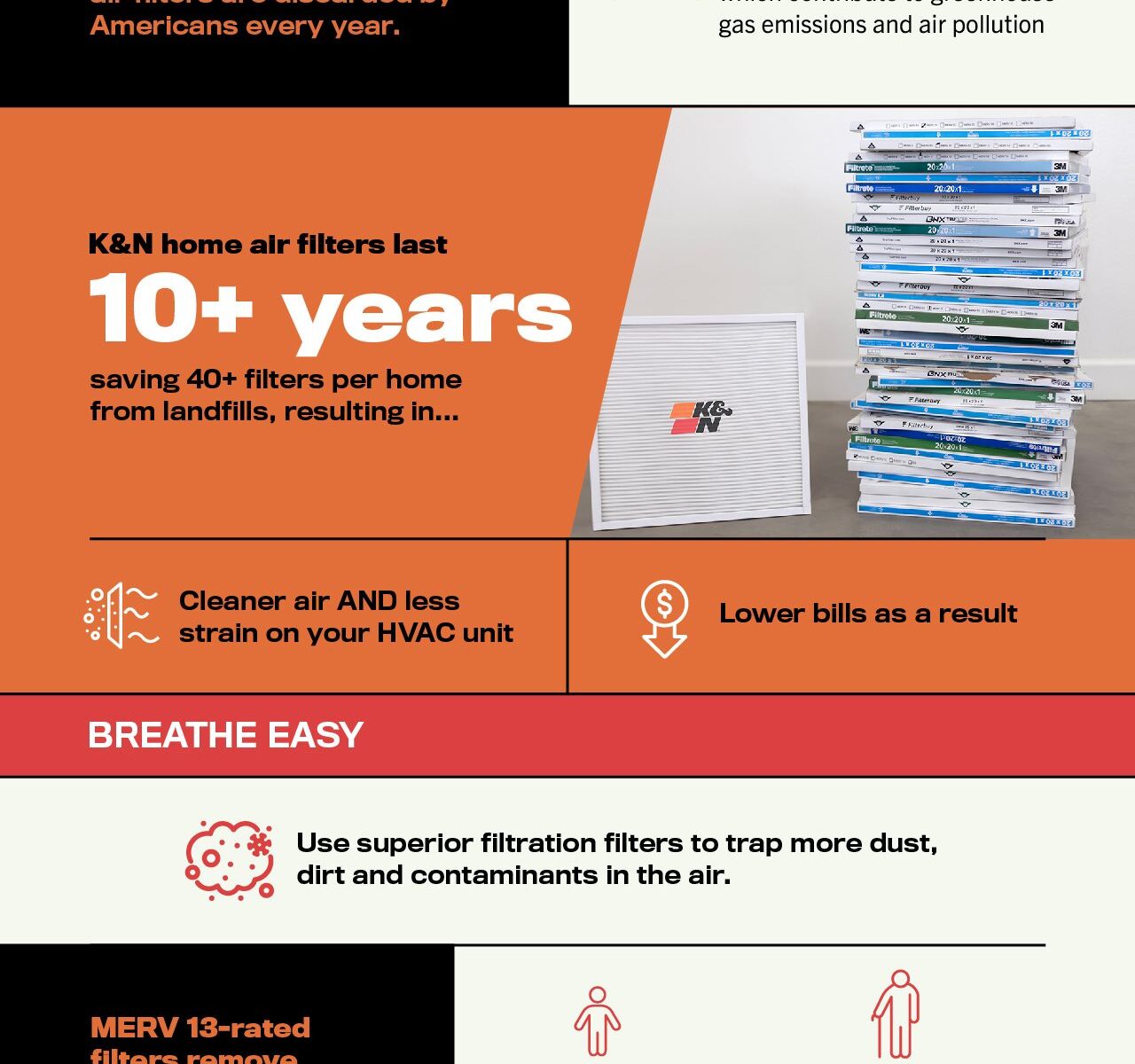
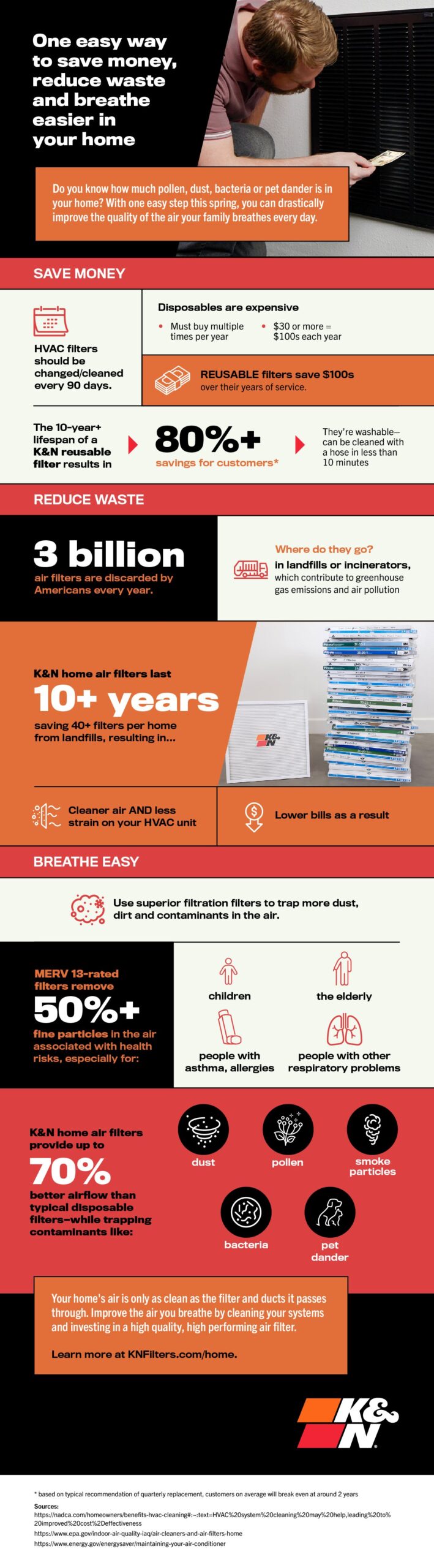
  • Use a high-quality air filter: For example, K&N air filters are built for strength and efficiency, providing superior airflow — up to 70% better — while trapping airborne contaminants like dust, pollen, smoke particles, bacteria and pet dander. K&N filters are made with the highest quality materials, including a strong HDPE frame, 2-ply filter media and metal mesh to maintain their shape and provide durability for the life of the filter, which is over 10 years. All K&N products are backed by a 10-year limited warranty.
  • Keep your air filter clean: Disposable air filters need replacing every 3 months and cost a lot of money. What’s more — approximately 3 billion air filters end up in U.S. landfills every year. With reusable air filters like K&N, you can simply rinse clean with your hose in about 5 minutes, shake off excess water and pop back in your HVAC system, with no need for cleaning equipment or solvents.
  • Choose the right MERV rating for your household: Whether you want a more free-flowing filter (MERV 8) or want to remove even more pollens, allergens and dust from your home (MERV 13), K&N has a full range of options available. Visit KNFilters.com/home to learn more.

3. Clean surfaces smarter

From ceiling fans, cabinet tops, and shelves to carpets and other flooring, dust and allergens will accumulate over time, so regular deep cleaning is a must! Cleaning these surfaces will also help reduce the allergens that end up floating around in your home.

  • Start at the top: Anything you dust can end up on the floor, so working from the top to the bottom is most effective.
  • Clean ceiling fans carefully: Try using an old pillowcase around each fan blade as you work to help capture dust. Spray diluted vinegar inside the pillowcase first to pick up dust, then follow that initial dusting with a damp cloth.
  • Declutter first: To make surfaces easier to dust, remove items that can get in your way or that also need dusting.
  • Tackle floors with allergens in mind: Use a vacuum cleaner with a HEPA filter to remove fine particles from surfaces. If you have family members with severe allergies, asthma or other respiratory conditions, you may want to replace carpets with hard flooring instead. Otherwise, consider regular shampooing to further remove dust, dirt and other allergens after vacuuming.

Taking these steps will help give you peace of mind that you’re doing all you can to provider cleaner air for everyone in your home, so you can all breathe a little easier.