Four Outstanding Substitute Teachers Honored During Teacher Appreciation Week

2024-05-06T08:01:00

(BPT) – The enduring wisdom of the African proverb, “It takes a village to raise a child,” resonates across cultures, underscoring our collective responsibility toward nurturing the academic, social, and emotional development of our future leaders. In alignment with this timeless ethos, Teacher Appreciation Week serves as an ideal occasion to honor not only our teachers but also the often overlooked yet indispensable members of our children’s educational community. These unsung heroes, particularly substitute educators, provide crucial continuity and foster an environment of support and positivity, making them essential pillars in the comprehensive upbringing of our youth.

Kelly Education, the leading provider of education workforce solutions in the nation, proudly upholds a tradition of celebrating these anchors of operational stability through its annual Substitute Educator of the Year Award. This prestigious honor is extended to substitute teachers and school support staff who have made significant contributions to their school communities. Eligibility requires active employment with Kelly Education and a nomination from a school colleague that highlights the nominee’s positive impact on both students and peers. Winners of the award are recognized with a $5,000 bonus, in addition to a $1,500 donation to the school of their choice, reinforcing Kelly Education’s commitment to acknowledging the invaluable role of substitute educators in shaping future generations.

“One of my greatest joys is celebrating the work of our educators,” said Kelly Education President Nicola Soares. “These educators are extra special because they were nominated by their school partners for the positive impact they’ve had on their school community.”

Here are this year’s winners, who are changing students’ lives, one classroom at a time.
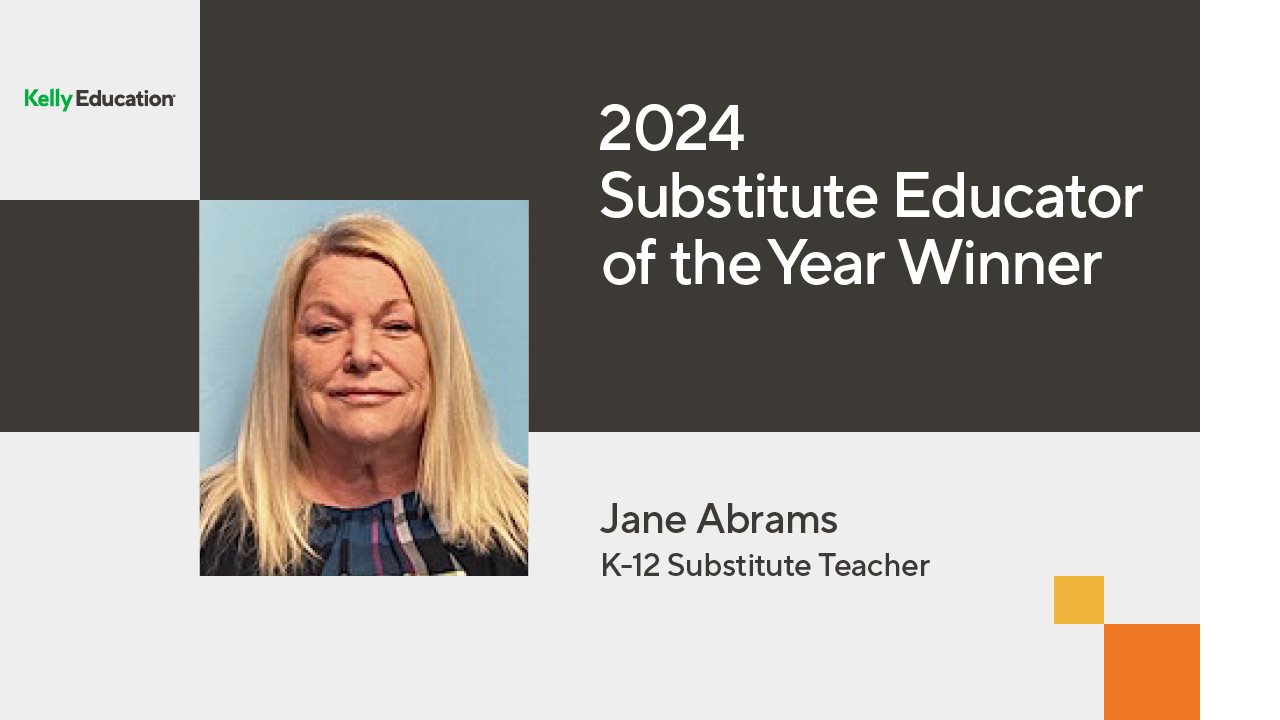
Jane Abrams, K-12 Substitute Teacher, of Aventura, Florida, found a way to recover from heartbreaking losses by returning to the field she loved, becoming a substitute educator. Her experience at Fulford Elementary has given her a whole new family.

“All of the teachers and staff welcomed me with open arms,” said Abrams. “This is a workplace of respect and congeniality — and the children filled my heart back up with joy and love.”

Abrams appreciates how Kelly Education gives her the freedom to work around her schedule, as well as providing insurance and perks like retail bargains and other incentives. She advises substitute educators to be positive, listen to what the other teachers have to say, and ask questions: “Leave a detailed account of what you accomplished or didn’t accomplish during the day, and remember — a teacher can change the world.”
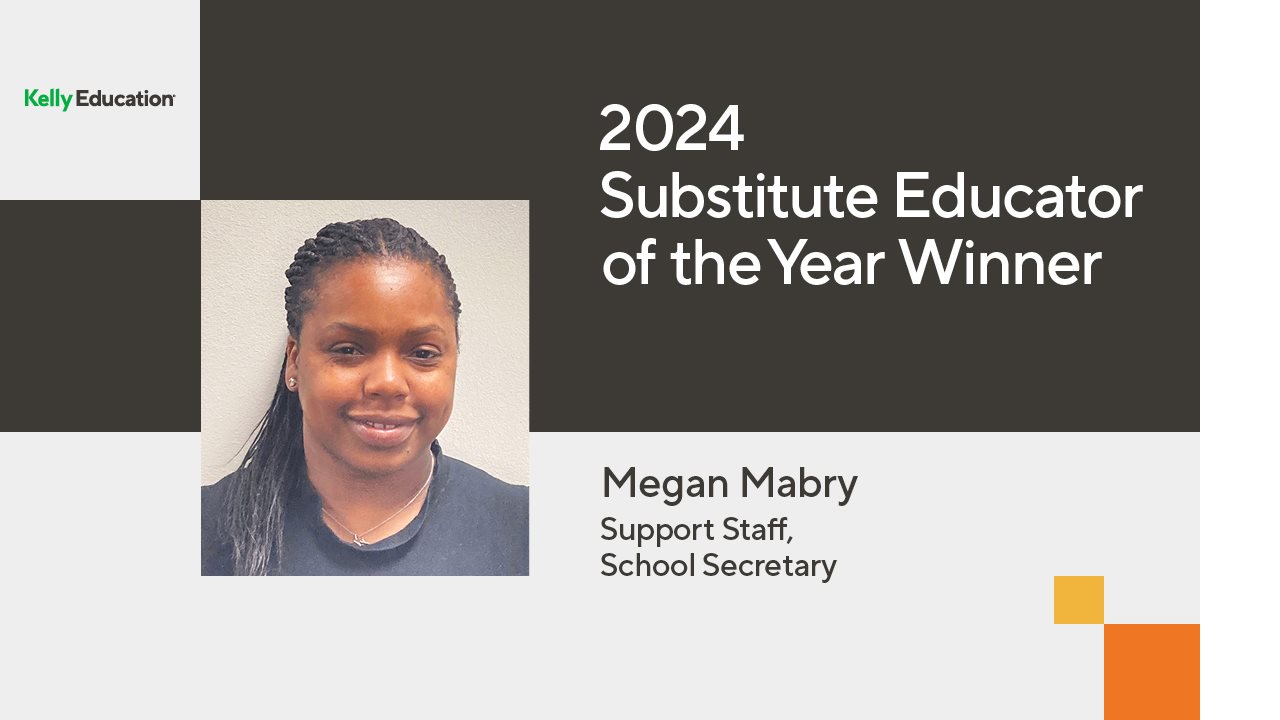
Megan Mabry, Non-Instructional Substitute Educator, from Cabot, Arkansas, grew interested in education from her role as a mother. After earning her bachelor’s degree in business management and working for the U.S. Postal Service, Mabry wanted more involvement with her children’s education and better work-life balance. This led her to the flexible opportunity of becoming a Kelly Education substitute educator. She appreciates the long-term opportunities that can become permanent positions within a school district.

Mabry enjoys working in the student success center, where she interacts with all the students, encouraging them academically and helping build their self-confidence.

“One student who came in was working hard to keep her grades up all year,” said Mabry. “She visited recently to share that she’s achieving her goals of graduating and joining the Army National Guard this year and thanked me for all the encouragement.”

Saira Zamarripa, Early Childhood Substitute Educator, from Oklahoma City, Oklahoma, became a substitute educator after earning her bachelor’s degree in science from Southern Nazarene University. She is currently enjoying a long-term temporary position at Arthur Elementary School, where they recognized her with their “Caught You Being Good” award, which made her feel like an important part of the school community.

“What I like most about being a substitute teacher are the relationships I’ve built with students,” said Zamarripa. “I like that I can bring a little happiness into their lives because you never know what they’re dealing with away from school.”

Zamarripa appreciates the flexibility and responsiveness of Kelly Education staff and her relationships with school teachers and administrators.
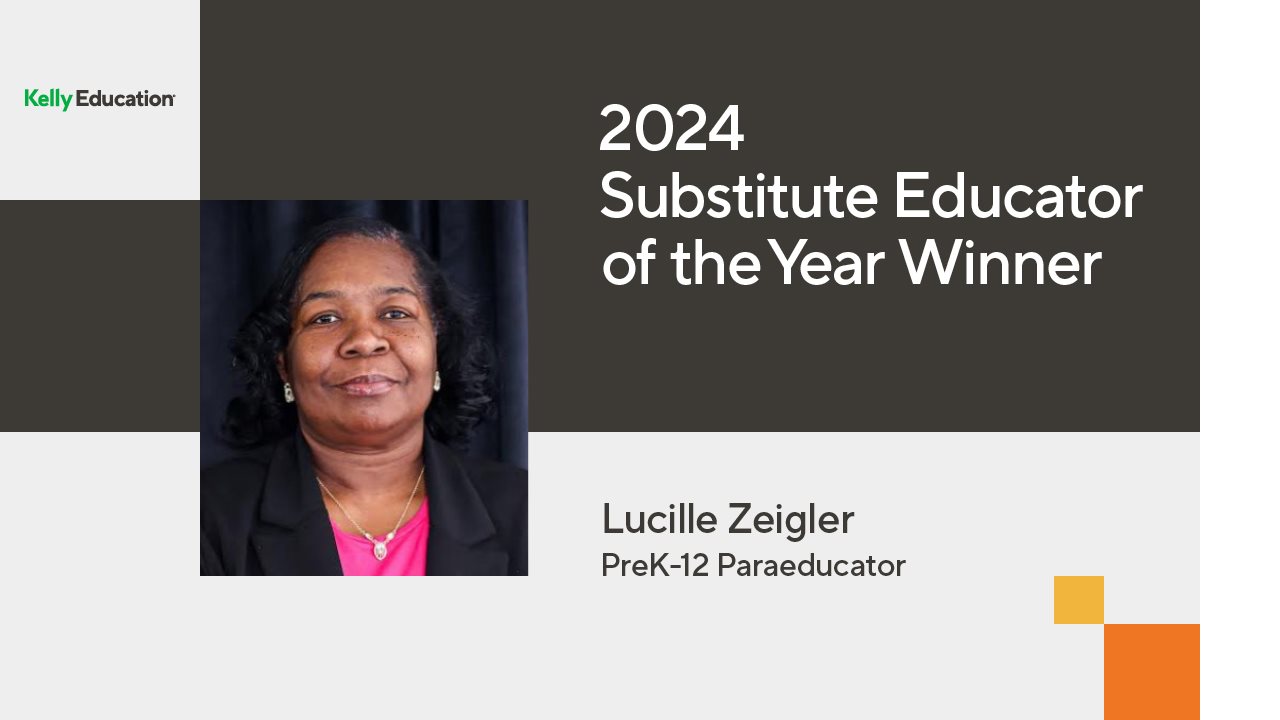
Lucille Zeigler, Paraeducator, of Pelham, Alabama, attended Lawson State Community College before becoming a substitute teacher at Berry Middle School.

“What I love most about being a substitute teacher is the enthusiasm of the students who want to learn more and more,” said Zeigler. “I love to see the faces of students as they learn.”

She remembers an influential teacher in her life — her sixth-grade teacher, who helped her learn math to avoid embarrassment at the chalkboard. She reminds substitute educators to be patient, kind and good listeners.

“Don’t forget that you are there to help the classroom teacher,” Zeigler advised. “And it’s important to love what you do.”

Learn more about this year’s award winners at kellyeducation.com. Interested in substitute teaching opportunities near you? Visit mykelly.com.

How this baseball All-Star steps up to the plate when it comes to pneumococcal pneumonia

2024-05-06T05:01:00

(BPT) – Professional baseball player JD Martinez is at increased risk for pneumococcal pneumonia because he has asthma, and he doesn’t want to let it stop him from taking his shot on — or off — the field. If you’re not familiar with it, pneumococcal pneumonia is a potentially serious bacterial lung disease that can put you in the hospital and even be life threatening. That’s why JD’s partnering with Pfizer to share his story as a professional athlete with asthma — and help raise awareness about the importance of getting vaccinated against pneumococcal pneumonia.

Q: How did you get your start in baseball?

JD: The love of baseball actually runs in my family. My grandfather was the mayor of a town in Cuba, and he was the first government official to put lights up in a baseball stadium. My grandmother also played softball, and she always joked that I got my baseball obsession from her. My parents weren’t personally involved in the sport, but they got me into it from a young age and always motivated me to do the best I can in everything I do.

Q: Did you experience any challenges throughout your career?

JD: Having asthma has been challenging at times, but I never let it hold me back. That’s why I have conversations with my doctor to make sure I’m doing everything I can to help stay ahead of my health. I learned that because I have asthma, I’m at over 5x greater risk for getting pneumococcal pneumonia compared to healthy adults in the same range. So, they recommended getting vaccinated against it.

Q: Is anyone else at risk for pneumococcal pneumonia?

JD: My doctor told me that adults 19-64 with asthma, or certain underlying medical conditions like diabetes, chronic heart disease and COPD, are also at increased risk.

I also learned that adults 65 or older are at increased risk, too. In fact, they are at over 10x greater risk for being hospitalized with pneumococcal pneumonia compared to adults younger than 50. If you fall into any of these groups, it’s important to know that getting vaccinated is one of the best ways to help protect yourself.

Q: When are you more likely to get pneumococcal pneumonia?

JD: Pneumococcal pneumonia can strike at any time, in any season. There’s a misconception that you can only get pneumococcal pneumonia in the winter or during flu season, but you can get it any time of year. Vaccination is available all year round, so now is a great time to assess if pneumococcal pneumonia vaccination is right for you.

Q: What about for people who have already been vaccinated against pneumococcal pneumonia in the past?

JD: Even if you’ve already been vaccinated against pneumococcal pneumonia previously, your healthcare provider may recommend another vaccination for additional protection.

Q: Thanks for sharing this information, JD. Where can people find out more?

JD: Talk to your doctor or pharmacist about pneumococcal vaccination. You can visit knowpneumonia.com to learn more and assess your risk.

Brought to you by Pfizer.

Defend your flock: 4 tips for backyard bird owners

2024-05-03T14:27:00

(BPT) – Raising backyard chickens has become increasingly popular, and an estimated 10.6 million U.S. households — from city dwellers to rural residents — own poultry. However, many of these backyard bird owners are not aware of the threat avian influenza viruses pose to their flock. These respiratory diseases are easily spread by migratory birds and wild waterfowl populations. The U.S. is now experiencing the largest outbreak of highly pathogenic avian influenza (HPAI) in our country’s history, and this extremely contagious form of the disease is deadly to our domestic birds. The good news is that having the right safety and protective measures in place can help protect backyard chickens and pet birds. Here are four tips all bird owners should know to help defend their flock:

#1: Understand the threat of highly pathogenic avian influenza

Some necessary potty talk here: HPAI can be carried in the poop and slobber of wild birds. The Centers for Disease Control and Prevention (CDC) estimates that a gram of poop from a human can contain over 1 trillion germs, so it’s possible one gram of poop from a wild goose can also hold about 1 trillion germs (gross)! These wild waterfowl and migratory birds can carry the disease without showing any symptoms so if they interact with your birds, drink from your outdoor and poultry water source or poop in your backyard, your flock could be at extreme risk for HPAI. That’s why biosecurity is critical for all bird owners, big and small.

2: Implement proper biosecurity to protect birds

Biosecurity refers to everything people do to keep diseases — and the viruses, bacteria and other microorganisms that cause disease — away from birds, property and people. Biosecurity contains two major categories:

  • Structural biosecurity: measures used in the physical construction and maintenance of coops, pens, poultry houses, family farms, commercial farms and other facilities.
  • Operational biosecurity: practices, procedures, policies that are consistently followed by people.

#3: Practice good biosecurity with simple, low-cost acts

Easy things like washing hands between different pens and houses, as well as changing clothing and shoes, can help keep pathogen transfer among wild and domestic bird populations to a minimum. Be sure not to move or reuse items that cannot be cleaned and disinfected — such as cardboard egg flats. For extra measure, you could also make sure vehicles, tractors, tools and equipment are cleaned and disinfected, before entering or exiting your flock’s territory. In addition, conduct regular checks of your birds’ housing, feed and water structures for needed repairs. Always make sure to use a clean water source that wild birds cannot drink from.


#4: Introduce new birds to your backyard flock safely

There are many types of bird breeds that are great to add to your collection. However, adding birds to your flock that are of different ages, species or from unknown sources may cause problems. Only purchase or source poultry from National Poultry Improvement Plan-certified breeders, hatcheries and dealers. Always try to keep new purchases separate from your current flock for at least 30 days until you are sure that the new purchases are healthy. Be careful of mixing geese and ducks with your chickens and turkeys, as waterfowl can sometimes carry diseases that will severely affect chickens and turkeys.

Every backyard flock owner plays a vital role in keeping our nation’s poultry healthy. By using proper biosecurity practices and staying vigilant, every owner can do their part to defend our flocks against deadly disease. The U.S. Department of Agriculture has many resources available for both commercial poultry producers and backyard bird owners through their Defend the Flock Program, including links to toolkits containing biosecurity checklists, videos and more.

3 expert tips to manage your puppy’s dental health

2024-05-03T14:01:00

(BPT) – Every new puppy owner has a camera roll full of pictures, but don’t let that sweet puppy smile fool you — good dental health requires a plan.

By the age of three years, most dogs will have some sort of periodontal disease, according to the American Animal Hospital Association. When left untreated, periodontal disease can cause pain, infection, inflammation and other health problems for your best friend.

It’s important to ensure you have the necessary tools to keep your puppy happy and healthy. Don’t know where to start? Check out these three expert tips from veterinarian and puppy expert Dr. Callie Harris.

1. Establish a brushing schedule early on

Just like you, your dog needs their teeth brushed. Since they can’t do it on their own, it’s up to you to brush for them.

“Brushing your puppy’s teeth early on not only keeps them healthy but also supports a strong bond between pet and pet parent,” says Harris.

It’s important to establish teeth brushing as part of your puppy’s routine early on. Using flavored dog toothpaste (never human toothpaste!) and a soft-bristled toothbrush or a finger brush can help ease the process.

You may not be able to do a full toothbrushing session at first, but you can start by brushing your puppy’s teeth for a few seconds every day and work them up to a full session. Beginning a toothbrushing routine may also help reduce stress for potential future teeth cleanings at the vet. Remember to praise and reward them during and after brushing.

2. Offer chew toys or tasty dental chews

Around the time you take your puppy home — usually 12-16 weeks — they’ll be teething. As they lose their baby teeth and their adult teeth come in, they’ll follow their instincts to chew. While this instinct keeps their teeth clean, it could lead to your dog chewing on household items.

You can get ahead of negative chewing behavior by offering your puppy chew toys that are appropriate in size and don’t pose a choking hazard. Rubber dog toys with ridges or nubs are a great option for your pup, as they help remove plaque during chewing.

Dental chews are another great way to invest in your puppy’s oral health while providing a tasty treat. When choosing a chew for your four-legged friend, consider an option like Purina DentaLife Puppy Teething Chews.

“DentaLife Puppy Teething Chews can help establish a healthy dental routine by supporting a puppy’s natural drive to chew and their mental engagement,” said Harris. “The chews safely redirect chewing behavior during peak teething age, around 3+ months old, when puppies’ adult teeth emerge.”

DentaLife Puppy Teething Chews are a great tool for puppy parents to support their new pet through the teething stage and build up healthy dental habits. Designed and formulated by Purina animal care experts, they also contain DHA, EPA and calcium to support your puppy’s developing brain, teeth and bones.

3. Schedule professional dental cleaning

As your puppy grows and develops, it’s important to explore when your pup should get their first professional dental cleaning, as recommendations vary across breeds. During a cleaning, your vet can examine your pup’s teeth and gums for disease and remove hardened tartar. They’ll also be able to help you address any issues they find so you can keep your best friend happy and healthy for years to come.

Remember, establishing good dental habits as a puppy can set them up for dental success down the road. Using these three expert tips, you’ll be well on your way to keeping your puppy’s smile healthy and bright.

Tips for new homeowners to set up their smart home

2024-05-03T08:01:00

(BPT) – You’ve just bought your new house — congratulations! As you start moving in, this is the perfect time to set up all the smart home products that can benefit your family’s safety, security and comfort. Getting these products in place can help you have greater peace of mind as you get used to your new home and neighborhood. And even if you’ve lived in the same home for years, these smart home upgrades are well worth the effort.

Here are ways you can optimize technology to make your home feel more safe and secure.

Replace standard locks with smart locks

Unless you’re moving into a new build, one of the first things you’ll want to do is change all your door locks. Consider installing smart locks instead, which allow you to create and control passcodes and remotely control locks with an app — so you won’t ever worry that you forgot to lock the door on the way out, or that family members will be locked out if they misplace their key.

Get peace of mind deliveries are safe

To help protect against porch pirates and weather damage, Amazon Key In-Garage Delivery is a convenient, secure way to receive Amazon packages. Plus, it’s exclusive for Prime members. In-Garage Delivery lets you receive Amazon packages inside your garage, so anything you’re buying for your new home can be safely delivered, whether you’re home or away. The service works with the majority of smart garages, so you may already have what you need to get started. If not, it’s really simple to set up, and you can even do it before you move in. Then, just select In-Garage Delivery at checkout. Amazon Key will take care of the rest.

Monitor your home while you’re away

You can set up motion alerts to notify you when there’s any activity around your home with a Ring Video Doorbell or outdoor security cameras. Ring devices are controlled through the Ring app, where you can see what’s happening live on the other end of your Ring device and choose to use Two-Way Talk as needed to chat with someone on your property.

Add outdoor lighting for a safer property

Outdoor lighting adds more than just aesthetics to your home — installing motion-activated smart lighting can help light up dark areas or blind spots, deterring unwanted visitors and making your home more secure. With Ring’s Smart Lighting and a Ring Bridge, you can control the lights from the Ring app and link them to your Ring doorbells and cameras so if one of your smart lights detects motion, it can trigger your camera or doorbell to record.

Test and upgrade smoke and carbon monoxide detectors

The U.S. Fire Administration recommends testing smoke detectors at least once a month and replacing batteries once or twice a year, so make sure to set calendar reminders. For added peace of mind, consider replacing standard detectors with Wi-Fi enabled smart smoke detectors, which give you real-time notifications to your smartphone if smoke or carbon monoxide is detected — which is especially important if you’re not at home.

Increase comfort and save money with a smart thermostat

Smart thermostats make it far easier not only to program times when you want to reduce heat or cooling (such as when nobody’s home), but they can even sense when your house is empty to switch to energy-saving mode. This can save energy and money over time. You can also adjust temperatures right from your smartphone, so you’ll never forget to adjust the thermostat when you head out on vacation — and you can make changes as needed wherever you are. Even better, you can start warming up (or cooling down) the house when you’re on your way home again, so you’ll be comfortable the moment you arrive.

Putting these smart features in place before or shortly after you move into your new house will help you feel confident that you and your family will be able to relax and enjoy your new environment, so everyone will feel right at home.

5 simple ways to save ‘green’ by going green at home

2024-05-02T16:01:02

(BPT) – With rising energy costs and an increasing awareness of homeowners’ environmental impact, creating a greener home isn’t just a trend — it’s a responsible choice for both your wallet and the earth. In fact, homeowners who implemented energy-saving systems and products in their home saved 8%-16% on heating and cooling bills through high use of the scheduling feature on the Honeywell Home T5 and T6 thermostats in a 2019 study in Indiana and Ohio. Whether you’re motivated by reducing your carbon footprint or simply looking to cut down on utility bills, transforming your home into a “green” home may be more achievable than you think with just a few helpful tips.

Upgrade to a Smart Thermostat

One of the easiest and most effective ways to save energy is by installing a smart thermostat. With its programmable features, thermostats like the Honeywell Home T9 Smart Thermostat allow you to easily set and adjust the temperature during different parts of the day, decreasing the need for constant heating and cooling when you aren’t at home. The U.S. Department of Energy explains that by simply turning your thermostat down 7°-10°F from its normal setting for eight hours a day, you can save as much as 10% on heating and cooling costs a year. Depending on where they live, users can also connect their T9 Smart Thermostat to their utility company to reduce energy use when needed and earn rewards, maximizing energy savings without sacrificing comfort.

Add Insulation

By acting as a barrier against heat transfer and helping to seal cracks, insulation helps optimize heating or cooling investment, leading to lower energy consumption and decreased energy bills. You can supplement existing insulation or add new layers to many areas of your home, but be sure to research what the right type, quality and depth is first. If needed, you can rent an insulation blower from your local hardware store or reach out to your local contractor for help.

Detect and Address Water Leaks

While often overlooked, water leaks can also waste resources. Leaky faucets, pipes or appliances waste heated and treated water, and large leaks can cost homeowners tens of thousands of dollars in repairs and water usage. Regularly inspect your plumbing fixtures and appliances for signs of leaks, such as damp spots, mold growth or unusually high water bills. Consider utilizing smart leak detection devices, such as the First Alert L1 WiFi Water Leak and Freeze Detector, that monitor temperatures and can alert you of leaks in real time via your smartphone. Adding one of these detectors may also save you money on homeowner’s insurance as insurance providers value proactive and protective measures.

Prioritize Air Quality with Proper Filtration

Improving indoor air quality can also contribute to energy efficiency. Invest in high-quality air filters for your HVAC system to trap dust, pollen and other airborne particles effectively. And don’t forget that regular maintenance of your HVAC system ensures optimal airflow and energy performance. For example, replacing a clogged, dirty air filter with a clean one can lower an air conditioner’s energy consumption by 5%-15%. Cleaner, fresher air not only enhances current comfort but also reduces the strain on your heating and cooling equipment, prolonging its lifespan and saving cost and energy in the long run.

Invest in Energy-Efficient Appliances

When it comes to household appliances, opt for energy-efficient models that bear the ENERGY STAR® label. These appliances meet strict energy efficiency guidelines set by the Environmental Protection Agency (EPA) and can significantly reduce your energy consumption. From refrigerators and washing machines to thermostats and water heaters, there’s a wide range of ENERGY STAR-certified appliances available to suit your needs.

To learn more about how you can save energy in your home, visit Honeywellhome.com.

Parents, protect your child against measles before international travel

2024-05-02T11:01:00

(BPT) – Do you have travel plans? As your family gets ready for summer trips and get-togethers, make sure your child is up to date with routine childhood vaccines. The World Health Organization has noted a significant increase in measles cases worldwide, including popular international tourist destinations for Americans. Travel is a great opportunity to see new places and visit family, but it can also put you and your family at risk for measles if you aren’t all vaccinated.

The good news? Staying up to date on recommended vaccinations is the best way to protect your child from measles and other diseases. Here’s what you need to know before you travel.

Measles is very contagious and can cause serious symptoms like high fever and a rash.

Measles is caused by a virus and spreads to others very easily when an infected person coughs or sneezes. The measles virus is so contagious that up to 90% of the people around an infected person can become infected if they are not vaccinated — and the virus can even stay in the air for up to 2 hours after an infected person is there.

Vaccination can help protect your child against measles and related complications.

The good news is that the measles-mumps-rubella (MMR) vaccine is safe and effective in protecting you and your family from measles. The MMR vaccine is part of the recommended immunization schedule for all children and adults. Vaccination with MMR is the best and safest way to prevent measles. When both doses of MMR vaccine are given (typically when the child is about 1 and 4 years old), MMR is 97% effective at preventing measles.

If you plan to travel internationally, make sure you and your loved ones are protected against measles before departure. CDC recommends:

  • Infants 6 to 11 months receive one dose of the MMR vaccine before traveling internationally.
  • If children 12 months and older are not vaccinated, CDC recommends they receive two doses 28 days apart before traveling.

Make sure you discuss your options with your child’s healthcare provider before traveling. Even one dose of the MMR vaccine is 93% effective in protecting against the illness.

Prepare your child for travel by ensuring they are up to date on their MMR vaccine, so you and your family can focus on what matters: staying healthy and safe while traveling abroad. Talk to your child’s healthcare provider and learn more about measles today.

9 helpful mealtime hacks from iconic TV host and actor

2024-05-02T08:15:00

(BPT) – When it comes to getting meals on the table that your whole family will love, iconic actor, television host and father of four Alfonso Ribeiro has a few go-to tips and tricks to ensure mealtime is a success.

“Juggling our family’s hectic schedule and my career means we’re constantly seeking ways to get meals on the table quickly and without too much prep time,” said Ribeiro, who has been a longtime spokesperson for the Bob Evans brand. “Along with many tips I’ve learned along the way, I discovered that Bob Evans is a great mealtime solution for busy families like mine.”

Here are some of Ribeiro’s best tips for managing a busy family kitchen and coming up with delicious, satisfying and convenient meals.

1. Prep meals ahead

To help your family get through the busy work and school week, brown up a batch of Bob Evans Sausage over the weekend so you’ll have plenty to add to dishes throughout the week — like breakfast tacos, biscuits and gravy, pasta dishes and shepherd’s pie, just to name a few. Get creative and combine the sausage with buttered veggies and potatoes for a quick and easy weeknight meal or swap out the protein source in some of your favorite recipes.

2. Spice it up

You can put your own personal tastes into family favorites like Bob Evans ready-to-heat Original Mashed Potatoes or Macaroni & Cheese by sprucing them up with a variety of toppings and mix-ins that you love, like garlic, jalapenos or bacon bits.

3. Easy microwave cleaning

Need a quick fix to help you clean out your microwave? Put a cup of water and half a cup of vinegar into a microwave-safe bowl and place it in your microwave, then microwave on high until the mixture comes to a boil and the window steams up. Allow the microwave to cool for a few minutes, then wipe the interior down with a sponge or cloth.

4. Freshen your kitchen with citrus

Did you know that you can clean up your wooden cutting board by massaging it with coarse salt and half a lemon? Try it! You can also use ground-up citrus peels of any kind, along with ice, to freshen your kitchen sink drain or garbage disposal.

5. Save time and fridge space

You can avoid having too many unwanted leftovers and reduce post-dinner clean-up at the same time by using single-serve side dishes. Bob Evans offers convenient, single-serve options like Mashed Potatoes in a variety of flavors, and Macaroni & Cheese, which can also make it a lot easier to satisfy family members asking for different choices at dinnertime.

6. End the cling wrap wrestling match for leftovers

If you have trouble getting your cling wrap to cooperate (and who doesn’t?), store it in the refrigerator for a while. Chilling your cling wrap will temporarily reduce its “stickiness,” making it much easier to use.

7. Dish-drying hack

Are you tired of your dishes still being wet after you clean them in the dishwasher? Place a clean dish towel within the dishwasher’s door once the cleaning cycle is complete, close it and wait five minutes, then — voila! Your dishes will be dry and ready to put away.

8. Easy butter softening trick

Need softened butter for a recipe or just easier spreading? Microwaving often melts your butter into a puddle, which may not be what you want. First, measure and unwrap the amount of butter you need. Cut the butter into thin slices or small chunks and leave out of the fridge — in around 10 minutes you’ll have softened butter.

9. Salvage hardened brown sugar

If your brown sugar has hardened into an unusable block, don’t toss it out — instead, place a slice of fresh bread along with the brown sugar in an airtight container. After about a day, the sugar will have absorbed moisture from the bread to make it soft and crumbly again. This is also a great use for the ends of bread that nobody wants for their sandwiches!

These tips will help make your kitchen management and mealtimes a lot easier. If you delight in providing convenient and delicious meals at home while using tips and tricks, visit BobEvansGrocery.com/Become-Bob-Evans-Replacement-Spokesperson to enter to become the next Bob Evans spokesperson!

To find Bob Evans products, recipe inspiration and a retailer near you, visit BobEvansGrocery.com.

The most affordable way to create your forever home? Above-floor plumbing

2024-05-01T09:01:00

(BPT) – Buying a home may not be the wisest idea in today’s housing market. If you bought or refinanced your home in early 2022, you likely were able to take advantage of a low interest rate and lower your monthly payments. However, if you’re considering selling your current abode and finding your forever home now, the average rate for a 30-year fixed mortgage has nearly doubled over the last two years.

You don’t have to compromise your dreams. With some planning, you can turn your house into your forever home without breaking the bank.

For example, you may consider adding a laundry room, bathroom or outdoor kitchen. Not only do these renovations make your home more enjoyable, but they can also add value to your home. According to the National Association of Realtors, homeowners would recover 75% of the cost of a kitchen renovation and 71% of a bathroom renovation in their home’s increased value.

Of course, adding, renovating or moving a kitchen, bathroom or laundry room has its challenges. A common roadblock you may face during remodeling is plumbing limitations.

Plumbing challenges

If you want to add a new bathroom or kitchen, you may find the space doesn’t have below-floor draining. According to Tom McGuire, a seasoned plumbing professional and owner of McGuire Group LLC, adding below-floor drainage for sinks, showers, tubs and toilets can cost a pretty penny.

When adding a laundry room to a 50-year-old home, McGuire estimated that installing new conventional plumbing drainage would require him to rip up and replace his hardwood floors. That process, he estimates, would have cost at least $5,000, plus an additional $6,000 to cut the concrete beneath and run new piping.

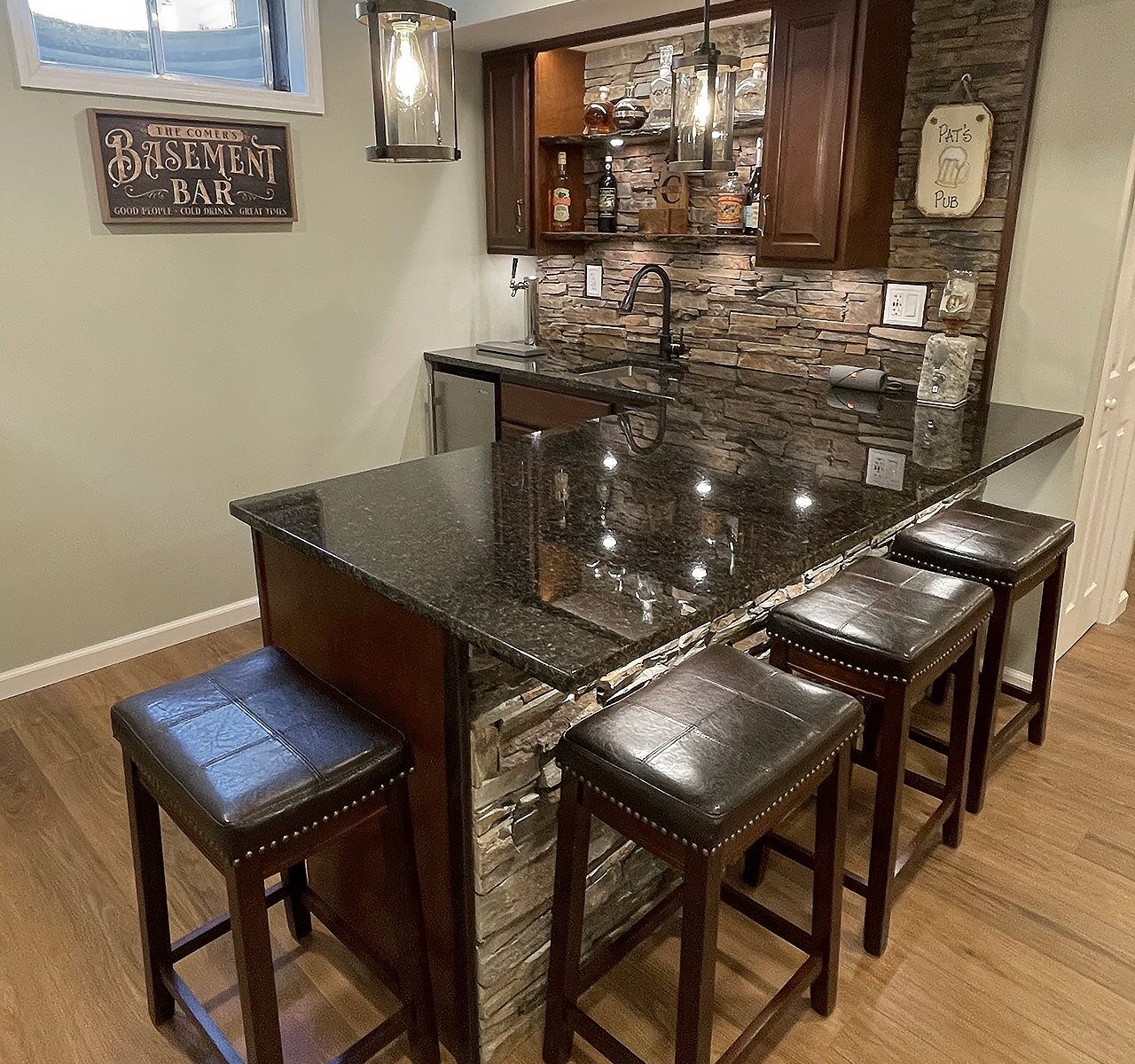
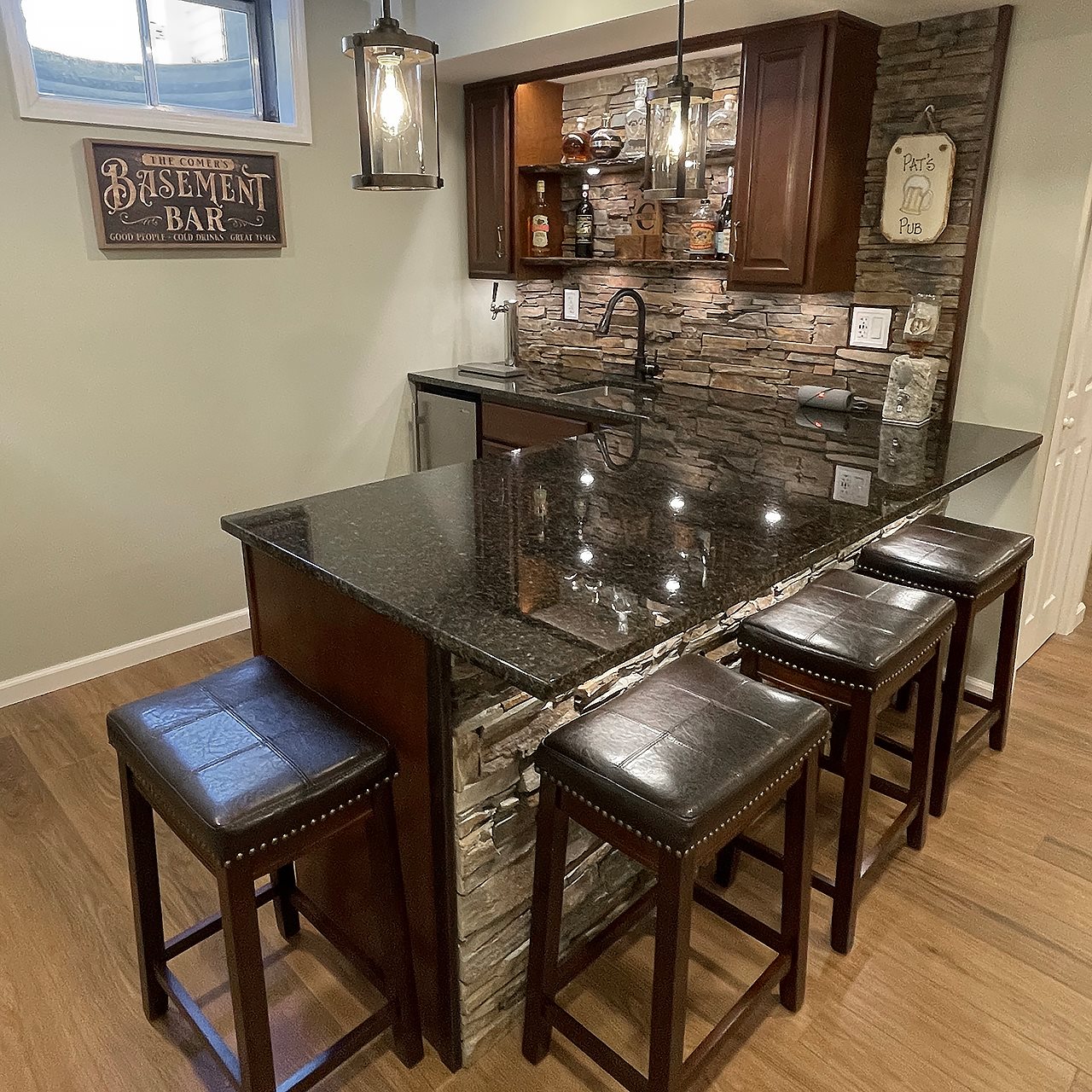
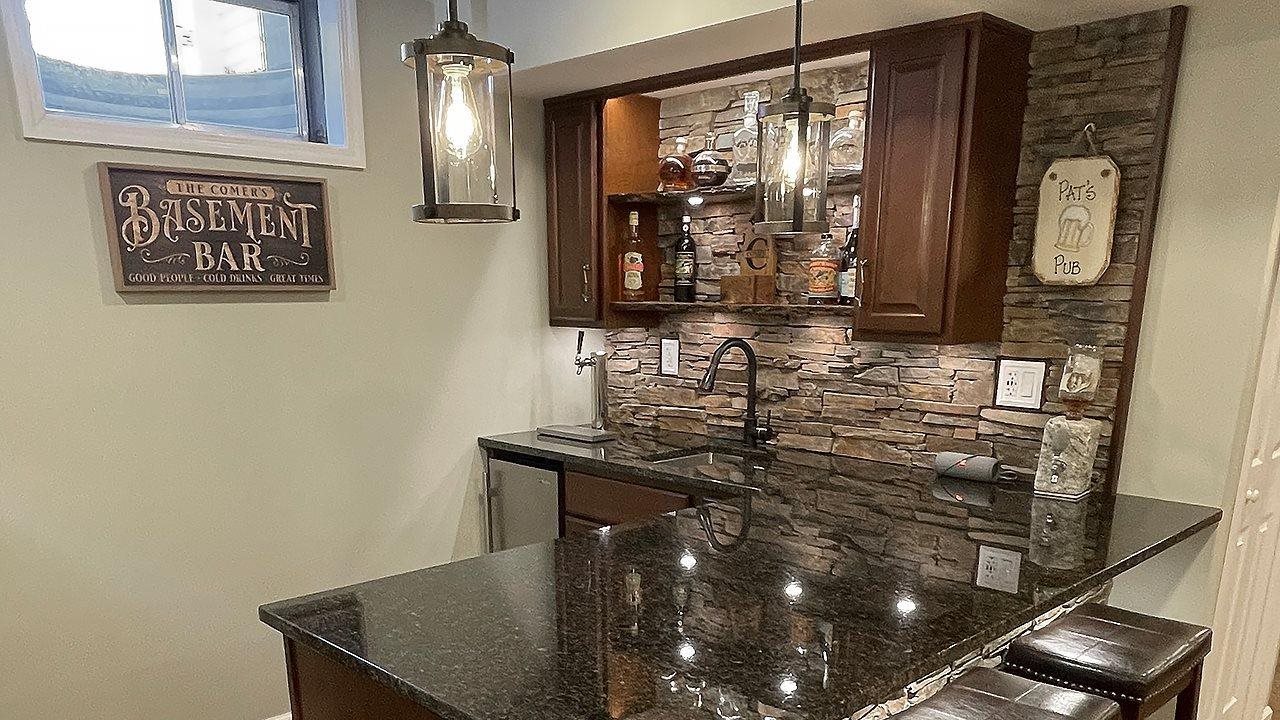
Similarly, homeowners must consider the lack of conventional plumbing lines when installing a kitchen, indoors or outdoors. When New Jersey residents Katie and Patrick Comer wanted to add a wet bar with a sink to their finished basement, they found their home’s plumbing limited their options.

Because the basement floor was below the home’s existing sewer line, wastewater from the bar sink would have to be discharged vertically into the home’s plumbing drainage. In order to connect the below-floor line to the closest sewer access, the project would have to be outsourced to a contractor, increasing costs significantly.

DIY couple Amber and Trey Masciarelli encountered similar problems when adding a bathroom to their basement. With cost- and time-savings in mind, the Masciarellis had to decide if the conventional route of breaking through the basement’s concrete floor to install drainage fit into their remodeling plan or if they’d have to give up the project.

An affordable alternative to traditional plumbing

When conventional below-floor plumbing hinders homeowners’ forever home plans, it’s time to consider alternatives. What is the best, most affordable solution to these potential problems? Above-floor plumbing.

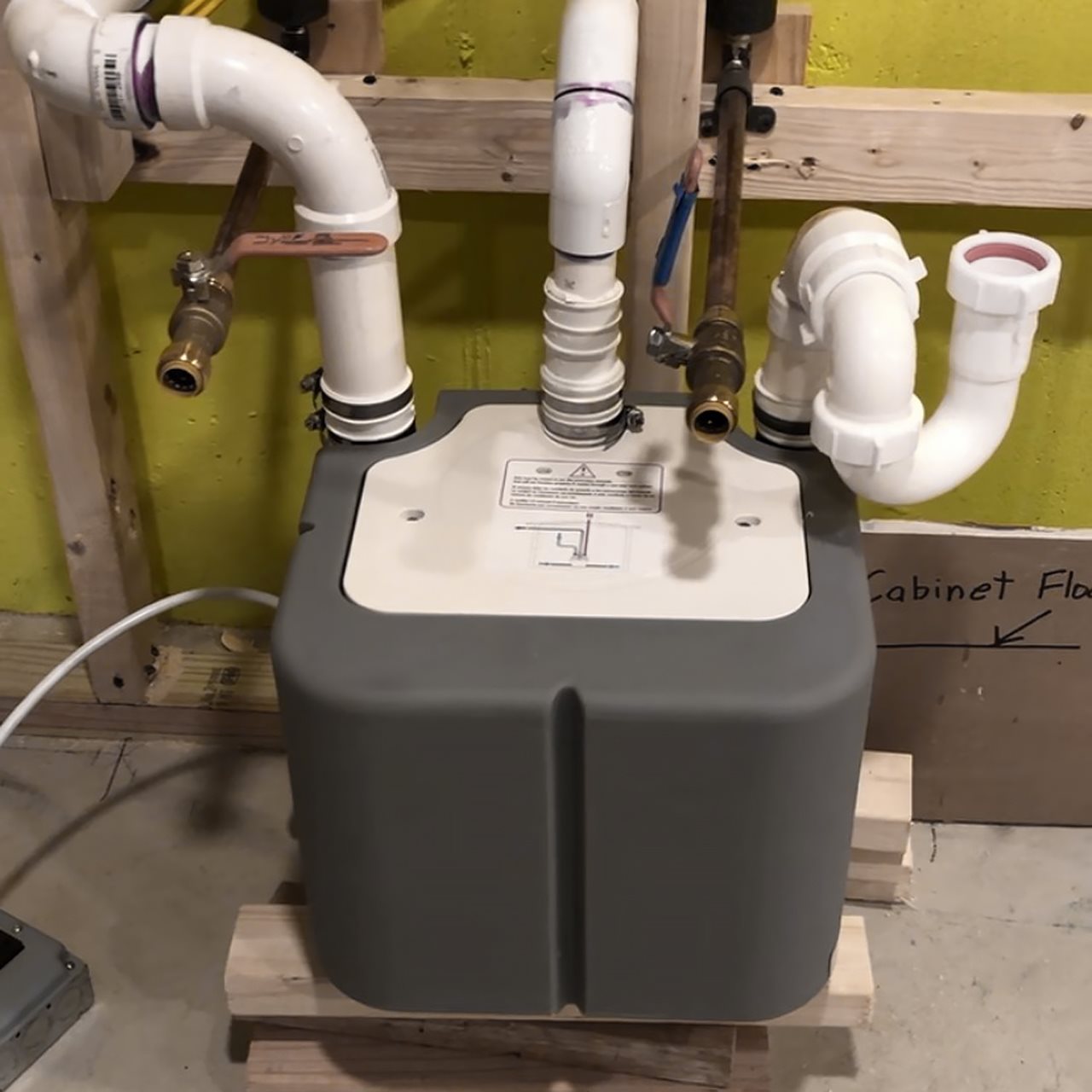
Unlike below-floor plumbing, above-floor plumbing pumps waste and water up and out to the nearest sewer line. During McGuire’s remodel project, he chose a Saniflo gray water drain pump to handle drainage from his home’s washing machine. This solution allowed him to avoid cutting up the hardwood floor and concrete and easily install a new line to the local sewer line.

In the Comers’ project, Katie’s father and brother helped the couple with a Saniflo heavy-duty gray water drain pump. The simple, compact solution didn’t take up a lot of space in the basement and solved their drainage problems. “Bringing the vision of my dream basement to life has been a wonderful experience,” said Katie Comer. “Not only is the bar fully functional, but it’s also aesthetically pleasing, and we didn’t have to break the bank to make our vision a reality.”

The Masciarellis were pleasantly surprised by how easy it was to install the Sanibest Pro. They completed the installation in just two days. “When you first look at the unit, it can be intimidating,” explains Amber. “But we watched the online videos, read the instructions and started dry-fitting components. We soon realized how easy it is to install.”

Choose the best products for your dream home renovations

If you plan to use above-floor plumbing to add a kitchen, laundry room or bathroom to your home, pick durable, affordable and reliable products like Saniflo Drain Pumps and Macerators and Grinders.

If you’re planning kitchen and bathroom projects, you’ll want a rugged, affordable and easy-to-install solution like the Saniswift Pro.

With Saniflo’s above-floor plumbing technology, you can decide where a new kitchen or laundry room will go. The Saniswift Pro’s pump design offers quick installation in hard-to-reach, below-sink spaces.

You’re no longer limited to locations where downhill drainage or gravity evacuates waste. The pump also does not need to be near the main waste pipe as it can discharge waste up to 14 feet vertically and/or 140 feet horizontally. Also, the Saniswift Pro is engineered to extend the pump’s overall lifecycle while eliminating unwanted odors. Servicing can be done without disconnecting any piping to the unit.

When tackling a full or half bathroom installation, the heavy-duty Sanibest Pro is an excellent, adaptable solution. The grinder pump combines a rear-discharge toilet with a 1-horsepower pump system usually situated on the floor.

Designed for bathrooms frequently used by visitors and full-time home residents, the system can provide drainage for a complete bathroom, including a toilet, sink, and tub or shower. The wastewater from the toilet drains into the pump unit, which incorporates a powerful clog-fighting grinder system to quickly reduce the incoming effluent before discharging it to a sewer or septic system.

Not only is the Sanibest Pro a great alternative to traditional bathroom plumbing, but it’s also a great replacement for an existing macerator. When Scott Wright was searching for an above-ground grinder pump toilet to replace his loud and inefficient macerator, he knew he needed a heavy-duty model that could handle frequent usage.

Wright eventually settled on the Sanibest Pro and was excited when it solved his noise and flooding issues. “It flushes better, it cleans the bowl better, and it’s not as bulky as the previous unit. The other day, even my son noticed it’s much quieter than the one we had before.”

Don’t let below-ground plumbing hold you back from turning your house into your forever home. To learn more about how above-floor plumbing can help you add a kitchen, bath or laundry room to your current space, visit Saniflo.com.

Spray Texture 101

2024-05-01T10:23:00

(BPT) – From adding a touch of dimension on ceilings to making a bold statement on accent walls, texture is playing a larger role in home décor. The use of visual texture can help elevate a home’s elegance and style in a way that paint and wallpaper can’t. One of the ways homeowners can do this is with spray texture. Spray texture is an accessible and versatile material that can transform bland walls and ceilings into captivating focal points. Beyond its aesthetic appeal, spray texture also serves a practical purpose by concealing imperfections left behind during drywall finishing, making it an asset for DIY enthusiasts and professionals alike.

What is spray texture?

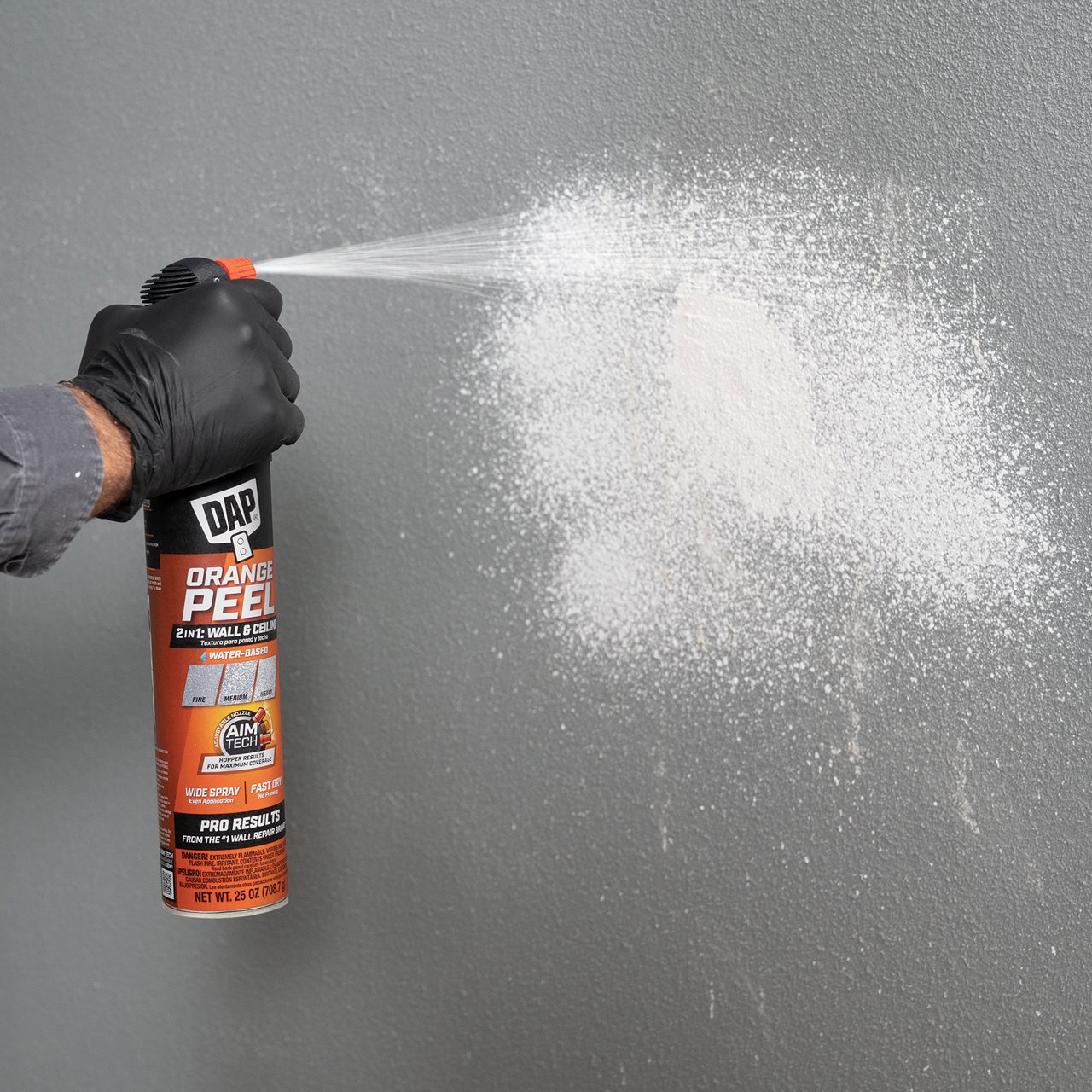
Spray texture is a material applied to walls or ceilings to create a textured surface. It typically comes as a pre-mixed or ready-to-use substance in pressurized cans or sprayers. There are three common textures found in houses today: Orange Peel, Knockdown and Popcorn. Easily paintable, spray texture can be combined with the latest trends in wall and ceiling colors to help redefine any living space.

Is the popularity of spray texture growing in homes?

While texture is a popular design element all over the U.S., textured walls and ceilings tend to be more prevalent in the southern and particularly western states in the U.S., as textured surfaces complement the desert-inspired aesthetics and rustic decor often found in these regions. In fact, 50% of the spray texture market is in the west, and 29% is in the south.

Why would you use spray texture?

Texture is often added to interior drywall surfaces to add visual interest and aesthetic appeal, but it can also be used as part of the finishing process to hide any drywall imperfections from the installation process. Achieving flawless smooth surfaces can be challenging, and any mistakes made during the drywall finishing process become readily apparent. This is where wall and ceiling texture comes in. For DIY enthusiasts grappling with the intricacies of drywall finishing, texture can be a lifesaver. Handheld spray cans of spray texture, like the ones from DAP, provide a quick and easy way to apply and repair texture.

Where do you use spray texture in the home?

Spray texture can be used in various areas of the home to add visual interest to walls and ceilings. Some common areas where spray texture is applied include accent walls in living rooms, dining rooms or bedrooms to add depth and character to the space. It can also be used to help disguise uneven surfaces and add warmth to basement spaces, making them feel more inviting and comfortable. Overall, spray texture can be used throughout the home to enhance its aesthetic appeal and create a more dynamic and visually appealing environment.

How do you apply spray texture?

When applying spray texture, it’s important to start by choosing the right product for your needs. First, determine what type of texture you want to apply or repair — orange peel, knockdown or popcorn. Most people are familiar with popcorn, but orange peel texture resembles the surface of an orange with small, slightly raised bumps while knockdown texture features a smooth surface with intermittent flattened areas created by knocking down the texture while wet. After choosing the type of texture, look for user-friendly features such as an adjustable nozzle that also provides the ability to select the level of texture, like the line from DAP. When using DAP’s 2in1 spray textures, start by shaking the can for at least one full minute after hearing the marble, unlock the can, then adjust the 60-degree nozzle to the angle you need. Next, twist the nozzle to your desired level of texture whether fine, medium or heavy. Once shaken, you’re ready to spray! All of DAP’s water-based formulas are paint ready in just 30 minutes, and oil-based formulas are paint ready in five.

Best Practices (or Do’s & Don’ts) for Great Texture Results

  • Shake can for at least 1 minute after hearing marble. Do not stop shaking just because you can hear the marble, and do not stop shaking even if you think the contents are mixed — the one minute is important!
  • Shake the can during use to keep pressure consistency
  • Spray at least 12 inches away from the wall — if you spray too close, texture could be runny and texture may not be as defined as desired
  • Spray should be applied in short, intermittent bursts with random patterns such as circular sprays, up and down as well as left to right — it’s important to vary the spray motion with a combination of the patterns — do NOT spray in rows and do not spray in a continuous manner
  • If using knockdown — be sure putty knife is parallel to the wall and NOT perpendicular — a perpendicular knife will remove the texture

For more information about spray texture and additional DIY tips, visit DAP.com.