Tax Refund Checks More Important Than Ever, According To New Survey

2024-02-19T12:49:00

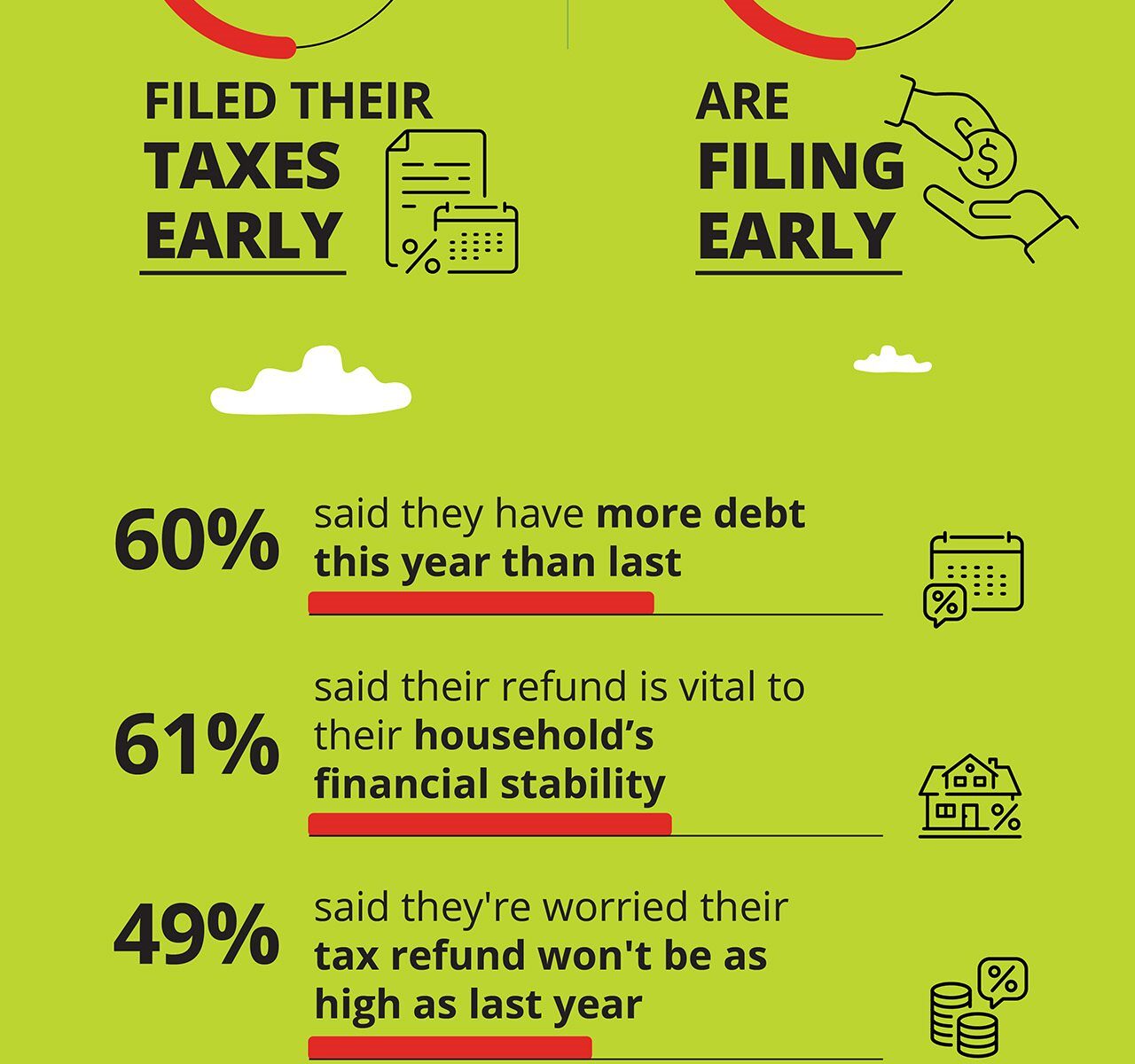
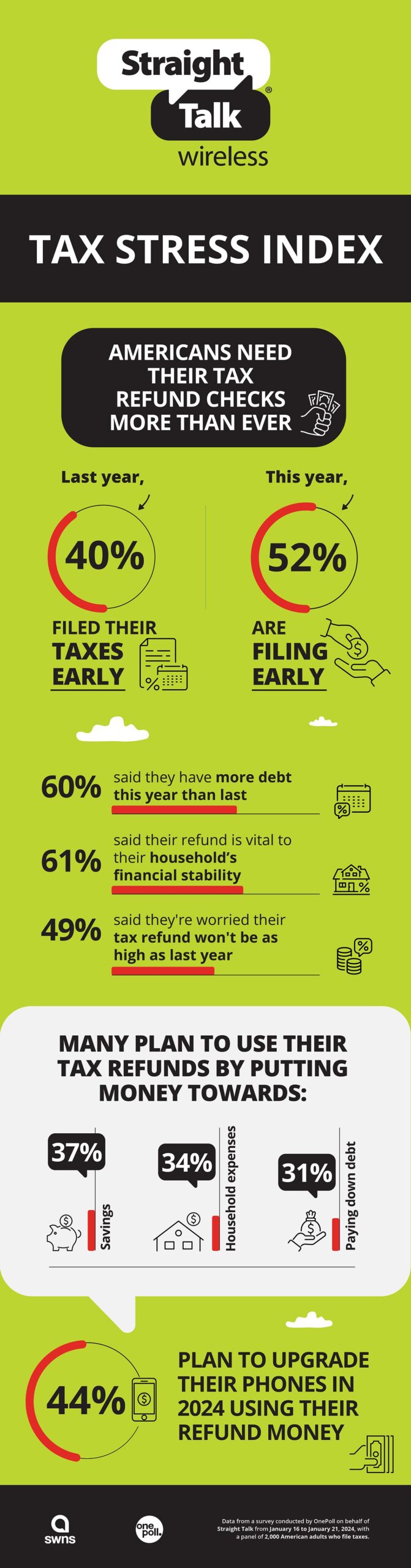
(BPT) – Straight Talk Wireless commissioned its second-annual survey to understand consumer sentiment around tax time and found that 60 percent of survey respondents say they are more in debt than last year and will file their taxes early.

The sooner taxpayers file, the faster they get their refund, which 61 percent say is vital to their household’s financial stability. But with consumer debt at a new high*, timing won’t be everything as the survey also showed that taxpayers continue to worry the money won’t be enough. Find out more here.

*The total household debt of $17.3 trillion entering 2024 is a new high for the U.S. The largest increase in any category was credit card debt, which swelled by 16.6% between Q3 2022 and Q3 2023, the most recent term for which federal data was available.

Survey methodology: This random double-opt-in survey of 2,000 general population Americans was commissioned by Straight Talk Wireless between January 16 and January 21, 2024. It was conducted by market research company OnePoll.

What Nobody Tells You About Recovering from Breast Cancer

2024-02-19T08:01:00

(BPT) – Pain. Fatigue. Scars. Depression. These are side effects we often hear about and associate with life-saving mastectomy surgeries. But did you know that total or partial chest numbness is a common and often permanent side effect, as well?

“I remember taking my newborn daughter into my arms and putting her on my chest — but I couldn’t feel her skin. I didn’t know that she was there unless I looked at her,” says Jane, a breast cancer survivor who underwent a double mastectomy.

During a mastectomy, the nerves that supply sensation to the breasts are cut so that the breast tissue can be removed. For some people, this results in total or partial loss of feeling in their chest.

This can leave some without the ability to feel touch, pressure, or temperature on their chest. Imagine not being able to feel the full embrace of a hug or your child’s head resting on your chest. Moreover, imagine having no awareness that you’re experiencing a wardrobe malfunction or being burned by a curling iron. Not being able to feel roughly 10% of your body is not only a safety concern, but it can also be very disorienting —physically and psychologically.

Post-mastectomy chest numbness and the after-effects come as a surprise for many people. Even if loss of sensation was mentioned or covered in the paperwork leading up to surgery, many still feel like they were ill-informed about what to expect after mastectomy and the impact it may have on their daily lives.

Numbness greatly affects quality of life for many women and is a source of ongoing grief about what was lost, a constant reminder of the trauma they experienced, and a barrier to fully recovering physically, psychologically and emotionally.

Our connection to loved ones often starts with the chest. “It’s part of what we present to the world. It’s our heart space, for women in particular,” says Dr. Carla Marie Manly, a licensed clinical psychologist in Santa Rosa, Calif. “Skin-to-skin contact in the first hour after birth. Breastfeeding. Hugs. The chest is a life-long source of comfort, love, nourishment, and connection. Imagine that connection being severed by numbness following mastectomy.”

“Physical touch and sensation are two senses that help us navigate life. So total chest numbness may result in physical, psychosocial, intimacy, and self-esteem issues,” says Dr. Kristen Casey, a licensed clinical psychologist in Kansas City, Mo. “Numbness has a significant impact on quality of life for a number of people I’ve counseled. For women, breasts often signify an extra layer of safety that protects them and their heart and lungs. And for those experiencing numbness, that protection can feel non-existent. It’s almost like there’s a blank part of them — one missing puzzle piece they can’t find. And that’s really difficult.”

“Feeling whole and connected to oneself has many layers to it. And because our bodies are our home, if we cannot feel a part of our own body, we can feel disconnected from ourselves as individuals,” adds Dr. Manly. “When we don’t feel fully connected to ourselves, that can affect how we relate with others. If we feel less confident, broken, or disoriented, we may be hesitant to let people in. When a woman feels good about herself, she will show up more magnificently in the world.”

The good news is that numbness following mastectomy doesn’t have to be permanent. During breast reconstruction or some revision procedures, surgeons can reconnect the nerves that were previously cut using a nerve allograft to potentially restore sensation.

With advancements in surgical techniques and technology, it’s possible for women to not only look — but also feel — like themselves again after breast cancer. But more people need to be aware of post-mastectomy numbness and be educated on options to potentially restore feeling.

So, tell your family members, friends, coworkers and neighbors: breast cancer may take your breasts, but it doesn’t have to take away your power to feel a hug.

Learn about Resensation®, a surgical technique designed to restore sensation, at Resensation.com.

Save on LG WashCombo and other appliances this Presidents Day

2024-02-16T15:47:00

(BPT) – Do you want to save money and electricity while modernizing your home? This Presidents Day, you can do both by taking advantage of LG’s deals now through Feb. 28.

LG is committed to providing energy-efficient solutions that are stylish and dependable for a cleaner, greener home. From thoughtful appliance features to groundbreaking technology, the company considers your wallet and the planet every step of the way. Check out these Presidents Day deals on top-rated kitchen and laundry appliances that will make your life easier and help you go green.

Keep your wardrobe fresh with an LG washer/dryer

Laundry has never been easier, thanks to LG’s washer/dryer units! The ENERGY STAR®-certified appliances use ventless inverter HeatPump™ technology, so you can enjoy quiet operation, greater energy efficiency and advanced fabric care.

Take back your time by bringing home an LG WashCombo All-in-One, now $1,000 off. The innovative 2-in-1 appliance washes and dries laundry in under two hours. Once you push start, you can go about your day without pausing a project or show to flip laundry. Built-in AI takes the guesswork out of fabric care, automatically detecting fabric texture and load size and selecting the right wash motions, temperatures and dry motions level.

If you want separate washer and dryer appliances in a single-unit design, consider LG WashTower and save $900. The front-load washer and dryer takes up half the space of a traditional washer and dryer setup. With the saved space, you can add a sink, folding table or organizational storage to reinvent how you do laundry. Plus, unlike conventional stacked pairs, LG’s exclusive Center Control® panel is easy to reach.

Control and monitor both appliances via the ThinQ® app. In the app, you’ll discover ThinQ Care™, which sends usage, maintenance and diagnostic alerts straight to your phone to keep your appliances running smoothly. Meanwhile, ThinQ® UP updates your appliances’ software, adding new features without additional purchases.

Test your culinary skills with LG cooking appliances

Are you ready to take your cooking to the next level? Impress friends and family by cooking delicious meals on an LG Smart Induction cooking appliance. The energy-efficient induction technology transfers heat directly to your cookware instead of the cooktop surface for fast heating, quick and even cooking and precise temperature control.

This Presidents Day, check out LG’s LSIL6334FE Smart Induction Slide-in Range with ProBake Convection® and Air Fry. As the first EnergyStar-certified cooking model in the U.S., you can quickly and confidently prepare meals using energy-efficient induction. Also, the LG ProBake Convection® oven automatically selects the lower speed for delicate baking or the higher speed for air frying and roasting.

Want even more convenience and cooking options? Look no further than LG’s LSIL6336FE Smart Induction Slide-in Range, now $500 off. You can turn out perfect batches of cookies, air fry hot wings and air sous vide meat, fish and vegetables. Also, the InstaView® Window lets you keep track of your creations without interrupting the cooking process. Just knock twice, take a peek and rest easy.

Like its laundry counterparts, the cooktop and oven are compatible with the ThinQ app, so you can control, maintain and check your kitchen appliances from anywhere.

Bundle and save even more!

You can save up to $500 this Presidents Day when you bundle two or more eligible LG appliances. Some kitchen appliances may even qualify for a $100 instant saving per item on up to four products on installation and/or haul away.

Make this Presidents Day one to remember with savings on top-tier home appliances that offer convenience and energy efficiency. To find more Presidents Day deals, visit LG.com/US/Promotions.

Easy, delicious seafood options for Lent — and every day

2024-02-16T07:05:00

(BPT) – Whether you’re looking to expand your protein options during Lent or want to try new twists on your seafood favorites, Morey’s Fine Fish & Seafood offers plenty of easy-to-prepare, delicious frozen options that your whole family is sure to enjoy. Look for products from Morey’s for convenient and affordable ways to satisfy your inner “seafoodie” this season and all year long.

Embrace the latest flavor craze: Sweet chili

Did you know almost half of consumers (46%) say they love or like the flavor of sweet chili and, according to Datassential, 42% say that sweet chili is their most preferred Asian-style sauce? Morey’s has found a perfect pairing with Tilapia Sweet Chili, a restaurant-quality entree that features ASC-certified tilapia, frozen at the peak of freshness, along with that beloved sweet and spicy sauce.

To take this new product one step further, try this recipe that highlights Morey’s Tilapia Sweet Chili by combining it with fresh veggies and your favorite Asian-style noodles.

Tilapia Asian Noodle Bowl

This noodle bowl is packed with savory flavors thanks to ingredients like fresh ginger, sesame, cilantro, and the sweet and spicy marinade featuring notes of honey, soy, peppers and garlic. Snap peas, bell peppers, cabbage and green onions add pops of color and freshness when tossed with flaky Tilapia Sweet Chili and deliciously springy udon noodles. The veggie- and flavor-packed dish makes an easy weeknight dinner, plus you can enjoy leftovers — warm or cold — for lunch!

Prep time: 15 minutes; Cook time 15–20 minutes; Serves 2

Ingredients

1 package Morey’s Tilapia Sweet Chili, prepared according to package directions
6 ounces cooked udon noodles or other favorite Asian-style noodle
2 tablespoons coconut, avocado or olive oil
1 tablespoon minced fresh ginger
2 cloves garlic, minced
1 cup snap peas, sliced in half lengthwise
1/2 red bell pepper, thinly sliced
1/2 yellow bell pepper, thinly sliced
2/3 cup plus 2 tablespoons sweet chili sauce
2 tablespoons water
1 cup red cabbage, thinly sliced
2 tablespoons soy sauce
2 green onions, sliced
2 tablespoons cilantro, chopped
1 tablespoon sesame seeds
Lime wedges

Instructions

Cook fish: Prepare Tilapia Sweet Chili fillets according to package directions.

Prepare vegetables: While the tilapia is cooking, heat oil in saute pan over medium heat. Add minced ginger and garlic and cook 1 minute. Add snap peas and bell peppers and cook 2-3 minutes, until softened. Stir in 1 tablespoon sweet chili sauce. Remove vegetables and set aside. Add 2 tablespoons water, 1 tablespoon sweet chili sauce and red cabbage, cooking until red cabbage is wilted, then remove cabbage and set aside.

To serve: Add remaining 2/3 cup sweet chili sauce, soy sauce and cooked noodles to pan. Toss to coat and heat through until noodles start to caramelize. Divide noodles on two plates, arrange cooked tilapia on top and add vegetables on the side. Garnish with green onions, cilantro, sesame seeds, squeeze of lime and extra sweet chili sauce.

Dive into a lemony fresh fan favorite

If salmon is one of your favorite varieties of fish, you’ll love Morey’s Wild Salmon Lemon Herb, which is full of fresh flavors that are just perfect for spring. This chef-inspired wild salmon dish is prepared in a citrus-style marinade that is sure to wake up your taste buds. It’s so easy to prepare that you’ll gladly — and quickly — put it together in your own kitchen rather than going out to eat, any night of the week.

Morey’s Fine Fish & Seafood offers a variety of better-for-you, premium seafood options that are easy to prepare and bold in flavor, including fillets paired with chef-inspired marinades and more. Their responsibly sourced, premium-quality seafood is the perfect way to create a five-star dinner at home for all your family and friends this Lent — and all year long.

You can find these and other products at retailers near you, and at Moreys.com.

5 tips to help your student thrive this year

2024-02-15T07:01:01

(BPT) – Do you remember how challenging school could be? As a parent, it’s easy to forget that studying and homework aren’t always easy. Your child needs your support and guidance to help stay on task with studies and achieve at the highest level.

Don’t know where to start? Check out these top five tips to help support your student’s educational journey so they can thrive academically this year.

1. Get organized

Messy and cluttered school supplies are a recipe for frustration. Encourage your student to keep notes and handouts organized to quickly and easily locate what is needed for any assignment. Encourage your student to pick out notebooks, folders and binders in favorite colors and designs. Let your student label or decorate front covers and assign a subject to each.

Take organization to the next level with a digital tool like the Five Star® Study App. Using the app and Five Star compatible notebooks, folders and academic planners, your student can scan handwritten notes and handouts to access study materials anytime, anywhere!

Once digitized, your student can add, revise and arrange notes as needed, organizing materials into digital folders that correspond with physical notebook colors. The free app provides your child with the best of physical and digital studying and even turns notes and handouts into digital flashcards.

2. Create a consistent study routine

It may sound simple, but establishing a consistent study routine can go a long way to help your student succeed in school. Creating a routine develops time management and prioritization skills for tasks and projects.

Guide your student to set a time each day for homework and studying, for example right after school, before or after dinner or extracurriculars. If a certain time isn’t working, suggest a change to find a time and rhythm that works best.

No matter what time of day they choose, consistency is the most important aspect of a study routine. After a couple of weeks, the study routine will become a habit that provides consistency and stability so your child can focus on tasks with minimal distractions.

3. Set realistic goals

A large project or study packet can be overwhelming and discouraging for anyone, let alone a young scholar. Expecting to finish a large assignment or study for a big test in one sitting can seem daunting and cause undue anxiety.

Help your child avoid panic and stress by helping set realistic and achievable study goals. Demonstrate how to break down big assignments into smaller tasks, and even create a task list to check off as each one is completed.

Using a tool like the Five Star Study App, your child can set reminders for different tasks, tackle them at a steady pace, and meet deadlines, building a sense of accomplishment. More importantly, this practice fosters a growth mindset and builds perseverance.

4. Encourage handwritten notes

Typing notes may be more convenient, but handwritten notes can give your child an academic edge. Many research studies suggest that writing on paper improves recall and allows notetakers to better understand complicated concepts.

You don’t have to sacrifice the power of paper for the convenience of digital. Your student can have the best of both worlds, thanks to the Five Star brand. Students can scan handwritten notes from compatible Five Star school supplies into the study app. To learn more about the Five Star Study App, visit FiveStarBuiltStrong.com.

5. Take regular breaks

Nonstop studying can quickly lead to burnout and less productivity. During study sessions, invite your child to take a break. Take a walk together, do some quick stretches, or simply ask them to step away from the study area and go outside to get some fresh air. When returning to study, your student will feel refreshed and ready to tackle the remaining assignments.

Every child is different, so collaborate with your students to find the best strategies that fit their learning style. However your child decides to study, your support is the most important tool in their arsenal. Using these five tips and fostering a positive attitude toward learning, you can help set up your child for academic success in 2024.

Did you know heart palpitations can tell the story of your heart? Sometimes these flutters can be a sign of changes to your heart health

2024-02-13T14:49:00

(BPT) – Read on to learn the power of heart rhythms to tell your heart health story …

Heart rhythms can tell a story with the power to help change a life.

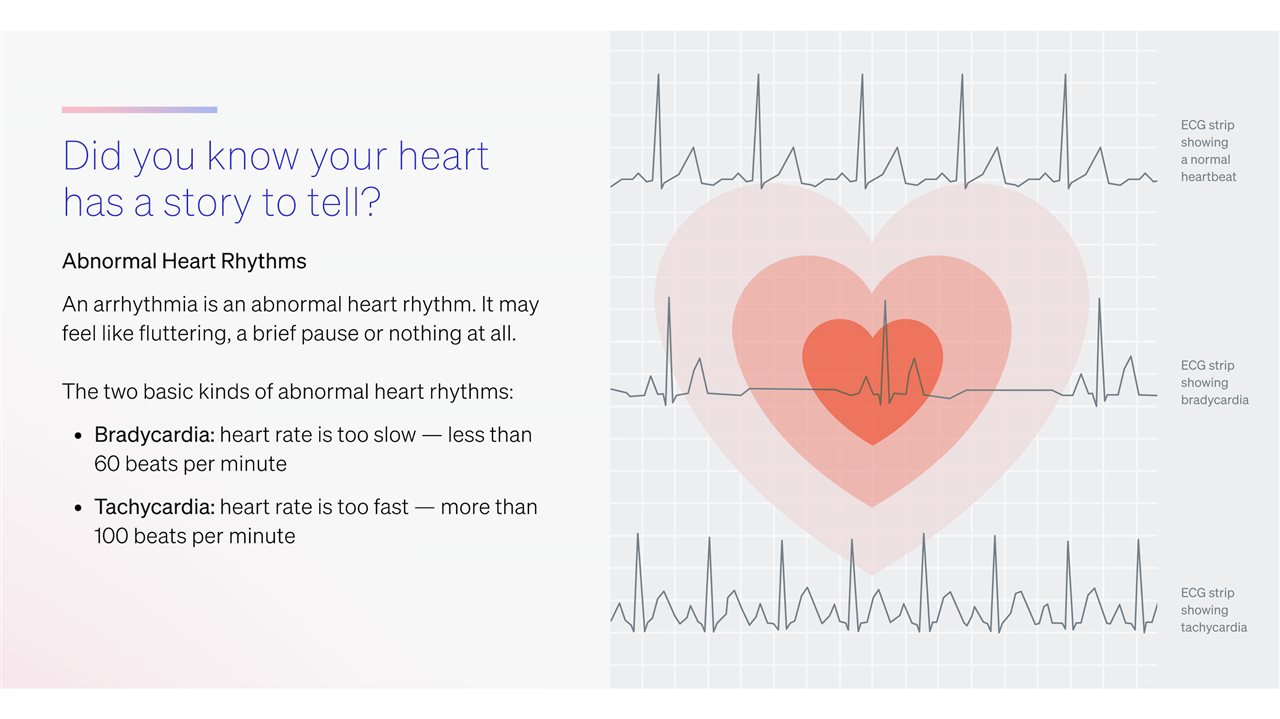
You may have heard of heart palpitations because they are common[1], accounting for 16% of visits to primary care physicians and are the second leading cause of visits to cardiologists[2]. Often perceived as mere inconveniences, heart palpitations can be important cues from our bodies. While they are sometimes caused by temporary stressors, they may also signify deeper health concerns like arrhythmias that require medical attention.

An arrhythmia is an irregular heartbeat where your heart may beat too quickly, too slowly or irregularly. One study shows that up to 5% of the general population — or 16 million people[3] — experience arrhythmias. Some arrhythmias, if not treated, can damage the heart, brain or other organs.[4] Other arrhythmias may even lead to an increased risk of stroke or death.[5] And for the person experiencing one, arrhythmias can feel scary.

Causes and Risk Factors

How can you do better by your heart? First and foremost, you can reduce risk factors for arrhythmias. Risk factors that may affect an individual’s risk of arrhythmia include heart disease, high blood pressure, high alcohol use, obesity and family history.[6] Arrhythmias and related conditions are more common in those over 60 years of age,[7] and can be particularly dangerous if undetected.

And, for early detection, it is worthwhile talking with your healthcare provider as there are advancements in heart monitoring technologies that offer lightweight, wearable electrocardiogram (ECG) patches that seamlessly integrate into your daily life and record important heart rhythms and help tell your individualized story of cardiac health.

Types of Arrhythmias

In general, heart arrhythmias are grouped by the speed of the heart rate. For example, tachycardia is a fast heartbeat, while bradycardia is a slow heartbeat[8].

Atrial fibrillation, or Afib, is a common arrhythmia, with an irregular and often very rapid heart rhythm (tachycardia). There are 5-8 million people with Afib in the U.S., with up to 1.5 million adults living with Afib who don’t even know they have it.[9] In fact, Afib causes one out of seven strokes[10], and 160,000 deaths per year.[11]

Early Detection is Vital

Being proactive about your heart health is critical. And that includes early detection and treatment of arrhythmias to reduce the burden of cardiac disease.[12]

While arrhythmias are treatable, your path may depend on the specific type of arrhythmia. Evaluating your unique treatment journey requires a diagnosis from a doctor.

A Path Forward

The path to getting a diagnosis and understanding your specific arrhythmia hasn’t always been easy. Not so long ago, finding out if you had an arrhythmia required a hospital or clinic visit to get an ECG. But as arrhythmia symptoms often come and go, and an ECG can capture the exact time your heartbeat is irregular. An in-clinic ECG scan sometimes meant that getting a diagnosis required repeat ECGs or the condition was missed altogether.

Today, while doctors still widely use Holter monitors to detect arrhythmias — wired, clunky devices introduced in the 1960s that are worn for only 24 to 48 hours — clinical studies have shown that longer ECG recording periods are more effective[13] because some people could go days or weeks without an episode. In fact, three out of four patients who use a Holter monitor do not get a diagnosis on the first test.[14]

Nowadays, even a smartwatch can tell you that you might have atrial fibrillation, by tracking your pulse to see if it becomes irregular, though the accuracy is not always perfect. If you have any symptoms or get a smartwatch alert, take heed — but know that you will likely still need an ECG to get a diagnosis from your doctor.

The good news is that modern ECG monitors can be worn at home and continuously record your heart’s electrical signal for longer than 24 to 48 hours if your doctor prescribes it. iRhythm has been creating these types of ECG monitors since 2008 and has recently launched its next generation monitoring device, the Zio monitor. The device is a discreet adhesive patch and a sensor the size of a quarter, weighing less than a pencil[15], with no clunky wires and no need to change batteries during the wear period.

Recordings from these Zio ECG monitoring devices continuously record your heart for up to 14 days — capturing up to 1.5 million heart beats[16] — and can help doctors accurately diagnose heart arrhythmias.

“Palpitations, skipped beats, and other heart-rhythm symptoms can be a nuisance and affect quality of life. However, sometimes they tell a greater story and may signal a more serious condition like atrial fibrillation, which can cause stroke and heart failure,” said Mintu Turakhia, MD, MAS, a cardiologist and the chief medical and scientific officer at iRhythm. “Because these rhythms can be treated and complications prevented, early detection is key. The good news is there are heart monitoring technologies that can help get to a diagnosis quickly — or give you peace of mind.”

In a world where our health is paramount, understanding and responding to our heart’s rhythms is a powerful step toward longevity and well-being. So, listen to your heart, embrace the technological strides in cardiac monitoring, and take proactive steps towards heart health. Your heart’s story is worth knowing, and with the right tools and care, you can help ensure it’s a long and healthy one.


Newer heart monitoring technology is helping in the shift to more preventative and proactive treatment and care, providing an effective way to diagnose arrhythmias and protect your health. If you or your loved one has symptoms of arrhythmias, talk to your physician or care team to learn more if heart monitoring is right for you and the best option for your situation.

[1] Raviele A, Giada F, Bergfeldt L, et al. Management of patients with palpitations: a position paper from the European Heart Rhythm Association. Europace. 2011;13(7):920-934.

[2] Wexler, et al. Palpitations: Evaluation in the Primary Care Setting. Am Fam Physician, 2017.

[3] Desai et al. Arrhythmias. StatPearls [Internet], 2022. https://www.ncbi.nlm.nih.gov/books/NBK558923/ [accessed October 2022]

[4] What is an arrhythmia? National Heart Lung and Blood Institute, 2022. https://www.nhlbi.nih.gov/health/arrhythmias Accessed November 18, 2022

[5] Ataklte et al. Meta-analysis of ventricular premature complexes and their relation to cardiac mortality in general populations. The American Journal of Cardiology, 2013.

Lin et al. Long-Term Outcome of Non-Sustained Ventricular Tachycardia in Structurally Normal Hearts. PLOS ONE, 2016.

Wolf et al. Atrial fibrillation as an independent risk factor for stroke: the Framingham Study. Stroke, 1991.

[6] Arrhythmias: causes and triggers. National Heart Lung and Blood Institute (NHLBI), 2022

[7] Mirza, M. et al,. Mechanisms of arrhythmias and conduction disorders in older adults. Clin Geriatr Med., 2012

[8] https://www.heart.org/-/media/Files/Health-Topics/Answers-by-Heart/What-is-Arrhythmia.pdf

[9] Turakhia MP, et al., Contemporary prevalence estimates of undiagnosed and diagnosed atrial fibrillation in the United States. Clin Cardiol, 2023.

[10] Heart Rhythm Society. (2019). Complications from Atrial Fibrillation.

[11] Atrial Fibrillation. Centers for Disease Control and Prevention (CDC), 2022. https://www.cdc.gov/heartdisease/atrial_fibrillation.htm [accessed September 2023]

[12] Rilig et al. Early Rhythm Control in Patients With Atrial Fibrillation and High Comorbidity Burden. Circulation, 2022.

[13] Reynolds et al. Comparative effectiveness of ambulatory monitors for arrhythmia diagnosis: A retrospective analysis of Medicare beneficiaries managed with ambulatory cardiac monitors between 2017 and 2019. Accepted for ACC.23 presentation, presented at New Orleans, LA.

[14] Tsang, et al., Benefits of monitoring patients with mobile cardiac telemetry (MCT) compared with the Event or Holter monitors. Medical Devices: Evidence and Research, 2013.

[15] 10g

[16] Data on file. iRhythm Technologies, 2019.

Seventy percent of U.S. drivers don’t know this vital winter driving fact

2024-02-13T09:01:00

(BPT) – Seven in 10 American drivers are unaware of a vital piece of information. All-season tires aren’t built to drive in all four seasons.

It sounds counterintuitive, but it’s true: The tires used by most Americans harden when temps fall below 45 degrees, rendering them less responsive to the road when it’s cold or snowy. In fact, nearly three-fourths of North American all-season tire drivers say they feel unsafe on the road at least a few times each winter.

What’s the solution?

Thankfully, there’s a remedy: all-weather tires.

The name is so similar that only 30% of U.S. drivers are able to distinguish them from all-season tires. But there’s an easy way to think about it: all-weather tires are made for all types of weather, whereas all-season tires are three-season tires in most parts of the United States and Canada.

How can consumers tell the difference? All-weather tires are certified with the three-peak mountain snowflake symbol on their sidewalls. That signifies they’re meant for use in winter conditions.

What sets all-weather tires apart?

All-weather tires remain soft in the wintry months, and their tread patterns are designed to carve through snow and slush. At the same time, they perform well in spring rain and summer heat. While there’s nothing safer in extreme winter than a dedicated winter tire, all-weather tires are a compromise option for drivers who live in areas with moderate or unpredictable winter weather.

If snow, ice and frigid weather stay for a few months, it’s best to swap to a set of winter tires. But for drivers who visit winter or have winter visit them, an all-weather tire is an appealing solution.

All-weather tires have been around for nearly a quarter century; Nokian Tyres introduced the all-weather passenger tire to North America in 1999. The company, which also invented the winter tire in the 1930s, just debuted its sixth-generation all-weather tire this winter — the Nokian Tyres Remedy WRG5.

Like many all-weather tires, the Remedy WRG5 is tested around the globe — in this case, at Nokian Tyres’ Arctic test facility in northern Finland and its new test track in the Spanish desert. The inside of the tire has snow claws that carve into wintry surfaces, while the outside of the tire channels away moisture like an all-season tire.

Who should consider all-weather tires?

Drivers who live in the Sun Belt can usually get away with all-season tires year-round. But anyone who visits winter, or sees winter visit them, should consider an all-weather tire — especially if they don’t plan to swap to dedicated winter tires this time of year.

What drivers don’t know about four-season driving can hurt them. All-weather tires offer an appealing remedy. Learn more about all-weather tires at NokianTires.com/Remedy.

How a new Subaru partnership is providing warmth, confidence and hope to kids this winter

2024-02-13T08:01:00

(BPT) – As cold weather moves across much of this country, winter coats, shoes and socks are a necessity that most of us may take for granted. But with 40 million people living in poverty according to the U.S. Census Bureau, many do not have the means for or access to the essentials they need to make it safely through the season staying warm and dry.

That’s why as part of Subaru Loves to Help® month the automaker is partnering with Operation Warm®, a national nonprofit that produces those necessary items and organizes gifting programs with beneficiary organizations for children in urgent need. In a free shopping experience, volunteers from Subaru retailers and community organizations help kids select brand-new essential clothing in their size and in colors that they love.

This winter wear will keep them cozy, which is a basic need they may be living without. The fact that the items are new and personally selected by the wearer can also have a significant impact on a child’s emotional well-being. According to the U.S. Department of Housing and Urban Development (HUD) 2023 Annual Homeless Assessment Report, roughly 653,100 people were experiencing homelessness during a single night in 2023, a record high since data collection began in 2007 and a 12% increase over the year before. Nearly three of every 10 people (28%) experiencing homelessness did so as part of a family with children.

“For too many children, going without a coat, shoes or even socks can mean the difference between going to school, participating in activities and feeling confident in themselves,” said Alan Bethke, senior vice president of marketing, Subaru of America, Inc. “By pairing our own commitment to be ‘More Than a Car Company,’ with Operation Warm’s mission of being ‘More Than a Coat’ we’re providing children in urgent need with the opportunity to select and own the brand-new necessities they need to thrive.”

In partnership with Operation Warm, more than 600 Subaru retailers around the country have been matched with a local beneficiary organization that serves children in need in their local community. Through gifting and drop-off events, Subaru will help provide more than 150,000 children with brand-new coats, shoes and socks. These special events are tailored to address the unique preferences and essential needs of each child through a variety of coat, shoe and sock options donated by the Subaru retailer.

Picking out something new that is theirs to keep is important for a child’s self-esteem. Choosing a new coat can provide:

  • Improved social interactions and confidence. New winter coats are a fact of life for many kids. For those experiencing homelessness and other urgent need situations, new clothing can provide a sense of normalcy and belonging.
  • A symbol of care and respect. The ability to choose their own winter wear shows a child that their preferences matter. That they matter.
  • Reduced anxiety and stress. There’s no worry that a child won’t have a beautiful new coat to keep them warm on the playground at school, which eases stress on kids and their caregivers.
  • Hope and optimism. Knowing that someone cares is a powerful force in this world.

“Coats, shoes and socks provide so much more than just physical warmth, and programs like this are giving kids in urgent need the relief and confidence to socialize and succeed,” said Grace Sica, executive director of Operation Warm. “Teaming up with Subaru, who clearly shares our values of community connection, allows us to bring warmth and confidence to even more children around the country than ever before.”

That’s why Subaru has signed on to be the largest automotive partner of Operation Warm. It’s part of their Subaru Love Promise vision, in which the automaker commits to be a positive force in the local communities where they live and work, going beyond donations to include actions that set an example for others to follow.

Through this partnership, Subaru and Operation Warm will be addressing the immediate needs of more than 150,000 children by the end of February, but the impact will have much longer-lasting effects. And that can make everyone feel a little warmer.

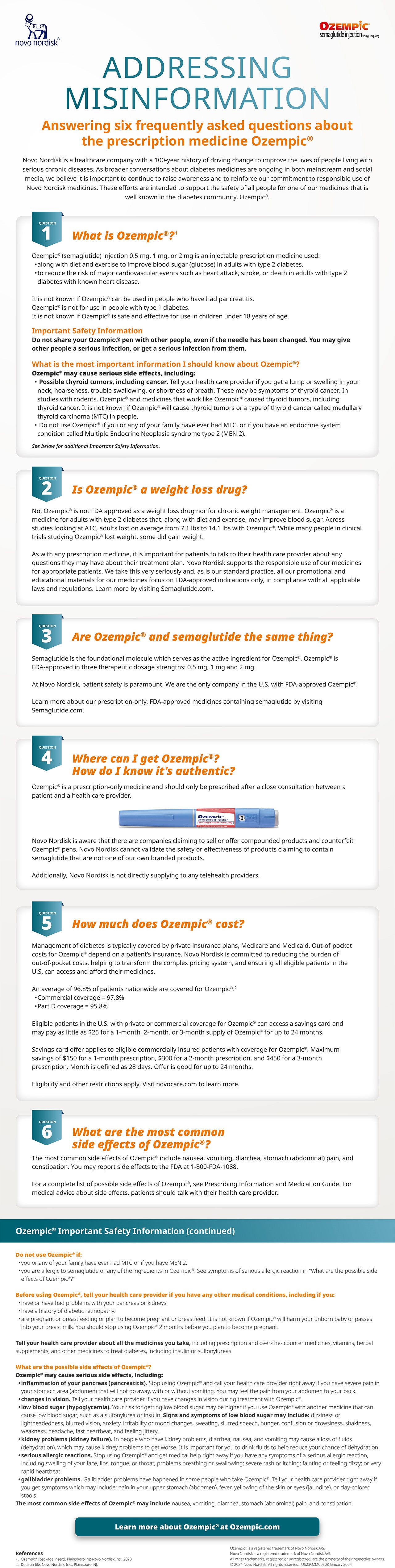
Addressing Misinformation

2024-02-12T09:01:00

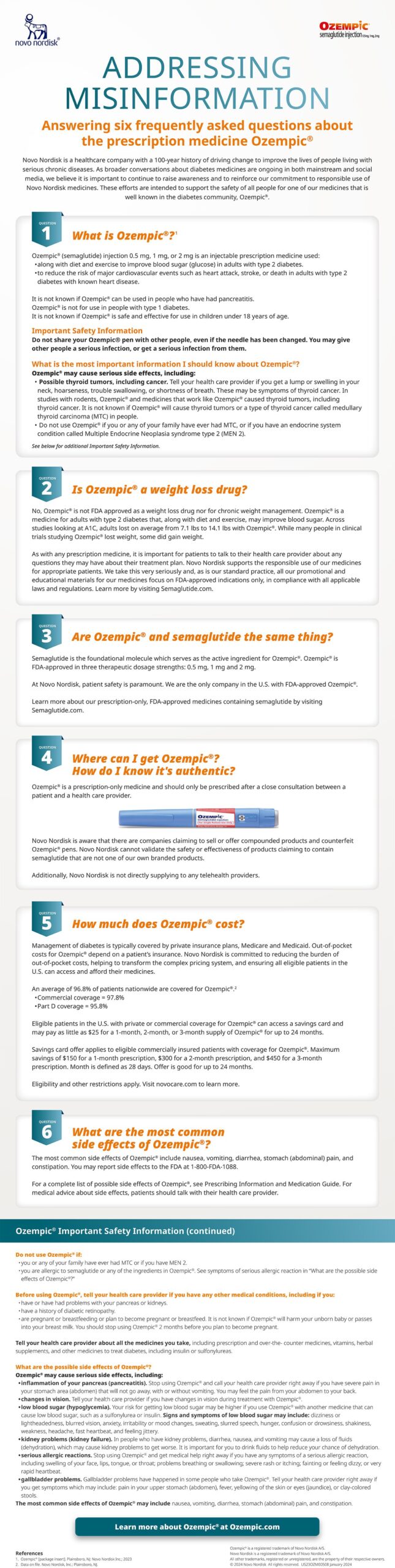
(BPT) – Frequently asked questions about Ozempic (semaglutide)

Novo Nordisk is a healthcare company with a 100­-year history of driving change to improve the lives of people living with serious, chronic diseases. As broader conversations about diabetes medicines are ongoing in both mainstream and social media, we believe it is important to continue to raise awareness and to reinforce our commitment to responsible use of Novo Nordisk medicines. These efforts are intended to support the safety of all people for one of our medicines that is well known in the diabetes community, Ozempic®.

See Medication Guide: bit.ly/OzempicPI & Safety Info: bit.ly/OzempicISI for Ozempic (semaglutide) injection 0.5 mg, 1 mg, or 2 mg.

Heart to Heart With a Leading Cardiologist: What You Need to Know About Coronary Artery Disease

2024-02-12T11:01:00

(BPT) – Did you know that the heart beats about 70 times per minute?1 Despite this muscle only being about the size of your fist, it is responsible for pumping oxygen-rich blood throughout your entire body 24/7 using arteries or blood vessels.1

When there is a narrowing or blockage of the coronary arteries due to a build-up of plaque, it can threaten the supply of oxygen and blood to the heart.1 This can result in a condition known as coronary artery disease (CAD), which is the most common type of heart disease in the United States.1

To help people, especially those over 65, stay heart healthy, Dr. Manesh Patel,* a Cardiologist at the Duke Heart Center in Durham, North Carolina, answers the most common questions about CAD.2

Q&A with Dr. Manesh Patel

Q: What is coronary artery disease – CAD – and how could it impact someone’s life?

A: In simple terms, CAD is the narrowing of blood vessels, also known as coronary arteries, that supply oxygen and blood to the heart.1 This is the most common type of heart disease and its complications are the leading cause of death for males and females in the U.S.1 CAD is very serious because patients with the condition are at a higher risk for health issues caused by blood clots such as stroke, heart attack, and cardiovascular-related death.1,3 That is why it’s so important for people to talk to their doctor or cardiologist about CAD and develop a treatment plan, if necessary.

CAD affects about 20.5 million Americans.4

Q: How does someone know if they have CAD?

A: Many patients come into my office with chest pain or discomfort, weakness, light-headedness, nausea, and shortness of breath, which are common symptoms of CAD.1 Pain or discomfort in the arms, neck, back, or shoulders can also be signs of CAD.1

I also consider other factors such as age, sex (men are generally at a higher risk of CAD), family history, smoking, high blood pressure, high blood cholesterol levels, diabetes, obesity, physical inactivity, stress, and eating an unhealthy diet because they can make someone have a higher risk for CAD.1 It’s always important to discuss any symptoms you have with your doctor or cardiologist because these are only some of the symptoms associated with CAD.1 Sometimes CAD can develop without any risk factors, or if you have multiple risk factors, you may be at even higher risk of developing CAD.5

After I evaluate my patients’ symptoms and discuss their medical history, I typically order lab tests to confirm a diagnosis.1 Other doctors and cardiologists may take a similar approach.

Q: Are there treatments to prevent the effects of CAD?

A: Yes, there are different ways to treat CAD. One medicine approved to prevent blood clots that are associated with CAD and other cardiovascular conditions is rivaroxaban (XARELTO®). When taken with aspirin, it can reduce the risk of major cardiovascular events, which is defined as cardiovascular death, heart attack, and stroke.6 XARELTO® may cause serious side effects including bleeding, which can be serious. It is important to talk to your doctor before beginning or stopping XARELTO®. Please see Important Safety Information below.

When considering the best treatment option for my patients, I often look at the latest clinical practice guidelines issued by reputable cardiology organizations. Guideline updates are important milestones that help keep healthcare providers up to date on the latest medicines and research to provide guidance on how to treat patients.

In July 2023, the American College of Cardiology (ACC) and the American Heart Association (AHA) updated their clinical practice guidelines for the management of chronic coronary disease, including CAD. The updated guidelines state that it is reasonable to use rivaroxaban (XARELTO®) plus an aspirin treatment regimen for patients at high ischemic risk and low bleeding risk to help reduce the risk of major cardiovascular events in patients with chronic coronary disease, otherwise known as CAD.7

XARELTO® (2.5 mg twice daily plus aspirin 75 mg-100 mg once daily) is the only approved direct oral anticoagulant drug in its class for the treatment of CAD.6 That said, it’s important to talk with your doctor or cardiologist to find the most appropriate treatment plan for you, as XARELTO® is not right for everyone.

Q: What should I ask my doctor about treating CAD?

A: If you think you or a loved one may have CAD, are experiencing any of the common signs and symptoms, or have any of the risk factors for the disease, it’s important to talk with your doctor or cardiologist. They will evaluate your symptoms and risk factors, and if you are diagnosed with CAD, develop a treatment plan that could include medication, exercise, and lifestyle changes.

It is important that CAD is diagnosed as soon as possible to help reduce the risk of serious outcomes such as heart attack and stroke.3

Questions to consider asking at your next doctor’s visit:

  • My family has a history of heart disease. Does this increase my risk of CAD?
  • I often feel short of breath. Could this be a sign that I have CAD?
  • I have other health conditions. Might they be linked to CAD?
  • I have CAD, what are my treatment options to help me manage my condition?

Finding the right CAD care is key to your overall heart health. If you or a loved one are experiencing symptoms of the disease, it is important to talk to your doctor. CAD is a serious condition but there is hope for people who may be at risk. You can learn more about CAD and how XARELTO® can help manage your condition by visiting Xarelto.com

Sponsored by Janssen Pharmaceutical companies of Johnson & Johnson

* Manesh Patel, M.D. is a paid consultant for the Janssen Pharmaceutical companies of Johnson & Johnson.

References:

  1. “All About Coronary Artery Disease.” Pacific Heart, Lung & Blood Institute, 2020.
  2. Xia, T. L., Huang, F. Y., Li, Y. M., Chai, H., Huang, B. T., Ou, Y. W., Li, Q., Pu, X. B., Zuo, Z. L., Peng, Y., Chen, M., & Huang, D. J. (2018). The impact of age on the implementation of evidence-based medications in patients with coronary artery disease and its prognostic significance: a retrospective cohort study. BMC public health, 18(1), 150. https://doi.org/10.1186/s12889-018-5049-x.
  3. “Symptoms of Coronary Artery Disease.” VeryWell Health, 2021.
  4. “Heart Disease and Stroke Statistics—2023 Update: A Report From the American Heart Association.” AHA Journals, 2023. Accessed June 24, 2023. https://www.ahajournals.org/doi/10.1161/CIR.0000000000001123#d1e727
  5. “Coronary Artery Disease.” MayoClinic, 2019.
  6. XARELTO® (rivaroxaban) [Prescribing Information]. Titusville, NJ: Janssen Pharmaceuticals, Inc.
  7. Virani, S. Salim et al. 2023 AHA/ACC/ACCP/ASPC/NLA/PCNA Guideline for the Management of Patients with Chronic Coronary Disease. Journal of the American College of Cardiology 2023.

Important Safety Information

WHAT IS XARELTO® (rivaroxaban)?

XARELTO® is a prescription medicine used to:

  • reduce the risk of stroke and blood clots in adults who have a medical condition called atrial fibrillation that is not caused by a heart valve problem. With atrial fibrillation, part of the heart does not beat the way it should. This can lead to the formation of blood clots, which can travel to the brain, causing a stroke, or to other parts of the body
  • treat blood clots in the veins of your legs (deep vein thrombosis or DVT) or lungs (pulmonary embolism or PE)
  • reduce the risk of blood clots from happening again in adults who continue to be at risk for DVT or PE after receiving treatment for blood clots for at least 6 months
  • help prevent a blood clot in the legs and lungs of adults who have just had hip or knee replacement surgery
  • help prevent blood clots in certain adults hospitalized for an acute illness and after discharge, who are at risk of getting blood clots because of the loss of or decreased ability to move around (mobility) and other risks for getting blood clots, and who do not have a high risk of bleeding

XARELTO® is used with low dose aspirin to:

  • reduce the risk of serious heart problems, heart attack and stroke in adults with coronary artery disease (a condition where the blood supply to the heart is reduced or blocked)
  • reduce the risk of a sudden decrease in blood flow to the legs, major amputation, serious heart problems or stroke in adults with peripheral artery disease (a condition where the blood flow to the legs is reduced) and includes adults who have recently had a procedure to improve blood flow to the legs

XARELTO® is used in children to:

  • treat blood clots or reduce the risk of blood clots from happening again in children from birth to less than 18 years, after receiving at least 5 days of treatment with injectable or intravenous medicines used to treat blood clots
  • help prevent blood clots in children 2 years and older with congenital heart disease after the Fontan procedure

XARELTO® was not studied and is not recommended in children less than 6 months of age who:

  • were less than 37 weeks of growth (gestation) at birth
  • had less than 10 days of oral feeding, or
  • had a body weight of less than 5.7 pounds (2.6 kg)

WHAT IS THE MOST IMPORTANT INFORMATION I SHOULD KNOW ABOUT XARELTO®?

XARELTO® may cause serious side effects, including:

  • Increased risk of blood clots if you stop taking XARELTO®. People with atrial fibrillation (an irregular heart beat) that is not caused by a heart valve problem (nonvalvular) are at an increased risk of forming a blood clot in the heart, which can travel to the brain, causing a stroke, or to other parts of the body. XARELTO® lowers your chance of having a stroke by helping to prevent clots from forming. If you stop taking XARELTO®, you may have increased risk of forming a clot in your blood.

Do not stop taking XARELTO® without talking to the doctor who prescribes it for you. Stopping XARELTO® increases your risk of having a stroke. If you have to stop taking XARELTO®, your doctor may prescribe another blood thinner medicine to prevent a blood clot from forming.

  • Increased risk of bleeding. XARELTO® can cause bleeding which can be serious and may lead to death. This is because XARELTO® is a blood thinner medicine (anticoagulant) that lowers blood clotting. During treatment with XARELTO® you are likely to bruise more easily, and it may take longer for bleeding to stop. You may be at higher risk of bleeding if you take XARELTO® and have certain other medical problems.

You may have a higher risk of bleeding if you take XARELTO® and take other medicines that increase your risk of bleeding, including:

    • Aspirin or aspirin-containing products
    • Long-term (chronic) use of non-steroidal anti-inflammatory drugs (NSAIDs)
    • Warfarin sodium (Coumadin®, Jantoven®)
    • Any medicine that contains heparin
    • Clopidogrel (Plavix®)
    • Selective serotonin reuptake inhibitors (SSRIs) or serotonin norepinephrine reuptake inhibitors (SNRIs)
    • Other medicines to prevent or treat blood clots

Tell your doctor if you take any of these medicines. Ask your doctor or pharmacist if you are not sure if your medicine is one listed above.

Call your doctor or get medical help right away if you or your child develop any of these signs or symptoms of bleeding:

    • Unexpected bleeding or bleeding that lasts a long time, such as:
      • Nosebleeds that happen often
      • Unusual bleeding from gums
      • Menstrual bleeding that is heavier than normal, or vaginal bleeding
    • Bleeding that is severe or you cannot control
    • Red, pink, or brown urine
    • Bright red or black stools (looks like tar)
    • Cough up blood or blood clots
    • Vomit blood or your vomit looks like “coffee grounds”
    • Headaches, feeling dizzy or weak
    • Pain, swelling, or new drainage at wound sites
  • Spinal or epidural blood clots (hematoma). People who take a blood thinner medicine (anticoagulant) like XARELTO®, and have medicine injected into their spinal and epidural area, or have a spinal puncture, have a risk of forming a blood clot that can cause long-term or permanent loss of the ability to move (paralysis). Your risk of developing a spinal or epidural blood clot is higher if:
    • A thin tube called an epidural catheter is placed in your back to give you certain medicine
    • You take NSAIDs or a medicine to prevent blood from clotting
    • You have a history of difficult or repeated epidural or spinal punctures
    • You have a history of problems with your spine or have had surgery on your spine

If you take XARELTO® and receive spinal anesthesia or have a spinal puncture, your doctor should watch you closely for symptoms of spinal or epidural blood clots.

Tell your doctor right away if you have:

    • back pain
    • tingling
    • numbness
    • muscle weakness (especially in your legs and feet)
    • or loss of control of the bowels or bladder (incontinence)

XARELTO® is not for use in people with artificial heart valves.

XARELTO® is not for use in people with antiphospholipid syndrome (APS), especially with positive triple antibody testing.

Do not take XARELTO® if you or your child:

  • Currently have certain types of abnormal bleeding. Talk to your doctor before taking XARELTO® if you currently have unusual bleeding.
  • Are allergic to rivaroxaban or any of the ingredients of XARELTO®.

Before taking XARELTO®, tell your doctor about all your medical conditions, including if you or your child:

  • Have ever had bleeding problems
  • Have liver or kidney problems
  • Have antiphospholipid syndrome (APS)
  • Are pregnant or plan to become pregnant. It is not known if XARELTO® will harm your unborn baby.
    • Tell your doctor right away if you become pregnant during treatment with XARELTO®. Taking XARELTO® while you are pregnant may increase the risk of bleeding in you or in your unborn baby.
    • Females who are able to become pregnant: Talk with your doctor about pregnancy planning during treatment with XARELTO®. Talk with your doctor about your risk for severe uterine bleeding if you are treated with blood thinner medicines, including XARELTO®.
    • If you take XARELTO® during pregnancy, tell your doctor right away if you have any signs or symptoms of bleeding or blood loss. See “What is the most important information I should know about XARELTO®?” for signs and symptoms of bleeding.
  • Are breastfeeding or plan to breastfeed. XARELTO® may pass into your breast milk. Talk to your doctor about the best way to feed your baby during treatment with XARELTO®.

Tell all of your doctors and dentists that you or your child are taking XARELTO®. They should talk to the doctor who prescribed XARELTO® for you before you have any surgery, medical or dental procedure.

Tell your doctor about all the medicines you or your child take, including prescription and over-the-counter medicines, vitamins, and herbal supplements.

Some of your other medicines may affect the way XARELTO® works, causing side effects. Certain medicines may increase your risk of bleeding. See “What is the most important information I should know about XARELTO®?”

HOW SHOULD I TAKE XARELTO®?

  • Take XARELTO® exactly as prescribed by your doctor.
  • Do not change your dose or stop taking XARELTO® unless your doctor tells you to. Your doctor may change your dose if needed.
  • Your doctor will decide how long you should take XARELTO®.
  • XARELTO® may need to be stopped for one or more days before any surgery or medical or dental procedure. Your doctor will tell you when to stop taking XARELTO® and when to start taking XARELTO® again after your surgery or procedure.
  • If you need to stop taking XARELTO® for any reason, talk to the doctor who prescribed XARELTO® to you to find out when you should stop taking it. Do not stop taking XARELTO® without first talking to the doctor who prescribes it to you.
  • If you have difficulty swallowing XARELTO® tablets whole, talk to your doctor about other ways to take XARELTO®.
  • Do not run out of XARELTO®. Refill your prescription of XARELTO® before you run out. When leaving the hospital following a hip or knee replacement, be sure that you will have XARELTO® available to avoid missing any doses.
  • If you take too much XARELTO®, go to the nearest hospital emergency room or call your doctor right away.

If you take XARELTO® for:

  • Atrial Fibrillation that is not caused by a heart valve problem:
    • Take XARELTO® 1 time a day with your evening meal.
    • If you miss a dose of XARELTO®, take it as soon as you remember on the same day. Take your next dose at your regularly scheduled time.
  • Blood clots in the veins of your legs or lungs:
    • Take XARELTO® 1 or 2 times a day as prescribed by your doctor.
    • For the 10-mg dose, XARELTO® may be taken with or without food.
    • For the 15-mg and 20-mg doses, take XARELTO® with food at the same time each day.
    • If you miss a dose:
      • If you take the 15-mg dose of XARELTO® 2 times a day (a total of 30 mg of XARELTO® in 1 day): Take XARELTO® as soon as you remember on the same day. You may take 2 doses at the same time to make up for the missed dose. Take your next dose at your regularly scheduled time.
      • If you take XARELTO® 1 time a day: Take XARELTO® as soon as you remember on the same day. Take your next dose at your regularly scheduled time.
  • Hip or knee replacement surgery:
    • Take XARELTO® 1 time a day with or without food.
    • If you miss a dose of XARELTO®, take it as soon as you remember on the same day. Take your next dose at your regularly scheduled time.
  • Blood clots in people hospitalized for an acute illness:
    • Take XARELTO® 1 time a day, with or without food, while you are in the hospital and after you are discharged as prescribed by your doctor.
    • If you miss a dose of XARELTO®, take it as soon as you remember on the same day. Take your next dose at your regularly scheduled time.
  • Reducing the risk of serious heart problems, heart attack and stroke in coronary artery disease:
    • Take XARELTO® 2.5 mg 2 times a day with or without food.
    • If you miss a dose of XARELTO®, take your next dose at your regularly scheduled time.
    • Take aspirin 75 to 100 mg once daily as instructed by your doctor.
  • Reducing the risk of a sudden decrease in blood flow to the legs, major amputation, serious heart problems or stroke in people with peripheral artery disease, including those who have recently had a procedure to improve blood flow to the legs:
    • Take XARELTO® 2.5 mg 2 times a day with or without food.
    • If you miss a dose of XARELTO®, take your next dose at your regularly scheduled time.
    • Take aspirin 75 to 100 mg once daily as instructed by your doctor.

For children who take XARELTO®:

  • The dose of XARELTO® depends on your child’s body weight and will be calculated by your child’s doctor. Your child’s doctor will tell you if XARELTO® can be given to your child with or without food.
  • The adult caregiver should give the dose.
  • If your child is taking the tablet, the tablet should be taken whole and should not be split in an attempt to provide a lower dose of XARELTO®.
  • If your child is taking the oral suspension, use the syringes provided in the original carton. The suspension will be prepared by the pharmacy. See the Instructions for Use included in the carton on how to properly give a dose of XARELTO® oral suspension to your child.
  • Do not switch between the XARELTO® oral suspension or tablet without first talking to your doctor.
  • If your child vomits or spits up:
    • right after or within 30 minutes of taking the oral suspension, give a new full dose.
    • more than 30 minutes after taking the oral suspension, do not give the dose again. Give the next dose at the regularly scheduled time.
    • if vomiting or spitting up persists, contact your child’s doctor right away.
  • If your child misses a dose:
    • If your child is taking XARELTO® 1 time a day, give the dose as soon as you remember on the same day. If this is not possible, skip this dose and give the next dose at the regularly scheduled time.
    • If your child is taking XARELTO® 2 times a day, give the missed morning dose as soon as you remember. You may give the missed morning dose together with the evening dose. However, a missed evening dose can only be taken in the same evening.
    • If your child is taking XARELTO® 3 times a day, skip the missed dose and give the next dose at the regularly scheduled time.

WHAT ARE THE POSSIBLE SIDE EFFECTS OF XARELTO®?

XARELTO® may cause serious side effects:

  • See “What is the most important information I should know about XARELTO®?”

The most common side effect of XARELTO® in adults was bleeding.

The most common side effects of XARELTO® in children include:

  • bleeding
  • vomiting
  • cough
  • inflamed stomach and gut

Call your doctor for medical advice about side effects. You may report side effects to FDA at 1-800-FDA-1088. You may also report side effects to Janssen Pharmaceuticals, Inc., at 1-800-JANSSEN (1-800-526-7736).

Please read full Prescribing Information, including Boxed Warnings, and Medication Guide for XARELTO®.

Trademarks are those of their respective owners.

cp-53637v8

cp-400546v1 01/24