How one program aims to win the battle against nutrition insecurity

2024-01-09T23:01:00

(BPT) – People visiting foodbanks rose by 55% in 2020, with about a quarter of those being first-time visitors, according to Feeding America. This need highlighted an important program that has been serving pregnant, breastfeeding, and non-breastfeeding postpartum women and infants and children up to age five who are at nutritional risk. That program is called the Special Supplemental Nutrition Program for Women, Infants and Children (WIC).

While COVID shined a light on the nation’s battle with nutrition insecurity — hunger as it is more commonly known — the need has not gone away as the pandemic waned. In fact, with inflation increasing over the past few years, for many, it has become tougher to find affordable fruits and vegetables, making WIC even more important.

According to the USDA, 50% of babies and their mothers qualify for WIC, which includes a dedicated monthly benefit participants can use to purchase healthful fruits and vegetables for themselves and their children. Research shows this benefit not only enhances access to fresh produce for low-income children but also fosters healthier pregnancies and optimal growth and development in children and reduces the risk of chronic diseases.

WIC has infused needed resources that have helped increase the consumption of fruits and vegetables to two cups per day — delivering on the federal government’s own dietary guidance recommendations.

Despite widespread bipartisan support and verifiable benefits for kids and mothers, the program still faces problems as some budget proposals look to reduce funding for programs so many have relied on to feed their families. This would reduce access to nutritional foods among those who can least afford them and reverse its track record of producing positive health care outcomes for participants.

One latest proposal is a bill (H.R. 4368) that calls for reducing the fruit and vegetable benefit by 70%, with children receiving $11 monthly for fruits and vegetables and women receiving $13.

“We should be looking for ways to increase access to healthy foods, not putting up barriers, and $24 a month is insufficient for meeting women’s and children’s needs. The nutritional eating habits, started now, will be with them the rest of their lives, making their lives healthier,” said Mollie Van Lieu, the vice president for Nutrition and Health for the International Fresh Produce Association.

A report released in 2023 by the Centers for Disease Control and Prevention showed that nearly one in two children don’t eat a single vegetable each day, and about a third of kids don’t eat any fruit on any given day.

WIC doesn’t just benefit mothers and babies, but also provides a positive economic impact to not just fruit and vegetable growers and the local economies where WIC benefits are redeemed. Under recent proposals, an estimated $1 billion would be cut from fruit and vegetable sales, potentially impacting fruit and vegetable growers across the country.

Bottom line: Understanding the many benefits of the WIC program is essential before making any lasting decisions that could impact families, farmers, numerous communities, local economies and more.

How to eliminate problems with your sewage ejector system

2024-01-09T13:15:00

(BPT) – If you’ve experienced issues with your existing sewage ejector, you know how troublesome it can be. You can end up with bad smells and clogs that mean frequent calls to your plumber — as well as costly repairs.

Sewage ejector systems are crucial to help manage waste in many homes and smaller commercial buildings, but the frequent performance and repair issues they can experience often lead to high maintenance costs, messy repairs and frequent nasty clogs that can disrupt your daily life. On top of that, maintaining, repairing or replacing these systems can take considerable time and effort.

What causes sewage ejector pump issues?

One major factor can be its age. “Typically, pumps last between six to ten years,” said experienced plumber Dominick Rudd of Bush Plumbing, near Indianapolis, Indiana. “At that point, the age of the pump can simply cause it to stop working or make it perform poorly.”

Other factors can negatively affect these systems, Rudd explained, including pumps that are used far less often, such as in basement bathrooms. “Pumps that sit idle can rust or experience damage due to underuse or misuse.”

On the other hand, overuse can also create problems, especially when oversized or foreign objects are flushed down the toilet. Anything from paper towels, feminine products, so-called “flushable” wipes and excessive toilet paper, among other things, can cause the pump mechanism to fail. Homeowners are advised to educate all family members about what can and cannot be flushed down their toilets.

Some models may suffer from float mechanism failures because they have satellite floats with a small metal ball that needs to make contact with two points to allow power to flow through. The unreliable performance of these types of systems can lead to potential hazards such as backed-up sewage and unpleasant odors — compromising your family’s comfort and well-being.

An innovative solution to sewage ejector problems

If you’re looking for a mess-free replacement for your current sewage ejector system, the Sanipit 24GR from SFA Saniflo could be the answer. This pre-assembled heavy-duty retrofit insert easily fits 24-inch basins, providing a fast and easy replacement that is equally easy to service.

One key differentiator of the Sanipit 24GR is its ability to create a dry cavity within the pit. Unlike other pumping systems that sit directly in sewage, SFA Saniflo’s design keeps the components and motor separate, ensuring a hassle-free experience for plumbing installers and service technicians due to easy access to all major internal components, including the motor, grinder blade and pressure switches.

Even better, its powerful 1 HP motor is equipped with a clog-resistant, stainless steel grinder blade meant for residential and light-commercial applications and can pump up to 25 feet (maximum shut-off head: 33 feet). The Sanipit 24GR is rated IP68, with an external control panel and visual/audible alarm system, plus a fail-proof air pressure switch system with triple redundancy that minimizes the chances of a system shut-down before a plumber can arrive to repair it.

Plumbers appreciate the Sanipit 24GR retrofit pump kit’s ability to easily overcome challenges encountered with sewage ejectors. Rudd commends the product’s versatility and compatibility, and how it seamlessly fits into existing 24-inch basins from leading manufacturers such as Liberty Pumps, Zoeller and Myers — eliminating the need for extensive plumbing modifications.

“By keeping the current basin in place and adapting the retrofit cover, the installation process is simplified and time-efficient,” Rudd said. “I can simply drop the Sanipit in, bolt it down, and connect the necessary components from the top.”

Sanipit’s easy access points allow a plumber to inspect and maintain major internal components without difficulty, reducing downtime and increasing efficiency. Best of all, the durability of the Sanipit 24GR should require minimal maintenance over its long lifespan.

If you’re looking for peace of mind and reduced long-term hassles and costs, you may want to consider installing a Sanipit 24GR in your home.

You can watch this video to see how they are installed, and visit Saniflo.com to learn more.

Do you know someone living with paralysis? Resources to help people thrive

2024-01-09T08:01:00

(BPT) – Did you know nearly two out of every 100 individuals live with paralysis in the United States? According to the “Living with Paralysis & Caregiver National Survey” conducted by the Christopher & Dana Reeve Foundation, a majority of Americans (69%) underestimate how many people are living with paralysis. However, one in three Americans say they know someone who is paralyzed, and one in four say they know a caregiver of someone living with paralysis — who are often family members providing care without pay, increasing the financial challenges for these families.

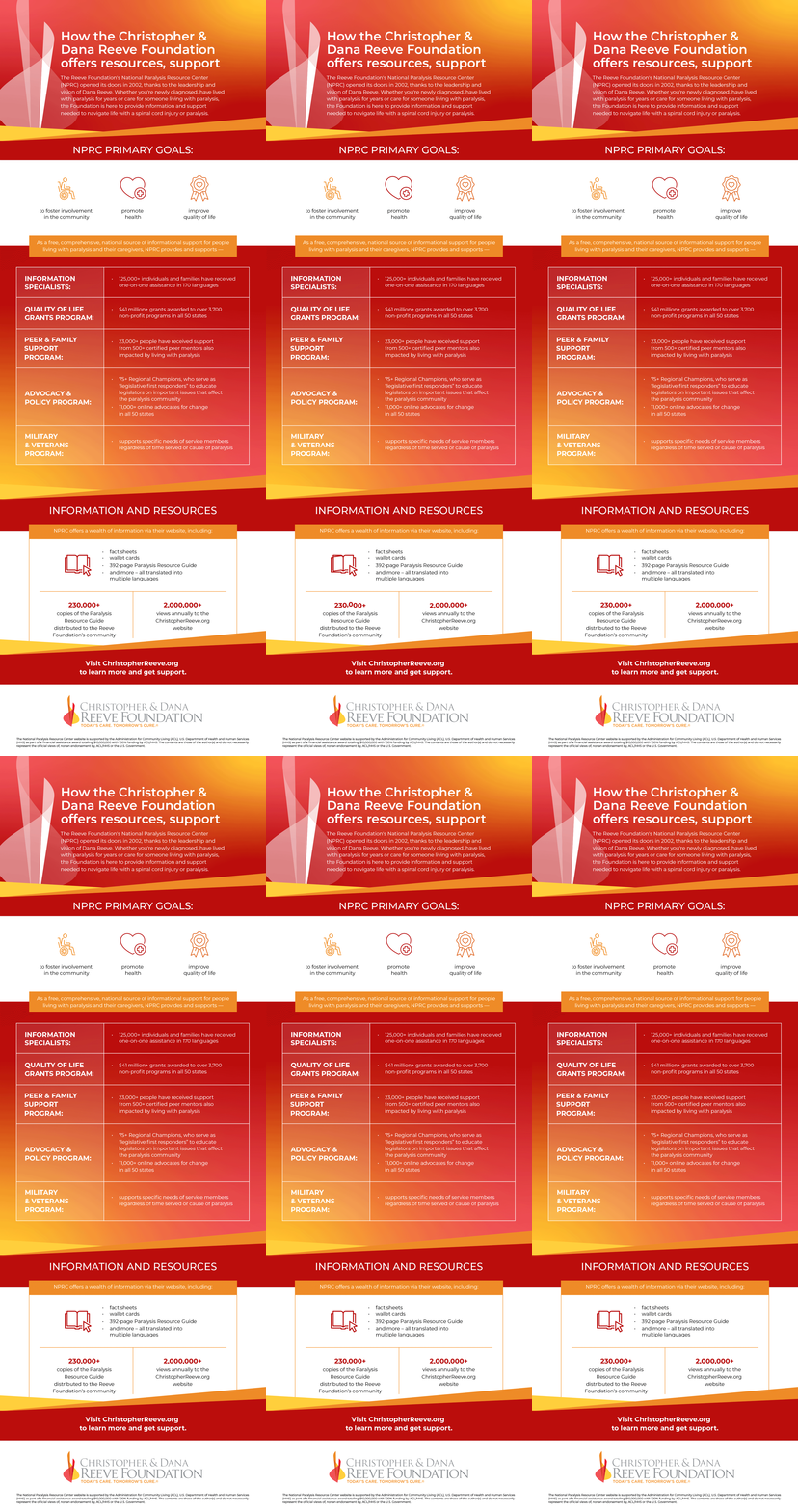
To help individuals and caregivers cope with the multiple challenges of paralysis, the Christopher & Dana Reeve Foundation National Paralysis Resource Center (NPRC) serves as a free, comprehensive, national source of informational support. The primary goals of the NPRC are to foster involvement in community, promote health and improve quality of life.

What is paralysis?

Paralysis is a central nervous system disorder resulting in the difficulty or inability to move the upper or lower extremities. The leading cause of paralysis is stroke (33.7%), followed by spinal cord injury (27.3%) and multiple sclerosis (18.6%). And according to the National Spinal Cord Injury Statistical Center, the estimated number of people with SCI in the U.S. is approximately 302,000, with about 18,000 new SCI cases occurring each year. Vehicle crashes are the most recent leading cause of spinal cord injury, closely followed by falls. Acts of violence (primarily gunshot wounds) and sports/recreation activities are also common causes of SCI.

Paralysis is not like any other disability or disease. It requires specialized resources to help individuals live a productive, active and full life. The breadth and depth of the NPRC staff’s knowledge spans the various causes of paralysis (stroke, multiple sclerosis, etc.), and they offer guidance on everything from what to expect in rehab, transitioning back to home, and navigating insurance and health care systems.

Programs designed to help people with paralysis and their caregivers thrive

Challenges for people living with paralysis and their caregivers range far beyond the numerous medical hurdles, including dealing with very real financial difficulties. Their households overall have lower incomes, with roughly 28% making less than $15,000 per year. This level of adversity, combined with the many emotional and social obstacles people with paralysis may face, is extremely difficult to overcome without enough support.

To help individuals living with paralysis get back into their communities and to a place of well-being quickly, the National Paralysis Resource Center draws on a wide array of information and expertise to devise personalized plans and approaches.

The NPRC offers its resources in multiple languages to support people of diverse backgrounds on topics ranging from what to expect in rehab and the best equipment exchange programs to a wealth of peer support networks nationwide. One key resource they offer for everyone is their free, downloadable Paralysis Resource Guide.

Through the NPRC, the Reeve Foundation provides a wide variety of vital free services and programs, including:

  • Information Specialists who are trained to help anyone — from newly paralyzed individuals and their family members to persons who have lived with disabilities for decades as they attempt to navigate their changing world and the services available to them. Information Specialists provide individualized support and information to over 125,000 individuals and families, with the ability to respond in over 170 languages.
  • Peer & Family Support Program to foster peer-to-peer support via trained and certified mentors also living with paralysis who best understand the day-to-day realities and long-term challenges that individuals living with paralysis face.
  • Quality of Life Grants Program which has awarded over 3,700 grants, totaling over $41 million, in financial support to fellow nonprofits for programs or projects that foster community engagement while promoting health and wellness for individuals living with paralysis.
  • Military & Veterans Program (MVP) that supports the specific needs of servicemembers and veterans, regardless of when they served or the cause of their paralysis.
  • Advocacy & Policy Program is designed to empower individuals to advocate for themselves through our Regional Champions Program. Over 11,000 online advocates for change in all 50 states to champion federal legislative priorities such as housing, transportation, caregiving and insurance coverage.
  • Outreach and Community Education Program seeks to improve diversity, equity, inclusion and accessibility initiatives so that underserved communities are aware of and have access to critical NPRC services. This program provides educational opportunities, community connection and cultural awareness, which are vital to ensuring that the needs of all are met.

“Giving back is the rent you pay for being on the planet.” — Dana Reeve (2004).

If you or someone you know is living with paralysis or is a caregiver for someone with paralysis, you can learn more about free information, resources and support by visiting ChristopherReeve.org.

The National Paralysis Resource Center website is supported by the Administration for Community Living (ACL), U.S. Department of Health and Human Services (HHS) as part of a financial assistance award totaling $10,000,000 with 100% funding by ACL/HHS. The contents are those of the author(s) and do not necessarily represent the official views of, nor an endorsement by, ACL/HHS or the U.S. Government.

How to have fun, stay active and be bold at every age: 5 benefits of exercise

2024-01-09T16:35:00

(BPT) – No matter your age or fitness level, experts agree that physical activity brings multiple benefits to your mind and body. If you wonder how being more active as you get older can help you live a happier, healthier life — and how to get started — taking small, simple steps to boost your activity level can make a big impact.

“Age is just a number, and we’ll make sure it never slows you down, so why not begin the new year on the right foot by finding activities you love to do,” said Julie Logue, M.P.H., training manager at SilverSneakers. “You can ‘act your age’ by having the time of your life, whether you’re dancing, walking or playing pickleball with friends.”

Remember, before starting any new exercise, it’s recommended to consult your health care provider.

Here are a few benefits of exercise that may inspire you to move a little more.

1. Protect your bones and joints

Stronger muscles help protect your bones and joints as you age. But if you think lifting heavy weights is the only way to strengthen your muscles, you’re in for a pleasant surprise. If you haven’t been active, you can begin strength exercises by starting slowly, using little to no special equipment, and gradually improving your strength over time.

It’s best to seek classes or programs specifically designed for seniors, such as SilverSneakers by Tivity Health — the nation’s leading fitness program for older adults that offers in-person and virtual classes with the needs of seniors in mind. Seniors can find classes for all levels focused on building strength and flexibility as they age, along with cardio exercises to get their blood pumping.

2. Help prevent falls

About one in four Americans aged 65 and older will fall each year, according to the Centers for Disease Control and Prevention. Regular exercise that builds strength and improves balance is one of the best ways to help prevent falls or recover from a fall.

Classes like those offered by SilverSneakers can help strengthen your ankles, knees and hips for a sturdy foundation. Plus, they can help improve your core strength and upper-body posture — to help you stay upright and steady.

3. Learn about injury prevention

Injuries can happen at any age, but a few simple precautions can help to keep you moving injury-free. If you’re a beginner, choose instructors and exercise programs that start slow — even seated — and build your strength and flexibility gradually, so you can continue improving your fitness without risking injury. SilverSneakers even offers virtual classes designed for beginners to help get you started.

4. Enjoy socializing

One valuable benefit of being active is finding a class or community of people you enjoy spending time with. Whether you’re taking classes in person or online, you’ll know everyone else in the class is also aiming to stay more fit and healthy. Taking classes together is a fun bonding activity that will help you stay motivated and may inspire you to create your own group of friends for walking or doing activities together.

5. Improve mindfulness and reduce stress

Physical activity can reduce stress, help you stay more present throughout your day and enjoy your life to the fullest. Classes offered by SilverSneakers include Tai Chi and Yoga, which are easy ways to help you stay more mindful and boost your overall well-being.

Getting started

SilverSneakers offers members a network of up to 22,000 fitness locations, along with community-based options like community centers and parks. Workouts are offered at thousands of gyms, community centers and other participating fitness locations nationwide.

Members can participate in live, instructor-led and on-demand virtual classes in a variety of lengths and formats. Options include programming for those with chronic conditions, plus healthy aging workshops on topics including fall prevention and virtual learning opportunities.

If you have a Medicare Advantage plan, it may already include SilverSneakers. Learn more at SilverSneakers.com.

How to Live to 100

2024-01-08T05:01:00

(BPT) – Have you heard about the blue zones? These are the six places around the world — Singapore; Okinawa, Japan; Sardinia, Italy; Ikaria, Greece; Loma Linda, California; and the Nicoya Peninsula in Costa Rica — where people live the longest. National Geographic Explorer and New York Times best-selling author Dan Buettner has spent more than 20 years studying these regions of the world to figure out just how the people there are living healthily well into their 90s and even 100s.

In his books, Buettner reveals the secrets of these centenarians, among them, the Power 9 — guiding lifestyle principles that turn out to be the keys to longevity. Here are some of the life lessons Buettner has unveiled about the blue zones:

Lesson 1: Move Naturally

While each New Year sees a spike in gym membership enrollment, pumping iron or racing on a treadmill aren’t the only ways to live healthier. In all five blue zones, people move all day long, not just for 30 minutes at the gym. That can be done by walking through the neighborhood, working in your garden, or even getting up and down from sitting on the floor, as centenarians in Okinawa do regularly.

Lesson 2: Eat Your Beans

All five blue zones follow a plant-slant diet, and beans — black, fava, soy and garbanzo — make up a good portion of that diet. Buettner’s best-selling cookbooks, The Blue Zones Kitchen and The Blue Zones American Kitchen, offer more than 40 recipes that incorporate beans into your meal rotation.

Lesson 3: Stay Connected

One of the most foundational elements of the blue zones is putting loved ones first. In Okinawa, centenarians call their social circles moais. These are groups of friends committed to each other for life. In Nicoya, family comes first, and generations are found together at the dinner table regularly.

Lesson 4: Reduce Your Stress

No place in the world — even the blue zones — is immune to stress, which can lead to chronic inflammation and age-related disease. But the longest-lived people in the blue zones find regular ways to reduce that stress: In Loma Linda, the Adventist community turns to prayer and observes the Saturday Sabbath. In Ikaria, they take daily naps. And in Sardinia, they practice another Power 9 principle, Wine@5, with regular happy hours.

Lesson 5: Find Your Purpose

Buettner says the most common factor across each of the blue zones is having purpose. Each centenarian he interviewed over the course of two decades had a reason to wake up in the morning: Nicoyans call it plan de vida. That sense of meaning can add up to seven years of extra life expectancy.

Find more tips, tricks and recipes from the blue zones in Dan Buettner’s The Blue Zones Secrets for Living Longer, The Blue Zones Kitchen and The Blue Zones American Kitchen. Or make a New Year’s resolution to blue zone your life with the help of The Blue Zones Challenge.

How to help kids with critical illnesses, one meal at a time

2024-01-05T07:01:00

(BPT) – Can you imagine being diagnosed with a brain tumor at the age of seven? For one little girl in southern Florida named Nicole, this was her reality. Nicole’s devastating diagnosis meant being confined to a hospital bed, where her greatest comfort was watching her favorite sport on TV — figure skating. The joy she felt watching her favorite skaters performing on the ice led to Nicole’s dream, which became a wish granted by Make-A-Wish: She wanted to become a famous figure skater.

Thanks to Make-A-Wish and its many generous donors and sponsors, Nicole was able to experience weeks of private skating lessons after her chemotherapy treatments until the big day when her wish would come true. Her wish was granted with the help of a team of professional figure skaters, a local entertainment venue, her coach, her family and many supporters in the community. Nicole was able to perform on the ice along with professional skaters, and even received a medal! You can watch her triumphant experience at Wish.org/nicole.

Nicole’s wish is just one of more than 550,000 wishes that have been granted globally for children with critical illnesses since Make-A-Wish was founded in 1980.

A new partnership to make even more wishes come true

To support these kinds of magical, life-affirming moments with children who need them, Red Robin, a national restaurant chain known for its delicious gourmet burgers and family-friendly atmosphere, has partnered with Make-A-Wish.

Donating 10 cents for each kids’ meal sold at all corporate-owned and participating franchise restaurants nationwide to Make-A-Wish, Red Robin has pledged $3 million in donations over a three-year period. Since the partnership launched in February, Red Robin has donated more than $700,000 so far toward granting wishes to nearly 70 children throughout the United States. In addition to the donation program, Red Robin has hosted 40 families for Wish reveal parties and celebrations in their restaurants.

“Make-A-Wish is an organization very close to my heart after several years of prior service on their Board of Directors,” said G.J. Hart, president and CEO, Red Robin. “At Red Robin, we always strive to create memorable moments for families in our restaurants. With this partnership, we are honored to have the opportunity to extend that joy to the children who need it most.”

Every year, 27,000 kids diagnosed with critical illnesses may qualify for a wish, and currently Make-A-Wish grants about half that many wishes each year. This national partnership will help raise crucial funds to make even more life-changing wishes possible for children — many of whom credit their wish with helping them overcome their illness.

“We know wishes bring hope and renewed joy to children battling critical illnesses,” said Leslie Motter, president and CEO of Make-A-Wish America. “Our partnerships are the driving force behind every wish granted, and Red Robin’s generous commitment will have a powerful impact on our mission and the lives of children and families nationwide.”

How you can help

You can learn more about the partnership at RedRobin.com/make-a-wish — and plan your family’s next visit to Red Robin to help make a difference for Make-A-Wish kids everywhere.

Finding Strength in Second Opinions: Joe’s Journey with DLBCL

2024-01-04T13:01:00

(BPT) – This content is provided by MorphoSys and Incyte.

In the fall of 2021, Joe was losing weight and feeling unusually weak. He visited his primary care doctor who could tell something was wrong and recommended Joe immediately go to the emergency room. It was there, during a prolonged stay, the doctors gave Joe news he never wanted to hear: he had cancer. Specifically, the doctors informed him that he was experiencing “major problems” from a form of blood cancer called diffuse large B-cell lymphoma (or DLBCL).

“When my primary care doctor urgently suggested I go to the emergency room, I knew this was something serious,” said Joe. “It was a jarring experience to hear I had what the doctors called a ‘very aggressive cancer’ because prior to the visit, I was just noticing some weight loss and fatigue. I thank my wife, who knows me better than anyone and noticed a difference in my energy levels and pushed me to see a professional.”

DLBCL affects approximately 28,000 people per year in the United States and is the most common type of non-Hodgkin lymphoma (NHL), a family of blood cancers. It is a fast-growing but treatable cancer affecting B-lymphocytes, also known as B cells, a type of white blood cell that helps the body fight infections. As they develop, cancerous B cells become larger than normal and multiply uncontrollably.

With Joe’s advanced stage diagnosis and his physical condition, his doctors recommended that he pursue hospice for palliative care to help ease the symptoms of his cancer. However, Joe wasn’t ready to give up.

“I was not ready for palliative care and knew I wanted to explore treatment options,” explained Joe. “With the support of my wife, seven younger siblings and congregation, I looked elsewhere, and my research landed me in San Antonio, Texas, where I met Dr. Enrique Diaz-Duque, a hematologist-oncologist specializing in lymphoma.”

“When I first met Joe, it was clear to me that he wanted to seek treatment for his DLBCL, and so I’m happy that he came to us and sought a second opinion,” Diaz says. “During our first visit we had a conversation about his personal goals, preferences and condition and my team and I evaluated the available options that we felt might be appropriate for him.”

“In addition to my family and faith helping me stay optimistic, Dr. Diaz and my supportive care team played a huge role in maintaining my attitude and outlook,” Joe says. “My care team was always positive and solutions-oriented which, coming from a hospice recommendation, gave me the hope I needed that I could find a treatment that worked for me.”

Joe’s care team started him on a standard chemoimmunotherapy regimen, but after about six months, a positron emission tomography (PET) scan showed that unfortunately there was still cancer present.

“We must emphasize that we (oncologists) treat patients with DLBCL with curative intent,” Diaz says. “Unfortunately, nearly half of patients see their DLBCL relapse (cancer returns) after initial treatment or not respond (cancer becomes refractory) to initial treatment. In looking at a second treatment for Joe, we needed to keep his age and functional status in mind and pursue an option that was right for him to get to the best results possible.”

For Joe, the next option he and his care team decided on was Monjuvi® (tafasitamab-cxix), a targeted immunotherapy treatment given with another medicine called lenalidomide to treat adults with certain types of DLBCL that has come back or that did not respond to previous treatment and who cannot receive a stem cell transplant. The approval of Monjuvi is based on a type of response rate. There is an ongoing study to confirm the clinical benefit of Monjuvi.

“I believe acknowledging the individual needs and preferences of each patient is imperative when managing cancers like DLBCL,” Diaz says. “Furthermore, listening to your patients and giving them the opportunity to weigh in on their care creates an open and honest environment and gives the feeling of a collaborative process.”

For Joe, it is important to him that treatment with Monjuvi does not require hospitalization — he can have it administered at a nearby healthcare facility by the local care team he has grown to know and trust.

“My family lives close by and I am thankful I do not need to be admitted or travel a long distance for my treatment,” Joe says. “Given my experience with cancer, I appreciate spending time with loved ones more than ever before.”

Joe responded well to Monjuvi and achieved a complete response, meaning all signs of his cancer have disappeared. A complete response does not always mean the cancer has been cured. Joe continues to take Monjuvi and continues to be under the care of his physicians who assess his health and continued response to Monjuvi. This is Joe’s experience with Monjuvi and reflects results as of the date of this article. Every individual is different, and results may vary.

Monjuvi may cause serious side effects, including infusion reactions, low blood cell counts and serious infections. The most common side effects of Monjuvi are feeling tired or weak, diarrhea, cough, fever, swelling of lower legs or hands, respiratory tract infection and decreased appetite. Continue reading to learn more about these and other side effects.

“I truly believe my faith and my care team kept me going through the darkest of times,” Joe says. “They were there for me every step of the way, providing transparency, optimism and hope when I needed it most.”

Please read the Important Safety Information below to learn more about the side effects of Monjuvi.

What is MONJUVI?

MONJUVI (tafasitamab-cxix) is a prescription medicine given with lenalidomide to treat adults with certain types of diffuse large B-cell lymphoma (DLBCL) that has come back (relapsed) or that did not respond to previous treatment (refractory) and who cannot receive a stem cell transplant.

It is not known if MONJUVI is safe and effective in children.

The approval of MONJUVI is based on a type of response rate. There is an ongoing study to confirm the clinical benefit of MONJUVI.

IMPORTANT SAFETY INFORMATION

What are the possible side effects of MONJUVI?

MONJUVI may cause serious side effects, including

  • Infusion reactions. Your healthcare provider will monitor you for infusion reactions during your infusion of MONJUVI. Tell your healthcare provider right away if you get fever, chills, flushing, headache, or shortness of breath during an infusion of MONJUVI
  • Low blood cell counts (platelets, red blood cells, and white blood cells). Low blood cell counts are common with MONJUVI, but can also be serious or severe. Your healthcare provider will monitor your blood counts during treatment with MONJUVI. Tell your healthcare provider right away if you get a fever of 100.4 °F (38 °C) or above, or any bruising or bleeding
  • Infections. Serious infections, including infections that can cause death, have happened in people during treatment with MONJUVI and after the last dose. Tell your healthcare provider right away if you get a fever of 100.4 °F (38 °C) or above, or develop any signs or symptoms of an infection

The most common side effects of MONJUVI include

  • Feeling tired or weak
  • Diarrhea
  • Cough
  • Fever
  • Swelling of lower legs or hands
  • Respiratory tract infection
  • Decreased appetite

These are not all the possible side effects of MONJUVI. Your healthcare provider will give you medicines before each infusion to decrease your chance of infusion reactions. If you do not have any reactions, your healthcare provider may decide that you do not need these medicines with later infusions. Your healthcare provider may need to delay or completely stop treatment with MONJUVI if you have severe side effects.

Before you receive MONJUVI, tell your healthcare provider about all your medical conditions, including if you

  • Have an active infection or have had one recently
  • Are pregnant or plan to become pregnant. MONJUVI may harm your unborn baby. You should not become pregnant during treatment with MONJUVI. Do not receive treatment with MONJUVI in combination with lenalidomide if you are pregnant because lenalidomide can cause birth defects and death of your unborn baby
    • You should use an effective method of birth control (contraception) during treatment and for at least 3 months after your last dose of MONJUVI
    • Tell your healthcare provider right away if you become pregnant or think you may be pregnant during treatment with MONJUVI
  • Are breastfeeding or plan to breastfeed. It is not known if MONJUVI passes into your breastmilk. Do not breastfeed during treatment and for at least 3 months after your last dose of MONJUVI

You should also read the lenalidomide Medication Guide for important information about pregnancy, contraception, and blood and sperm donation.

Tell your healthcare provider about all the medications you take, including prescription and over- the-counter medicines, vitamins, and herbal supplements.

Call your doctor for medical advice about side effects. You may report side effects to the FDA at (800) FDA-1088 or www.fda.gov/medwatch. You may also report side effects to MORPHOSYS US INC. at (844) 667-1992.

Please see the full Prescribing Information, including Patient Information, for additional Important Safety Information at Monjuvi.com.

If you are living with DLBCL that came back or didn’t respond to the first treatment (relapsed or refractory DLBCL), have a discussion with your healthcare provider about your therapy options. To learn more about Monjuvi, relapsed or refractory DLBCL and for support and resources, visit www.Monjuvi.com

Joe and Dr. Diaz were compensated for their time.

MONJUVI is a registered trademark of MorphoSys AG.

MorphoSys is a registered trademark of MorphoSys AG.

Incyte is a registered trademark of Incyte.

November 2023 RC-US-TAF-01880

Women Embrace Wellness in 2024: 5 tips to Take Control of Sexual and Reproductive Health

2024-01-04T15:43:00

(BPT) – Are you making any New Year’s resolutions this year? If so, consider prioritizing your sexual and reproductive health. While often overlooked, they are undeniably integral to your overall wellness.

Here are five tips to guide your goals for better sexual and reproductive health this year.

1. Schedule regular checkups

Make sure that you’re on track with regularly scheduled checkups at your OB/GYN that may include things like a pelvic exam, screening for cervical cancer, testing for STDs, birth control or any other concerns you or your health care provider may want to address. This is also the perfect opportunity to ask your health care provider questions and tell them about any issues you are having — so make a list before you go so you don’t forget.

2. Understand your birth control options and how to secure them

During your routine health checkups, it’s important to keep up to date with the latest contraceptive methods and determine which option aligns best with your current stage in life and personal lifestyle choices. Ensuring you are well-informed about birth control methods that suit you and are keeping a steady supply is especially important in busier periods filled with social engagements and travel.

3. Have a back-up plan

For those unexpected moments that catch couples off guard, Cadence OTC’s Morning After Pill provides a reliable backup for ‘oops’ moments like when a condom breaks or when protection slipped your mind.

“Prioritizing your health this year means not only having a plan, but also having a back-up plan,” said OB/GYN Nap Hosang, MD, Chief Medical Officer at Cadence OTC. “Cadence OTC is increasing over-the-counter access to safe, effective, affordable contraceptives for everyone everywhere, starting with Morning After Pill. Keeping emergency contraception on hand during this busy season can ensure you’re protected no matter what. Stocking up on emergency contraception to be able to take as soon as possible is crucial for its effectiveness.”

Approved by the U.S. Food and Drug Administration (FDA), Cadence OTC’s Morning After Pill is not only a safe and high-quality option but is now available for online purchase at half the price of the leading brand— making reliable and affordable emergency contraception more accessible at an affordable price. In addition, Cadence OTC is actively seeking FDA approval for Zena, a groundbreaking over-the-counter combination birth control pill, eliminating the need for a prescription or doctor’s visit. For more information, visit cadenceotc.com.

4. Educate yourself

Keep abreast of the latest advancements in technology, science, and medicine that impact your health. The field of medicine is always offering new insights into preventive health measures through improved hygiene, nutrition, and exercise, as well as evolving treatments for various conditions. Seek trustworthy information from authoritative sources like government health websites and platforms established by medical and healthcare organizations or academic institutions.

5. Open communication with a partner

Maintaining a healthy relationship often hinges on regular, open, and honest communication with your partner. Sharing concerns and feelings about your physical relationship can lead to improved intimacy and enhance your overall well-being.

Remember, taking good care of your overall health is an ongoing practice that can help you lead a fuller, happier, more joyful life. If something is unsettling or if there is tension between partners, communicating about those differences should be a positive experience because it offers the possibility of greater understanding and mutually acceptable improvement in the new year and beyond.

Secure Your Financial Future During Home Renovations

2024-01-03T08:07:00

(BPT) – Home renovations can be expensive. In fact, an average home renovation cost $22,000 in 2022, according to Houzz research. Even with the cost being substantial, more than half of homeowners say they’re planning on undertaking a renovation in the coming year. While making those investments in your home, reviewing important insurance considerations can ensure you’re not putting your financial future at risk.

Considerations for working with a contractor

Mishaps during renovations can be costly. To mitigate some of your risk, any contractor you work with should have the following:

  • Contracting License Ensures the legality of your renovation and provides peace of mind knowing your contractor is sufficiently knowledgeable.
  • General Liability Insurance Provides protection against the cost of property damage and injuries that may occur during the renovation.
  • Workers’ Compensation Provides financial protection in case workers are injured while working on the project.

John Lack was a contractor for 35 years before joining Acuity Insurance as the carrier’s construction consultant. He has the following suggestion for getting this documentation from your contractor:

“Just ask. Reputable contractors expect to provide this information to you. You should always work with a licensed contractor. As for insurance, they should be able to provide you a certificate of insurance (COI). That COI should include three things: your name as an additional insured; the policy-in-force dates, which should span the entire time they will be working on your home; and their coverages.”

How home renovations can impact your homeowners insurance

If you’re undertaking a small renovation like changing paint colors, updating carpet, or adding a backsplash, that will likely not impact your homeowners policy limits. If your renovation is more extensive, like adding an addition, remodeling a kitchen or adding a bathroom, you may be changing the value of your home enough to need a change in your homeowners insurance limits. Consider how much your home would cost to rebuild — not the market value. If your renovation increases the amount it would cost to replace everything you have, you should change your limits.

One renovation that may reduce your cost of insurance is replacing your roof. If you replace your roof, be sure to report the update to your agent. Many insurance companies will provide broader coverage and possibly a reduced price for newer roofs.

It’s best to talk with your independent insurance agent about how your renovation might impact your insurance needs. They can help ensure you’re covered and that your investment is adequately protected.

Addressing common misconceptions of type 1 diabetes

2024-01-03T08:01:00

(BPT) – Sponsored by Sanofi

Sometimes it takes another person to notice signs of illness before you even realize yourself that it’s time to seek help. That was the case for Eric Tozer. He was experiencing classic symptoms of type 1 diabetes, without realizing it. When his mother said something about his significant weight loss and that she thought he might have type 1 diabetes, all Tozer could think was, “How could I have type 1 diabetes? I didn’t have any family history of it, at all.” Fortunately, he still decided to schedule a visit to the doctor. After checking his blood sugar levels and clinical symptoms, his doctor quickly diagnosed him with type 1 diabetes.

Tozer is certainly not alone. Every year, an estimated 64,000 Americans are newly diagnosed with type 1 diabetes. As that number continues to increase, many people may feel compelled to seek resources and information about their risk factors for type 1 diabetes, which can be an intimidating process.

Strides can be made to improve outcomes by debunking common myths about this disease. Tozer’s story highlights that the more you know early, the more you may be able to do to prepare. Here are a few misconceptions and truths to keep in mind:

Myth #1: Type 1 diabetes is a juvenile disease

A common misunderstanding of type 1 diabetes is that it’s predominantly diagnosed in children. In fact, for a long time, it was incorrectly referred to as “juvenile diabetes.” While that name does have merit in some respects, as type 1 diabetes does usually develop and is diagnosed during childhood and young adulthood, individuals at any age can develop it. Tozer is a noteworthy example, as he was diagnosed at age 22. Interestingly, recent studies show that more than half the people who are newly diagnosed with type 1 diabetes are diagnosed as adults.

Myth #2: Type 1 diabetes is caused by lifestyle factors

You might be more familiar with type 2 diabetes, which can be prevented or delayed with lifestyle changes such as eating healthy or staying active. When it comes to type 1 diabetes, no one currently knows how to prevent the disease. Type 1 diabetes is thought to be caused by an autoimmune reaction (the body attacks itself by mistake), meaning that anyone — even the most active or health-conscious individuals — can still be at risk of developing it.

Myth #3: People without a family history of type 1 diabetes are not at risk

While having a first- or second-degree family member does significantly increase your risk of developing type 1 diabetes (by up to 15 times), nearly 90% of those who develop the condition do not have a family history at all. Currently, the risk factors of type 1 diabetes are still being researched. At the moment, there are environmental factors and exposure to some viral infections that can be linked to heightened risk of developing the disease — but more research is needed. Right now, the best way to understand your risk is to speak to your doctor and undergo blood testing to screen for autoantibodies associated with type 1 diabetes.

Myth #4: If you don’t have symptoms of type 1 diabetes, you don’t need to be concerned

It can take months or years before symptoms of type 1 diabetes are noticeable, especially because early symptoms (nausea, vomiting, or stomach pains) are often similar to other health conditions. However, once noticeable common symptoms arise, such as increased thirst and urination, unexplained weight loss and blurred vision, a person is already in the final stage of type 1 diabetes where the body is no longer able to make enough insulin, blood sugar is high and medical crisis situations become more likely. As Tozer described it, the difference between managing noticeable symptoms or an early diagnosis can be compared to “jumping into the deep end versus walking into the pool.” The previously mentioned blood tests can detect type 1 diabetes before any noticeable symptoms arise — getting screened is a small step that can make a big impact in disease management.

A type 1 diabetes diagnosis doesn’t have to be scary. By dispelling common misconceptions about this disease and its associated risk factors, we can begin changing the story about type 1 diabetes. Not knowing is simply no longer an option. Talk to your doctor about early screening.

As Tozer said, “Blood tests can give people an opportunity to prepare for the future, which is a true game changer.” Take control of the future by joining The 1 Pledge movement, led by Sanofi, at The1Pledge.com. Follow and use #ScreenForType1 to join the conversation on social media.

Sanofi does not provide medical advice, diagnosis or treatment — information is provided for educational purposes only. Your doctor is the best source of health information. Talk to your doctor if you have any questions about your health or treatment.

Eric Tozer is a paid spokesperson for Sanofi.