Shattering Stereotypes: The Top 7 Myths About Black Fertility Uncovered

2023-11-27T08:15:00

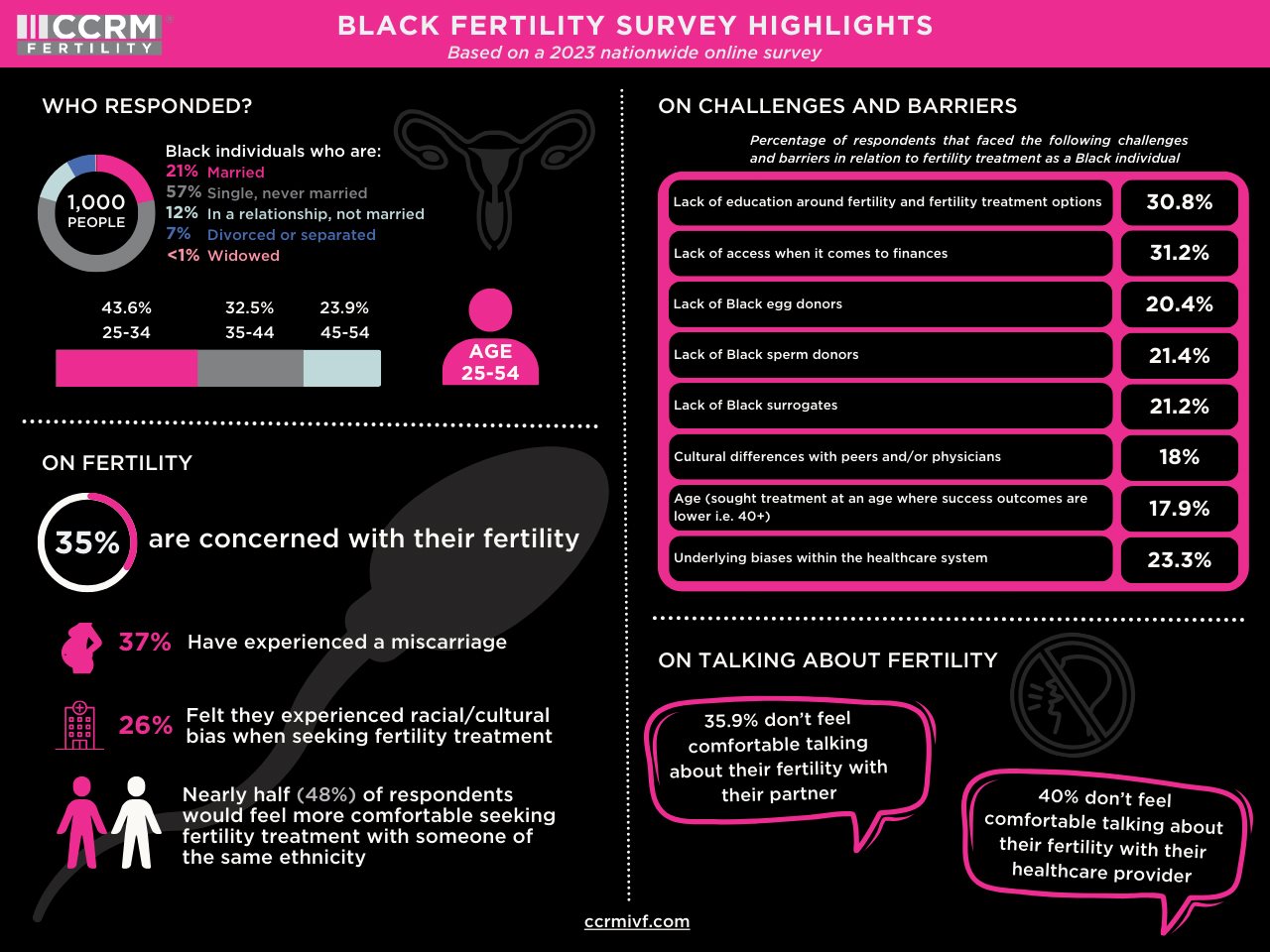
(BPT) – Alexandra, a resilient single woman of color, defied societal norms and faced family stigma when she decided to seek fertility assistance through CCRM Fertility to have her first child. Confronted with the deeply ingrained misconception that “Black women don’t ask for fertility help,” she courageously chose to navigate a path that many in her family and community viewed with skepticism. Not only was she challenging the taboos surrounding fertility assistance, but she was also doing so as a single woman — a decision that carried its own set of stigmas. Recognizing that discussions about infertility are often swept under the rug in the Black community, Alexandra resolved to shatter the silence.

She publicly shared her experience by launching a vlog series titled “Single Mother by Choice,” empowering others to seek the help they need without shame. Today, she is the proud mother of a beautiful daughter named Sloan and is joyfully awaiting the arrival of her second child.

We’re setting the record straight by debunking seven common myths about Black fertility. Our mission is not only to enlighten but also to eliminate the stigma that often prevents individuals from seeking necessary care and support. Let’s work together to build a more informed and empowered community.

1. Black People Don’t Use Fertility Treatments

Contrary to popular belief, Black individuals and couples do make use of fertility treatments such as IVF and IUI. The myth that they don’t only serves to perpetuate harmful stigmas, inhibiting timely and effective medical consultations. Dispelling this misconception is essential to fostering a culture of equitable healthcare access.

2. IVF and IUI Use Race-Specific Treatments

IVF and IUI are medical procedures designed to assist with fertility issues, and they are universally applicable regardless of race or ethnicity. While individual treatment plans might be tailored based on a person’s specific medical history, needs, or circumstances, there’s no inherent design of these treatments that is specific to one race over another.

However, it’s essential to note that there may be health disparities in access, quality of care, or outcomes based on race due to systemic issues in healthcare, but this is separate from the inherent design or efficacy of the treatments themselves.

3. Infertility is a Sign of Weakness or Punishment

The notion that infertility could be a personal failing, or a form of divine retribution, does nothing but add emotional anguish to an already difficult process. Infertility is a medical issue that requires professional attention, not moral judgment.

4. Adopting Traditional Practices Overrules the Need for IVF/IUI

Traditional or herbal remedies, while valued in some communities, are not scientifically proven replacements for medically endorsed treatments like IVF or IUI. This myth can deter people from seeking effective, evidence-based solutions.

5. IVF and IUI Are Only for Married Couples

Marital status is irrelevant when it comes to the efficacy of fertility treatments. The stereotype that these options are only for married couples limits access for a variety of family structures, including single individuals and unmarried couples.

6. IVF and IUI Are Too Expensive for Black Families

While it’s true that IVF and IUI can be costly, the notion that they are categorically unaffordable for Black families perpetuates a harmful stereotype. Financial assistance, insurance coverage, and sliding scale fees can make these treatments more accessible. This myth discourages individuals from even exploring these options and perpetuates healthcare disparities.

7. You’re Guaranteed a Baby with IVF or IUI

While these treatments do increase the chances of conception, there’s no absolute guarantee of success. Unrealistic expectations can lead to emotional and financial setbacks, which is why it’s important to have a balanced understanding of potential outcomes.

Together, we have the power to break down the lingering stigmas and misconceptions surrounding Black fertility. At CCRM Fertility, we’re committed to providing not only the best physical care but also the emotional and psychological support you need on your fertility journey. We strive for equality and inclusivity, ensuring that everyone who walks into our clinics feels welcome and empowered. Our goal is for you to leave armed with accurate information and enveloped in a sense of positivity, as we guide you through every step toward achieving your family-building dreams.

Decoding HVAC jargon: Key terms every homeowner should know

2023-11-27T14:53:00

(BPT) – As highly fluctuating temperatures become the new seasonal norm, homeowners begin to seek optimal HVAC (Heating, Ventilation, and Air Conditioning) performance ahead of winter conditions.

Many homeowners may be surprised to learn their HVAC system should be inspected yearly, as HVAC maintenance is a crucial to-do in order to maintain efficient heating and cooling, prevent costly breakdowns, and ensure consistent indoor comfort.

Navigating the HVAC industry can be perplexing, with its unfamiliar acronyms and specialized jargon. When homeowners better understand HVAC-industry key words, it aids in confident purchasing decisions, and also helps homeowners to better communicate with contractors.

The following is a list of commonly used HVAC-industry terms that homeowners can benefit from knowing.

1. A2L/Refrigerant: Refrigerant is the liquid used to absorb and transfer heat from one part of the home comfort system to another. It’s important that refrigerant levels be properly maintained — neither too high nor too low. Newer to use within the U.S. air conditioning sector, A2L is a group of refrigerants with a lower toxicity and flammability rating compared to A2 or A3 refrigerants. A2Ls have emerged as a replacement for older, high-impact refrigerants. It is anticipated that A2L refrigerants will be required in 2025.

2. Air Handler: An air handler is the part of an HVAC system that circulates conditioned air throughout the home.

3. Furnace: A furnace heats the inside of a home. It uses natural or liquified petroleum (LP) gas, instead of refrigerant, to heat the air inside the home.

4. BTU: British Thermal Unit. The amount of heat required to raise or lower the temperature of one pound of water by one degree Fahrenheit. Understanding BTU allows homeowners to determine the heating or cooling capacity required to maintain a comfortable indoor temperature, ensuring the HVAC system is adequately sized for the living space.

5. Condensing Unit: Condensing units are found outside of the home. The unit is connected to the indoor unit, either an air conditioner or heat pump, with tubing to carry refrigerant, which is used to transfer heat. To cool your home, a condenser removes heat from indoor air. To heat your home, it brings natural warmth from outdoor air inside your home. A heat pump can also heat your home.

6. Ratings: The higher the following ratings, the more efficient the unit.

  • EER2: The updated metric for Energy Efficiency Ratio, formerly known as EER. The ratio of the cooling capacity of the air conditioner or heat pump in BTUs per hour to the total electrical input in watts. This measure is determined by comparing test units to the Air Conditioning and Refrigeration Institute (AHRI) specifications.
  • HSPF2: The updated metric for Heating Seasonal Performance Factor, formerly known as HSPF. It measures the efficiency of the heating portion of a heat pump.
  • SEER2: The updated metric for Seasonal Energy Efficiency Rating, formerly known as SEER. It is used to express the efficiency of an air conditioner or a heat pump in cooling mode. Similar to miles per gallon in a car, a higher SEER2 number indicates a more efficient unit.

7. Residential Packaged Unit: Equipment in which all heating and cooling components are located in one cabinet. Installed either beside or on top of a home or business.

8. Split System: A home comfort system that uses an indoor and an outdoor component to deliver comfortable air to a living environment. This may involve a combination of elements such as the following: a condensing unit located outside, air handler or furnace positioned indoors. In the case of a system incorporating a gas furnace, an evaporator coil inside the home is also utilized.

9. Stage Systems: HVAC systems designed with various operational stages, including single-stage (on/off), two-stage (two levels of heating or cooling capacity), or multi-stage (variable speed) configurations, enabling them to adjust heating or cooling output to meet comfort preferences while maximizing energy efficiency in diverse conditions.

10. Zone/Zoning: A home may be divided into several different areas, or zones, to better control the temperature. The process of dividing a home into different zones is called zoning.

With basic terminology top of mind, homeowners can seek better optimization of HVAC system performance. Ask questions and gain clarity from trusted contractors. Effective communication with these experts holds the key to precise assessments, improved energy efficiency, and adherence to safety and compliance standards.

Rheem, an innovator in manufacturing HVAC equipment, offers Rheem Pro Partners who are contractors that are well-equipped with resources to provide professional advice and assistance to homeowners throughout the process. Trusted HVAC contractors, like Pro Partners, can ensure customers find the perfect solution for home comfort needs. Additionally, a well-trained contractor should be able to update and inform about cost savings, rebates and energy efficiencies.

It’s not merely about terminology; it’s about increasing the homeowner’s confidence as they create a comfortable, efficient and safe home environment for their family.

From farm to fork: How one agritourism farm is connecting people to food

2023-11-27T00:01:00

(BPT) – With less than 2% of the U.S. population involved in farming and ranching, many are unaware of their food’s backstory. Noticing the gap, Chad and Jeana Steiner decided to launch their own agritourism destination in Washington to make a difference.

When the Steiners purchased an empty lot a couple hours east of Seattle in Chelan, Washington, they saw an opportunity to realize their dream of providing agricultural education. Eight years later, the land hosts a flourishing farm where visitors learn how food goes from farm to fork and wine flows from grape to glass.

The seed of an idea

Love for agriculture is central to the Steiners’ relationship. They met in their National FFA Organization (FFA) chapter and both enjoy working outdoors. Between undergraduate and graduate school, Chad worked for Ste. Michelle Winery, where he first got the idea to start his own vineyard. He also grew his agricultural knowledge during his 12-year tenure with Syngenta.

In 2014, the Steiners moved from Sacramento, California, and bought property in Washington to open their own vineyard.

“With Chad traveling for Syngenta, touring apple orchards and seeing every farm culture on a mass and small scale, we began to understand how disconnected people are from farming,” said Jeana. With this in mind, the Steiners looked beyond running a traditional vineyard toward creating a space where people could reconnect to farming.

Fruitful expansion

The Steiners’ three young boys inspired the farm’s next expansion. After relocating to Chelan, the couple looked for family fun as Halloween approached. When they discovered the nearest pumpkin patch was over an hour away, they saw an opportunity.

“I talked to Erin Moran, the local principal, and did an experiment with the fourth graders,” said Jeana. “They helped us plant the pumpkin seeds, and the following fall, they all came back to pick out a pumpkin.”

The pumpkin patch is now in its fourth year. Since then, the Steiners added U-Pick apples and U-Pick flowers to the farm activities. “Last season, there was a grandma with her granddaughter who was so excited to pick an apple for the first time. It was amazing to see a memory they will be able to share forever,” said Jeana.

As business on the farm increased, visitors expressed interest in learning what happens behind the scenes. With a focus on education, the Steiners began free public farm tours that typically included about 30 people.

“We tailor the tour to what’s going on with the farm at the time,” said Chad. “I like to wrap these discussions into the big picture of why growers do certain things, such as apple thinning.” Apple thinning, he explains, helps produce a certain size of apple.

Through Airbnb and VBRO, the Steiners made their guest house available to visitors who want to stay on a working farm. Tourists from California to England have visited the property. “I was honestly blown away by the interest of people that wanted to come and stay,” said Jeana.

“Chad is really well-versed in winemaking,” says Connor Flanagan, a visitor at Chelan Valley Farms. “The knowledge he brings to the table is invaluable, and it’s super interesting to hear the story behind the grapes.”

In light of their success with the vineyard, the couple was able to finally fulfill their other agricultural dream by opening Lagrioth Winery, named after the combination of the words “lake,” “agritourism” and “growth.”

Harvesting guidance

For growers interested in agritourism, the Steiners say a crucial first step is deciding whether it will be a hobby or a main income source. Chad stresses the importance of determining input costs, time involved and which crops and agritourism operations can drive revenue.

Once you have a customer base, knowing how to grow it is critical. For the Steiners, promotional efforts were key to growing their customer base and the farm’s success. Social media, local media and the Chamber of Commerce weekly bulletins are important marketing tools for the Steiners.

Jeana adds that having an experienced mentor was helpful. Niki Allision, a local farmer who sells flowers, helped mentor the Steiners when they were getting started. The Steiners now mentor others.

“I had someone call a few days ago who has property but just doesn’t know how to get started,” says Jeana. “He asked if he could come on the farm tour and see behind the scenes with our animals.”

Like all growers, the Steiners experience times of hardship. “There have been days where we wonder how we are going to do this,” says Jeana. “It’s just Chad and me. We don’t have outside investors. We hope to carry this forward and make a difference in people’s lives.”

To learn more about Chelan Valley Farms, please visit Chelan Valley Farms. Visit SyngentaThrive.com to read more on agritourism.

The 5 Best Cyber Week Deals on Baby and Toddler Clothing

2023-11-26T05:01:00

(BPT) – ‘Tis the season for holiday savings! With Thanksgiving behind us, shoppers are searching for the best deals of the season, but sifting through the sea of savings can make even the most jolly start to lose their holiday spirit.

Save time scrolling to find the sales actually worth shopping. Here are the best deals for the babies and toddlers in your life:

1. Comfy Pajamas for the Entire Family

The new line of matching holiday family pajamas from Gerber Childrenswear includes two festive prints and options for every member of the family, pups too! Even without extra Cyber Week savings, you can outfit the entire family for under $100, but this week is even sweeter with 25 percent off the collection.

2. Silky Soft Sets for All Day Play

For parents who love the buttery soft feel and all-day comfort of viscose apparel but not the high price that comes with it, you’ll want to jump on this deal — Our Softest Edit is on sale for the first time ever. Made predominantly from eucalyptus and blended with Spandex, the collection of pajamas, rompers and dresses has a variety of colors and prints available, including two-holiday options perfect for pictures and gatherings this season.

3. Denim Made to Last

The most adventurous toddlers and babies need jeans that can keep up. Use Cyber Week to source apparel that will last you yearlong, like these neutral options from Gerber Childrenswear that are 20 percent off. Get your hands on the market’s comfiest, stretchiest and most durable denim at the year’s best price.

4. Gender Neutral Outfits for the Holiday Season and Beyond

Ask any parent and they’ll tell you there can never be enough bodysuits in a baby’s wardrobe. This sweet set of six Onesies® brand bodysuits features subtle winter patterns and prints that are great for mixing and matching or wearing as is. At less than four dollars per bodysuit, this might be the best deal of the season.

5. Baby Booties and Socks to Keep Tiny Toes Warm

For little ones who aren’t quite ready to walk, grab a few pairs of baby booties or socks designed to keep their feet warm in the cold months. The booties are made with a poly fleece lining and feature a non-skid sole so you’ll be reassured that the baby is safe and secure.

Gerber Childrenswear is your one-stop shop for winter essentials and holiday gifts.

Removing barriers of care for U.S. veterans who need surgery

2023-11-22T09:01:00

(BPT) – During the month of November, we honor our nation’s veterans for their hard work and dedication to protect everyone’s freedoms. It’s also an important time to recognize their freedom and desire to live a high quality of life after their service is complete. To do this, veterans need access to the health care they have earned.

Veterans deserve safe and cost-effective health services

Ongoing health care provider shortages, coupled with an increasing number of veterans seeking care with new authorizations in the Promise to Address Comprehensive Toxics (PACT) Act, mean that wait times for procedures have increased. Some procedures may even require travel for veterans in rural areas who don’t have access to necessary anesthesia and pain management services at local U.S. Department of Veterans Affairs (VA) facilities.

To address these, the VA is developing National Standards of Practice for many providers working in the VA that will ensure safety and access to care for veterans. This includes using clinical and scientific data to develop standards for Certified Registered Nurse Anesthetists, also called CRNAs. Unfortunately, the American Society of Anesthesiologists (ASA) and the American Medical Association (AMA) want to restrict CRNAs from providing direct care to patients. These organizations believe that anesthesia services can only be safely provided when a physician anesthesiologist is monitoring the case, often along with four to five other cases and often from outside the hospital.

However, the VA has stated that CRNAs provide safe and effective care, comparable to a physician anesthesiologist. Multiple independent studies have proven the safety of CRNA-only provided care. Patient satisfaction scores at some CRNA-only VA facilities are higher than average for VA facilities across the country, according to VA patient satisfaction data. In fact, a CRNA-only facility in Iowa was recently ranked among the top 25 in the nation.

“As we celebrate our veterans, the American Association of Nurse Anesthesiology (AANA) calls on our anesthesia colleagues to work to ensure timely access to care for our veterans. We do not serve our veterans by maintaining models of care that no longer meet the needs of the VA,” said Dru Riddle, PhD, DNP, CRNA, FAAN, AANA President and director of Clinical Education at Texas Christian University School of Nurse Anesthesia in Fort Worth, Texas.

Who are CRNAs?

CRNAs are board-certified advanced practice registered nurses who administer anesthesia and related care to patients autonomously, and they are often the sole anesthesia providers delivering care to the military, rural and medically-underserved populations. Their advanced education and clinical expertise have proven time and again to be instrumental in delivering quality health care to patients.

CRNAs have the ability to work autonomously in the Army, Navy and Air Force, and are the predominant provider of anesthesia on forward surgical teams and in combat support hospitals. Yet, CRNAs who care for wounded soldiers on battlefields are not allowed the same autonomy when they safely and cost-effectively provide quality anesthesia care to veterans here at home.

“As a CRNA who has served as both the Anesthesia Element Team Lead over both physician anesthesiologists and CRNAs in the largest in-country medical facility in Afghanistan, and also as the sole anesthesia provider at a Special Forces Forward Operating Base, I know first-hand that unrivaled anesthesia care is provided by CRNAs without duplicative and unnecessary supervision,” said AANA President-elect Jan Setnor, MSN, CRNA, Col. (Ret) USAFR, NC, a retired colonel of the United States Air Force Reserve with 26 years of honorable service as a flight nurse, a CRNA, and a senior staff member for the Air Force Surgeon General.

For more information and to voice your opinion on the importance of access to CRNAs for veterans, visit AnesthesiaFacts.com.

4 important safety tips to keep in mind this holiday season

2023-11-22T10:01:00

(BPT) – The holidays are here and it’s time to celebrate! No matter how you mark the winter holidays, chances are you’ll be purchasing gifts, cooking and decking the halls with friends and family.

When making your list and checking it twice, make sure to put safety at the very top of the page. Nothing ruins the holiday spirit like an accident or injury. As part of its Holiday Safety Campaign, the U.S. Consumer Product Safety Commission (CPSC) offers four important tips to help you and your loved ones stay safe this season.

1. Online products: Review product descriptions and check for recalls

E-commerce retailing has grown year-over-year during the holidays. However, not all retailers are created equal. When purchasing products online this holiday season, keep these tips in mind.

When buying online, you could be purchasing from the manufacturer, a retailer or a third-party seller. If you have a problem with a product or want to return or exchange it, where you purchased the product matters. Remember to look for “sold by” information when purchasing from an online marketplace.

Don’t skim product descriptions. Always read to the bottom of the listing or check drop-down menus for additional safety information. This is especially important when shopping for kids. Also, read customer reviews to see other consumers’ product experiences.

If you’re purchasing second-hand products from an online marketplace, check to see whether products have been recalled before you buy by going to CPSC.gov/Recalls.

Also, always buy from reputable dealers, and if the price seems too good to be true, this can be a sign that the product is not authentic or original and may be unsafe.

2. Toys: Think of safety testing and gear

There’s nothing quite as special as a child’s reaction to opening a gift. To keep the season jolly for kids of all ages, look for a certification mark on the manufacturer’s label from an independent testing organization. This ensures that the item has been tested for safety. Also be sure to follow age guidance and other safety information on the toy and product packaging. Choose toys that match each child’s interests and abilities, and consider the ages of other children in the household who may have access to the toy.

If you are purchasing a bike or other riding toy, purchase safety gear like helmets to accompany the gift. If purchasing for your own child or family member, ensure that they use them every time they ride.

After opening gifts, immediately discard plastic wrappings or other toy packaging. These can become dangerous playthings if not disposed of quickly.

3. When cooking holiday meals, don’t take your eyes off the turkey!

Everyone loves gathering with loved ones to share a delicious holiday dinner. To keep your holiday feasts safe and fire-free, never leave cooking food unattended on the stove or in the oven. The holidays are the most common time for cooking-related fires. If you’re frying a turkey, only fry it outside and away from your home or other flammable materials. Never use turkey fryers in an enclosed area like the garage or on the porch.

4. When holiday decorating, consider flame risks

It wouldn’t feel like the holidays without festive decorations! To keep holiday decorating merry, bright and safe, consider the fire risks in your home.

If you purchase a live tree, make sure it has plenty of water. Dry trees can go up in flames quickly from a malfunctioning string light. Look for the “Fire Resistant” label when buying an artificial tree.

Also, never leave candles unattended. Place burning candles in sight, away from flammable items, and blow or snuff them out before leaving the room. Whenever possible, use flameless candles for your holiday displays.

When hanging lights, never string together more than three sets of incandescent lights and never overload electrical outlets.

Follow these steps to help keep you and your loved ones safe so you can fully enjoy the spirit of the season. Visit CPSC’s Holiday Safety Information Center for more holiday safety tips and CPSC.gov for year-round safety information.

A wolf in sheep’s clothing: Are you underestimating the burden of flu?

2023-11-22T11:31:01

(BPT) – By Dr. Peter Sebeny

In today’s pop culture, the term “pandemic” is synonymous with COVID-19. However, over the course of human history, some of the deadliest pandemics have been caused by the influenza (flu) virus.1

Since then, the scientific community has pursued groundbreaking advancements in improving protection against the flu.1 We know more about influenza viruses than ever before and have developed the capacity to design, manufacture and distribute vaccines and antiviral drugs.1 However, flu shot public health guidance has been overshadowed in recent years with increased public health messaging around COVID-19 and more recently, RSV. The flu has become an afterthought for many people, and this upcoming 2023-2024 flu season may present a severe threat as the U.S. could face a resurgence of flu.2

Understanding the flu and its complications

“The flu” has been a common name for decades, so many people may downplay the potential threats hiding in plain sight, like a wolf in sheep’s clothing – but the flu is more serious than people may think.3 The flu can lead to or worsen potentially life-threatening flu-related complications, including pneumonia, heart attack, stroke, and hospitalization, especially in older adults.3,4

Receiving a flu shot each year can help protect yourself from flu and its complications.5,6 Flu vaccination has also been shown to help reduce the risk of getting sick with flu and help reduce the risk of having a serious flu outcome, like requiring a stay in the hospital or even being admitted to the intensive care unit (ICU).7

A seasonal flu vaccination is especially important for older adults who are at an increased risk for serious flu-related complications.8

Improving flu protection for older adults

Anyone can get the flu, but certain groups – including people who are pregnant, have certain chronic health conditions or are age 65 and older – are at an increased risk of flu-related complications.8

During most flu seasons, older adults bear the greatest burden of severe flu. The Centers for Disease Control and Prevention (CDC) estimates between 70-85% of seasonal flu-related deaths and 50-70% of seasonal flu-related hospitalizations since 2010 have occurred among people 65 years and older.9

In 2022, the CDC’s Advisory Committee on Immunization Practices (ACIP) granted preferential recommendation for the use of Fluzone High-Dose® Quadrivalent (Influenza Vaccine), Flublok® Quadrivalent (Influenza Vaccine) and an adjuvanted flu vaccine for adults age 65 years and older. The recommendation was reaffirmed in 2023.10,11

Sanofi’s two higher-dose influenza vaccines, Fluzone High-Dose Quadrivalent and Flublok Quadrivalent, have shown better flu protection than standard-dose flu shots in older adults.12,13

Flublok Quadrivalent and Fluzone High-Dose Quadrivalent are indicated for immunization against disease caused by influenza A and B strains contained in the vaccine. Flublok Quadrivalent is given to people 18 years of age and older. Fluzone High-Dose Quadrivalent is given to people 65 years of age and older.

Fluzone High-Dose Quadrivalent (Influenza Vaccine) has been licensed for use in adults 65 years of age and older and has demonstrated superior efficacy in a randomized controlled trial versus a standard-dose Fluzone® (Influenza Vaccine) for the prevention of laboratory-confirmed influenza illness.

Study Design: Based on a clinical trial of ~32,000 adults 65+ conducted during 2 flu seasons, 2011-2012 and 2012-2013, where an influenza case was laboratory tested.

Compared with Fluzone, the most common side effects were slightly more frequent and included pain and redness where you got the shot, muscle ache, and headache.

Flublok Quadrivalent (Influenza Vaccine) has been licensed for use in adults 18 years of age and older and has proven to be 30% more effective than a Fluarix® Quadrivalent (Influenza Vaccine) in preventing flu in adults 50+.

Study Design: Randomized, controlled clinical trial of ~9,000 adults 50+ conducted during 2014-2015 flu (or influenza) season.

In adults 50 years of age and older, the most common side effects were pain and/or tenderness at the injection site, headache, and tiredness.

This vulnerable population may require better protection that a standard-dose vaccine may not provide.9,10,11

Making a plan to get your flu shot

Fortunately, the global public health landscape has come a long way since 1919 and we are more prepared than ever to help prevent illness, hospitalization and death from flu. To help protect our communities from another dangerous flu pandemic, the CDC recommends people age six months and older get a yearly flu vaccine with rare exception.5 Many local health departments and clinics offer low cost or free flu vaccinations, and most health insurance plans cover recommended vaccines at little to no cost.14

Visit SanofiFluShots.com to find the Sanofi flu shot provider nearest you and learn more about your flu vaccine options. Older adults, particularly those with one or more chronic health conditions, should speak to their healthcare provider about Sanofi flu vaccine options that may be right for them, which may include Sanofi’s Fluzone® High-Dose Quadrivalent (Influenza Vaccine) or Flublok® Quadrivalent (Influenza Vaccine).6,9,12,13

Sanofi flu vaccines are available at Walgreens, Kroger, Albertsons and Walmart nationwide. Schedule an appointment and/or drop into your local store’s pharmacy to request yours today.

What are FLUBLOK® QUADRIVALENT (INFLUENZA VACCINE) and FLUZONE® HIGH-DOSE QUADRIVALENT (INFLUENZA VACCINE)?

Flublok Quadrivalent and Fluzone High-Dose Quadrivalent are indicated for immunization against disease caused by influenza A and B strains contained in the vaccine. Flublok Quadrivalent is given to people 18 years of age and older. Fluzone High-Dose Quadrivalent is given to people 65 years of age and older.

IMPORTANT SAFETY INFORMATION

Flublok Quadrivalent and Fluzone High-Dose Quadrivalent should not be given to anyone who has had a severe allergic reaction (anaphylaxis) to any component of the vaccine (including egg protein for Fluzone High-Dose Quadrivalent). In addition, Fluzone High-Dose Quadrivalent should not be given to anyone who has had a severe allergic reaction after previous dose of any influenza vaccine.

Tell your health care provider if you have ever had Guillain-Barré syndrome (severe muscle weakness) after a previous influenza vaccination.

If Flublok Quadrivalent and Fluzone High-Dose Quadrivalent are given to people with a compromised immune system, including those receiving therapies that suppress the immune system, the immune response may be lower than expected.

Vaccination with Flublok Quadrivalent and Fluzone High-Dose Quadrivalent may not protect all people who receive the vaccine.

For Flublok Quadrivalent, in adults 18 through 49 years of age, the most common side effects were tenderness, and/or pain where you got the shot; headache, tiredness, muscle aches, and joint pain. In adults 50 years of age and older the most common side effects were tenderness, and/or pain where you got the shot; headache, and tiredness.

For Fluzone High-Dose Quadrivalent, in adults 65 years of age and older, the most common side effects were pain, redness, and/or swelling where you got the shot; muscle aches, headache, and general discomfort.

For Flublok Quadrivalent and Fluzone High-Dose Quadrivalent, other side effects may occur.

For more information, talk to your health care professional and refer to the full Prescribing Information for Flublok Quadrivalent or Fluzone High-Dose Quadrivalent. Also, please see complete Patient Information for Fluzone High-Dose Quadrivalent.

References

  1. Institute of Medicine (US) Forum on Microbial Threats; Knobler SL, Mack A, Mahmoud A, et al., editors. The Threat of Pandemic Influenza: Are We Ready? Workshop Summary. Washington (DC): National Academies Press (US); 2005. 1, The Story of Influenza. Available from: https://www.ncbi.nlm.nih.gov/books/NBK22148/
  2. Centers for Disease Control and Prevention. Key Facts About Influenza (Flu). Available at: https://www.cdc.gov/flu/about/keyfacts.htm. Accessed September 2023.
  3. Centers for Disease Control and Prevention. Who Needs a Flu Vaccine. Available at: https://www.cdc.gov/flu/prevent/vaccinations.htm. Accessed September 2023.
  4. Center for Disease Control and Prevention. Flu Symptoms & Complications. https://www.cdc.gov/flu/symptoms/symptoms.htm. Accessed October 2023.
  5. Dunkle, Lisa, Izikson, Ruvim, et al. Efficacy of Recombinant Influenza Vaccine in Adults 50 Years of Age or Older. N Engl J Med 2017. 376:2427-2436. Accessed October 2023.
  6. Centers for Disease Control and Prevention. People at Higher Risk of Flu Complications. Available at: https://www.cdc.gov/flu/highrisk/index.htm. Accessed September 2023.
  7. Centers for Disease Control and Prevention. Flu & People 65 Years and Older. Available at: https://cdc.gov/flu/highrisk/65over.htm. Accessed September 2023.
  8. Centers for Disease Control and Prevention. Recommendations of the Advisory Committee on Immunization Practices — United States, 2023–24 Influenza Season. Available at: https://www.cdc.gov/mmwr/volumes/72/rr/rr7202a1.htm?s_cid=rr7202a1_w Accessed September 2023.
  9. Centers for Disease Control and Prevention. ACIP Flu Meeting Update: Flu Vaccines Worked Better than Reported & ACIP Recommends Specific Vaccines for Seniors. Available at: https://www.cdc.gov/flu/spotlights/2021-2022/specific-vaccines-seniors.htm. Accessed September 2023.
  10. Fluzone High Dose Quadrivalent [Prescribing Information]. Swiftwater, PA: Sanofi. Accessed September 2023.
  11. Flublok Quadrivalent [Prescribing Information]. Swiftwater, PA: Sanofi. Accessed September 2023.
  12. National Foundation for Infectious Diseases. Flu and Older Adults. Available at: https://www.nfid.org/infectious-diseases/flu-and-older-adults/
  13. Dhanasekaran, V., Sullivan, S., Edwards, K.M. et al. Human seasonal influenza under COVID-19 and the potential consequences of influenza lineage elimination. Nat Commun 13, 1721 (2022). https://doi.org/10.1038/s41467-022-29402-5. Accessed July 2023.
  14. U.S. Department of Health and Human Services. Immunization. Getting Vaccinated. Hot to Pay. Available at: https://www.hhs.gov/immunization/get-vaccinated/pay/index.html. Accessed September 2023.

MAT-US-2309132-v1.0-10/2023

Tis The Season to NOT Get Scammed!

2023-11-22T12:49:00

(BPT) – This is the season when many Americans do a lot of online and retail shopping as well as charitable giving. That is why it’s important for consumers to be conscious of financial scams to protect their identities, bank accounts and monetary transactions. From check fraud and peer-to-peer digital payments (i.e., Zelle, Venmo, Paypal or CashApp) to imposters posing as representatives of banks, roughly three-quarters of Americans reported being targeted by scams last year.

The Consumer Bankers Association (CBA) recommends taking the following steps to minimize the possibility of falling victim yourself:

1. Be wary and slow down! Scammers sometimes send text messages or emails claiming to be a fraud alert from the app or your bank. If you don’t recognize the email or phone number, you should proceed with caution. Don’t open attachments or click links from unknown sources, even if they say they are coming from your bank. Like many online scams, scammers will sometimes offer products at unrealistic prices to trick consumers, so resist demands to act quickly.

2. Don’t give out personal information. If a text message asks you to provide any PINs, passwords, Social Security numbers, account information or any other sensitive information, it is likely a scam. Banks rarely ask for this information over the phone and will never ask for a one-time login code. If you have any suspicions, hang up and immediately call your bank.

3. Triple-check payments. And, if you are sending money over a payment app, check every number to ensure accuracy. Some apps prompt senders to verify the recipient’s phone number or otherwise verify their identity. While this is important, double-check the recipient’s account information before you click send. Instant payment apps act like cash, so treat it as such.

“Fraudsters and scammers are getting more sophisticated to trick consumers out of their own money. That’s why it’s so important to be mindful before making a payment to someone, providing any personal information, and especially before giving your bank information to anyone,” CBA President and CEO Lindsey Johnson said. “Please be vigilant and encourage others to do the same.”

The Consumer Bankers Association and its membership comprising the nation’s leading consumer retail banks encourage consumers to protect their own information and money to avoid falling victim to scams and fraud. More information can be found at www.consumerbankers.com.

5 Tips for Making the Most of Holiday Deals on Tech

2023-11-22T13:15:00

(BPT) – It’s the most anticipated shopping season of the year — and many people wait for months to score the best prices on a new smartphone, TV, speaker, watch or the latest high-tech gifts for loved ones.

“The holidays are about creating memories, but you want to do it without breaking the bank or going into debt,” says Lynnette Khalfani-Cox, author of the New York Times bestselling book Zero Debt: The Ultimate Guide to Financial Freedom. “You can still embrace the spirit of the gifting season, connect with loved ones, and celebrate — all without financial stress.”

Khalfani-Cox, also known as The Money Coach, shares her best tips on shopping for tech gifts to ensure holiday cheers don’t become financial woes.

1. Shop around.

You don’t have to wait until Black Friday to get the best discounts on devices. Many retailers announce their sales ahead of time, so watch for flyers and emails from your favorite spots. If you have your eye on a certain item, check out prices at several places before you decide to make a purchase. If you’re shopping online, you can add an item to your cart before checking other sites. Then, if it ends up being a price you like, you can easily come back to your cart to place an order.

2. Choose the right phone plan or phone to save and connect.

The holidays are a time when you’re likely to make a lot more calls to family and friends. If a new smartphone is on your shopping list, a prepaid phone plan can help save money and give you more payment flexibility in addition to letting you easily stay in touch with loved ones. Prepaid wireless plans don’t require a contract or credit check, and there are no penalties. Straight Talk Wireless, the leading prepaid brand on America’s most-reliable 5G network1, offers plans that deliver more value and fit every budget. Sold exclusively at Walmart, all Straight Talk Unlimited Gold and Platinum plans include a Walmart+ membership at no extra cost, giving you extra benefits and savings — like early access to shopping deals and free deliveries — that are perfect for the holiday season. They’re also now offering the iPhone SE for just $49 in Walmart stores while supplies last.

And if you’re an Android fan, check out carriers like Total by Verizon. If you switch to Total by Verizon, you can get a free Samsung Galaxy A13 5G phone when you sign up for an Unlimited plan — which boasts four lines for $25/line with Auto Pay.

3. Beware of hidden fees and policies.

When shopping around for tech deals, always read the fine print, especially if you’re in the market for a new phone. Some wireless phone offerings have hidden fees and charges involved. Others may require you to sign up for autopay to get certain discounts. Watch out for these rules to save on unexpected costs.

If you’re shopping for other tech devices, be sure to know each store’s price-match and return policies. You’ll likely have a limited number of days to return items. You also don’t want to get stuck with a restocking fee if you end up wanting to return an item to the store.

4. Check your social apps.

The social media feeds of your favorite retailers often offer exclusive deals and promotions. Stores like to reward customers who follow and engage with their content with special alerts to Black Friday discounts and incentives on Facebook, Instagram or other platforms. If you’re active on social media, consider following along with your go-to brands during the holiday season for the latest deals.

5. Use loyalty programs.

Another way to get access to early sales, coupons and promotions is to join a store’s loyalty program through email or text. These programs are usually free to join and often offer additional incentives like free shipping or pick-up in store and rewards to use toward future purchases.

Make it a season of merriment by maximizing your budget for the holidays. Follow these tips to find shopping success on all your tech gifts and needs this year.

1 Most reliable 5G network based on more first place rankings in RootMetrics’ 5G data reliability assessments of 125 metro markets conducted in 1H 2022. Tested with best commercially available smartphones on three national mobile networks across all available network types. Your experiences may vary. RootMetrics rankings are not an endorsement of Verizon.

Does your business need specialized AI to grow? How to make it happen

2023-11-21T10:07:00

(BPT) – As the exponential growth of AI continues to dominate the headlines, businesses everywhere are exploring how to best use this technology. According to Forbes, most business owners view AI as a benefit, with 64% seeing AI as a way to boost productivity and improve customer relationships, and 60% anticipating sales growth due to the burgeoning technology.

However, generalized AI systems most people are familiar with, like ChatGPT, are not tailored to meet specialized needs of any particular industry, and have real limitations when it comes to applying them to specific business uses. AIs and Large Language Models (LLMs) are not scalable, as they’ve been trained on vast amounts of text in order to be able to understand existing content and generate new content. It would be impossible — and far too costly — to even attempt to have them study all the available content on the web.

The future is specialized AIs

If your business wants to maximize the use of AI technology, what you really need is an AI that’s specifically designed to suit your particular business. While your business may benefit from a horizontal AI — a generalized system focusing on processes such as customer service, content generation or accounting, it could require a vertical AI system, tailored to function in a much more specific industry such as banking or healthcare, which requires aggregation of large quantities of data, both public and private.

An AI system trained for very specific tasks costs far less than generalized AI, and is easier to maintain and keep up to date. But for optimal training and function, AIs need to be wrapped with an application programming interface (API) to allow them to communicate with other AIs for all the resources and information they need.

And that interface comes at a cost. For this system of communication to work efficiently, AIs need the autonomy to pay each other in real time for these resources. This will enable AIs to scale, and data to flow more rapidly, in a more accurate way.

How payments work for AI training and communication

In some cases, the interactions between AIs can involve very small costs, which become more expensive when credit cards have to be used to pay for each one of these small exchanges.

On the other hand, AI and LLM models are trained and built on Graphics Processing Units (GPUs), which has caused the price of GPUs to soar. Payment for GPUs via credit card only increases this expense for both platform providers and users — as well as opening up vulnerabilities to costly chargeback fees and fraud.

The need for credit cards for all these interactions between AIs can also inhibit access for many potential users worldwide — closing off avenues for creativity, education and business growth for billions of people.

The solution: Pay per use via Bitcoin

Allowing AIs to pay each other using the currency of the internet — Bitcoin — solves many of these issues, making AIs and LLMs much more accessible to everyone. To make this happen, AI engineers will need to use Lightning Network Daemon (LND) created by Lightning Labs. The Lightning Network builds on the L402 protocol, implemented through Aperture and using LangChain, which creates AI agents that perform tasks such as interacting with Bitcoin.

If all that sounds complicated, it doesn’t need to be. You can get your business set up on the Lightning Network in minutes at Voltage.cloud. Their easy-to-use API and dashboard can get you access to the Bitcoin development platform and the L402 protocol.

“Eighty-three percent of the internet actions are API calls, and this number is rising,” said Bobby Shell, Vice President of Marketing, Voltage. “By giving AI agents and APIs the capability to pay per use, many new business models and opportunities are made available to businesses and entrepreneurs.”

How to get started

Especially if you run a small or midsize business (SMB), you may think your options are limited regarding affording training and hosting specialized AI. But with Voltage, you can get fast setup on the Lightning Network, and they’ll handle the networking and updates, saving you time. Voltage also uses encryption to ensure security and safety.

“There’s a multitrillion-dollar cash flow, chargeback and fraud problem. Nearly all SMBs struggle with cash flow problems, and as enterprises scale, they deal with chargeback and fraud issues,” said Shell. “Lightning Network gives businesses of any size automation capabilities to reduce fraud, increase cash flow and improve working capital conditions.”

Ready to make specialized AI work for your business? Start building and integrating L402 into your product.