
2018-04-04T08:41:00
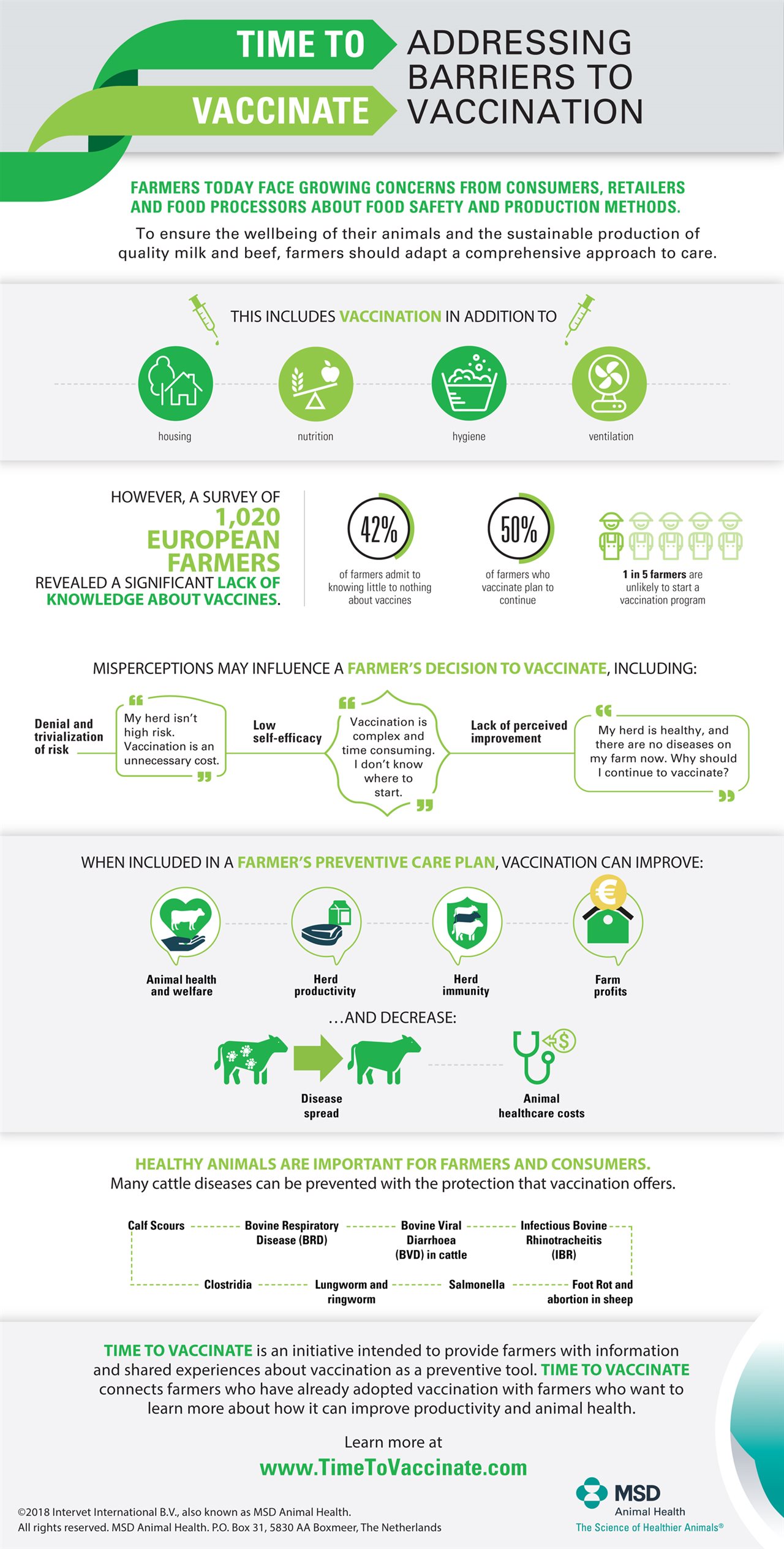
(BPT) – Time to Vaccinate provides farmers with information and shared experiences about vaccination as a preventive tool. Learn more at www.TimeToVaccinate.com.
–

2018-04-04T08:41:00
(BPT) – Time to Vaccinate provides farmers with information and shared experiences about vaccination as a preventive tool. Learn more at www.TimeToVaccinate.com.
–
2017-12-13T08:31:00
(BPT) – (BPT) – As the farming industry faces growing consolidation in the U.S., one might get the impression fewer jobs are now available in agriculture.
In fact, just the opposite is true. Today, one in three people worldwide — more than a billion employees — work in an ag-related industry.
Industry growth and digital innovation combined with retirements are driving significant demand for college grads and other professionals, including those without experience in typical ag-related subjects, and many feature excellent salaries. The USDA and Purdue University predict 57,900 jobs requiring ag skills will become available each year between now and 2020 while only 35,000 grads in food, ag, renewable resources or environment studies will look to fill those jobs each year. Further, the average starting salary in the U.S. for those graduating with bachelor’s degrees in agriculture or natural resources was a healthy $54,364 as of winter 2017, a 12 percent increase from 2016.
“People are starting to discover (agriculture) is a pretty good industry to be in,” Iowa State College Career Services Director Mike Gaul recently told CNBC. “They realize this sector isn’t our traditional what-we-joke ‘cows, plows and sows’ industry anymore. It’s incredibly diverse.”
The expectation is that grads with expertise in food, agriculture, renewable natural resources and/or the environment will fill 61 percent of all ag-related openings, while employers must seek grads in other majors to fill the 39 percent gap. Notably, women already make up more than half of the higher-ed grads in food, agriculture, renewable natural resources and environmental studies.
High school grads considering degrees in agriculture might consider one of these highest-paying ag occupations:
1. C-suite executives: The CEOs, COOs and CFOs at ag startups or established corporations routinely earn $200,000-plus for overseeing company growth and profitability. A bachelor’s or master’s degree is generally needed in addition to a background in leadership and at least five years’ industry experience.
2. Ag lawyers: Because ag is so highly regulated, such professionals may handle issues related to water, land use, pesticides, seeds, the environment, labor/HR, immigration, commerce, intellectual property, mergers/acquisitions, etc. Salaries average out at $160,000. Required: a bachelor’s degree followed by a J.D. and completed state bar exam.
3. Ag sales managers: Those skilled in overseeing sales teams are earning an average $125,000-plus annually. Most hold bachelor’s degrees in agronomy, crop science, soil science, biology, agricultural business or a related field.
4. Ag scientists: Salaries average out at $120,000. A bachelor’s degree is usually sufficient, with in-demand specialties including bioinformatics, animal genetics or the regulatory environment (managing and strategizing a product through the regulatory process).
5. Ag engineers: Among specialties in demand are environmental, ethanol and mechanical engineers, with average salaries running upwards of $80,000 for those holding bachelor’s degrees.
Bottom line: The next generation of ag specialists will be crucial to helping solve the world’s most pressing issues.
Agricultural company Syngenta is supporting that cause by bestowing multiple college scholarships to ag students each year, and of course hiring many grads in various majors.
“This is an exciting time in agriculture because we have new tools to develop better seeds and crop protection products, as well as digital solutions to help farmers be more productive,” says Ian Jepson, head of trait research and developmental biology at Syngenta. “We encourage students to think about the wide range of challenging and rewarding careers in companies like ours to help develop and deliver what farmers need to feed the world.”

2017-12-14T10:41:00
(BPT) – The Federal Reserve Board discovered in a survey of working Americans that nearly half of U.S. adults don’t have enough cash on hand to pay for a $400 emergency. If that’s a concern for you, you might be thinking about joining the 44 million Americans who have found ways to make money in addition to their main source of income. Common options include waiting tables, working retail, becoming a rideshare driver and direct selling.
Direct selling, also called direct-to-consumer sales, has been around for over 160 years, and companies like Avon, Tupperware, WorldVentures and Amway have been offering new business opportunities to independent sales representatives since they opened. The direct-sales business is still booming, with a record 20.5 million people involved in the U.S. alone in 2016. The estimated direct retail sales of $35.54 billion in 2016 was the second-highest in direct-selling history.
Is working in direct sales right for you? Benefits of working in the industry can include:
* Flexibility — You determine your schedule, and you choose to work as many — or as few — hours as you want. If you have a knack for direct selling, you could ultimately make it your main source of income.
* Personal growth and development — Take advantage of the tools and training offered by your direct selling company to help you build your business.
* Companionship — Connect with fellow sales representatives and prospective customers, which can lead to lasting relationships.
Passion for travel and financial freedom prompted Wayne Nugent, founder of WorldVentures, to launch his direct sales business in 2005. “We’ve been changing the way people take vacations for more than a decade, all while helping our independent representatives discover their potential and experience more in life,” says Nugent.
The direct seller of travel and leisure club memberships, is just one of many opportunities waiting for you. Whether you decide to go into direct sales, housesitting or part-time bartending, the possibilities for supplemental income are limited only by your imagination.

2017-12-18T06:01:00
(BPT) – Traveling but worried about being disconnected? Don’t worry, you aren’t alone. In fact, plenty of other road warriors are making sure their devices are packed and ready to go so they won’t miss a beat.
Intel(R) recently conducted a survey with YouGov to learn more about the tips and tricks connected road warriors use to keep up with email, entertainment, news and more. According to the survey, connected road warriors (69 percent) admit they always bring their mobile computing device on vacation, and nearly 1 in 3 (32 percent) indicate it makes them nervous to travel without their device.
Regardless of where they are, road warriors continue to demand strong performance and have high expectations for consistent, reliable and accessible connectivity. Seven out of 10 road warriors (71 percent) get frustrated by lagging internet performance and poor connectivity speed. And over half (55 percent) admit that the inability to quickly load pages (emails, web pages, etc.) is a top computing-while-traveling pet peeve.
Whether going to grandma’s house, a beach or a ski slope, chances are these road warriors will be looking to connect. Nearly 2 in 3 road warriors (65 percent) admit doing something extreme in order to connect their mobile computing device to the internet. Eight in 10 (81 percent) report they have connected to the internet in an unusual spot. Restaurants (60 percent) are the most commonly reported location, while nearly 4 in 10 share they have connected in a parking lot. Others report connecting at a park, beach, bar, the side of the road or at a rest stop.
While some people may still want to stay on top of work, being connected is about more than getting through your to-do list. Email may still top the list of favorite activities (90 percent) when connecting on the go, but entertainment is also popular. More than half (53 percent) say they mainly connect for entertainment like streaming and gaming.
The good news is that there are plenty of devices available today that offer great performance and great connectivity for computing on the go. The latest Intel(R)-based mobile devices are fast and responsive and come in a range of connectivity options for you to choose — Wi-Fi, tethering or always-on 4G LTE — so you can power through email or get lost in a 4K-resolution movie from a coffee shop, library, beach or grandma’s house. Powered by the latest Intel processors, these devices run all of the most popular apps for work and play and connect seamlessly with other devices:
* Samsung Galaxy Book 12 – Currently available via Verizon, this 2-in-1 PC comes with an S Pen and keyboard that connect instantly and never need charging, plus lightning-fast LTE and Wi-Fi connections so you can be creative, productive and connected, no matter where you are.
* Google Pixelbook – Google’s high-performance Pixelbook is its thinnest Chromebook ever. It features a built-in Google Assistant, a Pixelbook Pen, amazing battery life and Instant Tethering, which allows people to access their phone’s data connection even when without Wi-Fi.
* HP Spectre x360 – The ultra-slim convertible laptop has high-end power, a digital pen, long battery life, increased security features and a 4K display in addition to Wi-Fi connectivity, offering endless versatility.
* Lenovo Yoga 920 – This Wi-Fi-enabled 2-in-1 intuitive convertible laptop offers voice-activated support, a digital pen option, top performance and speed, and a 4K screen. Its Constant Connect feature downloads emails, plays music and receives Skype calls — even in standby mode.
If you’re hitting the road this season, consider an always-connected PC so you don’t miss a thing!

2017-12-26T06:01:00
(BPT) – With student debt increasingly becoming a long-term burden on graduates and families, says Peter Gayle, a vice president for Prudential Advisors, it’s never been more important to minimize the out-of-pocket expenses to put a student through college — and reduce reliance on student loans.
To put the weight of student debt in perspective, The Federal Reserve Bank of New York noted that in 1995, 54 percent of graduates had loans averaging $11,491. It’s more recent data in 2015 showed 71 percent of graduates joined the workforce with student debt averaging slightly more than $35,000. What’s more, the Federal Reserve Bank of New York estimates 25 percent of those who owe federal student loans are delinquent or in default.
The good news is that anyone willing to put in the time can likely find programs that help foot the bill — helping to reduce the need to take out loans — so a student’s education won’t break the budget or jeopardize a financial future. According to Gayle, families can take a few initial steps before choosing a school:
* Learn how the financial aid process works and get the most out of options that don’t need to be repaid.
* Understand each school’s actual net price — after financial aid — and set realistic expectations, choosing from the most affordable institutions.
* Explore types of financial aid, including grants, work study programs and scholarships; examine the specific types of aid available per school and find out how much of a family’s demonstrated financial need each school will cover.
* Understand the kinds of loans available, including a variety of federal loans and private loans, which may be used to fill any financing gaps after exhausting other options.
* Understand how parents’ “available income” is used to calculate how much parents are expected to contribute to their child’s education, especially for federal financial aid purposes.
Several guides, including Prudential Financial’s www.prudential.com/payingforcollege, can help families take a carefully considered approach to financing a college education while safeguarding a student’s long-term financial future, including the ability to save for retirement.
For families that must use student loans, the federal government is making it easier to understand how to borrow, process applications and repay loans through new online tools. Since 2010, all new federal loans, except Federal Perkins Loans, have been issued through the U.S. Department of Education, which offers information about borrowing and repaying loans.
There are multiple options to repay federally funded student loans, which generally require repayments to start six or nine months after a student graduates, leaves school or drops to half-time enrollment. A few popular choices for repayment include types of income-driven plans, which calculate payments based on a borrower’s ability to repay. One catch: It’s critical to re-certify income and family size annually to avoid huge monthly payment increases.
When debt becomes too burdensome, some loan programs offer forgiveness through public service, federal government employment, and options like teaching in underserved school districts.
Private loans are trickier since there is no standard: Interest rates and repayment terms vary from lender to lender. It’s also worth considering the need for life insurance to cover the full loan balance to aid co-signers or beneficiaries in the event of the borrower’s death, says Gayle. Financial advisors would be well-equipped to help explore this and other options, Gayle notes.
Employers are also beginning to offer employee student debt benefits to put their employees on a course for financial security. At Prudential Financial, for example, new employees hired through the company’s campus recruitment program beginning in January 2017 could earn an incentive of up to $5,000 toward paying off student loans after one year of service. Other companies match student debt payments with contributions to employee retirement savings plans.
Studies show college education can be worth the price. The U.S. Census Bureau estimates that students who attend college can earn nearly twice as much over their lifetimes as those with only a high school diploma. But with college tuition continuing to rise, families must find the most effective way to finance a child’s college education to avoid jeopardizing their ability to save for retirement.
“Prudential Advisors” is a brand name of The Prudential Insurance Company of America and its subsidiaries located in Newark, New Jersey.
2018-01-03T12:29:00
(BPT) – During the coldest months of the year, it’s hard not to think about the warmer months to come — and all that they hold. You may already be planning your next vacation or outdoor activities to host in your backyard this summer. Now is the time to brainstorm about your spring home remodeling projects that can add enjoyment and value to your humble abode.
Home remodeling projects on the rise
As the U.S. economy continues to strengthen, home improvement project investment by homeowners has increased, according to the latest Residential Remodeling Index (RRI) study. As spring is a popular time for renovation projects, you may want to start checking out popular design trends, researching product choices and figuring out what you like and what works for your family.
Here are five projects that can help you reinvent your home this spring. Besides making your home more livable and meeting your family’s needs, you will be investing in the real estate value of your property.
* Take the mud out of the room. You don’t have to allow the mudroom to live up to its name. Consider installing a Fiat Molded Stone mop service basin with a multifunction hand shower to give your family a convenient and stylish spot to wash off boots and other bulky items. It’s also a great place to give your dog a bath or wash off dirty paws to ensure nothing is tracked into the house.
* Shed a little (more) light in your foyer. Your foyer is the entry point into your home, and the right lighting solution can make this space all the more welcoming. Newer LEDs or halogen light sources naturally generate a warmth that’s perfect for the entryway. Be sure to install a dimmer switch with your new lighting solution; it’s the best way to ensure your lights provide exactly the right ambiance for your entrance hall.
* A masterful master bath. Perhaps no room is more capable of providing luxurious relaxation than your bathroom. If yours isn’t living up to this billing, it may be time for some changes. The DXV Oak Hill bathroom collection offers a freestanding slipper tub for ultimate bathing comfort, along with a stylish high-efficiency toilet with a unique traditional farmhouse style. A coordinating high-back sink accented with a charming wall-mount faucet can finish off this bathroom remodel for ultimate enjoyment and function. This may be just the spruce-up needed to enhance your personal space, while adding value to your home at the same time.
* Make your outdoor space amazing. Once the weather turns warm, spending time outdoors will be top on your list. That makes now the perfect time to plan how you’ll use this outside space. A pergola is an easy-to-build addition that can give you a relaxing place to avoid the sun. Adding a flagstone seating area or creating a decorative border for a new fire pit might be perfect for your family. Try planting flowers for a pop of color, or invest more with new bushes or trees to round out your landscaping project. Plants like day lilies or hostas can survive in almost any environment and are an easy, effective way to optimize your green space.
* Shower power for all. For the all-purpose family bathroom, upgrading to a highly functional shower system will deliver results efficiently and enjoyably for all users. The American Standard Spectra+ shower system employs first-to-market technology that allows you to change the spray patterns simply by touching the outside ring of the showerhead for a customizable experience. The Spectra+ eTouch system also includes a remote control that can be mounted to any surface, allowing anyone having trouble reaching the showerhead to enjoy the same personalized shower satisfaction. It’s luxurious and accommodating. What could be better than that?
Finding the perfect project for you
The spring season is home improvement season, so don’t let it pass you by. Start thinking now, while staying warm inside during the colder months. Figure out what needs to get done first, then look online or in stores for ideas and get inspired for your spring home renovations. It will be project time before you know it.
Headline: Start planning your home improvement projects now
Here are projects that can help you reinvent your home this spring.
* Take the mud out of the room. Installing a Fiat Molded Stone mop service basin with a multi-function hand shower gives you and your family a convenient place to wash off boots, pets and other bulky items.
* Shed a little (more) light in your foyer. Incandescent or halogen light sources naturally generate a warmth that’s perfect for the entryway. Be sure to always install a dimmer switch as well. * Shower power for all. For the all-purpose family bathroom, upgrading to a highly functional shower system will deliver results efficiently and enjoyably for all users. The American Standard Spectra+ shower system employs first-to-market technology that allows spray patterns to be changed simply by touching the showerhead for a truly customizable experience.

2018-01-03T13:01:00
(BPT) – With the newly passed tax reform bill, the Tax Cuts and Jobs Act (TCJA), now is the time to start thinking about how this will affect you so that you can plan ahead for the outcomes you will start to feel in your paycheck as early as February 2018.
This tax reform affects virtually everyone; however, families, homeowners, residents of high-tax states, the medically uninsured and small businesses will be especially affected. Most taxpayers will experience changes that could reduce or increase their taxes owed. If you’re not sure how this may affect you, here is a summary of possibilities.
Families
Like most taxpayers, many families will be affected by the loss of personal and dependent exemptions of $4,050 per person. However, families with income under $200,000 ($400,000 for joint filers) will be eligible for an increased child tax credit of $2,000. Those with income over that amount may be eligible for a smaller credit. This, along with larger standard deductions, may or may not make up for the loss of the personal exemption. Families with dependents over the age of 16 may also qualify for a new family tax credit of $500 for each dependent who does not qualify for the child tax credit.
Homeowners and residents of high-tax states
Homeowners and residents of high-tax states like California, New York and New Jersey, who typically itemize because they have large expenses like real estate taxes and state and local income taxes, may not be able to get the full tax benefit for these expenses, which are capped at $10,000. Some may not find it worthwhile to itemize going forward. Itemizing deductions is only worthwhile if all expenses exceed the standard deduction.
Medically uninsured
Starting in 2019, there will no longer be a penalty for those without health insurance. The penalty, which had become more and more expensive since first implemented in 2014, will not apply to taxpayers without insurance in 2019. Taxpayers who did not have insurance for all of 2017 and do not expect to be insured in 2018 need to make sure to talk to a tax professional, who can help you identify if you qualify for a penalty exemption.
Small-business owners
Some of the largest changes in the tax reform legislation apply to businesses, both large and small. These changes may also affect some rental activities. Corporations will see their top tax rate reduced to 21 percent from the current top rate of 35 percent, starting in 2018. Pass-through entities (LLCs, partnerships and S corporations) and self-employed individuals will be able to deduct 20 percent of their business income, subject to some limits (based on the type of business and income) and phase-outs (based on the partner’s/shareholder’s total income).
Retirement
Under the current law, taxpayers can reconvert a Roth IRA into a traditional IRA. This allows taxpayers to avoid paying high tax bills on an amount of money that had fallen in value after the conversion. Now, taxpayers will no longer be able to reconvert a Roth IRA to a traditional IRA.
The bottom line is that with this new tax legislation, you’re still going to need to get your documents in order and file your taxes, as well as decide if you’re going to itemize and what deductions work for your personal situation. This year, it’s more important than ever to talk to a tax professional about how this affects you to ensure that your taxes are done right and that you have a clear understanding of how changes that take effect in 2018 will impact how you file in 2019.
To learn more about the tax reform, how it may affect you and what steps you can begin taking to reduce what you owe in 2018, visit www.hrblock.com or make an appointment with a tax professional.

2018-01-05T07:01:00
(BPT) – Life changes — getting married, having a baby, buying or selling a home, sending a child off to college or retiring — often come with changes to your tax situation. Overlooking these changes when filing your taxes can lead taxpayers to make mistakes that leave money on the table, potentially impacting their refund at a time when the average refund is about $2,800. Here is a list of common tax mistakes to avoid in the 2018 filing season to help ensure you don’t miss any deductions or credits that you deserve.
Using the correct filing status
One of the most common mistakes taxpayers make is selecting the wrong filing status. A taxpayer’s filing status can affect which credits and deductions they’re eligible for, the value of their standard deduction and their tax bracket. One situation that can make choosing a filing status difficult is when more than one filing status seems to fit. For example, if a taxpayer with children is in the process of getting a divorce, they may not be sure if they should file as married filing jointly or married filing separately or, in some instances, whether they qualify to file as head of household. In this case, the taxpayers should run the numbers to see if filing jointly or separately is more to their advantage rather than guessing.
In addition, common clerical errors such as mixing up names, forgetting to include information reported on your W-2, 1099 or other forms, or even making mathematical errors can also affect your tax benefits.
Commonly overlooked credits and deductions
Most taxpayers file their taxes using the standard deduction, but you may be eligible for a variety of itemized deductions that could possibly save you more. Also, you may be eligible for “above-the-line” deductions and tax credits, none of which require you to itemize. And it’s important to note that the newly passed tax reform generally does not impact these credits or deductions until you file your 2018 tax return in 2019.
Earned Income Tax Credit for lower-income workers:
Twenty percent of eligible taxpayers, particularly lower-income workers, do not claim the Earned Income Tax Credit (EITC). Depending on their income and the number of children they have, these taxpayers may be eligible for an EITC of $503 to $6,242. Since eligibility can fluctuate based on financial, marital and parental status, taxpayers can be ineligible one year and eligible the next.
Under the PATH Act, taxpayers who claim the EITC and who file early will have their refunds delayed until mid-February. Despite the delay, taxpayers should file as they normally would to get their refund as soon as possible.
Education credits:
Depending on your academic program, what year the student is in, income and other restrictions, there are federal tax credits that can help offset the costs of higher education for yourself or your dependents. To qualify, you must pay for post-secondary tuition and fees for yourself, your spouse or your dependent. Depending on the criteria, a student may use the American Opportunity Credit of up to $2,500 or the Lifetime Learning Credit of up to $2,000.
Itemizing deductions:
Itemizing can save taxpayers hundreds of dollars, as only one third of taxpayers itemize but millions more should — especially homeowners. Owning a home is often the key that unlocks itemization, but some taxpayers with high state taxes and charitable contributions may also be able to itemize.
Itemizing enables eligible taxpayers to take deductions such as:
* Charitable donations
* Medical expenses that exceed 7.5 percent of adjusted gross income
* Personal property taxes
* State income or sales taxes
* Casualty losses such as a fire, hurricane or earthquake
* Mortgage interest payments
Not filing
On average, the IRS announces annually that approximately $1 billion goes unclaimed in federal tax refunds. Taxpayers can claim a refund for up to three years after the filing deadline. So, in addition to filing your 2017 return, keep in mind to file your 2015 return by April 17, 2018. If not, you will lose your 2015 refund. There is no late-filing penalty if a taxpayer is due a refund. Also, even if you are not required to file a return, you may be entitled to a refund.
Taxpayers who want to ensure they get the maximum refund without a delay should visit https://www.hrblock.com/offers/refund-advance/ to see if you are eligible for a Refund Advance, or you can make an appointment with a tax professional.

2018-01-09T13:29:00
(BPT) – This time of year, many Americans are setting (or already breaking) New Year’s resolutions focused on getting healthier, saving money, spending more time with friends and family, etc. These are great resolutions, but perhaps this year, you’re thinking about ways you can make a difference. Giving back by donating to a nonprofit can help you feel more connected to your community and more gratification in knowing your New Year’s resolution will have a lasting impact for someone else.
In many cases, however, starting the process of where to donate your hard-earned funds can be overwhelming. After all, the array of groups requesting donations is substantial and includes 1.5 million registered nonprofits in the U.S. alone.
In 2016, generous individuals donated a whopping $281.9 billion to U.S. nonprofits, a 4 percent increase from 2015. Because there are more than a million nonprofits to choose from, the decision of where to donate requires serious thought. When looking to donate, you should set some key criteria for choosing a group that means something to you. During that process, you should consider seeking answers to the following five questions:
1. Does the organization have a history of success? Take a good look at when it was founded, exactly how it has helped people and what it has accomplished to date. Do its achievements align with your ideas as to how the world can best be improved? Will this nonprofit have a real and lasting impact on a cause that you deeply care about?
2. Do its contributions appeal to you emotionally? Contributing to a specialized nonprofit that pulls at your heartstrings can be the most fulfilling option. As such, you should seek an organization that clearly communicates how your money will be spent and how it will help people in real, tangible ways. For example, for more than three decades The National Children’s Cancer Society (NCCS) has supported the families of nearly 42,000 children battling cancer, providing more than $65 million worth of transportation, emergency and emotional assistance, helping families stay strong, stay positive and stay together.
3. Can you easily find examples of individuals or families that have benefited from the organization? Actions speak louder than words. An organization may say how it helps others, but showing how it helps others is a proof point you should look for. Here’s an example of what you should be looking for. The NCCS was approached by a mother whose then 19-month-old daughter, Paisley, was diagnosed with acute lymphoblastic leukemia. Paisley spent several drawn-out months in the hospital, along with unexpected emergency room visits due to high fevers. Paisley’s mom, Paula, was a single mom spending enormous amounts of time caring for her daughter, and ultimately lost her job. Unemployed and with travel expenses quickly adding up, Paula almost lost her car. Paula was referred to the NCCS by her hospital social worker, and from there on out, the NCCS has been by Paula and Paisley’s side. Through the Emergency Assistance Fund and the Transportation Assistance Fund, NCCS helped Paula keep her car and pay for mileage expenses, ensuring that Paisley will get to each and every doctor’s appointment.
In another example, donations to the NCCS completely changed the lives of a family whose child has been struck three times by retinoblastoma, cancer of the eye. Parents Daniel and Marian are blind, and two of their three children, now 5 and 9, have endured multiple treatments since having potentially fatal eye tumors removed as infants. NCCS has helped by funding transportation and lodging for appointments, allowing the children to receive medical evaluations and surveillance. As of now, the chance their cancer will return stands at only 5 percent.
4. Does it serve people beyond just funding? Multiple organizations can redistribute your money to support worthy causes, but you may prefer to find one that also assists people in more personal ways. NCCS, for example, equips families with skilled case managers who provide practical and emotional support to help parents and caregivers navigate throughout their daunting childhood cancer journeys. Further, youth 10 to 17 are offered emotional support by young-adult mentors who have already survived cancer.
5. Is it credible? Is the charity you’re looking to support accredited by the Better Business Bureau? That organization sets standards for charity accountability that include governance, fundraising practices, solicitations and more. While having an emotional tie to a charity is important, recognition by a comprehensive, in-depth evaluation service like the Better Business Bureau is imperative.
Families and the vast network of social workers who refer them know what they get with NCCS — a reliable, compassionate and transparent partner that truly understands the landscape of childhood cancer, and the mountains families need to move to come out the other side victorious. If you’re looking to make a lasting impact with your New Year’s resolution this year, consider donating to NCCS today.

2018-01-15T15:53:00
(BPT) – If you’re thinking of buying your first home, you’ve probably wrestled with the decision to rent or own your home — and for good reason.
Owning a home is a big commitment. With it comes a lot of responsibility and a long-term financial relationship.
But which is right for you? To answer that, let’s lean into the facts.
The improving housing market
Good news! Since the depths of the recession, the housing market has made a heroic comeback. That can be attributed to a number of factors, including a drop in unemployment and a stronger economy.
But as the housing market has recovered, it has experienced some growing pains. With a sharp increase in demand, housing supplies are being strained. This means, among other things, that prices are going up.
For families and individuals still recovering financially, finding affordable housing options can be difficult. This applies to home sales and rentals.
Making the decision
With rental and sales markets heading toward record highs, the decision falls back to what is best for you. Specifically, what is financially feasible.
Let’s look at the basic numbers. According to the U.S. Census Bureau, the median gross rent paid from 2012 to 2016 was $949 monthly. Compare that with the median selected monthly owner costs with a mortgage, which was $1,491 over the same time period.
Then there are utilities. The median monthly electricity cost for renters in 2015 was $82, with owners paying $117. For piped gas, the median amount renters pay monthly is $42, while owners pay $58.
For renters, it is wise to carry renter’s insurance. Some landlords will also charge maintenance and other fees. Utility costs will also vary depending on the quality of the structure and materials used as well as size of the rental space.
Homeowners will pay property taxes, insurance and an estimated $500 annually for routine maintenance, according to the Census Bureau.
The benefits of homeownership
At a glance, it may seem that renting is the lower cost option. But there are certain benefits to homeownership that may offset the additional regular costs. According to the Tax Policy Center, the primary benefit to owning a home is imputed rental income. Simply put, making a monthly payment on a home that you own is like paying rent to yourself.
While that money is not taxed, it comes with another benefit — potential tax deductions. When you file your federal taxes, you may be able to deduct a portion of the mortgage interest you pay. Talk to a tax professional for more information on the expenses you can deduct and the limits for those deductions.
Beyond the numbers
Homeownership provides a variety of benefits beyond the numbers. For many people, a home is the largest investment they will ever make. The upgrades, work and care put into the home that you own can add value to your investment. It also adds a sense of pride knowing that it is yours.
“Having a place to call your own, a place to return to at the end of the day, makes life better,” said Vanderbilt Mortgage and Finance, Inc. President Eric Hamilton. “You can see it from the moment they make the decision — that sense of pride. It’s a life-changing event and a memory that will last a lifetime.”
Vanderbilt Mortgage and Finance, Inc., 500 Alcoa Trail, Maryville, TN 37804, 865-380-3000, NMLS #1561, (http://www.nmlsconsumeraccess.org/), AZ Lic. #BK-0902616, Loans made or arranged pursuant to a California Finance Lenders Law license, GA Residential Mortgage (Lic. #6911), Illinois Residential Mortgage Licensee, Licensed by the NH Banking Department, MT Lic. #1561, Licensed by PA Dept. of Banking.
