2026-03-26T16:03:00
(BPT) – On the night of March 2, 2026, millions of workers around the world opened their laptops and found Claude — one of the world’s most widely used AI assistants — was down. The outage lasted hours. It was a small but pointed reminder of how dependent modern work has become on AI, and how fragile the infrastructure behind it can be. The grid that powers that infrastructure is under more strain than most people realize — and the vulnerabilities don’t stop at the data center door. They come home with us.
Today, the world is spending hundreds of billions of dollars building the energy infrastructure needed to power AI, including data centers, grid upgrades and new power plants. That scale is just beginning. Fast forward to 2030, when the International Energy Agency (IEA) projects global data center electricity consumption will nearly double.
Here’s why: A single AI hyperscaler (like Google Cloud, Microsoft Azure or AWS) consumes as much electricity as 100,000 households, driving an estimated $720 billion in grid spending through the end of the decade.
The world recognizes that AI needs a massive energy infrastructure. But what do homes need in this era of AI-powered functionality? Leading provider of innovative solar generators and renewable energy solutions Jackery has been anticipating this question for 14 years.
The AI revolution comes home
While data centers power the AI infrastructure, the AI revolution is rapidly moving into homes — and with it, each home needs what data centers need: reliable, always-on, clean power.
But that power is far from guaranteed. The tension between AI’s explosive energy appetite and the fragility of the grid it depends on is not a future concern — it’s playing out right now. A single AI workload consumes roughly 1,000 times more electricity than a traditional web search, while geopolitical instability, supply chain disruptions and an already-strained electrical grid are exposing just how vulnerable that infrastructure is. Homes are no exception to this vulnerability.
How fast is this happening? The average U.S. home has 21 connected devices today, which will only keep increasing. The AI smart home market is growing at 21.3% annually, toward $104 billion by 2034, with the smart home penetration forecast to reach 92.5% globally by 2029.
The grid powering all of it is already under pressure. According to NERC’s 2025 Summer Reliability Assessment, several major U.S. regions — including Texas, the Midwest and the Southwest — face a real risk of supply shortfalls during peak demand periods. Most people can’t control what happens at the grid level. But they can start building energy resilience at home.
Smart homes need reliable power for optimal functionality, and this demand will be increasingly crucial over the next several years. Fortunately, Jackery has already built solutions homes need for the AI era.
Home power solutions for the future
The Jackery company anticipated this residential convergence 14 years ago, and has been building toward it ever since. Back in 2012, Jackery built a portable battery for outdoor adventures. Building on principles of flexibility, independence and reliability, the company’s strategy focused on developing products putting power safely and predictably in the hands of homeowners to meet growing energy needs.
Fourteen years later, the company has expanded its portfolio beyond solar generators, solar panels, and power stations into the Jackery Essential Home Backup Solution (EHB) — a whole-home energy category built around what homeowners actually need. It matches the output of a traditional gas generator without the noise, fumes, fuel costs or safety hazards. It reduces dependence on an increasingly strained grid, putting control back in the hands of the homeowner. It’s a long-term investment that pays off through lower energy bills and lasting independence. And it runs on clean, renewable energy — silent, emissions-free and ready when the grid isn’t. Products like the HomePower 3600 Plus and the Solar Generator 5000 Plus bring that vision to life in homes today.
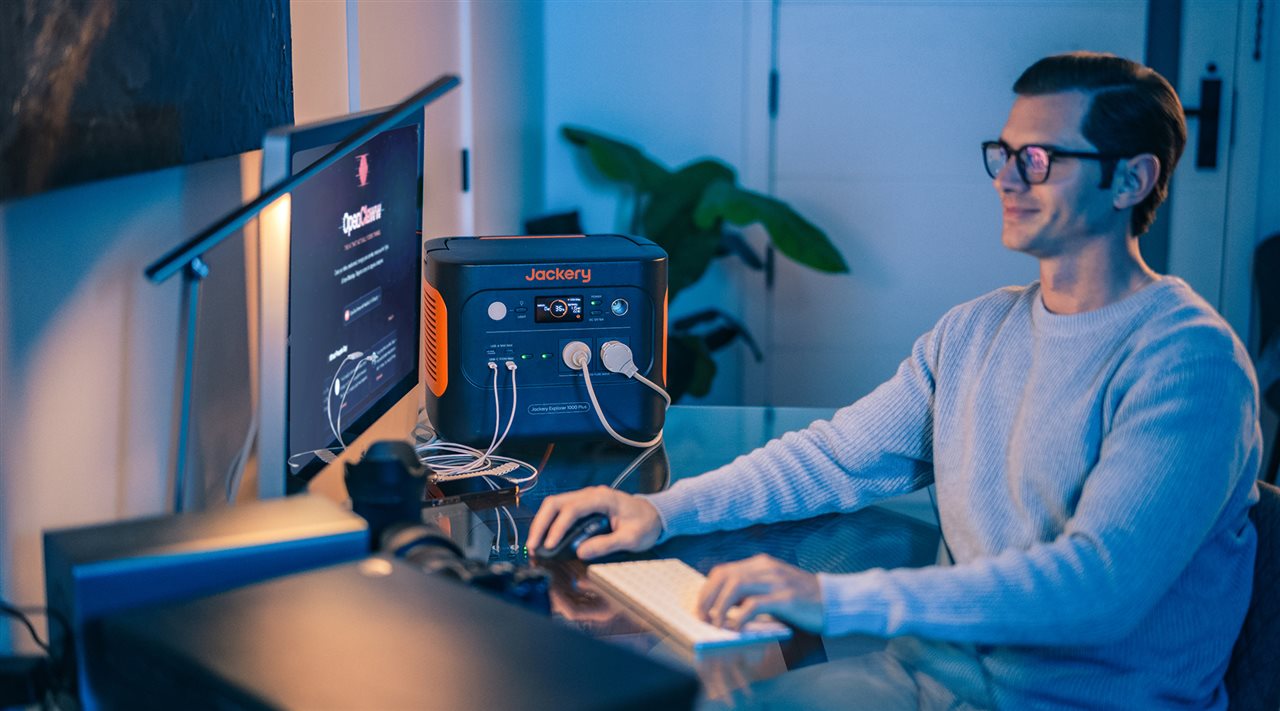
Today, Jackery’s vision includes groundbreaking energy solutions designed specifically for the AI era — including products on the horizon that will keep homes powered and connected even when the grid goes dark. That vision is already taking shape with innovations like the Solar Mars Bot, debuted at Consumer Electronics Show (CES) 2026, which uses AI-enhanced computer vision to autonomously drive as it offers mobile energy, intelligently repositioning itself based on light conditions and recharging using its own retractable solar panels.
The company also seeks effective global partnerships, signing a Proactive Safety Battery Cell R&D alliance with DeSay Battery to co-develop the world’s first safer and smarter DIY home energy storage solution. Jackery also founded a consortium of leading global consumer technology brands that run on its infrastructure. The Jackery Consortium shares Jackery’s commitment to catalyze the next era of energy storage, management and independence. It also helps consumers maximize energy independence by ensuring consumer devices and AI systems are compatible with their power stations.
These crucial milestones highlight Jackery’s roadmap to the AI revolution, which the company has been actively preparing for over the past decade.
Key technology investments
Success in times of rapid technological change depends on meeting the moment in terms of the details while also envisioning future needs. A proactive, whole-home approach anticipates energy requirements for multiple interconnected smart devices. Even better is a system that analyzes energy consumption, solar yield and live electricity prices in real time.
Anticipating problems and protecting power stations from potential safety hazards and structural damage, Jackery’s exclusive AI-powered ChargeShield 2.0 technology integrates 62 protective mechanisms, ensuring comprehensive battery management and enhanced safety for the power station and any connected devices.
These technology advancements exemplify how the company invests its time and resources. Jackery sees the big picture — including the need to create a power infrastructure that other AI brands can depend on. From the R&D leadership exemplified by last year’s Desay Battery Proactive Safety AI Prismatic Cell alliance from RE+2025 to the founding of the Jackery Consortium together with Rokid, Viture, XTOOL and Heybike, the company prioritizes strategic partnerships during this age of rapid tech developments.
Why energy needs to be “always on”
No longer just a convenience, today’s AI-powered devices and systems require uninterrupted power to effectively respond to commands. AI relies on continuous connectivity and ongoing analysis in order to offer real-time security and integration of each home’s AI-powered devices and energy management systems.
When there’s a power grid failure, the Jackery Essential Home Backup (EHB) system’s 0ms–20ms Uninterruptible Power Supply (UPS) switchover means AI-powered homes experience zero perceptible interruption, providing the safety net devices and systems need to keep running without losing data or crashing.
Jackery energy systems optimize energy usage in real time, making more efficient use of photovoltaic systems for solar yield optimization and increasing self-consumption of solar power. Additional safety features include Lithium Iron Phosphate (LiFePO4) battery cells technology for enhanced stability. And for homeowners who want to stay ahead of the curve, Jackery has a new generation of AI-integrated energy systems on the way, purpose-built for a world where keeping the lights on is no longer optional.
Jackery’s Solar Mars Bot was created with energy independence in mind, with AI-enhanced computer vision that lets it autonomously reposition itself for maximum solar yield.
Always-on, always-ready devices and systems ensure AI-powered homes provide homeowners with continuous safety, comfort and energy.
Homes of tomorrow
Building on today’s technology, Jackery envisions the home of tomorrow as generating its own clean energy, managed with AI intelligence that’s shared across connected devices — and never going dark. Jackery is already working toward that vision.
“When Jackery started 14 years ago, our mission was simple: give people reliable power wherever life takes them. Over the past decade, we’ve earned trust by solving real problems with portable power as the way people live, work and rely on electricity has fundamentally shifted,” said Steven Wang, VP of Jackery’s Americas Business Department. “Looking ahead to the next 10 years, we’re expanding that original promise into a broader vision of power self-sufficiency, transforming the home into an intelligent, solar-powered ecosystem. This is the beginning of our next chapter, where energy is cleaner, smarter and firmly back in the hands of consumers.”
Discover where the future of energy is headed at Jackery.com.