Easy Bookkeeping Help for Small Business Owners

2021-10-20T08:01:06

(BPT) – For many small business owners, even the mention of the words “bookkeeping” and “accounting” can cause undue stress and pressure. Most started their businesses to pursue their passions, not to get mired down in mundane financial tasks. But to run a successful business, managing your finances effectively is a must. The good news is, you don’t have to go it alone or be a spreadsheets expert to get it right.

Bookkeeping consists of keeping accurate records on incoming and outgoing cash (cash flow) for your small business. This means recording all financial transactions your business incurs, including all expenses and income. Accurate bookkeeping helps you gain financial confidence as well as maintain compliance with IRS tax regulations. It’s a key component of running your small business, and better understanding your financial statements will make you a more strategic, forward-thinking small business owner.

If you’re self-employed or own a small business, Block Advisors, a team within H&R Block, can manage your bookkeeping needs as well as help you with your small business taxes. The team of small business account managers can help get and keep you on track and ensure your books are accurate, which could save you time throughout the year.

“We offer monthly bookkeeping services for businesses like C corps, S corps and partnerships. We also have options for those with a business of one,” said Paul Ramos, director of small business tax for H&R Block. “We serve businesses of all sizes and at every stage. Let us do the heavy lifting so you can get back to doing what you love. And rest easy knowing we’re available if you need us.”

When Block Advisors’ small business tax client Empowered Center restructured as a single-owner LLC in 2018, they found themselves in need of bookkeeping assistance.

“Our initial business administrator tried her best but had little guidance from ownership who were simply therapists wanting to help clients, and thus had limited financial training,” said owner Nicholas A. Maio-Aether, MAMFT, MSPSY, LBA, BCBA. “Block Advisors was immediately helpful because they identified mistakes and helped us quickly rectify them. They also helped us pay some fines we didn’t even know about before they got out of hand. We also started to understand all the areas where we were spending money so we could start cutting costs and saving for the first time.”

He goes on to say, “This has made living life possible again for Empowered staff, who are no longer struggling because of our bleeding hearts. Rather, we can continue helping and serving intersectional clients while still putting bread on our own tables each night. Thank you to our Block Advisors tax pro Claudia Bradshaw and bookkeeper Laura Young.”

Working with Block Advisors is easy; get live help in-person, via phone, or video, and share all documents securely via the cloud. If you’re self-employed or own a small business, put your books in great hands with the Block Advisors 100% accuracy guarantee. Schedule a free consultation today.

Get ready for your “revenge travel” with these travel tips

2021-10-13T06:31:00

(BPT) – After a year and a half of not traveling or taking smaller, local trips, everyone is itching for the vacations the pandemic put on hold. This feeling of being hungry for travel is what some are calling “revenge travel”: the idea that people are more eager to travel after being homebound for so long and want to go big — whether splurging or finally heading to a bucket list destination.

To put your revenge travel plans in motion, the Marriott Bonvoy Boundless® and Bold® Cards are launching new sign-up bonus offers that help cardmembers earn now so they can turn their travel dreams into a reality. Whether that next big trip is around the corner or a year away, it’s never too early to kick off travel planning. Here are some top tips to help you organize the ultimate return to travel adventure.

Earn more now, enjoy more later

As you embark on planning, get started by working on a budget to narrow down options. One way to maximize spending, and even unlock destinations that felt out of reach, is to take advantage of the new sign-up offers from the Marriott Bonvoy portfolio of cards.

Starting Sept. 23 – Nov. 3, 2021, new Marriott Bonvoy Boundless® cardmembers can earn 125,000 bonus points + 1 Free Night (valued up to 50,000 points) after spending $5,000 in the first three months from account opening. That’s a total point value of up to 175,000 points! Marriott Bonvoy Bold® cardmembers can also take advantage of a new sign-up bonus offer and earn 60,000 bonus points after spending $2,000 in the first three months from account opening.

If you’re contemplating applying for one of the cards, now is the time — these are their highest points offers yet. The cards also offer earning on Marriott Bonvoy properties and everyday purchases so you’re able to rack up points now and redeem them for future travel.

Marriott Bonvoy Boundless cardmembers earn 6x points for every $1 spent at over 7,000 hotels participating in Marriott Bonvoy, 2x points per $1 spent on all other purchases and a Free Night Award (valued up to 35,000 points) every year after account anniversary. Marriott Bonvoy Bold cardmembers earn 3x points per $1 spent at participating properties, 2x points per $1 spent on travel purchases and 1x point per $1 spent on all other eligible purchases. Whatever your travel style, there are endless hotel possibilities to explore from the Ritz-Carlton to W Hotels to Westin, Sheraton and more in destinations spanning the globe.

Set your travel intention

After a year without travel, we might feel pressured to pack our first trip with as much adventure as possible. Just remember that vacations are best enjoyed when rest and resetting are part of the plan — and this can look different for all of us. Setting a trip intention can help your trip take shape, giving you an idea of which activities you and any travel companion(s) want to prioritize, but make sure to leave a little wiggle room to relax.

Travel safe, travel smart

Even if your next big trip isn’t for a while, it’s important to stay up to date on safety and travel requirements. For example, if you don’t have a passport or if it’s expiring soon, it’s recommended to start that process as soon as possible given recent delays in passport processing. It’s also helpful to look into what safety and cancellation accommodations your selected airlines have in place to help you travel with more peace of mind. For example, when you book a trip with a Marriott Bonvoy card, cardmembers have added protection benefits for lost luggage and trip delay, as well as a travel and emergency services hotline to help you get back on track.

Most importantly, planning “revenge travel” gives us something to look forward to. Many travel booking sites and services make it possible for you to book well in advance, with low or no fees for cancellations. Plus, if you follow the few tips we’ve outlined, it’s sure to be smooth sailing (or flying!) for your future travels. After a massively unpredictable year, it’s never felt more empowering to plan for the future.

*Accounts subject to credit approval. Restrictions and limitations apply. Cards are issued by JPMorgan Chase Bank, N.A. Member FDIC.

Consumers, media and farmers discuss sustainability, transparency and giving farmers a voice

2021-10-11T08:01:00

(BPT) – On a hot and humid evening in July, two farmers finished up their long day in the field, five national media journalists took a break from impending deadlines and two dietitians wrapped up their daily meetings with clients and logged into a video conference to participate in the third Dinner is Grown event hosted by BASF Agricultural Solutions.

Paul Rea, senior vice president for BASF Agricultural Solutions North America, opened the virtual event live from the company’s new Sustainability Center. He welcomed the diverse audience to participate in a conversation about sustainability in agriculture and how food gets from the farm to America’s dinner plates. What seemed to be a straightforward and simple conversation on the surface was rather complex and enlightening.

“The purpose of Dinner is Grown is about bringing people together — farmers and members of the media — to learn from one another and bridge the gap from the farm to the table,” said Rea. “We know consumers still have a lot of questions around agriculture and this event provides a platform to have those conversations.”

The topic of carbon kicked off the evening, and farmers Matt Mayer from Northeast Iowa and Rob Fleming of North Carolina shared their thoughts and fielded questions on everything from strip tilling to nitrogen fixers.

Mayer grew up on his family farm. He said he stumbled into regenerative agriculture after realizing there must be a better, more efficient way to farm.

“We began to track our trips and our fertilizer, and we actually created the carbon footprint of our farm. So, we knew exactly how much carbon we were sequestering and on average on our 160-acre farm, we were removing the equivalent of 62 cars off the road.”

“We’re not making more farmland, so we’re going to have to do well with what we have,” added Mayer.

Fleming agreed. “Our soil is our number one asset. It’s something that we must keep healthy. My job is to leave the land better than when I got it 40 years ago.”

After nearly an hour of engaging conversation, the question remained, are we adequately communicating with consumers about what farmers do to produce safe and reliable food?

Melissa Joy Dobbins, a dietitian, provided insight from her clients.

“I don’t think people are skeptical or distrusting of farming. I think they don’t know what they don’t know, and the more we talk about these new and exciting things going on at the farm, no till, strip till, carbon sequestration, that these terms become more common, and that people realize the science and business that goes into farming. We need to get people closer to the farm. There’s still a huge disconnect.”

“The persona of the farmer needs to change,” said Cara Harbstreet, a dietitian from Kansas City. “It’s not about facts and figures, but about storytelling.”

“I think there has been this attitude of paternalism that experts or the industry knows best, we’ll release some of this information or make it available or offer transparency on our terms. Younger audiences aren’t settling for that anymore,” added Harbstreet.

Padma Commuri, director, Research & Development for BASF Agricultural Solutions North America, agreed.

“Companies like us, we are producing food at farm level, but we don’t translate the value of what we are producing at the table level. So, I think we need to bridge that farm-to-table connection of the crops that we are producing and how that translates to a meaningful value to the consumer.”

This led to head nods from everyone and for Fleming, an acknowledgment that farmers cannot do it alone.

“When you farm, you wear a lot of hats: You’re a scientist, a meteorologist, a businessman and a marketer. We need to do a better job of making the connection — for the consumer — from the crop to the table and why it’s meaningful to them.”

“U.S. farmers are full of pride,” said Fleming. “We don’t just want to take care of our families; we want to take care of you. We have a story to tell and one that should resonate with consumers, but we need a vehicle to share that story.”

Participating journalists included: Laura Reiley, The Washington Post; Kirk Maltais, The Wall Street Journal; Tatyanna Monnay, Politico; Pam Smith, The Progressive Farmer; Rachel Stearns, Eating Well; Cara Harbstreet, dietitian and Melissa Joy Dobbins, dietitian.

Health goals burning a hole in your wallet? 3 tips for personal and financial wellness success

2021-10-07T07:01:00

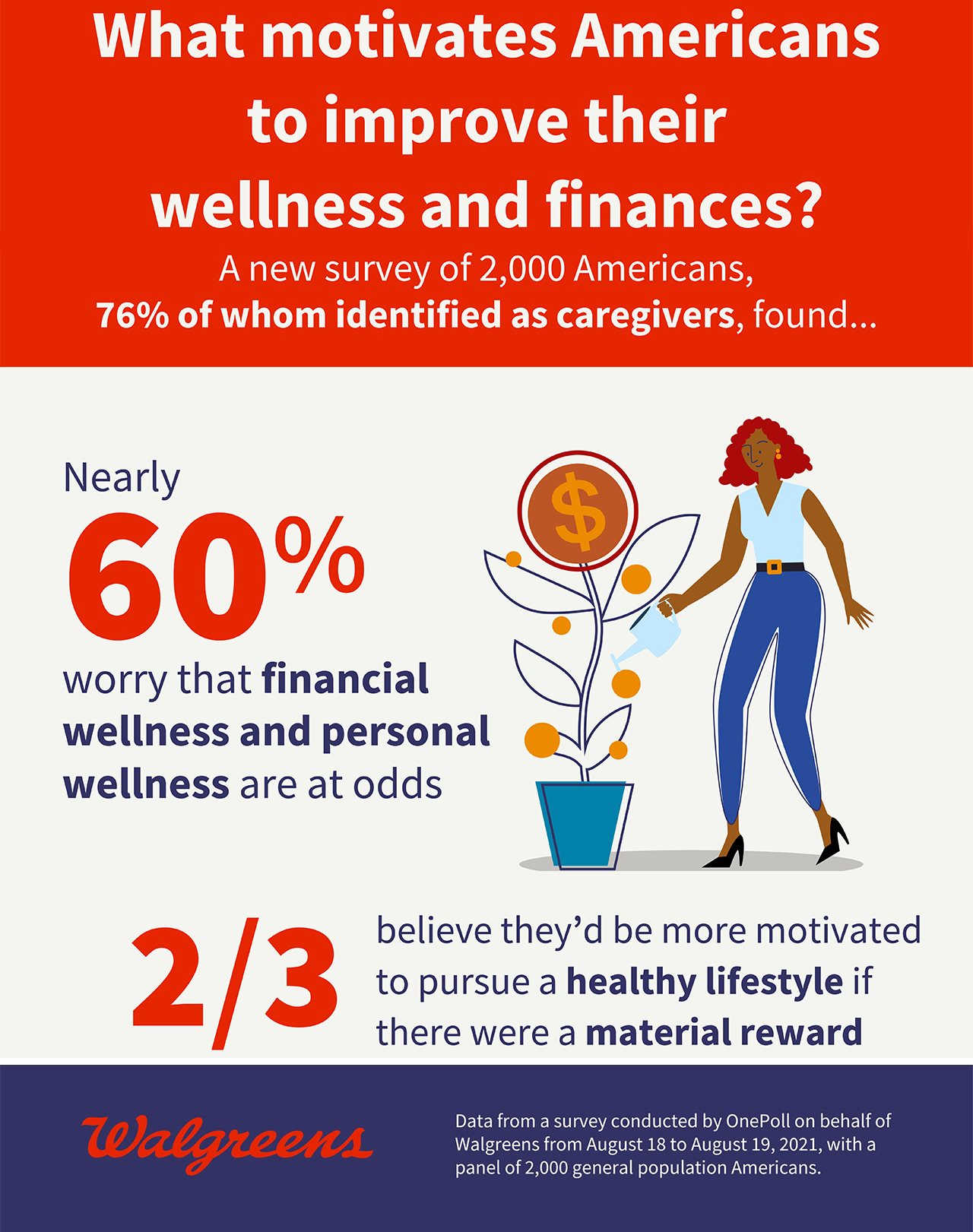
(BPT) – The key to improving your personal wellness might be as simple as a trip to your favorite store. According to a new national survey, two-thirds of Americans say they would be more motivated to pursue a healthy lifestyle if they were rewarded for doing so.

Most respondents (56%) agreed financial rewards, such as gift cards or significant discounts to their favorite store or website, would motivate them to make healthier choices. Free self-care/beauty products and treatments (48%), household essentials (45%), treats and snacks (42%) and cash (41%) rewards were also selected as highly incentivizing. Less motivating were concert tickets, medals, trophies and sporting event tickets (all less than 20%.)

The survey also found Americans have a hard time balancing wellness and financial priorities, and most worry that these goals are often at odds.

“The survey reinforces what we’ve heard directly from customers and patients — people want resources that benefit both their personal and financial well-being,” said Maria Smith, vice president of payments & financial services at Walgreens. “Walgreens strives to help those we serve save money and be well. For example, the new myWalgreens Credit Card provides up to 10% Walgreens Cash rewards on purchases that support personal wellness.”

3 tips to benefit your health and financial wellness:

  1. Plan to spend, save and splurge

Prepare for success by planning for splurges and surprise spending:

  • To Spend: Write down everyday expenses and plan on those dollars flowing in and out of your accounts. Examples are housing, transportation, groceries, healthcare and childcare.
  • To Save: Ideally, we save in three “buckets” — for emergencies (loss of work or unanticipated car repairs), for retirement and finally for splurges like a dream vacation, new piece of fitness equipment or down payment on a new home. When planned for, spending on “splurges” can be as beneficial to our well-being as anything else.
  1. Find and use tools that reward you for the life you live, and the life you want

No matter your goals, the path to success likely starts exactly where you are with small changes. With that in mind, look for tools that will benefit your life as it currently is, while also rewarding and incentivizing you to make daily decisions and help you achieve your goals. Walgreens launched the myWalgreens Credit Card with this strategy in mind. Cardholders can earn up to 10% back in Walgreens Cash rewards on better-for-you Walgreens branded purchases and everyday essentials that compare to national brands. The myWalgreens Credit Card also delivers rewards when shopping at the grocery store, on monthly gym memberships, pharmacy purchases and medical co-pays.

  1. Set goals and be prepared to modify

Acknowledge and accept that the path to personal and financial wellness won’t be a straight one. Identify your goal, plan your path and also be prepared to modify. Slow down when unforeseen challenges arise and ramp up your efforts when you have momentum. This might mean committing to a 15-minute walk around the block every night before signing on for a pricey gym membership, or starting a savings routine by packing your lunch each day for a month before booking your next vacation. By establishing good habits at the onset, you’ll be more equipped to face obstacles that may arise.

Survey data was collected by OnePoll on behalf of Walgreens from August 18 to August 19, 2021, with a panel of 2,000 general population Americans.

For more information on the myWalgreens Credit Card or to apply, visit Walgreens.com/creditcard.

New Report Highlights Ireland’s $240.1 Billion Impact on Foreign Direct Investment into the U.S.

2021-10-06T15:57:00

(BPT) – Underscoring the robust and diverse economic relationship between the Irish and United States economies, a new Bureau of Economic Analysis (BEA) report from the U.S. Department of Commerce places Ireland at #9 in Foreign Direct Investment contributors to the U.S. economy. Irish investment in the United States is now at $240.1 billion, showing consistent growth over the past three years, including during the pandemic, increasing by .4% from the 2020 report.

“Ireland’s outsized FDI contribution to the U.S. economy demonstrates the depth of the relationship between both economies and also the entrepreneurship, innovation and resilience of Irish businesses operating in the United States,” said Sean Davis, Regional Director North America, Enterprise Ireland. “Innovation in areas such as cybersecurity, digital health, financial technologies and green business solutions are powering Irish businesses in North America and helping forge strong commercial partnerships between U.S. and Irish business.”

More than 110,000 people are now employed by Irish-owned companies in the United States. Enterprise Ireland, the Irish government agency for advancing Irish business internationally, represents over 900 of these companies that directly employ more than 87,000 people in the United States. More than 900 Enterprise Ireland-supported companies operate across the U.S. with over 120 Irish companies establishing presences in the United States since January 2020 despite COVID-19’s economic impact.

Over the past year, Enterprise Ireland saw an average of two new Irish-based businesses established weekly in the United States. In 2020, Irish firms bolstered employee rosters in traditional hubs of Irish entrepreneurship in San Francisco, New York, Chicago, Los Angeles, Boston and Philadelphia, and in Irish firms in Florida, Texas, Georgia and Minnesota.

As the number one VC in the world by deal count, Enterprise Ireland invests in Irish innovation and acts as a gateway for U.S. businesses to access innovation from Ireland. Among the many key successes over the last year was Irish company Nearform, which developed a COVID-19 contact tracing app for government agencies that has since become the official contact tracing app in New York, New Jersey and several other U.S. states. Irish biometric authentication solutions provider Daon has created VeriFLY, a mobile health passport. Daon has partnered with multiple U.S.-based airlines including American Airlines and Alaska Airlines. The VeriFLY platform provides customers with an easy method of providing results from a negative coronavirus test and other completed documents required for international travel into the United States.

“By delivering world-class talent and creativity, coupled with a cooperation-driven attitude, Irish companies are developing the partnerships and investment opportunities that drive commerce on both sides of the Atlantic,” said Davis. “From engineering technology leadership to customer services to providing product components and finished goods, we’re very proud of the shared connections between Ireland and the U.S., and we look forward to a bright future of continued mutual success.”

For more information about the advantages of doing business with Irish companies, visit: https://go.irish-advantage.com/Contact-Us-USA.html.

About Enterprise Ireland: Enterprise Ireland is the Irish State agency that works with Irish enterprises to help them start, grow, innovate and win export sales in global markets. Enterprise Ireland partners with entrepreneurs, Irish businesses, and the research and investment communities to develop Ireland’s international trade, innovation, leadership and competitiveness. The 2020 global ranking by PitchBook, a leading V.C. and Private Equity Investment Platform, placed Enterprise Ireland first in terms of top V.C. investors in global funding.

Small Business Smarter: Four Easy Ways to Instantly Upgrade Your Business

2021-10-06T09:09:34

(BPT) – Small business owners are no strangers to adapting quickly and showing resilience, and they’ve fearlessly demonstrated these qualities throughout the pandemic. Many small business owners made strategic pivots and found support in their communities, as they weathered the uncertain climate. Through that challenging environment, however, business owners also discovered new ways to set up their businesses for success.

Whether by supporting employees through engaging experiences or making the right financial choices to get more out of business purchases by choosing the right credit card, like the new World of Hyatt Business Credit Card*, small business owners can continue to upgrade their business strategies and prepare for a successful future by taking these four easy steps.

Foster a sense of community.

No success lies solely on the shoulders of one person — it takes a community. To help ensure success as a local business, think about what you can do to foster a community relationship with your customers and employees.

Creating a community can mean setting up a book exchange in your store so customers can swap reads or by finding the best ways to support your staff. Some business credit cards, like the World of Hyatt Business Credit Card*, offer you the chance to gift employees the coveted Hyatt Discoverist status to thank them for their dedication and receive added benefits when staying at Hyatt hotels. Look at the resources you have and what your community needs to create a synergy that benefits and engages everyone.

Make your budget work harder.

Budget forecasting is fundamental to any business strategy — be realistic, set goals and explore efficiencies, and ensure you are investing in the right areas. Identify where you can cut costs to better allocate funds to areas of potential growth. Further, explore tools where you can make more out of your existing expenses, like the World of Hyatt Business Credit Card*, that has an adaptive accelerator to help you earn double the Bonus Points per dollar in your top three of eight spending categories (like social media and search engine advertising, shipping and more) each calendar quarter through December 31, 2022 and top two of eight spend categories in 2023 and beyond. There’s no need to enroll in these categories to earn, so you can make the best of your expenses by redeeming World of Hyatt points for travel, dining, spa services and more at participating Hyatt hotels.

Consider adopting an automated budgeting tool to do the heavy lifting. If you have a business credit card, use it to track spending in key categories to see how you can maximize your points.

Upgrade your tools.

Technology is constantly evolving and there’s a slew of new platforms and software offerings that can be utilized for inventory, shipping and even employee management, but before you invest in any, read reviews, watch video tutorials and research the tools your competitors are using.

Set up introductory calls with the platforms you’re considering and always ask about driving costs down or see if they have free options available such as complimentary trials. Don’t commit with the first vendor you find. Do the research and find what makes the most sense for you.

Reward yourself!

Yes, rewards are also a way of upgrading your business. The lines between work and home are more blurred than ever, so it’s important to disconnect and recharge. Avoid burnout and reduce day-to-day stress by focusing on hobbies or traveling and staying at a trusted and wellbeing-driven hotel, such as one of the 1,000+ Hyatt properties that can offer much-needed rest and recuperation.

Certain credit cards, like the new World of Hyatt Business Credit Card*, make travel more accessible than ever before by leveraging your existing business expenses to rack up points towards future trips. Cardmembers can achieve free nights, elite status and room upgrades, and not to mention, when you stay at any Hyatt property, you can earn up to 9X Points total for Hyatt stays and experiences, with 4 Bonus Points earned per dollar spent with your card at Hyatt hotels, including participating restaurants and spas, plus 5 Base Points per dollar you can earn from Hyatt as a World of Hyatt member.

One of the smartest things you can do as a business owner is to make purchases with a card that rewards you. While it’s been a challenging year, now is a better time than any to begin implementing new tools and strategies to strive for success.

*Accounts subject to credit approval. Restrictions and limitations apply. Cards are issued by JPMorgan Chase Bank, N.A. Member FDIC.

Receiving scam texts? [Infographic]

2021-10-04T05:01:00

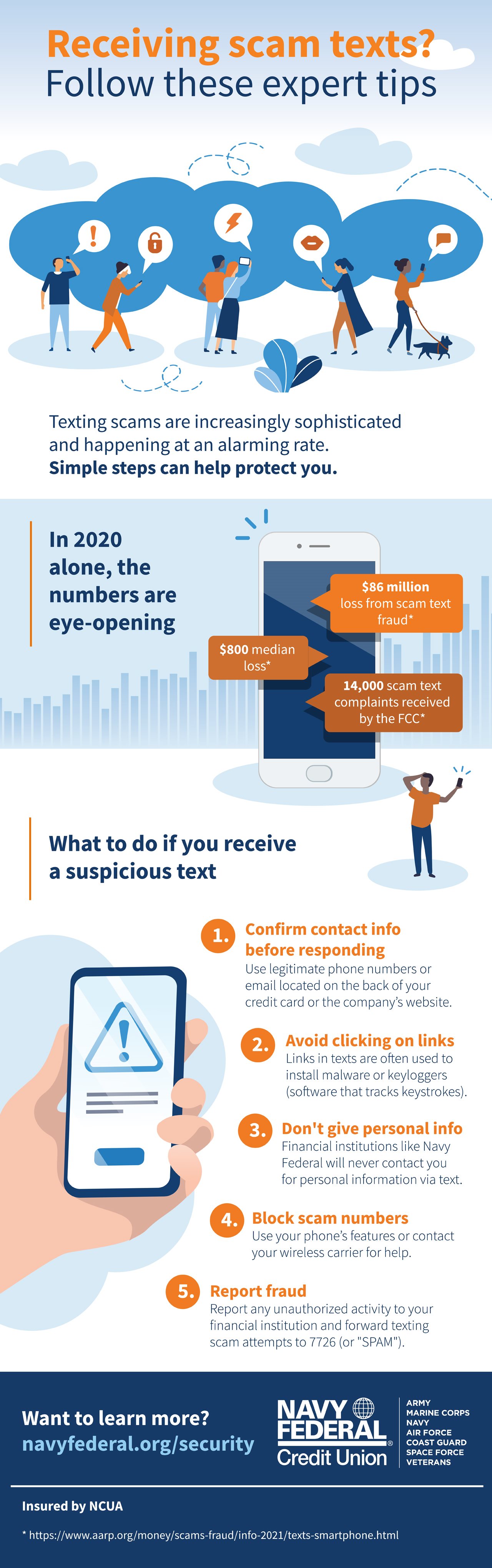
(BPT) – Text message phishing, or SMiShing, is a text message scam that can compromise your finances and your identity. According to the Federal Trade Commission, popular tactics include asking to verify purchases, claiming issues with payment information, and offers to claim prizes or gift cards. With a little bit of caution, you can take steps to protect yourself, such as these tips from Navy Federal Credit Union.

3 insights into how your brand can entertain the young generation

2021-09-29T11:41:00

(BPT) – The brands of today are engaging with Gen Z by tapping into their vibrant personalities and sense of fun. Instead of using traditional marketing tools that young people have grown tired of, adept brands are utilizing modern entertainment channels that help their message stand out.

To come across as a ‘fun brand,’ it’s crucial to identify what the youth of today find entertaining. Here are some business insights into the unique entertainment cultures of the leading generation, and how they could fit into your next brand campaign.

1. Hand over the mic

Gen Z are known for their passion for expressing creativity online. For them, generating content is as much fun as consuming it, perhaps even more so. So, to effectively target Generation Create, try reverse tactics: Instead of handing over completed content, invite them to finish it off for you through their knack for content creation.

Brand Co-Creation: With your collaborative campaigns, let the younger generation co-create your brand with you. There are various ways such a campaign could go, from receiving innovative product ideas and designs to giving young consumers the creative freedom to make your digital branded content for you.

Empowering with Purpose: To maximize engagement, ask them to exclusively put out content they actually care about. Remember, this generation is all about authenticity, so let them speak up about the things that genuinely matter to them. LG, for instance, hosted a collaborative film project encouraging young adults and teens to share their life’s good moments. This straightforward message resonated with 531 young creators for making a final film that received overwhelmingly positive responses from the critics and the public. LG also provided an opportunity to make a song with Charlie Puth for a few winners among a total of 1,092 entries by hosting the Life’s Good Music project.

2. Make a Connection with Branded Challenges

Connection is an important part of the leading generation’s entertainment. Especially in these pandemic times, young people are searching for ways to make engaging online connections and have fun at the same time — hence, the rise of viral challenges on online platforms such as Instagram and TikTok.

Keep it Simple: Jumping on this viral online challenge trend is a great way to build brand touchpoints with young consumers, but make sure it’s easy for them to get involved. Keep in mind that you’re targeting a digital-native generation living daily in a flux of content, and that their attention span can waver.

Go Viral with Music: Most challenges that go viral use an amazing backing track. A well-thought-out song can bolster user engagement while promoting brand identity through a memorable sensory experience. Take note of LG’s #LifeisGoodDance TikTok challenge, which launched this month. The bright, catchy song is easy to dance to while still perfectly embodying the company’s cheerful Life’s Good message.

3. Don’t Overlook Gamers

For younger generations, gaming is not only a means of entertainment but a new social platform to meet and hang out with friends. Gaming services like Twitch and Steam have been growing exponentially and quick-thinking brands have already carved out parts of the seemingly endless marketing potential that exists in this space.

Always think Ethically: For brand collaborations undertaken on gaming platforms, make a careful and informed decision on which creators send out the right message to your audience. Consider the creator’s reputation among platform users to avoid any backlash that might come from what the people that represent you do or say.

Mashing Events with Gaming: Young gamers cater to shared experiences that offer connection and excitement, which is why brands are more than ever using gaming platforms as the venue of promotional events. Take Travis Scott’s collaboration with Fortnite — the in-game concert, featuring visual and physical tricks to bring out the party spirit, engaged over 27.7 million users. Another brand experimenting with the gaming space was LG Electronics, and its U.S. office showcased an epic Fortnite battle between Megan Fox and DJ Khaled in its Only OLED campaign.

Creative, more connected than ever and able to reinvent social spaces, this unique generation is undoubtedly hard to reach — but if you succeed in doing so, their support becomes the cornerstone of a lasting brand.

Expert Series: What can you learn from the brain of a planner?

2021-09-29T07:01:00

(BPT) – By Luca Cazzanti, director of data science at Zulily

“The early bird catches the worm” is an old adage that implies with proper planning you’ll improve your chances at success, but new research about the brain of the planner found that it’s just as much about what you don’t want as what you do want. In fact, avoiding stress and managing anxiety are key factors in how people choose to tackle their to-do lists and other life responsibilities.

What are the driving factors behind planning versus its antithesis, procrastination? What are the benefits and drawbacks? Can these behaviors change? As a business serving millions of moms daily, what insights about planning can help us create a better experience for our customers?

These questions and the lack of research about planning and its benefits are what inspired our company, online retailer Zulily, to commission a study exploring how people are emotionally, cognitively and interpersonally affected by planning compared to procrastinating. Our focus audience was moms, because as heads of households and primary decision-makers for their families, moms often have the most responsibility for planning.

The Brain of the Planner study

Procrastination as a behavior has been widely researched, but planning has been far less studied. Zulily wanted to take a comprehensive approach to the research, so we commissioned third-party researcher Engine to conduct quantitative and qualitative research into planning.

The study began with an online survey with 2,000 U.S. mothers of children aged 0-17, who were classified as either a Planner or a Procrastinator based on how frequently they reported experiencing procrastination-like tendencies, like how often they put off until tomorrow something they intended to do today.

Following completion of the survey, respondents were elected into a Digital Hive, an online qualitative pop-up community of 100 Planners and 100 Procrastinators. During this phase, participants spent a week engaging in a variety of storytelling and video- and photo-based tasks to understand the motivations and emotions connected to planning and procrastination behaviors. For example, moms were asked to debate the topic and take a pro or con side to the phrase “nothing good ever comes from doing something last minute” — and write out their responses. Another activity included putting themselves in a planning scenario where they were asked to shop for the back-to-school season in June.

Their responses to each activity were written down or recorded on webcam, which allowed researchers to capture content that would be submitted for analysis to understand the emotions behind the responses.

In total, respondents contributed 515,548 words of storytelling, which researchers ran through a linguistic coding platform developed by Relative Insight to uncover the differences in language, words and phrases used by Planners versus Procrastinators.

Then, facial coding was captured using iMotions and Affectiva’s AFFDEX technology, which employs computer vision and deep learning to analyze micro-expressions based on a database of over six million faces from 87 different countries, to tease out how emotional response differs among Planners and Procrastinators.

Key findings: Benefits of planning

Having a planful mindset is consistently associated with positives. From paying bills and scheduling doctor visits to holiday shopping and planning vacations, the survey asked mothers to rate how quickly they tended to address these and other life responsibilities, plus how much stress they felt related to each. The results found that Planners are more likely than Procrastinators to manage these types of responsibilities earlier, and therefore, feel less anxious about them.

Beyond long-term reduced stress, Planners have more positive life outcomes, rating themselves as healthier, happier, more confident and more financially secure compared to their counterparts. This is likely because the ability to plan ahead opens time and headspace for pleasurable pursuits and personal passions, whether that’s exploring a hobby, enjoying time with family or socializing with friends. What’s more, planners also report feeling more respected by those around them.

Linguistic coding of the Hive responses revealed that Planners focused on areas of joy and passion (arts and crafts, travel, cooking, shopping, sports, music and family). Meanwhile, analysis of the words and topics of Procrastinators revealed a tendency towards the sensory and the distractive (eating out, socializing and watching movies), as well as a deep focus on life stresses (work, school, deadlines and money). These topics did not rate for Planners at all.

Despite their perceived differences, the study found evidence that Procrastinators and Planners are driven by a common motivator: anxiety. Both groups use planning and procrastinating behaviors to manage anxiety, but Planners take an active approach to the problem, while Procrastinators use more of an avoidance strategy. For example, researchers found that Procrastinators display anxiety through every stage of a deadline scenario, while Planners self-reported anxiety only toward the last minute.

Occasional procrastination is commonplace and reasonable, so those exhibiting this behavior should not feel stigmatized or shame. We all procrastinate a little bit from time to time. However, habitual procrastination can have adverse effects on one’s life, such as overall higher stress, lower life satisfaction, financial problems and negative impact on sleep, among other things as the study has shown. Understanding how and why one procrastinates and how it makes one feel is an important piece to understanding whether this behavior is negatively impacting one’s personal life and thus can be modified.

Procrastination is a learned behavior, which means it’s a habit that can be modified. The research shows that Procrastinators who want to plan more can use some strategies to adjust their approach and help them develop planning behaviors, so they, too, can reap the benefits. Strategies include making lists, setting reminders, breaking up big tasks into smaller to-do’s, creating superficial deadlines ahead of real deadlines and providing rewards when hitting goals.

What does this mean to businesses?

As a data scientist at Zulily, my work is dedicated to serving our customer, Mom, and her needs. We bring a 1:1 shopping experience to our millions of customers around the world, launching more than 100 sales and thousands of new products every day. My team focuses on understanding how to engage and delight Mom, enabling key functions of her shopping experience through data- and machine learning-based solutions.

With a scale of virtual inventory this sizable, we rely on the use of artificial intelligence, machine learning, data science and cloud computing to deepen personalization and new discovery, serving Mom with a fun shopping experience that takes friction out of exploration and supports her planning needs.

For example, we process billions of clicks from online shoppers every day so we can show customers the products we believe they will be most interested in, helping them discover novel products and brands they may not previously have been aware of. Then we customize the Zulily mobile app and web experience using artificial intelligence-based recommendation models — no two experiences are the same.

As Mom has always been the foundation of our business, we know she understands the importance of saving. Four times as many moms indicate a preference to save $5-$10 per item they buy versus receiving items in two days. They prioritize cost over quickness, because savings are more meaningful to her, her household wallet and the life experiences she can create. The Brain of the Planner study offers a better understanding of how those behaviors impact people emotionally, and confidence that all consumers can adopt planning behaviors and reap real benefits.

This data is key to driving a personalized experience because it impacts almost every experience the customer has with Zulily — and we’re constantly exploring new ways to understand our customers better through rapid experimentation and improvement.

We believe strongly in using data and technology to power our business, and as data scientists and engineers, we strive to use technology to better serve human needs. The Brain of the Planner study is an example of how we are leveraging the latest tools to understand how consumers shop, and the reasons why, which will in turn help us continue to drive data-driven innovation end-to-end in how we engage with our customer.

By revealing the science and benefits of planning through data-driven research, we hope to enable a clearer understanding of human behaviors that may impact retail and consumer trends for years to come.

You can learn more and access the full study at www.zulily.com.

3 credit factors that might affect your auto & homeowner’s insurance premiums

2021-09-22T08:01:00

(BPT) – People think of their credit scores when measuring their “creditworthiness,” like when they’re looking to take out a loan, buy a home or open a new credit card. But did you know your insurance credit score can affect your auto insurance premiums too?

Before auto insurers take you on as a policyholder, they might use your credit score as an indicator to evaluate how likely you are to file a claim. If your score doesn’t fit within their standards, you may get charged a higher premium. On the other hand, some insurance scores are loss ratio models, so they actually rank you based on the probability that you’ll be a more profitable customer.

According to Consumer Reports, the difference in auto insurance premiums related to credit scores can be significant. Drivers who only have “good” scores can end up paying from $68 to more than $500 more annually in comparison to those who have excellent scores.

Moreover, it’s important to know that your credit score is not the only factor that determines your premiums. According to Experian, if you live in Hawaii, California, Massachusetts or Michigan, auto insurers can’t even use your credit information to determine auto insurance premium.

What matters most for your premiums

Insurance companies say that a person’s credit scores help them to better predict their risk of insurance losses. While a score evaluation can seem like a broad judgment, there are often certain factors auto insurers will look at when determining your monthly premium, such as:

How long you’ve had credit

This holds for most insurers and lenders. The longer a person has credit and keeps that credit in good standing, the higher their score. However, while people who’ve had credit longer can stand a good chance at getting a lower premium, it’s not a guarantee. Insurance companies may still view you as a risk if, for example, you have an excellent credit history but a poor driving history.

Your payment history

When you sign up for auto insurance, your provider wants to gauge whether you are in financial stress or not and how likely it is that you will file a claim. So if you regularly pay your bills when they’re due and don’t have any missed or delinquent payments reflected on your score, you should be OK.

However, with life’s unexpected twists and turns, sometimes it’s hard to maintain a healthy credit score, even if your score is historically excellent and you are seen as low risk. Fortunately, many auto insurers understand this and will offer you a reconsideration for the amount of your premium for what they call “extraordinary circumstances.” Some of those circumstances may include:

  • Death
  • Divorce
  • Serious illness/injury
  • Temporary and involuntary loss of employment
  • Military deployment

Situations often vary and insurers often have different policy guidelines. If you’re curious, contact your insurer to see what circumstances they do and don’t consider.

The types of credit you have

Auto insurers, like lenders, want to see the correlation between various factors, such as a good credit mix and a lower credit risk.

Get your credit report before you apply

Applying for insurance can feel daunting. But when you have the right credit information in your hands, you should be able to get a better idea of what to expect. Generally speaking, a strong credit score can help you qualify for lower insurance premiums when you shop around.

Check your free VantageScore credit score here: https://vantagescore.com/consumers/education/tools/free-credit-scores.