Healthy half-time snacking tips from a pro

2018-01-17T14:33:00

(BPT) – Healthy snacking and making good food choices can be difficult any time of the year, but it can be especially tough during the big game. Business Insider reports that only 80 percent of people who start a New Year’s resolution keep that resolution through February. This happens to correspond with the biggest football game of the year and the common food temptations that go along with it — chicken wings, chips and salsa, pizza, not to mention beer.

Bryan Snyder, registered dietitian and nutrition director for the Denver Broncos, who is responsible for keeping the year-round nutrition strategies for the team’s players on track, also knows the pitfalls for the fans. “I advise people trying to eat healthier to follow a sustainable meal plan.”

Snyder describes a sustainable meal plan as one that allows some flexibility to have a meal here and there that might have a higher calorie intake.

“I often see people go from eating a poor diet and choosing unhealthy snacks, in combination with not exercising, to all of a sudden deciding to work out every day and eat perfectly every meal. The issue that can arise from that behavior is that it isn’t a sustainable plan, and it doesn’t allow any room for those big game snacks.”

Snyder’s recommendation is to find a nice middle ground. Allow yourself to sneak in some of those not-so-healthy calories on game day, but also give yourself some healthier options that you can have while keeping a guilt-free conscience.

Snyder’s snack of choice? Pistachios. “Pistachios are loaded with antioxidants and fiber, which will help you feel full and prevent you from overeating during the big game, and give you an immune system boost as well.”

Other healthy options are pita chips with hummus, vegetables with vegetable dip, bison or turkey burger sliders, popcorn, baked sweet potato fries, or a cup of turkey chili. For those who can’t imagine game day without wings, Snyder suggests baking the wings instead of deep-frying to replace some of the unwanted and unnecessary fats.

“Oftentimes we want to eat healthier, but we simply don’t know what to eat,” says Snyder. “All of these options are healthy swaps for satisfying game day enjoyment.”

Snyder recommends, too, having a backup plan if you’re going over to someone else’s house to watch the game, as this can be one of the biggest pitfalls to straying from a diet. “Don’t give yourself an excuse to eat poorly. Take along some portable healthy snacks — such as healthy bars, trail mix or pistachios — to be sure you have options and don’t indulge in hours of unhealthy snacking.”

While it is certainly understandable and sometimes difficult to eat healthy during the big game, it is something that can be done with the right planning and preparation, according to Snyder.

“One other common misconception about healthy snacking is that you have to sacrifice great taste,” warns Snyder. “Follow this game plan, and I guarantee you won’t.”


Do you know all of your psoriasis treatment options?

2018-01-25T08:01:00

(BPT) – Dru Riddle of Fort Worth, Texas, is one of the estimated 7.5 million people afflicted with psoriasis across the United States. A nurse anesthetist and university professor, Riddle understands first-hand the importance of receiving the proper treatment as quickly as possible and treating the condition with safe, effective medicine. Diagnosed with psoriasis in 2003 and psoriatic arthritis (PA) in 2010, Riddle underwent the treatment trials and errors common to many sufferers of PA before he was connected with a health care provider who prescribed a more aggressive plan that included biologics. Before doctors put him to a biologic therapy, Riddle suffered for several years with skin lesions and joint pain. “Finally I was switched to an injectable biologic medication,” Riddle says. “Those medications have really helped control my disease and the symptoms.”

A condition that is more than skin deep

Psoriasis often presents as patches of itchy, flaky skin, while PA — which affects about a third of psoriasis patients — results in joint swelling and pain, which may cause permanent damage. Both conditions are a product of the body’s immune system attacking itself instead of the foreign invader that should be its target.

PA can usually be identified by psoriasis-like skin inflammations. However, sometimes the joint pain and swelling appear first. This can make it difficult for doctors to properly diagnose the condition.

Initially, Riddle’s condition was treated topically with little to no effect. The relief he found with the right medicines was life-changing and he has vowed to help others with PA find the right care.

“I recommend anyone with PA be extremely aggressive with their treatment,” Riddle says. “The risks of not treating your PA are so much greater than treating it.”

Understanding biosimilars

In his quest for the right treatment regime, Riddle was diligent about his self-care and joined a number of clinical trials for the types of biologics that have been so integral to his treatment plan. It was thanks to his proactive approach to treating his condition that he started learning more about biosimilars.

Biosimilars are safe, effective and affordable alternatives to conventional biologic medicines, similar to generic offerings in other medicinal categories. Widely used in Europe, biosimilars have faced a biologics-dominated market in the United States that has so far been successful in limiting their availability. Expanding the biosimilars market in the United States will require manufacturers, the government and regulatory groups to work together to craft new policies, making access to these potentially life-changing treatments their top priority.

Riddle applauds the option of safe, effective and affordable biosimilars for patients.

“The expense of the biologic medication can be prohibitive — they’re very costly,” Riddle says. “So some people may benefit from a more affordable biosimilar medication. That medication has the same efficacy, meaning it works just as well as the biologic.”

Learning more about your options

“There’s no need to be afraid of the medicine,” says Christine Simmon, Executive Director of The Biosimilars Council, a group working to support the broad components of the biosimilar industry and enabling increased access to safe, effective and affordable biosimilar medicines. “Learn more about your options, talk to your doctor and make sure you’re receiving the medication that is the most effective treatment for your condition.”

If you have psoriasis and/or PA, you deserve to know all of your options, including biosimilars. Your doctor can provide you the information you need on these treatment options. To prepare for your next doctor’s visit and have your initial questions answered, visit http://biosimilarscouncil.org/ today.


Why probiotics should be part of your routine in 2018

2018-02-01T09:01:00

(BPT) – At the turn of the calendar, many people begin taking action on what they plan to accomplish in the new year. Some have resolved to take up a new hobby, to save more money, to travel and, of course, to improve their health.

New eating plans and gym memberships are common steps people take toward their health goals, but there are other effective ways to improve your health — like adding probiotics to your daily regimen. You’ve likely heard of probiotics before, but do you know how they benefit your health and how to select the right one for you? This article can help.*

What is a probiotic?

Before delving into how probiotics can help your body, let’s first explain what they actually are. In the simplest terms, probiotics are the good bacteria (live microorganisms) that live inside your digestive tract and help your body to function properly. There are many different types of probiotics, and each one performs a different function in your digestive system.*

The billions of bacteria that live inside your digestive tract are often called “microflora,” or more correctly, “microbiota,” and the environment that they work together to create inside the body is called the microbiome. Maintaining proper balance within your microbiome is crucial for overall health.*

How do probiotics help?

The beneficial bacteria in the digestive tract are influenced by a variety of factors such as stress, medication use, traveling and poor diet. Therefore, it is important to prioritize diet and lifestyle to maintain proper gut ecology. Probiotics are also effective for maintaining healthy populations of beneficial bacteria. Numerous clinical studies have shown probiotics have positive effects on health, including assisting in the digestion of food and the absorption of nutrients and contributing to immune system health. Some studies have suggested that certain beneficial strains may also support brain function.*

Probiotics in your diet

Probiotics are found in many foods you may enjoy every day including yogurt, kefir and sauerkraut. However, due to food processing and packaging, maintaining the stability and potency of the live beneficial bacteria in these foods can be a challenge. Including probiotic supplements in your routine ensures a consistent dose to help you and your family maintain optimal health.*

Finding the right probiotic supplement for you

Probiotic supplements can help support health at any age — from infancy to adulthood. When it comes to selecting the probiotics for you and your family, the best options are those that are formulated based on clinical research. Genestra Brands offers a comprehensive line of clinically studied, effective probiotic strains that have been recommended by doctors for more than 20 years. With more than 25 gluten-free, non-GMO formulas, Genestra Brands’ probiotics offer personalized support to help make your New Year’s resolution of becoming a healthier you that much easier.*

Before you begin taking any type of probiotic, speak with your doctor and/or pharmacist about whether they are safe and right for you.

To learn more about probiotics designed with you in mind, visit genestrahmf.com.

* These statements have not been evaluated by the Food and Drug Administration. This product is not intended to diagnose, treat, cure or prevent any disease.


Giving a Voice to Caregivers & Patients Fighting Liver Cancer

2018-01-12T15:51:00

(BPT) – Like many people, you are likely aware of the term “liver cancer” and may have some perceptions of this disease, but you may have less information than you think. Chances are, though, you have never heard of hepatocellular carcinoma (HCC), even though it’s the most common type of liver cancer and the fastest-growing cause of cancer death in the United States.1,2,3

Andrea Wilson was in a similar situation when her younger sister Adrienne was diagnosed with HCC. Once Andrea understood more about this devastating disease, she made it her mission to tell Adrienne’s story and to help others who suffer from this cancer.

More than sisters

Andrea and Adrienne shared an inseparable bond. As Adrienne’s legal guardian, Andrea was both Adrienne’s parent and sister.

“Adrienne was simply the best—my everything,” said Andrea, president and founder of Blue Faery: The Adrienne Wilson Liver Cancer Association, a leading liver cancer advocacy group. “She taught me the true meaning of unconditional love.”

One day, Adrienne felt severe pain in her right side. Six hours later, an ER doctor told Andrea and Adrienne she had tumors in her liver and lungs. Within two days, Adrienne was diagnosed with stage IV HCC.

“Our lives changed forever when we heard those eight words, ‘She has tumors in her liver and lungs,’” Andrea said. From the time she felt the pain in her side to the moment she died, Adrienne lived 147 days.

Raising awareness

According to a survey fielded by Bristol-Myers Squibb Company, in collaboration with Blue Faery, nearly half (47%) of people who care for someone with advanced stage liver cancer said they were aware of liver cancer but not very knowledgeable.4 In fact, Andrea never would have expected that Adrienne could have been at risk of developing the disease. Before that day, she believed heavy alcohol use was the only cause of this cancer.

She isn’t alone.

Many caregivers (43%) of patients with advanced stage disease did not think their loved one was at risk. One of the reasons may be that many of these people (72%), like Andrea, believed that heavy alcohol use was the most common risk factor for liver cancer.4 In reality, chronic infection with Hepatitis B virus (HBV) or Hepatitis C virus (HCV) is the most common risk factor for liver cancer.3,5

Caregivers may also face the challenge of making critical treatment decisions with their loved one. However, more than half of caregivers of people with advanced stage liver cancer surveyed (58%) admit it’s hard to understand what treatment options are available for their loved one. Nearly all of these caregivers (95%) believe more information needs to be available about different types of liver cancer treatment options and/or areas of research, and eight in 10(82%) wish they knew where to go to find this information.4

Making this type of information available became Andrea’s mission when she founded Blue Faery to support people affected by primary liver cancer, specifically HCC.

Additionally, according to the caregivers surveyed, 90% wish there were more public awareness of the seriousness of a liver cancer diagnosis, and 77% think liver cancer doesn’t get as much attention as other cancers.4

To address the needs these caregivers identified in the survey, Bristol-Myers Squibb and Blue Faery have launched LiverCancerOutlook.com, a website offering information about liver cancer and providing links to additional resources for patients and caregivers.

“Before Adrienne passed away, she said that cancer added to the story of her life. She believed it contributed to her character and sense of humor,” Andrea said. “I could not save Adrienne from liver cancer, but I have made it my mission to tell her story and to help others suffering from this devastating disease.”

For more information, or to share with a loved one, visit LiverCancerOutlook.com.

Blue Faery was compensated by Bristol-Myers Squibb for its time spent as an advisor on the Liver Cancer Outlook Survey and related content. Bristol-Myers Squibb does not endorse and is not responsible for information provided by third-party organizations.

References

1. American Cancer Society. Cancer Facts & Figures. 2017. Atlanta: American Cancer Society; 2017.

2. Islami F, Miller K, Siegel R, et al. Disparities in Liver Cancer Occurrence in the United States by Race/Ethnicity and State. Ca Cancer J Clin 2017 Jul 8;67(4):273–289.

3. Mittal S and El-Serag HB. Epidemiology of hepatocellular carcinoma: consider the population. J Clin Gastroenterol. 2013 Jul; 47 Suppl:S2-6.

4. Bristol-Myers Squibb. Bryter. U.S. Survey of Liver Cancer Caregivers. July 24, 2017 – August 31, 2017.

5. American Cancer Society. Liver Cancer Risk Factors. https://www.cancer.org/cancer/liver-cancer/causes-risks-prevention/risk-factors.html. Accessed December 18, 2017.


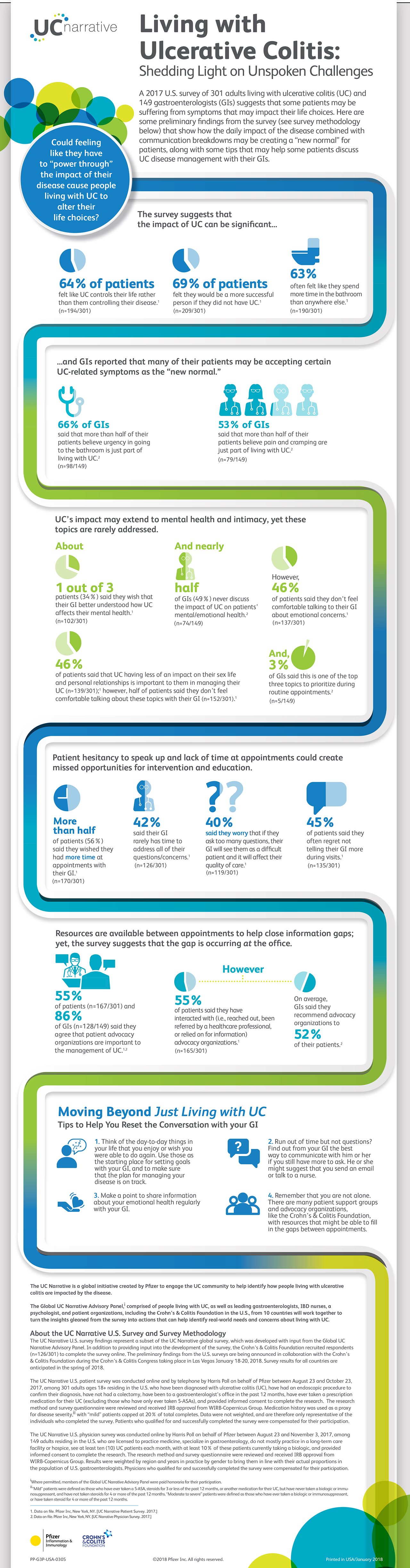
Living with Ulcerative Colitis: Shedding Light on Unspoken Challenges [Infographic]

2018-01-22T08:01:00

(BPT) – A 2017 U.S. survey of 301 adults living with ulcerative colitis (UC) and 149 gastroenterologists (GIs) suggests that some patients may be suffering from symptoms that may impact their life choices. Here are some preliminary findings from the survey (see survey methodology below) that show how the daily impact of the disease combined with communication breakdowns may be creating a “new normal” for patients, along with some tips that may help some patients discuss UC disease management with their GIs.


Protecting grandparents from flu

2018-01-23T15:11:00

(BPT) – Grandparents today play an active, important role in families’ lives, serving as caregivers, playmates and educators for their grandchildren. It’s important to protect yourself with an annual flu vaccine so you can continue doing the things you love with your families!


Oh, baby! 5 unexpected (but common) symptoms experienced during pregnancy

2018-01-30T09:01:00

(BPT) – Pregnancy is an exciting time in a woman’s life, filled with countless physical, emotional and lifestyle changes. Pregnant women often do research, read books or consult friends and family to determine what to expect during those nine months and how to best combat the symptoms that may arise. While issues like morning sickness and cravings are to be expected, there are several uncomfortable, but common, effects soon-to-be moms may be less likely to anticipate.

“A woman is going to experience numerous changes to her body during pregnancy,” says Dr. Alyssa Dweck, an OB-GYN, author and expert on women’s health. “Although there is abundant information about issues like backaches and morning sickness, there are a number of common symptoms women are less inclined to talk about because they either consider them taboo or embarrassing.”

While each woman’s pregnancy experience will be unique, Dr. Dweck shares some of the lesser-known, but common, health nuisances to expect when expecting:

1. Constipation

Some common causes of constipation among pregnant women include increased progesterone levels, which influences intestinal motility, increased pressure from the growing uterus and the recommended supplementation of iron. To help diminish constipation, women can try increasing their fiber and fluid intake and limit iron supplements to three times a week.

2. Yeast infections

The hormonal changes that come with pregnancy often increase the chance of developing a vaginal yeast infection. However, according to a 2016 Danish nationwide cohort study, even a single, low dose of fluconazole (the leading prescription pill to treat yeast infections) may increase miscarriage risk. Instead, Dr. Dweck recommends MONISTAT 7 for vaginal yeast infections, as it relieves symptoms four times faster and works on more of the most common strains of yeast than the prescription oral pill. Nevertheless, women should always check with their own healthcare provider before using any treatment during pregnancy.

3. Heartburn

Heartburn and indigestion are most frequent during the third trimester, as the growing uterus places pressure on the stomach and the muscle tone of the esophagus relaxes. To help minimize heartburn, eat smaller, more frequent meals throughout the day, sit or stand after a meal and avoid spicy, greasy and fatty foods. OTC antacids are typically safe, but it is important to speak to an OB-GYN before taking.

4. Varicose veins

Many women develop varicose veins during pregnancy. As blood volume increases and the uterus enlarges, additional pressure is put on the veins in the pelvis, lower extremities and the rectal area. Elevate the legs to improve circulation, avoid sitting or standing in the same position for extended lengths of time and try to exercise regularly, if possible.

5. Body and facial hair growth

Hair is likely to grow faster and thicker during pregnancy on places other than just the head. Higher levels of estrogen extend the growth phase of hair, leading to less shedding and denser locks. Safe ways to get rid of these unwanted hairs during pregnancy include tweezing, waxing and shaving.

Regardless of whether a result of pregnancy is considered normal, pregnant women should readily consult their OB-GYN if they experience any changes or if they are looking for treatment solutions. Though health nuisances are bound to pop up during pregnancy, there are simple solutions to combat them so women can make the most of this wonderful time and prep for the arrival of baby. For more information, visit Monistat.com.


New Treatment Option for People With Cystic Fibrosis

2018-02-20T12:01:00

(BPT) – For patients with cystic fibrosis (CF) 12 years and older with certain mutations

At 17 years old, Taylor Brown is a straight-A student balancing a 10-hour work week and competitive dancing. She is also one of approximately 30,000 Americans living with cystic fibrosis (CF), a progressive genetic disease that makes it difficult to breathei.

Taylor has been taking a combination of medicines to treat and manage her disease since her diagnosis when she was six days old. In the U.S., approximately 1,000 people are diagnosed with CF each yeari. CF is a disease you are born with.

“Cystic fibrosis has always been a part of my life, but I don’t let it define me,” said Taylor. “I’m still able to do the things I love, like competitive dancing and advocating for other people with cystic fibrosis.”

There is no cure for the life-shortening disease, but therapies are available for some people that target the underlying cause of CFii. CF is caused by a reduction in the quantity and/or function of cystic fibrosis transmembrane conductance regulator (CFTR) proteins resulting from gene mutations that leads to the buildup of mucus in organs, such as the lungsi.

After talking with her treatment team and family, Taylor participated in a clinical trial for SYMDEKO™ (tezacaftor/ivacaftor and ivacaftor). SYMDEKO was recently approved by the Food and Drug Administration (FDA) for the treatment of cystic fibrosis (CF) in patients aged 12 years and older who have two copies of the F508del mutation or who have at least one mutation in the CF gene that is responsive to SYMDEKO.

“SYMDEKO is a new treatment option that helps the body’s CFTR proteins work better,” said Patrick Flume, M.D., Director of the Cystic Fibrosis Program at the Medical University of South Carolina. “Scientific innovations have enabled medicines to target cystic fibrosis at its root. I encourage patients and their families to work with their doctors to understand how these developments may help them.”

SYMDEKO is made up of two medicines that work to help increase the quantity and function of CFTR protein in certain people with CF. The FDA approval of SYMDEKO was based on results from two global Phase 3 trials in approximately 750 patients, which demonstrated the safety and efficacy of SYMDEKO in people with CF ages 12 and older who had certain mutations in the CFTR gene.

“I’m excited about new discoveries and research in cystic fibrosis, because they have a very real impact on my life and the lives of others with cystic fibrosis,” said Taylor.

Indication and Important Safety Information for SYMDEKO tablets (tezacaftor 100 mg/ivacaftor 150 mg and ivacaftor 150 mg)

What is SYMDEKO (tezacaftor/ivacaftor and ivacaftor)?
  • SYMDEKO is a prescription medicine used for the treatment of cystic fibrosis (CF) in patients aged 12 years and older who have two copies of the F508del mutation, or who have at least one mutation in the CF gene that is responsive to treatment with SYMDEKO.
  • Talk to your doctor to learn if you have an indicated CF gene mutation.

It is not known if SYMDEKO is safe and effective in children under 12 years of age.

Important Safety Information

Do not take SYMDEKO if you take certain medicines or herbal supplements such as:
  • antibiotics such as rifampin (Rifamate®, Rifater®) or rifabutin (Mycobutin®)
  • seizure medicines such as phenobarbital, carbamazepine (Tegretol®, Carbatrol®, Equetro®) or phenytoin (Dilantin®, Phenytek®)
  • St. John’s wort

Talk to your doctor before taking SYMDEKO if you take any of the medicines or herbal supplements listed above.

Before taking SYMDEKO, tell your doctor about all of your medical conditions, including if you:
  • have or have had liver problems
  • have kidney problems
  • are pregnant or plan to become pregnant. It is not known if SYMDEKO will harm your unborn baby. You and your doctor should decide if you will take SYMDEKO while you are pregnant
  • are breastfeeding or planning to breastfeed. It is not known if SYMDEKO passes into your breast milk. You and your doctor should decide if you will take SYMDEKO while you are breastfeeding

SYMDEKO may affect the way other medicines work, and other medicines may affect how SYMDEKO works.

Tell your doctor about all the medicines you take, including prescription and over-the-counter medicines, vitamins, and herbal supplements, because the dose of SYMDEKO may need to be adjusted when taken with certain medicines.

Especially tell your doctor if you take:
  • antifungal medicines such as ketoconazole (e.g., Nizoral®), itraconazole (e.g., Sporanox®), posaconazole (e.g., Noxafil®), voriconazole (e.g., Vfend®), or fluconazole (e.g., Diflucan®)
  • antibiotics such as telithromycin (e.g., Ketek®), clarithromycin (e.g., Biaxin®), or erythromycin (e.g., Ery-Tab®)
What should I avoid while taking SYMDEKO?
  • SYMDEKO can cause dizziness in some people who take it. Do not drive a car, use machinery, or do anything that needs you to be alert until you know how SYMDEKO affects you.
  • Avoid food or drink that contains grapefruit or Seville oranges while you are taking SYMDEKO.
What are the possible side effects of SYMDEKO?
SYMDEKO can cause serious side effects, including:
  • High liver enzymes in the blood have been reported in people treated with SYMDEKO or treated with ivacaftor alone. Your doctor will do blood tests to check your liver:
    • before you start SYMDEKO
    • every 3 months during your first year of taking SYMDEKO
    • every year while you are taking SYMDEKO
  • Your doctor may do blood tests to check the liver more often if you have had high liver enzymes in your blood in the past.
  • Call your doctor right away if you have any of the following symptoms of liver problems:
    • pain or discomfort in the upper right stomach (abdominal) area
    • yellowing of your skin or the white part of your eyes
    • loss of appetite
    • nausea or vomiting
    • dark, amber-colored urine
  • Abnormality of the eye lens (cataract) in some children and adolescents treated with SYMDEKO or with ivacaftor alone. If you are a child or adolescent, your doctor should perform eye examinations before and during treatment with SYMDEKO to look for cataracts.
The most common side effects of SYMDEKO include headache, nausea, sinus congestion, and dizziness.

These are not all the possible side effects of SYMDEKO. Call your doctor for medical advice about side effects. You are encouraged to report side effects to FDA at 1-800-FDA-1088.

Please click here to see the full US Prescribing Information for SYMDEKO.

To learn more about SYMDEKO, visit www.SYMDEKO.com.

i Cystic Fibrosis Foundation. About Cystic Fibrosis. Available at https://www.cff.org/What-is-CF/About-Cystic-Fibrosis/. Accessed February, 2018.
ii Pettit, RS and Fellner C. CFTR Modulators for the Treatment of Cystic Fibrosis. P T. 2014 July; 39(7): 500-511. https://www.ncbi.nlm.nih.gov/pmc/articles/PMC4103577/.

© 2018 Vertex Pharmaceuticals Incorporated | VXR-US-23-00149 | 02/2018


Visit Durban for an unforgettable South African experience

2018-02-08T10:32:00

(BPT) – Think of South Africa, and images of majestic savannas and roaming wildlife come to mind. A South African safari is an unforgettable experience, but no visit to the country is truly complete without a cultural immersion. The vibrant city of Durban combines the best of both worlds. Located along the Indian Ocean coast an hour from Johannesburg by air, Durban offers an eclectic array of activities where you can explore the city’s significant role in world history, the rich heritage of its Zulu people, and innumerable natural wonders — from the beach to the bush.

Experience authentic Zulu culture

Named for its dramatic surrounding landscape, the Valley of 1,000 Hills has been home to the Zulu people, South Africa’s largest ethnic group, for centuries.

Visitors can take an organized tour deep into tribal lands to experience Zulu culture with its exuberant ceremonies, traditional music and dancing. You’ll learn about Zulu beliefs and healing practices, break bread with local families and learn the hidden meanings behind their colorful beadwork. You can even arrange one-on-one sessions with the village healer or spend the night with a Zulu family in their home.

Walk in Gandhi’s and Mandela’s footsteps

Not everyone is aware that Mahatma Gandhi’s life work was inspired by his experiences in Durban. In 1893, he arrived as a young lawyer, and the discrimination he witnessed personally and against his fellow Indians drove him to start his worldwide movement of passive resistance fighting for the rights of the Indian population. At the Phoenix Settlement, you will see Gandhi’s house and the printing press he used to publish his newspaper, The Indian Opinion. Many of the more than one million Indians living in the city make the pilgrimage to this historical site alongside visitors from around the world.

Five years after his death, Nelson Mandela remains South Africa’s most revered public figure. 2018 marks a year-long celebration of his life and what would have been his 100th birthday on July 18. Honor his work when you’re in Durban by visiting the Nelson Mandela Capture Site, at the exact spot where he began his “Long Walk to Freedom” after being arrested for anti-Apartheid activism in 1952. Visit the striking monument and educational exhibition walking you through Mandela’s life and role in establishing a democratic South Africa.

Hit the beach at Umhlanga Rocks

Umhlanga Rocks, Durban’s laidback beach village, is on a picturesque stretch of the Indian Ocean. It beckons visitors with a scenic promenade passing by local landmarks including Umhlanga Lighthouse and Whale Bone Pier. A walkable downtown makes dining and nightlife easily accessible from the area’s many boutique hotels and guesthouses, and opportunities to get on the water abound — from surfing to deep sea fishing, scuba diving, whale watching and kiteboarding.

Discover an underwater wonderland

Consistently rated one of the top warm water diving and snorkeling sites in the world, Aliwal Shoal is also the spot to get up close and personal with blacktip reef sharks. Those brave enough can swim or dive alongside these mysterious creatures in the open ocean, but viewing from inside a cage is always an option.

Experience a Big Five safari

Back on land, the South African bush is less than four hours away by car. Private game reserves offer high-end safari lodge accommodations, minimal crowds and optimal chances for getting the perfect photos of the “Big Five” — elephants, rhinos, water buffalo, lions and leopards. In iSimangaliso Wetland Park, a UNESCO World Heritage Site, hippos, crocodiles, pelicans and flamingos roam Lake St. Lucia, while elephants, giraffes and leopards inhabit the adjacent grasslands.

Visit www.durbanexperience.co.za to learn more.


7 things you didn’t know about adult vaccination in the U.S.

2018-02-08T10:31:00

(BPT) – Even though vaccines are one of the greatest health innovations of the last century, a new survey shows that among some adults in America there is a lack of awareness about the immunizations they need as adults.

According to an online survey of 1,000 American adults aged 18 years and older, there is a critical gap between awareness and action when it comes to vaccination.1

Adults should talk to their healthcare providers about the Centers for Disease Control and Prevention’s list of recommended adult vaccines. The best way to protect yourself and those closest to you is to vaccinate for life. So, ask your doctor if you are up to date on all your vaccines. It’s a simple step that can help protect you, your family and your community.

1. Adults may think they know, but they have no idea

Nearly half of adults consider themselves to be “very” or “quite” knowledgeable about vaccines,2 yet fewer than three in ten Americans are aware of the vaccines recommended for adults their age.1

2. Vaccines are not just for kids

Most of us are familiar with the importance of vaccination during childhood; however, vaccination is equally important throughout adulthood, as the immune system begins to decline with age.3 Immunosenescence, also known as age-related decline in immunity, significantly contributes to the susceptibility of older adults to serious, yet preventable conditions including: influenza, pneumonia and shingles.3 Despite this, 65 percent of adults are not fully up to date on their vaccines.1

3. Vaccines may help save your life

Six million deaths are prevented globally each year as a result of vaccination. If global vaccination rates increased, even more deaths could be prevented.4

4. Vaccination may prevent unnecessary death

Vaccine-preventable diseases can cause long-term illness and even death. In fact, 99 percent of the more than 50,000 deaths from vaccine-preventable diseases that occur every year in the U.S. are in adults.5

5. Vaccination may protect against more than just vaccine-preventable diseases

Vaccination can also protect against other health problems. In fact, vaccinating against the flu can also help protect people against heart attacks and stroke.6

6. Vaccine knowledge may supersede action

Despite longstanding recommendations for the use of many vaccines, adult vaccination rates remain low. In 2015, the flu vaccination rate for adults aged 19 and older was less than 45 percent, Tdap (Tetanus/diphtheria/pertussis) vaccination rate for adults was only about 23 percent, and shingles vaccination rate for adults 60 and older was just about 31 percent.7

7. Vaccination may impact all of us in unexpected ways

Medical costs related to vaccine-preventable diseases in older adults are high and are expected to grow substantially in the coming years. One study forecasts U.S. medical costs for Americans 65 and older in the Medicare population to be $4.74 billion annually by 2030 for just one vaccine-preventable disease.8


1 Vaccinate for Life consumer survey. Exploration based on Q9. Which of the following statements best describes how up-to-date you consider yourself to be on vaccinations. I am aware of the vaccines recommended to adults of my age and have received all of these recommended vaccinations. Total base all respondents n=1000.

2 Vaccinate for Life consumer survey. Exploration based Q4A. How knowledgeable do you consider yourself to be on adult vaccinations, also referred to as immunizations? Are you … very knowledgeable, quite knowledgeable, not quite knowledgeable, not at all knowledgeable. Total base all respondents n=1000.

3 American College of Physicians et al. Aging and Immunity: The Important Role of Vaccines, 2017. Available at https://www.acponline.org/system/files/documents/clinical_information/resources/adult_immunization/aging_and_immunity_guide.pdf.

4 Ehreth J. The global value of vaccination. Vaccine. 2003;21:596-600.

5 Rice HR, Varkey P. What immunizations should I offer to my patients? A primer on adult immunizations. J Assoc Physicians India. 2011; 59:568-72.

6 Hung IFN et al. Prevention of acute myocardial infarction and stroke among elderly persons by dual pneumococcal and influenza vaccination: a prospective cohort study. Clin Infect Dis. 2010; 51:1007–1016.

7 U.S. Centers for Disease Control and Prevention. Surveillance of Vaccination Coverage Among Adult Populations — United States, 2015. MMWR Surveill Summ. 2017; 66(11):1–28.

8 Varghese L et al. The temporal impact of aging on the burden of herpes zoster. BMC Geriatrics. 2017;17:30.