Forward-thinking programs get kids to eat better

2018-02-22T06:01:00

(BPT) – They say that breakfast is the most important meal of the day. But for millions of low-income children across the country, the low-cost or free lunch they get at school is the most nutritious, most filling meal they will eat.

In 2016, over 30 million kids across the U.S. received low-cost or free lunches at their school. With such a wide-ranging impact, school meal programs play a huge role in the well-being of our nation’s young people.

According to Wilder Research, nearly one in six children in the state of Minnesota live in food-insecure households. Many of these kids rely on school lunch to get the nutrients they need. To make sure these needs are met, one school district in the state has been blending nutrition with trends in popular culture to create a dynamic program that is getting kids excited about healthy food while also creating better eating habits.

Jr. Iron Chef

Question: In an urban school district, how can the idea behind a popular television show be used to raise awareness of healthy meal options?

In essence, this is what happened when Miguel Lopez, a seventh-grader at Anwatin Middle School, along with seven other teams and 16 other students, competed alongside eight professional chefs in one of Minneapolis Public Schools’ “Jr. Iron Chef” competitions.

Modeled after the popular television show, where teams compete to create the most appetizing dish, this three-year-old program was designed in cooperation with Cargill to teach students about good nutrition and meal preparation. Students from across the district were invited to compete — just as popular celebrity chefs on TV do — in live cooking competitions.

“This night was not so much about the competition, but about what these students have learned about how to prepare good meals on their own,” said Minneapolis Public Schools’ Director of Culinary and Wellness Services, Bertrand Weber. “We wanted to apply the Iron Chef concept to help improve our students’ health and well-being. Yes, it was a cool night, but the hope is that they will go home and do this for themselves and their families versus choosing less healthy meal options.”

While the Jr. Iron Chef competition was getting students all over the district revved up, Cargill and Minneapolis Public Schools were weaving another popular culinary trend into the district’s nutrition and wellness programs: food trucks.

Nutrition on wheels

Parked outside the venue where Jr. Iron Chef was held was a shiny, new food truck purchased with a recent $75,000 grant from Cargill to Minneapolis Public Schools. This is the school district’s second food truck. The first one hit the road in 2013 and became so popular that it quickly exceeded capacity.

The trucks are staffed by the school district’s nutrition and culinary staff, to bring nutritious meals to students, especially when school is not in session.

The trucks also appear at district-run wellness seminars and cooking demonstrations.

“The value of these food trucks has been recognized by Minneapolis Public Schools and the U.S. Department of Agriculture (USDA),” said Cargill Vice President of Corporate Responsibility Michelle Grogg. “It’s been a successful strategy that community and state partners have found to improve their capacity to reach food-insecure children when school is in and out of session.”

In the summer of 2017, Minneapolis Public Schools served approximately 400,000 free meals and snacks to Minneapolis youth. This coming summer, Minneapolis Public Schools’ two food trucks will operate at a total of eight summer feeding sites in conjunction with community youth and physical activity programming.

A new example

As school lunch plays such an important role for millions of urban, low-income students, the importance of steering these kids toward eating more nutritious, wholesome meals cannot be overstated. Though it can be hard to get kids excited about fruits and vegetables, the creative and forward-thinking programs put on by the Minneapolis Public Schools point in a fun, and promising, direction.

“It’s great to see two popular trends in food being applied to the nutritional needs of our students,” says Grogg. “We hope it doesn’t stop here and we hope other communities around Minnesota and the U.S. learn from our successes.”


Technology can help people manage Type 2 diabetes in real time

2018-02-22T09:01:00

(BPT) – There is no disputing that digital health technology and connected devices can produce massive amounts of data. But that data, on its own, is not always particularly useful.

The real value comes from translating that data into personalized and actionable information and putting it into the hands of people, in real time, whose health might depend on those facts and figures.

UnitedHealthcare Medicare Advantage members with Type 2 diabetes may be eligible to utilize new wearable technology to help monitor their glucose levels 24/7 via the convenience of a cell phone. They can also connect directly with a health coach to seek individual support, share information and make behavior changes to improve their health.

Announced in mid-January with DexCom, Inc., the leader in continuous glucose monitoring, at the Consumer Electronics Show in Las Vegas, this innovative pairing — high-tech, real-time wearable monitors with direct access to diabetes coaches — will be available to eligible plan participants across multiple regions throughout this year.

Here’s how the blend of high-tech and high-touch care supports people managing Type 2 diabetes:

1. Dexcom’s Mobile Continuous Glucose Monitoring System (CGM) technology consists of a sensor — usually worn on the abdomen — that continuously reads glucose levels just beneath the skin.

2. A transmitter sends the data to a smartphone, which processes and displays updated data every five minutes and can reveal relationships between eating, exercise and blood sugar that are difficult to observe with only test strips and a glucose meter.

3. Diabetes coaches help participants interpret the transmitted data and give guidance on how to change behavior pertaining to nutrition and exercise to help keep glucose levels in a safe range.

4. Participants also receive an activity tracker to help them understand and act upon data gathered by the wearable device.

5. Glucose data summaries can be shared with participants and their primary care providers to help foster better care coordination, which ideally may result in increased glucose control, reductions in medications and an empowered approach to managing diabetes.

“With more than 27 million people nationwide living with Type 2 diabetes, there is urgent need to address this epidemic in new ways,” said Brian Thompson, CEO of UnitedHealthcare Medicare & Retirement. “Continuous glucose monitoring can be a game changer for people enrolled in our Medicare Advantage plans, as the data can be translated into personalized information that can be acted upon in real time.”

To learn more about UnitedHealthcare Medicare Advantage plans, visit UHCMedicarePlans.com.

Plans are insured through UnitedHealthcare Insurance Company or one of its affiliated companies, a Medicare Advantage organization with a Medicare contract. Enrollment in the plan depends on the plan’s contract renewal with Medicare.

Y0066_180216_124040 Accepted


Swap these 4 food fads with nutritious kitchen staples

2018-02-22T10:01:00

(BPT) – With new so-called “healthy” food trends popping up all the time, it’s hard to keep track of what’s actually good for your health and what’s just a fad. Luckily, new research continually shows consumers which fads to ditch and which kitchen staples stand the test of time and should be kept in our diets. For example, did you know that coconut oil, a recent consumer favorite in health and beauty circles, has been found in a new study to actually increase cholesterol?

If you are looking for simple changes that have a big impact on nutritional health, consider clearing some unhealthy eating habits from your diet. Here are a few health fads that aren’t as nutritious as you may have heard, and helpful swaps that can benefit your health.

Cooking with coconut oil

Over the last few years, coconut oil has gained prominence on grocery store shelves, in the news and on social media. Long considered a multipurpose beauty oil, coconut oil began to make its way into recipes, and consumers hoped its health benefits extended to the kitchen. However, a recent study has found that coconut oil increases cholesterol. Adding corn oil to one’s diet, on the other hand, was found by the study to result in better cholesterol levels compared with coconut oil. Similarly, a previous study published in The Journal of Clinical Lipidology found that corn oil can help lower cholesterol two times more than extra virgin olive oil. With a high smoke point, versatile usage and a neutral flavor, corn oil makes a great staple for any pantry.

Juice diets and cleanses

While it’s important to include fruits and vegetables in your diet, “cleansing” your body with a diet limited to cold-pressed juices won’t provide enough essential vitamins and minerals for a healthy diet. According to research by the National Center for Complementary and Integrative Health, there is no real evidence that juice cleanses work. The human body is great at keeping the good stuff in and filtering out the bad, and a varied diet is important for maintaining energy throughout the day. Plus, according to Vive Nutrition, juice diets tend to make people feel hungrier and lead to overeating. If cold-pressed juices are something you enjoy, go ahead and include them in addition to your meals.

Skipping dessert

Everything in moderation! Indulging every once in a while is an important part of a balanced diet. Harsh dietary restrictions, especially on the foods you love, may lead to short-term results, but aren’t sustainable in the long run, according to research by the National Center for Biotechnology Information. Rather than cutting sugar completely, avoid binges by allowing yourself a treat every once in a while on a cheat day to maintain balance in your diet.

Snacking on granola bars

Packed with whole grains, granola bars seem like the perfect healthy snack, but many contain an unhealthy amount of added sugar, which creates a caloric and less-than-nutritious food choice. In fact, according to a survey in the New York Times, less than 30 percent of nutritionists would call granola a healthy food. Replacing granola bars with healthier options like whole nuts will greatly benefit your health. This snack choice is less sugary, more filling and full of omega-3 fatty acids, which are shown to reduce the risk of chronic diseases.

With contradicting information about health coming out daily, it’s important to research the facts to learn which tips are fads and which are truly good for you. By making these diet swaps that benefit your body, you can start the year as your healthiest self ever.


Keeping roads clear: The sand vs. salt debate

2018-02-22T13:03:00

(BPT) – Winter maintenance practices often lead to debates over different methods and materials used to keep roads clear. One often-heard argument is that road authorities should go back to using sand or abrasives for winter maintenance, instead of using salt.

But how does sand compare to salt?

Sand alone does not melt any snow or ice. Any time melting has been associated with sand, it is because a small amount of salt (about 10 percent or less) is typically included in the stockpile to stop the sand from freezing. It is sometimes said that some melting occurs because the color of the sand creates excess solar heating, but that is minimal compared to the normal solar heating occurring on roads.

Sand does provide a temporary increase in friction. However, to supply that increase in friction, it must be located between the tires of the vehicles on the road and the snow or ice on the road. Studies have found that the friction increase due to sand disappears after 10 to 20 vehicles have driven over it at highway speeds. So, the benefits of sand in terms of increasing friction can be fleeting in high-speed and high-traffic situations.

In addition, to get the friction benefits of sand, it must be applied at higher rates than salt. This means that trucks must be refilled more often, and when a truck is in the yard being refilled, it is not out on the road system plowing and applying materials.

Some believe that there is no environmental impact from the use of sand, but when abrasives like sand settle in river beds, they choke off access of aquatic species’ eggs to oxygen, reducing their value as spawning grounds, potentially putting the breeding of certain fish species at risk.

The other danger is to air quality. As cars drive over the sand and other abrasives, these get ground up and become dust. The cities of Denver, Colorado, and Washoe County, Nevada, where air pollution is a concern, require that abrasives used be vacuumed up no more than 72 hours after the end of the storm. This cleanup adds to the cost of using abrasives.

This debate matters because we need roads to be free of snow and ice in the winter. A study by Global Insights indicated that when roads are impassable because of snow or ice, a state can lose between $300 million and $700 million in economic activity per day. A study from Marquette University has shown that a safe and sustainable snowfighting program that uses road salt in an appropriate manner will reduce accidents by up to 88 percent.

When properly applied at the right place, at the right time and in the right amount, road salt has been shown to be the most effective, economic and environmental way to keep roads passable and people safe in the winter.


Chef Jose Garces focuses on quality and versatility at this year’s sold-out South Beach Wine and Food Festival

2018-02-23T08:25:00

(BPT) – There are few foods that span a variety of diverse culinary styles more than fresh pork. Fresh pork is known by both leading chefs and home cooks as a flavorful, versatile solution for any night of the week.

Smithfield Fresh Pork is proud to partner with the National Pork Board and 20 award-winning chefs at this year’s South Beach Wine and Food Festival (SOBEWFF). These chefs will create high-quality pork dishes for attendees featuring Smithfield Prime Fresh Pork, an all-natural premium line of fresh pork. Each recipe will showcase the superior quality and versatility of the Smithfield Prime collection and inspire consumers to cook with only the best ingredients at home. Event-goers will have the opportunity to experience these recipes at the following NPB-sponsored events: Tacos After Dark on Thursday, February 22; Burger Bash on Friday, February 23; Spanish Dinner on Saturday, February 23; Swine, Wine & Spirits and Coca-Cola Beachside BBQ, both on Sunday, February 25.

Chef Jose Garces, one of Smithfield’s Chef Partners, will host two pork-centric events at SOBEWFF. Garces, a James Beard award winner and Iron Chef, prefers to cook with Smithfield Prime Fresh Pork due its high quality and flavor.

“As a chef, there is nothing more important to me than the quality of the ingredients I choose for my dishes,” said Garces. “That is why I love to work with Smithfield Prime Fresh Pork. They understand that quality leads to flavor and flavorful dishes create the best experiences and memories.”

The most discerning chefs, championship pitmasters and home cooks alike seek quality, flavorful fresh pork, and that is why they trust Smithfield Prime Fresh Pork. Smithfield Prime Fresh Pork is a line of premium, all-natural fresh pork that is certifiably 20 percent more tender than other leading brands of all-natural pork. The Smithfield Prime collection is hand-trimmed and sourced from America’s most trusted farms, using a specialty breed of Duroc hogs and some of the most stringent quality standards in the industry. Thus, Smithfield Prime Fresh Pork products naturally have exceptional color, increased marbling and enhanced flavor, creating an elevated eating experience.

You can catch Chef Garces in action at the Spanish Dinner event taking place Saturday, February 24; and at the Coca-Cola Beachside BBQ on Sunday, February 25. For those who want to take a page out of Chef Garces’ book and try their hand at cooking up one of his signature dishes, below is a recipe he crafted specially for Smithfield.

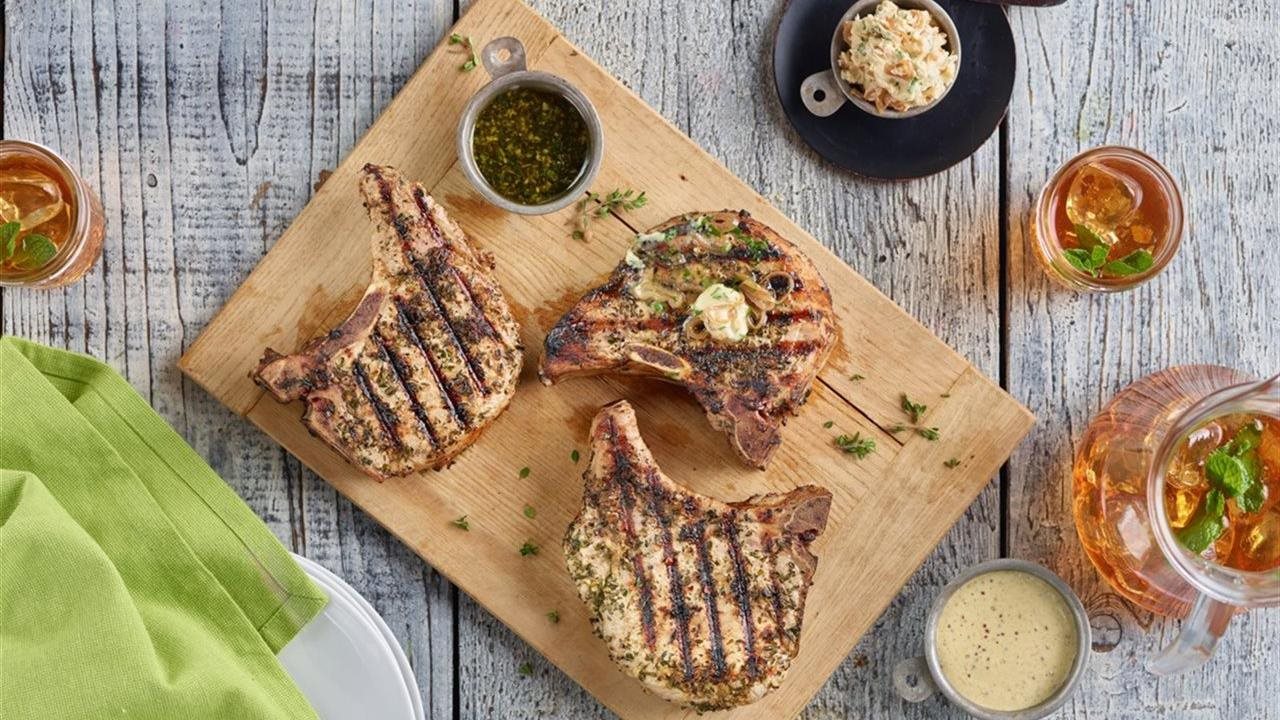
Grilled pork chops with cognac butter, mustard aioli and mushrooms

For the pork chops:

4 Smithfield(R) Prime Bone-In Pork Chops (1-inch thick)

1 cup extra virgin olive oil

1/4 cup finely chopped fresh thyme

1/4 cup finely chopped fresh rosemary

1/4 cup finely chopped garlic

Directions:

Mix oil, thyme, rosemary and garlic in large mixing bowl. Add pork chops and coat thoroughly. Cover and refrigerate at least 2 hours and up to 24 hours. Heat grill to medium using hickory wood charcoal. Remove chops from marinade and grill 7 to 9 minutes per side until internal temperature reaches 145 F to 160 F. Remove from heat and immediately brush with cognac butter. Let stand 3 minutes before serving.

For the cognac butter:

1 cup good-quality cognac

1/2 cup thinly sliced shallots

1 cup butter, room temperature

1/4 cup chopped fresh parsley

Directions:

Combine cognac and shallots in a small saucepan. Simmer until cognac is reduced by two-thirds. Strain and let cool. Mix together with butter and parsley; let stand at room temperature until ready to use.

For the mustard aioli:

3 eggs

1 cup Dijon mustard

1/4 cup lemon juice

1/2 cup whole grain mustard

3 cups vegetable oil

Directions:

Combine eggs, Dijon mustard and lemon juice in food processor or blender. Blend until smooth. Slowly drizzle in vegetable oil, while food processor is running, until emulsified. Remove from processor and fold in whole grain mustard. Season to taste.

For the mushrooms:

2 lbs. mixed fresh wild mushrooms (such as chanterelle, hen of the woods, porcini and morel)

1/4 cup extra virgin olive oil

1/4 cup finely chopped fresh thyme

1/4 cup finely chopped fresh rosemary

1 tablespoon lemon juice

Directions:

Toss together mushrooms and olive oil. Place in grill basket and grill until tender and cooked through, turning occasionally. Remove from heat and toss with remaining ingredients. Serve immediately.

This recipe yields four servings; total prep time is 25 minutes (plus two hours marinade time), and total cook time is expected at 35 minutes.

Visit SaborSmithfield.com for more of Chef Garces’ recipes and inspiration for your next meal and to learn more about Smithfield’s quality and freshness. And visit sobewff.org for more details on the South Beach Wine and Food Festival. For more information about National Pork Board, visit porkteinspira.com.


5 tips to keep allergy sufferers from dreading spring

2018-02-26T06:01:00

(BPT) – From flowers poking through the ground to ditching heavy winter parkas, it’s easy to look forward to spring. Unless, of course, you have allergies. Then, the path to warmer weather and additional daylight could be marked with watery eyes, sneezing and a runny nose. Makes it hard to be excited, right?

It doesn’t have to.

While spring carries its own concerns for allergy sufferers everywhere, there is relief. Now is the perfect time to set plans in place to help ease your allergy symptoms before they begin.

“People think they’re doing everything they can to battle spring allergies,” says allergist Bradley Chipps, MD, president of the American College of Allergy, Asthma and Immunology (ACAAI). “But many still find themselves under siege from pollen and other allergens that appear once the weather starts to warm up. What they don’t realize is that by following a few simple rules they can make life a lot more pleasant, and their allergies more bearable.”

As you start your spring allergy planning, keep these five tips from ACAAI in mind. Use them and your spring will be filled with flowers and breezes, not coughing and sneezes.

1. It may not only be allergies. In some cases the symptoms you are experiencing may not be caused by allergies alone but by another complication such as asthma. Research shows two-thirds of people with asthma also suffer from allergies, making symptoms worse during the spring season. If your symptoms include a persistent cough or feeling winded quickly, asthma could be the cause of your trouble. If this sounds familiar, consult your allergist. Your allergist can help identify the source of your asthma and help treat your allergies to manage your symptoms.

2. Take a deep dive for spring cleaning. Spring cleaning is a must for many people, but if you suffer from allergies, it’s even more important. Clearing dust and cobwebs can ease your sneezing, but for better results, roll up your sleeves and give your home a deep scrub. A thorough cleaning can eliminate allergens such as dust mites and mold, and clear the air.

3. Start your relief early on. Don’t wait for your eyes to begin watering before taking your allergy medicine. Start your medications at least two weeks before the season begins, and they will already be in your system when you really need it.

4. Clean your air effectively. When looking for support to clean the air in your home, don’t choose an ionic air filter. These filters require more airflow to operate properly than most homes are able to provide. Instead choose a HEPA room air cleaner rated with a Clean Air Delivery Rate. If you have central air, change your filters every three months and use filters with a MERV rating of 11 or 12 to keep your air as clean as possible.

5. Resist the urge to breathe in fresh air. After months cooped up indoors, you want a fresh breeze, but before you open your windows, beware. Opening windows allows pollen and other debris into your home where they can settle in your carpet or upholstery. As hard as it can be, you’re better off keeping your windows closed during peak allergy season. Use your air conditioning to regulate your home’s temperature instead.

For people with allergies, spring’s annual arrival feels like a mixed blessing. By using the tips above, you can ensure that you have everything you need to make spring great. And you’ll do so with less of the coughing and sneezing that can go with it.


5 simple things you can do to promote literacy at home and beyond

2018-02-26T07:01:00

(BPT) – What was your favorite childhood book? Chances are, you can come up with a title right away. That’s because books create powerful memories of stories and characters that inspire kids’ imaginations and will be treasured for a lifetime.

Unfortunately, some children grow up with limited access to books, meaning they’re unable to create those memories so many people take for granted. A lack of books in the home is also linked to lower reading scores and less success in school, according to research by the Family and Community Engagement Research Compendium. Even more concerning, an Annie E. Casey Foundation report found students who can’t read proficiently by third grade are four times more likely to leave school without a diploma than proficient readers.

Society as a whole pays a high price for low literacy. It costs the U.S. at least $225 billion each year in non-productivity in the workforce, crime and loss of tax revenue due to unemployment, according to the National Council for Adult Learning.

Here’s the good news: this problem does have a solution. Having books in the home has been proven to improve children’s reading performance, cause them to read more frequently and for longer lengths of time, and improve overall attitudes toward learning.

It’s clear that promoting literacy in your home and in your community are worthwhile investments of your time and money. Wondering where to start?

Build reading into the routine: When the kids are small, it’s easy for many parents to create the nightly ritual of story time. Don’t stop just because they’ve started school and are reading on their own. Commit to sitting down every night to read together. Or, make reading into an event the whole family can enjoy by reading a chapter book out loud. When the kids see you reading books too, you set a great example.

Ask questions: Asking children questions while you read together helps them develop critical thinking skills. For example, you might ask, “How is the family in this book like our family?” or “The girl in this book likes to swim. What do you like to do?”

Give books as gifts: The next time you celebrate a holiday or child’s birthday, consider giving the gift of a book — especially a title or two that you loved growing up. Be sure to make time to read at least one of them together. It’s a great way to bond.

Share, share, share: One way to spread literacy is to help make books more available in your community. Every year or so, go through your book collection with the kids and decide which titles should be given a new home. They can be donated to schools and public libraries, or given to other groups that make books available for free or little cost to young readers. Even better, when you buy a book, purchase a second copy to donate or give away.

Support literacy causes: Between Feb. 26 and April 15, there’s an easy — and delicious — way you can promote literacy. Add a “topping of literacy” to your next Pizza Hut order and your contribution will go directly to the company’s fundraising campaign “The Literacy Project,” which benefits recognized nonprofit, social sector leader First Book.

You can also inspire others to read by entering a Pizza Hut sweepstakes for the chance to win a trip that will bring your favorite book to life. Go to Instagram or Twitter and share the title of your favorite book, and why it touched your life. Be sure to tag @PizzaHut in your post and use the hashtag #HelpStartANewChapter #sweepstakes to enter.


6 smart snacking ideas for busy moms

2018-02-26T08:01:00

(BPT) – Whether you have a new baby, toddler, big kid or teen, life is busy when you have kids. From play dates to playoffs, busy moms need to stay fueled to feel their best. However, being so busy can mean forgetting about healthy snacking. Fortunately with a few tips and tricks, eating right on the go doesn’t have to be difficult.

The first step is to be prepared before hunger strikes. Stock up on plastic or stainless steel containers that are easy to tote in purses or backpacks. Then, make a shopping list so your fridge and cupboards are full of wholesome snacks. By removing temptation of junk food, you make it easy to snack well.

Here are six easy (and tasty!) snack ideas for busy moms. No matter where your day takes you, you’ll be ready with nutrient-rich snacks easy for eating on the go.

1. Cheese

To feel full fast, reach for snacking cheese. Wisconsin-made Great Midwest Cheese has Mild Cheddar, Colby Jack and Pepper Jack Cheeses available in snack-sized cubes, perfect for on-the-go fuel. Every cheese is hand-crafted in small batches, using only the purest, certified hormone-free milk for a smooth, natural, consistent flavor sure to satisfy.

2. Edamame

You probably munch on edamame when visiting your favorite sushi restaurant, but these pods are perfect for travel, too. Packed with protein but low on carbs, they are a great healthy alternative to chips when you have a hankering for something salty. You can buy frozen varieties to pack and they’ll thaw in your container of choice so you’re ready when hunger pangs strike.

3. Fruit

Packed with vitamins and minerals, fresh produce is always a smart choice. Bananas may be an easy choice, but they can bruise quickly in a bag. Instead, consider portable options less likely to bruise such as apples or easy-to-peel tangerines. Try pairing fruit with individually-wrapped snack portions of Great Midwest Gouda or Mild Cheddar Cheese and you’ll feel full for hours.

4. Nuts and seeds

Raw, unsalted nuts are high in protein and healthy fats. Stock up on mixed varieties or just your favorites, such as almonds, walnuts or cashews. Seeds are another easy go-to for snacks. Sunflower seeds are full of vitamin E and come in a variety of flavors (just keep an eye on salt levels in the ingredient lists and consider opting for low-sodium varieties).

5. Jerky

For your carnivorous cravings with a protein punch, consider packing jerky for snacking. Beef and turkey jerky aren’t just for weight lifters. These shelf-stable snacks last for a long time and are easy to pack in a purse and grab on the go. If you want to control the ingredients and experiment with flavors, consider making your own at home!

6. Cereal

Moms everywhere pack up containers of cereal for their babies and toddlers for a quick and easy snack. But what about for yourself? Your favorite cereal can serve as a snack throughout the day when you pack a container and bring it in your tote. Opt for high-fiber, low-sugar varieties to keep you fueled and full without the sugar crash later.

Bonus idea: Water

Water may not count as a snack, but it’s important to keep a bottle always by your side. Many people confuse hunger with thirst, so if you stay hydrated, you might find you have fewer snack cravings. If water is too bland for you, try adding a healthy flavor boost with a few slices of fruit or cucumber.

Regular healthy snacking helps give you the energy you need to keep up with your kids and helps level your moods. Nobody wants a hangry (hungry + angry) mom whose patience is thin because her stomach is grumbling! Plan ahead and focus on smart snacking to be the best mother you can be.


Understand What You Need to Do to Stay Healthy Over 65

2018-02-27T08:27:01

(BPT) – Today’s Boomer generation feels young at heart. They’re living an active lifestyle, they have no intention of slowing down, they’re booming. Many Boomers feel that because they are healthy and taking care of themselves, they are not at risk for potentially serious infectious diseases, such as pneumococcal pneumonia. But if you are over 65, even if you are healthy, you are at increased risk. Our country is currently facing a terrible flu epidemic that is hitting especially hard. It is important for anyone over 65 to learn about the myths and facts of adult immunization and to get a new attitude toward vaccine-preventable diseases.

“The Centers for Disease Control and Prevention recommends vaccination not only against influenza but also against pneumococcal pneumonia,” said Dr. Raúl Isturiz, Doctor of Internal Medicine and Specialist in Infectious Diseases from Pfizer. “It’s a good idea for you to talk to your doctor or pharmacist about ways to help protect yourself and to find out if vaccination may be appropriate.”

According to a Pfizer survey of adults aged 65 years and older, 67 percent describe themselves as taking an active role in maintaining their health.i However, many misconceptions about adult immunization still persist, preventing Boomers from taking the important step of vaccinating against serious diseases.

Read Below for 5 Common Myths and Facts About Adult Vaccination:

Myth: Vaccines are for children, adults don’t need to get vaccinated.

Fact: While many are familiar with the Centers for Disease Control and Prevention (CDC) vaccination schedule for children, the CDC has also recommended immunizations for adults depending on their health and age. All adults, even healthy ones, should talk to their doctor about the potential risks and the importance of staying up to date on CDC-recommended vaccinations.

Myth: Vaccination is only for the very elderly.

Fact: The immune system naturally weakens as people get older, putting even healthy and active adults as young as 65 at riskii for diseases such as pneumococcal pneumonia, a serious and potentially life-threatening illness that can strike anyone over 65, anywhere, anytime.

Myth: Healthy adults don’t need to get vaccinated.

Fact: The young at heart may not feel they are at risk for vaccine-preventable illnesses because they live an active lifestyle and take good care of themselves. But our immune system naturally weakens as we age, and adults 65 and older are at a 13 times greater risk of being hospitalized with pneumococcal pneumonia compared to adults younger than 50.iii

Myth: Vaccines are not proven to be effective.

Fact: According to the CDC, vaccination is the safest, most effective way to protect yourself.iv

Myth: Adults only need to get the flu vaccine.

Fact: The CDC recommends several vaccinations for adults dependent on their age and health-factors.v However, flu season is a good time to speak to healthcare providers about staying up to date on CDC-recommended adult vaccinations. Beyond just getting the flu vaccine, adults, particularly those 65 and older, should discuss vaccination against other potentially serious diseases, such as pneumococcal pneumonia, with their doctor.

This flu season, take the opportunity to speak with your healthcare provider or pharmacist about getting vaccinated. For more information about immunization and vaccination options, visit www.cdc.gov/vaccines.

Visit KnowPneumonia.com for more information about pneumococcal pneumonia.


i Omnibus survey, sponsored by Pfizer. September 8-12, 2016.

ii Centers for Disease Control and Prevention. Pneumococcal Disease: Risk Factors & Transmission. http://www.cdc.gov/pneumococcal/about/risk-transmission.html. Accessed March 27, 2017.

iii Jain S, Self WH, Wunderink RG, et al. CDC EPIC Study Team. Community-acquired pneumonia requiring hospitalization among US adults. N Engl J Med 2015;373(5):415-427.

iv Center for Disease Control and Prevention Fast Facts. (2015). http://www.cdc.gov/pneumococcal/about/facts.html. Accessed March 23, 2017.

v Vaccine Information for Adults. (2017, January 30). Retrieved July 06, 2017, from https://www.cdc.gov/vaccines/adults/rec-vac/index.html.

PP-PNA-USA-3036 © 2018 Pfizer Inc. All rights reserved. February 2018


Simple ways to save on your pet’s medical costs

2018-02-28T06:01:01

(BPT) – Pet parents know that there’s nothing like the love of furry family members. Keeping your pets healthy is a priority because you want them to live as long as possible. However, health care costs for pets are expensive, and if you are dealing with additional expenses such as prescriptions for chronic conditions, it can become a burden to your budget.

Fortunately, there are several things pet owners can do proactively to keep pets healthy and save money on health care costs.

Invest in preventative care

“An ounce of prevention is worth a pound of cure” is just as applicable to pets as it is to their human caregivers. One of the most important things a pet parent can do to ensure the ongoing health of any animal is to bring them in for annual checkups whether they are experiencing health issues or not.

During wellness checkups, veterinarians can screen for a variety of health conditions. They provide insight on diseases, age-related concerns, dental health, nutritional considerations and so much more. Plus you’re able to provide your pet with important vaccinations. Regular checkups help vets identify problems sooner rather than later, and this can translate to more affordable health care costs to pet parents in the long run.

Get an Inside Rx Pets prescription card

Costs for managing your pet’s health can be a bear with pet owners spending more than $8 billion on prescription and over-the-counter medications annually. The Inside Rx Pets program offers savings on commonly prescribed medications such as insulin and antibiotics, as well as seizure, glaucoma and anti-inflammatory drugs. The Inside Rx Pets savings card is not insurance; it is a savings card you can use for certain human medications that may be prescribed for your pet. A complete list of the medications with which you can use the Inside Rx Pet card, as well as pricing information and other details, can be found at https://InsideRx.com/Pets.

Benefiting from these discounts is easy for pet parents: If your pet’s veterinarian writes a prescription for an applicable medication, simply download the free discount card from the Inside Rx Pets website and present it with the prescription at one of the 40,000 participating pharmacies located across the U.S. that fill prescriptions for animals. These include national chains such as Kroger Family of Pharmacies, CVS and Walgreens (yes, the same pharmacies you go to for your own medications).

Exercise and focus on nutrition

Obesity is a growing concern for many pets. Poor nutrition paired with limited exercise causes pets to put on additional weight. This weight can put them at higher risk for health concerns like diabetes, osteoarthritis and ligament injuries. These health concerns not only risk the quality of life for Fluffy or Fido, but also can deeply impact your pocketbook.

Pets, just like humans, require exercise and proper nutrition to stay healthy and feel their best. Whether that’s letting your rabbit out of the cage to run or going on a walk with your dog, be sure to make regular exercise a part of your fur family’s routine. If you’re unsure what is appropriate for your pet, call your veterinarian or bring it up at a wellness visit. They’ll be delighted you reached out for more information to keep your pet healthy.

Start an emergency fund

Choosing between a pet and an unexpected health expense is something no one wants to experience. Being prepared can make a big difference when facing difficult decisions, so it’s wise to have savings set aside in case of a rainy day.

Some people are starting pet health savings accounts (HSAs) that are similar to the accounts that people hold for themselves to pay for medical expenses. Whether you choose that path or a traditional savings account, when you have an emergency fund you won’t have to worry about any unexpected expenses, so you can simply focus on getting your pet well again.

Being proactive is important for keeping your pets healthy for many years. From scheduling annual wellness visits to taking advantage of the Inside Rx Pets discount card, there are many easy actions pet parents can take today to reduce costs so furry family members stay well.