Pulmonary Fibrosis: A Serious, Sometimes Unheard of Lung Disease

2020-06-08T09:05:00

(BPT) – Currently, when people experience shortness of breath and/or a cough, they may think of COVID-19. However, if those symptoms are chronic, it could be a warning sign of another condition: pulmonary fibrosis (PF).

PF is a debilitating lung disease that remains largely unknown, yet 50,000 new cases are diagnosed annually, and more than 200,000 Americans are living with the disease. In fact, according to a recent survey conducted by the Pulmonary Fibrosis Foundation (PFF), 86% of Americans are unaware of its symptoms.

Pulmonary Fibrosis: What You Need to Know

PF causes scarring in the lungs that, over time, will damage the normal lung and make it hard for oxygen to get into the blood. In the current climate of COVID-19, it is important to note that while ‘fibrosis of the lung,’ or lung scarring, can be a consequence of COVID-19, it is not the same as PF. For COVID-19 patients who have severe respiratory failure and require mechanical ventilation, fibrosis may occur as a result of the devastating lung injury.

Idiopathic pulmonary fibrosis and other fibrosing interstitial lung diseases that cause PF, however, are often progressive, meaning that the scarring on the lungs gets continually worse over time. Currently, there is no evidence that indicates the scarring in the lungs experienced by COVID-19 patients is progressive. Additional information is needed to better understand the long-term impact of COVID-19-associated lung injury and fibrosis. While scarring on the lungs in COVID-19 is very serious, it is different than other conditions that cause progressive pulmonary fibrosis.

PF and COVID-19: Similar Symptoms, Different Diagnoses

While COVID-19 and PF share symptoms of shortness of breath and cough, patients with COVID-19 who develop shortness of breath usually experience acute onset and progression of this symptom over days and weeks, along with fever. COVID-19 may also cause symptoms such as chills, muscle pain, sore throat and loss of taste or smell.

PF symptoms are chronic with these other warning signs to be aware of:

  • A dry, hacking cough that lasts more than two months
  • Fatigue, weakness, discomfort in the chest, loss of appetite or unexplained weight loss
  • Doctors may also look for low oxygen levels in the blood, as well as listen for “crackles” in the lungs, much like the sound of Velcro being pulled apart

Because many symptoms of PF are similar to those of other illnesses, it can be difficult to diagnose and treat, leading to frequent late-stage diagnoses. Symptoms of PF may appear mild in the early stages; therefore, it is imperative to recognize the signs of the disease so patients can start conversations with their physicians.

“Awareness of pulmonary fibrosis and its symptoms remains very low, and, for many, the first time they hear of the disease is when they are diagnosed,” said William Schmidt, president and CEO of the PFF.

At-risk Populations Still Unaware of PF

While anyone can develop PF, it is more likely to occur in those ages 60 and older, current or past smokers, or people with a family history of interstitial lung disease. However, those most at risk are alarmingly unaware of PF symptoms, including the 60+ age group (91%) and those with a history of smoking (81%), according to the PFF. These individuals are at risk for idiopathic pulmonary fibrosis, the most common form of the disease.

“Understanding pulmonary fibrosis, its symptoms and risk factors is critical, so that we can engage people nationwide in fighting this serious lung disease,” concluded Schmidt. “Raising awareness of the disease can help drive earlier diagnoses and encourage support for needed research, which can ultimately lead to a cure.”

For more information about pulmonary fibrosis, visit www.AboutPF.org. To access the PFF Awareness Survey, visit https://www.pulmonaryfibrosis.org/our-role/news-media/media-resources.



Affordable and thoughtful options to celebrate while staying safe at home

2020-06-08T08:01:00

(BPT) – Summertime is full of celebrations including Father’s Day, graduations, celebratory holidays and other important milestones where people typically gather to show love and support. However, this year those traditional celebrations might look a little different. The good news is that doesn’t mean you can’t express your love and appreciation for others!

If you’re an AARP member, you can give without leaving your house and take advantage of discounts on flowers, gourmet food baskets and more — all available for ordering online or by phone and delivered directly to your loved one’s home. A flower arrangement or something sweet are sure to brighten your loved one’s day! To view all the offers available to AARP members, visit https://www.aarp.org/benefits-discounts/campaigns/holiday/.

Here are some of the top ways to show you care even when you can’t celebrate in-person:

1-800-Flowers.com®

Loved ones will never ask, so why not make their day for them? Beautiful bouquets, fruit arrangements, decadent chocolates, delicious gourmet gift baskets, exquisite prepared food and meals and sentimental keepsakes will make them feel as special as they are in the most beautiful way.

Members save 20% on online purchases with code AARP2
Members save $20 when they spend $79.99 or more with code AARP3

Cheryl’s® Cookies

Are you missing an important birthday or other celebration? Don’t worry, because you can send a delicious batch of Cheryl’s Cookies to help loved ones enjoy their special day.

Members save 20% on online purchases with code AARP2
Members save $20 when they spend $79.99 or more with code AARP3

The Popcorn Factory®

Do you have a recent graduate in the family or grandkids who love movie night? Consider sending them a treat from The Popcorn Factory and organizing a virtual movie night with the whole family.

Members save 20% on online purchases with code AARP2
Members save $20 when they spend $79.99 or more with code AARP3

Stock Yards


With Father’s Day and Independence Day around the corner, nothing says “let’s celebrate” like firing up the grill with your favorite steak and seafood. A savory surprise like this could make someone’s day!

Members save 20% on online purchases with code AARP2
Members save $20 when they spend $79.99 or more with code AARP3

Goodsey

You can never go wrong with jewelry, so if you’re looking for the perfect gift for mom, wife, daughter or friend, look no further. Check Goodsey for jewelry, home decor accents, spa accessories, personalized gifts and more.

Members save 20% on online purchases with code AARP2
Members save $20 when they spend $79.99 or more with code AARP3

Personalization Universe

Make it personal! If someone in your life is headed to college, got a new job, welcomed a new baby or is experiencing any other life milestone, personalized gifts go a long way in filling their tank with happiness. Visit Personalization Universe for discounts on customized products, including iPhone cases, mugs, T-shirts, wall art and more.

Members save 20% on online purchases with code AARP2
Members save $20 when they spend $79.99 or more with code AARP3

Walgreens

If you need a last-minute card or quick gift, Walgreens is right there for you with AARP members and those 55+ receiving additional benefits on Senior Day — the first Tuesday of every month. And don’t forget to link your AARP membership card to your Walgreens Balance® Rewards account to earn additional benefits.


5 ways teens can learn good money habits

2020-06-08T07:01:00

(BPT) – If you’re a tween or teen trying to earn money or save for a goal, it can be hard to sort out the mixed messages about money you hear from the media, your friends — and even your family. Sometimes parents don’t like talking about money, or they may not always practice what they preach.

How can you be smart about your own money? Take advantage of this down time in quarantine to teach yourself smart money management skills that will serve your future. As you can see, being a savvy saver and being on top of your credit in times of unexpected financial stress, such as COVID-19, is a critical skill to develop. If you’re disciplined, it’s quite simple. Here are some healthy financial habits to help you be more on top of your own earning, spending and saving.

1. Learn how budgets work

Now is a good time to find an easy-to-use online budgeting tool or app. Budgets help you prioritize your spending and be aware of your cash flow — incoming and outgoing. There are even features designed to help you save for specific goals like prom or college.

One of the great benefits to these apps is that you can see all your account balances in one environment. You can learn tips for keeping track of the money you earn and planning ahead.

2. Limit spending

Budgets are about making decisions. How much money do you want to save, and how much do you want to spend? First, figure out how much money you’re earning (through allowance, part-time work, etc.) per week or month. From here, you can identify your needs versus wants. This enables you to set your goals.

Do you have a specific item you want to buy, or an event (like a trip) you want to save for? Perhaps you want to contribute to your college fund. Decide a reasonable percentage of what you earn to set aside. Some banks even have an auto-save feature where you can elect a specific, recurring dollar amount to be moved from your checking to your savings account. If it’s out of sight, you’re less likely to spend it.

3. Save what you can

As the saying goes, “It’s not what you make, it’s what you save.” Even if you’re not earning much yet, commit to saving a small amount every time you get money from your allowance or part-time job. If you start setting aside a little bit each time you earn in, you’ll have this habit for life. Your future self will thank you!

4. Avoid impulse buys

When you see something great that tempts you to spend immediately, consider taking a day and sleeping on the idea. Remind yourself how long it took you to earn the cost of the item. If the video game or pair of shoes you want would cost 10 hours of working at your lifeguard job, you may not be so quick to make that purchase.

Rest assured that this is not the only opportunity you’ll ever have to buy that item. Another idea is to decide to take at least a day to think about any purchase that is over a certain dollar amount (such as the equivalent of 3 or more hours at your part-time job).

5. Use credit carefully

Once you hit 18, you may be barraged with invitations to apply for credit cards. When you go to college, it’s a good idea to apply for at least one credit card to start building your credit history. You can use the card to occasionally make a small purchase that you know you can pay off when the bill is due.

But remember, anything you buy on a credit card has to be paid off, and credit cards charge interest when you carry a balance — making whatever you bought with the card even more expensive.

If you can’t come up with the money to pay a credit card on time, or simply forget to pay it when it’s due, those late payments can lower your credit score, which is like a grade given to your credit history. And if you max out your credit card through over-spending, that will also lower your credit score. A good rule of thumb is to never charge on credit what you can’t pay for in full with cash.

Why should you care about your credit score? A poor credit score makes it harder for you to borrow money later, for example, when you might want to buy a car. Overall, learning good habits like budgeting, saving and keeping track of your spending now will help you enjoy a more financially sound future.

This article is not intended to provide any credit or financial advice or guidance or to recommend the taking of any specific action. This article is intended solely to describe the possible impact that an action may have on a credit score that is generated using the credit scoring models of VantageScore Solutions, LLC. The possible impacts described herein are based on hypothetical situations and the actual impact on a credit score may vary depending on various factors, including, among other things, a person’s actual circumstances and history.


Managing glaucoma from home

2020-06-08T07:01:00

(BPT) – Did you know that glaucoma is the second leading cause of blindness worldwide?1 If you or a loved one have been diagnosed with this debilitating disease, you’re probably aware of the need for consistent eye care and attention to your disease management plan.

However, due to the COVID-19 pandemic, most non-emergency doctor visits and in-patient procedures have been cancelled or postponed to reduce the risk of spreading the virus among patients and health care providers. Consequently, most ophthalmology practices are either closed or continuing to treat patients only remotely.

But those pandemic-related precautions do not mean suspending care for your glaucoma. It’s especially important to be aware of the disease’s warning signs and to seek medical help when you need it. Even if you have to stay at home, your ophthalmologist may be able to treat you through an online telehealth session, or perhaps over the phone.

Warning signs

If you’re currently being treated for glaucoma, call your doctor right away if you:

  • Notice changes in your vision (like blurry, wavy or blank spots)
  • See a lot of new floaters or flashes in your field of vision
  • Suddenly lose some vision
  • Have eye pain, headache, red eye, nausea and/or vomiting

The American Academy of Ophthalmology also recommends taking extra precautions during the COVID-19 situation, as the virus can spread through the eyes:2

  • Avoid the urge to rub your eyes
  • Adjust your glasses using a tissue instead of your fingers
  • Before administering eye medicine, wash your hands with soap and water at least 20 seconds, and wash them again after using eye drops. Be careful not to let the medicine dropper touch your eyes or face.

The good news is that telemedicine has already reduced the need for in-person visits for many aspects of eye care. And the field of teleophthalmology continues to innovate through the creation of advanced apps and take-home devices, including virtual reality tools. Ophthalmologists are already starting to use these new technologies to help diagnose, assess and monitor serious eye conditions such as glaucoma and ocular hypertension.3

Treatment options

Telemedicine visits can also allow your ophthalmologist to monitor your condition remotely and even prescribe medications to treat your glaucoma.

One of the most recently available treatments is XELPROS™ (latanoprost ophthalmic emulsion) 0.005%, which is the only FDA-approved benzalkonium chloride-free (“BAK-free”) formulation of latanaprost – a commonly used glaucoma medication. XELPROS has been shown to reduce intraocular pressure (IOP, or pressure inside the eye), which is often elevated in people with open-angle glaucoma or ocular hypertension. XELPROS delivers latanaprost with LIPIXELLE, a novel micelle microemulsion formulation to help optimize absorption [see important safety information below].

“Benzalkonium chloride, or ‘BAK,’ is a common preservative in several glaucoma treatments, and can induce or exacerbate adverse reactions in certain patients,” said I. Paul Singh, MD, President of The Eye Centers of Racine and Kenosha. “Those reactions can include eye redness, dry eye, loss of ocular surface glands, and other issues. The availability of a BAK-free glaucoma treatment is therefore a real benefit for many patients.”

Another advantage of XELPROS is that it’s easy to obtain this medication remotely using the XELPROS Xpress™ program. If you have a prescription, XELPROS Xpress makes sure you will get exactly the medication you were prescribed, and not some other product. XELPROS Xpress also allows your health care provider to write your prescription without obtaining any prior authorizations. Once you have your prescription, you can order a 1- to 3-month supply ahead of time, ensuring that you won’t have any interruption of your treatment. What’s more, ordering a 3-month supply makes you eligible for a discount.

“Right now, when we need patients to avoid the risk of in-office visits and trips to the pharmacy, XELPROS Xpress is very convenient,” adds Dr. Singh. “With much of the population staying at home, it’s crucial for eye care professionals to be able to treat patients remotely not only to help protect their eye health, but also their overall health.”

For more information about XELPROS and XELPROS Xpress, contact your eye doctor or visit www.xelpros.com.

INDICATIONS AND USAGE

XELPROS is indicated for the reduction of elevated intraocular pressure (IOP) in patients with open-angle glaucoma or ocular hypertension.

IMPORTANT SAFETY INFORMATION

CONTRAINDICATIONS

XELPROS is contraindicated in patients with known hypersensitivity to latanoprost, or any other ingredients in this product.

WARNINGS AND PRECAUTIONS

Pigmentation: XELPROS may cause changes to pigmented tissues. The most frequently reported changes are increased pigmentation of the iris, periorbital tissue (eyelid), and eyelashes. Pigmentation is expected to increase as long as XELPROS is administered. After discontinuation of XELPROS iris pigmentation is likely to be permanent. Patients who receive treatment should be informed of the possibility of increased pigmentation. The long-term effects of increased pigmentation are not known.

Eyelash Changes: XELPROS may gradually cause changes to eyelashes, vellus hair in the treated eye including increased length, thickness, pigmentation and number of lashes. The changes are usually reversible upon discontinuation of treatment.

Intraocular Inflammation: XELPROS should be used with caution in patients with a history of intraocular inflammation (iritis/uveitis) and should generally not be used in patients with active intraocular inflammation.

Macular Edema: XELPROS should be used with caution in aphakic patients, in pseudophakic patients with a torn posterior lens capsule, or in patients with known risk factors for macular edema.

Herpetic Keratitis: XELPROS should be used with caution in patients with a history of herpetic keratitis. XELPROS should be avoided in cases of active herpes simplex keratitis because inflammation may be exacerbated.

Bacterial Keratitis: There have been reports of bacterial keratitis associated with the use of multiple-dose containers of topical ophthalmic products.

Use with Contact Lens: Contact lenses should be removed prior to administration of XELPROS and may be reinserted 15 minutes following administration.

ADVERSE REACTIONS

The most common ocular adverse reactions reported in clinical trials (incidence ≥5%) for XELPROS are: eye pain/stinging, ocular hyperemia, conjunctival hyperemia, eye discharge, growth of eyelashes, and eyelash thickening.

DRUG INTERACTIONS

Precipitation may occur if drugs containing thimerosal are used concomitantly with XELPROS. If such drugs are used, they should be administered at least five (5) minutes apart.

Please click here for Full Prescribing Information.


[1] Biggerstaff KS. Primary open-angle glaucoma (POAG). Medscape, 2018. https://emedicine.medscape.com/article/1206147-overview#a6. Accessed September 5, 2018.

[2] Mukamal R. Coronavirus eye safety. American Academy of Ophthalmology, EyeSmart, March 20, 2020. https://www.aao.org/eye-health/tips-prevention/coronavirus-covid19-eye-infection-pinkeye. Accessed April 20, 2020.

[3] Misra P, Al-Aswad LA. Diagnosing and monitoring glaucoma with teleophthalmology. Glaucoma Today, March/April 2019. https://glaucomatoday.com/articles/2019-mar-apr/diagnosing-and-monitoring-glaucoma-with-teleophthalmology. Accessed April 20, 2020.


COVID-19 Pandemic Spurs Action to Address Domestic Violence & Mental Health Care Concerns

2020-06-05T11:23:58

(BPT) – As people continue to adjust their daily lives in the era of COVID-19, some law enforcement agencies and advocacy groups across the country have raised concerns about the potential for a rise in domestic violence incidents. An issue that could lead to even more people requiring services to support their mental health.

According to a recent survey from the U.S. Census Bureau, which covered the week of May 7 to May 12, an estimated 34.4% of adults across the country reported symptoms of either anxiety or depression. Among those more likely to report symptoms were Black and Hispanic adults.

In California, officials believe domestic violence is increasing but the survivors are stuck at home with their abusers and can’t alert authorities. In Los Angeles, for example, calls related to domestic violence dropped by 18% from March 19 through April 15 as compared with the same period in 2019. In Santa Clara Co. on the other hand, the local Sheriff’s Office has seen a 46% increase in calls for service related to family violence.

California launches first-of-its-kind initiative

The state of California is also stepping up. Earlier this year, the California Surgeon General Nadine Burke Harris, M.D., and Karen Mark, M.D., Medical Director at the state Department of Health Care Services (DHCS), unveiled an initiative to address the public health crisis of toxic stress from childhood trauma. Called the ACEs Aware Initiative, it is a first-of-its-kind statewide effort for California health care providers to screen patients for Adverse Childhood Experiences (ACEs) that increase the likelihood of ACE-associated health conditions due to toxic stress.

While the pandemic has necessitated immense attention to our community’s physical health and safety, it will also be critical to keep an eye on the potential long-term health effects of this prolonged pandemic. Providing early intervention and support from stakeholders across the health care spectrum will be critical as we prepare to face this challenge in the coming months.

Some in healthcare are stepping up to help

With high demand and limited resources in some California communities, Health Net stepped up to meet the future demands for mental health services by awarding a $100,000 grant to Charles R. Drew University of Medicine and Science (CDU), a private, nonprofit health professions university in Willowbrook, California. The grant, which supported several important initiatives, includes residency training and the development of a tele-psychiatry curriculum so new physicians can gain experience in delivering medical care through telemedicine.

Earlier this month, the company also announced it was awarding 138 grants, totaling $13.4 million, to support the establishment and expansion of telehealth and telephonic services for California providers serving Medi-Cal members. To date, that’s the largest grant of cash dedicated to this cause by a health plan in California. Most importantly, it will support clinics and local physicians serving underrepresented minorities and under-resourced communities who need it most.

“There is undoubtedly a mental healthcare crisis in our communities, and we know that more needs to be done to give our residents the much needed services they require,” said Robert B. Vargas, MD, MHP, Assistant Dean, Health Policy and Inter-Professional Education, College of Medicine. “That is why we are so thankful to our healthcare partners like Health Net, who have helped us take concrete steps to improve our community member’s ability to access the mental health services they need, when they need it, and on their own terms.”

In partnership with its parent company, Centene, Health Net is partnering with peer warm lines in California, dedicated call centers for mild to moderate behavioral health needs. As part of this partnership, Health Net will allocate funds to assist warm lines in meeting the demand for increased capacity brought on by the pandemic.

“The donation that the Mental Health Association of San Francisco (MHASF) is receiving from Health Net will be used to help increase the capacity of the California Peer-Run Warm Line including adding staff, improving training programs, and adding needed technology and equipment, as more Californians are seeking non-judgmental emotional support due to COVID- 19,” said Mark Salazar, MHA, Executive Director, Mental Health Association of San Francisco, one of the organizations who will receive support from Health Net. “This generous donation will help ensure MHASF continues to have the resources to be there when someone is experiencing the distress, anxiety, and fear triggered by COVID-19 that can impact their mental and physical well-being.”


Disability benefits are vital for those facing medical issues

2020-06-05T16:32:55

(BPT) – No one ever anticipates a health problem so serious that they must stop working, especially when a leave of absence becomes one or two years out of work. Yet it happens every day to some of the 160 million workers in the U.S. labor force. People get hurt, learn they have a disease or succumb to a progressive illness. For those facing debilitating medical or mental issues, seeking income protection by applying for Social Security Disability Insurance (SSDI) benefits as soon as possible can be critical.

Each year about 2 million people apply for SSDI, but the Social Security Administration (SSA), which oversees the application process, approves only 36% overall. As many as 700,000 former workers are immediately denied benefits for various reasons. Social Security also predicts it will have a backlog of 700,000 pending initial applications in 2020 — up from 565,000 initial pending applications the prior year.

These statistics reinforce the urgency for former workers to start their SSDI application swiftly with the help of expert disability representatives.

SSDI is a safety net for former workers with disabilities. The following are the top five things to know about disability benefits.

1. Monthly income. SSDI can bring financial relief to former workers and their families. The average monthly benefit for a former worker in 2020 is $1,258. With regular monthly income, individuals are better equipped to deal with their medical conditions. Plus, with approval of SSDI, they can consider their options for the future and a possible return to work down the road. Many people may not understand that SSDI is an insurance program they’ve earned through their FICA taxes. So why not file a claim for insurance when a disability happens?

2. Dependent benefits. For some families, it can be vital that SSDI recipients also are eligible to receive dependent benefits. This provides additional monthly income for those with dependents age 18 and younger. Typically, this additional benefit amount is about half of the parent’s monthly dollar amount, regardless of the number of dependents. This can be an added relief for the financial burdens resulting from a severe disability and family needs, such as childcare.

3. Expert help is available. The SSDI program is stringent and only one-third of applications are approved, but expert help is available to improve your chances of getting through the first time. An SSDI representative can play an important role during a process that typically involves long wait times, confusing paperwork, complex rules, extensive criteria and many other obstacles. They can also help with your appeal, if needed. This is especially important for those dealing with pain from a long-term illness, severe injury or chronic respiratory condition. Expert help and a free online assessment can help you determine the likelihood of eligibility for SSDI benefits.

4. Medicare coverage. Another valuable benefit of the SSDI program is federal health insurance with Medicare. Most SSDI beneficiaries can start to receive Medicare coverage 24 months after they begin receiving cash SSDI benefits. Medicare provides health insurance coverage for hospital and medical services, and prescription drug coverage. This coverage even continues for those SSDI beneficiaries who return to work, providing more than seven years of Medicare coverage.

5. Free return-to-work assistance. More than 52% of SSDI applicants say they eventually want to return to work if they are physically and mentally able to do so. An advantage of applying for disability benefits is Social Security’s Ticket to Work program that provides free return-to-work assistance if the beneficiary’s medical condition improves. Ticket to Work and free help from a nationwide Employment Network, such as Allsup Employment Services, can provide a path to a better financial future.

It can be overwhelming to contemplate dealing with Social Security and the SSDI application process. Red tape, the growing application backlog and the sheer complexity of the program can make anyone choose to avoid it, even if the income is desperately needed.

Asking for help from an SSDI representative can be the first step for former workers. Experts have the know-how and experience to help people navigate the complex process, while providing compassion and understanding along the way.

A free, online assessment is available at filessdi.allsup.com.


Top Things To Know About Economic Impact Payment Cards

2020-06-05T10:35:01

(BPT) – As the COVID-19 pandemic continues to change our lives in unprecedented ways, more and more consumers seek secure, reliable solutions for making purchases in-person, online or over the phone. For the millions of Americans who receive government payments, including emergency relief funds from the U.S. government, one such solution is Government Payment Cards, or prepaid Visa debit cards.

What Are Economic Impact Payment Cards and How Do They Work

Recently, nearly 4 million prepaid Visa debit cards were mailed to eligible Americans as part of the Coronavirus Aid, Relief, and Economic Security Act (CARES Act). These prepaid Visa debit cards are pre-loaded with Economic Impact Payment (EIP) funds and are sent in a plain envelope from “Money Network Cardholder Services.”

EIP cards offer a fast, convenient, safe way for Americans to receive government and emergency relief benefits. These prepaid cards look and work like traditional debit cards; however, these cards arrive preloaded with funds and are not linked to a bank account.

Using an EIP card is quick, easy and secure. It can be used to:

  • Pay for purchases online, in-person or over the phone everywhere Visa is accepted;
  • Pay many bills and get cash back at participating merchants;
  • Withdraw cash from an ATM or a bank/credit union teller
  • Transfer funds to a personal bank account

How To Get Started

The first step when you receive your EIP card is to activate it by calling at 1-800-240-8100.

During activation, you will be asked to validate your identity by providing, at minimum, your name, address, and last 6-digits of your social security number. You will also be asked to create a 4-digit PIN required for ATM transactions and automated assistance and to hear your balance. For your Account security, do not use personal information as your PIN. For Cards with more than one name, only the primary Cardholder (listed first on the Card) may activate the Card.

Keep your PIN number handy for automated telephone assistance and secure future transactions. For example, when withdrawing cash from an ATM – preferably an in-network, surcharge free ATM that carries the AllPoint® brand – enter your 4-digit PIN and select “Withdraw” from “Checking”.

Discarded or Destroyed Cards

If your EIP card was accidentally discarded or destroyed, you can call the Customer Service number at 1-800-240-8100 and report it “Lost/Stolen”. Your EIP Card will be deactivated to prevent anyone from using it and a new replacement card will be ordered. You do not need to know your card number and your first reissued EIP card is free. Any additional reissued cards are subject to a replacement fee, so review the Fee Schedule and Cardholder Agreement at EIPCard.com for more information.

How To Keep Your Card Safe and Secure

It is important to know that the IRS, MetaBank, Money Network and Visa, like other financial institutions, do not contact cardholders directly requesting their personal account information. That said, cybercriminals and fraudsters are constantly counting on individuals to be distracted and let their guard down. If successful, they can trick people into handing over personal or financial information using a tactic they call phishing.

Here are some common forms of phishing that one may encounter and warning signs to look out for:

Phone Call Phishing

  • Consumers should look out for a phone call from “your credit card company” or “financial institution,” the caller will typically identify themselves as some who works in the “Security and Fraud Department.”
  • They will note that your card has been flagged for suspicious transactions and will ask for you to prove that the card is in your possession. You may then be asked to provide the three-digit security code on the back of your payment card, your pin, or a verification code that was just sent to you.

Email Phishing

  • Be on the lookout for spelling and grammar errors in the subject line or body of the email. It also may be a warning sign if the email does not address you by name or if the email address does not match the organization (e.g., irs.net).
  • Scammers will also sometimes include deadlines or threaten account suspension to add urgency and override your normal sense of caution. If the sender does not provide contact information, or if something feels suspicious (e.g., asking you to click a hyperlink) please contact the card issuer at 1-800-240-8100.

Text Message Phishing

  • Be aware if the sender sends a link rather than a phone number to call. Scammers may also ask that you log onto your account to verify a transaction by providing your pin or three-digit CVV code.

Website Phishing

  • It may also be a red flag if there is something slightly off about the website or the address or if there are misspelled words or odd logos.
  • Look out for unusual pop-ups on the site that request you enter personal account information. Also be wary of HTML links that do not match their destination.
  • If you are unsure about a link, you should manually enter the full website URL or address into your browser instead of clicking on a link provided to you.

Social Media Phishing

  • Warning signs include friend requests from someone you do not know, or a post asking you to click on a link and provide personal information.

For more information on Economic Impact Payments, visit EIPcard.com.


4 reasons to support your local bakery this summer

2020-06-05T07:15:00

(BPT) – COVID-19 has sent many businesses into a tailspin. According to a recent study, more than 100,000 small businesses have closed since the beginning of the pandemic. For those businesses able to reopen, it’s usually for limited hours with limited offerings, which dramatically cuts profit. Unlike chain stores, independent small businesses lack access to a large parent company and the resources — including large capital reserves — that typically come with it.

As summer begins, we are starting to see more local businesses open safely. During this time of transition and beyond, these businesses need your support. Consider your local bakeries, for example. Recent coronavirus restrictions are impacting small and medium-sized bakeries particularly. Beyond serving delicious breads, cakes, pastries and donuts, independent bakeries often play a vital role in their local communities, providing affordable baked goods made with skill and passion.

Bakeries also offer employment, and support the community in other ways, including sponsoring and participating in events and activities. Local businesses support their respective economies, and now more than ever, they need the help of their residents. One way to help your community thrive is to support your local entrepreneurs. While there are many, here are the top four reasons to support your local bakery this summer and beyond:

1. Bakeries can practice social distancing and safe sales.

If you find yourself craving sweets more during quarantine, you’re not alone. You probably have a favorite treat only your local bakery can provide, but red velvet cupcakes were 113% more popular in the Midwest, and donut holes were 369% more popular in the West during the first month of social distancing, according to a recent Grubhub report.

Fortunately, quarantine and social distancing don’t mean giving up your favorite treats from local bakers. Many independent bakeries are modifying services and menu options to continue to serve customers in a safe way. This includes things like limited hours, curbside pickup and at-home assembly kits so people have everything they need to decorate a delicious treat at home with the bakery quality they enjoy.

2. You get access to the freshest variety of specialty treats.

The baking spirit has inspired many people while social distancing. The Economist reported that searches for flour and other ingredients soared, as did other Google searches related to baking. Baking at home is a wonderful activity, but your treats probably don’t taste the same as your favorite baker’s offerings. Why? Bakers have years of expertise and the finest ingredients to make foods that just can’t be replicated at home.

While people are struggling to find baking staples like yeast and flour at their local grocery, many bakers get supplies from specialty companies like Dawn Foods that manufactures and provides high-quality ingredients sourced from top suppliers around the world. Dawn’s specialty baking supplies enable bakers to create treats that are impossible to replicate at home, like gourmet donuts.

3. Bakers give back to their communities.

Bakers are the heart of a community. They help memorialize important moments and events in everyone’s lives. Supporting your local baker means supporting your community. In honor of its 100th anniversary, Dawn recognized the efforts of 10 bakers across the United States, who give back their time, talents and means to local causes, and helped them expand their local efforts.

For example, Pasticcini Bakery in Weymouth, Massachusetts, donates on an as-needed basis to community fundraisers in addition to an annual donation to the Cardinal Cushing Center, an organization that educates and prepares children and young adults with a disability or special needs for life experiences. The SmallCakes Cupcakery and Creamery located in Baltimore, Maryland, recently donated to a local farming co-op that looks to open a grocery store dedicated to bringing healthy food options to a community experiencing food scarcity. No matter what the cause, local bakers go above and beyond to identify needs within the community.

4. There’s always a reason to celebrate and connect.

Celebrating is part of the human experience, lifting spirits and honoring memorable milestones. While birthdays, graduations, anniversaries, holidays and family get-togethers look a little different during COVID-19, a delicious baked good from a local bakery is a simple yet effective way to celebrate and bring a smile to everyone’s face during difficult times.

Call your local bakery to check availability and open hours. Placing an order and picking up a treat helps you make any day special. You’ll be able to chat with your local baker — a simple pleasure many have missed as we shelter-in-place. As an added bonus, you can feel good about supporting someone who’s dedicated to the community and working hard, rising at the crack of dawn, to keep their dream alive and maintain a small business during tough times.


4 reasons to support your local bakery this summer

2020-06-05T07:15:00

(BPT) – COVID-19 has sent many businesses into a tailspin. According to a recent study, more than 100,000 small businesses have closed since the beginning of the pandemic. For those businesses able to reopen, it’s usually for limited hours with limited offerings, which dramatically cuts profit. Unlike chain stores, independent small businesses lack access to a large parent company and the resources — including large capital reserves — that typically come with it.

As summer begins, we are starting to see more local businesses open safely. During this time of transition and beyond, these businesses need your support. Consider your local bakeries, for example. Recent coronavirus restrictions are impacting small and medium-sized bakeries particularly. Beyond serving delicious breads, cakes, pastries and donuts, independent bakeries often play a vital role in their local communities, providing affordable baked goods made with skill and passion.

Bakeries also offer employment, and support the community in other ways, including sponsoring and participating in events and activities. Local businesses support their respective economies, and now more than ever, they need the help of their residents. One way to help your community thrive is to support your local entrepreneurs. While there are many, here are the top four reasons to support your local bakery this summer and beyond:

1. Bakeries can practice social distancing and safe sales.

If you find yourself craving sweets more during quarantine, you’re not alone. You probably have a favorite treat only your local bakery can provide, but red velvet cupcakes were 113% more popular in the Midwest, and donut holes were 369% more popular in the West during the first month of social distancing, according to a recent Grubhub report.

Fortunately, quarantine and social distancing don’t mean giving up your favorite treats from local bakers. Many independent bakeries are modifying services and menu options to continue to serve customers in a safe way. This includes things like limited hours, curbside pickup and at-home assembly kits so people have everything they need to decorate a delicious treat at home with the bakery quality they enjoy.

2. You get access to the freshest variety of specialty treats.

The baking spirit has inspired many people while social distancing. The Economist reported that searches for flour and other ingredients soared, as did other Google searches related to baking. Baking at home is a wonderful activity, but your treats probably don’t taste the same as your favorite baker’s offerings. Why? Bakers have years of expertise and the finest ingredients to make foods that just can’t be replicated at home.

While people are struggling to find baking staples like yeast and flour at their local grocery, many bakers get supplies from specialty companies like Dawn Foods that manufactures and provides high-quality ingredients sourced from top suppliers around the world. Dawn’s specialty baking supplies enable bakers to create treats that are impossible to replicate at home, like gourmet donuts.

3. Bakers give back to their communities.

Bakers are the heart of a community. They help memorialize important moments and events in everyone’s lives. Supporting your local baker means supporting your community. In honor of its 100th anniversary, Dawn recognized the efforts of 10 bakers across the United States, who give back their time, talents and means to local causes, and helped them expand their local efforts.

For example, Pasticcini Bakery in Weymouth, Massachusetts, donates on an as-needed basis to community fundraisers in addition to an annual donation to the Cardinal Cushing Center, an organization that educates and prepares children and young adults with a disability or special needs for life experiences. The SmallCakes Cupcakery and Creamery located in Baltimore, Maryland, recently donated to a local farming co-op that looks to open a grocery store dedicated to bringing healthy food options to a community experiencing food scarcity. No matter what the cause, local bakers go above and beyond to identify needs within the community.

4. There’s always a reason to celebrate and connect.

Celebrating is part of the human experience, lifting spirits and honoring memorable milestones. While birthdays, graduations, anniversaries, holidays and family get-togethers look a little different during COVID-19, a delicious baked good from a local bakery is a simple yet effective way to celebrate and bring a smile to everyone’s face during difficult times.

Call your local bakery to check availability and open hours. Placing an order and picking up a treat helps you make any day special. You’ll be able to chat with your local baker — a simple pleasure many have missed as we shelter-in-place. As an added bonus, you can feel good about supporting someone who’s dedicated to the community and working hard, rising at the crack of dawn, to keep their dream alive and maintain a small business during tough times.


What COVID-19 Antibody Tests Are, and How You Can Be Certain of Their Results

2020-06-04T08:31:00

(BPT) – Antibody testing has become a focal point for policymakers and consumers alike in the ever-evolving conversation around managing the SARS-CoV2 pandemic. As of June 4, the United States Food and Drug Administration (FDA) granted Emergency Use Authorization (EUA), which means the test was reviewed and authorized by the agency, to less than 20 antibody tests.

Because of the immediate need for tests, the FDA established guidelines that allowed companies to market their tests shortly after they developed them. While the FDA has since strengthened its guidance and required all test manufacturers to seek EUA, there are still many antibody tests on the market that have not earned the distinction. This means patients, caregivers, clinicians and government officials could be making important decisions based on tests lacking both quality and accuracy.

“As the world begins to reopen, antibody tests are a critical tool to understand who may have been exposed to the virus and may have developed an immune response,” said Chockalingam Palaniappan, Chief Innovation Officer at Ortho Clinical Diagnostics. “When people are tested with a lab-quality test that has achieved EUA, like those manufactured by Ortho Clinical Diagnostics, they can have confidence that the results they receive are accurate.”

What are antibody tests?

Diagnostic tests, like those performed at a doctor’s office or at a drive-through testing site with a nasal or throat swab, identify the active virus present in the body. Antibody tests, using a finger prick or vial of blood, identify antibodies generated by the body to fight off the disease caused by SARS-CoV2. Early research is being advanced to confirm whether the presence of antibodies in the blood means a patient cannot be re-infected or may have a better chance of beating the virus in the future. Research is also underway to determine how long the benefits of antibodies last.

How do lab-quality antibody tests work?

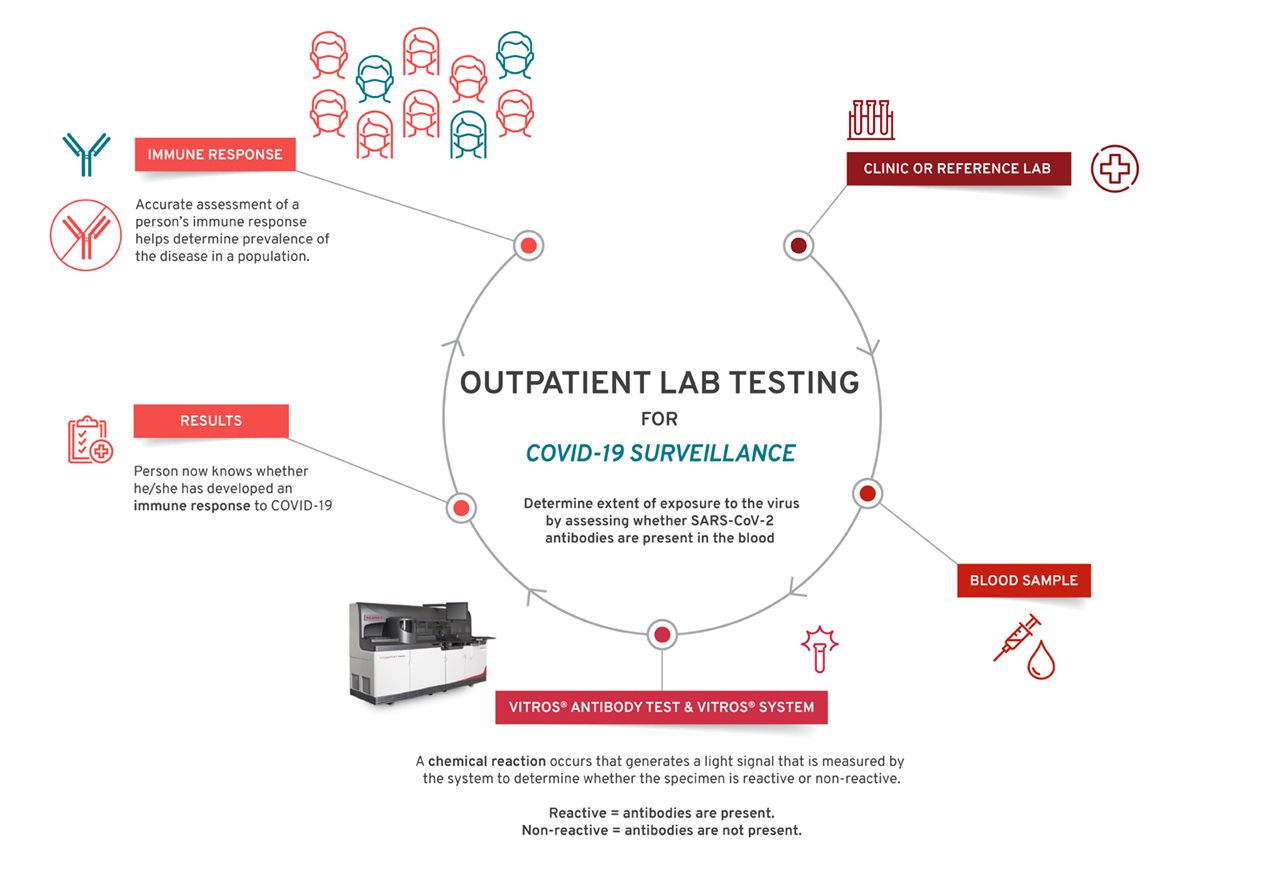
Once a person’s blood sample is collected and sent to a lab, the sample tube is centrifuged (spun out) to separate the blood into serum (liquid) and blood (plasma). Lab technicians load the tubes into a large instrument, called an analyzer, that runs multiple tests at one time. Lab-produced tests, such as Ortho Clinical Diagnostics’, contain small proteins from the COVID-19 virus. When the viral proteins mix with a sample of the person’s serum, the antibodies in the sample bind to the proteins and cause a chemical reaction, which is measured by the analyzer. The analyzer reports results as reactive (meaning the patient has COVID-19 antibodies) or non-reactive depending on the presence or absence of antibodies in the sample. The analyzer then sends the data directly to the hospital or lab’s information technology team, which provides the results.

What does antibody testing mean for the general public?

SARS-CoV-2 is a new virus and significant research is needed to better understand it. Lab technicians and virologists are hard at work studying the immune system’s antibody response, including how long the presence of antibodies in the blood may help “protect” someone from the virus. In illnesses such as chickenpox or the measles, the presence of antibodies can suggest that immunity will last a lifetime, while in others, like the rhinovirus, immunity can lapse after several weeks.

“Anyone who thinks they may have been exposed to COVID-19 should speak with their clinician to determine if they should get an antibody test,” said Chockalingam. “In this conversation, you should discuss the need for a serological test for COVID-19 with your physician and make sure a lab-quality test with EUA is selected so both you and your clinician can feel confident in the results.”

Speak with your healthcare provider for more information, or visit the CDC website to learn how antibody testing can impact you and your family.

For more information on Ortho’s COVID-19 test, visit www.orthoclinicaldiagnostics.com.

Several steps follow a patient’s journey from hospital admission to determining an immune response (shown above). The Centers for Disease Control and Prevention (CDC) also provides helpful guidance on interpreting COVID-19 test results and who should be tested.