When is a good time to buy a house?

2026-08-17T09:01:00

(BPT) – You’ve saved up a down payment, and you’re ready to buy a home. But before you talk to a real estate agent or start visiting open houses, you’re probably asking yourself, “Is it a good time to buy a house right now?”

The best time to buy a house is different for everyone. Instead of waiting for rates to drop or prices to cool, the better question is, “Am I ready to buy a house?” When your finances are solid and the numbers work for your life, a good time to buy isn’t something you wait for. It’s something you build toward.

Here are some simple steps from Navy Federal Credit Union to help you get started on your homebuying journey.

1. Check your credit.

Pull your free credit report at AnnualCreditReport.com and look for errors, outstanding balances or accounts in collections. Dispute any inaccuracies and pay down high balances where you can. If your credit needs improvement, it often takes some time for changes to be reflected, typically 3 to 6 months, before applying. Small improvements can help strengthen your application and support more favorable loan terms.

2. Build your budget.

Start with what you’ve saved, then subtract your estimated closing costs and moving expenses. From there, determine a down payment that still leaves room for financial flexibility and other homeownership expenses. From there, use a mortgage calculator to estimate your monthly mortgage payment based on factors like your down payment, credit profile and loan details — not just the maximum amount you may qualify for. Make sure to factor in property taxes, homeowners’ insurance and enough to cover utilities.

3. Compare lenders and get preapproved

A preapproval letter shows sellers you’re serious and tells you exactly how much you can borrow. To get preapproved, you’ll typically need recent pay stubs, 2 years of tax returns, bank statements and a valid ID. Shop with at least 2 or 3 mortgage lenders to compare rates and fees before you commit.

4. Research local market trends

Look at active listings, recent home sales and average days on market in the neighborhoods you’re targeting. Notice whether homes are selling above or below the asking price — that tells you a lot about competition. A local real estate agent can help you read the signals and move quickly when the right home comes along.

5. Find the right loan for your financial situation

Conventional mortgages, FHA loans, VA loans and adjustable-rate mortgages each offer different features. Exploring how they work can help you choose an option that aligns with your financial situation and plans. If you’re an Active Duty Servicemember or Veteran, a VA loan may allow you to buy with no down payment1 and no private mortgage insurance. It’s worth exploring all your options before you decide.

6. Make a home purchase with confidence

When your finances are solid, your preapproval is in hand and you find a home that fits your budget and your life, that may be a good time to buy. Don’t wait for perfect conditions — wait for what works for you.

This content is intended to provide general information and should not be considered legal, tax or financial advice. It is always a good idea to consult a tax or financial advisor for specific information on how certain laws apply to your situation and about your individual financial situation. Navy Federal Credit Union is federally insured by NCUA. Equal Housing Lender.

1100% financing subject to all VA rules, guidelines, and additional program requirements. All loans subject to approval. VA loans may include a funding fee, which may be financed up to the maximum allowed loan amount. Navy Federal has no affiliation with U.S. Department of Veterans Affairs or any other government agency.

Why More Homeowners are Making the Switch to Composite Decking

2026-08-04T07:01:00

(BPT) – For decades, building a backyard deck meant choosing wood and accepting the ongoing upkeep that came with it. Today, homeowners want more from their outdoor living spaces: the timeless beauty of wood paired with easy maintenance and lasting durability. Engineered to overcome many of wood’s drawbacks, composite decking delivers that combination, making it an increasingly popular choice for outdoor spaces designed to look great and perform for years to come.

Here are five reasons more homeowners are making the switch from wood to composite decking:

  1. Less maintenance, more enjoyment. People want outdoor spaces they can enjoy without adding more chores to their weekend to-do list. Traditional wood decking requires ongoing maintenance, including regular staining and sealing, to help preserve its appearance. Composite decking eliminates those recurring tasks. With no need to sand, stain or seal the boards, homeowners can spend less time maintaining their decks and more time enjoying them.
  2. Built to handle the elements. Decks face year-round exposure to sun, rain, snow and changing temperatures. Those conditions can take a toll on traditional wood, leading to problems like rot, warping and splintering. Composite decking is engineered for lasting performance, helping decks withstand harsh weather and everyday wear with less risk of deterioration over time.
  3. Engineered for beauty and performance. Today’s composite decking looks more like natural wood than ever while delivering performance wood can’t match. Realistic woodgrain patterns, rich colors and natural-looking variations capture the warmth and character of wood with the durability and low-maintenance benefits of a modern material. Recent innovations have also addressed common outdoor concerns, including heat-mitigating technology that helps keep boards cooler during peak sun and heat. Together, these advances give homeowners more freedom to create an outdoor space without sacrificing style or performance.
  4. A smarter choice for the environment. More homeowners are considering the environmental impact of the materials they choose. Composite decking reduces demand for virgin timber by using recycled and reclaimed materials. Trex decking, for example, is made from 95% recycled and reclaimed materials, including reclaimed wood and recycled plastic film, helping give new life to materials that might otherwise end up in landfills.
  5. An investment that pays off over time. While wood may have a lower upfront cost, ongoing maintenance, repairs and eventual board replacement can add up over time. Composite decking’s durability and low-maintenance performance make it a smart investment for homeowners planning for the years ahead. Long-term warranties of up to 50 years or more offer another layer of confidence in that investment, giving homeowners added peace of mind that their outdoor space will stand the test of time.

Ready to explore your options? Visit Trex.com to learn more about composite decking or take the Trex Deck Match Quiz to discover the best options for your home.

The True Cost of a Deck: Why Long-Term Value Outweighs Upfront Price

2026-07-14T12:01:00

(BPT) – When homeowners begin planning a new deck, the first question is often, “How much will it cost?” It’s an understandable starting point. After all, a deck is a significant investment. But the purchase price only tells part of the story.

Material choice — often between traditional wood and composite decking — has a major impact not just on initial cost, but on long-term value and satisfaction. Upkeep requirements, repair needs, durability and time spent maintaining the space all factor into the real cost of ownership, and ultimately, how much value a homeowner gets from their outdoor space.

Looking Beyond the Price Tag

One of the biggest misconceptions about composite decking is that it costs significantly more than wood. While that may have been true years ago, advances in manufacturing and growing consumer demand have narrowed the gap considerably. In fact, for an average 12-by-16-foot deck, the cost of materials difference between pressure-treated lumber and an entry-level composite product such as Trex Enhance® Basics can be as little as $150. Viewed through a long-term lens, that modest upfront premium can be quickly offset.

Beyond the initial purchase price, wood decking requires ongoing maintenance to preserve its appearance and structural integrity. Regular cleaning, sanding, staining and sealing are needed to protect against moisture, UV exposure and everyday wear. Homeowners can spend hundreds of dollars on these tasks, with each maintenance cycle averaging around $400 for materials for the do-it-yourself homeowner. Hiring a professional makes it even more expensive to maintain a wood deck.

These ongoing demands can also affect homeowner satisfaction. In fact, a recent survey* found that 78% of wood deck owners report some level of regret with their decking material, often tied to maintenance requirements and ongoing upkeep. When those recurring expenses are factored in, the initial price difference between wood and composite decking can often be recovered within just one or two maintenance cycles, with savings continuing to build across years of ownership. However, one of the biggest benefits of most composite products is that they feature fade and stain warranties. While wood visibly deteriorates, even while maintained, composite decking holds on to day one aesthetics for years.

The Value of Time

The costs associated with a deck aren’t measured only in dollars. For many homeowners, weekends are a valuable commodity. Time spent power washing, sanding and refinishing a deck is time not spent with friends and family, relaxing outdoors or pursuing other projects and pastimes.

As outdoor living spaces increasingly function as extensions of the home, convenience has become an important part of the value equation. Materials that require less upkeep allow homeowners to spend more time enjoying their outdoor spaces and less time maintaining them.

Durability Matters

Durability also plays a major role in long-term value. A deck is exposed to some of the harshest conditions around the home, with sun, rain, snow, humidity and fluctuating temperatures all taking a toll over time. Wood decks can develop cracks, splinters, warped boards and other signs of deterioration as they age. Beyond affecting appearance, these issues can create safety concerns and lead to repair costs that many homeowners don’t anticipate when budgeting for a deck.

Composite decking products, by contrast, are engineered to resist common issues such as rotting, warping and splintering, helping maintain a more consistent appearance and reducing the likelihood of major repairs or replacement. While wood decks typically begin to show significant signs of deterioration within about a decade, high-performance composite decking can be backed by limited warranties of up to 50 years, underscoring its long-term durability and value.

Thinking Like an Investor

When making major home purchases, whether it’s a new vehicle, a roof replacement or new appliances, homeowners naturally look beyond price to consider long-term value, including maintenance, lifespan and overall cost over the life of the product. Decking deserves the same consideration, especially given that it is one of the most significant outdoor investments many homeowners will make.

As that mindset becomes more common, it is driving increased interest in composite decking, which is designed to minimize upkeep and deliver lasting performance for years to come. The bottom line is, the smartest deck investment isn’t simply the one with the lowest purchase price. It’s the one that continues to deliver durability, aesthetics and enjoyment well into the future.

For more information about composite decking, visit trex.com.

*Source: 2026 Wood Regret Survey, Atomik Research

Backyard transformation ideas for the perfect summer relaxation spot

2026-07-13T14:01:00

(BPT) – In summertime, backyards come to life, becoming destinations for fun, gathering and relaxation. Whether you’re hosting cookouts, lounging poolside or unwinding after a long day, thoughtful design helps you get more enjoyment out of every square foot.

Design of outdoor spaces has been influenced by recent trends captured in the 2026 U.S. Houzz Emerging Summer Trends Report and Yardzen’s 2026 Trend Report. Current backyard ideas reflect homeowners’ desires for softer, cozy spaces with nature-inspired colors, along with increased interest in sustainability and small-space maximization.

To create spaces in line with these trends while also being comfortable, functional and built to last, homeowners can find inspiration for durable paver patios, outdoor kitchens, fire features and poolside gathering areas from Belgard. Using Belgard’s tools and resources, elevated outdoor living spaces can support everything from quiet, peaceful mornings to lively summer celebrations.

Create the foundation

Every successful outdoor living space starts with a well-designed patio. This basic structure sets the stage for dining, entertaining and relaxing all summer.

Pavers are a highly versatile option for backyard patios, combining durability with design flexibility. Available in many sizes, textures and colors, pavers can complement any architectural style, helping define how the space functions. Large-format pavers create a clean, contemporary look, while modular layouts add visual interest and naturally establish separate areas for dining, lounging and entertaining.

During summer storms and seasonal weather events, permeable pavers offer an added layer of functionality, allowing water to filter through the surface and into the ground below. This process helps manage runoff while maintaining the finished appearance of a traditional paver patio.

null

Permeable pavers, such as Belgard’s Aqualine™, Eco Cobble® or Turfstone™ series, are gaining traction with homeowners for these water management efficiency and low-maintenance benefits. Yardzen reports that for 2026, the traditional lawn is being replaced by more dynamic, layered ground systems that do away with the need for extra watering and pesticides.

Whether you’re choosing traditional pavers or a permeable system, investing in a durable foundation ensures your backyard remains beautiful, functional and low maintenance for years to come.

Design outdoor “rooms”

Just as interior spaces are designed for different activities, outdoor spaces work best when each area serves a specific purpose. An outdoor cooking and dining area near the home can simplify outdoor meals and entertaining, while a nearby lounge space creates a comfortable place for conversation and relaxation. Belgard Rooms can provide designs to serve as a starting foundation to spark inspiration, or as a complete guide for a backyard renovation.

For avid hosts, modular systems like Belgard Artforms™ incorporate kitchens into the overall patio design, maintaining a cohesive aesthetic. Adding preparation space, storage and serving areas creates a natural hub for entertaining, encouraging guests to spend more time outdoors.

null

The hardscape materials chosen for each outdoor room can also help define how the space looks and functions. Large-format pavers such as Dimensions™ create clean lines and a contemporary foundation for dining and lounge areas, while pavers like Charlestone™ offer timeless character that complements traditional and transitional outdoor designs. Using complementary pavers, walls, steps and accents throughout the project helps create a cohesive outdoor environment that feels intentional from the ground up.

To separate spaces and provide extra seating, built-in seating walls provide additional gathering spaces without needing extra furniture. This is vital for smaller outdoor spaces. Lawn square footage has dropped 25% year over year, and homeowners are looking for ways to maximize every square foot of their outdoor living space. The Houzz study revealed increased interest in planning for smaller yards, with searches for “small front yards” up 79%, “small patio garden” increasing 57% and interest in “small backyard” up 43%. Modular hardscape systems make it easier to create multifunctional outdoor rooms that support dining, entertaining, relaxation and recreation without sacrificing style or usability.

null

Elements like railing and fencing help homeowners define and enjoy outdoor spaces as well. Modern railing systems, like those from RDI Railing, can help frame elevated decks, patios, front porches and transition areas without interrupting sightlines, while fencing can create privacy around dining spaces, pool areas, side yards or wellness zones. For example, Catalyst‘s Manchester Fence with AlumiCast reimagines the classic fence style while featuring clean lines and a refined profile.

Coordinate your choice of pavers with walls, steps and other hardscape features for a cohesive outdoor environment that feels intentional from the ground up. Together, these details help outdoor living areas feel more finished, comfortable and connected to the home’s overall design.

Add comfort, night and day

Cozy, comfortable vibes are vital for a truly functional backyard, both day and night. Shade structures like pergolas and pavilions make outdoor spaces more enjoyable during summer’s hottest days. In addition to providing relief from the sun, structures frame outdoor rooms and create visual interest.

As the sun sets, fire features extend enjoyment of the space. Fire pits and fireplaces create cozy gathering places for conversation and relaxation long after dinner is over, adding ambiance and year-round appeal.

Elevate poolside relaxation

For homeowners with pools, the surrounding hardscape is just as important. Pool decks, walkways and lounging areas influence how comfortable and inviting the space feels overall.

Pavers are a popular choice for pool environments because they offer durability, design flexibility and a sophisticated appearance. Coordinating poolside hardscapes with nearby patios creates a seamless transition between recreation and relaxation areas, improving the overall flow of the backyard.

null

Products like Belgard’s Delmaro™ Coping create a refined edge around the pool. Paired with premium pool finishes including those offered by PebbleTec®, these design elements create a polished, resort-inspired atmosphere. The result? A backyard that feels cohesive, comfortable and ready for pool parties or quiet afternoons in the sun.

Definitive details

Once major elements are in place, thoughtful design details bring an entire space together. For example, herringbone layouts offer movement and depth without overwhelming a space, while modular patterns introduce visual rhythm and architectural character. Color coordination helps patios complement home exteriors, landscaping and outdoor furnishings.

Decorative accents can provide additional personalization. Finishing touches available through Belgard’s Elements collection can introduce subtle design details reflecting each homeowner’s style, while maintaining a cohesive look throughout the space.

Your ideal summer backyard

The best summer backyard transformation ideas balance beauty, comfort and functionality. Combining durable paver patios with outdoor kitchens, fire features, shade structures and thoughtfully designed poolside spaces, homeowners can create living areas that support everyday relaxation and memorable gatherings.

null

Whether you’re planning a full backyard renovation or making smaller enhancements to the current space, investing in versatile, low-maintenance outdoor living features can transform any backyard into a destination worth enjoying all season long.

Find more design inspiration at Belgard.com.

*Source: Data reflects year-over-year growth in U.S.-based searches on Houzz from January-March 2026 versus January-March 2025.

4 simple ways to outsmart rising energy costs

2026-07-07T07:01:00

(BPT) – It’s hard to ignore the creeping price of the monthly utility bill and the sting of gas prices at the pump. These rising costs have made it more difficult for Americans to budget effectively for monthly expenses. How can households afford power sources that feel increasingly unreliable?

Luckily, homeowners and renters can take back control of their energy use, even amid unpredictable energy costs and volatile gas prices. Here are a few ways you can achieve energy independence and stabilize your home energy costs.

Upgrade to energy-efficient appliances

Refrigerators, washers, dryers and dishwashers are the workhorse appliances of any home. They’re also heavy energy consumers. However, you can still enjoy these modern conveniences and lighten your energy load by upgrading to certified ENERGY STAR appliances.

When you switch to an ENERGY STAR appliance, you can save 10%-50% on energy costs compared to conventional models. That’s because these modern, efficient appliances use significantly less power to do the exact same job as older models. By switching, you can keep your home running smoothly while naturally lowering your energy usage month to month.

Pro tip: Big changes start small. Consider switching your current light bulbs to energy-efficient LED light bulbs.

Install a smart thermostat

Heating and cooling account for the bulk of your monthly energy bill. So, how can you keep your home comfortable and your wallet happy? You don’t need to suffer in the sweltering summer or freezing winter. All you need to do is install a smart thermostat.

A smart thermostat learns your daily routine and adjusts the temperature when you’re sleeping or away from home. In short, it allows you to program your comfort. This instant automated control of your environment is a seamless way to lower heating and cooling costs and enjoy your time at home without the hassle and guesswork of manual adjustments.

Use heavy energy-consuming appliances during off-peak hours

Did you know that electricity costs change depending on the time of day? Check with your utility company. You may be surprised to find that you’re paying premium rates during peak hours, usually in the late afternoon and evening.

Do a little digging and find out your area’s time-of-use rates. Once you know the peak-use window, you can outsmart the grid by using your heavy, energy-intensive appliances during off-peak hours. Try running your dishwasher or doing laundry in the morning or late at night and see how much you save.

Embrace a clean energy home backup

Achieving true energy independence means having the ability to power appliances no matter what the grid is doing. To gain independence and make a sizable dent in energy costs no matter what gas prices and electricity rates are, homeowners and renters should consider always-on clean-home battery backup solutions like Jackery solar generators. Unlike traditional gas generators, these portable power stations are clean and quiet. That means no expensive fuel runs, noxious fumes or noisy operation. Plus, sunlight is free, so once you own a solar-powered generator, you can count on cost-stable energy.

Jackery’s gasless, indoor-safe home batteries pair a portable power station with solar panels so that you can capture, store and use power on your own terms. By using the solar generator’s stored power during peak hours, you can offset your energy bill and keep the essentials like refrigerators, laundry machines, fans and WiFi routers running, even when costs are high or the grid is down. You can even opt to connect a solar generator to your home’s circuits with automatic switchover, like the Jackery Solar Generator 5000 Plus combined with a smart transfer switch so backup kicks in seamlessly when you need it the most.

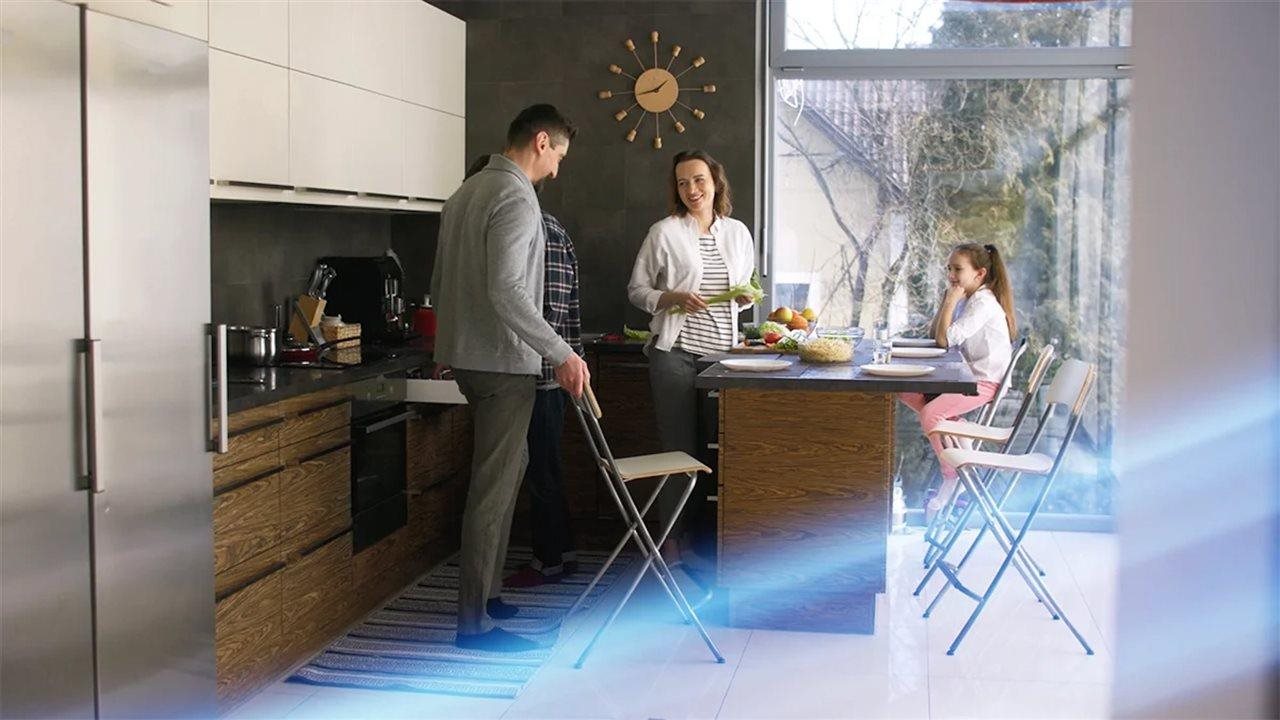
Family having dinner in the kichen while the Jackery Solar Generator 5000 Plus powers their home from the garage.

Jackery’s generators are designed with modern living spaces in mind and meant to fit a real home, not to hide in the shed. So, whether you need to charge your computer, power a fridge or run essentials across multiple rooms at once, there are plenty of options that let you ride out price spikes and outages without lifting a finger.

Energy savings and independence are within reach

Lowering your energy costs doesn’t mean you have to sacrifice modern comforts. Using these tips can get you started on the path to energy independence and a better energy budget, no matter the current energy and gas prices.

To learn more about how to take back control of your energy costs and the benefits of solar battery backup solutions, visit Jackery.com.

Top bathroom design trends homeowners are embracing right now

2026-07-01T07:03:00

(BPT) – Homeowners seeking transformative bathroom renovations may be surprised to learn just how accessible it is to realize their vision. Current trends topping the list in bathroom design this year include greater design personalization, handcrafted home materials and a more cohesive overall design. All of these are possible to achieve with the help of Kohler® bathroom solutions.

Explore these options to help you shape a vision for a bathroom that feels as elevated as it is functional, creating a look and ambience that expresses your sense of style.

Personalization through design

A set of ring-shaped faucet knobs on a marble tub.

One huge trend shift in 2026 bathroom design is away from a minimalist approach and toward a more personalized aesthetic. Consider this space as an opportunity to explore a look uniquely your own, instead of making your bathroom look just like everyone else’s.

To help you create the look you want, Kohler® makes customization easy by offering Mix & Match faucets. You can select your own combination of spout, handle and finish from these three distinct collections with different style expressions — traditional, transitional and modern — for over 50 possible combinations:

  • Components® lets you elevate your bathroom space with bold sophistication, where strong lines meet smooth forms to create faucets with a distinctly modern aesthetic. New York-based designer Cara Woodhouse selected Components® faucets as a feature in a recent home renovation.
  • Occasion® is a sculptural collection where pentagonal accents and mod shapes come together to create faucets fashioned to be the center of attention.
  • Artifacts® captures the charm of turn-of-the-century homes, using vintage silhouettes and elegant details for a look that never goes out of style.

To create your unique look, simply:

1. Choose your spout: Select from a variety of shapes and sizes, as well as deck- or wall-mount options for a design to anchor your space.
2. Choose your handles: Pair your faucet with a range of handle options including lever, cross and industrial styles.
3. Choose your finish: Select your desired tone (polished, brushed or matte), that you can elegantly coordinate or unapologetically contrast with accessories, lighting and showering components.

Sustainability and craftsmanship

A white rectangular vessel sink on a marble countertop.

Another trend that’s continuing to gather steam is prioritizing sustainable materials and methods. Combined with concern for the environment, this trend also favors design elements that are well-crafted rather than cookie-cutter or seemingly mass produced.

If this trend speaks to you, consider a WasteLAB® DemiLav® rectangular vessel sink when you’re planning your next bathroom upgrade. Each sink is made with at least 70% recycled materials sourced from manufacturing waste streams. Handcrafted by artisans and American made, these sinks are made in small batches, creating natural variation and individuality.

WasteLAB® DemiLav® sinks are designed to balance sustainability with high design, offering a unique, expressive focal point. Each sink brings craftsmanship to your bathroom, with a refined, elegant design featuring a deep, symmetrical basin with rounded edges. These sinks meticulously transform repurposed industrial materials into sophisticated and luxurious centerpieces, without compromising sustainability.

Cohesive bathroom design

A sink with golden accents in an ornate bathroom.

Another way to elevate your bathroom’s look is by creating an overall cohesive design, a trend that can be achieved using repeated colors through color drenching — even using the same color for walls, trim and ceiling — to unify the look of any space.

For a truly cohesive bathroom design, the Kohler x Studio McGee Claude collection offers an authentically timeless full-suite collection including toilets, sinks, vanities, mirrors and baths that are all designed in a modern classic style, though inspired by historic details. Designed to create a coordinated aesthetic across the entire space, this collection blends timeless design elements with modern performance. The Kohler x Studio McGee Claude collection uses architectural detailing and classic forms for a modern yet enduring look.

Within this collection, you can choose from three different bathroom sink options (console, pedestal and undermount) to tie powder rooms, guest bathrooms and primary bathrooms together in a home without over-repeating.

Customizing your home so it’s uniquely your own, with sustainable options and cohesive spaces, is a goal you can make happen, with the right approach and products meant to inspire.

For whatever direction you want to go with your next bathroom transformation, explore all the possibilities at Kohler.com.

What you need to know about choosing a gas-powered lawn mower

2026-06-25T08:01:00

(BPT) – Key Takeaways

  • When you’re looking for a lawn mower, make sure to learn about important differences between gas- versus battery-powered models.
  • Battery-powered lawn mower owners often experience dissatisfaction due to their concerns around their cost, convenience and performance.
  • In a recent study, consumers share what they learned about the disadvantages of battery-powered mowers.
  • Gas mowers offer higher torque, stronger performance, longer run time and better long-term durability than battery-powered mowers.
  • Briggs & Stratton provides gas-powered lawn mowers that are easy to use, durable and deliver peak power from start to finish.

Many owners of battery-powered lawn mowers are dissatisfied with their purchase, for a variety of reasons. In fact, 92% of battery mower owners who replaced their original battery did so within the first two years of ownership, revealing that their batteries don’t always run as long as owners would want. This is just one of many surprising insights from a study* conducted by Hanover Research that uncovers details about experiences consumers have had with battery-powered mowers — and why they might choose differently next time.

If you’ve shopped for a lawn mower in 2026, or recently purchased one, you may not have considered the value of basic engine power. In today’s market where battery-powered mowers are everywhere, it’s easy to overlook the long-term durability and reliability offered by traditional gas mowers.

Here are key facts you should know before your next mower purchase — especially if you’re one of the 64% who bought a battery mower five years ago and are now “highly likely to consider gas-powered mowers” in the future.*

What are the differences between battery and gas lawn mowers?

The differences between gas and battery lawn mowers don’t start and end with their power source.

One key advantage of gas-powered mowers is that they offer a longer run time. If you have a large yard, knowing you can finish the job without having to stop to recharge a battery makes a huge difference. The Hanover Research study found that 25% of battery mower users needed more than one charge to cut their lawn.

Woman pushing a gas-powered lawn mower in the backyard. Briggs and Straton builds a durable, long-running engine.

Other key benefits gas-powered mowers offer include:

  • Powerful, sustained torque to tackle long, wet or thick grass
  • Long-running, durable and reliable engine power
  • Faster time to refill a gas tank (45 seconds) versus recharging a battery (45 minutes)

Gas mowers also score ahead of battery mowers for cutting grass more evenly and bagging grass more efficiently. Using a battery mower, 30% of homeowners find they’re cutting more often, and 11% are cutting much more often, compared to using a gas mower.*

Lithium-ion batteries that run battery-powered mowers, which need to be replaced at least every 3-5 years, can cost up to $500 or more.

What is the cost difference to operate a gas mower versus a battery mower?

The upfront price of battery-powered lawn mowers is generally higher than gas-powered models, which matters when you’re trying to stick to a budget.

But there are hidden costs too: Lithium-ion batteries that run battery-powered mowers, which need to be replaced at least every three to five years, can cost up to $500 or more.

The Hanover study found that 50% of battery mower owners actually had to replace their battery as early as year two. Some users of battery mowers found that battery capacity diminished over time (25%), experienced poor battery performance (14%) or discovered that the battery took too long to charge (20%). Even worse, batteries can overheat, shut down or lose two-thirds of their run time when cutting thicker grass. Of those who replaced their original battery, 83% replaced it to increase capacity/run time, and 78% felt that the original battery “should have lasted longer.”

Person running lawn mower in the tall grass. Briggs and Straton mowers have powerful, sustained torque for thick grass.

Battery-powered lawn mowers can also cost far more when you need to repair or place parts, as they may involve expensive component replacement costs and specialized diagnostics that are not found in traditional gas-powered motors.

Where to locate a high-quality gas-powered mower

Sometimes the classics are classics for good reason. When you’re in the market for a new lawn mower, consider a gas-powered mower from Briggs & Stratton. They offer sustained torque and virtually unlimited run time, with a multi-decade history of durability. Their gas-powered mowers offer a long-term investment you can rely on every time, season after season.

Man using a gas-powered mower to cut his lawn. Briggs and Stratton lawn mowers are durable and easy to use.

Learn more and find your next favorite mower at BriggsAndStratton.com.

*The Electric Mower Sentiment Study, conducted by Hanover Research, was completed in June 2024 and had 593 respondents.

Art without artifice: Why intentional kitchens are defining the next era of design

2026-06-24T09:01:00

(BPT) – As homeowners increasingly seek spaces that feel personal, functional, and enduring, a new design philosophy is taking hold: intentionality through restraint. Today’s kitchens prioritize thoughtful omission, where every detail serves a purpose and every element tells a story. With this shift, kitchens are becoming more curated and collected, evolving alongside the people who use them. The Brizo® Faircroft™ Kitchen Collection is one example of how manufacturers are responding to this broader shift toward kitchens that value both beauty and utility, blending historical influences with contemporary performance.

Living finishes and the return of patina

Brizo<sup><sup>®</sup></sup> Faircroft™ Kitchen Collection Widespread Kitchen Faucet With Arc Spout and Side Sprayer in Unlacquered Brass” width=”600″ border=”0″></div>
<div class=Brizo® Faircroft™ Kitchen Collection Widespread Kitchen Faucet With Arc Spout and Side Sprayer in Unlacquered Brass

Minimalist, understated interiors once defined contemporary kitchens, but today’s homeowners are gravitating toward warmth, authenticity, and inviting spaces. Living finishes like Unlacquered Brass embrace imperfection while bringing depth and character into the home. Over time, the material reacts to touch, environment, and daily use, developing a patina unique to each space. As the finish naturally patinas, it creates a kitchen that feels distinctly personal and reflective of its use over time.

Technology that disappears into daily life

As kitchens become more purposeful, innovation is evolving to match. Rather than competing for attention, today’s most effective solutions simplify daily tasks while remaining visually unobtrusive. The Faircroft™ Kitchen Collection introduces the brand’s first widespread kitchen faucet that incorporates SmartTouch® Technology, enabling intuitive, touch-activated use. From meal prep to cleanup, users can activate the faucet with a simple touch, streamlining everyday tasks without disrupting the visual integrity of the space.

The rise of integrated utility

Integrated functionality now sits at the center of kitchen design, ensuring every detail supports daily routines. Homeowners are seeking solutions that work together to create a more intuitive experience. The Wall Mount Bridge Faucet from the Faircroft™ Kitchen Collection reflects this shift, pairing architectural design with a full suite of integrated accessories. A soap dispenser, jewelry tray, soap tray, towel bar and basket keep essentials within reach while maintaining a cohesive visual language throughout the kitchen.

Today’s kitchens are once again being designed to reflect the lives lived within them — the meals shared and memories made, reminiscent of 1930s and 1940s American kitchens where fixtures were built to age gracefully alongside the home. At the same time, they are being reimagined to support the realities of modern life through technology, thoughtful integration, and materials that grow richer with use. The result is a kitchen designed not only to endure, but to deepen in meaning over time.

Beyond the thermostat: What today’s homeowners really need to feel comfortable at home

2026-06-23T09:17:01

(BPT) – When homeowners think about indoor comfort, temperature is usually the first consideration. Thermostats are adjusted, or vents are opened or closed. But if you have ever walked into a room that displayed the right temperature but still seemed sticky and stuffy, or a bedroom that just won’t cool down, you’ve experienced the bigger picture of comfort.

Indoor comfort is not just about temperature; it is also about humidity, airflow and how evenly a home is cooled or heated. For example, humid air can feel heavy, sticky and warmer than it actually is, while dry air can cause discomfort and irritation.

As homeowners come to this realization, they are often looking beyond basic heating and cooling and thinking about comfort more holistically. The HVAC industry now produces systems that control temperature and moisture, noise levels and more, all things buyers should consider when contemplating upgrading their home system.

The secret to better comfort: Variable-speed compressor technology

One of the most effective advancements in this space is the use of variable-speed compressors. Think of a traditional single-stage system like a car with only two speeds, parked or full throttle. A variable-speed system, by comparison, operates more like cruise control, automatically adjusting to maintain a smooth, steady ride. Unlike traditional single-stage systems that cycle on and off at full capacity, variable-speed technology adjusts output continuously to match the home’s needs.

This longer, steadier operation allows systems to better manage humidity by removing more moisture from the air over time rather than just rapidly cooling it. The result is a more consistent indoor environment that feels less clammy, more comfortable and operates with a system that is more energy efficient. This approach also supports better indoor air quality.

By reducing excess moisture, homeowners can limit conditions that contribute to mold growth and other issues. For families increasingly focused on health and wellness at home, humidity control is a primary driver of comfort.

Less noise, more comfort

At the same time, comfort is not just about how a space feels, but also how it sounds. As homes evolve into multi-functional spaces such as offices, classrooms and relaxation areas, noise from mechanical systems can become a noticeable disruption.

Modern HVAC systems, such as Rheem®‘s Endeavor® line, are rising to meet that expectation through thoughtful engineering and advanced components. HVAC systems with variable-speed compressors, for example, have fewer moving parts than traditional designs, resulting in smoother, quieter performance. When paired with sound-dampening features such as insulated compressor compartments, optimized refrigerant flow, and precision-balanced fan blades, these systems can achieve sound levels comparable to a normal conversation.

Fan and airflow design also play a crucial role. By carefully engineering airflow paths and reducing turbulence within the unit, manufacturers minimize vibration and mechanical noise. The result is a system that performs efficiently and quietly, an increasingly important factor in open-concept homes where living, working and sleeping areas often overlap.

Even temperatures: Utilizing zoning comfort solutions

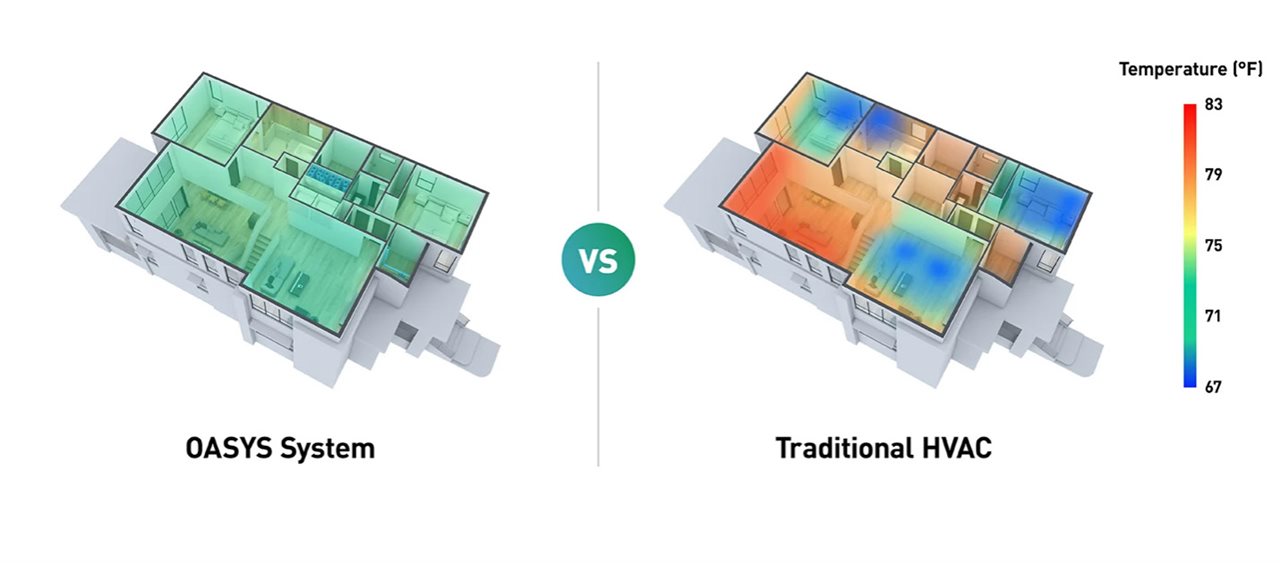
Beyond humidity and acoustics, another key factor in shaping indoor comfort is consistency from room to room. Many homeowners are familiar with the frustration of hot and cold spots, like bedrooms that never seem to cool down, basements that feel damp and chilly or second floors that trap heat. These imbalances are often the result of traditional systems delivering uniform output to spaces with very different needs.

Zoned comfort solutions address this challenge. By dividing a home into distinct areas, or zones, and controlling each independently with multiple units, HVAC systems can deliver the right amount of heating or cooling exactly where it’s needed. Multi-stage systems further enhance this capability by adjusting output in increments, thereby avoiding the temperature swings associated with single-stage operation.

Ductless mini-split systems, increasingly common in everything from sunrooms and home additions to primary living areas, provide advanced zoning and deliver precise room control without ductwork. These systems are great for additions, older homes or spaces with unique comfort needs. By stabilizing temperatures throughout, zoning technology helps eliminate inconsistencies that undermine comfort. The practical result: One family member can keep the home office cool for focused work while another enjoys a warmer living room, all without compromise.

Together, innovations such as humidity control, quiet operation and zoned performance can help to create a comfortable, relaxing indoor space. Comfort is no longer a single number on a thermostat, but a balance of temperature, moisture, sound and consistency.

Manufacturers like Rheem, a leader in the HVAC industry, drive this evolution by combining advanced compressors, noise reduction and flexible designs into next-generation systems, resulting in refined indoor living suited to today’s needs.

For today’s homeowners, comfort is no longer defined by a single number on a thermostat — it’s the sum of every breath, sound and temperature in the spaces where life happens. The HVAC systems being built today are finally catching up to that reality, creating comfortable, quieter and more adaptable living spaces.

6 reasons to choose new construction over existing properties

2026-06-11T08:01:00

(BPT) – The housing market changes by the day, creating both challenges and new opportunities for buyers navigating today’s uncertainty. Amid this fluctuating landscape, newly constructed homes are rapidly gaining traction as a smarter alternative to resale properties. With competitive pricing, modern features and minimal surprises, these homes are reshaping perceptions of what is affordable and attainable.

Here’s why an increasing number of buyers — from first-timers to luxury seekers — are prioritizing new builds over previously owned options.

1. Builder incentives are closing the price gap

The generalized notion that new construction costs significantly more than resale homes doesn’t consider all factors. Today’s housing market offers a range of value-driven opportunities that help make new construction more attainable, from reduced mortgage rates to lower closing costs. Builders like Century Communities are streamlining the homebuying process, making new homes a smart investment with modern features, energy efficiency and fewer unforeseen expenses, all while delivering lasting value for years to come.

“These financial advantages often lower closing costs and reduce monthly payments, making new construction competitive with, or even more affordable than, resale homes once you factor in the mortgage and any immediate repair costs older homes typically require,” said Jim Francescon, an executive at Century Communities. “As a rule of thumb, resale homeowners should expect to set aside 1% to 4% of their home’s value annually for repairs and maintenance — on a $400,000 home, that’s up to $16,000 per year. With a new build, builder warranties and modern systems can significantly reduce these costs, offering buyers considerable savings in the early years of ownership.”

According to the National Association of Home Builders, 64% of builders offered sales incentives and 37% cut prices in 2025. Other financial benefits builders may offer include lower closing costs and reduced interest rates, making homeownership more affordable.

2. Skip the bidding wars and costly surprises

Resale homes often come with competition and unexpected expenses. Multiple-offer situations can drive prices above asking, while inspection reports frequently reveal costly issues: aging roofs, outdated HVAC systems, problematic plumbing or electrical work that doesn’t meet current code.

New construction eliminates these headaches. Everything is new, built to current standards and comes with warranties, meaning you won’t face a potential $15,000 HVAC replacement or $20,000 roof repair in your first year of homeownership.

3. Energy efficiency that impacts your monthly budget

Today’s building codes mandate energy efficiency standards that didn’t exist even a decade ago. The result? New homes feature better insulation, energy-efficient appliances and advanced window technology that significantly reduce monthly utility costs.

For example, new homes from Century Communities include features like ENERGY STAR®-certified appliances, Low-E windows, WaterSense®-certified fixtures and tankless water heaters that aren’t just environmentally friendly, they translate to real savings every month. Over years of homeownership, the difference between heating and cooling a new home versus an older one can amount to thousands of dollars.

4. Modern layouts designed for how people actually live

Couple and kids playing on the couch in their livingroom.

Resale homes often reflect outdated design trends, closed-off rooms, limited storage, smaller closets and floor plans that don’t accommodate today’s work-from-home reality or open-concept living preferences.

New construction from homebuilders like Century Communities offers layouts tailored to contemporary lifestyles, with flexible spaces, home office options and — depending on the stage of construction — the ability to customize finishes, colors and fixtures before you move in. No need to live with someone else’s choices or spend additional money renovating.

5. Warranty protection and peace of mind

New homes typically come with builder warranties covering structural elements and major systems, protection rarely available with resale properties. This coverage reduces the stress and financial risk of unexpected failures during your first years of homeownership.

6. The market advantage

While personal preferences vary, the current market conditions make new construction particularly appealing. The combination of builder incentives, modern efficiency standards and move-in-ready quality is creating value that’s hard to match in the resale market.

For buyers weighing their options, new construction deserves serious consideration — not just as the premium choice, but as the practical one. To learn more about the advantages of buying a new build and to explore a range of high-quality homes at various prices, visit CenturyCommunities.com.