How to do laundry during COVID-19: Do’s and dont’s

2020-10-02T10:23:00

(BPT) – Good laundry practices in the home are more important than ever. Recommendations from the North American Cleaning and Sanitization Expert Panel, which recently convened in a workshop hosted by the University of Arizona, offer guidelines to help reduce the spread of infections and illness when it comes to laundry practices in your home. These methods can give you better peace of mind, knowing that you’re doing all you can to help reduce the spread of viruses that cause COVID-19, the flu and colds.

Here are some easy-to-follow do’s and don’ts for laundry best practices in your home:

DO use a deeper-cleaning, high-quality laundry detergent that removes deeply embedded soils and germs.

According to one of the experts on the panel, microbiologist and University of Arizona professor Dr. Charles P. Gerba, regular good laundry practices, combined with the use of a deeper-cleaning, high-quality detergent and precautions like washing your hands after handling soiled or wet laundry is enough to reduce the spread of respiratory viruses.

“Viruses that cause colds, flu and COVID-19 are very sensitive to the surfactants found in deeper-cleaning, high-quality laundry detergents,” said Dr. Gerba. “Combined with the regular laundry process and special handling precautions including hand washing, deeper-cleaning detergents can provide better protection for you and your family versus the use of lighter cleaning detergents.”

DO always wash or sanitize hands after handling soiled laundry and transferring wet laundry from washer to dryer, even in healthy households.

DO use special precautions if COVID-19, the flu, or a cold is suspected or confirmed. Wear disposable gloves if possible when handling dirty laundry (clothes and linens) from a person who is sick. Dirty laundry from a person who is sick can be washed with other people’s items. Do not shake dirty laundry. Clean and disinfect clothes hampers, appliance and other surfaces that contact soiled laundry. Remove gloves, and wash or sanitize hands right away. Wash or sanitize hands again after transferring wet laundry from washer to dryer.

DO frequently wash clothing and other items such as bath towels, hand towels and kitchen towels. Bedsheets and especially pillowcases also require frequent laundering.

DO use the highest temperature clothes washer setting you can safely use, according to the care instructions for the items being laundered if a respiratory illness such as COVID-19, the flu or a cold is suspected or confirmed. Healthy households can wash clothes in cold water.

DO regularly clean and disinfect your home’s clothes hampers, appliances or other surfaces that come into contact with soiled laundry.

DON’T use a laundry sanitizer for everyday cleaning. Laundry sanitizers are an added extra step needed during specific illnesses, such as the stomach flu, and are not needed to protect you and your family against the viruses that cause colds, the flu, and COVID-19. In special situations where a laundry sanitizer is recommended for use, it should always be used after washing with a deeper-cleaning laundry detergent.

DON’T wait to wash soiled clothes or bedding of an ill family member — wash those items as soon as possible to avoid spreading infection in your household.

DON’T wash bedding or clothes from a family member who is ill with an enteric virus (stomach bug, vomiting and diarrhea), has a weakened immune system, or work clothes contaminated by germs from sick people or animals together with laundry from other members of the household. Keeping that laundry separate can help prevent viruses or bacteria from spreading to others. Wash in hot water, using a deeper-cleaning laundry detergent plus a registered sanitizer and/or sanitizing cycle on the washing machine. Dry in a dryer on high heat. Wearing disposable gloves when handling soiled laundry from an ill household member can provide an extra layer of protection.

Following these laundry practices can help ensure your family will be less likely to spread bacteria or viruses, says Dr. Gerba, helping to reduce the risk of illness for everyone in your home.

Learn more about good laundry and cleaning practices as recommended by the North American Cleaning and Sanitization Expert Panel by visiting News.Arizona.edu/story/dirt-laundry-and-how-reduce-your-risk-getting-sick.


5 tips for online grocery shopping success

2020-10-02T14:37:00

(BPT) – Online grocery shopping is on the rise, and the options are plentiful — from having a shopper deliver goods at your door to curbside pickup and more. But even the most experienced grocery shoppers may find they need to learn some new tricks to achieve online grocery shopping success.

Tip #1: Find the delivery method that best suits your needs

Need lots of fresh produce delivered right away? Look for a service that gives your list to a personal shopper to take through a local store and deliver at your doorstep. If you’re looking to stock up on pantry staples, a service that ships from a warehouse is a great way to get what you need without having to step foot inside a store. Many stores are also offering curbside pickup, where you pick out your items online, check out and drive to the store to have your order placed directly into your trunk.

Tip #2: Be an eco-friendly online shopper

There are plenty of opportunities to keep sustainability in mind while online grocery shopping. Packages that weigh less will translate to reduced carbon emissions during shipping. For example, carton packages are about 60% lighter than cans, and they are made mainly from renewable materials. Even pet food can be found in cartons.

Keep in mind that many of your chilled favorites, such as milk or plant-based dairy alternatives, may also be available in shelf-stable cartons. This means the product doesn’t need to be chilled during shipping, eliminating the need to pack items on ice. No matter how long shipping takes, or how long the box remains on the doorstep, your items will arrive safe to eat and with the quality you expect.

Tip #3: Plan ahead

Take advantage of the ability to assemble your grocery cart at home by assessing any long-term needs for staple items, like pasta, broths and beans. If you’re short on food storage space, look for foods packaged in square shapes. Stackable, shelf-stable cartons help make the most of every inch. Many canned goods now come in carton packages too.

Tip #4: Give specific instructions to your shopper

It’s sad but true: Sometimes your favorite items will be out of stock. If you’re using a personal shopping service, make sure to include notes for preferred replacement items, especially if there’s another brand or flavor you’d like if your first choice is unavailable. You can even note how green you’d like your bananas or how ripe your ideal avocado may be.

Tip #5: Pay attention to packaging

Food packaging is designed to protect its contents — keeping the food safe and flavorful while preserving its nutrients. As you shop online, look for packaging that protects the planet once it has served its purpose. Many types of food and beverage packages can be recycled and turned into new materials. For example, cartons can be turned into paper products, such as tissues and paper towels, and even sustainable building materials!

Online grocery shopping might require you to approach shopping a bit differently, but with a little bit of planning and practice you can have the food and other supplies you and your family need delivered directly to your doorstep.


4 easy – and effective – ways to protect your home

2020-10-02T12:28:18

(BPT) – Data collected in recent years by the FBI has revealed that there are roughly 2.5 million burglaries a year. This averages out to one burglary about every 13 seconds nationwide. So, while many feel safe and secure at home, one can never be too prepared when it comes to protecting your loved ones.

But what’s the solution? Beyond evaluating your surroundings and identifying unsecure access points, many homeowners can benefit from taking proactive preventative measures to ensure their homes and families are protected. And while installing an expensive, high-tech security system is an easy solution, there are other measures that can be taken to provide immediate barriers and establish a safer distance from potential threats.

Here are four effective ways to easily prepare and protect your home year-round.

1. Identify unsecure parts of the home

Before even implementing a home security plan, examine all the doors and windows in your house. Pay close attention to whether there are any windows that are accessible from ground-level or ones that might not lock properly.

Likewise, identify any doors in your house that may feel “at risk.” This can be doors without deadbolts, older ones that may easily be knocked in, or those that are hidden and dark, making them ideal for home invaders to stealthily leverage.

Reevaluate each door, window or entryway and determine a game plan for increased home security.

2. Strengthen door security

If your primary concern is reinforcing your doors, there are several easy-to-install and affordable options to help support hinged and sliding doors. Designed for nearly every door, products such as an adjustable Door Security Bar can provide a strong grip and help prevent doors from opening.

However, if you would prefer to alert people when an intruder is present, a SABRE Door Stop Alarm can provide peace of mind. Designed to look like a simple door wedge, a piercing alarm sounds when the door opens slightly and pressure is applied, drawing immediate attention to the situation from up to 1,500 feet away. It can be easily set up on any hotel door or rental property, bringing an added sense of security on the road.

3. Safeguard windows

When looking to protect windows, as well as doors, one cost-effective solution can be installing the portable Door and Window Alarm Kit, which comes with four alarms. Affixing onto any window, this alarm requires no additional wiring and emits a loud 120dB sound when it detects an unwanted intruder entering, serving as a deterrent as well as an attention-grabbing signal to homeowners and surrounding neighbors up to 750 feet away.

4. Take home defense to the next level

Home intrusions can leave homeowners feeling vulnerable, especially if these incidents happen while they are home. One easy-to-use, readily accessible solution for homeowners is the SABRE Home Defense Pepper Gel, which is designed for using indoors with an 18-foot range. Another option for those seeking additional home security measures is the Pepper Spray Launcher Home Defense Kit, which allows for greater distance between the homeowner and intruder. The Launcher deploys pepper powder projectiles up to 175 feet away, offering more stopping power and creating an even safer distance between your family and an intruder.


How you can make a difference in an animal’s life

2020-10-02T08:25:00

(BPT) – According to the American Society for the Prevention of Cruelty to Animals (ASPCA), approximately 6.5 million companion animals enter shelters nationwide every year, and of the total amount of animals in shelters, only about 3.2 million are adopted each year. That means millions of pets are still waiting for their forever homes. When you adopt from your local animal shelter, you’re giving a pet a loving home, while also helping to reduce the number of animals still waiting.

And the good news is, when you change your companion animal’s life, you change yours as well.

“Providing a shelter pet a forever home is a life-changing experience for both the pet and their human,” said Dr. Sandra Lyn, manager, Global Pet Behavior & Welfare at Purina. “It will take patience, and a lot of one-on-one time, but as your new family member adjusts to his or her surroundings, a strong bond will emerge.”

Recently, actor and first-time pet parent Charles Melton teamed up with Purina ONE to experience the bond for himself. With this partnership he hopes to inspire and encourage others to adopt shelter pets. Purina ONE has been committed to supporting animal shelters for over 15 years. Since 2015, the company has donated nearly 6.5 million pounds of dog and cat food, worth over $10 million, to help 49 shelter partners across the country.

Melton shares his life-changing pet adoption journey, beginning with the first time he saw his new husky pup, Neya.

“The moment I saw Neya, it was love at first sight and I couldn’t resist taking her home,” said Melton. “Shelters are full of pets who have been lost or abandoned, and I’m delighted to help raise awareness of pets, like Neya, who had lived in three different homes with several different owners before finding her forever home with me at 12 weeks old.”

As a lifelong dog lover but first-time pet parent, Melton experienced firsthand the rewarding impact and special bond that happens when you bring a shelter pet into your home. They have built an unbreakable bond during road trips, camping trips and at-home quality time together.

“It’s important that your adopted pet feels safe, supported and loved during their acclimation period, which Charles has clearly done with his new pup Neya,” observed Dr. Lyn.

What can you do to help your new four-legged family member feel at home? Here are a few tips:

  • Create pet-friendly spaces in your home. If you haven’t had a pet before, talk to the experts at your local shelter about what your pet may need. Items may include a special bed or blanket. It’s also a good idea to put potential breakables, chewables or valuables away — especially if you’re bringing home a kitten or puppy. Pet-proof your house just as you would child-proof ahead of a new baby, and designate a couple of spots just for them.
  • Supply fresh water and appropriate food. Cats and dogs need regular access to fresh, clean water. Stock up on age-appropriate pet food such as veterinarian-recommended Purina ONE, which helps support your pet’s whole-body health with formulas that address their changing needs at each life stage. Ask your vet about the right amount of food for your pet’s age and size.
  • Set up regular vet appointments. Dogs and cats need to have regular wellness exams, as they are unable to tell you what’s ailing them. They also need to be vaccinated against common diseases, like rabies.
  • Have fun! Experiment to find out what kinds of toys your new pet enjoys, and have fun playing with them while giving your new family member — and you — plenty of exercise.

Once you bring your new pet home, there’s no greater joy and responsibility than establishing a close, loving bond with your pet — which is one of the essential components to building a healthy and happy life for your new best friend.

To learn more about Melton and Neya, or to find a shelter near you, visit PurinaONE.com/shelterpets.


5 tips to stay safe as you get back on the road

2020-10-02T12:12:14

(BPT) – As the nation navigates a safe and socially distant return to work and travel, states are loosening restrictions on stay-at-home orders. As your car may have been relatively idle over the last few months, the following tips can help ensure your vehicle is ready when you are.

Whether you’re headed back to work, road-tripping to a state park, or simply making a grocery store run, thoughtful preparation can help you successfully navigate a safe transition back to the roads.

Maintain and repair: Give your car a thorough basic inspection

Even if your vehicle hasn’t been getting as much use for a few months, it’s important to continue to conduct regular checks. Batteries can drain, tires can lose pressure and worse.

  • Battery maintenance: Make sure your car battery is free of dirt and corrosion with a simple visual inspection. If it’s looking worse for the wear, check your driver’s manual for how to remove the battery and have a local auto parts store check its charge. Of all simple car repairs, a battery replacement is perhaps the easiest.
  • Air pressure and tire tread: Consult your driver’s manual, then ensure your tires are in the right PSI range (typically 30-35) by checking their inflation with a tire pressure gauge. While checking your tire pressure, you should also evaluate the tread on your tires. This is easy to do by sticking a penny in the tread gaps with Lincoln’s head facing down. If the head is fully visible, it’s safe to say that you need new tires.
  • Motor oil: With minimal use of your car over the last few months, it’s a great time to consider changing your motor oil. It is a best practice to change your oil and oil filter as specified in your owner’s manual. If you’re still using conventional oil, consider switching to a synthetic motor oil such as Mobil 1 motor oil. Synthetic motor oil offers improved wear protection and low/high temperature performance over conventional motor oils, particularly in modern turbocharged engines.

Try to reduce surface contact at the pump

For customers filling up their vehicles, many service stations are sanitizing surfaces and pump handles more frequently and encouraging the use of contactless payment.

  • Use mobile payment apps: Consider an option like the Exxon Mobil Rewards+ app to reduce contact with the pin pad, while also keeping your credit card information private and secure. A bonus of using the mobile app — you’ll also earn rewards points to redeem on gas and convenience store purchases.
  • Gloves, paper towels and sanitizers: For actual pump handle contact, a disposable glove or even one of the paper towels next to the squeegee can be used when holding the pump nozzle. Beyond that, always carry hand sanitizer in your glove box.

As you return to the roads, conduct thorough vehicle checks and take proactive measures at the pump to ensure a smooth and safe driving experience.


4 tips to help juggle difficult family schedules

2020-10-02T12:53:00

(BPT) – Due to the coronavirus’ impact on our daily routines, we’re juggling more than ever. From complex school schedules, to working and living in the same place — it can be difficult to control what’s on our plates.

In this environment, small steps to improve safety and get organized will make a world of difference. As you navigate school carpools and working remote, consider these recommendations to master the days ahead.

Use Sunday to map out your week’s meals and wardrobe

From meal prep to outfit prep, taking time at the beginning of the week to plan Monday-Friday will give you time back. To stay organized, consider purchasing five different color stickers, each to represent one day of the week. After making five days’ worth of lunches or hanging up outfits, stick on the designated sticker.

Take steps to implement long-lasting safety

For confidence and control on the road, upgrade your most critical piece of safety equipment — your tires. According to a recent study by Michelin, 70% of parents are opting to drive their kids to school instead of having them take the bus. Additionally, 39% of parents are practicing more car maintenance, knowing they’ll be on the roads more.

To elevate your vehicle’s safety and performance in any weather, consider the new Michelin CrossClimate 2. This tire stops shorter in dry and wet conditions than competitors and lasts up to 15,000 miles longer. For most drivers, that’s an additional year of use — whether at the school drop-off line or racing to extracurriculars.

Utilize cleaning hacks to save time

Instead of a cumbersome cleaning session once a week, clean the house little by little. In fact, you can use products you have lying around the house in unique ways to limit additional trips to the store. For instance, polish chrome and stainless steel fixtures with shaving cream, as recommended in a recent article on apartmenttherapy.com, or use bleach pens to easily remove dirt from grout. By cleaning daily a small amount, you’ll save time and live in a cleaner, healthier home.

Don’t forget to take care of yourself

With many parents and caregivers taking on more roles and responsibilities, it is important that they take time for themselves. It can appear to be contradictory; however, technology can help with disconnecting quickly and easily. Take a walk while listening to a favorite podcast, use FaceTime to “see” a friend or download a mindfulness app, which can help your brain stay focused and help diffuse stress. Whether it’s time you can squeeze in-between daily tasks or an extra hour you take before the rest of the house wakes up, hold yourself accountable to these virtual self-appointments by adding them to your calendar.


Joint pain? What are you waiting for?

2020-10-01T17:31:00

(BPT) – With one in four adults in the U.S. suffering from chronic joint pain, the recent restrictions on elective surgeries due to COVID-19 have been particularly difficult.[1]

This is especially true for those in need of joint replacement procedures, who are often suffering greatly as they await surgery. For those impacted by chronic, debilitating joint pain, this surgery isn’t truly elective — it can be essential to their quality of life.

Sadly, those in need of joint replacement surgery have been without ideal options for relief in recent months, as they have waited for surgical regulations to ease in their state, or potentially because they are concerned about going to a hospital or surgical center during the pandemic.

And while the pandemic has certainly complicated matters, even in “normal” times many people struggle with joint pain for years before moving forward with surgery. Some are afraid of the post-operative rehabilitation process while others hesitate because of the perceived commitment needed for post-operative physical therapy. This pain can have a significant impact on their quality of life; in a Gallup survey, 55% of adult joint replacement candidates said joint pain holds them back from leading a normal life through activities such as driving, participating in sports, exercising or activities with friends and family.[2]

Why Further Delay Your Joint Replacement Surgery?

The good news? Many local health authorities have allowed joint replacement surgeries to resume, so that patients can get relief from chronic, debilitating joint pain and improve their quality of life.[3] It’s important to know that hospitals and outpatient surgery centers offering joint replacement surgery have implemented safety protocols and procedures to minimize risk of COVID-19.[4] Outpatient surgery centers may also offer additional peace of mind, as some patients can be discharged on the same day as their surgery and recover at home instead of spending additional time in the hospital.

“The decision to move forward with a joint replacement surgery can be intimidating at any time, so it is understandable that people in need of these procedures may be hesitant to do so during COVID-19,” says Dr. Trevor Pickering, a reconstructive Orthopedic Surgery Specialist in Madison, MS. “However, I want to encourage people suffering with joint pain to feel confident about moving forward with joint replacement during this time — there are a tremendous amount of protocols in place designed to keep you safe, and options for remote care with your physician to help you rehabilitate from home.”

If you have chronic, debilitating pain, and you are among the many Americans who are considering scheduling or rescheduling a postponed joint replacement procedure, here are a few additional facts to consider:

  • Joint replacement surgery can help people with joint pain achieve greater mobility and freedom. It is one of the most common surgeries performed in the U.S., with more than one million procedures performed annually.[5]
  • Many recent innovations have been made in the field of joint replacement, such as robotics designed to help specially trained surgeons with accuracy in implant placement. There are also digital health platforms for patient/provider communication pre- and post-surgery. For example, mymobility® app* is a digital platform that works through the iPhone® mobile device and Apple Watch® wristband to help your surgeon communicate with you before, during and after your surgery and virtually monitor your care and recovery and allow you to perform at-home rehabilitation exercises. Encrypted messaging with your health care provider is intended to help avoid unnecessary in-person office appointments.
  • Delaying such surgery can also affect caregivers who often take on the stress and added responsibilities of caring for someone with severe joint pain.[6]

Whether you’ve put off your joint replacement surgery or haven’t yet scheduled, now is the time to take action to address your joint pain, so you can get back to enjoying your daily life. Visit www.TheReadyPatient.com for important information on joint replacement surgery and to locate a joint replacement specialist near you.

iPhone and Apple Watch are trademarks of Apple, Inc., registered in the US and other countries.

*Patients must have a compatible iPhone to use the mymobility mobile app; not all patients are suitable for therapy at home.

Results are not necessarily typical, indicative, or representative of all recipient patients. Results will vary due to health, weight, activity and other variables. Not all patients are candidates for this product and/or procedure. Only a medical professional can determine the treatment appropriate for your specific condition. Appropriate post-operative activities and restrictions will differ from patient to patient. Talk to your surgeon about whether joint replacement is right for you and the risks of the procedure, including the risk of implant wear, infection, loosening, breakage or failure, any of which could require additional surgery.

As the manufacturer of medical devices, Zimmer Biomet does not practice medicine. All questions concerning your diagnosis and treatment options must be directed to your doctor. All content herein is protected by copyright, trademarks and other intellectual property rights, as applicable, owned by or licensed to Zimmer Biomet or its affiliates unless otherwise indicated, and must not be redistributed, duplicated or disclosed, in whole or in part, without the express written consent of Zimmer Biomet. ©2020 Zimmer Biomet.


[1] United States Bone and Joint Initiative. The Burden of Musculoskeletal Diseases in the United States. Available at: https://www.boneandjointburden.org/2014-report/ib2/chronic-joint-pain.

[2] Gallup. The 2017 Gallup Study of Joint Replacement Surgical Candidates. May 2017.

[3] American College of Radiology. States With Elective Medical Procedures Guidance in Effect (Updated May 18, 2020). Available at: https://www.acr.org/-/media/ACR/Files/COVID19/States-With-Elective-Medical-Procedures-Guidance-in-Effect.pdf.

[4] American College of Surgeons. COVID-19: Executive Orders by State on Dental, Medical, and Surgical Procedures. Available at: https://www.facs.org/covid-19/legislative-regulatory/executive-orders.

[5] Etkin CD, Springer BD. The American Joint Replacement Registry-the first 5 years. Arthroplast Today. 2017;3(2):67-69. Published 2017 Mar 14. doi:10.1016/j.artd.2017.02.002

[6] Longo UG, Matarese M, Arcangeli V, et al. Family Caregiver Strain and Challenges When Caring for Orthopedic Patients: A Systematic Review. J Clin Med. 2020;9(5):1497. Published 2020 May 16. doi:10.3390/jcm9051497


Secure Your Life: Solutions that Help You Feel Safe and Secure

2020-10-01T13:33:00

(BPT) – Now more than ever, Americans are searching for ways to protect themselves and their family members and provide some peace of mind. Whether you are looking to update your computer’s anti-virus software, purchase a home security system, or schedule your annual medical appointments, if you’re an AARP member, you have options for products and services that allow you to secure your health and wellness, finances, and lifestyle now and in the future. These solutions can help you and your family feel safe and secure, especially in uncertain times. To view all the benefits available to AARP members, please visit: https://www.aarp.org/benefits-discounts/campaigns/safety.

Here are some of the top solutions to help secure your life:

AARP® Identity Theft Protection by NortonLifeLockTM

Identity thieves can do a lot of harm, like change your address without authorization or use your info to open fraudulent credit card accounts, get payday loans, and even file tax returns in your name. If you become a victim of identity theft, NortonLifeLockTM will work to resolve it. Get all-in-one protection for your identity, connected devices and online privacy. Members save on AARP® Identity Theft Protection by NortonLifeLockTM with plans starting at $7.99/month.* Terms apply.

SimpliSafe®

Home security isn’t just about who can break in, but about what disasters may occur inside. Fire, water damage, loss of power or Wi-Fi, and even medical emergencies are all worries that can keep us up at night. If you’re looking for ways to upgrade your family’s safety this fall, look no further than SimpliSafe and treat your home to a high-tech security makeover. Members save 15% on new home security systems featuring fast, 24/7 emergency dispatch and receive one free month of professional monitoring, with no contract required.

AARP® Dental Insurance Plan, administered by Delta Dental Insurance Company

Are you and your family members overdue for your bi-annual dental cleanings? A trip to the dentist can encourage good oral health, which is known to decrease risk of serious health issues, such as gum disease, heart disease, cancer and diabetes. If you are looking for information on options for dental care and discounts on dental services, check out what is available to AARP members. There are several options for individuals as well as families.

Allstate Roadside

This year many Americans returned to a favorite pastime — the road trip. As we head into the holiday season, families may continue to choose to drive to their destination over other types of transportation. Preparing for a long-distance road trip can include checking your vehicle’s oil, mapping your route and cleaning your car. Sometimes unexpected road obstacles can occur; luckily, AARP members can save up to 20% on annual membership fees for Allstate Roadside plans, including Roadside Elite. Benefits include 24/7 towing, jump-starts, tire changes, lockout assistance, fuel delivery and more.

AARP® MyVision Care provided through EyeMed

We depend on our eyes to guide and keep us safe and secure — in reading, driving and in connecting with others. Therefore, vision care is something you don’t want to neglect. If you’re scheduling a routine eye exam or need to order new glasses, visit the AARP member benefits page to check out your vision options before making any appointments or purchases.

AARP® Auto Insurance Program from The Hartford

Safety on the road is important for both new and seasoned drivers. Always wear your seatbelt, safely secure children in weight-appropriate car seats and don’t drink and drive — these are the top safety tips for drivers to be mindful of in order to keep themselves and passengers safe and secure on the road. The AARP® Auto Insurance Program from The Hartford offers savings and benefits designed to reward members for being safer, more experienced drivers, plus access to a highly-rated claims service. No-cost, no-obligation insurance quotes are available, and you can enjoy added savings if you bundle your auto policy with your home or renter’s policy.

AARP Long-Term Care Options from New York Life

Did you know that most Americans will need some type of long-term care services in their lifetime? That’s why it’s so important to plan for medical and non-medical care needs in case you become unable to take care of those needs yourself. Learn more today.

Norton™ 360 Protection

Members save up to 25% on the monthly rate of Norton™ 360 plans. All plans offer device protection and additional layers of protection from viruses and malware. Some offer additional features such as a VPN for online privacy, securing your public Wi-Fi connection and SafeCam to help block PC webcam takeovers.


With millions more cooking at home, here’s how to guard against dangerous kitchen fires

2020-10-01T14:01:00

(BPT) – Among the impacts of COVID-19 is a marked increase in cooking fires. With millions more Americans staying home, cooking at home has become more common. In a recent survey by marketing firm Hunter, 54% of adults said they’ve been cooking more since the coronavirus epidemic began. Not surprisingly, fire departments are now reporting a rise in cooking fires.

According to a recent National Fire Protection Association (NFPA) report, cooking is the leading cause of home fires and home fire injuries — and the second leading cause of home fire deaths. The type of cooking appliances used made a difference; people using electric ranges showed a higher risk of cooking fires (and associated losses) than those using gas ranges.

The good news? Technology mixed with safe cooking behavior can make a big difference. In honor of Fire Prevention Week 2020 and its official theme “Serve Up Fire Safety in the Kitchen,” here are some important tips for protecting people and property from stove fires.

6 ways to guard against kitchen fires

Install the right technology. Anyone cooking on an electric coil stove top can make it significantly safer by replacing the coils with SmartBurner. Unlike traditional electric stove coils that can get dangerously hot very quickly, SmartBurners are designed with temperature limiting control technology that helps keep them from reaching the high temperatures that can cause most cooking oils to auto-ignite. By controlling the temperature, the burner lets you cook your food as usual, but with peace of mind. Installation is a snap.

Check the area for fire dangers. Before turning on your stovetop, move anything that can catch on fire away from the heat source. This includes mail, towels, napkins, paper plates, pizza boxes or even cleaning supplies. Wipe up spilled grease so it won’t catch fire.

Dress for success. Loose sleeves and clothing can catch fire. Instead, wear clothes with short sleeves, or roll them up. In the NFPA study, clothes catching on fire was a key factor in 14% of deaths caused by home cooking fires.

Be ready to act fast. When you cook, keep a cookie sheet or large pan lid nearby. If there is a pan fire, you can quickly cover the pan and put out the flames. Then turn off the heat and leave the pan covered until it cools. Never try to move a burning pan, as that can spread the flames.

Create a kid-free zone. Aim to keep children at least three feet away from any area where you’re cooking. And never hold a child while you’re cooking or moving around hot liquids or foods. Be especially careful during the holidays. The NFPA reports that the peak days for home cooking fires last year were Thanksgiving and Christmas — times when family tends to gather around the kitchen.

Don’t leave. This one sounds obvious, but unattended cooking was cited as the leading cause of cooking fires and injuries in the NFPA study. Stay in the kitchen and keep an eye on what you fry, broil and grill. If you need to leave the kitchen, turn the stove top OFF. When you are roasting, simmering or baking food, stay at home and check it often. Set a timer to remind you to check the food while it is cooking.

By following these tips for fire safety in the kitchen, we can all help save people and property from the leading cause of home fires – cooking. For more information on proven cooking fire prevention solutions from Pioneering Technology visit PioneeringTech.com.


How education institutions can stay agile while facing uncertainty

2020-10-01T09:15:00

(BPT) – Educational institutions at every level, from preschools to universities, are facing even more challenges than most businesses in today’s fast-changing environment. But businesses and schools use a variety of strategies and resources both inside and outside their organizations so that they can pivot quickly in the face of unpredictable change.

According to Lisa Honaker, managing director, FedEx Office, here are some of the tips educational institutions need to be ready to move forward, no matter what happens next.

1. Plan for any outcome

It may seem impossible to plan ahead in today’s climate, but that’s why it is even more crucial. Walking through “what if” scenarios can help all organizations prepare for whatever comes their way. It’s even more helpful when you have someone you trust to help think through the “what ifs” and find the right tools and solutions your school needs to navigate every potential scenario.

FedEx Office has been providing vital assistance to school districts and universities as they put together near and longer-term scenario plans, detailing resources available for schools or campuses welcoming students and faculty back. Resources include signage, printing, logistics support and beyond. We have retail stores within 10 miles of 69% of the U.S population.

2. Communication is key

From elementary schools to colleges, educational institutions must keep everyone updated on policy and protocol changes from week to week, and even hour to hour. Students, parents, administrators, faculty and staff — plus vendors and other visitors —need to know what to expect when they arrive on-site.

That’s where clear signage comes in. You need attention-getting, flexible signage options and graphic solutions to communicate clearly to visitors, staff and students:

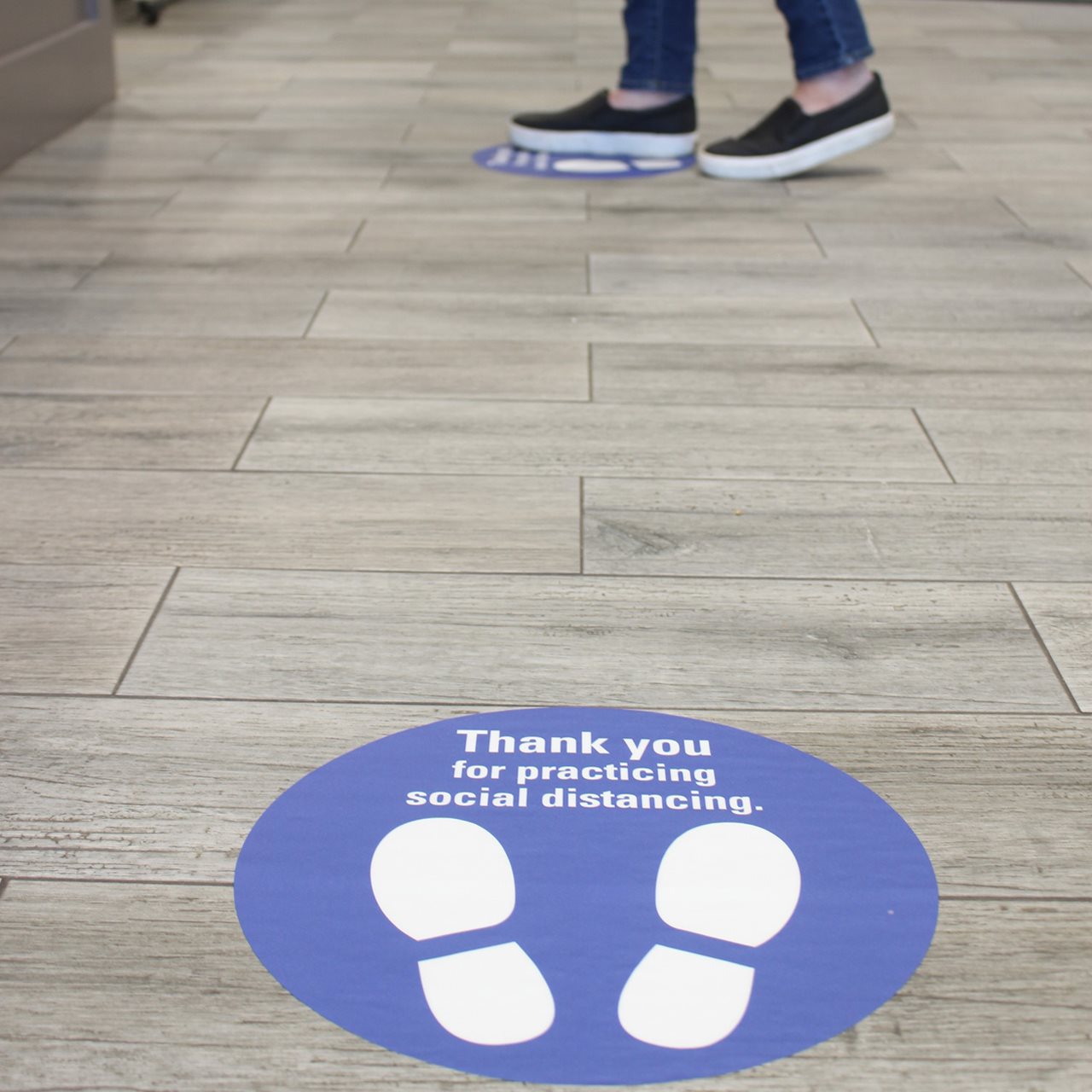
  • Floor signage for traffic flow and social distancing protocols
  • Instructions for correct practices, hand-sanitizing stations and mask reminders
  • Wayfinding signage to block off areas to maintain safety protocols
  • Information cards and signs for visitors
  • Welcome banners and signs to convey ‘we’re open’

FedEx Office has also worked with school districts nationwide since the spring to quickly print remote learning materials for the students and much more to prepare for the school year.

3. Immediate support when it’s needed

Pivoting quickly and effectively in the face of unpredictability also means being ready to support those who need it most — and without any delay. As part of its robust physical and digital network, FedEx Office maintains a useful presence on or near many campuses, which made it easier to meet the immediate packing and shipping needs for thousands of students who had to leave campus quickly when schools were compelled to close earlier this year.

4. Problem-solving innovation

To keep students and instructors safe in classrooms, many schools expressed a need to separate desks while keeping visual contact with students. FedEx Office took on the challenge by producing see-through desk shields that can be used for students of all ages, as well as faculty and staff. This kind of innovative and agile thinking is required when faced with new challenges and obstacles on a daily basis.

5. Keeping everyone safe and engaged

Beyond clear messaging and communication, schools can also benefit from encouraging students, parents, staff and educators to work together during this difficult time. Providing everyone with all the tools they need to learn safely — whether in classrooms or remote settings — is crucial to the success of any educational institution.

FedEx Office can meet the needs of learning environments. From providing learning packets and on-demand printing for remote learners to creating desk shields, branded masks and signage outlining cleaning protocols and social distancing guidelines, it’s important that everyone has the tools and resources to help everyone stay safer.

Schools and education leaders around the country are rising to the challenge, working to help everyone feel safer as they return to school. To learn more about how you and your school can take steps to navigate today’s changing landscape, from signage and printing needs to packing, shipping and more, click here.