A Lovely Bunch of Coconuts: How One Company Ethically and Sustainably Harvests its Tropical Crop

2021-11-18T13:31:00

(BPT) – No one knows for sure when or where coconuts originated, but there is no doubt about their global popularity today. Although they look like an oversize nut, coconuts are a remarkable fruit that offers a rare combination of liquid and food. Refreshing coconut water is an ideal recovery drink after a hard workout. The rich and creamy flavor of coconut milk is a delicious cow-milk substitute and a great alternative for people on a vegan diet or who want to reduce reliance on animal products. Coconut “meat” enlivens a wide variety of foods, from candies, cakes and cookies to stews and curries.

Successfully cultivating and harvesting coconuts can be challenging. Thailand-based Theppadungporn Coconut Company Ltd. (TCC), the world’s leading producer of coconut milk, coconut water and other coconut products under the Chaokoh brand, is leading an effort to ensure that commercial coconut operations adhere to ethical and sustainable farming and harvesting practices in Thailand.

Coconuts have to be picked at just the right time. Young coconuts go into producing coconut water. Mature coconuts are turned into TCC’s flagship product, Chaokoh Coconut Milk, which is enjoyed around the world. Coconuts grow in bunches that workers on the ground remove from the tree using long poles with a blade on the end. The bunches fall to the ground and are loaded onto trucks to go to the processing facility. Some coconut growers cushion the fall by creating canals of water between the rows of trees. Harvested bunches of green coconuts drop into the water, preventing bruising and rotting of the young fruit.

Traditional practices in Thailand and other Southeast Asian countries relied on monkeys to harvest coconuts, but TCC’s modern approach to harvesting coconuts is vastly different. TCC wants to eliminate monkey harvesting in commercial operations throughout Thailand. The company is pioneering and promoting monkey-free cultivation across the sector by offering innovative, sustainable and ethical alternatives that will improve coconut agriculture overall. This effort includes educating farmers on best practices and distributing new low-growing coconut varieties that are easier for farmers to harvest. TCC also works with farmers to reduce the environmental impacts of their coconut operations.

TCC buys mature coconuts for Chaokoh products from farmers in four Thailand provinces: Samut Songkhram, Ratchaburi, Prachuap Khiri Khan and Nakhon Si Thammarat. All of the company’s suppliers’ and farmers’ harvesting practices are audited before they are contracted with TCC and are required to sign a memorandum of understanding that commits them to monkey-free coconut cultivation and sustainable farming practices. To ensure these standards are met, TCC works with a respected independent third-party auditor, Bureau Veritas. The auditor performs regular inspections at TCC and its contracted coconut farms to ensure compliance with the sustainability and zero monkey-labor standards.

Bureau Veritas’ independent audit in 2020 confirmed that TCC had successfully achieved monkey-free cultivation across the audited network in Thailand. The audit found no evidence of monkey-labor in TCC’s supply chain. A second, larger audit is underway, with the final report coming in spring 2022.

TCC has also partnered with an animal rescue organization, the Wildlife Friends Foundation of Thailand, on an initiative to rescue and rehabilitate abused monkeys. Monkeys rescued from abusive farming operations receive any needed treatment and can retire peacefully at a sanctuary with other rescued monkeys.

TCC and its farmers recognize that today’s consumers have higher expectations about ethical and sustainable supply chains than ever before. TCC wants to ensure that consumers can enjoy the many pleasures of coconut products confident that the product’s journey from a tree in Thailand to their table in a far-away country was handled responsibly, ethically and without monkey labor.

How businesses and consumers can stay safe during the online holiday shopping season

2021-11-18T16:01:00

(BPT) – The 2021 holiday shopping season is bound to break records. The National Retail Federation predicts an increase in sales between 8.5-10.5% over last year, and a record 87% of shoppers plan to shop online, according to PYMNTS.com. That’s an increase of 13% in online holiday shopping compared to last year.

In fact, approximately 263 million people in the U.S. are currently online shoppers. This dramatic growth in online shopping, especially over the holidays, brings with it increasing concerns about keeping accounts safe and secure from fraud — both for consumers and for the companies where they do their shopping. More than four out of ten (42%) consumers expressed concerns about security when shopping online, according to recent reports.

According to Juniper Research, retailers could lose over $20 billion in 2021 due to online fraud, which includes identity theft, illegal access to online accounts, using forged or stolen credit cards, SIM card theft and more.

Customers and companies can play an important role in protecting themselves from fraud over the busy holiday shopping season.

How customers can help defend their accounts from fraud

From the customer point of view, here are three things that can help keep accounts safer while shopping online:

1. Be password smart. Using stronger passwords, such as phrases, and making sure each password is unique for each account will improve security. A password manager is a good way to beef up security, as it generates stronger, unique passwords and keeps track of them.

2. Shop with trusted vendors. Buying from familiar retailers is usually safer, as is going straight to the website, and avoiding clicking on links from ads on social media or random emails. This comes down to KYB (“Know Your Business”): Customers need to ensure that the website where they do their shopping is secure. Does the web address begin with “https”? Are user authentication protocols in place, and do they offer secure checkout?

3. Stick with secure networks. Doing holiday shopping or making financial transactions when a device is on a public network can be risking identity theft.

How are companies safeguarding consumers from identity theft and other forms of fraud? With a thoughtful approach that combines forward thinking with cutting-edge technology.

How companies are working behind the scenes to help protect consumers

Companies today take identity theft and fraud seriously, as it affects their bottom line — and jeopardizes their relationships with customers. Fortunately, technology is constantly advancing to help safeguard against fraud and stay one step ahead of the criminals. This is more crucial than ever when holiday shopping online is at an all-time high, and online fraud and identity theft are, too.

“Protecting companies and customers against predatory behavior is increasingly difficult, as online fraudsters continue evolving and adapting,” said John Troutman, director, Digital Identity Expert Team at TeleSign. “Just as fraud attempts become more complex, protection for any business must keep up with that complexity. We use multiple approaches, tailored to each client, to find the most effective, up-to-date solutions.”

Here are three ways companies use innovative technology to guard against theft and fraud:

1. Two-factor authentication

Companies and financial institutions improve security by adding another step to verify customer identities. With two-factor authentication, the business sends a single-use authentication code to a customer’s email, phone (voice) or text (SMS).

However, even two-factor authentication has one area of vulnerability: Identity thieves trying to access an account could enter their own phone number to obtain the authentication code, or in some cases, can even swap out the SIM card on a customer’s cell phone.

Fortunately, TeleSign, an authority on fraud protection and safe e-commerce practices, helps corporations guard against these and other threats with products and services to help them evaluate customer behavior and detect signs of fraud.

For example, behavioral attribute insights determined using TeleSign’s Score product can identify safe and unsafe activities. This technology helps companies “see” into network actions to determine the answers to these questions:

  • Is the text behavior abnormal?
  • Is abnormal activity happening at off hours?
  • Are numbers calling or texting a customer from unusual area codes?
  • Is a customer’s number being used for malicious purposes?

These insights help detect unusual use of a cell phone to let companies know that there’s a problem. This high-level analysis helps keep customers safer, and works to avoid account takeovers and fraudulent activities.

TeleSign can also help determine the status of a customer’s phone number to see if it is active, and can do a recent SIM card check to see if a SIM card was swapped.

2. Knowing their customers

With millions of transactions being conducted over a busy holiday shopping season, how does a company know their customers well enough to detect fraudulent activity on their accounts? They need to use Know Your Customer (KYC), an approach which relies on A.I. and machine learning to accurately assess patterns in behavior — and detect changes in those patterns, which could signal fraud or identity theft.

TeleSign uses advanced Application Programming Interfaces (APIs) to help companies know their customers better. APIs deliver user verification, data insights and communications to help companies prevent account takeovers, support company ecosystems inside and out, minimize fraudulent transactions and securely verify customer phone numbers.

3. Companies need to leverage the best possible support for effective fraud prevention solutions

TeleSign’s technology uses complete in-depth data analysis to identify and prevent possible breaches, helping businesses set up and prepare fraud prevention solutions to create a frictionless, E2E customer journey. TeleSign’s solutions are trusted by some of the world’s largest platforms, including Citrix, Skype, Electronic Arts (EA), ByteDance and Salesforce.

To learn more about how companies can protect their holiday shoppers from fraud and identity theft, visit TeleSign.com.

Innovative heating and cooling solutions for your home [Infographic]

2021-11-18T13:17:00

(BPT) – If you are looking to renovate your heating and cooling system this fall or winter and are unsure where to start, know there are customizable options for every home. Ductless and VRF solutions may be just what your space needs to feel connected and comfortable this season and for many more to come.

A Caregiver’s Perspective – Managing A Loved One’s Mental Health and Tardive Dyskinesia

2021-11-18T08:01:00

(BPT) – ADVERTISEMENT

This article was sponsored and developed by Neurocrine Biosciences Inc. Forrest and Moira were compensated by Neurocrine Biosciences Inc. to share their story.

Whether you’re caring for a loved one’s physical or mental state, this November, we commemorate caregivers across the country for providing well-needed care for their families during National Family Caregivers Month.

Approximately 39.8 million caregivers provide care to loved ones. Those who require caregiving vary in age, so the duties and responsibilities caregivers must undertake may span from buying groceries and cooking, to helping manage medications and attending medical appointments. National Family Caregivers Month is an important time to honor those who provide these crucial services.

Forrest, hailing from Long Island, New York is a proud husband, father, and care partner to his wife, Moira. Forrest prefers to refer to himself as a care partner, rather than a caregiver because he and Moira are navigating her mental health journey together. He is an ordained as a Roman Catholic priest and a Protestant minister, as well a social worker.

He met Moira through an online dating service in New York City. Soon after, the couple married and have a family with Moira’s two children from a previous marriage.

A few years into their marriage, Moira’s battle with major depressive disorder and bipolar disorder resurfaced. “This depression was very different than anything I’d experienced in the past. I had no appetite and was in terrible psychological and physical pain,” said Moira.

After consulting with her psychiatrist, Moira was prescribed antipsychotics to treat her depression and bipolar disorder. Over two years later, she started experiencing involuntary movements in her mouth. “The movements were so extreme that people thought I was chomping on gum,” said Moira. “It wasn’t even subtle looking.” People even commented on Moira’s movements while she was leading service at her church.

When Forrest first noticed Moira’s symptoms, he was heartbroken. “I’ll never forget the day in our study when she asked me to look in her mouth because she felt phantom objects with her tongue – and of course, there was nothing there,” Forrest said. Forrest couldn’t bring himself to suggest her involuntary movements may be part of another health condition. Forrest’s suspicions were confirmed after Moira visited her neurologist, who conducted a full assessment and later diagnosed her with tardive dyskinesia (TD).

TD is a movement disorder characterized by uncontrollable, abnormal, and repetitive movements of the face, torso, and/or other body parts, which may be disruptive and negatively impact those living with the condition. TD is associated with taking certain kinds of mental health medicines (antipsychotics) that help control dopamine receptors in the brain. Approximately 600,000 people in the U.S. may be affected by this condition.

Moira’s TD diagnosis changed their relationship as she began to withdraw further and experienced self-esteem issues. “I spent a lot of time talking to Moira to help her cope,” said Forrest. “It was a difficult time because she previously had a job that required a public presence and was having trouble working.”

As Moira’s care partner, Forrest accompanied his wife to appointments and took on a historian role. He recorded dates, events, and medication dosages ahead of each appointment. “She needed a lot of support then, as her work was in jeopardy and her depression was getting worse,” said Forrest.

Forrest’s role also extends beyond caring for Moira’s physical symptoms of TD. He also provides emotional and mental support. “There would be moments where I woke up and the movements would start. Forrest was there and helped me continue with life. He kept pushing me to do the next thing,” said Moira. “Without Forrest, I think I would have been hospitalized for my depression.”

In 2017, Moira’s psychiatrist prescribed INGREZZA® (valbenazine) capsules for her TD, the only once-daily treatment for adults with TD. INGREZZA is a prescription medicine used to treat adults with movements in the face, tongue, or other body parts that cannot be controlled (tardive dyskinesia). It is not known if INGREZZA is safe and effective in children. The most common side effect is sleepiness (somnolence).

She began taking INGREZZA, and Forrest noticed a reduction in the severity of her involuntary movements caused by TD a month later. Both Forrest and Moira noticed the involuntary movements were also less severe. Individual results may vary. Some taking INGREZZA begin to notice a reduction in movements at 2 weeks with clinical results at 6 weeks.

Please see Full Important Safety Information below and Prescribing Information

“It was a bleak situation with Moira,” said Forrest. “TD had an emotional impact on Moira, and I could see its outward impact on her work and family life. Now that Moira is on treatment with INGREZZA, her TD symptoms are much more manageable.”

To learn more about TD and INGREZZA, talk to your doctor or visit INGREZZA.com for more safety information.

Download the doctor discussion guide on Ingrezza.com to help talk to your doctor about your TD movements.

This article was sponsored and developed by Neurocrine Biosciences Inc. Forrest and Moira were compensated by Neurocrine Biosciences Inc. to share their story.

See Important Safety Information Below

Important Information

Approved Use

INGREZZA® (valbenazine) capsules is a prescription medicine used to treat adults with movements in the face, tongue, or other body parts that cannot be controlled (tardive dyskinesia).

It is not known if INGREZZA is safe and effective in children.

IMPORTANT SAFETY INFORMATION

Do not take INGREZZA if you:

  • are allergic to valbenazine, or any of the ingredients in INGREZZA.

INGREZZA may cause serious side effects, including:

  • Sleepiness (somnolence). Do not drive, operate heavy machinery, or do other dangerous activities until you know how INGREZZA affects you.
  • Heart rhythm problems (QT prolongation). INGREZZA may cause a heart problem known as QT prolongation.

Symptoms of QT prolongation may include:

  • fast, slow, or irregular heartbeat
  • shortness of breath
  • dizziness or fainting

Tell your healthcare provider right away if you have a change in your heartbeat (a fast or irregular heartbeat), or if you faint.

  • Abnormal movements (Parkinson-like). Symptoms include shaking, body stiffness, trouble moving or walking, or keeping your balance.

Before taking INGREZZA, tell your healthcare provider about all of your medical conditions including if you: have liver or heart problems, are pregnant or plan to become pregnant, or are breastfeeding or plan to breastfeed.

Tell your healthcare provider about all the medicines you take, including prescription and over-the-counter medicines, vitamins, and herbal supplements.

The most common side effect of INGREZZA is sleepiness (somnolence). Other side effects include changes in balance (balance problems, dizziness) or an increased risk of falls, headache, feelings of restlessness, dry mouth, constipation, and blurred vision.

These are not all of the possible side effects of INGREZZA. Call your doctor for medical advice about side effects. You are encouraged to report negative side effects of prescription drugs to the FDA. Visit MedWatch at www.fda.gov/medwatch or call 1-800-FDA-1088.

Please see accompanying INGREZZA full Product Information.

©2021 Neurocrine Biosciences, Inc. All Rights Reserved. CP-VBZ-US-1722 11/21

If you have Graves’ disease, here’s what you need to know about Thyroid Eye Disease

2021-11-18T15:31:00

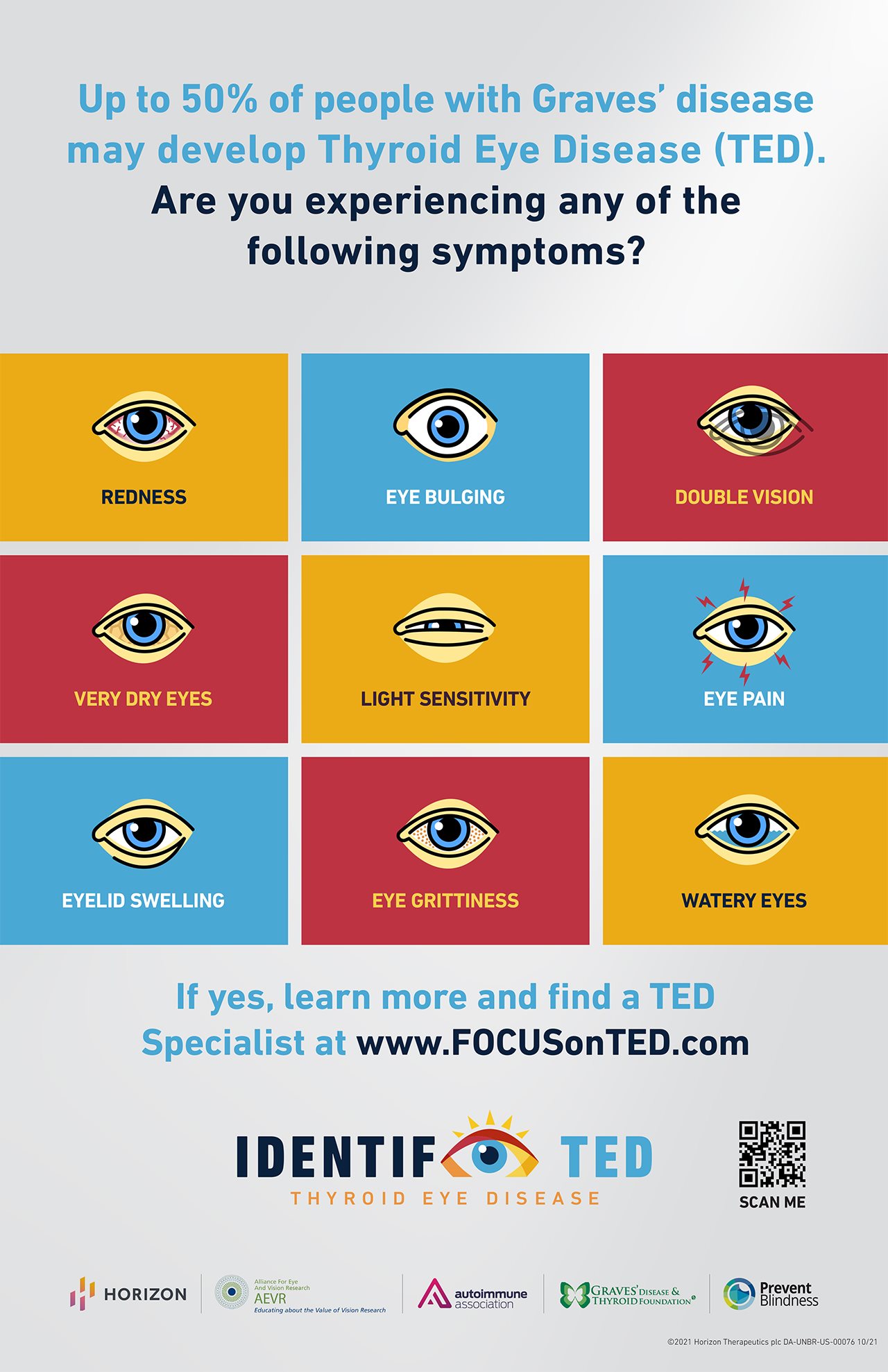
(BPT) – If you are experiencing symptoms like eye bulging, double vision, dry or watery eyes, severe pain or pressure behind your eyes, these could be signs of Thyroid Eye Disease (TED) — a serious, progressive and potentially vision-threatening rare autoimmune disease.

TED mostly affects people who have thyroid disorders, like Graves’ disease (hyperthyroidism) or Hashimoto’s disease (hypothyroidism). In fact, up to 50% of people with Graves’ disease may develop TED – so much so that many people who have Graves’ disease assume it’s a normal part of the disease. However, TED is a separate condition from Graves’ disease, requiring separate treatment. If you or a loved one have Graves’ disease, it’s important to pay attention to your eyes. You should monitor your eye symptoms, write them down and report them to a TED Specialist. The sooner treatment is started for TED, the better.

Here’s more you should know about TED.

Who is at risk for TED?

  • Women are up to 5 times more likely to develop TED than men
  • Up to 50% of people living with Graves’ disease may develop TED
  • TED can also be seen in people who have Hashimoto’s or hypothyroidism
  • Smoking increases the risk of developing TED by 8 times
  • TED typically affects people ages 40-49 and 60-69

What are the symptoms of TED?

TED is often misdiagnosed for more common conditions, such as allergies and dry eye, because the symptoms can be similar. It is important to get an early diagnosis because TED gets worse over time, and delays in being properly diagnosed and treated can cause serious damage, both to your vision and to the appearance of your eyes.

Eye symptoms that can help you “IdentifEYE” TED:

  • Dry or gritty feeling
  • Feeling like something’s stuck in your eyes
  • Watery, teary eyes
  • Redness
  • Eye pain and pressure behind your eyes
  • Bulging eyes and/or swollen eyelids
  • Eyelid retraction (pulled back eyelids)
  • Misaligned eyes (eyes point in different directions)
  • Sensitivity to light
  • Blurry and/or double vision
  • Loss of vision/color vision

What kind of specialist should you see?

While an ophthalmologist may be the first doctor you see for eye symptoms like these, if you have a thyroid condition, like Graves’ disease, and are experiencing eye symptoms, you should see a TED Specialist. Because TED is a complicated disease, it is best treated by a trained eye specialist such as a neuro-ophthalmologist or oculoplastic surgeon.

“Receiving the correct diagnosis and starting treatment as soon as possible is crucial to managing Thyroid Eye Disease,” said Dr. Ana Carolina Victoria, oculoplastic and reconstructive surgeon and TED Specialist. “It’s important for patients to monitor their symptoms and get the support they need.”

How to find support as you manage TED

Because TED can negatively affect your vision, it can interfere with daily responsibilities and activities. Simple tasks like walking or driving can become hazardous, and many people find it difficult to work, especially on a computer. The disease can also cause physical changes to your appearance, which can lead to a loss of self-confidence and withdrawal from social settings. TED can be very isolating, so it’s important to get support and know that you are not alone.

“After years of living alone with this condition, I discovered a community of others with TED,” said California native Christine, who had been living with Graves’ disease for three years before she started noticing symptoms of TED. “Connecting with the right TED Specialist and other TED patients was so important because I finally felt understood and knew what steps I needed to take.”

In recognition of the second-annual Thyroid Eye Disease Awareness Week, November 14–20, consider learning more about TED or supporting a loved one living with the disease.

For more information or to find a TED Specialist near you, visit FOCUSonTED.com.

4 reasons why millennials need life insurance

2021-11-18T09:01:00

(BPT) – If you’re a millennial, the chances you’ve already invested in a private life insurance policy are probably pretty low. The share of Americans covered by life insurance slid from 63% in 2011 to 52% in 2021 — and the most pronounced decrease has come from younger generations.

It makes sense — you’re young and healthy, and extra money goes towards the latest iPhone, smart home device or international travel. With the last 18 months forcing even younger generations to confront their own mortality, 48% of millennials are reportedly planning to buy within the next 12 months.

Here’s why now is the time for millennials to prioritize life insurance:

1. Save money over time.

For all the stereotypes about millennials, it’s a generation of good planners who are responsible and strong forward-thinkers. The cost of a life insurance policy is largely dependent upon risk (healthy millennials are generally considered a lower risk), so buying a life insurance policy when you are young can help lock in lower rates with term or permanent insurance.

2. Buying life insurance is easier.

One of the main reasons millennials have avoided life insurance is because it has traditionally been a pain to buy. Fortunately, advances in technology have made it easier to purchase almost anything. Millennials use virtual assistants or e-commerce sites to shop for groceries and order takeout. Same-day delivery is no longer a perk, but an industry standard that even the life insurance industry is beginning to embrace.

Signing up for life insurance isn’t difficult now that there are streamlined processes like the Quility direct-to-consumer platform, which allows applicants to receive a personalized policy up to $1 million approved and delivered on average in ten minutes or less — no doctor’s visits or in-person meetings necessary. The 100% online platform, which recently added two new term life products, including the brand’s proprietary Quility Level Term product, is the new industry standard in simplicity, convenience and affordability. The company also has licensed insurance agents available for in-person, virtual or telephone meetings.

3. Protect your family from financial burden.

Millennials have long prioritized their careers and financial security but, as even the youngest millennials enter their mid-20s, more and more are starting families.

It has become commonplace for people to believe they don’t need life insurance because they don’t have any children yet. But just because you don’t have dependents doesn’t mean there aren’t people who depend on you. Life insurance will help protect your spouse or long-term significant other with whom you own or rent a home, and allows your parents or siblings to cover unanticipated costs as they grieve.

Half of millennials acknowledge their families would face financial hardship should a wage-earner die unexpectedly — and 43% expressed concern about leaving their dependents in a difficult financial bind. That’s especially important for millennials who have long prioritized their careers and financial security, but are now looking to start families as even the youngest of the generation enter their mid-20s.

4. Consider your cosigners.

Today’s graduates are strapped with record-breaking student loan debt, so it’s important for millennials to consider their cosigners when shopping for life insurance.

Certain types of debt are waived in the event of an unexpected death — and that includes student loans. However, many millennials have their parents or loved ones cosign on loans, credit cards or mortgages. If that’s the case, your student loan debt would transfer to your cosigner in the event of an unexpected death. A life insurance policy would help ease that financial burden in a time of grieving.

Millennials are among the most educated and knowledgeable generations in history. They’re health conscious, financially conscious and socially conscious. Yet, life insurance has been overlooked because the industry has made things too complex, too confusing and too inconvenient.

COVID has raised awareness about the important role life insurance plays in families’ financial security, so it’s time for millennials to consider getting life insurance sooner rather than later. Quility can help secure your financial future in 10 minutes or less. Get insurance your way at www.quility.com.

Making a list, checking it twice: a jolly holiday begins with important safety steps

2021-11-18T06:31:00

(BPT) – From shopping online and gifting toys, to decking the halls and cooking a feast, the holiday season is in full effect as more people expand their celebrations and plan in-person gatherings this year. However, as you enjoy all aspects of merrymaking, it is important to prioritize safety. A proactive approach can help to minimize risks for you and your loved ones, so you can make cherished holiday memories together.

The experts at the U.S. Consumer Product Safety Commission (CPSC) share top tips that you can take to have a safer, happier holiday season.

Select safer toys

CPSC reports in 2020 there were nearly 150,000 toy-related, emergency department-treated injuries and nine deaths among children ages 14 and younger, with the majority of the deaths associated with choking on small parts of toys. When gifting toys, follow age guidance and other safety information on the toy packaging, and choose toys that match each child’s abilities. Remember to keep small balls and toys with small parts away from children younger than age 3 and keep deflated balloons away from children younger than age 8.

Before purchasing a new or used toy, check that the toy has not been banned or recalled. This can easily be confirmed at CPSC.gov/Recalls or by downloading the free CPSC Recalls App on CPSC.gov. Whenever possible, register the toy with the company after purchase. If a toy isn’t on the recall list but appears to be dangerous or malfunctions, immediately stop using it and report the safety issue to CPSC via SaferProducts.gov.

Don’t forget the safety gear

Scooters may be at the top of many kids’ gift lists, but don’t forget safety gear to go along with those new wheels. CPSC data shows that nonmotorized scooters account for 21 percent of all toy-related, emergency department-treated injuries; the highest category for all age groups except children 4 years old or younger. It is important to get safety gear, including helmets, for all scooters and other riding toys. Helmets should be sized to fit and make sure that children use them every time.

Be wise when shopping online

If you’re shopping for toys online, always make sure to shop from stores and online retailers you know and trust. To avoid counterfeits, scrutinize the product, the packaging, and the label. If the price seems too good to be true, this could be a sign that the product is counterfeit, and potentially unsafe. Additionally, look for warnings of a choking hazard, especially when purchasing toys and games online that contain small parts, such as balls, marbles or balloons. It is also wise to check for additional safety information from online sellers such as a certification mark from an independent testing organization.

Cook with caution

Cooking fires remain the number one cause of residential fires in the U.S. An average of 1,700 cooking fires occur on Thanksgiving Day each year, more than three times the average number of cooking fires on any other day of the year, according to CPSC. As you cook Thanksgiving dinner, bake holiday treats, and share meals with family and friends throughout the season, it is important to take safety precautions to avoid dangerous residential fires. Never leave cooking food unattended on the stove, keep children away from the cooking area, and keep flammable items like potholders and paper or plastic bags, away from the stove and oven.

Exercise extra caution if you’re using a turkey fryer as they present particular risks. Since 1998, CPSC is aware of 222 fire or scald/burn incidents involving turkey fryers, resulting in 83 injuries and $9.7 million in property loss. If you plan to fry your holiday bird, always do so outside and away from your home, not inside your garage or on your porch. Don’t overfill the oil in the turkey fryer and follow the manufacturer’s instructions on use, including thawing your turkey thoroughly and maintaining control of the oil temperature.

Decorate with care

Holiday decorating is a tradition for many families, but decorating-related injuries send thousands of Americans to the emergency room each year. On average, CPSC found there are about 160 decorating-related injuries each day during the holiday season, with almost half of the incidents involving falls. To deck the halls more safely, exercise caution while decorating, avoid tripping hazards, and use ladders and stepstools properly. If you’re moving furniture to make room for holiday decorations or installing a new TV to watch holiday movies, be sure that everything is anchored to the wall to avoid a tip-over incident.

It is also important that you take safety steps to prevent fires. From 2016 to 2018, there were about 100 Christmas tree fires and about 1,100 candle fires in November and December each year, resulting in 30 deaths, 180 injuries and nearly $56 million in property loss per year, according to CPSC. To avoid a fire, give your live tree plenty of water and look for the “fire resistant” label on artificial trees. Only use lights tested for safety by a national recognized testing laboratory and throw out sets with broken or cracked sockets, frayed or bare wires, or loose connections. If using candles, place them away from flammable items and blow them out before leaving the room.

Visit CPSC’s Holiday Safety Information Center to find more safety tips, videos, and resources for celebrating safely this season.

How to enjoy favorite holiday foods – even with C. diff

2021-11-18T13:01:00

(BPT) – With the holidays approaching, many people look forward to cooking favorite meals with loved ones. Unfortunately, gathering around the holiday table may be filled with more anxiety than joy for those who are suffering from C. difficile infection, or C. diff.

Caused by bacteria with the same name, C. diff takes hold deep inside the gut microbiome — a collection of microscopic life forms, good and bad, that are in the stomach and intestines and play a role in how the body works. A balanced microbiome is crucial to maintaining overall health, and an imbalance in the gut microbiome may give harmful bacteria like C. diff the chance to take over, leading to C. diff infection.

C. diff infection is a life-threatening condition. It can affect anyone, primarily people who are taking antibiotics, have spent time in a healthcare facility, have a weakened immune system or are above age 65. Sufferers experience severe diarrhea, nausea and stomach pain, among other symptoms.1

Declared a public health threat by the U.S. Centers for Disease Control and Prevention (CDC) requiring urgent and immediate action, C. diff causes an estimated half a million illnesses and tens of thousands of deaths in the U.S. alone each year.1,2,3

In addition, up to one-third of people experience recurrent C. diff infection, meaning that just when it seems as if the infection is gone, it comes back. The effects of recurrent C. diff sometimes go beyond physical pain. It can trigger depression and other mental health concerns, too.

Many foods can trigger symptoms and typically, patients need to follow a strict diet when they are recovering, making family gatherings stressful and difficult.

Eating gutfriendly foods is one way sufferers can regain strength and rebuild their gut microbiome.4

A balanced gut microbiome benefits the body in many ways, including helping to break down and absorb nutrients from food, working with the immune system to protect the body from infection and helping with overall health.5,6,7

While no two people are alike, there are foods that sufferers should generally avoid, including dairy products with lactose, greasy foods and any foods that may cause bloating (e.g., broccoli, onions, beans). Although changing a person’s diet won’t treat C. diff infection, switching out ingredients in this year’s holiday recipes may help sufferers enjoy some family favorites.

Check out these gutfriendly holiday meals and substitutes:

  • Appetizers: Pumpkin soup, chicken noodle soup, fruit salad and deviled eggs
  • Proteins: Baked chicken, roasted turkey, tofu, miso paste breaded chicken and quinoa
  • Side Dishes: Rice, cornbread, baked potato (prepared alone), cooked beets and steamed veggies (like green beans)
  • Desserts: Banana bread, oatmeal cookies, vegan pumpkin pie bites and sherbet

Make sure to consult a healthcare professional for more information and nutritional advice for foods that are best suited for your body type and C. diff infection.

Visit FocusonCdiff.com or C. diff Focus on Facebook to learn more about C. diff infection.

This piece is sponsored by Ferring Pharmaceuticals, a research-driven, specialty biopharmaceutical group committed to helping people around the world live better lives.

Food tips are suggestions developed in partnership with Dr. Sonali Ruder, a board-certified Emergency Medicine physician, trained chef and cookbook author. Talk to your doctor or a nutritionist to guide gut-friendly food choices that are right for you.

References:

  1. Centers for Disease Control and Prevention. What Is C. Diff? 17 Dec. 2018. Available at: https://www.cdc.gov/cdiff/what-is.html.
  2. Centers for Disease Control and Prevention. Biggest Threats and Data, 14 Nov. 2019. Available at: https://www.cdc.gov/drugresistance/biggest-threats.html.
  3. Fitzpatrick F, Barbut F. Breaking the cycle of recurrent Clostridium difficile. Clin Microbiol Infect. 2012;18(suppl 6):2-4.
  4. Ward C, Kelly C. Clostridioides difficile infection: Is there a role for diet and probiotics?. Pract Gastroenterol. 2020; 44(9): 26-34.
  5. Antharam VC, Li EC, Ishmael A, et al. Intestinal dysbiosis and depletion of butyrogenic bacteria in Clostridium difficile infection and nosocomial diarrhea. J Clin Microbiol. 2013;51(9):2884-2892.
  6. Thursby E, Juge N. Introduction to the human gut microbiota. Biochem J. 2017;474(11):1823-1836.
  7. Marchesi JR, Adams DH, Fava F, et al. The gut microbiota and host health: a new clinical frontier. Gut. 2016;65(2):330-339.

The ‘Have-it-all-idays’ Holiday Gift Guide

2021-11-18T13:15:00

(BPT) – ‘Tis the season for gifting, and nobody’s on Santa’s naughty list. Still, you’ve got a host of hard-to-shop-for family, friends and colleagues who expect the unexpected, and the season’s starting earlier this year, with shadows of pandemic-related shortages looming like ghosts. No pressure, right?

Here’s the ultimate Holiday Gift Guide of five delightfully unusual but not overly expensive goodies for the hard-to-please gift connoisseurs in your life!

1. For your bestie who’s looking for a cozy companion

The hunt is over. Sweet, decadently rich, and made of delicious chocolate and marshmallows — meet The Perfect Man Hot Chocolate Bomb. He’s dressed to impress and ready to be popped into your mug — or eaten! The Perfect Man is there to keep you company on a cold winter’s night. Or pop him in your purse and take him out on the town. Because chocolate is a girl’s best friend.

2. For the spicy guy in your family

Nothing spices up a meal like hot sauce. Turn the heat up with these delicious, scorching hot sauce gift sets. From internationally themed hot sauces to a nature-inspired hot sauce set ranked from tame to ferocious, Big Lots is bringing the holiday heat. You’ll find the right tongue-torching treat for your hard-to-please hot-stuff lover.

3. For your mom, your sister — or even yourself!

Como Vintage Women’s Sherpa hoodies feature plush sherpa fabric to keep you toasty when the days are cool. The drawstring on the hood helps you seal in the heat when needed. A zipper underscores the neckline for adjustable coverage. It’s a comfy, cozy, cuddly gift for all the ladies on your list.

4. Yums for the whole family

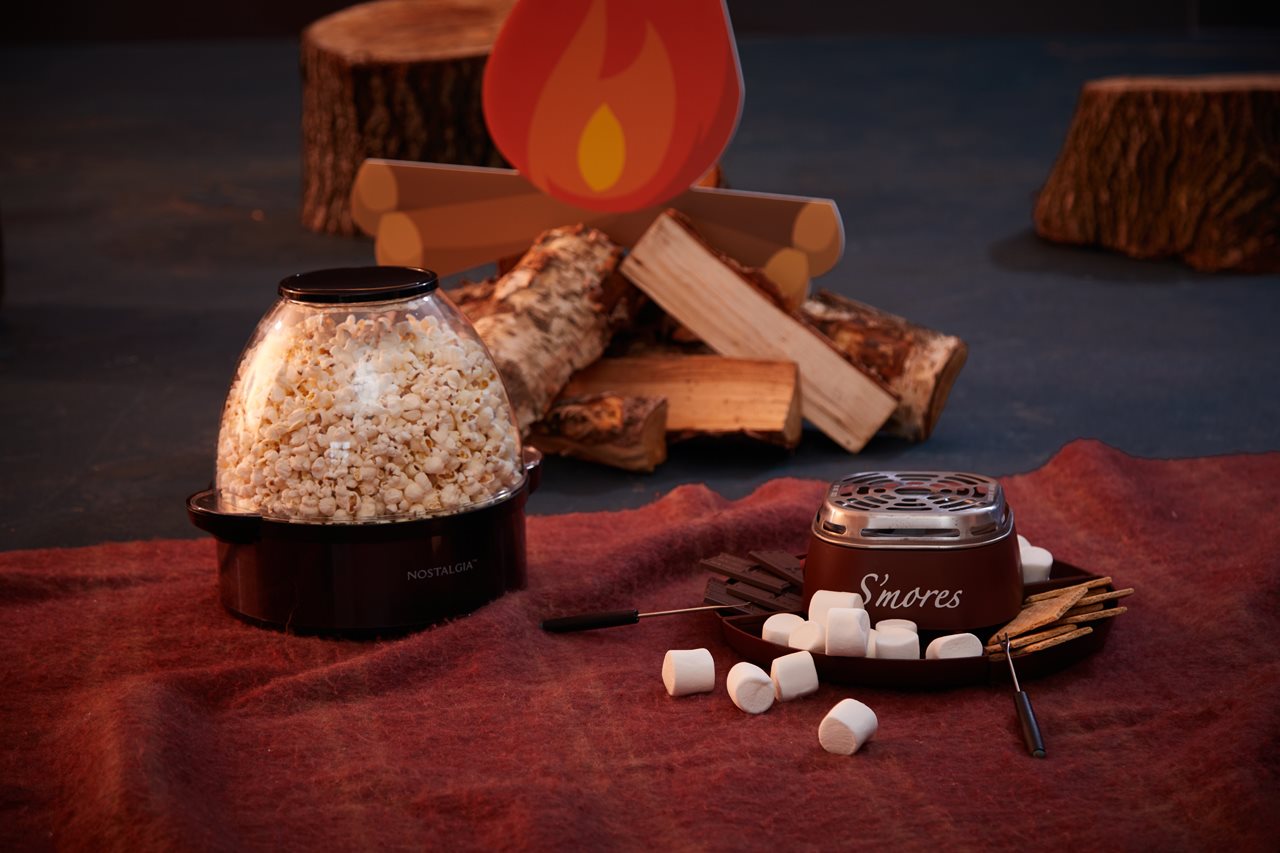
Bring a taste of the outdoors inside and enjoy homemade s’mores this holiday season. Now the simple pleasure of gooey marshmallow, chocolate and graham crackers can be yours without the hassle of building a bonfire. This Electric S’mores Maker from Nostalgia will take you and your kids back to your childhood, with visions of s’mores dancing in your head.

5. Don’t forget your furbabies

Delight your favorite furbaby with Holiday Happy Hour Crusherz Plush Pet Toys from Zippy Paws. Designed to look like a variety of paw-themed alcoholic beverages, these chewable and plush pet toys are a fun and interactive distraction that your furry friend will love. It’s the perfect way to get your pet into the holiday spirit.

All these one-of-a-kind gifts are available at your neighborhood Big Lots where you can have it all for less this holiday season. So, get out there and shop! Big Lots offers in-store and curbside pickup as well as same-day delivery and Buy Online, Pick Up In Store through biglots.com. Big Lots features a unique shopping experience — part treasure hunt, part everyday necessities, along with special Big Buys — items bought in limited quantities at exceptional prices so you can find just the right gift for everyone on your list, including yourself, and still have money left over to stuff the stockings.

Best of all, these perfect gifts are available online and at the store.

Cheers to the Have-it-all-idays!

5 ways to practice gratitude with your child this holiday season

2021-11-18T13:31:00

(BPT) – The holidays are a time when gratitude is at the forefront. In fact, gratitude has been shown to help kids and adults practice resilience through tough times by focusing on the positive emotions that come with spending quality time with family and friends. That’s why character education matters. At Kiddie Academy, Character Essentials is a comprehensive character education program for infants through school-age children. The monthly theme for November is “We Are Thankful.”

As you embrace the season of giving, now is a great time to reflect and think of ways to relieve the stress of today’s world and infuse gratitude and thankfulness into your family’s holiday traditions.

Try one of the following five ways suggested by Joy Turner, Kiddie Academy vice president of education, to help you practice gratitude with your children and family this year:

1. Head offline.

Dedicate some time during the holidays to spend offline — no electronics! Cell phones, video games, computers and tablets give short-term happiness. Spending time together making memories is what brings long-term happiness. As a family, share the things that make each other feel happy. Include non-tangible items such as spending time doing activities you enjoy!

2. You’ve got mail!

You may not be able to spend time with every single person you’re thankful for. Have everyone in the family write a thank-you letter to people who couldn’t be there this year. It can even be a note to a friend you’re thankful for who lives far away! Be prepared with stationary or greeting cards and stamps. Then, take a family walk to the mailbox or a trip to the post office after dinner to send them together.

3. Create a gratitude jar.

During your holiday celebrations, invite your family to jot down things they’re grateful for on slips of paper and put them in a jar. Help your child use crayons and markers to make them more colorful and fun. Then, go around the table picking them out and taking turns reading them. Make sure to write the year of when you created the jar — year over year, you can look back on past jars. You’ll have a big collection before you know it!

4. Home is where the heart is.

People everywhere experience the holidays in a different way. Part of practicing gratitude is realizing that there are others who are in need. If you can, safely support a local group that helps people who are experiencing homelessness, or gather food to take to a local food bank. Help someone in your community you know is struggling. Find a local organization that can help you make an impact and engage your child in the critical life lesson of giving back to those in need.

5. The grand finale — dinnertime!

Most people would agree that a holiday centered around food and family is a great way to spend the day. Prepare your holiday meal as a family! Bonding happens during these activities. The act of preparing food with your family is great for your well-being and teaches children to be thankful and appreciative. It also provides a time to reconnect with family and focus on what is important in your lives.

Yes, this pandemic holiday season may have its challenges, but with some resilience and a grateful attitude, your family can still find the “Happy” in “Happy Holidays.” You may even create a new gratitude habit that will help your child’s character development. If you run out of ideas or want to practice other key character traits, head over to Kiddie Academy’s website to download the Character Essentials Activity Book.