How CRNAs keep you safe and comfortable during a colonoscopy

2026-02-27T05:01:00

(BPT) – Colon cancer is common and it’s preventable. Early detection saves lives. Have you been putting your colonoscopy off?

Colorectal cancer is the second leading cause of cancer death in the United States, behind only lung cancer. The National Cancer Institute estimates that 154,270 people in the U.S. received a colorectal cancer diagnosis in 2025 and approximately 52,900 died from the disease.

The good news is that many colon or rectum cancers are preventable thanks to colonoscopies. This type of cancer screening allows gastroenterologists to find and remove precancerous growths called polyps before they develop into cancer. Plus, if your doctor finds cancer, they can remove it at its early stages, when treatment is more likely to be successful.

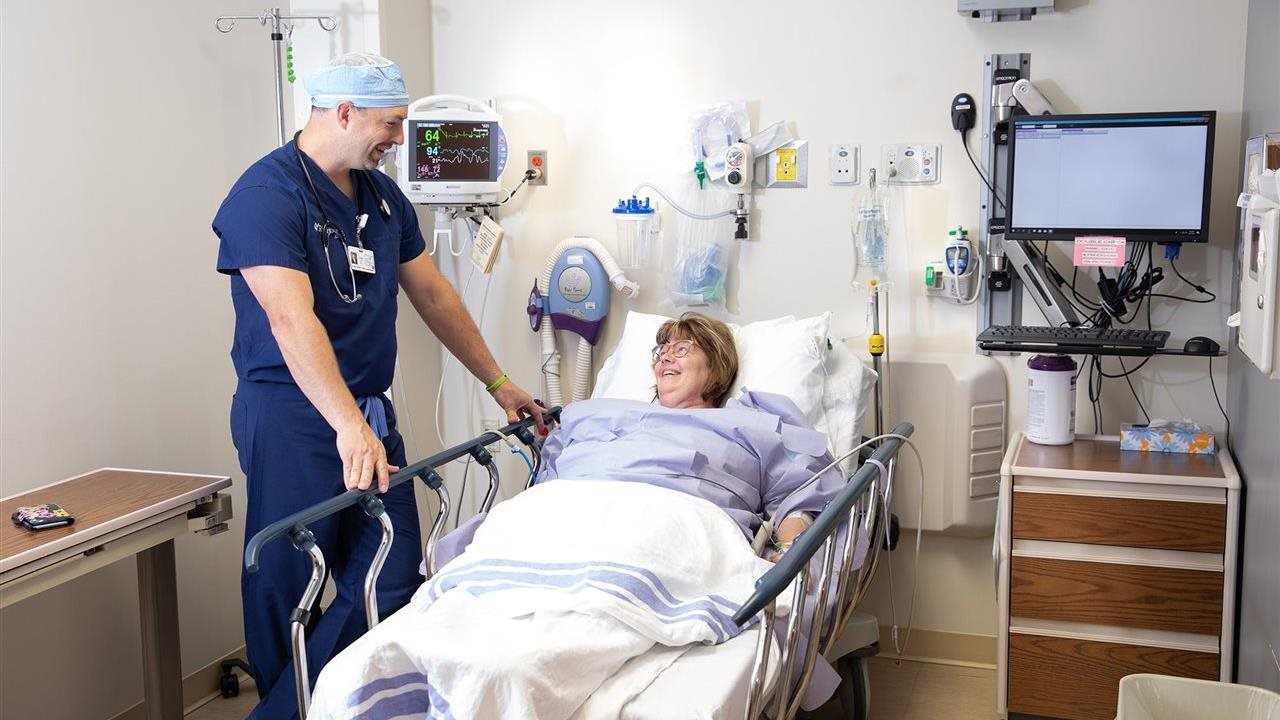
This March — during Colorectal Cancer Awareness Month — the American Association of Nurse Anesthesiology (AANA) urges you to get screened for colorectal cancer. If you’re anxious about getting a colonoscopy, you’re not alone, and Certified Registered Nurse Anesthetists (CRNAs) can make the procedure a pain-free experience.

Why CRNAs are key to a successful colonoscopy

CRNAs (also known as nurse anesthesiologists or nurse anesthetists) play a critical role in making colonoscopy safe, comfortable and accessible. They are advanced practice registered nurses who have extensive training in anesthesia and airway management. CRNAs safely administer more than 58.5 million anesthetics to patients each year in the United States.

CRNAs practice in:

  • Hospitals
  • Ambulatory surgery centers
  • Rural and underserved areas

In many communities — especially rural America — CRNAs are the primary anesthesia professionals. Without them, access to colonoscopies and other procedures could be delayed or limited.

Before your procedure, your CRNA will take a full medical history, review your medications and explain your anesthesia plan.

CRNAs provide monitored anesthesia care (MAC) to keep a patient comfortable, pain-free and breathing on their own so the gastroenterologist can focus fully on the colonoscopy, improving procedural efficiency. Commonly used drugs for sedation are propofol, benzodiazepine and narcotics. Ultimately, it will be the CRNA’s determination on what to use and how much to titrate to get the intended effect.

During the colonoscopy, your CRNA will remain with you through the procedure — watching over you with vigilance. They will administer one of three types of sedation:

Moderate sedation: Sometimes referred to as twilight anesthesia or conscious sedation, this type of sedation uses benzodiazepine and an opioid delivered to a patient via IV. When under moderate sedation, patients are very relaxed, sleepy and often have no memory of the procedure, though they can still respond to verbal commands.

Deep sedation: This type of sedation uses propofol — a fast-acting, short-duration medication — that is also administered via an IV. When under deep sedation, many patients sleep through the colonoscopy, are able to breathe on their own, and typically don’t remember the procedure when they wake up.

General anesthesia: This type of anesthesia is rarely used for routine colonoscopies and is done in a hospital setting. Patients are fully unconscious, requiring a breathing tube.

Once you’ve been anesthetized, the gastroenterologist will perform the colonoscopy, and the CRNA continuously titrates the medication and monitors your vitals. If clinically appropriate, the CRNA can adjust your anesthesia for a lighter sedation. Although rare, if the moderate or deep sedation is not effective for the procedure or in the event of an emergency, the CRNA is always equipped to maintain your airway and convert your anesthetic to a general one.

Most procedures take as little as 20 minutes; however, this can vary and is patient-dependent. Once the procedure is over, the CRNA will stop administering the medication and will let it naturally wear off and allow you to wake up in recovery. You will continue to be monitored until you are fully awake. Typically, patients are discharged the same day and must have a reliable family member or friend to drive them home.

When you get screened, you’re in good hands

Colonoscopies have been proven to save lives. With a CRNA administering your anesthesia, you will be comfortable and safely monitored. Schedule your colonoscopy today. You can help prevent or treat colorectal cancer before it spreads or develops.

To learn more about CRNAs and their role during colonoscopy and other surgical procedures, visit https://www.aana.com/about-us/about-crnas.

New Mixed Reality Experience Puts Students at the Center of Army National Guard Disaster Relief Efforts

2026-02-26T16:01:01

(BPT) – Key Takeaways

  • The U.S. Army National Guard is bringing Disasterville — a new mixed-reality experience — to high school students nationwide, using hands-on simulations to demonstrate how National Guard Soldiers respond to disasters and emergencies.
  • Disasterville immerses students within full-scale, mission-oriented disaster zones, including wildfires, floods and earthquakes, to team up and tackle each disaster the same way as the National Guard.
  • Disasterville also introduces students to the different types of careers and missions in the National Guard — a unique component within the U.S. Army where Soldiers have the flexibility to serve their country part-time while pursuing their civilian careers.

Americans are no strangers to the far-reaching impacts of natural disasters on communities, but what many do not know is what it takes to prepare and respond. That will change this spring, when the U.S. Army National Guard brings Disasterville — a new, mixed reality experience — to high school students across the country, placing them at the center of the most common disaster relief missions.

The National Guard remains a critical lifeline in communities across the country. When needed, National Guard Soldiers respond to domestic emergencies in their home state with capabilities across medical, aviation, transportation and more.

null
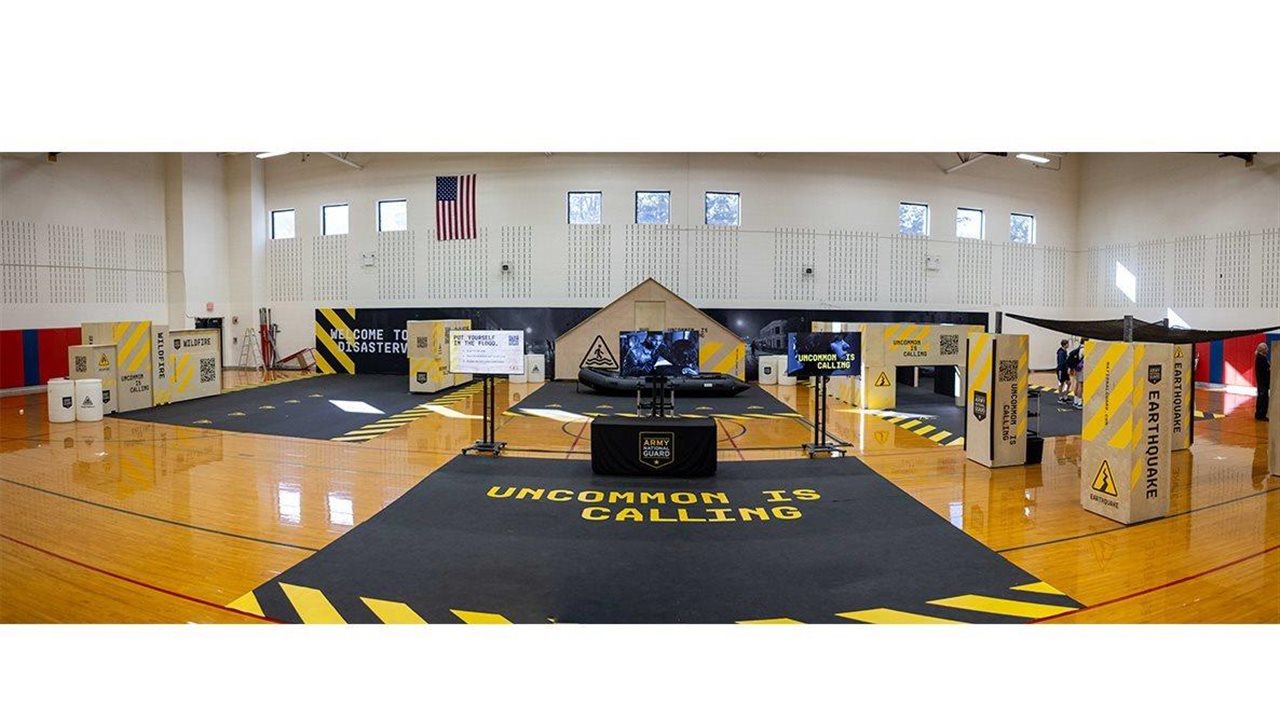
Disasterville, a new mixed-reality experience from the Army National Guard, transforms high school gyms into full-scale, mission-oriented disaster zones where the structures around them become devastated buildings, debris, rough terrain and hazards.

“Young Americans are increasingly seeking ways to make an impact close to home, but many are unaware of the wide-ranging skills of National Guard Soldiers and their critical role in disaster response,” says Staff Sgt. Adam Szabo, State Media Services Program & Marketing NCO with the National Guard Bureau’s Marketing and Advertising Branch. “Disasterville shows the possibilities of part-time service by immersing students directly into the complex, high-stakes missions of the National Guard, and showing them what it means to serve the community.”

Read on to learn more about Disasterville and its mission to inspire the next generation of National Guard Soldiers.

Disasterville allows students to experience the high-stakes missions of National Guard Soldiers

Using advanced mixed-reality technology, Disasterville transforms high school gymnasiums into three, full-scale disaster zones that represent the most common natural disasters National Guard Soldiers respond to as part of their service, including wildfires, flood zones and earthquakes.

Students will work in teams against the clock as they become National Guard Soldiers called to serve at the following sites:

  • Wildfire: Amid a raging wildfire, teams work together to push back fires encroaching on a home in Disaster Canyon. Students will put out small wildfires, combine forces to push back larger flare-ups, save animals and dodge falling trees.
  • Flood Zone: After a major hurricane, civilians are fighting to stay above water on the streets they call home. Students will board their Zodiac and use headlamps to find and safely evacuate survivors while avoiding dangerous wildlife and other lurking hazards.
  • Earthquake: After a devastating earthquake, a train carrying hazardous chemicals and passengers derails, pinning civilians and spilling dangerous material, poisoning the air. Time ticks down as students arm themselves with the jaws of life to rescue survivors and clean up debris all before the train gives way under its own weight.

Disasterville doesn’t just teach students about the mission of the National Guard, it puts them in the driver’s seat as they work together to tackle each disaster the same way as the Guard, by combining communication, physical endurance and ingenuity to save lives, landscape and their communities.

Disasterville is brought to life using mixed-reality technology

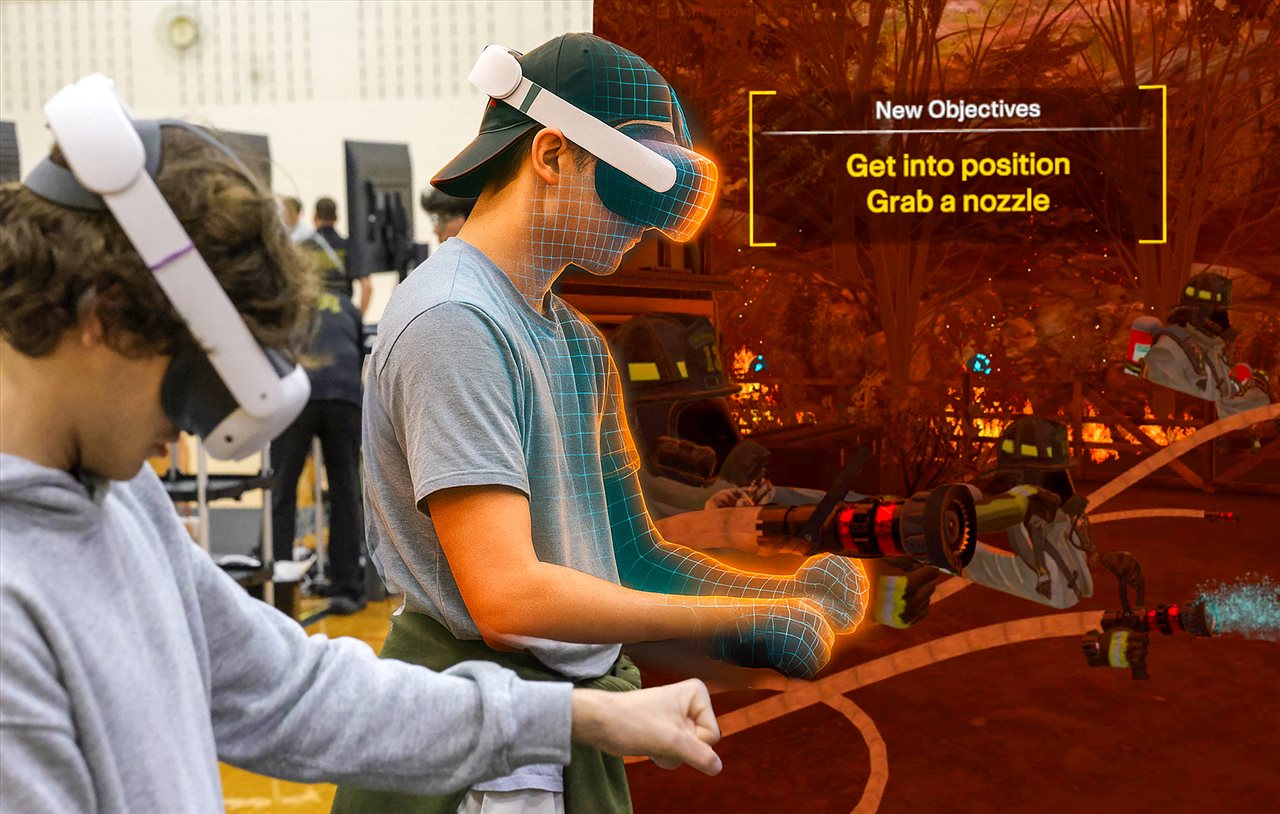
Disasterville was developed with the help of extended reality (XR) industry expert Dale Carman. At first glance, the experience might look like a maze of plywood structures scattered throughout the gymnasium, but students are quickly placed in the center of the action once they don their Meta Quest 3 headsets and begin the simulation.

null
Students wear virtual reality headsets and team up with classmates to tackle full-scale, mission-oriented disaster zones, including wildfires, floods and earthquakes, the same way as the Guard, by combining communication, physical endurance and ingenuity to save lives, landscape and their communities.

Disasterville uses advanced mixed-reality technology with augmented reality (AR) and virtual reality (VR) graphics mapped to the structures, creating a free-roam experience and transforming the gym into neighborhoods with devastated buildings, debris, rough terrain, hazards and people in need.

Students can also leave their game controllers behind, because Disasterville uses hand-tracking technology that allows students to physically handle in-game props and National Guard rescue tools — like oars, hoses, chainsaws and the jaws of life — and interact with each other and people in need.

The National Guard’s impact across the country

The National Guard is a unique component within the U.S. Army, with a presence in 54 states and territories. Serving in a part-time role, National Guard Soldiers support communities in their home state by responding to domestic emergencies and at the federal level as standby support for Active Duty Soldiers.

null
Disasterville lets students work together in teams of five to complete missions that draw on the communication, physical endurance and decision-making skills of trained Soldiers.

National Guard Soldiers have capabilities across medical, aviation, law enforcement and transportation, allowing them to have a direct impact on their own communities in the most critical times of need. By serving at least one weekend a month and two weeks a year, they also enjoy the flexibility to pursue their civilian personal and professional passions.

“As National Guard Soldiers, our strength lies not just in our wide range of capabilities, but also our ability to act as a bridge between our communities and the country,” says Lt. Col. Ted Dunham, Chief of the U.S. Army National Guard Marketing Branch. “When disaster strikes, we stand ready to protect the people we know and the places we live.”

Disasterville takes its immersive experience on the road

Throughout the year, Disasterville will tour select cities across the country, including Washington, D.C., Detroit, Indianapolis and Omaha, to bring the experience to high school students who are considering their next chapter.

Interested schools can reach out to their local National Guard representatives for more information on how to bring the Disasterville experience to their city.

For more information on Disasterville and the opportunities available in the National Guard, visit NationalGuard.com.

Expert Tips to Prevent Lithium-Ion Battery Fires At Home and On-the-Go

2026-02-26T13:16:03

(BPT) – Fire safety experts are urging Americans to “Take C.H.A.R.G.E.” of lithium-ion battery safety after data reveals alarming gaps in public awareness and a spike in battery-related incidents at home and while traveling.

According to UL Standards & Engagement, 50% of Americans admit they don’t know anything about lithium-ion battery dangers, despite these batteries powering many modern devices from smartphones to e-bikes. Even more concerning: 60% of travelers don’t realize how prevalent these batteries are in everyday items.

The warning comes as airlines reported lithium-ion battery thermal runaway incidents on an average of two flights per week in 2024. Of the thermal runaway incidents occurring on planes, one in five forced a diverted landing, return to gate, emergency evacuation, or unplanned deplaning.

The Travel Connection

It’s important to know how to travel safely with lithium-ion battery-powered devices. Most travelers carry four lithium-ion battery devices: smartphones (81%), laptops (40%), wireless headphones (38%), and tablets (35%).

Lithium-ion batteries store energy more densely than traditional batteries. When damaged, improperly charged, or overheated, they can enter thermal runaway and spark, explode, or cause fire.

“Recent spikes in lithium-ion battery incidents in transit environments have underscored the need to expand public education,” said Nicole Sanders, Public Education Lead for UL Research Institutes.

Six Essential Safety Steps

Follow the Take C.H.A.R.G.E. of Battery Safety steps for how to properly handle, store and charge lithium-ion battery-powered devices:

  1. Choose Certified Products: Prioritize your safety by selecting lithium-ion battery-powered devices certified by a nationally recognized testing laboratory to ensure they meet important safety requirements.
  2. Handle with Care: Always follow manufacturer guidelines and use the provided charger for lithium-ion battery-powered devices. Avoid modifying batteries or chargers and charge your devices in safe environments away from extreme temperatures, direct sunlight and flammable materials. Never charge under a pillow, blanket or in a bag. It’s also important to unplug devices at home and pay attention to size limitations from transit providers before embarking on a trip.
  3. Always Stay Alert for Warning Signs: Regularly inspect devices for any signs of damage, such as swelling or punctures. Be aware of unusual sounds like hissing or popping. Watch out for excessive heat or a strange odor. White or gray wispy smoke indicates there is immediate danger of fire. If you notice any of these warning signs, immediately unplug and stop using the lithium-ion battery-powered device. Keep your devices visible when traveling and charging, Do not put lithium-ion battery-powered devices or holiday gifts in checked bags.
  4. Recycle Devices and Batteries Properly: Never toss batteries in public trash bins or leave them behind when traveling.
  5. Get Out Quickly if There’s a Fire: Know the warning signs to look and listen for and get out if you see or hear them. If a device shows warning signs, evacuate immediately and alert authorities. When at home, follow your fire escape plan to leave immediately, closing doors behind you as you exit and call 9-1-1. Create an escape plan and practice it with everyone living in the home so you’re ready in the event of a fire emergency. In public spaces like transit hubs, locate exits and escape routes.
  6. Educate Others on Safe Practices: If gifting battery-powered devices, inform recipients of how they can Take C.H.A.R.G.E. of Battery Safety using safe travel and charging practices. Help protect your travel companions by reminding them to keep devices in carry-on luggage, never in checked bags. It is crucial to see these guidelines not as individual tips, but interconnected steps.

Each measure supports and reinforces the others. Embracing and adhering to these guidelines can significantly reduce risk and create a safer environment at home, at work or on-the-go. For more information, visit batteryfiresafety.org.

Advanced components for everyday appliances: LG Electronics’ core technologies take center stage at AHR Expo 2026

2026-02-25T09:59:32

(BPT) – Every year, AHR Expo brings together the biggest names in heating, ventilation, and air conditioning (HVAC) to showcase their latest innovations and discuss topics of key importance for the industry, from new and emerging trends to current challenges and future direction. AHR Expo 2026, held in Las Vegas, Nevada, this February, centered on the themes of energy efficiency, sustainability, and system-level innovation — three areas of focus that are helping to shape the global HVAC landscape.

A regular exhibitor at AHR Expo and a company at the forefront of HVAC innovation, LG Electronics Inc. (LG) presented its core component technologies and shared its broader technology direction with event attendees, reinforcing its commitment to creating high-quality solutions for a better tomorrow.

John Kim, a vice president at LG Home Appliance Solution Company, emphasizes performance tech at an AHR Expo 2026 exhibit.

Why Components Matter

LG’s exhibit focused primarily on the role of core technologies: essential components that determine the performance, efficiency, and reliability of the products they are deployed in. John Kim, vice president and head of the Component Solution Sales & Marketing Division at LG Home Appliance Solution Company, emphasized that the performance of everyday appliances, such as refrigerators, air conditioners, and dryers, begins with the quality of the core tech inside them.

“Strong component technology is essential to enhancing the performance and reliability of finished products, which ultimately leads to better quality and user experiences,” he explained.

Kim added that LG’s advances in component technology are complemented and reinforced by its innovation in product design — a virtuous cycle that has given rise to continuous improvement across the company’s solutions portfolio. The momentum generated by this has also enabled LG to significantly expand its component solutions business, which has grown rapidly since 2019, particularly in North America.

With a broad range of residential and commercial solutions leveraging its cutting-edge component tech — such as compressors, EC motors, EC fans, and drives — LG possesses an unmatched ability to respond proactively to the evolving needs of the HVAC market. Moreover, the company continues to strengthen its status as a total solutions provider.

Jerry Edwards notes that innovative compressor technologies contribute to LG's heat pump systems.

Heat Pumps and the Compressor at the Core

LG’s booth at AHR Expo 2026 also featured technologies such as heat pumps and compressors — essential elements that form ‘the heart’ of the company’s HVAC systems. In the U.S., rising energy prices are driving growing interest in heat pumps, which provide an effective way for businesses and homeowners to help reduce energy consumption. Viewed as a critical transition technology across both residential and commercial markets, heat pumps are helping to lower global dependence on fossil fuel-based and electric resistance heating systems.

For any heat pump, the compressor is a critical factor in determining performance, both in terms of power and energy efficiency. Jerry Edwards, head of Sales Engineering for LG Component Solution, notes that one of the biggest challenges for heat pump systems is maintaining reliable heating performance in low outdoor temperatures. To address this, LG has applied its variable-speed compressor designs and vapor injection technology — a pairing that enables efficiency and sufficient heating capacity even in bitterly cold environments. These innovative compressor technologies, verified for their robust performance and stability under real operating conditions, are major contributors to the overall competitiveness of LG’s heat pump systems.

Industry Perspectives on AHR Expo 2026 and LG’s Component Solution

Akane Ka from JARN magazine, a renowned HVAC industry publication headquartered in Japan, attended LG’s exhibition at AHR Expo 2026. Impressed by LG’s latest technologies, and its approach to presenting them, she described the company as “very energetic and dynamic.”

Ka also highlighted that LG’s compressor and motor technologies are employed not only in HVAC solutions, but in a wide range of everyday appliances, including refrigerators and washing machines. This breadth of application speaks to LG’s technological competitiveness across product categories and markets, and to its ability to bring value to almost every aspect of daily life.

She went on to note LG’s effective use of internal synergies to create innovative products for customers worldwide, adding that LG is well positioned to meet the growing demand for energy-efficient products.

Group of attendees at LG's exhibit at AHR Expo 2026.

LG’s Commitment to Elevating Appliance Quality Through Core Technologies

At AHR Expo 2026, LG put the spotlight on how crucial core technologies are to ensuring the quality, efficiency, and longevity of everyday appliances. Looking ahead, LG will continue evolving and refining its key component technologies in tandem with its differentiated product designs and features, delivering solutions that prioritize sustainability without compromising performance of usability.

How to take care of your brain at any age

2026-02-25T08:01:00

(BPT) – Key takeaways:

  • Brain health should be a priority for adults of every age.
  • There are many ways to take care of your brain, from socializing to taking brain-boosting supplements like Cognizin citicoline.
  • When you invest in your brain health, you can improve your focus and attention today as well as preserve your cognitive abilities and memory down the line.

It may only weigh 3 pounds, but your brain is one of the most important organs in your body. The brain is responsible for your thoughts, feelings, memory, experiences, communication, motor skills and so many other processes. That’s why it’s important to invest in your brain health now.

Brain health isn’t just important for older adults. Brain health and performance should be top of mind for everyone at any age. Investing in brain health when you’re young can help sharpen your focus and mental energy, so you can zone in and be more productive. And, as you age, maintaining brain health can help to preserve your memory and other cognitive functions.

Not sure how to start taking care of your brain? Read on to discover just a few tips that can keep your brain working well, whether you’re 18 or 80.

Eat smart to fuel your thoughts

Couple preparing green vegetables for a salad.

Food nourishes your whole body, and that includes your brain. So, what foods can help your brain function at its best now and in the future? According to Harvard Health, your best strategy is to change your dietary habits to prioritize veggies, fruits, legumes, whole grains, fish and healthy fats. The next time you’re at the store, consider buying:

  • Green leafy vegetables like kale, spinach and broccoli
  • Strawberries and blueberries
  • Black beans and chickpeas
  • Cracked wheat, oats and whole-grain couscous
  • Omega-3 rich fish like salmon, cod and canned light tuna
  • Olive oil and other healthy fats

Incorporate brain support supplements into your routine

Supplements are a great way to optimize brain-fueling nutrients. For example, Cognizin Citicoline is a great supplement to add to your daily routine to support mental focus and memory.

What is citicoline? You may not know it by name, but it’s already inside of you! Citicoline is a naturally occurring brain nutrient that protects and repairs your brain cells.

Many cognitive health ingredients on the market can enhance your brain performance. However, Cognizin Citicoline provides brain performance and comprehensive brain health support over time. Clinical trials have shown that this brain health nutrient offers cognitive benefits for young professionals and improved memory function for older adults.

Cognizin is used in over 300 products, from capsules to beverages. You can visit Cognizin.com/en/Buy-Cognizin to learn more and find the products that work best for you.

Protect your brain when you exercise

Staying active is great for your body and brain, but don’t forget to wear a helmet. Whether you bike, ski, snowboard, roller skate, skateboard, horseback ride, or participate in high-impact sports like football and hockey, wearing a helmet can reduce your risk of a head injury.

According to the Mayo Clinic, a moderate to severe TBI can lead to cognitive issues with memory, attention, concentration, communication and problem-solving.

Invest in social connections and reap brain benefits

Group of friends playing a stacking game.

Social connections are incredibly vital to your well-being throughout every stage of life and can protect your brain health. Socializing can improve a person’s longevity, stress levels, mood and — most importantly — boost their thinking and memory.

How do social connections improve brain health? When you participate in social interactions, you’re activating neural pathways and preserving neural plasticity. In other words, it keeps your brain flexible, allowing it to adapt and function well now and in your golden years.

If you’re struggling to connect with others, try one (or a few) of these activities:

  • Having a weekly phone or video call with an old friend
  • Hosting a game night
  • Meeting up with loved ones for lunch or dinner
  • Planning a hike, bike ride or other activity
  • Joining a book club

No matter your age, take care of your brain

It’s never too early or too late to invest in your brain health and function. The time and energy you spend trying these and other brain-boosting tips can help you in your personal and professional life now and keep your cognition and memory in tip-top shape in your retirement.

To learn more tips to keep your brain healthy at any age, visit Cognizin.com.

High-tech, high-design kitchen trends from KBIS 2026

2026-02-24T17:01:00

(BPT) – The Kitchen and Bath Industry Show (KBIS), run by the National Kitchen + Bath Association (NKBA), the world’s leading trade association for the kitchen and bath industry, offers a fascinating window into what’s currently trending — and what the future may hold — for the world of home design, appliances and technology.

At this year’s show, it was clear that form and function are increasingly intertwined, with industry experts seeking new ways to give their customers what they demand: sophistication, innovation and streamlined design blended with enhanced functionality for the way people live today. Appliances are not just tools people need, they’re also now an integral part of an overall home aesthetic, with today’s technology making this integration even more seamless.

“Appliance brands have realized that consumers are looking for kitchens that simplify everyday tasks while expanding what is possible in functionality, versatility and style. Manufacturers are delivering with high quality materials and quietly integrated technology,” said Jeremy Parcels, Principal at Parcels Design Studio and SKS Design Collective member.

Standout trends in kitchen and appliance design were demonstrated at KBIS 2026 by leading appliance brands such as SKS and LG Signature that are meeting the moment through their innovative new collections and product launches.

Timeless and intelligent

The 2026 Kitchen Trends Report from the NKBA offers insights into the latest trends, including a strong preference for transitional/timeless kitchen design, with 72 percent of respondents naming that the most popular style over the next three years.

Along with timeless design, today’s customers also seek cutting-edge technology features to make everyday living easier. The NKBA report found that kitchen design is continuing to evolve toward more intelligent, personalized spaces that support modern lifestyles, including smart technology integration. Today’s homeowners seek features including Wi-Fi-enabled, mobile-app controlled appliances, plus clever features like steam cooking and smart, spacious refrigerators.

For example, the new LG Signature “Iconic Collection” shares this aesthetic, pairing timeless modern design with intelligent performance. The collection features refined minimalism, bold materials and signature gold accents that appeal to homeowners looking for a luxurious modern aesthetic. To satisfy the demand for the latest technology to assist in culinary creativity, appliances like the LG Signature 36-inch range with “Gourmet AI” cooking technology deliver precise results while making a confident design statement.

LG 36-inch Induction Pro Range in modern style kitchen.

Reflecting broader industry trends shifting toward induction cooking, ultra luxury appliances from SKS offer advanced cooking technologies that bring power, precision and smart design to the kitchen. Their new 36-inch induction pro range, for example, combines a powerful induction cooktop with a full-sized steam-combi oven, introducing a new all-in-one format that consolidates multiple professional cooking technologies into a single luxury appliance. An industry-leading 7,000-watt dual induction element delivers rapid heating and precise control, while flexible cooking zones adapt to cookware for enhanced adaptability, productivity, along with a cooking surface that is cool to the touch. The range is designed with forward-thinking Technicurean home chefs in mind, delivering professional-grade performance and precision with technology that uplevels the at-home cooking experience.

Customization for personalized style

In addition to timeless style and updated tech, today’s home chefs also want a kitchen space that reflects their unique style and approach to cooking. Results from the NKBA report make clear that kitchens are becoming increasingly personalized, multi-purpose hubs. Smarter storage is also in demand, including floor-to-ceiling cabinetry with more drawers, walk-in and butler’s pantries, as well as refrigerators with custom configurations.

Following the personalization shift, the new LG Signature “Tailored” and “Seamless” collections give homeowners the flexibility to design a kitchen that feels distinctly their own. The Tailored Collection emphasizes curated finishes, and distinctive details allow for customized kitchen aesthetics, pairing sophisticated design with advanced performance. The Seamless Collection, which includes the industry’s first ‘built-in depth” slide-in fridge, is designed for flush integration and uninterrupted sightlines, enabling appliances to blend harmoniously with surrounding cabinetry and architectural elements.

Built-in beauty and functionality

According to a recent Houzz Kitchen Trends Study, three out of four homeowners want to incorporate built-in features during their kitchen renovations, aiming to create an integrated design aesthetic that achieves a more minimalist look. The NKBA report echoes this trend, with contemporary/minimalism being the second most popular design trend, just behind transitional/timeless kitchen design.

Driving with this trend, SKS is expanding its vision for the modern ultra-luxury kitchen with a 36-inch column refrigerator and a 36-inch column freezer integrated into one incredible 6-foot-wide unit. Designed to seamlessly integrate into cabinetry, the panel-ready columns support a built-in look while delivering the performance high-end homeowners expect. Reimagined LED lighting, adjustable shelving with “Lift and Go” bins provide flexible storage and clear visibility. AI-powered features like AI Fresh and Smart Ice Plus learn usage patterns to optimize cooling and ice production. The freezer column also includes advanced ice-making technology that produces larger Grand Craft Ice, offering oversized, slow-melting cubes ideal for home entertaining and elevating beverages.

These innovations reflect a broader industry shift toward appliances that serve as design elements and intelligent tools, seamlessly blending into the home while enhancing everyday living, according to Parcels.

He added, “Working with consumers today they expect much more than standard appliances. Kitchens that blend seamlessly into the overall aesthetic of the home are desired now more than ever. Paneled appliances give us the flexibility to deliver on that request while packing the latest in technology wrapped in our beautifully designed spaces.”

Learn more about the next generation of SKS and LG Signature appliances featured at the 2026 KBIS show and more at LG.com and sksappliances.com.

4 Things You Need to Know Before Allergy Season

2026-02-23T08:03:00

(BPT) – As spring draws near, allergy season follows close behind. While blooming flowers and budding trees may be welcome, they can also bring allergens that trigger sneezing, congestion and itchy, watery eyes for millions. Allergies are nothing to sneeze at: they currently affect approximately 30% of adults and 40% of children in the U.S., making them an ongoing struggle for many.

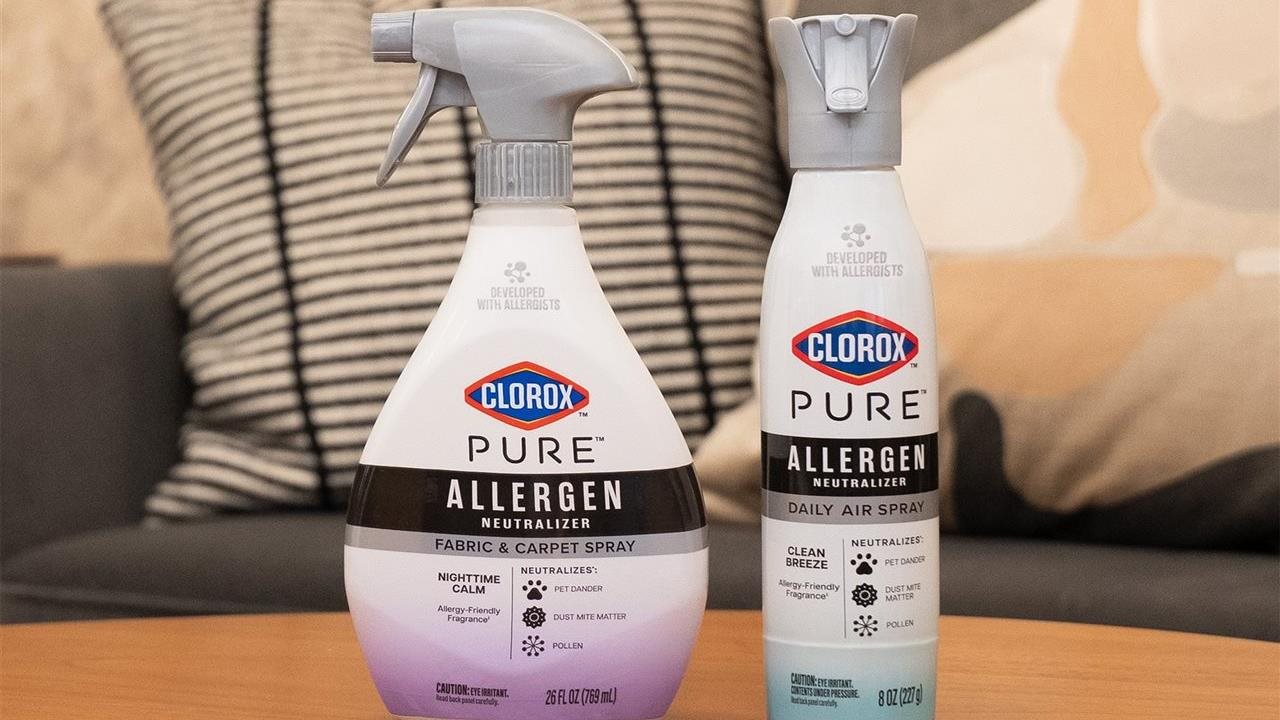
To help you better understand the ins and outs of allergies, the experts behind Clorox™ PURE™ — a new line of daily allergen neutralizer sprays designed to stop indoor allergens like non-living pollen, dust mite matter and pet dander before they become allergies — debunk common misconceptions.

Myth number 1: Allergies only affect people in the spring

While springtime is typically peak allergy season as pollen from many varieties of plants, trees and flowers are prevalent, many people can experience allergies year-round. In the fall and winter, dust mites tend to increase once you turn on your heating, and mold tends to peak due to outdoor decomposing leaves and damp spots in the home. And while summer lends itself to warmer weather and more time spent outside, we still see pollen and dust mites working their way throughout the home.

Myth number 2: You can avoid allergies by staying indoors

Many people who experience allergy symptoms all year may be reacting to common allergens like dust mites, pet dander and mold that can live inside your home. And no matter how hard you may try, it can be impossible to keep all pollen out of your home. Whether or not you or the other members of your household currently experience allergies, you can actually develop allergies over time simply from repeated exposure to common allergens, meaning the more you are exposed, the more sensitive your immune system can become to potential allergy triggers.

To manage indoor allergens, add Clorox™ PURE™ Allergen Neutralizer Daily Air and Fabric & Carpet sprays to your daily routine. Developed with allergists, these daily sprays neutralize common household allergens like non-living pollen, dust mite matter and pet dander by changing allergens’ active protein structure so they can no longer bond to receptors in your body and trigger allergies. You can use Clorox™ PURE™ Daily Air Spray in common living spaces like living rooms, bedrooms, entryways and more while Clorox™ PURE™ Fabric & Carpet Spray is designed for use on soft surfaces where allergens can lurk. Think hard-to-clean areas like carpets, upholstered furniture, curtains, pet beds and more.

Myth number 3: Most people react only to one allergen

It’s common for people with allergies to be allergic to more than one thing. This can be because an overly sensitive immune system tends to overreact in multiple ways, causing allergies to appear in clusters. In other words, once allergies take hold, new sensitivities can follow. This is all the more reason to take action to neutralize allergens in your home before they become a bigger problem.

Myth number 4: If you weren’t allergic to something as a child, you won’t develop allergies to it later

It is entirely possible to develop allergies later in life, often without warning. New environmental exposures, lifestyle changes, like getting a pet, and immune system changes as you get older can all increase susceptibility. While you can’t control every trigger, you can take control of your environment. One way to help decrease the likelihood of developing allergies is by reducing your exposure to typical indoor and outdoor allergens.

Learn more about managing indoor allergens in your home year-round at Clorox.com/PURE, and find Clorox™ PURE™ Allergen Neutralizer products nationwide at Walmart.com, Amazon and in the air-care aisle.

Know more sooner: The benefits of prenatal genetic screening

2026-02-23T11:13:00

(BPT) – As hopeful parents start their reproductive journeys, they may be offered a variety of tests and screenings, which can be opportunities to learn more about their own health and about a pregnancy and developing baby. These tests and screenings may provide reassurance that all is well, or chances to seek further information.

Prenatal genetic screenings, in particular, can help determine whether your baby may be at risk for certain genetic or chromosomal conditions. With the help of a clinician, you’ll be able to navigate genetic screening information without feeling overwhelmed and make a plan for what comes next.

What is prenatal genetic screening?

Prenatal genetic screenings use a blood sample to test the parents or the pregnancy. These screenings allow expecting parents to learn about their own genes and how those may impact their baby, or get insights into the baby’s development and discover the baby’s predicted sex — well before birth.

There are two types of prenatal genetic screenings:

  • Carrier screening: This prenatal genetic screening lets parents know if they’re carriers of a serious genetic condition and can help determine a baby’s chance of having specific inherited conditions like cystic fibrosis or fragile X syndrome. It’s possible to be a carrier of a genetic condition without showing any symptoms of the condition. Carrier screening can be done before or during pregnancy.
  • Non-invasive prenatal screening: Cell-free DNA screening, also known as NIPS or NIPT, can help determine if a baby has a chance of having specific chromosomal conditions like Down syndrome. This screening is done during pregnancy.

Why does clear information matter?

Prenatal genetic screening can play an important role in helping expectant parents make informed decisions during pregnancy. By identifying potential genetic risks early, screening may provide valuable insight into a baby’s health risks giving families time to learn, ask questions, and consider next steps such as diagnostic testing or other care options recommended by their healthcare providers. These screens can help guide conversations between families and their health care providers as well as support personalized care and informed planning during an emotionally complex time.

“Knowing medical information early in their pregnancy can give expectant parents the most options,” said Dallas Reed, M.D., FACMG, FACOG, obstetrician-gynecologist and medical geneticist, and principal medical advisor of Women’s Health for Myriad Genetics®. “Normal results can provide reassurance, while positive results open the door to thoughtful conversations about next steps between families and their healthcare providers, helping them feel more prepared and supported as they make choices for their pregnancy.”

A prenatal genetic screen for everyone

Any expecting parent can benefit from a genetic test, not just those who have a family history of certain inherited conditions. If you’re considering having a baby, ask your doctor about the Prequel® Prenatal Screen and the Foresight® Carrier Screen, non-invasive blood or saliva tests designed for everyone regardless of ancestry or BMI.

The Prequel screen checks for increased risk of certain common chromosome conditions by analyzing placental DNA in the pregnant person’s blood, and with most results available in seven to 10 days. This prenatal screening can be done as early as eight weeks, giving parents as much time as possible to make a plan with their healthcare provider based on the screening results. The Foresight screen can help determine whether parents carry inherited health conditions that they may pass on to their child.

While most reports deliver low-risk results, if you do want to talk them through, Myriad offers on-demand access to board-certified genetic counselors to help interpret results and answer questions about your baby’s health risks.

Determining next steps

If a screen reveals a high-risk result, it’s important to keep in mind that screening is just the first step. Genetic insights based on prenatal screening give you precious time to pursue diagnostic tests like amniocentesis, consult specialists, find the best-equipped medical facilities for your birth, and connect with parents who have been in your shoes.

Your healthcare provider may offer follow-up testing or a conversation with a specialist to explore results further and discuss options.

Feel empowered, not overwhelmed

Genetic testing helps parents understand what to expect, giving them insights to help make thoughtful choices for their family.

If you’re pregnant or planning to become pregnant, check out Myriad’s Prequel Prenatal Screen, a screen that assesses common chromosomal conditions, as well as the Foresight Carrier Screen, which looks for genetic conditions that parents might pass down to their children, and SneakPeek® Early Gender Test, which allows parents to learn about their baby’s predicted sex as early as six weeks.

Myriad Genetics also offers resources like Know More Sooner to help make the pregnancy journey clearer and more supportive for families, and debunk common myths about genetic screening.

Clinical Trial Aims to Improve Daily Life for People with Prader-Willi Syndrome and Their Families

2026-02-23T10:05:00

(BPT) – For Kevin and Karin Sweeney, the distress was immediate. Moments after the birth of their daughter, Klara, doctors and nurses gathered in the delivery room in a quiet cluster. Their whispers were a vivid and unnerving sign that something was troubling them about the baby. Karin sensed it, too. Klara wasn’t crying and would not latch on to nurse. She needed a feeding tube and further evaluation in the neonatal intensive care unit.

Soon after, genetic testing revealed that she had Prader-Willi syndrome (PWS), a rare disorder characterized by chronic hunger, growth hormone deficiency, and behavior changes.

Many questions, few answers

The diagnosis left the Sweeneys full of questions they couldn’t easily articulate. As parents of a newborn, their future felt uncertain.

“We felt isolated and alone,” says Karin. “But we refused to accept a future that was grim for our daughter. We focused on learning all we could about PWS to help us adapt to the new reality we were facing.”

“The hungriest you’ve ever been”

That new reality included dealing with one of the most challenging symptoms of PWS, called hyperphagia, or unsatisfiable hunger. If not proactively managed, hyperphagia-associated PWS can result in life-threatening obesity and lead to other health complications.

“People with Prader-Willi syndrome do not feel full. They usually cannot live independently because they are consumed with their overwhelming need for food,” says Jennifer L. Miller, M.D., professor of pediatric endocrinology at the University of Florida, Gainesville, who specializes in treating children and adults with PWS. “When I first started treating this disorder, a patient told me, ‘Imagine the hungriest you’ve ever been. That’s how I feel all the time.'”

A new version of life – in and out of the home

Families navigate the burden of PWS in different ways, often building their days around structure, including consistent mealtimes and controlled food access. For the Sweeneys, this has meant increased vigilance in controlling what and when their daughter eats. Inside their home, they have been able to keep Klara, now 15 years old, on a strict “clean” diet to help her maintain a healthy weight.

Other families coping with PWS often turn to more extreme measures to control their child’s food access, including locking fridges and pantries.

Outside the home, PWS can have a significant impact on quality of life. With less control over food access at parties and other social gatherings, families often are forced to isolate themselves from friends and loved ones.

“Hyperphagia is complex and challenging. If it were simple, we would have had an answer long ago,” says Dr. Miller. “Clinical research and education play a critically important role in giving hope to patients and families that we can find answers to help them thrive and have a better quality of life.”

The HERO study

One clinical research study being led by investigators such as Dr. Miller is exploring a potential treatment option for PWS. The clinical trial, called the Hunger Elimination or Reduction Objective (HERO) study, is focused on assessing the effectiveness and safety of an investigational drug for the treatment of hyperphagia in PWS. The therapy is being studied to see if it can help the body release certain gut hormones that may help reduce excessive hunger and food-seeking behaviors in people with PWS.

The study is open to males and females 7 years of age or older in the United States who have a documented diagnosis of PWS. Eligible participants will receive the study drug or a placebo orally twice daily for 12 weeks. Travel expenses and lodging, if required, for the participant and a primary caregiver will be covered. To learn more, visit www.heroforpws.com.

Your Backyard Is Wilder Than You Think

2026-02-21T11:01:01

(BPT) – By Jason Bittel, author of Grizzled: Love Letters to 50 of North America’s Least Understood Animals

North America is home to some huge and awe-inspiring creatures, from 800-pound alligators and surf-cracking great white sharks to rumbling herds of bison and mountain lions — the largest cat on Earth that is able to purr.

But for those who can’t get to a national park or seashore, there is still plenty of wonder waiting to be discovered on a backyard safari.

Death-Dealing Hummingbirds

The average hummingbird weighs about as much as a stick of chewing gum and lay eggs the size of jellybeans. And yet, if they were the size of a human, the tiniest birds on Earth would have to consume around 10,000 calories each day to perform their aerial acrobatics.

In fact, the hummingbird’s need for a constant supply of energy is so strong, putting a little sugar water in a special feeder is all it takes to draw the little wonders near. And if you watch a feeder long enough, you might just see the males do battle.

With speeds approaching 60 miles an hour and bills shaped like sharpened stilettos, male hummingbirds have been known to guard their territories with iridescent ferocity. The brightly colored sprites have even been documented attacking golden eagles, a predator that outweighs them by about a thousand times.

Amazingly, when hummingbirds battle each other, a beak to the heart can even result in fatalities.

Close-up of a possum with babies on it's back.


The Opossum’s Oscar-Worthy Performance

Commonly spotted scurrying away from a tipped-over trash can or waddling along the roadways at night, opossums are about the size of a house cat and appear rather unconcerned about much of anything.

This may be because they have an evolutionary trick up their fluffy little sleeves.

When confronted by a predator, opossums can keel over and play dead. Scientists call this death-feigning, or thanatosis. You might know it simply as “playing possum.”

But opossums are not like fainting goats, falling over every time someone shouts BOO! Theirs is a last-ditch, all-or-nothing cascade of biological responses.

First the animal falls on its side and its legs and tail go stiff. The corners of its mouth tighten and drool starts gushing out. The opossum also poops itself and emits a stinky green goo out of its anal glands. The eyes remain open, while the rest of the creature appears to go positively catatonic.

You can’t help but admire the moxie of the opossum’s death dance.

Without big fangs or claws to fight off a foe, nor the ability to outrun a hungry predator, the opossum doesn’t fight or flee — it fouls, becoming so thoroughly inedible that the attacker turns its nose up at an otherwise free meal.

Bravo, indeed.

Close-up of a firefly.


Fireflies Are Secret Savages

Scientists have discovered a whopping 2,000 species of fireflies on this planet, and their glowing lights can come in everything from pale blue and neon green to bright yellow and even burnt orange.

Also known as lightning bugs, fireflies typically use their flashes as a secret code to find and woo mates. But one type of firefly has found a way to use that code to its own diabolical advantage.

Meet the femme fatale fireflies. Females of the Photuris versicolor species complex mimic the flash patterns of other fireflies. And when an unsuspecting male touches down nearby, the femmes fatales pounce from the shadows and tear them limb from limb.

In addition to gaining an easy meal, evidence suggests the femmes fatales also steal defensive compounds from the fellas — nasty-tasting chemicals they cannot produce themselves. And the females actually lace their own eggs with those compounds as a way to protect them from predators.

So the next time you see a soft twinkle in the night, it could be a lightning bug looking for love. Or it might just be a femme fatale looking for blood.

But both are backyard magic.

Cover of Disney National Geographic book called

Read more about these magical backyard animals in Grizzled.