The new era of cancer screening: What ‘Multi-Cancer Early Detection’ really means

2026-03-04T15:15:00

(BPT) – For years, routine screening recommendations have been limited to four cancers — breast, cervical, colorectal, and high-risk lung cancer — leaving nearly 70% of annual cancer cases and deaths with no recommended screening options.1,2,3,4 This unmet need leaves many adults vulnerable to cancers that are often found too late for effective treatment.2 Multi-cancer early detection (MCED) testing introduces a new way to get ahead of cancer.

The Cancerguard® test is a simple MCED blood test that analyzes DNA and protein biomarkers and helps detect over 50 cancer types and subtypes,1,5 supporting other standard screenings by broadening types of cancers that can be found, even at early stages. The Cancerguard test can detect some of the deadliest cancers, such as pancreatic, ovarian, liver, and esophageal — even before symptoms appear.1,2,5

Why early detection matters

Cancer remains the second leading cause of death in the United States with roughly 600,000 deaths each year.2 Early detection is one of the most effective tools we have to help improve those outcomes. MCED testing can detect signals of cancer in the body and provide insight before symptoms even appear. Finding cancer early, before it spreads, may help increase the chances of treating and potentially surviving cancer.1,2
Senior man jogging down a country road.


How the Cancerguard test works

Cancerguard is the only marketed test of its kind that uses a multi-biomarker class approach. It searches for cancer signals within several types of biological markers, not just one. With one blood sample, the test analyzes both methylated DNA markers and protein biomarkers that can indicate the presence of cancer. By combining these biomarkers, the Cancerguard test casts a wider net for detecting cancer in its early stages, including some of the deadliest types.1,2

What you can expect with Cancerguard testing

Once a healthcare provider places your Cancerguard test order, you can schedule your blood draw where it works best for you — at your doctor’s office, an approved lab or health system partner, or even in the comfort of your home. Once the sample is received at the lab, most people will get their results in about two weeks.

The Cancerguard test is designed for reliability and features a 97.4% specificity.1 This limits false positive results to help ensure patients receive clear, dependable information.1 If no cancer signal is detected, you should continue with screenings recommended by your provider and can consider annual MCED testing with the Cancerguard test for expanded cancer screening. If a cancer signal is detected, review your test results with your healthcare provider to plan your next steps. It is not a diagnosis and does not confirm that you have cancer. Imaging (radiology) scans and other medical tests are typically needed to locate and confirm a cancer diagnosis.

While a positive result can feel overwhelming, Exact Sciences provides support, including care navigation resources that help guide patients through next steps with comprehensive support systems. In addition, Exact Sciences offers an imaging reimbursement program which reimburses up to $6,000 for non-covered imaging costs to help reduce the financial impact for eligible patients.*

* Patients must apply. Eligibility depends on program qualifications, is not guaranteed, and is subject to change. The program will not reimburse any covered imaging costs, including copay, coinsurance and/or deductible amounts determined by insurance. For more information patients should contact to apply, call 1-844-870-8870.

Choose Cancerguard with confidence

Hugging father and son.

From clear and reliable results to guided next steps, Cancerguard is built with the patient experience at the center. For adults who want to take a more proactive role in their health, Cancerguard offers a meaningful way to screen for cancers with a simple blood test, helping individuals stay empowered and informed. The Cancerguard test may benefit people who:

  • Are proactive in their approach to their health
  • Have increased risk factors, such as smoking, alcohol use, obesity, or are over age 50
  • Haven’t had a cancer diagnosis in the last three years
  • Have a family history of cancer

This test is not recommended for individuals who have had cancer within the past three years or who are pregnant, and it does not replace recommended screening. Individuals interested in taking the Cancerguard test should talk to their doctor about whether the test is right for them.

Learn more at www.cancerguard.com.

Disclaimer: The Cancerguard test was developed, and the performance characteristics validated by Exact Sciences Laboratories following College of American Pathologists (CAP) and Clinical Laboratory Improvement Amendments (CLIA) regulations. This test has not been cleared or approved by the US Food and Drug Administration. The test is performed at Exact Sciences Laboratories. Exact Sciences Laboratories is accredited by CAP, certified under CLIA regulations, and qualified to perform high-complexity clinical laboratory testing.

Cancerguard and Exact Sciences are trademarks of Exact Sciences Corporation. © 2026 Exact Sciences Corporation. All rights reserved.


[1] Cancerguard Clinician Brochure. Exact Sciences Corporation. Madison, WI.

[2] Siegel RL, Kratzer TB, Giaquinto AN, et al. Cancer statistics, 2025. CA Cancer J Clin. 2025;75:10-45.

[3] Data on file. Cancers without USPSTF recommended screening. 2025. Medical Affairs, Exact Sciences, Madison, WI

[4] USPSTF. A & B Recommendations. Accessed November 10, 2025. https://www.uspreventiveservicestaskforce.org/uspstf/recommendation-topics/uspstf-a-and-b-recommendations

[5] Data on file. Cancerguard Cancer Subtype Analysis. Exact Sciences. Madison, WI; September 2025. [MED-REF-01259]

4 simple ways to support your brain health

2026-03-03T08:01:00

(BPT) – Key takeaways

  • No matter your age, investing in your brain health should be top of mind.
  • Simple steps like eating brain-nourishing food, taking brain-boosting supplements like Cognizin citicoline, protecting your brain when exercising and staying social can help support your cognitive functions now and in the future.
  • Boosting your brain health improves your focus and attention when you’re younger and preserves your cognitive abilities when you’re older.

If you’re planning to take better care of your health this year, don’t forget to focus on supporting one of the most important organs in your body: Your brain! Your senses, thoughts, motor skills, memory and so many more functions are ruled by your brain. That’s why investing in your brain health is vital to taking care of your overall well-being.

Brain health isn’t just important for older adults. Brain health and performance should be top of mind for everyone at any age. Investing in brain health when you’re young can help sharpen your focus and mental energy, so you can zone in and be more productive. And, as you age, maintaining brain health can help to preserve your memory and other cognitive functions.

Not sure how to start taking care of your brain? Read on to discover just a few tips that can keep your brain working well, whether you’re 18 or 80.

Fuel your thoughts with brain-boosting nutrients

Food nourishes your whole body, and that includes your brain. So, what foods can help your brain function at its best now and in the future? According to Harvard Health, your best strategy is to change your dietary habits to prioritize veggies, fruits, legumes, whole grains, fish and healthy fats. The next time you’re at the store, consider buying:

  • Green leafy vegetables like kale, spinach and broccoli
  • Strawberries and blueberries
  • Black beans and chickpeas
  • Cracked wheat, oats and whole-grain couscous
  • Omega-3 rich fish like salmon, cod and canned light tuna
  • Olive oil and other healthy fats

Take daily brain support supplements

Supplements are a great way to optimize brain-fueling nutrients. For example, Cognizin Citicoline is a great supplement to add to your daily routine to support mental focus and memory.

What is citicoline? You may not know it by name, but it’s already inside of you! Citicoline is a naturally occurring brain nutrient that protects and repairs your brain cells.

Many cognitive health ingredients on the market can enhance your brain performance. However, Cognizin Citicoline provides brain performance and comprehensive brain health support over time. Clinical trials have shown that this brain health nutrient offers cognitive benefits for young professionals and improved memory function for older adults.

Cognizin is used in over 300 products, from capsules to beverages. You can visit Cognizin.com/en/Buy-Cognizin to learn more and find the products that work best for you.

Wear a helmet when doing high-impact sports

Staying active is great for your body and brain, but don’t forget to wear a helmet. Whether you bike, ski, snowboard, roller skate, skateboard, horseback ride, or participate in high-impact sports like football and hockey, wearing a helmet can reduce your risk of a head injury.

According to the Mayo Clinic, a moderate to severe TBI can lead to cognitive issues with memory, attention, concentration, communication and problem-solving.

Stay social to stay mentally sharp

null

Social connections are incredibly vital to your well-being throughout every stage of life and can protect your brain health. Socializing can improve a person’s longevity, stress levels, mood and — most importantly — boost their thinking and memory.

How do social connections improve brain health? When you participate in social interactions, you’re activating neural pathways and preserving neural plasticity. In other words, social interactions keep your brain flexible, allowing it to adapt and function well now and in your golden years.

If you’re struggling to connect with others, try one (or a few) of these activities:

  • Having a weekly phone or video call with an old friend
  • Hosting a game night
  • Meeting up with loved ones for lunch or dinner
  • Planning a hike, bike ride or other activity
  • Joining a book club

You’re never too young or too old to take care of your brain

null

It’s never too early or too late to invest in your brain health and function. The time and energy you spend trying these and other brain-boosting tips can help you in your personal and professional life now and keep your cognition and memory in tip-top shape in your retirement.

To learn more tips to keep your brain healthy at any age, visit Cognizin.com.

Grandparent 101: The Modern Grandparent’s Playbook

2026-03-03T14:01:00

(BPT) – One of the most beautiful aspects of growing older is how gracefully we navigate the changing roles that accompany each new phase of life. An exciting phase that brings an abundance of joy — and can also require some pro tips and preparation — is grandparenthood.

“As a new chapter of your family story begins, there are a lot of things to keep in mind as a grandparent,” said Elvira Christiansen, Director of Retail & Loyalty for AARP Services. “AARP member benefits can help you every step of the way, from saving money on the visit to meet your grandchildren to sending thoughtful gifts to let your family know you’re thinking of them.”

Below are five easy ways an AARP membership can help you save money as you enter your grandparent era.

Finding Steals, Avoiding Travel Ordeals

If the newest member of your family has just arrived and you have to travel to meet them, AARP Travel Center Powered by Expedia can help AARP members save on flights and car rentals. Expedia vacation packages can make the booking process easier, and you get a $50 gift card of your choice when you book any flight package. For car rentals, members save up to 30% on car rentals from Avis, Budget and Payless.

If you prefer to take the scenic route and drive for your visit, make sure you’re prepared for any hiccups you may encounter along the way. AARP members save up to 20% on annual membership fees for Allstate Roadside plans, including Roadside Advantage, Roadside Assist and Roadside Elite, including access to assistance for towing, jump-starts, tire changes, lockout assistance, fuel delivery and more.

If you’re lucky enough to live close by, then helping with carpools, running errands or taking the kids out are a few ways you can give your adult children a deserved break. Before you head out, fuel up at Shell and link your Fuel Rewards® account to your AARP membership to start enjoying Complimentary Gold Status, which saves at least 5¢ off per gallon at participating Shell stations. If you’re new to the Fuel Rewards® program, you can also receive a one-time savings of 50¢/gallon on your first fill-up (up to 20 gallons).

Moving Made Easy

A recent survey from the National Association of Realtors shows that 25% of Baby Boomers now explicitly plan their retirement location based on the proximity of their children or grandchildren.

“It’s become quite popular for people to re-locate to where their children and grandchildren live, which allows them to spend more time with their family and stay active with the next generation,” said Christiansen. “Because major moves can be expensive, reviewing and utilizing available discounts through your membership with AARP can be critical to a fixed income.”

Vehicles happen to be one of the necessary items you need to bring with you when you move and can be a hassle when you’re planning relocation logistics. With Montway Auto Transport, AARP members save $100 off car shipping over 500 miles and $50 on car shipping up to 500 miles. Montway offers free quotes, door-to-door service, guaranteed pickup dates, and a TruePrice Guarantee that locks in your booked price for 30 days.

A Full Plate, Not an Empty Wallet

The last thing a new parent wants to worry about is making dinner, which is why one of the best ways to help a growing family is by providing meals. Take the cooking off their plate (and yours) by ordering easy and appetizing meals from a variety of restaurants using your AARP member benefits.

In the mood for something quick and comforting? AARP members save 15% at Denny’s — including diner classics and breakfast items. Hankering for a classic steak dinner and a bloomin’ onion? AARP members save 10% at Outback Steakhouse on food and nonalcoholic beverages.

Meaningful Giving, Mindful Spending

Holiday and birthday treats or care packages when you can’t be with your grandkids is a sweet way to show them you are thinking of them. Whether you’re sending them a surprise for St. Patrick’s Day or chocolate for their Easter baskets, you can’t go wrong with FTD. AARP members automatically save 25% sitewide or 30% off select items with promo code AARP30. In addition, you can get $15 off an FTD Plus membership which includes free delivery for one year. FTD offers fresh floral bouquets, plants for every occasion and a wide assortment of gifts. No minimum purchase amount is required. Same-day delivery is available in most areas.

Staying Healthy Physically and Financially

Prioritizing your own health isn’t just an act of love; it’s an important step that can help you thrive in your later years so you can spend as much time with your grandchildren as possible. Taking advantage of AARP member benefits can help make it even easier.

As hearing loss tends to happen gradually, you can explore hearing care options to check your hearing. AARP members can access savings on hearing aids and hearing care with AARP® Hearing Solutions™ provided by UnitedHealthcare® Hearing. Members may save up to 50% on prescription hearing aids and up to $200 off over-the-counter hearing aids. Members can also receive a hearing exam and consultation at no cost, as well as personalized support through a large nationwide network of hearing providers.

Members can also save on routine vision care. Learn more about vision insurance options, as part of your AARP member benefits, with plans that offer a large, nationwide network of eye doctors, generous allowance for glasses or contacts, savings on lens enhancements (like progressives and anti-reflective coatings) and more.

If you need new glasses or lenses, AARP members can receive exclusive savings through Visionworks. Discounts include $200 off a complete pair of glasses when you buy single vision lenses or $250 off with multifocal lenses.

Many people also don’t realize how important it is to prioritize dental health. Problems that start in the mouth can lead to more complicated health issues and impact overall health. To help keep your teeth in check, explore information on dental insurance options for AARP members that offer access to individual or family coverage for the most common dental procedures, with the option to enroll at any time during the year. Dental insurance encourages and generally pays for regular check-ups, so many people who purchase protection start to benefit immediately.

To learn more about the benefits and discounts for AARP members, please visit aarp.org/save.

###

AARP and its affiliates are not insurers, agents, brokers or producers. AARP member benefits are provided by third parties, not by AARP or its affiliates. Providers pay a royalty fee to AARP for the use of its intellectual property. These fees are used for the general purposes of AARP. Some provider offers are subject to change and may have restrictions. Please contact the provider directly for details.

How can you know if your vehicle has a recall?

2026-03-02T07:01:00

(BPT) – Key Takeaways

  • Keeping up with safety recalls is an important part of vehicle maintenance.
  • It’s easy to check for vehicle safety at CheckToProtect.org.
  • Your vehicle’s recall can be repaired at an authorized dealership at no cost to you.

If you don’t know how to check for vehicle safety recalls, you’re not alone. According to a survey by Stellantis, nearly half (43%) of American drivers don’t know how to find out if their vehicle has an open safety recall. The good news is, it’s easy to see if your vehicle has a recall. Visit the National Safety Council’s CheckToProtect.org.

How does it work?

Check your vehicle by entering or uploading a photo of your license plate number or the 17-character vehicle identification number (VIN) into the search tool. If your vehicle has a recall, contact an authorized dealership near you to schedule a free recall repair.

Just like getting regular oil changes, tire rotations and other essential vehicle maintenance, it’s important to make sure your car or truck is recall-free.

This Vehicle Safety Recalls Week, March 2-8, 2026, is the perfect time to check your vehicle. All drivers should take this time to make sure their vehicle is safe for themselves and their passengers.

Why are vehicle recalls important?

Safety recalls are sometimes issued by an automaker when a part stops functioning properly as it ages, or when a group of vehicle owners experience a similar problem. Safety recalls can affect everything from brakes and steering to batteries and airbags.

Research commissioned by automaker Stellantis found that 40% of drivers believe a recall is fine as long as it doesn’t affect a vehicle’s performance. The truth is that some recalls may not change the way a vehicle drives, but they can still present a safety risk. For example, if a recalled Takata airbag deploys in a crash, the airbag’s inflator can break apart, sending shrapnel throughout the vehicle that could severely injure or kill vehicle occupants.

Another example relates to car seat anchors. CARFAX released new data showing that nearly one million vehicles have open safety recalls for child car seat anchors, a critical safety feature that secures car seats firmly in place.

According to CARFAX, as many as 57 million vehicles on the road today have an unrepaired safety recall — that’s roughly 1 in every 5 vehicles. Any driver can take the proactive step to check their vehicle’s recall status. This is especially important for drivers of older, used vehicles and drivers who have changed mailing addresses, because manufacturers may not have their latest contact information to notify them of recalls.

As many as 57 million vehicles on the road today have an unrepaired safety recall — that’s roughly 1 in every 5 vehicles.

Frequently Asked Questions

Here are answers to commonly asked questions about vehicle safety recalls.

  • How do I check to see if I have a vehicle safety recall? You can check a vehicle for safety recalls by visiting CheckToProtect.org and entering or uploading a photo of your 17-character vehicle identification number (VIN) or license plate number.
  • How do I find the vehicle’s VIN? Places to find a VIN include the driver’s side dash, inside the driver’s side door, on registration documents or the automobile insurance card.
  • Where do you take a vehicle for a recall repair? Any authorized dealership near you will repair vehicle safety recalls at no cost to you, so don’t hesitate to call and schedule an appointment. Drivers don’t need to be a current or former dealership customer to get a free recall repair.
  • Who pays for recall repairs? No matter the age of the vehicle, automakers will cover the cost of recall repairs and parts for dealers. Authorized dealers will always repair a safety recall at no cost to the driver, regardless of whether the vehicle is registered in the driver’s name or if it’s still under warranty.
  • Will the dealership ask for personal information? You don’t need to provide any personal information to get a recall repaired at a dealership. The dealership only needs a way to contact you when the repair is completed.
  • How long does a recall repair take? Recall repairs can take as little as one hour. Customers can ask dealers about rideshare vouchers, loaner cars and other transportation services they may offer, if needed.
  • What if I’m not the owner? You can check any vehicle for recalls if you know the license plate number or VIN. If you drive a vehicle that belongs to someone else, such as an older relative, you can check it for recalls and take it to the authorized dealership for repair, at no cost to you or the vehicle’s owner.

Checking for recalls can help ensure your vehicle is in good condition, so make sure to add this simple step to your checklist of regular maintenance tasks. Take charge of your safety today at CheckToProtect.org.

What you need to know about AI scams

2026-03-01T10:01:00

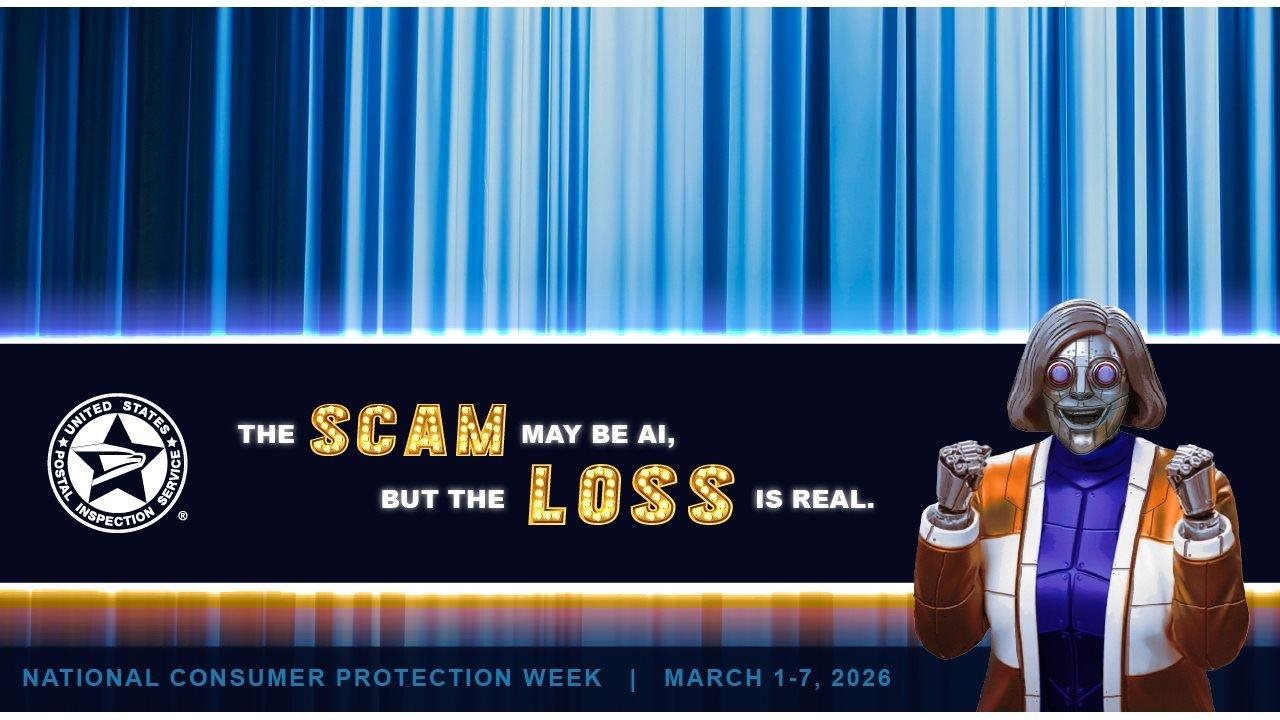
(BPT) – You’ve probably heard about the amazing things artificial intelligence (AI) can do, from quickly creating written content and images to making videos that appear real, even when they’re fake. Unfortunately, this easily accessible technology is also used by fraudsters to fool people into sharing personal information, investing in fake schemes, or giving scammers their money.

When AI technology is so good at faking — and personalizing — scams, what can consumers do to protect themselves?

“From AI-generated emails and texts to cloned voice messages, calls, and deepfake videos, today’s scammers have many tools at their disposal,” said Chief Postal Inspector Gary Barksdale. “But if you’re alert and understand fraudsters’ typical methods, you can stay one step ahead of them.”

During National Consumer Protection Week (NCPW), March 1-7, 2026, take steps to learn more about fraud schemes that use AI to protect yourself and your family. The U.S. Postal Inspection Service is sharing some red flags that can help you avoid AI-generated traps and what you or a loved one can do if you are a victim of fraud.

How to spot a scam that uses AI

AI is being used in many different types of fraudulent schemes including quick phishing attempts in the form of emails or texts supposedly from a reputable company, “long cons” like romance, investment, or cryptocurrency scams, and even scams claiming to be “tech support.” If you get a text, email, call, or voice message requesting or demanding your response, watch for these things:

  • Skimpy social media. The “person” contacting you has an inconsistent or thin social media footprint — few friends, recent account creation, comments that don’t seem natural, or images that don’t match name/profile details.
  • Odd website/email address. Tiny misspellings, weird fonts, non-secure websites asking for login information, or a return email address that doesn’t match the website domain asking for information (Example: john.doe@USPSUS.com when USPS.com is the actual domain name).
  • Requests to communicate off-platform. Does the message sender insist on speaking via WhatsApp, Telegram, or a separate, private email address? If so, platform security protections won’t apply.
  • Audio/video inconsistencies. Lip-sync timing seems off, weird lighting/jerky motion, or a voice that doesn’t quite match the person you know.
  • Too-good-to-be-true offers. Does the sender promise guaranteed high financial returns or “exclusive” private opportunities? They likely won’t pay out.

How to protect yourself

Even if you think the person or company contacting you is legitimate at first, always double check by going straight to the source.

Go directly to the company website, or contact the person the way you normally contact them, rather than clicking a provided link or responding to the text, email, or call.

Follow these tips to avoid falling prey to scams:

  • Never send money to someone you know online only, especially via cryptocurrency, wire transfer, gift cards, or prepaid reload methods.
  • Beware of financial requests. Requests to “loan me money to buy a ticket” or “invest via this private wallet” are warnings to STOP and verify.
  • Enable multi-factor authentication (MFA). Protect your email, social, and financial accounts.
  • Use payment methods with buyer protection. Credit cards and escrow services are safest when transacting with unknown parties.
  • Avoid sharing personally identifiable information. Providing your full date of birth, Social Security number, photos of IDs, or home address can enable identity theft.
  • Keep devices and software updated. Also use antivirus software plus a password manager for strong, unique passwords.
  • Be cautious with “too helpful” strangers. If someone offers to set up an investment account or “help” you sign up, slow down and verify.
  • Inform your contacts. Warn friends and family if you see a suspicious contact pretending to be you.

Actions to take if you’re the victim of a scam

If you or a loved one falls victim to a fraudster, take immediate action:

  • Stop communication with the scammer. Preserve all messages and transaction records.
  • Contact your bank/payment provider immediately. Ask them to help you stop or trace transfers.
  • Change passwords and enable multi-factor authentication (MFA), especially if you shared login information.
  • Place fraud alerts and a credit freeze with the three main credit bureaus. Also place alerts with your bank and credit cards if you shared sensitive financial data.
  • Contact local police. If you lost significant sums of money or were threatened, the police need to be notified.
  • If you used cryptocurrency, contact law enforcement immediately. Tracing is difficult, but reported early, there may be a chance of recovering your funds.

Most importantly, report fraud. You can report it to the Postal Inspection Service, the Federal Trade Commission, or the FBI’s Internet Crime Complaint Center (IC3). You should also report the profile and messages to the platform where the contact occurred.

Finally, seek support! Scams also cause emotional harm, so talk to trusted friends, family members, or a counselor.

If you believe you’ve been the victim of any scam connected to the U.S. Mail, contact postal inspectors at 877-876-2455 or www.USPIS.gov/report. For more information on fraud prevention, visit www.USPIS.gov/ncpw-2026.