3 tips to practice responsible gambling to lessen risk of loss or addiction

2023-08-02T13:01:00

(BPT) – A majority of Minnesotans gambled last year and most lost money, underscoring the need-to-know tips for lower-risk and responsible gambling

For many Minnesotans, a trip to the casino has become a rite of passage for those coming of age. Meanwhile, pull-tabs are found at virtually every other bar, online gaming is surging, and big lottery jackpots continue to capture mass media attention. And while gambling can promise excitement and the possibility of big winnings, it also inherently holds high risks, and can quickly form into a serious addiction with severe consequences if it’s not approached with caution.

Emphasizing the issue, a new survey from the Minnesota Alliance on Problem Gambling (MNAPG) says 65 percent of Minnesotans gambled in some form in the past year and more than half lost money. The findings, according to MNAPG, are a cautionary reminder to stick to a limit when gambling and to understand the signs if gambling is becoming an addiction.

“For many, making a friendly wager adds excitement to a game, but gambling can also take on a life of its own, especially given the ease of betting on smartphones,” says Susan Sheridan Tucker, Executive Director of MNAPG, a gambling-neutral nonprofit organization. “Many Minnesotans enjoy gambling — whether it’s fantasy sports, pull-tabs, or trips to the casino — so therefore it’s critical people understand how to practice low-risk gambling to avoid serious, life-altering consequences.”

Three Tips for Safe and Responsible Gambling

Given the high risk of addictive behavior tied to gambling, it’s important to practice these low-risk tips to protect yourself and be responsible.

  1. Have a plan: Whether you’re going to a casino or opening a gambling app on your phone, set your time limits and keep to it.
  2. Have a budget: Don’t wager more than you can afford to lose.
  3. Monitor: Make sure to monitor spending to keep to your limit.

“Similar to more well-known substance addictions, gambling is an official behavioral addiction,” says Sheridan Tucker. “Behavioral addictions form in the brain in much the same way as alcohol or drug addiction, resulting in a person making riskier decisions to feed their brain’s reward hub. The signs can be harder to see, but you might notice the person becoming more withdrawn and evasive about questions related to money.”

To further educate Minnesotans about gambling addiction, and to emphasize that help is free in Minnesota, MNAPG partnered with Minneapolis advertising agency Preston Spire who created and produced a gripping public service announcement called “Just As Real” that MNAPG is encouraging people to view and share to help spread the message.

For anyone suffering or for those concerned about a loved one’s gambling habits, MNAPG stresses that addiction treatment is free in Minnesota, both for those who need help and their loved ones. People seeking help can call the Minnesota Helpline at 1-800-333-4673.

Four Questions You May Want to Ask Your Health Care Provider About Radiation Therapy for Prostate Cancer

2023-08-04T16:01:00

(BPT) – Content Provided by Boston Scientific

Prostate cancer is the second most common cancer for American men, yet receiving a diagnosis can feel unexpected.[1] While some people experience symptoms like increased frequency of difficulty starting urination, trouble emptying the bladder, or weak or interrupted flow, some men are asymptomatic and feel fine before being diagnosed.[2]

Receiving a diagnosis can leave a person feeling overwhelmed, especially when navigating treatment options. Prostate cancer treatments can vary and include active surveillance (monitoring the cancer with blood and imaging tests), surgery to remove all or part of the prostate or radiation therapy.[3] It is important for patients to speak with a doctor to determine treatment options.

For those being treated with radiation therapy, which may be recommended for early or more advanced stages of prostate cancer, here are four questions that you may want to ask your doctor:[4]

1. How common is prostate cancer radiation therapy and how does it work?

Each year in the U.S., more than 60,000 men opt for radiation therapy to treat their prostate cancer.[5] Radiation therapy works by using high-energy rays to kill cancer cells and is typically given five days a week in an outpatient center for several weeks at a time.[6]

2. What are the benefits and risks of radiation therapy?

Radiation therapy is a commonly recommended treatment option that has contributed to a relative five-year survival rate of 98%, making it appealing to many doctors and patients.[7],[8] While the therapy can be effective, it can have unwanted side effects, including urinary leakage, bowel leakage and diminished erectile function. Due to the proximity of the prostate and the rectum, radiation therapy to the prostate can unintentionally cause damage to the rectum and other surrounding organs.[9]

3. Are there options to reduce the side effects of radiation therapy for prostate cancer?

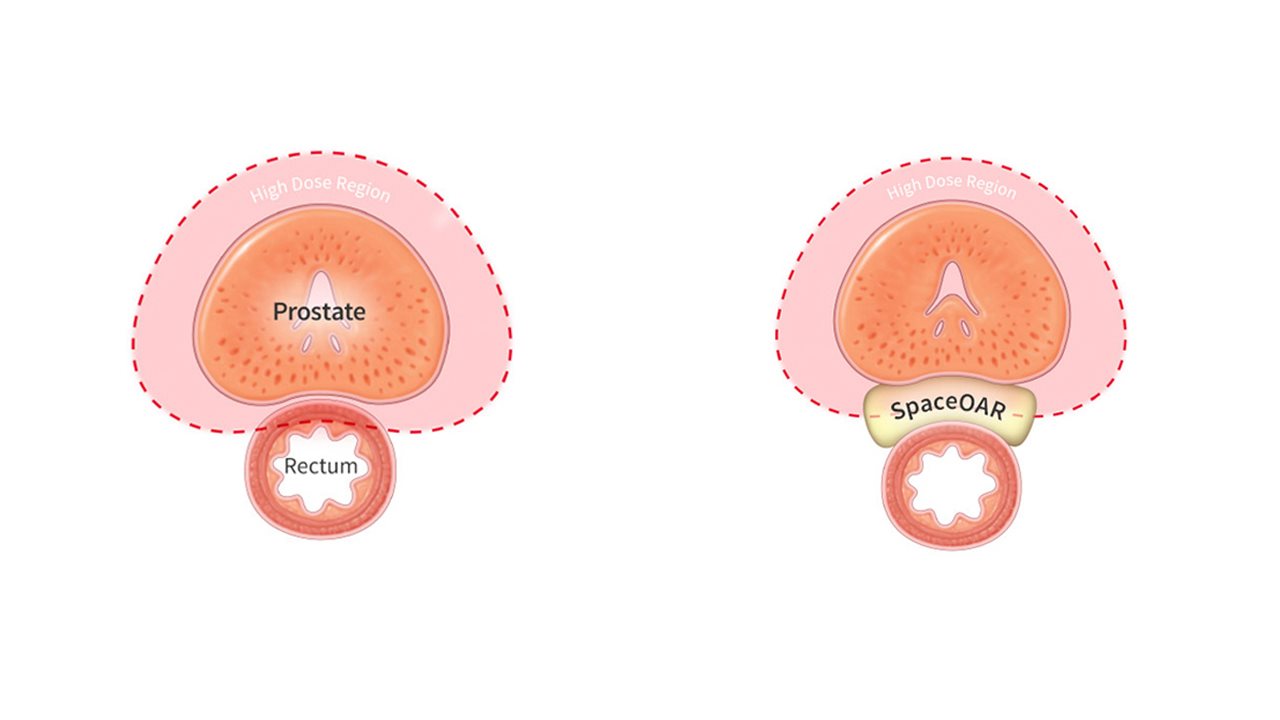
There are options that may help to reduce side effects of radiation therapy, including SpaceOAR™ Hydrogel. SpaceOAR Hydrogel is a polyethylene glycol (PEG) based hydrogel that temporarily creates space between the prostate and the rectum, designed to minimize radiation side effects.[10] By adding a small amount of space, SpaceOAR Hydrogel may help reduce radiation damage to the rectum.[11] SpaceOAR Hydrogel is clinically shown to minimize urinary, sexual and bowel side effects when compared to the control, and may help maintain quality of life for prostate cancer patients undergoing radiation therapy.[11],[12],[13]

4. Where is a rectal spacer insertion procedure performed?

SpaceOAR Hydrogel can be implanted as an outpatient procedure in a doctor’s office, hospital, outpatient clinic or surgery center prior to the start of radiation treatment.[10] It stays in place for about three months and is naturally absorbed into the body and removed through urine in about six months.[10]

Talk to your doctor to determine the best treatment options for you. Visit www.SpaceOAR.com/radiation for more information about SpaceOAR Hydrogel.

References


[1] Cancer Facts for Men. American Cancer Society. Available at: https://www.cancer.org/healthy/cancer-facts/cancer-facts-for-men.html. Accessed May 2023.

[2] What Are the Symptoms of Prostate Cancer? Centers for Disease Control and Prevention. Available at: https://www.cdc.gov/cancer/prostate/basic_info/symptoms.htm. Accessed May 2023.

[3] How Is Prostate Cancer Treated? Centers for Disease Control and Prevention. Available at: https://www.cdc.gov/cancer/prostate/basic_info/treatment.htm. Accessed May 2023.

[4] Radiation Therapy for Prostate Cancer. Johns Hopkins Medicine. Available at: https://www.hopkinsmedicine.org/health/conditions-and-diseases/prostate-cancer/radiation-therapy-for-prostate-cancer. Accessed May 2023.

[5] Treatment for Prostate Cancer: External-Beam Radiation Therapy. Prostate Cancer Foundation. Available at: https://www.pcf.org/c/treatment-for-prostate-cancer-external-beam-radiation-therapy/. Accessed May 2023.

[6] Radiation therapy. Mayo Clinic. Available at: https://www.mayoclinic.org/tests-procedures/radiation-therapy/about/pac-20385162. Accessed May 2023.

[7] Radiation Therapy: Effective for Prostate Cancer. Radiation Oncology Targeting Cancer. Available at: https://www.targetingcancer.com.au/2015/02/radiation-therapy-95-effective-prostate-cancer/. Accessed May 2023.

[8] Survival Rates for Prostate Cancer. American Cancer Society. Available at: https://www.cancer.org/cancer/prostate-cancer/detection-diagnosis-staging/survival-rates.html. Accessed May 2023.

[9] Radiation Therapy for Prostate Cancer. American Cancer Society. Available at: https://www.cancer.org/cancer/types/prostate-cancer/treating/radiation-therapy.html. Accessed May 2023.

[10] Data on file with Boston Scientific.

[11] Mariados N, Sylvester J, Shah D, et al. Hydrogel spacer prospective multicenter randomized controlled pivotal trial: dosimetric and clinical effects of perirectal spacer application in men undergoing prostate image guided intensity modulated radiation therapy. Int J Radiat Oncol Biol Phys. 2015 Aug 1;92(5):971-7.

[12] Hamstra DA, Mariados N, Sylvester J, et al. Continued benefit to rectal separation for prostate radiation therapy: Final results of a phase III trial. Int J Radiat Oncol Biol Phys. 2017 Apr 1;97(5):976-85.

[13] Karsh LI, Gross ET, Pieczonka CM, et al. Absorbable hydrogel spacer use in prostate radiotherapy: A comprehensive review of phase 3 clinical trial published data. Urology. 2018 May;115:39-44.

SpaceOAR Hydrogel is intended to temporarily move the rectal wall away from the prostate during the course of radiotherapy treatment for prostate cancer, and in creating this space it is the intent of SpaceOAR Hydrogel to reduce the radiation dose affecting the rectum.

SpaceOAR Hydrogel contains polyethylene glycol (PEG). As with any medical treatment, there are some risks involved with the use of SpaceOAR Hydrogel. Potential complications associated with SpaceOAR Hydrogel include, but are not limited to: pain associated with injection, pain or discomfort from the hydrogel, site inflammation, infection (including abscess), inability to urinate, urgent need to urinate, constipation, rectal muscle spasm, damage to lining of rectum, ulcers, fistula (a hole between rectum and bladder, urethra, or skin below the scrotum), perforation (hole in prostate, bladder, urethra, rectum), necrosis (dead tissue), allergic reaction (local reaction or more severe reaction, such as anaphylaxis), embolism (blood vessel blockage is possible and may happen outside of the pelvis, potentially impacting vital organs or legs), fainting, and bleeding. Please talk to your doctor about the risks and benefits related to using SpaceOAR Hydrogel. If one or more of these complications occur, you may need medical treatment or surgery. URO-1288805-AA

This material is for informational purposes only and not meant for medical diagnosis. This information does not constitute medical or legal advice, and Boston Scientific makes no representation regarding potential medical benefits included in this information. Boston Scientific strongly recommends that you consult with your physician on all matters pertaining to your health.

Caution: U.S. Federal law restricts this device to sale by or on the order of a physician.

All images are the property of Boston Scientific. All trademarks are the property of their respective owners.

©2023 Boston Scientific Corporation or its affiliates. All rights reserved. URO-1632107-AA JUL 2023

The real deal: 5 things to know about organic dairy

2023-08-03T16:51:00

(BPT) – Picture this: You’re walking down the dairy aisle at your local grocery store and see an assortment of milk, cheese and other delicious dairy products. You ask yourself: How do I choose? Well, here’s the thing — not all dairy products are created equal!

If you have yet to buy organic, now may be the time to switch. “Organic” isn’t just a slogan or a fancy marketing term — it’s backed by National Organic Program (NOP) standards. These standards are a set of rules established by the United States Department of Agriculture (USDA) to ensure that organic agricultural products are produced, handled and labeled correctly.

Let Organic Valley guide you through the dairy world and share its top five reasons organic is a game changer.

1. High-Quality Nutrition

Studies show that organic milk packs a nutritional punch with higher antioxidant levels and essential nutrients like omega-3 and CLA fatty acids. And, according to the National Library of Medicine, it has been shown that organic crops contain significantly fewer concentrations of cadmium — a toxic metal similar to lead and mercury. Toxic pesticides, antibiotics and GMOs are never used in the production of organic milk. By leaving out the bad stuff, organic dairy products have more room for the good stuff, with a taste that can’t be beat.

“I recommend drinking milk for anyone looking to add more protein and vitamins, such as vitamin A, B12 and D into their diet,” said Carly Knowles, MS, RD, LD — a registered dietitian and Organic Valley partner. “My personal favorite and go-to milk is Organic Valley’s Whole Milk Grassmilk® for added health benefits of extra omega-3 fatty acids and CLA content, and that’s because their cows spend 50% more time outside than the organic standard.”

2. Positive Impact on Sustainability

Because NOP was built on the concept of sustainable farming practices, organic dairy farms are often at the cutting edge of sustainable practices, setting an example for conventional counterparts. According to a 2022 research study from the University of Wisconsin-Madison, Organic Valley’s small organic dairy farms focus on grazing and organic production techniques that produce 24% lower greenhouse gas emissions than conventional dairy farms.

Organic dairy farmers allow their cattle to graze in pastures. While cattle graze, they trample plants and other matters into the ground so it can decompose naturally, enriching the soil and trapping carbon. Organic dairy farming is a win-win for the environment and your taste buds.

3. Commitment to Animal Care

Organic dairy farming prioritizes the health and well-being of their cows and promotes the animal’s natural behaviors. Firstly, organic cows must have access to the outdoors. This means they can go outside and enjoy fresh air and sunlight. This freedom is crucial for them to engage in natural cow activities like chewing cud, grazing on grass and simply living as cows.

And small organic family farms are constantly innovating animal care and are often ahead of the industry with creative ways to care for their animals that fit their unique farm circumstances. A good example of this is how some farmers rely upon native bird species to control the fly population.

4. Supports Local Organic Dairy Farmers

Every time you purchase an organic dairy product, you nourish yourself and your loved ones and show your support to local organic dairy farmers. Look for brands like Organic Valley, a cooperative of more than 1,600 small family farms committed to sustainably growing food and raising animals through organic agriculture. For these family farmers who own and run their own farms, dairy isn’t just a business — it’s a way of life. To find a farm near you, visit OrganicValley.coop.

5. Versatile and Trend-forward

Chances are you’ve stumbled upon food tends that have gone viral: from baked feta to butter boards, pesto eggs to cottage cheese ice cream. And the list goes on! What do these have in common? You guessed it — dairy. These culinary trends are dairy-forward and with a few staples on hand, you can impress your friends and family with easy-to-make, delicious dishes. Next time you’re at the grocery store, remember to pick up organic dairy products to make a fun, easy and delicious summer dessert like PB&J cottage cheese ice cream!

These are just a few of the many reasons why you should be using organic dairy products in your meals and snacks. To learn more about how Organic Valley supports small family farms and brings consumers high-quality, delicious dairy products while reducing its impact on the environment, visit OrganicValley.coop and dive into their 2023 Impact Report.

Got acne? Try AviClear, the long-lasting treatment that stops acne in its tracks

2023-08-03T05:01:00

(BPT) – Acne is the most common skin condition in the U.S., affecting roughly 50 million people of all ages. In fact, about 85% of people between the ages of 12 and 24 experience at least minor acne,[1] and it doesn’t stop there. Even adult men and women may still suffer from acne breakouts on their face, chest and back.[2]

If you are like most people who suffer with acne, you’ve probably tried just about everything to keep pimples under control. From prescriptions to peels, facials and creams — the wide range of acne therapies keeps expanding.

You can try to control your acne with prescription and non-prescription products and diligent skin care, but these only last as long as they’re being used. AviClear® by Cutera® selectively targets and suppresses the sebaceous glands, eliminating acne at the source, offering a durable option for acne sufferers.

AviClear initially received FDA clearance in March 2022 and has recently announced an additional clearance as a long-term treatment for all severities of inflammatory acne vulgaris. Over the last year AviClear has also received various awards from Elle, Cosmopolitan, Good Housekeeping and more, earning the seal of approval from top skin and beauty experts.

“The US FDA acknowledgment of long-lasting results from AviClear further supports the results we are seeing in my practice,” says Dr. Jessica Weiser, Weiser Skin MD in New York City. “It gives our patients greater confidence in the efficacy and durability of AviClear results.”

According to Dr. Weiser, “as the first acne therapy to claim long-term effectiveness for mild, moderate and severe acne, we have found that the results get progressively better over time for our patients. AviClear is well tolerated and requires only three 30-minute treatment sessions.”

Cutera’s clinical data confirm these results. Recent clinical studies have shown that after three 30-minute treatment sessions, 90% of patients had a visible improvement in their acne at 6 months.[3] Furthermore, 12-month clinical data demonstrates an improvement of 92%, confirming long-term acne clearance.[3]

“AviClear is the first 1726nm laser on the market, and represents a state-of-the-art acne solution for our patients,” according to Dermatologist Nazanin Saedi from Dermatology Associates of Plymouth Meeting near Philadelphia.

“AviClear is paving the way for a faster and more effective way to clear your acne and keeping it clear. In three 30-minute treatment sessions, our patients have seen major long-term improvements in their facial skin over the course of just a few months,” she continues.

“The treatment is safe and effective for all types of skin and skin tones. It is an efficacious solution in our practice for patients who are suffering with acne breakouts and looking for an alternative to the potential side effects of medications,” says Dr. Saedi.

Ready to stop acne in its tracks without creams, medications, or heavy concealer?

Visit AviClear.com to find an AviClear provider near you.


[1] Bhate K, Williams HC. Epidemiology of acne vulgaris. Br J Dermatol. 2013 Mar;168(3):474-485. doi:10.1111/bjd.12149

[2] https://www.verywellhealth.com/acne-in-older-women-2223302

[3] Data on file. Cutera, Inc

Are you pregnant? Here’s how to protect yourself and your baby against flu

2023-08-02T16:31:00

(BPT) – Did you know you can start protecting your baby against flu while you are still pregnant? For pregnant people, getting a flu shot is the first and most important action you can take to protect both yourself and your baby from flu and its potentially serious complications.

You may have heard that pregnant people are at higher risk of getting very sick and being hospitalized with flu. This may be because of changes in the immune system, heart and lungs during pregnancy. Flu also may be harmful to a pregnant person’s developing baby. A common flu symptom, fever, has been associated in some studies with adverse outcomes for a developing baby. Additionally, babies younger than 6 months are at higher risk of getting very sick from flu, but they are too young to be vaccinated themselves.

Flu shot benefits for you and your baby

But there is some great news about flu shots for pregnant people and their babies. Studies show a flu shot during pregnancy protects pregnant people from flu during and after pregnancy. Vaccination during pregnancy also protects the infant during the first few months after birth when they are too young to get vaccinated themselves. One study showed fewer cases of infants with influenza in mothers who received the vaccine compared to those mothers who were not vaccinated, displaying a high degree of vaccine effectiveness. This is because, as a pregnant parent, you pass your antibodies on to your developing baby during your pregnancy.

When to protect you and your baby

A flu shot can be given during any trimester of pregnancy. For most pregnant people, September and October are generally good times to be vaccinated. For pregnant people in their third trimester, however, vaccination during July or August can be considered to provide optimal protection against flu for the baby after birth, when they are too young to get vaccinated. This information is outlined in the Centers for Disease Control and Prevention’s (CDC) guidance for the prevention of flu through vaccination for the 2023-2024 season, which was adopted by CDC’s director as CDC policy on June 28, 2023.

Get your flu shot today!

There are many different options for you to get a flu shot, including at a health care provider’s office, at work, a pharmacy, some stores or even supermarkets. Speak to your health care provider today to learn more about how a flu shot can protect you and your baby, and to access information about the importance of all maternal vaccinations including Tdap, COVID-19 and HepB vaccines. You can learn more about flu and pregnancy at cdc.gov/flu/highrisk/pregnant.htm.

How new technology helps make life easier for people with type 1 diabetes

2023-08-02T10:43:51

(BPT) – Meal Detection™ Technology* provides real-time insulin adjustments and corrections to help cover undercounted carbs and occasionally missed meal doses.

Isabel (Izzi), a ninth-grade student and active teenager, is passionate about playing the violin in her school orchestra, as well as guitar and participating in several musical groups. In addition, she and her family enjoy outdoor activities like skiing and hiking. But unlike other teens, Izzi faces the challenge of managing type 1 diabetes (T1D) since her diagnosis in 2020.

“I remember it being Friday the 13th,” says her mom, Liz. “I knew the signs to look for because my mom, sister, and several aunts and uncles also had type 1. It’s a relentless disease. I lost my mom, an aunt, and two uncles to complications from type 1 diabetes, and I was determined not to let this happen to Izzi. I wanted her to be healthy, and more than that, I wanted her to continue to be a teenager — one that was not constantly worrying about her health.”

Approximately 1.6 million Americans, including Izzi, live with type 1 diabetes, an autoimmune disease that impairs the body’s ability to produce insulin, the hormone needed for glucose to enter cells and produce energy. Without daily management of blood sugars, hypoglycemia (low blood sugars) can be life-threatening and hyperglycemia (high blood sugars) can be dangerous over an extended period of time and lead to complications like kidney damage, heart problems and cognitive decline.[i]

On average, someone living with diabetes makes up to 180 diabetes-related decisions a day, including counting their carbohydrate intake before snacks and meals and then determining how much insulin to give themselves to cover for those carbs. It can feel like a constant math problem, and it’s cited as the biggest pain point for most. Nearly 50% of people consider carb counting the most burdensome aspect of diabetes care.[ii] When tested on carb-counting accuracy, people with T1D underestimate carbs 63% of the time[iii] and many forget or even skip them intentionally. This has an adverse impact on clinical outcomes and can lead to frequent highs.

Izzi needed a solution that would allow her to think less about her diabetes and just be a kid. Fortunately, she had the opportunity to participate in a clinical trial studying the MiniMed™ 780G system with Meal Detection™ Technology. The pump automates the delivery of insulin every five minutes and even covers for the times Izzi occasionally skips a meal bolus or underestimates her carbs.**

“As a mom, there’s nothing more I can ask for than a system that watches over her without us constantly needing to worry about whether she is going high or low — especially at night when the fear of her not waking up can feel incredibly stressful. It gave Izzi more independence and it really pushed her diabetes into the background,” says Liz. “It was a godsend.”

The clinical outcomes were the best they’d experienced, with Izzi spending over 90% of her time in her target glucose range. “With other technology, my highs and lows were much more severe, and we all lost a lot of sleep,” shared Izzi. “It was stressful for our whole family and my parents were even nervous about letting me drive eventually, because they didn’t think it would be safe. Now they’re not worried about that.”

Dr. Greg Forlenza, Associate Professor, Pediatrics-Barbara Davis Center, University of Colorado, and also Izzi’s doctor, says that mealtimes can be difficult. “Clinical outcomes are historically worst in adolescents — particularly when it comes to meal management and forgetting to bolus, but the MiniMed™ 780G system can bring them back into range quickly and safely.” Forlenza continues, “If you make a mistake, it’s OK because the system auto corrects in real-time. It also cuts down on potential conflicts between kids and their parents when they forget to bolus, and also ultimately allows parents to ease up a bit and give them more independence.”

With the MiniMed™ 780G system now approved in the U.S., Izzi is eager to get back on the system and is excited about her next big adventure: obtaining her learner’s permit.

“The MiniMed™ 780G system just makes life easier. I set my glucose target, and the pump does most of the work,” Izzi said. “Instead of spending time managing my glucose numbers, I can now focus on the things that I love! The best part is that my parents don’t have to worry about me as much.”

For more information about the MiniMed™ 780G, visit www.medtronicdiabetes.com/780G.

Important safety information: MiniMed 780G system with SmartGuard technology with Guardian 4 sensor

The MiniMed 780G system is intended for continuous delivery of basal insulin at selectable rates, and the administration of insulin boluses at selectable amounts for the management of type 1 diabetes mellitus in persons seven years of age and older requiring insulin as well as for the continuous monitoring and trending of glucose levels in the fluid under the skin. The MiniMed 780G system includes SmartGuard technology, which can be programmed to automatically adjust insulin delivery based on the continuous glucose monitoring (CGM) sensor glucose values and can suspend delivery of insulin when the sensor glucose (SG) value falls below or is predicted to fall below predefined threshold values.

The Medtronic MiniMed 780G system consists of the following devices: MiniMed 780G insulin pump, the Guardian 4 transmitter, the Guardian 4 sensor, One-press serter, the Accu-Chek Guide Link blood glucose meter, and the Accu-Chek Guide test strips. The system requires a prescription from a healthcare professional.

The Guardian 4 sensor is intended for use with the MiniMed 780G system and the Guardian 4 transmitter to monitor glucose levels for the management of diabetes. The sensor is intended for single use and requires a prescription. The Guardian 4 sensor is indicated for up to seven days of continuous use.

The Guardian 4 sensor is not intended to be used directly to make therapy adjustments while the MiniMed 780G is operating in manual mode. All therapy adjustments in manual mode should be based on measurements obtained using a blood glucose meter and not on values provided by the Guardian 4 sensor. The Guardian 4 sensor has been studied and is approved for use in patients ages 7 years and older and in the arm insertion site only. Do not use the Guardian 4 sensor in the abdomen or other body sites including the buttocks, due to unknown or different performance that could result in hypoglycemia or hyperglycemia.

WARNING: Do not use the SmartGuard feature for people who require less than 8 units or more than 250 units of total daily insulin per day. A total daily dose of at least 8 units, but no more than 250 units, is required to operate in the SmartGuard feature.

WARNING: Do not use the MiniMed 780G system until appropriate training has been received from a healthcare professional. Training is essential to ensure the safe use of the MiniMed 780G system.

WARNING: Do not use SG values to make treatment decisions, including delivering a bolus, while the pump is in Manual Mode. When the SmartGuard feature is active and you are no longer in Manual Mode, the pump uses an SG value, when available, to calculate a bolus amount. However, if your symptoms do not match the SG value, use a BG meter to confirm the SG value. Failure to confirm glucose levels when your symptoms do not match the SG value can result in the infusion of too much or too little insulin, which may cause hypoglycemia or hyperglycemia.

Pump therapy is not recommended for people whose vision or hearing does not allow for the recognition of pump signals, alerts, or alarms. The safety of the MiniMed 780G system has not been studied in pregnant women, persons with type 2 diabetes, or in persons using other anti-hyperglycemic therapies that do not include insulin. For complete details of the system, including product and important safety information such as indications, contraindications, warnings and precautions associated with system and its components, please consult https://www.medtronicdiabetes.com/important-safety-information#minimed-780g and the appropriate user guide at https://www.medtronicdiabetes.com/download-library


* Taking a bolus 15 – 20 minutes before a meal helps to keep blood sugar levels under control after eating.

**Refers to SmartGuard™ feature. Individual results may vary.

[i] Mauras N, Buckingham B, White NH, Tsalikian E, Weinzimer SA, Jo B, Cato A, Fox LA, Aye T, Arbelaez AM, Hershey T, Tansey M, Tamborlane W, Foland-Ross LC, Shen H, Englert K, Mazaika P, Marzelli M, Reiss AL; Diabetes Research in Children Network (DirecNet). Impact of type 1 Diabetes in the Developing Brain in Children: A Longitudinal Study. Diabetes Care. 2021 Apr;44(4):983-992. doi: 10.2337/dc20-2125. Epub 2021 Feb 10. PMID: 33568403; PMCID: PMC7985430.

[ii] Medtronic data on file. 25-minute survey, N= 498 T1D individuals in Germany, Japan, US, Brazil, August 2019.

[iii] Sarah C. Westen, Jennifer L. Warnick, Anastasia Albanese-O’Neill, et al. Objectively Measured Adherence in Adolescents With type 1 Diabetes on Multiple Daily Injections and Insulin Pump.

Decaf curious? Here’s why you should try it

2023-07-31T08:01:00

(BPT) – Let’s talk about decaf coffee. It’s been getting some well-deserved attention lately. For the longest time, decaf has been unfairly judged as inferior to its caffeinated counterpart. But guess what? Things have changed in the past couple of years, and more and more people are turning to decaf, either as a complement to their regular coffee or even as a complete replacement.

A recent Swiss Water Decaffeinated Coffee Inc. survey of 18- to 40-year-olds who drink decaf revealed that among those who drink both decaf and regular coffee (dual drinkers), 75% said their decaf consumption has actually gone up since the start of the pandemic. Even among those who exclusively drink decaf, two-thirds of them have also been sipping more decaf ever since.

It’s pretty clear — decaf is having a moment, and it’s not just a passing trend. If you’re decaf curious but still on the fence, here are some reasons why it’s worth giving decaf a chance.

1. Same coffee taste

A common myth about decaf is that it tastes bland or inferior compared to caffeinated coffee. However, according to Swiss Water’s survey, 66% of dual drinkers and 75% of decaf-only drinkers choose decaf because they enjoy the taste. You can enjoy the nuanced and complex characteristics and flavors of specialty coffee without caffeine effects, which means you can enjoy the taste and aroma all day long. The quality of the coffee beans and the method of decaffeination also have a big impact on the taste.

Even to experts, quality decaf coffee is largely indistinguishable from its caffeinated counterpart. Swiss Water’s proprietary chemical-free decaffeination method takes it a step further. Last year, a Swiss Water decaffeinated coffee from the Panama Chiriquí province was entered into the Golden Bean World Series competition without the judges knowing it was decaf. Out of 50 specialty coffees, the international judges placed it in the top 10.

2. Less anxiety and improved sleep

While a perfectly pulled shot of espresso or your favorite single-origin pour-over can help you wake up and start your day, drinking caffeinated coffee throughout the day can worsen your anxiety and prevent you from getting a good night’s sleep. Research shows that people afflicted with panic disorder are more susceptible to experiencing panic attacks and heightened anxiety levels due to caffeine intake. That’s why many individuals are cutting back on their caffeine intake and opting to drink decaf instead.

According to the survey, all respondents reported increasing decaf coffee consumption since COVID-19 for health reasons. Dual and decaf-only drinkers drank more decaf to reduce their anxiety (59% and 46%, respectively) and improve sleep quality (55% and 49%, respectively). The science backs this up too. Several studies show that decaf coffee offers most of the same health benefits as regular coffee. It’s all because decaf retains most of the beneficial compounds and polyphenols, like chlorogenic acids, which help reduce the risk of various diseases and promote overall well-being.

By minimizing caffeine consumption, decaf allows individuals to enjoy the ritual of drinking coffee without as much of a spike in anxiety or poor sleep quality.

3. Quality makes a difference

Quality matters when choosing decaf, and not all decaf coffee is created equal. The survey found that almost all decaf-only (97%) and dual drinkers (92%) consider overall quality highly important when purchasing decaf. Quality can vary depending on the decaf process.

Traditional decaffeination methods use chemicals such as methylene chloride and ethyl acetate, which have a greater impact on altering the taste of the coffee and can leave residuals in the cup. The Swiss Water Process proprietary decaffeination method is a chemical-free process that renders what many believe to be the purest decaf coffee on the market.

The Swiss Water Process involves combining green coffee beans with green coffee extract. The extract is made up of water and the natural soluble solids found in coffee, minus the caffeine.

Through osmosis, the caffeine molecules are naturally extracted from the beans into the solution, until all that’s left is 99.9% caffeine-free coffee that retains its natural flavor and aroma.

You can have it all

If you want to cut out the caffeine but don’t want to compromise on the integrity, variety, flavor or health benefits of drinking coffee, decaf just might be your beverage answer. To ensure you get quality decaf coffee that is chemical free, look for the words Swiss Water Process on the coffee brand’s label or website description.

Ready to feed your decaf curiosity? The next time you’re at the store or café, make it a habit to look for and ask whether the coffee has been decaffeinated by the Swiss Water Process. You can also visit SwissWater.com to find roasters who offer this high-quality decaf coffee you can enjoy at home, in the office or on the go.

How SHEIN Uses Global Footprint to Drive Local Impact

2023-07-26T13:55:00

(BPT) – While SHEIN may be synonymous with affordable online shopping, local shoppers in Indianapolis were recently treated to a first-hand look at the brand’s products through a 4-day pop-up event. Customers browsed the physical retail space, interacting with exclusive SHEIN products they would typically only be able to shop online. In the past year, SHEIN has hosted multiple pop-ups around the world.

Connecting with local communities is an integral part of the online brand’s strategy. For a company as large and globally connected as SHEIN, it’s vital to use that market power for the greater good of the fashion industry as a whole and invest in the communities that customers and creators call home.

In May 2023, SHEIN formed a partnership with Girls Inc. of Greater Indianapolis, the central Indiana chapter of the nationwide non-profit organization. Girls Inc. Indy empowers girls, from ages 6 to 24, with evidence-based programming to support their whole selves, providing guidance and mentorship to nurture their strengths. SHEIN partnered with Girls Inc. Indy to support their 2023 STEM summer camp, an educational program for local high school girls to broaden their horizons in science, technology, engineering and math. SHEIN team members presented on multiple STEM disciplines, showing the campers a glimpse of the wide breadth of STEM careers they could pursue.

Participants of the Girls Inc. Indy program were invited to SHEIN’s pop-up activation in Indianapolis, joining 3,500 fans, all able to shop various collections from the brand. Local designer Tendai Phillips also made a special appearance at the event. Originally from Zimbabwe, Phillips moved to the U.S. and earned her degree from The Art Institute of Indianapolis. Her collection, SHEIN x Redefinition, is part of the SHEIN X Design Incubator program that gives independent designers and artists around the world the tools they need to share their brand with customers across global markets. “SHEIN X changed my future in the fashion industry by giving me a platform where I could express my creativity and share it with the rest of the world,” explained Phillips. “This is something that would have taken me time to build and bridge that gap between my brand and the rest of the world.”

Since kicking off SHEIN X in January 2021, SHEIN has invested over $55 million in the program and brought over 3,000 designers’ original collections to market. More than half of SHEIN X designers are based in the U.S., spread across 47 states. SHEIN X designers receive production, distribution, and marketing support to take their designs from paper to the global SHEIN site. Programs like this are vital to ensure the next generation of talent has the best tools at their disposal to be successful in the industry.

While the fashion industry continues to quickly evolve, it’s exciting to see a large global brand, like SHEIN, keep individual communities at the heart of their impact. By localizing operations, including the recent establishment of facilities in locations like Brazil, SHEIN helps prove that it’s possible to prioritize supporting local communities that are passionate about fashion to bring the newest trends to local customers and support designers in developing tomorrow’s favorites.

Are You Air Aware? Help Protect Your Indoor Air Quality During And After Natural Disasters

2023-07-20T15:31:00

(BPT) – Natural disasters alter more than an area’s landscape. They can also affect the quality of indoor air we breathe … because what happens outside does not always stay outside. In the wake of natural disasters such as tornados, floods, and fires, outdoor air can enter homes, and bring with it pollutants that impact indoor air quality. Here’s what you need to know about the potential risks, the need to be “air aware,” and the steps you can take to create cleaner, fresher breathing environments indoors.

Gene therapy offers people with rare bleeding disorder a new level of freedom

2023-07-20T06:01:00

(BPT) – –

Hemophilia B by the Numbers

  • Hemophilia B affects ~6,000 people in the U.S., and up to two-thirds have a moderate to severe version of the condition.
  • Some people with hemophilia B may require up to 156 intravenous infusions per year.
  • 43% of people living with hemophilia B experience depression, anxiety or other psychological disorders.
  • 95% report the condition negatively impacts their employment.
  • Overall total annual healthcare costs for people with hemophilia can be 25x higher compared to individuals who do not have a bleeding disorder.

Imagine you have a rare bleeding disorder and have spent much of your life knowing you are at greater risk of uncontrollable bleeding. You self-infuse treatment on a strict, regular schedule to make sure your blood will clot. This restrictive infusion schedule can impact work, education, lifestyle, and even where you vacation.

Now, imagine a treatment option that can offer consistent bleed protection for years after a one-time infusion, lowering the risk of bleeds and reducing the burden you’ve experienced as a person with a rare bleeding disorder. This is now a reality for some people with hemophilia B after the U.S. Food and Drug Administration (FDA) approved HEMGENIX® (etranacogene dezaparvovec-drlb), the first and only gene therapy for adults with hemophilia B who currently use factor IX prophylaxis therapy, or have current or historical life-threatening bleeding, or have repeated, serious spontaneous bleeding episodes.

The future of hemophilia B treatment is now

Hemophilia B is a rare bleeding disorder that affects around 6,000 people in the U.S. For people with the condition, their blood does not clot in the typical way because they lack sufficient factor IX, a protein primarily produced by the liver that helps blood clots form.

The more severe the condition, the less able a person is to form blood clots, making them more vulnerable to bleeding. If not adequately controlled, people with the condition are more vulnerable to trauma and spontaneous bleeding into their joints. Sometimes these bleeds can be life-threatening and can lead to permanent physical damage. The most common treatment for people with moderate to severe hemophilia B is lifelong prophylactic infusions to temporarily replace or supplement low levels of blood-clotting factor.

But with HEMGENIX, people with the condition can produce their own elevated and sustained levels of factor IX for years following a one-time single intravenous infusion. Now, people with hemophilia B are beginning to receive this innovative treatment at hemophilia treatment centers across the U.S.

How—and why—HEMGENIX breaks new ground for people with hemophilia B

HEMGENIX uses a gene therapy approach called gene transfer. This approach aims to introduce a working gene into the body to produce functional factor IX and support natural blood-clotting ability.

The working gene is loaded into an inactive viral shell, known as a vector. HEMGENIX uses an adeno-associated viral vector serotype 5, an AAV5 vector. Administered as a one-time IV infusion, HEMGENIX heads toward the liver with the working gene. Once it arrives in the liver, the working gene’s instructions are unloaded and the AAV vector shell is broken down and eliminated. The genetic instructions remain, however, so that the liver can produce elevated and protective factor IX on its own. Following administration of HEMGENIX, overall health, liver health, and factor IX activity levels should be tracked weekly for the first three months so the doctor can monitor the response to HEMGENIX.

Results from clinical trials of HEMGENIX showed people treated with the one-time infusion produced a mean factor IX activity of 37% and had a significant reduction in annual bleed rates. Encouragingly, 94% of people (51 out of 54) discontinued routine factor IX prophylaxis. The most common side effects reported in more than 5% of patients were liver enzyme elevations, headache, elevated levels of a certain blood enzyme, flu-like symptoms, infusion-related reactions, fatigue, nausea, and feeling unwell.

“I am proud to have been involved in a clinical trial program that had such good results and offers so much hope to the hemophilia B community,” said Dr. Steven Pipe, professor at the University of Michigan, Ann Arbor, and medical director of the Pediatric Hemophilia and Coagulation Disorders Program. “As I follow those who have gone through this treatment and see their lives blossom, I continue to be excited. I have a clinical trial participant who says he celebrates two birthdays—the day of his official birth and the date he received treatment.”

In addition to the potential long-term health benefits from greater bleed protection and liberation from infusion schedules, HEMGENIX could also generate significant cost savings for the healthcare system at-large. Healthcare costs can be 25 times higher for a person living with hemophilia B compared to individuals who do not have a bleeding disorder—amounting to a total adult lifetime cost of more than $20 million per person.

Talk with your doctor

People living with hemophilia B who are interested in HEMGENIX should talk to their doctor about the potential benefits and eligibility screening.

Those who decide with their doctor to move forward with treatment can enroll in HEMGENIX ConnectSM where they will be assigned a dedicated support team, including a Patient Resource Navigator and CSL Case Manager, who can:

  • Provide education on gene therapy and how it works
  • Provide support and guidance on the HEMGENIX treatment journey
  • Assist with insurance questions and review, explaining benefits and determining eligibility for financial assistance programs

Get support

Having a rare disease can feel isolating and trying a new treatment can cause a mix of emotions, from excitement to anxiety. The B SupportTM app was designed specifically to help people with hemophilia B as they explore whether gene therapy is right for them.

The app allows people with hemophilia B to:

  • Record bleeds, factor IX activity and how they are feeling to better track their current treatment and progress over time. Having this information at their fingertips, either on their phone or tablets, allows people with hemophilia B to have robust conversations with their healthcare professional about whether they are meeting their treatment goals, and if needed, other therapeutic options.
  • Get valuable resources, reminders and support to enhance their experience managing hemophilia B.
  • Access education on gene therapy, including information on eligibility.

The app is available in the Apple and Google Play stores in the U.S.

With advanced research and new treatments, people with hemophilia B may have more freedom from their treatment schedule. To learn more, visit HEMGENIX.com.

Important Safety Information?

What is HEMGENIX?

HEMGENIX®, etranacogene dezaparvovec-drlb, is a one-time gene therapy for the treatment of adults with hemophilia B who:

  • Currently use Factor IX prophylaxis therapy, or
  • Have current or historical life-threatening bleeding, or
  • Have repeated, serious spontaneous bleeding episodes.

HEMGENIX is administered as a single intravenous infusion and can be administered only once.

What medical testing can I expect to be given before and after administration of HEMGENIX?

To determine your eligibility to receive HEMGENIX, you will be tested for Factor IX inhibitors. If this test result is positive, a retest will be performed 2 weeks later. If both tests are positive for Factor IX inhibitors, your doctor will not administer HEMGENIX to you. If, after administration of HEMGENIX, increased Factor IX activity is not achieved, or bleeding is not controlled, a post-dose test for Factor IX inhibitors will be performed.

HEMGENIX may lead to elevations of liver enzymes in the blood; therefore, ultrasound and other testing will be performed to check on liver health before HEMGENIX can be administered. Following administration of HEMGENIX, your doctor will monitor your liver enzyme levels weekly for at least 3 months. If you have preexisting risk factors for liver cancer, regular liver health testing will continue for 5 years post-administration. Treatment for elevated liver enzymes could include corticosteroids.

What were the most common side effects of HEMGENIX in clinical trials?

In clinical trials for HEMGENIX, the most common side effects reported in more than 5% of patients were liver enzyme elevations, headache, elevated levels of a certain blood enzyme, flu-like symptoms, infusion-related reactions, fatigue, nausea, and feeling unwell. These are not the only side effects possible. Tell your healthcare provider about any side effect you may experience.

What should I watch for during infusion with HEMGENIX?

Your doctor will monitor you for infusion-related reactions during administration of HEMGENIX, as well as for at least 3 hours after the infusion is complete. Symptoms may include chest tightness, headaches, abdominal pain, lightheadedness, flu-like symptoms, shivering, flushing, rash, and elevated blood pressure. If an infusion-related reaction occurs, the doctor may slow or stop the HEMGENIX infusion, resuming at a lower infusion rate once symptoms resolve.

What should I avoid after receiving HEMGENIX?

Small amounts of HEMGENIX may be present in your blood, semen, and other excreted/secreted materials, and it is not known how long this continues. You should not donate blood, organs, tissues, or cells for transplantation after receiving HEMGENIX.

Please see full prescribing information for HEMGENIX.

You are encouraged to report negative side effects of prescription drugs to the FDA. Visit www.fda.gov/medwatch, or call 1-800-FDA-1088.

You can also report side effects to CSL Behring’s Pharmacovigilance Department at 1-866-915-6958.?

HEMGENIX is manufactured by uniQure Inc. and distributed by CSL Behring LLC.

HEMGENIX® is a registered trademark and B SupportTM is a trademark of CSL Behring LLC.

HEMGENIX ConnectSM is a service mark of CSL Behring LLC.

©2023 CSL Behring LLC 1020 First Avenue, PO Box 61501, King of Prussia, PA 19406-0901 USA

USA-HGX-0456-JUL23