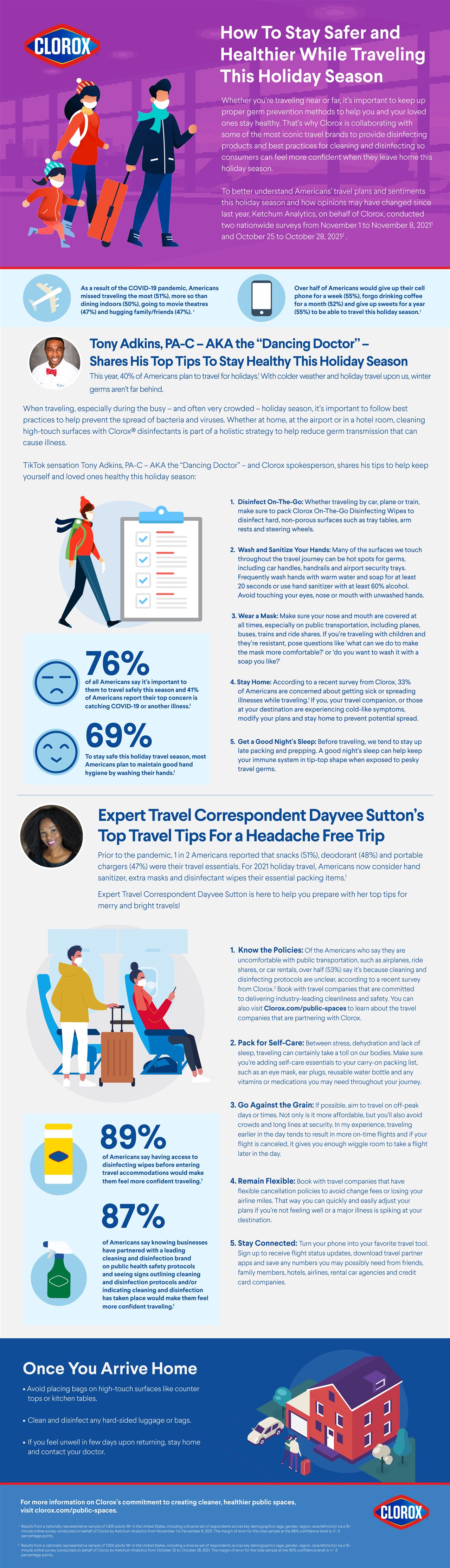
How To Stay Safer and Healthier While Traveling This Holiday Season [Infographic]

2021-12-16T09:01:00

(BPT) – Whether you’re traveling near or far, it’s important to keep up proper germ prevention methods to help you and your loved ones stay healthy. That’s why Clorox is collaborating with some of the most iconic travel brands to provide disinfecting products and best practices for cleaning and disinfecting so consumers can feel more confident when they leave home this holiday season.

Psoriatic arthritis: 4 tips on how to advocate for yourself

2021-12-16T15:01:00

(BPT) – Sponsored by Eli Lilly and Company

Psoriatic arthritis is a progressive form of inflammatory arthritis that can cause swelling, stiffness and pain in and around the joints. Because psoriatic arthritis can be difficult to diagnose, many living with this chronic autoimmune disease may also experience a delay in their diagnosis, which can be incredibly tiresome and frustrating. If you or a loved one are struggling with the symptoms of psoriatic arthritis, it is important to advocate for yourself and bring up symptoms early with a physician when discussing potential treatment options.

Psoriatic arthritis affects approximately 600,000 Americans and more than 12 million people worldwide, including Julie, a wife, mother of three and physical therapist. In 2015, Julie began noticing swollen joints, joint pain and “sausage digits,” also known as dactylitis, which included painful swelling of the fingers and toes. It would later be revealed to her that these symptoms are characteristic of psoriatic arthritis, and she was eventually able to find treatment with Taltz® (ixekizumab) injection 80 mg/mL. To learn more about Julie’s experience with Taltz, please visit https://www.taltz.com/psoriatic-arthritis/patient-stories.

Understanding the signs and symptoms of psoriatic arthritis

According to the Spondylitis Association of America, psoriatic arthritis can occur when an overactive immune system sends out faulty signals that cause inflammation, leading to swollen and painful joints and tendons. Psoriatic arthritis affects joints in the arms and legs, such as the elbows, wrists, hands and feet. If left untreated, it can cause permanent joint damage.

“I had tried to deal with the symptoms on my own. At a certain point, I decided that I needed to see a doctor because my joint symptoms were so severe that I hadn’t jogged a step in several months, which was a big deal for me because jogging is such a big part of my life.”

For Julie, being able to move and exercise made her feel physically better and helped her to emotionally recharge and be able to connect with her loved ones. “My daily walk or jog was my time to think, collect myself and just have some ‘me time’ so I could return home to my family recharged and refreshed.”

Aside from the fear of losing part of her identity as a jogger, Julie also began to notice daily pain and discomfort due to her psoriatic arthritis. Prior to treatment, she found herself hesitant to even attend her children’s sporting events because it was painful and uncomfortable to stand for long periods of time, and her feet and toes were so swollen and painful that walking up and down bleachers became a challenge.

Along with her joint pain and swelling, she noticed areas of plaque psoriasis on her scalp and back – another common symptom for people with psoriatic arthritis. Eventually, determined to find a treatment, she went to see her doctor about her symptoms and received a diagnosis.

Julie’s experience going to see her rheumatologist

Julie emphasized the importance of being an advocate for yourself and being open and honest with your physician about the impact your condition is having on you and letting them know if your current treatment isn’t working for you.

At a crossroads in her treatment journey, Julie went to her rheumatologist and shared that her current treatment was no longer working for her and she wanted to try something different. Julie’s rheumatologist suggested Taltz, and she was excited to learn there was another treatment option out there.

“When you realize psoriatic arthritis is a chronic condition, at first it feels like a gut punch. I will have to be managing this situation forever. It is crucial to be open in your discussions with your physician to find the best treatment that will work for you,” said Julie. “I didn’t know anybody who had been on Taltz. My doctor did, though, and that made me more comfortable going through with treating my psoriatic arthritis with Taltz.”

Julie’s experience with Taltz

Julie connected with Taltz TogetherTM, a program that offers numerous resources, ranging from helping you get started on Taltz to giving you the tools you need throughout your treatment journey. The program helped Julie navigate the approval process with her insurance, and she recommends it to anyone who is worried about affordability of their treatment.

With Taltz, Julie soon began to feel relief. “I started taking Taltz in October 2019. I was expecting to have a positive experience with it given my rheumatologist’s recommendation, and as it turns out, my experience exceeded my expectations! Taltz has been the only medication that has taken care of both my joints and my skin. I felt significant relief from my joint pain and swelling, and for me that was remarkable.”

If you’re living with debilitating joint pain and swelling caused by psoriatic arthritis, it’s important to talk with your doctor about your symptoms and your treatment goals. As with all medications, individual results will vary and your doctor can help you find the treatment that is right for you.

Julie also shared a few tips on how those living with psoriatic arthritis or other chronic conditions can advocate for themselves at the doctor’s office:

  • Feel empowered to let your doctor know about all your symptoms that might be unusual, not just the one that brought you in
  • Ask for techniques on how to best manage your symptoms, including stress
  • Tell your doctor what is and isn’t working for you; be open and honest with them
  • Know that your feelings are validated – while it may be scary when you first receive a diagnosis, there are options that will help address your symptoms.

“I understand the feeling of being at a fork in the road with your treatment and not knowing how to proceed,” said Julie. “If the pain of psoriatic arthritis is causing you to miss out on things that are important to you, your doctor can be a great resource and partner to determine if Taltz is right for you.”

This article represents Julie’s personal experiences. Individual results may vary. In clinical trials more than half of people with active psoriatic arthritis taking Taltz experienced joint symptom improvement at 24 weeks. Some patients felt joint symptom relief as early as 1 week. And in a study of patients with moderate to severe plaque psoriasis, 90% of people saw significant improvement of their plaques at 12 weeks.

Julie was compensated for her time.

PURPOSE AND SAFETY SUMMARY

Important Facts About Taltz® (tol-ts). It is a prescription medicine also known as ixekizumab.

Taltz is an injectable medicine used to treat:

  • People six years of age and older with moderate to severe plaque psoriasis who may benefit from taking injections or pills (systemic therapy) or treatment using ultraviolet or UV light (phototherapy).
  • Adults with active psoriatic arthritis.
  • Adults with active ankylosing spondylitis.
  • Adults with active non-radiographic axial spondyloarthritis with objective signs of inflammation.

It is not known if Taltz is safe and effective in children for conditions other than plaque psoriasis or in children under 6 years of age.

Warnings

  • Taltz affects the immune system. It may increase your risk of infections, which can be serious. Do not use Taltz if you have any symptoms of infection, unless your doctor tells you to. If you have a symptom after starting Taltz, call your doctor right away.
  • Your doctor should check you for tuberculosis (TB) before you start Taltz, and watch you closely for signs of TB during and after treatment with Taltz.
  • If you have TB, or had it in the past, your doctor may treat you for it before you start Taltz.
  • Do not use Taltz if you have had a serious allergic reaction to ixekizumab or any other ingredient in Taltz, such as: swelling of your eyelids, lips, mouth, tongue or throat, trouble breathing, feeling faint, throat or chest tightness, or skin rash. Get emergency help right away if you have any of these reactions. See the Medication Guide that comes with Taltz for a list of ingredients.
  • Crohn’s disease or ulcerative colitis (inflammatory bowel disease) can start or get worse with Taltz use. Tell your doctor if you have any of these symptoms or if they get worse: stomach pain, diarrhea, and weight loss.
  • You should not get live vaccines while taking Taltz. You should get the vaccines you need before you start Taltz.

Common side effects

The most common side effects of Taltz include:

  • Injection site reactions
  • Upper respiratory infections
  • Nausea
  • Fungal skin infections

Tell your doctor if you have any side effects. You can report side effects at 1-800-FDA-1088 or www.fda.gov/medwatch.

Before using

Before you use Taltz, review these questions with your doctor:

  • Are you being treated for an infection?
  • Do you have an infection that does not go away or keeps coming back?
  • Do you have TB or have you been in close contact with someone with TB?
  • Do you have possible symptoms of an infection such as fever, cough, sores, diarrhea, or other symptoms? Ask your doctor about other possible symptoms.
  • Do you have Crohn’s disease or ulcerative colitis?

Tell your doctor if:

  • You need any vaccines or have had one recently.
  • You take prescription or over-the-counter medicines, vitamins, or herbal supplements.
  • You are pregnant or planning to become pregnant. It is not known if Taltz can harm an unborn baby.
  • You are breastfeeding or planning to breastfeed. It is not known if Taltz passes into breastmilk.

How to take

See the instructions for use that come with Taltz. There you will find information about how to store, prepare, and inject Taltz. Adults may self-inject after receiving training from a healthcare provider.

For people under 18 years of age:

  • Weighing less than 50 kg (i.e., 110 lb): Taltz must be given by a healthcare provider.
  • Weighing more than 50 kg (i.e., 110 lb): If your healthcare provider decides that your caregiver may give your injections of Taltz at home, your caregiver should ask and receive training from a healthcare provider on the right way to prepare and inject Taltz.

Learn more

For more information, call 1-800-545-5979 or go to taltz.com.

This summary provides basic information about Taltz and is not comprehensive. Read the information that comes with your prescription each time your prescription is filled. This information does not take the place of talking with your doctor. Be sure to talk to your doctor or other healthcare provider about Taltz and how to take it. Your doctor is the best person to help you decide if Taltz is right for you.

IX CON BS 29MAY2020

Taltz® is a registered trademark owned or licensed by Eli Lilly and Company, its subsidiaries, or affiliates. Taltz Together™ is a trademark of Eli Lilly and Company.

PP-IX-US-5098 11/2021 ©Lilly USA, LLC 2021. All rights reserved.

Medicare-Related Options [Infographic]

2021-12-15T11:01:00

(BPT) – It is important to understand what Medicare covers in order to make the best choice for your situation. Explore the sections below to discover more about your Medicare-related options.

Spotting Signs of Disease Progression at Holiday Gatherings

2021-12-15T13:01:00

(BPT) – Sponsored and Developed by Neurocrine Biosciences

The holidays are a whirlwind of joyful chaos – traveling, cooking, gratitude, and time with those we love. For families and friends of those living with chronic and progressive diseases such as Parkinson’s disease (PD), the holidays may come with some additional considerations and challenges. At the same time, they provide opportunities for assistance and support from the extended family visiting this time of year.

Because immediate family likely spends a lot of time with the person in their life who has PD, it’s easy to get into a routine where they might not notice that their loved one’s symptoms have progressed or advanced. The chance to spend time with extended family and friends over the holidays offers an opportunity to get their feedback on changes in symptoms that they might notice. A sibling or niece who sees the person living with PD only a few times a year may pick up on some physical or cognitive signs that are harder to spot for those who are with the person every day.

Spotting (And Understanding) Parkinson’s Disease Symptoms

Symptoms of PD can become more noticeable during periods of time when the medications start to wear off between doses. This is called “OFF” time.1,2

There are several symptoms of PD; an increase or worsening of these could be a sign that the person is experiencing disease progression, and/or more frequent “OFF” time. These may include:

  • Motor Symptoms – characterized by abnormal movement or difficulty of movement, including:4
    • Akinesia or bradykinesia – Slowness and/or reduction in speed of movement, hesitations, or halts during movement
    • Tremors – Shaking in arms or legs while the limb is at rest, which may not be present when the person is moving
    • Rigidity – increase in muscle stiffness
    • Postural instability – Stooped posture, difficulties with walking, and balance. This is usually an effect of the other motor symptoms of PD
  • Non-Motor Symptoms – those symptoms not related to movement, including:5
    • Fatigue/sleep disorders
    • Memory problems
    • Anxiety/depression
    • Pain
    • Weight changes (usually weight loss)

These are not all the symptoms of PD progression and/or “OFF” time, but they may be the ones family members are likely to notice during holiday visits. So, if you do see your loved one with PD struggling with these symptoms, what can you do?

Understanding “OFF” time

  • Parkinson’s disease is thought to be caused by low or falling levels of dopamine, a chemical that helps send messages to the part of the brain that controls movement and coordination.2,3
  • Most people with PD are on a combination of two medications, called levodopa/carbidopa. These medications help make more dopamine available in the brain.1,2
  • Usually, people on levodopa/carbidopa need to take pills multiple times per day to keep the dopamine levels in their brains steady. When the medication starts to wear off between doses, symptoms of PD can reappear.1,2
  • These periods of time throughout the day when symptoms come back are referred to as “OFF” time.1,2

Discussing Parkinson’s Disease Treatment Options

A good first step is for you and your extended family to talk with the loved one with PD and discuss their symptoms, how they’ve been feeling, and what you’ve noticed. Based on what you learn, you can suggest that it may be time to speak with their doctor about treatment options that could help reduce “OFF” time, giving your loved one more symptom-free time throughout the day.

For people with PD already taking levodopa/carbidopa, it may be time to explore an adjunctive (add-on, or additional) treatment option – like COMT inhibitors – to enhance levodopa. COMT inhibitors help to block an enzyme in the body called COMT that breaks down levodopa before it can reach the brain to help raise dopamine levels.2,6

One such COMT inhibitor, called ONGENTYS (opicapone), may be an option for your loved one with PD. ONGENTYS capsules is a prescription medicine used with levodopa and carbidopa in adults with Parkinson’s disease who are having “OFF” episodes.7

By blocking the COMT enzyme from breaking down levodopa, ONGENTYS allows for more of the levodopa to be available to reach the brain. ONGENTYS is a once daily capsule that doesn’t need to be dose adjusted.7 In the ONGENTYS clinical studies, people started to see a reduction in OFF time as early as 1 week and ONGENTYS significantly reduced OFF time by about 2 hours on average vs. about 1 hour for people taking levodopa/carbidopa without ONGENTYS within 14 to 15 weeks.7,8,9

The holidays can be an excellent opportunity to reflect on how you can best help the person with PD in your life. During holiday season gatherings, if you or your family and friends happen to notice that your loved one with PD is struggling with symptoms, it may be time to talk about additional treatment options, such as ONGENTYS.

For more information on ONGENTYS please visit: ongentys.com.

IMPORTANT INFORMATION

Approved Use:

ONGENTYS® (opicapone) capsules is a prescription medicine used with levodopa and carbidopa in people with Parkinson’s disease (PD) who are having “OFF” episodes.

It is not known if ONGENTYS is safe and effective in children.

IMPORTANT SAFETY INFORMATION

Do not take ONGENTYS if you:

  • take a type of medicine called a non-selective monoamine-oxidase (MAO) inhibitor.
  • have a tumor that secretes hormones known as catecholamines.

Before taking ONGENTYS, tell your healthcare provider about all of your medical conditions, including if you:

  • have daytime sleepiness from a sleep disorder, have unexpected periods of sleep or sleepiness, or take a medicine to help you sleep or that makes you feel sleepy.
  • have had intense urges or unusual behaviors, including gambling, increased sex drive, binge eating, or compulsive shopping.
  • have a history of uncontrolled sudden movements (dyskinesia).
  • have had hallucinations or psychosis.
  • have liver or kidney problems.
  • are pregnant or plan to become pregnant, or are breastfeeding or plan to breastfeed.

Tell your healthcare provider about all the medicines you take, including prescription and over-the-counter medicines, vitamins, and herbal supplements. Especially tell your healthcare provider if you take nonselective MAO inhibitors (such as phenelzine, tranylcypromine, and isocarboxazid) or catecholamine medicines (such as isoproterenol, epinephrine, norepinephrine, dopamine, and dobutamine), regardless of how you take the medicine (by mouth, inhaled, or by injection).

ONGENTYS and other medicines may affect each other causing side effects. ONGENTYS may affect the way other medicines work, and other medicines may affect how ONGENTYS works.

What should I avoid while taking ONGENTYS?

Do not drive, operate machinery, or do other dangerous activities until you know how ONGENTYS affects you.

What are the possible side effects of ONGENTYS?

ONGENTYS may cause serious side effects, including:

  • Falling asleep during normal activities such as driving a car, talking or eating while taking ONGENTYS or other medicines used to treat Parkinson’s disease, without being drowsy or without warning. This may result in having accidents. Your chances of falling asleep while taking ONGENTYS are higher if you take other medicines that cause drowsiness.
  • Low blood pressure or dizziness, light headedness, or fainting.
  • Uncontrolled sudden movements (dyskinesia). ONGENTYS may cause uncontrolled sudden movements or make such movements worse or happen more often.
  • Seeing, hearing, or feeling things that are not real (hallucinations), believing things that are not real (delusions), or aggressive behavior.
  • Unusual urges (impulse control and compulsive disorders) such as urges to gamble, increased sexual urges, strong urges to spend money, binge eating, and the inability to control these urges.

Tell your healthcare provider if you experience any of these side effects or notice changes in your behavior.

The most common side effects of ONGENTYS include uncontrolled sudden movements (dyskinesia), constipation, increase in an enzyme called blood creatine kinase, low blood pressure, and weight loss.

These are not all of the possible side effects of ONGENTYS. Call your healthcare provider for medical advice about side effects. You may report side effects to FDA at 1-800-FDA-1088.

Please see ONGENTYS full Product Information.

References:

  1. Pahwa R., Factor S.A., Lyons K.E., et. al. Practice parameter: treatment of Parkinson disease with motor fluctuations and dyskinesia (an evidence-based review): report of the Quality Standards Subcommittee of the American Academy of Neurology. Neurology. 2006;66(7):983-995.
  2. Muller T. Catechol-O-methyltransferase inhibitors in Parkinson’s disease. Drugs. 2015;75(2):157-174.
  3. Parkinson’s Foundation. What is Parkinson’s.
  4. Postuma RB, Berg D, Stern M, et al. MDS clinical diagnostic criteria for Parkinson’s disease. Mov Disord. 2015;30(12):1591-1601.
  5. Chaudhuri KR,Martinez-Martin P, Schapira AH, et al. International multicenter pilot study of the first comprehensive self-completed nonmotor symptoms questionnaire for Parkinson’s disease: the NMSQuest study. Mov Disord. 2006;21(7):916-923
  6. Bonifácio MJ, et al. Catechol-O-methyltransferase and Its Inhibitors in Parkinson’s Disease. CNS Drug Rev. 2007;13(3):352-379
  7. ONGENTYS package insert. San Diego, CA: Neurocrine Biosciences, Inc. 2020
  8. Ferreira JJ, et al. Opicapone as an adjunct to levodopa in patients with Parkinson’s disease and end-of-dose motor fluctuations: a randomised, double-blind, controlled trial Lancet Neurol. 2016;15:154–165
  9. Lees AJ, et al. Opicapone as Adjunct to Levodopa Therapy in Patients With Parkinson Disease and Motor Fluctuations A Randomized Clinical Trial. JAMA Neurol. 2017;74:197–206

ONGENTYS is a registered trademark of BIAL-Portela & Ca, S.A

©2021 Neurocrine Biosciences, Inc. All Rights Reserved.

CP-OPC-US-0542 12/2021

This Holiday Season, Let’s Appreciate the Difference Health Makes

2021-12-15T04:01:00

(BPT) – The new year invites us to recognize what’s really important. As many families gather for the first holiday season back together, the value of health takes precedence over the packages under the tree. And as we make our resolutions, health is the one to keep.

And prescription drugs keep Americans healthy and productive. According to the Kaiser Family Foundation, about six in 10 adults take at least one prescription drug, and a quarter take four or more.

These medicines are the critical first line of defense to treat chronic illness and stave off more intensive and expensive interventions.

The doctors ordering these prescriptions and the pharmacists filling them recognize that FDA-approved generics and biosimilars are just as safe and effective as their brand-name counterparts.

Just as important, generic and biosimilar prescription medicines are accessible. The annual U.S. Generic & Biosimilars Savings Report finds that generics represent more than 90% of all prescriptions. But these medicines — which are used in the treatment of asthma, anxiety, high blood pressure and much more — account for only 18% of all prescription drug spending.

Throughout the COVID pandemic, generics and biosimilars continued to demonstrate their value, saving patients and the U.S. health care system $338 billion in 2020 alone.

The reason tens of millions of Americans entrust their health to generics is simple. These medicines contain the same active ingredients at the same strength and purity as their brand-name counterparts, but come at a fraction of the cost. Likewise, biosimilars are lower-cost versions of costly biologic medicines and are approved by FDA as highly similar to and with no clinically meaningful differences from an existing FDA-approved reference product. The introduction of oncology biosimilar medicines has cut the growth rate of oncology spending roughly in half since 2019. This reduction in growth, along with continued use of generic cancer medicines, contributed to a total of $18 billion saved on oncology medicines in 2020.

American voters prioritize lowering prescription drug prices and other health care costs above all other issues, and generic utilization is one of the more effective mechanisms to control drug costs. Generics and biosimilars are particularly valuable to Medicare. Nationally, the Medicare program saved $109.6 billion in 2020 by using generics. Total generic drugs savings for Americans over age 65 came to $120 billion.

Nonetheless, many seniors are paying too much for their generics as a result of increasing copays, even when the generic price has declined. Recent analysis by Avalere found that nearly half of all Medicare patients paid the full cost of their generic because the plan-imposed copay was higher than the cost of the medicine.

At the holiday season and all year long, health is a gift, and with more than 92% of generic prescriptions having a final out-of-pocket cost below $20, it’s a gift Americans can afford.

You can download the 2021 U.S. Generic & Biosimilars Savings Report at accessiblemeds.org.

How Three People Living with Follicular Lymphoma Found Empowerment in Their Cancer Journey

2021-12-14T07:39:00

(BPT) – Dealing with the complexities of a typically incurable blood cancer like follicular lymphoma can be challenging – but empowered communications between patients and their healthcare providers can help.

In My Blood is a new online resource created with input from a group of patient advocates and advisors, that aims to empower people living with follicular lymphoma to partner with their healthcare providers and play a proactive role in treatment decision-making, based on where they are in their follicular lymphoma journey.

In My Blood features several resources for patients and care partners, including My Follicular Lymphoma Coach, a first-of-its-kind questionnaire for follicular lymphoma patients to help better understand their personal experience through a series of questions, which produces a customized, downloadable guide featuring information on living with follicular lymphoma, treatment options and relevant questions to ask their healthcare providers. While there has been significant innovation in follicular lymphoma treatment over the past several years, the treatment landscape can be complex and overwhelming.

Other online resources include a downloadable daily and weekly symptom tracker, a glossary of common terms associated with follicular lymphoma, and videos highlighting real patient stories.

One of these personal stories is from Kendra, an actor and singer who ran and practiced yoga regularly. In 2017, she started to experience some bloating, swollen lymph nodes and headaches – but a consultation with her doctor and an ultrasound didn’t reveal anything. Then a lump appeared on Kendra’s chest and her instincts told her to call her doctor again, who recommended she come in for a few scans.

Kendra’s scans “lit up like a Christmas tree.” Although she appeared to be in overall good health, she was diagnosed with follicular lymphoma, a type of blood cancer, at age 44. She began exploring her treatment options right away with her doctor.

What is follicular lymphoma?

Follicular lymphoma is a slow growing, typically incurable form of non-Hodgkin’s lymphoma, accounting for about 20% of diagnoses in the United States each year, or about 14,800 people.1 It’s a cancer of the lymphatic system, which is a system of lymph nodes found throughout the body, including the neck, underarms, chest, abdomen, and groin/pelvis.2

Many people are asymptomatic at diagnosis,3 but some common symptoms include painless, swollen lymph nodes in the neck, armpit or groin, persistent fatigue, abdominal or chest pain, fever, night sweats, or unexplained weight loss.4 Today, there are several treatment options available for patients with follicular lymphoma, depending on the stage of their disease, treatment history, and other lifestyle needs.

While follicular lymphoma is typically incurable, some people can live with this type of cancer for many years – experiencing cycles of remission, living cancer-free, or with minimal signs of disease before the cancer returns, called a relapse. In addition, many patients may find their cancer has become resistant to treatments they’ve received before, leaving them with fewer options when seeking out the next course of treatment.

Remaining vigilant and informed while maintaining clear and proactive communication with healthcare providers is essential in order to detect signs of a potential relapse in follicular lymphoma. In My Blood offers downloadable daily and weekly symptom trackers to support patients and care partners with disease monitoring.

While having treatment conversations with her doctor, Kendra remembers thinking, “This is my life, I need to advocate for myself and feel comfortable with my doctor and my care plan. Don’t be afraid to self-advocate and have an open dialogue with your doctor.”

Living with follicular lymphoma

Like Kendra, Kim and Bob both felt similarly empowered in their journeys with follicular lymphoma.

When Kim, a semi-professional basketball player, was diagnosed with follicular lymphoma at 28 years old, the news came as a huge surprise. After finding a lump in her upper thigh in 2020, she decided to get the swollen lymph node checked out by a doctor. During the visit, her doctor found other enlarged lymph nodes throughout her body and recommended a biopsy.

As Kim sought treatment for her follicular lymphoma, she felt isolated trying to manage her diagnosis on her own. During an appointment with a specialist, Kim learned about the Leukemia and Lymphoma Society (LLS) and the Lymphoma Research Foundation (LRF), two resources that helped her learn more about follicular lymphoma and connect with others who were also navigating life with a typically incurable blood cancer.

For Bob, the start of his follicular lymphoma journey came just one month shy of his 51st birthday. As a karate enthusiast – he was living an active lifestyle and never imagined the enlarged lymph nodes his doctor found during a routine checkup would lead to a cancer diagnosis. Bob had noticed them before but thought it could be a build-up of scar tissue from years of practicing martial arts.

Bob was stunned and worried how he would tell his family. However, he was quickly motivated to begin researching and connecting with healthcare providers to determine a plan of action to treat his follicular lymphoma. In addition to conducting his own research, Bob got opinions from three different healthcare providers. All gave him different treatment options, revealing that there is not one set standard of care.

Information empowers

After her diagnosis with follicular lymphoma, Kendra found a renewed energy to follow her passions. “We have no guarantees in life, so I’d encourage those newly diagnosed to re-evaluate your life and look at this as an opportunity to prioritize what you love most,” Kendra said. Today, Kendra continues to pursue acting and singing while regularly monitoring her health by getting blood work examined every six months and undergoing routine tests recommended by her doctor.

Bob sees his oncologist routinely to monitor for relapse and continues to practice karate at home in between spending time with his granddaughter. He shared, “I try to focus on not letting my diagnosis and ultimately treatment impact my life. Your mental attitude is half the battle in your survivorship journey, so I worked on staying positive and talk openly about my condition,” he said.

Kim receives scans every six months and, in between appointments, makes sure to check in with her oncologist about anything that might seem abnormal. “I would encourage someone dealing with follicular lymphoma to not to be so hard on themselves. Do what you need to do for yourself,” said Kim. She hopes that sharing her story will inspire others and provide a sense of encouragement.

In My Blood and the My Follicular Lymphoma Coach were created with input from a group of patient advocates and advisors, including Kendra, Kim, and Bob, to empower patients and their care partners to navigate life with follicular lymphoma. To learn more about follicular lymphoma, please visit follicularlymphoma.com.

Sponsored by Epizyme, Inc.

DA-FL-UB-21-0027 12/2021

REFERENCES:

  1. About Non-Hodgkin Lymphoma. American Cancer Society. Accessed November 11, 2021. Available at: https://www.cancer.org/cancer/non-hodgkin-lymphoma/about.html.
  2. Lymphoma Non-Hodgkin: Introduction. Cancer.Net. Accessed November 11, 2021. Available at: https://www.cancer.net/cancer-types/lymphoma-non-hodgkin/introduction.
  3. Understanding Follicular Lymphoma: Relapsed/Refractory. Lymphoma Research Foundation. Accessed November 11, 2021. https://lymphoma.org/wp-content/uploads/2020/09/LRF_Fact-sheet_Follicular-Lymphoma-Relapsed_Refractory_090920.pdf.
  4. Lymphoma. Mayo Clinic. Accessed November 11, 2021. https://www.mayoclinic.org/diseases-conditions/lymphoma/symptoms-causes/syc-20352638.

Rethinking Resolutions [Infographic]

2021-12-13T12:31:00

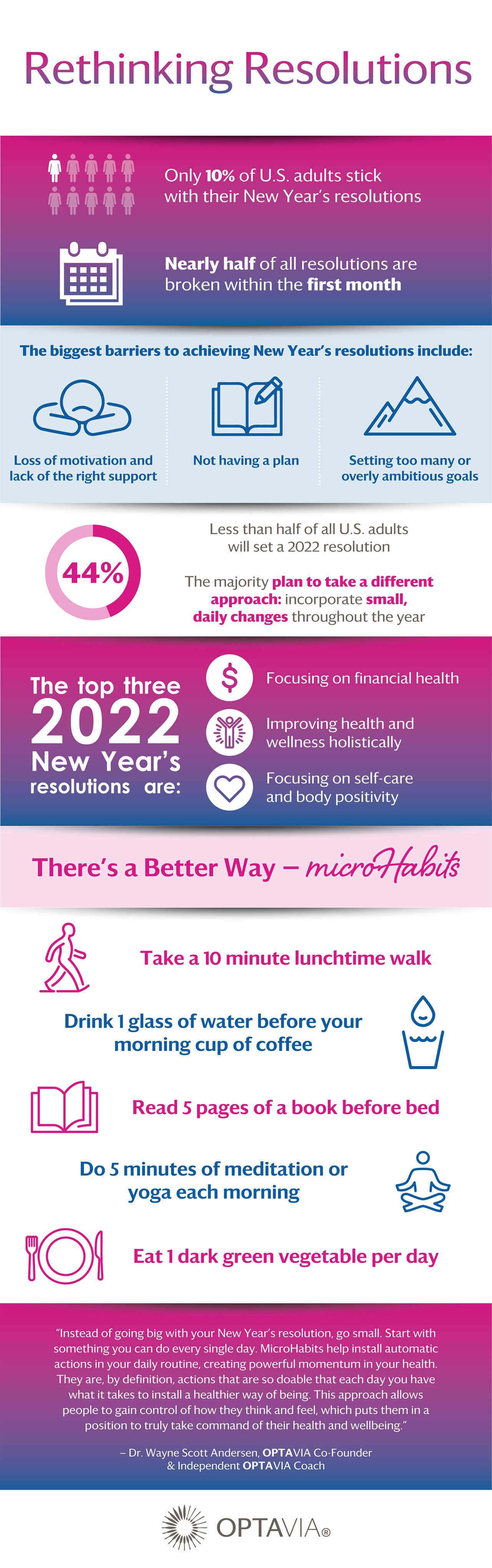
(BPT) – A new survey* from health and wellness community OPTAVIA reveals a shift in how U.S. adults are approaching New Year’s resolutions. The majority will forgo setting 2022 resolutions, as many people are moving away from traditional New Year’s goals and instead looking for ways to make achievable, lasting lifestyle changes.

Those who are setting a resolution this year plan to focus on establishing holistic health goals and make small changes in daily behaviors in hopes of developing lifelong healthy habits.

* All percentages and survey findings, unless otherwise stated, are from YouGov Plc. Total sample size was 1,195 adults. The survey was fielded online between October 14 and October 15, 2021, at the 95% confidence level and with a margin of error of +/-3%. The figures have been weighted and are representative of all US adults (aged 18+).

U.S. Surgeon General warns of looming youth mental health crisis: How Kundalini Yoga and Meditation can be part of the solution

2021-12-10T16:41:00

(BPT) – Getting a teenager an appointment with a mental health professional right now is like trying to get tickets to a Taylor Swift concert. Basically, it’s impossible.

It’s no wonder that the U.S. Surgeon General recently issued a rare public health advisory calling for “a swift and coordinated response” to address this growing crisis.

The pandemic and related issues have been incredibly hard on teenagers. Counseling is an essential tool. But it may take more than one approach to help our kids recover from over a year of social isolation, loss of routines, and traumatic grief.

Kundalini Yoga teachers around the world have been connecting with and healing at-risk youth through Kundalini Yoga for decades. This is an established model that works. Studies show that Kundalini Yoga can significantly reduce anxiety and depression, which, according to the Surgeon General’s advisory, have doubled during the pandemic, with 25% of youth experiencing depressive symptoms and 20% experiencing anxiety symptoms.

Kundalini Yoga is a simple solution that can be practiced at home and can make a real difference.

Here’s a Kundalini exercise from 3HO, a global nonprofit dedicated to sharing the teachings of Kundalini Yoga, that you can practice along with your child anywhere, anytime.

The One Minute Breath

This is a great technique to calm your mind that has been used by yogis for millennia. Have you noticed that when you are anxious, your breath rate increases? Well, the opposite is true too: when you slow your breath, your mind relaxes.

How to do it:

Sit in a comfortable position. Inhale for 20 seconds, hold for 20 seconds, exhale for 20 seconds.

It sounds easy, right?

It’s harder than it seems, and you will have to work up to it. If you find yourself struggling against your breath, complete the breath and then begin one minute of deep breathing. After a minute, start again with the timed breath, gently and steadily. Most of the value comes in intentionally breathing, purposefully breathing, rather than automatically breathing.

Now, let’s begin.

Get settled in your comfortable position. Be very still. Once you’re set, take a few minutes to relax your body and deepen your breath.

Inhale slowly and steadily. Imagine the air filling your lower abdomen, then your stomach area, and finally drawing into your lungs and then all the way up your chest.

Give yourself permission to work up to 20 seconds. Start inhaling for 10 seconds, holding for 10 seconds, exhaling for 10 seconds (or even 5 seconds if necessary). Stay at this level for as long as you need, and then increase to 15, 15, 15, and then to 20, 20, 20.

Try to do this for three minutes with your child, calling out the inhale, hold and exhale. Then extend the time as you can. You can do this.

We all can.

It’s going to be okay.

Just keep breathing.

For more information on Kundalini Yoga and Meditation, visit 3HO.org.

Want a festive, fresh look for the holidays? Check out this holiday hair guide

2021-12-09T12:01:00

(BPT) – Getting ready for holiday celebrations? With planning in full swing, now is a great time to freshen up your look so you’ll feel your best while gathering with friends and family this year. It’s easy to add a little magic to your hairstyle with the help of these pro tips, brought to you by the experts at Great Clips and SexyHair to help you have your best holidays yet.

Your first step should always be to get a fresh haircut! Your local Great Clips salon is your one-stop destination this holiday season for haircuts and the products you’ll need to achieve these dashing hairstyles.

Merry and bright looks for women

From simple elegance to all-out glam, you can go from everyday cute to ultra-sophisticated with just the right techniques and products. Try one of these styles the next time you’re getting ready for a holiday party.

  • Half-up with a twist brings a unique touch of elegance that will take your look to the next level. Add a colorful red or green hair bow or barrette when you’re done for an extra festive touch.
    How to get the look: Prep your hair by washing with SexyHair Strengthening Shampoo and Conditioner, then let air dry. Once your hair is dry, sprinkle SexyHair Powder Play along the crown of your head at the roots and work in with your fingertips to give your hair added volume. Gather two small sections of hair at the front of your face, then twist each section and drape it alongside your head to meet the other section of hair at the back of your head. Secure both sections of hair together at the back using a bobby pin, barrette or hair elastic.
  • Classic loose waves create a super glam hairstyle that’s both elegant and timeless. This is the perfect hairstyle to elevate your everyday look to fabulous for any festive get-together.
    How to get the look: All you need to create these classic loose waves is a round brush and a curling iron. After washing your hair, start by applying SexyHair Tri-Wheat Leave-In Conditioner to add moisture, detangling and shine. Then, brush your hair with your round brush to create a smooth finish. Next, curl your hair in two-inch sections away from your face, starting at the ends of your hair and working your way upward. Gently brush out your curls for that retro wave, then add a touch of SexyHair Love Oil to smooth the ends.

Festive (and easy) style upgrades for men

Not sure what kind of look will be best for you? Try making the most of what you’ve got — whether your hair’s long or short, wavy or curly — with these style ideas.

  • A classic comb over can instantly upgrade any casual look with an easy technique that works for both short and long haircuts.
    How to get the look: Wet your hair and then use a comb to part your hair to one side. Add a small amount of SexyHair Frenzy Texturizing Paste to your hands and work through your hair to add volume and hold your hair in place.
  • Amplify natural texture for quick, effortless style. Does your hair have some natural wave or curl to it? You can amplify your hair’s natural texture for this new look that’s fit for any holiday occasion!
    How to get the look: To enhance your hair’s natural texture, work SexyHair Hard Up Holding Gel onto clean, damp hair. To complete your look, use a small amount of SexyHair Frenzy Matte Texturizing Paste to define your curls with just the right amount of hold, texture and smooth finish that you want.

You can find these SexyHair products to help you refresh your style just in time for holiday celebrations at your local Great Clips salon. And, if you’re looking for a great holiday gift or stocking stuffer idea, consider Great Clips gift cards and SexyHair styling products.

Diabetes is the leading cause for kidney disease: How understanding the link can help slow progression of these chronic conditions

2021-12-08T06:01:00

(BPT) – Today, nearly 122 million people in the United States are living with diabetes or prediabetes. This condition is the leading cause of kidney disease — where the kidneys lose function over time until they fail. In fact, one in three adults with diabetes has developed kidney disease.

Raising awareness about the link between these two chronic conditions is the first step to improving the health of people at risk of kidney failure. That’s why health care provider DaVita Kidney Care has collaborated with the American Diabetes Association® (ADA) to help increase early detection and risk reduction for kidney disease.

“Our partnership with DaVita has created a platform for the American Diabetes Association to get information to those who need it most,” said Dr. Bob Gabbay, chief scientific medical officer for the ADA. “We’re working together to build awareness about the connection between diabetes and kidney disease — and to help people with these conditions manage their health.”

Fifty percent of people with very low kidney function don’t know they have kidney disease. By the time many people discover the state of their health, their kidneys have failed and they need a transplant or dialysis treatment to live.

“We’re committed to addressing kidney failure holistically, which includes getting ahead of kidney disease to help patients receive preventative care,” said Dr. Jeff Giullian, chief medical officer for DaVita. “We’re also ensuring there are no-cost tools available to help people address and manage these conditions before they progress.”

Early detection of diabetes is proven to prevent life-altering complications like kidney failure. Testing is a simple but essential tool to detect risk for diabetes and monitor the disease’s progress. For those living with diabetes, it’s critical to get your kidneys checked regularly by a doctor through simple blood and urine tests.

Because people living with diabetes are at greater risk of developing kidney disease, the ADA is helping to get the word out about DaVita’s Kidney Smart® classes. These no-cost classes are open to anyone and led by kidney experts. They provide communities with an overview of kidney disease risks, detection information, and diet and nutrition resources.

Diet is a connecting point between diabetes and kidney disease, as a key driver of type 2 diabetes and a critical part of maintaining kidney health. Through the ADA’s Health Equity Now initiative, DaVita is working with the ADA to help provide adults with type 2 diabetes with lifestyle guidance such as maintaining a healthy weight, delivered through on-demand education. Focusing on exercise and medications along with a healthy diet are among the best early treatments for kidney disease.

It’s more important than ever to take these necessary steps towards better health and wellness for everyone.

Celebrating small wins when it comes to your health is just as essential as prevention. Small wins become big victories and little changes turn into lifelong habits. Organizations like the ADA and DaVita Kidney Care are here to help celebrate these wins. Through awareness, education, and illness management, we can all work together to lower the number of Americans with diabetes and kidney disease. We can create a better life for those living with these conditions.