2018-04-12T09:01:00
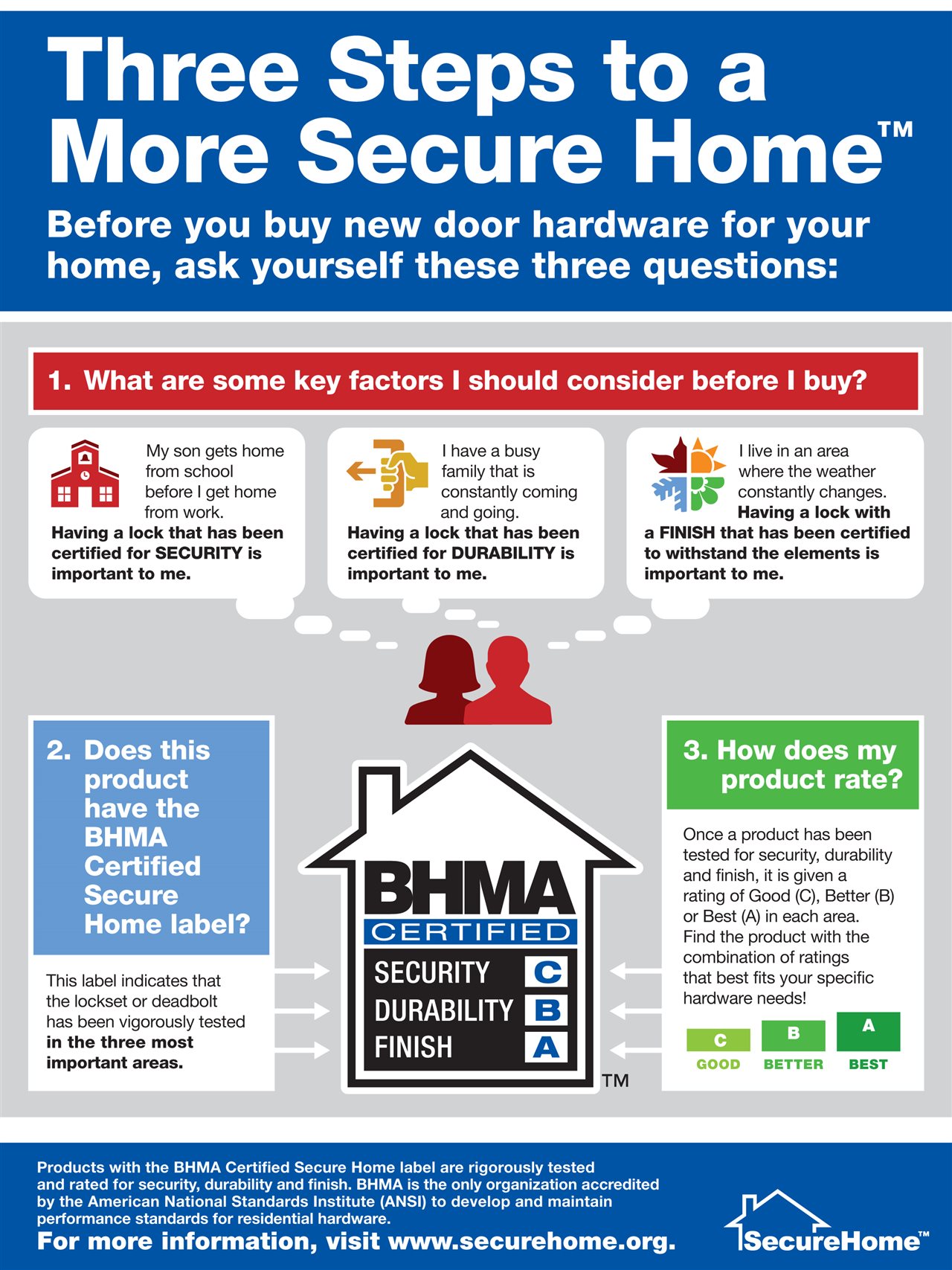
(BPT) – When it comes to buying new locks for your home, it’s not one size fits all. Before you buy new hardware, be sure to ask yourself these three important questions.

Brandpoint Home & Garden
2018-04-12T09:01:00
(BPT) – When it comes to buying new locks for your home, it’s not one size fits all. Before you buy new hardware, be sure to ask yourself these three important questions.
2018-01-29T12:01:00


Opossums (commonly referred to as “possums”) typically adapt to cold temperatures. However, if given the opportunity, it is possible for opossums to venture indoors. Leaving uncontained food, such as garbage, pet food or bird seed, outside your home may attract them. As part of an intimidation display opossums will show their teeth and hiss. They will also play dead as part of their defensive strategy. If you do encounter one in your home, close all doors to adjacent rooms and call a pest-management professional to assist.

Multicolored Asian lady beetles were first imported into North America as early as 1916 and can be beneficial to help control pests. However, unlike the native ladybug, multicolored Asian lady beetles seek refuge inside during colder months. Generally measuring 7 mm long and 5.5 mm wide as adults, they don’t inflict serious damage but do emit an unpleasant foul-smelling odor when disturbed. These beetles also bite, which can be painful and cause reactions for some. Seal up small cracks in your home to prevent infestations.

During the harsh winter months, mice and rats enjoy a warm home. Homeowner watch-outs include: easily accessible food (including open trash can lids), cracks and holes on the exterior of the home. A strong deterrent to mice and rats is to reduce food scraps. Inspect the exterior of your home and repair any holes larger than a dime, clean regularly, make sure trash lids are tight and ensure all food is put away and sealed.

The notion that spiders crawl into your home in the winter is actually a common myth. The reality is, most common household spiders found in your home during the winter months have actually lived there all year long. Outdoor spiders develop their own overwintering strategies that may include antifreeze proteins (AFPs) and finding shelter in rock or wood piles where they go through a slowdown state called diapause. The exception is the Brown Recluse Spider. These spiders seek clutter and dark, underused spaces in your home. The best method to help avoid spiders is to consistently vacuum and keep all spaces clutter-free.
(BPT) –
2018-02-12T16:49:00
(BPT) – February is the season of flowers, chocolates and new relationship statuses. Like us, there are many love bugs that are “in a relationship, but it’s complicated.” Different bug species across the planet engage in peculiar behaviors to satisfy both hunger and reproductive needs — with qualities that sound less than desirable to humans. Terminix is excited to share the buggiest, most bizarre mating-ritual behaviors that will make you think twice the next time you say, “She wouldn’t hurt a fly.”
 1. Praying mantis: Love bites

Praying mantises are known for their expert predatory skills. However, mantis females have earned quite the reputation for their occasional odd and cannibalistic mating behavior. Sometimes females will selectively bite the heads off of their male mating partners, devouring them for nourishment — talk about risky business.
2. Bed bugs: More than butterflies in your stomach

We’ve all heard the phrase, “having a strong stomach.” Well, bedbugs take this concept to the next level. Mating is no game for the common household male bed bug, who will literally stab his reproductive organ into the abdomen of his female mate for reproduction. Somehow, female bed bugs have adapted to recover from this traumatic behavior if the male stabs the right side of her body correctly. As if these itchy pests weren’t bad enough already!
3. Fireflies: Fool me once …

Catching fireflies is a staple of American summer pastimes. The pretty, flickering light that fireflies generate is more than just a show for us, it’s actually a communication tool. The light is a signal for fireflies, saying, “Here I am.” Some females play hard to get by mimicking the light signal of another type of male firefly species to lure him over. The catch? She has no intention of mating but rather is looking for a tasty meal!
4. Black widow: Dangerous love

It’s no shocker that this fierce spider made the “don’t date” list. Although the black widow spider’s bite is rarely fatal to humans, it can be a long and painful experience. Some species of black widows earned their name for their likelihood of killing their male counterparts when mating. A male must position himself between the female’s pincers for successful intercourse, oftentimes resulting in death afterwards. Some call it tough love.
5. Bees: Hail to the drama queen

You would think that bee romance would be as sweet as honey, but unfortunately for male bees, any sort of “love” is very short-lived. The queen bee is the mother of the colony and plays a specific role in laying eggs for the growth and sustenance of the colony. Male bees play the sad but important role of hero parents by sacrificing themselves for reproduction, dying shortly after mating.
2018-02-28T09:01:00
(BPT) – Frigid temperatures, freezing rain and heavy snow can have a crippling effect on much of the country each winter. However, with spring right around the corner, many of those winter problems will disappear as quickly as the snow thaws and the temperatures rise, with one significant exception — concrete. Concrete is like a rigid sponge that snow and other precipitation penetrates, freezes, expands and eventually thaws with those repeated cycles causing unsightly cracking, flaking and spalling. In addition, concrete surfaces are battered every winter by salt, de-icers, sand and heavy snow-moving equipment that leave ugly stains and damage to driveways, patios and sidewalks around the home.
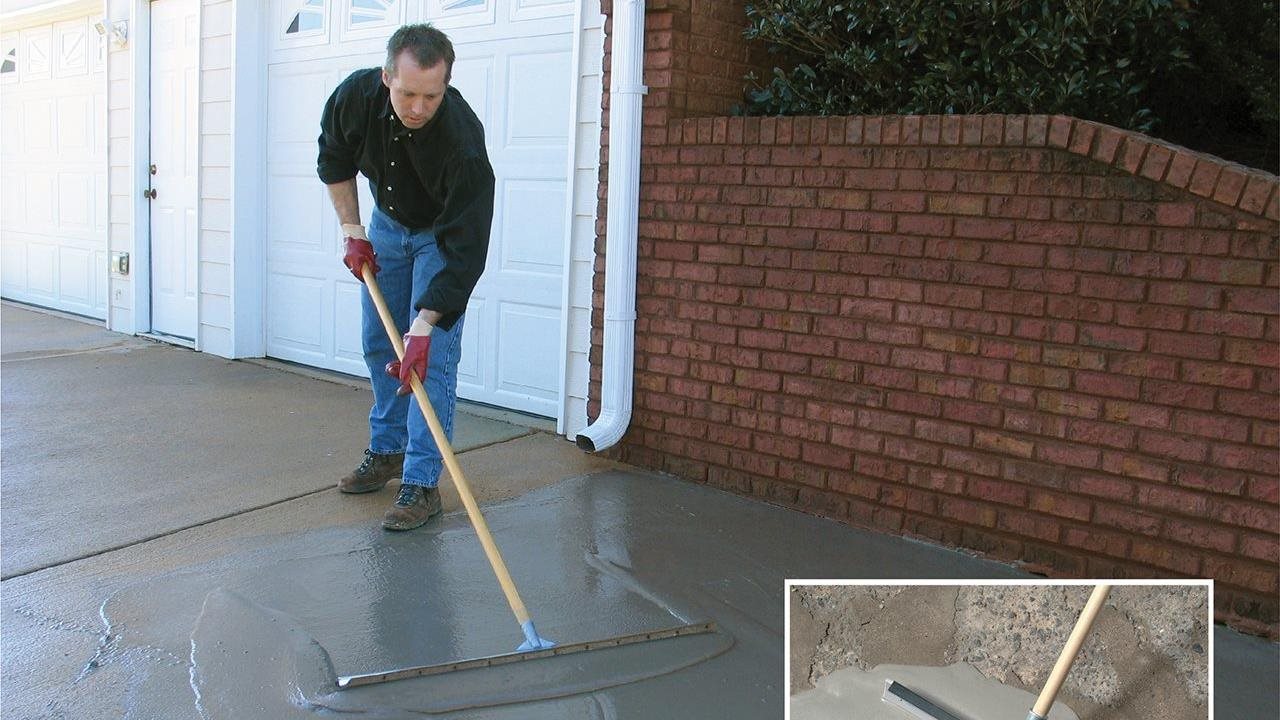
The good news is that winter damage generally leaves homeowners with structurally sound concrete that is really just in need of a face-lift. Traditionally most homeowners would remove the old, broken concrete and pour a new slab, which can be very expensive. However, an attractive alternative for renewing the surface at a fraction of the cost is Quikrete Concrete Resurfacer. In fact, removing and pouring a new slab of concrete costs $3.50 to $5.50 per square foot compared to approximately 25 cents per square foot with a resurfacing product. Not only is it cost efficient, but the concrete resurfacer also provides strength and durability to the renewed concrete surface.
Steps for resurfacing concrete
When working with cement-based products, always wear eye protection and waterproof gloves, then follow these steps:
* First, rigorously clean the concrete with a 3,500 PSI pressure washer to remove all dirt and debris from the concrete surface.
* Repair any deep cracks and spalled areas in the concrete with concrete resurfacer and allow to harden.
* Completely saturate the surface with water and then remove any standing water with a squeegee.
* Place weather stripping over concrete joints.
* Mix one 40-pound bag of Quikrete Concrete Resurfacer with water in a five-gallon bucket for about five minutes until a pancake batter consistency is achieved.
* Pour the concrete resurfacer onto the concrete in 1-foot-wide strips.
* Scrub the material into the concrete surface using a long-handled squeegee.
* Evenly spread the concrete resurfacer back and forth onto the concrete surface.
* Apply a non-slip finish using a concrete broom after about five minutes.
For temperatures exceeding 90 degrees F, moist cure with a fine water mist for 24 to 48 hours.
For more tips, directions and information, including a how-to video on Quikrete Concrete Resurfacer, visit www.quikrete.com or look for Quikrete on social media.
2018-03-15T16:07:00
(BPT) – 
As the weather warms up and pets spend more time outside, our four-legged friends are at risk for potentially harmful insect bites. Terminix has information on three common pests that can cause problems for pets, and tips to keep them happy and healthy all season.
Many pet owners are familiar with vaccinations and prophylactic medications to help prevent fleas, ticks and other insects from biting pets. However, pet owners often overlook the positive impact regular pest control inside and outside their home can have on their pets. In fact, a pest management professional can develop a personalized plan for your home that takes your pets’ habits into account.
Here are the top pests to watch out for this summer:
1) Ticks

If your pet regularly plays outside (especially around brush and tall grass) you may notice a “tick bump” — a hardened area that forms around a tick bite — when you pet them. You can remove a tick on your own by using tweezers, but be sure to remove the entire tick and thoroughly clean the affected area to prevent infection. Place the removed tick in a sealed bag, wrap it in tape or flush it down the toilet. It’s important to keep watch for ticks on your pets because they can carry pathogens that cause Lyme and other diseases. Conduct regular inspections of your pet and be sure to maintain your yard so it is less appealing to ticks, which tend to be attracted to overgrown grass. Regular mowing and trimming help decrease the occurrence of ticks using long blades of grass to hop aboard your pets in the first place.
2) Mosquitoes

Mosquitoes can transmit heartworm larvae to dogs and cats, causing extreme illness that, when left untreated, could potentially be fatal. In addition to giving your pet a routine heartworm medication as recommended by your veterinarian, you can take proactive steps to reduce mosquitoes on your property. For example, drain any standing water in your yard (which can be a breeding haven for mosquitoes) and regularly refresh your pet’s outdoor water bowl to create a less mosquito-friendly environment. Some pest management professionals offer treatments for bushes and shrubs that can significantly reduce mosquito populations, effective immediately.
3) Fleas

If you notice your dog is scratching excessively, fleas may be the culprit. Check for fleas on your pet by using a flea comb. If you discover fleas, contact your veterinarian immediately for treatment. Nonstop scratching by your pet can lead to open wounds and infections. Fleas can also carry tapeworms and other bacteria that cause “cat-scratch fever” in humans. One method to help reduce the presence of fleas is to vacuum your house often (including your furniture and anywhere your pets lounge). If you think or know your home has fleas, empty your vacuum bag in an outdoor trash can and contact a pest management professional right away to review treatment options.
2018-04-04T08:01:00
(BPT) – Like a moth to the flame, humans are inherently drawn to fire. In fact, often our favorite rooms in the home contain a fireplace, and many of our most memorable moments take place around the hearth. While the popularity of fireplaces has remained steadfast over the years, trends in their design and usage are constantly evolving.
“We’ve seen more innovations in fireplace technology in the past few years than we have in the past 40 years in business,” said Stephen Schroeter, senior vice-president of sales, marketing and administration for Napoleon, North America’s largest privately owned manufacturer of fireplaces.
New technology is allowing for more fireplace design flexibility, enabling limitless creativity when it comes to incorporating fireplaces into your home. With the support of these innovations, the following four fireplace trends are catching fire from coast to coast.
1. Sleek lines
Due to their clean appearance and superior design flexibility, linear fireplaces — think a panorama of flames — have been increasing in popularity. One of their key advantages, seemingly, is being able to place a television at viewing height, directly above the fireplace. However, the heat emitted by the fireplace has historically caused design challenges.
As a solution, Napoleon recently launched its new line of award-winning Luxuria linear fireplaces. This line comes standard with a patent-pending system, Dynamic Heat Control, which redirects heat from the fireplace to other areas of the home, or even outside. This innovation now enables a TV or delicate artwork to be mounted within inches of the fireplace, and allows homeowners to enjoy their fireplaces for hours without becoming overheated. What’s more, even the glass is cool to the touch, eliminating the need for a safety screen and making it safer for everyone in the home.
2. A selection of surrounds
Shiplap is hot, fireplaces are hotter. Previously, homeowners have been limited to non-combustible materials, such as marble or tile for their fireplace surrounds. However, thanks to new heat control systems in select fireplaces, you can significantly reduce the cost of your surround, while still achieving a great aesthetic. Simple framing and the use of wood or drywall as a finishing material right up to the firebox drastically reduces the cost and provides you with the option to change the look down the line. So embrace the new technology and go for that shiplap surround — you’ll save money and have peace of mind your home is still up to code.
3. Unexpected spaces
Imagine soaking in a bubble bath, listening to soft music while watching the flicker of flames dance across the dimly lit bathroom. Or lying in bed reading the latest bestseller by the warm glow of the hearth. Given design advancements, the installation of fireplaces has become quicker, easier and somewhat limitless. With the invention of flexible venting solutions, the installer can now work around obstacles without multiple parts and connectors. Unlike traditional rigid venting, flexible venting flows around walls or other obstacles for hassle-free installation. And because it’s faster and easier, the cost of installation is lower. So, if you’re dreaming about a fireplace in your bathroom, master bedroom, kitchen, garage or fitness center, pesky plumbing and bulky beams won’t dictate your design.
4. Elegant electrics
Electric fireplaces are no longer the clunky contraptions of yesterday. The technology behind them has improved exponentially over the past several years, which is why they are one of the fastest-growing fireplace trends. Today’s models are sleek, extremely realistic and offer endless options for customization, from a selection of media kits to different ember bed color options to adjustable flame speed and brightness options. What’s more, they are easy to install — simply mount on the wall and plug into the outlet.
Now more than ever, there are endless ways to incorporate fireplaces into your home. For more fireplace inspiration, visit napoleonfireplaces.com.

2017-08-22T11:31:00
(BPT) – We’ve all been told, that owning a home is part of the American dream. It’s the biggest and most rewarding investment many people will make in their lives. Instead of paying rent every month and having nothing to show for it, paying a monthly mortgage builds equity and wealth.
While most know the benefits of owning a home, for many millennials and young people, it can seem like a distant prospect. In fact, while 52 percent of millennials say they no longer want to pay rent, only 18 percent think they can afford a new home, according to a recent survey conducted by loanDepot.
What is the source of this disparity? There are many reasons, but part of the problem is a vast majority of young people think there is only one way to buy a home, or that certain strict criteria has to be met to qualify for a loan.
There are many myths surrounding home ownership. Let’s break some of them down.
Misconceptions about the down payment
Many believe a down payment is the biggest obstacle that stands between them and home ownership. The accepted wisdom is that 20 percent of the home’s value is needed to make the down payment. This can be a rather substantial sum. Of those surveyed, 63 percent of people think they can’t afford a down payment; 43 percent believe poor credit history would prevent them from entering the housing market and 38 percent worry that too much existing debt would prevent them from doing so.
The truth is, a down payment can be as little as 10, 5, or even 3 percent. Unfortunately, many people don’t know how to access these loan options. Rather than simply doing an online search, you should take a few minutes to explore your options and talk to a loan expert at loanDepot to fully explore what kinds of mortgages are available.
Student loans don’t have to be a barrier
One of the biggest sources of financial stress for millennials is the amount of student debt they carry. The effects of this debt can be paralyzing, and many believe they first need to pay off their loans before they can even think about owning a home.
The good news is that Fannie Mae recently announced several policy changes designed to help those with student debt qualify for home loans. Other lenders, like loanDepot, have special programs designed to help those with specific types of student loans, or even 40-year mortgage loan programs that have a 10-year interest-only initial repayment period, which can help borrowers tackle their student loan debt while they make lower mortgage payments.
Streamline the process with technology
So where do you start? How can home seekers find the loan that’s right for them?
Many millennials think getting a mortgage is a complicated maze. But with loanDepot’s proprietary digital lending platform, future homeowners have access to a web-based consumer portal that provides a fully digital mortgage loan application experience. With these features, as well as access to licensed loan consultants in 180+ retail locations, homebuyers have the ability to explore options they may have never thought existed, and to find the home loan that fits their budget to buy the home of their dreams.

2018-03-21T10:01:00
(BPT) – What do you like to do for fun when you have some free time on your hands? Whether it’s seeing the latest blockbuster, sampling a delicious entree or taking a road trip, chances are your passions cost money. If you’re like many Americans, you may find you don’t have quite as many loose dollars, especially when you have to be a responsible adult and take care of all those monthly expenses.
The typical American spends less than 4 percent of their annual income on entertainment, with the lion’s share of their hard-earned money going to practical things, like housing, food and health care, according to a report by the Bureau of Labor Statistics.
Homeowners especially feel the pinch, because utilities and other expenses eat up 11 percent of the average household budget, according to the BLS. Add mortgage payments, and more than a quarter of income is spoken for just to cover housing and related expenses.
Savvy homeowners, however, can free up some extra cash for the fun stuff with a few relatively easy and painless home improvements. See if any on this list could reduce your expenses and let you have more dollars for the fun stuff.
1. Reduce the juice
Anything that lowers monthly electricity use is money in your pocket. For long-term savings, choose options that automatically use less power. LED bulbs are 90 percent more efficient than regular incandescent bulbs, according to EnergyStar.gov. Invest in smart power strips to eliminate the so-called energy vampires. These power strips are designed to cut off the power flow when they sense electronics are no longer in use.
2. Get smart with thermostat settings
A smart or programmable thermostat can keep you from heating and cooling the house when you’re not home. Try setting your thermostat to maintain the heat at 60 degrees when you’re not home, and try 62-65 when asleep. For summer cooling, keep the air conditioner at 85 degrees when away and 80 when asleep.
3. Plug the leaks
There are other ways to manage your indoor climate besides adjusting the thermostat. Look for places where unwanted heat and cool air are getting in. Poke your head into the crawl space of your house to see if the insulation has settled and needs a top-off. Walk the exterior of your house and look for cracks and gaps that need caulk or weatherstripping. Finally, hanging drapes and blinds, if you don’t already have them, and closing them against direct sun on hot days can reduce “energy creep,” and give your air conditioner a break.
4. Opt for energy-efficient appliances
Appliances break down eventually, and if any of yours are getting close to the end of their life expectancy, be sure and get to know some of the energy-efficient options. Tankless water heaters, for example, last twice as long as standard storage tank heaters, and because they heat water only when it’s needed, they use 24-34 percent less energy, according to the U.S. Department of Energy.
Even better, some newer models, such as the Noritz Tankless EZTR50, are designed to make it much easier and less expensive to replace a conventional 50-gallon tank heater. By eliminating the labor-intensive steps of retrofitting and adding to the gas, vent and water-supply lines connected to the unit, these new tankless water heaters sharply lower installation costs. Although tankless heaters are about the size of a medicine cabinet, these powerful appliances are designed to meet all the hot water needs of an entire house. (That means no more cold showers on busy weekday mornings!)
With the right mindset and the right tools, homeowners like you can easily save hundreds of dollars every year on utility costs. If you’re interested in learning more, visit www.ezseries.noritz.com.

2018-04-03T16:11:00
(BPT) – So you want to buy a home? Congratulations! Homeownership can be a wonderful accomplishment and milestone in your life. But be forewarned that it might not be easy. The process is complicated and often comes with a few hurdles.
However, if you follow the three steps below, you can make your goal a reality in 2018.
1. Understand your expenses and get preapproved
Making the transition from renting to buying a home can have a significant impact on your monthly budget. That’s why you need to get your finances prepared before you buy a home. Entering numbers into a mortgage calculator is sometimes helpful, but it can leave you with an overly optimistic picture.
A common rule of thumb is that your monthly mortgage payment should not exceed about 30 percent of your monthly income. Before you begin the process of buying a new home, review your monthly income and expenses and decide if this percentage works for your household.
If you decide to use a mortgage calculator, remember that principal and interest payments on your loan only make up part of the monthly cost. When calculating your future payments, don’t forget about property taxes, property insurance, and the possibility of mortgage insurance or a homeowners’ association fee, which can add to your costs. Be sure to allocate a certain amount toward repairs on the home as well.
Once you feel confident in your finances, you’ll need to start the process of getting preapproved for a mortgage. Getting preapproved for a loan allows you to act quickly once you’ve found the perfect home. In most cases, this can be done entirely by phone and online. But it may take a few days (or more) depending on the lender.
You’ll need to provide documents that show your income, debts, assets, credit history, employment status and employment history, among other factors.
2. Improve your credit score and debt-to-income ratio
To get approved for a mortgage, you will need to have a relatively good credit score and a debt-to-income ratio of 43 percent or lower. But what exactly does that mean and how can you find out if you’re qualified to buy a home?
To start with, you can get a copy of your credit report at AnnualCreditReport.com and obtain an estimate of your credit score from one of the many online providers of free credit scores. With these in hand, you can review your credit profile to make sure there are no surprises that could prevent you from being approved for a mortgage.
In most cases, a credit score of 740 or higher will allow you to not only qualify for a mortgage but also receive the best interest rates offered by lenders. If your score is in the 620 to 740 range, you’ll probably still qualify for a mortgage but won’t receive the best interest rates. If you’re applying for an FHA loan with 3.5 percent down, the minimum credit score is 580.
Is your credit score lower than you’d like? Don’t worry; just begin taking steps to improve it. If you are currently late on any payments, do your best to bring those accounts into good standing. At the same time, try to pay down balances on your revolving debt — specifically your credit cards. Ideally, you would not use any more than 30 percent of your available credit (across all revolving accounts) at any given time.
Your debt-to-income (DTI) ratio is equally important to your credit score and is closely related. It measures your monthly payments against your monthly earnings. If you have a car loan, a credit card or a personal loan, it will be included in your DTI. Most mortgage lenders want your DTI to be less than 43 percent before they will approve you for a loan. If you find that you’re above 43 percent then you should work on bringing the number down before you apply for a loan.
3. Get your down payment ready
While a 20 percent down payment is often considered to be the gold standard to buy a home, the truth is most people put down less than that. First-time homebuyers put down on average 6 percent, and second-time homebuyers put down 14 percent.
There are a number of methods to help you save for the down payment, but if you are having trouble, consider joining the Down Payment Movement. This project was started by a team of financial experts and bloggers who were inspired to help people save up for the down payment to buy a new home.
There are also down payment strengthening programs like the one from Unison. This HomeBuyer program will provide as much as 15 percent of a 20 percent down payment when you buy a home. Using this program could allow you to lock in a lower monthly payment while still getting the home you want. In some cases it can even help you obtain a lower interest rate on your mortgage.
Regardless of whether you put 5 percent, 10 percent or 20 percent down, it’s important to understand how your down payment will affect your monthly mortgage payments for the life of the loan. Be sure to do your research before deciding on a number.

2017-12-20T08:01:00
(BPT) – –